Prospects of Chimeric Antigen Receptor T-Cell Therapy in Myelofibrosis: From Immunopathogenesis to Therapeutic Strategies




Simple Summary
Abstract
1. Overview of Myelofibrosis
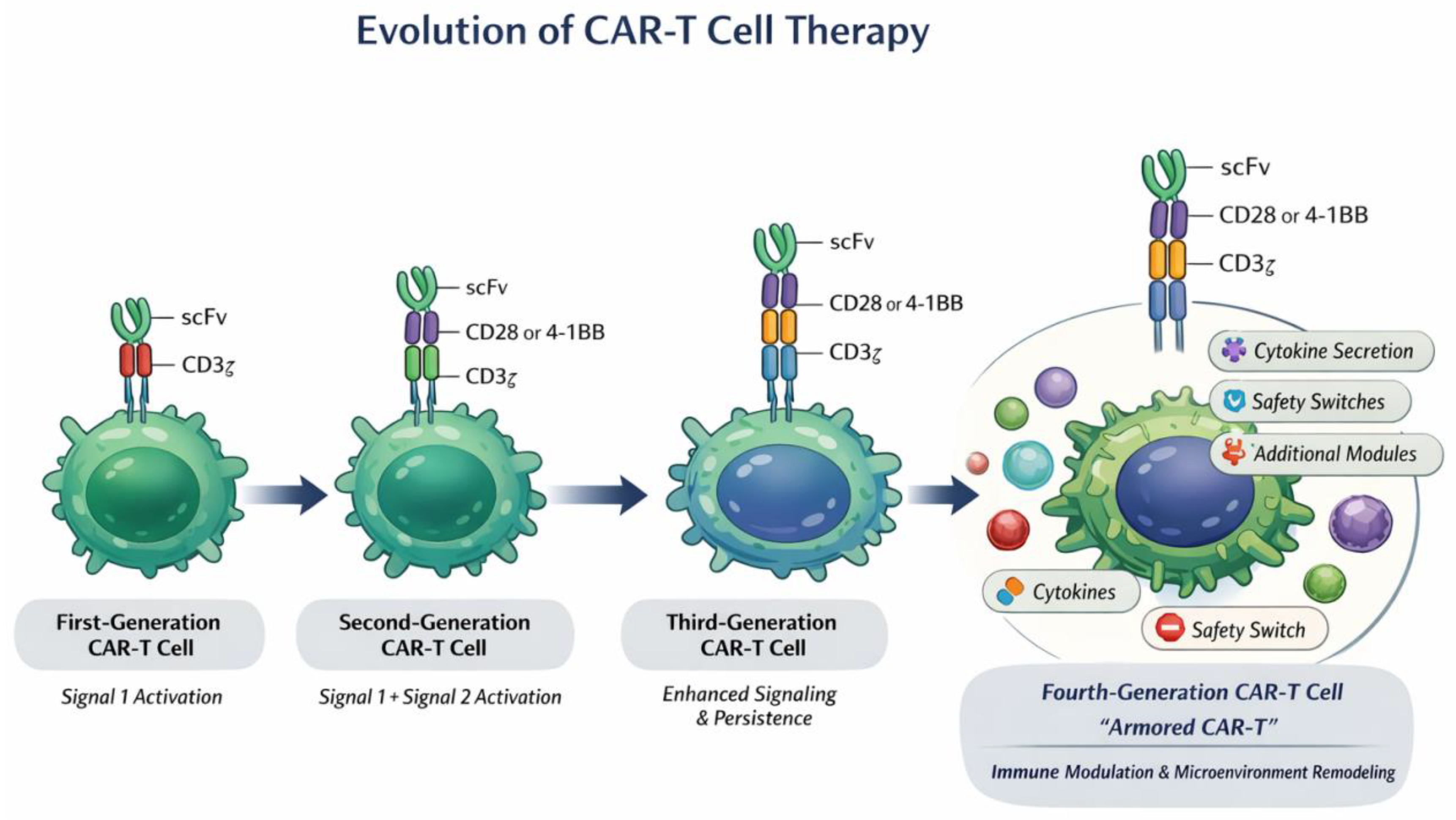
2. Advances of CAR-T Therapy in Hematologic Malignancies
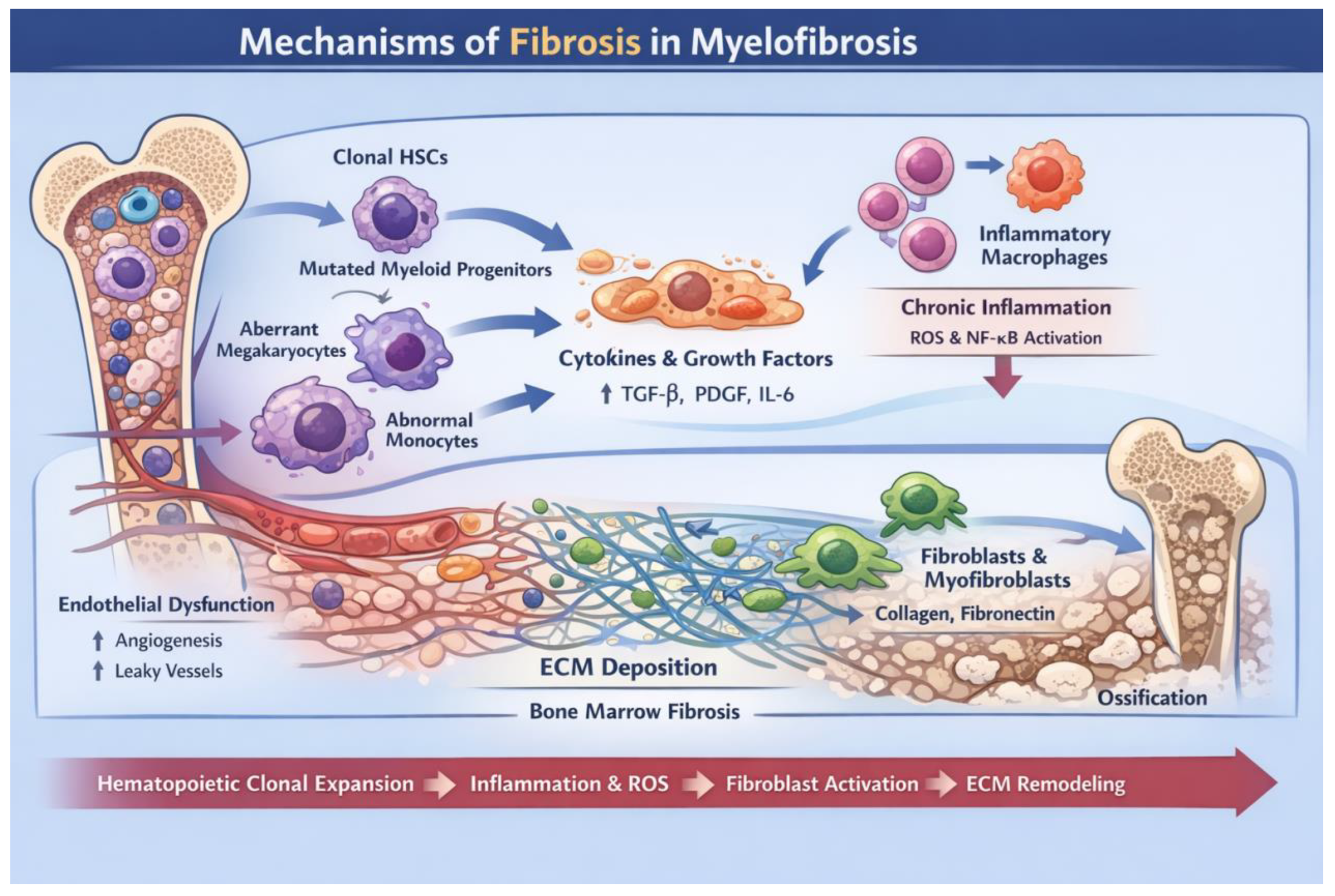
3. Immunopathological Basis of Myelofibrosis
3.1. Clonal Hematopoietic Abnormalities
3.2. Immune Microenvironment Dysregulation
3.3. Cytokine Storm-like Inflammatory Milieu
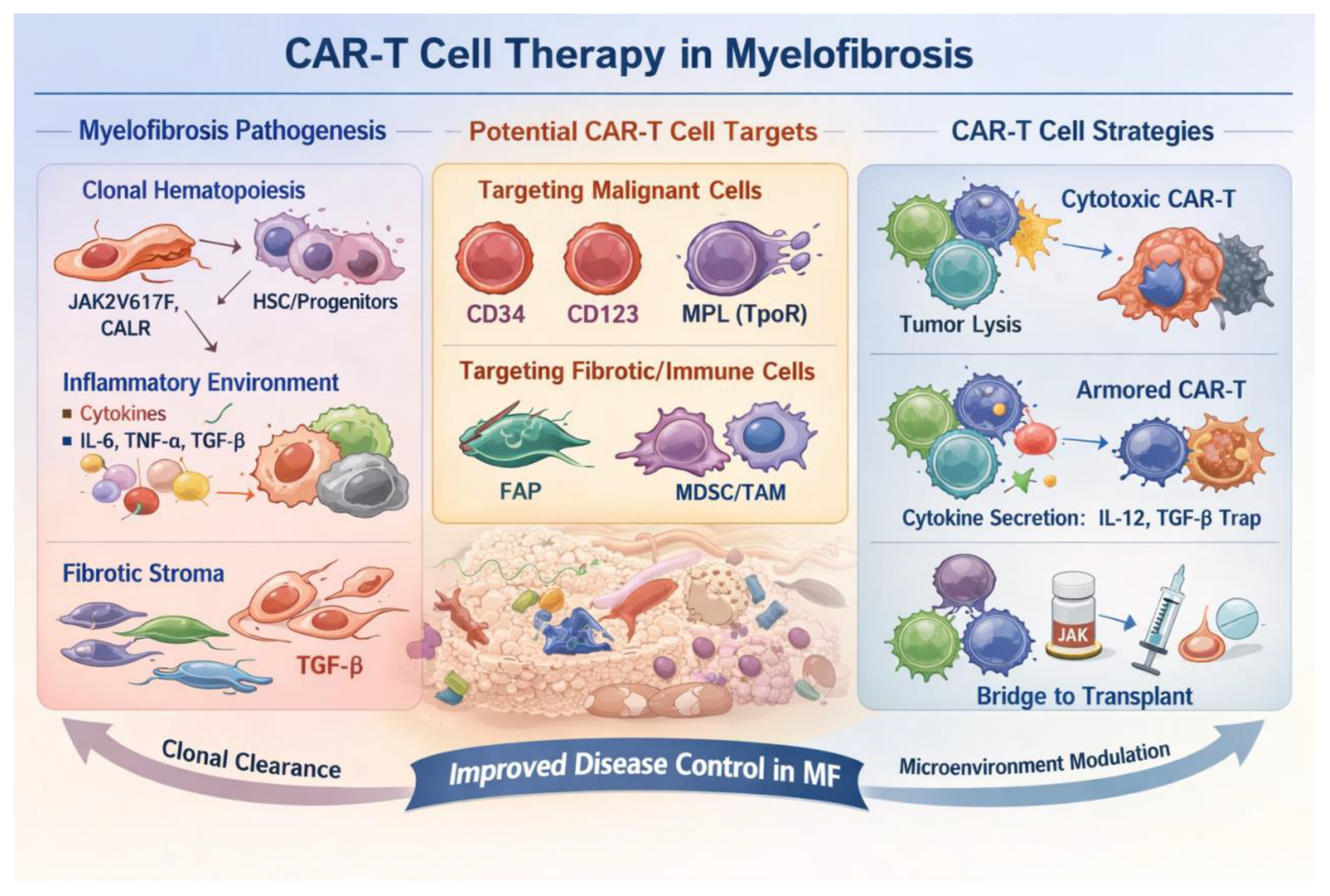
4. Potential Targets of CAR-T Therapy in Myelofibrosis
4.1. Targeting Malignant Hematopoietic Clones
4.2. Targeting Fibrosis-Associated Cells
4.3. Targeting the Immunosuppressive Microenvironment
5. Challenges of CAR-T Therapy in Myelofibrosis
6. Future Optimization Strategies and Combination Approaches
7. Conclusions
Author Contributions
Funding
Data Availability Statement
Conflicts of Interest
Abbreviations
| allo-HCT | Allogeneic Hematopoietic Stem Cell Transplantation |
| AML | Acute Myeloid Leukemia |
| BCMA | B-Cell Maturation Antigen |
| BiTE | Bispecific T-Cell Engager |
| BMF | Bone Marrow Fibrosis |
| CAF | Cancer-Associated Fibroblast |
| CAR-T | Chimeric Antigen Receptor T Cell |
| CD123 | Cluster of Differentiation 123 |
| CR | Complete Remission |
| CRS | Cytokine Release Syndrome |
| CXCL12 | C-X-C Motif Chemokine Ligand 12 |
| CXCR4 | C-X-C Motif Chemokine Receptor 4 |
| ECOG | Eastern Cooperative Oncology Group Performance Status |
| ET | Essential Thrombocythemia |
| FAP | Fibroblast Activation Protein |
| HSCT | Hematopoietic Stem Cell Transplantation |
| HSPC | Hematopoietic Stem and Progenitor Cell |
| ICANS | Immune Effector Cell-Associated Neurotoxicity Syndrome |
| IFN-γ | Interferon Gamma |
| IL-1β | Interleukin 1 Beta |
| IL-2 | Interleukin 2 |
| IL-6 | Interleukin 6 |
| JAK-STAT | Janus Kinase–Signal Transducer and Activator of Transcription |
| JAKi | Janus Kinase Inhibitor |
| LAG-3 | Lymphocyte Activation Gene 3 |
| LSC | Leukemic Stem Cell |
| MDS | Myelodysplastic Syndrome |
| MDSC | Myeloid-Derived Suppressor Cell |
| MF | Myelofibrosis |
| MPL | Myeloproliferative Leukemia Protein |
| MPN | Myeloproliferative Neoplasm |
| NF-κB | Nuclear Factor Kappa B |
| NK | Natural Killer |
| ORR | Overall Response Rate |
| OS | Overall Survival |
| PD-1 | Programmed Cell Death Protein 1 |
| PDGF | Platelet-Derived Growth Factor |
| PFS | Progression-Free Survival |
| PI3K–AKT–mTOR | Phosphoinositide 3-Kinase–AKT–Mammalian Target of Rapamycin |
| PMF | Primary Myelofibrosis |
| PMN-MDSC | Polymorphonuclear Myeloid-Derived Suppressor Cell |
| PV | Polycythemia Vera |
| scFv | Single-Chain Variable Fragment |
| SMF | Secondary Myelofibrosis |
| STAT3 | Signal Transducer and Activator of Transcription 3 |
| TAM | Tumor-Associated Macrophage |
| TGF-β | Transforming Growth Factor Beta |
| TIGIT | T-Cell Immunoreceptor with Ig and ITIM Domains |
| TIM-3 | T-Cell Immunoglobulin and Mucin Domain Containing 3 |
| TNF-α | Tumor Necrosis Factor Alpha |
| TPO | Thrombopoietin |
| Treg | Regulatory T Cell |
| TRAF–NF-κB | Tumor necrosis factor receptor-associated factor–nuclear factor kappa B |
| TSS50 | 50% Reduction in Total Symptom Score |
References
- Passamonti, F.; Mora, B. Myelofibrosis. Blood 2023, 141, 1954–1970. [Google Scholar] [CrossRef]
- Tefferi, A. Primary myelofibrosis: 2023 update on diagnosis, risk-stratification, and management. Am. J. Hematol. 2023, 98, 801–821. [Google Scholar] [CrossRef] [PubMed]
- Breccia, M.; Palandri, F.; Polverelli, N.; Caira, M.; Berluti, M.; Palumbo, G.A.; De Stefano, V. Epidemiology and disease characteristics of myelofibrosis: A comparative analysis between Italy and global perspectives. Front. Oncol. 2024, 14, 1382872. [Google Scholar] [CrossRef]
- Ali, H.; Bacigalupo, A. 2024 update on allogeneic hematopoietic stem cell transplant for myelofibrosis: A review of current data and applications on risk stratification and management. Am. J. Hematol. 2024, 99, 938–945. [Google Scholar] [CrossRef] [PubMed]
- Tefferi, A.; Alkhateeb, H.; Gangat, N. Blast phase myeloproliferative neoplasm: Contemporary review and 2024 treatment algorithm. Blood Cancer J. 2023, 13, 108. [Google Scholar] [CrossRef] [PubMed]
- Palandri, F.; Palumbo, G.A.; Benevolo, G.; Iurlo, A.; Elli, E.M.; Abruzzese, E.; Polverelli, N.; Tiribelli, M.; Auteri, G.; Tieghi, A.; et al. Incidence of blast phase in myelofibrosis patients according to anemia severity at ruxolitinib start and during therapy. Cancer 2024, 130, 1270–1280. [Google Scholar] [CrossRef]
- Ross, D.M.; Lane, S.W.; Harrison, C.N. Identifying disease-modifying potential in myelofibrosis clinical trials. Blood 2024, 144, 1679–1688. [Google Scholar] [CrossRef]
- Tefferi, A.; Pardanani, A.; Gangat, N. Momelotinib expands the therapeutic armamentarium for myelofibrosis: Impact on hierarchy of treatment choices. Am. J. Hematol. 2024, 99, 300–308. [Google Scholar] [CrossRef]
- Verstovsek, S.; Gerds, A.T.; Vannucchi, A.M.; Al-Ali, H.K.; Lavie, D.; Kuykendall, A.T.; Grosicki, S.; Iurlo, A.; Goh, Y.T.; Lazaroiu, M.C.; et al. Momelotinib versus danazol in symptomatic patients with anaemia and myelofibrosis (MOMENTUM): Results from an international, double-blind, randomised, controlled, phase 3 study. Lancet 2023, 401, 269–280. [Google Scholar] [CrossRef]
- Gerds, A.T.; Verstovsek, S.; Vannucchi, A.M.; Al-Ali, H.K.; Lavie, D.; Kuykendall, A.T.; Grosicki, S.; Iurlo, A.; Goh, Y.T.; Lazaroiu, M.C.; et al. Momelotinib versus danazol in symptomatic patients with anaemia and myelofibrosis previously treated with a JAK inhibitor (MOMENTUM): An updated analysis of an international, double-blind, randomised phase 3 study. Lancet Haematol. 2023, 10, e735–e746. [Google Scholar] [CrossRef]
- Mascarenhas, J.; Hoffman, R.; Talpaz, M.; Gerds, A.T.; Stein, B.; Gupta, V.; Szoke, A.; Drummond, M.; Pristupa, A.; Granston, T.; et al. Pacritinib vs Best Available Therapy, Including Ruxolitinib, in Patients with Myelofibrosis: A Randomized Clinical Trial. JAMA Oncol. 2018, 4, 652–659. [Google Scholar] [CrossRef]
- Rampal, R.K.; Grosicki, S.; Chraniuk, D.; Abruzzese, E.; Bose, P.; Gerds, A.T.; Vannucchi, A.M.; Palandri, F.; Lee, S.E.; Gupta, V.; et al. Pelabresib plus ruxolitinib for JAK inhibitor-naive myelofibrosis: A randomized phase 3 trial. Nat. Med. 2025, 31, 1531–1538. [Google Scholar] [CrossRef]
- Harrison, C.N.; Garcia, J.S.; Somervaille, T.C.P.; Foran, J.M.; Verstovsek, S.; Jamieson, C.; Mesa, R.; Ritchie, E.K.; Tantravahi, S.K.; Vachhani, P.; et al. Addition of Navitoclax to Ongoing Ruxolitinib Therapy for Patients with Myelofibrosis with Progression or Suboptimal Response: Phase II Safety and Efficacy. J. Clin. Oncol. 2022, 40, 1671–1680. [Google Scholar] [CrossRef]
- Pemmaraju, N.; Garcia, J.S.; Potluri, J.; Harb, J.G.; Sun, Y.; Jung, P.; Qin, Q.Q.; Tantravahi, S.K.; Verstovsek, S.; Harrison, C. Addition of navitoclax to ongoing ruxolitinib treatment in patients with myelofibrosis (REFINE): A post-hoc analysis of molecular biomarkers in a phase 2 study. Lancet Haematol. 2022, 9, e434–e444. [Google Scholar] [CrossRef]
- Gerds, A.T.; Harrison, C.; Kiladjian, J.J.; Mesa, R.; Vannucchi, A.M.; Komrokji, R.; Bose, P.; Kremyanskaya, M.; Mead, A.J.; Gotlib, J.; et al. Safety and efficacy of luspatercept for the treatment of anemia in patients with myelofibrosis. Blood Adv. 2024, 8, 4511–4522. [Google Scholar] [CrossRef] [PubMed]
- Kröger, N.; Bacigalupo, A.; Barbui, T.; Ditschkowski, M.; Gagelmann, N.; Griesshammer, M.; Gupta, V.; Hamad, N.; Harrison, C.; Hernandez-Boluda, J.C.; et al. Indication and management of allogeneic haematopoietic stem-cell transplantation in myelofibrosis: Updated recommendations by the EBMT/ELN International Working Group. Lancet Haematol. 2024, 11, e62–e74. [Google Scholar] [CrossRef] [PubMed]
- June, C.H.; Sadelain, M. Chimeric Antigen Receptor Therapy. N. Engl. J. Med. 2018, 379, 64–73. [Google Scholar] [CrossRef]
- Rafiq, S.; Hackett, C.S.; Brentjens, R.J. Engineering strategies to overcome the current roadblocks in CAR T cell therapy. Nat. Rev. Clin. Oncol. 2020, 17, 147–167. [Google Scholar] [CrossRef] [PubMed]
- Zhao, Z.; Condomines, M.; van der Stegen, S.J.C.; Perna, F.; Kloss, C.C.; Gunset, G.; Plotkin, J.; Sadelain, M. Structural Design of Engineered Costimulation Determines Tumor Rejection Kinetics and Persistence of CAR T Cells. Cancer Cell 2015, 28, 415–428. [Google Scholar] [CrossRef]
- Kawalekar, O.U.; O’Connor, R.S.; Fraietta, J.A.; Guo, L.; McGettigan, S.E.; Posey, A.D., Jr.; Patel, P.R.; Guedan, S.; Scholler, J.; Keith, B.; et al. Distinct Signaling of Coreceptors Regulates Specific Metabolism Pathways and Impacts Memory Development in CAR T Cells. Immunity 2016, 44, 380–390. [Google Scholar] [CrossRef]
- Guedan, S.; Posey, A.D., Jr.; Shaw, C.; Wing, A.; Da, T.; Patel, P.R.; McGettigan, S.E.; Casado-Medrano, V.; Kawalekar, O.U.; Uribe-Herranz, M.; et al. Enhancing CAR T cell persistence through ICOS and 4-1BB costimulation. JCI Insight 2018, 3, e96976. [Google Scholar] [CrossRef] [PubMed]
- Blank, C.U.; Haining, W.N.; Held, W.; Hogan, P.G.; Kallies, A.; Lugli, E.; Lynn, R.C.; Philip, M.; Rao, A.; Restifo, N.P.; et al. Defining ‘T cell exhaustion’. Nat. Rev. Immunol. 2019, 19, 665–674. [Google Scholar] [CrossRef]
- Tang, L.; Pan, S.; Wei, X.; Xu, X.; Wei, Q. Arming CAR-T cells with cytokines and more: Innovations in the fourth-generation CAR-T development. Mol. Ther. J. Am. Soc. Gene Ther. 2023, 31, 3146–3162. [Google Scholar] [CrossRef]
- Maude, S.L.; Laetsch, T.W.; Buechner, J.; Rives, S.; Boyer, M.; Bittencourt, H.; Bader, P.; Verneris, M.R.; Stefanski, H.E.; Myers, G.D.; et al. Tisagenlecleucel in Children and Young Adults with B-Cell Lymphoblastic Leukemia. N. Engl. J. Med. 2018, 378, 439–448. [Google Scholar] [CrossRef]
- Locke, F.L.; Ghobadi, A.; Jacobson, C.A.; Miklos, D.B.; Lekakis, L.J.; Oluwole, O.O.; Lin, Y.; Braunschweig, I.; Hill, B.T.; Timmerman, J.M.; et al. Long-term safety and activity of axicabtagene ciloleucel in refractory large B-cell lymphoma (ZUMA-1): A single-arm, multicentre, phase 1-2 trial. Lancet Oncol. 2019, 20, 31–42. [Google Scholar] [CrossRef]
- Munshi, N.C.; Anderson, L.D., Jr.; Shah, N.; Madduri, D.; Berdeja, J.; Lonial, S.; Raje, N.; Lin, Y.; Siegel, D.; Oriol, A.; et al. Idecabtagene Vicleucel in Relapsed and Refractory Multiple Myeloma. N. Engl. J. Med. 2021, 384, 705–716. [Google Scholar] [CrossRef] [PubMed]
- Locke, F.L.; Miklos, D.B.; Jacobson, C.A.; Perales, M.A.; Kersten, M.J.; Oluwole, O.O.; Ghobadi, A.; Rapoport, A.P.; McGuirk, J.; Pagel, J.M.; et al. Axicabtagene Ciloleucel as Second-Line Therapy for Large B-Cell Lymphoma. N. Engl. J. Med. 2022, 386, 640–654. [Google Scholar] [CrossRef] [PubMed]
- Berdeja, J.G.; Madduri, D.; Usmani, S.Z.; Jakubowiak, A.; Agha, M.; Cohen, A.D.; Stewart, A.K.; Hari, P.; Htut, M.; Lesokhin, A.; et al. Ciltacabtagene autoleucel, a B-cell maturation antigen-directed chimeric antigen receptor T-cell therapy in patients with relapsed or refractory multiple myeloma (CARTITUDE-1): A phase 1b/2 open-label study. Lancet 2021, 398, 314–324. [Google Scholar] [CrossRef]
- Chen, W.; Ma, Y.; Shen, Z.; Chen, H.; Ma, R.; Yan, D.; Shi, M.; Wang, X.; Song, X.; Sun, C.; et al. Humanized Anti-CD19 CAR-T Cell Therapy and Sequential Allogeneic Hematopoietic Stem Cell Transplantation Achieved Long-Term Survival in Refractory and Relapsed B Lymphocytic Leukemia: A Retrospective Study of CAR-T Cell Therapy. Front. Immunol. 2021, 12, 755549. [Google Scholar] [CrossRef]
- Neelapu, S.S.; Tummala, S.; Kebriaei, P.; Wierda, W.; Gutierrez, C.; Locke, F.L.; Komanduri, K.V.; Lin, Y.; Jain, N.; Daver, N.; et al. Chimeric antigen receptor T-cell therapy—assessment and management of toxicities. Nat. Rev. Clin. Oncol. 2018, 15, 47–62. [Google Scholar] [CrossRef]
- Karschnia, P.; Dietrich, J. Neurological complications of CAR T cell therapy for cancers. Nat. Rev. Neurol. 2025, 21, 422–431. [Google Scholar] [CrossRef]
- Sterner, R.C.; Sterner, R.M. CAR-T cell therapy: Current limitations and potential strategies. Blood Cancer J. 2021, 11, 69. [Google Scholar] [CrossRef]
- Yacoub, A.; Ali, H.; Gupta, V.; Wang, E.S.; Patnaik, M.M.; Schiller, G.J.; Taparia, M.; Mughal, T.I.; Lindsay, R.; Galleu, A.; et al. Final safety and efficacy results from a phase 1/2 study of tagraxofusp, a CD123-targeted therapy, for myelofibrosis. Blood Neoplasia 2025, 2, 100165. [Google Scholar] [CrossRef] [PubMed]
- Testa, U.; Pelosi, E.; Castelli, G. CD123 as a Therapeutic Target in the Treatment of Hematological Malignancies. Cancers 2019, 11, 1358. [Google Scholar] [CrossRef]
- Vainchenker, W.; Plo, I.; Marty, C.; Varghese, L.N.; Constantinescu, S.N. The role of the thrombopoietin receptor MPL in myeloproliferative neoplasms: Recent findings and potential therapeutic applications. Expert Rev. Hematol. 2019, 12, 437–448. [Google Scholar] [CrossRef]
- Spivak, J.L.; Moliterno, A.R. The Thrombopoietin Receptor, MPL, Is a Therapeutic Target of Opportunity in the MPN. Front. Oncol. 2021, 11, 641613. [Google Scholar] [CrossRef] [PubMed]
- Flugel, C.L.; Majzner, R.G.; Krenciute, G.; Dotti, G.; Riddell, S.R.; Wagner, D.L.; Abou-El-Enein, M. Overcoming on-target, off-tumour toxicity of CAR T cell therapy for solid tumours. Nat. Rev. Clin. Oncol. 2023, 20, 49–62. [Google Scholar] [CrossRef] [PubMed]
- Shahvali, S.; Rahiman, N.; Jaafari, M.R.; Arabi, L. Targeting fibroblast activation protein (FAP): Advances in CAR-T cell, antibody, and vaccine in cancer immunotherapy. Drug Deliv. Transl. Res. 2023, 13, 2041–2056. [Google Scholar] [CrossRef]
- Abdalsalam, N.M.F.; Ibrahim, A.; Saliu, M.A.; Liu, T.M.; Wan, X.; Yan, D. MDSC: A new potential breakthrough in CAR-T therapy for solid tumors. Cell Commun. Signal. CCS 2024, 22, 612. [Google Scholar] [CrossRef]
- Psaila, B.; Wang, G.; Rodriguez-Meira, A.; Li, R.; Heuston, E.F.; Murphy, L.; Yee, D.; Hitchcock, I.S.; Sousos, N.; O’Sullivan, J.; et al. Single-Cell Analyses Reveal Megakaryocyte-Biased Hematopoiesis in Myelofibrosis and Identify Mutant Clone-Specific Targets. Mol. Cell 2020, 78, 477–492.e478. [Google Scholar] [CrossRef]
- Fisher, D.A.C.; Fowles, J.S.; Zhou, A.; Oh, S.T. Inflammatory Pathophysiology as a Contributor to Myeloproliferative Neoplasms. Front. Immunol. 2021, 12, 683401. [Google Scholar] [CrossRef] [PubMed]
- Dunbar, A.J.; Kim, D.; Lu, M.; Farina, M.; Bowman, R.L.; Yang, J.L.; Park, Y.; Karzai, A.; Xiao, W.; Zaroogian, Z.; et al. CXCL8/CXCR2 signaling mediates bone marrow fibrosis and is a therapeutic target in myelofibrosis. Blood 2023, 141, 2508–2519. [Google Scholar] [CrossRef]
- Li, R.; Colombo, M.; Wang, G.; Rodriguez-Romera, A.; Benlabiod, C.; Jooss, N.J.; O’Sullivan, J.; Brierley, C.K.; Clark, S.A.; Pérez Sáez, J.M.; et al. A proinflammatory stem cell niche drives myelofibrosis through a targetable galectin-1 axis. Sci. Transl. Med. 2024, 16, eadj7552. [Google Scholar] [CrossRef]
- Jung, S.H.; Lee, S.E.; Yun, S.; Min, D.E.; Shin, Y.; Chung, Y.J.; Lee, S.H. Different inflammatory, fibrotic, and immunological signatures between pre-fibrotic and overt primary myelofibrosis. Haematologica 2025, 110, 938–951. [Google Scholar] [CrossRef] [PubMed]
- Li, Y.; Gao, H.; Dong, H.; Wang, W.; Xu, Z.; Wang, G.; Liu, Y.; Wang, H.; Ju, W.; Qiao, J.; et al. PEDF reduces malignant cells proliferation and inhibits the progression of myelofibrosis in myeloproliferative neoplasms. Biochem. Pharmacol. 2022, 199, 115013. [Google Scholar] [CrossRef] [PubMed]
- Veletic, I.; Prijic, S.; Manshouri, T.; Nogueras-Gonzalez, G.M.; Verstovsek, S.; Estrov, Z. Altered T-cell subset repertoire affects treatment outcome of patients with myelofibrosis. Haematologica 2021, 106, 2384–2396. [Google Scholar] [CrossRef]
- Tavernari, L.; Rontauroli, S.; Norfo, R.; Mirabile, M.; Maccaferri, M.; Mora, B.; Genovese, E.; Parenti, S.; Carretta, C.; Bianchi, E.; et al. Targeting exhausted cytotoxic T cells through CTLA-4 inhibition promotes elimination of neoplastic cells in human myelofibrosis xenografts. Am. J. Hematol. 2024, 99, 1939–1950. [Google Scholar] [CrossRef]
- Fernandes de Oliveira Costa, A.; Olops Marani, L.; Mantello Bianco, T.; Queiroz Arantes, A.; Aparecida Lopes, I.; Antonio Pereira-Martins, D.; Carvalho Palma, L.; Santos Scheucher, P.; Lilian Dos Santos Schiavinato, J.; Sarri Binelli, L.; et al. Altered distribution and function of NK-cell subsets lead to impaired tumor surveillance in JAK2V617F myeloproliferative neoplasms. Front. Immunol. 2022, 13, 768592. [Google Scholar] [CrossRef]
- Campanelli, R.; Carolei, A.; Catarsi, P.; Abbà, C.; Boveri, E.; Paulli, M.; Gentile, R.; Morosini, M.; Albertini, R.; Mantovani, S.; et al. Circulating Polymorphonuclear Myeloid-Derived Suppressor Cells (PMN-MDSCs) Have a Biological Role in Patients with Primary Myelofibrosis. Cancers 2024, 16, 2556. [Google Scholar] [CrossRef]
- Schmidt, D.; Endres, C.; Hoefflin, R.; Andrieux, G.; Zwick, M.; Karantzelis, N.; Staehle, H.F.; Vinnakota, J.M.; Duquesne, S.; Mozaffari Jovein, M.; et al. Oncogenic Calreticulin Induces Immune Escape by Stimulating TGFβ Expression and Regulatory T-cell Expansion in the Bone Marrow Microenvironment. Cancer Res. 2024, 84, 2985–3003. [Google Scholar] [CrossRef]
- Carturan, A.; Morè, S.; Poloni, A.; Rupoli, S.; Morsia, E. Shaping the Future of Myeloproliferative Neoplasm Therapy: Immune-Based Strategies and Targeted Innovations. Cancers 2024, 16, 4113. [Google Scholar] [CrossRef]
- Hasselbalch, H.C. Perspectives on chronic inflammation in essential thrombocythemia, polycythemia vera, and myelofibrosis: Is chronic inflammation a trigger and driver of clonal evolution and development of accelerated atherosclerosis and second cancer? Blood 2012, 119, 3219–3225. [Google Scholar] [CrossRef]
- Yu, H.; Lee, H.; Herrmann, A.; Buettner, R.; Jove, R. Revisiting STAT3 signalling in cancer: New and unexpected biological functions. Nat. Rev. Cancer 2014, 14, 736–746. [Google Scholar] [CrossRef]
- Johnson, D.E.; O’Keefe, R.A.; Grandis, J.R. Targeting the IL-6/JAK/STAT3 signalling axis in cancer. Nat. Rev. Clin. Oncol. 2018, 15, 234–248. [Google Scholar] [CrossRef]
- Heaton, W.L.; Senina, A.V.; Pomicter, A.D.; Salama, M.E.; Clair, P.M.; Yan, D.; Bell, R.N.; Gililland, J.M.; Prchal, J.T.; O’Hare, T.; et al. Autocrine Tnf signaling favors malignant cells in myelofibrosis in a Tnfr2-dependent fashion. Leukemia 2018, 32, 2399–2411. [Google Scholar] [CrossRef]
- Fisher, D.A.C.; Malkova, O.; Engle, E.K.; Miner, C.A.; Fulbright, M.C.; Behbehani, G.K.; Collins, T.B.; Bandyopadhyay, S.; Zhou, A.; Nolan, G.P.; et al. Mass cytometry analysis reveals hyperactive NF Kappa B signaling in myelofibrosis and secondary acute myeloid leukemia. Leukemia 2017, 31, 1962–1974. [Google Scholar] [CrossRef] [PubMed]
- Yao, J.C.; Oetjen, K.A.; Wang, T.; Xu, H.; Abou-Ezzi, G.; Krambs, J.R.; Uttarwar, S.; Duncavage, E.J.; Link, D.C. TGF-β signaling in myeloproliferative neoplasms contributes to myelofibrosis without disrupting the hematopoietic niche. J. Clin. Investig. 2022, 132. [Google Scholar] [CrossRef] [PubMed]
- Arruda, L.C.M.; Stikvoort, A.; Lambert, M.; Jin, L.; Rivera, L.S.; Alves, R.M.P.; De Moura, T.R.; Mim, C.; Lehmann, S.; Axelsson-Robertson, R.; et al. A novel CD34-specific T-cell engager efficiently depletes acute myeloid leukemia and leukemic stem cells in vitro and in vivo. Haematologica 2022, 107, 1786–1795. [Google Scholar] [CrossRef] [PubMed]
- Saito, N.; Yamauchi, T.; Kawano, N.; Ono, R.; Yoshida, S.; Miyamoto, T.; Kamimura, T.; Shultz, L.D.; Saito, Y.; Takenaka, K.; et al. Circulating CD34+ cells of primary myelofibrosis patients contribute to myeloid-dominant hematopoiesis and bone marrow fibrosis in immunodeficient mice. Int. J. Hematol. 2022, 115, 198–207. [Google Scholar] [CrossRef]
- Buldini, B.; Varotto, E. Moving forward in target antigen discovery for immunotherapy in acute myeloid leukemia. Haematologica 2024, 109, 3088–3090. [Google Scholar] [CrossRef]
- Volta, L.; Myburgh, R.; Pellegrino, C.; Koch, C.; Maurer, M.; Manfredi, F.; Hofstetter, M.; Kaiser, A.; Schneiter, F.; Müller, J.; et al. Efficient combinatorial adaptor-mediated targeting of acute myeloid leukemia with CAR T-cells. Leukemia 2024, 38, 2598–2613. [Google Scholar] [CrossRef] [PubMed]
- Woll, P.S.; Yoshizato, T.; Hellström-Lindberg, E.; Fioretos, T.; Ebert, B.L.; Jacobsen, S.E.W. Targeting stem cells in myelodysplastic syndromes and acute myeloid leukemia. J. Intern. Med. 2022, 292, 262–277. [Google Scholar] [CrossRef] [PubMed]
- Patnaik, M.M.; Mughal, T.I.; Brooks, C.; Lindsay, R.; Pemmaraju, N. Targeting CD123 in hematologic malignancies: Identifying suitable patients for targeted therapy. Leuk. Lymphoma 2021, 62, 2568–2586. [Google Scholar] [CrossRef] [PubMed]
- Arslan, S.; Aribi, A.; Stein, A.; Aldoss, I. Current status and future potential of CD123-based targeted therapies for acute leukemia. Expert Opin. Biol. Ther. 2025, 25, 1299–1312. [Google Scholar] [CrossRef]
- Zoine, J.T.; Prince, C.; Story, J.Y.; Branella, G.M.; Lytle, A.M.; Fedanov, A.; Alexander, J.S.; Porter, C.C.; Doering, C.B.; Spencer, H.T.; et al. Thrombopoietin-based CAR-T cells demonstrate in vitro and in vivo cytotoxicity to MPL positive acute myelogenous leukemia and hematopoietic stem cells. Gene Ther. 2022, 29, 1–12. [Google Scholar] [CrossRef]
- Bubb, Q.R.; Balood, M.; Seir, G.E.; Swartzrock, L.; Haslett, E.; Ho, K.; Xu, P.; Wiltz, S.G.; Sotillo, E.; Gruber, T.A.; et al. Development of multivalent CAR T cells as dual immunotherapy and conditioning agents. Mol. Ther. Oncol. 2025, 33, 200944. [Google Scholar] [CrossRef]
- Liu, W.; Yu, W.M.; Zhang, J.; Chan, R.J.; Loh, M.L.; Zhang, Z.; Bunting, K.D.; Qu, C.K. Inhibition of the Gab2/PI3K/mTOR signaling ameliorates myeloid malignancy caused by Ptpn11 (Shp2) gain-of-function mutations. Leukemia 2017, 31, 1415–1422. [Google Scholar] [CrossRef]
- Leimkühler, N.B.; Gleitz, H.F.E.; Ronghui, L.; Snoeren, I.A.M.; Fuchs, S.N.R.; Nagai, J.S.; Banjanin, B.; Lam, K.H.; Vogl, T.; Kuppe, C.; et al. Heterogeneous bone-marrow stromal progenitors drive myelofibrosis via a druggable alarmin axis. Cell Stem Cell 2021, 28, 637–652.e638. [Google Scholar] [CrossRef]
- Meng, S.; Hara, T.; Miura, Y.; Ishii, H. Fibroblast activation protein constitutes a novel target of chimeric antigen receptor T-cell therapy in solid tumors. Cancer Sci. 2024, 115, 3532–3542. [Google Scholar] [CrossRef]
- Niu, W.; Wang, B.; Zhang, Y.; Wang, C.; Cao, J.; Li, J.; He, Y.; Lei, P. Efficacy and safety evaluation of cross-reactive Fibroblast activation protein scFv-based CAR-T cells. Front. Immunol. 2024, 15, 1433679. [Google Scholar] [CrossRef]
- Liu, Y.; Sun, Y.; Wang, P.; Li, S.; Dong, Y.; Zhou, M.; Shi, B.; Jiang, H.; Sun, R.; Li, Z. FAP-targeted CAR-T suppresses MDSCs recruitment to improve the antitumor efficacy of claudin18.2-targeted CAR-T against pancreatic cancer. J. Transl. Med. 2023, 21, 255. [Google Scholar] [CrossRef]
- Tran, E.; Chinnasamy, D.; Yu, Z.; Morgan, R.A.; Lee, C.C.; Restifo, N.P.; Rosenberg, S.A. Immune targeting of fibroblast activation protein triggers recognition of multipotent bone marrow stromal cells and cachexia. J. Exp. Med. 2013, 210, 1125–1135. [Google Scholar] [CrossRef] [PubMed]
- Hofheinz, R.D.; al-Batran, S.E.; Hartmann, F.; Hartung, G.; Jäger, D.; Renner, C.; Tanswell, P.; Kunz, U.; Amelsberg, A.; Kuthan, H.; et al. Stromal antigen targeting by a humanised monoclonal antibody: An early phase II trial of sibrotuzumab in patients with metastatic colorectal cancer. Onkologie 2003, 26, 44–48. [Google Scholar] [CrossRef] [PubMed]
- Zboralski, D.; Osterkamp, F.; Christensen, E.; Bredenbeck, A.; Schumann, A.; Hoehne, A.; Schneider, E.; Paschke, M.; Ungewiss, J.; Haase, C.; et al. Fibroblast activation protein targeted radiotherapy induces an immunogenic tumor microenvironment and enhances the efficacy of PD-1 immune checkpoint inhibition. Eur. J. Nucl. Med. Mol. Imaging 2023, 50, 2621–2635. [Google Scholar] [CrossRef] [PubMed]
- Melero, I.; Tanos, T.; Bustamante, M.; Sanmamed, M.F.; Calvo, E.; Moreno, I.; Moreno, V.; Hernandez, T.; Martinez Garcia, M.; Rodriguez-Vida, A.; et al. A first-in-human study of the fibroblast activation protein-targeted, 4-1BB agonist RO7122290 in patients with advanced solid tumors. Sci. Transl. Med. 2023, 15, eabp9229. [Google Scholar] [CrossRef]
- Sum, E.; Rapp, M.; Fröbel, P.; Le Clech, M.; Dürr, H.; Giusti, A.M.; Perro, M.; Speziale, D.; Kunz, L.; Menietti, E.; et al. Fibroblast Activation Protein α-Targeted CD40 Agonism Abrogates Systemic Toxicity and Enables Administration of High Doses to Induce Effective Antitumor Immunity. Clin. Cancer Res. Off. J. Am. Assoc. Cancer Res. 2021, 27, 4036–4053. [Google Scholar] [CrossRef]
- Petrausch, U.; Schuberth, P.C.; Hagedorn, C.; Soltermann, A.; Tomaszek, S.; Stahel, R.; Weder, W.; Renner, C. Re-directed T cells for the treatment of fibroblast activation protein (FAP)-positive malignant pleural mesothelioma (FAPME-1). BMC Cancer 2012, 12, 615. [Google Scholar] [CrossRef]
- Schuberth, P.C.; Hagedorn, C.; Jensen, S.M.; Gulati, P.; van den Broek, M.; Mischo, A.; Soltermann, A.; Jüngel, A.; Marroquin Belaunzaran, O.; Stahel, R.; et al. Treatment of malignant pleural mesothelioma by fibroblast activation protein-specific re-directed T cells. J. Transl. Med. 2013, 11, 187. [Google Scholar] [CrossRef]
- Barosi, G.; Rosti, V.; Catarsi, P.; Villani, L.; Abbà, C.; Carolei, A.; Magrini, U.; Gale, R.P.; Massa, M.; Campanelli, R. Reduced CXCR4-expression on CD34-positive blood cells predicts outcomes of persons with primary myelofibrosis. Leukemia 2021, 35, 468–475. [Google Scholar] [CrossRef]
- Bogani, C.; Ponziani, V.; Guglielmelli, P.; Desterke, C.; Rosti, V.; Bosi, A.; Le Bousse-Kerdilès, M.C.; Barosi, G.; Vannucchi, A.M. Hypermethylation of CXCR4 promoter in CD34+ cells from patients with primary myelofibrosis. Stem Cells 2008, 26, 1920–1930. [Google Scholar] [CrossRef]
- Migliaccio, A.R.; Martelli, F.; Verrucci, M.; Migliaccio, G.; Vannucchi, A.M.; Ni, H.; Xu, M.; Jiang, Y.; Nakamoto, B.; Papayannopoulou, T.; et al. Altered SDF-1/CXCR4 axis in patients with primary myelofibrosis and in the Gata1 low mouse model of the disease. Exp. Hematol. 2008, 36, 158–171. [Google Scholar] [CrossRef]
- Kloss, C.C.; Lee, J.; Zhang, A.; Chen, F.; Melenhorst, J.J.; Lacey, S.F.; Maus, M.V.; Fraietta, J.A.; Zhao, Y.; June, C.H. Dominant-Negative TGF-β Receptor Enhances PSMA-Targeted Human CAR T Cell Proliferation And Augments Prostate Cancer Eradication. Mol. Ther. J. Am. Soc. Gene Ther. 2018, 26, 1855–1866. [Google Scholar] [CrossRef] [PubMed]
- Tran, T.M.; Chand Thakuri, B.K.; Nurmukhambetova, S.; Lee, J.J.; Hu, P.; Tran, N.Q.; Steimle, B.; Dash, P.; Schneider, D. Armored TGFβRIIDN ROR1-CAR T cells reject solid tumors and resist suppression by constitutively-expressed and treatment-induced TGFβ1. J. Immunother. Cancer 2024, 12, e008261. [Google Scholar] [CrossRef] [PubMed]
- Alabanza, L.M.; Xiong, Y.; Vu, B.; Webster, B.; Wu, D.; Hu, P.; Zhu, Z.; Dropulic, B.; Dash, P.; Schneider, D. Armored BCMA CAR T Cells Eliminate Multiple Myeloma and Are Resistant to the Suppressive Effects of TGF-β. Front. Immunol. 2022, 13, 832645. [Google Scholar] [CrossRef]
- Cheng, P.; Chen, X.; Dalton, R.; Calescibetta, A.; So, T.; Gilvary, D.; Ward, G.; Smith, V.; Eckard, S.; Fox, J.A.; et al. Immunodepletion of MDSC by AMV564, a novel bivalent, bispecific CD33/CD3 T cell engager, ex vivo in MDS and melanoma. Mol. Ther. J. Am. Soc. Gene Ther. 2022, 30, 2315–2326. [Google Scholar] [CrossRef] [PubMed]
- Wang, S.; Zhao, X.; Wu, S.; Cui, D.; Xu, Z. Myeloid-derived suppressor cells: Key immunosuppressive regulators and therapeutic targets in hematological malignancies. Biomark. Res. 2023, 11, 34. [Google Scholar] [CrossRef]
- Luque Paz, D.; Kralovics, R.; Skoda, R.C. Genetic basis and molecular profiling in myeloproliferative neoplasms. Blood 2023, 141, 1909–1921. [Google Scholar] [CrossRef]
- Anil, J.; Alnemri, A.; Lytle, A.; Lockhart, B.; Anil, A.E.; Baumgartner, M.; Gebre, K.; McFerran, J.; Grupp, S.A.; Rheingold, S.R.; et al. Bone marrow fibrosis is associated with non-response to CD19 CAR T-cell therapy in B-acute lymphoblastic leukemia. Am. J. Hematol. 2023, 98, 1888–1897. [Google Scholar] [CrossRef]
- Faramand, R.G.; Davila, M.L. CAR T-cell hematotoxicity: Is inflammation the key? Blood 2021, 138, 2447–2448. [Google Scholar] [CrossRef]
- Pennisi, M.; Sanchez-Escamilla, M.; Flynn, J.R.; Shouval, R.; Alarcon Tomas, A.; Silverberg, M.L.; Batlevi, C.; Brentjens, R.J.; Dahi, P.B.; Devlin, S.M.; et al. Modified EASIX predicts severe cytokine release syndrome and neurotoxicity after chimeric antigen receptor T cells. Blood Adv. 2021, 5, 3397–3406. [Google Scholar] [CrossRef]
- Mascarenhas, J.; Gleitz, H.F.E.; Chifotides, H.T.; Harrison, C.N.; Verstovsek, S.; Vannucchi, A.M.; Rampal, R.K.; Kiladjian, J.J.; Vainchenker, W.; Hoffman, R.; et al. Biological drivers of clinical phenotype in myelofibrosis. Leukemia 2023, 37, 255–264. [Google Scholar] [CrossRef]
- Garrote, M.; López-Guerra, M.; Arellano-Rodrigo, E.; Rozman, M.; Carbonell, S.; Guijarro, F.; Santaliestra, M.; Triguero, A.; Colomer, D.; Cervantes, F.; et al. Clinical Characteristics and Outcomes of Patients with Primary and Secondary Myelofibrosis According to the Genomic Classification Using Targeted Next-Generation Sequencing. Cancers 2023, 15, 3904. [Google Scholar] [CrossRef]
- Pan, J.; Deng, B.; Ling, Z.; Song, W.; Xu, J.; Duan, J.; Wang, Z.; Chang, A.H.; Feng, X.; Tan, Y. Ruxolitinib mitigates steroid-refractory CRS during CAR T therapy. J. Cell. Mol. Med. 2021, 25, 1089–1099. [Google Scholar] [CrossRef]
- Xu, N.; Yang, X.F.; Xue, S.L.; Tan, J.W.; Li, M.H.; Ye, J.; Lou, X.Y.; Yu, Z.; Kang, L.Q.; Yan, Z.Q.; et al. Ruxolitinib reduces severe CRS response by suspending CAR-T cell function instead of damaging CAR-T cells. Biochem. Biophys. Res. Commun. 2022, 595, 54–61. [Google Scholar] [CrossRef]
- Park, H.B.; Kim, K.H.; Kim, J.H.; Kim, S.I.; Oh, Y.M.; Kang, M.; Lee, S.; Hwang, S.; Lee, H.; Lee, T.; et al. Improved safety of chimeric antigen receptor T cells indirectly targeting antigens via switchable adapters. Nat. Commun. 2024, 15, 9917. [Google Scholar] [CrossRef]
- Zannikou, M.; Duffy, J.T.; Levine, R.N.; Seblani, M.; Liu, Q.; Presser, A.; Arrieta, V.A.; Chen, C.J.; Sonabend, A.M.; Horbinski, C.M.; et al. IL15 modification enables CAR T cells to act as a dual targeting agent against tumor cells and myeloid-derived suppressor cells in GBM. J. Immunother. Cancer 2023, 11, e006239. [Google Scholar] [CrossRef] [PubMed]
- Battram, A.M.; Bachiller, M.; Lopez, V.; Fernández de Larrea, C.; Urbano-Ispizua, A.; Martín-Antonio, B. IL-15 Enhances the Persistence and Function of BCMA-Targeting CAR-T Cells Compared to IL-2 or IL-15/IL-7 by Limiting CAR-T Cell Dysfunction and Differentiation. Cancers 2021, 13, 3534. [Google Scholar] [CrossRef]
- Depil, S.; Duchateau, P.; Grupp, S.A.; Mufti, G.; Poirot, L. ‘Off-the-shelf’ allogeneic CAR T cells: Development and challenges. Nat. Rev. Drug Discov. 2020, 19, 185–199. [Google Scholar] [CrossRef] [PubMed]
- Liu, E.; Marin, D.; Banerjee, P.; Macapinlac, H.A.; Thompson, P.; Basar, R.; Nassif Kerbauy, L.; Overman, B.; Thall, P.; Kaplan, M.; et al. Use of CAR-Transduced Natural Killer Cells in CD19-Positive Lymphoid Tumors. N. Engl. J. Med. 2020, 382, 545–553. [Google Scholar] [CrossRef] [PubMed]
- Ayala Ceja, M.; Khericha, M.; Harris, C.M.; Puig-Saus, C.; Chen, Y.Y. CAR-T cell manufacturing: Major process parameters and next-generation strategies. J. Exp. Med. 2024, 221, e20230903. [Google Scholar] [CrossRef]
- Dubnikov Sharon, T.; Assayag, M.; Avni, B.; Kfir-Erenfeld, S.; Lebel, E.; Gatt, M.E.; Goldschmidt, N.; Stepensky, P.; Asherie, N.; Grisariu, S. Early lymphocyte collection for anti-CD19 CART production improves T-cell fitness in patients with relapsed/refractory diffuse large B-cell lymphoma. Br. J. Haematol. 2023, 202, 74–85. [Google Scholar] [CrossRef]
- Farina, M.; Chiarini, M.; Almici, C.; Accorsi Buttini, E.; Zuccalà, F.; Piva, S.; Volonghi, I.; Poli, L.; Bernardi, S.; Colnaghi, F.; et al. Timely Leukapheresis May Interfere with the “Fitness” of Lymphocytes Collected for CAR-T Treatment in High Risk DLBCL Patients. Cancers 2022, 14, 5276. [Google Scholar] [CrossRef]
- Maze, D.; Arcasoy, M.O.; Henrie, R.; Cerquozzi, S.; Kamble, R.; Al-Hadidi, S.; Yacoub, A.; Singh, A.K.; Elsawy, M.; Sirhan, S.; et al. Upfront allogeneic transplantation versus JAK inhibitor therapy for patients with myelofibrosis: A North American collaborative study. Bone Marrow Transplant. 2024, 59, 196–202. [Google Scholar] [CrossRef]
- Rampotas, A.; Aspa-Cilleruelo, J.M.; Koster, L.; Avenoso, D.; Passweg, J.; Sala, E.; Robin, M.; Myhre, A.E.; de Witte, M.; Nur, E.; et al. A European survey on allogeneic haematopoietic cell transplantation for myelofibrosis on behalf of the Chronic Malignancies Working Party of the EBMT: Focus on ‘real world’ experience of JAK inhibitors, splenomegaly management and novel agents in the transplant algorithm. Bone Marrow Transplant. 2026, 61, 333–340. [Google Scholar] [CrossRef]
- Kröger, N.; Wolschke, C.; Gagelmann, N. How I treat transplant-eligible patients with myelofibrosis. Blood 2023, 142, 1683–1696. [Google Scholar] [CrossRef]



| Category | Candidate Target | Therapeutic Rationale | Main Limitation |
|---|---|---|---|
| Malignant clone-directed targets | CD34, CD123, MPL | Direct elimination of disease-driving hematopoietic clones | Antigen overlap with normal HSPCs and risk of hematologic toxicity |
| Fibrosis-associated stromal targets | FAP, TGF-β-related pathways | Remodeling of fibrotic bone marrow niche and reduction in stromal support | Stromal toxicity and broad biological functions |
| Immunosuppressive microenvironment targets | CXCR4–CXCL12, MDSC/TAM-related targets, CD33 | Disruption of protective niche signals and reversal of immune suppression | Limited MF-specific evidence and risk of off-tumor toxicity |
| Immune-function regulatory pathways | PD-1, TIM-3, LAG-3, TIGIT | Restoration of exhausted T-cell function and enhancement of CAR-T persistence | More suitable as combination strategy than direct CAR-T target |
Disclaimer/Publisher’s Note: The statements, opinions and data contained in all publications are solely those of the individual author(s) and contributor(s) and not of MDPI and/or the editor(s). MDPI and/or the editor(s) disclaim responsibility for any injury to people or property resulting from any ideas, methods, instructions or products referred to in the content. |
© 2026 by the authors. Licensee MDPI, Basel, Switzerland. This article is an open access article distributed under the terms and conditions of the Creative Commons Attribution (CC BY) license.
Share and Cite
Kong, L.; Fu, C.; Song, L.; Wang, W.; Ji, M.; Li, F.; Shi, X.; Chen, W. Prospects of Chimeric Antigen Receptor T-Cell Therapy in Myelofibrosis: From Immunopathogenesis to Therapeutic Strategies. Cancers 2026, 18, 1493. https://doi.org/10.3390/cancers18091493
Kong L, Fu C, Song L, Wang W, Ji M, Li F, Shi X, Chen W. Prospects of Chimeric Antigen Receptor T-Cell Therapy in Myelofibrosis: From Immunopathogenesis to Therapeutic Strategies. Cancers. 2026; 18(9):1493. https://doi.org/10.3390/cancers18091493
Chicago/Turabian StyleKong, Lulu, Chunling Fu, Lianggui Song, Wenxiao Wang, Mengchu Ji, Fei Li, Xiaofeng Shi, and Wei Chen. 2026. "Prospects of Chimeric Antigen Receptor T-Cell Therapy in Myelofibrosis: From Immunopathogenesis to Therapeutic Strategies" Cancers 18, no. 9: 1493. https://doi.org/10.3390/cancers18091493
APA StyleKong, L., Fu, C., Song, L., Wang, W., Ji, M., Li, F., Shi, X., & Chen, W. (2026). Prospects of Chimeric Antigen Receptor T-Cell Therapy in Myelofibrosis: From Immunopathogenesis to Therapeutic Strategies. Cancers, 18(9), 1493. https://doi.org/10.3390/cancers18091493