Spatial Proximity Between PD-L1(+) Tumor-Associated Macrophages and CD8(+) T Cells Influences Response to Atezolizumab Plus Bevacizumab in Hepatocellular Carcinoma

 , , , , , and
Simple Summary
Abstract
1. Introduction
2. Materials and Methods
2.1. Study Protocol and Patients
2.2. Etiology of Liver Diseases
2.3. Treatment Regimens of Atezo+Bev and Lenvatinib
2.4. Evaluation of Treatment Efficacy
2.5. Assessment of Hepatic Reserve Function
2.6. Percutaneous Hepatic Tumor Needle Biopsy
2.7. Multiplexed Immunofluorescence Staining
2.8. Interaction Variable
2.9. Serum Cytokine Measurement
2.10. Analysis of Human Tissue Samples
2.11. RNA Extraction and Next-Generation Sequencing from FFPE Specimens of Resected Hepatocellular Carcinoma
2.12. Gene Expression and Pathway Analysis
2.13. Statistical Analyses
3. Results
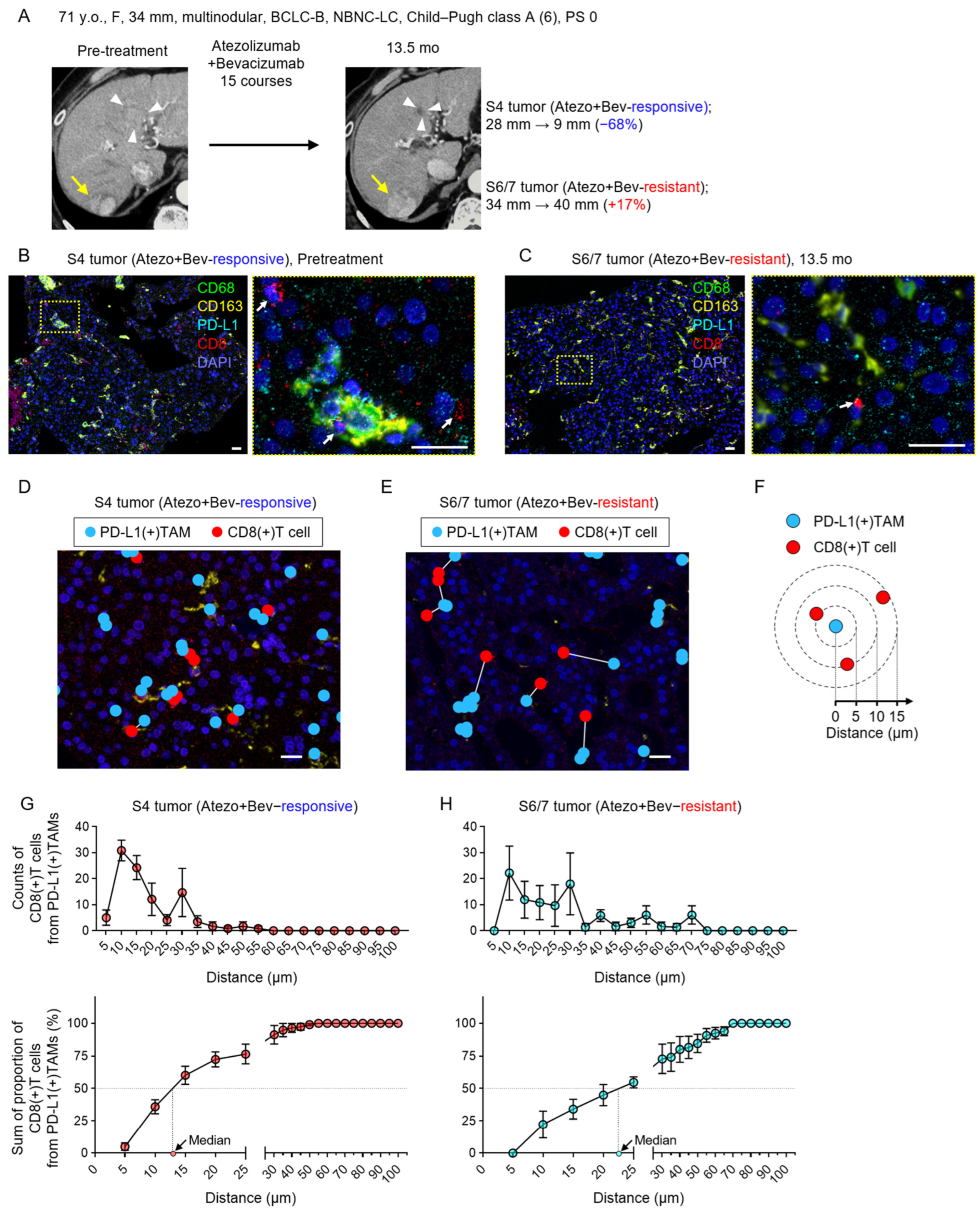
3.1. Intrapatient Spatial Immune Differences in Atezo+Bev-Treated HCC
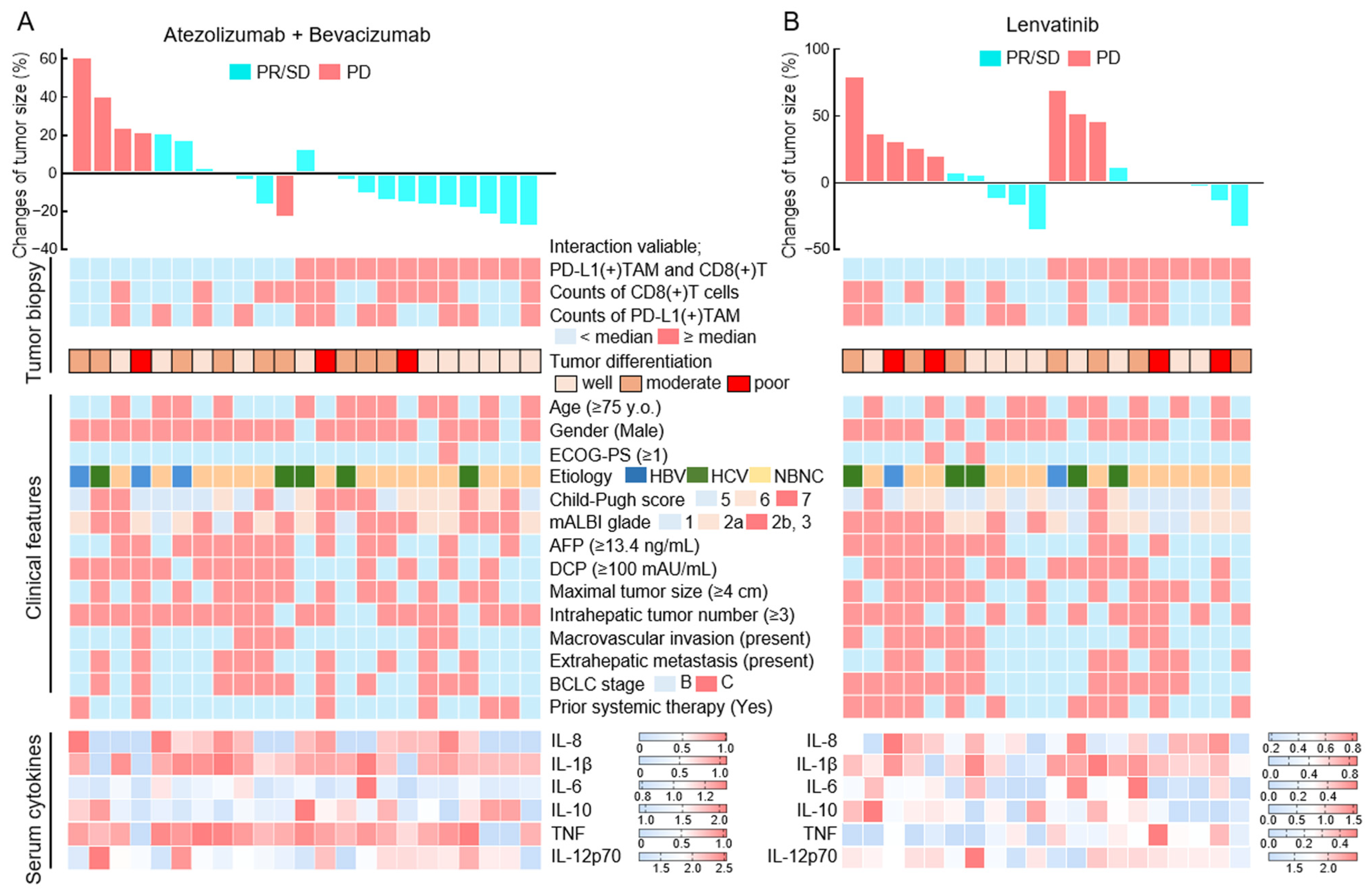
3.2. Pretreatment Factors Associated with Therapeutic Response to Atezo+Bev and Lenvatinib
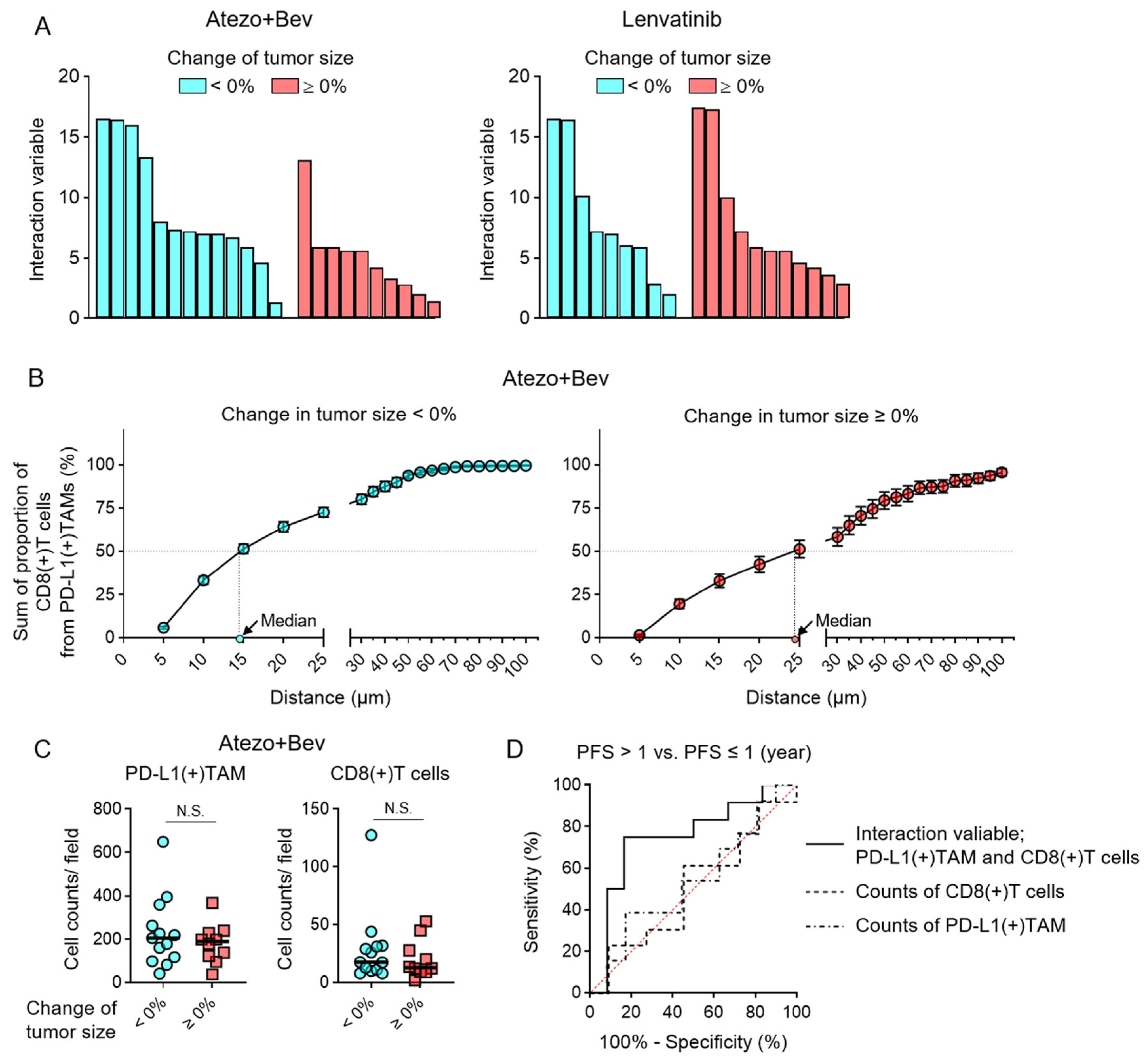
3.3. Spatial Interactions Between PD-L1(+) TAMs and CD8(+) T Cells and Therapeutic Response
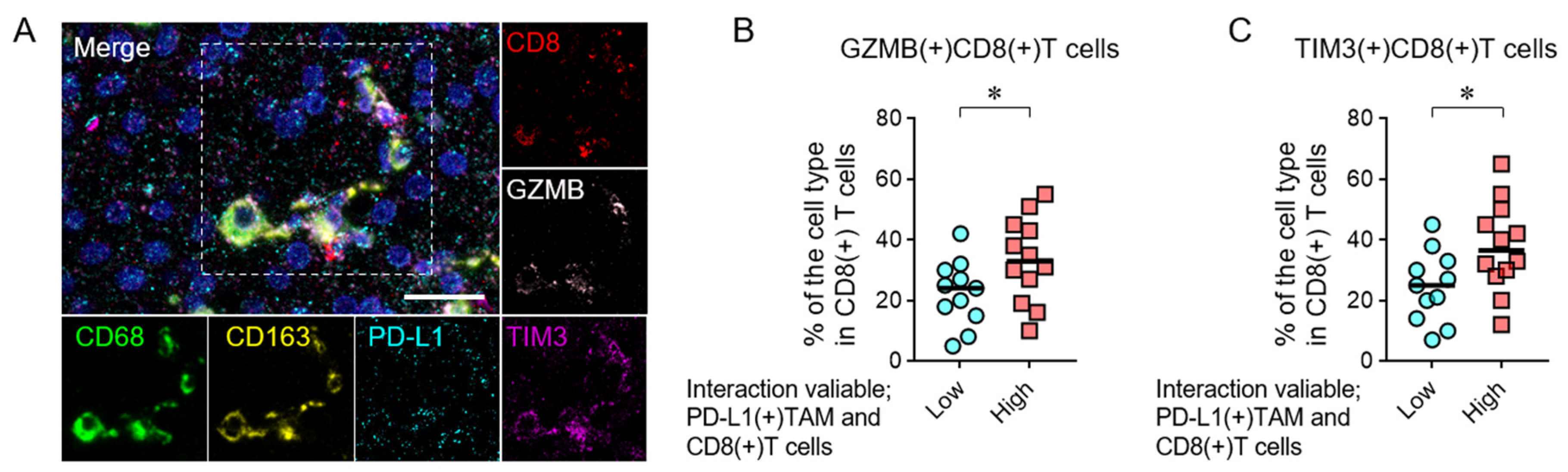
3.4. Spatial Interactions Between PD-L1(+) TAMs and CD8(+) T Cells and Functional Marker Expression
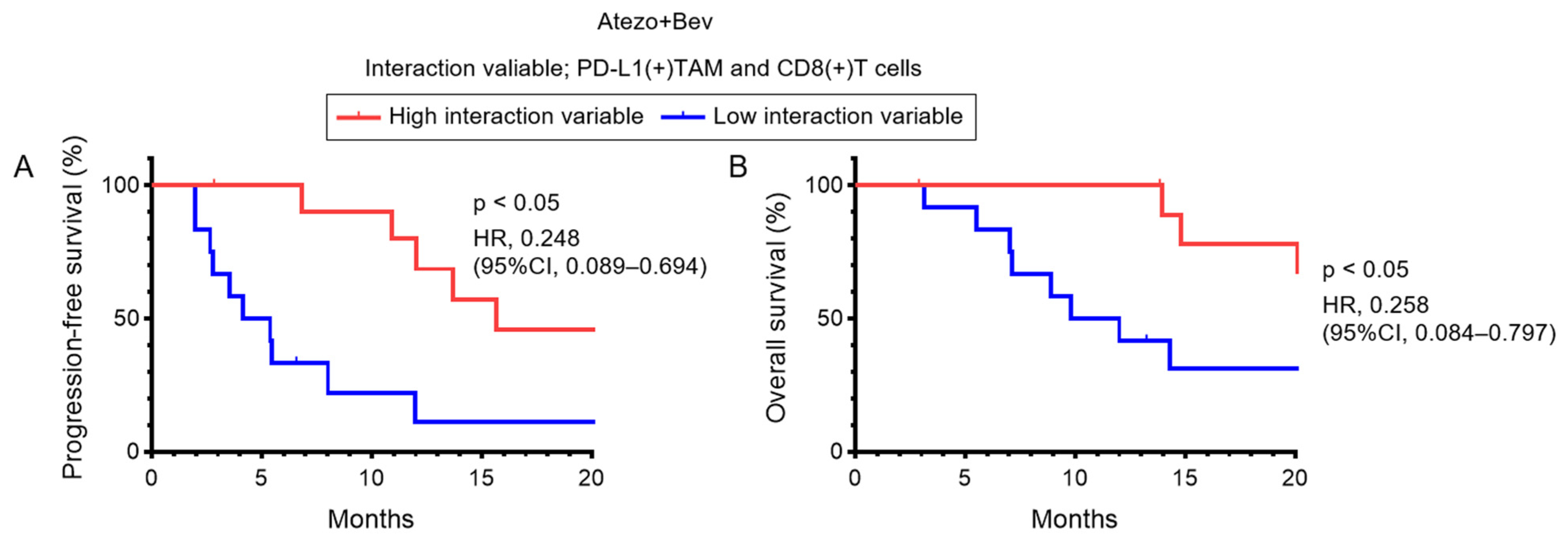
3.5. Association Between PD-L1(+) TAM–CD8(+) T Cell Interactions and Clinical Outcomes
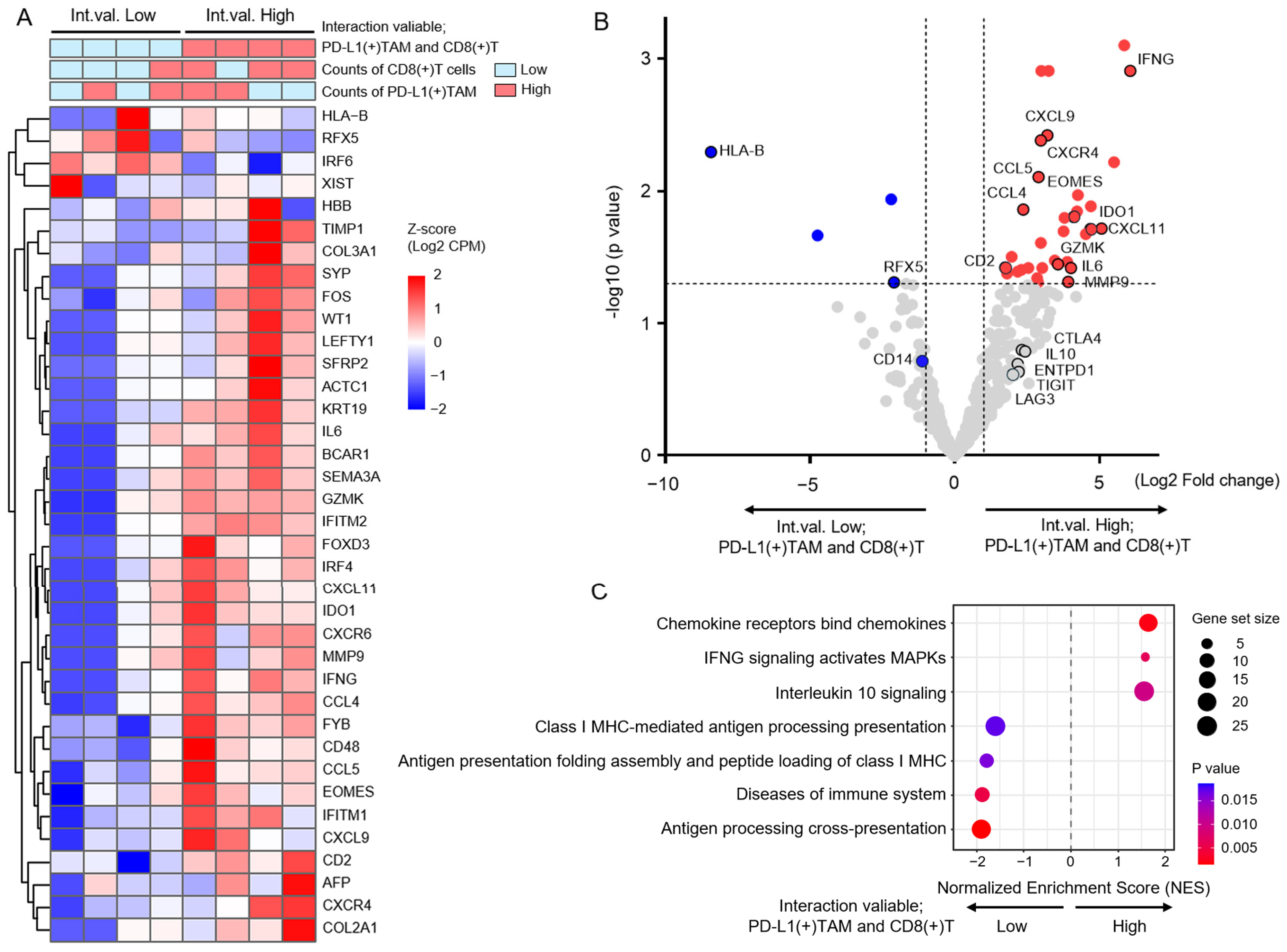
3.6. Intratumoral Molecular Profiles Associated with PD-L1(+) TAM–CD8(+) T Cell Interactions in HCC
4. Discussion
5. Conclusions
Supplementary Materials
Author Contributions
Funding
Institutional Review Board Statement
Informed Consent Statement
Data Availability Statement
Acknowledgments
Conflicts of Interest
References
- Llovet, J.M.; Kelley, R.K.; Villanueva, A.; Singal, A.G.; Pikarsky, E.; Roayaie, S.; Lencioni, R.; Koike, K.; Zucman-Rossi, J.; Finn, R.S. Hepatocellular carcinoma. Nat. Rev. Dis. Primers 2021, 7, 6. [Google Scholar] [CrossRef]
- Siegel, R.L.; Giaquinto, A.N.; Jemal, A. Cancer statistics, 2024. CA Cancer J. Clin. 2024, 74, 12–49. [Google Scholar] [CrossRef]
- Cheng, A.L.; Qin, S.; Ikeda, M.; Galle, P.R.; Ducreux, M.; Kim, T.Y.; Lim, H.Y.; Kudo, M.; Breder, V.; Merle, P.; et al. Updated efficacy and safety data from IMbrave150: Atezolizumab plus bevacizumab vs. sorafenib for unresectable hepatocellular carcinoma. J. Hepatol. 2022, 76, 862–873. [Google Scholar] [CrossRef]
- Finn, R.S.; Qin, S.; Ikeda, M.; Galle, P.R.; Ducreux, M.; Kim, T.Y.; Kudo, M.; Breder, V.; Merle, P.; Kaseb, A.O.; et al. Atezolizumab plus Bevacizumab in Unresectable Hepatocellular Carcinoma. N. Engl. J. Med. 2020, 382, 1894–1905. [Google Scholar] [CrossRef]
- Pinter, M.; Scheiner, B.; Pinato, D.J. Immune checkpoint inhibitors in hepatocellular carcinoma: Emerging challenges in clinical practice. Lancet Gastroenterol. Hepatol. 2023, 8, 760–770. [Google Scholar] [CrossRef]
- Pfister, D.; Núñez, N.G.; Pinyol, R.; Govaere, O.; Pinter, M.; Szydlowska, M.; Gupta, R.; Qiu, M.; Deczkowska, A.; Weiner, A.; et al. NASH limits anti-tumour surveillance in immunotherapy-treated HCC. Nature 2021, 592, 450–456. [Google Scholar] [CrossRef]
- Ma, L.; Hernandez, M.O.; Zhao, Y.; Mehta, M.; Tran, B.; Kelly, M.; Rae, Z.; Hernandez, J.M.; Davis, J.L.; Martin, S.P.; et al. Tumor Cell Biodiversity Drives Microenvironmental Reprogramming in Liver Cancer. Cancer Cell 2019, 36, 418–430.e6. [Google Scholar] [CrossRef]
- Seitz, H.K.; Bataller, R.; Cortez-Pinto, H.; Gao, B.; Gual, A.; Lackner, C.; Mathurin, P.; Mueller, S.; Szabo, G.; Tsukamoto, H. Alcoholic liver disease. Nat. Rev. Dis. Primers 2018, 4, 16. [Google Scholar] [CrossRef]
- Binnewies, M.; Roberts, E.W.; Kersten, K.; Chan, V.; Fearon, D.F.; Merad, M.; Coussens, L.M.; Gabrilovich, D.I.; Ostrand-Rosenberg, S.; Hedrick, C.C.; et al. Understanding the tumor immune microenvironment (TIME) for effective therapy. Nat. Med. 2018, 24, 541–550. [Google Scholar] [CrossRef]
- Cheng, K.; Cai, N.; Zhu, J.; Yang, X.; Liang, H.; Zhang, W. Tumor-associated macrophages in liver cancer: From mechanisms to therapy. Cancer Commun. 2022, 42, 1112–1140. [Google Scholar] [CrossRef]
- Mantovani, A.; Biswas, S.K.; Galdiero, M.R.; Sica, A.; Locati, M. Macrophage plasticity and polarization in tissue repair and remodelling. J. Pathol. 2013, 229, 176–185. [Google Scholar] [CrossRef]
- Nosaka, T.; Murata, Y.; Takahashi, K.; Naito, T.; Ofuji, K.; Matsuda, H.; Ohtani, M.; Hiramatsu, K.; Imamura, Y.; Goi, T.; et al. Hepatocellular carcinoma progression promoted by 5-lipoxygenase activity in CD163(+) tumor-associated macrophages. Biomed. Pharmacother. 2023, 162, 114592. [Google Scholar] [CrossRef] [PubMed]
- Lin, C.; He, H.; Liu, H.; Li, R.; Chen, Y.; Qi, Y.; Jiang, Q.; Chen, L.; Zhang, P.; Zhang, H.; et al. Tumour-associated macrophages-derived CXCL8 determines immune evasion through autonomous PD-L1 expression in gastric cancer. Gut 2019, 68, 1764–1773. [Google Scholar] [CrossRef]
- Liu, Y.; Zugazagoitia, J.; Ahmed, F.S.; Henick, B.S.; Gettinger, S.N.; Herbst, R.S.; Schalper, K.A.; Rimm, D.L. Immune Cell PD-L1 Colocalizes with Macrophages and Is Associated with Outcome in PD-1 Pathway Blockade Therapy. Clin. Cancer Res. 2020, 26, 970–977. [Google Scholar] [CrossRef]
- Nosaka, T.; Ohtani, M.; Yamashita, J.; Murata, Y.; Akazawa, Y.; Tanaka, T.; Takahashi, K.; Naito, T.; Imamura, Y.; Koneri, K.; et al. PD-L1(+) tumor-associated macrophages induce CD8(+) T Cell exhaustion in hepatocellular carcinoma. Neoplasia 2025, 69, 101234. [Google Scholar] [CrossRef]
- Fridman, W.H.; Zitvogel, L.; Sautès-Fridman, C.; Kroemer, G. The immune contexture in cancer prognosis and treatment. Nat. Rev. Clin. Oncol. 2017, 14, 717–734. [Google Scholar] [CrossRef]
- Tumeh, P.C.; Harview, C.L.; Yearley, J.H.; Shintaku, I.P.; Taylor, E.J.; Robert, L.; Chmielowski, B.; Spasic, M.; Henry, G.; Ciobanu, V.; et al. PD-1 blockade induces responses by inhibiting adaptive immune resistance. Nature 2014, 515, 568–571. [Google Scholar] [CrossRef] [PubMed]
- Johnson, D.B.; Bordeaux, J.; Kim, J.Y.; Vaupel, C.; Rimm, D.L.; Ho, T.H.; Joseph, R.W.; Daud, A.I.; Conry, R.M.; Gaughan, E.M.; et al. Quantitative Spatial Profiling of PD-1/PD-L1 Interaction and HLA-DR/IDO-1 Predicts Improved Outcomes of Anti-PD-1 Therapies in Metastatic Melanoma. Clin. Cancer Res. 2018, 24, 5250–5260. [Google Scholar] [CrossRef] [PubMed]
- Schürch, C.M.; Bhate, S.S.; Barlow, G.L.; Phillips, D.J.; Noti, L.; Zlobec, I.; Chu, P.; Black, S.; Demeter, J.; McIlwain, D.R.; et al. Coordinated Cellular Neighborhoods Orchestrate Antitumoral Immunity at the Colorectal Cancer Invasive Front. Cell 2020, 182, 1341–1359.e19. [Google Scholar] [CrossRef]
- Kudo, M.; Finn, R.S.; Qin, S.; Han, K.H.; Ikeda, K.; Piscaglia, F.; Baron, A.; Park, J.W.; Han, G.; Jassem, J.; et al. Lenvatinib versus sorafenib in first-line treatment of patients with unresectable hepatocellular carcinoma: A randomised phase 3 non-inferiority trial. Lancet 2018, 391, 1163–1173. [Google Scholar] [CrossRef] [PubMed]
- Johnson, P.J.; Berhane, S.; Kagebayashi, C.; Satomura, S.; Teng, M.; Reeves, H.L.; O’Beirne, J.; Fox, R.; Skowronska, A.; Palmer, D.; et al. Assessment of liver function in patients with hepatocellular carcinoma: A new evidence-based approach-the ALBI grade. J. Clin. Oncol. 2015, 33, 550–558. [Google Scholar] [CrossRef] [PubMed]
- Hiraoka, A.; Kumada, T.; Tsuji, K.; Takaguchi, K.; Itobayashi, E.; Kariyama, K.; Ochi, H.; Tajiri, K.; Hirooka, M.; Shimada, N.; et al. Validation of Modified ALBI Grade for More Detailed Assessment of Hepatic Function in Hepatocellular Carcinoma Patients: A Multicenter Analysis. Liver Cancer 2019, 8, 121–129. [Google Scholar] [CrossRef]
- Pugh, R.N.; Murray-Lyon, I.M.; Dawson, J.L.; Pietroni, M.C.; Williams, R. Transection of the oesophagus for bleeding oesophageal varices. Br. J. Surg. 1973, 60, 646–649. [Google Scholar] [CrossRef]
- Steinhart, B.; Jordan, K.R.; Bapat, J.; Post, M.D.; Brubaker, L.W.; Bitler, B.G.; Wrobel, J. The Spatial Context of Tumor-Infiltrating Immune Cells Associates with Improved Ovarian Cancer Survival. Mol. Cancer Res. 2021, 19, 1973–1979. [Google Scholar] [CrossRef] [PubMed]
- Dustin, M.L. The immunological synapse. Cancer Immunol. Res. 2014, 2, 1023–1033. [Google Scholar] [CrossRef]
- O’Shea, J.J.; Murray, P.J. Cytokine signaling modules in inflammatory responses. Immunity 2008, 28, 477–487. [Google Scholar] [CrossRef]
- Taube, J.M.; Anders, R.A.; Young, G.D.; Xu, H.; Sharma, R.; McMiller, T.L.; Chen, S.; Klein, A.P.; Pardoll, D.M.; Topalian, S.L.; et al. Colocalization of inflammatory response with B7-h1 expression in human melanocytic lesions supports an adaptive resistance mechanism of immune escape. Sci. Transl. Med. 2012, 4, 127ra37. [Google Scholar] [CrossRef]
- House, I.G.; Savas, P.; Lai, J.; Chen, A.X.Y.; Oliver, A.J.; Teo, Z.L.; Todd, K.L.; Henderson, M.A.; Giuffrida, L.; Petley, E.V.; et al. Macrophage-Derived CXCL9 and CXCL10 Are Required for Antitumor Immune Responses Following Immune Checkpoint Blockade. Clin. Cancer Res. 2020, 26, 487–504. [Google Scholar] [CrossRef]
- Mempel, T.R.; Lill, J.K.; Altenburger, L.M. How chemokines organize the tumour microenvironment. Nat. Rev. Cancer 2024, 24, 28–50. [Google Scholar] [CrossRef]
- Gocher, A.M.; Workman, C.J.; Vignali, D.A.A. Interferon-γ: Teammate or opponent in the tumour microenvironment? Nat. Rev. Immunol. 2022, 22, 158–172. [Google Scholar] [CrossRef] [PubMed]
- Chowell, D.; Morris, L.G.T.; Grigg, C.M.; Weber, J.K.; Samstein, R.M.; Makarov, V.; Kuo, F.; Kendall, S.M.; Requena, D.; Riaz, N.; et al. Patient HLA class I genotype influences cancer response to checkpoint blockade immunotherapy. Science 2018, 359, 582–587. [Google Scholar] [CrossRef]
- Garrido, F.; Perea, F.; Bernal, M.; Sánchez-Palencia, A.; Aptsiauri, N.; Ruiz-Cabello, F. The Escape of Cancer from T Cell-Mediated Immune Surveillance: HLA Class I Loss and Tumor Tissue Architecture. Vaccines 2017, 5, 7. [Google Scholar] [CrossRef] [PubMed]
- Rooney, M.S.; Shukla, S.A.; Wu, C.J.; Getz, G.; Hacohen, N. Molecular and genetic properties of tumors associated with local immune cytolytic activity. Cell 2015, 160, 48–61. [Google Scholar] [CrossRef]
- Wallin, J.J.; Bendell, J.C.; Funke, R.; Sznol, M.; Korski, K.; Jones, S.; Hernandez, G.; Mier, J.; He, X.; Hodi, F.S.; et al. Atezolizumab in combination with bevacizumab enhances antigen-specific T-cell migration in metastatic renal cell carcinoma. Nat. Commun. 2016, 7, 12624. [Google Scholar] [CrossRef]
- Fukumura, D.; Kloepper, J.; Amoozgar, Z.; Duda, D.G.; Jain, R.K. Enhancing cancer immunotherapy using antiangiogenics: Opportunities and challenges. Nat. Rev. Clin. Oncol. 2018, 15, 325–340. [Google Scholar] [CrossRef]
- Qian, B.Z.; Pollard, J.W. Macrophage diversity enhances tumor progression and metastasis. Cell 2010, 141, 39–51. [Google Scholar] [CrossRef] [PubMed]
- Chiu, P.L.; Chang, C.H.; Lin, Y.L.; Tsou, P.H.; Li, B.R. Rapid and Safe Isolation of Human Peripheral Blood B and T Lymphocytes through Spiral Microfluidic Channels. Sci. Rep. 2019, 9, 8145. [Google Scholar] [CrossRef] [PubMed]
- Carstens, J.L.; Correa de Sampaio, P.; Yang, D.; Barua, S.; Wang, H.; Rao, A.; Allison, J.P.; LeBleu, V.S.; Kalluri, R. Spatial computation of intratumoral T cells correlates with survival of patients with pancreatic cancer. Nat. Commun. 2017, 8, 15095. [Google Scholar] [CrossRef] [PubMed]
- Benci, J.L.; Johnson, L.R.; Choa, R.; Xu, Y.; Qiu, J.; Zhou, Z.; Xu, B.; Ye, D.; Nathanson, K.L.; June, C.H.; et al. Opposing Functions of Interferon Coordinate Adaptive and Innate Immune Responses to Cancer Immune Checkpoint Blockade. Cell 2019, 178, 933–948.e14. [Google Scholar] [CrossRef]
- Miller, B.C.; Sen, D.R.; Al Abosy, R.; Bi, K.; Virkud, Y.V.; LaFleur, M.W.; Yates, K.B.; Lako, A.; Felt, K.; Naik, G.S.; et al. Subsets of exhausted CD8(+) T cells differentially mediate tumor control and respond to checkpoint blockade. Nat. Immunol. 2019, 20, 326–336. [Google Scholar] [CrossRef]
- Singer, M.; Wang, C.; Cong, L.; Marjanovic, N.D.; Kowalczyk, M.S.; Zhang, H.; Nyman, J.; Sakuishi, K.; Kurtulus, S.; Gennert, D.; et al. A Distinct Gene Module for Dysfunction Uncoupled from Activation in Tumor-Infiltrating T Cells. Cell 2016, 166, 1500–1511.e9. [Google Scholar] [CrossRef]
- Beltra, J.C.; Manne, S.; Abdel-Hakeem, M.S.; Kurachi, M.; Giles, J.R.; Chen, Z.; Casella, V.; Ngiow, S.F.; Khan, O.; Huang, Y.J.; et al. Developmental Relationships of Four Exhausted CD8(+) T Cell Subsets Reveals Underlying Transcriptional and Epigenetic Landscape Control Mechanisms. Immunity 2020, 52, 825–841.e8. [Google Scholar] [CrossRef]
- Blank, C.U.; Haining, W.N.; Held, W.; Hogan, P.G.; Kallies, A.; Lugli, E.; Lynn, R.C.; Philip, M.; Rao, A.; Restifo, N.P.; et al. Defining ‘T cell exhaustion’. Nat. Rev. Immunol. 2019, 19, 665–674. [Google Scholar] [CrossRef]
- Allen, E.; Jabouille, A.; Rivera, L.B.; Lodewijckx, I.; Missiaen, R.; Steri, V.; Feyen, K.; Tawney, J.; Hanahan, D.; Michael, I.P.; et al. Combined antiangiogenic and anti-PD-L1 therapy stimulates tumor immunity through HEV formation. Sci. Transl. Med. 2017, 9, eaak9679. [Google Scholar] [CrossRef]
- Huang, Y.; Goel, S.; Duda, D.G.; Fukumura, D.; Jain, R.K. Vascular normalization as an emerging strategy to enhance cancer immunotherapy. Cancer Res. 2013, 73, 2943–2948. [Google Scholar] [CrossRef] [PubMed]
- Kimura, T.; Kato, Y.; Ozawa, Y.; Kodama, K.; Ito, J.; Ichikawa, K.; Yamada, K.; Hori, Y.; Tabata, K.; Takase, K.; et al. Immunomodulatory activity of lenvatinib contributes to antitumor activity in the Hepa1-6 hepatocellular carcinoma model. Cancer Sci. 2018, 109, 3993–4002. [Google Scholar] [CrossRef] [PubMed]
- Malerba, S.; Vladimirov, M.; Goyal, A.; Dulskas, A.; Baušys, A.; Cwalinski, T.; Girnyi, S.; Skokowski, J.; Duka, R.; Molchanov, R.; et al. Artificial Intelligence Applications in Gastric Cancer Surgery: Bridging Early Diagnosis and Responsible Precision Medicine. J. Clin. Med. 2026, 15, 2208. [Google Scholar] [CrossRef] [PubMed]



| Characteristics | Atezolizumab + Bevacizumab (n = 23) | Lenvatinib (n = 20) | p Value |
|---|---|---|---|
| Age, median (IQR), years | 75 (64–79) | 73 (63–79) | 0.758 * |
| Gender, male/female, n | 20/3 | 15/5 | 0.440 † |
| ECOG PS, 0/1/2/3/4, n | 21/2/0/0/0 | 18/2/0/0/0 | >0.999 † |
| Etiology, HBV/HCV/NBNC, n | 3/5/15 | 2/5/13 | 0.935 ‡ |
| PLT, ×109/L, median (IQR) | 162 (142–202) | 162 (129–258) | 0.669 * |
| PT, INR, median (IQR) | 1.04 (0.98–1.14) | 1.05 (0.97–1.10) | 0.668 * |
| ALB, g/dL, median (IQR) | 3.5 (3.1–3.8) | 3.7 (3.4–3.8) | 0.256 * |
| T-bil, mg/dL, median (IQR) | 0.9 (0.6–1.1) | 0.8 (0.6–1.1) | 0.516 * |
| Child–Pugh score, 5/6/7, n | 9/6/8 | 12/6/2 | 0.935 ‡ |
| Modified ALBI grade, 1/2a/2b/3, n | 3/8/10/2 | 4/8/7/1 | 0.147 ‡ |
| ALT, IU/L, median (IQR) | 23 (18–35) | 29 (18–37) | 0.842 * |
| AFP, ng/mL, median (IQR) | 18.5 (5.0–277.0) | 20.9 (4.4–80.5) | 0.871 * |
| DCP, mAU/mL, median (IQR) | 173 (40–1244) | 208 (50–655) | 0.243 * |
| Maximum tumor size, cm, median (IQR) | 4.0 (2.9–8.9) | 5.0 (2.8–10.1) | 0.871 * |
| Number of tumors, 1/2/3+, n | 2/2/19 | 3/4/13 | 0.408 ‡ |
| Vascular invasion, absent/present, n | 17/6 | 12/8 | 0.515 † |
| BCLC stage, A/B/C, n | 0/12/11 | 0/8/12 | 0.544 ‡ |
| Extrahepatic metastasis, n | |||
| None | 14 | 13 | >0.999 † |
| Lymph node | 4 | 3 | |
| Bone | 3 | 0 | |
| Lung | 0 | 1 | |
| Adrenal gland | 0 | 2 | |
| Lymph node, bone | 1 | 0 | |
| Lymph node, lung | 1 | 0 | |
| Lymph node, lung, adrenal gland | 0 | 1 | |
| Prior systemic therapy, n | |||
| None | 15 | 9 | 0.228 † |
| Sorafenib | 0 | 0 | |
| Lenvatinib | 5 | ― | |
| Atezolizumab plus bevacizumab | ― | 7 | |
| HAIC | 1 | 3 | |
| Sorafenib, HAIC | 1 | 1 | |
| Lenvatinib, HAIC | 1 | 0 | |
| Observation period, median, days | 435 | 436 | 0.503 * |
| Variable | Value |
|---|---|
| Age, median (IQR), years | 65 (61–71) |
| Sex, male/female, n | 7/1 |
| Etiology, HBV/HCV/NBNC, n | 1/3/4 |
| PLT, ×109/L, median (IQR) | 169 (121–193) |
| PT, %, median (IQR) | 88.4 (80.2–104.1) |
| ALT, IU/L, median (IQR) | 29 (17–43) |
| ALB, g/dL, median (IQR) | 4.0 (3.7–4.1) |
| T-bil, mg/dL, median (IQR) | 1.0 (0.8–1.4) |
| Child–Pugh score, 5/6/7, n | 7/0/1 |
| Modified ALBI grade, 1/2a/2b/3, n | 4/2/2/0 |
| AFP, ng/mL, median (IQR) | 5.7 (4.2–8.1) |
| DCP, mAU/mL, median (IQR) | 42 (31–210) |
| Maximum tumor size, mm, median (IQR) | 26 (22–41) |
| Tumor multiplicity, single/multiple, n | 8/0 |
| Tumor differentiation, well/moderate/poor, n | 3/4/1 |
| Vascular invasion | |
| Vp, 0–1/2–3, n | 8/0 |
| Vv, 0–1/2, n | 8/0 |
| Va, 0–1/2, n | 8/0 |
| BCLC stage, 0/A/B/C, n | 0/8/0/0 |
| Fibrosis, 0/1/2/3/4, n | 0/2/2/1/3 |
| Univariate Analysis | Multivariate Analysis | ||||
|---|---|---|---|---|---|
| Variables | Patients (n = 23) | p Value | Hazard Ratio | 95% CI | p Value |
| Tumor biopsy | |||||
| Interaction variable; PD-L1(+) TAM and CD8(+) T cells, (<median/≥median) | 11/12 | 0.001 | 0.8373 | 0.6870–0.9773 | 0.022 |
| Counts of CD8(+) T cells, (<median/≥median) | 12/11 | 0.376 | |||
| Counts of PD-L1(+) TAM, (<median/≥median) | 12/11 | 0.956 | |||
| Tumor differentiation (well/moderate, poor) | 11/12 | 0.273 | |||
| Clinical features | |||||
| Age, y, (≤75/>75) | 11/12 | 0.619 | |||
| Gender (male/female) | 20/3 | 0.244 | |||
| Etiology (HBV, HCV/NBNC) | 8/15 | 0.231 | |||
| Child–Pugh score, (5/6/7) | 9/14 | 0.557 | |||
| mALBI grade, (1/2a/2b/3) | 11/12 | 0.610 | |||
| AFP, ng/mL, (<13.4/≥13.4) | 10/13 | 0.219 | |||
| DCP, mAU/mL, (<100/≥100) | 9/14 | 0.017 | 1.000 | 0.9999–1.000 | 0.307 |
| Maximum tumor size, cm, (<4/≥4) | 10/13 | 0.327 | |||
| Tumor number, (<3/≥3) | 4/19 | 0.445 | |||
| Vascular invasion (absent/present) | 6/17 | 0.030 | 4.252 | 1.060–17.44 | 0.042 |
| Extrahepatic metastasis (absent/present) | 17/6 | 0.497 | |||
| BCLC stage (B/C) | 12/11 | 0.332 | |||
| Prior systemic therapy (None or HAIC/TKI) | 17/6 | 0.119 | |||
| Serum cytokines | |||||
| IL-8, (<median/≥median) | 12/11 | 0.637 | |||
| IL-1β, (<median/≥median) | 13/10 | 0.486 | |||
| IL-6, (<median/≥median) | 12/11 | 0.607 | |||
| IL-10, (<median/≥median) | 12/11 | 0.214 | |||
| TNF, (<median/≥median) | 12/11 | 0.723 | |||
| IL-12p70, (<median/≥median) | 12/11 | 0.156 |
Disclaimer/Publisher’s Note: The statements, opinions and data contained in all publications are solely those of the individual author(s) and contributor(s) and not of MDPI and/or the editor(s). MDPI and/or the editor(s) disclaim responsibility for any injury to people or property resulting from any ideas, methods, instructions or products referred to in the content. |
© 2026 by the authors. Licensee MDPI, Basel, Switzerland. This article is an open access article distributed under the terms and conditions of the Creative Commons Attribution (CC BY) license.
Share and Cite
Nosaka, T.; Ohtani, M.; Yamashita, J.; Murata, Y.; Akazawa, Y.; Tanaka, T.; Takahashi, K.; Naito, T.; Imamura, Y.; Koneri, K.; et al. Spatial Proximity Between PD-L1(+) Tumor-Associated Macrophages and CD8(+) T Cells Influences Response to Atezolizumab Plus Bevacizumab in Hepatocellular Carcinoma. Cancers 2026, 18, 1422. https://doi.org/10.3390/cancers18091422
Nosaka T, Ohtani M, Yamashita J, Murata Y, Akazawa Y, Tanaka T, Takahashi K, Naito T, Imamura Y, Koneri K, et al. Spatial Proximity Between PD-L1(+) Tumor-Associated Macrophages and CD8(+) T Cells Influences Response to Atezolizumab Plus Bevacizumab in Hepatocellular Carcinoma. Cancers. 2026; 18(9):1422. https://doi.org/10.3390/cancers18091422
Chicago/Turabian StyleNosaka, Takuto, Masahiro Ohtani, Junki Yamashita, Yosuke Murata, Yu Akazawa, Tomoko Tanaka, Kazuto Takahashi, Tatsushi Naito, Yoshiaki Imamura, Kenji Koneri, and et al. 2026. "Spatial Proximity Between PD-L1(+) Tumor-Associated Macrophages and CD8(+) T Cells Influences Response to Atezolizumab Plus Bevacizumab in Hepatocellular Carcinoma" Cancers 18, no. 9: 1422. https://doi.org/10.3390/cancers18091422
APA StyleNosaka, T., Ohtani, M., Yamashita, J., Murata, Y., Akazawa, Y., Tanaka, T., Takahashi, K., Naito, T., Imamura, Y., Koneri, K., Goi, T., & Nakamoto, Y. (2026). Spatial Proximity Between PD-L1(+) Tumor-Associated Macrophages and CD8(+) T Cells Influences Response to Atezolizumab Plus Bevacizumab in Hepatocellular Carcinoma. Cancers, 18(9), 1422. https://doi.org/10.3390/cancers18091422