1. Introduction
Pediatric T-cell acute lymphoblastic leukemia (T-ALL) remains a therapeutic challenge, with approximately 20% of patients experiencing relapse due to a limited understanding of molecular drivers [
1,
2]. While genomic studies have identified recurrent mutations in NOTCH1 and PTEN [
3,
4], a significant portion of T-ALL cases lack these canonical lesions, suggesting the involvement of other oncogenic mechanisms [
5]. Emerging evidence suggests that cytoskeletal regulators may represent a novel class of therapeutic targets [
6,
7,
8]. Among these, kinesin superfamily proteins (KIFs) have been implicated in malignancy through their roles in intracellular transport and cell division [
9,
10,
11]. Notably, the microtubule-associated motor protein KIF21B has drawn attention due to its reported oncogenic functions in solid tumors [
12,
13] and critical roles in neural development [
14]. Intriguingly, beyond its structural role, the cytoskeleton is increasingly recognized as a dynamic signaling hub that can influence key oncogenic pathways, including those critical for leukemia cell survival and proliferation [
15,
16].
The regulation of kinesin proteins in cancer, particularly in hematological malignancies, is poorly understood. Post-translational modifications, such as ubiquitination, are key mechanisms controlling protein stability, localization and activity of oncogenic drivers [
17]. The TRIM (Tripartite Motif) family of E3 ubiquitin ligases has emerged as critical regulators of diverse cellular processes and are frequently dysregulated in cancer [
18,
19]. In neurons, TRIM3 has been shown to post-translationally regulate KIF21B [
20], yet whether this regulatory axis exists or plays any role in cancer biology remains completely unexplored [
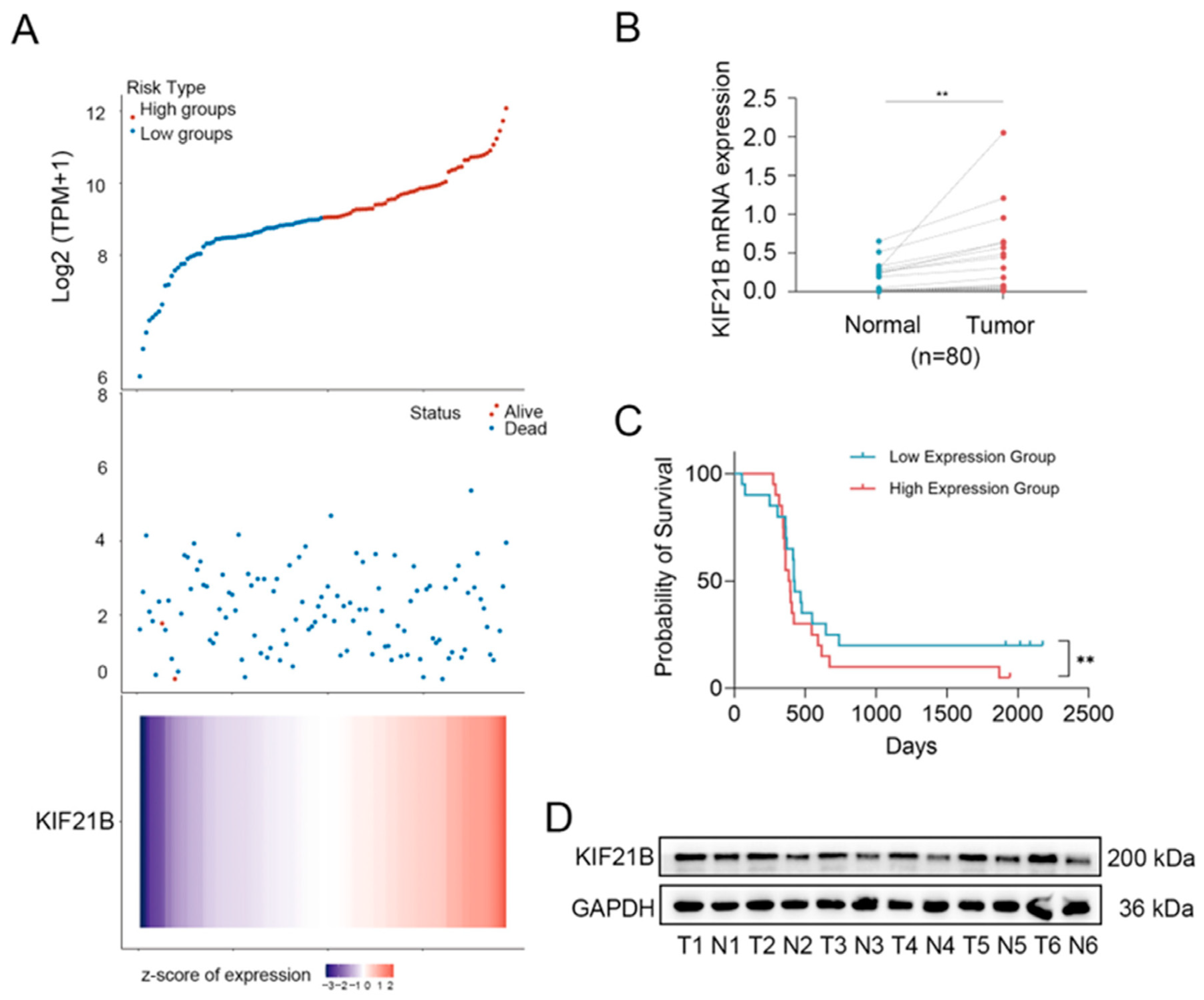
20]. Our preliminary data identified aberrant overexpression of KIF21B in primary T-ALL samples, which correlated with poor patient outcomes, suggesting a potential functional importance in leukemogenesis.
Therefore, significant gaps exist in our knowledge. The functional role and mechanistic contribution of KIF21B in T-ALL are unknown. The upstream regulators controlling KIF21B in any cancer context are elusive. The way that KIF21B integrates with established oncogenic signaling pathways in leukemia is unclear. Based on this background, this study was designed to investigate the oncogenic role of KIF21B in T-ALL. We aimed to determine its clinical relevance, elucidate its biological functions and identify both its upstream regulator and key downstream effector pathway. Our findings bridge the discrete fields of cytoskeletal biology, ubiquitin signaling and leukemia research, potentially offering new perspectives for targeting high-risk pediatric T-ALL.
2. Materials and Methods
2.1. Data Acquisition and Processing
We downloaded STAR-counts data and corresponding clinical information for pediatric T-ALL from the TARGET database. We then extracted data in TPM format and performed normalization using the log2(TPM + 1) transformation. After retaining samples that included both RNAseq data and clinical information, we ultimately performed further analysis. We used the log rank test to compare the survival differences between the two groups mentioned above in the KM survival analysis. All analytical methods and R packages were performed using R software version v4.0.3 (The R Foundation for Statistical Computing, 2020), with p < 0.05 being considered as statistically significant.
2.2. Collection and Processing of PBMCs from T-ALL Patients
Peripheral blood samples from patients with T-ALL and healthy controls were obtained from the Department of Pediatrics, Jiangsu Provincial People’s Hospital, from September 2023 to June 2025. Clinical and laboratory data were retrospectively collected from medical records. The detailed demographic, clinical and molecular characteristics of the T-ALL cohort are summarized in
Table S1. Peripheral venous blood was collected using standard anticoagulant tubes and processed within 2 h to preserve cell viability. Using low-speed centrifugation, red blood cells and granulocytes were sedimented, while mononuclear cells (PBMCs) accumulated at the buffy coat layer. This whitish interphase was carefully aspirated, washed twice gently with physiological buffer to remove residual plasma and separation medium, and quickly assessed under a microscope with dye exclusion to ensure >95% cell viability. Cells were resuspended in serum-containing medium for subsequent experiments.
2.3. RNA Extraction and qRT-PCR
When suspended cells reached a density of approximately 8 × 10
5 cells/mL, the culture medium was collected and centrifuged at 200×
g for 5 min. The pellet was washed with pre-cooled PBS and lysed in Trizol reagent. After adding chloroform (0.2 mL per 1 mL Trizol), the mixture was vigorously shaken, incubated on ice for 3 min and centrifuged at 4 °C and 12,000 rpm for 15 min. The upper aqueous phase was collected, mixed with an equal volume of isopropanol to precipitate RNA, washed with ethanol and centrifuged again. The RNA pellet was air-dried and dissolved in DEPC water. Concentration was measured using NanoDrop, Wilmington, DE, USA. cDNA was synthesized using HiScript Q RT SuperMix (Vazyme, Nanjing, China). qRT-PCR was performed using a real-time PCR system. GAPDH served as the internal control for normalizing mRNA expressions. Relative expression levels were calculated using the 2
−ΔΔCT or 2
−ΔCT method. Primer sequences are listed in
Table S2. The primers used in this study were synthesized by Applied Biosystems, Foster City, CA, USA.
2.4. Western Blot Analysis
Cells were harvested and lysed in RIPA buffer supplemented with protease inhibitor, phosphatase inhibitor and PMSF. Lysates were sonicated for 30 s and centrifuged at 14,000×
g for 15 min. Supernatants were mixed with 5 × loading buffer and boiled at 95 °C for 10 min. Proteins were separated by SDS-PAGE, transferred to membranes, blocked for 15 min and incubated with primary antibodies overnight at 4 °C. After secondary antibody incubation, membranes were washed and developed. Antibodies used are as follows: GAPDH (1:1000, Proteintech, Rosemont, IL, USA, 10494-1-AP), KIF21B (1:1000, Aviva Systems Biology, San Diego, CA, USA, ARP66385_P050), p62 (1:1000, Proteintech, 18420-1-AP), P-akt (1:1000, Proteintech, 66444-1-Ig), PTEN (1:1000, Proteintech, 60300-3-Ig), cleaved caspase-3 (1:1000, Proteintech, 19677-1-AP), Ki-67 (1:1000, Proteintech, 27309-1-AP), Cyclin D1 (1:1000, Proteintech, 60186-1-Ig), C-myc (1:1000, Proteintech, 10828-1-AP), Beta Catenin (1:1000, Proteintech, 1067-2-AP), and TRIM3 (1:1000, Proteintech, 28392-1-AP). Secondary antibodies were HRP-conjugated Goat Anti-Rabbit IgG (1:5000, Proteintech, SA00001-2) and HRP-conjugated Goat Anti-Mouse IgG (1:5000, Proteintech, SA00001-1). The quantitative data of Western blot images is presented in
Supplementary Information.
2.5. Cell Culture and Subculture
The human T-ALL cell lines Jurkat and CCRF-CEM (ATCC) were cultured in RPMI-1640 medium. The human embryonic kidney cell line HEK293T was maintained in Dulbecco’s Modified Eagle Medium (DMEM). Both media were supplemented with 10% fetal bovine serum (FBS) and 1% penicillin-streptomycin, and all cells were incubated at 37 °C in a humidified atmosphere containing 5% CO2. Cells were passed every 3 days by centrifugation at 1000 rpm for 5 min, washed with PBS and reseeded at 1:4 ratio. All experiments used cells in logarithmic growth phase with viability >95%.
2.6. siRNA and Lentiviral Transfection
KIF21B-targeting siRNA (sh-KIF21B) and negative control (sh-NC) were designed and synthesized by (GenePharma, Suzhou, China), as well as TRIM3-targeting siRNA (si-TRIM3) and negative control (si-NC). Plasmids encoding GFP-tagged PTEN (PTEN), FLAG-tagged KIF21B (FLAG-KIF21B), HA-tagged ubiquitin (HA-Ub) and 6his-tagged TRIM3 (6his-TRIM3) were purchased from Corues Biotechnology, Boston, MA, USA. Cells were transfected using Lipofectamine 3000 (Invitrogen, Carlsbad, CA, USA) according to the manufacturer’s instructions. Medium was replaced 8 h post-transfection and cells were harvested 72 h later.
For lentiviral infection, KIF21B-overexpressing and empty vector lentiviruses were constructed by Obio Technology, Shanghai, China. Cells were infected in the presence of polybrene. After 24 h, the medium was refreshed. Selection with puromycin (Thermo Fisher, Waltham, MA, USA) began 72 h post-infection and stable pools were established after 2 weeks.
2.7. CCK-8 Assay
Cells were seeded in 96-well plates with three replicates per group, including blank controls. After adding 10 µL CCK-8 solution (Beyotime, Shanghai, China) per well, plates were incubated for 2.5 h. Absorbance at 450 nm was measured. Data was normalized to the 0 h time point to generate growth curves.
2.8. Apoptosis Assay by Flow Cytometry
Apoptosis was assessed using Annexin V-FITC/PI double staining (Beyotime, China). Cells were washed with cold PBS and resuspended in 1 × Binding Buffer. Then, 100 µL cell suspension was stained with 5 µL Annexin V-FITC and 5 µL PI for 15 min at room temperature in the dark. After adding 400 µL Binding Buffer, samples were analyzed within 1 h. Early apoptotic (Annexin V+/PI−) and late apoptotic (Annexin V+/PI+) populations were quantified.
2.9. Animal Experiments
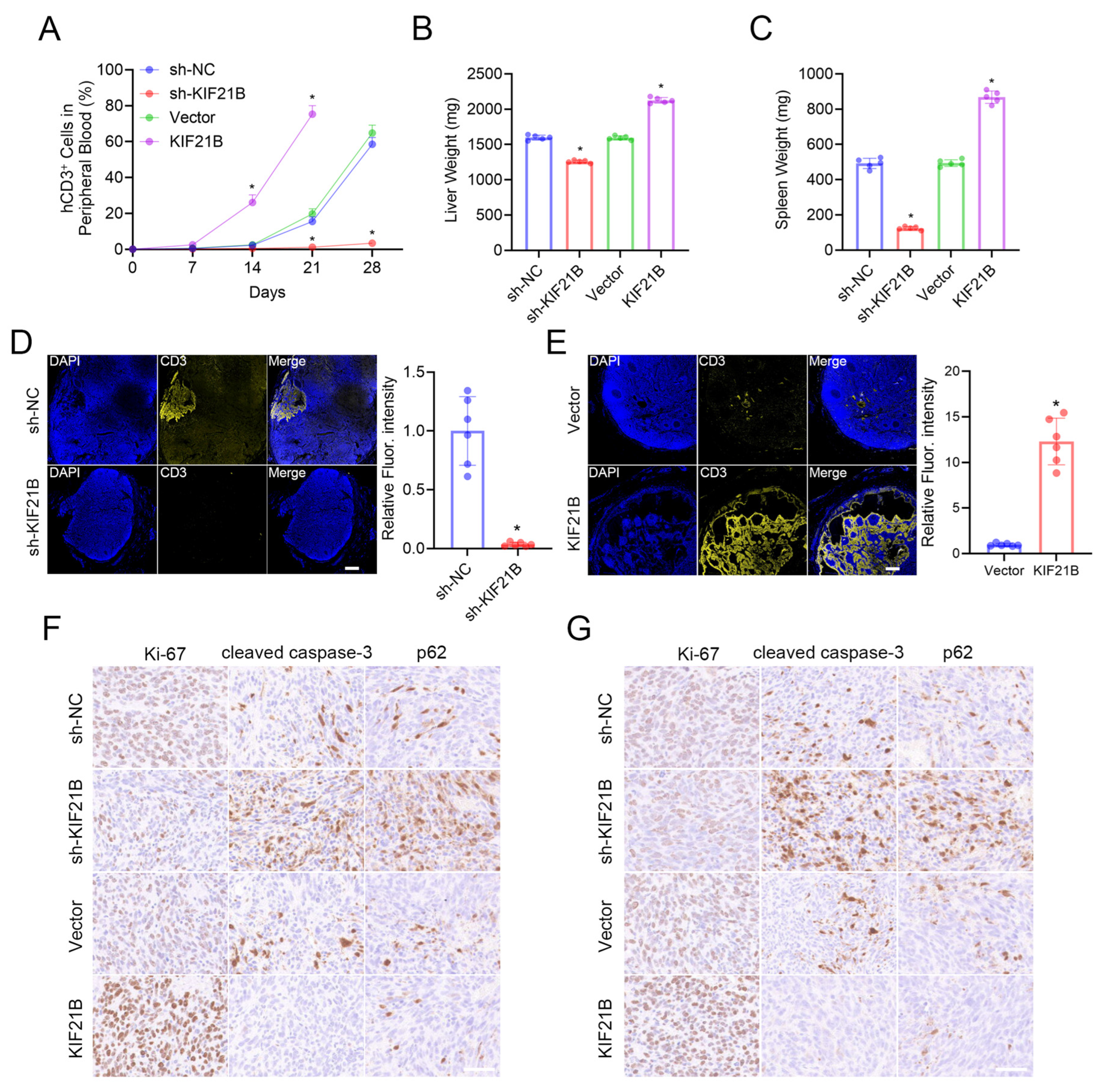
NSG mice were irradiated with a sublethal dose and injected intravenously with human Jurkat cells. Body weight and health were monitored regularly. Peripheral blood was analyzed by flow cytometry for hCD3+ leukemia cells. After 4 weeks, the mice were euthanized. Single-cell suspensions from the lymph node were analyzed by flow cytometry. The spleen and liver were weighed.
2.10. Multiplex Immunofluorescence (IF) Staining with Tyramide Signal Amplification (TSA)
Multiplex IF staining was performed on formalin-fixed, paraffin-embedded (FFPE) lymph node sections using the TSA method. Briefly, after routine deparaffinization and antigen retrieval, sections were blocked and incubated overnight at 4 °C with an anti-CD3 primary antibody (Proteintech, 17617-1-AP). Following washes, a horseradish peroxidase (HRP)-conjugated secondary antibody was applied. CD3 signal was developed using a Cy3-conjugated tyramide reagent, yielding a yellow-red fluorescence. Nuclei were subsequently stained with DAPI. For image analysis, the percentage of CD3-positive cells (Cy3 signal) relative to the total number of nuclei (DAPI signal) was quantified using ImageJ 2 software to determine the infiltration rate.
2.11. Immunohistochemistry (IHC) Staining and H-Score Analysis
Tumor tissues from the mice were fixed with 10% formalin, embedded in paraffin and cut into 5 µm sections. All specimens were evaluated for cleaved caspase-3, p62 and Ki-67 expression. The sections were photographed via a microscope. Whole sections were scanned and evaluated by two independent pathologists. Staining intensity was graded as 0 (negative), 1+ (weak), 2+ (moderate), or 3+ (strong). H-score was calculated using the formula: H-score = (1 × %1+) + (2 × %2+) + (3 × %3+), ranging from 0 to 300. Inter-rater reliability was assessed by intraclass correlation coefficient (ICC > 0.85). Individual IHC scoring data in liver and spleen tissues is presented in
Table S3.
2.12. IF
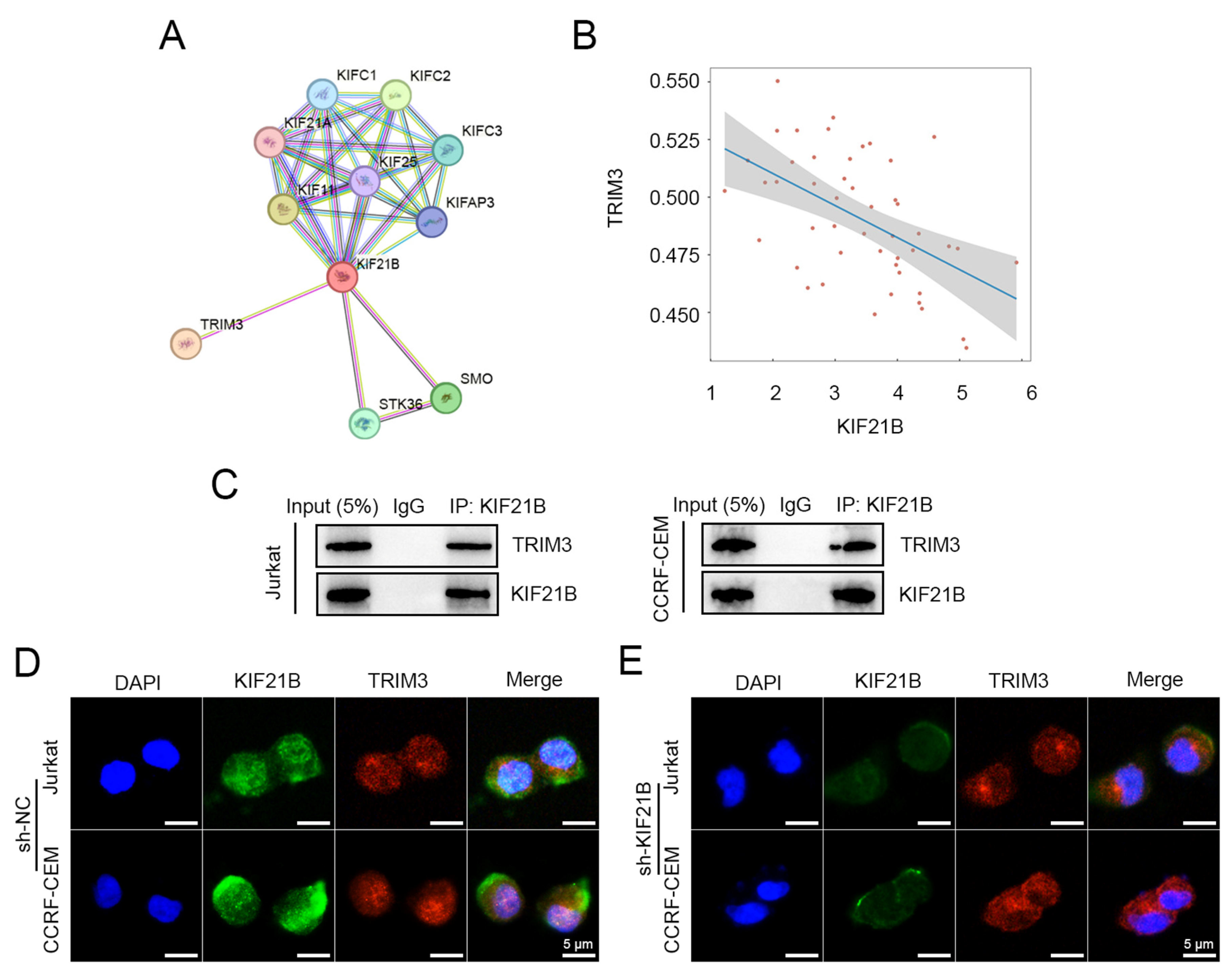
Cells were fixed with 4% PFA, permeabilized with 0.5% Triton X-100, and blocked with 5% BSA. Primary antibodies against α-tubulin, KIF21Band TRIM3 were applied overnight at 4 °C. After washing, cells were incubated with Alexa Fluor 488- or 594-conjugated secondary antibodies (Beyotime, China) for 1 h. Nuclei were counterstained with DAPI (Beyotime, China). Images were acquired using a confocal microscope.
2.13. Bioinformatic Analysis
The STRING database (v11.5) was used to construct a protein–protein interaction network for KIF21B with high confidence (score > 0.7). Correlation between KIF21B and TRIM3 expression was analyzed via the Home for Researchers platform (
www.home-for-researchers.com) using TCGA or CCLE datasets.
2.14. Co-Immunoprecipitation (Co-IP)
Cell lysates from Jurkat and CCRF-CEM cells were incubated with anti-KIF21B antibody or control IgG overnight at 4 °C. Protein A/G beads were added to capture complexes. After washing, bound proteins were eluted and detected by Western blot using anti-TRIM3 and anti-KIF21B antibodies.
2.15. Ubiquitination Assay
HEK293T cells were co-transfected with FLAG-KIF21B, HA-Ub and 6his-TRIM3 (experimental group) or empty vector (control). After 24 h, MG132 (MCE, Monmouth Junction, NJ, USA) was applied for 6 h. Cells were lysed and FLAG-tagged proteins were immunoprecipitated. Ubiquitination was detected with anti-HA antibody. Expression was verified with anti-FLAG, anti-6his and anti-GAPDH antibodies.
2.16. Protein Stability Assay
Cells transfected with si-NC or si-TRIM3 were treated with cycloheximide (CHX, 100 µg/mL) (MCE, USA) and harvested at 0, 2, 4, 6, 9 and 12 h. KIF21B levels were assessed by Western blot and degradation curves were plotted to compare half-lives.
2.17. Statistical Analysis
Data are presented as mean ± SD from at least three independent experiments. Statistical analyses were performed using GraphPad Prism 9.0. Comparisons between the two groups used Student’s t-test; multiple comparisons used one-way ANOVA with Tukey’s post hoc test. Survival curves were analyzed by the Kaplan–Meier method with log-rank test. p < 0.05 was considered significant (* p < 0.05, ** p < 0.01, *** p < 0.001).
4. Discussion
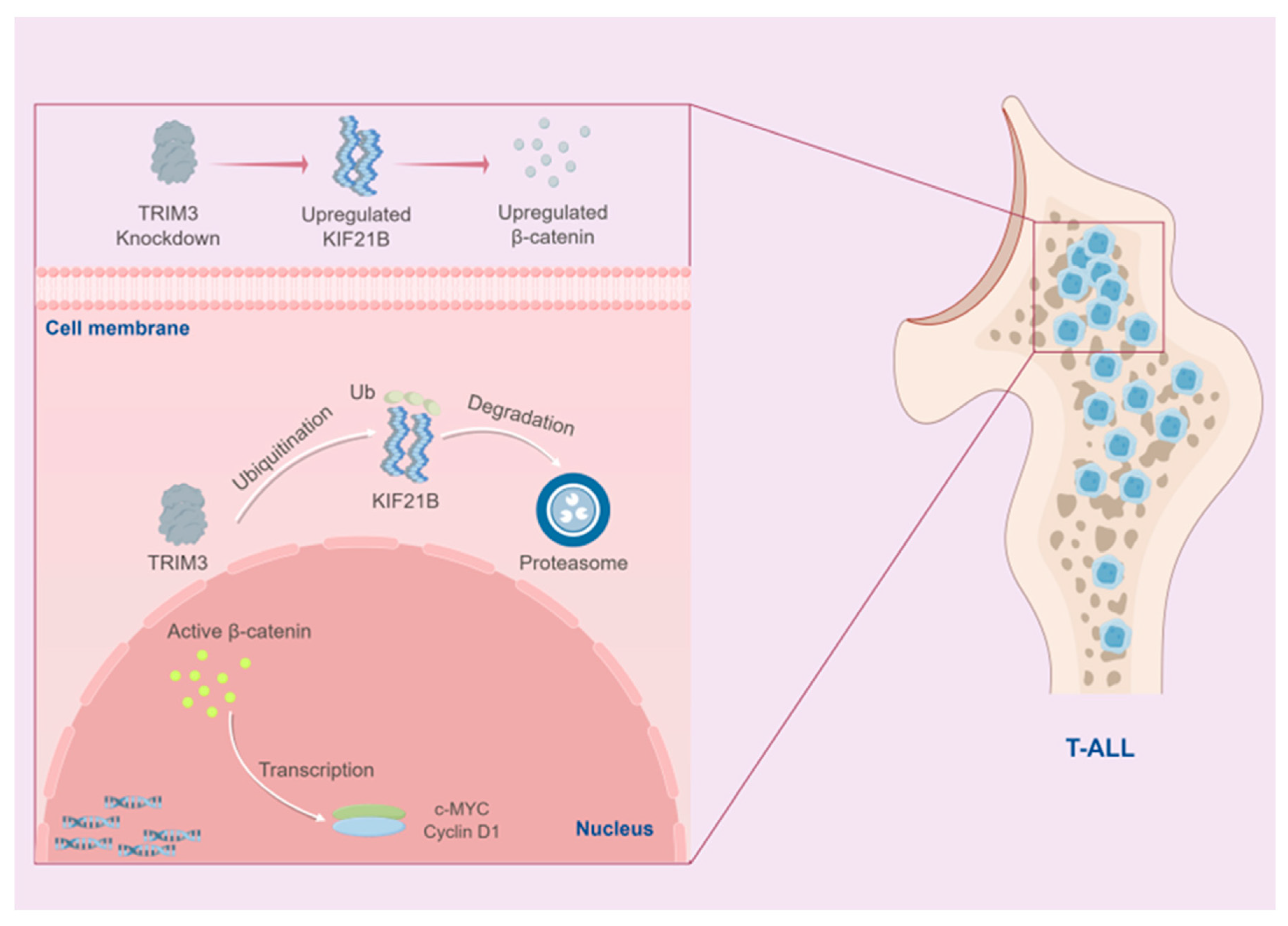
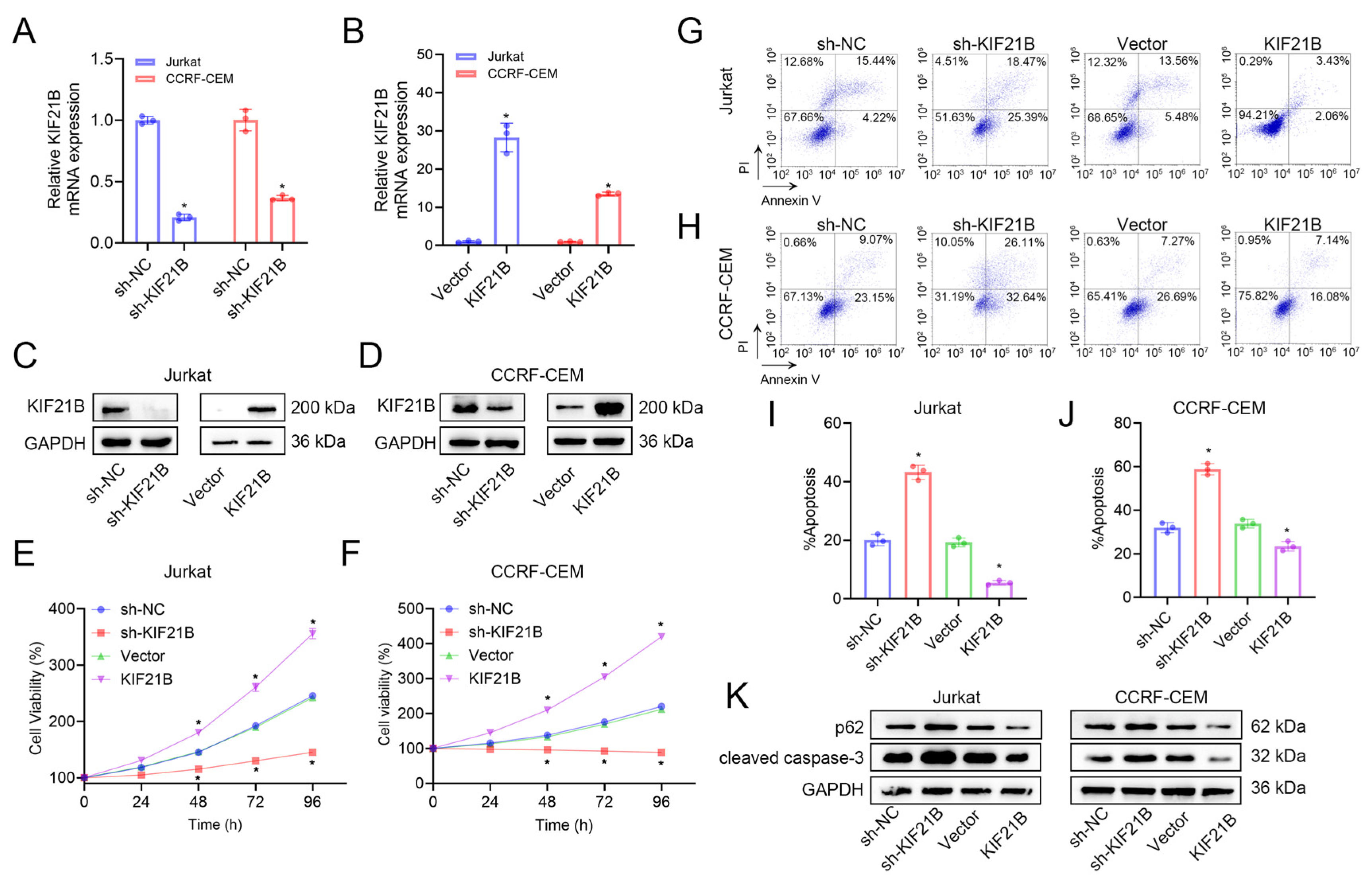
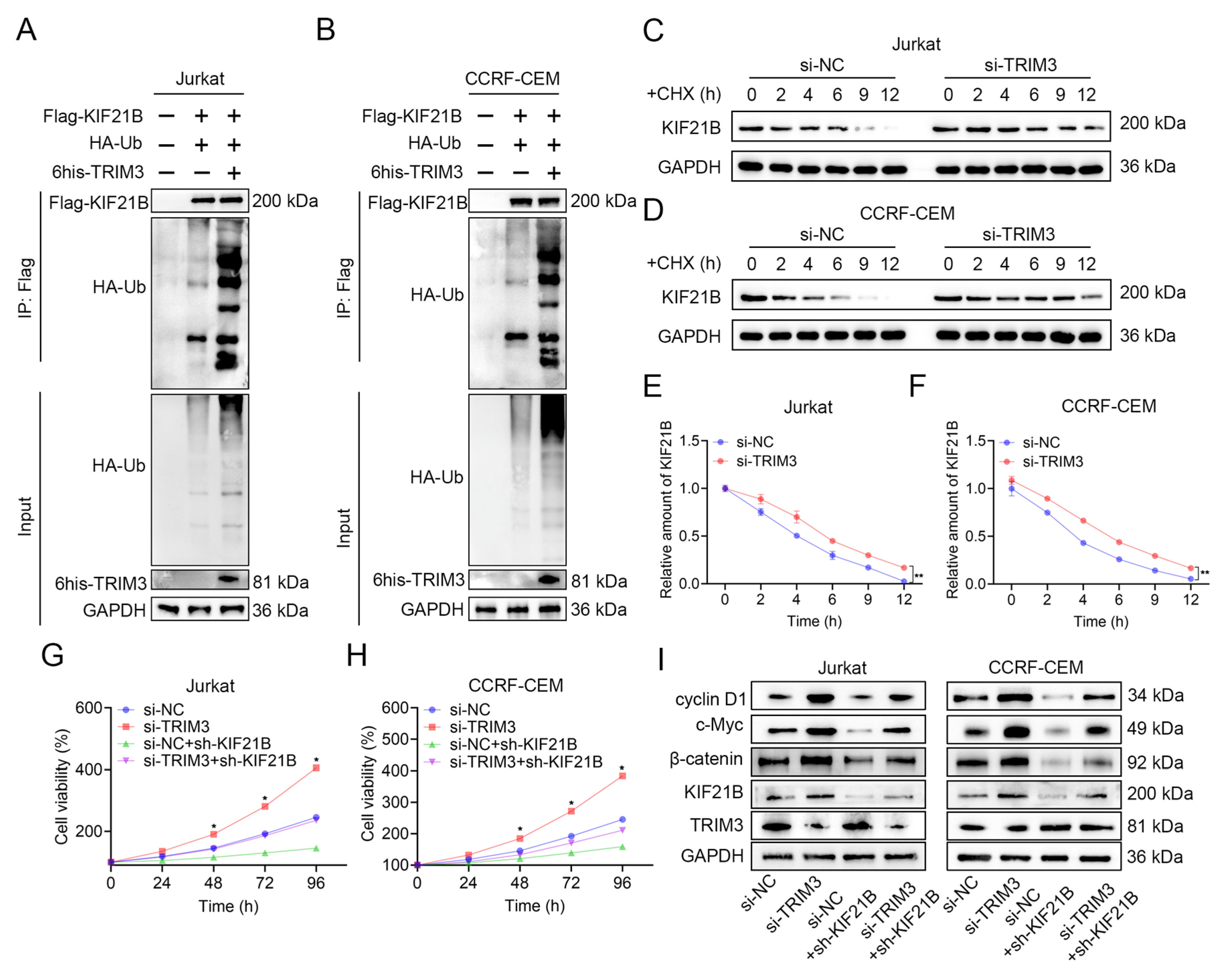
Through an integrated approach combining bioinformatic analysis, in vitro functional experiments and clinical sample validation, this study systematically unravels the oncogenic role and molecular mechanisms of KIF21B in T-ALL for the first time. We demonstrated that KIF21B is significantly overexpressed in T-ALL and closely associated with poor patient prognosis. Functionally, it drives tumor cell proliferation and suppresses apoptosis by activating the Wnt/β-catenin signaling pathway. More importantly, we identified the E3 ubiquitin ligase TRIM3 as an upstream negative regulator of KIF21B, which promotes its degradation via the ubiquitin-proteasome pathway, thereby defining a novel TRIM3–KIF21B–β-catenin regulatory axis critical for T-ALL malignant progression (
Figure 7).
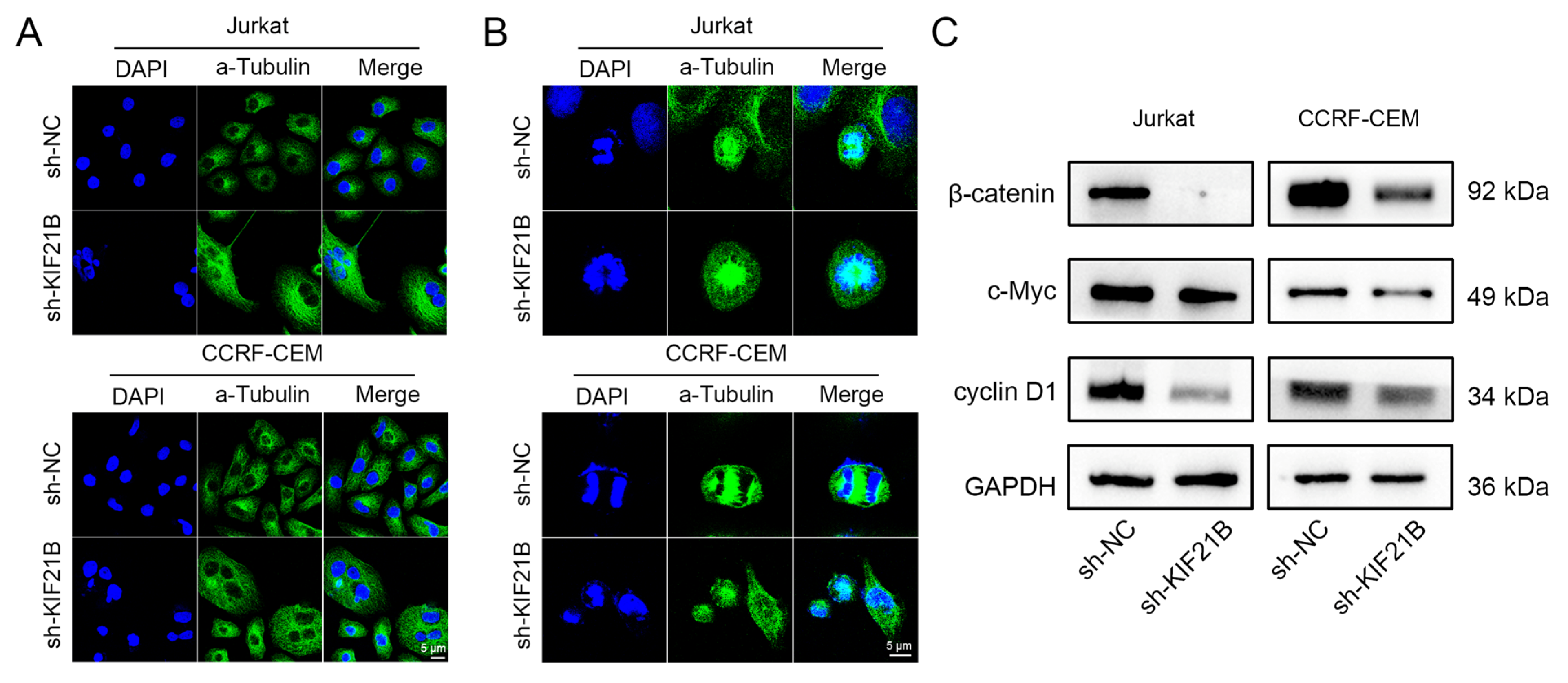
One of the most significant findings of this work is the potential of KIF21B as a biomarker for poor prognosis in T-ALL. Its expression level was significantly correlated with shorter overall survival and exhibited high predictive value for 5-year survival rates, offering a new potential molecular indicator for risk stratification in T-ALL. At the mechanistic level, our results link the function of KIF21B to the canonical Wnt/β-catenin signaling pathway. Knockdown of KIF21B led to marked downregulation of β-catenin, c-Myc and cyclin D1 protein levels, consistent with the well-established role of this pathway in proliferation and inhibiting apoptosis. Notably, KIF21B is a microtubule-associated motor protein [
14,
21]. Our findings that its depletion causes severe spindle assembly and chromosome alignment defects suggest that KIF21B may maintain mitotic fidelity, thereby providing a permissive cellular environment for the stable accumulation of key oncoproteins like β-catenin. This discovery provides strong new evidence supporting the concept of functional crosstalk between cytoskeletal dynamics and oncogenic signal transduction [
22,
23], broadening our understanding of T-ALL pathogenesis.
The most salient highlight of this study lies in elucidating the upstream regulatory mechanism controlling KIF21B protein stability. Through multiple experimental approaches, we confirmed that TRIM3 interacts with KIF21B and mediates its ubiquitination and degradation. This finding carries substantial scientific importance, as TRIM family proteins often play dual roles in cancer [
19,
24,
25,
26,
27]. Our research suggests that TRIM3 may act as a tumor suppressor in T-ALL, whereby its reduced expression (or loss of function) leads to an accumulation of KIF21B protein, subsequently activating downstream oncogenic pathways. The delineation of this TRIM3–KIF21B regulatory relationship provides a mechanistic explanation for the aberrant overexpression of KIF21B in tumors.
Our study elucidates a novel role for the TRIM3–KIF21B regulatory axis in cancer. In contrast to the function reported by Labonté et al. [
20], wherein TRIM3 modulates the motility of KIF21B in neurons, we demonstrate that in T-ALL cells, TRIM3 acts as an E3 ubiquitin ligase mediating the ubiquitin-dependent degradation of KIF21B. This fundamental difference in function may stem from cell-type specificity or distinct disease contexts. In cancer cells, aberrantly high expression of KIF21B likely drives oncogenic signaling and its negative regulation via TRIM3-mediated degradation may represent a mechanism to maintain cellular homeostasis. The discovery of this mechanism offers new perspectives for therapeutic strategies targeting KIF21B in cancer.
Our findings possess dual implications. On a theoretical level, they reveal a novel post-translational regulatory mechanism mediated by TRIM3 and identify KIF21B as a new upstream regulator of the Wnt pathway, enriching the molecular regulatory network of T-ALL. In terms of clinical translation, KIF21B serves as both an independent prognostic factor and a promising therapeutic target. Developing small-molecule inhibitors or PROTAC degraders targeting KIF21B itself or the TRIM3–KIF21B interaction interface could offer a novel precision therapy strategy for T-ALL patients with high KIF21B expression and poor prognosis.
Nevertheless, this study has certain limitations. First, the direct molecular mechanism by which KIF21B regulates β-catenin phosphorylation is not fully elucidated; whether it interacts with other scaffolding proteins or kinase complexes warrants further investigation. Second, the current functional studies primarily relied on cell lines; future validation using patient-derived xenograft (PDX) models would better recapitulate the clinical heterogeneity of T-ALL. Finally, besides TRIM3, whether other transcriptional factors or epigenetic mechanisms regulate KIF21B transcription remains an open question.