Anti-Tumor Immunity in Solid-Organ Transplant Recipients

 ,
,
Simple Summary
Abstract
1. Introduction
2. Immune Cell Dysfunction in Transplant Recipients
2.1. T Cell Dysfunction: Causes and States
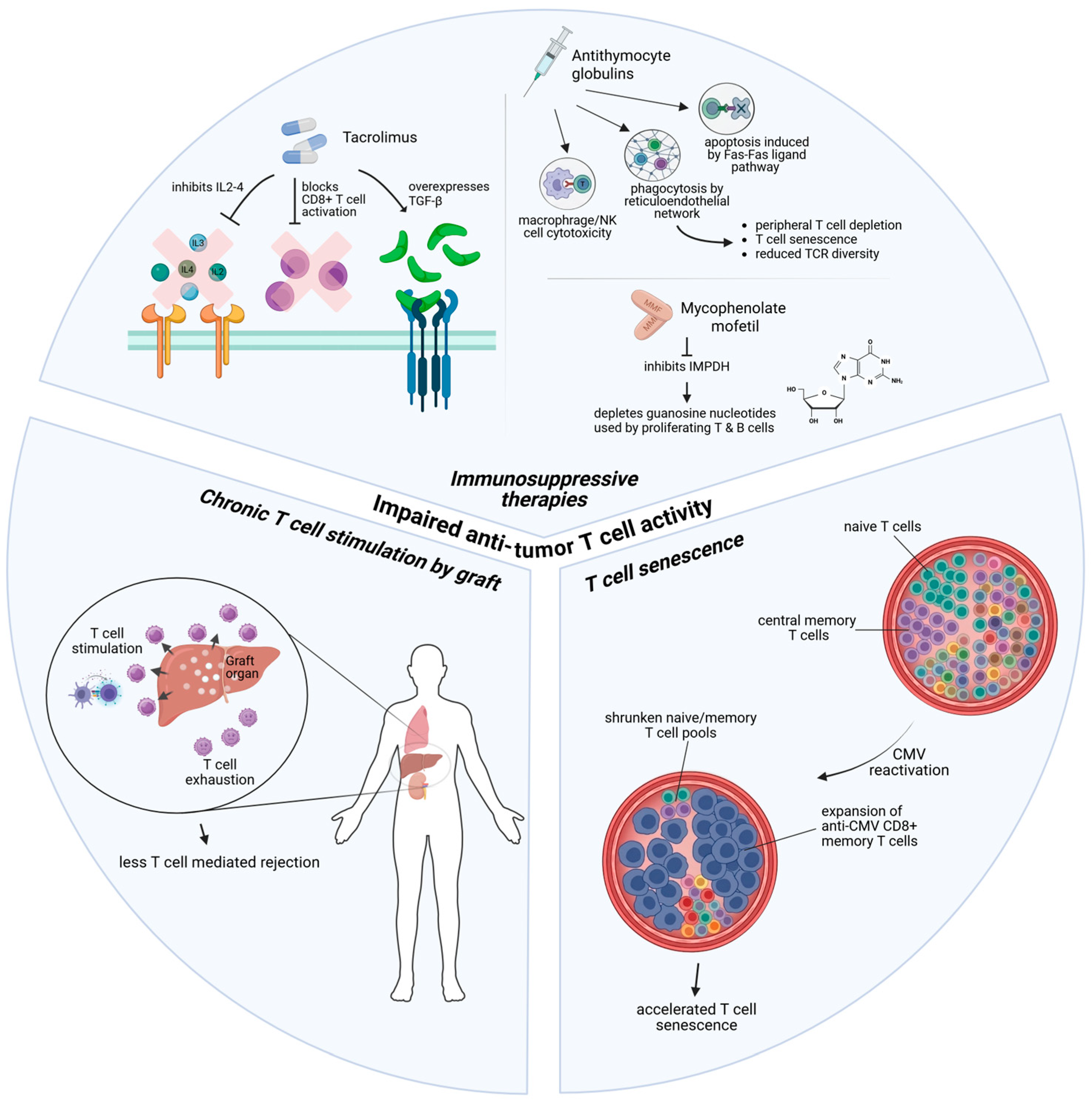
2.1.1. Immunosuppressive Therapies Related T Cell Dysfunctions
2.1.2. T Cell Exhaustion from Graft Stimulation
2.1.3. Accelerated T Cell Senescence
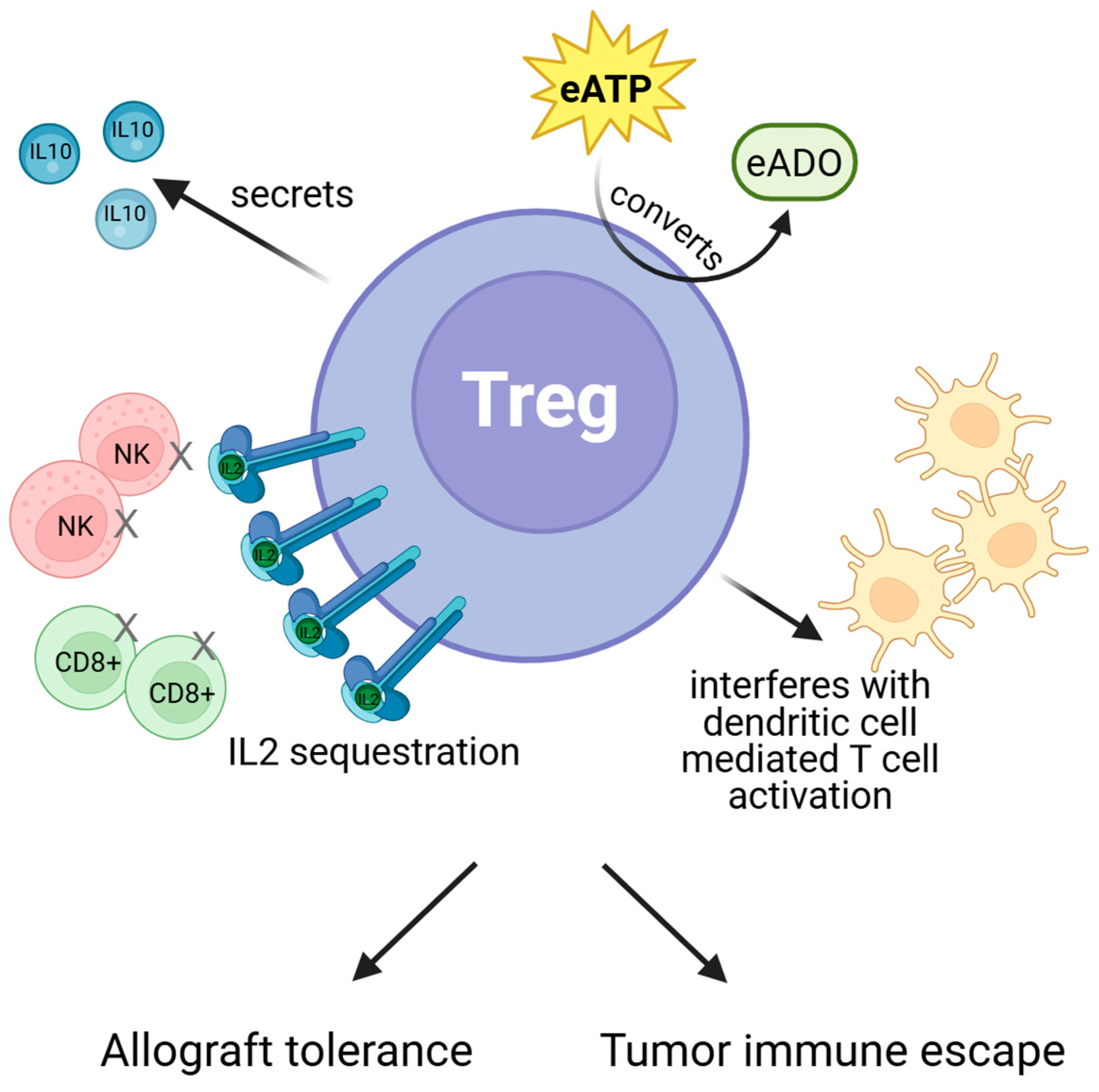
2.2. Other Immune Cells
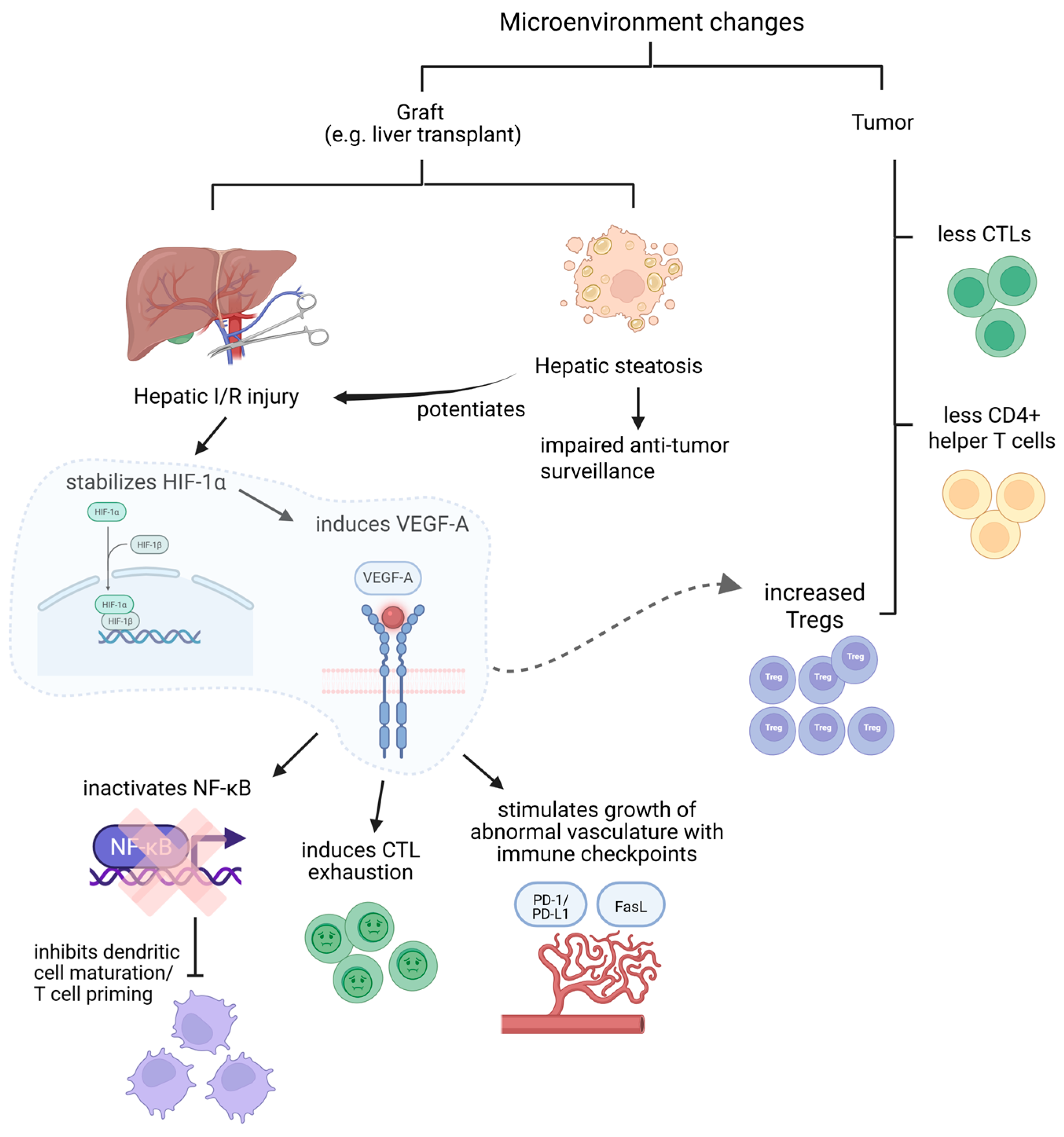
3. Microenvironmental Changes
4. Efficacy of Systemic Anti-Cancer Therapy in Transplant Recipients
4.1. Immune Checkpoint Inhibitors (ICIs)
4.1.1. General Considerations in Data Interpretation
4.1.2. Anti-PD1/L1 in Transplant Recipients
4.1.3. Anti-CTLA-4 in Transplant Recipients
4.1.4. Balancing Risks and Benefits
General Characteristics of ICI Response in SOT Recipients
Patient Selection: The Higher the Risk, the Higher the Reward?
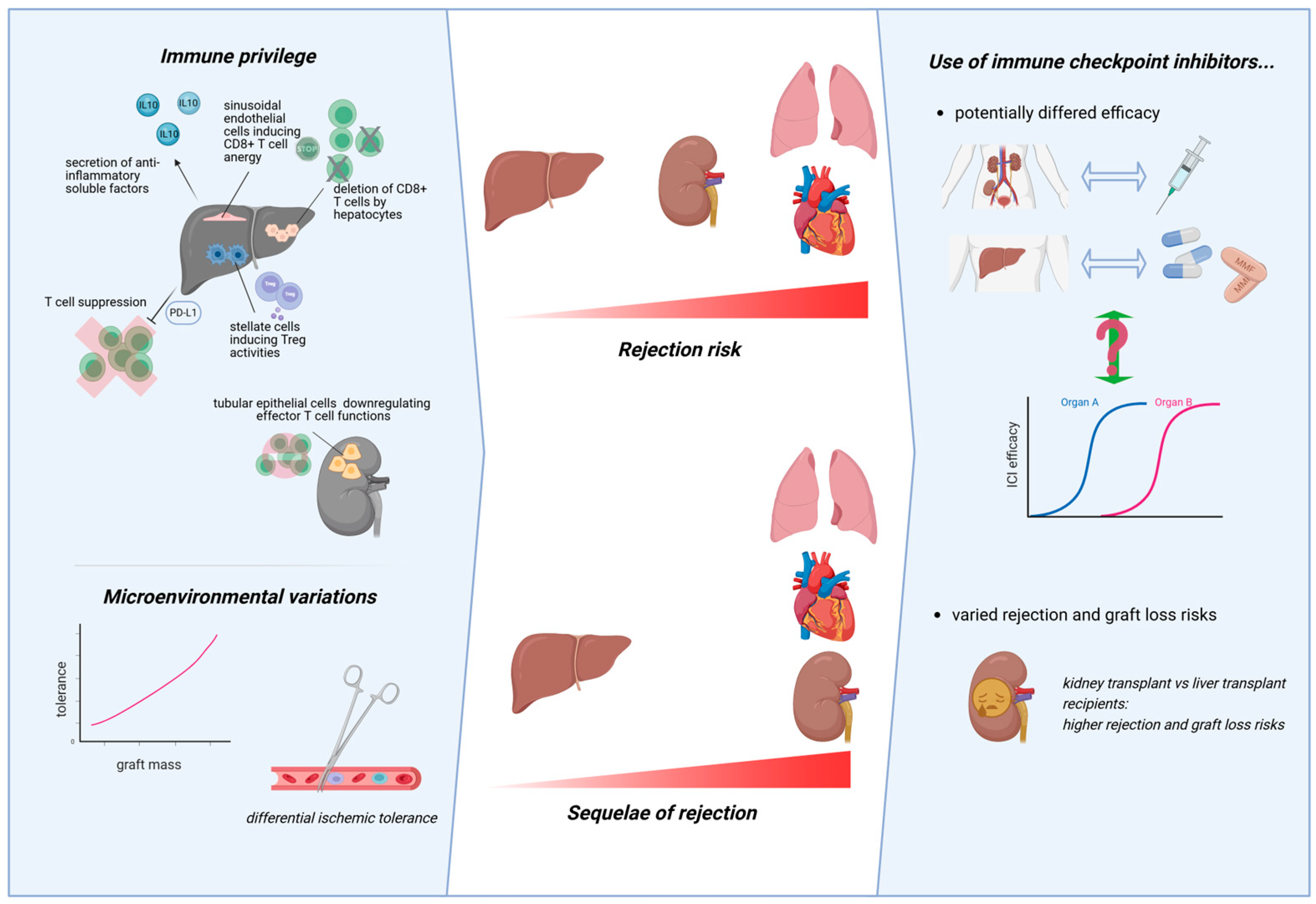
Differences by Transplant Type
The Unique Potential of ICIs
4.2. Other Systemic Anti-Cancer Therapies
5. Implications on Expansion of Transplant Indications and Future Directions
6. Conclusions
Author Contributions
Funding
Data Availability Statement
Conflicts of Interest
References
- Acuna, S.A.; Fernandes, K.A.; Daly, C.; Hicks, L.K.; Sutradhar, R.; Kim, S.J.; Baxter, N.N. Cancer Mortality Among Recipients of Solid-Organ Transplantation in Ontario, Canada. JAMA Oncol. 2016, 2, 463–469. [Google Scholar] [CrossRef]
- Engels, E.A.; Pfeiffer, R.M.; Fraumeni, J.F.; Kasiske, B.L.; Israni, A.K.; Snyder, J.J.; Wolfe, R.A.; Goodrich, N.P.; Bayakly, A.R.; Clarke, C.A.; et al. Spectrum of Cancer Risk Among US Solid Organ Transplant Recipients. JAMA 2011, 306, 1891–1901. [Google Scholar] [CrossRef] [PubMed]
- Huo, Z.; Li, C.; Xu, X.; Ge, F.; Wang, R.; Wen, Y.; Peng, H.; Wu, X.; Liang, H.; Peng, G.; et al. Cancer Risks in Solid Organ Transplant Recipients: Results from a Comprehensive Analysis of 72 Cohort Studies. Oncoimmunology 2020, 9, 1848068. [Google Scholar] [CrossRef]
- Triplette, M.; Crothers, K.; Mahale, P.; Yanik, E.L.; Valapour, M.; Lynch, C.F.; Schabath, M.B.; Castenson, D.; Engels, E.A. Risk of lung cancer in lung transplant recipients in the United States. Am. J. Transpl. 2019, 19, 1478–1490. [Google Scholar] [CrossRef]
- Karami, S.; Yanik, E.L.; Moore, L.E.; Pfeiffer, R.M.; Copeland, G.; Gonsalves, L.; Hernandez, B.Y.; Lynch, C.F.; Pawlish, K.; Engels, E.A. Risk of Renal Cell Carcinoma Among Kidney Transplant Recipients in the United States. Am. J. Transpl. 2016, 16, 3479–3489. [Google Scholar] [CrossRef]
- Filgueira, N.A. Hepatocellular carcinoma recurrence after liver transplantation: Risk factors, screening and clinical presentation. World J. Hepatol. 2019, 11, 261–272. [Google Scholar] [CrossRef]
- van de Wetering, J.; Roodnat, J.I.; Hemke, A.C.; Hoitsma, A.J.; Weimar, W. Patient survival after the diagnosis of cancer in renal transplant recipients: A nested case-control study. Transplantation 2010, 90, 1542–1546. [Google Scholar] [CrossRef]
- Miao, Y.; Everly, J.J.; Gross, T.G.; Tevar, A.D.; First, M.R.; Alloway, R.R.; Woodle, E.S. De novo cancers arising in organ transplant recipients are associated with adverse outcomes compared with the general population. Transplantation 2009, 87, 1347–1359. [Google Scholar] [CrossRef]
- Chapman, J.; Webster, A. Cancer Report: ANZDATA Registry 2004 Report; Australia and New Zealand Dialysis and Transplant Registry: Adelaide, Australia, 2004. [Google Scholar]
- Adam, R.; Piedvache, C.; Chiche, L.; Salamé, E.; Scatton, O.; Granger, V.; Ducreux, M.P.; Cillo, U.; Cauchy, F.; Mabrut, J.-Y.; et al. Chemotherapy and liver transplantation versus chemotherapy alone in patients with definitively unresectable colorectal liver metastases: A prospective multicentric randomized trial (TRANSMET). J. Clin. Oncol. 2024, 42, 3500. [Google Scholar] [CrossRef]
- Issa, F.; Schiopu, A.; Wood, K.J. Role of T cells in graft rejection and transplantation tolerance. Expert. Rev. Clin. Immunol. 2010, 6, 155–169. [Google Scholar] [CrossRef] [PubMed]
- Waldman, A.D.; Fritz, J.M.; Lenardo, M.J. A guide to cancer immunotherapy: From T cell basic science to clinical practice. Nat. Rev. Immunol. 2020, 20, 651–668. [Google Scholar] [CrossRef]
- Landino, S.M.; Nawalaniec, J.T.; Hays, N.; Osho, A.A.; Keller, B.C.; Allan, J.S.; Keshavjee, S.; Madsen, J.C.; Hachem, R. The role of induction therapy in lung transplantation. Am. J. Transpl. 2025, 25, 463–470. [Google Scholar] [CrossRef]
- Kidney Disease: Improving Global Outcomes (KDIGO) Transplant Work Group. KDIGO clinical practice guideline for the care of kidney transplant recipients. Am. J. Transpl. 2009, 9, S1–S155. [CrossRef]
- Bittermann, T.; Hubbard, R.A.; Lewis, J.D.; Goldberg, D.S. The use of induction therapy in liver transplantation is highly variable and is associated with posttransplant outcomes. Am. J. Transpl. 2019, 19, 3319–3327. [Google Scholar] [CrossRef]
- Nikolova, A.P.; Bellumkonda, L.; Bhardwaj, A.; Fida, N.; Holzhauser, L.; Umapathi, P.; De Marco, T.; Contreras, J. Practical Guide on the Use of Induction Immunosuppression in Heart Transplantation. Circ. Heart Fail. 2025, 18, e012382. [Google Scholar] [CrossRef]
- Bamoulid, J.; Staeck, O.; Crépin, T.; Halleck, F.; Saas, P.; Brakemeier, S.; Ducloux, D.; Budde, K. Anti-thymocyte globulins in kidney transplantation: Focus on current indications and long-term immunological side effects. Nephrol. Dial. Transplant. 2017, 32, 1601–1608. [Google Scholar] [CrossRef]
- Crepin, T.; Carron, C.; Roubiou, C.; Gaugler, B.; Gaiffe, E.; Simula-Faivre, D.; Ferrand, C.; Tiberghien, P.; Chalopin, J.M.; Moulin, B.; et al. ATG-induced accelerated immune senescence: Clinical implications in renal transplant recipients. Am. J. Transpl. 2015, 15, 1028–1038. [Google Scholar] [CrossRef]
- Lee, G.H.; Lee, J.Y.; Jang, J.; Kang, Y.J.; Choi, S.A.; Kim, H.C.; Park, S.; Kim, M.S.; Lee, W.W. Anti-thymocyte globulin-mediated immunosenescent alterations of T cells in kidney transplant patients. Clin. Transl. Immunol. 2022, 11, e1431. [Google Scholar] [CrossRef]
- Memmos, E.; Lioulios, G.; Antoniadis, N.; Fylaktou, A.; Stangou, M. Immunosenescence in Kidney Transplant Recipients. Transplantation 2025, 109, e675–e681. [Google Scholar] [CrossRef] [PubMed]
- Servais, S.; Menten-Dedoyart, C.; Beguin, Y.; Seidel, L.; Gothot, A.; Daulne, C.; Willems, E.; Delens, L.; Humblet-Baron, S.; Hannon, M.; et al. Impact of Pre-Transplant Anti-T Cell Globulin (ATG) on Immune Recovery after Myeloablative Allogeneic Peripheral Blood Stem Cell Transplantation. PLoS ONE 2015, 10, e0130026. [Google Scholar] [CrossRef] [PubMed]
- Xia, C.Q.; Chernatynskaya, A.V.; Wasserfall, C.H.; Wan, S.; Looney, B.M.; Eisenbeis, S.; Williams, J.; Clare-Salzler, M.J.; Atkinson, M.A. Anti-thymocyte globulin (ATG) differentially depletes naïve and memory T cells and permits memory-type regulatory T cells in nonobese diabetic mice. BMC Immunol. 2012, 13, 70. [Google Scholar] [CrossRef] [PubMed]
- Amlot, P.L.; Rawlings, E.; Fernando, O.N.; Griffin, P.J.; Heinrich, G.; Schreier, M.H.; Castaigne, J.P.; Moore, R.; Sweny, P. Prolonged action of a chimeric interleukin-2 receptor (CD25) monoclonal antibody used in cadaveric renal transplantation. Transplantation 1995, 60, 748–756. [Google Scholar] [CrossRef]
- Kovarik, J.; Wolf, P.; Cisterne, J.M.; Mourad, G.; Lebranchu, Y.; Lang, P.; Bourbigot, B.; Cantarovich, D.; Girault, D.; Gerbeau, C.; et al. Disposition of basiliximab, an interleukin-2 receptor monoclonal antibody, in recipients of mismatched cadaver renal allografts. Transplantation 1997, 64, 1701–1705. [Google Scholar] [CrossRef]
- Kim, H.D.; Bae, H.; Yun, S.; Lee, H.; Eum, S.H.; Yang, C.W.; Oh, E.J.; Chung, B.H. Impact of Induction Immunosuppressants on T Lymphocyte Subsets after Kidney Transplantation: A Prospective Observational Study with Focus on Anti-Thymocyte Globulin and Basiliximab Induction Therapies. Int. J. Mol. Sci. 2023, 24, 4288. [Google Scholar] [CrossRef]
- Wang, L.; Motter, J.; Bae, S.; Ahn, J.B.; Kanakry, J.A.; Jackson, J.; Schnitzler, M.A.; Hess, G.; Lentine, K.L.; Stuart, E.A.; et al. Induction immunosuppression and the risk of incident malignancies among older and younger kidney transplant recipients: A prospective cohort study. Clin. Transpl. 2020, 34, e14121. [Google Scholar] [CrossRef]
- Webster, A.C.; Ruster, L.P.; McGee, R.; Matheson, S.L.; Higgins, G.Y.; Willis, N.S.; Chapman, J.R.; Craig, J.C. Interleukin 2 receptor antagonists for kidney transplant recipients. Cochrane Database Syst. Rev. 2010, 2010, Cd003897. [Google Scholar] [CrossRef]
- Brennan, D.C.; Daller, J.A.; Lake, K.D.; Cibrik, D.; Del Castillo, D. Rabbit antithymocyte globulin versus basiliximab in renal transplantation. N. Engl. J. Med. 2006, 355, 1967–1977. [Google Scholar] [CrossRef]
- Charlton, M.; Levitsky, J.; Aqel, B.; O’Grady, J.; Hemibach, J.; Rinella, M.; Fung, J.; Ghabril, M.; Thomason, R.; Burra, P.; et al. International Liver Transplantation Society Consensus Statement on Immunosuppression in Liver Transplant Recipients. Transplantation 2018, 102, 727–743. [Google Scholar] [CrossRef] [PubMed]
- Baker, R.J.; Mark, P.B.; Patel, R.K.; Stevens, K.K.; Palmer, N. Renal association clinical practice guideline in post-operative care in the kidney transplant recipient. BMC Nephrol. 2017, 18, 174. [Google Scholar] [CrossRef] [PubMed]
- A Comparison of Tacrolimus (FK 506) and Cyclosporine for Immunosuppression in Liver Transplantation. N. Engl. J. Med. 1994, 331, 1110–1115. [CrossRef] [PubMed]
- Webster, A.; Woodroffe, R.C.; Taylor, R.S.; Chapman, J.R.; Craig, J.C. Tacrolimus versus cyclosporin as primary immunosuppression for kidney transplant recipients. Cochrane Database Syst. Rev. 2005, Cd003961. [Google Scholar] [CrossRef] [PubMed]
- Halloran, P.; Mathew, T.; Tomlanovich, S.; Groth, C.; Hooftman, L.; Barker, C. Mycophenolate mofetil in renal allograft recipients: A pooled efficacy analysis of three randomized, double-blind, clinical studies in prevention of rejection. The International Mycophenolate Mofetil Renal Transplant Study Groups. Transplantation 1997, 63, 39–47. [Google Scholar] [CrossRef]
- Jegasothy, B.V.; Ackerman, C.D.; Todo, S.; Fung, J.J.; Abu-Elmagd, K.; Starzl, T.E. Tacrolimus (FK 506)--a new therapeutic agent for severe recalcitrant psoriasis. Arch. Dermatol. 1992, 128, 781–785. [Google Scholar] [CrossRef]
- Hogan, P.G.; Chen, L.; Nardone, J.; Rao, A. Transcriptional regulation by calcium, calcineurin, and NFAT. Genes. Dev. 2003, 17, 2205–2232. [Google Scholar] [CrossRef]
- Park, Y.J.; Yoo, S.A.; Kim, M.; Kim, W.U. The Role of Calcium-Calcineurin-NFAT Signaling Pathway in Health and Autoimmune Diseases. Front. Immunol. 2020, 11, 195. [Google Scholar] [CrossRef] [PubMed]
- Dutta, D.; Barr, V.A.; Akpan, I.; Mittelstadt, P.R.; Singha, L.I.; Samelson, L.E.; Ashwell, J.D. Recruitment of calcineurin to the TCR positively regulates T cell activation. Nat. Immunol. 2017, 18, 196–204. [Google Scholar] [CrossRef]
- Maluccio, M.; Sharma, V.; Lagman, M.; Vyas, S.; Yang, H.; Li, B.; Suthanthiran, M. Tacrolimus enhances transforming growth factor-β1 expression and promotes tumor progression. Transplantation 2003, 76, 597–602. [Google Scholar] [CrossRef]
- Allison, A.C. Mechanisms of action of mycophenolate mofetil. Lupus 2005, 14, s2–s8. [Google Scholar] [CrossRef] [PubMed]
- He, X.; Smeets, R.L.; Koenen, H.J.P.M.; Vink, P.M.; Wagenaars, J.; Boots, A.M.H.; Joosten, I. Mycophenolic Acid-Mediated Suppression of Human CD4+ T Cells: More Than Mere Guanine Nucleotide Deprivation. Am. J. Transplant. 2011, 11, 439–449. [Google Scholar] [CrossRef]
- Colic, M.; Stojic-Vukanic, Z.; Pavlovic, B.; Jandric, D.; Stefanoska, I. Mycophenolate mofetil inhibits differentiation, maturation and allostimulatory function of human monocyte-derived dendritic cells. Clin. Exp. Immunol. 2003, 134, 63–69. [Google Scholar] [CrossRef]
- Bhandarkar, V.; Dinter, T.; Spranger, S. Architects of immunity: How dendritic cells shape CD8(+) T cell fate in cancer. Sci. Immunol. 2025, 10, eadf4726. [Google Scholar] [CrossRef]
- Kuhn, S.; Yang, J.; Ronchese, F. Monocyte-Derived Dendritic Cells Are Essential for CD8(+) T Cell Activation and Antitumor Responses After Local Immunotherapy. Front. Immunol. 2015, 6, 584. [Google Scholar] [CrossRef]
- Bucks, C.M.; Norton, J.A.; Boesteanu, A.C.; Mueller, Y.M.; Katsikis, P.D. Chronic antigen stimulation alone is sufficient to drive CD8+ T cell exhaustion. J. Immunol. 2009, 182, 6697–6708. [Google Scholar] [CrossRef]
- Fribourg, M.; Anderson, L.; Fischman, C.; Cantarelli, C.; Perin, L.; La Manna, G.; Rahman, A.; Burrell, B.E.; Heeger, P.S.; Cravedi, P. T-cell exhaustion correlates with improved outcomes in kidney transplant recipients. Kidney Int. 2019, 96, 436–449. [Google Scholar] [CrossRef]
- Hartigan, C.R.; Sun, H.; Ford, M.L. Memory T-cell exhaustion and tolerance in transplantation. Immunol. Rev. 2019, 292, 225–242. [Google Scholar] [CrossRef] [PubMed]
- Angeletti, A.; Cantarelli, C.; Riella, L.V.; Fribourg, M.; Cravedi, P. T-cell Exhaustion in Organ Transplantation. Transplantation 2022, 106, 489–499. [Google Scholar] [CrossRef] [PubMed]
- Steger, U.; Denecke, C.; Sawitzki, B.; Karim, M.; Jones, N.D.; Wood, K.J. Exhaustive differentiation of alloreactive CD8+ T cells: Critical for determination of graft acceptance or rejection. Transplantation 2008, 85, 1339–1347. [Google Scholar] [CrossRef]
- He, C.; Schenk, S.; Zhang, Q.; Valujskikh, A.; Bayer, J.r.; Fairchild, R.L.; Heeger, P.S. Effects of T Cell Frequency and Graft Size on Transplant Outcome in Mice1. J. Immunol. 2004, 172, 240–247. [Google Scholar] [CrossRef]
- Sun, J.; Sheil, A.G.R.; Wang, C.; Wang, L.; Rokahr, K.; Sharland, A.; Jung, S.-E.; Li, L.; McCaughan, G.W.; Bishop, G.A. Tolerance to Rat Liver Allografts: IV. Acceptance Depends on the Quantity of Donor Tissue and on Donor Leukocytes. Transplantation 1996, 62, 1725–1730. [Google Scholar] [CrossRef] [PubMed]
- Madill-Thomsen, K.S.; Böhmig, G.A.; Bromberg, J.; Einecke, G.; Eskandary, F.; Gupta, G.; Myslak, M.; Viklicky, O.; Perkowska-Ptasinska, A.; Solez, K.; et al. Relating Molecular T Cell-mediated Rejection Activity in Kidney Transplant Biopsies to Time and to Histologic Tubulitis and Atrophy-fibrosis. Transplantation 2023, 107, 1102–1114. [Google Scholar] [CrossRef]
- Halloran, P.F.; Chang, J.; Famulski, K.; Hidalgo, L.G.; Salazar, I.D.; Merino Lopez, M.; Matas, A.; Picton, M.; de Freitas, D.; Bromberg, J.; et al. Disappearance of T Cell-Mediated Rejection Despite Continued Antibody-Mediated Rejection in Late Kidney Transplant Recipients. J. Am. Soc. Nephrol. 2015, 26, 1711–1720. [Google Scholar] [CrossRef]
- Lee, P.P.; Yee, C.; Savage, P.A.; Fong, L.; Brockstedt, D.; Weber, J.S.; Johnson, D.; Swetter, S.; Thompson, J.; Greenberg, P.D.; et al. Characterization of circulating T cells specific for tumor-associated antigens in melanoma patients. Nat. Med. 1999, 5, 677–685. [Google Scholar] [CrossRef]
- Galluzzi, L.; Smith, K.N.; Liston, A.; Garg, A.D. The diversity of CD8+ T cell dysfunction in cancer and viral infection. Nat. Rev. Immunol. 2025, 25, 662–679. [Google Scholar] [CrossRef]
- Tillé, L.; Cropp, D.; Charmoy, M.; Reichenbach, P.; Andreatta, M.; Wyss, T.; Bodley, G.; Crespo, I.; Nassiri, S.; Lourenco, J.; et al. Activation of the transcription factor NFAT5 in the tumor microenvironment enforces CD8+ T cell exhaustion. Nat. Immunol. 2023, 24, 1645–1653. [Google Scholar] [CrossRef]
- Chaudhary, O.; Trotta, D.; Wang, K.; Wang, X.; Chu, X.; Bradley, C.; Okulicz, J.; Maves, R.C.; Kronmann, K.; Schofield, C.M.; et al. Patients with HIV-associated cancers have evidence of increased T cell dysfunction and exhaustion prior to cancer diagnosis. J. Immunother. Cancer 2022, 10, e004564. [Google Scholar] [CrossRef]
- Liu, X.; Li, M.; Wang, X.; Dang, Z.; Jiang, Y.; Wang, X.; Kong, Y.; Yang, Z. PD-1(+) TIGIT(+) CD8(+) T cells are associated with pathogenesis and progression of patients with hepatitis B virus-related hepatocellular carcinoma. Cancer Immunol. Immunother. 2019, 68, 2041–2054. [Google Scholar] [CrossRef] [PubMed]
- Song, Y.; Mo, Y.; Chen, S.; Chen, Y.; Zhang, C.; Deng, S.; Liao, J.; He, Y.; Wang, W.; Zheng, W.; et al. Immune Exhaustion in Chronic Infection and Cancer: Signaling Pathways and Therapeutic Interventions. MedComm 2026, 7, e70635. [Google Scholar] [CrossRef] [PubMed]
- Gelson, W.; Hoare, M.; Vowler, S.; Shankar, A.; Gibbs, P.; Akbar, A.N.; Alexander, G.J. Features of immune senescence in liver transplant recipients with established grafts. Liver Transpl. 2010, 16, 577–587. [Google Scholar] [CrossRef] [PubMed]
- Wu, Y.; Wu, Y.; Gao, Z.; Yu, W.; Zhang, L.; Zhou, F. Revitalizing T cells: Breakthroughs and challenges in overcoming T cell exhaustion. Signal Transduct. Target. Ther. 2026, 11, 2. [Google Scholar] [CrossRef]
- Zhao, Y.; Shao, Q.; Peng, G. Exhaustion and senescence: Two crucial dysfunctional states of T cells in the tumor microenvironment. Cell Mol. Immunol. 2020, 17, 27–35. [Google Scholar] [CrossRef]
- Li, Y.; An, H.; Shen, C.; Wang, B.; Zhang, T.; Hong, Y.; Jiang, H.; Zhou, P.; Ding, X. Deep phenotyping of T cell populations under long-term treatment of tacrolimus and rapamycin in patients receiving renal transplantations by mass cytometry. Clin. Transl. Med. 2021, 11, e629. [Google Scholar] [CrossRef]
- O’Hara, G.A.; Welten, S.P.M.; Klenerman, P.; Arens, R. Memory T cell inflation: Understanding cause and effect. Trends Immunol. 2012, 33, 84–90. [Google Scholar] [CrossRef]
- Crough, T.; Khanna, R. Immunobiology of human cytomegalovirus: From bench to bedside. Clin. Microbiol. Rev. 2009, 22, 76–98, Table of Contents. [Google Scholar] [CrossRef]
- Higdon, L.E.; Gustafson, C.E.; Ji, X.; Sahoo, M.K.; Pinsky, B.A.; Margulies, K.B.; Maecker, H.T.; Goronzy, J.; Maltzman, J.S. Association of Premature Immune Aging and Cytomegalovirus After Solid Organ Transplant. Front. Immunol. 2021, 12, 661551. [Google Scholar] [CrossRef]
- Chidrawar, S.; Khan, N.; Wei, W.; McLarnon, A.; Smith, N.; Nayak, L.; Moss, P. Cytomegalovirus-seropositivity has a profound influence on the magnitude of major lymphoid subsets within healthy individuals. Clin. Exp. Immunol. 2009, 155, 423–432. [Google Scholar] [CrossRef]
- Westall, G.P.; Brooks, A.G.; Kotsimbos, T. CD8+ T-cell maturation following lung transplantation: The differential impact of CMV and acute rejection. Transpl. Immunol. 2007, 18, 186–192. [Google Scholar] [CrossRef]
- Cantisán, S.; Torre-Cisneros, J.; Lara, R.; Zarraga, S.; Montejo, M.; Solana, R. Impact of cytomegalovirus on early immunosenescence of CD8+ T lymphocytes after solid organ transplantation. J. Gerontol. A Biol. Sci. Med. Sci. 2013, 68, 1–5. [Google Scholar] [CrossRef]
- Geris, J.M.; Spector, L.G.; Pfeiffer, R.M.; Limaye, A.P.; Yu, K.J.; Engels, E.A. Cancer risk associated with cytomegalovirus infection among solid organ transplant recipients in the United States. Cancer 2022, 128, 3985–3994. [Google Scholar] [CrossRef] [PubMed]
- Petrara, M.R.; Shalaby, S.; Ruffoni, E.; Taborelli, M.; Carmona, F.; Giunco, S.; Del Bianco, P.; Piselli, P.; Serraino, D.; Cillo, U.; et al. Immune Activation, Exhaustion and Senescence Profiles as Possible Predictors of Cancer in Liver Transplanted Patients. Front. Oncol. 2022, 12, 899170. [Google Scholar] [CrossRef] [PubMed]
- Ferrara, R.; Naigeon, M.; Auclin, E.; Duchemann, B.; Cassard, L.; Jouniaux, J.M.; Boselli, L.; Grivel, J.; Desnoyer, A.; Mezquita, L.; et al. Circulating T-cell Immunosenescence in Patients with Advanced Non-small Cell Lung Cancer Treated with Single-agent PD-1/PD-L1 Inhibitors or Platinum-based Chemotherapy. Clin. Cancer Res. 2021, 27, 492–503. [Google Scholar] [CrossRef] [PubMed]
- Moreira, A.; Gross, S.; Kirchberger, M.C.; Erdmann, M.; Schuler, G.; Heinzerling, L. Senescence markers: Predictive for response to checkpoint inhibitors. Int. J. Cancer 2019, 144, 1147–1150. [Google Scholar] [CrossRef]
- Akagi, J.; Baba, H. Prognostic value of CD57(+) T lymphocytes in the peripheral blood of patients with advanced gastric cancer. Int. J. Clin. Oncol. 2008, 13, 528–535. [Google Scholar] [CrossRef] [PubMed]
- Weng, N.P.; Akbar, A.N.; Goronzy, J. CD28(-) T cells: Their role in the age-associated decline of immune function. Trends Immunol. 2009, 30, 306–312. [Google Scholar] [CrossRef]
- Xu, W.; Larbi, A. Markers of T Cell Senescence in Humans. Int. J. Mol. Sci. 2017, 18, 1742. [Google Scholar] [CrossRef]
- Song, G.; Wang, X.; Jia, J.; Yuan, Y.; Wan, F.; Zhou, X.; Yang, H.; Ren, J.; Gu, J.; Lyerly, H.K. Elevated level of peripheral CD8(+)CD28(-) T lymphocytes are an independent predictor of progression-free survival in patients with metastatic breast cancer during the course of chemotherapy. Cancer Immunol. Immunother. 2013, 62, 1123–1130. [Google Scholar] [CrossRef]
- Liu, C.; Jing, W.; An, N.; Li, A.; Yan, W.; Zhu, H.; Yu, J. Prognostic significance of peripheral CD8+CD28+ and CD8+CD28- T cells in advanced non-small cell lung cancer patients treated with chemo(radio)therapy. J. Transl. Med. 2019, 17, 344. [Google Scholar] [CrossRef]
- Weigel, G.; Griesmacher, A.; Karimi, A.; Zuckermann, A.O.; Grimm, M.; Mueller, M.M. Effect of mycophenolate mofetil therapy on lymphocyte activation in heart transplant recipients. J. Heart Lung Transplant. 2002, 21, 1074–1079. [Google Scholar] [CrossRef] [PubMed]
- Becker, Y.T.; Becker, B.N.; Pirsch, J.D.; Sollinger, H.W. Rituximab as Treatment for Refractory Kidney Transplant Rejection. Am. J. Transplant. 2004, 4, 996–1001. [Google Scholar] [CrossRef] [PubMed]
- Tydén, G.; Kumlien, G.; Genberg, H.; Sandberg, J.; Lundgren, T.; Fehrman, I. ABO Incompatible Kidney Transplantations Without Splenectomy, Using Antigen-Specific Immunoadsorption and Rituximab. Am. J. Transplant. 2005, 5, 145–148. [Google Scholar] [CrossRef]
- Egawa, H.; Ohdan, H.; Saito, K. Current Status of ABO-incompatible Liver Transplantation. Transplantation 2023, 107, 313–325. [Google Scholar] [CrossRef]
- Laumont, C.M.; Nelson, B.H. B cells in the tumor microenvironment: Multi-faceted organizers, regulators, and effectors of anti-tumor immunity. Cancer Cell 2023, 41, 466–489. [Google Scholar] [CrossRef]
- Wennhold, K.; Thelen, M.; Lehmann, J.; Schran, S.; Preugszat, E.; Garcia-Marquez, M.; Lechner, A.; Shimabukuro-Vornhagen, A.; Ercanoglu, M.S.; Klein, F.; et al. CD86+ Antigen-Presenting B Cells Are Increased in Cancer, Localize in Tertiary Lymphoid Structures, and Induce Specific T-cell Responses. Cancer Immunol. Res. 2021, 9, 1098–1108. [Google Scholar] [CrossRef]
- Hladíková, K.; Koucký, V.; Bouček, J.; Laco, J.; Grega, M.; Hodek, M.; Zábrodský, M.; Vošmik, M.; Rozkošová, K.; Vošmiková, H.; et al. Tumor-infiltrating B cells affect the progression of oropharyngeal squamous cell carcinoma via cell-to-cell interactions with CD8+ T cells. J. Immunother. Cancer 2019, 7, 261. [Google Scholar] [CrossRef]
- Bruno, T.C.; Ebner, P.J.; Moore, B.L.; Squalls, O.G.; Waugh, K.A.; Eruslanov, E.B.; Singhal, S.; Mitchell, J.D.; Franklin, W.A.; Merrick, D.T.; et al. Antigen-Presenting Intratumoral B Cells Affect CD4(+) TIL Phenotypes in Non-Small Cell Lung Cancer Patients. Cancer Immunol. Res. 2017, 5, 898–907. [Google Scholar] [CrossRef] [PubMed]
- DiLillo, D.J.; Ravetch, J.V. Differential Fc-Receptor Engagement Drives an Anti-tumor Vaccinal Effect. Cell 2015, 161, 1035–1045. [Google Scholar] [CrossRef]
- Meylan, M.; Petitprez, F.; Becht, E.; Bougoüin, A.; Pupier, G.; Calvez, A.; Giglioli, I.; Verkarre, V.; Lacroix, G.; Verneau, J.; et al. Tertiary lymphoid structures generate and propagate anti-tumor antibody-producing plasma cells in renal cell cancer. Immunity 2022, 55, 527–541.e525. [Google Scholar] [CrossRef] [PubMed]
- Ohata, K.; Espinoza, J.L.; Lu, X.; Kondo, Y.; Nakao, S. Mycophenolic acid inhibits natural killer cell proliferation and cytotoxic function: A possible disadvantage of including mycophenolate mofetil in the graft-versus-host disease prophylaxis regimen. Biol. Blood Marrow Transpl. 2011, 17, 205–213. [Google Scholar] [CrossRef]
- Morris, E.A.; Parvizi, R.; Orzechowski, N.M.; Whitfield, M.L.; Pioli, P.A. Mycophenolate mofetil directly modulates myeloid viability and pro-fibrotic activation of human macrophages. Rheumatology 2025, 64, 3125–3133. [Google Scholar] [CrossRef] [PubMed]
- Mehling, A.; Grabbe, S.; Voskort, M.; Schwarz, T.; Luger, T.A.; Beissert, S. Mycophenolate mofetil impairs the maturation and function of murine dendritic cells. J. Immunol. 2000, 165, 2374–2381. [Google Scholar] [CrossRef]
- Howell, J.; Sawhney, R.; Testro, A.; Skinner, N.; Gow, P.; Angus, P.; Ratnam, D.; Visvanathan, K. Cyclosporine and tacrolimus have inhibitory effects on toll-like receptor signaling after liver transplantation. Liver Transpl. 2013, 19, 1099–1107. [Google Scholar] [CrossRef]
- Zaza, G.; Leventhal, J.; Signorini, L.; Gambaro, G.; Cravedi, P. Effects of Antirejection Drugs on Innate Immune Cells After Kidney Transplantation. Front. Immunol. 2019, 10, 2978. [Google Scholar] [CrossRef]
- Liu, Y.; Ren, Y.; Luo, R.; Li, X.; Xie, L.; Kang, H.; Li, Y.; Dong, X.; He, Y. Tacrolimus prolongs corneal allograft survival and prevents dendritic cell infiltration in a myeloid-derived suppressor cell–dependent manner. Am. J. Transplant. 2025, 25, 1870–1883. [Google Scholar] [CrossRef]
- Wang, X.; Bi, Y.; Xue, L.; Liao, J.; Chen, X.; Lu, Y.; Zhang, Z.; Wang, J.; Liu, H.; Yang, H.; et al. The calcineurin-NFAT axis controls allograft immunity in myeloid-derived suppressor cells through reprogramming T cell differentiation. Mol. Cell Biol. 2015, 35, 598–609. [Google Scholar] [CrossRef] [PubMed]
- Iglesias-Escudero, M.; Sansegundo-Arribas, D.; Riquelme, P.; Merino-Fernández, D.; Guiral-Foz, S.; Pérez, C.; Valero, R.; Ruiz, J.C.; Rodrigo, E.; Lamadrid-Perojo, P.; et al. Myeloid-Derived Suppressor Cells in Kidney Transplant Recipients and the Effect of Maintenance Immunotherapy. Front. Immunol. 2020, 11, 643. [Google Scholar] [CrossRef] [PubMed]
- Iglesias-Escudero, M.; Segundo, D.S.; Merino-Fernandez, D.; Mora-Cuesta, V.M.; Lamadrid, P.; Alonso-Peña, M.; Raso, S.; Iturbe, D.; Fernandez-Rozas, S.; Cifrian, J.; et al. Myeloid-Derived Suppressor Cells Are Increased in Lung Transplant Recipients and Regulated by Immunosuppressive Therapy. Front. Immunol. 2021, 12, 788851. [Google Scholar] [CrossRef] [PubMed]
- Hu, A.; Sun, L.; Lin, H.; Liao, Y.; Yang, H.; Mao, Y. Harnessing innate immune pathways for therapeutic advancement in cancer. Signal Transduct. Target. Ther. 2024, 9, 68. [Google Scholar] [CrossRef]
- Ma, T.; Renz, B.W.; Ilmer, M.; Koch, D.; Yang, Y.; Werner, J.; Bazhin, A.V. Myeloid-Derived Suppressor Cells in Solid Tumors. Cells 2022, 11, 310. [Google Scholar] [CrossRef]
- Li, K.; Shi, H.; Zhang, B.; Ou, X.; Ma, Q.; Chen, Y.; Shu, P.; Li, D.; Wang, Y. Myeloid-derived suppressor cells as immunosuppressive regulators and therapeutic targets in cancer. Signal Transduct. Target. Ther. 2021, 6, 362. [Google Scholar] [CrossRef]
- Wang, P.F.; Song, S.Y.; Wang, T.J.; Ji, W.J.; Li, S.W.; Liu, N.; Yan, C.X. Prognostic role of pretreatment circulating MDSCs in patients with solid malignancies: A meta-analysis of 40 studies. Oncoimmunology 2018, 7, e1494113. [Google Scholar] [CrossRef]
- Weber, R.; Fleming, V.; Hu, X.; Nagibin, V.; Groth, C.; Altevogt, P.; Utikal, J.; Umansky, V. Myeloid-Derived Suppressor Cells Hinder the Anti-Cancer Activity of Immune Checkpoint Inhibitors. Front. Immunol. 2018, 9, 1310. [Google Scholar] [CrossRef]
- Datta, R.R.; Schran, S.; Persa, O.-D.; Aguilar, C.; Thelen, M.; Lehmann, J.; Garcia-Marquez, M.A.; Wennhold, K.; Preugszat, E.; Zentis, P.; et al. Post-transplant Malignancies Show Reduced T-cell Abundance and Tertiary Lymphoid Structures as Correlates of Impaired Cancer Immunosurveillance. Clin. Cancer Res. 2022, 28, 1712–1723. [Google Scholar] [CrossRef]
- Zilberg, C.; Lyons, J.G.; Gupta, R.; Ferguson, A.; Damian, D.L. The Tumor Immune Microenvironment in Cutaneous Squamous Cell Carcinoma Arising in Organ Transplant Recipients. Ann. Dermatol. 2023, 35, 91–99. [Google Scholar] [CrossRef] [PubMed]
- Togashi, Y.; Shitara, K.; Nishikawa, H. Regulatory T cells in cancer immunosuppression—Implications for anticancer therapy. Nat. Rev. Clin. Oncol. 2019, 16, 356–371. [Google Scholar] [CrossRef]
- Zhang, J.; Mizuuchi, Y.; Ohuchida, K.; Hisano, K.; Shimada, Y.; Katayama, N.; Tsutsumi, C.; Tan, B.C.; Nagayoshi, K.; Tamura, K.; et al. Exploring the tumor microenvironment of colorectal cancer patients post renal transplantation by single-cell analysis. Cancer Sci. 2025, 116, 500–512. [Google Scholar] [CrossRef]
- Teillaud, J.-L.; Houel, A.; Panouillot, M.; Riffard, C.; Dieu-Nosjean, M.-C. Tertiary lymphoid structures in anticancer immunity. Nat. Rev. Cancer 2024, 24, 629–646. [Google Scholar] [CrossRef]
- Li, C.X.; Man, K.; Lo, C.M. The Impact of Liver Graft Injury on Cancer Recurrence Posttransplantation. Transplantation 2017, 101, 2665–2670. [Google Scholar] [CrossRef] [PubMed]
- Nagai, S.; Yoshida, A.; Facciuto, M.; Moonka, D.; Abouljoud, M.S.; Schwartz, M.E.; Florman, S.S. Ischemia time impacts recurrence of hepatocellular carcinoma after liver transplantation. Hepatology 2015, 61, 895–904. [Google Scholar] [CrossRef]
- Kornberg, A.; Witt, U.; Kornberg, J.; Friess, H.; Thrum, K. Extended Ischemia Times Promote Risk of HCC Recurrence in Liver Transplant Patients. Dig. Dis. Sci. 2015, 60, 2832–2839. [Google Scholar] [CrossRef] [PubMed]
- Wilson, G.K.; Tennant, D.A.; McKeating, J.A. Hypoxia inducible factors in liver disease and hepatocellular carcinoma: Current understanding and future directions. J. Hepatol. 2014, 61, 1397–1406. [Google Scholar] [CrossRef]
- Gabrilovich, D.I.; Chen, H.L.; Girgis, K.R.; Cunningham, H.T.; Meny, G.M.; Nadaf, S.; Kavanaugh, D.; Carbone, D.P. Production of vascular endothelial growth factor by human tumors inhibits the functional maturation of dendritic cells. Nat. Med. 1996, 2, 1096–1103. [Google Scholar] [CrossRef]
- Kim, C.G.; Jang, M.; Kim, Y.; Leem, G.; Kim, K.H.; Lee, H.; Kim, T.S.; Choi, S.J.; Kim, H.D.; Han, J.W.; et al. VEGF-A drives TOX-dependent T cell exhaustion in anti-PD-1-resistant microsatellite stable colorectal cancers. Sci. Immunol. 2019, 4, eaay0555. [Google Scholar] [CrossRef]
- Lee, W.S.; Yang, H.; Chon, H.J.; Kim, C. Combination of anti-angiogenic therapy and immune checkpoint blockade normalizes vascular-immune crosstalk to potentiate cancer immunity. Exp. Mol. Med. 2020, 52, 1475–1485. [Google Scholar] [CrossRef] [PubMed]
- Sun, L.; Xu, G.; Liao, W.; Yang, H.; Xu, H.; Du, S.; Zhao, H.; Lu, X.; Sang, X.; Mao, Y. Clinicopathologic and prognostic significance of regulatory T cells in patients with hepatocellular carcinoma: A meta-analysis. Oncotarget 2017, 8, 39658–39672. [Google Scholar] [CrossRef] [PubMed]
- Wada, J.; Suzuki, H.; Fuchino, R.; Yamasaki, A.; Nagai, S.; Yanai, K.; Koga, K.; Nakamura, M.; Tanaka, M.; Morisaki, T.; et al. The contribution of vascular endothelial growth factor to the induction of regulatory T-cells in malignant effusions. Anticancer. Res. 2009, 29, 881–888. [Google Scholar]
- Li, C.X.; Ling, C.C.; Shao, Y.; Xu, A.; Li, X.C.; Ng, K.T.; Liu, X.B.; Ma, Y.Y.; Qi, X.; Liu, H.; et al. CXCL10/CXCR3 signaling mobilized-regulatory T cells promote liver tumor recurrence after transplantation. J. Hepatol. 2016, 65, 944–952. [Google Scholar] [CrossRef]
- de Graaf, E.L.; Kench, J.; Dilworth, P.; Shackel, N.A.; Strasser, S.I.; Joseph, D.; Pleass, H.; Crawford, M.; McCaughan, G.W.; Verran, D.J. Grade of deceased donor liver macrovesicular steatosis impacts graft and recipient outcomes more than the Donor Risk Index. J. Gastroenterol. Hepatol. 2012, 27, 540–546. [Google Scholar] [CrossRef]
- Minervini, M.I.; Ruppert, K.; Fontes, P.; Volpes, R.; Vizzini, G.; de Vera, M.E.; Gruttadauria, S.; Miraglia, R.; Pipitone, L.; Marsh, J.W.; et al. Liver biopsy findings from healthy potential living liver donors: Reasons for disqualification, silent diseases and correlation with liver injury tests. J. Hepatol. 2009, 50, 501–510. [Google Scholar] [CrossRef]
- Mak, L.-Y.; Fung, J.; Lo, G.; Lo, C.S.-Y.; Wu, T.K.-H.; Chung, M.S.-H.; Wong, T.C.-L.; Seto, W.-K.; Chan, A.C.-Y.; Yuen, M.-F. Impact of liver graft steatosis on long-term post-transplant hepatic steatosis and fibrosis via magnetic resonance quantification. Front. Med. 2025, 11, 1502055. [Google Scholar] [CrossRef]
- Lim, W.H.; Tan, C.; Xiao, J.; Tan, D.J.H.; Ng, C.H.; Yong, J.N.; Fu, C.; Chan, K.E.; Zeng, R.W.; Ren, Y.P.; et al. De novo metabolic syndrome after liver transplantation: A meta-analysis on cumulative incidence, risk factors, and outcomes. Liver Transpl. 2023, 29, 413–421. [Google Scholar] [CrossRef] [PubMed]
- McCormack, L.; Dutkowski, P.; El-Badry, A.M.; Clavien, P.-A. Liver transplantation using fatty livers: Always feasible? J. Hepatol. 2011, 54, 1055–1062. [Google Scholar] [CrossRef] [PubMed]
- Dudek, M.; Pfister, D.; Donakonda, S.; Filpe, P.; Schneider, A.; Laschinger, M.; Hartmann, D.; Hüser, N.; Meiser, P.; Bayerl, F.; et al. Auto-aggressive CXCR6+ CD8 T cells cause liver immune pathology in NASH. Nature 2021, 592, 444–449. [Google Scholar] [CrossRef]
- Pfister, D.; Núñez, N.G.; Pinyol, R.; Govaere, O.; Pinter, M.; Szydlowska, M.; Gupta, R.; Qiu, M.; Deczkowska, A.; Weiner, A.; et al. NASH limits anti-tumour surveillance in immunotherapy-treated HCC. Nature 2021, 592, 450–456. [Google Scholar] [CrossRef] [PubMed]
- Ribas, A. Tumor Immunotherapy Directed at PD-1. N. Engl. J. Med. 2012, 366, 2517–2519. [Google Scholar] [CrossRef]
- Kirk, A.D.; Harlan, D.M.; Armstrong, N.N.; Davis, T.A.; Dong, Y.; Gray, G.S.; Hong, X.; Thomas, D.; Fechner, J.H.; Knechtle, S.J. CTLA4-Ig and anti-CD40 ligand prevent renal allograft rejection in primates. Proc. Natl. Acad. Sci. USA 1997, 94, 8789–8794. [Google Scholar] [CrossRef]
- Pearson, T.C.; Alexander, D.Z.; Winn, K.J.; Linsley, P.S.; Lowry, R.P.; Larsen, C.P. Transplantation tolerance induced by CTLA4-Ig. Transplantation 1994, 57, 1701–1706. [Google Scholar] [CrossRef] [PubMed]
- Saleem, N.; Wang, J.; Rejuso, A.; Teixeira-Pinto, A.; Stephens, J.H.; Wilson, A.; Kieu, A.; Gately, R.P.; Boroumand, F.; Chung, E.; et al. Outcomes of Solid Organ Transplant Recipients with Advanced Cancers Receiving Immune Checkpoint Inhibitors: A Systematic Review and Individual Participant Data Meta-Analysis. JAMA Oncol. 2025, 11, 1150–1159. [Google Scholar] [CrossRef]
- Kayali, S.; Pasta, A.; Plaz Torres, M.C.; Jaffe, A.; Strazzabosco, M.; Marenco, S.; Giannini, E.G. Immune checkpoint inhibitors in malignancies after liver transplantation: A systematic review and pooled analysis. Liver Int. 2023, 43, 8–17. [Google Scholar] [CrossRef]
- Rünger, A.; Schadendorf, D.; Hauschild, A.; Gebhardt, C. Immune checkpoint blockade for organ-transplant recipients with cancer: A review. Eur. J. Cancer 2022, 175, 326–335. [Google Scholar] [CrossRef]
- d’Izarny-Gargas, T.; Durrbach, A.; Zaidan, M. Efficacy and tolerance of immune checkpoint inhibitors in transplant patients with cancer: A systematic review. Am. J. Transplant. 2020, 20, 2457–2465. [Google Scholar] [CrossRef]
- Rischin, D.; Khushalani, N.I.; Schmults, C.D.; Guminski, A.; Chang, A.L.S.; Lewis, K.D.; Lim, A.M.; Hernandez-Aya, L.; Hughes, B.G.M.; Schadendorf, D.; et al. Integrated analysis of a phase 2 study of cemiplimab in advanced cutaneous squamous cell carcinoma: Extended follow-up of outcomes and quality of life analysis. J. Immunother. Cancer 2021, 9, e002757. [Google Scholar] [CrossRef]
- Grob, J.J.; Gonzalez, R.; Basset-Seguin, N.; Vornicova, O.; Schachter, J.; Joshi, A.; Meyer, N.; Grange, F.; Piulats, J.M.; Bauman, J.R.; et al. Pembrolizumab Monotherapy for Recurrent or Metastatic Cutaneous Squamous Cell Carcinoma: A Single-Arm Phase II Trial (KEYNOTE-629). J. Clin. Oncol. 2020, 38, 2916–2925. [Google Scholar] [CrossRef]
- Hanna, G.J.; Dharanesswaran, H.; Giobbie-Hurder, A.; Harran, J.J.; Liao, Z.; Pai, L.; Tchekmedyian, V.; Ruiz, E.S.; Waldman, A.H.; Schmults, C.D.; et al. Cemiplimab for Kidney Transplant Recipients with Advanced Cutaneous Squamous Cell Carcinoma. J. Clin. Oncol. 2024, 42, 1021–1030. [Google Scholar] [CrossRef]
- Ribas, A.; Hamid, O.; Daud, A.; Hodi, F.S.; Wolchok, J.D.; Kefford, R.; Joshua, A.M.; Patnaik, A.; Hwu, W.-J.; Weber, J.S.; et al. Association of Pembrolizumab with Tumor Response and Survival Among Patients with Advanced Melanoma. JAMA 2016, 315, 1600–1609. [Google Scholar] [CrossRef]
- Weber, J.S.; D’Angelo, S.P.; Minor, D.; Hodi, F.S.; Gutzmer, R.; Neyns, B.; Hoeller, C.; Khushalani, N.I.; Miller, W.H., Jr.; Lao, C.D.; et al. Nivolumab versus chemotherapy in patients with advanced melanoma who progressed after anti-CTLA-4 treatment (CheckMate 037): A randomised, controlled, open-label, phase 3 trial. Lancet Oncol. 2015, 16, 375–384. [Google Scholar] [CrossRef]
- Wolchok, J.D.; Chiarion-Sileni, V.; Gonzalez, R.; Rutkowski, P.; Grob, J.-J.; Cowey, C.L.; Lao, C.D.; Wagstaff, J.; Schadendorf, D.; Ferrucci, P.F.; et al. Overall Survival with Combined Nivolumab and Ipilimumab in Advanced Melanoma. N. Engl. J. Med. 2017, 377, 1345–1356. [Google Scholar] [CrossRef] [PubMed]
- Moser, J.C.; Wei, G.; Colonna, S.V.; Grossmann, K.F.; Patel, S.; Hyngstrom, J.R. Comparative-effectiveness of pembrolizumab vs. nivolumab for patients with metastatic melanoma. Acta Oncol. 2020, 59, 434–437. [Google Scholar] [CrossRef] [PubMed]
- Board, R.; Smittenaar, R.; Lawton, S.; Liu, H.; Juwa, B.; Chao, D.; Corrie, P. Metastatic melanoma patient outcomes since introduction of immune checkpoint inhibitors in England between 2014 and 2018. Int. J. Cancer 2021, 148, 868–875. [Google Scholar] [CrossRef] [PubMed]
- Liu, F.X.; Ou, W.; Diede, S.J.; Whitman, E.D. Real-world experience with pembrolizumab in patients with advanced melanoma: A large retrospective observational study. Medicine 2019, 98, e16542. [Google Scholar] [CrossRef]
- Au, K.P.; Chok, K.S.H. Immunotherapy before and after liver transplantation, where are we now? Med. Res. Arch. 2024, 12, 1267. [Google Scholar] [CrossRef]
- El-Khoueiry, A.B.; Trojan, J.; Meyer, T.; Yau, T.; Melero, I.; Kudo, M.; Hsu, C.; Kim, T.Y.; Choo, S.P.; Kang, Y.K.; et al. Nivolumab in sorafenib-naive and sorafenib-experienced patients with advanced hepatocellular carcinoma: 5-year follow-up from CheckMate 040. Ann. Oncol. 2024, 35, 381–391. [Google Scholar] [CrossRef]
- Finn, R.S.; Ryoo, B.-Y.; Merle, P.; Kudo, M.; Bouattour, M.; Lim, H.Y.; Breder, V.; Edeline, J.; Chao, Y.; Ogasawara, S.; et al. Pembrolizumab As Second-Line Therapy in Patients with Advanced Hepatocellular Carcinoma in KEYNOTE-240: A Randomized, Double-Blind, Phase III Trial. J. Clin. Oncol. 2020, 38, 193–202. [Google Scholar] [CrossRef]
- Sanai, F.M.; Odah, H.O.; Alshammari, K.; Alzanbagi, A.; Alsubhi, M.; Tamim, H.; Alolayan, A.; Alshehri, A.; Alqahtani, S.A. Nivolumab as Second-Line Therapy Improves Survival in Patients with Unresectable Hepatocellular Carcinoma. Cancers 2024, 16, 2196. [Google Scholar] [CrossRef]
- Lee, S.W.; Yang, S.S.; Lee, T.Y. A Real-World Experience on a Chinese Population of Patients with Unresectable Hepatocellular Carcinoma Treated with Nivolumab. Gastroenterol. Res. 2024, 17, 15–22. [Google Scholar] [CrossRef]
- Fessas, P.; Kaseb, A.; Wang, Y.; Saeed, A.; Szafron, D.; Jun, T.; Dharmapuri, S.; Rafeh Naqash, A.; Muzaffar, M.; Navaid, M.; et al. Post-registration experience of nivolumab in advanced hepatocellular carcinoma: An international study. J. Immunother. Cancer 2020, 8, e001033. [Google Scholar] [CrossRef] [PubMed]
- Remon, J.; Auclin, E.; Zubiri, L.; Schneider, S.; Rodriguez-Abreu, D.; Minatta, N.; Gautschi, O.; Aboubakar, F.; Muñoz-Couselo, E.; Pierret, T.; et al. Immune checkpoint blockers in solid organ transplant recipients and cancer: The INNOVATED cohort. ESMO Open 2024, 9, 103004. [Google Scholar] [CrossRef]
- Garon, E.B.; Hellmann, M.D.; Rizvi, N.A.; Carcereny, E.; Leighl, N.B.; Ahn, M.J.; Eder, J.P.; Balmanoukian, A.S.; Aggarwal, C.; Horn, L.; et al. Five-Year Overall Survival for Patients with Advanced Non–Small-Cell Lung Cancer Treated with Pembrolizumab: Results From the Phase I KEYNOTE-001 Study. J. Clin. Oncol. 2019, 37, 2518–2527. [Google Scholar] [CrossRef] [PubMed]
- Borghaei, H.; Paz-Ares, L.; Horn, L.; Spigel, D.R.; Steins, M.; Ready, N.E.; Chow, L.Q.; Vokes, E.E.; Felip, E.; Holgado, E.; et al. Nivolumab versus Docetaxel in Advanced Nonsquamous Non–Small-Cell Lung Cancer. N. Engl. J. Med. 2015, 373, 1627–1639. [Google Scholar] [CrossRef] [PubMed]
- Pasello, G.; Pavan, A.; Attili, I.; Bortolami, A.; Bonanno, L.; Menis, J.; Conte, P.; Guarneri, V. Real world data in the era of Immune Checkpoint Inhibitors (ICIs): Increasing evidence and future applications in lung cancer. Cancer Treat. Rev. 2020, 87, 102031. [Google Scholar] [CrossRef]
- Yau, T.; Galle, P.R.; Decaens, T.; Sangro, B.; Qin, S.; da Fonseca, L.G.; Karachiwala, H.; Blanc, J.F.; Park, J.W.; Gane, E.; et al. Nivolumab plus ipilimumab versus lenvatinib or sorafenib as first-line treatment for unresectable hepatocellular carcinoma (CheckMate 9DW): An open-label, randomised, phase 3 trial. Lancet 2025, 405, 1851–1864. [Google Scholar] [CrossRef]
- Yau, T.; Park, J.W.; Finn, R.S.; Cheng, A.L.; Mathurin, P.; Edeline, J.; Kudo, M.; Harding, J.J.; Merle, P.; Rosmorduc, O.; et al. Nivolumab versus sorafenib in advanced hepatocellular carcinoma (CheckMate 459): A randomised, multicentre, open-label, phase 3 trial. Lancet Oncol. 2022, 23, 77–90. [Google Scholar] [CrossRef]
- Wolchok, J.D.; Chiarion-Sileni, V.; Rutkowski, P.; Cowey, C.L.; Schadendorf, D.; Wagstaff, J.; Queirolo, P.; Dummer, R.; Butler, M.O.; Hill, A.G.; et al. Final, 10-Year Outcomes with Nivolumab plus Ipilimumab in Advanced Melanoma. N. Engl. J. Med. 2025, 392, 11–22. [Google Scholar] [CrossRef]
- André, T.; Elez, E.; Lenz, H.-J.; Jensen, L.H.; Touchefeu, Y.; Van Cutsem, E.; Garcia-Carbonero, R.; Tougeron, D.; Mendez, G.A.; Schenker, M.; et al. Nivolumab plus ipilimumab versus nivolumab in microsatellite instability-high metastatic colorectal cancer (CheckMate 8HW): A randomised, open-label, phase 3 trial. Lancet 2025, 405, 383–395. [Google Scholar] [CrossRef] [PubMed]
- Wong, J.S.L.; Kwok, G.G.W.; Tang, V.; Li, B.C.W.; Leung, R.; Chiu, J.; Ma, K.W.; She, W.H.; Tsang, J.; Lo, C.M.; et al. Ipilimumab and nivolumab/pembrolizumab in advanced hepatocellular carcinoma refractory to prior immune checkpoint inhibitors. J. Immunother. Cancer 2021, 9, e001945. [Google Scholar] [CrossRef]
- Saleh, R.; Elkord, E. Treg-mediated acquired resistance to immune checkpoint inhibitors. Cancer Lett. 2019, 457, 168–179. [Google Scholar] [CrossRef]
- Mok, S.; Liu, H.; Ağaç Çobanoğlu, D.; Anang, N.-A.A.S.; Mancuso, J.J.; Wherry, E.J.; Allison, J.P. Anti-CTLA-4 generates greater memory response than anti-PD-1 via TCF-1. Proc. Natl. Acad. Sci. USA 2025, 122, e2418985122. [Google Scholar] [CrossRef] [PubMed]
- Wang, K.; Coutifaris, P.; Brocks, D.; Wang, G.; Azar, T.; Solis, S.; Nandi, A.; Anderson, S.; Han, N.; Manne, S.; et al. Combination anti-PD-1 and anti-CTLA-4 therapy generates waves of clonal responses that include progenitor-exhausted CD8+ T cells. Cancer Cell 2024, 42, 1582–1597.e1510. [Google Scholar] [CrossRef]
- Dikiy, S.; Rudensky, A.Y. Principles of regulatory T cell function. Immunity 2023, 56, 240–255. [Google Scholar] [CrossRef] [PubMed]
- Toor, S.; Syed Khaja, A.; Alkurd, I.; Elkord, E. In-vitro effect of pembrolizumab on different T regulatory cell subsets. Clin. Exp. Immunol. 2018, 191, 189–197. [Google Scholar] [CrossRef]
- Ribas, A.; Shin, D.S.; Zaretsky, J.; Frederiksen, J.; Cornish, A.; Avramis, E.; Seja, E.; Kivork, C.; Siebert, J.; Kaplan-Lefko, P. PD-1 blockade expands intratumoral memory T cells. Cancer Immunol. Res. 2016, 4, 194–203. [Google Scholar] [CrossRef]
- Zyoud, M.A.; Younis, O.M.; Alkasji, M.; Alzoubi, L.M.; Hamadneh, Y.; Awidi, M. Safety and efficacy of immune checkpoint inhibitors in solid organ transplant recipients: A systematic review and individual patient data meta-analysis. J. Clin. Oncol. 2025, 43, 2511. [Google Scholar] [CrossRef]
- de Miguel, M.; Calvo, E. Clinical Challenges of Immune Checkpoint Inhibitors. Cancer Cell 2020, 38, 326–333. [Google Scholar] [CrossRef] [PubMed]
- Liu, Q.; Sun, Z.; Chen, L. Memory T cells: Strategies for optimizing tumor immunotherapy. Protein Cell 2020, 11, 549–564. [Google Scholar] [CrossRef]
- Wassmer, C.H.; El Hajji, S.; Papazarkadas, X.; Compagnon, P.; Tabrizian, P.; Lacotte, S.; Toso, C. Immunotherapy and Liver Transplantation: A Narrative Review of Basic and Clinical Data. Cancers 2023, 15, 4574. [Google Scholar] [CrossRef]
- Louis, S.; Braudeau, C.; Giral, M.; Dupont, A.; Moizant, F.; Robillard, N.; Moreau, A.; Soulillou, J.P.; Brouard, S. Contrasting CD25hiCD4+T cells/FOXP3 patterns in chronic rejection and operational drug-free tolerance. Transplantation 2006, 81, 398–407. [Google Scholar] [CrossRef]
- Pons, J.A.; Revilla-Nuin, B.; Baroja-Mazo, A.; Ramírez, P.; Martínez-Alarcón, L.; Sánchez-Bueno, F.; Robles, R.; Rios, A.; Aparicio, P.; Parrilla, P. FoxP3 in peripheral blood is associated with operational tolerance in liver transplant patients during immunosuppression withdrawal. Transplantation 2008, 86, 1370–1378. [Google Scholar] [CrossRef]
- Sawitzki, B.; Harden, P.N.; Reinke, P.; Moreau, A.; Hutchinson, J.A.; Game, D.S.; Tang, Q.; Guinan, E.C.; Battaglia, M.; Burlingham, W.J.; et al. Regulatory cell therapy in kidney transplantation (The ONE Study): A harmonised design and analysis of seven non-randomised, single-arm, phase 1/2A trials. Lancet 2020, 395, 1627–1639. [Google Scholar] [CrossRef]
- Zhu, A.X.; Abbas, A.R.; de Galarreta, M.R.; Guan, Y.; Lu, S.; Koeppen, H.; Zhang, W.; Hsu, C.-H.; He, A.R.; Ryoo, B.-Y.; et al. Molecular correlates of clinical response and resistance to atezolizumab in combination with bevacizumab in advanced hepatocellular carcinoma. Nat. Med. 2022, 28, 1599–1611. [Google Scholar] [CrossRef]
- Huang, S.; Jiang, W.; Zhang, Y.; Xu, S.; Wang, Y.; Yang, K.; Zhang, N.; Liu, F.; Zou, G.; Jin, F.; et al. Analysis of proliferating Treg cells as a predictor for immunotherapy response using systemic longitudinal immune profiling: Biomarker analysis of the phase 3 CONTINUUM trial. J. Clin. Oncol. 2024, 42, 140. [Google Scholar] [CrossRef]
- Robert, C.; Schachter, J.; Long, G.V.; Arance, A.; Grob, J.J.; Mortier, L.; Daud, A.; Carlino, M.S.; McNeil, C.; Lotem, M.; et al. Pembrolizumab versus Ipilimumab in Advanced Melanoma. N. Engl. J. Med. 2015, 372, 2521–2532. [Google Scholar] [CrossRef] [PubMed]
- Reck, M.; Rodríguez-Abreu, D.; Robinson, A.G.; Hui, R.; Csőszi, T.; Fülöp, A.; Gottfried, M.; Peled, N.; Tafreshi, A.; Cuffe, S.; et al. Pembrolizumab versus Chemotherapy for PD-L1–Positive Non–Small-Cell Lung Cancer. N. Engl. J. Med. 2016, 375, 1823–1833. [Google Scholar] [CrossRef]
- Madariaga, M.L.; Kreisel, D.; Madsen, J.C. Organ-specific differences in achieving tolerance. Curr. Opin. Organ. Transpl. 2015, 20, 392–399. [Google Scholar] [CrossRef] [PubMed]
- Orlando, G.; Soker, S.; Wood, K. Operational tolerance after liver transplantation. J. Hepatol. 2009, 50, 1247–1257. [Google Scholar] [CrossRef]
- Liu, X.-Q.; Hu, Z.-Q.; Pei, Y.-F.; Tao, R. Clinical operational tolerance in liver transplantation: State-of-the-art perspective and future prospects. Hepatobiliary Pancreat. Dis. Int. 2013, 12, 12–33. [Google Scholar] [CrossRef]
- Ramos, H.C.; Reyes, J.; Abu-Elmagd, K.; Zeevi, A.; Reinsmoen, N.; Tzakis, A.; Demetris, A.J.; Fung, J.J.; Flynn, B.; McMichael, J.; et al. Weaning of immunosuppression in long-term liver transplant recipients. Transplantation 1995, 59, 212–217. [Google Scholar] [CrossRef] [PubMed][Green Version]
- Massart, A.; Ghisdal, L.; Abramowicz, M.; Abramowicz, D. Operational tolerance in kidney transplantation and associated biomarkers. Clin. Exp. Immunol. 2017, 189, 138–157. [Google Scholar] [CrossRef]
- Orlando, G.; Hematti, P.; Stratta, R.J.; Burke, G.W., 3rd; Di Cocco, P.; Pisani, F.; Soker, S.; Wood, K. Clinical operational tolerance after renal transplantation: Current status and future challenges. Ann. Surg. 2010, 252, 915–928. [Google Scholar] [CrossRef]
- Chandrasekharan, D.; Issa, F.; Wood, K.J. Achieving operational tolerance in transplantation: How can lessons from the clinic inform research directions? Transpl. Int. 2013, 26, 576–589. [Google Scholar] [CrossRef] [PubMed]
- Massart, A.; Pallier, A.; Pascual, J.; Viklicky, O.; Budde, K.; Spasovski, G.; Klinger, M.; Sever, M.S.; Sørensen, S.S.; Hadaya, K.; et al. The DESCARTES-Nantes survey of kidney transplant recipients displaying clinical operational tolerance identifies 35 new tolerant patients and 34 almost tolerant patients. Nephrol. Dial. Transplant. 2016, 31, 1002–1013. [Google Scholar] [CrossRef][Green Version]
- Brouard, S.; Pallier, A.; Renaudin, K.; Foucher, Y.; Danger, R.; Devys, A.; Cesbron, A.; Guillot-Guegen, C.; Ashton-Chess, J.; Le Roux, S.; et al. The Natural History of Clinical Operational Tolerance After Kidney Transplantation Through Twenty-Seven Cases. Am. J. Transplant. 2012, 12, 3296–3307. [Google Scholar] [CrossRef]
- Charya, A.V.; Ponor, I.L.; Cochrane, A.; Levine, D.; Philogene, M.; Fu, Y.-P.; Jang, M.K.; Kong, H.; Shah, P.; Bon, A.M.; et al. Clinical features and allograft failure rates of pulmonary antibody-mediated rejection categories. J. Heart Lung Transplant. 2023, 42, 226–235. [Google Scholar] [CrossRef]
- Colvin, M.M.; Cook, J.L.; Chang, P.; Francis, G.; Hsu, D.T.; Kiernan, M.S.; Kobashigawa, J.A.; Lindenfeld, J.; Masri, S.C.; Miller, D.; et al. Antibody-Mediated Rejection in Cardiac Transplantation: Emerging Knowledge in Diagnosis and Management. Circulation 2015, 131, 1608–1639. [Google Scholar] [CrossRef] [PubMed]
- Djamali, A.; Kaufman, D.B.; Ellis, T.M.; Zhong, W.; Matas, A.; Samaniego, M. Diagnosis and management of antibody-mediated rejection: Current status and novel approaches. Am. J. Transpl. 2014, 14, 255–271. [Google Scholar] [CrossRef]
- Wiebe, C.; Gibson, I.W.; Blydt-Hansen, T.D.; Pochinco, D.; Birk, P.E.; Ho, J.; Karpinski, M.; Goldberg, A.; Storsley, L.; Rush, D.N.; et al. Rates and determinants of progression to graft failure in kidney allograft recipients with de novo donor-specific antibody. Am. J. Transpl. 2015, 15, 2921–2930. [Google Scholar] [CrossRef]
- Lee, B.T.; Fiel, M.I.; Schiano, T.D. Antibody-mediated rejection of the liver allograft: An update and a clinico-pathological perspective. J. Hepatol. 2021, 75, 1203–1216. [Google Scholar] [CrossRef]
- Bartlett, A.S.; Ramadas, R.; Furness, S.; Gane, E.; McCall, J.L. The natural history of acute histologic rejection without biochemical graft dysfunction in orthotopic liver transplantation: A systematic review. Liver Transpl. 2002, 8, 1147–1153. [Google Scholar] [CrossRef]
- Demetris, A.J.; Lunz, J.G., III; Randhawa, P.; Wu, T.; Nalesnik, M.; Thomson, A.W. Monitoring of human liver and kidney allograft tolerance: A tissue/histopathology perspective. Transpl. Int. 2009, 22, 120–141. [Google Scholar] [CrossRef]
- Demetris, A.J.; Ruppert, K.; Dvorchik, I.; Jain, A.; Minervini, M.; Nalesnik, M.A.; Randhawa, P.; Wu, T.; Zeevi, A.; Abu-Elmagd, K.; et al. Real-time monitoring of acute liver-allograft rejection using the Banff schema. Transplantation 2002, 74, 1290–1296. [Google Scholar] [CrossRef] [PubMed]
- Wiesner, R.H.; Demetris, A.J.; Belle, S.H.; Seaberg, E.C.; Lake, J.R.; Zetterman, R.K.; Everhart, J.; Detre, K.M. Acute hepatic allograft rejection: Incidence, risk factors, and impact on outcome. Hepatology 1998, 28, 638–645. [Google Scholar] [CrossRef]
- Levitsky, J.; Goldberg, D.; Smith, A.R.; Mansfield, S.A.; Gillespie, B.W.; Merion, R.M.; Lok, A.S.F.; Levy, G.; Kulik, L.; Abecassis, M.; et al. Acute Rejection Increases Risk of Graft Failure and Death in Recent Liver Transplant Recipients. Clin. Gastroenterol. Hepatol. 2017, 15, 584–593.e582. [Google Scholar] [CrossRef] [PubMed]
- Pallardó Mateu, L.M.; Sancho Calabuig, A.; Capdevila Plaza, L.; Franco Esteve, A. Acute rejection and late renal transplant failure: Risk factors and prognosis. Nephrol. Dial. Transplant. 2004, 19, iii38–iii42. [Google Scholar] [CrossRef] [PubMed]
- El Ters, M.; Grande, J.P.; Keddis, M.T.; Rodrigo, E.; Chopra, B.; Dean, P.G.; Stegall, M.D.; Cosio, F.G. Kidney Allograft Survival After Acute Rejection, the Value of Follow-Up Biopsies. Am. J. Transplant. 2013, 13, 2334–2341. [Google Scholar] [CrossRef]
- Verleden, S.E.; Ruttens, D.; Vandermeulen, E.; Bellon, H.; Dubbeldam, A.; De Wever, W.; Dupont, L.J.; Van Raemdonck, D.E.; Vanaudenaerde, B.M.; Verleden, G.M.; et al. Predictors of survival in restrictive chronic lung allograft dysfunction after lung transplantation. J. Heart Lung Transpl. 2016, 35, 1078–1084. [Google Scholar] [CrossRef]
- Witt, C.A.; Gaut, J.P.; Yusen, R.D.; Byers, D.E.; Iuppa, J.A.; Bennett Bain, K.; Alexander Patterson, G.; Mohanakumar, T.; Trulock, E.P.; Hachem, R.R. Acute antibody-mediated rejection after lung transplantation. J. Heart Lung Transpl. 2013, 32, 1034–1040. [Google Scholar] [CrossRef]
- Burton, C.M.; Carlsen, J.; Mortensen, J.; Andersen, C.B.; Milman, N.; Iversen, M. Long-term survival after lung transplantation depends on development and severity of bronchiolitis obliterans syndrome. J. Heart Lung Transpl. 2007, 26, 681–686. [Google Scholar] [CrossRef] [PubMed]
- Sundaresan, S.; Trulock, E.P.; Mohanakumar, T.; Cooper, J.D.; Patterson, G.A. Prevalence and outcome of bronchiolitis obliterans syndrome after lung transplantation. Washington University Lung Transplant Group. Ann. Thorac. Surg. 1995, 60, 1341–1346; discussion 1346–1347. [Google Scholar] [CrossRef]
- Heng, D.; Sharples, L.D.; McNeil, K.; Stewart, S.; Wreghitt, T.; Wallwork, J. Bronchiolitis obliterans syndrome: Incidence, natural history, prognosis, and risk factors. J. Heart Lung Transpl. 1998, 17, 1255–1263. [Google Scholar]
- Alba, A.C.; Fan, C.S.; Manlhiot, C.; Dipchand, A.I.; Stehlik, J.; Ross, H.J. The evolving risk of sudden cardiac death after heart transplant. An analysis of the ISHLT Thoracic Transplant Registry. Clin. Transpl. 2019, 33, e13490. [Google Scholar] [CrossRef]
- Shivkumar, K.; Espejo, M.; Kobashigawa, J.; Watanabe, M.; Ikeda, M.; Chuang, J.; Patel, J.; Moriguchi, J.; Hamilton, M.; Kawata, N.; et al. Sudden death after heart transplantation: The major mode of death. J. Heart Lung Transplant. 2001, 20, 180. [Google Scholar] [CrossRef]
- Zheng, M.; Tian, Z. Liver-Mediated Adaptive Immune Tolerance. Front. Immunol. 2019, 10, 2525. [Google Scholar] [CrossRef] [PubMed]
- Benseler, V.; Warren, A.; Vo, M.; Holz, L.E.; Tay, S.S.; Le Couteur, D.G.; Breen, E.; Allison, A.C.; van Rooijen, N.; McGuffog, C.; et al. Hepatocyte entry leads to degradation of autoreactive CD8 T cells. Proc. Natl. Acad. Sci. USA 2011, 108, 16735–16740. [Google Scholar] [CrossRef] [PubMed]
- Knolle, P.A.; Uhrig, A.; Hegenbarth, S.; Löser, E.; Schmitt, E.; Gerken, G.; Lohse, A.W. IL-10 down-regulates T cell activation by antigen-presenting liver sinusoidal endothelial cells through decreased antigen uptake via the mannose receptor and lowered surface expression of accessory molecules. Clin. Exp. Immunol. 1998, 114, 427–433. [Google Scholar] [CrossRef]
- Goubier, A.; Dubois, B.; Gheit, H.; Joubert, G.; Villard-Truc, F.; Asselin-Paturel, C.; Trinchieri, G.; Kaiserlian, D. Plasmacytoid dendritic cells mediate oral tolerance. Immunity 2008, 29, 464–475. [Google Scholar] [CrossRef] [PubMed]
- Weiskirchen, R.; Tacke, F. Cellular and molecular functions of hepatic stellate cells in inflammatory responses and liver immunology. Hepatobiliary Surg. Nutr. 2014, 3, 344–363. [Google Scholar] [CrossRef]
- Wu, K.; Kryczek, I.; Chen, L.; Zou, W.; Welling, T.H. Kupffer cell suppression of CD8+ T cells in human hepatocellular carcinoma is mediated by B7-H1/programmed death-1 interactions. Cancer Res. 2009, 69, 8067–8075. [Google Scholar] [CrossRef]
- Xu, L.; Yin, W.; Sun, R.; Wei, H.; Tian, Z. Kupffer cell-derived IL-10 plays a key role in maintaining humoral immune tolerance in hepatitis B virus-persistent mice. Hepatology 2014, 59, 443–452. [Google Scholar] [CrossRef]
- Singer, G.G.; Yokoyama, H.; Bloom, R.D.; Jevnikar, A.M.; Nabavi, N.; Kelley, V.R. Stimulated renal tubular epithelial cells induce anergy in CD4+ T cells. Kidney Int. 1993, 44, 1030–1035. [Google Scholar] [CrossRef]
- Frasca, L.; Marelli-Berg, F.; Imami, N.; Potolicchio, I.; Carmichael, P.; Lombardi, G.; Lechler, R. Interferon-gamma-treated renal tubular epithelial cells induce allospecific tolerance. Kidney Int. 1998, 53, 679–689. [Google Scholar] [CrossRef]
- Ponticelli, C.E. The impact of cold ischemia time on renal transplant outcome. Kidney Int. 2015, 87, 272–275. [Google Scholar] [CrossRef] [PubMed]
- Heylen, L.; Pirenne, J.; Naesens, M.; Sprangers, B.; Jochmans, I. “Time is tissue“-A minireview on the importance of donor nephrectomy, donor hepatectomy, and implantation times in kidney and liver transplantation. Am. J. Transpl. 2021, 21, 2653–2661. [Google Scholar] [CrossRef]
- Michel, S.G.; Madariaga, M.L.L.; LaMuraglia, G.M., 2nd; Villani, V.; Sekijima, M.; Farkash, E.A.; Colvin, R.B.; Sachs, D.H.; Yamada, K.; Rosengard, B.R.; et al. The effects of brain death and ischemia on tolerance induction are organ-specific. Am. J. Transpl. 2018, 18, 1262–1269. [Google Scholar] [CrossRef]
- Murakami, N.; Mulvaney, P.; Danesh, M.; Abudayyeh, A.; Diab, A.; Abdel-Wahab, N.; Abdelrahim, M.; Khairallah, P.; Shirazian, S.; Kukla, A.; et al. A multi-center study on safety and efficacy of immune checkpoint inhibitors in cancer patients with kidney transplant. Kidney Int. 2021, 100, 196–205. [Google Scholar] [CrossRef]
- Issa, M.; Tang, J.; Guo, Y.; Coss, C.; Mace, T.A.; Bischof, J.; Phelps, M.; Presley, C.J.; Owen, D.H. Risk factors and predictors of immune-related adverse events: Implications for patients with non-small cell lung cancer. Expert. Rev. Anticancer. Ther. 2022, 22, 861–874. [Google Scholar] [CrossRef] [PubMed]
- Hodi, F.S.; O’Day, S.J.; McDermott, D.F.; Weber, R.W.; Sosman, J.A.; Haanen, J.B.; Gonzalez, R.; Robert, C.; Schadendorf, D.; Hassel, J.C.; et al. Improved Survival with Ipilimumab in Patients with Metastatic Melanoma. N. Engl. J. Med. 2010, 363, 711–723. [Google Scholar] [CrossRef]
- Yau, T.; Kang, Y.-K.; Kim, T.-Y.; El-Khoueiry, A.B.; Santoro, A.; Sangro, B.; Melero, I.; Kudo, M.; Hou, M.-M.; Matilla, A.; et al. Efficacy and Safety of Nivolumab Plus Ipilimumab in Patients with Advanced Hepatocellular Carcinoma Previously Treated with Sorafenib: The CheckMate 040 Randomized Clinical Trial. JAMA Oncol. 2020, 6, e204564. [Google Scholar] [CrossRef] [PubMed]
- Llovet, J.M.; Kudo, M.; Merle, P.; Meyer, T.; Qin, S.; Ikeda, M.; Xu, R.; Edeline, J.; Ryoo, B.-Y.; Ren, Z.; et al. Lenvatinib plus pembrolizumab versus lenvatinib plus placebo for advanced hepatocellular carcinoma (LEAP-002): A randomised, double-blind, phase 3 trial. Lancet Oncol. 2023, 24, 1399–1410. [Google Scholar] [CrossRef]
- Bracci, L.; Schiavoni, G.; Sistigu, A.; Belardelli, F. Immune-based mechanisms of cytotoxic chemotherapy: Implications for the design of novel and rationale-based combined treatments against cancer. Cell Death Differ. 2014, 21, 15–25. [Google Scholar] [CrossRef] [PubMed]
- Chang, C.L.; Hsu, Y.T.; Wu, C.C.; Lai, Y.Z.; Wang, C.; Yang, Y.C.; Wu, T.C.; Hung, C.F. Dose-dense chemotherapy improves mechanisms of antitumor immune response. Cancer Res. 2013, 73, 119–127. [Google Scholar] [CrossRef]
- Garnett, C.T.; Schlom, J.; Hodge, J.W. Combination of docetaxel and recombinant vaccine enhances T-cell responses and antitumor activity: Effects of docetaxel on immune enhancement. Clin. Cancer Res. 2008, 14, 3536–3544. [Google Scholar] [CrossRef]
- Roselli, M.; Cereda, V.; di Bari, M.G.; Formica, V.; Spila, A.; Jochems, C.; Farsaci, B.; Donahue, R.; Gulley, J.L.; Schlom, J.; et al. Effects of conventional therapeutic interventions on the number and function of regulatory T cells. Oncoimmunology 2013, 2, e27025. [Google Scholar] [CrossRef]
- Lesterhuis, W.J.; Punt, C.J.; Hato, S.V.; Eleveld-Trancikova, D.; Jansen, B.J.; Nierkens, S.; Schreibelt, G.; de Boer, A.; Van Herpen, C.M.; Kaanders, J.H.; et al. Platinum-based drugs disrupt STAT6-mediated suppression of immune responses against cancer in humans and mice. J. Clin. Investig. 2011, 121, 3100–3108. [Google Scholar] [CrossRef]
- Bryniarski, K.; Szczepanik, M.; Ptak, M.; Zemelka, M.; Ptak, W. Influence of cyclophosphamide and its metabolic products on the activity of peritoneal macrophages in mice. Pharmacol. Rep. 2009, 61, 550–557. [Google Scholar] [CrossRef]
- Gandhi, L.; Rodríguez-Abreu, D.; Gadgeel, S.; Esteban, E.; Felip, E.; Angelis, F.D.; Domine, M.; Clingan, P.; Hochmair, M.J.; Powell, S.F.; et al. Pembrolizumab plus Chemotherapy in Metastatic Non–Small-Cell Lung Cancer. N. Engl. J. Med. 2018, 378, 2078–2092. [Google Scholar] [CrossRef] [PubMed]
- Schmid, P.; Cortes, J.; Pusztai, L.; McArthur, H.; Kümmel, S.; Bergh, J.; Denkert, C.; Park, Y.H.; Hui, R.; Harbeck, N.; et al. Pembrolizumab for Early Triple-Negative Breast Cancer. N. Engl. J. Med. 2020, 382, 810–821. [Google Scholar] [CrossRef]
- Forde, P.M.; Spicer, J.; Lu, S.; Provencio, M.; Mitsudomi, T.; Awad, M.M.; Felip, E.; Broderick, S.R.; Brahmer, J.R.; Swanson, S.J.; et al. Neoadjuvant Nivolumab plus Chemotherapy in Resectable Lung Cancer. N. Engl. J. Med. 2022, 386, 1973–1985. [Google Scholar] [CrossRef]
- Parsa, A.T.; Waldron, J.S.; Panner, A.; Crane, C.A.; Parney, I.F.; Barry, J.J.; Cachola, K.E.; Murray, J.C.; Tihan, T.; Jensen, M.C.; et al. Loss of tumor suppressor PTEN function increases B7-H1 expression and immunoresistance in glioma. Nat. Med. 2007, 13, 84–88. [Google Scholar] [CrossRef]
- Crane, C.A.; Panner, A.; Murray, J.C.; Wilson, S.P.; Xu, H.; Chen, L.; Simko, J.P.; Waldman, F.M.; Pieper, R.O.; Parsa, A.T. PI(3) kinase is associated with a mechanism of immunoresistance in breast and prostate cancer. Oncogene 2009, 28, 306–312. [Google Scholar] [CrossRef]
- Bianchini, G.; Gianni, L. The immune system and response to HER2-targeted treatment in breast cancer. Lancet Oncol. 2014, 15, e58–e68. [Google Scholar] [CrossRef]
- Varadan, V.; Gilmore, H.; Miskimen, K.L.; Tuck, D.; Parsai, S.; Awadallah, A.; Krop, I.E.; Winer, E.P.; Bossuyt, V.; Somlo, G.; et al. Immune Signatures Following Single Dose Trastuzumab Predict Pathologic Response to PreoperativeTrastuzumab and Chemotherapy in HER2-Positive Early Breast Cancer. Clin. Cancer Res. 2016, 22, 3249–3259. [Google Scholar] [CrossRef] [PubMed]
- Janjigian, Y.Y.; Kawazoe, A.; Bai, Y.; Xu, J.; Lonardi, S.; Metges, J.P.; Yanez, P.; Wyrwicz, L.S.; Shen, L.; Ostapenko, Y.; et al. Pembrolizumab plus trastuzumab and chemotherapy for HER2-positive gastric or gastro-oesophageal junction adenocarcinoma: Interim analyses from the phase 3 KEYNOTE-811 randomised placebo-controlled trial. Lancet 2023, 402, 2197–2208. [Google Scholar] [CrossRef] [PubMed]
- Zhang, Q.; Liu, H.; Wang, H.; Lu, M.; Miao, Y.; Ding, J.; Li, H.; Gao, X.; Sun, S.; Zheng, J. Lenvatinib promotes antitumor immunity by enhancing the tumor infiltration and activation of NK cells. Am. J. Cancer Res. 2019, 9, 1382–1395. [Google Scholar] [PubMed]
- Lu, M.; Zhang, X.; Gao, X.; Sun, S.; Wei, X.; Hu, X.; Huang, C.; Xu, H.; Wang, B.; Zhang, W.; et al. Lenvatinib enhances T cell immunity and the efficacy of adoptive chimeric antigen receptor-modified T cells by decreasing myeloid-derived suppressor cells in cancer. Pharmacol. Res. 2021, 174, 105829. [Google Scholar] [CrossRef] [PubMed]
- Kato, Y.; Tabata, K.; Kimura, T.; Yachie-Kinoshita, A.; Ozawa, Y.; Yamada, K.; Ito, J.; Tachino, S.; Hori, Y.; Matsuki, M.; et al. Lenvatinib plus anti-PD-1 antibody combination treatment activates CD8+ T cells through reduction of tumor-associated macrophage and activation of the interferon pathway. PLoS ONE 2019, 14, e0212513. [Google Scholar] [CrossRef]
- Smedman, T.M.; Guren, T.K.; Line, P.-D.; Dueland, S. Transplant oncology: Assessment of response and tolerance to systemic chemotherapy for metastatic colorectal cancer after liver transplantation—A retrospective study. Transpl. Int. 2019, 32, 1144–1150. [Google Scholar] [CrossRef]
- Dueland, S.; Smedman, T.M.; Røsok, B.; Grut, H.; Syversveen, T.; Jørgensen, L.H.; Line, P.-D. Treatment of relapse and survival outcomes after liver transplantation in patients with colorectal liver metastases. Transpl. Int. 2021, 34, 2205–2213. [Google Scholar] [CrossRef]
- Kim, G.P.; Sargent, D.J.; Mahoney, M.R.; Rowland, K.M.; Philip, P.A.; Mitchell, E.; Mathews, A.P.; Fitch, T.R.; Goldberg, R.M.; Alberts, S.R.; et al. Phase III Noninferiority Trial Comparing Irinotecan with Oxaliplatin, Fluorouracil, and Leucovorin in Patients with Advanced Colorectal Carcinoma Previously Treated with Fluorouracil: N9841. J. Clin. Oncol. 2009, 27, 2848–2854. [Google Scholar] [CrossRef]
- Brandi, G.; Ricci, A.D.; Rizzo, A.; Zanfi, C.; Tavolari, S.; Palloni, A.; De Lorenzo, S.; Ravaioli, M.; Cescon, M. Is post-transplant chemotherapy feasible in liver transplantation for colorectal cancer liver metastases? Cancer Commun. 2020, 40, 461–464. [Google Scholar] [CrossRef]
- Young, K.; Jiang, H.; Marquez, M.; Yeung, J.; Shepherd, F.A.; Renner, E.; Keshavjee, S.; Kim, J.; Ross, H.; Aliev, T.; et al. Retrospective study of the incidence and outcomes from lung cancer in solid organ transplant recipients. Lung Cancer 2020, 147, 214–220. [Google Scholar] [CrossRef]
- Bilal Haider, L.; Robert, J.V.; Derlis Christian, F.-S.; Tejas, S.; Gerard, J.C. Lung cancer in recipients after lung transplant: Single-centre experience and literature review. BMJ Open Respir. Res. 2022, 9, e001194. [Google Scholar] [CrossRef] [PubMed]
- Scagliotti, G.V.; Parikh, P.; von Pawel, J.; Biesma, B.; Vansteenkiste, J.; Manegold, C.; Serwatowski, P.; Gatzemeier, U.; Digumarti, R.; Zukin, M.; et al. Phase III study comparing cisplatin plus gemcitabine with cisplatin plus pemetrexed in chemotherapy-naive patients with advanced-stage non-small-cell lung cancer. J. Clin. Oncol. 2008, 26, 3543–3551. [Google Scholar] [CrossRef]
- Mok, T.S.K.; Wu, Y.-L.; Kudaba, I.; Kowalski, D.M.; Cho, B.C.; Turna, H.Z.; Castro, G., Jr.; Srimuninnimit, V.; Laktionov, K.K.; Bondarenko, I.; et al. Pembrolizumab versus chemotherapy for previously untreated, PD-L1-expressing, locally advanced or metastatic non-small-cell lung cancer (KEYNOTE-042): A randomised, open-label, controlled, phase 3 trial. Lancet 2019, 393, 1819–1830. [Google Scholar] [CrossRef]
- Li, B.C.W.; Chiu, J.; Shing, K.; Kwok, G.G.W.; Tang, V.; Leung, R.; Ma, K.W.; She, W.H.; Tsang, J.; Chan, A.; et al. The Outcomes of Systemic Treatment in Recurrent Hepatocellular Carcinomas Following Liver Transplants. Adv. Ther. 2021, 38, 3900–3910. [Google Scholar] [CrossRef]
- Bang, K.; Casadei-Gardini, A.; Yoo, C.; Iavarone, M.; Ryu, M.H.; Park, S.R.; Kim, H.D.; Yoon, Y.I.; Jung, D.H.; Park, G.C.; et al. Efficacy and safety of lenvatinib in patients with recurrent hepatocellular carcinoma after liver transplantation. Cancer Med. 2023, 12, 2572–2579. [Google Scholar] [CrossRef]
- Iavarone, M.; Invernizzi, F.; Ivanics, T.; Mazza, S.; Zavaglia, C.; Sanduzzi-Zamparelli, M.; Fraile-López, M.; Czauderna, C.; Di Costanzo, G.; Bhoori, S.; et al. Regorafenib Efficacy After Sorafenib in Patients with Recurrent Hepatocellular Carcinoma After Liver Transplantation: A Retrospective Study. Liver Transplant. 2021, 27, 1767–1778. [Google Scholar] [CrossRef]
- Ozbay, M.F.; Harputluoglu, H.; Karaca, M.; Tekin, O.; Şendur, M.A.N.; Kaplan, M.A.; Sahin, B.; Geredeli, C.; Teker, F.; Tural, D.; et al. Sequential Use of Sorafenib and Regorafenib in Hepatocellular Cancer Recurrence After Liver Transplantation: Treatment Strategies and Outcomes. Cancers 2024, 16, 3880. [Google Scholar] [CrossRef]
- Llovet, J.M.; Ricci, S.; Mazzaferro, V.; Hilgard, P.; Gane, E.; Blanc, J.-F.; Oliveira, A.C.d.; Santoro, A.; Raoul, J.-L.; Forner, A.; et al. Sorafenib in Advanced Hepatocellular Carcinoma. N. Engl. J. Med. 2008, 359, 378–390. [Google Scholar] [CrossRef] [PubMed]
- Kudo, M.; Finn, R.S.; Qin, S.; Han, K.-H.; Ikeda, K.; Piscaglia, F.; Baron, A.; Park, J.-W.; Han, G.; Jassem, J.; et al. Lenvatinib versus sorafenib in first-line treatment of patients with unresectable hepatocellular carcinoma: A randomised phase 3 non-inferiority trial. Lancet 2018, 391, 1163–1173. [Google Scholar] [CrossRef]
- Bruix, J.; Qin, S.; Merle, P.; Granito, A.; Huang, Y.H.; Bodoky, G.; Pracht, M.; Yokosuka, O.; Rosmorduc, O.; Breder, V.; et al. Regorafenib for patients with hepatocellular carcinoma who progressed on sorafenib treatment (RESORCE): A randomised, double-blind, placebo-controlled, phase 3 trial. Lancet 2017, 389, 56–66. [Google Scholar] [CrossRef] [PubMed]
- Nobel, H.; Icht, O.; Ben Dor, N.; Popovtzer, A.; Gitter, L.; Davidovici, B.; Rahamimov, R.; Kurman, N. Cetuximab for the treatment of cutaneous squamous-cell carcinoma in kidney transplant recipients—A retrospective cohort study. J. Onco-Nephrol. 2024, 8, 43–48. [Google Scholar] [CrossRef]
- Adam, R.; Piedvache, C.; Chiche, L.; Adam, J.P.; Salamé, E.; Bucur, P.; Cherqui, D.; Scatton, O.; Granger, V.; Ducreux, M.; et al. Liver transplantation plus chemotherapy versus chemotherapy alone in patients with permanently unresectable colorectal liver metastases (TransMet): Results from a multicentre, open-label, prospective, randomised controlled trial. Lancet 2024, 404, 1107–1118. [Google Scholar] [CrossRef]
- Todo, S.; Yamashita, K.; Goto, R.; Zaitsu, M.; Nagatsu, A.; Oura, T.; Watanabe, M.; Aoyagi, T.; Suzuki, T.; Shimamura, T.; et al. A pilot study of operational tolerance with a regulatory T-cell-based cell therapy in living donor liver transplantation. Hepatology 2016, 64, 632–643. [Google Scholar] [CrossRef] [PubMed]
- Loupy, A.; Sablik, M.; Khush, K.; Reese, P.P. Advancing patient monitoring, diagnostics, and treatment strategies for transplant precision medicine. Lancet 2025, 406, 389–402. [Google Scholar] [CrossRef] [PubMed]
- Migden, M.R.; Chai-Ho, W.; Daniels, G.A.; Medina, T.; Wise-Draper, T.M.; Kheterpal, M.; Tang, J.C.; Ibrahim, S.F.; Bolotin, D.; Verschraegen, C.; et al. Abstract CT003: Initial results from an open-label phase 1b/2 study of RP1 oncolytic immunotherapy in solid organ transplant recipients with advanced cutaneous malignancies (ARTACUS). Cancer Res. 2024, 84, CT003. [Google Scholar] [CrossRef]


Disclaimer/Publisher’s Note: The statements, opinions and data contained in all publications are solely those of the individual author(s) and contributor(s) and not of MDPI and/or the editor(s). MDPI and/or the editor(s) disclaim responsibility for any injury to people or property resulting from any ideas, methods, instructions or products referred to in the content. |
© 2026 by the authors. Licensee MDPI, Basel, Switzerland. This article is an open access article distributed under the terms and conditions of the Creative Commons Attribution (CC BY) license.
Share and Cite
Wong, J.S.L.; Li, K.H.L.; Li, B.; Leung, R.; Yap, D.; Chan, A.; Cheung, T.-T.; Yau, T. Anti-Tumor Immunity in Solid-Organ Transplant Recipients. Cancers 2026, 18, 1216. https://doi.org/10.3390/cancers18081216
Wong JSL, Li KHL, Li B, Leung R, Yap D, Chan A, Cheung T-T, Yau T. Anti-Tumor Immunity in Solid-Organ Transplant Recipients. Cancers. 2026; 18(8):1216. https://doi.org/10.3390/cancers18081216
Chicago/Turabian StyleWong, Jeffrey Sum Lung, Karen Hoi Lam Li, Bryan Li, Roland Leung, Desmond Yap, Albert Chan, Tan-To Cheung, and Thomas Yau. 2026. "Anti-Tumor Immunity in Solid-Organ Transplant Recipients" Cancers 18, no. 8: 1216. https://doi.org/10.3390/cancers18081216
APA StyleWong, J. S. L., Li, K. H. L., Li, B., Leung, R., Yap, D., Chan, A., Cheung, T.-T., & Yau, T. (2026). Anti-Tumor Immunity in Solid-Organ Transplant Recipients. Cancers, 18(8), 1216. https://doi.org/10.3390/cancers18081216