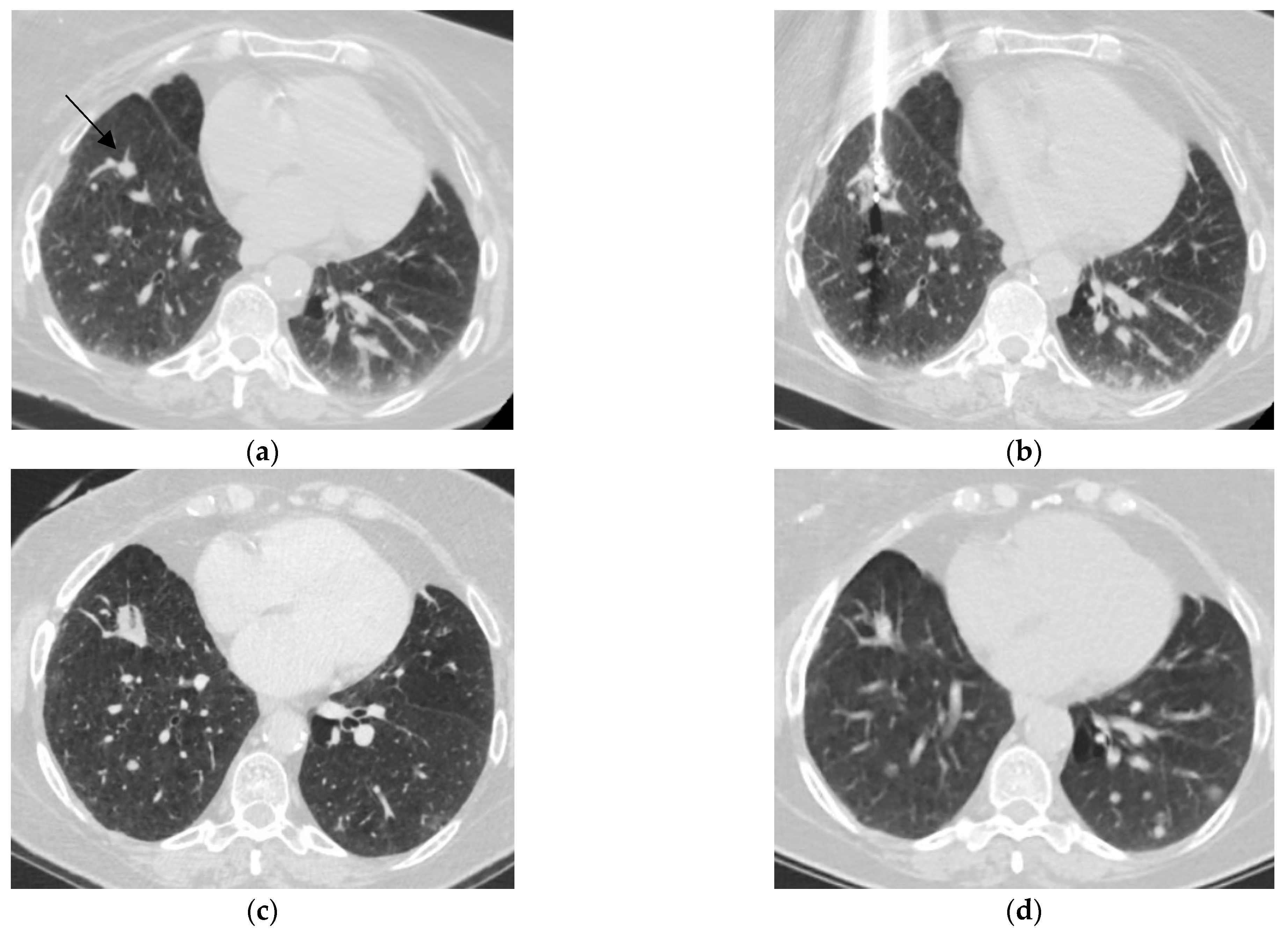
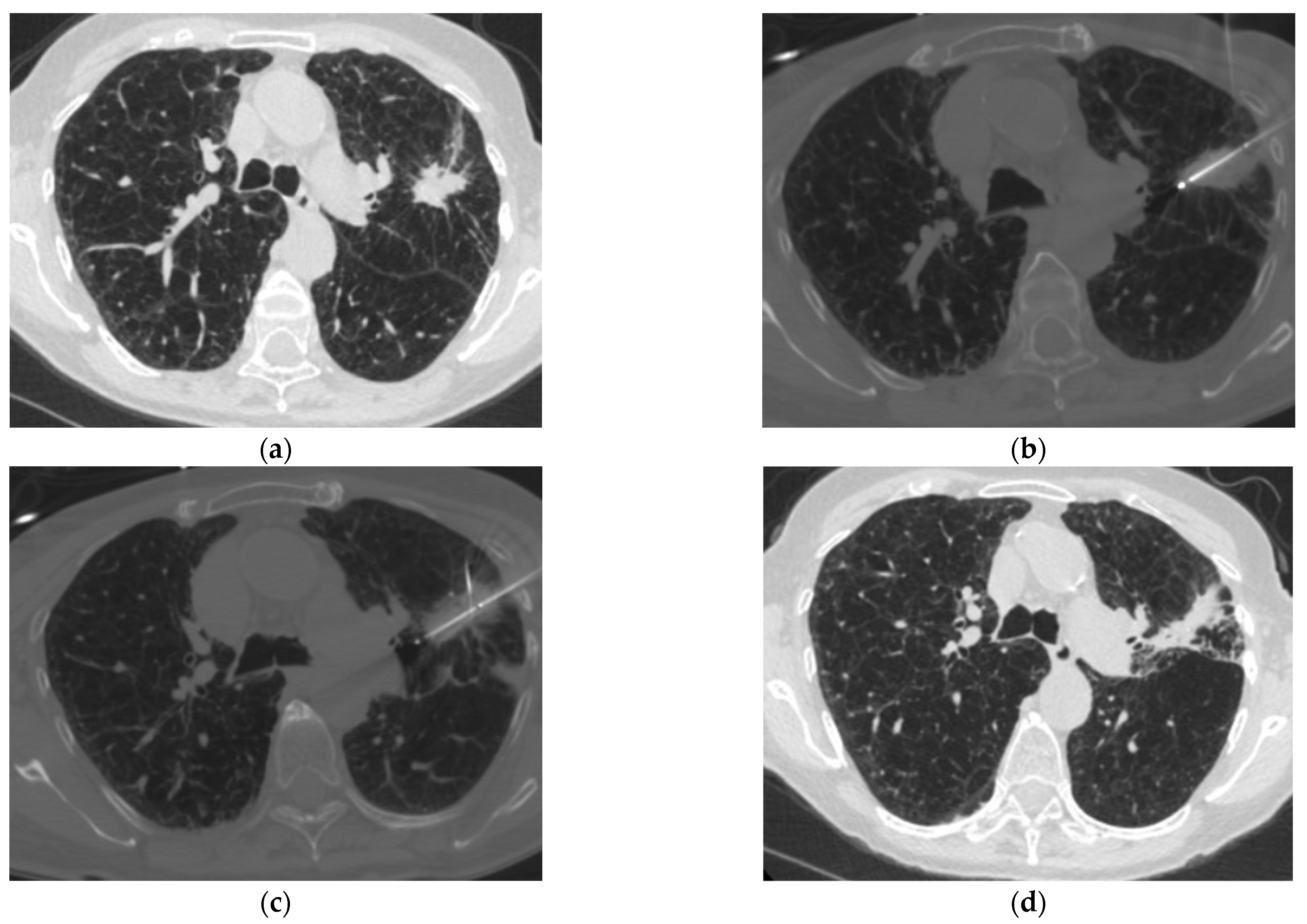
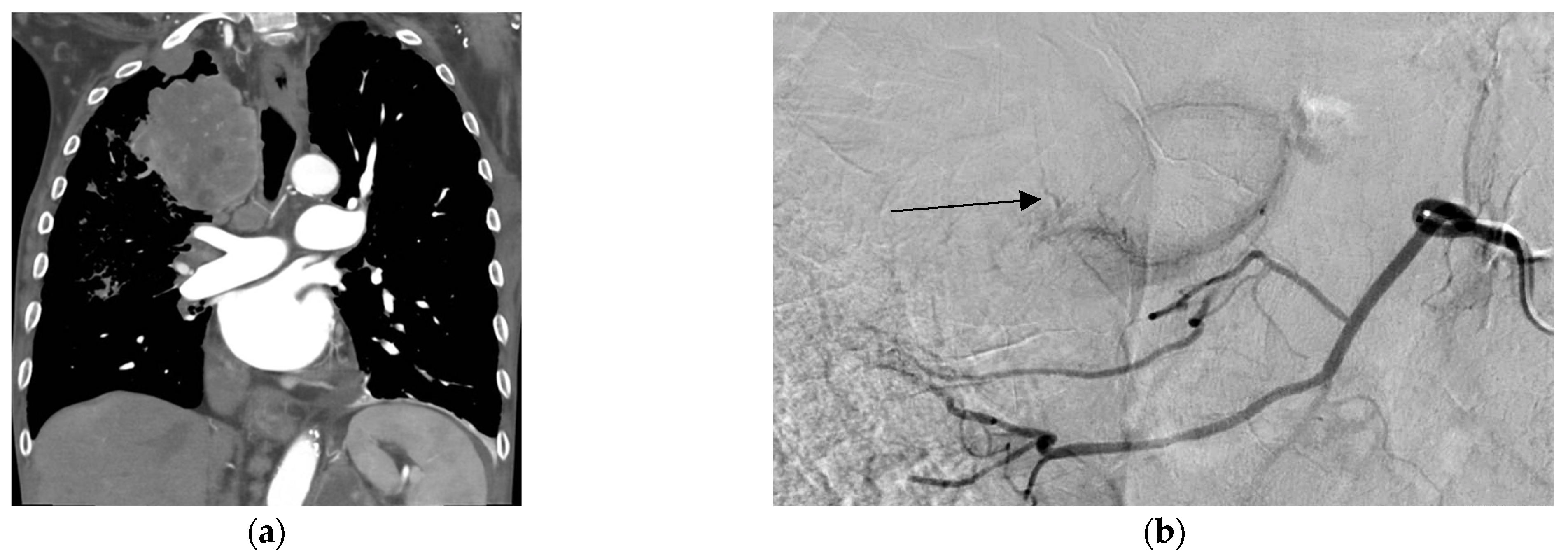
Advances in Percutaneous and Endovascular Locoregional Therapies for Primary and Metastatic Lung Cancer


Simple Summary
Abstract
1. Introduction
2. Energy Delivery and Ablation Zone Optimization
2.1. High-Power Microwave Ablation
2.2. Cryoablation Protocol Refinements
2.3. Ablation Zone Optimization
3. Advances in Image Guidance and Navigation
3.1. Cone Beam CT with Image Fusion
3.2. Electromagnetic Navigation-Assisted Ablation
3.3. Robotic-Assisted Ablation
4. Ablative Margins and Immediate Imaging Assessment
4.1. Ablative Margins and Local Control
4.2. Immediate Imaging Markers and Recurrence Risk
5. Expanding Applications
5.1. Larger Tumors and Central Lesions
5.2. Repeat Ablation for Oligoprogression
5.3. Salvage After Prior Local Therapy
6. Emerging Clinical Data and Outcomes
7. Advances in Transarterial Chemoembolization
8. Combined and Multimodality Strategies
8.1. Ablation and Immunotherapy
8.2. Ablation and Radiation or Systemic Therapy
8.3. Role of Transarterial Therapy in Multimodal Care
9. Conclusions and Future Directions
Author Contributions
Funding
Institutional Review Board Statement
Informed Consent Statement
Data Availability Statement
Conflicts of Interest
Abbreviations
| AEs | Adverse Events |
| BACE | Bronchial Artery Chemoembolization |
| BAI | Bronchial Artery Infusion Chemotherapy |
| CAR | Complete Ablation Rate |
| CBCT | Cone Beam Computed Tomography |
| CI | Confidence Interval |
| COPD | Chronic Obstructive Pulmonary Disease |
| CSS | Cancer-Specific Survival |
| CT | Computed Tomography |
| DCR | Disease Control Rate |
| DEB-BACE | Drug-Eluting Bead Bronchial Artery Chemoembolization |
| DFS | Disease-Free Survival |
| ECOG | Eastern Cooperative Oncology Group |
| EMN | Electromagnetic Navigation |
| GGN | Ground-Glass Nodule |
| HR | Hazard Ratio |
| HUs | Hounsfield Units |
| IGTA | Image-Guided Thermal Ablation |
| ICIs | Immune Checkpoint Inhibitors |
| IPFA | Intraparenchymal Fine Needle Adjustment |
| LCR | Local Control Rate |
| LR | Local Recurrence |
| LTC | Local Tumor Control |
| LTP | Local Tumor Progression |
| MALT | Microwave Ablation Treatment of Lung Tumors |
| mRECIST | Modified Response Evaluation Criteria in Solid Tumors |
| MWA | Microwave Ablation |
| NCCN | National Comprehensive Cancer Network |
| NSCLC | Non-Small Cell Lung Cancer |
| OR | Odds Ratio |
| OS | Overall Survival |
| PD-1 | Programmed Death-1 |
| PD-L1 | Programmed Death-Ligand 1 |
| PFS | Progression-Free Survival |
| QOL | Quality of Life |
| RFA | Radiofrequency Ablation |
| SBRT | Stereotactic Body Radiotherapy |
| SCLC | Small Cell Lung Cancer |
| sHR | Sub-Hazard Ratio |
| TPCE | Transpulmonary Chemoembolization |
| TTLR | Time to Local Recurrence |
References
- Zhou, J.; Xu, Y.; Liu, J.; Feng, L.; Yu, J.; Chen, D. Global Burden of Lung Cancer in 2022 and Projections to 2050: Incidence and Mortality Estimates from GLOBOCAN. Cancer Epidemiol. 2024, 93, 102693. [Google Scholar] [CrossRef] [PubMed]
- Luo, G.; Zhang, Y.; Rumgay, H.; Morgan, E.; Langselius, O.; Vignat, J.; Colombet, M.; Bray, F. Estimated Worldwide Variation and Trends in Incidence of Lung Cancer by Histological Subtype in 2022 and over Time: A Population-Based Study. Lancet Respir. Med. 2025, 13, 348–363. [Google Scholar] [CrossRef] [PubMed]
- National Comprehensive Cancer Network. NCCN Clinical Practice Guidelines in Oncology: Non–Small Cell Lung Cancer; National Comprehensive Cancer Network: Plymouth Meeting, PA, USA, 2025. [Google Scholar]
- Castillo-Fortuño, À.; Páez-Carpio, A.; Matute-González, M.; Odisio, E.G.; Vollmer, I.; Baetens, T.; Palussière, J.; Gómez, F.M. Lung Cryoablation: Patient Selection, Techniques, and Postablation Imaging. RadioGraphics 2025, 45, e240157. [Google Scholar] [CrossRef] [PubMed]
- Detterbeck, F.C.; Blasberg, J.D.; Woodard, G.A.; Decker, R.H.; Kumbasar, U.; Park, H.S.; Mase, V.J., Jr.; Bade, B.C.; Li, A.X.; Brandt, W.S.; et al. A Guide for Managing Patients with Stage I NSCLC: Deciding between Lobectomy, Segmentectomy, Wedge, SBRT and Ablation—Part 1: A Guide to Decision-Making. J. Thorac. Dis. 2022, 14, 2340–2356. [Google Scholar] [CrossRef]
- Chang, L.-K.; Su, P.-K.; Malwade, S.; Chung, W.-Y.; Chan, P.-S.; Chen, S.-C.; Chen, L.-C.; Yang, S.-M. Enhancing Microwave Ablation for Lung Lesions with Cone-Beam Computed Tomography Guidance and Intrapulmonary Fine Adjustment in a Hybrid Operating Room. Acad. Radiol. 2025, 32, 7591–7600. [Google Scholar] [CrossRef]
- Geevarghese, R.; Alexander, E.S.; Elsakka, A.; Chevallier, O.; Kelly, L.; Sotirchos, V.S.; Sofocleous, C.T.; Petre, E.N.; Erinjeri, J.P.; Zhan, C.; et al. Outcomes Following Microwave Ablation of 669 Primary and Metastatic Lung Malignancies. Eur. Radiol. 2025, 36, 2295–2304. [Google Scholar] [CrossRef]
- Venturini, M.; Cariati, M.; Marra, P.; Masala, S.; Pereira, P.L.; Carrafiello, G. CIRSE Standards of Practice on Thermal Ablation of Primary and Secondary Lung Tumours. Cardiovasc. Intervent. Radiol. 2020, 43, 667–683. [Google Scholar] [CrossRef]
- Liu, W.; Lin, H.; Cui, D.; Dong, Z.; Chi, J. Power Matters in CT-Guided Lung Microwave Ablation: A Multicenter Propensity-Weighted Comparison of 40 W Versus 50 W. Acad. Radiol. 2025, 33, 512–521. [Google Scholar] [CrossRef]
- Lanza, C.; Carriero, S.; Ascenti, V.; Tintori, J.; Ricapito, F.; Lavorato, R.; Biondetti, P.; Angileri, S.A.; Piacentino, F.; Fontana, F.; et al. Percutaneous Application of High Power Microwave Ablation with 150 W for the Treatment of Tumors in Lung, Liver, and Kidney: A Preliminary Experience. Technol. Cancer Res. Treat. 2023, 22, 15330338231185277. [Google Scholar] [CrossRef]
- Vogl, T.J.; Basten, L.M.; Nour-Eldin, N.-E.A.; Kaltenbach, B.; Ackermann, H.; Naguib, N.N.N. Microwave Ablation (MWA) of Pulmonary Neoplasms: Clinical Performance of High-Frequency MWA with Spatial Energy Control Versus Conventional Low-Frequency MWA. Am. J. Roentgenol. 2019, 213, 1388–1396. [Google Scholar] [CrossRef]
- Zirakchian Zadeh, M.; Sotirchos, V.S.; Kirov, A.; Lafontaine, D.; Gönen, M.; Yeh, R.; Kunin, H.; Petre, E.N.; Kitsel, Y.; Elsayed, M.; et al. Three-Dimensional Margin as a Predictor of Local Tumor Progression after Microwave Ablation: Intraprocedural versus 4–8-Week Postablation Assessment. J. Vasc. Interv. Radiol. 2024, 35, 523–532.e1. [Google Scholar] [CrossRef] [PubMed]
- Xu, Y.; Padley, S.P.G.; Devaraj, A.; Desai, S.R.; Ridge, C.A. Discrepancy Between Achieved and Vendor-Predicted Ablation Zones in the Lung: Contributing Factors. Cardiovasc. Intervent. Radiol. 2024, 47, 613–620. [Google Scholar] [CrossRef] [PubMed]
- Iezzi, R.; Cioni, R.; Basile, D.; Tosoratti, N.; Posa, A.; Busso, M.; Cappelli, C.; Margaritora, S.; Ambrogi, M.C.; Cassano, A.; et al. Standardizing Percutaneous Microwave Ablation in the Treatment of Lung Tumors: A Prospective Multicenter Trial (MALT Study). Eur. Radiol. 2021, 31, 2173–2182. [Google Scholar] [CrossRef] [PubMed]
- Chan, S.M.; Julien, P.J.; Kaganjo, P.; McKenna, R.J.; Forscher, C.; Natale, R.; Wolfe, R.N.; Butenschoen, K.; Siegel, R.J.; Mirocha, J. Safety and Efficacy Outcomes From a Single-Center Study of Image-Guided Percutaneous Microwave Ablation for Primary and Metastatic Lung Malignancy. JTO Clin. Res. Rep. 2023, 4, 100454. [Google Scholar] [CrossRef]
- Sarshoghi, A.; Sarshoghi, A.; Têtu, M.; Ng, C.S.H.; Yarmus, L.; Bourgouin, P.; Solomon, S.B.; Herth, F.; Liddell, R.P.; Liberman, M. Cryoablation Protocols for Primary and Metastatic Lung Tumors: A Systematic Review and Meta-Analysis Evaluating Effectiveness and Safety of Percutaneous Cryoablation of Pulmonary Tumors. J. Vasc. Interv. Radiol. 2025, 37, 107871. [Google Scholar] [CrossRef]
- Rehman, S.; Naidu, S.; Mehdi, R.S.; Akbarullah, S.; Boyer, D.; Jahangir, N.; Schunk, M.; Suh, R. Lung Ablation Outcomes for Inoperable Stage 1a NSCLC. J. Vasc. Interv. Radiol. 2025, 37, 107974. [Google Scholar] [CrossRef]
- Ni, Y.; Peng, J.; Yang, X.; Wei, Z.; Zhai, B.; Chi, J.; Li, X.; Ye, X. Multicentre Study of Microwave Ablation for Pulmonary Oligorecurrence after Radical Resection of Non-Small-Cell Lung Cancer. Br. J. Cancer 2021, 125, 672–678. [Google Scholar] [CrossRef]
- Fish, A.G.; Park, H.S.; Knight, E.; Knowlton, C.A.; Madoff, D.C. Percutaneous Cryoablation of Non-Small Cell Lung Cancer in Patients with Recurrence After Stereotactic Body Radiation Therapy. Cardiovasc. Intervent. Radiol. 2025, 48, 626–632. [Google Scholar] [CrossRef]
- Mai, M.; Kim, H.; Omar, A.; Abraham, J.; Escobar, S.; Hong, D.; Bae, M.; Maxwell, A.; Kim, D. Image-Guided Thermal Ablation in Patients with Locally Recurrent Non-Small Cell Lung Cancer After Stereotactic-Beam Radiation Therapy. Am. J. Roentgenol. 2025. [Google Scholar] [CrossRef]
- Zhao, Y.W.; Liu, S.; Qin, H.; Sun, J.B.; Su, M.; Yu, G.J.; Zhou, J.; Gao, F.; Wang, R.Y.; Zhao, T.; et al. Efficacy and Safety of CalliSpheres Drug-Eluting Beads for Bronchial Arterial Chemoembolization for Refractory Non-Small-Cell Lung Cancer and Its Impact on Quality of Life: A Multicenter Prospective Study. Front. Oncol. 2023, 13, 1110917. [Google Scholar] [CrossRef]
- Zheng, Z.; Tian, B.; An, Y.; Wang, W.; Zhang, M.; Ma, W.; Guo, Y.; Fan, Y.; Li, N. Efficacy of Argon–Helium Cryoablation Combined with PD-1 Inhibitors in Non-Small Cell Lung Cancer. Acta Oncol. 2025, 64, 1523–1530. [Google Scholar] [CrossRef]
- Nomori, H.; Yue, C.; Iguchi, H.; Kashihara, K.; Wada, R.; Saito, T. Long-Term Outcomes of Combination Therapy with Stereotactic Body Radiation Therapy plus Cryoablation Using Liquid Nitrogen for Stage I Non-Small Cell Lung Cancer with Tumors ≥2 Cm. PLoS ONE 2025, 20, e0332893. [Google Scholar] [CrossRef] [PubMed]
- Lu, B.-R.; Li, G.-X.; Shi, X.-Y.; He, K.; Zhang, N.; Zhao, W.-C.; Sun, Z.-G. A Meta-Analysis Comparing the Safety and Effectiveness of Microwave Ablation plus Chemotherapy versus Chemotherapy Alone in Patients with Lung Cancer. Asian J. Surg. 2025, 49, 1922–1930. [Google Scholar] [CrossRef]
- Lai, L.; Xu, F.; Zhang, D.; Chen, J.; Ying, X.; Chen, L.; Wu, J.; Song, J.; Li, W.; Ji, J.; et al. Bronchial Arterial Chemoembolization with Drug-Eluting Beads plus Sequential Chemotherapy for the Treatment of Stage III and IV Lung Squamous Cell Carcinoma. Eur. J. Radiol. 2024, 175, 111398. [Google Scholar] [CrossRef] [PubMed]
- Cui, S.-P.; Zhao, Q.; Wang, J.; Ji, Y.; Miao, J.-B.; Fu, Y.-L.; Hu, B.; Chen, S. Exploring the Impact of Variable Power Outputs on the Efficacy and Safety during Microwave Ablation for Lung Carcinoma: A Real-World Study. J. Thorac. Dis. 2024, 16, 5031–5041. [Google Scholar] [CrossRef]
- Xu, S.; Qi, J.; Li, B.; Bie, Z.-X.; Li, Y.-M.; Li, X.-G. Risk Prediction of Pleural Effusion in Lung Malignancy Patients Treated with CT-Guided Percutaneous Microwave Ablation: A Nomogram and Artificial Neural Network Model. Int. J. Hyperth. 2021, 38, 220–228. [Google Scholar] [CrossRef]
- Wrobel, M.M.; Bourgouin, P.P.; Kashani, M.A.; Leppelmann, K.S.; Vazquez, R.; Pachamanova, D.A.; Fintelmann, F.J. Active Versus Passive Thaw After Percutaneous Cryoablation of Pulmonary Tumors: Effect on Incidence, Grade, and Onset of Hemoptysis. Am. J. Roentgenol. 2021, 217, 1153–1163. [Google Scholar] [CrossRef]
- Gu, C.; Yuan, H.; Yang, C.; Xie, F.; Chen, J.; Zhu, L.; Jiang, Y.; Sun, J. Transbronchial Cryoablation in Peripheral Lung Parenchyma with a Novel Thin Cryoprobe and Initial Clinical Testing. Thorax 2024, 79, 633–643. [Google Scholar] [CrossRef]
- Sebek, J.; Taeprasartsit, P.; Pathomparai, C.; Dupuy, D.E.; Wibowo, H.; Prakash, P. Computational Modeling of Microwave Ablation of Lung Tumors: Assessment of Model-predictions against Post-treatment Imaging. Med. Phys. 2025, 52, e17897. [Google Scholar] [CrossRef]
- Li, S.; Bie, Z.; Li, Y.; Sun, J.; Zhang, J.; Zi, X.; Guo, R.; Li, X.-G. Electromagnetic Navigation System for Computed Tomography-Guided Synchronous Percutaneous Lung Biopsy and Microwave Ablation of Pulmonary Nodules: A Prospective, Single-Center, Single-Arm Clinical Study. Int. J. Hyperth. 2024, 41, 2417761. [Google Scholar] [CrossRef]
- Liu, G.-S.; Wang, S.-Q.; Liu, H.-L.; Liu, Y.; Fu, Y.-F.; Shi, Y.-B. Computed Tomography-Guided Biopsy for Small (≤20 Mm) Lung Nodules: A Meta-Analysis. J. Comput. Assist. Tomogr. 2020, 44, 841–846. [Google Scholar] [CrossRef]
- Johnston, E.W.; Basso, J.; Silva, F.; Haris, A.; Jones, R.L.; Khan, N.; Lawrence, H.; Mathiszig-Lee, J.; McCall, J.; Cunningham, D.C.; et al. Robotic versus Freehand CT-Guided Radiofrequency Ablation of Pulmonary Metastases: A Comparative Cohort Study. Int. J. Comput. Assist. Radiol. Surg. 2023, 18, 1819–1828. [Google Scholar] [CrossRef] [PubMed]
- Howington, J.; Souter, L.H.; Arenberg, D.; Blasberg, J.; Detterbeck, F.; Farjah, F.; Lanuti, M.; Leighl, N.; Videtic, G.M.; Murthy, S. Management of Patients with Early-Stage Non-Small Cell Lung Cancer. CHEST 2025, 168, 810–827. [Google Scholar] [CrossRef] [PubMed]
- Genshaft, S.J.; Suh, R.D.; Abtin, F.; Baerlocher, M.O.; Chang, A.J.; Dariushnia, S.R.; Devane, A.M.; Faintuch, S.; Himes, E.A.; Lisberg, A.; et al. Society of Interventional Radiology Multidisciplinary Position Statement on Percutaneous Ablation of Non-Small Cell Lung Cancer and Metastatic Disease to the Lungs. J. Vasc. Interv. Radiol. 2021, 32, 1241.e1–1241.e12. [Google Scholar] [CrossRef] [PubMed]
- Yang, Q.; Qi, H.; Zhang, R.; Wan, C.; Song, Z.; Zhang, L.; Fan, W. Risk Factors for Local Progression after Percutaneous Radiofrequency Ablation of Lung Tumors: Evaluation Based on a Review of 147 Tumors. J. Vasc. Interv. Radiol. 2017, 28, 481–489. [Google Scholar] [CrossRef]
- Alexander, E.S.; Xiong, L.; Baird, G.L.; Fernando, H.; Dupuy, D.E. CT Densitometry and Morphology of Radiofrequency-Ablated Stage IA Non–Small Cell Lung Cancer: Results from the American College of Surgeons Oncology Group Z4033 (Alliance) Trial. J. Vasc. Interv. Radiol. 2020, 31, 286–293. [Google Scholar] [CrossRef]
- Ahrar, K.; Tam, A.L.; Kuban, J.D.; Wu, C.C. Imaging of the Thorax after Percutaneous Thermal Ablation of Lung Malignancies. Clin. Radiol. 2022, 77, 31–43. [Google Scholar] [CrossRef]
- Zhu, L.; Huang, J.; Jin, C.; Zhou, A.; Chen, Y.; Zhang, B.; Venuta, F.; Pua, B.B.; Shen, Y. Retrospective Cohort Study on the Correlation Analysis among Peri-Procedural Factors, Complications, and Local Tumor Progression of Lung Tumors Treated with CT-Guided Microwave Ablation. J. Thorac. Dis. 2023, 15, 6915–6927. [Google Scholar] [CrossRef]
- Liu, B.; Li, C.; Sun, X.; Zhou, W.; Sun, J.; Liu, H.; Li, S.; Jia, H.; Xing, L.; Dong, X. Assessment and Prognostic Value of Immediate Changes in Post-Ablation Intratumor Density Heterogeneity of Pulmonary Tumors via Radiomics-Based Computed Tomography Features. Front. Oncol. 2021, 11, 615174. [Google Scholar] [CrossRef]
- Park, H.S.; Detterbeck, F.C.; Madoff, D.C.; Bade, B.C.; Kumbasar, U.; Mase, V.J., Jr.; Li, A.X.; Blasberg, J.D.; Woodard, G.A.; Brandt, W.S.; et al. A Guide for Managing Patients with Stage I NSCLC: Deciding between Lobectomy, Segmentectomy, Wedge, SBRT and Ablation—Part 4: Systematic Review of Evidence Involving SBRT and Ablation. J. Thorac. Dis. 2022, 14, 2412–2436. [Google Scholar] [CrossRef]
- Moscho, D.C.; Graur, A.; Tang, J.S.N.; Westphal, J.A.; Alessi, A.W.; Cahalane, A.M.; Shyn, P.B.; Lanuti, M.; Keane, F.K.; Fintelmann, F.J. Safety and Effectiveness of Non–Small Cell Lung Cancer Cryoablation and Microwave Ablation Involving Previously Irradiated Lung. J. Vasc. Interv. Radiol. 2026, 37, 107900. [Google Scholar] [CrossRef]
- Zhang, F.; Liu, Y. Transcatheter Arterial Chemoembolization for Lung Malignant Tumors. Front. Oncol. 2025, 15, 1551644. [Google Scholar] [CrossRef]
- Yang, S.; Liu, X.; Yu, J.; Chen, X.; Liu, X.; Zhao, S.; Jiang, T.; Sun, H.; Yang, M.; Wu, F.; et al. Ablation plus Immunotherapy versus Immunotherapy Alone in Patients of Advanced NSCLC Who Develop Oligo-Residual Disease after Anti-PD-1/L1 Therapy (BOOSTER): A Randomized Phase 2 Trial. Signal Transduct. Target. Ther. 2025, 10, 365. [Google Scholar] [CrossRef]
- Wang, J.; Li, B.; Zhang, L.; Wang, Z.; Shen, J. Safety and Local Efficacy of Computed Tomography-Guided Microwave Ablation for Treating Early-Stage Non-Small Cell Lung Cancer Adjacent to Bronchovascular Bundles. Eur. Radiol. 2023, 34, 236–246. [Google Scholar] [CrossRef] [PubMed]
- Chen, J.; Qi, L.; Chen, J.; Lin, Q.; Yan, Y.; Chen, J.; Lin, Z. Microwave Ablation Therapy Assisted by Artificial Pneumothorax and Artificial Hydrothorax for Lung Cancer Adjacent to the Vital Organs. Front. Oncol. 2022, 12, 981789. [Google Scholar] [CrossRef] [PubMed]
- He, J.; Yang, L.; Wang, D. Efficacy and Safety of Thermal Ablation for Patients with Stage I Non-Small Cell Lung Cancer. Acad. Radiol. 2024, 31, 5269–5279. [Google Scholar] [CrossRef] [PubMed]
- Nguyenhuy, M.; Xu, Y.; Maingard, J.; Barnett, S.; Kok, H.K.; Brooks, M.; Jhamb, A.; Asadi, H.; Knight, S. A Systematic Review and Meta-Analysis of Patient Survival and Disease Recurrence Following Percutaneous Ablation of Pulmonary Metastasis. Cardiovasc. Intervent. Radiol. 2022, 45, 1102–1113. [Google Scholar] [CrossRef]
- Vogl, T.J.; Mekkawy, A.; Thabet, D.B. Intravascular Treatment Techniques for Locoregional Therapies of Lung Tumors. RöFo 2023, 195, 579–585. [Google Scholar] [CrossRef]
- Xu, S.; Li, Y.-M.; Bie, Z.-X.; Li, X.-G. Drug-Eluting Beads Bronchial Arterial Chemoembolization/Bronchial Arterial Infusion Chemotherapy with and without PD-1 Blockade for Advanced Non-Small Cell Lung Cancer: A Comparative Single-Center Cohort Study. Quant. Imaging Med. Surg. 2023, 13, 6241–6256. [Google Scholar] [CrossRef]


| Study | Design | N (Patients) | Key Outcomes | Limitations | Conclusion |
|---|---|---|---|---|---|
| Microwave Ablation (MWA) | |||||
| Geevarghese et al. [7] | Retrospective single-center comparison of low (<60 W) versus standard (≥60 W) MWA in primary and metastatic lung tumors | 145 (low power) 238 (standard power) | LCR 1-year 90.3% 2-year 84.7% Standard power associated with longer TTLR (sHR = 0.55 p = 0.003) | 12-year enrollment with multiple operators, ablative margins not assessed, histology unconfirmed in some cases | Standard power had longer TTLR without more AEs when compared with low power |
| Liu et al. [9] | Retrospective multicenter propensity-weighted comparison of 40 W (default) versus 50 W (escalation) MWA in primary and metastatic lung tumors | 409 (40 W default) 213 (50 W escalation) | Grade 3 AEs Default 5.1% Escalation 17.4% 1-year CAR Default 95.6% Escalation 90.6% | Confounding by indication (50 W reserved for incomplete margins or challenging cases), short follow-up | Default low power with selective escalation showed reduced AEs with modestly improved CAR |
| Iezzi et al. [14] | Prospective multicenter trial of standardized MWA power–time protocols based on tumor origin and size in primary and metastatic lung tumors | 25 (primary) 29 (metastatic) | 2-year LTP 28.6% (primary) 22% (metastatic) | Small sample size, short follow-up, no control group, heterogeneous tumor population | Pre-defined size-based power showed similar LTP across tumor sizes |
| Chan et al. [15] | Retrospective single-center evaluation of MWA safety, efficacy, and power–recurrence relationship in primary and metastatic lung tumors | 93 | Freedom from LR 1-year 87.6% 2-year 75.3% 3-year 69.2% | Small sample size, heterogeneous tumor population and treatment history with incomplete histologic confirmation | Power was not significantly associated with LR or complication rates |
| Cryoablation | |||||
| Sarshoghi et al. [16] | Systematic review and meta-analysis of 19 studies including primary and metastatic lung tumors | 786 | Pooled 1-year LTC 90.5% AE Incidence 4.9% | Observational studies only, short follow-up, heterogeneous protocols | Triple-freeze protocol associated with superior LTC and low AE rates on univariate analysis; small tumor size was the only predictor of LTC in multivariate analysis |
| Rehman et al. [17] | Retrospective single-center study of standardized triple freeze–thaw protocol for stage IA NSCLC | 176 | PFS 1-year 91.8% 3-year 89.4% OS 1-year 100.0% 3-year 94.7% | No control group, limited to stage IA tumors | Triple freeze–thaw cryoablation achieved excellent control and OS; local failures predominantly in tumors > 2 cm |
| Oligoprogression and Salvage | |||||
| Ni et al. [18] | Retrospective multicenter study of MWA for oligorecurrences after radical resection of NSCLC | 103 | LR 14.6% Median PFS 15.1 months Median OS 40.6 months | Heterogeneous adjuvant treatment, highly selected population, histology unconfirmed in some cases | MWA was effective and safe; prognosis driven by new intrathoracic/metastatic disease rather than LR |
| Fish et al. [19] | Retrospective single-center study of cryoablation of NSCLC recurrence after SBRT | 29 | PFS 1-year 70.8% 3-year 22.6% OS 1-year 92.9% 3-year 35.4% | Small sample size, heterogeneous use of systemic therapy, variation in cryoablation protocol | Salvage cryoablation for recurrence post-SBRT was feasible with preserved pulmonary function and acceptable PFS and OS |
| Mai et al. [20] | Retrospective single-center study of MWA and cryoablation of NSCLC recurrence after SBRT | 40 | Median PFS 15.7 months Median OS 51.0 months | Small sample size, heterogeneous use of systemic therapy post-ablation, mixed curative/palliative intent | Salvage IGTA for recurrence post-SBRT was safe and effective with grade 1 AEs |
| Bronchial Artery Chemoembolization (BACE) | |||||
| Zhao et al. [21] | Prospective multicenter study of DEB-BACE for refractory NSCLC | 43 | 2-month DCR 95.35% Median OS 11.5 months | Small sample size, no control group, heterogeneous patient and tumor population | DEB-BACE showed high short-term control and symptom relief with grade 1–2 AEs |
| Combined and Multimodal Strategies | |||||
| Zheng et al. [22] | Randomized controlled trial, single-center comparing cryoablation + PD-1 inhibitor versus chemotherapy + PD-1 inhibitor in stage IIIB-IV NSCLC | 60 (30 per arm) | Cryoablation + PD-1 inhibitor PFS 63.3% OS not reached Chemotherapy + PD-1 inhibitor PFS 43.3% OS 10.3 months | Small sample size, short follow-up, open-label design | Cryoablation + PD-1 inhibitors improved PFS, OS, and immune function compared with control group |
| Nomori et al. [23] | Retrospective multicenter study of SBRT followed by cryoablation in stage I NSCLC tumors ≥ 2 cm | 64 | 5-year LCR 93% 5-year OS 74% | Small sample size, selection bias (56% chose treatment over surgery) | SBRT + cryoablation showed high 5-year LCR and OS |
| Lu et al. [24] | Systematic review and meta-analysis of MWA + chemotherapy versus chemotherapy alone | 600 | Combination group had better DCR (OR 2.48) and OS (HR = 0.44), with fewer AEs (OR 0.62) | 7 studies with only 2 RCTs, chemotherapy regimen varied between studies | MWA + chemotherapy showed improved disease response, PFS, and OS without increased AEs |
| Lai et al. [25] | Retrospective single-center comparison of DEB-BACE + chemotherapy versus chemotherapy alone | 41 (DEB-BACE + chemotherapy) 95 (chemotherapy only) | DEB-BACE + Chemotherapy DCR 90.2% Median OS 19 months Chemotherapy Only DCR 62.1% Median OS 14 months | Non-randomized, no immunotherapy limits generalizability | DEB-BACE + chemotherapy showed better DCR, PFS, and OS than chemotherapy alone |
| Indication and Disease Stage | Key Considerations | Recommended Modality | References |
|---|---|---|---|
| Medically inoperable stage IA NSCLC (≤3 cm) | - Not a surgical candidate or refused surgery - Alternative local therapy to SBRT | IGTA | [3,5,34,35] |
| Medically inoperable stage IB-II NSCLC (>3 cm) | - Not a surgical candidate or refused surgery - Alternative to SBRT when contraindicated or refused - Multiple synchronous lesions requiring parenchymal preservation - Compromised pulmonary function | IGTA (cryoablation preferred for central lesions) | [3,4,14,16] |
| Oligoprogression in systemic therapy stage III-IV NSCLC | - ≤3 sites of progression while other disease remains controlled in systemic therapy - Cumulative radiation dose limits - Compromised pulmonary function | IGTA (repeatable with minimal impact on lung function) | [3,18,35] |
| Local recurrence after radiation or surgery, any disease stage | - Repeat surgery is not feasible - Cumulative radiation dose limitations or overlap with prior radiation fields - Compromised pulmonary function | IGTA (cryoablation for fibrotic lung parenchyma or central lesions) | [3,19,20,42] |
| Advanced treatment-refractory stage III-IV lung cancer | - Exhausted or intolerant of systemic therapy, SBRT, or additional surgery - Malignant hemoptysis or compressive symptoms | DEB-BACE (investigational) | [21,43] |
| Oligoresidual disease in immunotherapy stage III-IV NSCLC | - Residual viable disease at limited sites after initial response to immunotherapy | IGTA (investigational) | [22,44] |
Disclaimer/Publisher’s Note: The statements, opinions and data contained in all publications are solely those of the individual author(s) and contributor(s) and not of MDPI and/or the editor(s). MDPI and/or the editor(s) disclaim responsibility for any injury to people or property resulting from any ideas, methods, instructions or products referred to in the content. |
© 2026 by the authors. Licensee MDPI, Basel, Switzerland. This article is an open access article distributed under the terms and conditions of the Creative Commons Attribution (CC BY) license.
Share and Cite
Mihailescu, M.; Fish, A.G.; Madoff, D.C. Advances in Percutaneous and Endovascular Locoregional Therapies for Primary and Metastatic Lung Cancer. Cancers 2026, 18, 1189. https://doi.org/10.3390/cancers18081189
Mihailescu M, Fish AG, Madoff DC. Advances in Percutaneous and Endovascular Locoregional Therapies for Primary and Metastatic Lung Cancer. Cancers. 2026; 18(8):1189. https://doi.org/10.3390/cancers18081189
Chicago/Turabian StyleMihailescu, Maria, Adam G. Fish, and David C. Madoff. 2026. "Advances in Percutaneous and Endovascular Locoregional Therapies for Primary and Metastatic Lung Cancer" Cancers 18, no. 8: 1189. https://doi.org/10.3390/cancers18081189
APA StyleMihailescu, M., Fish, A. G., & Madoff, D. C. (2026). Advances in Percutaneous and Endovascular Locoregional Therapies for Primary and Metastatic Lung Cancer. Cancers, 18(8), 1189. https://doi.org/10.3390/cancers18081189