Reframing RB Tumor Suppressor Dysfunction as a Therapeutic Vulnerability in Cancer

 , , , , and
Simple Summary
Abstract
1. Introduction
2. RB Protein
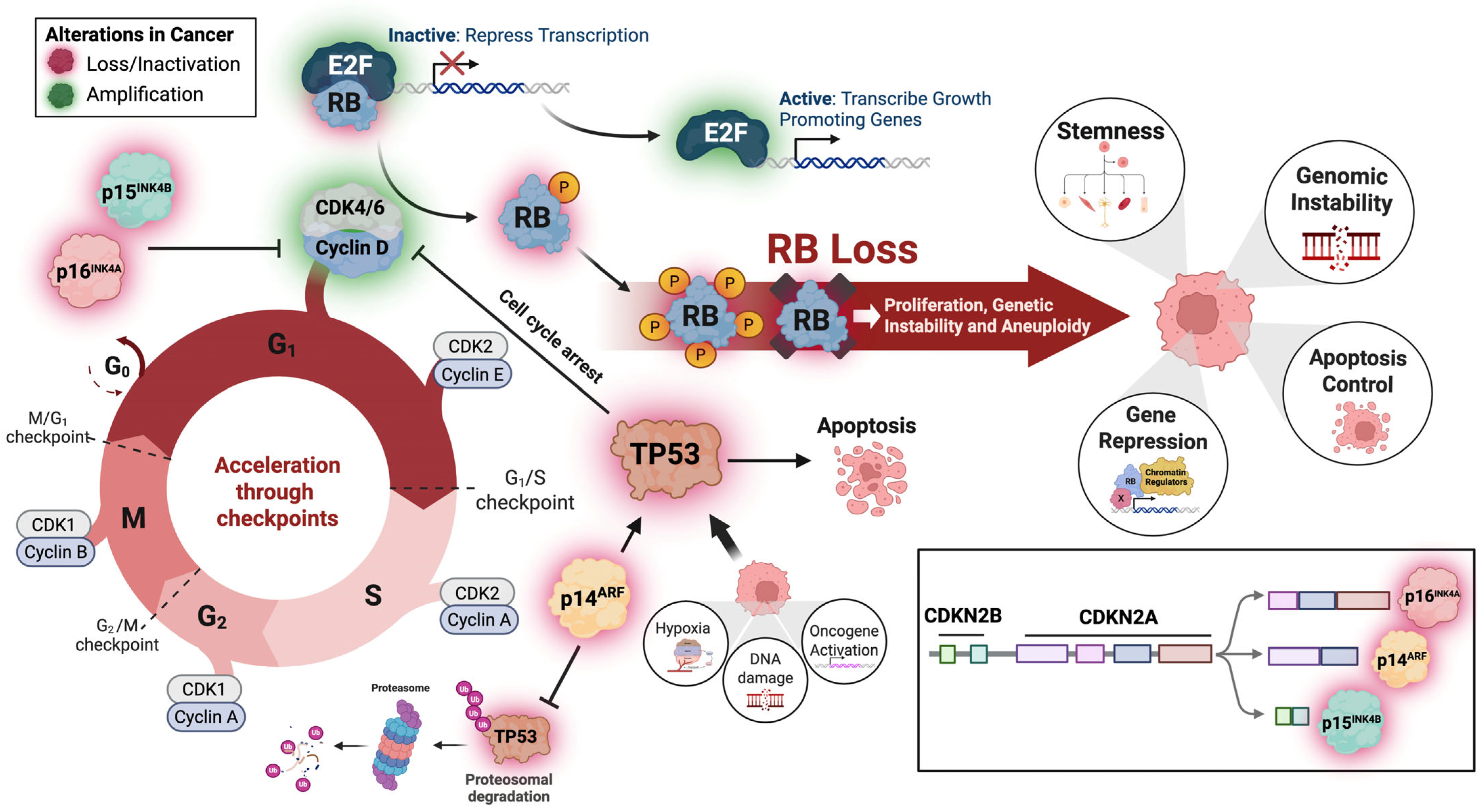
2.1. The RB Family Proteins: Composition and Functional Roles in Cell-Cycle Regulation
2.2. Heterogeneity of RB
3. Targeting Cell-Cycle Dysregulation
3.1. Questioning RB’s Reliability as a Therapeutic Marker
3.2. RB-Independent CDK4/6i Efficacy
4. RB Biology and Its Multifaceted Role in Cancer
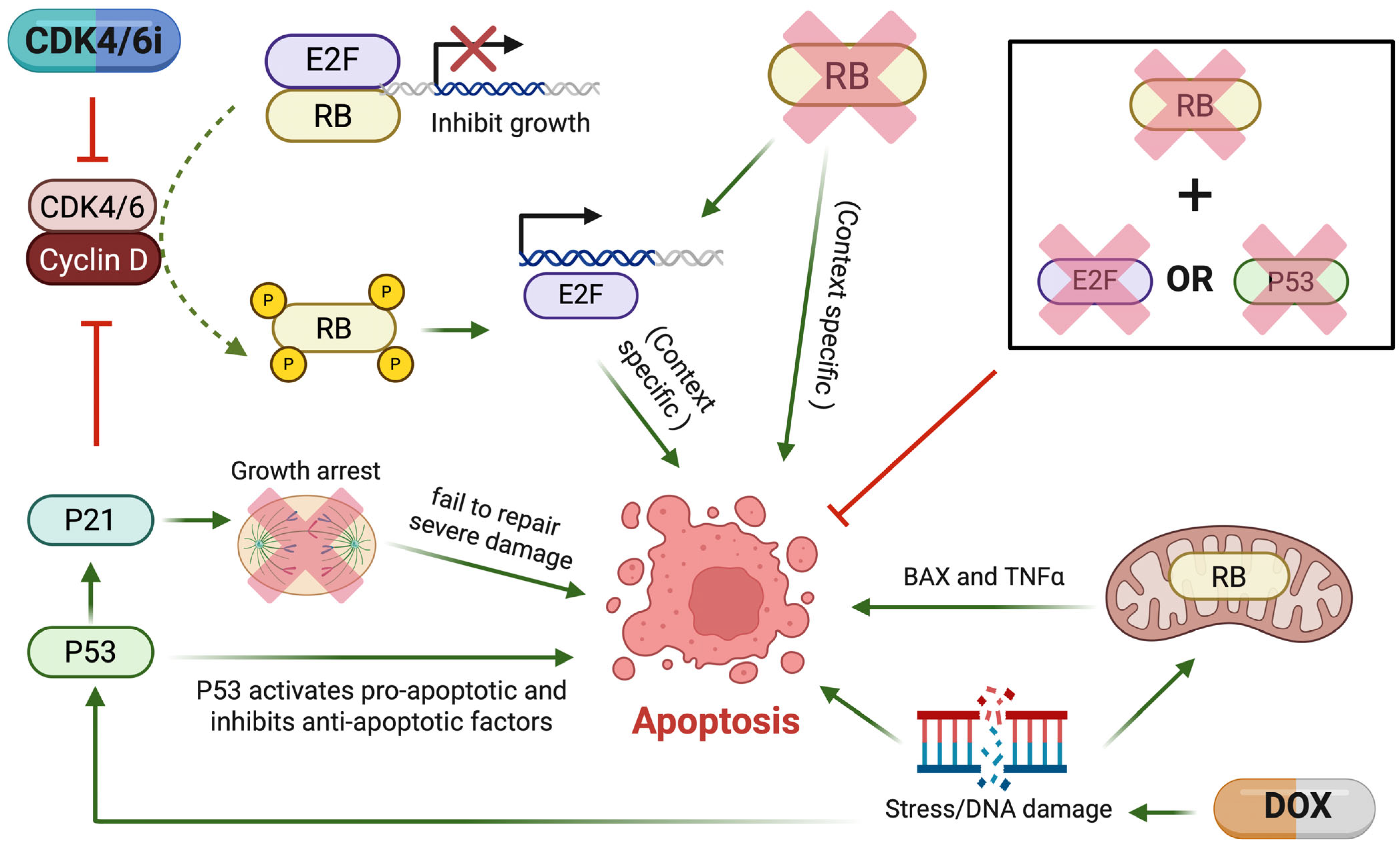
4.1. Role of RB in Apoptosis
4.2. RB in Stemness and Differentiation
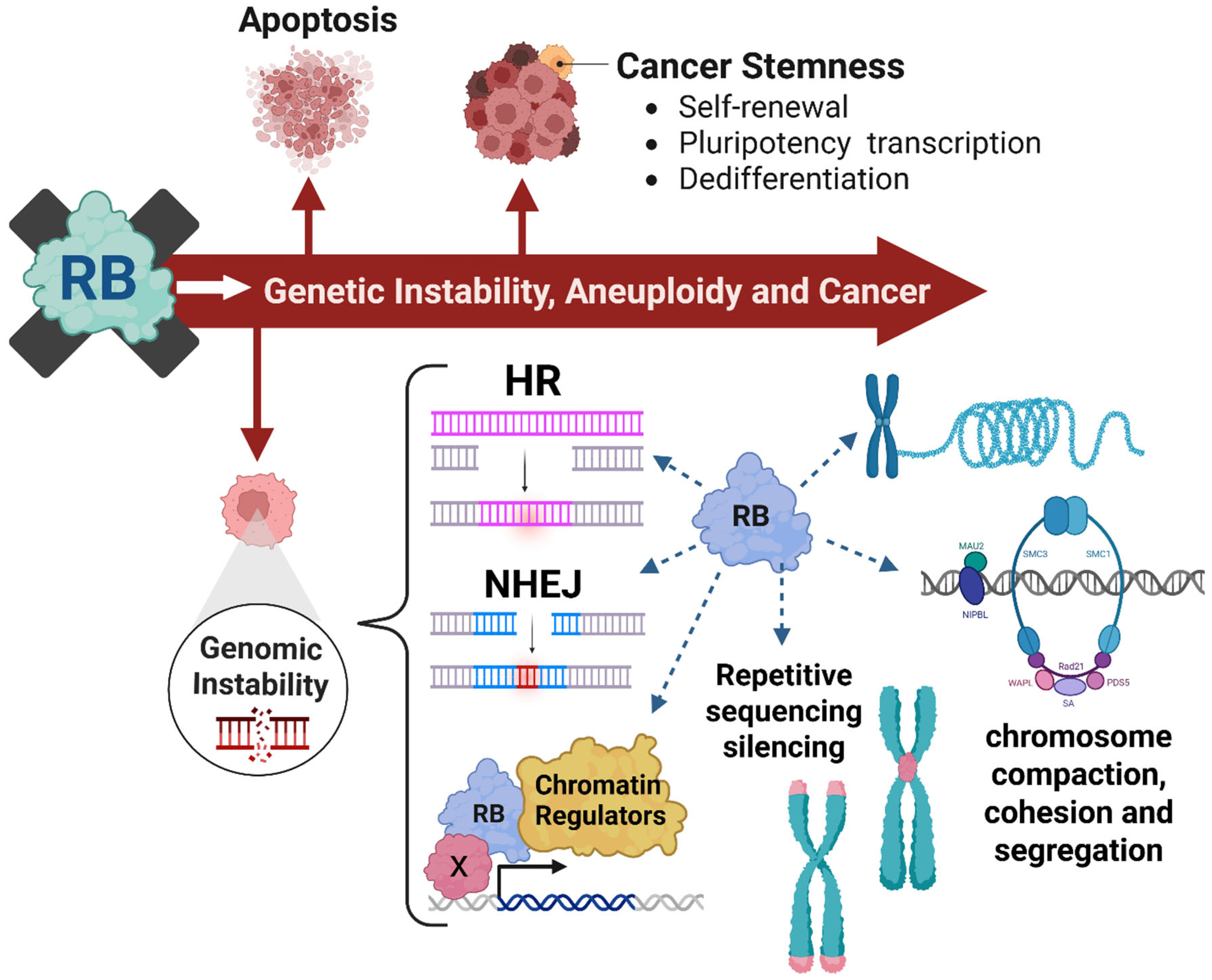
4.3. RB and Maintaining Genomic Stability
5. Therapeutic Implications of RB Status
5.1. Impact of RB Status on Chemotherapy Response and Maintaining Genomic Stabiltiy

| Groups | Eligibility | Results | Ref. |
|---|---|---|---|
| A. Chemotherapy Response in Sarcomas | |||
| Treatment groups: DOX v DOX + palifosfamide | Patients with untreated metastatic STS (NCT01168791) | No significant difference between groups. Median PFS was 5.2 and 6 months for DOX alone and combination therapy, respectively | [56] |
| Treatment groups: DOX v gemcitabine + docetaxel | Previously untreated advanced or metastatic STS (ISRCTN07742377) | Median PFS was 23.3 and 23.7 weeks for DOX and combination, respectively. | [57] |
| Treatment groups: DOX v DOX + ifosfamide | Patients with advanced or metastatic STS (NCT00061984) | No difference in overall survival in groups using DOX alone (12.8 months) or its combination (14.3 months). | [58] |
| B. Identification of Biomarkers of Chemotherapy Sensitivity | |||
| Identify biomarkers in sarcoma patients treated with radiation + DOX + ifosfamide | Patients with aggressive STS treated with chemoradiotherapy (NCT03651375) | High expression of HIF-1 correlated with poor response while high H2AX correlated with favorable response to therapy. | [63] |
| Identify biomarkers that predict response to chemotherapy | 64 head and neck cancer patients (ages 31–79) treated with cisplatin + 5-FU and radiation | High mRNA expression of TP53, BCL-2, VEGF, ERCC1, XPA, MDR1 was associated with chemotherapy sensitivity (RB p-value = 0.13). | [64] |
| Determine is RB loss increases sensitivity to antimetabolites | 518 patients (ages 25–89) who had breast cancer surgical resection | Loss of RB was the only predictive factor of improved response to cyclophosphamide, methotrexate, and 5-FU chemotherapy | [69] |
| Identify tumors that respond/fail to respond to various therapies | Patients with bone or solid tumors (NCT00580385) | Determine resistance mechanisms after methotrexate. Also test sensitivity in vitro to therapy and correlate it with molecular studies. | [70] |
| C. Targeted Therapy Response and Biomarkers in various cancers | |||
| Treatment groups: palbociclib + letrozole vs letrozole | ER+/HER2- patients from the PALOMA-2 trial (NCT01740427) | Found that expression levels of genes in the RB/Cyclin/CDK pathway didn’t correlate with therapeutic efficacy. | [71] |
| RB positive or CDK4/6 altered tumors treated with palbociclib | Breast cancer and solid tumor patients from (NCT01037790) | Biomarker study found that neither RB, Ki-67, and p16 were significantly associated with benefit in all groups. | [72] |
| Sarcomas treated with palbociclib targeted therapy | Sarcomas with high CDK4 and low/normal p16 expression (mRNA) (NCT01740427) | Biomarkers from 22 patients found that CDK4 expression above the median had 6-month PFS compared to only 2-months in those with low CDK4 expression. | [73] |
| Therapeutic vulnerability to PARPi, olaparib | Osteosarcoma cell lines and xenografts in NRG mice are treated with PARPi. | RB loss causes hypersensitivity to PARPi in osteosarcoma cell lines and mice grafts. | [74] |
| RB loss and CHK1, PLK1, and aurora kinase inhibitors | CRISPR screens in TNBC cell lines with RB alterations | Knudsen et al. have shown that RB loss can be exploited to make cells highly sensitive to drugs that inhibit CDC25, CHK1, or PLK1. | [75] |
5.2. Impact of RB Status on Targeted Therapies
6. Conclusions and Future Directions
Author Contributions
Funding
Institutional Review Board Statement
Informed Consent Statement
Data Availability Statement
Acknowledgments
Conflicts of Interest
Abbreviations
| RB | Retinoblastoma |
| CDK | Cyclin dependent kinase |
| CDK4/6i | Cyclin dependent kinase 4/6 inhibitors |
| PARPi | Poly (ADP-ribose) polymerase inhibitors |
| CIN | Chromosomal instability |
| BETi | Bromodomain and extraterminal domain inhibitors |
| DOX | Doxorubicin |
| STS | Soft tissue sarcoma |
| PFS | Progression free survival |
| TNBC | Triple negative breast cancer |
| DREAM | Dimerization partner, RB-like, E2F, and the multi-vulval class B |
| HDACs | Histone deacetylases |
| CHR | Cell-cycle gene homology regions |
| ESC | Embryonic stem cell |
| CSC | Cancer stem cells |
| EMT | Epithelial-mesenchymal transition |
| DSB | Double-strand breaks |
| NHEJ | Non-homologous end joining |
| HR | Homologous recombination |
| ER | Estrogen receptor |
| 5-FU | 5-Fluorouracil |
| CRISPR | Clustered regularly interspaced short palindromic repeats |
References
- Thangavelu, P.U.; Lin, C.-Y.; Forouz, F.; Tanaka, K.; Dray, E.; Duijf, P.H.G. The RB protein: More than a sentry of cell cycle entry. Trends Mol. Med. 2025, 31, 1124–1139. [Google Scholar] [CrossRef]
- Jardim, D.L.; Millis, S.Z.; Ross, J.S.; Woo, M.S.-A.; Ali, S.M.; Kurzrock, R. Cyclin Pathway Genomic Alterations Across 190,247 Solid Tumors: Leveraging Large-Scale Data to Inform Therapeutic Directions. Oncologist 2021, 26, e78–e89. [Google Scholar] [CrossRef]
- Knudsen, E.S.; Nambiar, R.; Rosario, S.R.; Smiraglia, D.J.; Goodrich, D.W.; Witkiewicz, A.K. Pan-cancer molecular analysis of the RB tumor suppressor pathway. Commun. Biol. 2020, 3, 158. [Google Scholar] [CrossRef] [PubMed]
- Engeland, K. Cell cycle regulation: p53-p21-RB signaling. Cell Death Differ. 2022, 29, 946–960. [Google Scholar] [CrossRef] [PubMed]
- Henley, S.A.; Dick, F.A. The retinoblastoma family of proteins and their regulatory functions in the mammalian cell division cycle. Cell Div. 2012, 7, 10. [Google Scholar] [CrossRef]
- Woo, M.S.-A.; Sánchez, I.; Dynlacht, B.D. p130 and p107 Use a Conserved Domain To Inhibit Cellular Cyclin-Dependent Kinase Activity. Mol. Cell Biol. 1997, 17, 3566–3579. [Google Scholar] [CrossRef]
- Barrett, A.K.; Shingare, M.R.; Rechtsteiner, A.; Rodriguez, K.M.; Le, Q.N.; Wijeratne, T.U.; Mitchell, C.E.; Membreno, M.W.; Rubin, S.M.; Müller, G.A. HDAC activity is dispensable for repression of cell-cycle genes by DREAM and E2F:RB complexes. Nat. Commun. 2024, 15, 4450. [Google Scholar] [CrossRef] [PubMed]
- Josling, G.A.; Selvarajah, S.A.; Petter, M.; Duffy, M.F. The Role of Bromodomain Proteins in Regulating Gene Expression. Genes 2012, 3, 320–343. [Google Scholar] [CrossRef]
- Sadasivam, S.; DeCaprio, J.A. The DREAM complex: Master coordinator of cell cycle-dependent gene expression. Nat. Rev. Cancer 2013, 13, 585–595. [Google Scholar] [CrossRef]
- Martelo, N.T.; Szijan, I. RB1 Sequence Variants in Retinoblastoma: Analysis of RB1 Variants in a Database for Correlation with pRB Protein Domains and Clinical Presentation. Biomedicines 2025, 13, 2693. [Google Scholar] [CrossRef]
- Valverde, J.R.; Alonso, J.; Palacios, I.; Pestaña, Á. RB1 gene mutation up-date, a meta-analysis based on 932 reported mutations available in a searchable database. BMC Genet. 2005, 6, 53. [Google Scholar] [CrossRef]
- Lu, J.; Wilfred, P.; Korbie, D.; Trau, M. Regulation of Canonical Oncogenic Signaling Pathways in Cancer via DNA Methylation. Cancers 2020, 12, 3199. [Google Scholar] [CrossRef]
- Finn, R.S.; Martin, M.; Rugo, H.S.; Jones, S.; Im, S.-A.; Gelmon, K.; Harbeck, N.; Lipatov, O.N.; Walshe, J.M.; Moulder, S.; et al. Palbociclib and Letrozole in Advanced Breast Cancer. N. Engl. J. Med. 2016, 375, 1925–1936. [Google Scholar] [CrossRef]
- Hortobagyi, G.N.; Stemmer, S.M.; Burris, H.A.; Yap, Y.-S.; Sonke, G.S.; Hart, L.; Campone, M.; Petrakova, K.; Winer, E.P.; Janni, W.; et al. Overall Survival with Ribociclib plus Letrozole in Advanced Breast Cancer. N. Engl. J. Med. 2022, 386, 942–950. [Google Scholar] [CrossRef] [PubMed]
- Johnston, S.; Martin, M.; Di Leo, A.; Im, S.-A.; Awada, A.; Forrester, T.; Frenzel, M.; Hardebeck, M.C.; Cox, J.; Barriga, S.; et al. MONARCH 3 final PFS: A randomized study of abemaciclib as initial therapy for advanced breast cancer. npj Breast Cancer 2019, 5, 5. [Google Scholar] [CrossRef]
- Hydbring, P.; Malumbres, M.; Sicinski, P. Non-canonical functions of cell cycle cyclins and cyclin-dependent kinases. Nat. Rev. Mol. Cell Biol. 2016, 17, 280–292. [Google Scholar] [CrossRef] [PubMed]
- Klein, M.E.; Kovatcheva, M.; Davis, L.E.; Tap, W.D.; Koff, A. CDK4/6 Inhibitors: The Mechanism of Action May Not Be as Simple as Once Thought. Cancer Cell 2018, 34, 9–20. [Google Scholar] [CrossRef]
- Braal, C.L.; Jongbloed, E.M.; Wilting, S.M.; Mathijssen, R.H.J.; Koolen, S.L.W.; Jager, A. Inhibiting CDK4/6 in Breast Cancer with Palbociclib, Ribociclib, and Abemaciclib: Similarities and Differences. Drugs 2021, 81, 317–331. [Google Scholar] [CrossRef] [PubMed]
- Roberts, P.J.; Kumarasamy, V.; Witkiewicz, A.K.; Knudsen, E.S. Chemotherapy and CDK4/6 Inhibitors: Unexpected Bedfellows. Mol. Cancer Ther. 2020, 19, 1575–1588. [Google Scholar] [CrossRef]
- Francis, A.M.; Alexander, A.; Liu, Y.; Vijayaraghavan, S.; Low, K.H.; Yang, D.; Bui, T.; Somaiah, N.; Ravi, V.; Keyomarsi, K.; et al. CDK4/6 Inhibitors Sensitize Rb-positive Sarcoma Cells to Wee1 Kinase Inhibition through Reversible Cell-Cycle Arrest. Mol. Cancer Ther. 2017, 16, 1751–1764. [Google Scholar] [CrossRef]
- Fry, D.W.; Harvey, P.J.; Keller, P.R.; Elliott, W.L.; Meade, M.; Trachet, E.; Albassam, M.; Zheng, X.; Leopold, W.R.; Pryer, N.K.; et al. Specific inhibition of cyclin-dependent kinase 4/6 by PD 0332991 and associated antitumor activity in human tumor xenografts. Mol. Cancer Ther. 2004, 3, 1427–1438. [Google Scholar] [CrossRef]
- Goel, S.; DeCristo, M.J.; McAllister, S.S.; Zhao, J.J. CDK4/6 Inhibition in Cancer: Beyond Cell Cycle Arrest. Trends Cell Biol. 2018, 28, 911–925. [Google Scholar] [CrossRef] [PubMed]
- Dean, J.L.; McClendon, A.K.; Hickey, T.E.; Butler, L.M.; Tilley, W.D.; Witkiewicz, A.K.; Knudsen, E.S. Therapeutic response to CDK4/6 inhibition in breast cancer defined by ex vivo analyses of human tumors. Cell Cycle 2012, 11, 2756–2761. [Google Scholar] [CrossRef]
- Dean, J.L.; Thangavel, C.; McClendon, A.K.; Reed, C.A.; Knudsen, E.S. Therapeutic CDK4/6 inhibition in breast cancer: Key mechanisms of response and failure. Oncogene 2010, 29, 4018–4032. [Google Scholar] [CrossRef]
- Finn, R.; Jiang, Y.; Rugo, H.; Moulder, S.A.; Im, S.-A.; Gelmon, K.A.; Dieras, V.; Martin, M.; Joy, A.A.; Toi, M.; et al. Biomarker analyses from the phase 3 PALOMA-2 trial of palbociclib (P) with letrozole (L) compared with placebo (PLB) plus L in postmenopausal women with ER + /HER2– advanced breast cancer (ABC). Ann. Oncol. 2016, 27, vi554. [Google Scholar] [CrossRef]
- Finn, R.S.; Liu, Y.; Zhu, Z.; Martin, M.; Rugo, H.S.; Diéras, V.; Im, S.-A.; Gelmon, K.A.; Harbeck, N.; Lu, D.R.; et al. Biomarker Analyses of Response to Cyclin-Dependent Kinase 4/6 Inhibition and Endocrine Therapy in Women with Treatment-Naïve Metastatic Breast Cancer. Clin. Cancer Res. 2020, 26, 110–121. [Google Scholar] [CrossRef]
- Anders, L.; Ke, N.; Hydbring, P.; Choi, Y.J.; Widlund, H.R.; Chick, J.M.; Zhai, H.; Vidal, M.; Gygi, S.P.; Braun, P.; et al. A Systematic Screen for CDK4/6 Substrates Links FOXM1 Phosphorylation to Senescence Suppression in Cancer Cells. Cancer Cell 2011, 20, 620–634. [Google Scholar] [CrossRef] [PubMed]
- Jirawatnotai, S.; Hu, Y.; Michowski, W.; Elias, J.E.; Becks, L.; Bienvenu, F.; Zagozdzon, A.; Goswami, T.; Wang, Y.E.; Clark, A.B.; et al. A function for cyclin D1 in DNA repair uncovered by protein interactome analyses in human cancers. Nature 2011, 474, 230–234. [Google Scholar] [CrossRef] [PubMed]
- Kollmann, K.; Heller, G.; Schneckenleithner, C.; Warsch, W.; Scheicher, R.; Ott, R.G.; Schäfer, M.; Fajmann, S.; Schlederer, M.; Schiefer, A.-I.; et al. A Kinase-Independent Function of CDK6 Links the Cell Cycle to Tumor Angiogenesis. Cancer Cell 2013, 24, 167–181, Erratum in 2016, 30, P359–P360. https://doi.org/10.1016/j.ccell.2016.07.003. [Google Scholar] [CrossRef]
- Uxa, S.; Bernhart, S.H.; Mages, C.F.S.; Fischer, M.; Kohler, R.; Hoffmann, S.; Stadler, P.F.; Engeland, K.; Müller, G.A. DREAM and RB cooperate to induce gene repression and cell-cycle arrest in response to p53 activation. Nucleic Acids Res. 2019, 47, 9087–9103. [Google Scholar] [CrossRef]
- Zheng, L.; Lee, W.-H. Retinoblastoma tumor suppressor and genome stability. Adv Cancer Res. 2002, 85, 13–50. [Google Scholar] [CrossRef] [PubMed]
- Vélez-Cruz, R.; Johnson, D.G. The Retinoblastoma (RB) Tumor Suppressor: Pushing Back against Genome Instability on Multiple Fronts. Int. J. Mol. Sci. 2017, 18, 1776. [Google Scholar] [CrossRef] [PubMed]
- Vélez-Cruz, R.; Manickavinayaham, S.; Biswas, A.K.; Clary, R.W.; Premkumar, T.; Cole, F.; Johnson, D.G. RB localizes to DNA double-strand breaks and promotes DNA end resection and homologous recombination through the recruitment of BRG1. Genes Dev. 2016, 30, 2500–2512. [Google Scholar] [CrossRef]
- Hilgendorf, K.I.; Leshchiner, E.S.; Nedelcu, S.; Maynard, M.A.; Calo, E.; Ianari, A.; Walensky, L.D.; Lees, J.A. The retinoblastoma protein induces apoptosis directly at the mitochondria. Genes Dev. 2013, 27, 1003–1015. [Google Scholar] [CrossRef]
- Morgenbesser, S.D.; Williams, B.O.; Jacks, T.; DePinho, R.A. p53-dependent apoptosis produced by Rb-deficiency in the developing mouse lens. Nature 1994, 371, 72–74. [Google Scholar] [CrossRef]
- Thomas, D.M.; Carty, S.A.; Piscopo, D.M.; Lee, J.-S.; Wang, W.-F.; Forrester, W.C.; Hinds, P.W. The Retinoblastoma Protein Acts as a Transcriptional Coactivator Required for Osteogenic Differentiation. Mol. Cell 2001, 8, 303–316. [Google Scholar] [CrossRef] [PubMed]
- Pan, H.; Yin, C.; Dyson, N.J.; Harlow, E.; Yamasaki, L.; Van Dyke, T. Key Roles for E2F1 in Signaling p53-Dependent Apoptosis and in Cell Division within Developing Tumors. Mol. Cell 1998, 2, 283–292. [Google Scholar] [CrossRef]
- Ianari, A.; Natale, T.; Calo, E.; Ferretti, E.; Alesse, E.; Screpanti, I.; Haigis, K.; Gulino, A.; Lees, J.A. Proapoptotic Function of the Retinoblastoma Tumor Suppressor Protein. Cancer Cell 2009, 15, 184–194. [Google Scholar] [CrossRef]
- Conklin, J.F.; Baker, J.; Sage, J. The RB family is required for the self-renewal and survival of human embryonic stem cells. Nat. Commun. 2012, 3, 1244. [Google Scholar] [CrossRef]
- Chang, C.-H.; Liu, F.; Militi, S.; Hester, S.; Nibhani, R.; Deng, S.; Dunford, J.; Rendek, A.; Soonawalla, Z.; Fischer, R.; et al. The pRb/RBL2-E2F1/4-GCN5 axis regulates cancer stem cell formation and G0 phase entry/exit by paracrine mechanisms. Nat. Commun. 2024, 15, 3580. [Google Scholar] [CrossRef]
- Arima, Y.; Hayashi, H.; Sasaki, M.; Hosonaga, M.; Goto, T.M.; Chiyoda, T.; Kuninaka, S.; Shibata, T.; Ohata, H.; Nakagama, H.; et al. Induction of ZEB Proteins by Inactivation of RB Protein Is Key Determinant of Mesenchymal Phenotype of Breast Cancer. J. Biol. Chem. 2012, 287, 7896–7906. [Google Scholar] [CrossRef]
- Gu, W.; Schneider, J.W.; Condorelli, G.; Kaushal, S.; Mahdavi, V.; Nadal-Ginard, B. Interaction of myogenic factors and the retinoblastoma protein mediates muscle cell commitment and differentiation. Cell 1993, 72, 309–324. [Google Scholar] [CrossRef] [PubMed]
- Chen, P.L.; Riley, D.J.; Chen, Y.; Lee, W.H. Retinoblastoma protein positively regulates terminal adipocyte differentiation through direct interaction with C/EBPs. Genes Dev. 1996, 10, 2794–2804. [Google Scholar] [CrossRef]
- Kareta, M.S.; Gorges, L.L.; Hafeez, S.; Benayoun, B.A.; Marro, S.; Zmoos, A.-F.; Cecchini, M.J.; Spacek, D.; Batista, L.F.; O’bRien, M.; et al. Inhibition of Pluripotency Networks by the Rb Tumor Suppressor Restricts Reprogramming and Tumorigenesis. Cell Stem Cell 2015, 16, 39–50. [Google Scholar] [CrossRef]
- Papaccio, F.; Paino, F.; Regad, T.; Papaccio, G.; Desiderio, V.; Tirino, V. Concise Review: Cancer Cells, Cancer Stem Cells, and Mesenchymal Stem Cells: Influence in Cancer Development. Stem Cells Transl. Med. 2017, 6, 2115–2125. [Google Scholar] [CrossRef]
- Cook, R.; Zoumpoulidou, G.; Luczynski, M.T.; Rieger, S.; Moquet, J.; Spanswick, V.J.; Hartley, J.A.; Rothkamm, K.; Huang, P.H.; Mittnacht, S. Direct Involvement of Retinoblastoma Family Proteins in DNA Repair by Non-homologous End-Joining. Cell Rep. 2015, 10, 2006–2018. [Google Scholar] [CrossRef]
- Ishak, C.A.; Marshall, A.E.; Passos, D.T.; White, C.R.; Kim, S.J.; Cecchini, M.J.; Ferwati, S.; MacDonald, W.A.; Howlett, C.J.; Welch, I.D.; et al. An RB-EZH2 Complex Mediates Silencing of Repetitive DNA Sequences. Mol. Cell 2016, 64, 1074–1087. [Google Scholar] [CrossRef]
- Sotillo, R.; Schvartzman, J.-M.; Socci, N.D.; Benezra, R. Mad2-induced chromosome instability leads to lung tumour relapse after oncogene withdrawal. Nature 2010, 464, 436–440. [Google Scholar] [CrossRef]
- Forment, J.V.; Kaidi, A.; Jackson, S.P. Chromothripsis and cancer: Causes and consequences of chromosome shattering. Nat. Rev. Cancer 2012, 12, 663–670. [Google Scholar] [CrossRef] [PubMed]
- Choudhury, A.D.; Beltran, H. Retinoblastoma Loss in Cancer: Casting a Wider Net. Clin. Cancer Res. 2019, 25, 4199–4201. [Google Scholar] [CrossRef] [PubMed]
- Borden, E.C.; Amato, D.A.; Rosenbaum, C.; Enterline, H.T.; Shiraki, M.J.; Creech, R.H.; Lerner, H.J.; Carbone, P.P. Randomized comparison of three adriamycin regimens for metastatic soft tissue sarcomas. J. Clin. Oncol. 1987, 5, 840–850. [Google Scholar] [CrossRef]
- Benjamin, R.S.; Wiernik, P.H.; Bachur, N.R. Adriamycin: A new effective agent in the therapy of disseminated sarcomas. Med Pediatr. Oncol. 1975, 1, 63–76. [Google Scholar] [CrossRef]
- Coindre, J.M.; Terrier, P.; Bui, N.B.; Bonichon, F.; Collin, F.; Le Doussal, V.; Mandard, A.M.; Vilain, M.O.; Jacquemier, J.; Duplay, H.; et al. Prognostic factors in adult patients with locally controlled soft tissue sarcoma. A study of 546 patients from the French Federation of Cancer Centers Sarcoma Group. J. Clin. Oncol. 1996, 14, 869–877. [Google Scholar] [CrossRef] [PubMed]
- Italiano, A.; Mathoulin-Pelissier, S.; Cesne, A.L.; Terrier, P.; Bonvalot, S.; Collin, F.; Michels, J.-J.; Blay, J.-Y.; Coindre, J.-M.; Bui, B. Trends in survival for patients with metastatic soft-tissue sarcoma. Cancer 2011, 117, 1049–1054. [Google Scholar] [CrossRef] [PubMed]
- Sritharan, S.; Sivalingam, N. A comprehensive review on time-tested anticancer drug doxorubicin. Life Sci. 2021, 278, 119527. [Google Scholar] [CrossRef]
- Ryan, C.W.; Merimsky, O.; Agulnik, M.; Blay, J.-Y.; Schuetze, S.M.; Van Tine, B.A.; Jones, R.L.; Elias, A.D.; Choy, E.; Alcindor, T.; et al. PICASSO III: A Phase III, Placebo-Controlled Study of Doxorubicin with or Without Palifosfamide in Patients with Metastatic Soft Tissue Sarcoma. J. Clin. Oncol. 2016, 34, 3898–3905. [Google Scholar] [CrossRef]
- Seddon, B.; Strauss, S.J.; Whelan, J.; Leahy, M.; Woll, P.J.; Cowie, F.; Rothermundt, C.; Wood, Z.; Benson, C.; Ali, N.; et al. Gemcitabine and docetaxel versus doxorubicin as first-line treatment in previously untreated advanced unresectable or metastatic soft-tissue sarcomas (GeDDiS): A randomised controlled phase 3 trial. Lancet Oncol. 2017, 18, 1397–1410. [Google Scholar] [CrossRef] [PubMed]
- Judson, I.; Verweij, J.; Gelderblom, H.; Hartmann, J.T.; Schöffski, P.; Blay, J.-Y.; Kerst, J.M.; Sufliarsky, J.; Whelan, J.; Hohenberger, P.; et al. Doxorubicin alone versus intensified doxorubicin plus ifosfamide for first-line treatment of advanced or metastatic soft-tissue sarcoma: A randomised controlled phase 3 trial. Lancet Oncol. 2014, 15, 415–423. [Google Scholar] [CrossRef]
- Carbonnaux, M.; Brahmi, M.; Schiffler, C.; Meeus, P.; Sunyach, M.P.; Bouhamama, A.; Karanian, M.; Tirode, F.; Pissaloux, D.; Vaz, G.; et al. Very long-term survivors among patients with metastatic soft tissue sarcoma. Cancer Med. 2019, 8, 1368–1378. [Google Scholar] [CrossRef]
- Gamboa, A.C.; Gronchi, A.; Cardona, K. Soft-tissue sarcoma in adults: An update on the current state of histiotype-specific management in an era of personalized medicine. CA A Cancer J. Clin. 2020, 70, 200–229. [Google Scholar] [CrossRef]
- Du, M.; Gu, J.; Liu, C.; Liu, N.; Yu, Z.; Zhou, C.; Heng, W.; Cao, Z.; Wei, F.; Zhu, K.; et al. Genome-wide CRISPR screen identified Rad18 as a determinant of doxorubicin sensitivity in osteosarcoma. J. Exp. Clin. Cancer Res. 2022, 41, 154. [Google Scholar] [CrossRef] [PubMed]
- Varanasi, L.; Do, P.M.; Goluszko, E.; Martinez, L.A. Rad18 is a transcriptional target of E2F3. Cell Cycle 2012, 11, 1131–1141. [Google Scholar] [CrossRef] [PubMed][Green Version]
- Szumera-Ciećkiewicz, A.; Bobak, K.; Spałek, M.J.; Sokół, K.; Wągrodzki, M.; Owczarek, D.; Kawecka, M.; Puton, B.; Koseła-Paterczyk, H.; Rutkowski, P.; et al. Predictive Biomarkers of Pathological Response to Neoadjuvant Chemoradiotherapy for Locally Advanced Soft Tissue Sarcomas. Cancers 2023, 15, 2960. [Google Scholar] [CrossRef] [PubMed]
- Hasegawa, Y.; Goto, M.; Hanai, N.; Ozawa, T.; Hirakawa, H. Predictive biomarkers for combined chemotherapy with 5-fluorouracil and cisplatin in oro- and hypopharyngeal cancers. Mol. Clin. Oncol. 2018, 8, 378–386. [Google Scholar] [CrossRef]
- Indovina, P.; Pentimalli, F.; Conti, D.; Giordano, A. Translating RB1 predictive value in clinical cancer therapy: Are we there yet? Biochem. Pharmacol. 2019, 166, 323–334. [Google Scholar] [CrossRef]
- Ertel, A.; Dean, J.L.; Rui, H.; Liu, C.; Witkiewicz, A.K.; Knudsen, K.E.; Knudsen, E.S. RB-pathway disruption in breast cancer: Differential association with disease subtypes, disease-specific prognosis and therapeutic response. Cell Cycle 2010, 9, 4153–4163. [Google Scholar] [CrossRef]
- Witkiewicz, A.K.; Ertel, A.; McFalls, J.; Valsecchi, M.E.; Schwartz, G.; Knudsen, E.S. RB-Pathway Disruption Is Associated with Improved Response to Neoadjuvant Chemotherapy in Breast Cancer. Clin. Cancer Res. 2012, 18, 5110–5122. [Google Scholar] [CrossRef][Green Version]
- Robinson, T.J.W.; Liu, J.C.; Vizeacoumar, F.; Sun, T.; Maclean, N.; Egan, S.E.; Schimmer, A.D.; Datti, A.; Zacksenhaus, E. RB1 Status in Triple Negative Breast Cancer Cells Dictates Response to Radiation Treatment and Selective Therapeutic Drugs. PLoS ONE 2013, 8, e78641. [Google Scholar] [CrossRef]
- Derenzini, M.; Donati, G.; Mazzini, G.; Montanaro, L.; Vici, M.; Ceccarelli, C.; Santini, D.; Taffurelli, M.; Treré, D. Loss of Retinoblastoma Tumor Suppressor Protein Makes Human Breast Cancer Cells More Sensitive to Antimetabolite Exposure. Clin. Cancer Res. 2008, 14, 2199–2209. [Google Scholar] [CrossRef]
- Chemotherapy Resistance in Osteogenic Sarcoma and Other Solid Tumors. 2025. Available online: https://clinicaltrials.gov/study/NCT00580385 (accessed on 6 January 2026).
- Finn, R.; Liu, Y.; Martin, M.; Rugo, H.; Dieras, V.; Im, S.-A.; Gelmon, K.; Harbeck, N.; Zhu, Z.; Lu, D.; et al. Abstract P2-09-10: Comprehensive gene expression biomarker analysis of CDK 4/6 and endocrine pathways from the PALOMA-2 study. Cancer Res. 2018, 78, P2-09-10. [Google Scholar] [CrossRef]
- DeMichele, A.; Clark, A.S.; Tan, K.S.; Heitjan, D.F.; Gramlich, K.; Gallagher, M.; Lal, P.; Feldman, M.; Zhang, P.; Colameco, C.; et al. CDK 4/6 Inhibitor Palbociclib (PD0332991) in Rb+ Advanced Breast Cancer: Phase II Activity, Safety, and Predictive Biomarker Assessment. Clin. Cancer Res. 2015, 21, 995–1001. [Google Scholar] [CrossRef]
- Martin-Broto, J.; Martinez-Garcia, J.; Moura, D.S.; Redondo, A.; Gutierrez, A.; Lopez-Pousa, A.; Martinez-Trufero, J.; Sevilla, I.; Diaz-Beveridge, R.; Solis-Hernandez, M.P.; et al. Phase II trial of CDK4/6 inhibitor palbociclib in advanced sarcoma based on mRNA expression of CDK4/CDKN2A. Signal Transduct. Target. Ther. 2023, 8, 405. [Google Scholar] [CrossRef]
- Zoumpoulidou, G.; Alvarez-Mendoza, C.; Mancusi, C.; Ahmed, R.-M.; Denman, M.; Steele, C.D.; Tarabichi, M.; Roy, E.; Davies, L.R.; Manji, J.; et al. Therapeutic vulnerability to PARP1,2 inhibition in RB1-mutant osteosarcoma. Nat. Commun. 2021, 12, 7064. [Google Scholar] [CrossRef]
- Knudsen, E.S.; Zacksenhaus, E. The vulnerability of RB loss in breast cancer: Targeting a void in cell cycle control. Oncotarget 2018, 9, 30940–30941. [Google Scholar] [CrossRef]
- Hsu, J.Y.; Seligson, N.D.; Hays, J.L.; Miles, W.O.; Chen, J.L. Clinical Utility of CDK4/6 Inhibitors in Sarcoma: Successes and Future Challenges. JCO Precis. Oncol. 2022, 6, e2100211. [Google Scholar] [CrossRef]
- Pernas, S.; Tolaney, S.M.; Winer, E.P.; Goel, S. CDK4/6 inhibition in breast cancer: Current practice and future directions. Ther. Adv. Med Oncol. 2018, 10, 1758835918786451. [Google Scholar] [CrossRef]
- Albanell, J.; Pozo, A.G.; Arteaga, C.L.; Bellet, M.; Rojo, F.; González, A.; Bellosillo, B.; Serra, V.; Gener, P.; Guerrero, J.A.; et al. Biomarkers of palbociclib response in hormone receptor-positive advanced breast cancer from the PARSIFAL trial. npj Breast Cancer 2025, 11, 59. [Google Scholar] [CrossRef] [PubMed]
- Olmez, I.; Brenneman, B.; Xiao, A.; Serbulea, V.; Benamar, M.; Zhang, Y.; Manigat, L.; Abbas, T.; Lee, J.; Nakano, I.; et al. Combined CDK4/6 and mTOR Inhibition Is Synergistic against Glioblastoma via Multiple Mechanisms. Clin. Cancer Res. 2017, 23, 6958–6968. [Google Scholar] [CrossRef] [PubMed]
- Malko, R.; Pandya, P.H.; Shannon, H.E.; Dobrota, E.A.; Bailey, B.J.; Riyahi, N.; Kreklau, K.E.; Justice, R.E.; Trowbridge, M.A.; Coy, K.L.; et al. Abstract 5340: Simultaneous targeting of CDK4/6 and BETs is independent of RB status in osteosarcoma. Cancer Res. 2025, 85, 5340. [Google Scholar] [CrossRef]
- Xue, Y.; Zhai, J. Strategy of combining CDK4/6 inhibitors with other therapies and mechanisms of resistance. Int. J. Clin. Exp. Pathol. 2024, 17, 189–207. [Google Scholar] [CrossRef] [PubMed]
- Malorni, L.; Piazza, S.; Ciani, Y.; Guarducci, C.; Bonechi, M.; Biagioni, C.; Hart, C.D.; Verardo, R.; Di Leo, A.; Migliaccio, I. A gene expression signature of retinoblastoma loss-of-function is a predictive biomarker of resistance to palbociclib in breast cancer cell lines and is prognostic in patients with ER positive early breast cancer. Oncotarget 2016, 7, 68012–68022. [Google Scholar] [CrossRef] [PubMed]


Disclaimer/Publisher’s Note: The statements, opinions and data contained in all publications are solely those of the individual author(s) and contributor(s) and not of MDPI and/or the editor(s). MDPI and/or the editor(s) disclaim responsibility for any injury to people or property resulting from any ideas, methods, instructions or products referred to in the content. |
© 2026 by the authors. Licensee MDPI, Basel, Switzerland. This article is an open access article distributed under the terms and conditions of the Creative Commons Attribution (CC BY) license.
Share and Cite
Malko, R.; Shannon, H.E.; Dobrota, E.A.; Kreklau, K.E.; Stevens, L.K.; Jackson, K.W.; Saadatzadeh, M.R.; Pandya, P.H.; Pollok, K.E. Reframing RB Tumor Suppressor Dysfunction as a Therapeutic Vulnerability in Cancer. Cancers 2026, 18, 1175. https://doi.org/10.3390/cancers18071175
Malko R, Shannon HE, Dobrota EA, Kreklau KE, Stevens LK, Jackson KW, Saadatzadeh MR, Pandya PH, Pollok KE. Reframing RB Tumor Suppressor Dysfunction as a Therapeutic Vulnerability in Cancer. Cancers. 2026; 18(7):1175. https://doi.org/10.3390/cancers18071175
Chicago/Turabian StyleMalko, Rada, Harlan E. Shannon, Erika A. Dobrota, Keiko E. Kreklau, Lauren K. Stevens, Kyle W. Jackson, M. Reza Saadatzadeh, Pankita H. Pandya, and Karen E. Pollok. 2026. "Reframing RB Tumor Suppressor Dysfunction as a Therapeutic Vulnerability in Cancer" Cancers 18, no. 7: 1175. https://doi.org/10.3390/cancers18071175
APA StyleMalko, R., Shannon, H. E., Dobrota, E. A., Kreklau, K. E., Stevens, L. K., Jackson, K. W., Saadatzadeh, M. R., Pandya, P. H., & Pollok, K. E. (2026). Reframing RB Tumor Suppressor Dysfunction as a Therapeutic Vulnerability in Cancer. Cancers, 18(7), 1175. https://doi.org/10.3390/cancers18071175