Figure 1.
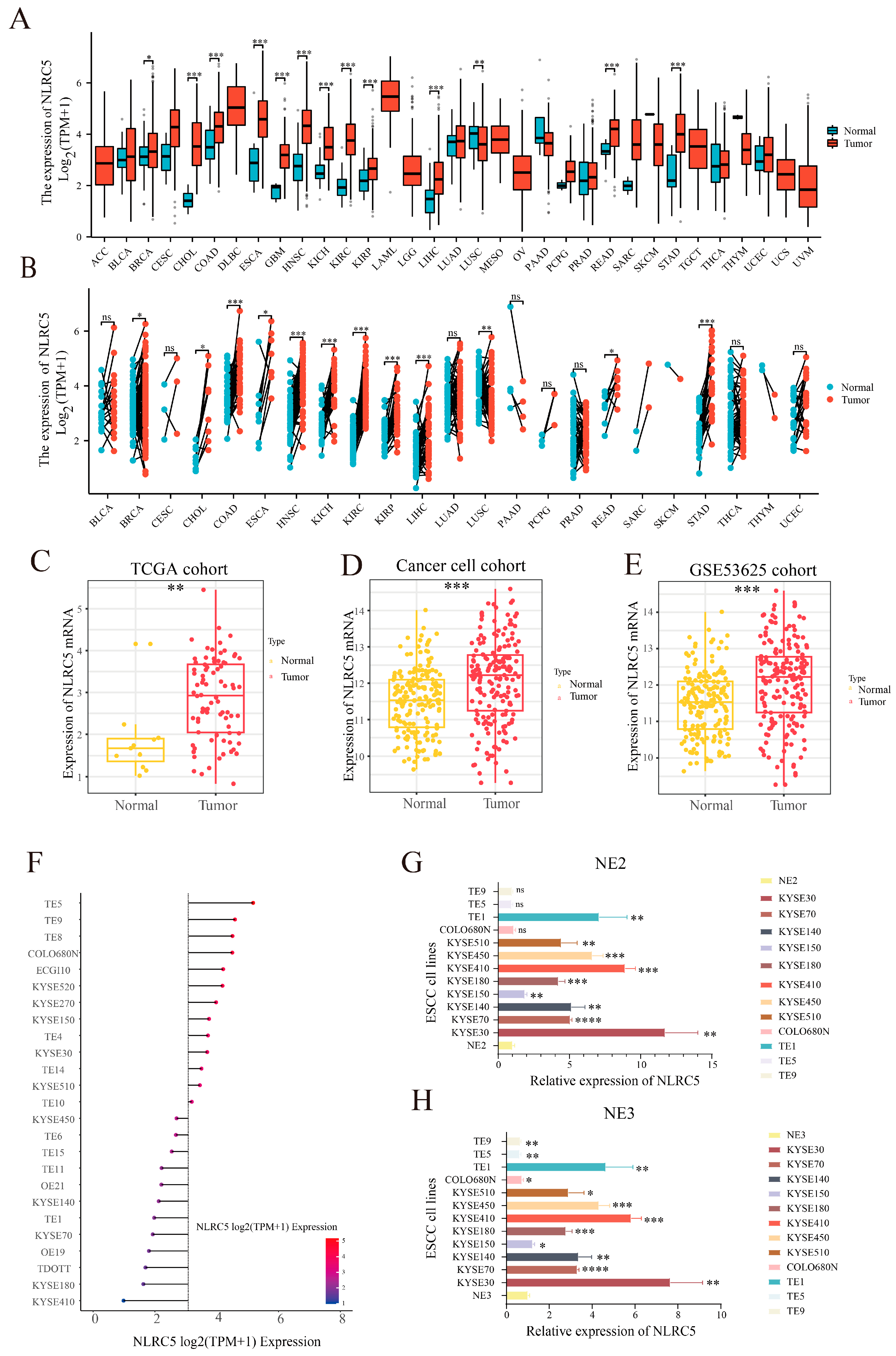
Pan-cancer analysis of NLRC5 expression. (A) Box plot comparing NLRC5 expression (log2 TPM + 1) between tumor and normal tissues across pan-cancer samples from the TCGA database. Each box represents the interquartile range (IQR), with the median indicated by a horizontal line. Whiskers extend to 1.5 × IQR, and dots represent outliers. (B) Paired dot plot showing NLRC5 expression (log2 TPM + 1) in matched tumor and adjacent normal tissues from the TCGA database. Each line connects paired samples from the same patient. (C–E) Box plots illustrating NLRC5 mRNA expression in three independent ESCC cohorts. (C): TCGA cohort (normal, n = 11; tumor, n = 80); (D): CancerCell cohort (our cohort, normal, n = 155; tumor, n = 155); (E): GSE53625 cohort (normal, n = 179; tumor, n = 179). Statistical significance was assessed using an unpaired t-test. (F) Bar graph showing the expression of NLRC5 in ESCC cell lines from the CCLE database. (G,H) qPCR results demonstrating the relative expression of NLRC5 mRNA in ESCC cell lines compared to normal esophageal cells (NE2 (G) and NE3 (H)). Data are presented as mean ± SD from three independent experiments (n = 3). Statistical significance was assessed using an unpaired t-test (ns, p > 0.05; * p < 0.05; ** p < 0.01; *** p < 0.001).
Figure 1.
Pan-cancer analysis of NLRC5 expression. (A) Box plot comparing NLRC5 expression (log2 TPM + 1) between tumor and normal tissues across pan-cancer samples from the TCGA database. Each box represents the interquartile range (IQR), with the median indicated by a horizontal line. Whiskers extend to 1.5 × IQR, and dots represent outliers. (B) Paired dot plot showing NLRC5 expression (log2 TPM + 1) in matched tumor and adjacent normal tissues from the TCGA database. Each line connects paired samples from the same patient. (C–E) Box plots illustrating NLRC5 mRNA expression in three independent ESCC cohorts. (C): TCGA cohort (normal, n = 11; tumor, n = 80); (D): CancerCell cohort (our cohort, normal, n = 155; tumor, n = 155); (E): GSE53625 cohort (normal, n = 179; tumor, n = 179). Statistical significance was assessed using an unpaired t-test. (F) Bar graph showing the expression of NLRC5 in ESCC cell lines from the CCLE database. (G,H) qPCR results demonstrating the relative expression of NLRC5 mRNA in ESCC cell lines compared to normal esophageal cells (NE2 (G) and NE3 (H)). Data are presented as mean ± SD from three independent experiments (n = 3). Statistical significance was assessed using an unpaired t-test (ns, p > 0.05; * p < 0.05; ** p < 0.01; *** p < 0.001).

Figure 2.
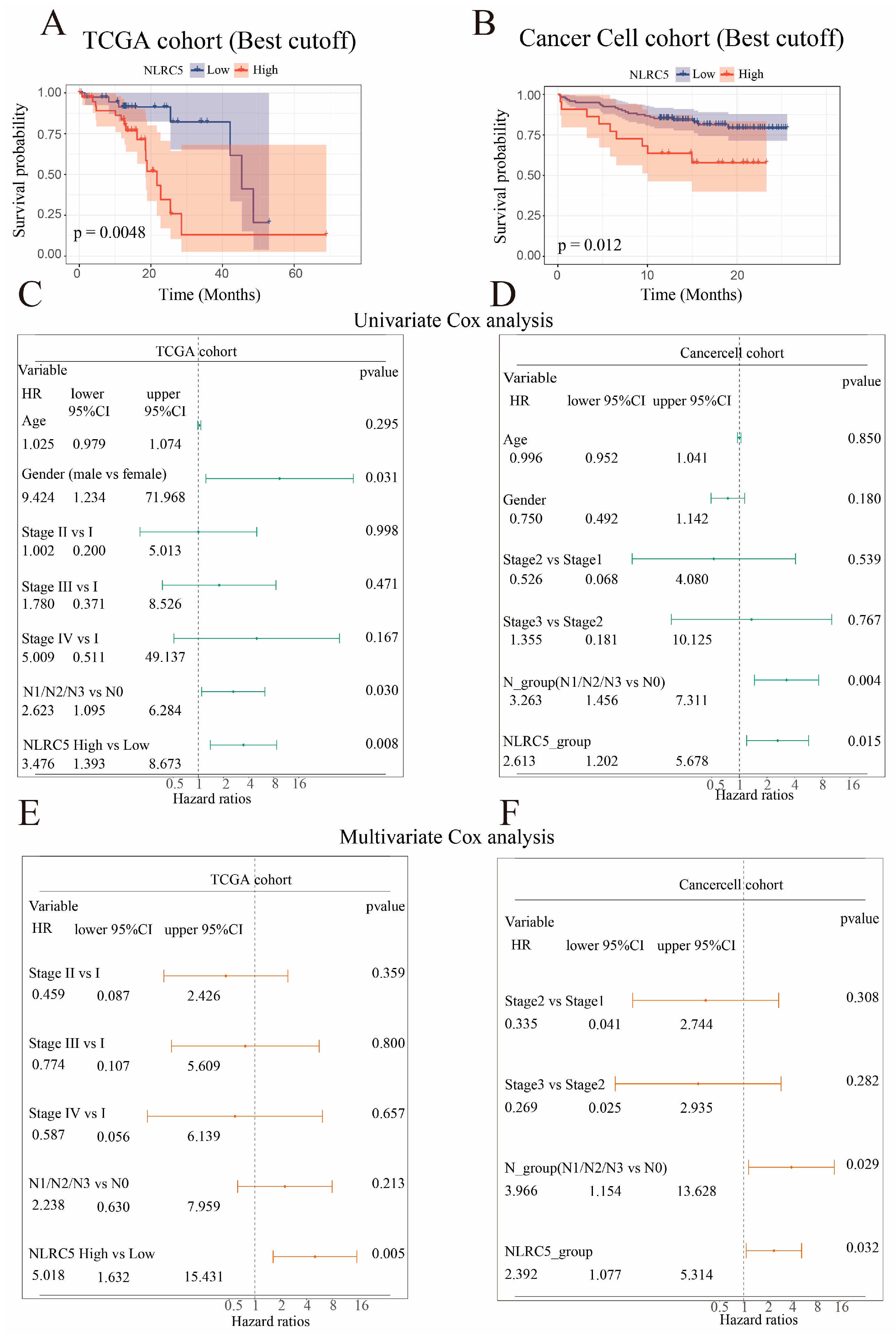
Prognostic significance of NLRC5 expression in esophageal squamous cell carcinoma (ESCC) across different cohorts. (A,B) Kaplan–Meier curves showing overall survival (OS) of ESCC patients with high or low NLRC5 expression in the (A) TCGA cohort and (B) CancerCell cohort. Patients were stratified according to the optimal cut-off determined by the log-rank test. p values were calculated using the log-rank test. (C,D) Univariate Cox regression analysis of OS in the (C) TCGA cohort and (D) CancerCell cohort. Hazard ratios (HRs), 95% confidence intervals (CIs), and p values are shown for each variable. (E,F) Multivariate Cox regression analysis of OS in the (E) TCGA cohort and (F) CancerCell cohort after adjustment for clinicopathological factors. HRs, 95% CIs, and p values are presented for each factor.
Figure 2.
Prognostic significance of NLRC5 expression in esophageal squamous cell carcinoma (ESCC) across different cohorts. (A,B) Kaplan–Meier curves showing overall survival (OS) of ESCC patients with high or low NLRC5 expression in the (A) TCGA cohort and (B) CancerCell cohort. Patients were stratified according to the optimal cut-off determined by the log-rank test. p values were calculated using the log-rank test. (C,D) Univariate Cox regression analysis of OS in the (C) TCGA cohort and (D) CancerCell cohort. Hazard ratios (HRs), 95% confidence intervals (CIs), and p values are shown for each variable. (E,F) Multivariate Cox regression analysis of OS in the (E) TCGA cohort and (F) CancerCell cohort after adjustment for clinicopathological factors. HRs, 95% CIs, and p values are presented for each factor.
Figure 3.
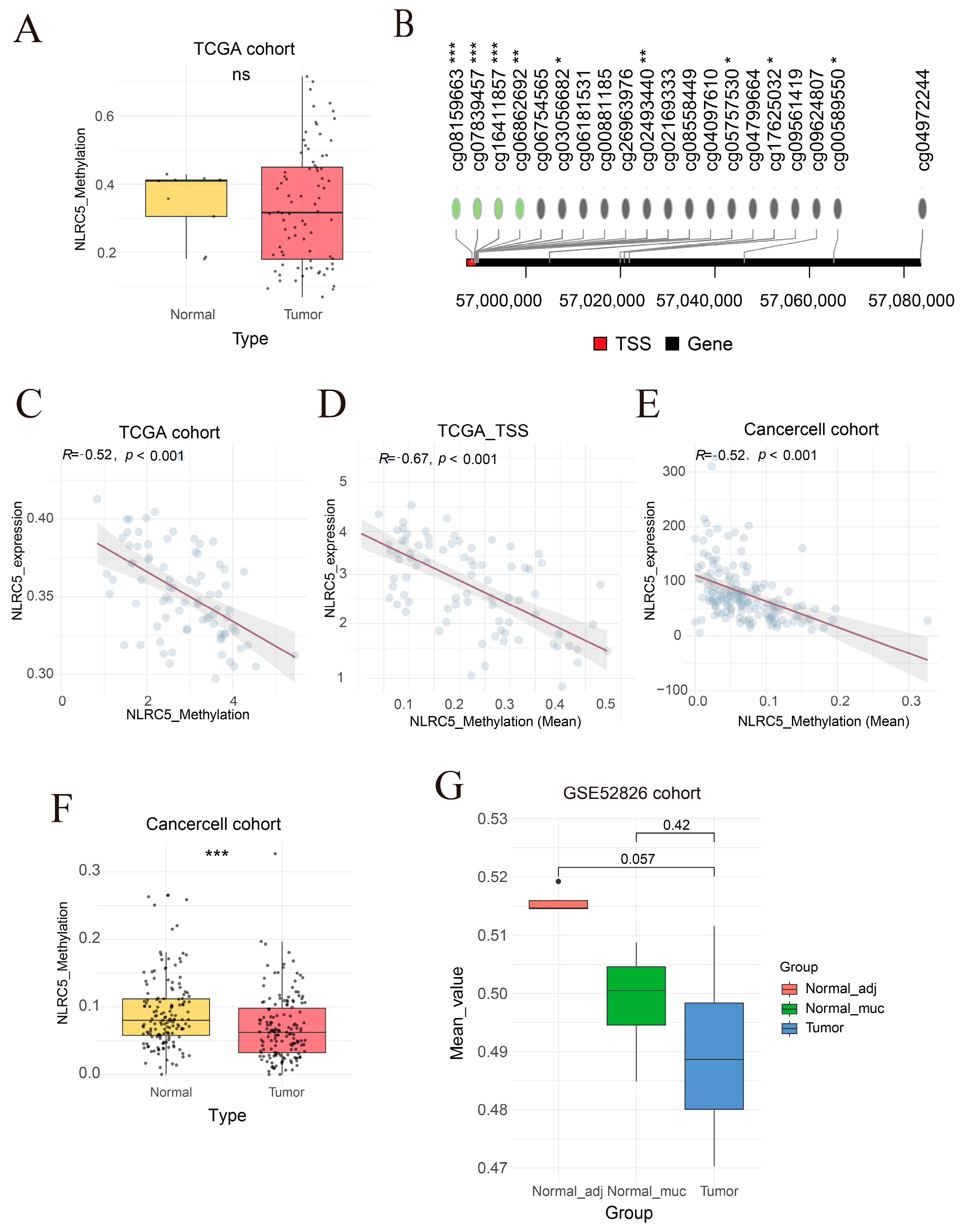
The relationship between NLRC5 methylation levels and its mRNA expression in various cohorts. (A) Box plot showing the average methylation levels of NLRC5 in tumor versus normal tissues in the TCGA cohort, analyzed using a non-paired t-test (normal, n = 11; tumor, n = 80). (B) Lollipop plot showing the relationship between NLRC5 methylation and gene expression in ESCC. Red dots represent transcription start sites (TSS), while green dots indicate correlation coefficients (R) greater than 0.3. (C) Scatter plot displaying the Spearman correlation analysis between NLRC5 mRNA expression and the average methylation levels of NLRC5. p values were adjusted using the Benjamini–Hochberg false discovery rate (FDR) method. (D) Scatter plot showing the Spearman correlation between NLRC5 mRNA expression and the average methylation levels in the TSS region of NLRC5. (E) Scatter plot representing the Spearman correlation analysis between NLRC5 mRNA expression and the average methylation levels of NLRC5 across the entire gene. (F) Box plot comparing the average methylation levels of NLRC5 in tumor versus normal tissues in the Cancer Cell cohort, analyzed using a non-paired t-test (normal, n = 155; tumor, n = 155). (G) Box plot comparing the average methylation levels of NLRC5 in tumor, adjacent normal tissue, and normal muscle in the GSE52826 cohort, analyzed using a non-paired t-test (tumor, n = 4; adjacent normal, n = 4; normal mucosa, n = 4) (ns, p > 0.05, *, p < 0.05, **, p < 0.01, ***, p < 0.001).
Figure 3.
The relationship between NLRC5 methylation levels and its mRNA expression in various cohorts. (A) Box plot showing the average methylation levels of NLRC5 in tumor versus normal tissues in the TCGA cohort, analyzed using a non-paired t-test (normal, n = 11; tumor, n = 80). (B) Lollipop plot showing the relationship between NLRC5 methylation and gene expression in ESCC. Red dots represent transcription start sites (TSS), while green dots indicate correlation coefficients (R) greater than 0.3. (C) Scatter plot displaying the Spearman correlation analysis between NLRC5 mRNA expression and the average methylation levels of NLRC5. p values were adjusted using the Benjamini–Hochberg false discovery rate (FDR) method. (D) Scatter plot showing the Spearman correlation between NLRC5 mRNA expression and the average methylation levels in the TSS region of NLRC5. (E) Scatter plot representing the Spearman correlation analysis between NLRC5 mRNA expression and the average methylation levels of NLRC5 across the entire gene. (F) Box plot comparing the average methylation levels of NLRC5 in tumor versus normal tissues in the Cancer Cell cohort, analyzed using a non-paired t-test (normal, n = 155; tumor, n = 155). (G) Box plot comparing the average methylation levels of NLRC5 in tumor, adjacent normal tissue, and normal muscle in the GSE52826 cohort, analyzed using a non-paired t-test (tumor, n = 4; adjacent normal, n = 4; normal mucosa, n = 4) (ns, p > 0.05, *, p < 0.05, **, p < 0.01, ***, p < 0.001).

Figure 4.
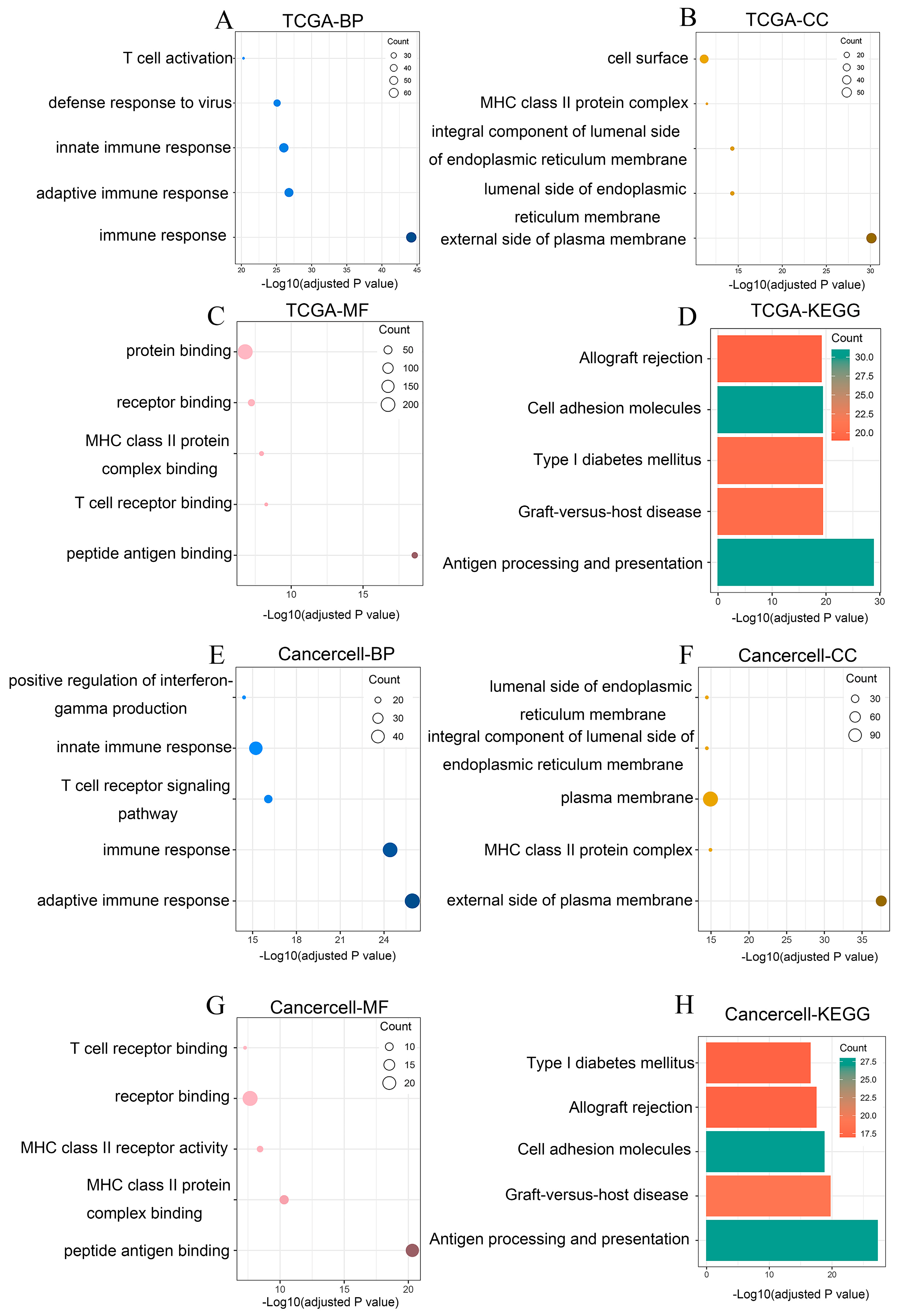
Functional enrichment analysis of genes correlated with NLRC5 in TCGA and CancerCell cohorts. (A–D) represent the TCGA cohort: (A) Gene Ontology (GO) biological process (BP) analysis showing significant enrichment in immune-related processes such as T cell activation, defense response to virus, and adaptive immune response. (B) GO cellular component (CC) analysis highlighting enrichment in cell surface and various membrane-related components. (C) GO molecular function (MF) analysis showing enrichment in protein binding, receptor binding, and MHC class II protein complex binding. (D) KEGG pathway analysis indicating significant enrichment in pathways related to allograft rejection, cell adhesion molecules, type I diabetes mellitus, and antigen processing and presentation. (E–H) represent the CancerCell cohort: (E) GO biological process (BP) analysis showing significant enrichment in pathways related to the immune response, T cell receptor signaling, and interferon-gamma production. (F) GO cellular component (CC) analysis highlighting enrichment in various membrane-related components similar to the TCGA cohort. (G) GO molecular function (MF) analysis indicating significant enrichment in receptor binding, MHC class II receptor activity, and T cell receptor binding. (H) KEGG pathway analysis showing significant enrichment in pathways related to type I diabetes mellitus, allograft rejection, and antigen processing and presentation. (The size of each bubble corresponds to the number of genes enriched in the respective pathway. Bubble color reflects the statistical significance of enrichment, represented as −log10(FDR), with darker blue indicating more significant enrichment).
Figure 4.
Functional enrichment analysis of genes correlated with NLRC5 in TCGA and CancerCell cohorts. (A–D) represent the TCGA cohort: (A) Gene Ontology (GO) biological process (BP) analysis showing significant enrichment in immune-related processes such as T cell activation, defense response to virus, and adaptive immune response. (B) GO cellular component (CC) analysis highlighting enrichment in cell surface and various membrane-related components. (C) GO molecular function (MF) analysis showing enrichment in protein binding, receptor binding, and MHC class II protein complex binding. (D) KEGG pathway analysis indicating significant enrichment in pathways related to allograft rejection, cell adhesion molecules, type I diabetes mellitus, and antigen processing and presentation. (E–H) represent the CancerCell cohort: (E) GO biological process (BP) analysis showing significant enrichment in pathways related to the immune response, T cell receptor signaling, and interferon-gamma production. (F) GO cellular component (CC) analysis highlighting enrichment in various membrane-related components similar to the TCGA cohort. (G) GO molecular function (MF) analysis indicating significant enrichment in receptor binding, MHC class II receptor activity, and T cell receptor binding. (H) KEGG pathway analysis showing significant enrichment in pathways related to type I diabetes mellitus, allograft rejection, and antigen processing and presentation. (The size of each bubble corresponds to the number of genes enriched in the respective pathway. Bubble color reflects the statistical significance of enrichment, represented as −log10(FDR), with darker blue indicating more significant enrichment).

Figure 5.
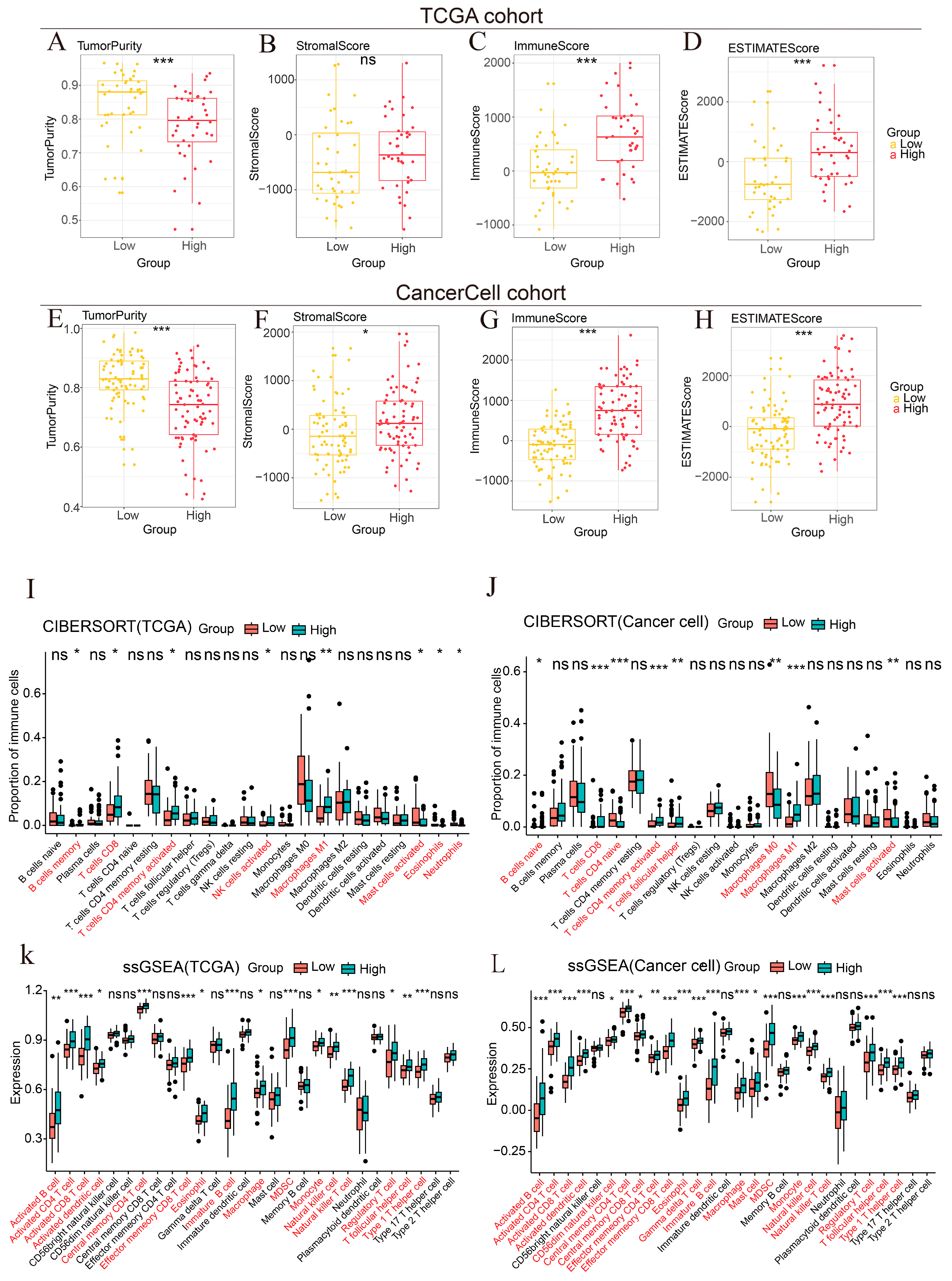
Immune infiltration characteristics associated with NLRC5 expression in the TCGA and CancerCell cohorts. (A–D) Box plots representing Tumor Purity, Stromal Score, Immune Score, and ESTIMATE Score in the TCGA cohort (n = 80), stratified by NLRC5 expression levels (Low vs. High). Statistical comparisons were performed using unpaired Student’s t-tests. (E–H) Corresponding box plots for the CancerCell cohort (n = 155), evaluating the same immune-related scores. The consistency between the two cohorts underscores the robustness of NLRC5 as a potential immune modulator. (I,J) CIBERSORT analysis showing the relative proportions of various immune cell types between NLRC5 low and high expression groups in the TCGA (n = 80) and CancerCell (n = 155) cohorts. The analysis reveals significant variations in immune cell infiltration, particularly in subsets such as T cells and macrophages, where high NLRC5 expression correlates with increased immune cell presence. (K,L) ssGSEA (single-sample Gene Set Enrichment Analysis) showing enrichment patterns of immune-related gene signatures in NLRC5-high versus NLRC5-low tumors in the TCGA and CancerCell cohorts. Elevated NLRC5 expression was associated with increased activation of multiple immune-related pathways (ns, p > 0.05, * p < 0.05, ** p < 0.01, *** p < 0.001).
Figure 5.
Immune infiltration characteristics associated with NLRC5 expression in the TCGA and CancerCell cohorts. (A–D) Box plots representing Tumor Purity, Stromal Score, Immune Score, and ESTIMATE Score in the TCGA cohort (n = 80), stratified by NLRC5 expression levels (Low vs. High). Statistical comparisons were performed using unpaired Student’s t-tests. (E–H) Corresponding box plots for the CancerCell cohort (n = 155), evaluating the same immune-related scores. The consistency between the two cohorts underscores the robustness of NLRC5 as a potential immune modulator. (I,J) CIBERSORT analysis showing the relative proportions of various immune cell types between NLRC5 low and high expression groups in the TCGA (n = 80) and CancerCell (n = 155) cohorts. The analysis reveals significant variations in immune cell infiltration, particularly in subsets such as T cells and macrophages, where high NLRC5 expression correlates with increased immune cell presence. (K,L) ssGSEA (single-sample Gene Set Enrichment Analysis) showing enrichment patterns of immune-related gene signatures in NLRC5-high versus NLRC5-low tumors in the TCGA and CancerCell cohorts. Elevated NLRC5 expression was associated with increased activation of multiple immune-related pathways (ns, p > 0.05, * p < 0.05, ** p < 0.01, *** p < 0.001).

Figure 6.
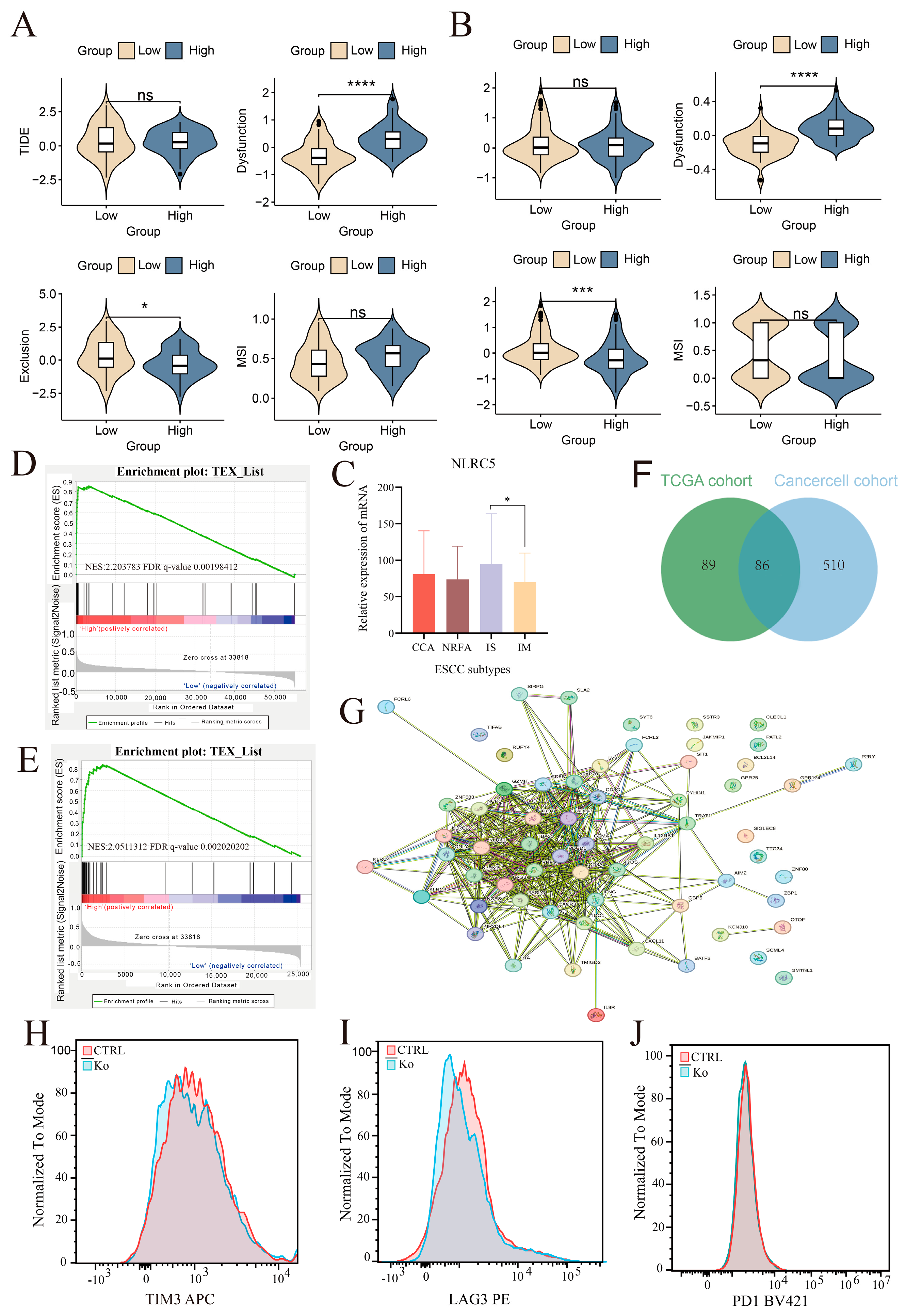
NLRC5 high expression is associated with immune escape and T cell exhaustion pathways in ESCC. (A,B) Violin plots showing Tumor Immune Dysfunction and Exclusion (TIDE) analysis in the TCGA cohort (A) and CancerCell cohort (B). Tumors with high NLRC5 expression exhibited higher T-cell dysfunction scores and immune escape-related signatures compared with the NLRC5-low group. (C) NLRC5 expression across four ESCC molecular subtypes in the CancerCell cohort. Tumors were classified into four subtypes as previously reported: CCA (cell cycle activation, n = 39), NRFA (NRF2 oncogenic activation, n = 38), IS (immune suppression, n = 30), and IM (immune modulation, n = 48). NLRC5 expression was significantly higher in the IS subtype compared with the IM subtype, suggesting a potential association between NLRC5 expression and an immunosuppressive tumor microenvironment. (D,E) Gene Set Enrichment Analysis (GSEA) in the TCGA (D) and CancerCell (E) cohorts, showing significant upregulation of T cell exhaustion pathways in the NLRC5 high expression group. (F) Venn diagram illustrating overlapping differentially expressed genes (DEGs) between NLRC5 high and low expression groups in the TCGA and CancerCell cohorts. (G) A protein–protein interaction (PPI) network constructed from the overlapping DEGs, highlighting the key gene interactions potentially driven by NLRC5 expression, with several immune-related genes showing strong connectivity. (H–J) Representative flow cytometry histograms showing the expression of exhaustion markers TIM-3 (H), LAG-3 (I), and PD-1 (J) in control (CTRL) and NLRC5 knockout (KO) primary human T cells following co-culture with tumor cells. The y-axis indicates normalized cell counts, and the x-axis represents mean fluorescence intensity (MFI). Data shown are representative of three independent biological replicates (n = 3) (ns, p > 0.05, * p < 0.05, *** p < 0.001, **** p < 0.0001).
Figure 6.
NLRC5 high expression is associated with immune escape and T cell exhaustion pathways in ESCC. (A,B) Violin plots showing Tumor Immune Dysfunction and Exclusion (TIDE) analysis in the TCGA cohort (A) and CancerCell cohort (B). Tumors with high NLRC5 expression exhibited higher T-cell dysfunction scores and immune escape-related signatures compared with the NLRC5-low group. (C) NLRC5 expression across four ESCC molecular subtypes in the CancerCell cohort. Tumors were classified into four subtypes as previously reported: CCA (cell cycle activation, n = 39), NRFA (NRF2 oncogenic activation, n = 38), IS (immune suppression, n = 30), and IM (immune modulation, n = 48). NLRC5 expression was significantly higher in the IS subtype compared with the IM subtype, suggesting a potential association between NLRC5 expression and an immunosuppressive tumor microenvironment. (D,E) Gene Set Enrichment Analysis (GSEA) in the TCGA (D) and CancerCell (E) cohorts, showing significant upregulation of T cell exhaustion pathways in the NLRC5 high expression group. (F) Venn diagram illustrating overlapping differentially expressed genes (DEGs) between NLRC5 high and low expression groups in the TCGA and CancerCell cohorts. (G) A protein–protein interaction (PPI) network constructed from the overlapping DEGs, highlighting the key gene interactions potentially driven by NLRC5 expression, with several immune-related genes showing strong connectivity. (H–J) Representative flow cytometry histograms showing the expression of exhaustion markers TIM-3 (H), LAG-3 (I), and PD-1 (J) in control (CTRL) and NLRC5 knockout (KO) primary human T cells following co-culture with tumor cells. The y-axis indicates normalized cell counts, and the x-axis represents mean fluorescence intensity (MFI). Data shown are representative of three independent biological replicates (n = 3) (ns, p > 0.05, * p < 0.05, *** p < 0.001, **** p < 0.0001).

Figure 7.
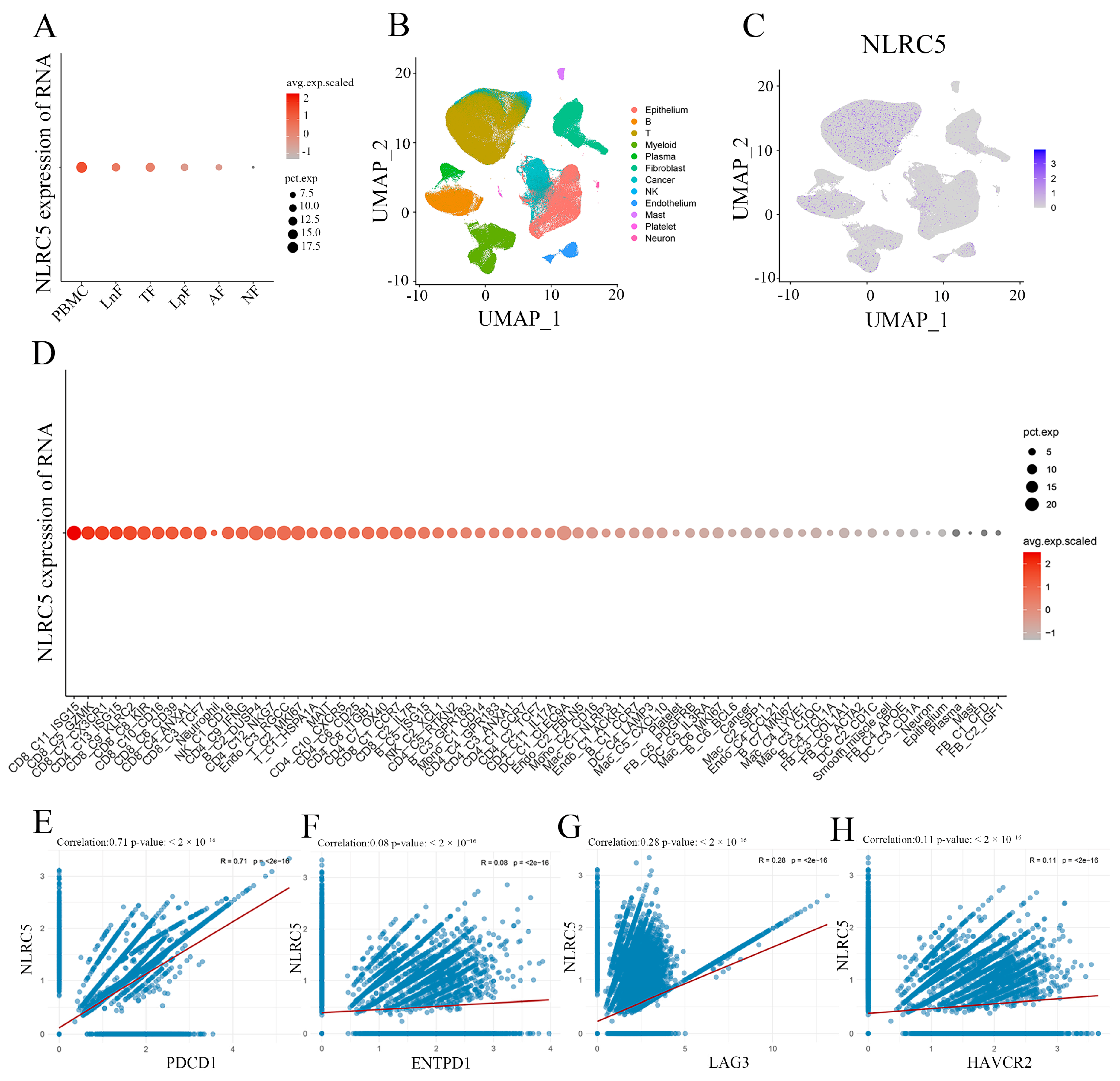
The expression and correlation of NLRC5 across different tissues and immune cell subtypes in single-cell RNA sequencing (scRNA-seq) data. (A) Dot plot showing NLRC5 RNA expression across various tissue types, including peripheral blood mononuclear cells (PBMCs), lymph nodes (normal and metastatic), and esophageal tissues. Notably, NLRC5 is highly expressed in PBMC, suggesting its significant involvement in circulating immune cells. (B) UMAP plot of T cell subtypes from scRNA-seq data, highlighting various immune subpopulations including CD8+ T cells, Tregs, and other immune cells. (C) UMAP plot depicting NLRC5 expression levels across T cell subtypes, with notable enrichment in certain immune cell populations, indicating its role in immune modulation. (D) Dot plot illustrating the expression levels of NLRC5 in various immune cell subtypes, particularly high in T cells and certain myeloid cells. This pattern further emphasizes NLRC5’s involvement in immune processes within the tumor microenvironment. (E–H) Correlation analysis of NLRC5 with immune checkpoint molecules within the CD8+ T cell subset. Strong positive correlations are observed between NLRC5 and key immune checkpoint markers, including PDCD1 (E) (R = 0.71, p < 2 × 10⁻¹⁶), ENTPD1 (F) (R = 0.08, p < 2 × 10⁻¹⁶), LAG3 (G) (R = 0.28, p < 2 × 10⁻¹⁶), and HAVCR2 (H) (R = 0.11, p < 2 × 10⁻¹⁶). These correlations suggest NLRC5 may influence immune checkpoint pathways and contribute to T cell exhaustion within the tumor microenvironment. The red line indicates the fitted linear regression line.
Figure 7.
The expression and correlation of NLRC5 across different tissues and immune cell subtypes in single-cell RNA sequencing (scRNA-seq) data. (A) Dot plot showing NLRC5 RNA expression across various tissue types, including peripheral blood mononuclear cells (PBMCs), lymph nodes (normal and metastatic), and esophageal tissues. Notably, NLRC5 is highly expressed in PBMC, suggesting its significant involvement in circulating immune cells. (B) UMAP plot of T cell subtypes from scRNA-seq data, highlighting various immune subpopulations including CD8+ T cells, Tregs, and other immune cells. (C) UMAP plot depicting NLRC5 expression levels across T cell subtypes, with notable enrichment in certain immune cell populations, indicating its role in immune modulation. (D) Dot plot illustrating the expression levels of NLRC5 in various immune cell subtypes, particularly high in T cells and certain myeloid cells. This pattern further emphasizes NLRC5’s involvement in immune processes within the tumor microenvironment. (E–H) Correlation analysis of NLRC5 with immune checkpoint molecules within the CD8+ T cell subset. Strong positive correlations are observed between NLRC5 and key immune checkpoint markers, including PDCD1 (E) (R = 0.71, p < 2 × 10⁻¹⁶), ENTPD1 (F) (R = 0.08, p < 2 × 10⁻¹⁶), LAG3 (G) (R = 0.28, p < 2 × 10⁻¹⁶), and HAVCR2 (H) (R = 0.11, p < 2 × 10⁻¹⁶). These correlations suggest NLRC5 may influence immune checkpoint pathways and contribute to T cell exhaustion within the tumor microenvironment. The red line indicates the fitted linear regression line.

Figure 8.
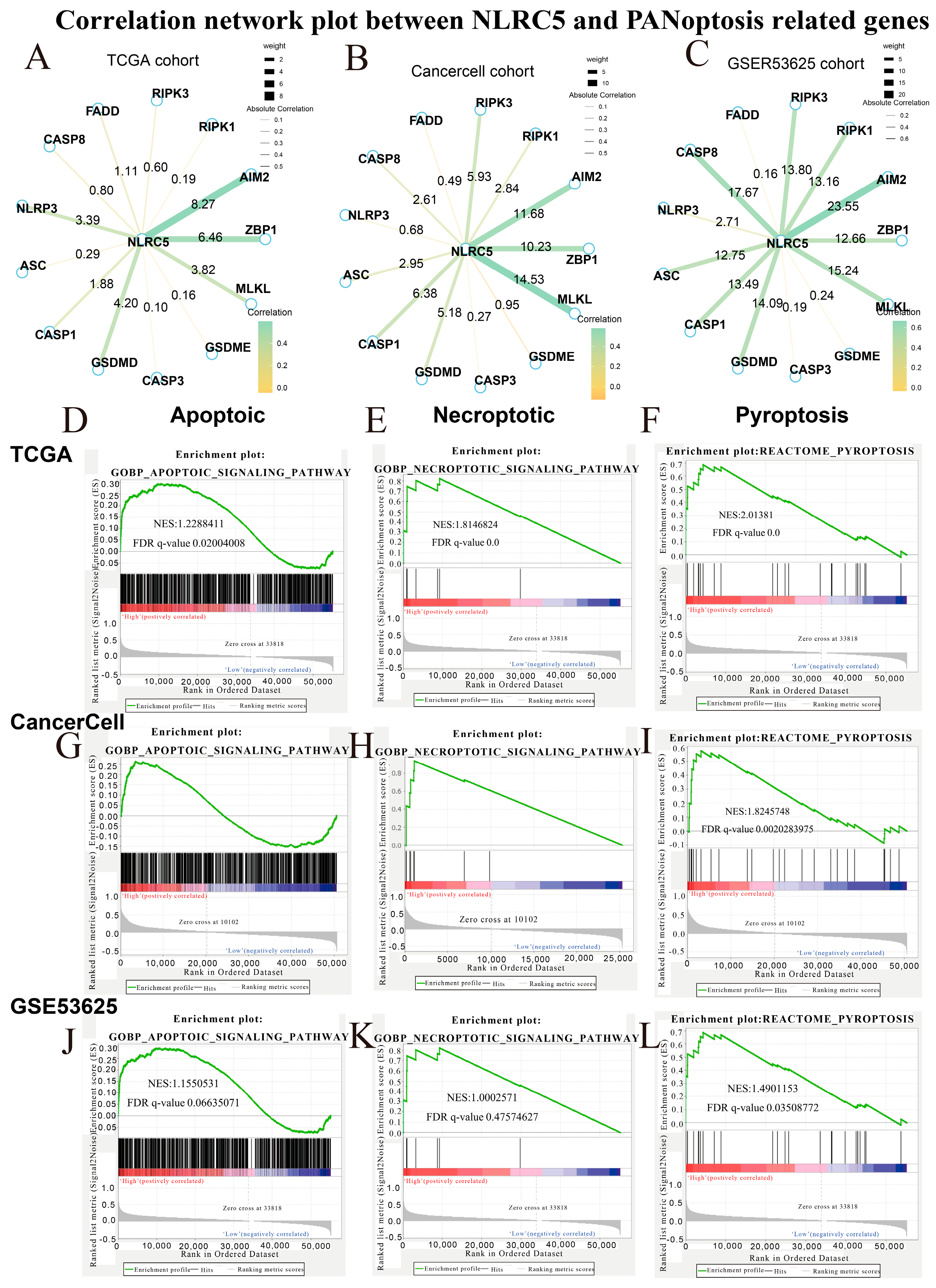
Correlation network and pathway enrichment analysis of NLRC5 and PANoptosis-related genes across three cohorts. (A–C) Correlation network of NLRC5 with PANoptosis-related genes in the TCGA cohort (A), CancerCell cohort (B), and GSE53625 cohort (C). The strength of the correlations is depicted by the thickness of the lines, while the direction and significance of the correlations are represented by color shading. (D–F) GSEA (Gene Set Enrichment Analysis) of NLRC5 expression in the TCGA cohort, comparing high and low NLRC5 expression groups. Enriched pathways include (D) apoptotic signaling, (E) necroptotic signaling, and (F) pyroptosis pathways. NES (Normalized Enrichment Score) and FDR (False Discovery Rate) q-values are indicated for each pathway. (G–I) GSEA in the CancerCell cohort, showing enrichment in the apoptotic (G), necroptotic (H), and pyroptotic (I) pathways. (J–L) GSEA in the GSE53625 cohort, illustrating similar enrichment patterns in the apoptotic (J), necroptotic (K), and pyroptotic (L) pathways. NES and FDR values are shown for each cohort and pathway.
Figure 8.
Correlation network and pathway enrichment analysis of NLRC5 and PANoptosis-related genes across three cohorts. (A–C) Correlation network of NLRC5 with PANoptosis-related genes in the TCGA cohort (A), CancerCell cohort (B), and GSE53625 cohort (C). The strength of the correlations is depicted by the thickness of the lines, while the direction and significance of the correlations are represented by color shading. (D–F) GSEA (Gene Set Enrichment Analysis) of NLRC5 expression in the TCGA cohort, comparing high and low NLRC5 expression groups. Enriched pathways include (D) apoptotic signaling, (E) necroptotic signaling, and (F) pyroptosis pathways. NES (Normalized Enrichment Score) and FDR (False Discovery Rate) q-values are indicated for each pathway. (G–I) GSEA in the CancerCell cohort, showing enrichment in the apoptotic (G), necroptotic (H), and pyroptotic (I) pathways. (J–L) GSEA in the GSE53625 cohort, illustrating similar enrichment patterns in the apoptotic (J), necroptotic (K), and pyroptotic (L) pathways. NES and FDR values are shown for each cohort and pathway.





 and
and