Article

Chemoprevention of 4-NQO-Induced Oral Cancer by the Combination of Resveratrol and EGCG: In Vivo, In Silico and In Vitro Studies


by
Adeoluwa Adeluola
1,2,
Lukmon M. Raji
1,3,
Saroj Sigdel
4,
Abu Syed Md Anisuzzaman
5,
Md. Shamim Hossain
6 and
A. R. M. Ruhul Amin
1,*
1
Department of Pharmaceutical Sciences, Marshall University, Huntington, WV 25755, USA
2
Division of Pharmaceutics and Pharmacology, College of Pharmacy, The Ohio State University, Columbus, OH 43210, USA
3
Department of Medicine, University of Tennessee Health Science Center, Memphis, TN 38163, USA
4
Department of Pathology, School of Medicine, Marshall University, Huntington, WV 25755, USA
5
Winship Cancer Institute of Emory University, Atlanta, GA 30322, USA
6
Institute of Rheological Functions of Food, Hisayama-machi, Kasuya-gun, Fukuoka 811-2501, Japan
*
Author to whom correspondence should be addressed.
Cancers 2026, 18(7), 1098; https://doi.org/10.3390/cancers18071098
Submission received: 17 February 2026 / Revised: 19 March 2026 / Accepted: 26 March 2026 / Published: 28 March 2026
(This article belongs to the Section Cancer Drug Development)

Simple Summary

Chemoprevention is an approach to reduce the risk (prevent, reverse or slowdown) of invasive cancer development and progression by using chemicals or drugs. Natural dietary compounds present in fruits, vegetables and spices have been extensively studied for this purpose. In the current study, we have investigated the chemopreventive potential of the combination of natural compounds, EGCG (present in green tea) and resveratrol (present in grapes and red wine) using an oral cancer model in mice. Our results demonstrate that the combination of these two compounds significantly prevents or slows down oral cancer development in mice tongues. Cell culture studies reveal that these compounds activate genes which are essential for mitigating oxidative stress and/or inactivating xenobiotics.

Abstract

Background: Squamous cell carcinoma of head and neck (SCCHN) is a devastating disease with high morbidity and mortality and the 6th most common cancer worldwide. The 5-year relative survival for advanced-stage disease is below 50%, stressing the need for chemoprevention. In the current study, we investigated the chemopreventive efficacy of the combination of resveratrol and epigallocatechin gallate (EGCG). Methods: We used the 4-Nitroquinoline 1-oxide (4-NQO)-induced oral carcinogenesis model. C57BL/6 mice were exposed to drinking water containing 4-NQO for 10 weeks. From week 11, mice were treated with vehicle, resveratrol, EGCG and their combination until week 22. RNASeq, qPCR and in silico analysis were performed identifying differentially expressed genes and enriched pathways. Results: Resveratrol alone and in combination with EGCG significantly inhibited the number of visible lesions, whereas the number of microscopic lesions and lesion areas were significantly inhibited only by the combination. The expression of Ki-67 was also significantly inhibited in resveratrol and combination groups. Growth differentiation factor 15 (GDF15), Activation transcription factor 3 (ATF3) and several other genes associated with xenobiotic metabolism as significantly upregulated genes, with GDF15 being the most upregulated one. Furthermore, hallmarks of xenobiotic metabolism and several other anticancer pathways were enriched after treatment with resveratrol and the combination. Conclusions: Our data strongly demonstrate the chemopreventive potential of the combination of resveratrol and EGCG and pave the way for further clinical developments.

1. Introduction

Squamous cell carcinoma of head and neck (SCCHN), tobacco-, alcohol- and human papillomavirus (HPV)-associated cancer of the oral cavity, pharynx, and larynx, is the 6th most common cancer, with about 72,680 projected new cases and about 16,680 deaths in 2025 in the United States of America [1]. SCCHNs are devastating cancers with high rates of morbidity and mortality; the 5-year relative survival for all stages is 68.5% and below 50% for advanced-stage disease [2]. While the US has seen a consistent decline in smoking rates, the use of smokeless tobacco is increasing, which also causes SCCHN [3,4]. SCCHN progresses through various premalignant stages such as hyperplasia, mild, moderate and severe dysplasia and carcinoma in situ before being transformed into malignant carcinoma, thus providing enormous opportunities for intervention at the premalignant stage, a strategy known as chemoprevention [5]. Implementation of a successful chemopreventive agent can save thousands of lives from SCCHN. However, no such approved agent/regimen is currently available for SCCHN.
The purpose of chemoprevention is to reduce the risk of cancers in normal individuals who are at high risk of developing invasive cancers. For cancer patients, certain levels of toxicity are acceptable because the potential benefits outweigh the risks of toxicity of treatment. However, toxicity is a major ethical concern for individuals who are at higher risks (smokers, HPV or hepatitis B virus infections) or with premalignant lesions/precancers, which in many cases are reversible without treatment. For this reason, natural dietary compounds present in vegetables, fruits and spices have drawn a great deal of attention for cancer chemoprevention, including the chemoprevention of SCCHN [6,7,8,9,10]. Resveratrol and epigallocatechin gallate (EGCG) are two natural compounds extensively studied for chemoprevention. EGCG is the major polyphenol present in green tea while resveratrol is a phytoalexin present in grapes, raspberries, blueberries, mulberries and peanuts. Both EGCG and resveratrol exhibit promising chemopreventive efficacy in vitro and in animal models against various cancers, including SCCHN. Resveratrol prevented DMBA-induced oral carcinogenesis in a hamster cheek pouch model and 4-NQO-induced oral tumorigenesis in mice, respectively [11,12]. EGCG restricts (slows down) the development of N-nitrosodiethylamine-induced tongue and liver carcinogenesis in mice [13]. Based on epidemiology, in vitro cell culture and in vivo animal studies, both EGCG and resveratrol were advanced to be tested in clinical trials. The safety of these agents has been well-established through these clinical trials. In a phase I trial, dose levels of 0.5 to 5.05 g/m2 qd and 1.0 to 2.2 g/m2 tid of green tea extract (GTE) were tested in 49 patients. Oral GTE at these doses can be taken safely for at least 6 months [14]. The side effects are mostly caffeine-related. In another phase II trial, GTE at doses of 500 mg/m2, 750 mg/m2, or 1000 mg/m2 or placebo TID were administered to patients with high-risk oral premalignant lesions for 12 weeks and were found safe [15]. Green tea preparations were also found safe in other clinical trials [16,17]. Although impressive, the results demonstrate that EGCG alone may not be sufficiently active for effective chemoprevention of SCCHN, and the combination of EGCG with other natural or synthetic agents has been suggested [14,15,18]. In fact, green tea polyphenon E in combination with erlotinib showed a high rate of pathologic response and excellent cancer-free survival in patients with advanced premalignant lesions of the oral cavity and larynx [19].
The anticancer efficacy of resveratrol against SCCHN and other cancers has been demonstrated by multiple in vitro and in vivo studies using cell lines and animal models [20,21,22,23,24]. Similarly, the safety of resveratrol has been supported by human clinical trials, which showed that oral doses up to 5 g/day are well-tolerated [25,26]. In contrast to safety and in vitro and animal model efficacy, resveratrol is a Multidrug Resistance 1 (MDR1) efflux pump substrate and undergoes extensive first-pass metabolism in the intestine and liver limiting its oral bioavailability to <1% [27]. Cancer patients rarely receive a single chemo drug in their treatment regimen but a combination of multiple drugs targeting different mode of action. However, the combinatorial approach has not been widely explored in chemoprevention. Since chemoprevention targets normal individuals without invasive cancer, this combinatorial intervention should preferably be non-toxic. Both EGCG and resveratrol synergize with other natural compounds [28]. For example, the combination of EGCG and luteolin exhibited enhanced anticancer activities against SCCHN and lung cancer models [29]. EGCG also demonstrated synergistic/enhanced activity with other compounds such as nonsteroidal anti-inflammatory drugs [30] and curcumin [31]. Resveratrol also increased the efficacy of other compounds such as Actinomycin D [28], EGCG [32], curcumin [33] and quercetin [34]. However, the combination of EGCG and resveratrol has never been explored in a 4-NQO-induced oral cancer model. The central hypothesis is that the combination of EGCG and resveratrol more effectively prevents oral carcinogenesis than any single agent. We tested our hypothesis using a 4-NQO-induced oral carcinogenesis model, a model that has been widely used for oral cancer chemoprevention. In addition, we conducted RNASeq and subsequent gene enrichment analysis to identify major pathways affected by these compounds.

2. Materials and Methods

2.1. Chemoprevention Study

The animal study (pilot) was performed following animal protocol #751 approved by the Institutional Animal Care and Use Committee at Marshall University and reported in accordance with ARRIVE guidelines. Fifty (50) 6-week aged C57BL/6 female mice were purchased from the Hilltop Lab Animal, Inc. (Scottdale, PA, USA). After one week of acclimation at the Marshall University Animal Research Facility, mice were divided into two groups: non-carcinogen (n = 10) and carcinogen (n = 40). Mice in the carcinogen group received 4-NQO-containing water (50 µg/mL) for 10 weeks. The 4-NQO-containing water was changed weekly. One mouse was lost during carcinogen treatment due to an unknown reason. At week 11, mice in the carcinogen group were randomized into four groups: vehicle (n = 9), resveratrol (n = 10), EGCG (n = 10), combination (n = 10, resveratrol + EGCG). Each mouse was orally administered with vehicle, EGCG (30 mg/kg), resveratrol (30 mg/kg) or a combination of EGCG (30 mg/kg) and resveratrol (30 mg/kg), 5 days a week until 22 weeks. The doses of EGCG and resveratrol were selected based on previous studies [32,35]. 50% sweetened condensed milk was used as vehicle for drug delivery, which enabled micropipette-guided drug administration, thus significantly reducing gavage-related stress [36,37,38]. Mice in the non-carcinogen group received normal drinking water and no drug treatment throughout the entire experiment. One mouse in the vehicle group died at week 20 due to weight loss during the weekend and we were unable to collect any data. At the end of the study, mice were euthanized by CO2 (30–70% chamber volume/minute), the number of visible lesions was counted, tongue tissues were harvested and immediately fixed in 10% neutral buffered formalin (Z-Fix, Anatech Ltd., Battle Creek, MI, USA). Randomization and letter coded grouping were done by Dr. Amin. He also made the drug dispersions with letter coding. The students who administered the drugs were kept blind about the coding. Then, 3 µm sections (slides) were made from paraffin-embedded tissue blocks after horizontally cutting tongue tissues into three equal parts. The slides were stained with H&E and scanned using Nano Zoomer 2.0-HT (Hamamatsu, Japan). Aperio ImageScope 12.4.6 (Leica Biosystems, Buffalo Grove, IL, USA) was used for image analysis. Microscopic lesion numbers were counted using a microscope. Openlab RRID:SCR_012158 ((PerkinElmer, Waltham, MA, USA), a modular imaging software package was used to determine tumor area as previously described [39]. One mouse each from the EGCG and resveratrol group was omitted from digital analysis due to excessive folding during processing. A board-certified pathologist examined the H&E slides to confirm the grades of major lesions. The experimental design is illustrated in Supplementary Figure S1.

2.2. Cell Lines

As previously described, a well-characterized cell line panel comprising one malignant (MDA686TU/686Tu), one premalignant (MSK-LEUK1/MSK) and one normal human oral keratinocytes (HOK) was collected from reliable sources and used for the study [29,40]. These cell lines were grown in DMEM/F12 (Gibco, Grand Island, NY, USA) supplemented with 10% FBS (Gibco, Grand Island, NY, USA), keratinocyte basal medium (Lonza, Portsmouth, NH, USA) and oral keratinocyte medium (ScienCell, Carlsbad, CA, USA), respectively. MDA686TU and MSK-LEUK1 were procured from the original generator Dr. Peter G. Sacks’s laboratory (New York University College of Dentistry, New York, NY, USA). The cells were authenticated immediately after receiving through genomic short tandem repeat profiling at the Emory University Integrated Genomics Core (EIGC). HOK cells were purchased from ScienCell Research Laboratories (Cat. #2610; Carlsbad, CA, USA) and were grown and maintained according to the protocol provided. All cells were incubated at 37 °C and in a 5% CO2 humidified environment. Media was changed or sub-cultured based on confluency.

2.3. Immunohistochemistry Assay

Immunohistochemistry (IHC) was performed on 3 μm formalin-fixed, paraffin-embedded (FFPE) tongue sections following previously established protocols [29]. Briefly, slides were deparaffinized in xylene and rehydrated through a graded alcohol series. Endogenous peroxidase activity was quenched using 3% hydrogen peroxide. For antigen retrieval, sections were heated in 1X citrate buffer (pH 6.0) via microwave and cooled to room temperature. After blocking for 10 min with the blocking buffer (normal horse serum, 2.5%) provided in the kit (Vectastain Kit, PK7800, Vector Laboratories, Newark, CA, USA), slides were incubated overnight at 4 °C with anti-Ki-67 primary antibody (1:400; ab15580). Following washing for 5 min with wash buffer (TBST), slides were incubated with secondary antibody (provided with the kit) for 30 min. After washing for 5 min and 3,3-diaminobenzidine (DAB) visualization, sections were counterstained with hematoxylin. Ki-67 expression was quantified at 200× magnification by averaging the ratio of positive cells to total cells across five random fields.

2.4. Western Blotting

To prepare whole-cell lysates, cells were washed with ice-cold PBS and incubated for 1 h with a lysis buffer containing 1M Tris-HCl, 5M NaCl, 20% sodium azide, Na-deoxycholate, Igepal, and 20% SDS, supplemented with 10 µL/mL protease inhibitors (Thermo Scientific, Waltham, MA, USA). Protein concentrations were quantified using a commercial assay kit (Thermo Scientific, Waltham, MA, USA). Equal protein loads (20 µg) were resolved via 12% SDS-PAGE and transferred onto PVDF membranes (BIO-RAD, Hercules, CA, USA). Following a 1 h block in 5% non-fat skimmed milk at room temperature, membranes were incubated overnight at 4 °C with specific primary antibodies. Protein bands were visualized using the ECL Advance™ Western Blotting Detection Kit (GE Healthcare, Chicago, IL, USA) after incubation with secondary antibody for 60 min at room temperature. Mouse anti-β-actin (Sigma Life Sciences, St. Louis, MO, USA) served as the loading control.

2.5. RNA Extraction, RNASeq and qPCR

Total RNA was isolated from cells using the RNeasy Mini Kit (Qiagen, Germantown, MD, USA) in sextuplicate per group. Following quality control, libraries were generated from 1 μg of total RNA using the TruSeq stranded mRNA kit (Illumina, San Diego, CA, USA) and validated via the Agilent Bioanalyzer 2100 (Agilent Technologies, Santa Clara, CA, USA). Sequencing was performed on an Illumina HiSeq1500 (2 × 50 bp paired-end). Raw data were processed using bcl2fastq2 (v2.17.1.14), and Trimmomatic (v0.36) was employed to remove adapters and low-quality reads (length < 25 bp). Read quality was monitored using FastQC (v0.11.5). Trimmed reads were aligned to the GRCh38 reference genome using HISAT2 (v2.0.4), with subsequent sorting and indexing via SAMtools (v1.3.1). Differentially expressed genes (DEGs) identified using DESeq2 with an FDR threshold of 0.1. DEGs with p < 0.05 were considered significantly modified. The R/Bioconductor package was used to calculate the power of the RNASeq experiment to detect DEG over a range of coverage depth (ranging from 5 to 25 reads per gene), coefficient of variation (“cv”; ranging from 0.1 to 0.5) and fold change (1.5 to 2.5). The use of 6 samples per experimental group is sufficient to obtain 80% power for 2.5-fold changes at any level of cv and coverage, for 2-fold changes for all cv ≤ 0.4 except for the low coverage (<10), and for 1.5-fold changes with low cv ≤ 0.2 and coverage ≥ 15. For validation, real-time qPCR was conducted using the iTaq Universal SYBR Green One-Step Kit (BIO-RAD, Hercules, CA, USA) on a QuantStudio™ 3 system (Applied Biosystems, Foster City, CA, USA). Each 100 ng RNA sample was combined with primers (Integrated DNA Technologies; Coralville, IA, USA; Table 1). Expressions were normalized to GAPDH as an endogenous control, and all reactions were performed in triplicate. Relative expression levels were calculated using the 2−ΔΔCt method as described previously [41].

2.6. Bioinformatics Analysis

Bioinformatic analyses were conducted entirely in R (version 4.x) using Bioconductor 3.17 and CRAN packages. Differential expression results (log2 fold change and p-values) derived from a DESeq2 pipeline were used to construct a Volcano plot in ggplot2, with genes exhibiting log2FC  >  1.5 and raw p  <  0.05 highlighted as significantly up- or downregulated. For pathway enrichment, genes meeting a stringent p ≤ 1 × 10⁻¹⁶ threshold were annotated via the org.Hs.eg.db database and subjected to over-representation analysis against Reactome pathways using ReactomePA. The top enriched pathways were displayed as bar-plot and dot-plot. In parallel, hallmark gene-set enrichment was performed by retrieving the MSigDB hallmark collection with msigdbr and conducting over-representation analysis using clusterProfiler’s enricher function (p < 0.05); enriched sets were visualized as both dot and bar charts to summarize pathway perturbations.

2.7. Dosage Information/Dosage Regimen

In vivo study: 4-NQO: 50 µg/mL in water; vehicle: 50% sweetened condensed milk; EGCG: 30 mg/kg dispersed in 50% sweetened condensed milk; resveratrol: 30 mg/kg dispersed in 50% sweetened condensed milk; combination: EGCG (30 mg/kg) plus resveratrol (30 mg/kg) dispersed in 50% sweetened condensed milk. Each mouse was fed with 100 μL dispersion using pipette. Mice easily swallowed drug dispersion.
RNASeq: Resveratrol: 15 μM/L (20 mM/L stock in DMSO); EGCG: 40 μM/L dissolved in water; combination: 15 μM/L resveratrol plus 40 μM/L EGCG.
qPCR and Western blotting: Resveratrol: 20 μM/L (20 mM/L stock in DMSO); EGCG: 40 μM/L dissolved in water; combination: 20 μM/L resveratrol plus 40 μM/L EGCG.

2.8. Statistical Analysis

Data are presented as mean ± standard deviation (SD) or standard error of the mean (SEM). Statistical analyses were performed using GraphPad Prism 10. A one-way analysis of variance (ANOVA) followed by Tukey’s post hoc test for multiple comparisons was used to determine statistical significance defined as p < 0.05. For testing normality distribution of data, a D’Agostino & Pearson Test was conducted.

3. Results

3.1. Prevention of 4-NQO-Induced Oral Carcinogenesis by the Combination of Resveratrol and EGCG

Although both EGCG and resveratrol have been extensively studied for the chemoprevention of various cancers as single agents, their combination has never been investigated for the chemoprevention of carcinogen-induced cancers in animal models. We have previously reported that the combination of EGCG and resveratrol is synergistic in inducing apoptosis and more strongly inhibits xenografted SCCHN tumor growths in nude mice by modulating the PI3K–AKT–mTOR pathway [32]. In the current study, we investigate the chemopreventive potential of resveratrol, EGCG and their combination against 4-NQO-induced oral carcinogenesis in mice. The experimental design is shown in Supplementary Figure S1. We monitored the body weight of mice during carcinogen exposure as well as drug treatment phases. Carcinogen exposure did not significantly affect the body weight compared to mice exposed to normal water (Figure 1A). Similarly, the body weights remained fairly stable during the drug treatment phase (Figure 1B).
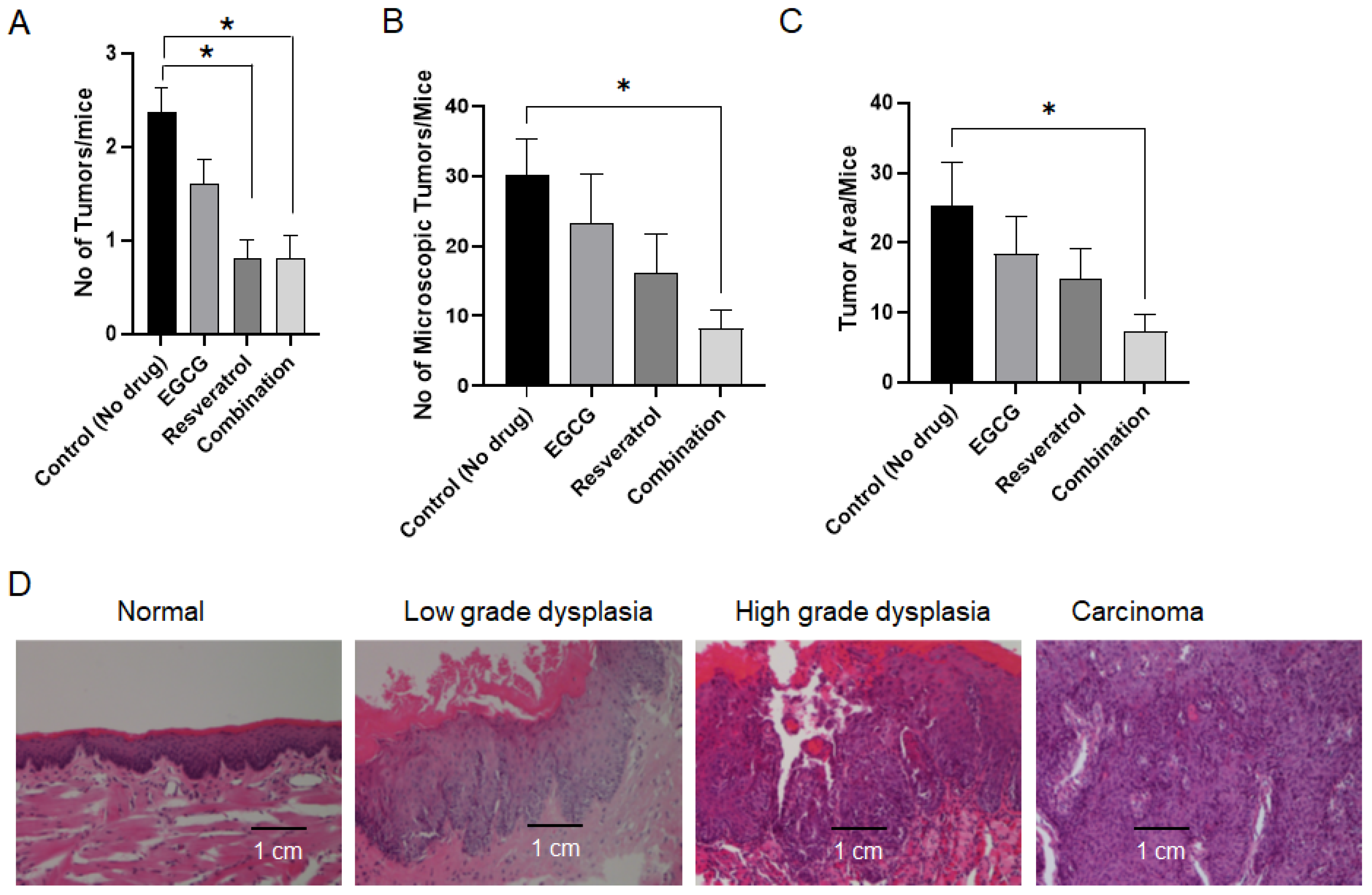
At the end of the study, the mice were euthanized and the oral cavity and tongue of each mouse were carefully examined for visible lesions. None of the mice in the non-carcinogen group developed tumors. An average of 2.3 lesions/mouse were developed in the vehicle treatment group. These numbers were 1.9/mouse, 0.8/mouse and 0.8/mouse for the EGCG, resveratrol and combination groups, respectively. Statistical analysis suggested that both resveratrol and the combination of EGCG and resveratrol significantly inhibited the number of visible lesions (Figure 2A). Moreover, the lesions in the combination group were smaller compared to the vehicle-treated group and some of the mice had no visible lesions. To digitally quantify tumor burden (number of microscopic lesions) and tumor multiplicity (microscopic lesion area in pixels) in mice, H&E-stained tongues were imaged with morphometric software to quantify the surface area composed of tumor as opposed to normal tissue of representative cross-sections of the tongue for each mouse, as previously described [39,42]. Representative images of tongues from each group are shown in Supplementary Figure S2. Results indicated that treatment of mice with the combination of EGCG and resveratrol resulted in a significant reduction in tumor burden (microscopic lesions/mouse) and multiplicity (tumor area/mouse) in mouse tongues (Figure 2B,C). A pathologist also examined the H&E-stained tongues to confirm lesions. Figure 2D shows representative normal tissues and lesions with various grades.
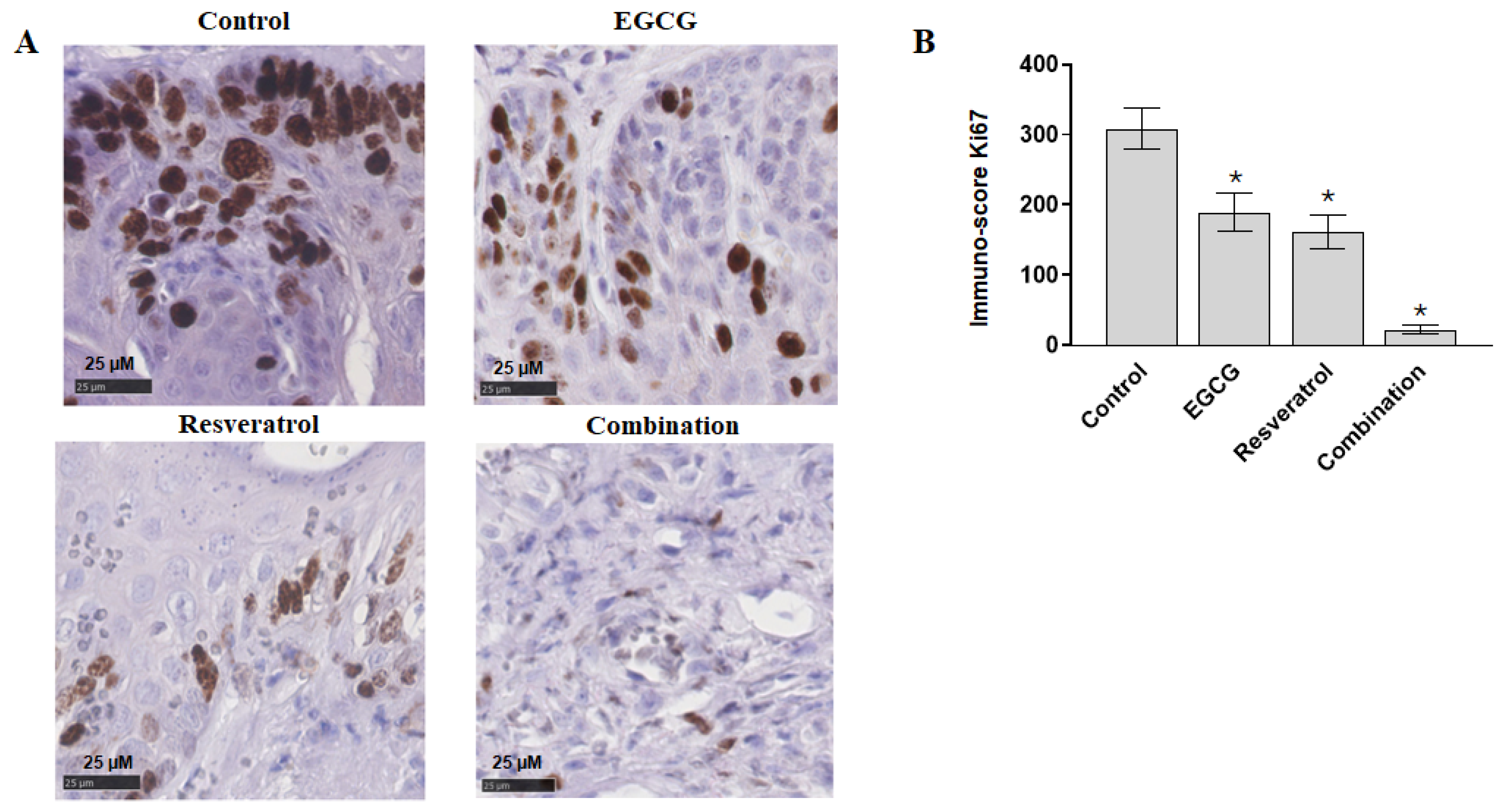
We also measured the cellular proliferation of oral lesions by staining with Ki-67, a proliferation marker. Six randomly selected mice from each group were used for IHC staining followed by counting of Ki-67 positive cells (five randomly selected field from each slide). As shown in Figure 3, resveratrol alone and in combination with EGCG significantly inhibited the number of Ki-67 positive cells compared to untreated control. Similar to the lesion numbers, EGCG alone had no significant effect in reducing Ki-67 expression.

3.2. Transcriptome Analysis (RNASeq) to Identify Differentially Expressed Genes

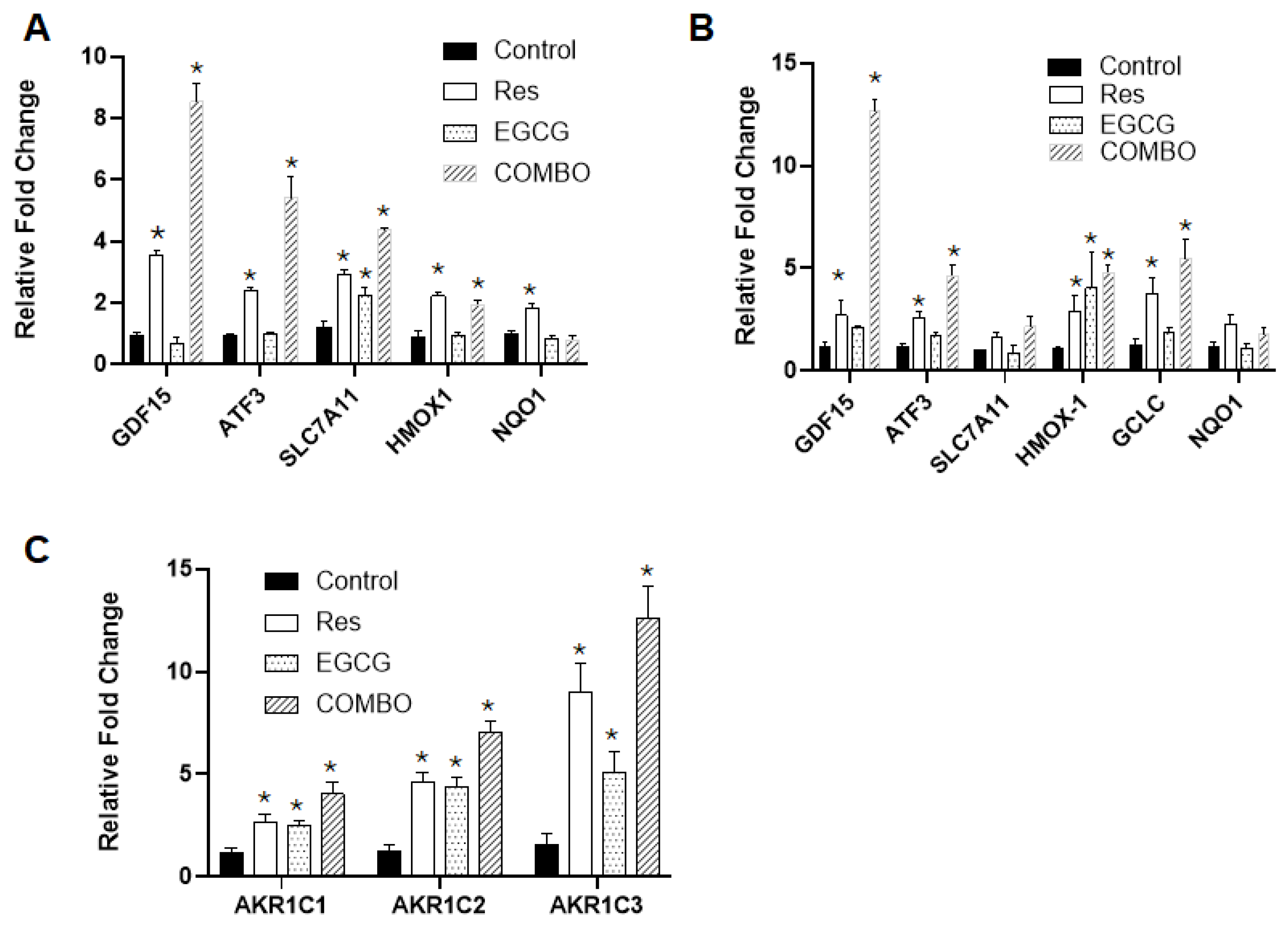
In our previous study, we identified the AKT–mTOR pathway as a major target for the anticancer effect of the combination of resveratrol and EGCG [32]. Whole-transcriptome analysis by RNASeq is a powerful tool for identifying DEGs by drug treatments. To identify DEGs, 686Tu cells were treated with resveratrol (15 μM), EGCG (40 μM) and their combination for 24 h and total RNA was used for RNASeq. DEGs were identified as described in the methods. The number of 1.5- and 2.0-fold DEGs are listed in Table 2. The number of 2.0-fold DEGs by resveratrol was 68, of which 53 genes were upregulated, and 15 genes were downregulated. With a cut-off of 1.5-fold, this number was 445 genes, 280 upregulated, and 165 downregulated. EGCG at a dose of 40 µM had a minimal effect on gene expression, although it greatly increased the number of resveratrol-induced DEGs when combined with resveratrol, with a 1.5- and 2.0-fold cut-off; these numbers were 639 genes (358 upregulated and 281 downregulated genes) and 119 genes (83 upregulated and 36 downregulated genes). The top ten upregulated and downregulated genes in each treatment are listed in Table 3 and Table 4, respectively. GDF15, AKRC1, AKRC2, AKRC3 and LAMP3 were the most upregulated genes in the case of combination treatment. CYP1B1, SPRR4 and ALDH1A3 are among the top downregulated genes.
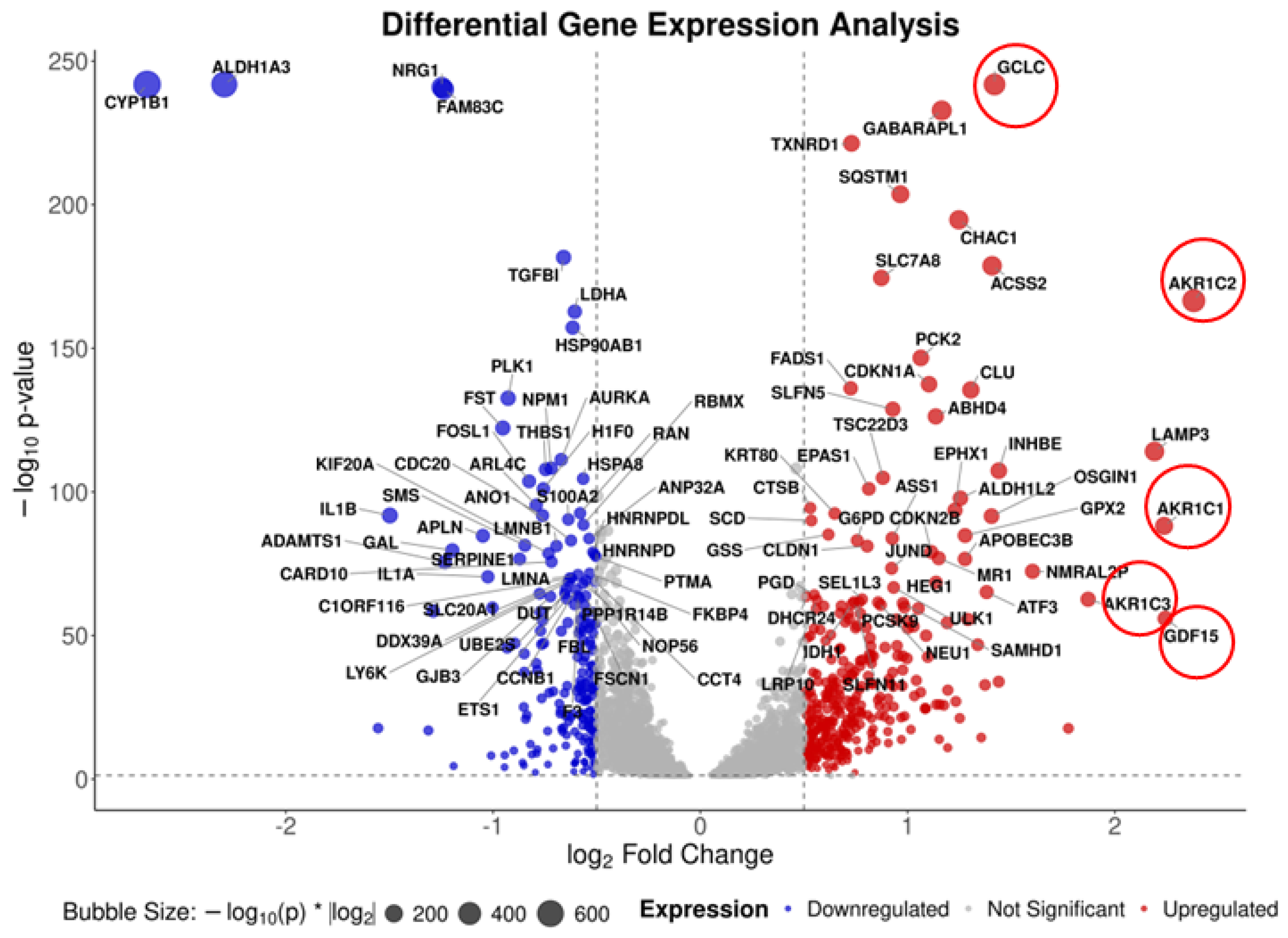
After cleaning the missing data within the 6020 modulated genes (untreated control versus combination), 5187 genes were used for Volcano plot analysis. The very high log10p values indicated that most of the genes were significantly changed compared with the untreated control (Figure 4).

3.3. Bioinformatics Analysis of Differentially Expressed Genes to Identify Affected Pathways

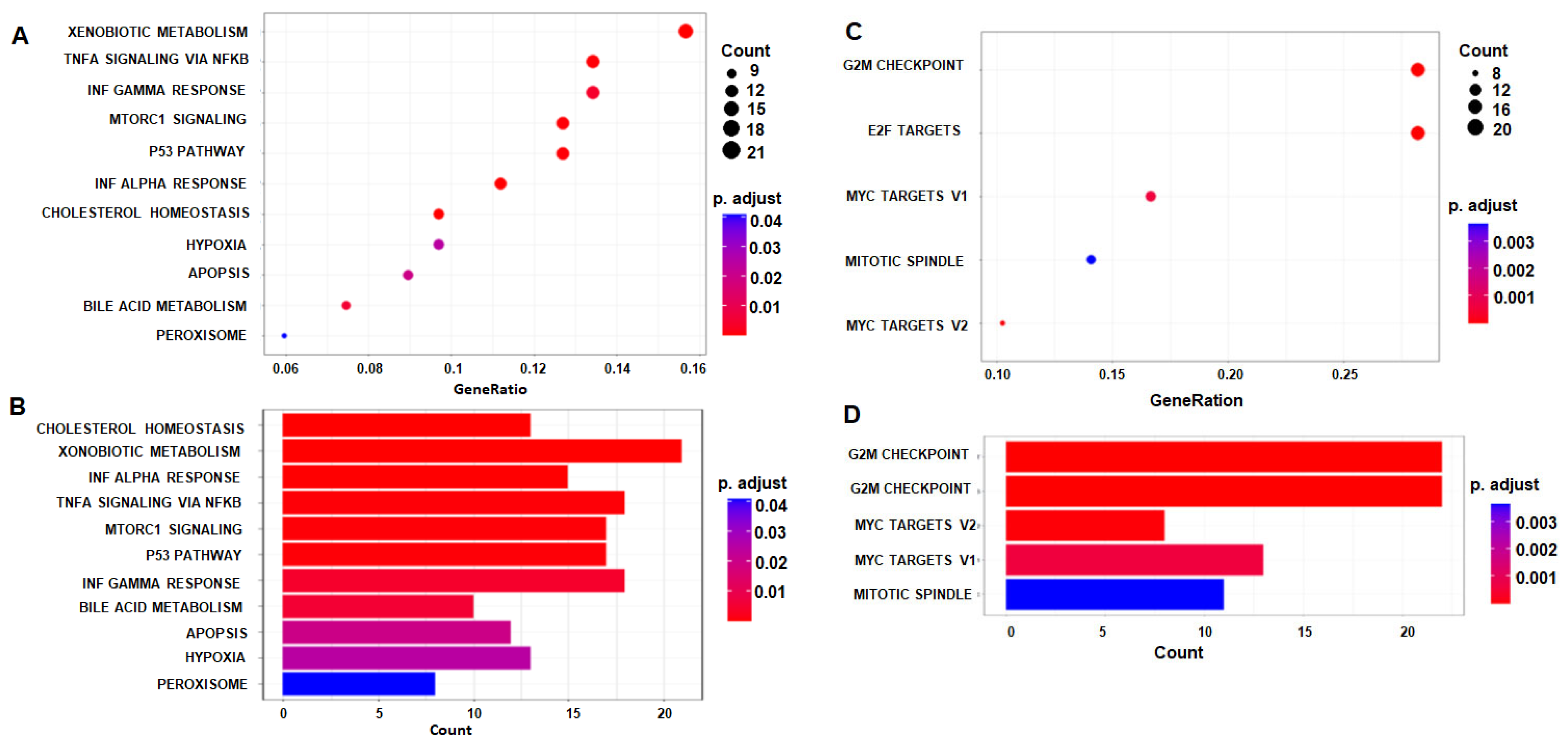
To identify the most affected pathways, we conducted bioinformatics analysis/pathway enrichment using DEGs of combined treatment. Figure 5A,B shows the top upregulated pathways when plotted against gene ratio and gene count, respectively. Hallmarks of xenobiotic metabolism, cholesterol homeostasis, TNFα signaling via NFκB, mTORC1 signaling, apoptosis and p53 pathway are among the top upregulated pathways. The most downregulated pathways are hallmarks of G2M checkpoint, E2F targets, MYC targets and mitotic spindle (Figure 5C,D). Supplementary Files S1 and S2 show the upregulated and downregulated pathways and the associated genes, respectively.

3.4. Confirming the Expression of Selected Genes and Proteins by Real-Time qPCR and Western Blotting

GDF15 was identified as the most upregulated gene and hallmark of the xenobiotic metabolism as the top upregulated pathway. We examined the mRNA expression of some selected genes including GDF15 and those associated with the xenobiotic metabolism pathway and activated in response to oxidative stress. As shown in Figure 6A–C, treatment with resveratrol, EGCG or the combination of resveratrol and EGCG significantly increased the expression of GDF15, ATF3, Solute Carrier Family 7 Member 11 (SLC7A11), Heme Oxygenase-1 (HMOX1), NAD(P)H Quinone Dehydrogenase 1 (NQO1), Aldo-Keto Reductase Family 1 Member C (AKR1C)1, AKR1C2 and AKR1C3 in 686Tu (malignant) and MSK (premalignant) cells, although the effects of EGCG were not significant in some cases. Although EGCG had a minimal effect on the expression of GDF15 and ATF3, the combination of resveratrol and EGCG greatly increased the expression of these genes. GDF15 is a known transcriptional target of ATF3 [43,44].
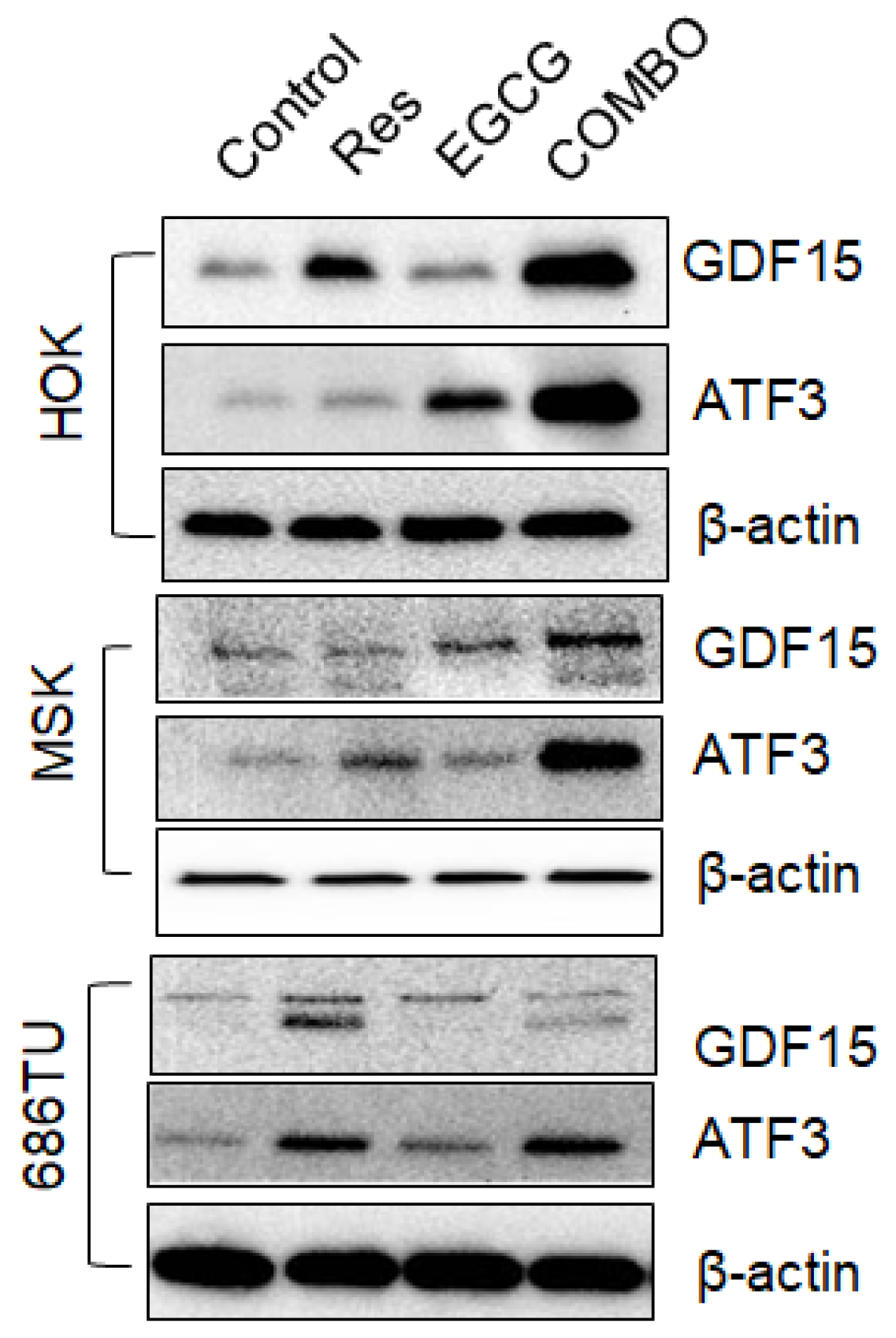
We also examined the expression of GDF15 and ATF3 proteins in normal (HOK), premalignant (MSK) and malignant (686Tu) head and neck cell lines and found that, like mRNA expression, resveratrol, EGCG and their combination also increased the expression of GDF15 and ATF3 proteins (Figure 7).

4. Discussion

Although chemoprevention is a well-justified, viable option for reducing cancer burden, its success is limited, with approved chemoprevention drugs for breast cancer only. Unlike the treatment of cancer patients where the question is about life and death, toxicity is a significant concern for chemoprevention as the subjects have not yet developed invasive cancer but are at high risk. As a result, diet-derived natural agents drew much attention for chemoprevention because of their non-toxic nature and people’s acceptance. Moreover, cancer patients rarely receive single drug regimens in their treatment plan; rather, combinations of multiple modalities or agents are common. However, the combinatorial approach has not been explored well in chemoprevention. In the current study, we investigated the chemopreventive potential of the combination of two natural compounds, resveratrol and EGCG against 4-NQO-induced oral carcinogenesis in an in vivo model extensively used for testing compounds for their chemopreventive potential against oral carcinogenesis. 4-NQO is a carcinogen present in tobacco smoke and mimics the histological and biological processes of human oral carcinogenesis including the genetic and molecular changes seen in the progression from normal to mild, moderate and severe dysplasia, and from carcinoma in situ to invasive carcinoma [45,46]. Although both resveratrol and green tea preparations exhibited chemopreventive efficacy against oral carcinogenesis in animal models, GTE alone was ineffective in preventing oral cancer development in a phase II clinical trial which prompted us to explore a combinatorial approach [15]. Our findings demonstrate that, although resveratrol alone or in combination with EGCG significantly inhibited the number of visible tumors, EGCG alone had a insignificant effect, as the EGCG dose is lower than our previous in vivo doses [29,32]. However, visible lesions do not always represent the real fact, particularly, if the intervention delays carcinogenesis. In contrast, digital imaging and microscopic counting after H&E staining allows the detection of microscopic lesions. Only the combination of EGCG and resveratrol significantly inhibited the number and the area of microscopic lesions, suggesting that resveratrol alone delayed tumor development, as indicated by the increased number of microscopic lesions. The chemopreventive efficacy was also supported by Ki-67 expression. Our data are consistent with a previous study which tested the efficacy of resveratrol (AIN-76A diet supplemented with 0.25% w/w resveratrol for 8 weeks) against 4-NQO-induced oral carcinogenesis. Although the effect on tumor incidence is moderate, the multiplicity and severity of lesions were significantly inhibited [12]. An average of 4.66 and 1.33 lesions/mouse was detected in the 4-NQO and resveratrol group, respectively. In contrast, our data are inconsistent with a previous study testing the efficacy of green tea polyphenols (GTE) against 4-NQO-induced oral carcinogenesis [47]. Simultaneous treatments of rats with 4-NQO and GTE significantly reduced the number of tumors, tumor volume and SCCHN. The results were also significant when GTE treatment was given after 4-NQO exposure. The inhibition of tumor incidence is 88.75%. The inconsistency with our study is probably attributed to dosing (200 mg/kg vs. 30 mg/kg).
We also explored the cell signaling pathways modulated by these compounds and their combination through RNASeq and subsequent gene enrichment analysis to identify significant pathways and genes affected by EGCG, resveratrol and their combination. GDF15, a member of the TGF-β superfamily, was identified as the most upregulated gene. Accumulated evidence from several carcinogenesis models suggests that GDF15 is expressed under oxidative stress and plays a pivotal role in the chemoprevention of intestinal cancer by sulindac [48,49], colon cancer by cox inhibitors, sulindac and celecoxib [50], and chemically induced breast cancer by the combination of celecoxib and resveratrol [51], etc. Several natural compounds induced apoptosis of head and neck cancer cell lines by upregulating the expression of GDF15 [52,53]. However, its role in oral carcinogenesis and chemoprevention is largely unknown. We confirmed the upregulation of GDF15 mRNA and protein in normal, premalignant and malignant SCCHN by EGCG, resveratrol and their combination. Furthermore, we confirmed the upregulation of ATF3, a transcription factor that regulates GDF15. Further studies using GDF15 knockout mice are required to verify the role of GDF15 in oral carcinogenesis and chemoprevention.
The hallmark of xenobiotic metabolism was identified as one of the top significantly upregulated pathways based on gene ratio and gene count. Xenobiotic metabolism is crucial for the detoxification of foreign chemicals including carcinogens. In addition, many genes involved in xenobiotic metabolism are also involved in antioxidant defense mechanisms to protect against oxidative stress. Carcinogenesis is initiated with irreversible genetic mutations resulting from oxidative stress generated endogenously or by carcinogen exposure. 4-NQO generates oxidative stress/reactive oxygen species leading to oral and esophageal carcinogenesis [54,55,56]. Resveratrol or its combination with EGCG upregulates several antioxidant genes such as GCLC, GCLM, NQO1, HMXO1, SLC7A11, CAT, etc. Other modulated pathways include the upregulation of the p53 pathway, apoptosis pathway, interferon-α and -γ response, and the downregulation of G2/M checkpoint, E2F1 targets, MYC targets, mitotic spindle, glycolysis, mTORC1, etc. Most of these pathways are known to mediate anticancer effects or carcinogenesis and might be involved in the chemopreventive effect of these compounds.

5. Conclusions

Taken together, our findings demonstrate that the combination of resveratrol and EGCG prevents or delays 4-NQO-induced oral carcinogenesis, upregulates pathways which are important for xenobiotic metabolism, mitigation of oxidative stress and apoptosis and downregulates several oncogenic pathways such as mTORC1, Myc and E2F1. Although promising, the study has several limitations. Firstly, the in vivo experiment was conducted exclusively in female mice, rendering the analysis of sex-dependent effects impossible. Secondly, the RNASeq was performed using a malignant cell line. Although the expression of critical genes was further validated in normal and premalignant cells, the expression of these genes was not tested in animal tissues. Thirdly, the cell line data are simply correlative with the animal study. Finally, the effects of the carcinogen and drug treatments on major organs (toxicity) were not explored. Future studies need to focus on functional studies of the genes like GDF15 or pathways like antioxidant and xenobiotic metabolism in the chemoprevention of oral cancer using animal models. Despite these limitations, our study opens new avenues for testing the toxicity and pharmacokinetics of these two promising natural compounds, which will ultimately pave the way for clinical trials.

Supplementary Materials

The following supporting information can be downloaded at: https://www.mdpi.com/article/10.3390/cancers18071098/s1, Figure S1: Schema for chemoprevention study; Figure S2: Three H&E stained mice tongues from each group. File S1: Upregulated Pathways; File S2: Downregulated pathways.

Author Contributions

A.A.: Conceptualization, data curation, formal analysis, methodology, investigation, writing—review and editing. L.M.R.: Conceptualization, data curation, formal analysis, methodology, investigation, writing—review and editing. S.S.: Data curation, formal analysis, writing—review and editing. A.S.M.A.: Conceptualization, data curation, formal analysis, methodology, writing—review and editing. M.S.H.: Conceptualization, formal analysis, methodology, writing—review and editing. A.R.M.R.A.: Conceptualization, data curation, formal analysis, funding acquisition, project administration, supervision, validation, writing—original draft. All authors have read and agreed to the published version of the manuscript.

Funding

The present study was supported by the start-up and the Faculty Research Support grant from Marshall University School of Pharmacy (ARMRA), the WV–INBRE grant P20GM103434 (ARMRA) and the NIH Grant R15DE032063 (ARMRA).

Institutional Review Board Statement

Not applicable.

Informed Consent Statement

Not applicable.

Data Availability Statement

The data supporting the findings of this study are available from the corresponding author upon reasonable request. Raw and processed sequencing data were deposited in the Gene Expression Omnibus (GEO) on 19 August 2025, maintained by the National Center for Biotechnology Information at the National Library of Medicine, and are available via accession number GSE305867.

Acknowledgments

The authors thank Daniel Brazeau (School of Pharmacy, Marshall University) for editing the manuscript and the Marshall University Genomic Core for conducting the RNASeq experiment.

Conflicts of Interest

The authors declare that they have no known competing financial interests or personal relationships that could have appeared to influence the work reported in this paper.

Abbreviations

The following abbreviations are used in this manuscript:
SCCHNSquamous cell carcinoma of head and neck
GDF15Growth differentiation factor 15
ATF3Activation transcription factor 3
HPVHuman papillomavirus
EGCGEpigallocatechin gallate
GTEGreen tea extract
HOKHuman oral keratinocytes
IHCImmunohistochemistry
FFPEFormalin-fixed, paraffin-embedded
DAB3,3 diaminobenzidine
DEGDifferentially expressed gene
4-NQO4-nitro quinoline oxide
SLC7A11Solute Carrier Family 7 Member 11
HMOX1Heme Oxygenase-1
NQO1NAD(P)H Quinone Dehydrogenase 1
AKR1CAldo-Keto Reductase Family 1 Member C

References

  1. Siegel, R.L.; Kratzer, T.B.; Giaquinto, A.N.; Sung, H.; Jemal, A. Cancer statistics, 2025. CA Cancer J. Clin. 2025, 75, 10–45. [Google Scholar] [CrossRef]
  2. Barsouk, A.; Aluru, J.S.; Rawla, P.; Saginala, K.; Barsouk, A. Epidemiology, Risk Factors, and Prevention of Head and Neck Squamous Cell Carcinoma. Med. Sci. 2023, 11, 42. [Google Scholar] [CrossRef]
  3. Pedroso, C.M.; Normando, A.G.C.; Siracusa, C.S.; Lauby-Secretan, B.; Nethan, S.T.; Tomasi, R.A.; Lopes, M.A.; Warnakulasuriya, S.; Santos-Silva, A.R. Pan-American prevalence of smokeless tobacco use and association with oral potentially malignant disorders and head and neck cancer: A systematic review and meta-analysis. Oral. Surg. Oral. Med. Oral. Pathol. Oral. Radiol. 2023, 136, 322–332. [Google Scholar] [CrossRef]
  4. Gil, G.F.; Anderson, J.A.; Aravkin, A.; Bhangdia, K.; Carr, S.; Dai, X.; Flor, L.S.; Hay, S.I.; Malloy, M.J.; McLaughlin, S.A.; et al. Health effects associated with chewing tobacco: A Burden of Proof study. Nat. Commun. 2024, 15, 1082. [Google Scholar] [CrossRef] [PubMed]
  5. Haddad, R.I.; Shin, D.M. Recent advances in head and neck cancer. N. Engl. J. Med. 2008, 359, 1143–1154. [Google Scholar] [CrossRef] [PubMed]
  6. Amin, A.R.; Kucuk, O.; Khuri, F.R.; Shin, D.M. Perspectives for cancer prevention with natural compounds. J. Clin. Oncol. 2009, 27, 2712–2725. [Google Scholar] [CrossRef]
  7. Haque, A.; Brazeau, D.; Amin, A.R. Perspectives on natural compounds in chemoprevention and treatment of cancer: An update with new promising compounds. Eur. J. Cancer 2021, 149, 165–183. [Google Scholar] [CrossRef]
  8. Rahman, M.A.; Amin, A.R.; Shin, D.M. Chemopreventive potential of natural compounds in head and neck cancer. Nutr. Cancer 2010, 62, 973–987. [Google Scholar] [CrossRef] [PubMed]
  9. Quintero-Rincon, P.; Caballero-Gallardo, K.; Olivero-Verbel, J. Natural anticancer agents: Prospection of medicinal and aromatic plants in modern chemoprevention and chemotherapy. Nat. Prod. Bioprospect. 2025, 15, 25. [Google Scholar] [CrossRef]
  10. Pereira, A.G.; Echave, J.; Jorge, A.O.S.; Nogueira-Marques, R.; Nur Yuksek, E.; Barciela, P.; Perez-Vazquez, A.; Chamorro, F.; Oliveira, M.B.P.P.; Carpena, M.; et al. Therapeutic and Preventive Potential of Plant-Derived Antioxidant Nutraceuticals. Foods 2025, 14, 1749. [Google Scholar] [CrossRef]
  11. Berta, G.N.; Salamone, P.; Sprio, A.E.; Di Scipio, F.; Marinos, L.M.; Sapino, S.; Carlotti, M.E.; Cavalli, R.; Di Carlo, F. Chemoprevention of 7,12-dimethylbenz[a]anthracene (DMBA)-induced oral carcinogenesis in hamster cheek pouch by topical application of resveratrol complexed with 2-hydroxypropyl-beta-cyclodextrin. Oral. Oncol. 2010, 46, 42–48. [Google Scholar] [CrossRef] [PubMed]
  12. Shrotriya, S.; Tyagi, A.; Deep, G.; Orlicky, D.J.; Wisell, J.; Wang, X.J.; Sclafani, R.A.; Agarwal, R.; Agarwal, C. Grape seed extract and resveratrol prevent 4-nitroquinoline 1-oxide induced oral tumorigenesis in mice by modulating AMPK activation and associated biological responses. Mol. Carcinog. 2015, 54, 291–300. [Google Scholar] [CrossRef] [PubMed]
  13. Sur, S.; Pal, D.; Roy, R.; Barua, A.; Roy, A.; Saha, P.; Panda, C.K. Tea polyphenols EGCG and TF restrict tongue and liver carcinogenesis simultaneously induced by N-nitrosodiethylamine in mice. Toxicol. Appl. Pharmacol. 2016, 300, 34–46. [Google Scholar] [CrossRef]
  14. Pisters, K.M.; Newman, R.A.; Coldman, B.; Shin, D.M.; Khuri, F.R.; Hong, W.K.; Glisson, B.S.; Lee, J.S. Phase I trial of oral green tea extract in adult patients with solid tumors. J. Clin. Oncol. 2001, 19, 1830–1838. [Google Scholar] [CrossRef]
  15. Tsao, A.S.; Liu, D.; Martin, J.; Tang, X.M.; Lee, J.J.; El-Naggar, A.K.; Wistuba, I.; Culotta, K.S.; Mao, L.; Gillenwater, A.; et al. Phase II randomized, placebo-controlled trial of green tea extract in patients with high-risk oral premalignant lesions. Cancer Prev. Res. 2009, 2, 931–941. [Google Scholar] [CrossRef]
  16. Shanafelt, T.D.; Call, T.G.; Zent, C.S.; Leis, J.F.; LaPlant, B.; Bowen, D.A.; Roos, M.; Laumann, K.; Ghosh, A.K.; Lesnick, C.; et al. Phase 2 trial of daily, oral Polyphenon E in patients with asymptomatic, Rai stage 0 to II chronic lymphocytic leukemia. Cancer 2013, 119, 363–370. [Google Scholar] [CrossRef]
  17. Shanafelt, T.D.; Call, T.G.; Zent, C.S.; LaPlant, B.; Bowen, D.A.; Roos, M.; Secreto, C.R.; Ghosh, A.K.; Kabat, B.F.; Lee, M.J.; et al. Phase I trial of daily oral Polyphenon E in patients with asymptomatic Rai stage 0 to II chronic lymphocytic leukemia. J. Clin. Oncol. 2009, 27, 3808–3814. [Google Scholar] [CrossRef]
  18. Shin, D.M. Oral cancer prevention advances with a translational trial of green tea. Cancer Prev. Res. 2009, 2, 919–921. [Google Scholar] [CrossRef]
  19. Shin, D.M.; Nannapaneni, S.; Patel, M.R.; Shi, Q.; Liu, Y.; Chen, Z.; Chen, A.Y.; El-Deiry, M.W.; Beitler, J.J.; Steuer, C.E.; et al. Phase Ib Study of Chemoprevention with Green Tea Polyphenon E and Erlotinib in Patients with Advanced Premalignant Lesions (APL) of the Head and Neck. Clin. Cancer Res. 2020, 26, 5860–5868. [Google Scholar] [CrossRef]
  20. Huang, T.T.; Lin, H.C.; Chen, C.C.; Lu, C.C.; Wei, C.F.; Wu, T.S.; Liu, F.G.; Lai, H.C. Resveratrol induces apoptosis of human nasopharyngeal carcinoma cells via activation of multiple apoptotic pathways. J. Cell Physiol. 2011, 226, 720–728. [Google Scholar] [CrossRef] [PubMed]
  21. Lin, H.Y.; Sun, M.; Tang, H.Y.; Simone, T.M.; Wu, Y.H.; Grandis, J.R.; Cao, H.J.; Davis, P.J.; Davis, F.B. Resveratrol causes COX-2- and p53-dependent apoptosis in head and neck squamous cell cancer cells. J. Cell Biochem. 2008, 104, 2131–2142. [Google Scholar] [CrossRef]
  22. Zhang, E.; Wang, Y.; Zhang, H.; Li, X.; Su, Y.; Cui, J.; Xu, R.; Mao, X.; Sang, M.; Lin, Z.; et al. Resveratrol induces ferroptosis in triple-negative breast cancer through NEDD4L-mediated GPX4 ubiquitination and degradation. Free Radic. Biol. Med. 2025, 235, 231–247. [Google Scholar] [CrossRef]
  23. Li, B.; Allela, O.Q.B.; Alkhazali, W.H.; Vadia, N.; Renuka Jyothi, S.; Panigrahi, R.; Chauhan, A.S.; Singh, S.; Akhrorova, M.; Sameer, H.N.; et al. Resveratrol in oral cancer: A systematic review of preclinical studies on its anticancer mechanisms and therapeutic potential. Med. Oncol. 2025, 42, 329. [Google Scholar] [CrossRef] [PubMed]
  24. Amorntaveechai, A.; Osathanon, T.; Pavasant, P.; Sooampon, S. Effect of resveratrol and oxyresveratrol on deferoxamine-induced cancer stem cell marker expression in human head and neck squamous cell carcinoma. J. Oral Biol. Craniofac. Res. 2022, 12, 253–257. [Google Scholar] [CrossRef] [PubMed]
  25. Patel, K.R.; Scott, E.; Brown, V.A.; Gescher, A.J.; Steward, W.P.; Brown, K. Clinical trials of resveratrol. Ann. N. Y. Acad. Sci. 2011, 1215, 161–169. [Google Scholar] [CrossRef] [PubMed]
  26. Brown, V.A.; Patel, K.R.; Viskaduraki, M.; Crowell, J.A.; Perloff, M.; Booth, T.D.; Vasilinin, G.; Sen, A.; Schinas, A.M.; Piccirilli, G.; et al. Repeat dose study of the cancer chemopreventive agent resveratrol in healthy volunteers: Safety, pharmacokinetics, and effect on the insulin-like growth factor axis. Cancer Res. 2010, 70, 9003–9011. [Google Scholar] [CrossRef]
  27. Juan, M.E.; Gonzalez-Pons, E.; Planas, J.M. Multidrug resistance proteins restrain the intestinal absorption of trans-resveratrol in rats. J. Nutr. 2010, 140, 489–495. [Google Scholar] [CrossRef]
  28. Vue, B.; Zhang, S.; Chen, Q.H. Synergistic Effects of Dietary Natural Products as Anti-Prostate Cancer Agents. Nat. Prod. Commun. 2015, 10, 2179–2188. [Google Scholar] [CrossRef]
  29. Amin, A.R.; Wang, D.; Zhang, H.; Peng, S.; Shin, H.J.; Brandes, J.C.; Tighiouart, M.; Khuri, F.R.; Chen, Z.G.; Shin, D.M. Enhanced anti-tumor activity by the combination of the natural compounds (-)-epigallocatechin-3-gallate and luteolin: Potential role of p53. J. Biol. Chem. 2010, 285, 34557–34565. [Google Scholar] [CrossRef]
  30. Fujiki, H.; Sueoka, E.; Watanabe, T.; Suganuma, M. Synergistic enhancement of anticancer effects on numerous human cancer cell lines treated with the combination of EGCG, other green tea catechins, and anticancer compounds. J. Cancer Res. Clin. Oncol. 2015, 141, 1511–1522. [Google Scholar] [CrossRef]
  31. Zhou, D.H.; Wang, X.; Yang, M.; Shi, X.; Huang, W.; Feng, Q. Combination of low concentration of (-)-epigallocatechin gallate (EGCG) and curcumin strongly suppresses the growth of non-small cell lung cancer in vitro and in vivo through causing cell cycle arrest. Int. J. Mol. Sci. 2013, 14, 12023–12036. [Google Scholar] [CrossRef]
  32. Amin, A.; Wang, D.; Nannapaneni, S.; Lamichhane, R.; Chen, Z.G.; Shin, D.M. Combination of resveratrol and green tea epigallocatechin gallate induces synergistic apoptosis and inhibits tumor growth in vivo in head and neck cancer models. Oncol. Rep. 2021, 45, 87. [Google Scholar] [CrossRef]
  33. Zhou, X.; Afzal, S.; Zheng, Y.F.; Munch, G.; Li, C.G. Synergistic Protective Effect of Curcumin and Resveratrol against Oxidative Stress in Endothelial EAhy926 Cells. Evid. Based Complement. Alternat Med. 2021, 2021, 2661025. [Google Scholar] [CrossRef] [PubMed]
  34. Li, C.; Xu, Y.; Zhang, J.; Zhang, Y.; He, W.; Ju, J.; Wu, Y.; Wang, Y. The effect of resveratrol, curcumin and quercetin combination on immuno-suppression of tumor microenvironment for breast tumor-bearing mice. Sci. Rep. 2023, 13, 13278. [Google Scholar] [CrossRef] [PubMed]
  35. Khan, N.; Bharali, D.J.; Adhami, V.M.; Siddiqui, I.A.; Cui, H.; Shabana, S.M.; Mousa, S.A.; Mukhtar, H. Oral administration of naturally occurring chitosan-based nanoformulated green tea polyphenol EGCG effectively inhibits prostate cancer cell growth in a xenograft model. Carcinogenesis 2014, 35, 415–423. [Google Scholar] [CrossRef]
  36. Krzyzaniak, O.; Steiner, S.; Nilsson, F.A.M.; Dietrich, M.; Kampfen, L.; Johansen, P.; Jirkof, P.; Meyer, U. Applicability of the micropipette-guided drug administration (MDA) method for assessing reward-related behaviors in mice. Physiol. Behav. 2025, 299, 114967. [Google Scholar] [CrossRef]
  37. Steiner, S.; Krzyzaniak, O.; Nilsson, F.A.M.; Dietrich, M.; Kampfen, L.; Johansen, P.; Jirkof, P.; Meyer, U. Sex and strain differences in the micropipette-guided drug administration (MDA) method in mice. Lab. Anim. 2025, 59, 578–587. [Google Scholar] [CrossRef] [PubMed]
  38. Schalbetter, S.M.; Mueller, F.S.; Scarborough, J.; Richetto, J.; Weber-Stadlbauer, U.; Meyer, U.; Notter, T. Oral application of clozapine-N-oxide using the micropipette-guided drug administration (MDA) method in mouse DREADD systems. Lab. Anim. 2021, 50, 69–75. [Google Scholar] [CrossRef]
  39. Shackelford, D.B.; Abt, E.; Gerken, L.; Vasquez, D.S.; Seki, A.; Leblanc, M.; Wei, L.; Fishbein, M.C.; Czernin, J.; Mischel, P.S.; et al. LKB1 inactivation dictates therapeutic response of non-small cell lung cancer to the metabolism drug phenformin. Cancer Cell 2013, 23, 143–158. [Google Scholar] [CrossRef]
  40. Zhao, M.; Sano, D.; Pickering, C.R.; Jasser, S.A.; Henderson, Y.C.; Clayman, G.L.; Sturgis, E.M.; Ow, T.J.; Lotan, R.; Carey, T.E.; et al. Assembly and initial characterization of a panel of 85 genomically validated cell lines from diverse head and neck tumor sites. Clin. Cancer Res. 2011, 17, 7248–7264. [Google Scholar] [CrossRef]
  41. Livak, K.J.; Schmittgen, T.D. Analysis of relative gene expression data using real-time quantitative PCR and the 2(-Delta Delta C(T)) Method. Methods 2001, 25, 402–408. [Google Scholar] [CrossRef]
  42. Li, R.; Ding, C.; Zhang, J.; Xie, M.; Park, D.; Ding, Y.; Chen, G.; Zhang, G.; Gilbert-Ross, M.; Zhou, W.; et al. Modulation of Bax and mTOR for Cancer Therapeutics. Cancer Res. 2017, 77, 3001–3012. [Google Scholar] [CrossRef]
  43. Chen, S.T.; Chang, K.S.; Lin, W.Y.; Hsu, S.Y.; Sung, H.C.; Lin, Y.H.; Feng, T.H.; Hou, C.P.; Juang, H.H. Activating transcription factor 3 is an antitumor gene synergizing with growth differentiation factor 15 to modulate cell growth in human bladder cancer. Biomed. J. 2024, 48, 100756. [Google Scholar] [CrossRef]
  44. Lee, S.H.; Kim, J.S.; Yamaguchi, K.; Eling, T.E.; Baek, S.J. Indole-3-carbinol and 3,3′-diindolylmethane induce expression of NAG-1 in a p53-independent manner. Biochem. Biophys. Res. Commun. 2005, 328, 63–69. [Google Scholar] [CrossRef] [PubMed]
  45. Bouaoud, J.; De Souza, G.; Darido, C.; Tortereau, A.; Elkabets, M.; Bertolus, C.; Saintigny, P. The 4-NQO mouse model: An update on a well-established in vivo model of oral carcinogenesis. Methods Cell Biol. 2021, 163, 197–229. [Google Scholar] [CrossRef] [PubMed]
  46. Sagheer, S.H.; Whitaker-Menezes, D.; Han, J.Y.S.; Curry, J.M.; Martinez-Outschoorn, U.; Philp, N.J. 4NQO induced carcinogenesis: A mouse model for oral squamous cell carcinoma. Methods Cell Biol. 2021, 163, 93–111. [Google Scholar] [CrossRef]
  47. Srinivasan, P.; Suchalatha, S.; Babu, P.V.; Devi, R.S.; Narayan, S.; Sabitha, K.E.; Shyamala Devi, C.S. Chemopreventive and therapeutic modulation of green tea polyphenols on drug metabolizing enzymes in 4-Nitroquinoline 1-oxide induced oral cancer. Chem. Biol. Interact. 2008, 172, 224–234. [Google Scholar] [CrossRef]
  48. Wang, X.; Kingsley, P.J.; Marnett, L.J.; Eling, T.E. The role of NAG-1/GDF15 in the inhibition of intestinal polyps in APC/Min mice by sulindac. Cancer Prev. Res. 2011, 4, 150–160. [Google Scholar] [CrossRef] [PubMed][Green Version]
  49. Zimmers, T.A.; Gutierrez, J.C.; Koniaris, L.G. Loss of GDF-15 abolishes sulindac chemoprevention in the ApcMin/+ mouse model of intestinal cancer. J. Cancer Res. Clin. Oncol. 2010, 136, 571–576. [Google Scholar] [CrossRef]
  50. Vaish, V.; Piplani, H.; Rana, C.; Vaiphei, K.; Sanyal, S.N. NSAIDs may regulate EGR-1-mediated induction of reactive oxygen species and non-steroidal anti-inflammatory drug-induced gene (NAG)-1 to initiate intrinsic pathway of apoptosis for the chemoprevention of colorectal cancer. Mol. Cell Biochem. 2013, 378, 47–64. [Google Scholar] [CrossRef]
  51. Kiskova, T.; Jendzelovsky, R.; Rentsen, E.; Maier-Salamon, A.; Kokosova, N.; Papcova, Z.; Mikes, J.; Orendas, P.; Bojkova, B.; Kubatka, P.; et al. Resveratrol enhances the chemopreventive effect of celecoxib in chemically induced breast cancer in rats. Eur. J. Cancer Prev. 2014, 23, 506–513. [Google Scholar] [CrossRef] [PubMed]
  52. Kang, S.U.; Shin, Y.S.; Hwang, H.S.; Baek, S.J.; Lee, S.H.; Kim, C.H. Tolfenamic acid induces apoptosis and growth inhibition in head and neck cancer: Involvement of NAG-1 expression. PLoS ONE 2012, 7, e34988. [Google Scholar] [CrossRef] [PubMed]
  53. Hong, Y.; Lee, J.; Moon, H.; Ryu, C.H.; Seok, J.; Jung, Y.S.; Ryu, J.; Baek, S.J. Quercetin Induces Anticancer Activity by Upregulating Pro-NAG-1/GDF15 in Differentiated Thyroid Cancer Cells. Cancers 2021, 13, 3022. [Google Scholar] [CrossRef] [PubMed]
  54. Li, W.; Zeng, Q.; Wang, B.; Lv, C.; He, H.; Yang, X.; Cheng, B.; Tao, X. Oxidative stress promotes oral carcinogenesis via Thbs1-mediated M1-like tumor-associated macrophages polarization. Redox Biol. 2024, 76, 103335. [Google Scholar] [CrossRef]
  55. Yamamoto, K.; Inoue, S.; Kawanishi, S. Site-specific DNA damage and 8-hydroxydeoxyguanosine formation by hydroxylamine and 4-hydroxyaminoquinoline 1-oxide in the presence of Cu(II): Role of active oxygen species. Carcinogenesis 1993, 14, 1397–1401. [Google Scholar] [CrossRef]
  56. Arima, Y.; Nishigori, C.; Takeuchi, T.; Oka, S.; Morimoto, K.; Utani, A.; Miyachi, Y. 4-Nitroquinoline 1-oxide forms 8-hydroxydeoxyguanosine in human fibroblasts through reactive oxygen species. Toxicol. Sci. 2006, 91, 382–392. [Google Scholar] [CrossRef]
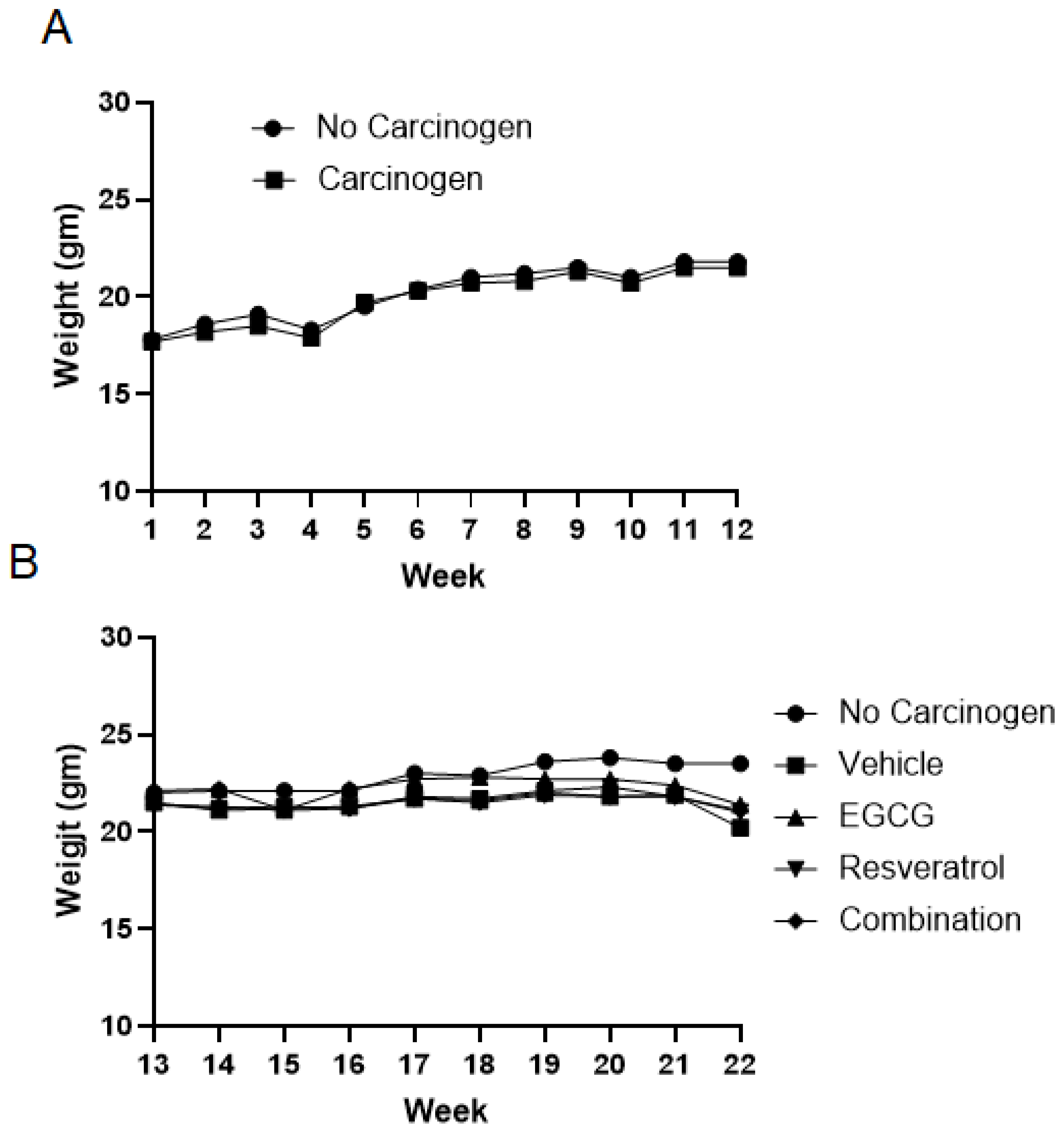
Figure 1. Average body weights of mice during carcinogen exposure and drug treatments: (A) After receiving from the vendor, the mice were divided into two groups (no carcinogen and carcinogen) and the body weight of each mouse was taken weekly. Mice were exposed to carcinogen for 10 weeks (week 2–12). (B) The carcinogen-exposed mice were randomized into four groups (50% sweetened condensed milk, 30 mg/kg resveratrol in 50% sweetened condensed milk, 30 mg/kg EGCG in 50% sweetened condensed milk, combination of resveratrol and EGCG) and the body weight of each mouse was taken weekly. Average body weights were plotted against time.
Cancers 18 01098 g001
Figure 2. Chemoprevention of 4-NQO-induced oral carcinogenesis by resveratrol, EGCG and combination: (A) At the end of drug treatment, the oral cavity of each mouse was examined, and the number of visible lesions was counted. (B,C) Tumor numbers (B) were counted under the microscope and tumor area (C) was quantified using Openlab modular imaging software. All data represent mean ± SEM, * indicates statistically significant results with p < 0.05. (D) Representative images (histology) of lesions with different grades as determined by board-certified pathologist (magnification, ×200, images were reduced to 50%).
Cancers 18 01098 g002
Figure 3. Expression of proliferation marker Ki-67 detected in lesion tissues by immunohistochemical analysis. Six randomly selected mice from each group were used for IHC staining and Ki-67 positive cells were counted from five randomly selected fields from each mouse. (A) Representative images are presented from each group (magnification, ×200). (B) Quantification of Ki-67 staining. * indicates a statistically significant difference at p < 0.05. n = six mice/group; 5 randomly selected fields.
Cancers 18 01098 g003
Figure 4. Volcano plot of differentially expressed genes from the combination group. Each point represents one of the 5187 genes surveyed in treatment versus control samples. The x-axis shows log2(fold change), and the y-axis shows −log10(p-value). Vertical dashed lines mark the ±0.5 log2FC thresholds, and the horizontal dashed line marks p = 0.05. Genes meeting only the p < 0.05 cut-off are colored gray (n = 4623), while those with both p < 0.05 and log2FC > 0.5 are colored red (upregulated, n = 360) and blue (downregulated, n = 204). Selected genes of interest are circled.
Cancers 18 01098 g004
Figure 5. Top significantly enriched pathways after combined treatment with EGCG and resveratrol: (A) Dot-plot displays the top Reactome pathways enriched among genes with p ≤ 1 × 10⁻¹⁶, where the x-axis shows the GeneRatio (i.e., the fraction of input genes overlapping each pathway); each dot’s size corresponds to the number of overlapping genes (“Count”), and the dot color indicates enrichment significance as −log10(p-value) (darker red = more significant). (B) Re-plot of the same Reactome pathways as a horizontal bar chart: the x-axis represents the gene count per pathway, and bar color reflects −log10(p-value) (red → blue gradient, red = higher significance). (C) Dot-plot of the top hallmark gene sets (MSigDB “H”) enriched in the identical gene list using the same mapping of GeneRatio (x-axis), dot size (gene count), and dot color (−log10[p-value]) as in (A). (D) Represents those top hallmark sets as a horizontal bar-plot, with gene count on the x-axis and enrichment significance (−log10[p-value]) encoded by bar color.
Cancers 18 01098 g005
Figure 6. Expression of genes associated with xenobiotic metabolism and antioxidant defense: (A) 686Tu and (B) MSK cells were treated with 20 µM resveratrol, 40 µM EGCG and a combination of 20 µM resveratrol and 40 µM EGCG for 24 h. Total RNA was used for the expression of GDF15, ATF3, SLC7A11, HMOX1, NQO1 and GCLC by qPCR. Error bars represent SD from triplicate treatments. (C) 686Tu cells were treated as above. Total RNA was used for the expression of AKR1C1, AKR1C2 and AKR1C3. * indicates statistically significant difference (p < 0.05). n = 3 for all genes.
Cancers 18 01098 g006
Figure 7. Expression of ATF3 and GDF 15 proteins: HOK, MSK and 686Tu cells were treated with 20 µM resveratrol, 40 µM EGCG and a combination of 20 µM resveratrol and 40 µM EGCG for 24 h. Whole-cell lysates were used for the expression of GDF15 and ATF3 proteins by Western blotting. The uncropped bolts are shown in Supplementary Materials.
Cancers 18 01098 g007
Table 1. Primer sequences used for RT-qPCR.
GeneForwardReverse
GAPDH5′-TGCACCACCAACTGCTTA-3′5′-GGATGCAGGGATGATGTTC-3′
GDF155′-GTCCGGATACTCACGCCAG-3′5′-TCACGTCCCACGACCTTGAC-3′
ATF35′-GTTTGAGGATTTTGCTAACCTGAC-3′5′-AGCTGCAATCTTATTTCTTTCTCGT-3′
SLC7A115′-GGCTCCATGAACGGTGGTGTG-3′5′-GCTGGTAGAGGAGTGTGCTTGC-3′
HMOX15′ ATTTCAGAAGGGCCAGGTGA 3′5′ GGAAGTAGACAGGGGCGAAGA 3′
NQO15′-GTCATTCTCTGGCCAATTCAGAGT-3′5′-TTCCAGGATTTGAATTCGGG-3′
GCLC5′-GGCGATGAGGTGGAATACAT-3′5′-GTCCTTTCCCCCTTCTCTTG-3′
AKR1C15′-GTAAAGCTTTAGAGGCCAC-3′5′-GAGGTCAACATAATCCAATTG-3′
AKR1C25′-AACCAGGCCAGTGACAGAAA-3′5′-AGCAGCCTGTGGTTGAAGTT-3′
AKR1C35′-CCAATGTCTCTAAAGCCAGG-3′5′-TAGACATCAGGCAAAGCCCT-3′
Table 2. Numbers of significantly (p  <  0.05) up- and downregulated DEGs with 1.5- and 2.0-fold cut-offs.
Treatment1.5-Fold2-Fold
TotalUpDownTotalUpDown
EGCG936303
Resveratrol445280165685315
Combination6393582811198336
Table 3. Top 10 significantly (p < 0.05) upregulated genes based on fold change.
RankResveratrolEGCGCombination
GeneFoldGeneFoldGeneFold
1AKR1C25.2BNIP31.8GDF156.8
2GDF154.7SAA11.7LAMP35.8
3AKR1C14.7P4HA11.3AKR1C25.1
4LAMP34.6BNIP3L1.3AKR1C14.6
5AKR1C33.7ARRDC41.3CXCL83.8
6S100P3.4RILP1.3AKR1C33.7
7NMRAL2P3NDRG11.3LURAP1L3.6
FINHBE2.7DCAKD1.3ATF33.5
9TMEM1252.7MOB3A1.3SAA13.3
10GCLV2.7SELENOO1.3ACSS23.2
Table 4. Top 10 significantly (p < 0.05) downregulated genes based on fold change.
RankResveratrolEGCGCombination
GeneFoldGeneFoldGeneFold
1CYP1B1−6.4SELENOW−3.0CYP1B1−6.9
2ALDH1A3−4.9CGB5−2.7SPRR4−5.1
3SPRR4−2.9CGB8−2.2ALDH1A3−4.9
4IL1β−2.8SELENOH−1.6SELENOW−3.2
5H19−2.5KRT81−1.6SPRR2G−3.0
6ALPP−2.4GPX1−1.5ALPP−3.0
7NRG1−2.4CYPA1−1.4CRCT1−3.0
8FAM83C−2.4ALDH1A3−1.4LCE3D−2.9
9ADATS1−2.4HOXC13-AS−1.4H19−2.8
10GAL−2.3ID3−1.4HIST1H4J−2.8
Disclaimer/Publisher’s Note: The statements, opinions and data contained in all publications are solely those of the individual author(s) and contributor(s) and not of MDPI and/or the editor(s). MDPI and/or the editor(s) disclaim responsibility for any injury to people or property resulting from any ideas, methods, instructions or products referred to in the content.