Fibrosis of Periprostatic Adipose Tissue: A Potential Marker of Prostate Cancer Aggressiveness
 ,
,
Simple Summary
Abstract
1. Introduction
2. Materials and Methods
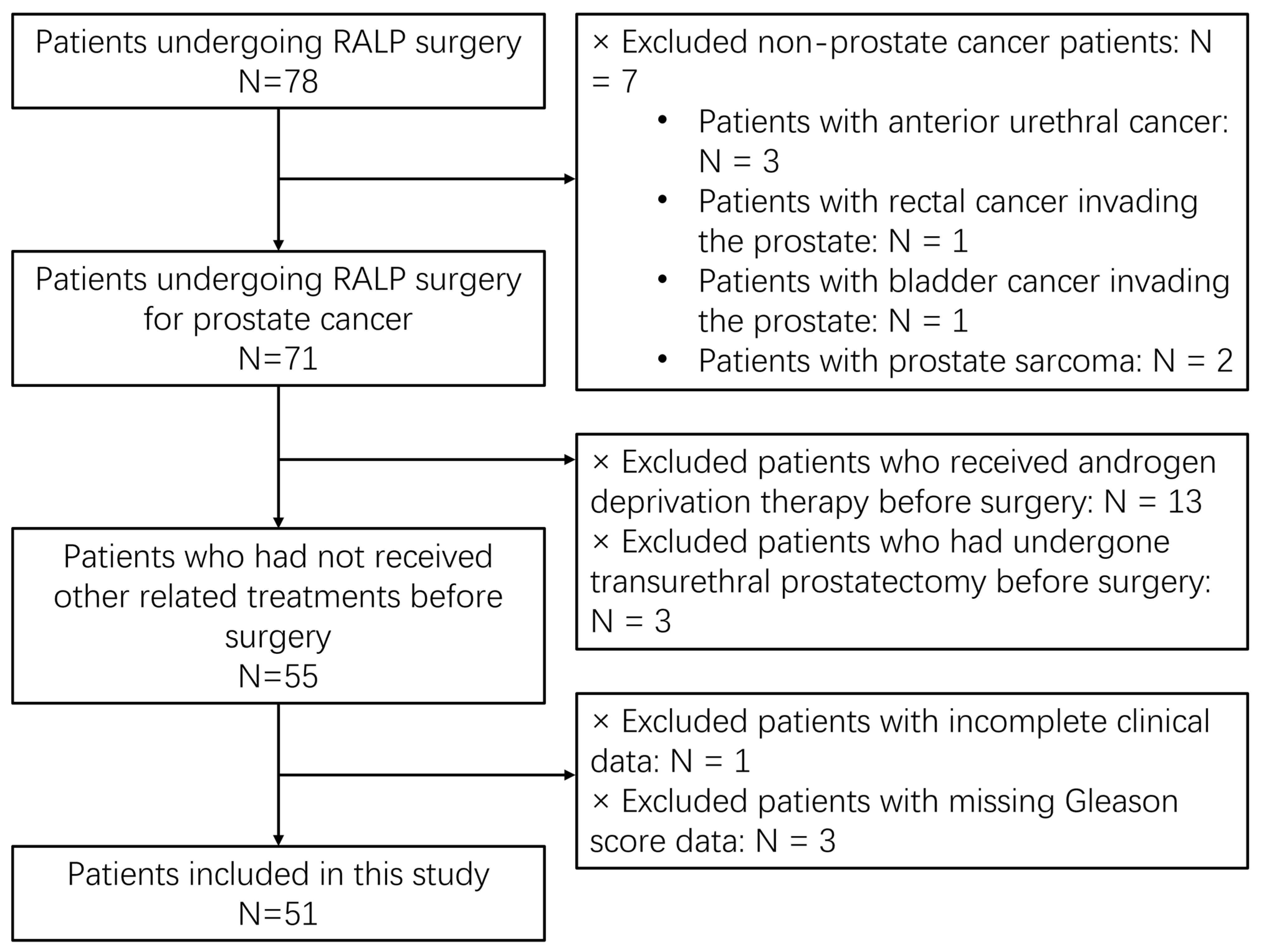
2.1. Study Subjects
2.2. Cohort Stratification
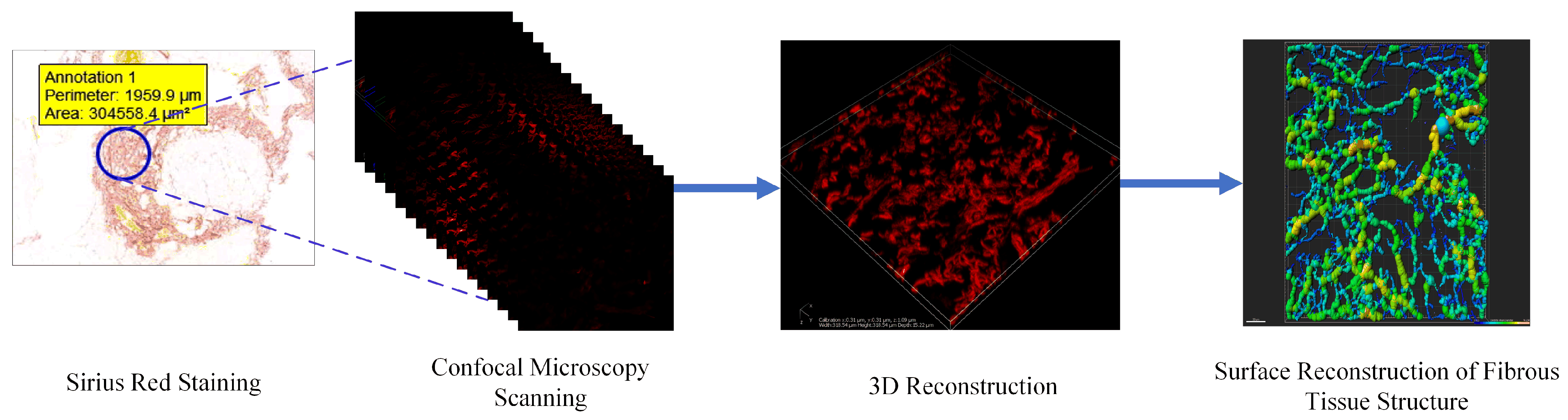
2.3. Quantitative Acquisition of PPAT Fibrosis Data
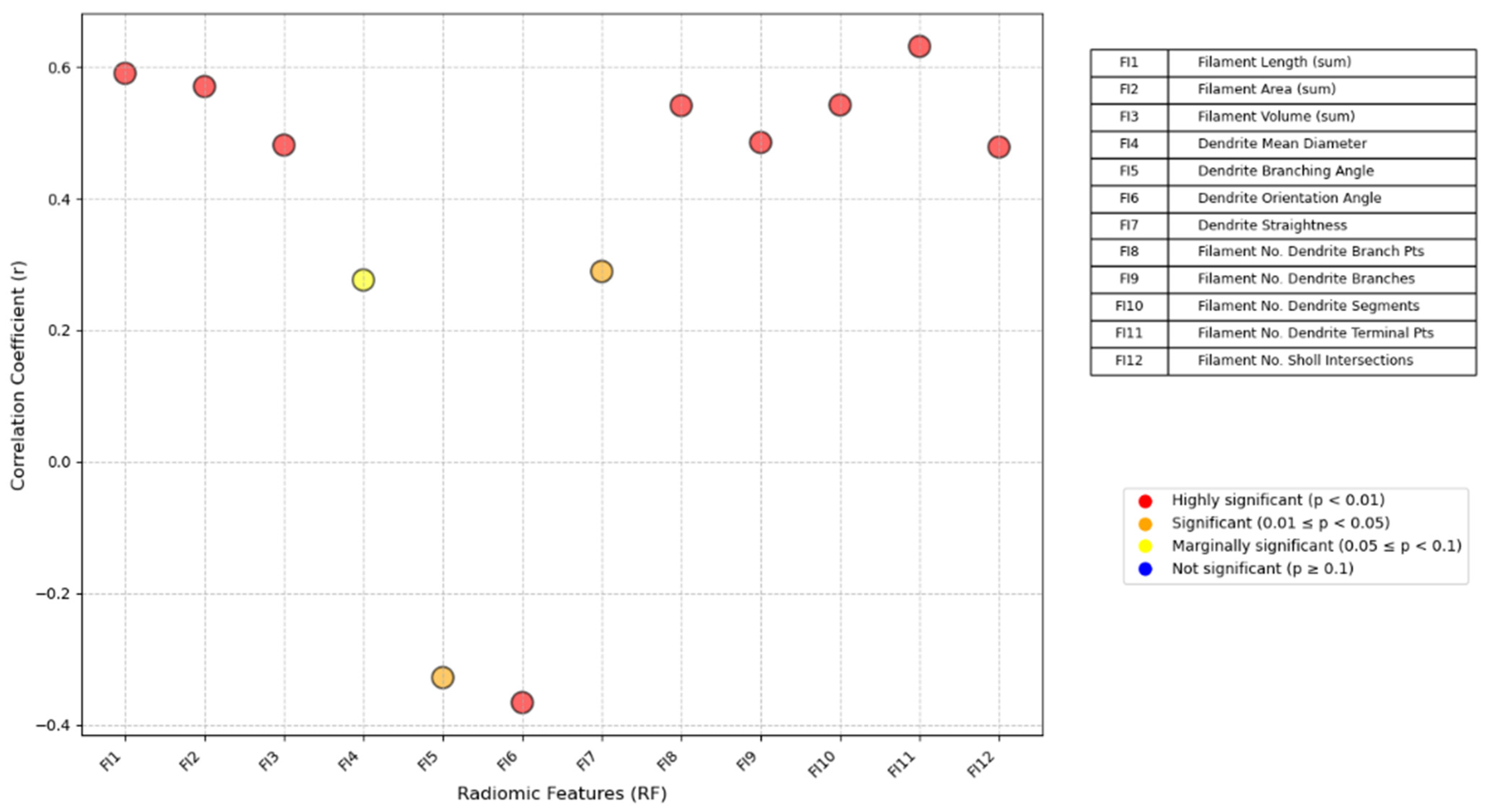
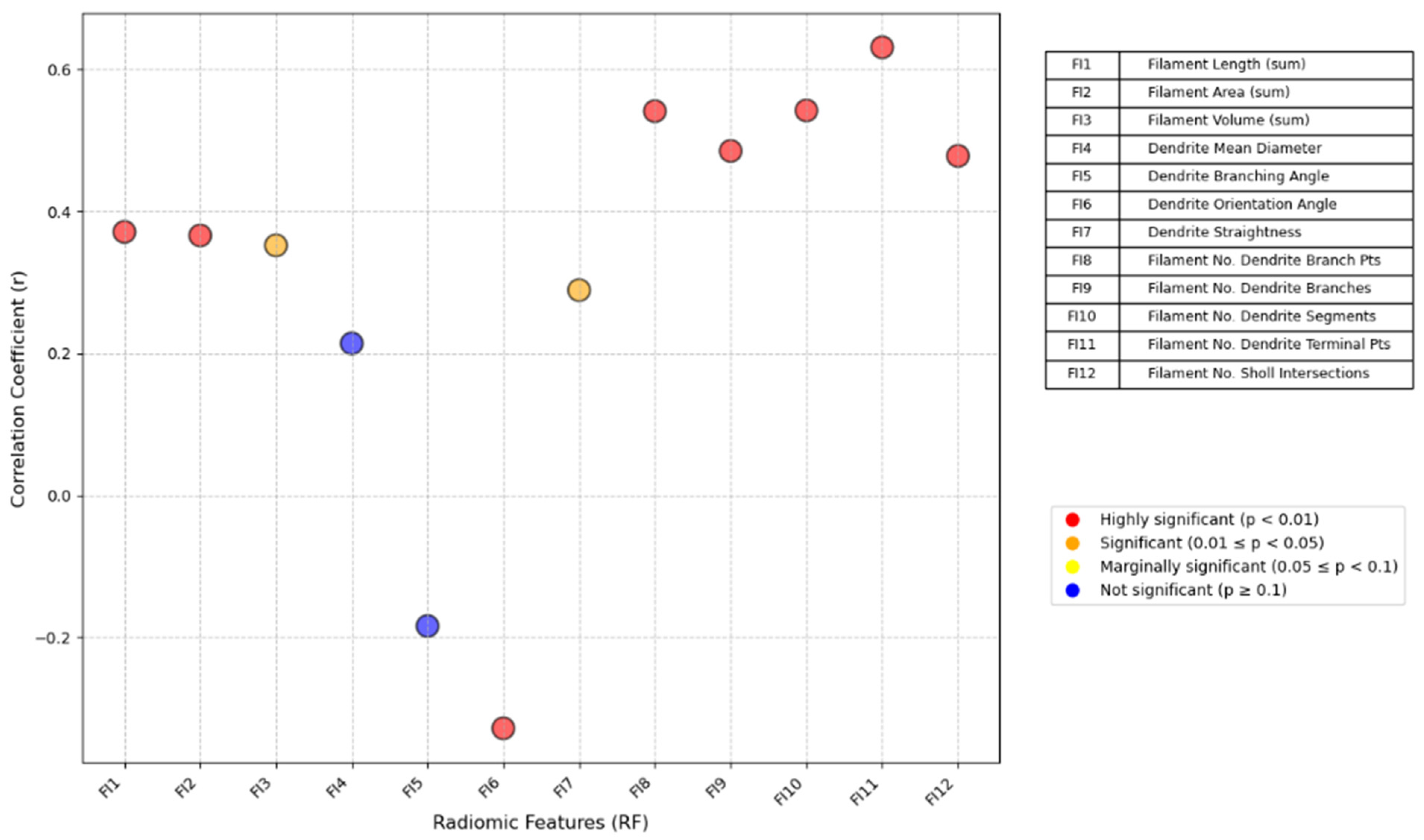
- Filament Length: Total length of fiber structures, measured in μm.
- Filament Area: Total surface area covered by fiber structures, measured in μm2.
- Filament Volume: Total volume of fiber structures, measured in μm3.
- Dendrite Mean Diameter: Average diameter of fiber branches after 3D reconstruction, measured in μm.
- Dendrite Straightness: Comparison of the actual path of fiber branches to the direct line between their endpoints.
- Dendrite Branching Angle: Angle between fiber branches and the main axis, measured in degrees (°).
- Dendrite Orientation Angle: Overall direction of fiber branches, reflecting alignment within the tissue, measured in degrees (°).
- Filament No. Dendrite Branch Pts: Number of branch points in the fiber structures.
- Filament No. Dendrite Branches: Total count of fiber branches.
- Filament No. Dendrite Segments: Number of individual segments between branch points within the fiber structure.
- Filament No. Dendrite Terminal Pts: Total number of terminal points in the fiber structures.
- Filament No. Sholl Intersections: Number of intersections between fiber branches and concentric circles of increasing radii from the fiber’s starting point, as determined by Sholl analysis.
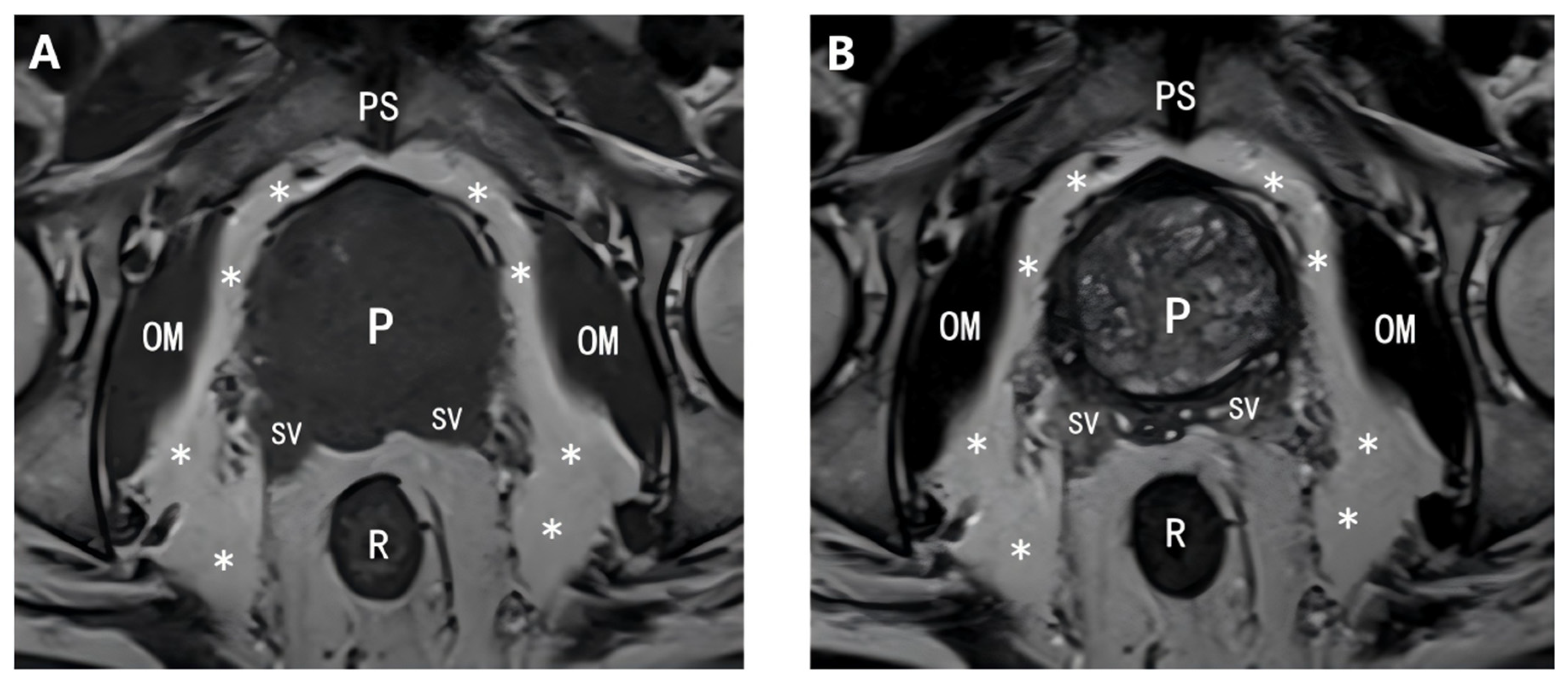
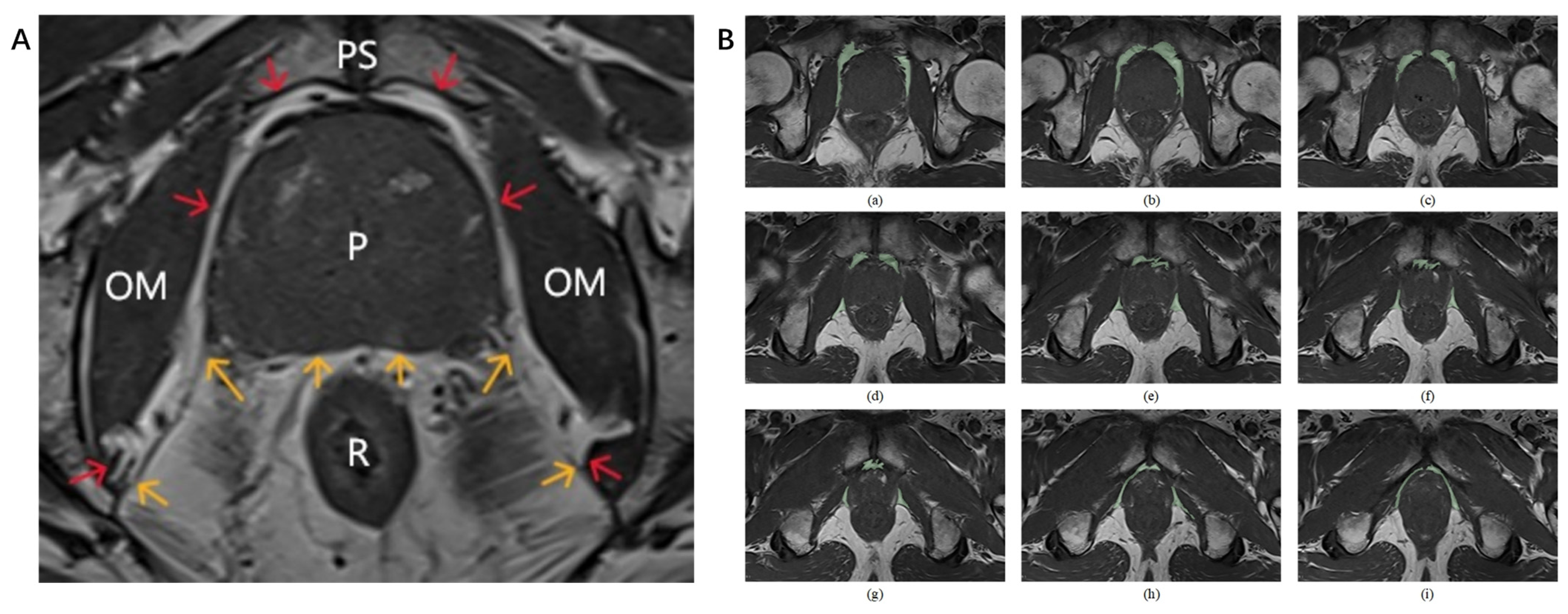
2.4. MR Imaging Selection and Processing
2.4.1. Selection of MR Images
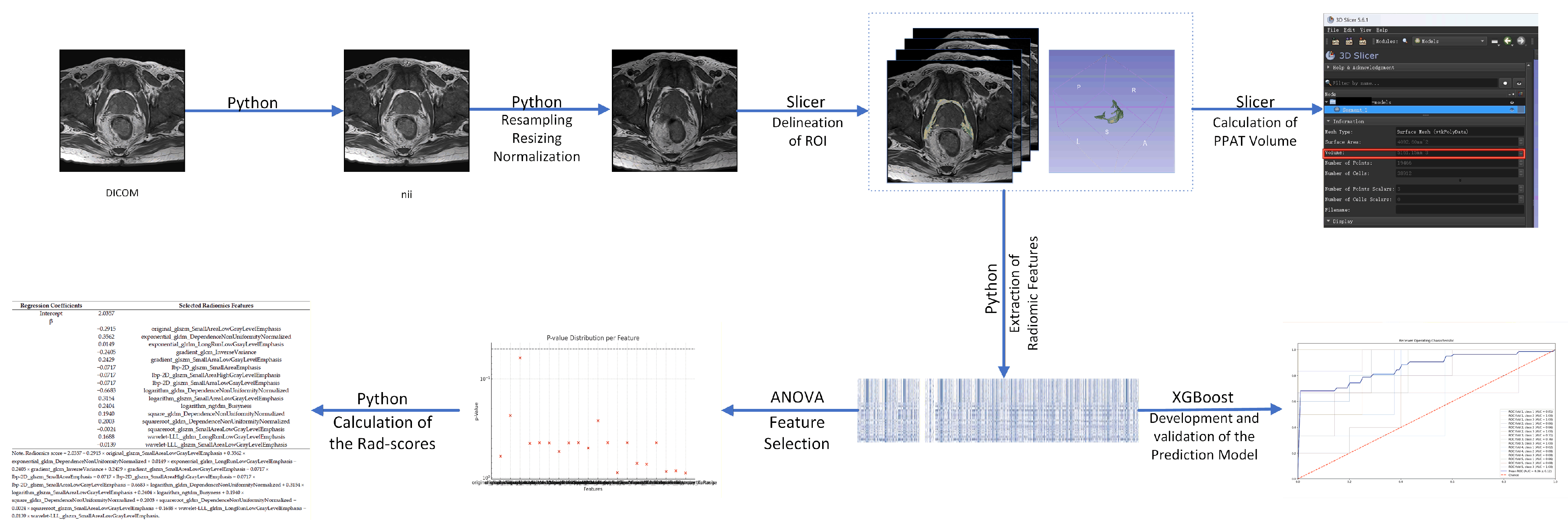
2.4.2. Delineation of PPAT Boundaries and Regions of Interest (ROIs) with Volume Calculation
2.4.3. Segmentation Consistency Validation
2.4.4. Extraction of Radiomic Features
2.4.5. Development of a Prostate Cancer Aggressiveness Prediction Model
2.5. Statistical Analysis
3. Results
3.1. Correlation Between PPAT Fibrosis and Prostate Cancer Aggressiveness
3.2. Correlation Between PPAT Fibrosis and Prostate Tumor Location
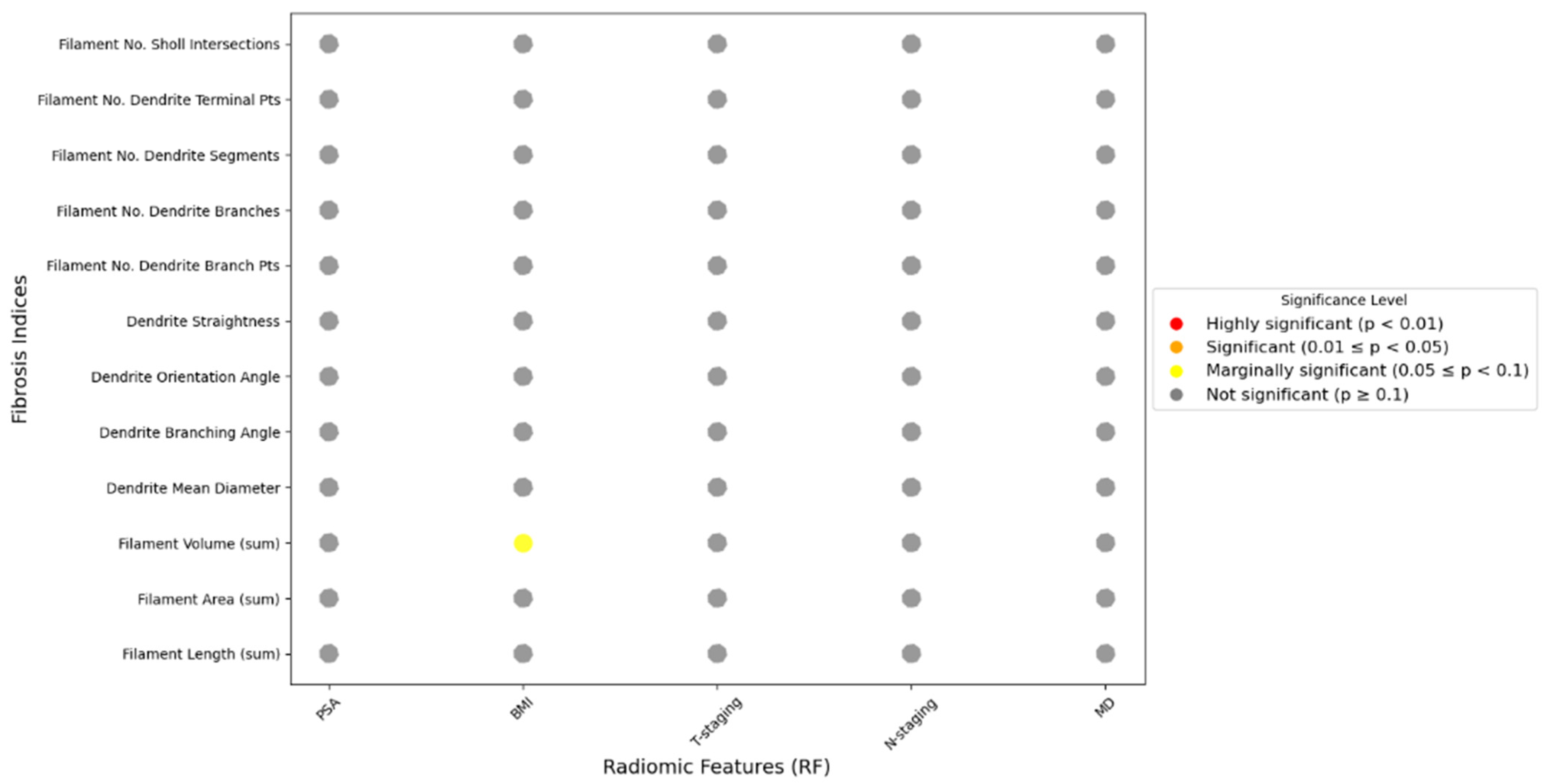
3.3. Validation of the Relationships Between PPAT Radiomic Features and the Degree of Fibrosis
4. Discussion
5. Limitations
6. Conclusions
Supplementary Materials
Author Contributions
Funding
Institutional Review Board Statement
Informed Consent Statement
Data Availability Statement
Conflicts of Interest
References
- Sung, H.; Ferlay, J.; Siegel, R.L.; Laversanne, M.; Soerjomataram, I.; Jemal, A.; Bray, F. Global Cancer Statistics 2020: GLOBOCAN Estimates of Incidence and Mortality Worldwide for 36 Cancers in 185 Countries. CA A Cancer J. Clin. 2021, 71, 209–249. [Google Scholar] [CrossRef]
- Han, B.; Zheng, R.; Zeng, H.; Wang, S.; Sun, K.; Chen, R.; Li, L.; Wei, W.; He, J. Cancer Incidence and Mortality in China, 2022. J. Natl. Cancer Cent. 2024, 4, 47–53. [Google Scholar] [CrossRef]
- Van Roermund, J.G.H.; Hinnen, K.A.; Tolman, C.J.; Bol, G.H.; Witjes, J.A.; Bosch, J.L.H.R.; Kiemeney, L.A.; Van Vulpen, M. Periprostatic Fat Correlates with Tumour Aggressiveness in Prostate Cancer Patients. BJU Int. 2011, 107, 1775–1779. [Google Scholar] [CrossRef]
- Toren, P.; Venkateswaran, V. Periprostatic Adipose Tissue and Prostate Cancer Progression: New Insights into the Tumor Microenvironment. Clin. Genitourin. Cancer 2014, 12, 21–26. [Google Scholar] [CrossRef] [PubMed]
- Zhang, Q.; Sun, L.; Yang, Z.; Zhang, G.; Huo, R. Influence of Adipocytokines in Periprostatic Adipose Tissue on Prostate Cancer Aggressiveness. Cytokine 2016, 85, 148–156. [Google Scholar] [CrossRef] [PubMed]
- Miyazaki, Y.; Oda, T.; Inagaki, Y.; Kushige, H.; Saito, Y.; Mori, N.; Takayama, Y.; Kumagai, Y.; Mitsuyama, T.; Kida, Y.S. Adipose-Derived Mesenchymal Stem Cells Differentiate into Heterogeneous Cancer-Associated Fibroblasts in a Stroma-Rich Xenograft Model. Sci. Rep. 2021, 11, 4690. [Google Scholar] [CrossRef] [PubMed]
- Wu, Q.; Li, B.; Li, Z.; Li, J.; Sun, S.; Sun, S. Cancer-Associated Adipocytes: Key Players in Breast Cancer Progression. J. Hematol. Oncol. 2019, 12, 95. [Google Scholar] [CrossRef]
- Piersma, B.; Hayward, M.-K.; Weaver, V.M. Fibrosis and Cancer: A Strained Relationship. Biochim. Biophys. Acta (BBA)—Rev. Cancer 2020, 1873, 188356. [Google Scholar] [CrossRef]
- Lo, J.C.Y.; Clark, A.K.; Ascui, N.; Frydenberg, M.; Risbridger, G.P.; Taylor, R.A.; Watt, M.J. Obesity Does Not Promote Tumorigenesis of Localized Patient-Derived Prostate Cancer Xenografts. Oncotarget 2016, 7, 47650–47662. [Google Scholar] [CrossRef]
- Shao, I.-H.; Chang, T.-H.; Chang, Y.-H.; Hsieh, Y.-H.; Sheng, T.-W.; Wang, L.-J.; Chien, Y.-H.; Huang, L.-K.; Chu, Y.-C.; Kan, H.-C.; et al. Periprostatic Adipose Tissue Inhibits Tumor Progression by Secreting Apoptotic Factors: A Natural Barrier Induced by the Immune Response during the Early Stages of Prostate Cancer. Oncol. Lett. 2024, 28, 485. [Google Scholar] [CrossRef]
- Pérez-Gómez, J.M.; Porcel-Pastrana, F.; De La Luz-Borrero, M.; Montero-Hidalgo, A.J.; Gómez-Gómez, E.; Herrera-Martínez, A.D.; Guzmán-Ruiz, R.; Malagón, M.M.; Gahete, M.D.; Luque, R.M. LRP10, PGK1 and RPLP0: Best Reference Genes in Periprostatic Adipose Tissue under Obesity and Prostate Cancer Conditions. Int. J. Mol. Sci. 2023, 24, 15140. [Google Scholar] [CrossRef] [PubMed]
- Iczkowski, K.A.; Van Leenders, G.J.L.H.; Van Der Kwast, T.H. The 2019 International Society of Urological Pathology (ISUP) Consensus Conference on Grading of Prostatic Carcinoma. Am. J. Surg. Pathol. 2021, 45, 1007. [Google Scholar] [CrossRef]
- On Behalf of the Transatlantic Prostate Group; Berney, D.M.; Beltran, L.; Fisher, G.; North, B.V.; Greenberg, D.; Møller, H.; Soosay, G.; Scardino, P.; Cuzick, J. Validation of a Contemporary Prostate Cancer Grading System Using Prostate Cancer Death as Outcome. Br. J. Cancer 2016, 114, 1078–1083. [Google Scholar] [CrossRef]
- Kim, M.; Kim, S.H.; Hong, S.; Kim, Y.J.; Kim, H.R.; Kim, J.Y. Evaluation of Extra-Prostatic Extension on Deep Learning-Reconstructed High-Resolution Thin-Slice T2-Weighted Images in Patients with Prostate Cancer. Cancers 2024, 16, 413. [Google Scholar] [CrossRef]
- Pausch, A.M.; Filleböck, V.; Elsner, C.; Rupp, N.J.; Eberli, D.; Hötker, A.M. Ultra-Fast Biparametric MRI in Prostate Cancer Assessment: Diagnostic Performance and Image Quality Compared to Conventional Multiparametric MRI. Eur. J. Radiol. Open 2025, 14, 100635. [Google Scholar] [CrossRef]
- Zhai, T.-S.; Hu, L.-T.; Ma, W.-G.; Chen, X.; Luo, M.; Jin, L.; Zhou, Z.; Liu, X.; Kang, Y.; Kang, Y.-X.; et al. Peri-Prostatic Adipose Tissue Measurements Using MRI Predict Prostate Cancer Aggressiveness in Men Undergoing Radical Prostatectomy. J. Endocrinol. Investig. 2021, 44, 287–296. [Google Scholar] [CrossRef]
- Liu, X.; Han, C.; Cui, Y.; Xie, T.; Zhang, X.; Wang, X. Detection and Segmentation of Pelvic Bones Metastases in MRI Images for Patients with Prostate Cancer Based on Deep Learning. Front. Oncol. 2021, 11, 773299. [Google Scholar] [CrossRef] [PubMed]
- Masoudi, S.; Harmon, S.A.; Mehralivand, S.; Walker, S.M.; Raviprakash, H.; Bagci, U.; Choyke, P.L.; Turkbey, B. Quick Guide on Radiology Image Pre-Processing for Deep Learning Applications in Prostate Cancer Research. J. Med. Imaging 2021, 8, 010901. [Google Scholar] [CrossRef] [PubMed]
- Estève, D.; Roumiguié, M.; Manceau, C.; Milhas, D.; Muller, C. Periprostatic Adipose Tissue: A Heavy Player in Prostate Cancer Progression. Curr. Opin. Endocr. Metab. Res. 2020, 10, 29–35. [Google Scholar] [CrossRef]
- Finley, D.S.; Calvert, V.S.; Inokuchi, J.; Lau, A.; Narula, N.; Petricoin, E.F.; Zaldivar, F.; Santos, R.; Tyson, D.R.; Ornstein, D.K. Periprostatic Adipose Tissue as a Modulator of Prostate Cancer Aggressiveness. J. Urol. 2009, 182, 1621–1627. [Google Scholar] [CrossRef]
- Wang, G. A Modified U-Net Convolutional Neural Network for Segmenting Periprostatic Adipose Tissue Based on Contour Feature Learning. Heliyon 2024, 10, e25030. [Google Scholar] [CrossRef]
- Venkatasubramanian, P.N.; Brendler, C.B.; Plunkett, B.A.; Crawford, S.E.; Fitchev, P.S.; Morgan, G.; Cornwell, M.L.; McGuire, M.S.; Wyrwicz, A.M.; Doll, J.A. Periprostatic Adipose Tissue from Obese Prostate Cancer Patients Promotes Tumor and Endothelial Cell Proliferation: A Functional and MR Imaging Pilot Study. Prostate 2014, 74, 326–335. [Google Scholar] [CrossRef]
- Ribeiro, R.; Monteiro, C.; Cunha, V.; Oliveira, M.J.; Freitas, M.; Fraga, A.; Príncipe, P.; Lobato, C.; Lobo, F.; Morais, A.; et al. Human Periprostatic Adipose Tissue Promotes Prostate Cancer Aggressiveness In Vitro. J. Exp. Clin. Cancer Res. 2012, 31, 32. [Google Scholar] [CrossRef]
- Van Griethuysen, J.J.M.; Fedorov, A.; Parmar, C.; Hosny, A.; Aucoin, N.; Narayan, V.; Beets-Tan, R.G.H.; Fillion-Robin, J.-C.; Pieper, S.; Aerts, H.J.W.L. Computational Radiomics System to Decode the Radiographic Phenotype. Cancer Res. 2017, 77, e104–e107. [Google Scholar] [CrossRef] [PubMed]
- Lai, S.B.S.; Binti Md Shahri, N.H.N.; Mohamad, M.B.; Rahman, H.A.B.A.; Rambli, A.B. Comparing the Performance of AdaBoost, XGBoost, and Logistic Regression for Imbalanced Data. Math. Stat. 2021, 9, 379–385. [Google Scholar] [CrossRef]
- Park, Y.; Ho, J.C. Tackling Overfitting in Boosting for Noisy Healthcare Data. IEEE Trans. Knowl. Data Eng. 2021, 33, 2995–3006. [Google Scholar] [CrossRef]
- Grunberg, N.; Winkler, M.; Hellawell, G.; Khoubehi, B.; Shah, T.T.; Ahmed, H.; Bevan, C.L.; Fletcher, C.E. Fat’s All, Folks: Culturing and Manipulating Peri-Prostatic Adipocytes to Probe Impacts on Prostate Cancer Biology. J. Endocrinol. 2026, 268, e250256. [Google Scholar] [CrossRef] [PubMed]
- Cancel, M.; Pouillot, W.; Mahéo, K.; Fontaine, A.; Crottès, D.; Fromont, G. Interplay between Prostate Cancer and Adipose Microenvironment: A Complex and Flexible Scenario. Int. J. Mol. Sci. 2022, 23, 10762. [Google Scholar] [CrossRef] [PubMed]
- Xiong, T.; Cao, F.; Zhu, G.; Ye, X.; Cui, Y.; Xing, N.; Zhang, H.; Niu, Y. MRI-Measured Periprostatic Adipose Tissue Volume as a Prognostic Predictor in Prostate Cancer Patients Undergoing Laparoscopic Radical Prostatectomy. Adipocyte 2023, 12, 2201964. [Google Scholar] [CrossRef]
- Nagarajan, S.R.; Butler, L.M.; Hoy, A.J. The Diversity and Breadth of Cancer Cell Fatty Acid Metabolism. Cancer Metab. 2021, 9, 2. [Google Scholar] [CrossRef]
- Tan, W.P.; Lin, C.; Chen, M.; Deane, L.A. Periprostatic Fat: A Risk Factor for Prostate Cancer? Urology 2016, 98, 107–112. [Google Scholar] [CrossRef]
- Yu, E.; Hwang, M.W.; Aragon-Ching, J. Mechanistic Insights on Localized to Metastatic Prostate Cancer Transition and Therapeutic Opportunities. Res. Rep. Urol. 2023, 15, 519–529. [Google Scholar] [CrossRef]
- Bonollo, F.; Thalmann, G.N.; Kruithof-de Julio, M.; Karkampouna, S. The Role of Cancer-Associated Fibroblasts in Prostate Cancer Tumorigenesis. Cancers 2020, 12, 1887. [Google Scholar] [CrossRef] [PubMed]
- Ammirante, M.; Shalapour, S.; Kang, Y.; Jamieson, C.A.M.; Karin, M. Tissue Injury and Hypoxia Promote Malignant Progression of Prostate Cancer by Inducing CXCL13 Expression in Tumor Myofibroblasts. Proc. Natl. Acad. Sci. USA 2014, 111, 14776–14781. [Google Scholar] [CrossRef] [PubMed]
- Sanhueza, S.; Simón, L.; Cifuentes, M.; Quest, A.F.G. The Adipocyte–Macrophage Relationship in Cancer: A Potential Target for Antioxidant Therapy. Antioxidants 2023, 12, 126. [Google Scholar] [CrossRef] [PubMed]
- Wu, B.; Sodji, Q.H.; Oyelere, A.K. Inflammation, Fibrosis and Cancer: Mechanisms, Therapeutic Options and Challenges. Cancers 2022, 14, 552. [Google Scholar] [CrossRef]




| Items | Mean | Minimum | Maximum |
|---|---|---|---|
| General Information | |||
| Age (years) | 70 | 55 | 82 |
| BMI (kg/m2) | 22.58 | 17.11 | 29.73 |
| Initial tPSA (ng/mL) | 26.42 | 4.18 | 146 |
| Gleason Score | 7 | 6 | 9 |
| TNM Staging | / | T1aN0M0 | T4N1M0 |
| PPAT Parameters | |||
| PPAT Volume (mm3) | 8213.16 | 1971.87 | 59,017.41 |
| PPAT Indices | |||
| Filament Length (μm) | 1014.73 | 70.69 | 11,817.10 |
| Filament Area (μm2) | 36,111.84 | 1640.71 | 347,044.00 |
| Filament Volume (μm3) | 116,382.12 | 3109.51 | 1,100,130.00 |
| Dendrite Mean Diameter (μm) | 8.76 | 3.72 | 20.46 |
| Dendrite Branching Angle (°) | 47.55 | 40.94 | 59.21 |
| Dendrite Orientation Angle (°) | −0.54 | −14.59 | 30.72 |
| Dendrite Straightness | 0.90 | 0.84 | 0.99 |
| Filament No. Dendrite Branch Pts | 56.03 | 2.56 | 505.00 |
| Filament No. Dendrite Branches | 17.33 | 2.36 | 92.71 |
| Filament No. Dendrite Segments | 103.05 | 5.46 | 928.00 |
| Filament No. Dendrite Terminal Pts | 22.11 | 3.22 | 337.00 |
| Filament No. Sholl Intersections | 15.11 | 3.04 | 52.63 |
| Imaging Parameters | |||
| Maximum Diameter of Primary Lesion (mm) | 12.94 | 3.98 | 37.39 |
| Tumor Location | / | Central Area (27/51) | PZ (24/51) |
| Grade Group | Gleason Score | Gleason Pattern | Aggressiveness Classification |
|---|---|---|---|
| 1 | ≤6 | ≤3 + 3 | Low |
| 2 | 7 | 3 + 4 | Moderate |
| 3 | 7 | 4 + 3 | High |
| 4 | 8 | 4 + 4, 3 + 5, 5 + 3 | High |
| 5 | 9 or 10 | 4 + 5, 5 + 4, 5 + 5 | High |
| Radiomic Features | p Value |
|---|---|
| original_glszm_SmallAreaLowGrayLevelEmphasis | 0.033 |
| exponential_gldm_DependenceNonUniformityNormalized | 0.019 |
| exponential_glrlm_LongRunLowGrayLevelEmphasis | 0.049 |
| gradient_glcm_InverseVariance | 0.049 |
| gradient_glszm_SmallAreaLowGrayLevelEmphasis | 0.039 |
| lbp-2D_glszm_SmallAreaEmphasis | 0.043 |
| lbp-2D_glszm_SmallAreaHighGrayLevelEmphasis | 0.043 |
| lbp-2D_glszm_SmallAreaLowGrayLevelEmphasis | 0.043 |
| logarithm_gldm_DependenceNonUniformityNormalized | 0.022 |
| logarithm_glszm_SmallAreaLowGrayLevelEmphasis | 0.032 |
| logarithm_ngtdm_Busyness | 0.023 |
| square_gldm_DependenceNonUniformityNormalized | 0.029 |
| Regression Coefficients | Selected Radiomics Features | |
|---|---|---|
| Intercept | 2.0357 | |
| β | ||
| −0.2915 | original_glszm_SmallAreaLowGrayLevelEmphasis | |
| 0.3562 | exponential_gldm_DependenceNonUniformityNormalized | |
| 0.0149 | exponential_glrlm_LongRunLowGrayLevelEmphasis | |
| −0.2405 | gradient_glcm_InverseVariance | |
| 0.2429 | gradient_glszm_SmallAreaLowGrayLevelEmphasis | |
| −0.0717 | lbp-2D_glszm_SmallAreaEmphasis | |
| −0.0717 | lbp-2D_glszm_SmallAreaHighGrayLevelEmphasis | |
| −0.0717 | lbp-2D_glszm_SmallAreaLowGrayLevelEmphasis | |
| −0.6683 | logarithm_gldm_DependenceNonUniformityNormalized | |
| 0.3154 | logarithm_glszm_SmallAreaLowGrayLevelEmphasis | |
| 0.2404 | logarithm_ngtdm_Busyness | |
| 0.1940 | square_gldm_DependenceNonUniformityNormalized | |
| 0.2003 | squareroot_gldm_DependenceNonUniformityNormalized | |
| −0.0024 | squareroot_glszm_SmallAreaLowGrayLevelEmphasis | |
| 0.1688 | wavelet-LLL_glrlm_LongRunLowGrayLevelEmphasis | |
| −0.0139 | wavelet-LLL_glszm_SmallAreaLowGrayLevelEmphasis |
Disclaimer/Publisher’s Note: The statements, opinions and data contained in all publications are solely those of the individual author(s) and contributor(s) and not of MDPI and/or the editor(s). MDPI and/or the editor(s) disclaim responsibility for any injury to people or property resulting from any ideas, methods, instructions or products referred to in the content. |
© 2026 by the authors. Licensee MDPI, Basel, Switzerland. This article is an open access article distributed under the terms and conditions of the Creative Commons Attribution (CC BY) license.
Share and Cite
Jin, Y.; Hu, J.; Wang, G.; Zhang, Y.; Bai, Z.; Huang, M.; Chen, J. Fibrosis of Periprostatic Adipose Tissue: A Potential Marker of Prostate Cancer Aggressiveness. Cancers 2026, 18, 949. https://doi.org/10.3390/cancers18060949
Jin Y, Hu J, Wang G, Zhang Y, Bai Z, Huang M, Chen J. Fibrosis of Periprostatic Adipose Tissue: A Potential Marker of Prostate Cancer Aggressiveness. Cancers. 2026; 18(6):949. https://doi.org/10.3390/cancers18060949
Chicago/Turabian StyleJin, Yiling, Jinyue Hu, Gang Wang, Yu Zhang, Zhiming Bai, Mengxing Huang, and Jing Chen. 2026. "Fibrosis of Periprostatic Adipose Tissue: A Potential Marker of Prostate Cancer Aggressiveness" Cancers 18, no. 6: 949. https://doi.org/10.3390/cancers18060949
APA StyleJin, Y., Hu, J., Wang, G., Zhang, Y., Bai, Z., Huang, M., & Chen, J. (2026). Fibrosis of Periprostatic Adipose Tissue: A Potential Marker of Prostate Cancer Aggressiveness. Cancers, 18(6), 949. https://doi.org/10.3390/cancers18060949