Pan-Cancer Targeted Sequencing Reveals Genomic Heterogeneity and Prognostic Subgroups in Urothelial Bladder Cancer

 , ,
, , 
Simple Summary
Abstract
1. Introduction
2. Materials and Methods
2.1. Study Population and Sample Collection
2.2. DNA Extraction
2.3. Targeted Sequencing Panel
2.4. Library Preparation and Next-Generation Sequencing (NGS)
2.5. Variant Calling and Classification
2.6. Statistical Analysis
3. Results
3.1. Clinicopathological Characteristics of the Patients
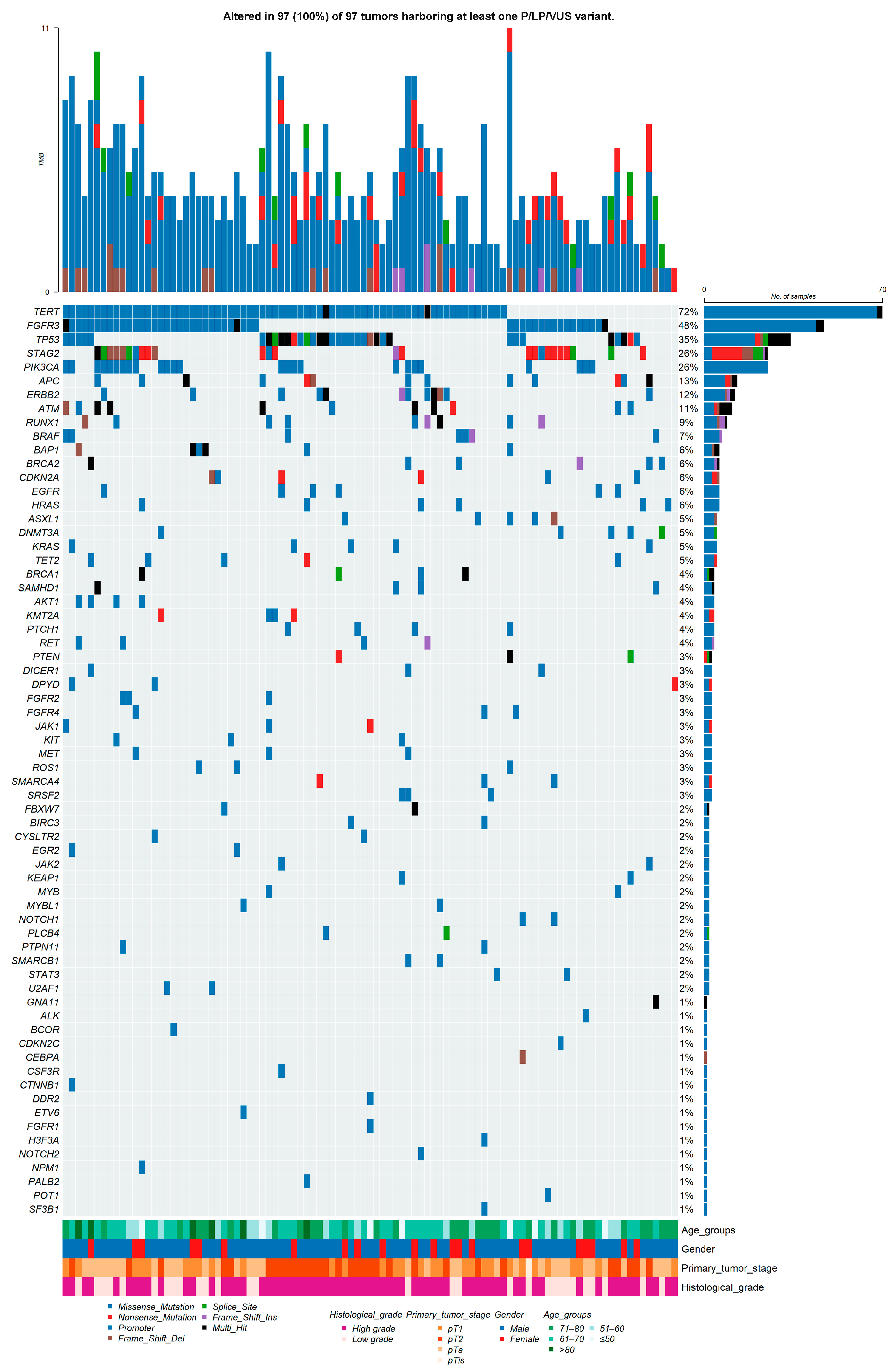
3.2. Genetic Alterations Identified by Targeted Sequencing
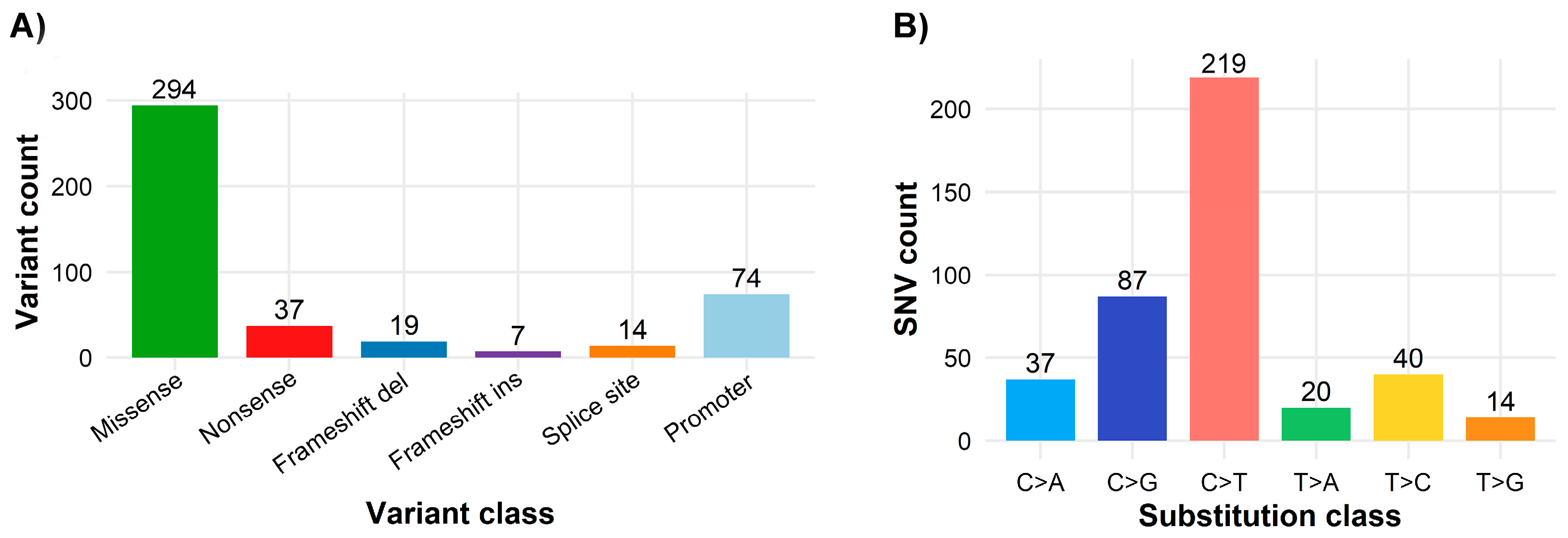
3.3. Mutation Spectrum and Substitution Patterns
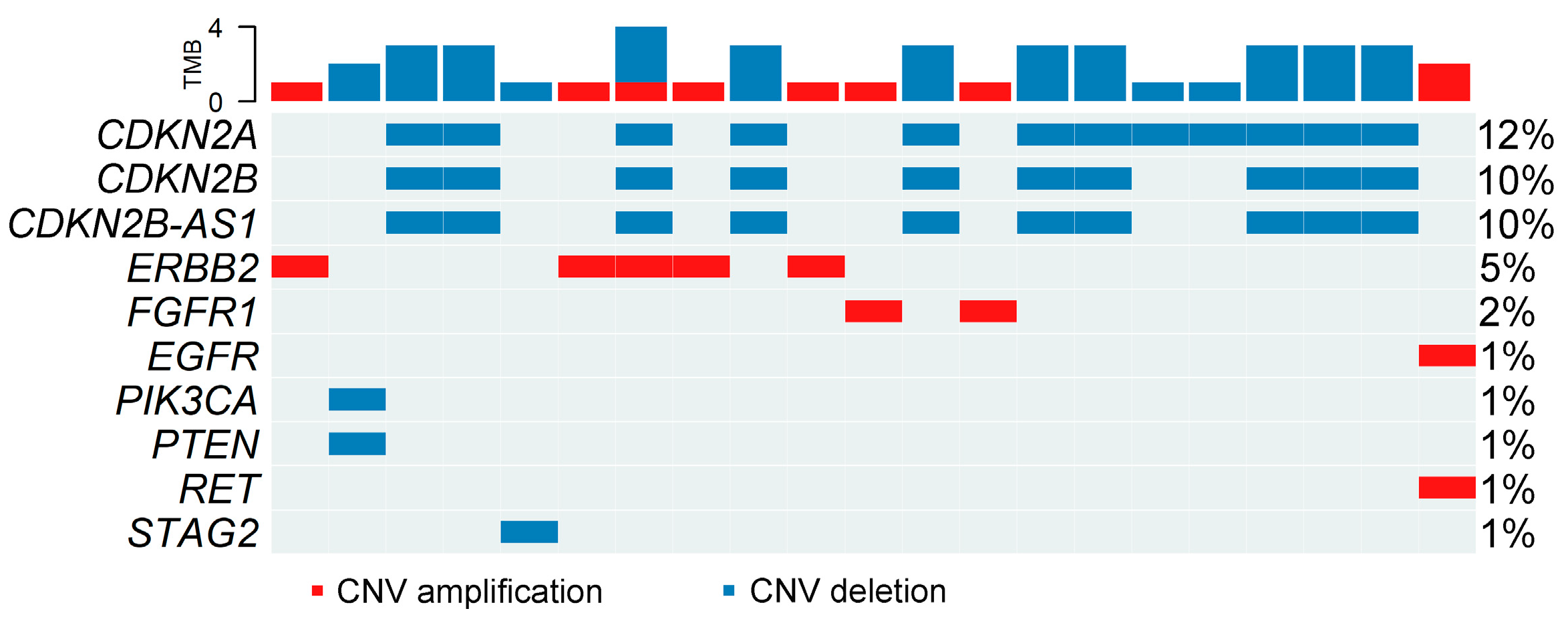
3.4. Copy-Number Alteration Landscape
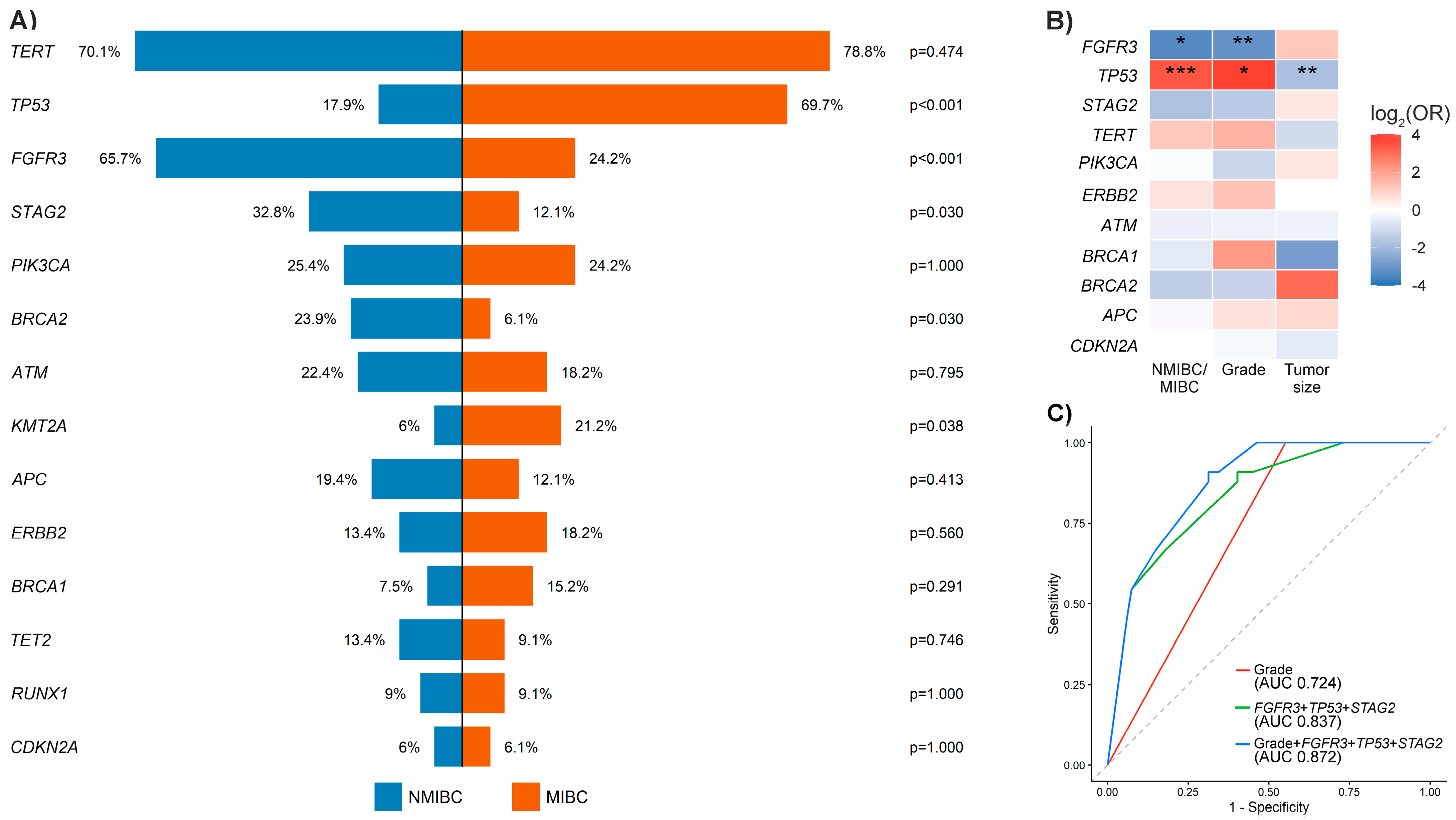
3.5. The Association Between Genotype and Clinical Characteristics
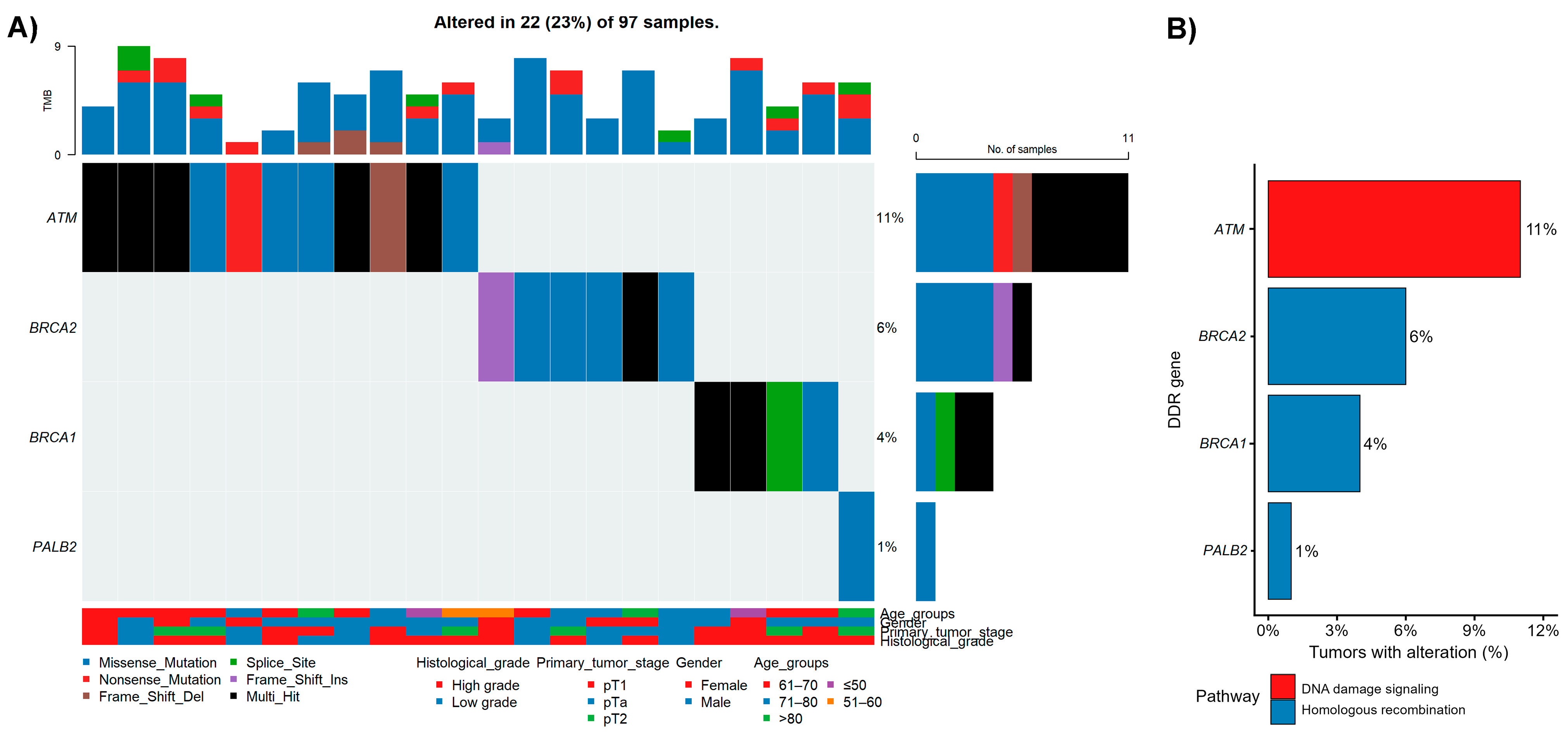
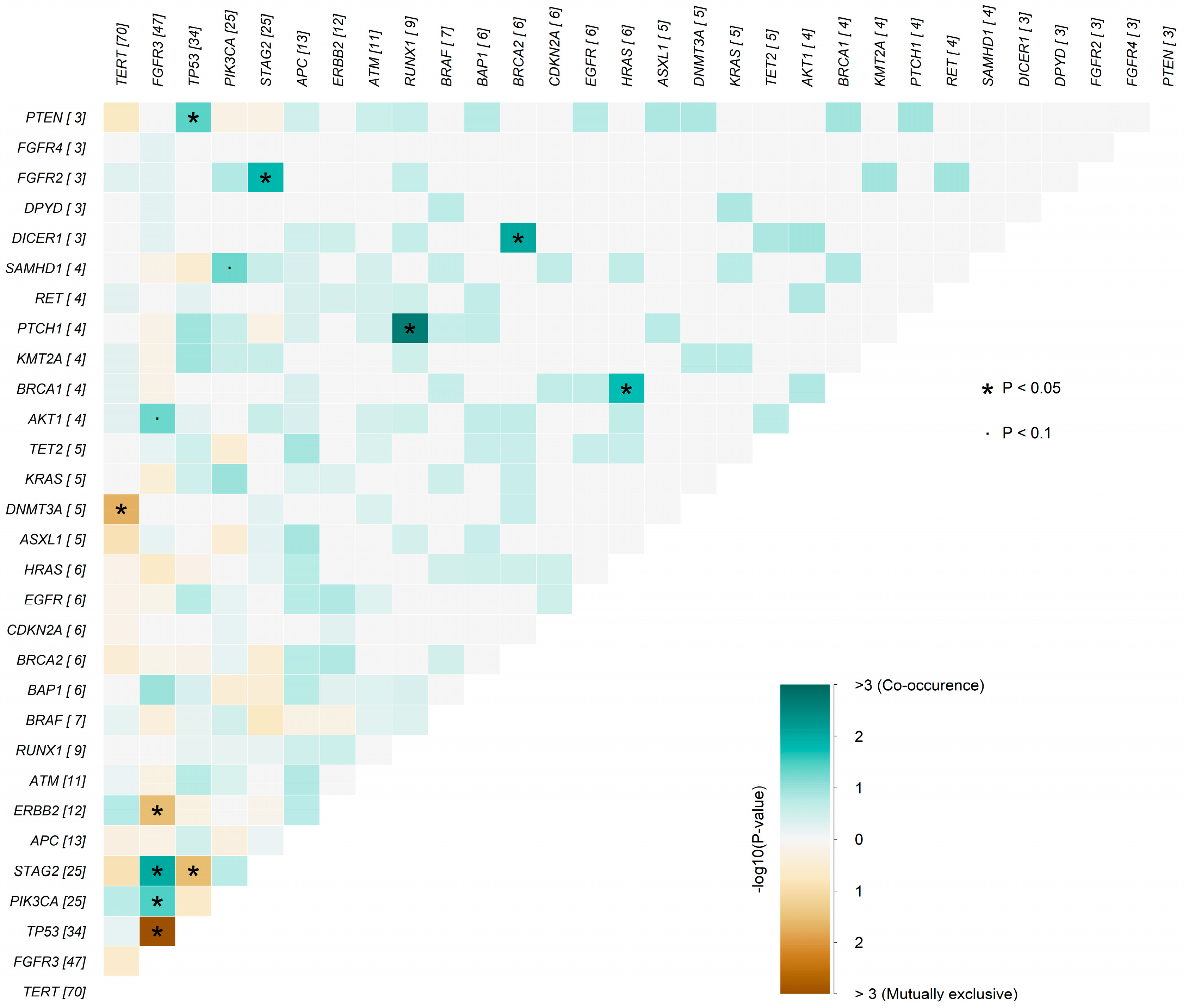
3.6. Gene-to-Gene Interaction Analysis
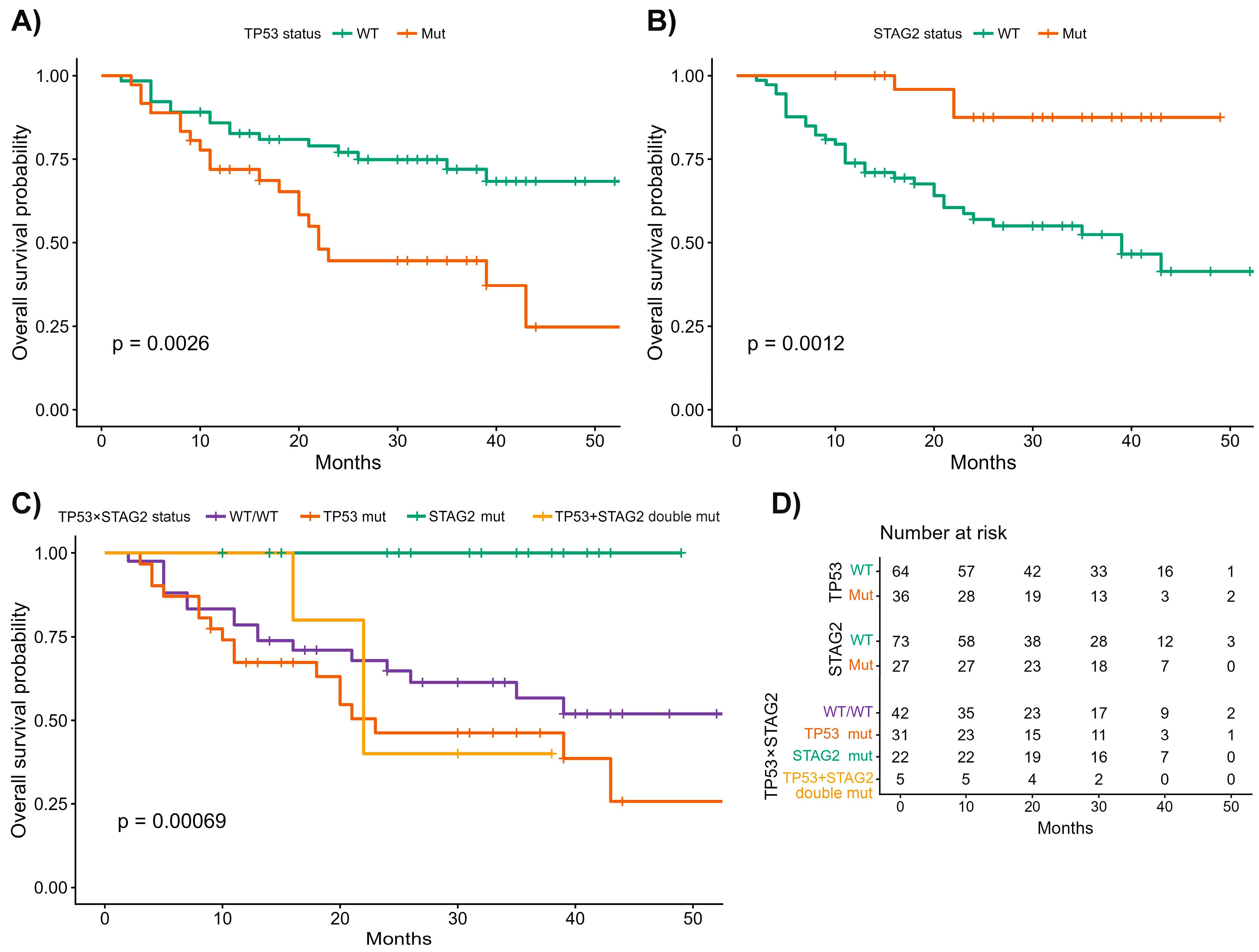
3.7. Survival Results
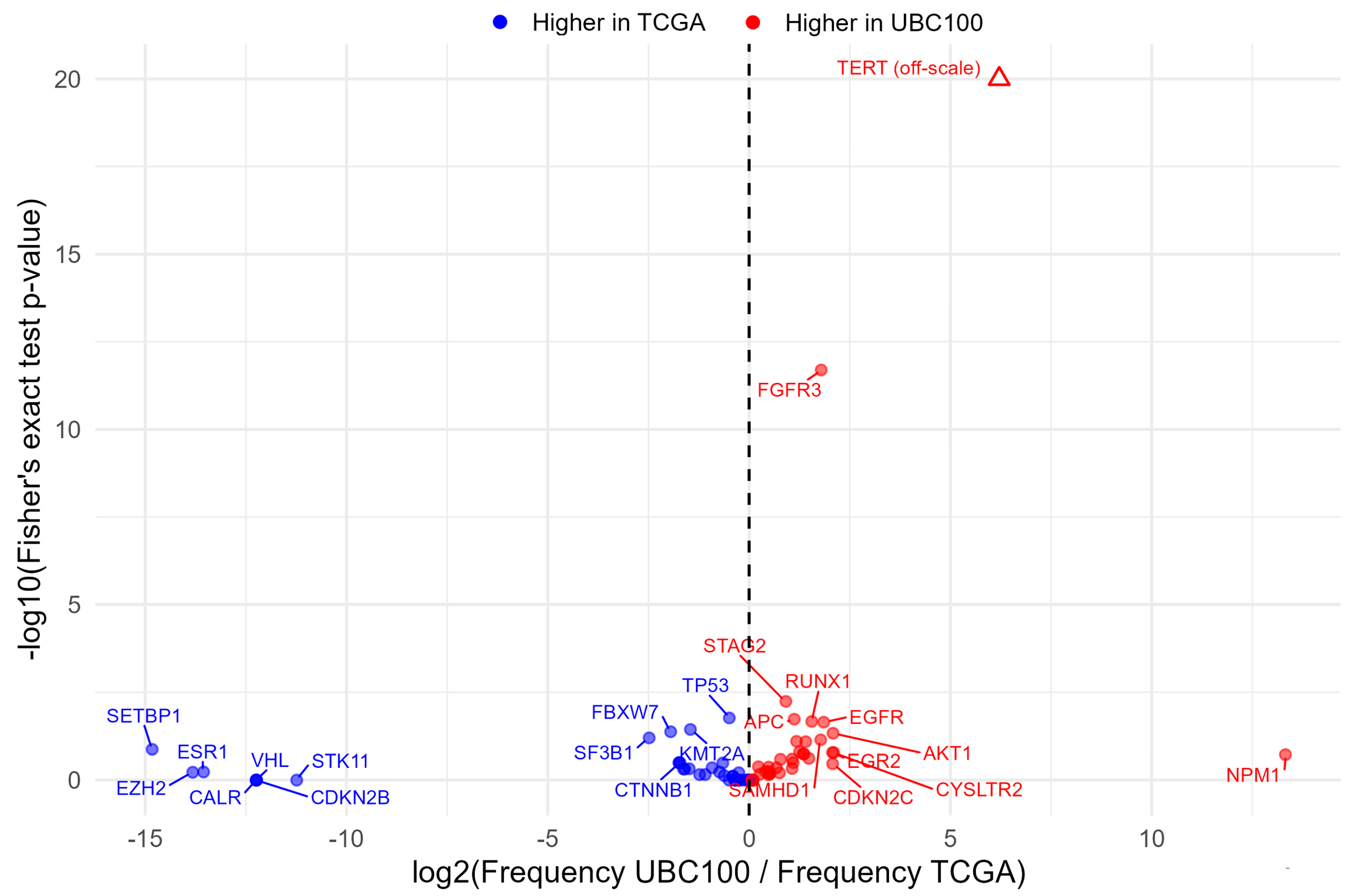
3.8. Comparison with TCGA-BLCA Dataset
4. Discussion
5. Conclusions
Supplementary Materials
Author Contributions
Funding
Institutional Review Board Statement
Informed Consent Statement
Data Availability Statement
Conflicts of Interest
Abbreviations
| UBC | Urothelial bladder cancer |
| SNV | Single nucleotide variation (alteration) |
| CNA | Copy-number alteration (variation) |
| NMIBC | Non-muscle-invasive bladder cancer |
| MIBC | Muscle-invasive bladder cancer |
| TURBT | Transurethral resection of the bladder tumor |
| VAF | Variant allele frequency |
| CIS | Carcinoma in situ |
| OS | Overall survival |
| DFS | Disease-free survival |
| PCR | Polymerase chain reaction |
| FGFR3 | Fibroblast growth factor receptor 3 |
| HRAS | Harvey rat sarcoma |
| KRAS | Kirsten rat sarcoma virus |
| PIK3CA | Phosphatidylinositol-4,5-bisphosphate 3-kinase catalytic subunit alpha |
| STAG2 | Cohesin subunit SA-2 |
| TERT | Telomerase reverse transcriptase |
| TP53 | Tumor protein 53 |
References
- Bray, F.; Laversanne, M.; Sung, H.; Ferlay, J.; Siegel, R.L.; Soerjomataram, I.; Jemal, A. Global cancer statistics 2022: GLOBOCAN estimates of incidence and mortality worldwide for 36 cancers in 185 countries. CA Cancer J. Clin. 2024, 74, 229–263. [Google Scholar] [CrossRef] [PubMed]
- Babjuk, M.; Burger, M.; Capoun, O.; Cohen, D.; Compérat, E.M.; Dominguez Escrig, J.L.; Gontero, P.; Liedberg, F.; Masson-Lecomte, A.; Mostafid, A.H.; et al. European Association of Urology Guidelines on Non-muscle-invasive Bladder Cancer (Ta, T1, and Carcinoma in Situ). Eur. Urol. 2022, 81, 75–94. [Google Scholar] [CrossRef]
- Abbas, S.; Shafik, R.; Soomro, N.; Heer, R.; Adhikari, K. AI predicting recurrence in non-muscle-invasive bladder cancer: Systematic review with study strengths and weaknesses. Front. Oncol. 2025, 14, 1509362. [Google Scholar] [CrossRef] [PubMed]
- Prip, F.; Lamy, P.; Lindskrog, S.V.; Strandgaard, T.; Nordentoft, I.; Birkenkamp-Demtröder, K.; Birkbak, N.J.; Kristjánsdóttir, N.; Kjær, A.; Andreasen, T.G.; et al. Comprehensive genomic characterization of early-stage bladder cancer. Nat. Genet. 2025, 57, 115–125. [Google Scholar] [CrossRef] [PubMed]
- Tateo, V.; Cigliola, A.; Mercinelli, C.; Agarwal, N.; Grivas, P.; Kamat, A.M.; Gibb, E.A.; Moschini, M.; Brausi, M.; Dyrskjøt, L.; et al. Optimizing the Use of Next-Generation Sequencing Assays in Patients with Urothelial Carcinoma: Recommendations by the 2023 San Raffaele Retreat Panel. Clin. Genitourin. Cancer 2024, 22, 102091. [Google Scholar] [CrossRef] [PubMed]
- Braun, J.P.; Palattao, K.A.D., Jr.; Torbenson, E.; Hsia, B.; Tauseef, A. Genomic Characteristics of Bladder Cancer: An AACR Project GENIE Study. Int. J. Mol. Sci. 2025, 26, 11653. [Google Scholar] [CrossRef] [PubMed]
- Haider, C.G.; Wang, Q.; Wang, G.; Wang, Y.; Fu, Y.; Zhang, Z.; Cao, C.; Xue, F.; Liu, H.; Wang, Q.; et al. Copy number variations in urine cell-free DNA from bladder neoplasm patients. Mol. Cell. Probes 2025, 83, 102044. [Google Scholar] [CrossRef] [PubMed]
- Cheng, L.; Zhang, S.; Wang, M.; Lopez-Beltran, A. Biological and clinical perspectives of TERT promoter mutation detection on bladder cancer diagnosis and management. Hum. Pathol. 2023, 133, 56–75. [Google Scholar] [CrossRef] [PubMed]
- Rabien, A.; Rong, D.; Rabenhorst, S.; Schlomm, T.; Labonté, F.; Hofbauer, S.; Forey, N.; Le Calvez-Kelm, F.; Ecke, T.H. Diagnostic performance of Uromonitor and TERTpm ddPCR urine tests for the non-invasive detection of bladder cancer. Sci. Rep. 2024, 14, 30617. [Google Scholar] [CrossRef] [PubMed]
- Robinson, J.T.; Thorvaldsdóttir, H.; Wenger, A.M.; Zehir, A.; Mesirov, J.P. Variant Review with the Integrative Genomics Viewer. Cancer Res. 2017, 77, e31–e34. [Google Scholar] [CrossRef] [PubMed]
- Mayakonda, A.; Lin, D.C.; Assenov, Y.; Plass, C.; Koeffler, H.P. Maftools: Efficient and comprehensive analysis of somatic variants in cancer. Genome Res. 2018, 28, 1747–1756. [Google Scholar] [CrossRef]
- Manders, F.; Brandsma, A.M.; de Kanter, J.; Verheul, M.; Oka, R.; van Roosmalen, M.J.; van der Roest, B.; van Hoeck, A.; Cuppen, E.; van Boxtel, R. MutationalPatterns: The one stop shop for the analysis of mutational processes. BMC Genom. 2022, 23, 134. [Google Scholar] [CrossRef]
- Muller, P.A.; Vousden, K.H. p53 mutations in cancer. Nat. Cell Biol. 2013, 15, 2–8. [Google Scholar] [CrossRef] [PubMed]
- Barr, A.R.; Burley, A.; Wilkins, A. TP53 mutations in urothelial carcinoma: Not all one and the same. J. Pathol. 2024, 264, 125–128. [Google Scholar] [CrossRef] [PubMed]
- Ecke, T.H.; Sachs, M.D.; Lenk, S.V.; Loening, S.A.; Schlechte, H.H. TP53 gene mutations as an independent marker for urinary bladder cancer progression. Int. J. Mol. Med. 2008, 21, 655–661. [Google Scholar] [CrossRef] [PubMed]
- Wu, G.; Wang, F.; Li, K.; Li, S.; Zhao, C.; Fan, C.; Wang, J. Significance of TP53 mutation in bladder cancer disease progression and drug selection. PeerJ 2019, 7, e8261. [Google Scholar] [CrossRef] [PubMed]
- Haas, M.; Mayr, R.; Sikic, D.; Wullich, B.; Klümper, N.; Erben, P.; Wirtz, R.; Bolenz, C.; Roghmann, F.; Stöhr, R.; et al. Clinical and Genomic Landscape of FGFR3 Alterations Across Different Stages of Urothelial Cancer. Eur. Urol. Open Sci. 2025, 77, 1–9. [Google Scholar] [CrossRef] [PubMed]
- Yuan, X.; Liu, C.; Wang, K.; Liu, L.; Liu, T.; Ge, N.; Kong, F.; Yang, L.; Björkholm, M.; Fan, Y.; et al. The genetic difference between Western and Chinese urothelial cell carcinomas: Infrequent FGFR3 mutation in Han Chinese patients. Oncotarget 2016, 7, 25826–25835. [Google Scholar] [CrossRef] [PubMed] [PubMed Central]
- Ninomiya, S.; Ishiguro, Y.; Hasumi, H.; Jikuya, R.; Hashizume, A.; Yamazaki, M.; Teranishi, J.I.; Makiyama, K.; Uemura, H.; Miyamoto, H.; et al. The Role of FGFR3 in the Progression of Bladder Cancer. Cancers 2025, 17, 3588. [Google Scholar] [CrossRef] [PubMed]
- Aquila, L.; Ohm, J.; Woloszynska-Read, A. The role of STAG2 in bladder cancer. Pharmacol. Res. 2018, 131, 143–149, Erratum in Pharmacol. Res. 2019, 142, 315. https://doi.org/10.1016/j.phrs.2019.02.023. [Google Scholar] [CrossRef] [PubMed]
- Taylor, C.F.; Platt, F.M.; Hurst, C.D.; Thygesen, H.H.; Knowles, M.A. Frequent inactivating mutations of STAG2 in bladder cancer are associated with low tumour grade and stage and inversely related to chromosomal copy number changes. Hum. Mol. Genet. 2014, 23, 1964–1974. [Google Scholar] [CrossRef] [PubMed]
- Qiao, Y.; Zhu, X.; Li, A.; Yang, S.; Zhang, J. Complete loss of STAG2 expression is an indicator of good prognosis in patients with bladder cancer. Tumour Biol. 2016, 37, 10279–10286. [Google Scholar] [CrossRef]
- Athans, S.; Krishnan, N.; Ramakrishnan, S.; Cortes Gomez, E.; Lage-Vickers, S.; Rak, M.; Kazmierczak, Z.; Ohm, J.; Attwood, K.; Wang, J.; et al. STAG2 expression is associated with adverse survival outcomes and regulates cell phenotype in muscle-invasive bladder cancer. Cancer Res. Commun. 2022, 2, 1129–1143. [Google Scholar] [CrossRef] [PubMed]
- Lelo, A.; Prip, F.; Harris, B.T.; Solomon, D.; Berry, D.L.; Chaldekas, K.; Kumar, A.; Simko, J.; Jensen, J.B.; Bhattacharyya, P.; et al. STAG2 Is a Biomarker for Prediction of Recurrence and Progression in Papillary Non-Muscle-Invasive Bladder Cancer. Clin. Cancer Res. 2018, 24, 4145–4153. [Google Scholar] [CrossRef] [PubMed]
- Gordon, N.S.; Humayun-Zakaria, N.; Goel, A.; Abbotts, B.; Zeegers, M.P.; Cheng, K.K.; James, N.D.; Arnold, R.; Bryan, R.T.; Ward, D.G. STAG2 Protein Expression in Non-muscle-invasive Bladder Cancer: Associations with Sex, Genomic and Transcriptomic Changes, and Clinical Outcomes. Eur. Urol. Open Sci. 2022, 38, 88–95. [Google Scholar] [CrossRef] [PubMed]
- Taber, A.; Park, Y.; Lelo, A.; Prip, F.; Xiao, J.; Berry, D.L.; Chaldekas, K.; Jensen, J.B.; Philips, G.; Kim, J.S.; et al. STAG2 as a prognostic biomarker in low-grade non-muscle invasive bladder cancer. Urol. Oncol. 2021, 39, 438.e1–438.e9. [Google Scholar] [CrossRef] [PubMed]
- van Rhijn, B.W.; van der Kwast, T.H.; Vis, A.N.; Kirkels, W.J.; Boevé, E.R.; Jöbsis, A.C.; Zwarthoff, E.C. FGFR3 and P53 characterize alternative genetic pathways in the pathogenesis of urothelial cell carcinoma. Cancer Res. 2004, 64, 1911–1914. [Google Scholar] [CrossRef] [PubMed]
- Neuzillet, Y.; Paoletti, X.; Ouerhani, S.; Mongiat-Artus, P.; Soliman, H.; de The, H.; Sibony, M.; Denoux, Y.; Molinie, V.; Herault, A.; et al. A meta-analysis of the relationship between FGFR3 and TP53 mutations in bladder cancer. PLoS ONE 2012, 7, e48993. [Google Scholar] [CrossRef] [PubMed]
- Asif, M.; Rashid, F.A.; Malik, S.S.; Khan, D.A.; Sajid, M.T.; Gul, A.; Khadim, M.T. Diagnostic and Prognostic Implications of FGFR3, TP53 Mutation and Urinary Biomarkers in Urothelial Carcinoma in Pakistani Cohort. J. Clin. Med. 2025, 14, 8526. [Google Scholar] [CrossRef] [PubMed]
- Mouw, K.W. DNA Repair Pathway Alterations in Bladder Cancer. Cancers 2017, 9, 28. [Google Scholar] [CrossRef] [PubMed]
- Lee, J.H. Targeting the ATM pathway in cancer: Opportunities, challenges and personalized therapeutic strategies. Cancer Treat. Rev. 2024, 129, 102808. [Google Scholar] [CrossRef] [PubMed]
- D’Andrea, V.D.; Magnani, C.J.; Ernandez, J.; Bellmunt, J.; Mossanen, M.; Clinton, T.N.; Carvalho, F.L.F.; Mouw, K.W. Impact of DNA Repair Deficiency in the Evolving Treatment Landscape of Bladder Cancer. Curr. Urol. Rep. 2024, 26, 12. [Google Scholar] [CrossRef] [PubMed]
- Remy, E.; Rebouissou, S.; Chaouiya, C.; Zinovyev, A.; Radvanyi, F.; Calzone, L. A Modeling Approach to Explain Mutually Exclusive and Co-Occurring Genetic Alterations in Bladder Tumorigenesis. Cancer Res. 2015, 75, 4042–4052, Erratum in Cancer Res. 2016, 76, 505. [Google Scholar] [CrossRef]
- Deng, Y.; Luo, S.; Deng, C.; Luo, T.; Yin, W.; Zhang, H.; Zhang, Y.; Zhang, X.; Lan, Y.; Ping, Y.; et al. Identifying mutual exclusivity across cancer genomes: Computational approaches to discover genetic interaction and reveal tumor vulnerability. Brief. Bioinform. 2019, 20, 254–266. [Google Scholar] [CrossRef] [PubMed]
- Krishnan, R.; Patel, P.S.; Hakem, R. BRCA1 and Metastasis: Outcome of Defective DNA Repair. Cancers 2021, 14, 108. [Google Scholar] [CrossRef] [PubMed]
- Leary, J.B.; Enright, T.; Bakaloudi, D.R.; Basnet, A.; Bratslavsky, G.; Jacob, J.; Spiess, P.E.; Li, R.; Necchi, A.; Kamat, A.M.; et al. Frequency and Nature of Genomic Alterations in ERBB2-Altered Urothelial Bladder Cancer. Target. Oncol. 2024, 19, 447–458. [Google Scholar] [CrossRef] [PubMed]
- Razavi, P.; Li, B.T.; Brown, D.N.; Jung, B.; Hubbell, E.; Shen, R.; Abida, W.; Juluru, K.; De Bruijn, I.; Hou, C.; et al. High-intensity sequencing reveals the sources of plasma circulating cell-free DNA variants. Nat. Med. 2019, 25, 1928–1937. [Google Scholar] [CrossRef] [PubMed]
- Musangile, F.Y.; Matsuzaki, I.; Iwamoto, R.; Sagan, K.; Nishikawa, M.; Mikasa, Y.; Takahashi, Y.; Kojima, F.; Hara, I.; Murata, S.I. Targeted Next-Generation Sequencing of Flat Urothelial Lesions Reveals Putative Pathobiological Pathways, Potential Biomarkers, and Rational Therapeutic Targets. Mod. Pathol. 2023, 36, 100120. [Google Scholar] [CrossRef] [PubMed]
- Cancer Genome Atlas Research Network. Comprehensive molecular characterization of urothelial bladder carcinoma. Nature 2014, 507, 315–322. [Google Scholar] [CrossRef] [PubMed]
- Spasova, V.; Mladenov, B.; Rangelov, S.; Hammoudeh, Z.; Nesheva, D.; Serbezov, D.; Staneva, R.; Hadjidekova, S.; Ganev, M.; Balabanski, L.; et al. Clinical impact of copy number variation changes in bladder cancer samples. Exp. Ther. Med. 2021, 22, 901. [Google Scholar] [CrossRef] [PubMed]
- Tonni, E.; Oltrecolli, M.; Pirola, M.; Tchawa, C.; Roccabruna, S.; D’Agostino, E.; Matranga, R.; Piombino, C.; Pipitone, S.; Baldessari, C.; et al. New Advances in Metastatic Urothelial Cancer: A Narrative Review on Recent Developments and Future Perspectives. Int. J. Mol. Sci. 2024, 25, 9696. [Google Scholar] [CrossRef] [PubMed]
- Thomas, J.; Sonpavde, G. Molecularly Targeted Therapy towards Genetic Alterations in Advanced Bladder Cancer. Cancers 2022, 14, 1795. [Google Scholar] [CrossRef] [PubMed]
- Shang, S.; Zhang, L.; Liu, K.; Lv, M.; Zhang, J.; Ju, D.; Wei, D.; Sun, Z.; Wang, P.; Yuan, J.; et al. Landscape of targeted therapies for advanced urothelial carcinoma. Explor. Target. Antitumor Ther. 2024, 5, 641–677. [Google Scholar] [CrossRef] [PubMed]
- Guerrero, P.; González-Merino, C.; García de Quevedo, C.; Subiela, J.D.; Sotoca, P.; Calvo, J.C.; Bueno, C.; García, A.; Orejana, I.; Artiles, A.; et al. Toxicity Profile of New Therapies in Metastatic Urothelial Carcinoma and Its Impact on Treatment Selection. Cancers 2025, 17, 3523. [Google Scholar] [CrossRef] [PubMed]
- Luthra, R.; Patel, K.P.; Routbort, M.J.; Broaddus, R.R.; Yau, J.; Simien, C.; Chen, W.; Hatfield, D.Z.; Medeiros, L.J.; Singh, R.R. A Targeted High-Throughput Next-Generation Sequencing Panel for Clinical Screening of Mutations, Gene Amplifications, and Fusions in Solid Tumors. J. Mol. Diagn. 2017, 19, 255–264. [Google Scholar] [CrossRef] [PubMed]
- Lee, D.; Lee, W.; Kim, H.P.; Kim, M.; Ahn, H.K.; Bang, D.; Kim, K.H. Accurate Detection of Urothelial Bladder Cancer Using Targeted Deep Sequencing of Urine DNA. Cancers 2023, 15, 2868. [Google Scholar] [CrossRef] [PubMed]
- Das, K.; Tay, M.L.I.; Yong, E.Y.; Chuah, K.L. A targeted next-generation sequencing panel for identification of clinically relevant mutation profiles in solid tumours. Sci. Rep. 2025, 15, 20740. [Google Scholar] [CrossRef] [PubMed]
- Williams, H.L.; Walsh, K.; Diamond, A.; Oniscu, A.; Deans, Z.C. Validation of the Oncomine™ focus panel for next-generation sequencing of clinical tumour samples. Virchows Arch. 2018, 473, 489–503. [Google Scholar] [CrossRef] [PubMed]
- Froyen, G.; Geerdens, E.; Berden, S.; Cruys, B.; Maes, B. Diagnostic Validation of a Comprehensive Targeted Panel for Broad Mutational and Biomarker Analysis in Solid Tumors. Cancers 2022, 14, 2457. [Google Scholar] [CrossRef] [PubMed]
- Choi, S.H.; Jung, S.H.; Chung, Y.J. Validation of Customized Cancer Panel for Detecting Somatic Mutations and Copy Number Alterations. Genom. Inform. 2017, 15, 136–141. [Google Scholar] [CrossRef] [PubMed]
- Lee, S.; Roh, J.; Park, J.S.; Tuncay, I.O.; Lee, W.; Kim, J.A.; Oh, B.B.; Shin, J.Y.; Lee, J.S.; Ju, Y.S.; et al. Target-Enhanced Whole-Genome Sequencing Shows Clinical Validity Equivalent to Commercially Available Targeted Oncology Panel. Cancer Res. Treat. 2025, 57, 350–361. [Google Scholar] [CrossRef] [PubMed]
- Mandelker, D.; Donoghue, M.; Talukdar, S.; Bandlamudi, C.; Srinivasan, P.; Vivek, M.; Jezdic, S.; Hanson, H.; Snape, K.; Kulkarni, A.; et al. Germline-focussed analysis of tumour-only sequencing: Recommendations from the ESMO Precision Medicine Working Group. Ann. Oncol. 2019, 30, 1221–1231, Erratum in Ann. Oncol. 2021, 32, 1069–1071. https://doi.org/10.1016/j.annonc.2021.05.798. [Google Scholar] [CrossRef] [PubMed]
- Chalmers, Z.R.; Connelly, C.F.; Fabrizio, D.; Gay, L.; Ali, S.M.; Ennis, R.; Schrock, A.; Campbell, B.; Shlien, A.; Chmielecki, J.; et al. Analysis of 100,000 human cancer genomes reveals the landscape of tumor mutational burden. Genome Med. 2017, 9, 34. [Google Scholar] [CrossRef] [PubMed]
- Guo, Z.; Xu, C.; Zhang, S.; Hao, Y.; Hu, X.; Zhao, M.; Xiang, C.; Piao, Y.; Sun, P.; Xiang, X.; et al. Expert consensus on the detection and clinical application of tumor mutational burden. Cancer Biol. Med. 2026, 23, 218–246. [Google Scholar] [CrossRef] [PubMed]
- Ward, D.G.; Gordon, N.S.; Boucher, R.H.; Pirrie, S.J.; Baxter, L.; Ott, S.; Silcock, L.; Whalley, C.M.; Stockton, J.D.; Beggs, A.D.; et al. Targeted deep sequencing of urothelial bladder cancers and associated urinary DNA: A 23-gene panel with utility for non-invasive diagnosis and risk stratification. BJU Int. 2019, 124, 532–544. [Google Scholar] [CrossRef] [PubMed] [PubMed Central]
- Myszka, A.; Ciesla, M.; Siekierzynska, A.; Sendera, A.; Constantinou, C.; Karpinski, P.; Wysiadecki, G.; Balawender, K. Predictive Molecular Biomarkers of Bladder Cancer Identified by Next-Generation Sequencing-Preliminary Data. J. Clin. Med. 2024, 13, 7701. [Google Scholar] [CrossRef] [PubMed]
- FDA Approves Erdafitinib for Locally Advanced or Metastatic Urothelial Carcinoma. Available online: https://www.fda.gov/drugs/resources-information-approved-drugs/fda-approves-erdafitinib-locally-advanced-or-metastatic-urothelial-carcinoma?utm_source=chatgpt.com (accessed on 29 January 2026).
- Li, M.M.; Datto, M.; Duncavage, E.J.; Kulkarni, S.; Lindeman, N.I.; Roy, S.; Tsimberidou, A.M.; Vnencak-Jones, C.L.; Wolff, D.J.; Younes, A.; et al. Standards and Guidelines for the Interpretation and Reporting of Sequence Variants in Cancer: A Joint Consensus Recommendation of the Association for Molecular Pathology, American Society of Clinical Oncology, and College of American Pathologists. J. Mol. Diagn. 2017, 19, 4–23. [Google Scholar] [CrossRef] [PubMed]





| Characteristics | Values 1 |
|---|---|
| Gender, n (%) | |
| Male | 78 (78.0) |
| Female | 22 (22.0) |
| Smoking history, n (%) | |
| Never/rare smoker | 44 (44.0) |
| Heavy or moderate smoker | 56 (56.0) |
| Age (years), mean [range] | 66.6 [41–86] |
| ≤70, n (%) | 62 (62.0) |
| >70, n (%) | 38 (38.0) |
| Pathological T stage 2, n (%) | |
| pTis | 1 (1.0) |
| pTa | 36 (36.0) |
| pT1 | 30 (30.0) |
| pT2 | 33 (33.0) |
| Histological grade 2, n (%) | |
| Low | 30 (30.0) |
| High | 70 (70.0) |
| Tumor focality 2, n (%) | |
| CIS flat lesion | 1 (1.0) |
| Unifocal | 70 (70.0) |
| Multifocal | 30 (30.0) |
| Tumor size 2, n (%) | |
| ≤3 cm | 40 (40.0) |
| >3 cm | 60 (60.0) |
| Gene | Substitution | Variant Classification | Coding Region Change | Amino Acid Change | Clinical Significance |
|---|---|---|---|---|---|
| STAG2 | G>A | Splice site | NM_001042750.2:c.462+1G>A | LP | |
| STAG2 | C>T | Nonsense | NM_001042750.2:c.499C>T | p.Gln167* | LP |
| STAG2 | G>T | Nonsense | NM_001042750.2:c.1024G>T | p.Glu342* | LP |
| STAG2 | C>G | Nonsense | NM_001042750.2:c.1958C>G | p.Ser653* | LP |
| TP53 | C>G | Missense | NM_000546.5:c.82G>C | p.Glu28Gln | VUS |
| ATM | T>C | Missense | NM_000051.3:c.1988T>C | p.Leu663Ser | VUS |
| ATM | G>A | Missense | NM_000051.3:c.3556G>A | p.Glu1186Lys | VUS |
| ATM | A>G | Splice site | NM_000051.3:c.6452+3A>G | VUS | |
| ERBB2 | G>A | Missense | NM_004448.3:c.308G>A | p.Arg103Gln | VUS |
| STAG2 | G>A | Missense | NM_001042750.2:c.385G>A | p.Gly129Arg | VUS |
| Parameter | TERT | FGFR3 | TP53 | STAG2 |
|---|---|---|---|---|
| Smoking history (never-rare vs. moderate-heavy) | OR = 0.976 95% CI 0.367–2.634 p = 1.000 | OR = 2.153 95% CI 0.898–5.291 p = 0.071 | OR = 0.724 95% CI 0.287–1.785 p = 0.530 | OR = 1.884 95% CI 0.708–5.120 p = 0.179 |
| q = 1.000 | q = 1.000 | q = 1.000 | q = 1.000 | |
| Tumor size (>3 cm vs. ≤3 cm) | OR = 0.780 95% CI 0.291–2.114 p = 0.648 | OR = 2.251 95% CI 0.924–5.659 p = 0.066 | OR = 0.289 95% CI 0.098–0.776 p = 0.010 | OR = 1.933 95% CI 0.722–5.238 p = 0.171 |
| q = 1.000 | q = 1.000 | q = 0.304 | q = 1.000 | |
| Primary tumor stage (pTis/pTa/pT1/pT2/) | p = 0.519 | p = 0.00071 | p = 0.0000091 | p = 0.022 |
| q = 1.000 | q = 0.0353 | q = 0.00123 | q = 0.596 | |
| Invasiveness (NMIBC vs. MIBC) | OR = 0.635 95% CI 0.200–1.833 p = 0.474 | OR = 5.011 95% CI 1.880–14.430 p = 0.00054 | OR = 0.108 95% CI 0.036–0.300 p = 0.0000015 | OR = 3.745 95% CI 1.115–16.437 p = 0.030 |
| q = 1.000 | q = 0.0324 | q = 0.00046 | q = 0.736 | |
| Histological grade (Low vs. High) | OR = 0.644 95% CI 0.231–1.855 p = 0.461 | OR = 7.347 95% CI 2.387–27.557 p = 0.000068 | OR = 0.127 95% CI 0.023–0.470 p = 0.00028 | OR = 3.777 95% CI 1.351–10.828 p = 0.006 |
| q = 1.000 | q = 0.0067 | q = 0.020 | q = 0.209 | |
| Recurrence (Yes vs. No) | OR = 0.914 95% CI 0.233–4.388 p = 1.000 | OR = 0.871 95% CI 0.238–3.186 p = 1.000 | OR = 3.879 95% CI 0.788–37.861 p = 0.079 | OR = 1.608 95% CI 0.381–6.060 p = 0.518 |
| q = 1.000 | q = 1.000 | q = 1.000 | q = 1.000 |
Disclaimer/Publisher’s Note: The statements, opinions and data contained in all publications are solely those of the individual author(s) and contributor(s) and not of MDPI and/or the editor(s). MDPI and/or the editor(s) disclaim responsibility for any injury to people or property resulting from any ideas, methods, instructions or products referred to in the content. |
© 2026 by the authors. Licensee MDPI, Basel, Switzerland. This article is an open access article distributed under the terms and conditions of the Creative Commons Attribution (CC BY) license.
Share and Cite
Ugrinovski, D.; Saidi, S.; Stankov, V.; Ambardjieva, M.; Josifovska, S.; Koehler, A.-K.; Gabert, J.; Panov, S. Pan-Cancer Targeted Sequencing Reveals Genomic Heterogeneity and Prognostic Subgroups in Urothelial Bladder Cancer. Cancers 2026, 18, 1026. https://doi.org/10.3390/cancers18061026
Ugrinovski D, Saidi S, Stankov V, Ambardjieva M, Josifovska S, Koehler A-K, Gabert J, Panov S. Pan-Cancer Targeted Sequencing Reveals Genomic Heterogeneity and Prognostic Subgroups in Urothelial Bladder Cancer. Cancers. 2026; 18(6):1026. https://doi.org/10.3390/cancers18061026
Chicago/Turabian StyleUgrinovski, Dimitar, Skender Saidi, Viktor Stankov, Martina Ambardjieva, Slavica Josifovska, Anne-Katrin Koehler, Joerg Gabert, and Sasho Panov. 2026. "Pan-Cancer Targeted Sequencing Reveals Genomic Heterogeneity and Prognostic Subgroups in Urothelial Bladder Cancer" Cancers 18, no. 6: 1026. https://doi.org/10.3390/cancers18061026
APA StyleUgrinovski, D., Saidi, S., Stankov, V., Ambardjieva, M., Josifovska, S., Koehler, A.-K., Gabert, J., & Panov, S. (2026). Pan-Cancer Targeted Sequencing Reveals Genomic Heterogeneity and Prognostic Subgroups in Urothelial Bladder Cancer. Cancers, 18(6), 1026. https://doi.org/10.3390/cancers18061026