Drug Development in Non-Oncogene-Addicted Non-Small Cell Lung Cancer

 , , , , , , and
Simple Summary
Abstract
1. Introduction
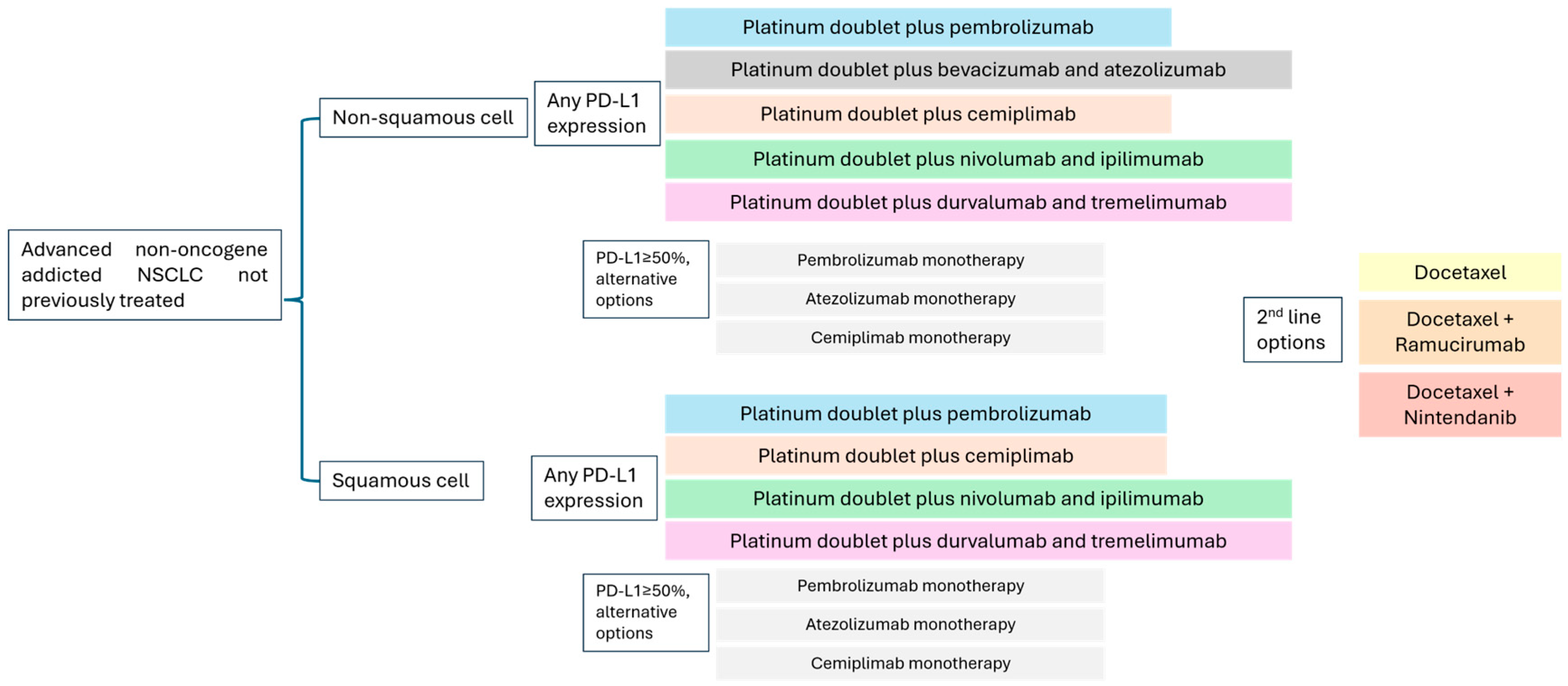
2. Non-Small Cell Lung Cancer
3. Drug Advances in Non-Small Cell Lung Cancer
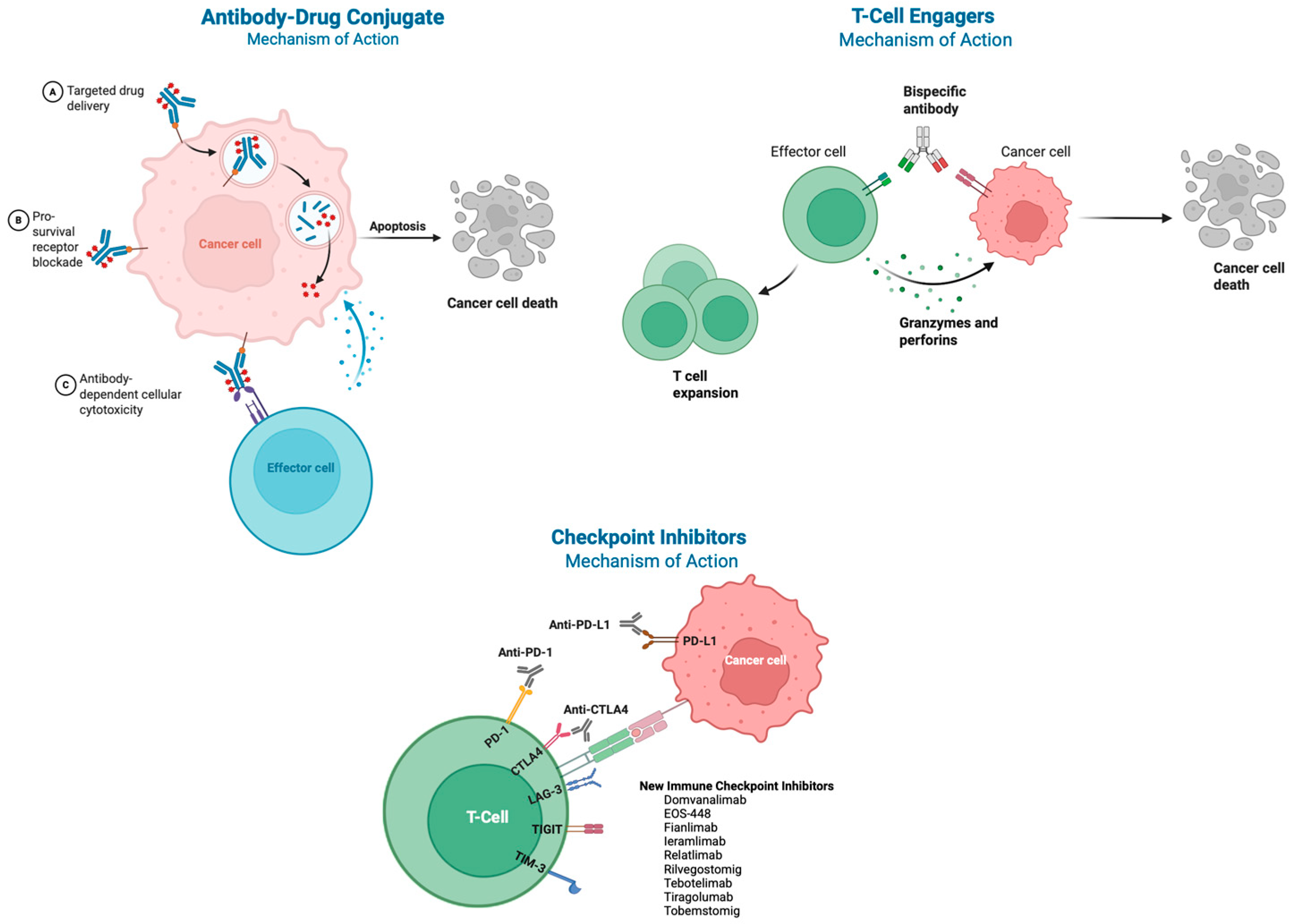
3.1. Antibody–Drug Conjugates
3.2. Novel Immunotherapies
3.2.1. Immune Checkpoint Inhibitors
3.2.2. Adenosine Targeting
3.2.3. Bispecific Antibodies
3.2.4. Cancer Vaccines
3.2.5. Small Molecules
3.3. Toxicities
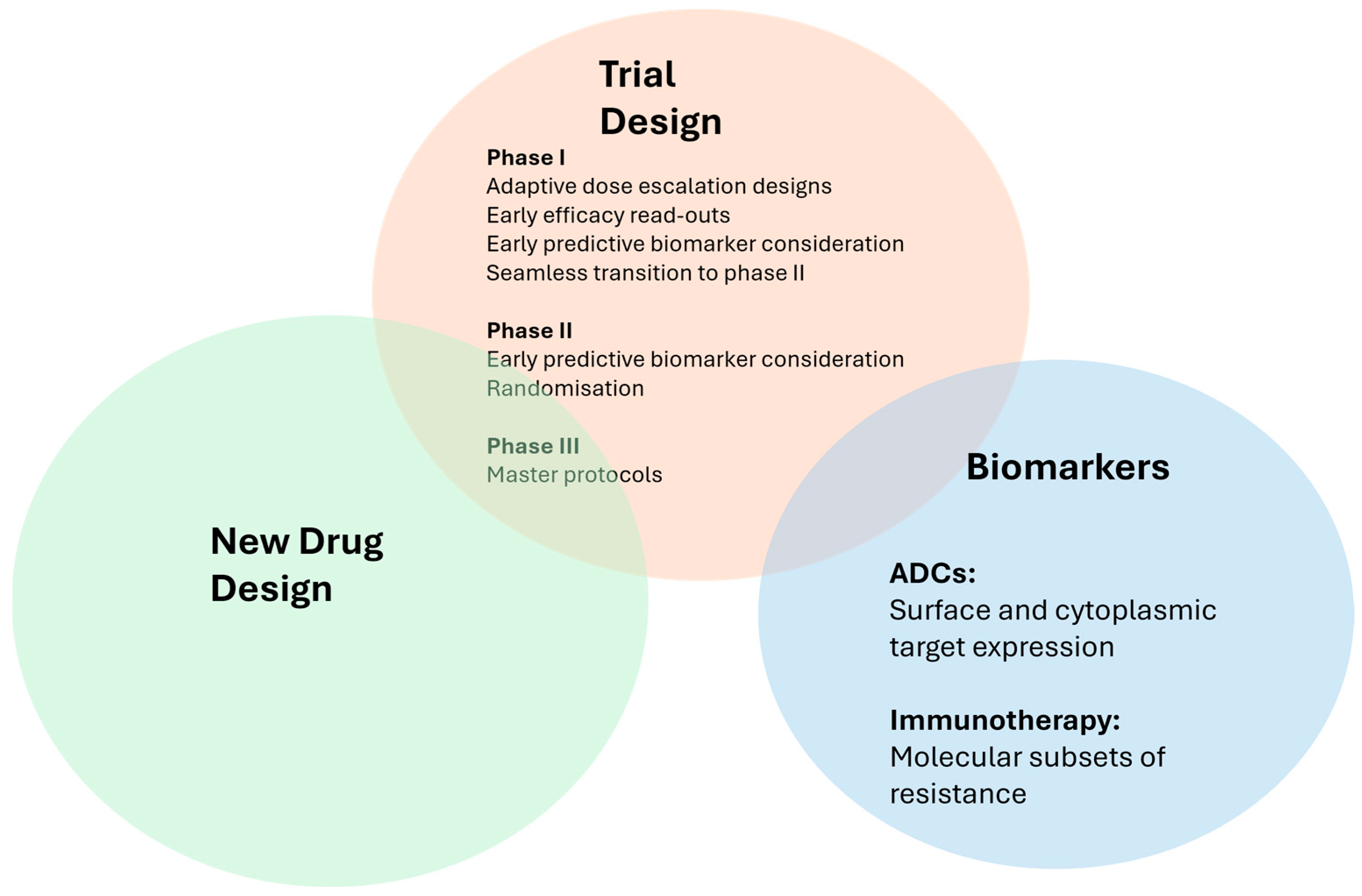
4. Trial Design in Non-Small Cell Lung Cancer
5. Why Do Promising Drugs in NSCLC Not Change Practice?
5.1. Selection by Biomarkers
5.1.1. Antibody–Drug Conjugates
5.1.2. Novel Immunotherapies
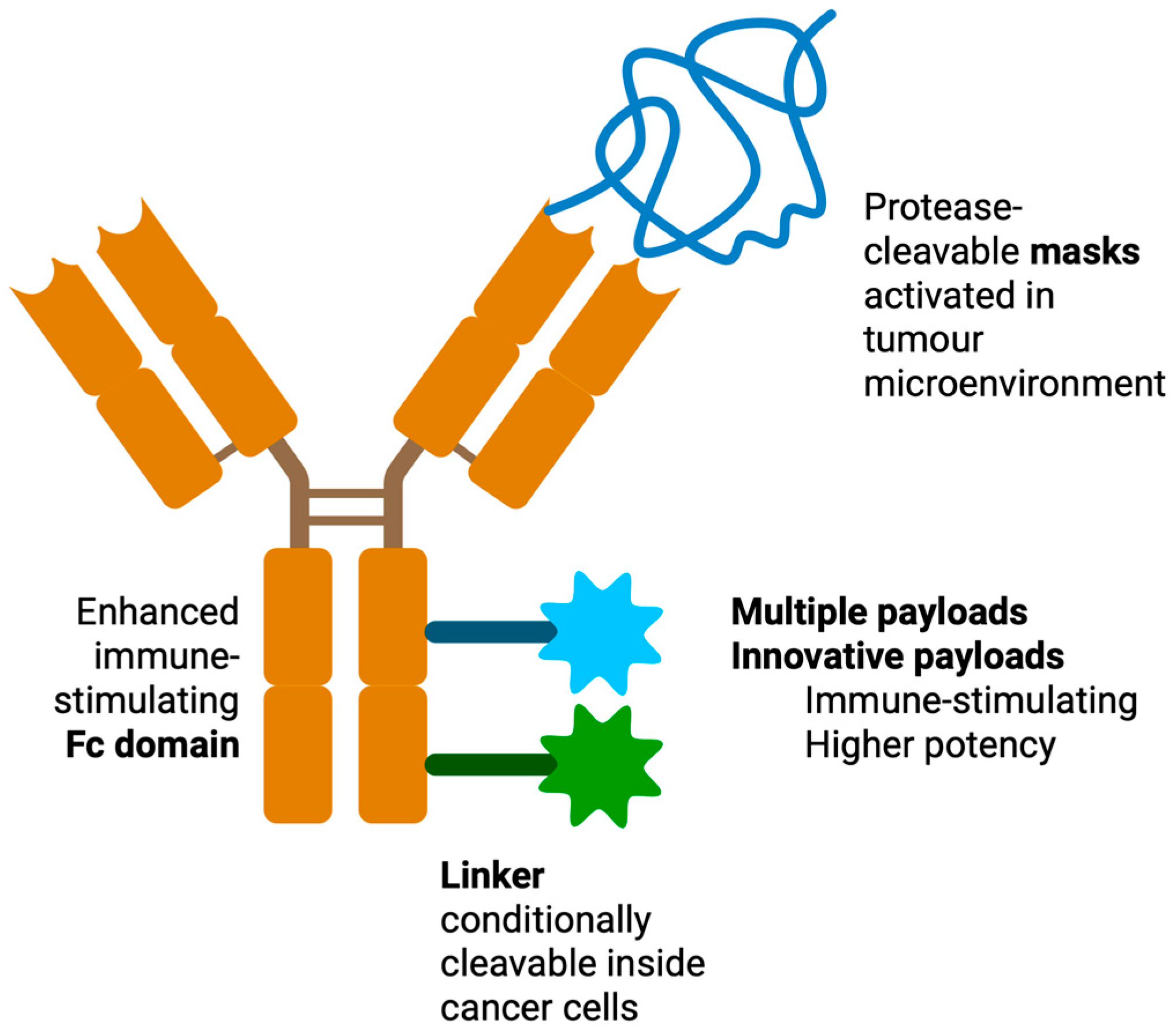
5.2. Improved Drug Design
5.3. Improved Trial Design
6. Placing Drugs—First- or Second-Line?
7. Conclusions
Author Contributions
Funding
Data Availability Statement
Acknowledgments
Conflicts of Interest
References
- Siegel, R.L.; Miller, K.D.; Fuchs, H.E.; Jemal, A. Cancer statistics, 2022. CA Cancer J. Clin. 2022, 72, 7–33. [Google Scholar] [CrossRef]
- Siegel, R.L.; Kratzer, T.B.; Giaquinto, A.N.; Sung, H.; Jemal, A. Cancer statistics, 2025. CA Cancer J. Clin. 2025, 75, 10–45. [Google Scholar] [CrossRef] [PubMed]
- Wagle, N.S.; Nogueira, L.; Devasia, T.P.; Mariotto, A.B.; Yabroff, K.R.; Islami, F.; Jemal, A.; Alteri, R.; Ganz, P.A.; Siegel, R.L. Cancer treatment and survivorship statistics, 2025. CA Cancer J. Clin. 2025, 75, 308–340. [Google Scholar] [CrossRef] [PubMed]
- Ganti, A.K.; Klein, A.B.; Cotarla, I.; Seal, B.; Chou, E. Update of Incidence, Prevalence, Survival, and Initial Treatment in Patients With Non–Small Cell Lung Cancer in the US. JAMA Oncol. 2021, 7, 1824. [Google Scholar] [CrossRef]
- Luo, G.; Zhang, Y.; Rumgay, H.; Morgan, E.; Langselius, O.; Vignat, J.; Colombet, M.; Bray, F. Estimated worldwide variation and trends in incidence of lung cancer by histological subtype in 2022 and over time: A population-based study. Lancet Respir. Med. 2025, 13, 348–363. [Google Scholar] [CrossRef]
- Cohen, M.H.; Williams, G.A.; Sridhara, R.; Chen, G.; Pazdur, R. FDA Drug Approval Summary: Gefitinib (ZD1839) (Iressa®) Tablets. Oncologist 2003, 8, 303–306. [Google Scholar] [CrossRef]
- Jänne, P.A.; Planchard, D.; Kobayashi, K.; Yang, J.C.-H.; Liu, Y.; Valdiviezo, N.; Kim, T.M.; Jiang, L.; Kagamu, H.; Yanagitani, N.; et al. Survival with Osimertinib plus Chemotherapy in EGFR-Mutated Advanced NSCLC. N. Engl. J. Med. 2026, 394, 27–38. [Google Scholar] [CrossRef]
- Gautschi, O.; Park, K.; Solomon, B.J.; Tomasini, P.; Loong, H.H.; De Braud, F.; Goto, K.; Peterson, P.; Barker, S.; Liming, K.; et al. Selpercatinib in RET Fusion–Positive Non–Small Cell Lung Cancer: Final Safety and Efficacy, Including Overall Survival, from the LIBRETTO-001 Phase I/II Trial. J. Clin. Oncol. 2025, 43, 1758–1764. [Google Scholar] [CrossRef]
- Peters, S.; Camidge, R.; Dziadziuszko, R.; Gadgeel, S.; Shaw, A.T.; Kim, D.W.; Pérol, M.; Rosell, D.R.; Cheema, P.; Wan-Teck Lim, D.; et al. Alectinib versus crizotinib in previously untreated ALK-positive advanced non-small cell lung cancer: Final overall survival analysis of the phase III ALEX study. Ann. Oncol. 2026, 37, 92–103. [Google Scholar] [CrossRef] [PubMed]
- Johnson, M.L.; Smit, E.F.; Felip, E.; Ramalingam, S.S.; Ahn, M.-J.; Tsao, A.; Johnson, B.E.; Offin, M.; Hussein, M.; Dagogo-Jack, I.; et al. Updated Overall Survival Analysis from the Phase II PHAROS Study of Encorafenib Plus Binimetinib in Patients with BRAF V600E-Mutant Metastatic Non–Small Cell Lung Cancer. J. Clin. Oncol. 2025, 43, 3706–3713. [Google Scholar] [CrossRef]
- Michels, S.; Massutí, B.; Vasyliv, I.; Stratmann, J.; Frank, J.; Adams, A.; Felip, E.; Grohé, C.; Rodriguez-Abreu, D.; Bischoff, H.; et al. Overall survival and central nervous system activity of crizotinib in ROS1-rearranged lung cancer—Final results of the EUCROSS trial. ESMO Open 2024, 9, 102237. [Google Scholar] [CrossRef]
- Drilon, A.; Camidge, D.R.; Lin, J.J.; Kim, S.-W.; Solomon, B.J.; Dziadziuszko, R.; Besse, B.; Goto, K.; De Langen, A.J.; Wolf, J.; et al. Repotrectinib in ROS1 Fusion–Positive Non–Small-Cell Lung Cancer. N. Engl. J. Med. 2024, 390, 118–131. [Google Scholar] [CrossRef] [PubMed]
- Smolle, E.; Leithner, K.; Olschewski, H. Oncogene addiction and tumor mutational burden in non-small-cell lung cancer: Clinical significance and limitations. Thorac. Cancer 2020, 11, 205–215. [Google Scholar] [CrossRef]
- Provencio-Pulla, M.; Pérez-Parente, D.; Olson, S.; Hasan, H.; Balea, B.C.; Rodríguez-Abreu, D.; Piqueras, M.L.-B.; Pal, N.; Wilkinson, S.; Vilas, E.; et al. Identification of non-actionable mutations with prognostic and predictive value in patients with advanced or metastatic non-small cell lung cancer. Clin. Transl. Oncol. 2024, 26, 1384–1394. [Google Scholar] [CrossRef]
- Desrichard, A.; Kuo, F.; Chowell, D.; Lee, K.-W.; Riaz, N.; Wong, R.J.; Chan, T.A.; Morris, L.G.T. Tobacco Smoking-Associated Alterations in the Immune Microenvironment of Squamous Cell Carcinomas. JNCI J. Natl. Cancer Inst. 2018, 110, 1386–1392. [Google Scholar] [CrossRef]
- Tiwari, A.; Oravecz, T.; Dillon, L.A.; Italiano, A.; Audoly, L.; Fridman, W.H.; Clifton, G.T. Towards a consensus definition of immune exclusion in cancer. Front. Immunol. 2023, 14, 1084887. [Google Scholar] [CrossRef]
- Mino-Kenudson, M. Tumor microenvironments of NSCLC are more heterogeneous than you would think—Supported by image analysis-based assessment of PD-L1 and tumor-associated immune cell densities. Transl. Cancer Res. 2017, 6, S1091–S1097. [Google Scholar] [CrossRef]
- Gurevičienė, G.; Matulionė, J.; Poškienė, L.; Miliauskas, S.; Žemaitis, M. PD-L1 Expression and Tumour Microenvironment Patterns in Resected Non-Small-Cell Lung Cancer. Medicina 2024, 60, 482. [Google Scholar] [CrossRef]
- Taube, J.M.; Klein, A.; Brahmer, J.R.; Xu, H.; Pan, X.; Kim, J.H.; Chen, L.; Pardoll, D.M.; Topalian, S.L.; Anders, R.A. Association of PD-1, PD-1 Ligands, and Other Features of the Tumor Immune Microenvironment with Response to Anti–PD-1 Therapy. Clin. Cancer Res. 2014, 20, 5064–5074. [Google Scholar] [CrossRef] [PubMed]
- Wu, Y.; Sun, R.; Ren, S.; Zengin, G.; Li, M. Neuronal Reshaping of the Tumor Microenvironment in Tumorigenesis and Metastasis: Bench to Clinic. Med. Adv. 2025, 3, 364–371. [Google Scholar] [CrossRef]
- Paz-Ares, L.; Vicente, D.; Tafreshi, A.; Robinson, A.; Soto Parra, H.; Mazières, J.; Hermes, B.; Cicin, I.; Medgyasszay, B.; Rodríguez-Cid, J.; et al. A Randomized, Placebo-Controlled Trial of Pembrolizumab Plus Chemotherapy in Patients with Metastatic Squamous NSCLC: Protocol-Specified Final Analysis of KEYNOTE-407. J. Thorac. Oncol. 2020, 15, 1657–1669. [Google Scholar] [CrossRef] [PubMed]
- Gadgeel, S.M.; Stevenson, J.P.; Langer, C.J.; Gandhi, L.; Borghaei, H.; Patnaik, A.; Villaruz, L.C.; Gubens, M.; Hauke, R.; Yang, J.C.-H.; et al. Pembrolizumab and platinum-based chemotherapy as first-line therapy for advanced non–small-cell lung cancer: Phase 1 cohorts from the KEYNOTE-021 study. Lung Cancer 2018, 125, 273–281. [Google Scholar] [CrossRef]
- Garassino, M.C.; Gadgeel, S.; Speranza, G.; Felip, E.; Esteban, E.; Dómine, M.; Hochmair, M.J.; Powell, S.F.; Bischoff, H.G.; Peled, N.; et al. Pembrolizumab Plus Pemetrexed and Platinum in Nonsquamous Non–Small-Cell Lung Cancer: 5-Year Outcomes from the Phase 3 KEYNOTE-189 Study. J. Clin. Oncol. 2023, 41, 1992–1998. [Google Scholar] [CrossRef]
- Reck, M.; Rodríguez-Abreu, D.; Robinson, A.G.; Hui, R.; Csőszi, T.; Fülöp, A.; Gottfried, M.; Peled, N.; Tafreshi, A.; Cuffe, S.; et al. Five-Year Outcomes with Pembrolizumab Versus Chemotherapy for Metastatic Non–Small-Cell Lung Cancer with PD-L1 Tumor Proportion Score ≥ 50%. J. Clin. Oncol. 2021, 39, 2339–2349. [Google Scholar] [CrossRef] [PubMed]
- Reck, M.; Rodríguez–Abreu, D.; Robinson, A.G.; Hui, R.; Csőszi, T.; Fülöp, A.; Gottfried, M.; Peled, N.; Tafreshi, A.; Cuffe, S.; et al. Updated Analysis of KEYNOTE-024: Pembrolizumab Versus Platinum-Based Chemotherapy for Advanced Non–Small-Cell Lung Cancer with PD-L1 Tumor Proportion Score of 50% or Greater. J. Clin. Oncol. 2019, 37, 537–546. [Google Scholar] [CrossRef]
- Awad, M.M.; Gadgeel, S.M.; Borghaei, H.; Patnaik, A.; Yang, J.C.-H.; Powell, S.F.; Gentzler, R.D.; Martins, R.G.; Stevenson, J.P.; Altan, M.; et al. Long-Term Overall Survival from KEYNOTE-021 Cohort G: Pemetrexed and Carboplatin with or Without Pembrolizumab as First-Line Therapy for Advanced Nonsquamous NSCLC. J. Thorac. Oncol. 2021, 16, 162–168. [Google Scholar] [CrossRef] [PubMed]
- Yuan, M.; Ding, H.; Zhuang, W.; Yang, Y.; Xu, X.S. Evaluating Circulating Tumor DNA Clearance as an Early Intermediate End Point Predicting Clinical Benefit in Metastatic Nonsquamous NSCLC After First-Line Chemoimmunotherapy. JTO Clin. Res. Rep. 2025, 6, 100907. [Google Scholar] [CrossRef]
- Agustoni, F.; Gambini, G.; Lo Russo, G.; Proto, C.; Gusmaroli, E.; Grisanti, S.; Pellicioli, F.; Aglione, S.; Liguigli, W.; Bulotta, A.; et al. P1.11.01 First-Line Nivolumab Plus Ipilimumab in Combination with Chemotherapy for Metastatic NSCLC: Real World Data in Italy. J. Thorac. Oncol. 2025, 20, S165. [Google Scholar] [CrossRef]
- Lee, S.M.; Schulz, C.; Prabhash, K.; Kowalski, D.; Szczesna, A.; Han, B.; Rittmeyer, A.; Talbot, T.; Vicente, D.; Califano, R.; et al. First-line atezolizumab monotherapy versus single-agent chemotherapy in patients with non-small-cell lung cancer ineligible for treatment with a platinum-containing regimen (IPSOS): A phase 3, global, multicentre, open-label, randomised controlled study. Lancet 2023, 402, 451–463. [Google Scholar] [CrossRef]
- Peters, S.; Regan, M.M.; Paz-Ares, L.G.; Reck, M.; Borghaei, H.; O’Byrne, K.J.; Brahmer, J.R.; Penrod, J.R.; Li, J.; Tracy, L.; et al. Treatment-Free Survival Over 6 Years of Follow-up in Patients with Metastatic NSCLC Treated with First-Line Nivolumab Plus Ipilimumab Versus Chemotherapy in CheckMate 227 Part 1. J. Thorac. Oncol. 2025, 20, 1505–1516. [Google Scholar] [CrossRef]
- Carbone, D.P.; Ciuleanu, T.E.; Cobo, M.; Schenker, M.; Zurawski, B.; Menezes, J.; Richardet, E.; Felip, E.; Cheng, Y.; Juan-Vidal, O.; et al. Nivolumab plus ipilimumab with chemotherapy as first-line treatment of patients with metastatic non-small-cell lung cancer: Final, 6-year outcomes from CheckMate 9LA. ESMO Open 2025, 10, 105123. [Google Scholar] [CrossRef]
- Brahmer, J.R.; Lee, J.-S.; Ciuleanu, T.-E.; Bernabe Caro, R.; Nishio, M.; Urban, L.; Audigier-Valette, C.; Lupinacci, L.; Sangha, R.; Pluzanski, A.; et al. Five-Year Survival Outcomes with Nivolumab Plus Ipilimumab Versus Chemotherapy as First-Line Treatment for Metastatic Non–Small-Cell Lung Cancer in CheckMate 227. J. Clin. Oncol. 2023, 41, 1200–1212. [Google Scholar] [CrossRef]
- Shiraishi, Y.; Nomura, S.; Sugawara, S.; Horinouchi, H.; Yoneshima, Y.; Hayashi, H.; Azuma, K.; Hara, S.; Niho, S.; Morita, R.; et al. Comparison of platinum combination chemotherapy plus pembrolizumab versus platinum combination chemotherapy plus nivolumab–ipilimumab for treatment-naive advanced non-small-cell lung cancer in Japan (JCOG2007): An open-label, multicentre, randomised, phas. Lancet Respir. Med. 2024, 12, 877–887. [Google Scholar] [CrossRef] [PubMed]
- Peters, S.; Cho, B.C.; Luft, A.V.; Alatorre-Alexander, J.; Geater, S.L.; Laktionov, K.; Trukhin, D.; Kim, S.-W.; Ursol, G.M.; Hussein, M.; et al. Durvalumab with or Without Tremelimumab in Combination with Chemotherapy in First-Line Metastatic NSCLC: Five-Year Overall Survival Outcomes From the Phase 3 POSEIDON Trial. J. Thorac. Oncol. 2025, 20, 76–93. [Google Scholar] [CrossRef]
- Novello, S.; Kowalski, D.M.; Luft, A.; Gümüş, M.; Vicente, D.; Mazières, J.; Rodríguez-Cid, J.; Tafreshi, A.; Cheng, Y.; Lee, K.H.; et al. Pembrolizumab Plus Chemotherapy in Squamous Non–Small-Cell Lung Cancer: 5-Year Update of the Phase III KEYNOTE-407 Study. J. Clin. Oncol. 2023, 41, 1999–2006. [Google Scholar] [CrossRef]
- De Castro, G.; Kudaba, I.; Wu, Y.-L.; Lopes, G.; Kowalski, D.M.; Turna, H.Z.; Caglevic, C.; Zhang, L.; Karaszewska, B.; Laktionov, K.K.; et al. Five-Year Outcomes with Pembrolizumab Versus Chemotherapy as First-Line Therapy in Patients with Non–Small-Cell Lung Cancer and Programmed Death Ligand-1 Tumor Proportion Score ≥ 1% in the KEYNOTE-042 Study. J. Clin. Oncol. 2023, 41, 1986–1991. [Google Scholar] [CrossRef]
- Adashek, J.J.; Lorusso, P.M.; Hong, D.S.; Kurzrock, R. Phase I trials as valid therapeutic options for patients with cancer. Nat. Rev. Clin. Oncol. 2019, 16, 773–778. [Google Scholar] [CrossRef] [PubMed]
- Seruga, B.; Ocana, A.; Amir, E.; Tannock, I.F. Failures in Phase III: Causes and Consequences. Clin. Cancer Res. 2015, 21, 4552–4560. [Google Scholar] [CrossRef]
- Schiller, J.H.; Harrington, D.; Belani, C.P.; Langer, C.; Sandler, A.; Krook, J.; Zhu, J.; Johnson, D.H. Comparison of Four Chemotherapy Regimens for Advanced Non–Small-Cell Lung Cancer. N. Engl. J. Med. 2002, 346, 92–98. [Google Scholar] [CrossRef] [PubMed]
- Scagliotti, G.V.; Gridelli, C.; De Marinis, F.; Thomas, M.; Dediu, M.; Pujol, J.L.; Manegold, C.; San Antonio, B.; Peterson, P.M.; John, W.; et al. Efficacy and safety of maintenance pemetrexed in patients with advanced nonsquamous non-small cell lung cancer following pemetrexed plus cisplatin induction treatment: A cross-trial comparison of two phase III trials. Lung Cancer 2014, 85, 408–414. [Google Scholar] [CrossRef]
- Gadgeel, S.; Rodríguez-Abreu, D.; Speranza, G.; Esteban, E.; Felip, E.; Dómine, M.; Hui, R.; Hochmair, M.J.; Clingan, P.; Powell, S.F.; et al. Updated Analysis from KEYNOTE-189: Pembrolizumab or Placebo Plus Pemetrexed and Platinum for Previously Untreated Metastatic Nonsquamous Non–Small-Cell Lung Cancer. J. Clin. Oncol. 2020, 38, 1505–1517. [Google Scholar] [CrossRef]
- Paz-Ares, L.; Luft, A.; Vicente, D.; Tafreshi, A.; Gümüş, M.; Mazières, J.; Hermes, B.; Çay Şenler, F.; Csőszi, T.; Fülöp, A.; et al. Pembrolizumab plus Chemotherapy for Squamous Non–Small-Cell Lung Cancer. N. Engl. J. Med. 2018, 379, 2040–2051. [Google Scholar] [CrossRef]
- Gogishvili, M.; Melkadze, T.; Makharadze, T.; Giorgadze, D.; Dvorkin, M.; Penkov, K.; Laktionov, K.; Nemsadze, G.; Nechaeva, M.; Rozhkova, I.; et al. Cemiplimab plus chemotherapy versus chemotherapy alone in non-small cell lung cancer: A randomized, controlled, double-blind phase 3 trial. Nat. Med. 2022, 28, 2374–2380. [Google Scholar] [CrossRef]
- Socinski, M.A.; Nishio, M.; Jotte, R.M.; Cappuzzo, F.; Orlandi, F.; Stroyakovskiy, D.; Nogami, N.; Rodríguez-Abreu, D.; Moro-Sibilot, D.; Thomas, C.A.; et al. IMpower150 Final Overall Survival Analyses for Atezolizumab Plus Bevacizumab and Chemotherapy in First-Line Metastatic Nonsquamous NSCLC. J. Thorac. Oncol. 2021, 16, 1909–1924. [Google Scholar] [CrossRef]
- Paz-Ares, L.; Ciuleanu, T.-E.; Cobo, M.; Schenker, M.; Zurawski, B.; Menezes, J.; Richardet, E.; Bennouna, J.; Felip, E.; Juan-Vidal, O.; et al. First-line nivolumab plus ipilimumab combined with two cycles of chemotherapy in patients with non-small-cell lung cancer (CheckMate 9LA): An international, randomised, open-label, phase 3 trial. Lancet Oncol. 2021, 22, 198–211. [Google Scholar] [CrossRef] [PubMed]
- Johnson, M.L.; Cho, B.C.; Luft, A.; Alatorre-Alexander, J.; Geater, S.L.; Laktionov, K.; Kim, S.-W.; Ursol, G.; Hussein, M.; Lim, F.L.; et al. Durvalumab with or Without Tremelimumab in Combination with Chemotherapy as First-Line Therapy for Metastatic Non–Small-Cell Lung Cancer: The Phase III POSEIDON Study. J. Clin. Oncol. 2023, 41, 1213–1227. [Google Scholar] [CrossRef] [PubMed]
- Herbst, R.S.; Giaccone, G.; De Marinis, F.; Reinmuth, N.; Vergnenegre, A.; Barrios, C.H.; Morise, M.; Felip, E.; Andric, Z.; Geater, S.; et al. Atezolizumab for First-Line Treatment of PD-L1–Selected Patients with NSCLC. N. Engl. J. Med. 2020, 383, 1328–1339. [Google Scholar] [CrossRef] [PubMed]
- Özgüroğlu, M.; Kilickap, S.; Sezer, A.; Gümüş, M.; Bondarenko, I.; Gogishvili, M.; Nechaeva, M.; Schenker, M.; Cicin, I.; Ho, G.F.; et al. First-line cemiplimab monotherapy and continued cemiplimab beyond progression plus chemotherapy for advanced non-small-cell lung cancer with PD-L1 50% or more (EMPOWER-Lung 1): 35-month follow-up from a mutlicentre, open-label, randomised, phase 3 trial. Lancet Oncol. 2023, 24, 989–1001. [Google Scholar] [CrossRef] [PubMed]
- Garon, E.B.; Ciuleanu, T.-E.; Arrieta, O.; Prabhash, K.; Syrigos, K.N.; Goksel, T.; Park, K.; Gorbunova, V.; Kowalyszyn, R.D.; Pikiel, J.; et al. Ramucirumab plus docetaxel versus placebo plus docetaxel for second-line treatment of stage IV non-small-cell lung cancer after disease progression on platinum-based therapy (REVEL): A multicentre, double-blind, randomised phase 3 trial. Lancet 2014, 384, 665–673. [Google Scholar] [CrossRef]
- Reck, M.; Kaiser, R.; Mellemgaard, A.; Douillard, J.-Y.; Orlov, S.; Krzakowski, M.; Von Pawel, J.; Gottfried, M.; Bondarenko, I.; Liao, M.; et al. Docetaxel plus nintedanib versus docetaxel plus placebo in patients with previously treated non-small-cell lung cancer (LUME-Lung 1): A phase 3, double-blind, randomised controlled trial. Lancet Oncol. 2014, 15, 143–155. [Google Scholar] [CrossRef]
- Grohe, C.; Stratmann, J.A.; Hammerschmidt, S.; Aulmann, C.; Krüger, S.; Dittrich, I.; Schütte, W.; Von Der Heyde, E.; Stammberger, A.; Wehler, T.C. 1904P Real-world outcomes of nintedanib plus docetaxel for adenocarcinoma NSCLC after failure of first-line immunochemotherapy: The non-interventional VARGADO study. Ann. Oncol. 2025, 36, S1090–S1091. [Google Scholar] [CrossRef]
- Grohé, C.; Wehler, T.; Dechow, T.; Henschke, S.; Schuette, W.; Dittrich, I.; Hammerschmidt, S.; Müller-Huesmann, H.; Schumann, C.; Krüger, S.; et al. Nintedanib plus docetaxel after progression on first-line immunochemotherapy in patients with lung adenocarcinoma: Cohort C of the non-interventional study, VARGADO. Transl. Lung Cancer Res. 2022, 11, 2010–2021. [Google Scholar] [CrossRef]
- Theocharopoulos, C.; Lialios, P.-P.; Gogas, H.; Ziogas, D.C. An overview of antibody–drug conjugates in oncological practice. Ther. Adv. Med. Oncol. 2020, 12, 175883592096299. [Google Scholar] [CrossRef]
- Theocharopoulos, C.; Lialios, P.-P.; Samarkos, M.; Gogas, H.; Ziogas, D.C. Antibody-Drug Conjugates: Functional Principles and Applications in Oncology and Beyond. Vaccines 2021, 9, 1111. [Google Scholar] [CrossRef]
- Peters, C.; Brown, S. Antibody–drug conjugates as novel anti-cancer chemotherapeutics. Biosci. Rep. 2015, 35, e00225. [Google Scholar] [CrossRef]
- Drago, J.Z.; Modi, S.; Chandarlapaty, S. Unlocking the potential of antibody–drug conjugates for cancer therapy. Nat. Rev. Clin. Oncol. 2021, 18, 327–344. [Google Scholar] [CrossRef]
- Esapa, B.; Jiang, J.; Cheung, A.; Chenoweth, A.; Thurston, D.E.; Karagiannis, S.N. Target Antigen Attributes and Their Contributions to Clinically Approved Antibody-Drug Conjugates (ADCs) in Haematopoietic and Solid Cancers. Cancers 2023, 15, 1845. [Google Scholar] [CrossRef]
- Boixareu, C.; Taha, T.; Venkadakrishnan, V.B.; De Bono, J.; Beltran, H. Targeting the tumour cell surface in advanced prostate cancer. Nat. Rev. Urol. 2025, 22, 569–589. [Google Scholar] [CrossRef] [PubMed]
- Carter, P.; Smith, L.; Ryan, M. Identification and validation of cell surface antigens for antibody targeting in oncology. Endocr.-Relat. Cancer 2004, 11, 659–687. [Google Scholar] [CrossRef] [PubMed]
- Kalluri, R. The biology and function of fibroblasts in cancer. Nat. Rev. Cancer 2016, 16, 582–598. [Google Scholar] [CrossRef]
- Gabrilovich, D.I.; Ostrand-Rosenberg, S.; Bronte, V. Coordinated regulation of myeloid cells by tumours. Nat. Rev. Immunol. 2012, 12, 253–268. [Google Scholar] [CrossRef]
- Cools-Lartigue, J.; Spicer, J.; McDonald, B.; Gowing, S.; Chow, S.; Giannias, B.; Bourdeau, F.; Kubes, P.; Ferri, L. Neutrophil extracellular traps sequester circulating tumor cells and promote metastasis. J. Clin. Investig. 2013, 123, 3446–3458. [Google Scholar] [CrossRef]
- Park, J.; Wysocki, R.W.; Amoozgar, Z.; Maiorino, L.; Fein, M.R.; Jorns, J.; Schott, A.F.; Kinugasa-Katayama, Y.; Lee, Y.; Won, N.H.; et al. Cancer cells induce metastasis-supporting neutrophil extracellular DNA traps. Sci. Transl. Med. 2016, 8, 136ra138. [Google Scholar] [CrossRef]
- Semenza, G.L. Hypoxia-Inducible Factors in Physiology and Medicine. Cell 2012, 148, 399–408. [Google Scholar] [CrossRef]
- Meads, M.B.; Gatenby, R.A.; Dalton, W.S. Environment-mediated drug resistance: A major contributor to minimal residual disease. Nat. Rev. Cancer 2009, 9, 665–674. [Google Scholar] [CrossRef]
- Karp, D.D. Handbook of Targeted Cancer Therapy and Immunotherapy, 3rd ed.; Lippincott Williams & Wilkins, a Wolters Kluwer business: Singapore, 2023. [Google Scholar]
- Hsu, J.L.; Hung, M.-C. The role of HER2, EGFR, and other receptor tyrosine kinases in breast cancer. Cancer Metastasis Rev. 2016, 35, 575–588. [Google Scholar] [CrossRef]
- Goto, K.; Goto, Y.; Kubo, T.; Ninomiya, K.; Kim, S.-W.; Planchard, D.; Ahn, M.-J.; Smit, E.F.; De Langen, A.J.; Pérol, M.; et al. Trastuzumab Deruxtecan in Patients with HER2-Mutant Metastatic Non–Small-Cell Lung Cancer: Primary Results from the Randomized, Phase II DESTINY-Lung02 Trial. J. Clin. Oncol. 2023, 41, 4852–4863. [Google Scholar] [CrossRef]
- Mehta, G.U.; Vellanki, P.J.; Ren, Y.; Amatya, A.K.; Mishra-Kalyani, P.S.; Pan, L.; Zirkelbach, J.F.; Pan, Y.; Liu, J.; Aungst, S.L.; et al. FDA approval summary: Fam-trastuzumab deruxtecan-nxki for unresectable or metastatic non-small cell lung cancer with activating HER2 mutations. Oncologist 2024, 29, 667–671. [Google Scholar] [CrossRef] [PubMed]
- Nakamura, H.; Kawasaki, N.; Taguchi, M.; Kabasawa, K. Association of HER-2 overexpression with prognosis in nonsmall cell lung carcinoma: A metaanalysis. Cancer 2005, 103, 1865–1873. [Google Scholar] [CrossRef] [PubMed]
- Selvaggi, G.; Scagliotti, G.V.; Torri, V.; Novello, S.; Leonardo, E.; Cappia, S.; Mossetti, C.; Ardissone, F.; Lausi, P.; Borasio, P. HER-2/neu overexpression in patients with radically resected nonsmall cell lung carcinoma. Cancer 2002, 94, 2669–2674. [Google Scholar] [CrossRef] [PubMed]
- Shou, Y.; Hirano, T.; Gong, Y.; Kato, Y.; Yoshida, K.; Ohira, T.; Ikeda, N.; Konaka, C.; Ebihara, Y.; Zhao, F.; et al. Influence of angiogenetic factors and matrix metalloproteinases upon tumour progression in non-small-cell lung cancer. Br. J. Cancer 2001, 85, 1706–1712. [Google Scholar] [CrossRef]
- Swanton, C.; Futreal, A.; Eisen, T. Her2-Targeted Therapies in Non–Small Cell Lung Cancer. Clin. Cancer Res. 2006, 12, 4377s–4383s. [Google Scholar] [CrossRef]
- Meric-Bernstam, F.; Makker, V.; Oaknin, A.; Oh, D.-Y.; Banerjee, S.; González-Martín, A.; Jung, K.H.; Ługowska, I.; Manso, L.; Manzano, A.; et al. Efficacy and Safety of Trastuzumab Deruxtecan in Patients with HER2-Expressing Solid Tumors: Primary Results from the DESTINY-PanTumor02 Phase II Trial. J. Clin. Oncol. 2024, 42, 47–58. [Google Scholar] [CrossRef] [PubMed]
- FDA Grants Accelerated Approval to Fam-Trastuzumab Deruxtecan-Nxki for Unresectable or Metastatic HER2-Positive Solid Tumors. Available online: https://www.fda.gov/drugs/resources-information-approved-drugs/fda-grants-accelerated-approval-fam-trastuzumab-deruxtecan-nxki-unresectable-or-metastatic-her2 (accessed on 12 January 2026).
- Goldenberg, D.M.; Stein, R.; Sharkey, R.M. The emergence of trophoblast cell-surface antigen 2 (TROP-2) as a novel cancer target. Oncotarget 2018, 9, 28989–29006. [Google Scholar] [CrossRef]
- Vranic, S.; Gatalica, Z. Trop-2 protein as a therapeutic target: A focused review on Trop-2-based antibody-drug conjugates and their predictive biomarkers. Bosn. J. Basic Med. Sci. 2021, 22, 14. [Google Scholar] [CrossRef]
- Fang, W.; Wu, L.; Meng, X.; Yao, Y.; Zuo, W.; Yao, W.; Xie, Y.; Zhang, Y.; Cui, J.; Zhang, Y.; et al. Sacituzumab Tirumotecan in EGFR-TKI–Resistant, EGFR-Mutated Advanced NSCLC. N. Engl. J. Med. 2026, 394, 13–26. [Google Scholar] [CrossRef]
- Shimizu, T.; Sands, J.; Yoh, K.; Spira, A.; Garon, E.B.; Kitazono, S.; Johnson, M.L.; Meric-Bernstam, F.; Tolcher, A.W.; Yamamoto, N.; et al. First-in-Human, Phase I Dose-Escalation and Dose-Expansion Study of Trophoblast Cell-Surface Antigen 2–Directed Antibody-Drug Conjugate Datopotamab Deruxtecan in Non–Small-Cell Lung Cancer: TROPION-PanTumor01. J. Clin. Oncol. 2023, 41, 4678–4687. [Google Scholar] [CrossRef]
- Ahn, M.-J.; Tanaka, K.; Paz-Ares, L.; Cornelissen, R.; Girard, N.; Pons-Tostivint, E.; Vicente Baz, D.; Sugawara, S.; Cobo, M.; Pérol, M.; et al. Datopotamab Deruxtecan Versus Docetaxel for Previously Treated Advanced or Metastatic Non–Small Cell Lung Cancer: The Randomized, Open-Label Phase III TROPION-Lung01 Study. J. Clin. Oncol. 2025, 43, 260–272. [Google Scholar] [CrossRef]
- Planchard, D.; Cozic, N.; Wislez, M.; Chouaid, C.; Curcio, H.; Cousin, S.; Mascaux, C.; Cadranel, J.; Geier, M.; Ghigna, M.R.; et al. ICARUS-LUNG01: A phase 2 study of datopotomab deruxtecan (Dato-DXd) in patients with previously treated advanced non-small cell lung cancer (NSCLC), with sequential tissue biopsies and biomarkers analysis to predict treatment outcome. J. Clin. Oncol. 2024, 42, 8501. [Google Scholar] [CrossRef]
- Paz-Ares, L.G.; Juan-Vidal, O.; Mountzios, G.S.; Felip, E.; Reinmuth, N.; De Marinis, F.; Girard, N.; Patel, V.M.; Takahama, T.; Owen, S.P.; et al. Sacituzumab Govitecan Versus Docetaxel for Previously Treated Advanced or Metastatic Non–Small Cell Lung Cancer: The Randomized, Open-Label Phase III EVOKE-01 Study. J. Clin. Oncol. 2024, 42, 2860–2872. [Google Scholar] [CrossRef] [PubMed]
- Engelman, J.A.; Zejnullahu, K.; Mitsudomi, T.; Song, Y.; Hyland, C.; Park, J.O.; Lindeman, N.; Gale, C.-M.; Zhao, X.; Christensen, J.; et al. MET Amplification Leads to Gefitinib Resistance in Lung Cancer by Activating ERBB3 Signaling. Science 2007, 316, 1039–1043. [Google Scholar] [CrossRef]
- Lutterbach, B.; Zeng, Q.; Davis, L.J.; Hatch, H.; Hang, G.; Kohl, N.E.; Gibbs, J.B.; Pan, B.-S. Lung Cancer Cell Lines Harboring MET Gene Amplification Are Dependent on Met for Growth and Survival. Cancer Res. 2007, 67, 2081–2088. [Google Scholar] [CrossRef]
- Spitaleri, G.; Trillo Aliaga, P.; Attili, I.; Del Signore, E.; Corvaja, C.; Corti, C.; Uliano, J.; Passaro, A.; De Marinis, F. MET in Non-Small-Cell Lung Cancer (NSCLC): Cross ‘a Long and Winding Road’ Looking for a Target. Cancers 2023, 15, 4779. [Google Scholar] [CrossRef] [PubMed]
- Park, S.; Choi, Y.L.; Sung, C.O.; An, J.; Seo, J.; Ahn, M.J.; Ahn, J.S.; Park, K.; Shin, Y.K.; Erkin, O.C.; et al. High MET copy number and MET overexpression: Poor outcome in non-small cell lung cancer patients. Histol. Histopathol. 2012, 27, 197–207. [Google Scholar] [CrossRef] [PubMed]
- Ma, P.C.; Tretiakova, M.S.; Mackinnon, A.C.; Ramnath, N.; Johnson, C.; Dietrich, S.; Seiwert, T.; Christensen, J.G.; Jagadeeswaran, R.; Krausz, T.; et al. Expression and mutational analysis of MET in human solid cancers. Genes Chromosomes Cancer 2008, 47, 1025–1037. [Google Scholar] [CrossRef]
- Camidge, D.R.; Bar, J.; Horinouchi, H.; Goldman, J.; Moiseenko, F.; Filippova, E.; Cicin, I.; Ciuleanu, T.; Daaboul, N.; Liu, C.; et al. Telisotuzumab Vedotin Monotherapy in Patients with Previously Treated c-Met Protein–Overexpressing Advanced Nonsquamous EGFR-Wildtype Non–Small Cell Lung Cancer in the Phase II LUMINOSITY Trial. J. Clin. Oncol. 2024, 42, 3000–3011. [Google Scholar] [CrossRef] [PubMed]
- Lu, S.; Goldman, J.W.; Tanizaki, J.; Akamatsu, H.; Xia, S.; Ratajczak, C.; Li, M.; Bolotin, E.; Seraj, J.; Lugini, A. A phase 3 global study of telisotuzumab vedotin versus docetaxel in previously treated patients with c-Met 0verexpressing, EGFR wildtype, locally advanced/metastatic nonsquamous NSCLC (TeliMET NSCLC-01). J. Clin. Oncol. 2024, 42, TPS8656. [Google Scholar] [CrossRef]
- Nikanjam, M.; Pérez-Granado, J.; Gramling, M.; Larvol, B.; Kurzrock, R. Nectin-4 expression patterns and therapeutics in oncology. Cancer Lett. 2025, 622, 217681. [Google Scholar] [CrossRef]
- Mizusaki, S.; Yoneshima, Y.; Iwama, E.; Nakashima, T.; Ibusuki, R.; Shibahara, D.; Otsubo, K.; Tanaka, K.; Okamoto, I. NECTIN4 regulates the cell surface expression of CD155 in non-small cell lung cancer cells and induces tumor resistance to PD-1 inhibitors. Cancer Immunol. Immunother. 2025, 74, 211. [Google Scholar] [CrossRef]
- Baldini, C.; Verlingue, L.; Goldschmidt, V.; Doger De Spéville, B.; Lostes, J.; Italiano, A.; Cousin, S.; Falchook, G.S.; Necchi, A.; Reig Torras, O.; et al. First-in-Human, Phase I/II Dose Escalation and Expansion Study of Zelenectide Pevedotin in Patients with Advanced Solid Tumors: Results from Monotherapy Dose Escalation. J. Clin. Oncol. 2025, 45, 3728–3738. [Google Scholar] [CrossRef]
- Verlingue, L.; Klümper, N.; Eckstein, M.; Braegelmann, J.; McKean, M.; Italiano, A.; Carter, L.; Falchook, G.S.; Boni, V.; Dowlati, A.; et al. 96P: Enhanced anti-tumor activity of zelenectide pevedotin in patients (pts) with non-small cell lung cancer (NSCLC) with NECTIN4 gene amplification (amp). J. Thorac. Oncol. 2025, 20, S69–S71. [Google Scholar] [CrossRef]
- Peters, S.; Hollebecque, A.; Sehgal, K.; Lopez, J.S.; Calvo, E.; Dowlati, A.; Bockorny, B.; Perez, C.A.; Sanborn, R.E.; Patnaik, A.; et al. Efficacy and safety of sigvotatug vedotin, an investigational ADC, in NSCLC: Updated phase 1 results (SGNB6A-001). J. Clin. Oncol. 2024, 42, 8521. [Google Scholar] [CrossRef]
- A Study of SGN-B6A Versus Docetaxel in Previously Treated Non-Small Cell Lung Cancer. Available online: https://clinicaltrials.gov/study/NCT06012435 (accessed on 12 January 2026).
- Sehgal, K.; Corral Jaime, J.; Powell, S.F.; Perez, C.A.; Fontana, E.; Kingsley, E.; Munoz, F.L.; Piha-Paul, S.A.; Sanborn, R.E.; Hayman, J.; et al. Sigvotatug vedotin (SV), an investigational integrin beta-6 (IB6)–directed antibody–drug conjugate (ADC), and pembrolizumab combination therapy: Initial results from an ongoing phase 1 study (SGNB6A-001). J. Clin. Oncol. 2025, 43, 3010. [Google Scholar] [CrossRef]
- Garon, E.B.; Rizvi, N.A.; Hui, R.; Leighl, N.; Balmanoukian, A.S.; Eder, J.P.; Patnaik, A.; Aggarwal, C.; Gubens, M.; Horn, L.; et al. Pembrolizumab for the Treatment of Non–Small-Cell Lung Cancer. N. Engl. J. Med. 2015, 372, 2018–2028. [Google Scholar] [CrossRef]
- Reck, M.; Rodríguez-Abreu, D.; Robinson, A.G.; Hui, R.; Csőszi, T.; Fülöp, A.; Gottfried, M.; Peled, N.; Tafreshi, A.; Cuffe, S.; et al. Pembrolizumab versus Chemotherapy for PD-L1–Positive Non–Small-Cell Lung Cancer. N. Engl. J. Med. 2016, 375, 1823–1833. [Google Scholar] [CrossRef] [PubMed]
- Cali Daylan, A.E.; Halmos, B. Long-term benefit of immunotherapy in metastatic non-small cell lung cancer: The tale of the tail. Transl. Lung Cancer Res. 2023, 12, 1636–1642. [Google Scholar] [CrossRef] [PubMed]
- Memon, D.; Schoenfeld, A.J.; Ye, D.; Fromm, G.; Rizvi, H.; Zhang, X.; Keddar, M.R.; Mathew, D.; Yoo, K.J.; Qiu, J.; et al. Clinical and molecular features of acquired resistance to immunotherapy in non-small cell lung cancer. Cancer Cell 2024, 42, 209–224.e9. [Google Scholar] [CrossRef]
- Jenkins, R.W.; Barbie, D.A.; Flaherty, K.T. Mechanisms of resistance to immune checkpoint inhibitors. Br. J. Cancer 2018, 118, 9–16. [Google Scholar] [CrossRef]
- Marincola, F.M.; Jaffee, E.M.; Hicklin, D.J.; Ferrone, S. Escape of Human Solid Tumors from T–Cell Recognition: Molecular Mechanisms and Functional Significance, 1st ed.; Elsevier: New York, NY, USA, 1999; pp. 181–273. [Google Scholar]
- Bronte, V.; Kasic, T.; Gri, G.; Gallana, K.; Borsellino, G.; Marigo, I.; Battistini, L.; Iafrate, M.; Prayer-Galetti, T.; Pagano, F.; et al. Boosting antitumor responses of T lymphocytes infiltrating human prostate cancers. J. Exp. Med. 2005, 201, 1257–1268. [Google Scholar] [CrossRef]
- O’Donnell, J.S.; Long, G.V.; Scolyer, R.A.; Teng, M.W.L.; Smyth, M.J. Resistance to PD1/PDL1 checkpoint inhibition. Cancer Treat. Rev. 2017, 52, 71–81. [Google Scholar] [CrossRef]
- Sharma, P.; Hu-Lieskovan, S.; Wargo, J.A.; Ribas, A. Primary, Adaptive, and Acquired Resistance to Cancer Immunotherapy. Cell 2017, 168, 707–723. [Google Scholar] [CrossRef] [PubMed]
- Pitt, J.M.; Vétizou, M.; Daillère, R.; Roberti, M.P.; Yamazaki, T.; Routy, B.; Lepage, P.; Boneca, I.G.; Chamaillard, M.; Kroemer, G.; et al. Resistance Mechanisms to Immune-Checkpoint Blockade in Cancer: Tumor-Intrinsic and -Extrinsic Factors. Immunity 2016, 44, 1255–1269. [Google Scholar] [CrossRef]
- Cho, B.C.; Abreu, D.R.; Hussein, M.; Cobo, M.; Patel, A.J.; Secen, N.; Lee, K.H.; Massuti, B.; Hiret, S.; Yang, J.C.H.; et al. Tiragolumab plus atezolizumab versus placebo plus atezolizumab as a first-line treatment for PD-L1-selected non-small-cell lung cancer (CITYSCAPE): Primary and follow-up analyses of a randomised, double-blind, phase 2 study. Lancet Oncol. 2022, 23, 781–792. [Google Scholar] [CrossRef] [PubMed]
- Desai, A.; Peters, S. Immunotherapy-based combinations in metastatic NSCLC. Cancer Treat. Rev. 2023, 116, 102545. [Google Scholar] [CrossRef] [PubMed]
- Joller, N.; Anderson, A.C.; Kuchroo, V.K. LAG-3, TIM-3, and TIGIT: Distinct functions in immune regulation. Immunity 2024, 57, 206–222. [Google Scholar] [CrossRef]
- Girard, N.; Burotto, M.; Paz-Ares, L.G.; Reck, M.; Schenker, M.; Lingua, A.; Orlandi, F.J.; Naidoo, J.; Beardlsey, E.K.; Velcheti, V.; et al. LBA53 Nivolumab (NIVO) plus relatlimab with platinum-doublet chemotherapy (PDCT) vs NIVO + PDCT as first-line (1L) treatment (tx) for stage IV or recurrent NSCLC: Results from the randomized phase II RELATIVITY-104 study. Ann. Oncol. 2024, 35, S1243–S1244. [Google Scholar] [CrossRef]
- Herbst, R.S.; Majem, M.; Barlesi, F.; Carcereny, E.; Chu, Q.; Monnet, I.; Sanchez-Hernandez, A.; Dakhil, S.; Camidge, D.R.; Winzer, L.; et al. COAST: An Open-Label, Phase II, Multidrug Platform Study of Durvalumab Alone or in Combination with Oleclumab or Monalizumab in Patients with Unresectable, Stage III Non–Small-Cell Lung Cancer. J. Clin. Oncol. 2022, 40, 3383–3393. [Google Scholar] [CrossRef]
- Hu, F.; Wang, W.; Fang, C.; Bai, C. TIGIT presents earlier expression dynamic than PD-1 in activated CD8+ T cells and is upregulated in non-small cell lung cancer patients. Exp. Cell Res. 2020, 396, 112260. [Google Scholar] [CrossRef]
- Peters, S.; Herbst, R.; Horinouchi, H.; Paz-Ares, L.; Johnson, M.; Solomon, B.; Gumus, M.; Erman, M.; Bondarenko, I.; Kim, D.-W.; et al. Abstract CT051: SKYSCRAPER-01: A phase III, randomized trial of tiragolumab (tira) + atezolizumab (atezo) versus placebo (pbo) + atezo in patients (pts) with previously-untreated PD-L1-high, locally advanced unresectable/metastatic NSCLC. Cancer Res. 2025, 85, CT051. [Google Scholar] [CrossRef]
- Merck Provides Update on KeyVibe and KEYFORM Clinical Development Programs Evaluating Investigational Vibostolimab and Favezelimab Fixed-Dose Combinations with Pembrolizumab. Available online: https://www.merck.com/news/merck-provides-update-on-keyvibe-and-keyform-clinical-development-programs-evaluating-investigational-vibostolimab-and-favezelimab-fixed-dose-combinations-with-pembrolizumab/ (accessed on 7 January 2026).
- A Safety Study of SEA-TGT (SGN-TGT) in Advanced Cancer. Available online: https://clinicaltrials.gov/study/NCT04254107 (accessed on 7 January 2026).
- Cho, B.C.; Hiltermann, J.T.J.N.; Izumi, H.; Brandão, M.; Oliveira, S.C.S.; Danchaivijitr, P.; Felip, E.; Ho, G.F.; Leventakos, K.; Li, Y.; et al. 1853MO Efficacy and safety of rilvegostomig, an anti-PD-1/TIGIT bispecific antibody, for checkpoint inhibitor (CPI)-naïve metastatic non-small cell lung cancer (mNSCLC): ARTEMIDE-01. Ann. Oncol. 2025, 36, S1067–S1068. [Google Scholar] [CrossRef]
- Huard, B.; Tournier, M.; Hercend, T.; Triebel, F.; Faure, F. Lymphocyte-activation gene 3/major histocompatibility complex class II interaction modulates the antigenic response of CD4+ T lymphocytes. Eur. J. Immunol. 1994, 24, 3216–3221. [Google Scholar] [CrossRef]
- Tawbi, H.A.; Schadendorf, D.; Lipson, E.J.; Ascierto, P.A.; Matamala, L.; Castillo Gutiérrez, E.; Rutkowski, P.; Gogas, H.J.; Lao, C.D.; De Menezes, J.J.; et al. Relatlimab and Nivolumab versus Nivolumab in Untreated Advanced Melanoma. N. Engl. J. Med. 2022, 386, 24–34. [Google Scholar] [CrossRef]
- Peters, S.; Girard, N.; Hayashi, H.; Reinmuth, N.; O’Byrne, K.J.; Cappuzzo, F.; Garon, E.B.; Wu, Y.L.; Lu, S.; Qureshi, A.; et al. 127TiP: RELATIVITY-1093: A randomized, phase III study of first-line nivolumab (NIVO) + relatlimab (RELA) high dose (HD) with platinum-doublet chemotherapy (PDCT) vs pembrolizumab (PEMBRO) + PDCT in patients with metastatic NSCLC having tumor PD-L1 expres. J. Thorac. Oncol. 2025, 20, S90–S91. [Google Scholar] [CrossRef]
- Lin, C.-C.; Curigliano, G.; Santoro, A.; Kim, D.-W.; Tai, D.; Hodi, F.S.; Wilgenhof, S.; Doi, T.; Sabatos-Peyton, C.; Szpakowski, S.; et al. Sabatolimab in combination with spartalizumab in patients with non-small cell lung cancer or melanoma who received prior treatment with anti-PD-1/PD-L1 therapy: A phase 2 multicentre study. BMJ Open 2024, 14, e079132. [Google Scholar] [CrossRef]
- Gabrail, N.; Gogishvili, M.; Makharadze, T.; Chikhladze, N.; Faulkner, N.E.; Nair, S.; Ibrahim, E.; Brungs, D.; Dreisbach, L.; Kunta, G.; et al. A phase 2/3 study of fianlimab, cemiplimab, plus chemotherapy versus cemiplimab plus chemotherapy in first-line treatment of advanced non-small cell lung cancer. J. Clin. Oncol. 2024, 42, TPS8660. [Google Scholar] [CrossRef]
- Nadal, E.; Rittmeyer, A.; De Marinis, F.; Lee, D.H.; Gadgeel, S.; Vilariño, N.; Bria, E.; Arulananda, S.; Cronenberg, E.H.; Antic, V.; et al. 7MO: A phase II trial of tobemstomig (tobe) + platinum-based chemotherapy (chemo) vs pembrolizumab (pembro) + chemo in patients (pts) with untreated locally advanced or metastatic non-small cell lung cancer (NSCLC). J. Thorac. Oncol. 2025, 20, S11–S12. [Google Scholar] [CrossRef]
- Luke, J.J.; Patel, M.R.; Blumenschein, G.R.; Hamilton, E.; Chmielowski, B.; Ulahannan, S.V.; Connolly, R.M.; Santa-Maria, C.A.; Wang, J.; Bahadur, S.W.; et al. The PD-1- and LAG-3-targeting bispecific molecule tebotelimab in solid tumors and hematologic cancers: A phase 1 trial. Nat. Med. 2023, 29, 2814–2824. [Google Scholar] [CrossRef] [PubMed]
- Vijayan, D.; Young, A.; Teng, M.W.L.; Smyth, M.J. Targeting immunosuppressive adenosine in cancer. Nat. Rev. Cancer 2017, 17, 709–724. [Google Scholar] [CrossRef]
- Johnson, M.L.; Fox, W.; Lee, Y.-G.; Lee, K.H.; Ahn, H.K.; Kim, Y.-C.; Lee, K.-Y.; Lee, J.-S.; He, X.; Park, C.; et al. ARC-7: Randomized phase 2 study of domvanalimab + zimberelimab ± etrumadenant versus zimberelimab in first-line, metastatic, PD-L1-high non-small cell lung cancer (NSCLC). J. Clin. Oncol. 2022, 40, 397600. [Google Scholar] [CrossRef]
- Albayrak, G.; Wan, P.K.-T.; Fisher, K.; Seymour, L.W. T cell engagers: Expanding horizons in oncology and beyond. Br. J. Cancer 2025, 133, 1241–1249. [Google Scholar] [CrossRef]
- Goldstein, J.B.; Thomas, J.; Selfridge, J.E.E.; Conces, M.; Mahalingam, D.; Cecchini, M.; Chiorean, E.G.; Danciu, O.; Chen, K.; Cugnetti, A.P.G.; et al. 36O First-in-human phase I study of a dual-conditionally active biologic (CAB) EpCAM x CD3 bispecific T-cell engager (TCE), BA3182, in patients with treatment refractory metastatic adenocarcinoma. ESMO Open 2025, 10, 105385. [Google Scholar] [CrossRef]
- Yap, T.A.; Hernando-Calvo, A.H.; Calvo, E.; Moreno, V.; Marquez, R.; Papadopoulos, K.P.; García-Corbacho, J.G.; Hernandez Guerrero, T.; Spira, A.I.; Tan, D.S.P.; et al. First-in-human phase I/II trial evaluating BNT142, a first-in-class mRNA encoded, bispecific antibody targeting Claudin 6 (CLDN6) and CD3, in patients (pts) with CLDN6-positive advanced solid tumors. J. Clin. Oncol. 2025, 43, 2501. [Google Scholar] [CrossRef]
- Lin, C.-C.; Garralda, E.; Schöffski, P.; Hong, D.S.; Siu, L.L.; Martin, M.; Maur, M.; Hui, R.; Soo, R.A.; Chiu, J.; et al. A phase 2, multicenter, open-label study of anti-LAG-3 ieramilimab in combination with anti-PD-1 spartalizumab in patients with advanced solid malignancies. OncoImmunology 2024, 13, 2290787. [Google Scholar] [CrossRef]
- Cho, B.C.; Dy, G.K.; Kim, T.M.; Sarker, D.; Hamid, O.; Williamson, S.K.; Kim, S.-W.; Husain, H.; Chen, S.; Mani, J.; et al. PP.42 Phase 1 Study of Fianlimab, a Human Lymphocyte Activation Gene-3 (LAG-3) Monoclonal Antibody, in Combination with Cemiplimab in Advanced NSCLC. J. Thorac. Oncol. 2023, 18, S25. [Google Scholar] [CrossRef]
- Shui, L.; Wu, D.; Yang, K.; Sun, C.; Li, Q.; Yin, R. Bispecific antibodies: Unleashing a new era in oncology treatment. Mol. Cancer 2025, 24, 212. [Google Scholar] [CrossRef] [PubMed]
- Muik, A.; Garralda, E.; Altintas, I.; Gieseke, F.; Geva, R.; Ben-Ami, E.; Maurice-Dror, C.; Calvo, E.; Lorusso, P.M.; Alonso, G.; et al. Preclinical Characterization and Phase I Trial Results of a Bispecific Antibody Targeting PD-L1 and 4-1BB (GEN1046) in Patients with Advanced Refractory Solid Tumors. Cancer Discov. 2022, 12, 1248–1265. [Google Scholar] [CrossRef] [PubMed]
- Capello, M.; Sette, A.; Plantinga, T.; Thalhauser, C.J.; Spires, V.M.; Nürmberger, K.B.; Blum, J.M.; Higgs, B.W.; Garrido Castro, P.; Yu, C.; et al. Acasunlimab, an Fc-inert PD-L1×4-1BB bispecific antibody, combined with PD-1 blockade potentiates antitumor immunity via complementary immune modulatory effects. J. Immunother. Cancer 2025, 13, e011377. [Google Scholar] [CrossRef] [PubMed]
- Aerts, J.; Paz-Ares, L.G.; Helissey, C.; Cappuzzo, F.; Quere, G.; Kowalski, D.; Benitez, J.C.; Guisier, F.; Besse, B.; Gadgeel, S.M.; et al. Acasunlimab (DuoBody-PD-L1x4-1BB) alone or in combination with pembrolizumab (pembro) in patients (pts) with previously treated metastatic non-small cell lung cancer (mNSCLC): Initial results of a randomized, open-label, phase 2 trial. J. Clin. Oncol. 2024, 42, 2533. [Google Scholar] [CrossRef]
- Claus, C.; Ferrara-Koller, C.; Klein, C. The emerging landscape of novel 4-1BB (CD137) agonistic drugs for cancer immunotherapy. mAbs 2023, 15, 2167189. [Google Scholar] [CrossRef]
- Genmab Portfolio Prioritization Update. Available online: https://ir.genmab.com/news-releases/news-release-details/genmab-portfolio-prioritization-update/ (accessed on 21 February 2026).
- Xiong, A.; Wang, L.; Chen, J.; Wu, L.; Liu, B.; Yao, J.; Zhong, H.; Li, J.; Cheng, Y.; Sun, Y.; et al. Ivonescimab versus pembrolizumab for PD-L1-positive non-small cell lung cancer (HARMONi-2): A randomised, double-blind, phase 3 study in China. Lancet 2025, 405, 839–849. [Google Scholar] [CrossRef]
- Wang, L.; Yao, W.; Shen, H.; Xie, C.; Chen, H.; Chen, K.; Su, W.; Gan, X.; Zhuo, M.; Chen, E.; et al. Plain language summary: Comparing ivonescimab with pembrolizumab in people with PD-L1–positive non-small cell lung cancer in the HARMONi–2 study. Future Oncol. 2026, 22, 27–36. [Google Scholar] [CrossRef]
- Chen, S.; Sun, Z.; Li, Y.; Yang, F.; Wang, P.; Chen, K.; Wang, J.; Qiu, M. Evaluation of clinical and safety outcomes of cancer vaccines in patients with advanced non-small cell lung cancer after first-line therapy: A systematic review and meta-analysis. eClinicalMedicine 2025, 86, 103369. [Google Scholar] [CrossRef]
- Frascati, R.; Early, A.P.; Reid, M.E.; Lee, K.; Muhitch, J.; Mesa, C.; Luaces, P.L.; Santos-Morales, O.; Dozier, A.; Puzanov, I.; et al. Final results from a phase II trial of CIMAvax-EGF and nivolumab as second-line (2L) therapy after platinum-based chemotherapy in advanced non-small cell lung cancer (NSCLC). J. Clin. Oncol. 2023, 41, 9135. [Google Scholar] [CrossRef]
- Ortiz Carrodeguas, R.A.; Lorenzo Monteagudo, G.; Guerra Chaviano, P.P.; Álvarez Montané, I.; Salomón Saldívar, E.E.; Lobaina Lambert, L.; Camacho Sosa, K.; Bermúdez Pino, R.; Blanco Mustelier, P.; Valdés Rodríguez, E.; et al. Safety and effectiveness of CIMAvax-EGF administered in community polyclinics. Front. Oncol. 2024, 13, 1287902. [Google Scholar] [CrossRef] [PubMed]
- Flores Banda, J.S.; Gangane, S.; Raza, F.; Massarelli, E. Current Development of Therapeutic Vaccines in Lung Cancer. Vaccines 2025, 13, 185. [Google Scholar] [CrossRef]
- Grippin, A.J.; Marconi, C.; Copling, S.; Li, N.; Braun, C.; Woody, C.; Young, E.; Gupta, P.; Wang, M.; Wu, A.; et al. SARS-CoV-2 mRNA vaccines sensitize tumours to immune checkpoint blockade. Nature 2025, 647, 488–497. [Google Scholar] [CrossRef] [PubMed]
- Oliveira, J.; Cruz, P.; Dias, T.R.; Sousa-Pimenta, M.; Almeida, B.; Soares, B.; Sousa, H.; Costa, R.; Ochoa, C.; Dias, F.; et al. Humoral Response to SARS-CoV-2 Vaccine-Boost in Cancer Patients: A Case Series from a Southern European Cancer Center. Vaccines 2024, 12, 1207. [Google Scholar] [CrossRef]
- Yadav, M.; Sharma, A.; Patne, K.; Tabasum, S.; Suryavanshi, J.; Rawat, L.; Machaalani, M.; Eid, M.; Singh, R.P.; Choueiri, T.K.; et al. AXL signaling in cancer: From molecular insights to targeted therapies. Signal Transduct. Target. Ther. 2025, 10, 37. [Google Scholar] [CrossRef] [PubMed]
- Bhalla, S.; Fattah, F.J.; Ahn, C.; Williams, J.; Macchiaroli, A.; Padro, J.; Pogue, M.; Dowell, J.E.; Putnam, W.C.; McCracken, N.; et al. Phase 1 trial of bemcentinib (BGB324), a first-in-class, selective AXL inhibitor, with docetaxel in patients with previously treated advanced non-small cell lung cancer. Lung Cancer 2023, 182, 107291. [Google Scholar] [CrossRef]
- Hung, C.-N.; Dearmond, D.T.; Gauthier, J.M.; McGinity, M.J.; Limboy, C.; Chen, M.; Mendoza-Plata, Y.E.; Urbina, J.; Garza, J.L.; Michalek, J.E.; et al. Abstract LB401: Bemcentinib and pembrolizumab may overcome exhaustive immune phenotypes in patients with treatment refractory lung adenocarcinoma and reveals a potential STAT3 bypass mechanism. Cancer Res. 2025, 85, LB401. [Google Scholar] [CrossRef]
- BergenBio Calls Time on AXL at Last. Available online: https://www.oncologypipeline.com/apexonco/bergenbio-calls-time-axl-last (accessed on 20 February 2026).
- Di, B.-S.; Wei, K.-P.; Tian, J.-H.; Xiao, X.-J.; Li, Y.; Zhang, X.-H.; Yu, Q.; Yang, K.-H.; Ge, L.; Huang, W.-H.; et al. Effectiveness and Safety of Pemetrexed Versus Docetaxel as a Treatment for Advanced Non-small Cell Lung Cancer: A Systematic Review and Meta-analysis. Asian Pac. J. Cancer Prev. 2014, 15, 3419–3424. [Google Scholar] [CrossRef][Green Version]
- Zhang, L.; Jia, H.; Niu, B. Evaluating the efficacy and safety of antibody–drug conjugates in non-small cell lung cancer: A systematic review and meta-analysis. BMC Cancer 2026, 26, 228. [Google Scholar] [CrossRef]
- O’Leary, C.L.; Pierce, N.; Patel, S.P.; Naidoo, J. Immune-Related Toxicity in NSCLC: Current State-of-the-Art and Emerging Clinical Challenges. J. Thorac. Oncol. 2024, 19, 395–408. [Google Scholar] [CrossRef]
- Araujo, D.; Greystoke, A.; Bates, S.; Bayle, A.; Calvo, E.; Castelo-Branco, L.; De Bono, J.; Drilon, A.; Garralda, E.; Ivy, P.; et al. Oncology phase I trial design and conduct: Time for a change—MDICT Guidelines 2022. Ann. Oncol. 2023, 34, 48–60. [Google Scholar] [CrossRef]
- Attarwala, H. TGN1412: From Discovery to Disaster. J. Young Pharm. 2010, 2, 332–336. [Google Scholar] [CrossRef]
- Suntharalingam, G.; Perry, M.R.; Ward, S.; Brett, S.J.; Castello-Cortes, A.; Brunner, M.D.; Panoskaltsis, N. Cytokine Storm in a Phase 1 Trial of the Anti-CD28 Monoclonal Antibody TGN1412. N. Engl. J. Med. 2006, 355, 1018–1028. [Google Scholar] [CrossRef] [PubMed]
- Sontag, J.M.; Page, N.P.; Saffiotti, U. Guidelines for Carcinogen Bioassay in Small Rodents; National Cancer Institute Carcinogenesis Technical Report Series; U.S. Government Printing Office: Washington, DC, USA, 1976; Volume 1, pp. 1–65. [Google Scholar]
- Rodon, J. An (only) partially established paradigm of drug development of targeted therapies. Eur. J. Cancer 2014, 50, 2037–2039. [Google Scholar] [CrossRef] [PubMed]
- Skipper, H.E.; Schabel, F.M., Jr.; Wilcox, W.S. Experimental evaluation of potential anticancer agents. XIII. On the criteria and kinetics associated with “curability” of experimental leukemia. Cancer Chemother. Rep. 1964, 61, 1307–1317. [Google Scholar]
- Skipper, H.E.; Schabel, F.M., Jr.; Mellett, L.B.; Montgomery, J.A.; Wilkoff, L.J.; Lloyd, H.H.; Brockman, R.W. Implications of biochemical, cytokinetic, pharmacologic, and toxicologic relationships in the design of optimal therapeutic schedules. Cancer Chemother. Rep. 1970, 54, 431–450. [Google Scholar] [PubMed]
- Postel-Vinay, S.; Aspeslagh, S.; Lanoy, E.; Robert, C.; Soria, J.C.; Marabelle, A. Challenges of phase 1 clinical trials evaluating immune checkpoint-targeted antibodies. Ann. Oncol. 2016, 27, 214–224. [Google Scholar] [CrossRef]
- Subbiah, V. Optimizing Tomorrow’s Drug Development with Project Optimus: Precision Dosing IS Precision Oncology. Ann. Oncol. 2024, 35, 836–839. [Google Scholar] [CrossRef]
- Bhamidipati, D.; Jones, S.; Spigel, D.; Falchook, G.; Patel, M.; Burris, H.; Subbiah, V. Impact of Food and Drug Administration Project Optimus Guidance on Design of Early-Phase Clinical Trials. JCO Oncol. Adv. 2025, 2, e2500084. [Google Scholar] [CrossRef]
- Gao, W.; Liu, J.; Shtylla, B.; Venkatakrishnan, K.; Yin, D.; Shah, M.; Nicholas, T.; Cao, Y. Realizing the promise of Project Optimus: Challenges and emerging opportunities for dose optimization in oncology drug development. CPT Pharmacomet. Syst. Pharmacol. 2024, 13, 691–709. [Google Scholar] [CrossRef]
- Rahman, A.; Shah, M.; Shord, S.S. Dosage Optimization: A Regulatory Perspective for Developing Oncology Drugs. Clin. Pharmacol. Ther. 2024, 116, 577–591. [Google Scholar] [CrossRef]
- Liu, S.; Yuan, Y. Bayesian optimal interval designs for phase I clinical trials. J. R. Stat. Soc. Ser. C (Appl. Stat.) 2015, 64, 507–523. [Google Scholar] [CrossRef]
- Graham, M.A.; Workman, P. The impact of pharmacokinetically guided dose escalation strategies in phase I clinical trials: Critical evaluation and recommendations for future studies. Ann. Oncol. 1992, 3, 339–348. [Google Scholar] [CrossRef] [PubMed]
- Robert, C.; Ribas, A.; Wolchok, J.D.; Hodi, F.S.; Hamid, O.; Kefford, R.; Weber, J.S.; Joshua, A.M.; Hwu, W.-J.; Gangadhar, T.C.; et al. Anti-programmed-death-receptor-1 treatment with pembrolizumab in ipilimumab-refractory advanced melanoma: A randomised dose-comparison cohort of a phase 1 trial. Lancet 2014, 384, 1109–1117. [Google Scholar] [CrossRef]
- Kwak, E.L.; Camidge, D.R.; Clark, J.; Shapiro, G.I.; Maki, R.G.; Ratain, M.J.; Solomon, B.; Bang, Y.; Ou, S.; Salgia, R. Clinical activity observed in a phase I dose escalation trial of an oral c-met and ALK inhibitor, PF-02341066. J. Clin. Oncol. 2009, 27, 3509. [Google Scholar] [CrossRef]
- Manji, A.; Brana, I.; Amir, E.; Tomlinson, G.; Tannock, I.F.; Bedard, P.L.; Oza, A.; Siu, L.L.; Razak, A.R.A. Evolution of Clinical Trial Design in Early Drug Development: Systematic Review of Expansion Cohort Use in Single-Agent Phase I Cancer Trials. J. Clin. Oncol. 2013, 31, 4260–4267. [Google Scholar] [CrossRef]
- Dahlberg, S.E.; Shapiro, G.I.; Clark, J.W.; Johnson, B.E. Evaluation of Statistical Designs in Phase I Expansion Cohorts: The Dana-Farber/Harvard Cancer Center Experience. JNCI J. Natl. Cancer Inst. 2014, 106, dju163. [Google Scholar] [CrossRef]
- Iasonos, A.; O’Quigley, J. Dose Expansion Cohorts in Phase I Trials. Stat. Biopharm. Res. 2016, 8, 161–170. [Google Scholar] [CrossRef]
- Bugano, D.D.G.; Hess, K.; Jardim, D.L.F.; Zer, A.; Meric-Bernstam, F.; Siu, L.L.; Razak, A.R.A.; Hong, D.S. Use of Expansion Cohorts in Phase I Trials and Probability of Success in Phase II for 381 Anticancer Drugs. Clin. Cancer Res. 2017, 23, 4020–4026. [Google Scholar] [CrossRef]
- Theoret, M.R.; Pai-Scherf, L.H.; Chuk, M.K.; Prowell, T.M.; Balasubramaniam, S.; Kim, T.; Kim, G.; Kluetz, P.G.; Keegan, P.; Pazdur, R. Expansion Cohorts in First-in-Human Solid Tumor Oncology Trials. Clin. Cancer Res. 2015, 21, 4545–4551. [Google Scholar] [CrossRef] [PubMed]
- Hobbs, B.P.; Barata, P.C.; Kanjanapan, Y.; Paller, C.J.; Perlmutter, J.; Pond, G.R.; Prowell, T.M.; Rubin, E.H.; Seymour, L.K.; Wages, N.A.; et al. Seamless Designs: Current Practice and Considerations for Early-Phase Drug Development in Oncology. JNCI J. Natl. Cancer Inst. 2019, 111, 118–128. [Google Scholar] [CrossRef] [PubMed]
- Ouma, L.O.; Wason, J.M.S.; Zheng, H.; Wilson, N.; Grayling, M. Design and analysis of umbrella trials: Where do we stand? Front. Med. 2022, 9, 1037439. [Google Scholar] [CrossRef]
- Woodcock, J.; Lavange, L.M. Master Protocols to Study Multiple Therapies, Multiple Diseases, or Both. N. Engl. J. Med. 2017, 377, 62–70. [Google Scholar] [CrossRef] [PubMed]
- Redman, M.W.; Papadimitrakopoulou, V.A.; Minichiello, K.; Hirsch, F.R.; Mack, P.C.; Schwartz, L.H.; Vokes, E.; Ramalingam, S.; Leighl, N.; Bradley, J.; et al. Biomarker-driven therapies for previously treated squamous non-small-cell lung cancer (Lung-MAP SWOG S1400): A biomarker-driven master protocol. Lancet Oncol. 2020, 21, 1589–1601. [Google Scholar] [CrossRef] [PubMed]
- Steuer, C.; Papadimitrakopoulou, V.; Herbst, R.; Redman, M.; Hirsch, F.; Mack, P.; Ramalingam, S.; Gandara, D. Innovative Clinical Trials: The LUNG-MAP Study. Clin. Pharmacol. Ther. 2015, 97, 488–491. [Google Scholar] [CrossRef]
- Janiaud, P.; Serghiou, S.; Ioannidis, J.P.A. New clinical trial designs in the era of precision medicine: An overview of definitions, strengths, weaknesses, and current use in oncology. Cancer Treat. Rev. 2019, 73, 20–30. [Google Scholar] [CrossRef]
- Hobbs, B.P.; Pestana, R.C.; Zabor, E.C.; Kaizer, A.M.; Hong, D.S. Basket Trials: Review of Current Practice and Innovations for Future Trials. J. Clin. Oncol. 2022, 40, 3520–3528. [Google Scholar] [CrossRef]
- Walls, G.M.; Oughton, J.B.; Chalmers, A.J.; Brown, S.; Collinson, F.; Forster, M.D.; Franks, K.N.; Gilbert, A.; Hanna, G.G.; Hannaway, N.; et al. CONCORDE: A phase I platform study of novel agents in combination with conventional radiotherapy in non-small-cell lung cancer. Clin. Transl. Radiat. Oncol. 2020, 25, 61–66. [Google Scholar] [CrossRef]
- Carthon, B.C.; Antonarakis, E.S. The STAMPEDE trial: Paradigm-changing data through innovative trial design. Transl. Cancer Res. 2016, 5, S485–S490. [Google Scholar] [CrossRef]
- Park, J.J.H.; Siden, E.; Zoratti, M.J.; Dron, L.; Harari, O.; Singer, J.; Lester, R.T.; Thorlund, K.; Mills, E.J. Systematic review of basket trials, umbrella trials, and platform trials: A landscape analysis of master protocols. Trials 2019, 20, 572. [Google Scholar] [CrossRef] [PubMed]
- Berry, S.M.; Connor, J.T.; Lewis, R.J. The Platform Trial. JAMA 2015, 313, 1619. [Google Scholar] [CrossRef]
- Lamp, S.J.; Mazza, G.L. Expected vs observed effect sizes for survival endpoints in phase 3 oncology trials. JNCI J. Natl. Cancer Inst. 2025, 117, 1938–1941. [Google Scholar] [CrossRef]
- Falconi, A.; Lopes, G.; Parker, J.L. Biomarkers and Receptor Targeted Therapies Reduce Clinical Trial Risk in Non–Small-Cell Lung Cancer. J. Thorac. Oncol. 2014, 9, 163–169. [Google Scholar] [CrossRef] [PubMed]
- Pons-Tostivint, E.; Lugat, A.; Fontenau, J.-F.; Denis, M.G.; Bennouna, J. STK11/LKB1 Modulation of the Immune Response in Lung Cancer: From Biology to Therapeutic Impact. Cells 2021, 10, 3129. [Google Scholar] [CrossRef] [PubMed]
- Paredes, R.; Borea, R.; Drago, F.; Russo, A.; Nigita, G.; Rolfo, C. Genetic drivers of tumor microenvironment and immunotherapy resistance in non-small cell lung cancer: The role of KEAP1, SMARCA4, and PTEN mutations. J. Immunother. Cancer 2025, 13, e012288. [Google Scholar] [CrossRef]
- Manolakos, P.; Wang, Y.-B.; Withycombe, J.; Boccuto, L.; Ivankovic, D. Prognostic Impact of KRAS and SMARCA4 Mutations and Co-Mutations on Survival in Non-Small Cell Lung Cancer: Insights from the AACR GENIE BPC Dataset. Biomedicines 2025, 13, 2142. [Google Scholar] [CrossRef]
- Lin, D.-C.; Shen, K. Precision Epigenetic Reprogramming: CoREST Inhibition Sensitizes STK11-Mutant Tumors to Immune Checkpoint Blockade Therapy. Cancer Res. 2025, 85, 3821–3822. [Google Scholar] [CrossRef]
- Caprio, L.A.; Hong, C.; Amin, A.D.; Tagore, S.; Duran, M.; Rogava, M.; Cai, L.; Ebel, L.; Melms, J.; Hibshoosh, H.; et al. Abstract 5360: Relief of chromosomal instability-induced cGAS-STING signaling sensitizes STK11-mutant non-small cell lung cancer to immune checkpoint blockade. Cancer Res. 2024, 84, 5360. [Google Scholar] [CrossRef]
- Pillai, R.; Leboeuf, S.E.; Hao, Y.; New, C.; Blum, J.L.E.; Rashidfarrokhi, A.; Huang, S.M.; Bahamon, C.; Wu, W.L.; Karadal-Ferrena, B.; et al. Glutamine antagonist DRP-104 suppresses tumor growth and enhances response to checkpoint blockade in KEAP1 mutant lung cancer. Sci. Adv. 2024, 10, eadm9859. [Google Scholar] [CrossRef]
- Yap, T.; Spira, A.; Schoenfeld, A.; Subbiah, V.; Philipovskiy, A.; Herzberg, B.O.; Falchook, G.; Dagogo-Jack, I.; Bestvina, C.M.; Kitano, S.; et al. Abstract CT109: A first-in-human phase 1 study of LY4050784, an oral, potent, and selective SMARCA2 inhibitor, in patients with advanced solid tumors with SMARCA4 alterations (Trial in Progress). Cancer Res. 2025, 85, CT109. [Google Scholar] [CrossRef]
- Desai, A.; Abdayem, P.; Adjei, A.A.; Planchard, D. Antibody-drug conjugates: A promising novel therapeutic approach in lung cancer. Lung Cancer 2022, 163, 96–106. [Google Scholar] [CrossRef] [PubMed]
- Cuppens, K.; Papadopoulos, K.; Nishio, M.; Wakuda, K.; Gutierrez, M.; Murakami, S.; Dutcher, G.; Chmielewska, I.; Yang, T.Y.; Chiu, C.H.; et al. 8O First-line (1L) datopotamab deruxtecan (Dato-DXd) + durvalumab ± carboplatin in advanced or metastatic non-small cell lung cancer (a/mNSCLC): Results from TROPION-Lung04 (cohorts 2 and 4). ESMO Open 2025, 10, 104164. [Google Scholar] [CrossRef]
- Tsuchikama, K.; Anami, Y.; Ha, S.Y.Y.; Yamazaki, C.M. Exploring the next generation of antibody–drug conjugates. Nat. Rev. Clin. Oncol. 2024, 21, 203–223. [Google Scholar] [CrossRef]
- Cattaruzza, F.; Nazeer, A.; To, M.; Hammond, M.; Koski, C.; Liu, L.Y.; Pete Yeung, V.; Rennerfeldt, D.A.; Henkensiefken, A.; Fox, M.; et al. Precision-activated T-cell engagers targeting HER2 or EGFR and CD3 mitigate on-target, off-tumor toxicity for immunotherapy in solid tumors. Nature Cancer 2023, 4, 485–501. [Google Scholar] [CrossRef]
- Ai, Z.; Wang, B.; Song, Y.; Cheng, P.; Liu, X.; Sun, P. Prodrug-based bispecific antibodies for cancer therapy: Advances and future directions. Front. Immunol. 2025, 16, 1523693. [Google Scholar] [CrossRef] [PubMed]
- Nakada, T.; Sugihara, K.; Jikoh, T.; Abe, Y.; Agatsuma, T. The Latest Research and Development into the Antibody–Drug Conjugate, [fam-] Trastuzumab Deruxtecan (DS-8201a), for HER2 Cancer Therapy. Chem. Pharm. Bull. 2019, 67, 173–185. [Google Scholar] [CrossRef]
- Hotta, K.; Aoe, K.; Kozuki, T.; Ohashi, K.; Ninomiya, K.; Ichihara, E.; Kubo, T.; Ninomiya, T.; Chikamori, K.; Harada, D.; et al. A Phase II Study of Trastuzumab Emtansine in HER2-Positive Non–Small Cell Lung Cancer. J. Thorac. Oncol. 2018, 13, 273–279. [Google Scholar] [CrossRef] [PubMed]
- Li, B.T.; Shen, R.; Buonocore, D.; Olah, Z.T.; Ni, A.; Ginsberg, M.S.; Ulaner, G.A.; Offin, M.; Feldman, D.; Hembrough, T.; et al. Ado-Trastuzumab Emtansine for Patients with HER2-Mutant Lung Cancers: Results From a Phase II Basket Trial. J. Clin. Oncol. 2018, 36, 2532–2537. [Google Scholar] [CrossRef] [PubMed]
- Scalera, S.; Mazzotta, M.; Cortile, C.; Krasniqi, E.; De Maria, R.; Cappuzzo, F.; Ciliberto, G.; Maugeri-Saccà, M. KEAP1-Mutant NSCLC: The Catastrophic Failure of a Cell-Protecting Hub. J. Thorac. Oncol. 2022, 17, 751–757. [Google Scholar] [CrossRef]
- Peters, S.; Stahel, R.; Bubendorf, L.; Bonomi, P.; Villegas, A.; Kowalski, D.M.; Baik, C.S.; Isla, D.; Carpeno, J.D.C.; Garrido, P.; et al. Trastuzumab Emtansine (T-DM1) in Patients with Previously Treated HER2-Overexpressing Metastatic Non–Small Cell Lung Cancer: Efficacy, Safety, and Biomarkers. Clin. Cancer Res. 2019, 25, 64–72. [Google Scholar] [CrossRef]
- Iwama, E.; Zenke, Y.; Sugawara, S.; Daga, H.; Morise, M.; Yanagitani, N.; Sakamoto, T.; Murakami, H.; Kishimoto, J.; Matsumoto, S.; et al. Trastuzumab emtansine for patients with non–small cell lung cancer positive for human epidermal growth factor receptor 2 exon-20 insertion mutations. Eur. J. Cancer 2022, 162, 99–106. [Google Scholar] [CrossRef]
- Ogitani, Y.; Aida, T.; Hagihara, K.; Yamaguchi, J.; Ishii, C.; Harada, N.; Soma, M.; Okamoto, H.; Oitate, M.; Arakawa, S.; et al. DS-8201a, A Novel HER2-Targeting ADC with a Novel DNA Topoisomerase I Inhibitor, Demonstrates a Promising Antitumor Efficacy with Differentiation from T-DM1. Clin. Cancer Res. 2016, 22, 5097–5108. [Google Scholar] [CrossRef] [PubMed]
- Ogitani, Y.; Hagihara, K.; Oitate, M.; Naito, H.; Agatsuma, T. Bystander killing effect of DS-8201a, a novel anti-human epidermal growth factor receptor 2 antibody–drug conjugate, in tumors with human epidermal growth factor receptor 2 heterogeneity. Cancer Sci. 2016, 107, 1039–1046. [Google Scholar] [CrossRef]
- Tsurutani, J.; Iwata, H.; Krop, I.; Jänne, P.A.; Doi, T.; Takahashi, S.; Park, H.; Redfern, C.; Tamura, K.; Wise-Draper, T.M.; et al. Targeting HER2 with Trastuzumab Deruxtecan: A Dose-Expansion, Phase I Study in Multiple Advanced Solid Tumors. Cancer Discov. 2020, 10, 688–701. [Google Scholar] [CrossRef]
- Li, B.T.; Smit, E.F.; Goto, Y.; Nakagawa, K.; Udagawa, H.; Mazières, J.; Nagasaka, M.; Bazhenova, L.; Saltos, A.N.; Felip, E.; et al. Trastuzumab Deruxtecan in HER2-Mutant Non–Small-Cell Lung Cancer. N. Engl. J. Med. 2022, 386, 241–251. [Google Scholar] [CrossRef]
- Goto, K.; Sang-We, K.; Kubo, T.; Goto, Y.; Ahn, M.J.; Planchard, D.; Kim, D.W.; Yang, J.C.H.; Yang, T.Y.; Pereira, K.M.C.; et al. LBA55 Trastuzumab deruxtecan (T-DXd) in patients (Pts) with HER2-mutant metastatic non-small cell lung cancer (NSCLC): Interim results from the phase 2 DESTINY-Lung02 trial. Ann. Oncol. 2022, 33, S1422. [Google Scholar] [CrossRef]
- Smit, E.F.; Felip, E.; Uprety, D.; Nagasaka, M.; Nakagawa, K.; Paz-Ares Rodríguez, L.; Pacheco, J.M.; Li, B.T.; Planchard, D.; Baik, C.; et al. Trastuzumab deruxtecan in patients with metastatic non-small-cell lung cancer (DESTINY-Lung01): Primary results of the HER2-overexpressing cohorts from a single-arm, phase 2 trial. Lancet Oncol. 2024, 25, 439–454. [Google Scholar] [CrossRef]
- Prowell, T.M.; Theoret, M.R.; Pazdur, R. Seamless Oncology-Drug Development. N. Engl. J. Med. 2016, 374, 2001–2003. [Google Scholar] [CrossRef]
- Hendriks, L.E.; Kerr, K.M.; Menis, J.; Mok, T.S.; Nestle, U.; Passaro, A.; Peters, S.; Planchard, D.; Smit, E.F.; Solomon, B.J.; et al. Oncogene-addicted metastatic non-small-cell lung cancer: ESMO Clinical Practice Guideline for diagnosis, treatment and follow-up. Ann. Oncol. 2023, 34, 339–357. [Google Scholar] [CrossRef]
- Beaver, J.A.; Howie, L.J.; Pelosof, L.; Kim, T.; Liu, J.; Goldberg, K.B.; Sridhara, R.; Blumenthal, G.M.; Farrell, A.T.; Keegan, P.; et al. A 25-Year Experience of US Food and Drug Administration Accelerated Approval of Malignant Hematology and Oncology Drugs and Biologics. JAMA Oncol. 2018, 4, 849. [Google Scholar] [CrossRef]
- Beaver, J.A.; Pazdur, R. “Dangling” Accelerated Approvals in Oncology. N. Engl. J. Med. 2021, 384, e68. [Google Scholar] [CrossRef] [PubMed]
- Frost, N.; Reck, M. Non–Small Cell Lung Cancer Metastatic Without Oncogenic Alterations. Am. Soc. Clin. Oncol. Educ. Book 2024, 44, e432524. [Google Scholar] [CrossRef] [PubMed]
- United States Department of Health and Human Services; United States Food and Drug Administration; Center for Biologics Evaluation and Research (U.S.); Center for Drug Evaluation and Research (U.S.). Adaptive Designs for Clinical Trials of Drugs and Biologics Guidance for Industry DRAFT GUIDANCE; Food and Drug Administration: Rockville, MD, USA, 2019. [Google Scholar]
- Ingles Garces, A.H.; Porta, N.; Graham, T.A.; Banerji, U. Clinical trial designs for evaluating and exploiting cancer evolution. Cancer Treat. Rev. 2023, 118, 102583. [Google Scholar] [CrossRef] [PubMed]
- Serra, A.; Saint-Hilary, G.; Guilleminot, S.; Geronimi, J.; Mozgunov, P. Adaptive Biomarker-Based Design for Early Phase Clinical Trials. Stat. Med. 2025, 44, e70275. [Google Scholar] [CrossRef]
- Rossi, A.; Pilotto, S.; Carbognin, L.; Ferrara, M.G.; Belluomini, L.; Daniele, G.; Bria, E. Modern Challenges for Early-Phase Clinical Trial Design and Biomarker Discovery in Metastatic Non-Small-Cell Lung Cancer. J. Mol. Pathol. 2021, 2, 207–222. [Google Scholar] [CrossRef]
- Clarke, J.M.; Wang, X.; Ready, N.E. Surrogate clinical endpoints to predict overall survival in non-small cell lung cancer trials-are we in a new era? Transl. Lung Cancer Res. 2015, 4, 804–808. [Google Scholar] [CrossRef]
- Roszkowski, K.; Pluzanska, A.; Krzakowski, M.; Smith, A.P.; Saigi, E.; Aasebo, U.; Parisi, A.; Pham Tran, N.; Olivares, R.; Berille, J. A multicenter, randomized, phase III study of docetaxel plus best supportive care versus best supportive care in chemotherapy-naive patients with metastatic or non-resectable localized non-small cell lung cancer (NSCLC). Lung Cancer 2000, 27, 145–157. [Google Scholar] [CrossRef] [PubMed]
- Parasrampuria, D.A.; Benet, L.Z.; Sharma, A. Why Drugs Fail in Late Stages of Development: Case Study Analyses from the Last Decade and Recommendations. AAPS J. 2018, 20, 46. [Google Scholar] [CrossRef]
- Zaretsky, J.M.; Garcia-Diaz, A.; Shin, D.S.; Escuin-Ordinas, H.; Hugo, W.; Hu-Lieskovan, S.; Torrejon, D.Y.; Abril-Rodriguez, G.; Sandoval, S.; Barthly, L.; et al. Mutations Associated with Acquired Resistance to PD-1 Blockade in Melanoma. N. Engl. J. Med. 2016, 375, 819–829. [Google Scholar] [CrossRef]
- Shin, D.S.; Zaretsky, J.M.; Escuin-Ordinas, H.; Garcia-Diaz, A.; Hu-Lieskovan, S.; Kalbasi, A.; Grasso, C.S.; Hugo, W.; Sandoval, S.; Torrejon, D.Y.; et al. Primary Resistance to PD-1 Blockade Mediated by JAK1/2 Mutations. Cancer Discov. 2017, 7, 188–201. [Google Scholar] [CrossRef]
- Schumacher, T.N.; Schreiber, R.D. Neoantigens in cancer immunotherapy. Science 2015, 348, 69–74. [Google Scholar] [CrossRef]
- Peng, W.; Chen, J.Q.; Liu, C.; Malu, S.; Creasy, C.; Tetzlaff, M.T.; Xu, C.; McKenzie, J.A.; Zhang, C.; Liang, X.; et al. Loss of PTEN Promotes Resistance to T Cell–Mediated Immunotherapy. Cancer Discov. 2016, 6, 202–216. [Google Scholar] [CrossRef]
- Spranger, S.; Bao, R.; Gajewski, T.F. Melanoma-intrinsic β-catenin signalling prevents anti-tumour immunity. Nature 2015, 523, 231–235. [Google Scholar] [CrossRef]
- Koyama, S.; Akbay, E.A.; Li, Y.Y.; Aref, A.R.; Skoulidis, F.; Herter-Sprie, G.S.; Buczkowski, K.A.; Liu, Y.; Awad, M.M.; Denning, W.L.; et al. STK11/LKB1 Deficiency Promotes Neutrophil Recruitment and Proinflammatory Cytokine Production to Suppress T-cell Activity in the Lung Tumor Microenvironment. Cancer Res. 2016, 76, 999–1008. [Google Scholar] [CrossRef]
- Héninger, E.; Krueger, T.E.G.; Lang, J.M. Augmenting Antitumor Immune Responses with Epigenetic Modifying Agents. Front. Immunol. 2015, 6, 29. [Google Scholar] [CrossRef] [PubMed]
- Yin, X.; Zhang, W.; Wang, G.; Liu, Y.; Dai, B.; Yue, L. The “double-edged sword” effect of cytokines in cancer: Coexisting opportunities and challenges. Front. Immunol. 2025, 16, 1701405. [Google Scholar] [CrossRef] [PubMed]
- Pradhan, R.; Kundu, A.; Kundu, C.N. The cytokines in tumor microenvironment: From cancer initiation-elongation-progression to metastatic outgrowth. Crit. Rev. Oncol./Hematol. 2024, 196, 104311. [Google Scholar] [CrossRef]
- Thommen, D.S.; Schreiner, J.; Müller, P.; Herzig, P.; Roller, A.; Belousov, A.; Umana, P.; Pisa, P.; Klein, C.; Bacac, M.; et al. Progression of Lung Cancer Is Associated with Increased Dysfunction of T Cells Defined by Coexpression of Multiple Inhibitory Receptors. Cancer Immunol. Res. 2015, 3, 1344–1355. [Google Scholar] [CrossRef]
- Koyama, S.; Akbay, E.A.; Li, Y.Y.; Herter-Sprie, G.S.; Buczkowski, K.A.; Richards, W.G.; Gandhi, L.; Redig, A.J.; Rodig, S.J.; Asahina, H.; et al. Adaptive resistance to therapeutic PD-1 blockade is associated with upregulation of alternative immune checkpoints. Nat. Commun. 2016, 7, 10501. [Google Scholar] [CrossRef]
- Philip, M.; Fairchild, L.; Sun, L.; Horste, E.L.; Camara, S.; Shakiba, M.; Scott, A.C.; Viale, A.; Lauer, P.; Merghoub, T.; et al. Chromatin states define tumour-specific T cell dysfunction and reprogramming. Nature 2017, 545, 452–456. [Google Scholar] [CrossRef] [PubMed]
- Motzer, R.J.; Barrios, C.H.; Kim, T.M.; Falcon, S.; Cosgriff, T.; Harker, W.G.; Srimuninnimit, V.; Pittman, K.; Sabbatini, R.; Rha, S.Y.; et al. Phase II Randomized Trial Comparing Sequential First-Line Everolimus and Second-Line Sunitinib Versus First-Line Sunitinib and Second-Line Everolimus in Patients with Metastatic Renal Cell Carcinoma. J. Clin. Oncol. 2014, 32, 2765–2772. [Google Scholar] [CrossRef] [PubMed]
- Huppert, L.A.; Mahtani, R.; Fisch, S.; Dempsey, N.; Premji, S.; Raimonde, A.; Jacob, S.; Quintal, L.; Melisko, M.; Chien, J.; et al. Multicenter retrospective cohort study of the sequential use of the antibody-drug conjugates (ADCs) trastuzumab deruxtecan (T-DXd) and sacituzumab govitecan (SG) in patients with HER2-low metastatic breast cancer (MBC). npj Breast Cancer 2025, 11, 34. [Google Scholar] [CrossRef]
- Akinboro, O.; Vallejo, J.J.; Nakajima, E.C.; Ren, Y.; Mishra-Kalyani, P.S.; Larkins, E.A.; Vellanki, P.J.; Drezner, N.L.; Mathieu, L.N.; Donoghue, M.B.; et al. Outcomes of anti–PD-(L)1 therapy with or without chemotherapy (chemo) for first-line (1L) treatment of advanced non–small cell lung cancer (NSCLC) with PD-L1 score ≥ 50%: FDA pooled analysis. J. Clin. Oncol. 2022, 40, 9000. [Google Scholar] [CrossRef]
- Aguilar, E.J.; Ricciuti, B.; Gainor, J.F.; Kehl, K.L.; Kravets, S.; Dahlberg, S.; Nishino, M.; Sholl, L.M.; Adeni, A.; Subegdjo, S.; et al. Outcomes to first-line pembrolizumab in patients with non-small-cell lung cancer and very high PD-L1 expression. Ann. Oncol. 2019, 30, 1653–1659. [Google Scholar] [CrossRef]
- Ciuleanu, T.; Brodowicz, T.; Zielinski, C.; Kim, J.H.; Krzakowski, M.; Laack, E.; Wu, Y.-L.; Bover, I.; Begbie, S.; Tzekova, V.; et al. Maintenance pemetrexed plus best supportive care versus placebo plus best supportive care for non-small-cell lung cancer: A randomised, double-blind, phase 3 study. Lancet 2009, 374, 1432–1440. [Google Scholar] [CrossRef]
- Heynemann, S.; Lipworth, W.; McLachlan, S.-A.; Philip, J.; John, T.; Kerridge, I. Equipoise Remains a Major Consideration in the Ethical Evaluation of Phase 3 Randomized Controlled Trials Involving Precision Oncology Approaches in NSCLC. J. Thorac. Oncol. 2024, 19, 1504–1508. [Google Scholar] [CrossRef]



| Drug | Trial | Population | Overall Response Rate | Progression Free Survival | Overall Survival | Main Treatment Related Adverse Events Grade ≥ 3 | Reference |
|---|---|---|---|---|---|---|---|
| Trastuzumab deruxtecan | DESTINY-Lung02 | Previously treated metastatic HER2-mutant NSCLC | 49% | 9.9 months | 19.5 months | Interstitial lung disease in 2.8% | [68] |
| Trastuzumab deruxtecan | DESTINY-PanTumor02 | Previously treated advanced HER2 IHC 3+ tumours | 61.3% | 11.9 months | 21.1 months | Neutropenia in 10.9% Anaemia in 10.9% Pneumonitis in 1.5% | [74] |
| Sacituzumab tirumotecan | OPTITROP lung-04 | Previously treated EGFR-mutated non-squamous NSCLC | 60.6% | 8.3 versus 4.3 months; HR 0.49; 95% CI: 0.39 to 0.62 | Not reached versus 17.4 months; HR 0.60; 95% CI: 0.44 to 0.82 | Neutropenia 39.9% | [78] |
| Datopotamab deruxtecan | TROPION-PanTumor01 | Previously treated advanced or metastatic NSCLC (with or without actionable genomic alterations) | 26.4% versus 12.8% | 4.4 versus 3.7 months; HR 0.75; 95% CI: 0.62 to 0.91 | 12.9 versus 11.8 months; HR 0.94; 95% CI 0.78 to 1.14] | Stomatitis in 6.7% Anaemia in 4.0% Pneumonitis in 3.7% | [80] |
| Datopotamab deruxtecan | ICARUS-Lung01 | Previously treated advanced NSCLC | 28.0% | 3.6 months | 11.9 months | Stomatitis in 10.0% | [81] |
| Sacituzumab govitecan | EVOKE-01 | Metastatic NSCLC with progression on/after platinum-based chemotherapy, anti-PD-(L)1, and targeted therapy for actionable alterations | 13.7% versus 18.1% | 4.1 versus 3.9 months; HR 0.92; 95% CI: 0.77 to 1.11] | 11.1 versus 9.8 months; HR 0.84; 95% CI: 0.68 to 1.04 | Neutropenia in 24.7% Fatigue in 12.5% Diarrhoea in 10.5% | [82] |
| Telisotuzumab vedotin | LUMINOSITY | Previously treated, high MET expression, EGFR-wildtype non-squamous NSCLC | 28.6% | 5.7 months | 14.5 months | Peripheral sensory neuropathy in 7.0% Increased alanine aminotransferase in 3.5% Pneumonitis in 2.9% | [88] |
| Zelenectide pevedotin | Duravelo-1 | Advanced/metastatic solid tumours associated with Nectin-4 expression | 24% | 3.6 months | Not reported | Peripheral sensory neuropathy in 2% Neutropenia in 16% Fatigue in 6% | [92] |
| Sigvotatug vedotin | SGNB6A-001 trial | Advanced NSCLC | 19.5% | 3.5 months | Not reported | Dyspnoea in 9.7% Fatigue in 7.1% Neutropenia in 5.3% | [94] |
| Drug(s) | Trial Name/Identifier | Population (NSCLC Setting) | Overall Response Rate | Median Progression Free Survival | Overall Survival | Main Treatment Related Adverse Events Grade ≥ 3 | Reference |
|---|---|---|---|---|---|---|---|
| Atezolizumab + tiragolumab | CITYSCAPE | Chemotherapy-naïve, PD-L1 ≥ 1%, recurrent or metastatic NSCLC with no EGFR or ALK alterations | 31.3% versus 16.2% | 5.4 versus 3.6 months; HR 0.57; 95% CI: 0.37 to 0.90 | 23.2 versus 14.5 months; HR 0.69; 95% CI: 0.44 to 0.07 | Lipase increase in 9% | [107] |
| Atezolizumab + tiragolumab | SKYSCRAPER-01 | First-line advanced PD-L1-high, EGFR/ALK wildtype NSCLC | 45.8% versus 35.1% | 7.0 versus 5.6 months; HR 0.78; 95% CI: 0.63 to 0.97 | 23.1 versus 16.9 months; HR 0.87; 95% CI: 0.71 to 1.08 | Immune-mediated adverse events in 16.1% | [113] |
| Ieramilimab + spartalizumab | NCT02460224 | Advanced NSCLC PD-(L)1 inhibitor naïve | 15% | 3.9 months | Not reported | Arthralgia (any grade) in 23.9% | [129] |
| Fianlimab + cemiplimab | NCT05800015 | Unresectable stage IIIB/IIIC or stage IV, PD-(L)1 naïve NSCLC | 50% | 2.6 months | Not reported | Treatment-emergent adverse events in 33.3% | [130] |
| Tobemstomig and chemotherapy | NCT05775289 | Previously untreated, locally advanced, unresectable or metastatic NSCLC | 41.1% versus 44.0% | 7.6 versus 7.1 months; HR 0.99; 95% CI: 0.63 to 1.56 | Not reported | Immune-related adverse events (any grade) in 67.4% | [122] |
| Tebotelimab | NCT03219268 | Previously treated, checkpoint inhibitor NSCLC | 14% | Not reported | Not reported | Rash in 1.5% | [123] |
| Zimberelimab + domvanalimab + etrumadenant | ARC-7 | Treatment-naïve, PD-L1-high metastatic NSCLC | 40% | 10.9 months | Not reported | Treatment-emergent adverse events in 47% | [10] |
| Biomarker/Alteration | Prevalence in NSCLC | Biological Effect/Mechanism | Therapeutic Implications |
|---|---|---|---|
| STK11 (loss of function) | 15–20% | Suppresses interferon signalling, reduces T-cell infiltration, creates immune-inert microenvironment | CoREST inhibition; STING activation; exploration of CTLA-4 + PD-(L)1 combinations |
| KEAP1 (loss of function) | 15–20% | Activates NRF2 pathway, leading to metabolic rewiring, antioxidant-rich, immune-excluded niche | Glutamine metabolism inhibitors; combinatorial immunotherapy approaches |
| SMARCA4 (loss of function/deficiency) | 5–10% | Chromatin-remodelling defect, leading to dedifferentiation, low antigen presentation; severe cases, leading to SMARCA4-UT | Synthetic-lethal SMARCA2 inhibitors (LY4050784, PRT3789) |
| KRAS + SMARCA4 co-mutation | — | Synergistic aggressiveness and lineage plasticity | KRAS-targeted therapies + biomarker-driven co-targeting strategies |
| HER2 overexpression | 13–20% | Receptor overactivation | HER2 ADCs (trastuzumab deruxtecan) |
| TROP2 expression | ~70–90% | Cell-surface target with internalisation properties | TROP2 ADCs (sacituzumab govitecan; datopotamab deruxtecan) |
| MET overexpression | ~30% (high ~15%) | c-MET activation, leading to increased proliferation and survival | MET-directed ADCs (telisotuzumab vedotin) |
| Nectin-4 overexpression/amplification | >60% overexpressed; ~20% amplified | Stabilises and increases cell-surface CD155, promoting TIGIT-dependent immunosuppression and resistance to PD-1 blockade; functions as a high-internalisation drug–conjugate target | Nectin-4-directed ADCs/BTCs, TIGIT + PD-1 combination strategies |
Disclaimer/Publisher’s Note: The statements, opinions and data contained in all publications are solely those of the individual author(s) and contributor(s) and not of MDPI and/or the editor(s). MDPI and/or the editor(s) disclaim responsibility for any injury to people or property resulting from any ideas, methods, instructions or products referred to in the content. |
© 2026 by the authors. Licensee MDPI, Basel, Switzerland. This article is an open access article distributed under the terms and conditions of the Creative Commons Attribution (CC BY) license.
Share and Cite
Cruz, P.; Boixareu, C.; Silva, D.J.; Ting, J.; Sena, R.; Pang, S.A.; Mullings, S.; Minchom, A. Drug Development in Non-Oncogene-Addicted Non-Small Cell Lung Cancer. Cancers 2026, 18, 880. https://doi.org/10.3390/cancers18050880
Cruz P, Boixareu C, Silva DJ, Ting J, Sena R, Pang SA, Mullings S, Minchom A. Drug Development in Non-Oncogene-Addicted Non-Small Cell Lung Cancer. Cancers. 2026; 18(5):880. https://doi.org/10.3390/cancers18050880
Chicago/Turabian StyleCruz, Pedro, Cristina Boixareu, Diogo J. Silva, Joshua Ting, Rayssa Sena, Steph A. Pang, Stephanie Mullings, and Anna Minchom. 2026. "Drug Development in Non-Oncogene-Addicted Non-Small Cell Lung Cancer" Cancers 18, no. 5: 880. https://doi.org/10.3390/cancers18050880
APA StyleCruz, P., Boixareu, C., Silva, D. J., Ting, J., Sena, R., Pang, S. A., Mullings, S., & Minchom, A. (2026). Drug Development in Non-Oncogene-Addicted Non-Small Cell Lung Cancer. Cancers, 18(5), 880. https://doi.org/10.3390/cancers18050880