Protein Nanocarriers: Targeted Theranostics for Cancer Treatment and Imaging

Simple Summary
Abstract
1. Introduction
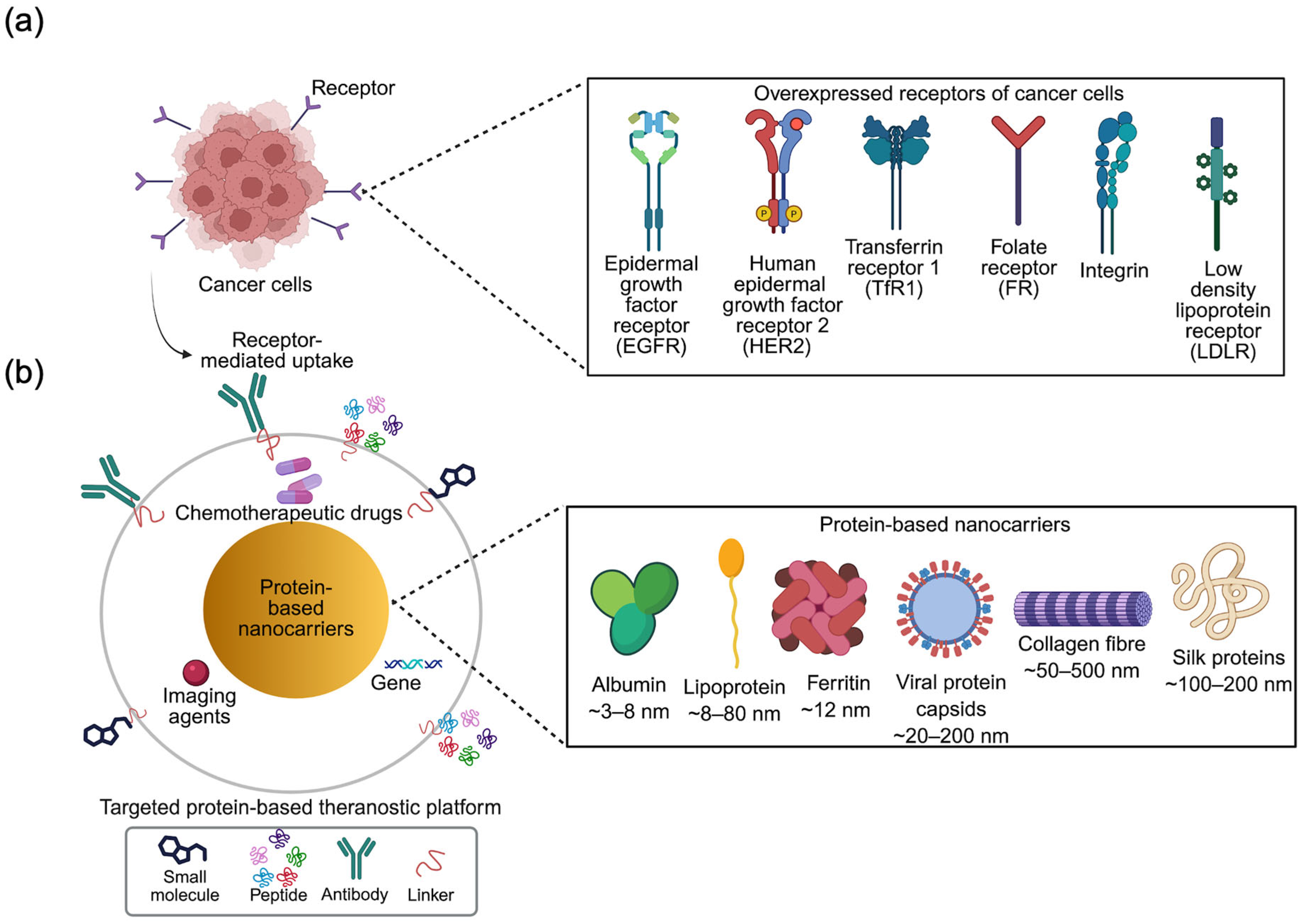
2. Targeting Overexpressed Receptors
3. Protein-Based Nanocarriers
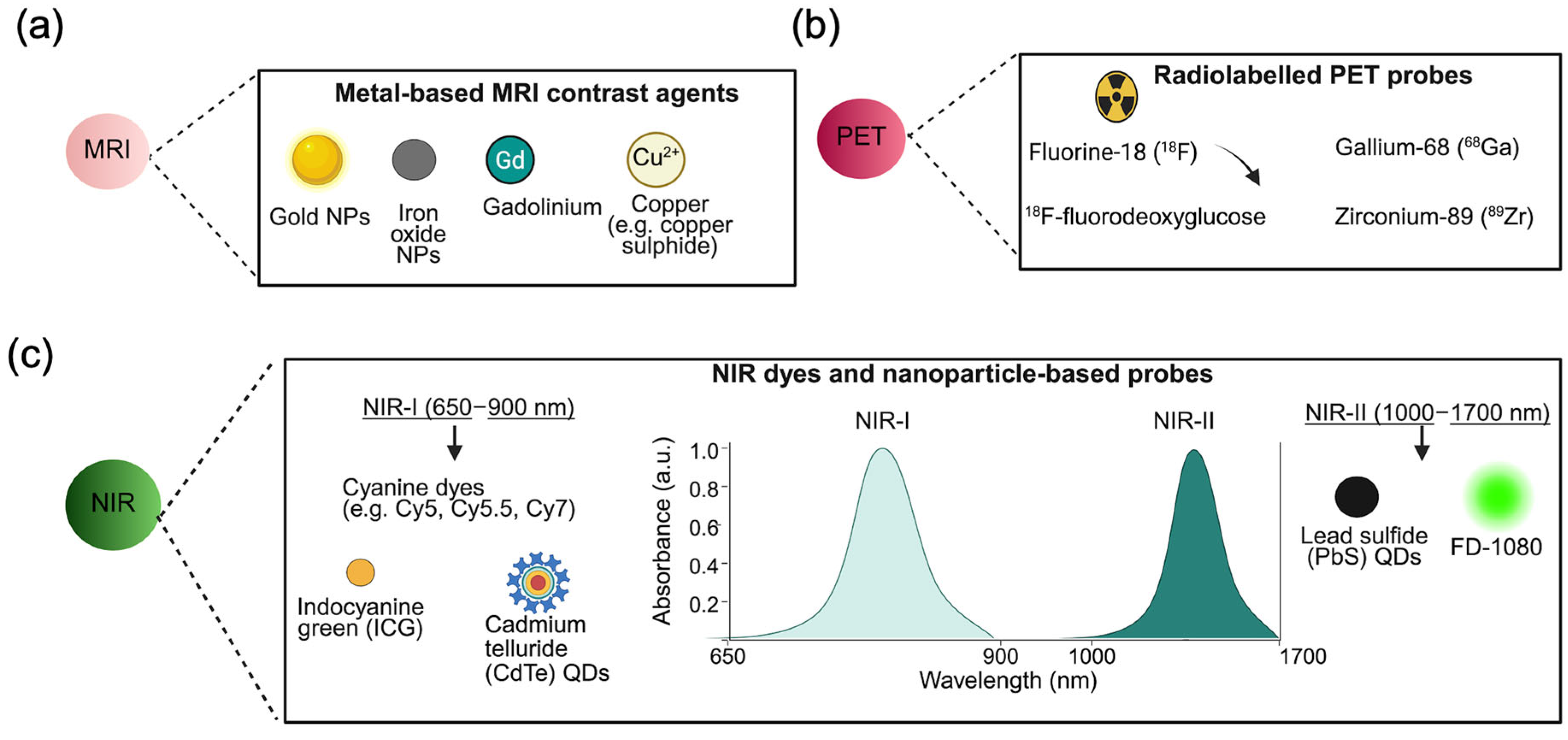
4. Imaging Modalities for Protein-Based Theranostics
5. Advanced Preclinical Models for Assessment of Theranostic Agents
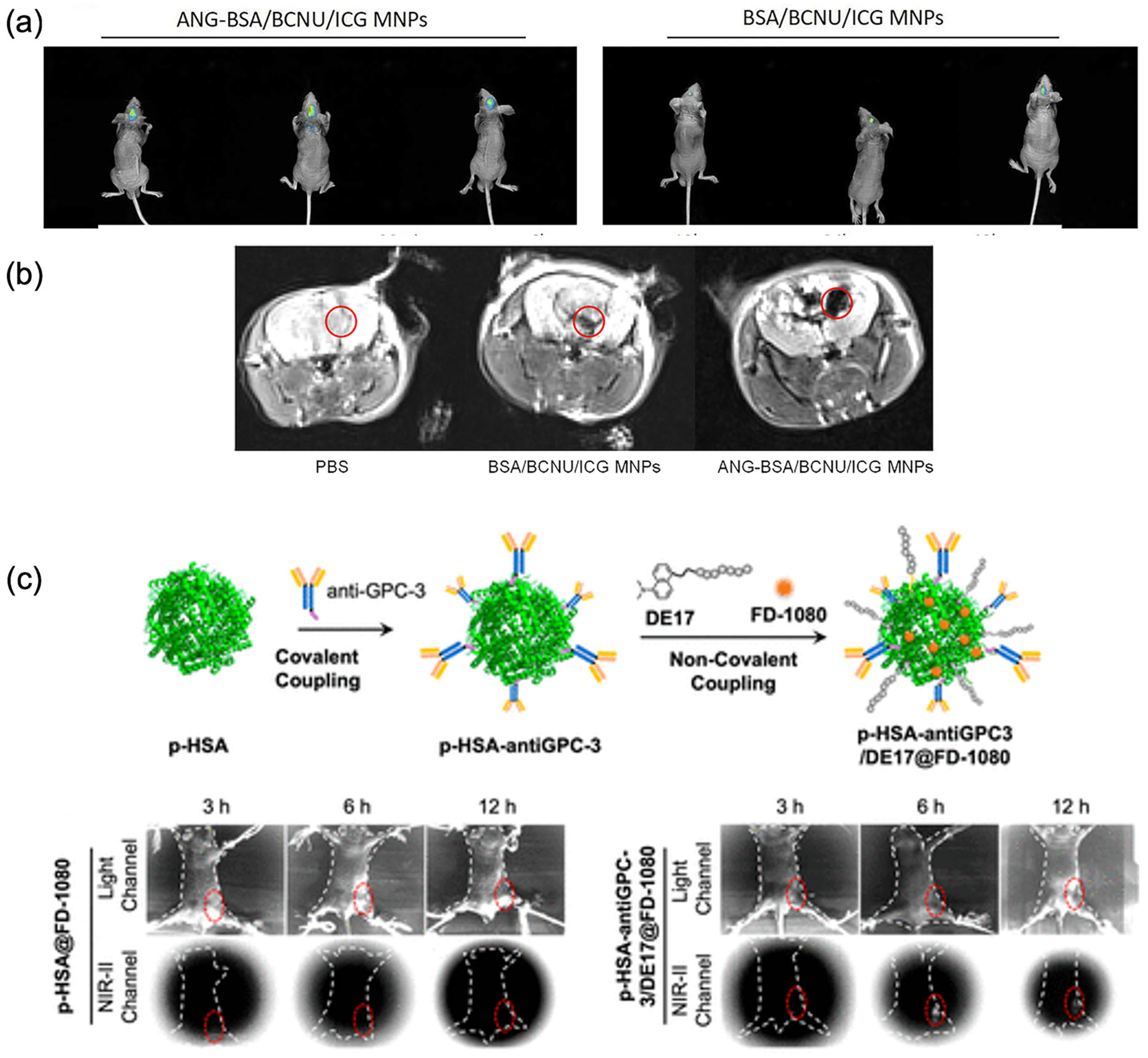
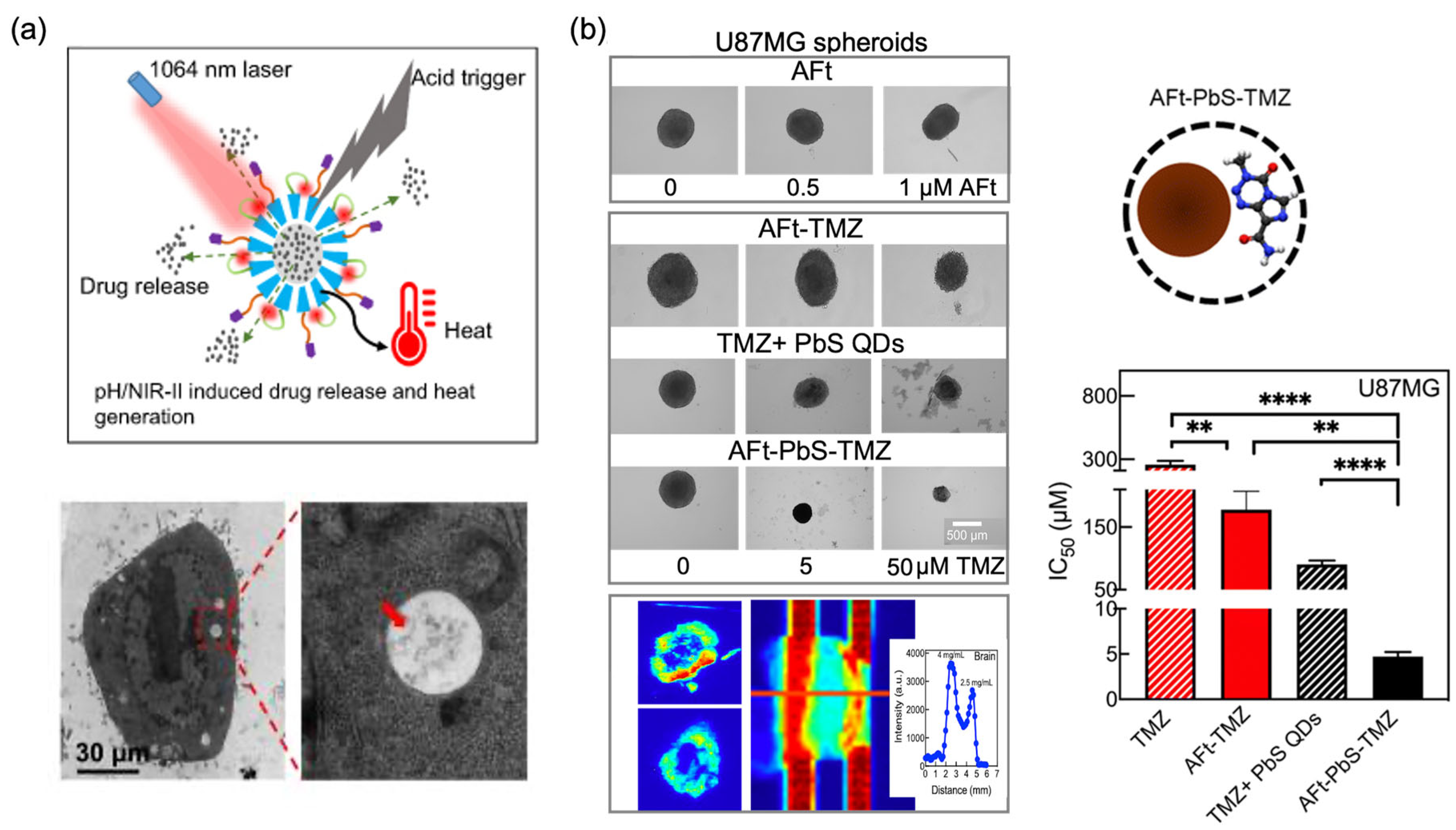
6. Protein-Based Theranostic Applications in Oncology

| Protein/ Modification | NP Size | Target/ Receptor | Therapeutic Cargo | Imaging Agent/ Modality | Cancer Type | Model | Ref. |
|---|---|---|---|---|---|---|---|
| Mannose-modified BSA | 193.9 ± 4.8 nm | Mannose receptor | Resveratrol (encapsulation efficiency (EE)%: 68.1 ± 5.1%) Pemetrexed (conjugation efficiency%: 50.9 ± 1.9%) | CdTe QD/fluorescence imaging | Breast | In vitro and in vivo, the Ehrlich ascites mammary tumour-bearing mouse model | [2] |
| Angiopep-2 functionalised BSA | 85 ± 10 nm | LRP | Carmustine (EE%: 15%) | ICG, superparamagnetic iron oxide/MRI and in vivo fluorescence imaging | Brain | In vitro (293T and U87MG cells) and in vivo orthotopic GBM nude mice | [119] |
| Glycipan-3-targeted peptide-modified HSA | ~220 nm | Glycipan-3 | - | NIR-II dye FD-1080/NIR-II fluorescence imaging | Hepatocellular | In vivo (xenograft model) | [120] |
| Recombinant human H-Ft | 12.05 ± 1.3 nm | TfR1 | DOX (encapsulation rate%: 48.4%) | MnO2/MRI imaging | Cervical, ovarian, breast | In vitro heLa, SKOV3, and 4T1 cancer cells | [123] |
| Ft | 13.5 ± 1.0 nm | TfR1 | DOX (loading capacity: 35%) | Graphene oxide QDs iron complex/fluorescence and MRI imaging | Breast | In vitro MDA-MB-231 cells | [93] |
| Folic acid-functionalised AFt | 35 nm | FR, TfR1 | PTX (loading ratio 145.6%) | IR1061/NIR-II fluorescence imaging | Breast | 4T1 models both in vitro and in vivo (subcutaneous xenograft model) | [126] |
| AFt | 60.1 nm | TfR1 | DOX (loading efficiency: 48%) | NIR dye ADS-780/NIR-I fluorescence imaging | Colorectal | BALB/c nude mice bearing HT-29 tumours | [127] |
|
Horse spleen
AFt | 12.1 ± 0.6 nm | TfR1 | TMZ (>300 molecules per AFt, EE%: 74.4 ± 11.2%) | PbS QD/NIR-II fluorescence imaging | GBM | In vitro 2D and 3D U87MG spheroids | [94] |
| M13 bacteriophage VLPs | - | SPARC | DOX (257 DOX molecules per VLP) | Alexa Fluor 488/fluorescence imaging | Prostate | In vitro 2D C42B and DU145 cells | [71] |
| M13 bacteriophage VLPs | ~181.4 nm | SPARC | - | Magnetic iron oxide NPs/MRI imaging | Prostate | In vivo xenograft model | [132] |
| Qβ-based VLPs | 64.83 ± 0.219 nm | - | DOX (up to 500 molecules per VLP) | Gold NPs/fluorescence imaging | Lung | In vitro 2D A549 cells | [133] |
| Gelatin | 180 ± 15 nm | FR | Curcumin | CuS NPs Fe3O4 NPs/fluorescence imaging | Lung, breast | In vitro 2D A549 and MCF-7 cells | [134] |
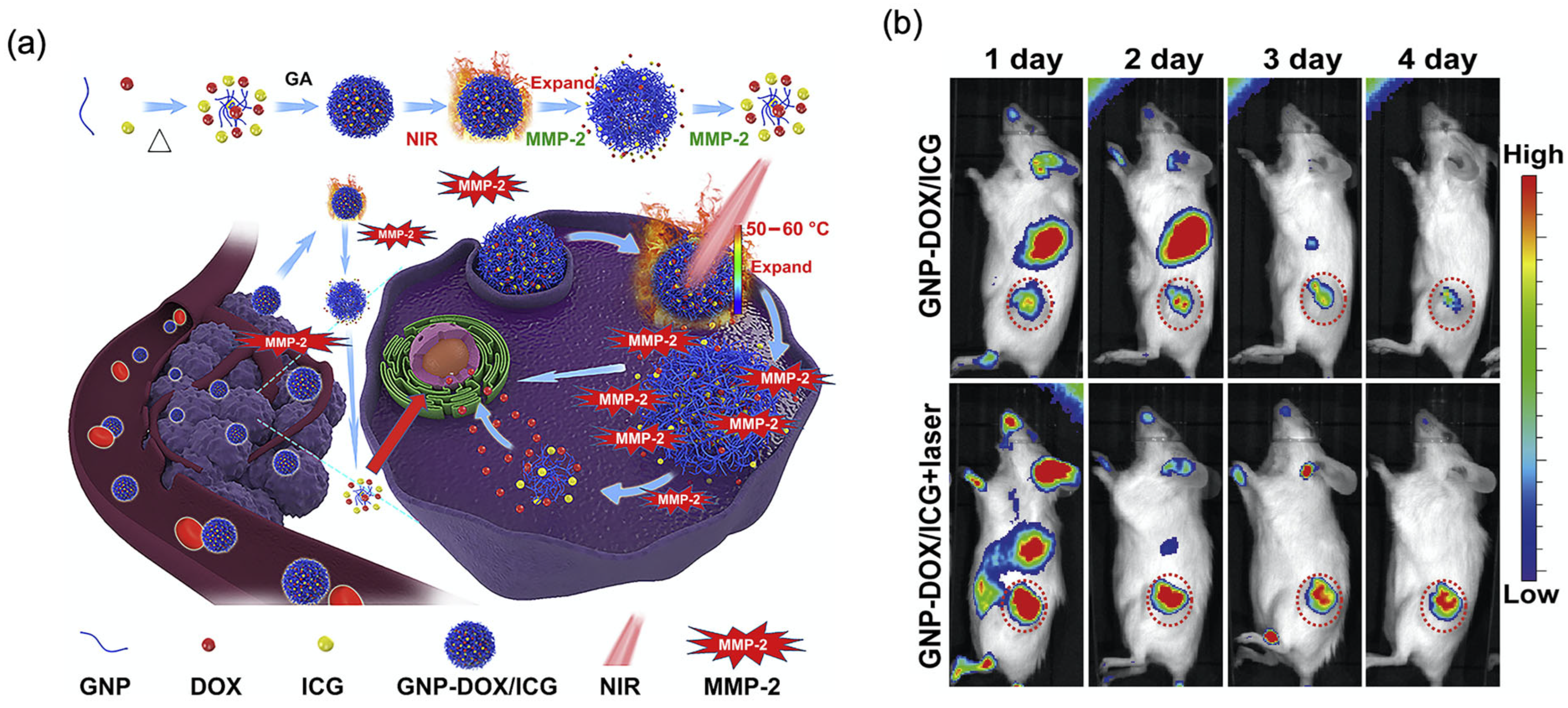
| Gelatin | Stimuli-responsive size changes (71.6 nm → 160.8 nm → 33.2 nm) | - | DOX | ICG/fluorescence imaging | Breast | Ex vivo and 4T1 tumour in vivo | [4] |
| Silk spider | - | HER2 | DOX | Magnetic iron oxide NPs/MRI imaging | Breast | In vitro SKBR3 cells | [135] |
7. Conclusions
Author Contributions
Funding
Data Availability Statement
Conflicts of Interest
Abbreviations
| 2D | Two-dimensional |
| 3D | Three-dimensional |
| ABCG1 | Adenosine triphosphate-binding cassette transporter subfamily G member 1 |
| AFt | Apoferritin |
| BBB | Blood–brain barrier |
| BSA | Bovine serum albumin |
| CT | Computed tomography |
| CXCR4 | Chemokine (C-X-C motif) receptor 4 |
| Cy5.5 | Cyanine 5.5 |
| Cy7 | Cyanine 7 |
| DNA | Deoxyribonucleic acid |
| DOX | Doxorubicin |
| ECM | Extracellular matrix |
| EGFR | Epidermal growth factor receptor |
| EPI | Epirubicin |
| FR | Folate receptor |
| Ft | Ferritin |
| GBM | Glioblastoma |
| gp60 | Glycoprotein 60 |
| HBV | Hepatitis B virus |
| HER2 | Human epidermal growth factor receptor 2 |
| HPV | Human papillomavirus |
| HSA | Human serum albumin |
| ICG | Indocyanine green |
| LDLR | Low density lipoprotein receptor |
| LRP | Lipoprotein receptor-related protein |
| MRI | Magnetic resonance imaging |
| MS2 | Emesvirus zinderi |
| MTIC | 5-(3-methyl-1-triazenyl)imidazole-4-carboxamide |
| NIR | Near-infrared imaging |
| NPs | Nanoparticles |
| NSCLC | Non-small cell lung cancer |
| OVA | Ovalbumin |
| PbS QD | Lead sulphide quantum dot |
| PD | Pharmacodynamic |
| PDT/PTT | Photodynamic and photothermal therapy |
| PET | Positron emission tomography |
| PTX | Paclitaxel |
| QDs | Quantum dots |
| Qβ | Oubevirus durum |
| RTK | Receptor tyrosine kinase |
| SCARA5 | Scavenger receptor class A member 5 |
| SEM | Scanning electron microscopy |
| SPARC | Secreted protein acidic and rich in cysteine |
| SPECT | Single-photon emission computed tomography |
| SRB1 | Scavenger receptor class B type 1 |
| TfR1 | Transferrin receptor 1 |
| TMV | Tobacco mosaic virus |
| TMZ | Temozolomide |
| VLPs | Virus-like particles |
References
- Jeyamogan, S.; Khan, N.A.; Siddiqui, R. Application and Importance of Theranostics in the Diagnosis and Treatment of Cancer. Arch. Med. Res. 2021, 52, 131–142. [Google Scholar] [CrossRef] [PubMed]
- Zayed, D.G.; Ebrahim, S.M.; Helmy, M.W.; Khattab, S.N.; Bahey-El-Din, M.; Fang, J.-Y.; Elkhodairy, K.A.; Elzoghby, A.O. Combining hydrophilic chemotherapy and hydrophobic phytotherapy via tumor-targeted albumin–QDs nano-hybrids: Covalent coupling and phospholipid complexation approaches. J. Nanobiotechnol 2019, 17, 7. [Google Scholar] [CrossRef] [PubMed]
- Hua, Y.; Qin, Z.; Gao, L.; Zhou, M.; Xue, Y.; Li, Y.; Xie, J. Protein nanoparticles as drug delivery systems for cancer theranostics. J. Control Release 2024, 371, 429–444. [Google Scholar] [CrossRef] [PubMed]
- Chen, X.; Zou, J.; Zhang, K.; Zhu, J.; Zhang, Y.; Zhu, Z.; Zheng, H.; Li, F.; Piao, J.-G. Photothermal/matrix metalloproteinase-2 dual-responsive gelatin nanoparticles for breast cancer treatment. Acta Pharm. Sin. B 2021, 11, 271–282. [Google Scholar] [CrossRef]
- Demir, B.; Moulahoum, H.; Ghorbanizamani, F.; Barlas, F.B.; Yesiltepe, O.; Gumus, Z.P.; Meral, K.; Demirkol, D.O.; Timur, S. Carbon dots and curcumin-loaded CD44-Targeted liposomes for imaging and tracking cancer chemotherapy: A multi-purpose tool for theranostics. J. Drug Deliv. Sci. Technol. 2021, 62, 102363. [Google Scholar] [CrossRef]
- Alibolandi, M.; Sadeghi, F.; Abnous, K.; Atyabi, F.; Ramezani, M.; Hadizadeh, F. The chemotherapeutic potential of doxorubicin-loaded PEG-b-PLGA nanopolymersomes in mouse breast cancer model. Eur. J. Pharm. Biopharm. 2015, 94, 521–531. [Google Scholar] [CrossRef] [PubMed]
- Song, C.; Zhang, Y.; Li, C.; Chen, G.; Kang, X.; Wang, Q. Enhanced Nanodrug Delivery to Solid Tumors Based on a Tumor Vasculature-Targeted Strategy. Adv. Funct. Mater. 2016, 26, 4192–4200. [Google Scholar] [CrossRef]
- Anitha, K.; Chenchula, S.; Surendran, V.; Shvetank, B.; Ravula, P.; Milan, R.; Chikatipalli, R. Advancing cancer theranostics through biomimetics: A comprehensive review. Heliyon 2024, 10, e27692. [Google Scholar] [CrossRef] [PubMed]
- Li, J.; Zhang, Z.; Zhang, B.; Yan, X.; Fan, K. Transferrin receptor 1 targeted nanomedicine for brain tumor therapy. Biomater. Sci. 2023, 11, 3394–3413. [Google Scholar] [CrossRef] [PubMed]
- Libermann, T.A.; Nusbaum, H.R.; Razon, N.; Kris, R.; Lax, I.; Soreq, H.; Whittle, N.; Waterfield, M.D.; Ullrich, A.; Schlessinger, J. Amplification and overexpression of the EGF receptor gene in primary human glioblastomas. J. Cell Sci. 1985, 1985, 161–172. [Google Scholar] [CrossRef] [PubMed]
- Al-Kuraya, K.; Schraml, P.; Torhorst, J.; Tapia, C.; Zaharieva, B.; Novotny, H.; Spichtin, H.; Maurer, R.; Mirlacher, M.; Köchli, O. Prognostic relevance of gene amplifications and coamplifications in breast cancer. Cancer Res. 2004, 64, 8534–8540. [Google Scholar] [CrossRef]
- Ooi, A.; Takehana, T.; Li, X.; Suzuki, S.; Kunitomo, K.; Iino, H.; Fujii, H.; Takeda, Y.; Dobashi, Y. Protein overexpression and gene amplification of HER-2 and EGFR in colorectal cancers: An immunohistochemical and fluorescent in situ hybridization study. Mod. Pathol. 2004, 17, 895–904. [Google Scholar] [CrossRef]
- Forsythe, M.L.; Alwithenani, A.; Bethune, D.; Castonguay, M.; Drucker, A.; Flowerdew, G.; French, D.; Fris, J.; Greer, W.; Henteleff, H. Molecular profiling of non-small cell lung cancer. PLoS ONE 2020, 15, e0236580. [Google Scholar] [CrossRef]
- Reddi, H.V. Mutations in the EGFR pathway. American Board of Clinical Chemistry. 2013. Available online: https://myadlm.org/cln/articles/2013/october/egfr-mutations (accessed on 26 February 2026).
- Sha, C.; Lee, P.C. EGFR-targeted therapies: A literature review. J. Clin. Med. 2024, 13, 6391. [Google Scholar] [CrossRef]
- Zhu, K.; Yang, X.; Tai, H.; Zhong, X.; Luo, T.; Zheng, H. HER2-targeted therapies in cancer: A systematic review. Biomark. Res. 2024, 12, 16. [Google Scholar] [CrossRef] [PubMed]
- Loibl, S.; Gianni, L. HER2-positive breast cancer. Lancet 2017, 389, 2415–2429. [Google Scholar] [CrossRef] [PubMed]
- Garcia, I.; Vizoso, F.; Martin, A.; Sanz, L.; Abdel-Lah, O.; Raigoso, P.; García-Muñiz, J. Clinical significance of the epidermal growth factor receptor and HER2 receptor in resectable gastric cancer. Ann. Surg. Oncol. 2003, 10, 234–241. [Google Scholar] [CrossRef] [PubMed]
- Richman, S.D.; Southward, K.; Chambers, P.; Cross, D.; Barrett, J.; Hemmings, G.; Taylor, M.; Wood, H.; Hutchins, G.; Foster, J.M. HER2 overexpression and amplification as a potential therapeutic target in colorectal cancer: Analysis of 3256 patients enrolled in the QUASAR, FOCUS and PICCOLO colorectal cancer trials. J. Pathol. 2016, 238, 562–570. [Google Scholar] [CrossRef] [PubMed]
- Park, S.; Maus, M.V.; Choi, B.D. CAR-T cell therapy for the treatment of adult high-grade gliomas. NPJ Precis. Oncol. 2024, 8, 279. [Google Scholar] [CrossRef] [PubMed]
- Zhang, H.; Katerji, H.; Turner, B.M.; Hicks, D.G. HER2-low breast cancers: New opportunities and challenges. Am. J. Clin. Pathol. 2022, 157, 328–336. [Google Scholar] [CrossRef] [PubMed]
- DeFazio-Eli, L.; Strommen, K.; Dao-Pick, T.; Parry, G.; Goodman, L.; Winslow, J. Quantitative assays for the measurement of HER1-HER2 heterodimerization and phosphorylation in cell lines and breast tumors: Applications for diagnostics and targeted drug mechanism of action. Breast Cancer Res. 2011, 13, R44. [Google Scholar] [CrossRef]
- Guo, Q.; Qian, C.; Wang, X.; Qian, Z.-M. Transferrin receptors. Exp. Mol. Med. 2025, 57, 724–732. [Google Scholar] [CrossRef]
- Bu, X.; Wang, L. Iron metabolism and the tumor microenvironment: A new perspective on cancer intervention and therapy. Int. J. Mol. Med. 2024, 55, 39. [Google Scholar] [CrossRef]
- Muckenthaler, M.U.; Rivella, S.; Hentze, M.W.; Galy, B. A red carpet for iron metabolism. Cell 2017, 168, 344–361. [Google Scholar] [CrossRef]
- Guo, Q.; Li, L.; Hou, S.; Yuan, Z.; Li, C.; Zhang, W.; Zheng, L.; Li, X. The role of iron in cancer progression. Front. Oncol. 2021, 11, 778492. [Google Scholar] [CrossRef]
- Shen, Y.; Li, X.; Dong, D.; Zhang, B.; Xue, Y.; Shang, P. Transferrin receptor 1 in cancer: A new sight for cancer therapy. Am. J. Cancer Res. 2018, 8, 916–931. [Google Scholar] [PubMed]
- Prajapati, A.; Rangra, S.; Patil, R.; Desai, N.; Jyothi, V.G.S.; Salave, S.; Amate, P.; Benival, D.; Kommineni, N. Receptor-targeted nanomedicine for cancer therapy. Receptors 2024, 3, 323–361. [Google Scholar] [CrossRef]
- Gonzalez, T.; Muminovic, M.; Nano, O.; Vulfovich, M. Folate receptor alpha—A novel approach to cancer therapy. Int. J. Mol. Sci. 2024, 25, 1046. [Google Scholar] [CrossRef]
- Liu, F.; Wu, Q.; Dong, Z.; Liu, K. Integrins in cancer: Emerging mechanisms and therapeutic opportunities. Pharmacol. Ther. 2023, 247, 108458. [Google Scholar] [CrossRef] [PubMed]
- Naci, D.; Vuori, K.; Aoudjit, F. Alpha2beta1 integrin in cancer development and chemoresistance. Semin. Cancer Biol. 2015, 35, 145–153. [Google Scholar] [CrossRef] [PubMed]
- Mammadova-Bach, E.; Zigrino, P.; Brucker, C.; Bourdon, C.; Freund, M.; De Arcangelis, A.; Abrams, S.I.; Orend, G.; Gachet, C.; Mangin, P.H. Platelet integrin α6β1 controls lung metastasis through direct binding to cancer cell–derived ADAM9. JCI Insight 2016, 1, e88245. [Google Scholar] [CrossRef]
- Zhou, M.; Niu, J.; Wang, J.; Gao, H.; Shahbaz, M.; Niu, Z.; Li, Z.; Zou, X.; Liang, B. Integrin αvβ8 serves as a novel marker of poor prognosis in colon carcinoma and regulates cell invasiveness through the activation of TGF-β1. J. Cancer 2020, 11, 3803. [Google Scholar] [CrossRef]
- Munksgaard Thorén, M.; Chmielarska Masoumi, K.; Krona, C.; Huang, X.; Kundu, S.; Schmidt, L.; Forsberg-Nilsson, K.; Floyd Keep, M.; Englund, E.; Nelander, S. Integrin α10, a novel therapeutic target in glioblastoma, regulates cell migration, proliferation, and survival. Cancers 2019, 11, 587. [Google Scholar] [CrossRef]
- Che, P.; Yu, L.; Friedman, G.K.; Wang, M.; Ke, X.; Wang, H.; Zhang, W.; Nabors, B.; Ding, Q.; Han, X. Integrin αvβ3 engagement regulates glucose metabolism and migration through focal adhesion kinase (FAK) and protein arginine methyltransferase 5 (PRMT5) in glioblastoma cells. Cancers 2021, 13, 1111. [Google Scholar] [CrossRef]
- Campion, O.; Al Khalifa, T.; Langlois, B.; Thevenard-Devy, J.; Salesse, S.; Savary, K.; Schneider, C.; Etique, N.; Dedieu, S.; Devy, J. Contribution of the low-density lipoprotein receptor family to breast cancer progression. Front. Oncol. 2020, 10, 882. [Google Scholar] [CrossRef]
- Pawar, S.; Koneru, T.; McCord, E.; Tatiparti, K.; Sau, S.; Iyer, A.K. LDL receptors and their role in targeted therapy for glioma: A review. Drug Discov. Today 2021, 26, 1212–1225. [Google Scholar] [CrossRef] [PubMed]
- Martínez-López, A.L.; Pangua, C.; Reboredo, C.; Campión, R.; Morales-Gracia, J.; Irache, J.M. Protein-based nanoparticles for drug delivery purposes. Int. J. Pharm. 2020, 581, 119289. [Google Scholar] [CrossRef]
- Mohanty, A.; Park, I.-K. Protein-caged nanoparticles: A promising nanomedicine against cancer. Chonnam Med. J. 2023, 59, 1–12. [Google Scholar] [CrossRef] [PubMed]
- Miao, Y.; Yang, T.; Yang, S.; Yang, M.; Mao, C. Protein nanoparticles directed cancer imaging and therapy. Nano Converg. 2022, 9, 2. [Google Scholar] [CrossRef]
- Rondon, A.; Mahri, S.; Morales-Yanez, F.; Dumoulin, M.; Vanbever, R. Protein engineering strategies for improved pharmacokinetics. Adv. Funct. Mater. 2021, 31, 2101633. [Google Scholar] [CrossRef]
- Ning, C.; Dong, Y.; Yang, K.; Li, X.; Wang, F.; Zhang, Y. Co-encapsulation of hydrophilic and hydrophobic drugs into human H chain ferritin nanocarrier enhances antitumor efficacy. ACS Biomater. Sci. Eng. 2023, 9, 2572–2583. [Google Scholar] [CrossRef]
- Incocciati, A.; Kubeš, J.; Piacentini, R.; Cappelletti, C.; Botta, S.; Bertuccini, L.; Šimůnek, T.; Boffi, A.; Macone, A.; Bonamore, A. Hydrophobicity-enhanced ferritin nanoparticles for efficient encapsulation and targeted delivery of hydrophobic drugs to tumor cells. Protein Sci. 2023, 32, e4819. [Google Scholar] [CrossRef]
- Shin, J.; Cole, B.D.; Seyedmohammad, M.; Lim, S.I.; Jang, Y. Protein nanocarriers capable of encapsulating both hydrophobic and hydrophilic drugs. Methods Mol. Biol. 2023, 143–150. [Google Scholar] [CrossRef]
- Wang, Y.; Chen, S.; Yang, X.; Zhang, S.; Cui, C. Preparation optimization of bovine serum albumin nanoparticles and its application for siRNA delivery. Drug Des. Dev. Ther. 2021, 15, 1531–1547. [Google Scholar] [CrossRef] [PubMed]
- Zeng, S.; Tang, Q.; Jiang, K.; Tang, X. Fabrication of metformin and survivin siRNA encapsulated into polyethyleneimine-altered silk fibroin nanoparticles for the treatment of nasopharyngeal carcinoma. Process Biochem. 2023, 125, 36–46. [Google Scholar] [CrossRef]
- Ren, H.; Zhang, B.; Zhang, X.; Wang, T.; Hou, X.; Lan, X.; Pan, C.; Wu, J.; Liu, B. Self-Assembling Nanoparticle Hemagglutinin Influenza Vaccines Induce High Antibody Response. Int. J. Mol. Sci. 2024, 25, 7259. [Google Scholar] [CrossRef]
- Yin, C.; Yao, Y.F.; Yang, P.; Liu, H.; Gao, G.; Peng, Y.; Chen, M.; Lu, M.; Zhang, X.; Guo, W. A highly effective ferritin-based divalent nanoparticle vaccine shields Syrian hamsters against lethal Nipah virus. Front. Immunol. 2024, 15, 1387811. [Google Scholar] [CrossRef] [PubMed]
- Li, Y.; Dai, C.; Hua, Z.; Xia, L.; Ding, Y.; Wang, Q.; Gié, M.-L.M.; Bouvet, M.; Cai, H. A human serum albumin-indocyanine green complex offers improved tumor identification in fluorescence-guided surgery. Transl. Cancer Res. 2024, 13, 437. [Google Scholar] [CrossRef] [PubMed]
- Nigam, P.; Waghmode, S.; Louis, M.; Wangnoo, S.; Chavan, P.; Sarkar, D. Graphene quantum dots conjugated albumin nanoparticles for targeted drug delivery and imaging of pancreatic cancer. J. Mater. Chem. B 2014, 2, 3190–3195. [Google Scholar] [CrossRef] [PubMed]
- Bradshaw, T.D.; Junor, M.; Patane, A.; Clarke, P.; Thomas, N.R.; Li, M.; Mann, S.; Turyanska, L. Apoferritin-encapsulated PbS quantum dots significantly inhibit growth of colorectal carcinoma cells. J. Mater. Chem. B 2013, 1, 6254–6260. [Google Scholar] [CrossRef]
- Raoufinia, R.; Mota, A.; Keyhanvar, N.; Safari, F.; Shamekhi, S.; Abdolalizadeh, J. Overview of albumin and its purification methods. Adv. Pharm. Bull. 2016, 6, 495. [Google Scholar] [CrossRef] [PubMed]
- Tincu, C.-E.; Andrițoiu, C.V.; Popa, M.; Ochiuz, L. Recent advancements and strategies for overcoming the blood–brain barrier using albumin-based drug delivery systems to treat brain cancer, with a focus on glioblastoma. Polymers 2023, 15, 3969. [Google Scholar] [CrossRef]
- Murphy, G.; Brayden, D.J.; Cheung, D.L.; Liew, A.; Fitzgerald, M.; Pandit, A. Albumin-based delivery systems: Recent advances, challenges, and opportunities. J. Control Release 2025, 380, 375–395. [Google Scholar] [CrossRef]
- Gao, Y.; Nai, J.; Yang, Z.; Zhang, J.; Ma, S.; Zhao, Y.; Li, H.; Li, J.; Yang, Y.; Yang, M. A novel preparative method for nanoparticle albumin-bound paclitaxel with high drug loading and its evaluation both in vitro and in vivo. PLoS ONE 2021, 16, e0250670. [Google Scholar] [CrossRef]
- Hawkins, M.J.; Soon-Shiong, P.; Desai, N. Protein nanoparticles as drug carriers in clinical medicine. Adv. Drug Deliv. Rev. 2008, 60, 876–885. [Google Scholar] [CrossRef]
- Busatto, S.; Walker, S.A.; Grayson, W.; Pham, A.; Tian, M.; Nesto, N.; Barklund, J.; Wolfram, J. Lipoprotein-based drug delivery. Adv. Drug Deliv. Rev. 2020, 159, 377–390. [Google Scholar] [CrossRef]
- Wang, R.; Zhang, X.; Feng, K.; Zeng, W.; Wu, J.; Sun, D.; Lu, Z.; Feng, H.; Di, L. Nanotechnologies meeting natural sources: Engineered lipoproteins for precise brain disease theranostics. Asian J. Pharm. Sci. 2023, 18, 100857. [Google Scholar] [CrossRef]
- Lai, G.; Wu, H.; Yang, K.; Hu, K.; Zhou, Y.; Chen, X.; Fu, F.; Li, J.; Xie, G.; Wang, H.-F. Progress of nanoparticle drug delivery system for the treatment of glioma. Front. Bioeng. Biotechnol. 2024, 12, 1403511. [Google Scholar] [CrossRef]
- Bouzinab, K.; Summers, H.S.; Stevens, M.F.; Moody, C.J.; Thomas, N.R.; Gershkovich, P.; Weston, N.; Ashford, M.B.; Bradshaw, T.D.; Turyanska, L. Delivery of temozolomide and N3-propargyl analog to brain tumors using an apoferritin nanocage. ACS Appl. Mater. Interfaces 2020, 12, 12609–12617. [Google Scholar] [CrossRef] [PubMed]
- Mohanty, A.; Parida, A.; Raut, R.K.; Behera, R.K. Ferritin: A promising nanoreactor and nanocarrier for bionanotechnology. ACS Bio Med. Chem. Au 2022, 2, 258–281. [Google Scholar] [CrossRef] [PubMed]
- Lucignano, R.; Ferraro, G. Bioactive molecules delivery through ferritin nanoparticles: Sum up of current loading methods. Molecules 2024, 29, 4045. [Google Scholar] [CrossRef]
- Fan, K.; Cao, C.; Pan, Y.; Lu, D.; Yang, D.; Feng, J.; Song, L.; Liang, M.; Yan, X. Magnetoferritin nanoparticles for targeting and visualizing tumour tissues. Nat. Nanotechnol. 2012, 7, 459–464. [Google Scholar] [CrossRef]
- Li, L.; Fang, C.J.; Ryan, J.C.; Niemi, E.C.; Lebrón, J.A.; Björkman, P.J.; Arase, H.; Torti, F.M.; Torti, S.V.; Nakamura, M.C. Binding and uptake of H-ferritin are mediated by human transferrin receptor-1. Proc. Natl. Acad. Sci. USA 2010, 107, 3505–3510. [Google Scholar] [CrossRef]
- Veroniaina, H.; Pan, X.; Wu, Z.; Qi, X. Apoferritin: A potential nanocarrier for cancer imaging and drug delivery. Expert Rev. Anticancer Ther. 2021, 21, 901–913. [Google Scholar] [CrossRef] [PubMed]
- Xiao, C.; Fu, X.; Wang, Y.; Liu, H.; Jiang, Y.; Zhao, Z.; You, F. Transferrin receptor regulates malignancies and the stemness of hepatocellular carcinoma-derived cancer stem-like cells by affecting iron accumulation. PLoS ONE 2020, 15, e0243812. [Google Scholar] [CrossRef] [PubMed]
- Candelaria, P.V.; Leoh, L.S.; Penichet, M.L.; Daniels-Wells, T.R. Antibodies targeting the transferrin receptor 1 (TfR1) as direct anti-cancer agents. Front. Immunol. 2021, 12, 607692. [Google Scholar] [CrossRef] [PubMed]
- Kuruppu, A.I.; Turyanska, L.; Bradshaw, T.D.; Manickam, S.; Galhena, B.P.; Paranagama, P.; De Silva, R. Apoferritin and Dps as drug delivery vehicles: Some selected examples in oncology. Biochim. Biophys. Acta Gen. Subj. 2022, 1866, 130067. [Google Scholar] [CrossRef]
- Kim, K.R.; Lee, A.S.; Kim, S.M.; Heo, H.R.; Kim, C.S. Virus-like nanoparticles as a theranostic platform for cancer. Front. Bioeng. Biotechnol. 2023, 10, 1106767. [Google Scholar] [CrossRef]
- Rohovie, M.; Nagasawa, M.; Swartz, J. Virus-like particles: Next-generation nanoparticles for targeted therapeutic delivery. Bioeng. Transl. Med. 2017, 19, 43–57. [Google Scholar] [CrossRef] [PubMed]
- Ghosh, D.; Kohli, A.G.; Moser, F.; Endy, D.; Belcher, A.M. Refactored M13 bacteriophage as a platform for tumor cell imaging and drug delivery. ACS Synt. Biol. 2012, 1, 576–582. [Google Scholar] [CrossRef]
- Suffian, I.F.; Wang, J.T.-W.; Faruqu, F.N.; Benitez, J.; Nishimura, Y.; Ogino, C.; Kondo, A.; Al-Jamal, K.T. Engineering human epidermal growth receptor 2-targeting hepatitis B virus core nanoparticles for siRNA delivery in vitro and in vivo. ACS Appl. Nano Mater. 2018, 1, 3269–3282. [Google Scholar] [CrossRef] [PubMed]
- Li, C.; Li, F.; Zhang, Y.; Zhang, W.; Zhang, X.-E.; Wang, Q. Real-time monitoring surface chemistry-dependent in vivo behaviors of protein nanocages via encapsulating an NIR-II Ag2S quantum dot. ACS Nano 2015, 9, 12255–12263. [Google Scholar] [CrossRef]
- Garimella, P.D.; Datta, A.; Romanini, D.W.; Raymond, K.N.; Francis, M.B. Multivalent, high-relaxivity MRI contrast agents using rigid cysteine-reactive gadolinium complexes. J. Am. Chem. Soc. 2011, 133, 14704–14709. [Google Scholar] [CrossRef] [PubMed]
- Shan, W.; Wang, C.; Chen, H.; Ren, L. Rational design of virus-like particles for nanomedicine. Acc. Mater. Res. 2023, 4, 814–826. [Google Scholar] [CrossRef]
- Arun, A.; Malrautu, P.; Laha, A.; Luo, H.; Ramakrishna, S. Collagen nanoparticles in drug delivery systems and tissue engineering. Appl. Sci. 2021, 11, 11369. [Google Scholar] [CrossRef]
- Gou, Y.; Miao, D.; Zhou, M.; Wang, L.; Zhou, H.; Su, G. Bio-inspired protein-based nanoformulations for cancer theranostics. Front. Pharmacol. 2018, 9, 421. [Google Scholar] [CrossRef]
- Zhang, Y.; Wang, J. Current status and prospects of gelatin and its derivatives in oncological applications. Int. J. Biol. Macromol. 2024, 274, 133590. [Google Scholar] [CrossRef]
- Kundu, B.; Kurland, N.E.; Bano, S.; Patra, C.; Engel, F.B.; Yadavalli, V.K.; Kundu, S.C. Silk proteins for biomedical applications: Bioengineering perspectives. Prog. Polym. Sci. 2014, 39, 251–267. [Google Scholar] [CrossRef]
- Wang, B.; Li, H.; Chen, Y.; Chen, Z.; Li, P.; Zhang, X.; Lin, X. Preparation and characterization of a iRGD-modified recombinant spider silk particles for antitumor polypeptide drug delivery into cancer cells. BMC Biotechnol. 2025, 25, 88. [Google Scholar] [CrossRef]
- Pirota, V.; Bisbano, G.; Serra, M.; Torre, M.L.; Doria, F.; Bari, E.; Paolillo, M. cRGD-functionalized silk fibroin nanoparticles: A strategy for cancer treatment with a potent unselective naphthalene diimide derivative. Cancers 2023, 15, 1725. [Google Scholar] [CrossRef]
- Fuster, M.G.; Montalbán, M.G.; Moulefera, I.; Víllora, G.; Kaplan, D.L. Folic acid-modified ibrutinib-loaded silk fibroin nanoparticles for cancer cell therapy with over-expressed folate receptor. Pharmaceutics 2023, 15, 1186. [Google Scholar] [CrossRef]
- Li, Z.; Cheng, G.; Zhang, Q.; Wu, W.; Zhang, Y.; Wu, B.; Liu, Z.; Tong, X.; Xiao, B.; Cheng, L. PX478-loaded silk fibroin nanoparticles reverse multidrug resistance by inhibiting the hypoxia-inducible factor. Int. J. Biol. Macromol. 2022, 222, 2309–2317. [Google Scholar] [CrossRef] [PubMed]
- Bian, X.; Wu, P.; Sha, H.; Qian, H.; Wang, Q.; Cheng, L.; Yang, Y.; Yang, M.; Liu, B. Anti-EGFR-iRGD recombinant protein conjugated silk fibroin nanoparticles for enhanced tumor targeting and antitumor efficiency. Onco Targets Ther. 2016, 9, 3153–3162. [Google Scholar] [CrossRef] [PubMed][Green Version]
- Gonzalez-Obeso, C.; Hartzell, E.J.; Scheel, R.A.; Kaplan, D.L. Delivering on the promise of recombinant silk-inspired proteins for drug delivery. Adv. Drug Deliv. Rev. 2023, 192, 114622. [Google Scholar] [CrossRef]
- Howard, F.H.; Gao, Z.; Mansor, H.B.; Yang, Z.; Muthana, M. Silk fibroin nanoparticles: A biocompatible multi-functional polymer for drug delivery. In Biotechnology—Biosensors, Biomaterials and Tissue Engineering Annual Volume 2023; IntechOpen: London, UK, 2023. [Google Scholar] [CrossRef]
- Mansor, M.H.; Gao, Z.; Howard, F.; MacInnes, J.; Zhao, X.; Muthana, M. Efficient and rapid microfluidics production of bio-inspired nanoparticles derived from Bombyx mori silkworm for enhanced breast cancer treatment. Pharmaceutics 2025, 17, 95. [Google Scholar] [CrossRef] [PubMed]
- Kulig, K.; Morak-Młodawska, B.; Jeleń, M.; Ziąbka, M.; Owczarzy, A.; Rogóż, W.; Maciążek-Jurczyk, M. Bovine Serum Albumin Nanoparticles as a Proposed Drug Formulation for the Delivery of 10 H-2, 7-diazaphenothiazine. J. Clust. Sci. 2024, 35, 2353–2362. [Google Scholar] [CrossRef]
- Sevieri, M.; Andreata, F.; Mainini, F.; Signati, L.; Piccotti, F.; Truffi, M.; Bonizzi, A.; Sitia, L.; Pigliacelli, C.; Morasso, C. Impact of doxorubicin-loaded ferritin nanocages (FerOX) vs. free doxorubicin on T lymphocytes: A translational clinical study on breast cancer patients undergoing neoadjuvant chemotherapy. J. Nanobiotechnol. 2024, 22, 184. [Google Scholar] [CrossRef]
- Gonçalves, A.P.; Ramos, J.É.B.; Madureira, K.H.; Martins, M.L.; Santos, A.A.; de Vries, R. Virus-Like Particle-Encapsulated Doxorubicin Enters and Kills Murine Tumor Cells Differently from Free Doxorubicin. Macromol. Biosci. 2023, 23, 2200530. [Google Scholar] [CrossRef]
- Yang, M.; Li, K.; Bu, Y.; Ma, L.; Ni, Y.; Huang, J.; Zhang, J.; Zhou, H. Protein-Encapsulation-Driven High-Performance Luminogen for Three-Photon Imaging of Deep Tumor in the NIR-II Biowindow. Dyes Pigments 2025, 243, 113095. [Google Scholar] [CrossRef]
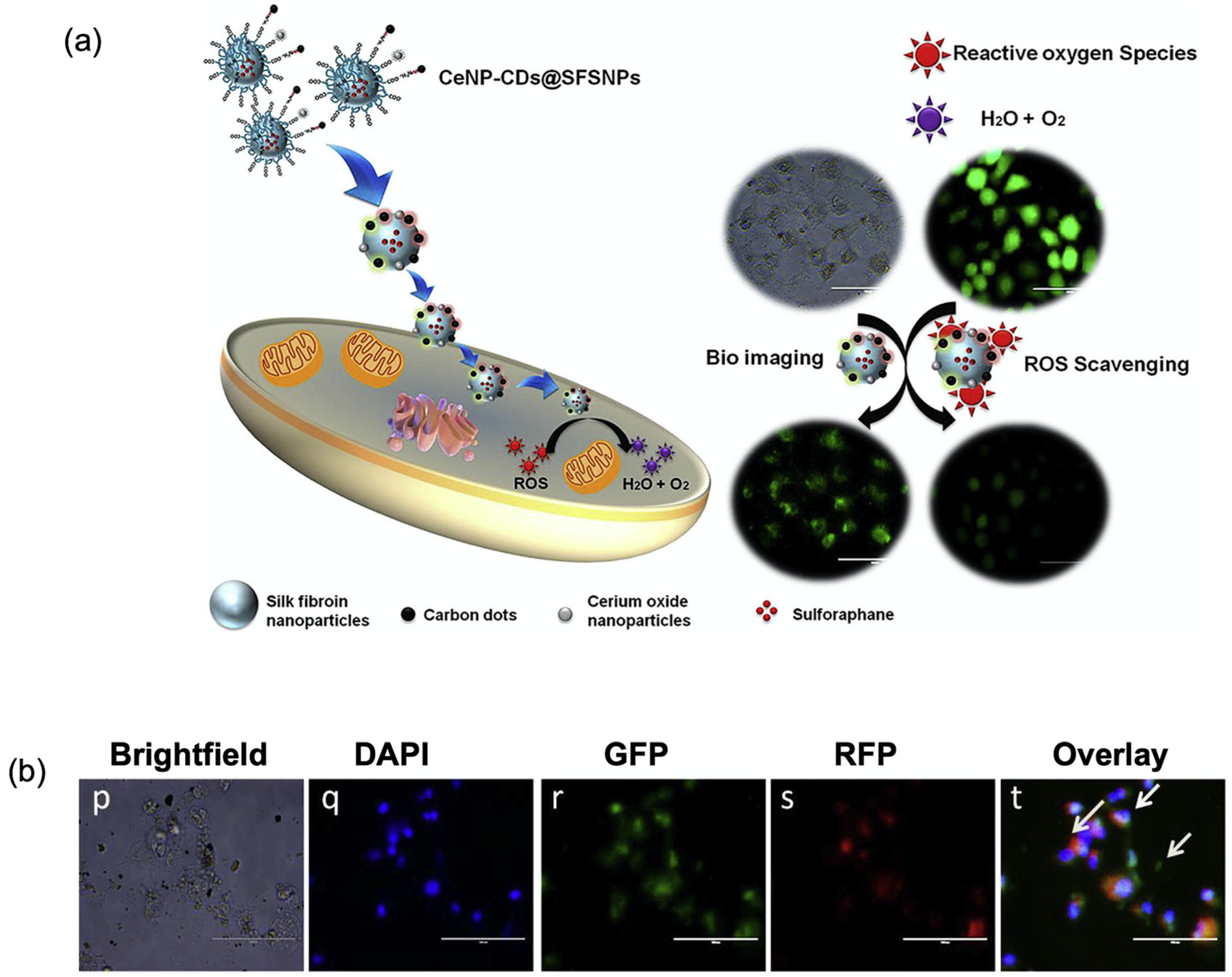
- Passi, M.; Kumar, V.; Packirisamy, G. Theranostic nanozyme: Silk fibroin based multifunctional nanocomposites to combat oxidative stress. Mater. Sci. Eng. C Mater. Biol. Appl. 2020, 107, 110255. [Google Scholar] [CrossRef]
- Nasrollahi, F.; Sana, B.; Paramelle, D.; Ahadian, S.; Khademhosseini, A.; Lim, S. Incorporation of graphene quantum dots, iron, and doxorubicin in/on ferritin nanocages for bimodal imaging and drug delivery. Adv. Ther. 2020, 3, 1900183. [Google Scholar] [CrossRef]
- Colpan, R.D.; Ward, E.B.; Zhang, D.; Ling, B.; Iqbal, U.; Moreno, M.J.; Thomas, N.R.; Turyanska, L.; Bradshaw, T.D. Co-encapsulation of temozolomide and PbS quantum dots in apoferritin for transferrin receptor 1 targeting, imaging and treatment of glioblastoma. Nanoscale Adv. 2025, 7, 6808–6818. [Google Scholar] [CrossRef]
- Wang, T.; Ni, Y.; Liu, L. Innovative imaging techniques for advancing cancer diagnosis and treatment. Cancers 2024, 16, 2607. [Google Scholar] [CrossRef] [PubMed]
- Kaku, T.S.; Lim, S. Protein nanoparticles in molecular, cellular, and tissue imaging. Wiley Interdiscip. Rev. Nanomed. Nanobiotechnol. 2021, 13, e1714. [Google Scholar] [CrossRef] [PubMed]
- Li, M.; Zhang, Y.; Ma, J.; Du, J. Albumin-based nanoparticle for dual-modality imaging of the lymphatic system. RSC Adv. 2023, 13, 2248–2255. [Google Scholar] [CrossRef]
- Ahmad, I.; Alqurashi, F. Early cancer detection using deep learning and medical imaging: A survey. Crit. Rev. Oncol. Hematol. 2024, 204, 104528. [Google Scholar] [CrossRef]
- Zhuxian, Z.; Zheng-Rong, L. Gadolinium-based contrast agents for MR Cancer Imaging. Wiley Interdiscip. Rev. Nanomed. Nanobiotechnol. 2013, 5, 1–18. [Google Scholar] [CrossRef]
- Cheong, B.Y.; Wilson, J.M.; Preventza, O.A.; Muthupillai, R. Gadolinium-based contrast agents: Updates and answers to typical questions regarding gadolinium use. Tex. Heart Inst. J. 2022, 49, e217680. [Google Scholar] [CrossRef]
- Robert, P.; Fingerhut, S.; Factor, C.; Vives, V.; Letien, J.; Sperling, M.; Rasschaert, M.; Santus, R.; Ballet, S.; Idée, J.-M. One-year retention of gadolinium in the brain: Comparison of gadodiamide and gadoterate meglumine in a rodent model. Radiology 2018, 288, 424–433. [Google Scholar] [CrossRef]
- Shargh, V.H.; Luckett, J.; Bouzinab, K.; Paisey, S.; Turyanska, L.; Singleton, W.G.B.; Lowis, S.; Gershkovich, P.; Bradshaw, T.D.; Stevens, M.F.G.; et al. Chemosensitization of Temozolomide-Resistant Pediatric Diffuse Midline Glioma Using Potent Nanoencapsulated Forms of a N(3)-Propargyl Analogue. ACS Appl. Mater. Interfaces 2021, 13, 35266–35280. [Google Scholar] [CrossRef]
- Gil, H.M.; Price, T.W.; Chelani, K.; Bouillard, J.-S.G.; Calaminus, S.D.; Stasiuk, G.J. NIR-quantum dots in biomedical imaging and their future. iScience 2021, 24, 102189. [Google Scholar] [CrossRef]
- Berlier, J.E.; Rothe, A.; Buller, G.; Bradford, J.; Gray, D.R.; Filanoski, B.J.; Telford, W.G.; Yue, S.; Liu, J.; Cheung, C.-Y. Quantitative comparison of long-wavelength Alexa Fluor dyes to Cy dyes: Fluorescence of the dyes and their bioconjugates. J. Histochem. Cytochem. 2003, 51, 1699–1712. [Google Scholar] [CrossRef]
- Li, S.; Cheng, D.; He, L.; Yuan, L. Recent Progresses in NIR-I/II Fluorescence Imaging for Surgical Navigation. Front. Bioeng. Biotechnol. 2021, 9, 768698. [Google Scholar] [CrossRef]
- Traylor, J.I.; Pernik, M.N.; Sternisha, A.C.; McBrayer, S.K.; Abdullah, K.G. Molecular and metabolic mechanisms underlying selective 5-aminolevulinic acid-induced fluorescence in gliomas. Cancers 2021, 13, 580. [Google Scholar] [CrossRef]
- Cordeiro, S.; Oliveira, B.B.; Valente, R.; Ferreira, D.; Luz, A.; Baptista, P.V.; Fernandes, A.R. Breaking the mold: 3D cell cultures reshaping the future of cancer research. Front. Cell Dev. Biol. 2024, 12, 1507388. [Google Scholar] [CrossRef]
- Shi, Z.; Luo, M.; Huang, Q.; Ding, C.; Wang, W.; Wu, Y.; Luo, J.; Lin, C.; Chen, T.; Zeng, X. NIR-dye bridged human serum albumin reassemblies for effective photothermal therapy of tumor. Nat. Commun. 2023, 14, 6567. [Google Scholar] [CrossRef]
- Zou, J.; Wang, S.; Chai, N.; Yue, H.; Ye, P.; Guo, P.; Li, F.; Wei, B.; Ma, G.; Wei, W. Construction of gastric cancer patient-derived organoids and their utilization in a comparative study of clinically used paclitaxel nanoformulations. J. Nanobiotechnol. 2022, 20, 233. [Google Scholar] [CrossRef]
- Wang, Z.; Zhao, Y.; Zhang, S.; Chen, X.; Sun, G.; Zhang, B.; Jiang, B.; Yang, Y.; Yan, X.; Fan, K. Re-engineering the inner surface of ferritin nanocage enables dual drug payloads for synergistic tumor therapy. Theranostics 2022, 12, 1800. [Google Scholar] [CrossRef]
- Calvillo, L. 3Rs approach (replace, reduce and refine animal models) to improve preclinical research. Front. Physiol. 2022, 13, 1040575. [Google Scholar] [CrossRef]
- Lonkwic, K.; Zajdel, R.; Kaczka, K. Unlocking the Potential of Spheroids in Personalized Medicine: Systematic Review of Seeding Methodologies. Int. J. Mol. Sci. 2025, 26, 6478. [Google Scholar] [CrossRef]
- Bokhout, L.; Campeiro, J.D.; Dalm, S.U. Exploring the landscape of current in vitro and in vivo models and their relevance for targeted radionuclide theranostics. Eur. J. Nucl. Med. Mol. Imaging 2025, 52, 3291–3311. [Google Scholar] [CrossRef]
- Wakefield, L.; Agarwal, S.; Tanner, K. Preclinical models for drug discovery for metastatic disease. Cell 2023, 186, 1792–1813. [Google Scholar] [CrossRef]
- Thomas, G.; Rahman, R. Evolution of Preclinical Models for Glioblastoma Modelling and Drug Screening. Curr. Oncol. Rep. 2025, 1–24. [Google Scholar] [CrossRef]
- Wang, H.; Ning, X.; Zhao, F.; Zhao, H.; Li, D. Human organoids-on-chips for biomedical research and applications. Theranostics 2024, 14, 788. [Google Scholar] [CrossRef]
- Rahman, M.M.; Wells, G.; Rantala, J.K.; Helleday, T.; Muthana, M.; Danson, S.J. In-vitro assays for immuno-oncology drug efficacy assessment and screening for personalized cancer therapy: Scopes and challenges. Expert Rev. Clin. Immunol. 2024, 20, 821–838. [Google Scholar] [CrossRef]
- Ma, R.; Alifu, N.; Du, Z.; Chen, S.; Heng, Y.; Wang, J.; Zhu, L.; Ma, C.; Zhang, X. Indocyanine green-based theranostic nanoplatform for NIR fluorescence image-guided chemo/photothermal therapy of cervical cancer. Int. J. Nanomed. 2021, 4847–4861. [Google Scholar] [CrossRef]
- Liu, L.-H.; Liu, Y.-F.; Zhang, H.-B.; Liu, X.-L.; Zhang, H.-W.; Huang, B.; Lin, F.; Li, W.-H. A novel ANG-BSA/BCNU/ICG MNPs integrated for targeting therapy of glioblastoma. Technol. Cancer Res. Treat. 2024, 23, 15330338241281321. [Google Scholar] [CrossRef]
- Dou, W.-T.; Guo, C.; Zhu, L.; Qiu, P.; Kan, W.; Pan, Y.-F.; Zang, Y.; Dong, L.-W.; Li, J.; Tan, Y.-X. Targeted Near-Infrared Fluorescence Imaging of Liver Cancer using Dual-Peptide-Functionalized Albumin Particles. Chem. Biomed. Imaging 2023, 2, 47–55. [Google Scholar] [CrossRef]
- Lee, J.Y.; Kim, J.H.; Bae, K.H.; Oh, M.H.; Kim, Y.; Kim, J.S.; Park, T.G.; Park, K.; Lee, J.H.; Nam, Y.S. Low-Density Lipoprotein-Mimicking Nanoparticles for Tumor-Targeted Theranostic Applications. Small 2015, 11, 222–231. [Google Scholar] [CrossRef]
- Aranda-Lara, L.; Isaac-Olivé, K.; Ocampo-García, B.; Ferro-Flores, G.; González-Romero, C.; Mercado-López, A.; García-Marín, R.; Santos-Cuevas, C.; Estrada, J.A.; Morales-Avila, E. Engineered rHDL nanoparticles as a suitable platform for theranostic applications. Molecules 2022, 27, 7046. [Google Scholar] [CrossRef]
- Veroniaina, H.; Wu, Z.; Qi, X. Innate tumor-targeted nanozyme overcoming tumor hypoxia for cancer theranostic use. J. Adv. Res. 2021, 33, 201–213. [Google Scholar] [CrossRef]
- Bitonto, V.; Alberti, D.; Ruiu, R.; Aime, S.; Crich, S.G.; Cutrin, J.C. L-ferritin: A theranostic agent of natural origin for MRI visualization and treatment of breast cancer. J. Control Release 2020, 319, 300–310. [Google Scholar] [CrossRef]
- Cutrin, J.C.; Crich, S.G.; Burghelea, D.; Dastru, W.; Aime, S. Curcumin/Gd loaded apoferritin: A novel “theranostic” agent to prevent hepatocellular damage in toxic induced acute hepatitis. Mol. Pharm. 2013, 10, 2079–2085. [Google Scholar] [CrossRef]
- He, L.; Qing, F.; Li, M.; Lan, D. Paclitaxel/IR1061-co-loaded protein nanoparticle for tumor-targeted and pH/NIR-II-triggered synergistic photothermal-chemotherapy. Int. J. Nanomed. 2020, 15, 2337–2349. [Google Scholar] [CrossRef]
- Lin, C.-Y.; Shieh, M.-J. Near-infrared fluorescent dye-decorated nanocages to form grenade-like nanoparticles with dual control release for photothermal theranostics and chemotherapy. Bioconjugate Chem. 2018, 29, 1384–1398. [Google Scholar] [CrossRef]
- Li, X.; Shao, F.; Sun, J.; Du, K.; Sun, Y.; Feng, F. Enhanced copper–temozolomide interactions by protein for chemotherapy against glioblastoma multiforme. ACS Appl. Mater. Interfaces 2019, 11, 41935–41945. [Google Scholar] [CrossRef]
- Cassioli, M.L.; Fay, M.; Turyanska, L.; Bradshaw, T.D.; Thomas, N.R.; Pordea, A. Encapsulation of copper phenanthroline within horse spleen apoferritin: Characterisation, cytotoxic activity and ability to retain temozolomide. RSC Adv. 2024, 14, 14008–14016. [Google Scholar] [CrossRef]
- Jin, Y.; Zhang, B.; Li, J.; Guo, Z.; Zhang, C.; Chen, X.; Ma, L.; Wang, Z.; Yang, H.; Li, Y. Bioengineered protein nanocarrier facilitating siRNA escape from lysosomes for targeted RNAi therapy in glioblastoma. Sci. Adv. 2025, 11, eadr9266. [Google Scholar] [CrossRef]
- Chung, Y.H.; Cai, H.; Steinmetz, N.F. Viral nanoparticles for drug delivery, imaging, immunotherapy, and theranostic applications. Adv. Drug Deliv. Rev. 2020, 156, 214–235. [Google Scholar] [CrossRef]
- Ghosh, D.; Lee, Y.; Thomas, S.; Kohli, A.G.; Yun, D.S.; Belcher, A.M.; Kelly, K.A. M13-templated magnetic nanoparticles for targeted in vivo imaging of prostate cancer. Nat. Nanotechnol. 2012, 7, 677–682. [Google Scholar] [CrossRef]
- Benjamin, C.E.; Chen, Z.; Kang, P.; Wilson, B.A.; Li, N.; Nielsen, S.O.; Qin, Z.; Gassensmith, J.J. Site-selective nucleation and size control of gold nanoparticle photothermal antennae on the pore structures of a virus. J. Am. Chem. Soc. 2018, 140, 17226–17233. [Google Scholar] [CrossRef] [PubMed]
- Xia, Y.; Xu, R.; Ye, S.; Yan, J.; Kumar, P.; Zhang, P.; Zhao, X. Microfluidic formulation of curcumin-loaded multiresponsive gelatin nanoparticles for anticancer therapy. ACS Biomater. Sci. Eng. 2023, 9, 3402–3413. [Google Scholar] [CrossRef] [PubMed]
- Kucharczyk, K.; Kaczmarek, K.; Jozefczak, A.; Slachcinski, M.; Mackiewicz, A.; Dams-Kozlowska, H. Hyperthermia treatment of cancer cells by the application of targeted silk/iron oxide composite spheres. Mater. Sci. Eng. C Mater. Biol. Appl. 2021, 120, 111654. [Google Scholar] [CrossRef]
- Gao, Z.; Mansor, M.H.; Howard, F.; MacInnes, J.; Zhao, X.; Muthana, M. Microfluidic-assisted silk nanoparticles co-loaded with epirubicin and copper sulphide: A synergistic photothermal–photodynamic chemotherapy against breast cancer. Nanomaterials 2025, 15, 221. [Google Scholar] [CrossRef] [PubMed]


Disclaimer/Publisher’s Note: The statements, opinions and data contained in all publications are solely those of the individual author(s) and contributor(s) and not of MDPI and/or the editor(s). MDPI and/or the editor(s) disclaim responsibility for any injury to people or property resulting from any ideas, methods, instructions or products referred to in the content. |
© 2026 by the authors. Licensee MDPI, Basel, Switzerland. This article is an open access article distributed under the terms and conditions of the Creative Commons Attribution (CC BY) license.
Share and Cite
Colpan, R.D.; Thomas, N.R.; Turyanska, L.; Bradshaw, T.D. Protein Nanocarriers: Targeted Theranostics for Cancer Treatment and Imaging. Cancers 2026, 18, 832. https://doi.org/10.3390/cancers18050832
Colpan RD, Thomas NR, Turyanska L, Bradshaw TD. Protein Nanocarriers: Targeted Theranostics for Cancer Treatment and Imaging. Cancers. 2026; 18(5):832. https://doi.org/10.3390/cancers18050832
Chicago/Turabian StyleColpan, Reyhan Dilsu, Neil R. Thomas, Lyudmila Turyanska, and Tracey D. Bradshaw. 2026. "Protein Nanocarriers: Targeted Theranostics for Cancer Treatment and Imaging" Cancers 18, no. 5: 832. https://doi.org/10.3390/cancers18050832
APA StyleColpan, R. D., Thomas, N. R., Turyanska, L., & Bradshaw, T. D. (2026). Protein Nanocarriers: Targeted Theranostics for Cancer Treatment and Imaging. Cancers, 18(5), 832. https://doi.org/10.3390/cancers18050832