Non-Invasive Assessment of Treatment Response in Actinic Keratosis: A Clinically Oriented Multimodal Review

 , , , , , ,
Simple Summary
Abstract
1. Introduction
2. Materials and Methods
2.1. Literature Search Strategy
2.2. Eligibility Criteria and Study Selection
2.3. Data Extraction and Synthesis
3. Results
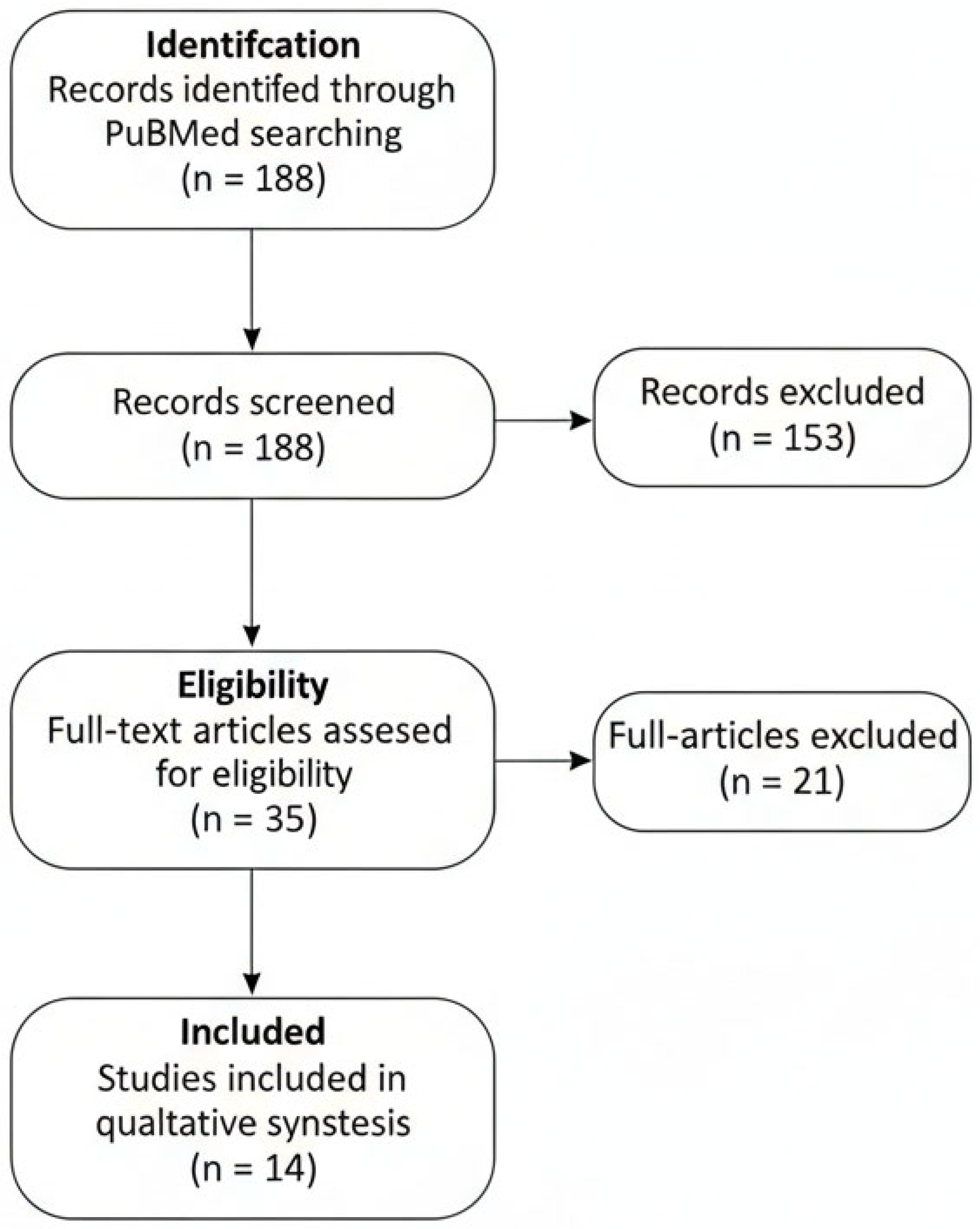
3.1. Study Selection and Evidence Overview
3.2. Operational Definitions of Imaging-Based Response Criteria
3.3. Clinical Assessment and Dermoscopy: Strengths and Limitations
3.4. Reflectance Confocal Microscopy (RCM)
3.5. Line-Field Confocal Optical Coherence Tomography (LC-OCT)
3.6. High-Frequency Ultrasound (HFUS)
3.7. Raman Spectroscopy: Emerging Optical Biomarkers
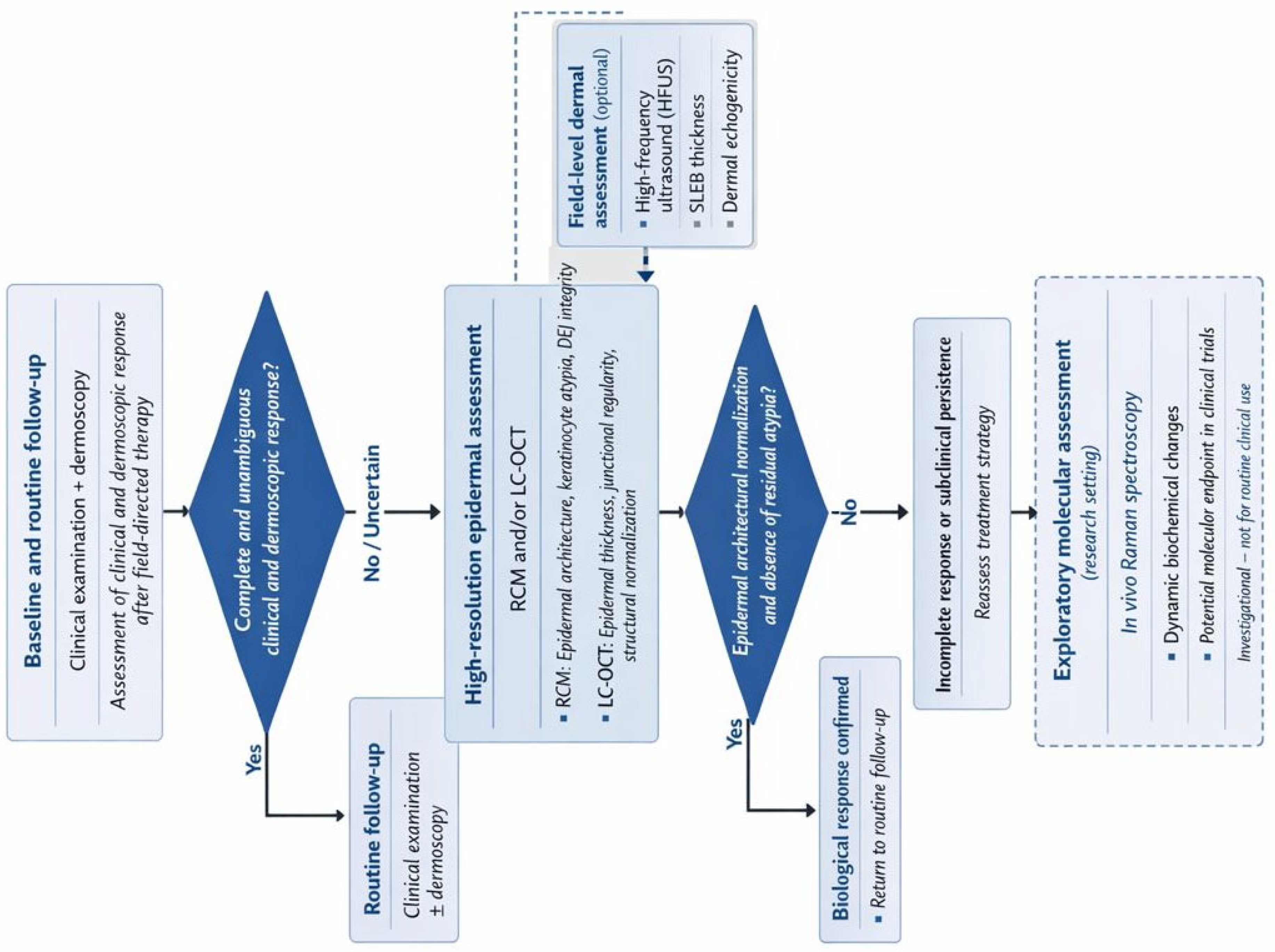
4. Discussion
5. Conclusions
Author Contributions
Funding
Data Availability Statement
Conflicts of Interest
References
- Marques, E.; Chen, T.M. Actinic Keratosis. In StatPearls [Internet]; StatPearls Publishing: Treasure Island, FL, USA, 2025. Available online: https://www.ncbi.nlm.nih.gov/books/NBK557401/ (accessed on 11 January 2026).
- Worley, B.; Harikumar, V.; Reynolds, K.; Dirr, M.A.; Christensen, R.E.; Anvery, N.; Yi, M.D.; Poon, E.; Alam, M. Treatment of actinic keratosis: A systematic review. Arch. Dermatol. Res. 2023, 315, 1099–1108. [Google Scholar] [CrossRef] [PubMed]
- Conforti, C.; Ambrosio, L.; Retrosi, C.; Cantisani, C.; Di Lella, G.; Fania, L.; Rotunno, R.; Zalaudek, I.; Pellacani, G. Clinical and Dermoscopic Diagnosis of Actinic Keratosis. Dermatol. Pract. Concept. 2024, 14, e2024147S. [Google Scholar] [CrossRef] [PubMed] [PubMed Central]
- Curiel-Lewandrowski, C.; Myrdal, C.N.; Saboda, K.; Hu, C.; Arzberger, E.; Pellacani, G.; Legat, F.J.; Ulrich, M.; Hochfellner, P.; Oliviero, M.C.; et al. In Vivo Reflectance Confocal Microscopy as a Response Monitoring Tool for Actinic Keratoses Undergoing Cryotherapy and Photodynamic Therapy. Cancers 2021, 13, 5488. [Google Scholar] [CrossRef] [PubMed] [PubMed Central]
- Thamm, J.R.; Welzel, J.; Schuh, S. AI-based and LC-OCT-guided follow-up of actinic keratoses under treatment with tirbanibulin 1%. J. Eur. Acad. Dermatol. Venereol. 2025, 39, e35–e38. [Google Scholar] [CrossRef] [PubMed]
- Korecka, K.; Slian, A.; Czajkowska, J.; Dańczak-Pazdrowska, A.; Polańska, A. The Application of High-Frequency Ultrasonography in Post-Therapeutic Assessment of Actinic Keratosis After Photodynamic Therapy. Cancers 2024, 16, 3778. [Google Scholar] [CrossRef] [PubMed] [PubMed Central]
- Zhu, R.; Yang, S.; Yu, N.; Zhang, R.; Wu, M. Raman spectroscopy assisted diagnosis and photodynamic therapy efficacy evaluation of actinic keratosis: Case report. Photodiagn. Photodyn. Ther. 2025, 53, 104624. [Google Scholar] [CrossRef] [PubMed]
- Banzhaf, C.A.; Themstrup, L.; Ring, H.C.; Mogensen, M.; Jemec, G.B. Optical coherence tomography imaging of non-melanoma skin cancer undergoing imiquimod therapy. Skin Res. Technol. 2014, 20, 170–176. [Google Scholar] [CrossRef]
- Fredman, G.; Haedersdal, M.; Philipsen, P.A.; Andersen, F.; Bjerring, P.; Wiegell, S.R.; Untracht, G. Vascular Characteristics of Treatment-resistant and -responsive Actinic Keratosis Identified with Dynamic Optical Coherence Tomography. Acta Derm. Venereol. 2024, 104, adv42190. [Google Scholar] [CrossRef]
- Themstrup, L.; Banzhaf, C.A.; Mogensen, M.; Jemec, G.B. Optical coherence tomography imaging of non-melanoma skin cancer undergoing photodynamic therapy reveals subclinical residual lesions. Photodiagn. Photodyn. Ther. 2014, 11, 7–12. [Google Scholar] [CrossRef] [PubMed]
- Seyed Jafari, S.M.; Timchik, T.; Hunger, R.E. In vivo confocal microscopy efficacy assessment of daylight photodynamic therapy in actinic keratosis patients. Br. J. Dermatol. 2016, 175, 375–381. [Google Scholar] [CrossRef] [PubMed]
- Ulrich, M.; Krueger-Corcoran, D.; Roewert-Huber, J.; Sterry, W.; Stockfleth, E.; Astner, S. Reflectance confocal microscopy for noninvasive monitoring of therapy and detection of subclinical actinic keratoses. Dermatology 2010, 220, 15–24. [Google Scholar] [CrossRef] [PubMed]
- Qiao, S.; Tang, H.; Xia, J.; Ding, M.; Qiao, S.; Niu, Y.; Jiang, G. Efficacy and safety of microneedling, fractional CO2 laser, and cryotherapy combined with 5-aminolevulinic acid photodynamic therapy in the treatment of actinic keratosis: A multicenter prospective randomized controlled study. Photodiagn. Photodyn. Ther. 2023, 43, 103700. [Google Scholar] [CrossRef] [PubMed]
- Ishioka, P.; Maia, M.; Rodrigues, S.B.; Lellis, R.F.; Hirata, S.H. In vivo Confocal Laser Microscopy for monitoring of actinic keratosis treatment: A comparison with histopathologic assessment after treatment with topical 5% 5-fluorouracil. J. Eur. Acad. Dermatol. Venereol. 2018, 32, 1155–1163. [Google Scholar] [CrossRef] [PubMed]
- Pasquali, P.; Segurado-Miravalles, G.; González, S. Sequential treatment of actinic keratosis with cryotherapy and ingenol mebutate: Reflectance confocal microscopy monitoring of efficacy and local skin reaction. Int. J. Dermatol. 2018, 57, 1178–1181. [Google Scholar] [CrossRef]
- Ruini, C.; Hartmann, D.; Bastian, M.; Ruzicka, T.; French, L.E.; Berking, C.; von Braunmühl, T. Non-invasive monitoring of subclinical and clinical actinic keratosis of face and scalp under topical treatment with ingenol mebutate gel 150 mcg/g by means of reflectance confocal microscopy and optical coherence tomography: New perspectives and comparison of diagnostic techniques. J. Biophotonics 2019, 12, e201800391. [Google Scholar] [CrossRef] [PubMed]
- Richtig, E.; Ahlgrimm-Siess, V.; Koller, S.; Gerger, A.; Horn, M.; Smolle, J.; Hofmann-Wellenhof, R. Follow-up of actinic keratoses after shave biopsy by in-vivo reflectance confocal microscopy--a pilot study. J. Eur. Acad. Dermatol. Venereol. 2010, 24, 293–298. [Google Scholar] [CrossRef]
- Caccavale, S.; Boccellino, M.P.; Brancaccio, G.; Alfano, R.; Argenziano, G. Keratolytics can replace curettage in daylight photodynamic therapy for actinic keratosis on the face/scalp: A randomized clinical trial. J. Eur. Acad. Dermatol. Venereol. 2024, 38, 594–601. [Google Scholar] [CrossRef]
- Arisi, M.; Zane, C.; Polonioli, M.; Tomasi, C.; Moggio, E.; Cozzi, C.; Soglia, S.; Caravello, S.; Calzavara-Pinton, I.; Venturini, M.; et al. Effects of MAL-PDT, ingenol mebutate and diclofenac plus hyaluronate gel monitored by high-frequency ultrasound and digital dermoscopy in actinic keratosis—A randomized trial. J. Eur. Acad. Dermatol. Venereol. 2020, 34, 1225–1232. [Google Scholar] [CrossRef] [PubMed]
- Scola, N.; Terras, S.; Georgas, D.; Othlinghaus, N.; Matip, R.; Pantelaki, I.; Möllenhoff, K.; Stücker, M.; Altmeyer, P.; Kreuter, A.; et al. A randomized, half-side comparative study of aminolaevulinate photodynamic therapy vs. CO(2) laser ablation in immunocompetent patients with multiple actinic keratoses. Br. J. Dermatol. 2012, 167, 1366–1373. [Google Scholar] [CrossRef]
- Lee, J.H.; Won, C.Y.; Kim, G.M.; Kim, S.Y. Dermoscopic features of actinic keratosis and follow up with dermoscopy: A pilot study. J. Dermatol. 2014, 41, 487–493. [Google Scholar] [CrossRef] [PubMed]
- Huerta-Brogeras, M.; Olmos, O.; Borbujo, J.; Hernández-Núñez, A.; Castaño, E.; Romero-Maté, A.; Martínez-Sánchez, D.; Martínez-Morán, C. Validation of dermoscopy as a real-time noninvasive diagnostic imaging technique for actinic keratosis. Arch. Dermatol. 2012, 148, 1159–1164. [Google Scholar] [CrossRef] [PubMed]
- Zalaudek, I.; Ferrara, G.; Leinweber, B.; Mercogliano, A.; D’Ambrosio, A.; Argenziano, G. Pitfalls in the clinical and dermoscopic diagnosis of pigmented actinic keratosis. J. Am. Acad. Dermatol. 2005, 53, 1071–1074. [Google Scholar] [CrossRef] [PubMed]
- Benati, E.; Longhitano, S.; Pampena, R.; Mirra, M.; Raucci, M.; Pellacani, G.; Longo, C. Digital follow-up by means of dermatoscopy and reflectance confocal microscopy of actinic keratosis treated with Imiquimod 3.75% cream. J. Eur. Acad. Dermatol. Venereol. 2020, 34, 1471–1477. [Google Scholar] [CrossRef] [PubMed]
- Pampena, R.; Condorelli, A.; Cornacchia, L.; Guiducci, L.; Raucci, M.; Benati, E.; Mirra, M.; Peris, K.; Lai, M.; Pellacani, G.; et al. Treatment monitoring of 5-fluorouracil 0.5%/salicylic acid 10% lesion-directed therapy for actinic keratosis using dermoscopy and in-vivo reflectance confocal microscopy. Dermatol. Ther. 2020, 33, e13744. [Google Scholar] [CrossRef] [PubMed]
- Pellacani, G.; Ulrich, M.; Casari, A.; Prow, T.W.; Cannillo, F.; Benati, E.; Losi, A.; Cesinaro, A.M.; Longo, C.; Argenziano, G.; et al. Grading keratinocyte atypia in actinic keratosis: A correlation of reflectance confocal microscopy and histopathology. J. Eur. Acad. Dermatol. Venereol. 2015, 29, 2216–2221. [Google Scholar] [CrossRef] [PubMed]
- Moscarella, E.; Rabinovitz, H.; Zalaudek, I.; Piana, S.; Stanganelli, I.; Oliviero, M.C.; Lallas, A.; Ardigo, M.; Cota, C.; Catricalà, C.; et al. Dermoscopy and reflectance confocal microscopy of pigmented actinic keratoses: A morphological study. J. Eur. Acad. Dermatol. Venereol. 2015, 29, 307–314. [Google Scholar] [CrossRef] [PubMed]
- Aghassi, D.; Anderson, R.R.; González, S. Confocal laser microscopic imaging of actinic keratoses in vivo: A preliminary report. J. Am. Acad. Dermatol. 2000, 43, 42–48. [Google Scholar] [CrossRef] [PubMed]
- López Estebaranz, J.L.; Pampín Franco, A.; Gamo Villegas, R.; Floristán, U. Monitoring Ingenol Mebutate Gel Treatment of Actinic Keratoses by Reflectance Confocal Microscopy. Acta Derm. Venereol. 2017, 97, 646–648. [Google Scholar] [CrossRef] [PubMed]
- Mazur, E.; Reich, A. Photodynamic Therapy is an Effective Treatment of Facial Pigmented Actinic Keratosis. Dermatol. Ther. 2023, 13, 1265–1276. [Google Scholar] [CrossRef] [PubMed] [PubMed Central]
- Malvehy, J.; Alarcon, I.; Montoya, J.; Rodríguez-Azeredo, R.; Puig, S. Treatment monitoring of 0.5% 5-fluorouracil and 10% salicylic acid in clinical and subclinical actinic keratoses with the combination of optical coherence tomography and reflectance confocal microscopy. J. Eur. Acad. Dermatol. Venereol. 2016, 30, 258–265. [Google Scholar] [CrossRef] [PubMed]
- Maier, T.; Cekovic, D.; Ruzicka, T.; Sattler, E.C.; Berking, C. Treatment monitoring of topical ingenol mebutate in actinic keratoses with the combination of optical coherence tomography and reflectance confocal microscopy: A case series. Br. J. Dermatol. 2015, 172, 816–818. [Google Scholar] [CrossRef] [PubMed]
- Nguyen, K.P.; Peppelman, M.; Hoogedoorn, L.; van Erp, P.E.; Gerritsen, M.J.P. The current role of in vivo reflectance confocal microscopy within the continuum of actinic keratosis and squamous cell carcinoma: A systematic review. Eur. J. Dermatol. 2016, 26, 549–565. [Google Scholar] [CrossRef] [PubMed]
- Lacarrubba, F.; Verzì, A.E.; Polita, M.; Aleo, A.; Micali, G. Line-field confocal optical coherence tomography in the treatment monitoring of actinic keratosis with tirbanibulin: A pilot study. J. Eur. Acad. Dermatol. Venereol. 2023, 37, e1131–e1133. [Google Scholar] [CrossRef] [PubMed]
- Cantisani, C.; Musolff, N.; Azzella, G.; Gargano, L.; Di Guardo, A.; Longo, C.; Guida, S.; Rossi, G.; Rovaldi, E.; Rega, F.; et al. Tirbanibulin 1% Ointment Effectiveness for Actinic Keratosis Treatment Evaluated by Dynamic Optical Coherence Tomography. Dermatol. Ther. 2024, 2024, 1018395. [Google Scholar] [CrossRef]
- Pathak, G.N.; Sanabria, B.; Caetano, V.D.; Rafiq, B.; Rao, B.K. Evaluation and treatment monitoring of actinic keratosis using line-field confocal optical coherence tomography. Skin Res. Technol. 2024, 30, e13726. [Google Scholar] [CrossRef] [PubMed] [PubMed Central]
- Daxenberger, F.; Deußing, M.; Eijkenboom, Q.; Gust, C.; Thamm, J.; Hartmann, D.; French, L.E.; Welzel, J.; Schuh, S.; Sattler, E.C. Innovation in Actinic Keratosis Assessment: Artificial Intelligence-Based Approach to LC-OCT PRO Score Evaluation. Cancers 2023, 15, 4457. [Google Scholar] [CrossRef] [PubMed] [PubMed Central]
- Zhao, J.; Lui, H.; Kalia, S.; Lee, T.K.; Zeng, H. Improving skin cancer detection by Raman spectroscopy using convolutional neural networks and data augmentation. Front. Oncol. 2024, 14, 1320220. [Google Scholar] [CrossRef] [PubMed] [PubMed Central]
- Ferrándiz, C.; Malvehy, J.; Guillén, C.; Ferrándiz-Pulido, C.; Fernández-Figueras, M. Precáncer Cutáneo. Actas Dermosifiliogr. 2017, 108, 31–41. [Google Scholar] [CrossRef] [PubMed]
- Zalaudek, I.; Giacomel, J.; Argenziano, G.; Hofmann-Wellenhof, R.; Micantonio, T.; Di Stefani, A.; Oliviero, M.; Rabinovitz, H.; Soyer, H.P.; Peris, K. Dermoscopy of facial nonpigmented actinic keratosis. Br. J. Dermatol. 2006, 155, 951–956. [Google Scholar] [CrossRef]
- Cinotti, E.; Tognetti, L.; Cartocci, A.; Lamberti, A.; Gherbassi, S.; Cano, C.O.; Lenoir, C.; Dejonckheere, G.; Diet, G.; Fontaine, M.; et al. Line-field confocal optical coherence tomography for actinic keratosis and squamous cell carcinoma: A descriptive study. Clin. Exp. Dermatol. 2021, 46, 1530–1541. [Google Scholar] [CrossRef]
- Zhu, A.Q.; Wang, L.F.; Li, X.L.; Wang, Q.; Li, M.X.; Ma, Y.Y.; Xiang, L.H.; Guo, L.H.; Xu, H.X. High-frequency ultrasound in the diagnosis of the spectrum of cutaneous squamous cell carcinoma: Noninvasively distinguishing actinic keratosis, Bowen’s Disease, and invasive squamous cell carcinoma. Skin Res. Technol. 2021, 27, 831–840. [Google Scholar] [CrossRef] [PubMed]
- Dinnes, J.; Bamber, J.; Chuchu, N.; Bayliss, S.E.; Takwoingi, Y.; Davenport, C.; Godfrey, K.; O’Sullivan, C.; Matin, R.N.; Deeks, J.J.; et al. High-frequency ultrasound for diagnosing skin cancer in adults. Cochrane Database Syst. Rev. 2018, 12, CD013188. [Google Scholar] [CrossRef] [PubMed]



| First Author, Year | Imaging Technique | Therapy | Size | Primary Outcome | Main Findings |
|---|---|---|---|---|---|
| Banzhaf 2014 [8] | OCT | Imiquimod | 20 patients (11 AK) | The ability of OCT to predict treatment outcome | OCT showed thinning of AKs indicating effect of treatment |
| Fredman 2024 [9] | D-OCT | Daylight photodynamic therapy | 38 patients (62 AK) | Quantitative vascular parameters on dynamic OCT to differentiate treatment-resistant vs. cleared AK. | D-OCT holds potential to identify treatment-resistant AKs. |
| Themstrup 2014 [10] | OCT | MAL-PDT | 18 patients (4 AK) | Describe the OCT morphology of in vivo NMSC lesions during PDT treatment and to investigate the use of OCT in evaluating the response of PDT treated NMSC lesions. | OCT is most suitable in the diagnosis and follow-up of NMSC treatment. |
| Seyed Jafari 2016 [11] | RCM | DL-PDT | 20 patients (40 AK) | Use a new RCM atypia scoring system to evaluate efficacy of DL-PDT | This study confirms that in vivo RCM technology might be an additional technique to monitor the efficacy of DL-PDT for AK |
| Ulrich 2010 [12] | RCM | Imiquimod | 11 patients | Applicability of RCM for noninvasive monitoring of AK | RCM allows noninvasive monitoring of treatment response in vivo and permits early detection of subclinical AK |
| Qiao 2023 [13] | RCM | PDT + microneedling, fractional CO2 laser, and cryotherapy | 129 patients | Complete response rate | RCM ismore sensitive than dermoscopy for identifying residual atypia. Shows superior cellular-level clearance with combination therapies, particularly cryotherapy + PDT. |
| Ishioka 2018 [14] | RCM | 5-fluorouracil | 50 lesions | RCM accuracy, sensibility and specificity for actinic keratosis | RCM is a non-invasive method capable of monitoring actinic keratosis therapeutic response to 5-fluorouracil, presenting efficacy comparable to histological examination |
| Pasquali 2018 [15] | RCM | IM and cryotherapy | 26 patients | RCM-monitored treatment response | IM + Cryo shows fewer LSR; both sequences effective |
| Ruini 2019 [16] | RCT and OCT | Ingenol mebutate | 20 patients (120 lesions) | Evaluate the changes in the field cancerization undergoing treatment by combining RCM and OCT | Both OCT and RCM allow the morphological representation of field cancerization including subclinical lesions and provide complementary information. |
| Richtig 2010 [17] | RCM | Shave biopsy | 10 lesions | Applicability of RCM for the follow-up of AK after shave biopsy | RCM might be a useful tool in the follow-up of AK after shave biopsy |
| Caccavale 2024 [18] | RCM | n-DL-PDT without curettage but preceded by application of keratolytics | 39 patients | Evaluate efficacy, based on RCM assessments of the therapy | curettage is not necessary to obtain the full treatment effect of n-DL-PDT |
| Arisi 2020 [19] | HFUS | MAL-PDT, IMB, DHA | 90 patients | Evaluate dermoscopical and high-frequency ultrasound (HFUS) changes after therapies | MAL-PDT improves all HFUS features of chronic photodamages of the dermis of the skin underlying and surrounding the AK spots. |
| Ishioka 2015 [14] | RCM | Fluorouracil | 13 patients | Confocal microscopy enabled visualization of focal areas of atypical honeycomb pattern in the epidermis indicating therapeutic failure | RCM may be a tool for diagnosis and therapeutic control of actinic keratosis |
| Scola 2012 [20] | OCT | PDT and CO(2) | 20 patients | To compare PDT and carbon dioxide (CO(2)) LA in the management of multiple AK | AK features as assessed by OCT imaging were also significantly reduced by both procedures. |
| Method | Sensitivity (%) | Specificity (%) | Subclinical Residue Detection/Notes | Main Sources |
|---|---|---|---|---|
| Dermoscopy | 85–98.7 | 82–95 | High diagnostic accuracy at baseline. Limited ability to detect subclinical persistence (~40% histologic residue with normal dermoscopy). | Zalaudek 2013 [40]; Huerta-Brogeras 2015 [22] |
| Reflectance Confocal Microscopy (RCM) | 79–100 | 78–100 | Most accurate technique for detecting subclinical residue. Identifies 30–50% persistence in clinically “cleared” AK. Architectural normalization correlates with histologic clearance. | Malvehy 2016 [31]; Ishioka 2018 [14] |
| Line-Field Optical Coherence Tomography (LC-OCT) | 85–90 | 82–89 | Detects minimal residual abnormalities; early structural normalization (7–14 days). Particularly useful for short-course therapies. | Cinotti 2020 [41]; Cantisani 2024 [35] |
| High-Frequency Ultrasound (HFUS) | Not established for lesion-level subclinical detection | Not established for lesion-level subclinical detection | Does not detect cellular atypia; quantifies dermal recovery (SLEB reduction 20–25%; echogenicity ↑ 15–20%). | Zhu 2021 [42]; Korecka 2024 [6]; Dinnes 2017 [43] |
| Raman spectroscopy | 80–92 * | 78–90 * | Preliminary evidence only. Molecular bands (1610–1690 cm−1) predict early biochemical response. * Values from ML models. * | Zhu 2025 [7]; Zhao 2024 [38] |
Disclaimer/Publisher’s Note: The statements, opinions and data contained in all publications are solely those of the individual author(s) and contributor(s) and not of MDPI and/or the editor(s). MDPI and/or the editor(s) disclaim responsibility for any injury to people or property resulting from any ideas, methods, instructions or products referred to in the content. |
© 2026 by the authors. Licensee MDPI, Basel, Switzerland. This article is an open access article distributed under the terms and conditions of the Creative Commons Attribution (CC BY) license.
Share and Cite
Pistore, G.; Ambrosio, L.; Di Guardo, A.; Panebianco, A.R.; Di Lella, G.; Conforti, C.; Pellacani, G.; Moro, F.; Marchetti, P.; Abeni, D.; et al. Non-Invasive Assessment of Treatment Response in Actinic Keratosis: A Clinically Oriented Multimodal Review. Cancers 2026, 18, 708. https://doi.org/10.3390/cancers18040708
Pistore G, Ambrosio L, Di Guardo A, Panebianco AR, Di Lella G, Conforti C, Pellacani G, Moro F, Marchetti P, Abeni D, et al. Non-Invasive Assessment of Treatment Response in Actinic Keratosis: A Clinically Oriented Multimodal Review. Cancers. 2026; 18(4):708. https://doi.org/10.3390/cancers18040708
Chicago/Turabian StylePistore, Gianluca, Luca Ambrosio, Antonio Di Guardo, Anna Rita Panebianco, Giovanni Di Lella, Claudio Conforti, Giovanni Pellacani, Francesco Moro, Paolo Marchetti, Damiano Abeni, and et al. 2026. "Non-Invasive Assessment of Treatment Response in Actinic Keratosis: A Clinically Oriented Multimodal Review" Cancers 18, no. 4: 708. https://doi.org/10.3390/cancers18040708
APA StylePistore, G., Ambrosio, L., Di Guardo, A., Panebianco, A. R., Di Lella, G., Conforti, C., Pellacani, G., Moro, F., Marchetti, P., Abeni, D., Fania, L., & Ricci, F. (2026). Non-Invasive Assessment of Treatment Response in Actinic Keratosis: A Clinically Oriented Multimodal Review. Cancers, 18(4), 708. https://doi.org/10.3390/cancers18040708