Unexpected Therapeutic Implications: The Abscopal Effect in the Management of Hepatocellular Carcinoma

 , , , , ,
  and
and
Simple Summary
Abstract
1. Introduction
2. Therapeutic Paths for Advanced-Stage HCC
3. The Abscopal Effect
4. The Mechanisms Underlying the Abscopal Effect
4.1. The Molecular Mechanisms of the Abscopal Effect
4.2. Who Can Benefit from the Abscopal Effect?
5. The Treatments for HCC Associated with Abscopal Effect
5.1. Ablative Treatments
5.2. Radiotherapy

| PROS [49] | Non-invasive method |
| High local control of the tumor | |
| Delivered on an outpatient basis | |
| Organ preservation | |
| Preferred for patients with poor surgical candidates | |
| Chosen for tumors in anatomically challenging locations | |
| Symptoms palliation (pain, obstruction, bleeding) | |
| CONS [50] | Toxicity (acute or chronic) |
| Adverse events (fatigue, dermatitis, mucositis, fibrosis, organ disfunction) | |
| Risk of secondary malignant tumors | |
| Possible irradiation of healthy tissues | |
| Resource limitations |
5.3. Immunotherapy
- -
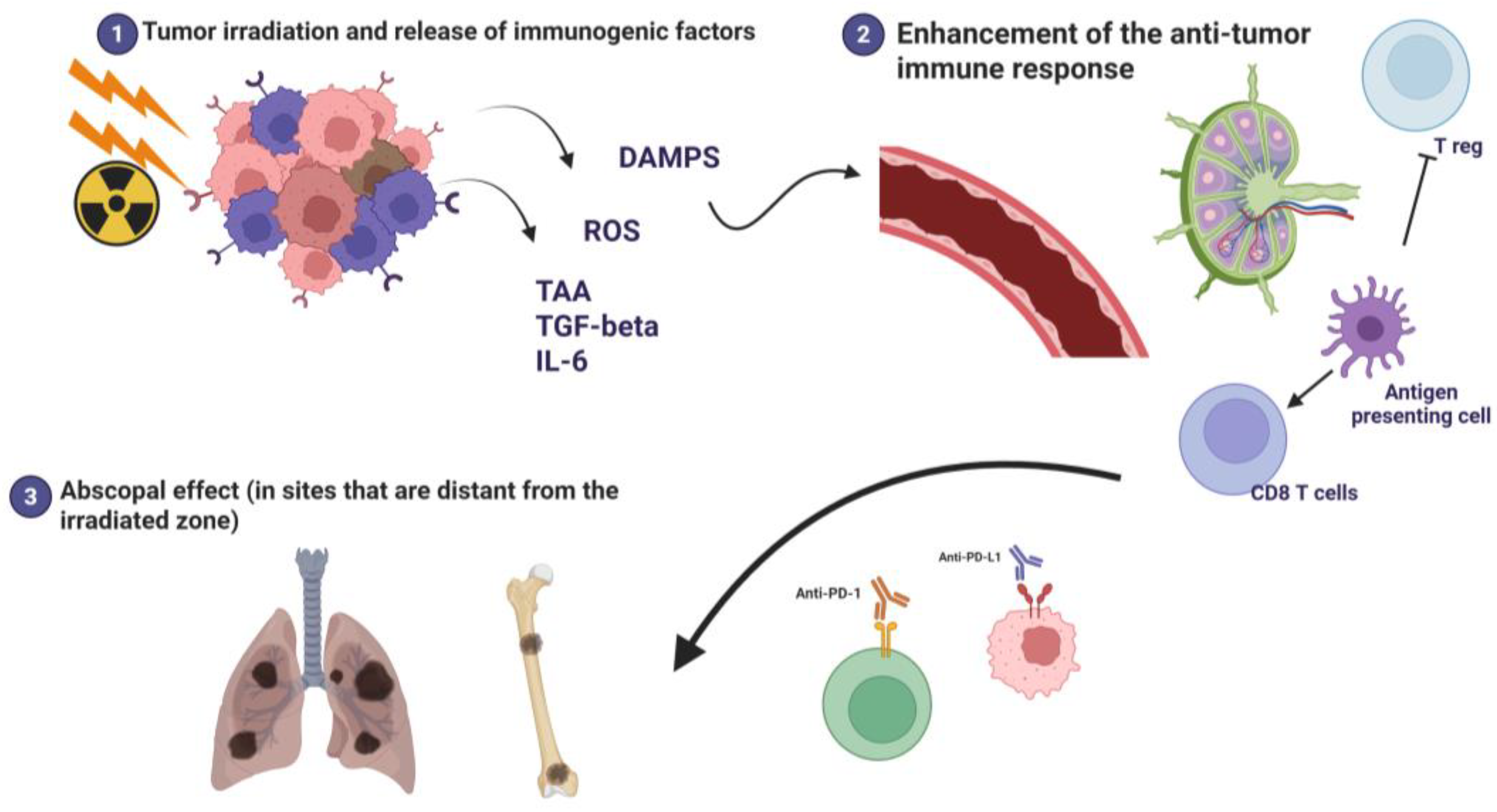
- Monotherapy with anti-PD-1 or anti-PD-L1: There are several reports in the literature and some clinical trials about their involvement in abscopal effects after radiotherapy (atezolizumab, durvalumab, pembrolizumab, and nivolumab). A case report by Shu et al. stated that HCC developed on viral-related liver disease are more likely to present an abscopal effect after a treatment with SBRT and PD-1 inhibitor [20,51,52,53]. Chiang et al. reported a retrospective case series about five patients with advanced HCC undergoing SBRT followed by anti-PD1 (80% of these patients were treated also with a single chemoembolization (TACE) before SBRT). All the patients had an impressive response to the treatments (3/5 had partial response and 2/5 had complete response), did not develop progressive disease during the study follow-up (median 14.9 months), and their overall survival rate was 100%. Moreover, in one of the patients with partial response, it was possible to reduce the disease burden to a stage that allowed radiofrequency ablation. Due to the exiguous sample of patients, the authors suggest further trials to be held in order to deepen the knowledge of this phenomenon [54]. The phase 1–2 randomized clinical trial on 146 patients with unresectable HCC by Zhou et al. demonstrated that the ablation combined with toripalimab (anti-PD-1) improved PFS, compared with toripalimab alone (7.1 versus 3.8 months; HR 0.57; 95% CI 0.40–0.82; p < 0.001), alluding to a potential synergistic activity of the combination of local and systemic treatments [55].
- -
- Association of anti-PD-L1 (atezolizumab) and anti-VEGF (bevacizumab): It represents one of the first-line systemic treatments for HCC at an unresectable stage with increased survival and objective overall survival; this combination has well-recognized immunomodulatory properties along with anti-angiogenetic effects [36,56]. Nakabori et al. observed that, alongside the increase in immune response by the combination of atezolizumab and bevacizumab, SBRT is able to synergistically amplify such responses, even in subjects with an insufficient response to atezolizumab-bevacizumab when administered alone. In the case reported by Nakabori et al., a patient with metastatic HCC (secondary lesions in the lung and surrenal glands) was treated with atezolizumab plus bevacizumab followed by SBRT; pre-radiotherapy administration of ICIs did not reach a satisfying effect on disease control, that was obtained only after SBRT. Moreover, post-SBRT atezolizumab administered alone was not sufficient to trigger the abscopal effect, that was boosted by the addition of bevacizumab in the post-radiotherapy phase, reaching a complete disease response to treatments [57]. Yano et al. described the outstanding case of a patient with HCC and bone metastases, treated with atezolizumab and bevacizumab; despite the initial volume increase in all the neoplastic nodules and the worsening of the pain due to bone secondary localizations, after palliative radiotherapy of a metastatic lesion in the jaw, a noticeable shrinkage in tumor burden was observed, leading to ICIs discontinuation and complete response with absence of neoplastic recurrence at the following re-staging examinations [58].
- -
- Dual blockade of the immune checkpoint:
- (a)
- The association of durvalumab (anti-PD-L1) with tremelimumab (anti-CTLA-4) represents another first-line option (Single Tremelimumab Regular Interval Durvalumab “Stride” regimen) for the treatment of advanced HCC [7] and is gaining scientific interest for its possible implications in triggering the abscopal effect in synergy with radiotherapy. Kuwano et al. retrospectively analyzed 46 subjects with advanced HCC who underwent systemic treatment with tremelimumab plus durvalumab alone (23 patients) or in association with prior radiotherapy (16 patients); the latter presented a notably higher objective response rate compared with the ones treated only with ICIs without radiotherapy (56.3% versus 17.2%; p = 0.007) and a longer PFS (14.6 versus 2.7 months; p = 0.008), with better disease control rate (75.0% versus 34.4%; p = 0.008) and no significant differences in terms of adverse events. The biopsy performed after radiotherapy (before starting ICIs) presented higher intratumoral infiltration of CD8+ cells (87.5% versus 40.0%; p = 0.029), thus leading to an upregulation in the immune response inside the tumor microenvironment leading to the activation of the mechanisms underlying the abscopal effect, that may have contributed to such positive outcomes. The multivariate analysis underlined the role of prior radiotherapy as a significant predictor of an increased PFS (hazard ratio = 0.290, 95% CI = 0.106–0.794; p = 0.016) [59].
- (b)
- The association of nivolumab (anti-PD-1) with ipilimumab (anti-CTLA-4) demonstrated a more efficient activation of systemic response after SBRT for the treatment of advanced HCC: Juloori et al. designed the first multicenter phase 1 prospective randomized trial studying the association of radiotherapy and ICIs, involving 14 patients treated with SBRT (40 Gy in five fractions) and subsequent nivolumab plus ipilimumab or nivolumab alone. The early closure of the study was due to slow accrual outcomes, but clinical outcomes (p < 0.05) were in favor of the group in which nivolumab and ipilimumab followed SBRT, compared with SBRT plus nivolumab alone, with an acceptable safety profile; respectively, overall response rates were 57% versus 0%, median OS 41.6 months versus 4.7 months, and median PFS 11.6 months versus 2.7 months [52].
6. The Safety of the Treatments Eliciting the Abscopal Effect
7. Predictive Biomarkers for Abscopal Response in HCC
- -
- Neutrophil-to-lymphocyte ratio (NLR): The preclinical model by Mihaylov et al. suggests that lower NLR may predict abscopal responses when combined with CT/MRI radiomics features, but there is no clinical validation in HCC [70].
- -
- Absolute lymphocyte count: The analysis by Chen et al. on three phase 1/2 clinical trials including patients with advanced solid tumors (among 153 subjects, only 5 had HCC) highlighted that higher absolute lymphocyte count after radiotherapy is related to strong activation of immune response, high probability of having an abscopal response, and better survival; despite a satisfying predictive value in preclinical studies, it has not yet been validated specifically for clinical practice [71,72].
- -
- Peripheral blood cell signatures: Kästle et al. documented that baseline elevations in the platelet-to-lymphocyte ratio (PLR), neutrophil-to-lymphocyte ratio (NLR), and specific T cell and Natural Killer T cells could be associated with scarce response to local ablation therapy in HCC. Lower CD4+ T cell percentages, lower memory T cells, and decreased CD4/8 ratios, may prove reduced response, while higher PD-1+ CD4+ T cells may represent a favorable biomarker to be confirmed by future investigations [73].
- -
- Extracellular vesicle proteomics: In advanced HCC, there are specific extracellular vesicle protein signatures that have been related to response to TARE and systemic treatment with sorafenib, but their concrete relevance to the abscopal response remains extremely uncertain [74].
- -
- Tumor immune microenvironment: Several studies highlight a specific immunity signature as crucial in the pathogenesis of the abscopal effect (better outcomes to ICIs were documented with elevated levels of intratumoral CD8+ T cells, low ratio regulatory/effector T cells, signature of T-effector genes) [75].
- -
- Effector tumor antigen-specific T cells: The quantitative determination of these cells could help in predicting the abscopal effect (more specifically after radiotherapy), because they mediate the response to anti-neoplastic treatments; these biomarkers are not yet available for clinical activity but are being studied in preclinical models, demonstrating promising results because they demonstrated a strong predictive value for abscopal effect [76].
- -
- Cell-free DNA (cfDNA) and profiles of microRNA: Zafra et al. examined that the expression of specific microRNA in patients with lung cancer treated with stereotactic ablative radiotherapy and ICIs; they noticed that specific small RNAs (RNU2, SNORD1B, hsa-miR-1-3p and hsa-miR-133a-3p) could represent potential candidates as possible predictors of response to treatment. Patients with good responses to treatment had also a reduction in the concentration of circulating cfDNA (it has a strong predictive value in preclinical studies, but there is not yet validation in clinical practice) [77].
- -
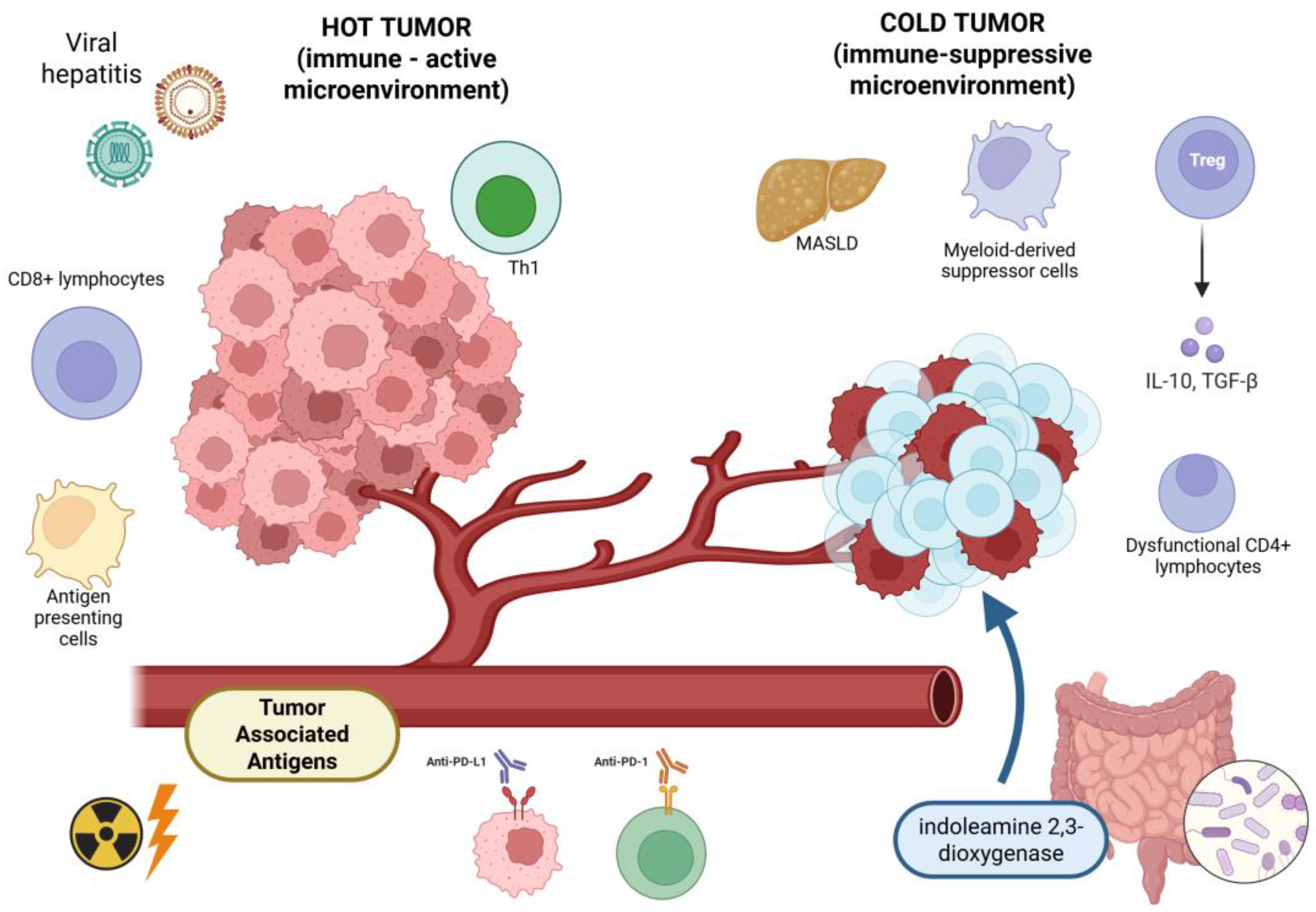
- Specific immune cells: Low levels of myeloid-derived suppressor cells are related to decreased immune-suppression by the tumor against the immune system, thus increasing the possibility of an abscopal effect [78]; increased levels of CD8+ T cells in non-irradiated lesions, distant from the irradiated ones, suggest a possible biomarker of an abscopal response [79].
8. Conclusions
Author Contributions
Funding
Data Availability Statement
Acknowledgments
Conflicts of Interest
Abbreviations
| AMP | Adenosine monophosphate |
| cfDNA | Cell-free DNA |
| CI | Confidence interval |
| CTLA-4 | Cytotoxic T-Lymphocyte-Associated protein 4 |
| DC | Dendritic cell |
| Gy | Grays |
| HCC | Hepatocellular carcinoma |
| ICIs | Immune checkpoint inhibitors |
| IL-6 | Interleukin-6 |
| MASH | Metabolic Dysfunction-Associated Steatohepatitis |
| MASLD | Metabolic dysfunction-associated steatotic liver disease |
| MWA | Microwave ablation |
| NLR | Neutrophil-to-lymphocyte ratio |
| PBT | Proton beam therapy |
| PD-1 | Programmed cell death 1 |
| PD-L1 | Programmed cell death ligand 1 |
| PFS | Progression-free survival |
| PLR | Platelet-to-lymphocyte ratio |
| ROS | Reactive oxygen species |
| SBRT | Stereotactic body radiotherapy |
| SIR | Society of Interventional Radiology |
| STING | Stimulator of interferon genes |
| TAAs | Tumor-associated antigens |
| TACE | Trans arterial chemoembolization |
| TARE | Trans arterial radioembolization |
| Th | T-helper |
| TKIs | Tyrosine kinase inhibitors (TKIs) |
| TNF-α | Tumor Necrosis Factor-α |
| VEGF A | Vascular endothelial growth factor A |
References
- Sung, H.; Ferlay, J.; Siegel, R.L.; Laversanne, M.; Soerjomataram, I.; Jemal, A.; Bray, F. Global cancer statistics 2020: GLOBOCAN estimates of incidence and mortality worldwide for 36 cancers in 185 countries. CA Cancer J. Clin. 2021, 71, 209–249. [Google Scholar] [CrossRef]
- Rumgay, H.; Arnold, M.; Ferlay, J.; Lesi, O.; Cabasag, C.J.; Vignat, J.; Laversanne, M.; McGlynn, K.A.; Soerjomataram, I. Global burden of primary liver cancer in 2020 and predictions to 2040. J. Hepatol. 2022, 77, 1598–1606. [Google Scholar] [CrossRef] [PubMed]
- Toh, M.R.; Wong, E.Y.T.; Wong, S.H.; Ng, A.W.T.; Loo, L.H.; Chow, P.K.; Ngeow, J. Global epidemiology and genetics of hepatocellular carcinoma. Gastroenterology 2023, 164, 766–782. [Google Scholar] [CrossRef]
- Vitale, A.; Svegliati-Baroni, G.; Ortolani, A.; Cucco, M.; Dalla Riva, G.V.; Giannini, E.G.; Piscaglia, F.; Rapaccini, G.; Di Marco, M.; Caturelli, E.; et al. Epidemiological trends and trajectories of MAFLD-associated hepatocellular carcinoma 2002–2033: The ITA.LI.CA database. Gut 2023, 72, 141–152. [Google Scholar] [CrossRef]
- European Association for the Study of the Liver. EASL clinical practice guidelines on the management of hepatocellular carcinoma. J. Hepatol. 2025, 82, 315–374. [Google Scholar] [CrossRef] [PubMed]
- Vogel, A.; Martinelli, E.; ESMO Guidelines Committee. Updated treatment recommendations for hepatocellular carcinoma (HCC) from the ESMO clinical practice guidelines. Ann. Oncol. 2021, 32, 801–805. [Google Scholar] [CrossRef] [PubMed]
- Abou-Alfa, G.K.; Lau, G.; Kudo, M.; Chan, S.L.; Kelley, R.K.; Furuse, J.; Sukeepaisarnjaroen, W.; Kang, Y.K.; Van Dao, T.; De Toni, E.N.; et al. Tremelimumab plus durvalumab in unresectable hepatocellular carcinoma. NEJM Evid. 2022, 1, EVIDoa2100070. [Google Scholar] [CrossRef]
- Finn, R.S.; Qin, S.; Ikeda, M.; Galle, P.R.; Ducreux, M.; Kim, T.Y.; Kudo, M.; Breder, V.; Merle, P.; Kaseb, A.O.; et al. Atezolizumab plus bevacizumab in unresectable hepatocellular carcinoma. N. Engl. J. Med. 2020, 382, 1894–1905. [Google Scholar] [CrossRef]
- Chen, K.; Shuen, T.W.H.; Chow, P.K.H. The association between tumour heterogeneity and immune evasion mechanisms in hepatocellular carcinoma and its clinical implications. Br. J. Cancer 2024, 131, 420–429. [Google Scholar] [CrossRef]
- Galasso, L.; Cerrito, L.; Maccauro, V.; Termite, F.; Mignini, I.; Esposto, G.; Borriello, R.; Ainora, M.E.; Gasbarrini, A.; Zocco, M.A. Inflammatory response in the pathogenesis and treatment of hepatocellular carcinoma: A double-edged weapon. Int. J. Mol. Sci. 2024, 25, 7191. [Google Scholar] [CrossRef]
- Widel, M. Radionuclides in radiation-induced bystander effect; may it share in radionuclide therapy? Neoplasma 2017, 64, 641–654. [Google Scholar] [CrossRef]
- Rimassa, L.; Finn, R.S.; Sangro, B. Combination immunotherapy for hepatocellular carcinoma. J. Hepatol. 2023, 79, 506–515. [Google Scholar] [CrossRef]
- Thornton, L.M.; Abi-Jaoudeh, N.; Lim, H.J.; Malagari, K.; Spieler, B.O.; Kudo, M.; Finn, R.S.; Lencioni, R.; White, S.B.; Kokabi, N.; et al. Combination and optimal sequencing of systemic and locoregional therapies in hepatocellular carcinoma: Proceedings from the Society of Interventional Radiology Foundation Research Consensus Panel. J. Vasc. Interv. Radiol. 2024, 35, 818–824. [Google Scholar] [CrossRef]
- Rodríguez-Ruiz, M.E.; Vanpouille-Box, C.; Melero, I.; Formenti, S.C.; Demaria, S. Immunological mechanisms responsible for radiation-induced abscopal effect. Trends Immunol. 2018, 39, 644–655. [Google Scholar] [CrossRef]
- Ngwa, W.; Irabor, O.C.; Schoenfeld, J.D.; Hesser, J.; Demaria, S.; Formenti, S.C. Using immunotherapy to boost the abscopal effect. Nat. Rev. Cancer 2018, 18, 313–322. [Google Scholar] [CrossRef]
- Wang, R.; Zhou, T.; Liu, W.; Zuo, L. Molecular mechanism of bystander effects and related abscopal/cohort effects in cancer therapy. Oncotarget 2018, 9, 18637–18647. [Google Scholar] [CrossRef]
- Kumari, R.; Sharma, A.; Ajay, A.K.; Bhat, M.K. Mitomycin C induces bystander killing in homogeneous and heterogeneous hepatoma cellular models. Mol. Cancer 2009, 8, 87. [Google Scholar] [CrossRef] [PubMed]
- Janopaul-Naylor, J.R.; Shen, Y.; Qian, D.C.; Buchwald, Z.S. The abscopal effect: A review of pre-clinical and clinical advances. Int. J. Mol. Sci. 2021, 22, 11061. [Google Scholar] [CrossRef] [PubMed]
- Yilmaz, M.T.; Elmali, A.; Yazici, G. Abscopal effect, from myth to reality: From radiation oncologists’ perspective. Cureus 2019, 11, e3860. [Google Scholar] [CrossRef]
- Shu, P.; Wang, F.; Wang, X. Case report: Abscopal effect in a patient with refractory metastatic hepatocellular carcinoma treated with stereotactic body radiotherapy and PD-1 inhibitor. Front. Immunol. 2025, 16, 1536689. [Google Scholar] [CrossRef] [PubMed]
- Mole, R.H. Whole body irradiation; radiobiology or medicine? Br. J. Radiol. 1953, 26, 234–241. [Google Scholar] [CrossRef]
- Dagoglu, N.; Karaman, S.; Caglar, H.B.; Oral, E.N. Abscopal effect of radiotherapy in the immunotherapy era: Systematic review of reported cases. Cureus 2019, 11, e4103. [Google Scholar] [CrossRef]
- Ning, C.; Zhang, X.; Wang, Y.; Yang, X.; Yang, X.; Chao, J.; Xun, Z.; Xue, J.; Wang, Y.; Sun, H.; et al. Radiation therapy with combination therapy of immune checkpoint inhibitors and antiangiogenic therapy for hepatocellular carcinoma. Int. J. Radiat. Oncol. Biol. Phys. 2024, 118, 1461–1471. [Google Scholar] [CrossRef] [PubMed]
- Zhang, Z.; Liu, X.; Chen, D.; Yu, J. Radiotherapy combined with immunotherapy: The dawn of cancer treatment. Signal Transduct. Target. Ther. 2022, 7, 258. [Google Scholar] [CrossRef]
- Ashrafizadeh, M.; Farhood, B.; Eleojo Musa, A.; Taeb, S.; Rezaeyan, A.; Najafi, M. Abscopal effect in radioimmunotherapy. Int. Immunopharmacol. 2020, 85, 106663. [Google Scholar] [CrossRef]
- Suek, N.; Campesato, L.F.; Merghoub, T.; Khalil, D.N. Targeted APC activation in cancer immunotherapy to enhance the abscopal effect. Front. Immunol. 2019, 10, 604. [Google Scholar] [CrossRef]
- Li, Z.; Zhang, Y.; Hong, W.; Wang, B.; Chen, Y.; Yang, P.; Zhou, J.; Fan, J.; Zeng, Z.; Du, S. Gut microbiota modulate radiotherapy-associated antitumor immune responses against hepatocellular carcinoma via STING signaling. Gut Microbes 2022, 14, 2119055. [Google Scholar] [CrossRef]
- Zhong, B.Y.; Fan, W.; Guan, J.J.; Peng, Z.; Jia, Z.; Jin, H.; Jin, Z.C.; Chen, J.J.; Zhu, H.D.; Teng, G.J. Combination locoregional and systemic therapies in hepatocellular carcinoma. Lancet Gastroenterol. Hepatol. 2025, 10, 369–386. [Google Scholar] [CrossRef]
- Brown, Z.J.; Tsilimigras, D.I.; Ruff, S.M.; Mohseni, A.; Kamel, I.R.; Cloyd, J.M.; Pawlik, T.M. Management of hepatocellular carcinoma: A review. JAMA Surg. 2023, 158, 410–420. [Google Scholar] [CrossRef] [PubMed]
- Lee, J.C.; Green, M.D.; Huppert, L.A.; Chow, C.; Pierce, R.H.; Daud, A.I. The liver-immunity nexus and cancer immunotherapy. Clin. Cancer Res. 2022, 28, 5–12. [Google Scholar] [CrossRef]
- Xin, B.; Yang, M.; Wu, P.; Du, L.; Deng, X.; Hui, E.; Feng, G.S. Enhancing the therapeutic efficacy of programmed death ligand 1 antibody for metastasized liver cancer by overcoming hepatic immunotolerance in mice. Hepatology 2022, 76, 630–645. [Google Scholar] [CrossRef] [PubMed]
- Roth, G.S.; Villeret, F.; Decaens, T.; Merle, P.; Nahon, P. Immunotherapy in hepatocellular carcinoma: How does underlying liver disease influence therapeutic strategy and outcomes? Liver Int. 2023, 43, 546–557. [Google Scholar] [CrossRef]
- Cheng, A.L.; Qin, S.; Ikeda, M.; Galle, P.R.; Ducreux, M.; Kim, T.Y.; Lim, H.Y.; Kudo, M.; Breder, V.; Merle, P.; et al. Updated efficacy and safety data from IMbrave150: Atezolizumab plus bevacizumab vs. sorafenib for unresectable hepatocellular carcinoma. J. Hepatol. 2022, 76, 862–873. [Google Scholar] [CrossRef] [PubMed]
- Ginès, P.; Krag, A.; Abraldes, J.G.; Solà, E.; Fabrellas, N.; Kamath, P.S. Liver cirrhosis. Lancet 2021, 398, 1359–1376. [Google Scholar] [CrossRef]
- Pinter, M.; Scheiner, B.; Peck-Radosavljevic, M. Immunotherapy for advanced hepatocellular carcinoma: A focus on special subgroups. Gut 2021, 70, 204–214. [Google Scholar] [CrossRef]
- Llovet, J.M.; Castet, F.; Heikenwalder, M.; Maini, M.K.; Mazzaferro, V.; Pinato, D.J.; Pikarsky, E.; Zhu, A.X.; Finn, R.S. Immunotherapies for hepatocellular carcinoma. Nat. Rev. Clin. Oncol. 2022, 19, 151–172. [Google Scholar] [CrossRef]
- Mattos, Â.Z.; Debes, J.D.; Vogel, A.; Arrese, M.; Revelo, X.; Pase, T.H.S.; Manica, M.; Mattos, A.A. Non-alcoholic fatty liver disease-related hepatocellular carcinoma: Is there a role for immunotherapy? World J. Gastroenterol. 2022, 28, 3595–3607. [Google Scholar] [CrossRef]
- Fujiwara, Y.; Kato, S.; Nesline, M.K.; Conroy, J.M.; DePietro, P.; Pabla, S.; Kurzrock, R. Indoleamine 2,3-dioxygenase (IDO) inhibitors and cancer immunotherapy. Cancer Treat. Rev. 2022, 110, 102461. [Google Scholar] [CrossRef]
- Donne, R.; Lujambio, A. The liver cancer immune microenvironment: Therapeutic implications for hepatocellular carcinoma. Hepatology 2023, 77, 1773–1796. [Google Scholar] [CrossRef]
- Zarlashat, Y.; Mushtaq, H.; Pham, L.; Abbas, W.; Sato, K. Advancements in immunotherapeutic treatments for hepatocellular carcinoma: Potential of combination therapies. Int. J. Mol. Sci. 2024, 25, 6830. [Google Scholar] [CrossRef] [PubMed]
- Liao, C.; Zhang, G.; Huang, R.; Zeng, L.; Chen, B.; Dai, H.; Tang, K.; Lin, R.; Huang, Y. Inducing the abscopal effect in liver cancer treatment: The impact of microwave ablation power levels and PD-1 antibody therapy. Pharmaceuticals 2023, 16, 1672. [Google Scholar] [CrossRef]
- Leuchte, K.; Staib, E.; Thelen, M.; Gödel, P.; Lechner, A.; Zentis, P.; Garcia-Marquez, M.; Waldschmidt, D.; Datta, R.R.; Wahba, R.; et al. Microwave ablation enhances tumor-specific immune response in patients with hepatocellular carcinoma. Cancer Immunol. Immunother. 2021, 70, 893–907. [Google Scholar] [CrossRef] [PubMed]
- Duan, X.; Wang, M.; Han, X.; Ren, J.; Huang, G.; Ju, S.; Zhang, Q. Combined use of microwave ablation and cell immunotherapy induces nonspecific immunity of hepatocellular carcinoma model mice. Cell Cycle 2020, 19, 3595–3607. [Google Scholar] [CrossRef] [PubMed]
- Bujold, A.; Massey, C.A.; Kim, J.J.; Brierley, J.; Cho, C.; Wong, R.K.; Dinniwell, R.E.; Kassam, Z.; Ringash, J.; Cummings, B.; et al. Sequential phase I and II trials of stereotactic body radiotherapy for locally advanced hepatocellular carcinoma. J. Clin. Oncol. 2013, 31, 1631–1639. [Google Scholar] [CrossRef]
- Hasan, S.; Abel, S.; Verma, V.; Webster, P.; Arscott, W.T.; Wegner, R.E.; Kirichenko, A.; Ii, C.B.S. Proton beam therapy versus stereotactic body radiotherapy for hepatocellular carcinoma: Practice patterns, outcomes, and the effect of biologically effective dose escalation. J. Gastrointest. Oncol. 2019, 10, 999–1009. [Google Scholar] [CrossRef] [PubMed]
- Mathew, A.S.; Atenafu, E.G.; Owen, D.; Maurino, C.; Brade, A.; Brierley, J.; Dinniwell, R.; Kim, J.; Cho, C.; Ringash, J.; et al. Long-term outcomes of stereotactic body radiation therapy for hepatocellular carcinoma without macrovascular invasion. Eur. J. Cancer 2020, 134, 41–51. [Google Scholar] [CrossRef]
- Xing, D.; Siva, S.; Hanna, G.G. The abscopal effect of stereotactic radiotherapy and immunotherapy: Fool’s gold or El Dorado? Clin. Oncol. 2019, 31, 432–443. [Google Scholar] [CrossRef]
- Hanna, G.G.; Coyle, V.M.; Prise, K.M. Immune modulation in advanced radiotherapies: Targeting out-of-field effects. Cancer Lett. 2015, 368, 246–251. [Google Scholar] [CrossRef]
- Chandra, R.A.; Keane, F.K.; Voncken, F.E.M.; Thomas, C.R., Jr. Contemporary radiotherapy: Present and future. Lancet 2021, 398, 171–184. [Google Scholar] [CrossRef]
- Verginadis, I.I.; Citrin, D.E.; Ky, B.; Feigenberg, S.J.; Georgakilas, A.G.; Hill-Kayser, C.E.; Koumenis, C.; Maity, A.; Bradley, J.D.; Lin, A. Radiotherapy toxicities: Mechanisms, management, and future directions. Lancet 2025, 405, 338–352. [Google Scholar] [CrossRef]
- Huang, J.; Theelen, W.S.M.E.; Belcaid, Z.; Najjar, M.; van der Geest, D.; Singh, D.; Cherry, C.; Balan, A.; White, J.R.; Wehr, J.; et al. Combination of pembrolizumab and radiotherapy induces systemic antitumor immune responses in immunologically cold non-small cell lung cancer. Nat. Cancer 2025, 6, 1676–1692. [Google Scholar] [CrossRef]
- Juloori, A.; Katipally, R.R.; Lemons, J.M.; Singh, A.K.; Iyer, R.; Robbins, J.R.; George, B.; Hall, W.A.; Pitroda, S.P.; Arif, F.; et al. Phase 1 randomized trial of stereotactic body radiation therapy followed by nivolumab plus ipilimumab or nivolumab alone in advanced/unresectable hepatocellular carcinoma. Int. J. Radiat. Oncol. Biol. Phys. 2023, 115, 202–213. [Google Scholar] [CrossRef]
- Forner, D.; Horwich, P.; Trites, J.R.; Hollenhorst, H.; Bullock, M.; Lamond, N.W.D. The abscopal effect in head-and-neck squamous cell carcinoma treated with radiotherapy and nivolumab: A case report and literature review. Curr. Oncol. 2020, 27, 330–335. [Google Scholar] [CrossRef]
- Chiang, C.L.; Chan, A.C.Y.; Chiu, K.W.H.; Kong, F.S. Combined stereotactic body radiotherapy and checkpoint inhibition in unresectable hepatocellular carcinoma: A potential synergistic treatment strategy. Front. Oncol. 2019, 9, 1157. [Google Scholar] [CrossRef]
- Zhou, C.; Li, Y.; Li, J.; Song, B.; Li, H.; Liang, B.; Gu, S.; Li, H.; Chen, C.; Li, S.; et al. A phase 1/2 multicenter randomized trial of local ablation plus toripalimab versus toripalimab alone for previously treated unresectable hepatocellular carcinoma. Clin. Cancer Res. 2023, 29, 2816–2825. [Google Scholar] [CrossRef]
- Qin, S.; Chen, M.; Cheng, A.L.; Kaseb, A.O.; Kudo, M.; Lee, H.C.; Yopp, A.C.; Zhou, J.; Wang, L.; Wen, X.; et al. Atezolizumab plus bevacizumab versus active surveillance in patients with resected or ablated high-risk hepatocellular carcinoma (IMbrave050): A randomised, open-label, multicentre, phase 3 trial. Lancet 2023, 402, 1835–1847. [Google Scholar] [CrossRef] [PubMed]
- Nakabori, T.; Ikawa, T.; Kozumi, K.; Urabe, M.; Kai, Y.; Takada, R.; Ikezawa, K.; Mukai, K.; Konishi, K.; Ohkawa, K. Abscopal effect in a patient with advanced hepatocellular carcinoma upon resuming bevacizumab in combination with atezolizumab after radiotherapy. Clin. J. Gastroenterol. 2024, 17, 1053–1057. [Google Scholar] [CrossRef]
- Yano, R.; Hirooka, M.; Morita, M.; Okazaki, Y.; Nakamura, Y.; Imai, Y.; Watanabe, T.; Koizumi, Y.; Yoshida, O.; Tokumoto, Y.; et al. Hepatocellular carcinoma showing tumor shrinkage due to an abscopal effect. Intern. Med. 2024, 63, 241–246. [Google Scholar] [CrossRef] [PubMed]
- Kuwano, A.; Tanaka, K.; Hamamoto, T.; Kurosaka, K.; Suzuki, H.; Yada, M.; Ohishi, Y.; Sasaki, T.; Motomura, K. Prior radiotherapy improves progression-free survival in patients with advanced hepatocellular carcinoma treated with tremelimumab–durvalumab. Anticancer Res. 2025, 45, 5697–5708. [Google Scholar] [CrossRef] [PubMed]
- El-Khoueiry, A.B.; Sangro, B.; Yau, T.; Crocenzi, T.S.; Kudo, M.; Hsu, C.; Kim, T.Y.; Choo, S.P.; Trojan, J.; Welling, T.H.; et al. Nivolumab in patients with advanced hepatocellular carcinoma (CheckMate 040): An open-label, non-comparative, phase 1/2 dose escalation and expansion trial. Lancet 2017, 389, 2492–2502. [Google Scholar] [CrossRef]
- Park, J.H.; Kim, H.Y.; Lee, A.; Seo, Y.K.; Kim, I.H.; Park, E.T.; Kang, M.S.; Park, S.J.; Park, S. Enlightening the immune mechanism of the abscopal effect in a murine HCC model and overcoming the late resistance with anti-PD-L1. Int. J. Radiat. Oncol. Biol. Phys. 2021, 110, 510–520. [Google Scholar] [CrossRef]
- Chen, X.; Yang, M.; Huang, Y.; Tu, J.; Cai, Y.; Yuan, X. Molecular mechanisms underlying the abscopal effect induced by radiotherapy and its synergistic translational potential with immunotherapy. Ther. Adv. Med. Oncol. 2025, 17, 17588359251387534. [Google Scholar] [CrossRef] [PubMed]
- Shen, Y.; Bai, X.; Zhang, Q.; Liang, X.; Jin, X.; Zhao, Z.; Song, W.; Tan, Q.; Zhao, R.; Jia, W.; et al. Oncolytic virus VG161 in refractory hepatocellular carcinoma. Nature 2025, 641, 503–511. [Google Scholar] [CrossRef]
- Liu, G.; Hu, Q.; Peng, S.; Ning, H.; Mai, J.; Chen, X.; Tao, M.; Liu, Q.; Huang, H.; Jiang, Y.; et al. The spatial and single-cell analysis reveals remodeled immune microenvironment induced by synthetic oncolytic adenovirus treatment. Cancer Lett. 2024, 581, 216485. [Google Scholar] [CrossRef]
- Fend, L.; Yamazaki, T.; Remy, C.; Fahrner, C.; Gantzer, M.; Nourtier, V.; Préville, X.; Quéméneur, E.; Kepp, O.; Adam, J.; et al. Immune Checkpoint Blockade, Immunogenic Chemotherapy or IFN-α Blockade Boost the Local and Abscopal Effects of Oncolytic Virotherapy. Cancer Res. 2017, 77, 4146–4157. [Google Scholar] [CrossRef]
- De Martin, E.; Fulgenzi, C.A.M.; Celsa, C.; Laurent-Bellue, A.; Torkpour, A.; Lombardi, P.; D’Alessio, A.; Pinato, D.J. Immune checkpoint inhibitors and the liver: Balancing therapeutic benefit and adverse events. Gut 2025, 74, 1165–1177. [Google Scholar] [CrossRef]
- Ricke, J.; Schinner, R.; Seidensticker, M.; Gasbarrini, A.; van Delden, O.M.; Amthauer, H.; Peynircioglu, B.; Bargellini, I.; Iezzi, R.; De Toni, E.N.; et al. Liver function after combined selective internal radiation therapy or sorafenib monotherapy in advanced hepatocellular carcinoma. J. Hepatol. 2021, 75, 1387–1396. [Google Scholar] [CrossRef]
- Li, P.; Hu, M.; Liu, M.; Ren, X.; Liu, D.; Liu, J.; Yin, J.; Tan, X.; Cao, G. The efficacy and safety of different systemic combination therapies on advanced hepatocellular carcinoma: A systematic review and meta-analysis. Front. Oncol. 2023, 13, 1197782. [Google Scholar] [CrossRef] [PubMed]
- Liu, D.; Yang, Z.; Wang, L.; Ma, L.; Hou, W.; Ren, S.; Zheng, S.; Lu, J. Comparative efficacy and safety of immune checkpoint inhibitors combined with antiangiogenic agents for unresectable hepatocellular carcinoma in patients with Child-Pugh A versus B cirrhosis: A single-center, retrospective study. BMC Cancer 2025, 25, 1651. [Google Scholar] [CrossRef]
- Mihaylov, I.B.; Totiger, T.M.; Giret, T.M.; Wang, D.; Spieler, B.; Welford, S. Toward prediction of abscopal effect in radioimmunotherapy: Pre-clinical investigation. PLoS ONE 2021, 16, e0255923. [Google Scholar] [CrossRef] [PubMed]
- Chen, D.; Verma, V.; Patel, R.R.; Barsoumian, H.B.; Cortez, M.A.; Welsh, J.W. Absolute lymphocyte count predicts abscopal responses and outcomes in patients receiving combined immunotherapy and radiation therapy: Analysis of 3 phase 1/2 trials. Int. J. Radiat. Oncol. Biol. Phys. 2020, 108, 196–203. [Google Scholar] [CrossRef]
- Nelson, B.E.; Adashek, J.J.; Sheth, A.A.; Subbiah, V. Predicting the Abscopal Effect: Associated Tumor Histologic Subtypes and Biomarkers. Mol. Cancer Ther. 2023, 22, 706–716. [Google Scholar] [CrossRef]
- Kästle, S.; Stechele, M.R.; Richter, L.; Schinner, R.; Öcal, E.; Alunni-Fabbroni, M.; De Toni, E.; Corradini, S.; Seidensticker, M.; Goldberg, S.N.; et al. Peripheral blood-based cell signature indicates response to interstitial brachytherapy in primary liver cancer. J. Cancer Res. Clin. Oncol. 2023, 149, 9777–9786. [Google Scholar] [CrossRef]
- Shuen, T.W.H.; Alunni-Fabbroni, M.; Öcal, E.; Malfertheiner, P.; Wildgruber, M.; Schinner, R.; Pech, M.; Benckert, J.; Sangro, B.; Kuhl, C.; et al. Extracellular vesicles may predict response to radioembolization and sorafenib treatment in advanced hepatocellular carcinoma: An exploratory analysis from the SORAMIC trial. Clin. Cancer Res. 2022, 28, 3890–3901. [Google Scholar] [CrossRef]
- Zhu, A.X.; Abbas, A.R.; de Galarreta, M.R.; Guan, Y.; Lu, S.; Koeppen, H.; Zhang, W.; Hsu, C.H.; He, A.R.; Ryoo, B.Y.; et al. Molecular correlates of clinical response and resistance to atezolizumab in combination with bevacizumab in advanced hepatocellular carcinoma. Nat. Med. 2022, 28, 1599–1611. [Google Scholar] [CrossRef]
- Gao, Z.; Xue, J.; Qi, Z.; Hu, K.; Wang, J.; Chen, X.; Zhang, Y.; Xu, J.; Zhang, C.; Xiong, L.; et al. A new biomarker for predicting the abscopal effect: Quantifying polyclonal effector tumor antigen-specific T cells using nanoparticles loading whole tumor antigens. Anal. Chem. 2025, 97, 20501–20514. [Google Scholar] [CrossRef]
- Zafra, J.; Onieva, J.L.; Oliver, J.; Garrido-Barros, M.; González-Hernández, A.; Martínez-Gálvez, B.; Román, A.; Ordóñez-Marmolejo, R.; Pérez-Ruiz, E.; Benítez, J.C.; et al. Novel Blood Biomarkers for Response Prediction and Monitoring of Stereotactic Ablative Radiotherapy and Immunotherapy in Metastatic Oligoprogressive Lung Cancer. Int. J. Mol. Sci. 2024, 25, 4533. [Google Scholar] [CrossRef]
- Postow, M.A.; Callahan, M.K.; Barker, C.A.; Yamada, Y.; Yuan, J.; Kitano, S.; Mu, Z.; Rasalan, T.; Adamow, M.; Ritter, E.; et al. Immunologic correlates of the abscopal effect in a patient with melanoma. N. Engl. J. Med. 2012, 366, 925–931. [Google Scholar] [CrossRef]
- Lai, J.Z.; Zhu, Y.Y.; Liu, Y.; Zhou, L.L.; Hu, L.; Chen, L.; Zhang, Q.Y. Abscopal Effects of Local Radiotherapy Are Dependent on Tumor Immunogenicity. Front. Oncol. 2021, 11, 690188. [Google Scholar] [CrossRef]
- Trommer, M.; Rühle, A.; Lamrani, A.; Frei, C.; Kaufmann, J.; Mäurer, M.; Wurschi, G.; Jiang, P.; Ehret, F.; Baehr, A.; et al. Radiotherapy-induced abscopal effects in immune checkpoint inhibitor-refractory metastatic disease: Results from a large multicenter real-world cohort study. OncoImmunology 2026, 15, 2610529. [Google Scholar] [CrossRef] [PubMed] [PubMed Central]


Disclaimer/Publisher’s Note: The statements, opinions and data contained in all publications are solely those of the individual author(s) and contributor(s) and not of MDPI and/or the editor(s). MDPI and/or the editor(s) disclaim responsibility for any injury to people or property resulting from any ideas, methods, instructions or products referred to in the content. |
© 2026 by the authors. Licensee MDPI, Basel, Switzerland. This article is an open access article distributed under the terms and conditions of the Creative Commons Attribution (CC BY) license.
Share and Cite
Cerrito, L.; Pallozzi, M.; Urbani, I.; Archilei, S.; Miliani, S.; Creta, E.; Stella, L.; Gasbarrini, A.; Ponziani, F.R. Unexpected Therapeutic Implications: The Abscopal Effect in the Management of Hepatocellular Carcinoma. Cancers 2026, 18, 408. https://doi.org/10.3390/cancers18030408
Cerrito L, Pallozzi M, Urbani I, Archilei S, Miliani S, Creta E, Stella L, Gasbarrini A, Ponziani FR. Unexpected Therapeutic Implications: The Abscopal Effect in the Management of Hepatocellular Carcinoma. Cancers. 2026; 18(3):408. https://doi.org/10.3390/cancers18030408
Chicago/Turabian StyleCerrito, Lucia, Maria Pallozzi, Ilaria Urbani, Sebastiano Archilei, Sara Miliani, Elisabetta Creta, Leonardo Stella, Antonio Gasbarrini, and Francesca Romana Ponziani. 2026. "Unexpected Therapeutic Implications: The Abscopal Effect in the Management of Hepatocellular Carcinoma" Cancers 18, no. 3: 408. https://doi.org/10.3390/cancers18030408
APA StyleCerrito, L., Pallozzi, M., Urbani, I., Archilei, S., Miliani, S., Creta, E., Stella, L., Gasbarrini, A., & Ponziani, F. R. (2026). Unexpected Therapeutic Implications: The Abscopal Effect in the Management of Hepatocellular Carcinoma. Cancers, 18(3), 408. https://doi.org/10.3390/cancers18030408