Nationwide Survival Impact of Bevacizumab Under National Reimbursement for Advanced Cervical Cancer in South Korea

 ,
,
Simple Summary
Abstract
1. Background
2. Methods
2.1. Study Design
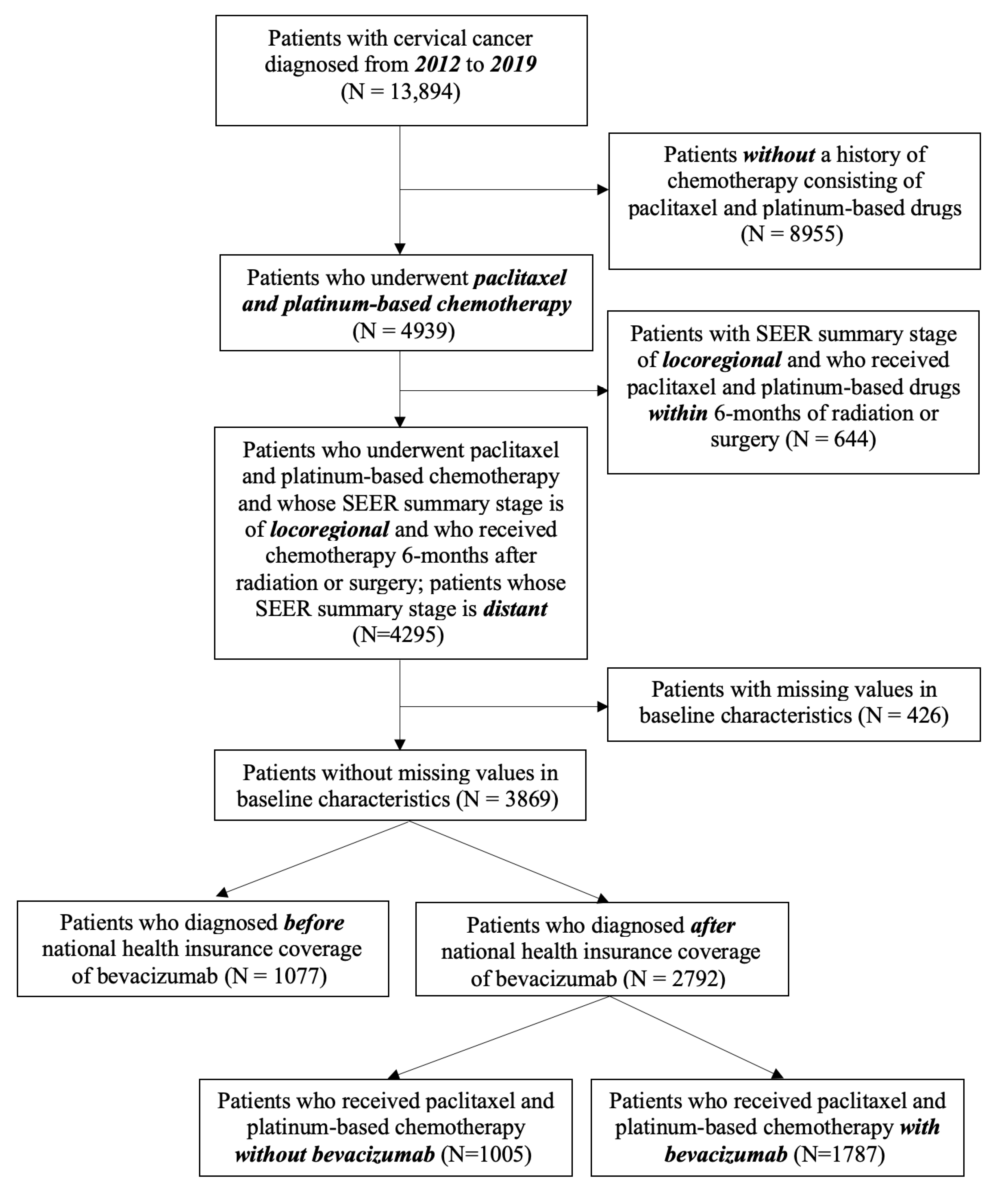
2.2. Eligibility of Study Subjects
2.3. Operational Definitions of Cancer Stage and Cancer Treatment
2.4. Outcome Measures
2.5. Statistical Analysis
3. Results
3.1. Baseline Characteristics
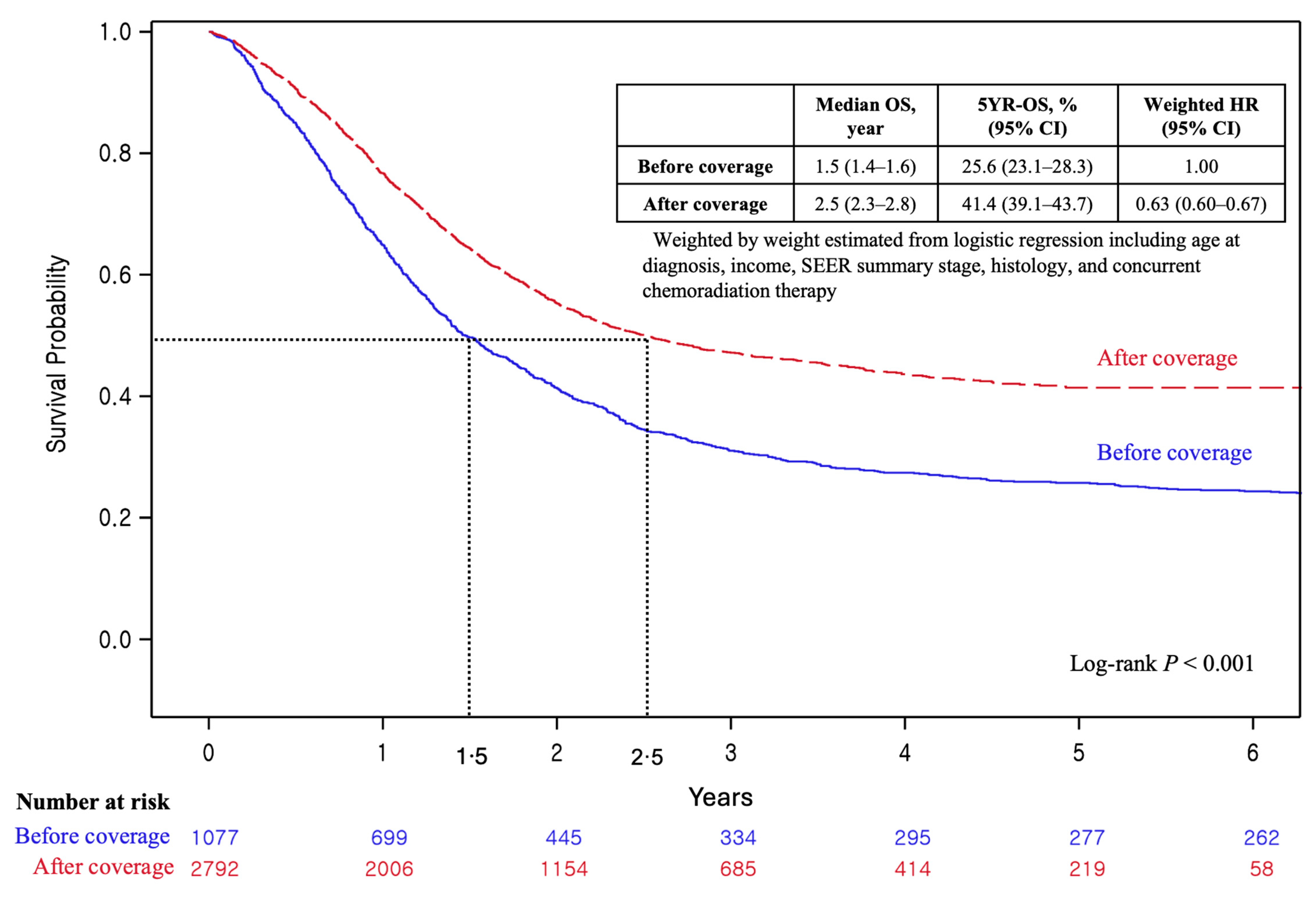
3.2. Comparison of Survival Before and After Bevacizumab Implementation
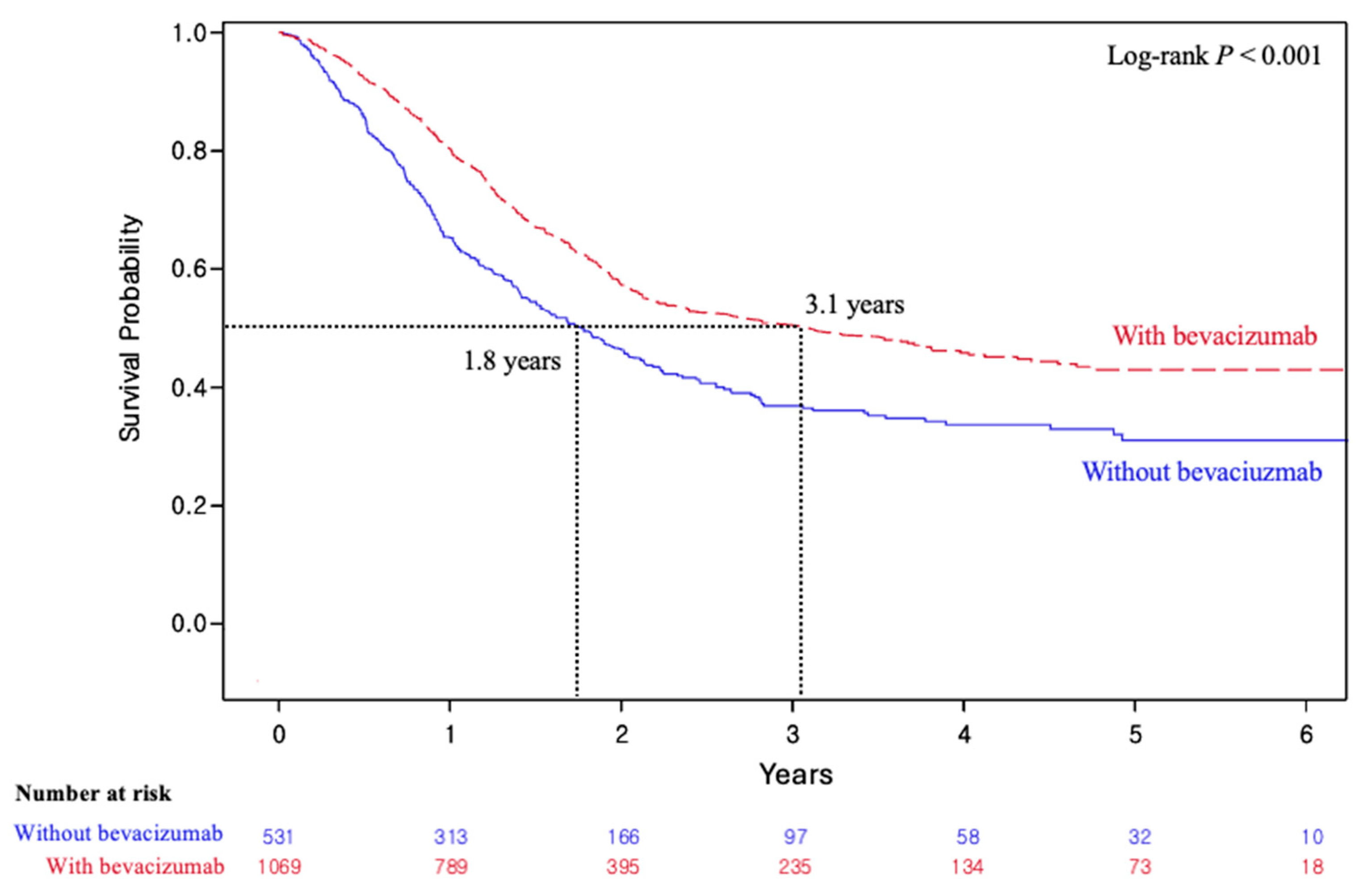
3.3. Effectiveness of Bevacizumab After Its Implementation Under National Reimbursement
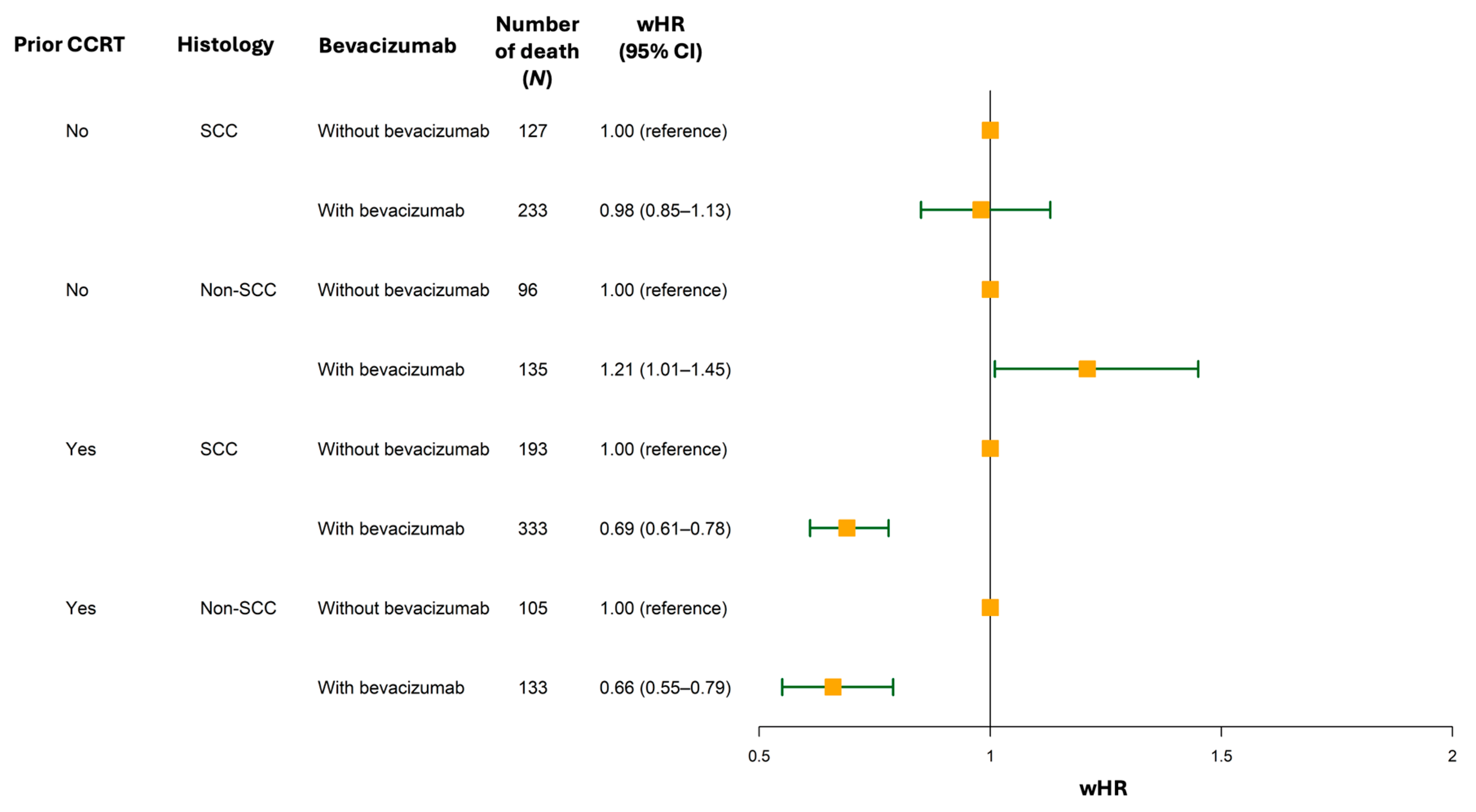
3.4. Effectiveness of Bevacizumab According to Clinical Characteristics
4. Discussion
5. Conclusions
Supplementary Materials
Author Contributions
Funding
Institutional Review Board Statement
Informed Consent Statement
Data Availability Statement
Conflicts of Interest
References
- Bray, F.; Laversanne, M.; Sung, H.; Ferlay, J.; Siegel, R.L.; Soerjomataram, I.; Jemal, A. Global cancer statistics 2022: GLOBOCAN estimates of incidence and mortality worldwide for 36 cancers in 185 countries. CA Cancer J. Clin. 2024, 74, 229–263. [Google Scholar] [CrossRef]
- Ficht, A.L.; Lapidos-Salaiz, I.; Phelps, B.R. Eliminating cervical cancer: Promising developments in primary prevention. Cancer 2020, 126, 242–246. [Google Scholar] [CrossRef] [PubMed]
- Landoni, F.; Maneo, A.; Colombo, A.; Placa, F.; Milani, R.; Perego, P.; Favini, G.; Ferri, L.; Mangioni, C. Randomised study of radical surgery versus radiotherapy for stage Ib-IIa cervical cancer. Lancet 1997, 350, 535–540. [Google Scholar] [CrossRef] [PubMed]
- Wright, J.D.; Matsuo, K.; Huang, Y.; Tergas, A.I.; Hou, J.Y.; Khoury-Collado, F.; Clair, C.M.S.; Ananth, C.V.; Neugut, A.I.; Hershman, D.L. Prognostic Performance of the 2018 International Federation of Gynecology and Obstetrics Cervical Cancer Staging Guidelines. Obstet. Gynecol. 2019, 134, 49–57. [Google Scholar] [CrossRef]
- Tewari, K.S.; Sill, M.W.; Long, H.J., 3rd; Penson, R.T.; Huang, H.; Ramondetta, L.M.; Landrum, L.M.; Oaknin, A.; Reid, T.J.; Leitao, M.M.; et al. Improved survival with bevacizumab in advanced cervical cancer. N. Engl. J. Med. 2014, 370, 734–743. [Google Scholar] [CrossRef] [PubMed]
- Tewari, K.S.; Sill, M.W.; Penson, R.T.; Huang, H.; Ramondetta, L.M.; Landrum, L.M.; Oaknin, A.; Reid, T.J.; Leitao, M.M.; Michael, H.E.; et al. Bevacizumab for advanced cervical cancer: Final overall survival and adverse event analysis of a randomised, controlled, open-label, phase 3 trial (Gynecologic Oncology Group 240). Lancet 2017, 390, 1654–1663. [Google Scholar] [CrossRef]
- Colombo, N.; Dubot, C.; Lorusso, D.; Caceres, M.V.; Hasegawa, K.; Shapira-Frommer, R.; Tewari, K.S.; Salman, P.; Usta, E.H.; Yañez, E.; et al. Pembrolizumab for Persistent, Recurrent, or Metastatic Cervical Cancer. N. Engl. J. Med. 2021, 385, 1856–1867. [Google Scholar] [CrossRef]
- Hwang, W.Y.; Chang, S.-J.; Kim, H.S.; Kim, N.K.; Kim, T.H.; Kim, Y.; Kong, T.W.; Lee, E.J.; Park, S.J.; Shim, S.H.; et al. Gastrointestinal/genitourinary perforation and fistula formation with or without bevacizumab in patients with previously irradiated recurrent cervical cancer: A Korean multicenter retrospective study of the Gynecologic Oncology Research Investigators Collaboration (GORILLA) group (GORILLA-1001). BMC Cancer 2022, 22, 603. [Google Scholar] [CrossRef]
- Kim, J.; Park, E.-B.; Lee, S.-W.; Park, J.-Y.; Kim, D.-Y.; Suh, D.-S.; Kim, J.-H.; Kim, Y.-M.; Kim, J.-H. The real-world efficacy and toxicity of first-line paclitaxel and cisplatin with bevacizumab in platinum-naïve primary stage IVB cervical cancer. Taiwan. J. Obstet. Gynecol. 2025, 64, 61–67. [Google Scholar] [CrossRef]
- Lee, N.; Kim, S.I.; Lee, M.; Kim, H.S.; Kim, J.W.; Park, N.H.; Song, Y.S. Bevacizumab Efficacy and Recurrence Pattern of Persistent and Metastatic Cervical Cancer. In Vivo 2019, 33, 863. [Google Scholar] [CrossRef]
- Lee, S.; Choi, Y.H.; Kim, H.M.; Hong, M.A.; Park, P.; Kwak, I.H.; Kang, Y.J.; Choi, K.S.; Kong, H.J.; Cha, H.; et al. The Cancer Clinical Library Database (CCLD) from the Korea-Clinical Data Utilization Network for Research Excellence (K-CURE) Project. Cancer Res. Treat. 2024, 57, 19–27. [Google Scholar] [CrossRef] [PubMed]
- Chung, H.C.; Ros, W.; Delord, J.-P.; Perets, R.; Italiano, A.; Shapira-Frommer, R.; Manzuk, L.; Piha-Paul, S.A.; Xu, L.; Zeigenfuss, S.; et al. Efficacy and Safety of Pembrolizumab in Previously Treated Advanced Cervical Cancer: Results From the Phase II KEYNOTE-158 Study. J. Clin. Oncol. 2019, 37, 1470–1478. [Google Scholar] [CrossRef] [PubMed]
- Choi, M.C.; Kim, Y.-M.; Lee, J.-W.; Lee, Y.J.; Suh, D.H.; Lee, S.J.; Lee, T.S.; Lee, M.; Park, D.C.; Kim, M.K.; et al. Real-World Experience of Pembrolizumab Monotherapy in Patients with Recurrent or Persistent Cervical Cancer: A Korean Multi-Center Retrospective Study (KGOG1041). Cancers 2020, 12, 3188. [Google Scholar] [CrossRef] [PubMed]
- Wang, W.; Meng, Q.; Hou, X.; Lian, X.; Yan, J.; Sun, S.; Liu, Z.; Miao, Z.; Wang, D.; Liu, X.; et al. Efficacy and toxicity of image-guided intensity-modulated radiation therapy combined with dose-escalated brachytherapy for stage IIB cervical cancer. Oncotarget 2017, 8, 102965–102973. [Google Scholar] [CrossRef][Green Version]
- Kim, N.; Park, W. Patterns of definitive radiotherapy practice for cervical cancer in South Korea: A survey endorsed by the Korean Radiation Oncology Group (KROG 20-06). J. Gynecol. Oncol. 2021, 32, e43. [Google Scholar] [CrossRef]
- Park, H.J.; Chang, A.R.; Seo, Y.; Cho, C.K.; Jang, W.I.; Kim, M.S.; Choi, C. Stereotactic Body Radiotherapy for Recurrent or Oligometastatic Uterine Cervix Cancer: A Cooperative Study of the Korean Radiation Oncology Group (KROG 14-11). Anticancer Res. 2015, 35, 5103–5110. [Google Scholar] [PubMed]
- Jeon, Y.W.; Lim, S.T.; Gwak, H.; Park, S.Y.; Shin, J.; Han, H.S.; Suh, Y.J. Clinical utilization of long-acting granulocyte colony-stimulating factor (pegfilgrastim) prophylaxis in breast cancer patients with adjuvant docetaxel-cyclophosphamide chemotherapy. Ann. Surg. Treat. Res. 2021, 100, 59–66. [Google Scholar] [CrossRef]
- Yang, S.T.; Liu, H.H.; Liu, C.H.; Wang, L.W.; Wang, P.H. Bevacizumab is associated with a higher gastrointestinal/genitourinary fistula or perforation risk in cervical cancer patients undergoing pelvic radiotherapy. Int. J. Gynaecol. Obstet. 2024, 167, 80–87. [Google Scholar] [CrossRef]
- Godoy-Ortiz, A.; Plata, Y.; Alcaide, J.; Galeote, A.; Pajares, B.; Saez, E.; Alba, E.; Sánchez-Muñoz, A. Bevacizumab for recurrent, persistent or advanced cervical cancer: Reproducibility of GOG 240 study results in “real world” patients. Clin. Transl. Oncol. 2018, 20, 922–927. [Google Scholar] [CrossRef]
- Kim, N.; Choi, S.H.; Chang, J.S.; Kim, Y.T.; Kim, S.W.; Kim, G.M.; Kim, Y.B. Use of bevacizumab before or after radiotherapy increases the risk of fistula formation in patients with cervical cancer. Int. J. Gynecol. Cancer 2021, 31, 59–65. [Google Scholar] [CrossRef]
- Haibe, Y.; Kreidieh, M.; El Hajj, H.; Khalifeh, I.; Mukherji, D.; Temraz, S.; Shamseddine, A. Resistance Mechanisms to Anti-angiogenic Therapies in Cancer. Front. Oncol. 2020, 10, 221. [Google Scholar] [CrossRef] [PubMed]
- Liang, J.; Cheng, Q.; Huang, J.; Ma, M.; Zhang, D.; Lei, X.; Xiao, Z.; Zhang, D.; Shi, C.; Luo, L. Monitoring tumour microenvironment changes during anti-angiogenesis therapy using functional MRI. Angiogenesis 2019, 22, 457–470. [Google Scholar] [CrossRef]
- He, X.; Liu, J.; Xiao, L.; Zhao, M.; Su, T.; Liu, T.; Han, G.; Wang, Y. Cisplatin-based chemotherapy with or without bevacizumab for Chinese postmenopausal women with advanced cervical cancer: A retrospective observational study. BMC Cancer 2020, 20, 381. [Google Scholar] [CrossRef]
- Lorusso, D.; Colombo, N.; Dubot, C.; Cáceres, M.V.; Hasegawa, K.; Shapira-Frommer, R.; Salman, P.; Yañez, E.; Gümüş, M.; Olivera, M.; et al. Pembrolizumab plus chemotherapy for advanced and recurrent cervical cancer: Final analysis according to bevacizumab use in the randomized KEYNOTE-826 study. Ann. Oncol. 2025, 36, 65–75. [Google Scholar] [CrossRef]
- Siddiqui, M.; Rajkumar, S.V. The High Cost of Cancer Drugs and What We Can Do About It. Mayo Clin. Proc. 2012, 87, 935–943. [Google Scholar] [CrossRef]
- Cho, D.Y.; Park, J.; Kim, D.S. The impact of expanding health insurance coverage for anti-cancer drugs on cancer survival in Korea. Cancer Med. 2021, 10, 4555–4563. [Google Scholar] [CrossRef] [PubMed]
- Primm, K.M.; Zhao, H.; Adjei, N.N.; Sun, C.C.; Haas, A.; Meyer, L.A.; Chang, S. Effect of Medicaid expansion on cancer treatment and survival among Medicaid beneficiaries and the uninsured. Cancer Med. 2024, 13, e7461. [Google Scholar] [CrossRef]
- Koleva-Kolarova, R.; Buchanan, J.; Vellekoop, H.; Huygens, S.; Versteegh, M.; Mölken, M.R.-V.; Szilberhorn, L.; Zelei, T.; Nagy, B.; Wordsworth, S.; et al. Financing and Reimbursement Models for Personalised Medicine: A Systematic Review to Identify Current Models and Future Options. Appl. Health Econ. Health Policy 2022, 20, 501–524. [Google Scholar] [CrossRef]
- Hsu, J.C.; Wei, C.F.; Yang, S.C. Effects of removing reimbursement restrictions on targeted therapy accessibility for non-small cell lung cancer treatment in Taiwan: An interrupted time series study. BMJ Open 2019, 9, e022293. [Google Scholar] [CrossRef] [PubMed]
- Zhang, Y.; Wushouer, H.; Han, S.; Fu, M.; Guan, X.; Shi, L.; Wagner, A. The impacts of government reimbursement negotiation on targeted anticancer medication price, volume and spending in China. BMJ Glob. Health 2021, 6, e006196. [Google Scholar] [CrossRef]
- Desmet, T.; Michelsen, S.; Van den Brande, E.; Van Dyck, W.; Simoens, S.; Huys, I. Towards implementing new payment models for the reimbursement of high-cost, curative therapies in Europe: Insights from semi-structured interviews. Front. Pharmacol. 2025, 15, 1397531. [Google Scholar] [CrossRef] [PubMed]
- Bharadwaj, M.; Vallurupalli, M.; Huang, F.W. Global Precision Oncology: A Call to Action on Expanding Access to Targeted Cancer Therapies. Oncologist 2021, 26, 353–355. [Google Scholar] [CrossRef] [PubMed]



| Characteristics | Bevacizumab Combination Treatment | p Value | |
|---|---|---|---|
| No n (%) | Yes n (%) | ||
| Age | |||
| <70 years | 905 (90.1) | 1620 (90.7) | 0.60 |
| ≥70 years | 100 (9.9) | 167 (9.3) | |
| Income | |||
| <Median | 517 (51.4) | 947 (53.0) | 0.43 |
| ≥Median | 488 (48.6) | 840 (47.0) | |
| Histology | |||
| Squamous cell carcinoma | 608 (60.5) | 1208 (67.6) | <0.001 |
| Nonsquamous cell carcinoma * | 397 (39.5) | 579 (32.4) | |
| CCRT | |||
| No | 474 (47.2) | 718 (40.2) | <0.001 |
| Yes | 531 (52.8) | 1069 (59.8) | |
| Stage | |||
| Locoregional | 688 (68.4) | 1161 (65.0) | 0.06 |
| Distant | 317 (31.5) | 626 (35.0) | |
| Disease status | |||
| Primary metastatic | 179 (17.8) | 385 (21.5) | 0.02 |
| Recurrent or persistent | 826 (82.2) | 1402 (78.5) | |
| Clinical Characteristics | Bevacizumab | Median (Year) | 5-Year OS Rate % (95% CI) | Person-Year | Number of Surviving Patients n (%) | Number of Deaths n (%) | Weighted HR * (95% CI) |
|---|---|---|---|---|---|---|---|
| Overall | Without bevacizumab | 2.2 (2.0–2.8) | 40.2 (36.5–43.8) | 2163 | 484 (48.2) | 521 (51.8) | 1.00 |
| With bevacizumab | 2.6 (2.3–3.2) | 42.0 (39.0–45.1) | 3740 | 953 (53.3) | 834 (46.7) | 0.84 (0.78–0.90) | |
| Stage | Locoregional disease | ||||||
| Without bevacizumab | 4.5 (2.8–NR) | 48.4 (43.8–52.8) | 1580 | 388 (56.4) | 300 (43.6) | 1.00 | |
| With bevacizumab | 4.0 (3.3–NR) | 47.1 (43.0–51.0) | 2478 | 705 (60.7) | 456 (39.3) | 0.83 (0.76–0.92) | |
| Distant disease | |||||||
| Without bevacizumab | 1.5 (1.3–1.8) | 23.6 (18.2–29.4) | 384 | 96 (30.3) | 221 (69.7) | 1.00 | |
| With bevacizumab | 1.7 (1.6–1.9) | 31.9 (26.6–37.3) | 1263 | 248 (39.6) | 378 (60.4) | 0.80 (0.72–0.90) | |
| CCRT | No Prior CCRT | ||||||
| Without bevacizumab | 4.0 (2.7–NR) | 48.6 (43.5–53.5) | 1121 | 251 (53.0) | 223 (47.0) | 1.00 | |
| With bevacizumab | 2.4 (2.1–2.8) | 40.7 (36.3–45.0) | 1567 | 350 (48.8) | 368 (51.2) | 1.05 (0.94–1.18) | |
| Prior CCRT | |||||||
| Without bevacizumab | 1.8 (1.5–2.0) | 31.0 (25.8–36.5) | 943 | 233 (43.9) | 298 (56.1) | 1.00 | |
| With bevacizumab | 3.1 (2.4–3.8) | 43.0 (38.9–47.1) | 2174 | 603 (56.4) | 466 (43.6) | 0.67 (0.61–0.75) | |
| Histology | SCC | ||||||
| Without bevacizumab | 2.2 (1.9–2.9) | 39.6 (35.0–44.3) | 1322 | 288 (31.0) | 320 (36.1) | 1.00 | |
| With bevacizumab | 2.7 (2.3–3.6) | 42.6 (39.0–46.2) | 2581 | 642 (69.0) | 566 (63.9) | 0.84 (0.77–0.92) | |
| Non-SCC | |||||||
| Without bevacizumab | 2.4 (1.9–3.0) | 41.1 (35.3–46.7) | 841 | 196 (38.7) | 201 (42.9) | 1.00 | |
| With bevacizumab | 2.5 (2.1–3.3) | 40.5 (34.9–46.0) | 1159 | 311 (61.3) | 268 (57.1) | 0.93 (0.82–1.05) | |
Disclaimer/Publisher’s Note: The statements, opinions and data contained in all publications are solely those of the individual author(s) and contributor(s) and not of MDPI and/or the editor(s). MDPI and/or the editor(s) disclaim responsibility for any injury to people or property resulting from any ideas, methods, instructions or products referred to in the content. |
© 2026 by the authors. Licensee MDPI, Basel, Switzerland. This article is an open access article distributed under the terms and conditions of the Creative Commons Attribution (CC BY) license.
Share and Cite
Kim, J.; Jang, J.; Tewari, K.S.; Kim, K.S.; Kang, H.-C.; Kang, S. Nationwide Survival Impact of Bevacizumab Under National Reimbursement for Advanced Cervical Cancer in South Korea. Cancers 2026, 18, 346. https://doi.org/10.3390/cancers18020346
Kim J, Jang J, Tewari KS, Kim KS, Kang H-C, Kang S. Nationwide Survival Impact of Bevacizumab Under National Reimbursement for Advanced Cervical Cancer in South Korea. Cancers. 2026; 18(2):346. https://doi.org/10.3390/cancers18020346
Chicago/Turabian StyleKim, Junhwan, Jieun Jang, Krishnansu S. Tewari, Kyung Su Kim, Hyun-Cheol Kang, and Sokbom Kang. 2026. "Nationwide Survival Impact of Bevacizumab Under National Reimbursement for Advanced Cervical Cancer in South Korea" Cancers 18, no. 2: 346. https://doi.org/10.3390/cancers18020346
APA StyleKim, J., Jang, J., Tewari, K. S., Kim, K. S., Kang, H.-C., & Kang, S. (2026). Nationwide Survival Impact of Bevacizumab Under National Reimbursement for Advanced Cervical Cancer in South Korea. Cancers, 18(2), 346. https://doi.org/10.3390/cancers18020346