An Overview of the Mechanisms of HPV-Induced Cervical Cancer: The Role of Kinase Targets in Pathogenesis and Drug Resistance
Simple Summary
Abstract
1. Introduction
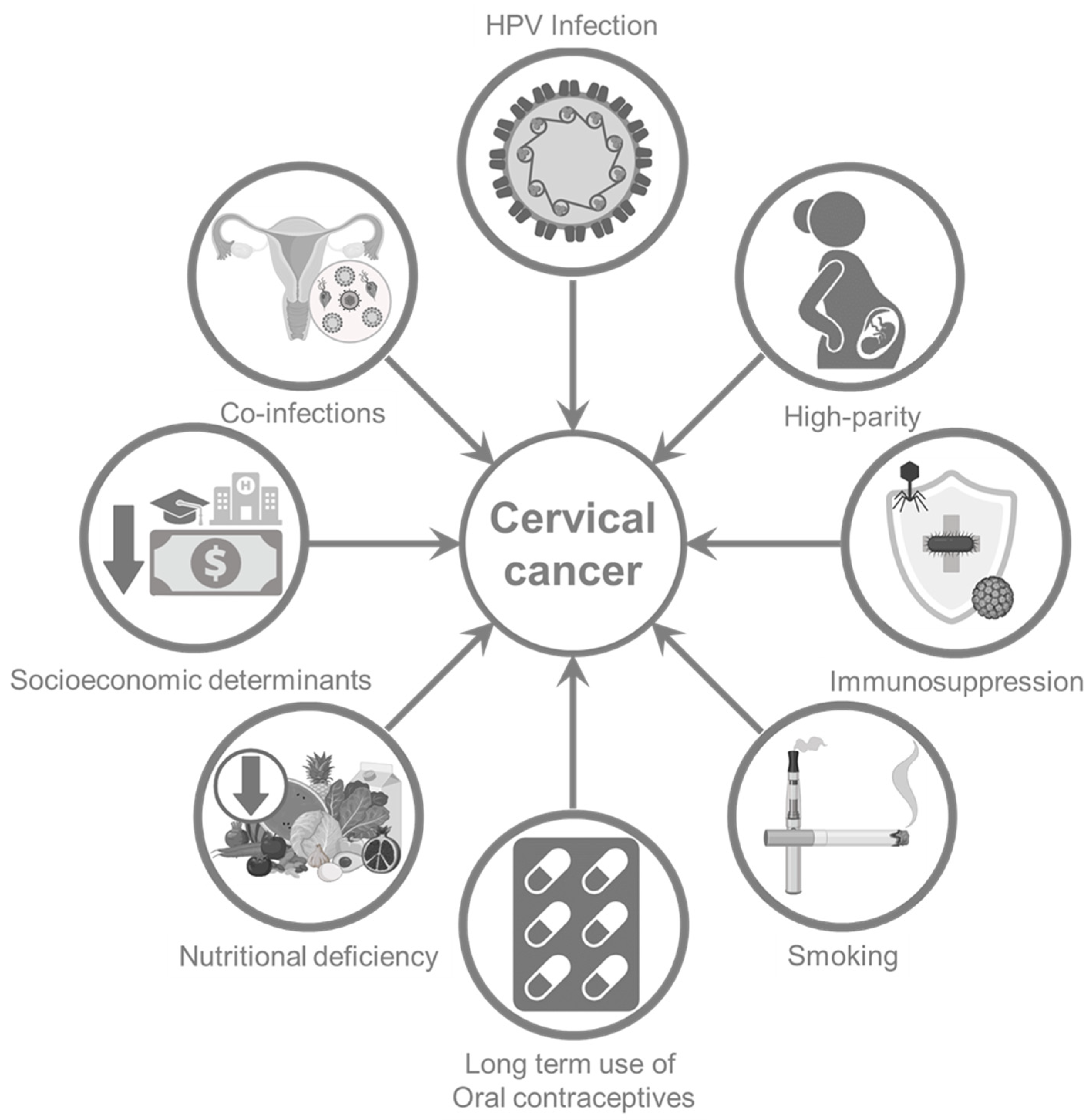
Co-Factors Contributing to Cervical Carcinogenesis
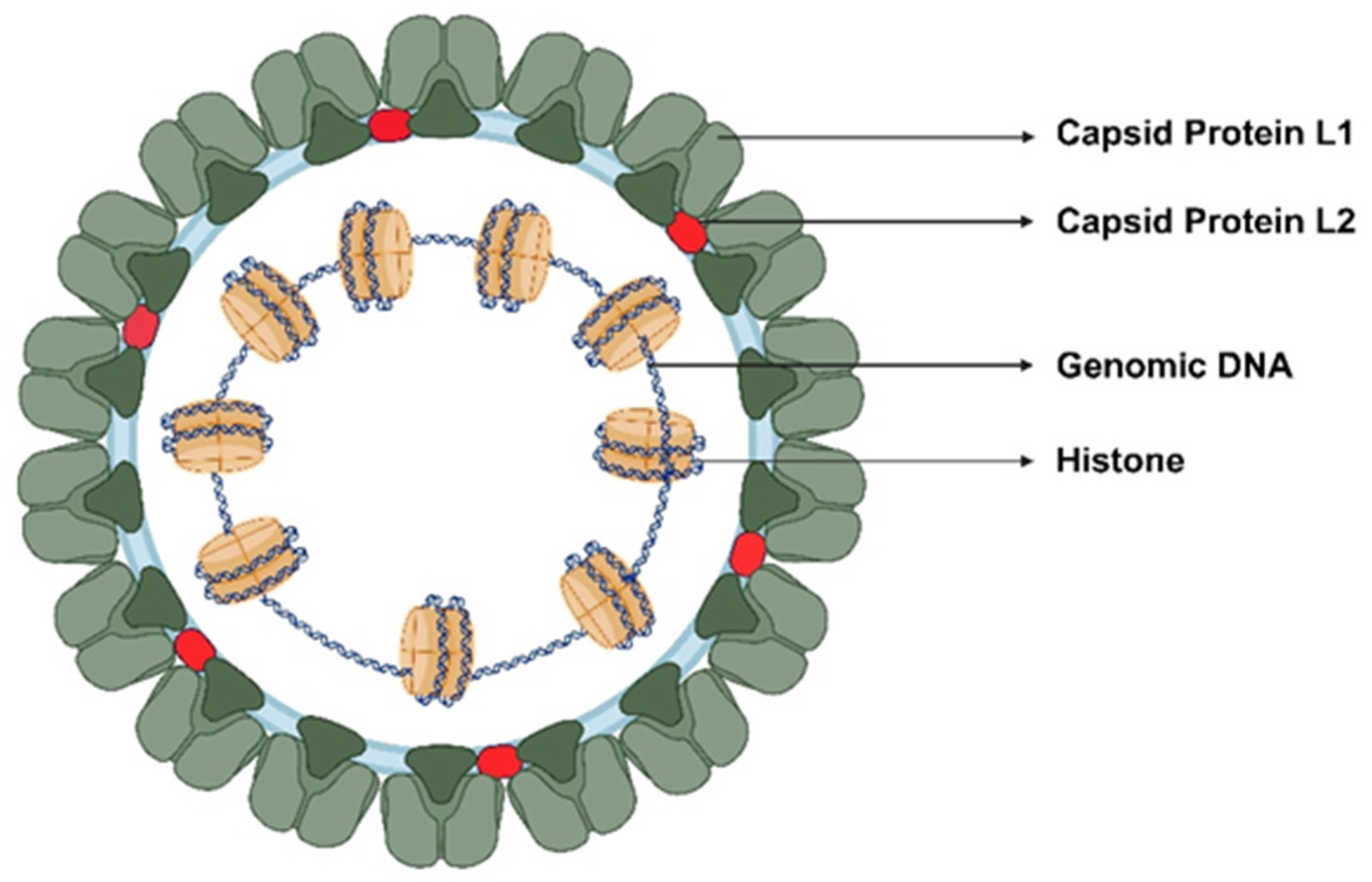
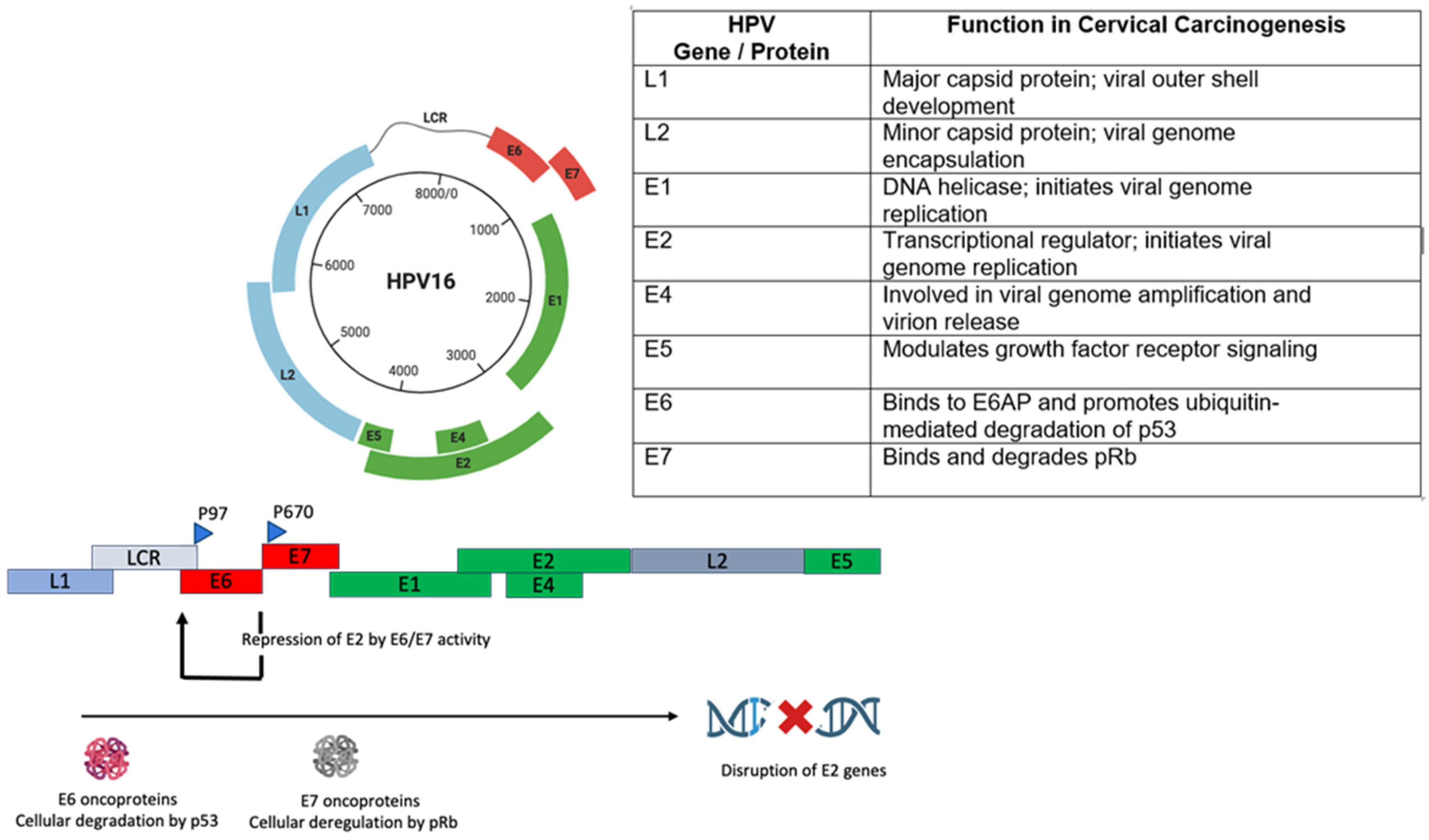
2. Structural Features of HPV and Its Genome Organization
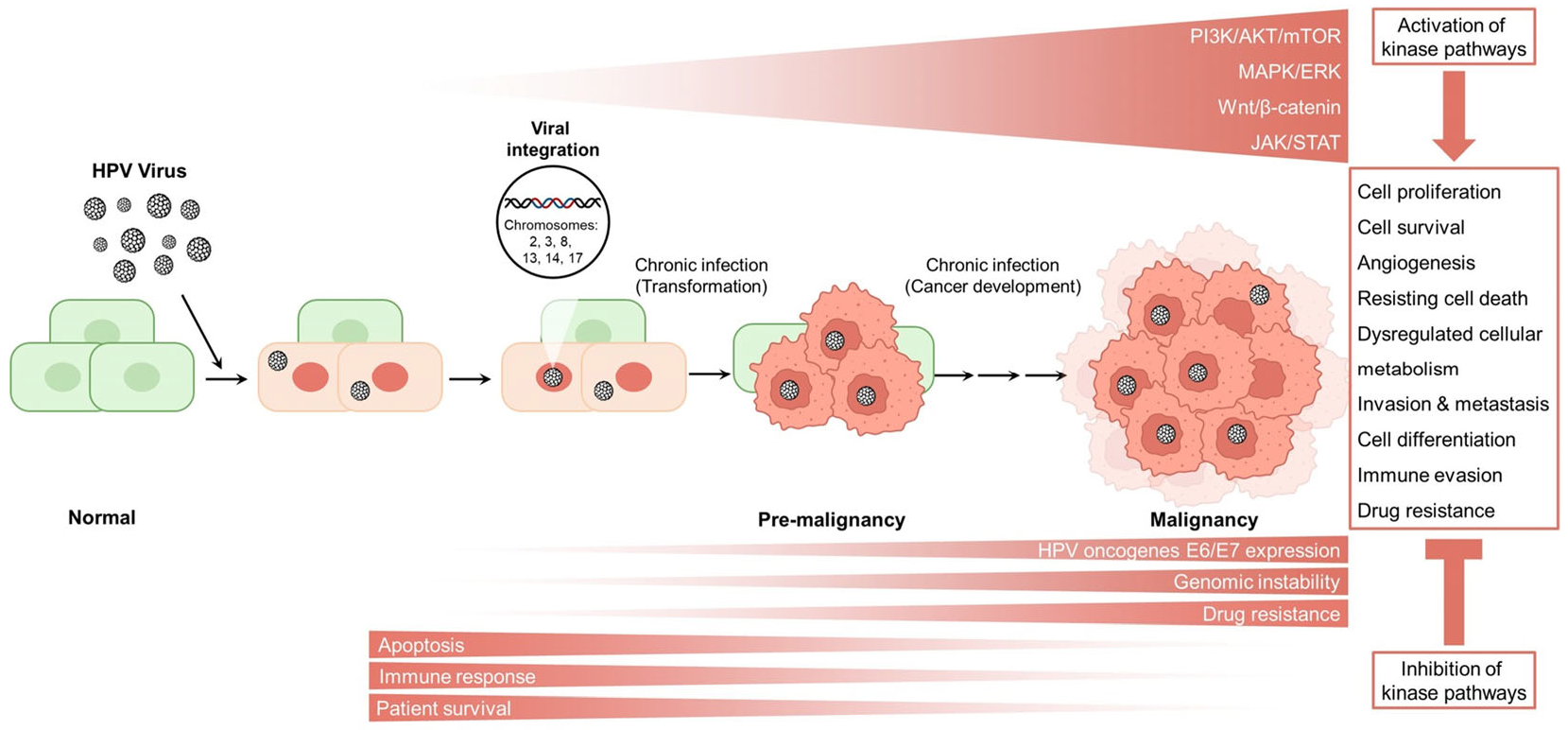
3. HPV-Mediated Molecular Mechanisms in Cervical Carcinogenesis
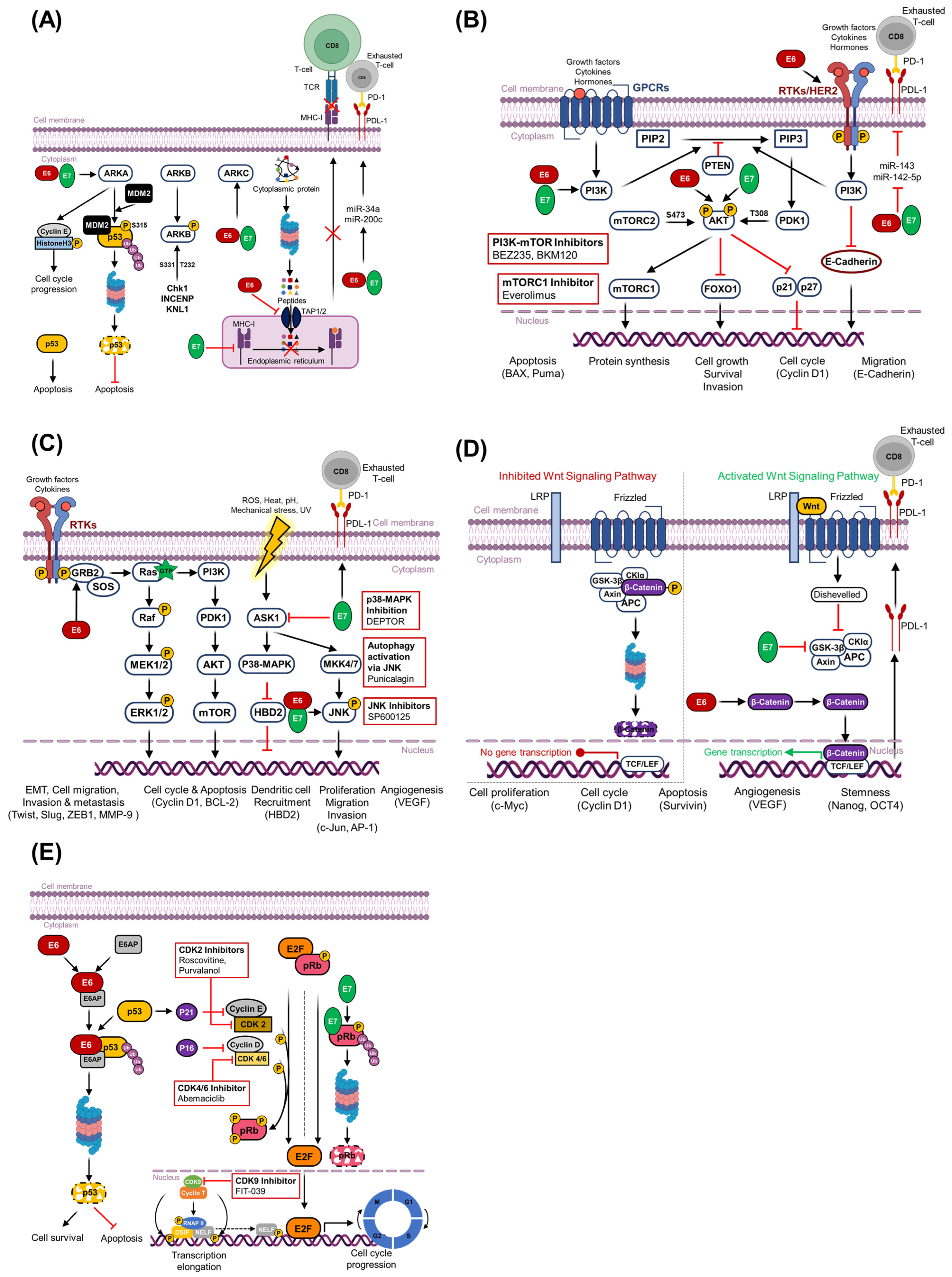
4. Kinase Pathways Targeted by E6 and E7 in Cervical Pathogenesis
4.1. Involvement of Aurora Kinase Pathway in the Pathogenesis of Cervical Cancer
4.2. The PI3K/Akt/mTOR Pathway Drives the Survival of Cervical Cancer Cells and Promotes Resistance to a Spectrum of Pharmacological Agents

4.3. Involvement of MAPK/ERK Pathway in the Malignant Transformation of Cervical Cancer Cells
4.4. Wnt/β-Catenin Pathway
4.5. Cyclin-Dependent Kinases (CDKs) in the Pathogenesis of HPV-Induced Cervical Cancers
5. Molecular Mechanisms of Kinase Regulation by HPV Oncoproteins
6. Mechanisms of Drug Resistance in HPV-Driven Cervical Cancers
7. Therapeutic Strategies Targeting HPV and HPV-Induced Kinase Pathways in Cervical Cancer
8. Kinase Pathways and Drug Resistance in Cervical Cancer
8.1. PI3K/AKT/mTOR Pathway, Aurora Kinases, and Chemoresistance in Cervical Cancer
8.2. MAPK Pathway, Aurora Kinases, and Drug Resistance in Cervical Cancer
8.3. Role of p53 and Kinase Crosstalk in Drug Resistance in Cervical Cancer
9. Clinical Trials Targeting HPV-Induced Kinase Pathways in Cervical Cancer
10. Conclusions and Future Perspectives
Author Contributions
Funding
Data Availability Statement
Conflicts of Interest
Abbreviations
| ARKC | Aurora kinase C |
| 4EBP1 | 4E Binding Protein 1 |
| ACLY | ATP-citrate lyase |
| AMPK | 5′ adenosine monophosphate-activated protein kinase |
| AP | Activator Protein-1 |
| APC | Adenomatous Polyposis Coli |
| ARKA | Aurora kinase A |
| ARKB | Aurora kinase B |
| ASK1–p38 MAPK | Apoptosis Signal-Regulating Kinase 1- p38 Mitogen-Activated Protein Kinase |
| ATM | Ataxia-Telangiectasia Mutated |
| BAD | BCL2-Associated agonist of cell death |
| Bax, | Bcl-2-associated X protein |
| BCL-2 | B-cell lymphoma 2 |
| BRCA1 | BReast CAncer gene 1 |
| c-Fos | Finkel–Biskis–Jinkins Osteosarcoma |
| c-Jun | Cellular Jun Oncogene |
| CC | Cervical cancer |
| CCND1 | Cyclin D1 |
| CDK1 | Cyclin-dependent kinase 1 |
| cGAS | Cyclic GMP-AMP Synthase |
| CIN | Cervical intraepithelial neoplasia |
| cMET | Mesenchymal–Epithelial Transition factor |
| CREBBP | cAMP Response Element Binding Protein |
| CTNNB1 | Catenin Beta 1 |
| CXCR4 | Chemokine receptor type 4 |
| Dlg | Discs Large |
| DNA | Deoxyribonucleic acid |
| DUSP5 | Dual-Specificity Phosphatase 5 |
| E | Early region |
| E6AP | E6-associated protein |
| EGF | Epidermal growth factor |
| EGFR | Epidermal growth factor receptor |
| ELK1 | ETS-Like 1 |
| EMT | Epithelial–Mesenchymal Transition |
| EP300 | E1A Binding Protein P300 |
| ER-α36 | Estrogen receptor- α36 |
| ERK | Extracellular Signal-Regulated Kinase |
| FAK | Focal adhesion kinase |
| FHIT | Fragile Histidine Triad |
| FOXM1 | Forkhead box protein M1 |
| FOXO | Forkhead box O |
| GDP | Guanosine diphosphate |
| GPCRs | G protein-coupled receptors |
| GRB2 | Growth factor receptor-bound protein 2 |
| GSK3a/b | Glycogen synthase kinase3-a/b |
| GSK3β | Glycogen Synthase Kinase 3 beta |
| GTP | Guanosine triphosphate |
| HBD2 | Human Beta-Defensin 2 |
| HCIL | High-grade cervical intraepithelial neoplastic lesions |
| HER2 | Human Epidermal growth factor Receptor 2 |
| HICs | High-income countries |
| HIF-1α | Hypoxia-inducible factor 1-alpha |
| HIV | Human immunodeficiency virus |
| HMGA2 | High Mobility Group AT-hook 2 |
| HPV | Human Papilloma Virus |
| HR -HPV | High risk Human Papilloma Virus |
| Hsp90 | Heat Shock protein 90 |
| HSV | Herpes simplex virus |
| HUVECs | Human Umbilical Vein Endothelial Cells |
| IGF-1R | Insulin-like growth factor 1 receptor |
| IGF1 | Insulin-like Growth Factor 1 |
| IL-8 | Interleukin 8 |
| JNK | c-Jun N-terminal kinase |
| LR | Late region |
| LCR | Long control region |
| LEF | Lymphoid enhancer factor |
| LMICs | Low- and middle-income countries |
| LRP1B | Low-density lipoprotein receptor-related protein 1B |
| MAGT1 | Magnesium Transporter 1 |
| MAPK | Mitogen-activated protein kinase |
| MCL | Myeloid Cell Leukemia |
| MHC | Major histone complex |
| miR | Micro RNA |
| MMP-9 | Matrix metalloproteinase-9 |
| MNK | MAPK-Interacting Kinase |
| mTOR | Mammalian target of Rapamycin |
| mTORC2 | Mammalian target of rapamycin complex 2 |
| MYC | Myelocytomatosis viral oncogene |
| MYC | Myelocytomatosis oncogene |
| MZF1 | Myeloid Zinc Finger 1 |
| MZF1–NKX2-1–FOXM1 | Myeloid Zinc Finger 1–NK2 Homeobox 1–Forkhead Box M1 |
| NF-κB | Nuclear Factor kappa B |
| NK | Natural killer |
| NR4A2 | Nuclear Receptor Subfamily 4 Group A Member 2 |
| nu | Nude |
| ODC1 | Ornithine Decarboxylase 1 |
| ori | Origin of replication |
| P-JNK1 | Phosphorylation of JNK-1 |
| PDGF | Platelet-derived growth factor |
| PDGFR | Platelet-derived growth factor receptor |
| PDL 1 | Programmed death-ligand 1 |
| PDZ | The Postsynaptic density protein 95 |
| PI3K | Phosphotidylinositol–trisphosphate kinase |
| PIK3CA | Phosphatidylinositol-4,5-bisphosphate 3-kinase catalytic subunit alpha |
| PIP2 | Phosphatidylinositol 4,5-bisphosphate |
| PIP3 | Phosphatidylinositol 3,4,5-trisphosphate |
| PKC | Protein Kinase C |
| PLD | Phospholipase D |
| PP2A | Protein Phosphatase 2A |
| pRb | Retinoblastoma protein |
| PTEN | Phosphatase and TENsin |
| Puma | p53 upregulated modulator of apoptosis |
| Rb | Retinoblastoma |
| RCC1 | Regulator of Chromosome Condensation 1 |
| RTKs | Receptor tyrosine kinases |
| S6K | S6 kinase |
| Ser | Serine |
| SH2 | Src homology |
| Siah-1 | Seven in absentia homolog 1 |
| SOS | Son of sevenless |
| Sp1 | Specificity protein 1 |
| STARD3 | StAR-related lipid transfer domain-containing 3 |
| STING | Stimulator of Interferon Genes |
| STT3 | Suppressor of Tumorigenicity 3 |
| TCF | T-cell factor |
| TCF7L2 | Transcription factor 7 like 2 |
| Thr | Threonine |
| TIGAR | TP53-inducible glycolysis and apoptosis regulator |
| TNF-α | Tumor necrosis factor-alpha |
| URR | Upstream regulatory region |
| VEGF | Vascular endothelial growth factor |
| WHO | World Health Organization |
| Wnt | Wingless-related integration site |
| FIT | N-[5-fluoro-2-(1-piperidinyl) phenyl] isonicotinthioamide |
| E2F | Early 2 factor transcription factor |
| Hk2 | Hexokinase 2 |
| BARD1 | BRCA1 Associated RING Domain 1 |
| HDACs | Histone deacetylases |
| PGK1 | Phosphoglycerate kinase 1 |
| E–CDK2 | Cyclin E/Cyclin-dependent kinase 2 |
| USP37 | Ubiquitin-specific processing protease 37 |
| MDM2 | Murine Double Minute 2 |
| Cdc25A/C | Cell Division Cycle 25A/C |
| KDM6A | Lysine (K)-specific Demethylase 6A |
| PCNA | Proliferating Cell Nuclear Antigen |
| PKB | Phosphorylation of Akt |
| IRES | Internal Ribosome Entry Site |
| Skp2 | S-phase kinase-associated protein 2 |
| TOP1 | Topoisomerase I |
| RNAi | RNA interference |
| SiRNAs | Small interfering RNAs |
| USP | Ubiquitin-Specific protease |
| MRP1 | Multidrug Resistance Protein 1 |
| P-gp | P-glycoprotein |
| PARP-1 | Poly(ADP-ribose) polymerase-1 |
| NER | Nucleotide excision repair |
| Bag-1 | BCL2-associated athanogene 1 |
| ATG | Autophagy protein |
| sgRNA | Single guide RNA |
| rhTRAIL | Recombinant human tumor necrosis factor (TNF)-related apoptosis-inducing ligand |
| ROS | Reactive oxygen Species |
| ATP | Adenosine triphosphate |
| EGCG | Epigallocatechin-3-gallate |
| PROTAC | Proteolysis-targeting chimera |
| SCID | Severe combined immunodeficiency |
| CRISPR | Clustered Regularly Interspaced Short Palindromic Repeats |
| gRNA | Guide RNA |
| SP-PROTAC | Stapled peptide-based proteolysis-targeting chimera |
References
- Li, Z.; Liu, P.; Yin, A.; Zhang, B.; Xu, J.; Chen, Z.; Zhang, Z.; Zhang, Y.; Wang, S.; Tang, L.; et al. Global landscape of cervical cancer incidence and mortality in 2022 and predictions to 2030: The urgent need to address inequalities in cervical cancer. Int. J. Cancer 2025, 157, 288–297. [Google Scholar] [CrossRef]
- Allanson, E.R.M.; Schmeler, K.M. Cervical Cancer Prevention in Low- and Middle-Income Countries. Clin. Obstet. Gynecol. 2021, 64, 501–518. [Google Scholar] [CrossRef]
- Canfell, K.; Kim, J.J.; Brisson, M.; Keane, A.; Simms, K.T.; Caruana, M.; A Burger, E.; Martin, D.; Nguyen, D.T.N.; Bénard, É.; et al. Mortality impact of achieving WHO cervical cancer elimination targets: A comparative modelling analysis in 78 low-income and lower-middle-income countries. Lancet 2020, 395, 591–603. [Google Scholar] [CrossRef]
- Guillaume, D.; Chandler, R.P.; Igbinoba, S.D. Barriers to Cervical Cancer Screening Among Women Living With HIV in Low- and Middle-Income Countries: A Systematic Review. J. Assoc. Nurses AIDS Care 2020, 31, 497–516. [Google Scholar] [CrossRef]
- Tatar, O.; Haward, B.; Perez, S.; Zhu, P.; Brotherton, J.; Decker, K.; Lofters, A.K.; Mayrand, M.-H.; McBride, E.; Ogilvie, G.; et al. On the path toward cervical cancer elimination in Canada: A national survey of factors influencing women’s intentions to participate in human papillomavirus test-based primary cervical screening. Lancet Reg. Health Am. 2024, 39, 100901. [Google Scholar] [CrossRef] [PubMed]
- Hall, M.T.; Simms, K.T.; Lew, J.-B.; A Smith, M.; Brotherton, J.M.; Saville, M.; Frazer, I.H.; Canfell, K. The projected timeframe until cervical cancer elimination in Australia: A modelling study. Lancet Public Health 2019, 4, e19–e27. [Google Scholar] [CrossRef]
- Mahase, E. NHS England says it will eliminate cervical cancer by 2040. BMJ 2023, 383, 2693. [Google Scholar]
- Portnoy, A.; Pedersen, K.; Kim, J.J.; Burger, E.A. Vaccination and screening strategies to accelerate cervical cancer elimination in Norway: A model-based analysis. Br. J. Cancer 2024, 130, 1951–1959. [Google Scholar] [CrossRef] [PubMed]
- Singh, D.; Vignat, J.; Lorenzoni, V.; Eslahi, M.; Ginsburg, O.; Lauby-Secretan, B.; Arbyn, M.; Basu, P.; Bray, F.; Vaccarella, S. Global estimates of incidence and mortality of cervical cancer in 2020: A baseline analysis of the WHO Global Cervical Cancer Elimination Initiative. Lancet Glob. Health 2022, 11, e197–e206. [Google Scholar] [CrossRef]
- Dzinamarira, T.; Moyo, E.; Dzobo, M.; Mbunge, E.; Murewanhema, G. Cervical cancer in sub-Saharan Africa: An urgent call for improving accessibility and use of preventive services. Int. J. Gynecol. Cancer 2022, 33, 592–597. [Google Scholar] [CrossRef] [PubMed]
- Goli, S.; Rammohan, A.; Singh, D. The Effect of Early Marriages and Early Childbearing on Women’s Nutritional Status in India. Matern. Child Health J. 2015, 19, 1864–1880. [Google Scholar] [CrossRef]
- Gierisch, J.M.; Coeytaux, R.R.; Urrutia, R.P.; Havrilesky, L.J.; Moorman, P.G.; Lowery, W.J.; Dinan, M.; McBroom, A.J.; Hasselblad, V.; Sanders, G.D.; et al. Oral Contraceptive Use and Risk of Breast, Cervical, Colorectal, and Endometrial Cancers: A Systematic Review. Cancer Epidemiol. Biomark. Prev. 2013, 22, 1931–1943. [Google Scholar] [CrossRef]
- Kjellberg, L.; Hallmans, G.; Åhren, A.-M.; Johansson, R.; Bergman, F.; Wadell, G.; Ångström, T.; Dillner, J. Smoking, diet, pregnancy and oral contraceptive use as risk factors for cervical intra-epithelial neoplasia in relation to human papillomavirus infection. Br. J. Cancer 2000, 82, 1332–1338. [Google Scholar] [CrossRef]
- Atalah, E.; Urteaga, C.; Rebolledo, A.; A Villegas, R.; Medina, E.; Csendes, A. Diet, smoking and reproductive history as risk factor for cervical cancer. Rev. Med. Chil. 2001, 129, 597–603. [Google Scholar]
- Wang, J. Risk factors for persistent infection of high-risk HPV in patients with cervical intraepithelial neoplasia. Am. J. Transl. Res. 2025, 17, 2992–3000. [Google Scholar] [CrossRef] [PubMed]
- Liu, G.; Sharma, M.; Tan, N.; Barnabas, R.V. HIV-positive women have higher risk of human papilloma virus infection, precancerous lesions, and cervical cancer. AIDS 2018, 32, 795–808. [Google Scholar] [CrossRef] [PubMed]
- International Collaboration of Epidemiological Studies of Cervical Cancer. Cervical carcinoma and sexual behavior: Collaborative reanalysis of individual data on 15,461 women with cervical carcinoma and 29,164 women without cervical carcinoma from 21 epidemiological studies. Cancer Epidemiol. Biomark. Prev. 2009, 18, 1060–1069. [CrossRef]
- Itarat, Y.; Kietpeerakool, C.; Jampathong, N.; Chumworathayi, B.; Kleebkaow, P.; Aue-Aungkul, A.; Nhokaew, W. Sexual behavior and infection with cervical human papillomavirus types 16 and. Int. J. Women’s Health 2019, 11, 489–494. [Google Scholar] [CrossRef]
- Muñoz, N.; Franceschi, S.; Bosetti, C.; Moreno, V.; Herrero, R.; Smith, J.S.; Shah, K.V.; Meijer, C.J.L.M.; Bosch, F.X.; International Agency for Research on Cancer. Multicentric Cervical Cancer Study Group Role of parity and human papillomavirus in cervical cancer: The IARC multicentric case-control study. Lancet 2002, 359, 1093–1101. [Google Scholar] [CrossRef] [PubMed]
- Racicot, K.; Mor, G. Risks associated with viral infections during pregnancy. J. Clin. Investig. 2017, 127, 1591–1599. [Google Scholar] [CrossRef]
- Moreno, V.; Bosch, F.X.; Muñoz, N.; Meijer, C.J.; Shah, K.V.; Walboomers, J.M.; Herrero, R.; Franceschi, S. Effect of oral contraceptives on risk of cervical cancer in women with human papillomavirus infection: The IARC multicentric case-control study. Lancet 2002, 359, 1085–1092. [Google Scholar] [CrossRef] [PubMed]
- Collins, S.; Rollason, T.P.; Young, L.S.; Woodman, C.B. Cigarette smoking is an independent risk factor for cervical intraepithelial neoplasia in young women: A longitudinal study. Eur. J. Cancer 2010, 46, 405–411. [Google Scholar] [CrossRef]
- Campaner, A.B.; Nadais, R.F.; Galvão, M.A.L. The Effect of Cigarette Smoking on Cervical Langerhans Cells and T and B Lymphocytes in Normal Uterine Cervix Epithelium. Int. J. Gynecol. Pathol. 2009, 28, 549–553. [Google Scholar] [CrossRef]
- Lu, Y.; Wu, Q.; Wang, L.; Ji, L. Chlamydia trachomatis enhances HPV persistence through immune modulation. BMC Infect. Dis. 2024, 24, 229. [Google Scholar] [CrossRef]
- Brotherton, J.M.L.; Vajdic, C.M.; Nightingale, C. The socioeconomic burden of cervical cancer and its implications for strategies required to achieve the WHO elimination targets. Expert Rev. Pharmacoeconomics Outcomes Res. 2025, 25, 487–506. [Google Scholar] [CrossRef]
- Kim, J.; Kim, M.K.; Lee, J.K.; Kim, J.-H.; Son, S.K.; Song, E.-S.; Lee, K.B.; Lee, J.P.; Lee, J.M.; Yun, Y.M. Intakes of Vitamin A, C, and E, and β-Carotene Are Associated with Risk of Cervical Cancer: A Case-Control Study in Korea. Nutr. Cancer 2010, 62, 181–189. [Google Scholar] [CrossRef]
- Jiang, B.; Xiao, S.; Khan, A.; Xue, M. Defective antioxidant systems in cervical cancer. Tumor Biol. 2013, 34, 2003–2009. [Google Scholar] [CrossRef]
- Guo, L.; Zhu, H.; Lin, C.; Che, J.; Tian, X.; Han, S.; Zhao, H.; Zhu, Y.; Mao, D. Associations between antioxidant vitamins and the risk of invasive cervical cancer in Chinese women: A case-control study. Sci. Rep. 2015, 5, 13607. [Google Scholar] [CrossRef]
- Lu, B.; Kumar, A.; Castellsagué, X.; Giuliano, A.R. Efficacy and Safety of Prophylactic Vaccines against Cervical HPV Infection and Diseases among Women: A Systematic Review & Meta-Analysis. BMC Infect. Dis. 2011, 11, 13. [Google Scholar] [CrossRef] [PubMed]
- Arbyn, M.; Xu, L.; Simoens, C.; Martin-Hirsch, P.P. Prophylactic vaccination against human papillomaviruses to prevent cervical cancer and its precursors. Cochrane Database Syst. Rev. 2018, 5, CD009069. [Google Scholar] [CrossRef] [PubMed]
- Cho, E.H.; Park, M.-S.; Woo, H.-Y.; Park, H.; Kwon, M.-J. Evaluation of clinical usefulness of HPV-16 and HPV-18 genotyping for cervical cancer screening. J. Gynecol. Oncol. 2024, 35, e72. [Google Scholar] [CrossRef]
- Harper, D.M.; Franco, E.L.; Wheeler, C.; Ferris, D.G.; Jenkins, D.; Schuind, A.; Zahaf, T.; Innis, B.; Naud, P.; De Carvalho, N.S.; et al. Efficacy of a bivalent L1 virus-like particle vaccine in prevention of infection with human papillomavirus types 16 and 18 in young women: A randomised controlled trial. Lancet 2004, 364, 1757–1765. [Google Scholar] [CrossRef]
- Doorbar, J.; Egawa, N.; Griffin, H.; Kranjec, C.; Murakami, I. Human papillomavirus molecular biology and disease association. Rev. Med. Virol. 2015, 25, 2–23. [Google Scholar] [CrossRef] [PubMed]
- Dorji, T.; Nopsopon, T.; Tamang, S.T.; Pongpirul, K. Human papillomavirus vaccination uptake in low-and middle-income countries: A meta-analysis. eClinicalMedicine 2021, 34, 100836. [Google Scholar] [CrossRef] [PubMed]
- Sharma, H.; Parekh, S.; Pujari, P.; Shewale, S.; Desai, S.; Bhatla, N.; Joshi, S.; Pimple, S.; Kawade, A.; Balasubramani, L.; et al. Immunogenicity and safety of a new quadrivalent HPV vaccine in girls and boys aged 9–14 years versus an established quadrivalent HPV vaccine in women aged 15–26 years in India: A randomised, active-controlled, multicentre, phase 2/3 trial. Lancet Oncol. 2023, 24, 1321–1333. [Google Scholar] [CrossRef] [PubMed]
- Boda, D.; Docea, A.O.; Calina, D.; Ilie, M.A.; Zurac, S.; Neagu, M.; Constantin, C.; Branisteanu, D.E.; Voiculescu, V.; Mamoulakis, C.; et al. Human papilloma virus: Apprehending the link with carcinogenesis and unveiling new research avenues (Review). Int. J. Oncol. 2018, 52, 637–655. [Google Scholar] [CrossRef]
- Buck, C.B.; Cheng, N.; Thompson, C.D.; Lowy, D.R.; Steven, A.C.; Schiller, J.T.; Trus, B.L. Arrangement of L2 within the Papillomavirus Capsid. J. Virol. 2008, 82, 5190–5197. [Google Scholar] [CrossRef]
- Han, F.; Guo, X.-Y.; Jiang, M.-X.; Xia, N.-S.; Gu, Y.; Li, S.-W. Structural biology of the human papillomavirus. Structure 2024, 32, 1877–1892. [Google Scholar] [CrossRef]
- Conway, M.; Meyers, C. Replication and Assembly of Human Papillomaviruses. J. Dent. Res. 2009, 88, 307–317. [Google Scholar] [CrossRef]
- Doorbar, J. The E4 protein; structure, function and patterns of expression. Virology 2013, 445, 80–98. [Google Scholar] [CrossRef]
- Müller, M.; Prescott, E.L.; Wasson, C.W.; Macdonald, A. Human Papillomavirus E5 Oncoprotein: Function and Potential Target for Antiviral Therapeutics. Futur. Virol. 2015, 10, 27–39. [Google Scholar] [CrossRef]
- Vats, A.; Trejo-Cerro, O.; Thomas, M.; Banks, L. Human Papillomavirus E6 and E7: What Remains? Tumour Virus Res. 2021, 11, 200213. [Google Scholar] [CrossRef]
- Kämper, N.; Day, P.M.; Nowak, T.; Selinka, H.-C.; Florin, L.; Bolscher, J.; Hilbig, L.; Schiller, J.T.; Sapp, M. A Membrane-Destabilizing Peptide in Capsid Protein L2 Is Required for Egress of Papillomavirus Genomes from Endosomes. J. Virol. 2006, 80, 759–768. [Google Scholar] [CrossRef] [PubMed]
- Jagu, S.; Kwak, K.; Garcea, R.L.; Roden, R.B. Vaccination with multimeric L2 fusion protein and L1 VLP or capsomeres to broaden protection against HPV infection. Vaccine 2010, 28, 4478–4486. [Google Scholar] [CrossRef] [PubMed]
- McBride, A.A. Chapter 4 Replication and Partitioning of Papillomavirus Genomes. In Advances in Virus Research; Academic Press: Cambridge, MA, USA, 2008. [Google Scholar]
- Zhao, M.; Zhou, D.; Zhang, M.; Kang, P.; Cui, M.; Zhu, L.; Luo, L. Characteristic of persistent human papillomavirus infection in women worldwide: A meta–analysis. PeerJ 2023, 11, e16247. [Google Scholar] [CrossRef]
- Chen, Z.; Schiffman, M.; Herrero, R.; DeSalle, R.; Anastos, K.; Segondy, M.; Sahasrabuddhe, V.V.; E Gravitt, P.; Hsing, A.W.; Burk, R.D. Evolution and Taxonomic Classification of Alphapapillomavirus 7 Complete Genomes: HPV18, HPV39, HPV45, HPV59, HPV68 and HPV. PLoS ONE 2013, 8, e72565. [Google Scholar] [CrossRef]
- A Spalholz, B.; Pol, S.B.V.; Howley, P.M. Characterization of the cis elements involved in basal and E2-transactivated expression of the bovine papillomavirus P2443 promoter. J. Virol. 1991, 65, 743–753. [Google Scholar] [CrossRef]
- Haręża, D.A.; Wilczyński, J.R.; Paradowska, E. Human Papillomaviruses as Infectious Agents in Gynecological Cancers. Oncogenic Properties of Viral Proteins. Int. J. Mol. Sci. 2022, 23, 1818. [Google Scholar] [CrossRef]
- Chen, H.; Guo, K.; Bai, Z.; Lu, L.; Liu, B.; Zhang, J.; Zhong, M.; Xu, C.; Chen, W.; Huang, A.; et al. Advances in the Prevention of Cervical Cancer by Anti-Human Papillomavirus Agents. Cancer Med. 2025, 14, e70847. [Google Scholar] [CrossRef]
- Gilles, C.; Konopnicki, D.; Rozenberg, S. The recent natural history of human papillomavirus cervical infection in women living with HIV: A scoping review of meta-analyses and systematic reviews and the construction of a hypothetical model. HIV Med. 2023, 24, 877–892. [Google Scholar] [CrossRef]
- Swase, T.D.; Fasogbon, I.V.; Eseoghene, I.J.; Etukudo, E.M.; Mbina, S.A.; Joan, C.; Dangana, R.S.; Anyanwu, C.; Vandu, C.D.; Agbaje, A.B.; et al. The impact of HPV/HIV co-infection on immunosuppression, HPV genotype, and cervical cancer biomarkers. BMC Cancer 2025, 25, 202. [Google Scholar] [CrossRef]
- Porter, V.L.; Ng, M.; O’Neill, K.; MacLennan, S.; Corbett, R.D.; Culibrk, L.; Hamadeh, Z.; Iden, M.; Schmidt, R.; Tsaih, S.-W.; et al. Rearrangements of viral and human genomes at human papillomavirus integration events and their allele-specific impacts on cancer genome regulation. Genome Res. 2024, 35, 653–670. [Google Scholar] [CrossRef]
- Pavelescu, L.A.; Mititelu-Zafiu, N.L.; Mindru, D.E.; Vladareanu, R.; Curici, A. Molecular Insights into HPV-Driven Cervical Cancer: Oncoproteins, Immune Evasion, and Epigenetic Modifications. Microorganisms 2025, 13, 1000. [Google Scholar] [CrossRef]
- Schmitz, M.; Driesch, C.; Jansen, L.; Runnebaum, I.B.; Dürst, M. Non-Random Integration of the HPV Genome in Cervical Cancer. PLoS ONE 2012, 7, e39632. [Google Scholar] [CrossRef] [PubMed]
- Molina, M.A.; Steenbergen, R.D.; Pumpe, A.; Kenyon, A.N.; Melchers, W.J. HPV integration and cervical cancer: A failed evolutionary viral trait. Trends Mol. Med. 2024, 30, 890–902. [Google Scholar] [CrossRef]
- Zhou, L.; Qiu, Q.; Zhou, Q.; Li, J.; Yu, M.; Li, K.; Xu, L.; Ke, X.; Xu, H.; Lu, B.; et al. Long-read sequencing unveils high-resolution HPV integration and its oncogenic progression in cervical cancer. Nat. Commun. 2022, 13, 2563. [Google Scholar] [CrossRef] [PubMed]
- Warburton, A.; Markowitz, T.E.; Katz, J.P.; Pipas, J.M.; McBride, A.A. Recurrent integration of human papillomavirus genomes at transcriptional regulatory hubs. npj Genom. Med. 2021, 6, 101. [Google Scholar] [CrossRef] [PubMed]
- Cigno, I.L.; Calati, F.; Girone, C.; Catozzo, M.; Gariglio, M. High-risk HPV oncoproteins E6 and E7 and their interplay with the innate immune response: Uncovering mechanisms of immune evasion and therapeutic prospects. J. Med. Virol. 2024, 96, e29685. [Google Scholar] [CrossRef]
- Ojesina, A.I.; Lichtenstein, L.; Freeman, S.S.; Pedamallu, C.S.; Imaz-Rosshandler, I.; Pugh, T.J.; Cherniack, A.D.; Ambrogio, L.; Cibulskis, K.; Bertelsen, B.; et al. Landscape of genomic alterations in cervical carcinomas. Nature 2014, 506, 371–375. [Google Scholar] [CrossRef]
- Sastre-Garau, X.; Estrada-Virrueta, L.; Radvanyi, F. HPV DNA Integration at Actionable Cancer-Related Genes Loci in HPV-Associated Carcinomas. Cancers 2024, 16, 1584. [Google Scholar] [CrossRef]
- Thorland, E.C.; Myers, S.L.; Gostout, B.S.; I Smith, D. Common fragile sites are preferential targets for HPV16 integrations in cervical tumors. Oncogene 2003, 22, 1225–1237. [Google Scholar] [CrossRef] [PubMed]
- Ma, X.; Yu, X.; Wu, C.; Song, L. The role of extrachromosomal DNA in tumorigenesis and progression. Front. Oncol. 2025, 15, 1665024. [Google Scholar] [CrossRef] [PubMed]
- Cao, C.; Xu, Q.; Zhu, Z.; Xu, M.; Wei, Y.; Lin, S.; Cheng, S.; Zhi, W.; Hong, P.; Huang, X.; et al. Three-dimensional chromatin analysis reveals Sp1 as a mediator to program and reprogram HPV-host epigenetic architecture in cervical cancer. Cancer Lett. 2024, 588, 216809. [Google Scholar] [CrossRef] [PubMed]
- Yilmaz, G.; Biswas-Fiss, E.E.; Biswas, S.B. Sequence-Dependent Interaction of the Human Papillomavirus E2 Protein with the DNA Elements on Its DNA Replication Origin. Int. J. Mol. Sci. 2023, 24, 6555. [Google Scholar] [CrossRef]
- Bodily, J.M.; Hennigan, C.; Wrobel, G.A.; Rodriguez, C.M. Regulation of the human papillomavirus type 16 late promoter by E7 and the cell cycle. Virology 2013, 443, 11–19. [Google Scholar] [CrossRef]
- Singh, A.K.; Walavalkar, K.; Tavernari, D.; Ciriello, G.; Notani, D.; Sabarinathan, R. Cis-regulatory effect of HPV integration is constrained by host chromatin architecture in cervical cancers. Mol. Oncol. 2023, 18, 1189–1208. [Google Scholar] [CrossRef]
- Collins, S.I.; Constandinou-Williams, C.; Wen, K.; Young, L.S.; Roberts, S.; Murray, P.G.; Woodman, C.B. Disruption of the E2 Gene Is a Common and Early Event in the Natural History of Cervical Human Papillomavirus Infection: A Longitudinal Cohort Study. Cancer Res. 2009, 69, 3828–3832. [Google Scholar] [CrossRef]
- Wang, J.C.K.; Baddock, H.T.; Mafi, A.; Foe, I.T.; Bratkowski, M.; Lin, T.-Y.; Jensvold, Z.D.; López, M.P.; Stokoe, D.; Eaton, D.; et al. Structure of the p53 degradation complex from HPV. Nat. Commun. 2024, 15, 1842. [Google Scholar] [CrossRef]
- Li, S.; Hong, X.; Wei, Z.; Xie, M.; Li, W.; Liu, G.; Guo, H.; Yang, J.; Wei, W.; Zhang, S. Ubiquitination of the HPV Oncoprotein E6 Is Critical for E6/E6AP-Mediated p53 Degradation. Front. Microbiol. 2019, 10, 2483. [Google Scholar] [CrossRef]
- Huh, K.; Zhou, X.; Hayakawa, H.; Cho, J.-Y.; Libermann, T.A.; Jin, J.; Harper, J.W.; Munger, K. Human Papillomavirus Type 16 E7 Oncoprotein Associates with the Cullin 2 Ubiquitin Ligase Complex, Which Contributes to Degradation of the Retinoblastoma Tumor Suppressor. J. Virol. 2007, 81, 9737–9747. [Google Scholar] [CrossRef]
- Ranasinghe, V.; McMillan, N. Novel therapeutic strategies for targeting E6 and E7 oncoproteins in cervical cancer. Crit. Rev. Oncol. 2025, 211, 104721. [Google Scholar] [CrossRef] [PubMed]
- Peng, Q.; Wang, L.; Zuo, L.; Gao, S.; Jiang, X.; Han, Y.; Lin, J.; Peng, M.; Wu, N.; Tang, Y.; et al. HPV E6/E7: Insights into their regulatory role and mechanism in signaling pathways in HPV-associated tumor. Cancer Gene Ther. 2023, 31, 9–17. [Google Scholar] [CrossRef]
- Zhang, L.; Wu, J.; Ling, M.T.; Zhao, L.; Zhao, K.-N. The role of the PI3K/Akt/mTOR signalling pathway in human cancers induced by infection with human papillomaviruses. Mol. Cancer 2015, 14, 87. [Google Scholar] [CrossRef]
- Branca, M.; Ciotti, M.; Santini, D.; Di Bonito, L.; Benedetto, A.; Giorgi, C.; Paba, P.; Favalli, C.; Costa, S.; Agarossi, A.; et al. Activation of the ERK/MAP Kinase Pathway in Cervical Intraepithelial Neoplasia Is Related to Grade of the Lesion but Not to High-Risk Human Papillomavirus, Virus Clearance, or Prognosis in Cervical Cancer. Am. J. Clin. Pathol. 2004, 122, 902–911. [Google Scholar] [CrossRef] [PubMed]
- Bello, J.O.M.; Nieva, L.O.; Paredes, A.C.; Gonzalez, A.M.F.; Zavaleta, L.R.; Lizano, M. Regulation of the Wnt/β-Catenin Signaling Pathway by Human Papillomavirus E6 and E7 Oncoproteins. Viruses 2015, 7, 4734–4755. [Google Scholar] [CrossRef]
- Morgan, E.L.; Scarth, J.A.; Patterson, M.R.; Wasson, C.W.; Hemingway, G.C.; Barba-Moreno, D.; Macdonald, A. E6-mediated activation of JNK drives EGFR signalling to promote proliferation and viral oncoprotein expression in cervical cancer. Cell Death Differ. 2020, 28, 1669–1687. [Google Scholar] [CrossRef] [PubMed]
- Nikhil, K.; Shah, K. The significant others of aurora kinase a in cancer: Combination is the key. Biomark. Res. 2024, 12, 109. [Google Scholar] [CrossRef]
- Tang, A.; Gao, K.; Chu, L.; Zhang, R.; Yang, J.; Zheng, J. Aurora kinases: Novel therapy targets in cancers. Oncotarget 2017, 8, 23937–23954. [Google Scholar] [CrossRef]
- Guo, Y.; Ma, J.; Zheng, Y.; Li, L.; Gui, X.; Wang, Q.; Meng, X.; Shang, H. HPV16 E6 upregulates Aurora A expression. Oncol. Lett. 2016, 12, 1387–1393. [Google Scholar] [CrossRef]
- Twu, N.-F.; Yuan, C.-C.; Yen, M.-S.; Lai, C.-R.; Chao, K.-C.; Wang, P.-H.; Wu, H.-H.; Chen, Y.-J. Expression of Aurora kinase A and B in normal and malignant cervical tissue: High Aurora A kinase expression in squamous cervical cancer. Eur. J. Obstet. Gynecol. Reprod. Biol. 2009, 142, 57–63. [Google Scholar] [CrossRef]
- Petsalaki, E.; Akoumianaki, T.; Black, E.J.; Gillespie, D.A.; Zachos, G. Phosphorylation at serine 331 is required for Aurora B activation. J. Cell Biol. 2011, 195, 449–466. [Google Scholar] [CrossRef] [PubMed]
- Broad, A.J.; DeLuca, K.F.; DeLuca, J.G. Aurora B kinase is recruited to multiple discrete kinetochore and centromere regions in human cells. J. Cell Biol. 2020, 219, e201905144. [Google Scholar] [CrossRef]
- Bolton, M.A.; Lan, W.; Powers, S.E.; McCleland, M.L.; Kuang, J.; Stukenberg, P.T. Aurora B Kinase Exists in a Complex with Survivin and INCENP and Its Kinase Activity Is Stimulated by Survivin Binding and Phosphorylation. Mol. Biol. Cell 2002, 13, 3064–3077. [Google Scholar] [CrossRef]
- Dandoulaki, M.; Petsalaki, E.; Sumpton, D.; Zanivan, S.; Zachos, G. Src activation by Chk1 promotes actin patch formation and prevents chromatin bridge breakage in cytokinesis. J. Cell Biol. 2018, 217, 3071–3089. [Google Scholar] [CrossRef]
- Yasui, Y.; Urano, T.; Kawajiri, A.; Nagata, K.-I.; Tatsuka, M.; Saya, H.; Furukawa, K.; Takahashi, T.; Izawa, I.; Inagaki, M. Autophosphorylation of a Newly Identified Site of Aurora-B Is Indispensable for Cytokinesis. J. Biol. Chem. 2004, 279, 12997–13003. [Google Scholar] [CrossRef]
- Boon, S.S.; Lee, Y.C.; Yip, K.L.; Luk, H.Y.; Xiao, C.; Yim, M.K.; Chen, Z.; Chan, P.K.S. Interaction between Human Papillomavirus-Encoded E6 Protein and AurB Induces Cell Immortalization and Proliferation—A Potential Target of Intervention. Cancers 2023, 15, 2465. [Google Scholar] [CrossRef]
- Suman, S.; Mishra, A. Network analysis revealed aurora kinase dysregulation in five gynecological types of cancer. Oncol. Lett. 2017, 15, 1125–1132. [Google Scholar] [CrossRef]
- Tsou, J.; Chang, K.; Chang-Liao, P.; Yang, S.; Lee, C.; Chen, Y.; Lee, Y.; Lin, B.; Lee, J.; Shen, M.; et al. Aberrantly expressed AURKC enhances the transformation and tumourigenicity of epithelial cells. J. Pathol. 2011, 225, 243–254. [Google Scholar] [CrossRef] [PubMed]
- Tayyar, Y.; Idris, A.; Vidimce, J.; Ferreira, D.A.; McMillan, N.A.J. Alpelisib and radiotherapy treatment enhances Alisertib-mediated cervical cancer tumor killing. Am. J. Cancer Res. 2021, 11, 3240–3251. [Google Scholar] [PubMed]
- Li, S.; Yim, M.K.; Yip, K.L.; Xiao, C.; Luk, H.Y.; Xiao, S.; Chen, Z.; Chan, P.K.S.; Boon, S.S. E6-Encoded by Cancer-Causing Human Papillomavirus Interacts with Aurora Kinase A To Promote HPV-Mediated Carcinogenesis. J. Virol. 2023, 97, e0187222. [Google Scholar] [CrossRef]
- Burassakarn, A.; Phusingha, P.; Yugawa, T.; Noguchi, K.; Ekalaksananan, T.; Vatanasapt, P.; Kiyono, T.; Pientong, C. Human Papillomavirus 16 E6 Suppresses Transporter Associated with Antigen-Processing Complex in Human Tongue Keratinocyte Cells by Activating Lymphotoxin Pathway. Cancers 2022, 14, 1944. [Google Scholar] [CrossRef] [PubMed]
- Ling, J.; Sun, Q.; Tian, Q.; Shi, H.; Yang, H.; Ren, J. Human papillomavirus 16 E6/E7 contributes to immune escape and progression of cervical cancer by regulating miR-142–5p/PD-L1 axis. Arch. Biochem. Biophys. 2022, 731, 109449. [Google Scholar] [CrossRef]
- Ghosh, S.; O’hAra, M.P.; Mazumdar, T.; Yapindi, L.; Shen, L.; Wang, J.; Frederick, M.J.; Sastry, J.K.; Johnson, F.M. Abstract 3094: Aurora-A inhibition sensitizes HPV-driven cancers to anti-CTLA-4 immunotherapy by modulating the tumor immune microenvironment. Cancer Res. 2025, 85, 3094. [Google Scholar] [CrossRef]
- Ghafouri-Fard, S.; Alamdari, A.N.; Alamdari, Y.N.; Abak, A.; Hussen, B.M.; Taheri, M.; Jamali, E. Role of PI3K/AKT pathway in squamous cell carcinoma with an especial focus on head and neck cancers. Cancer Cell Int. 2022, 22, 254. [Google Scholar] [CrossRef] [PubMed]
- Bossler, F.; Hoppe-Seyler, K.; Hoppe-Seyler, F. PI3K/AKT/mTOR Signaling Regulates the Virus/Host Cell Crosstalk in HPV-Positive Cervical Cancer Cells. Int. J. Mol. Sci. 2019, 20, 2188. [Google Scholar]
- Lee, E.-H.; Ji, K.-Y.; Kim, E.-M.; Kim, S.-M.; Song, H.-W.; Choi, H.-R.; Chung, B.Y.; Choi, H.J.; Bai, H.-W.; Kang, H.-S. Blockade of Axl signaling ameliorates HPV16E6-mediated tumorigenecity of cervical cancer. Sci. Rep. 2017, 7, 5759. [Google Scholar] [CrossRef]
- Rabachini, T.; Boccardo, E.; Andrade, R.; Perez, K.R.; Nonogaki, S.; Cuccovia, I.M.; Villa, L.L. HPV-16 E7 expression up-regulates phospholipase D activity and promotes rapamycin resistance in a pRB-dependent manner. BMC Cancer 2018, 18, 485. [Google Scholar] [CrossRef]
- Hou, X.; Qiao, L.; Liu, R.; Han, X.; Zhang, W. Phosphorylation of RCC1 on Serine 11 Facilitates G1/S Transition in HPV E7-Expressing Cells. Biomolecules 2021, 11, 995. [Google Scholar] [CrossRef] [PubMed]
- Zhang, B.; Song, Y.; Sun, S.; Han, R.; Hua, C.; Van Der Veen, S.; Cheng, H. Human Papillomavirus 11 Early Protein E6 Activates Autophagy by Repressing AKT/mTOR and Erk/mTOR. J. Virol. 2019, 93, 10-1128. [Google Scholar] [CrossRef]
- Hu, D.; Zhou, J.; Wang, F.; Shi, H.; Li, Y.; Li, B. HPV-16 E6/E7 promotes cell migration and invasion in cervical cancer via regulating cadherin switch in vitro and in vivo. Arch. Gynecol. Obstet. 2015, 292, 1345–1354. [Google Scholar] [CrossRef]
- Tang, X.; Zhang, Q.; Nishitani, J.; Brown, J.; Shi, S.; Le, A.D. Overexpression of Human Papillomavirus Type 16 Oncoproteins Enhances Hypoxia-Inducible Factor 1α Protein Accumulation and Vascular Endothelial Growth Factor Expression in Human Cervical Carcinoma Cells. Clin. Cancer Res. 2007, 13, 2568–2576. [Google Scholar] [CrossRef]
- Zeng, J.; He, S.-L.; Li, L.-J.; Wang, C. Hsp90 up-regulates PD-L1 to promote HPV-positive cervical cancer via HER2/PI3K/AKT pathway. Mol. Med. 2021, 27, 130. [Google Scholar] [CrossRef]
- Samuels, Y.; Waldman, T. Oncogenic Mutations of PIK3CA in Human Cancers. In Phosphoinositide 3-kinase in Health and Disease; Springer Science and Business Media: New York, NY, USA, 2010; Volume 347, pp. 21–41. [Google Scholar] [CrossRef]
- Konstantopoulos, G.; Leventakou, D.; Saltiel, D.-R.; Zervoudi, E.; Logotheti, E.; Pettas, S.; Karagianni, K.; Daiou, A.; Hatzistergos, K.E.; Dafou, D.; et al. HPV16 E6 Oncogene Contributes to Cancer Immune Evasion by Regulating PD-L1 Expression through a miR-143/HIF-1a Pathway. Viruses 2024, 16, 113. [Google Scholar] [CrossRef]
- Liao, J.; Deng, S.; Shi, B.; Wang, M.; Yin, Y.; Cao, Y.; Liu, R.; Huang, X.; Jiang, L.; Shi, Q. HPV16 E7 inhibits HBD2 expression by down-regulation of ASK1-p38 MAPK pathway in cervical cancer. Virol. J. 2025, 22, 109. [Google Scholar] [CrossRef]
- Glaviano, A.; Foo, A.S.C.; Lam, H.Y.; Yap, K.C.H.; Jacot, W.; Jones, R.H.; Eng, H.; Nair, M.G.; Makvandi, P.; Geoerger, B.; et al. PI3K/AKT/mTOR signaling transduction pathway and targeted therapies in cancer. Mol Cancer 2023, 22, 138. [Google Scholar] [CrossRef]
- He, Y.; Sun, M.M.; Zhang, G.G.; Yang, J.; Chen, K.S.; Xu, W.W.; Li, B. Targeting PI3K/Akt signal transduction for cancer therapy. Signal Transduct. Target. Ther. 2021, 6, 425. [Google Scholar] [CrossRef]
- Ledoux, J.; Tchertanov, L. Site-Specific Phosphorylation of RTK KIT Kinase Insert Domain: Interactome Landscape Perspectives. Kinases Phosphatases 2023, 1, 39–71. [Google Scholar] [CrossRef]
- Jiménez, C.; Hernández, C.; Pimentel, B.; Carrera, A.C. The p85 Regulatory Subunit Controls Sequential Activation of Phosphoinositide 3-Kinase by Tyr Kinases and Ras. J. Biol. Chem. 2002, 277, 41556–41562. [Google Scholar] [CrossRef] [PubMed]
- Gunn, R.M.; Hailes, H.C. Insights into the PI3-K-PKB-mTOR signalling pathway from small molecules. J. Chem. Biol. 2008, 1, 49–62. [Google Scholar] [CrossRef][Green Version]
- Dbouk, H.A. PI3King the right partner: Unique interactions and signaling by p110ß. Postdoc J. 2015, 3, 71–87. [Google Scholar] [CrossRef] [PubMed]
- Xu, T.; Pang, Q.; Wang, Y.; Yan, X. Betulinic acid induces apoptosis by regulating PI3K/Akt signaling and mitochondrial pathways in human cervical cancer cells. Int. J. Mol. Med. 2017, 40, 1669–1678. [Google Scholar] [CrossRef] [PubMed]
- Spitkovsky, D.; Aengeneyndt, F.; Braspenning, J.; Doeberitz, M.V.K. p53-independent growth regulation of cervical cancer cells by the papillomavirus E6 oncogene. Oncogene 1996, 13, 1027–1035. [Google Scholar]
- Vogt, M.; Butz, K.; Dymalla, S.; Semzow, J.; Hoppe-Seyler, F. Inhibition of Bax activity is crucial for the antiapoptotic function of the human papillomavirus E6 oncoprotein. Oncogene 2006, 25, 4009–4015. [Google Scholar] [CrossRef]
- Saline, M.; Badertscher, L.; Wolter, M.; Lau, R.; Gunnarsson, A.; Jacso, T.; Norris, T.; Ottmann, C.; Snijder, A. AMPK and AKT protein kinases hierarchically phosphorylate the N-terminus of the FOXO1 transcription factor, modulating interactions with 14-3-3 proteins. J. Biol. Chem. 2019, 294, 13106–13116. [Google Scholar] [CrossRef]
- Koundouros, N.; Poulogiannis, G. Reprogramming of fatty acid metabolism in cancer. Br. J. Cancer 2020, 122, 4–22. [Google Scholar] [CrossRef]
- Levan, J.; Vliet-Gregg, P.A.; Robinson, K.L.; Matsumoto, L.R.; Katzenellenbogen, R.A. HPV type 16 E6 and NFX1–123 augment JNK signaling to mediate keratinocyte differentiation and L1 expression. Virology 2019, 531, 171–182. [Google Scholar] [CrossRef]
- Lee, M.-Y.; Shen, M.-R. Epithelial-mesenchymal transition in cervical carcinoma. Am. J. Transl. Res. 2012, 4, 1–13. [Google Scholar] [PubMed]
- Morales-Garcia, V.; Contreras-Paredes, A.; Martinez-Abundis, E.; Gomez-Crisostomo, N.P.; Lizano, M.; Hernandez-Landero, F.; de la Cruz-Hernandez, E. The high-risk HPV E6 proteins modify the activity of the eIF4E protein via the MEK/ERK and AKT/PKB pathways. FEBS Open Bio 2020, 10, 2541–2552. [Google Scholar] [CrossRef] [PubMed]
- Obanya, D.I.; Wootton, L.M.; Morgan, E.L. Advances in understanding the mechanisms of the human papillomavirus oncoproteins. Biochem. Soc. Trans. 2025, 53, 565–577. [Google Scholar] [CrossRef]
- Wu, Y.; Wang, H.; Wei, D. Oncogenic magnesium transporter 1 upregulates programmed death-1-ligand 1 expression and contributes to growth and radioresistance of glioma cells through the ERK/MAPK signaling pathway. Bioengineered 2022, 13, 9575–9587. [Google Scholar] [CrossRef]
- Medda, A.; Duca, D.; Chiocca, S. Human Papillomavirus and Cellular Pathways: Hits and Targets. Pathogens 2021, 10, 262. [Google Scholar] [CrossRef]
- Pal, A.; Kundu, R. Human Papillomavirus E6 and E7: The Cervical Cancer Hallmarks and Targets for Therapy. Front. Microbiol. 2020, 10, 3116. [Google Scholar] [CrossRef]
- Sun, Q.; Liang, Y.; Zhang, T.; Wang, K.; Yang, X. ER-α36 mediates estrogen-stimulated MAPK/ERK activation and regulates migration, invasion, proliferation in cervical cancer cells. Biochem. Biophys. Res. Commun. 2017, 487, 625–632. [Google Scholar] [CrossRef]
- Chen, X.; Loo, J.X.; Shi, X.; Xiong, W.; Guo, Y.; Ke, H.; Yang, M.; Jiang, Y.; Xia, S.; Zhao, M.; et al. E6 Protein Expressed by High-Risk HPV Activates Super-Enhancers of the EGFR and c-MET Oncogenes by Destabilizing the Histone Demethylase KDM5C. Cancer Res. 2018, 78, 1418–1430. [Google Scholar] [CrossRef] [PubMed]
- Zheng, H.-Y.; Shen, F.-J.; Tong, Y.-Q.; Li, Y. PP2A Inhibits Cervical Cancer Cell Migration by Dephosphorylation of p-JNK, p-p38 and the p-ERK/MAPK Signaling Pathway. Curr. Med. Sci. 2018, 38, 115–123. [Google Scholar] [CrossRef]
- Liu, C.; Lu, J.; Tian, H.; Du, W.; Zhao, L.; Feng, J.; Yuan, D.; Li, Z. Increased expression of PD-L1 by the human papillomavirus 16 E7 oncoprotein inhibits anticancer immunity. Mol. Med. Rep. 2016, 15, 1063–1070. [Google Scholar] [CrossRef] [PubMed]
- Kiamba, E.W.; Goodier, M.R.; Clarke, E. Immune responses to human papillomavirus infection and vaccination. Front. Immunol. 2025, 16, 1591297. [Google Scholar] [CrossRef]
- Han, R.; Song, Y.-J.; Sun, S.-Y.; Zhou, Q.; Chen, X.-Z.; Zheng, Q.-L.; Cheng, H. Influence of Human Papillomavirus E7 Oncoprotein on Maturation and Function of Plasmacytoid Dendritic Cells In Vitro. Virol. Sin. 2018, 33, 493–501. [Google Scholar] [CrossRef]
- Hua, C.; Zheng, Q.; Zhu, J.; Chen, S.; Song, Y.; van der Veen, S.; Cheng, H. Human Papillomavirus Type 16 Early Protein E7 Activates Autophagy through Inhibition of Dual-Specificity Phosphatase. Oxidative Med. Cell. Longev. 2022, 2022, 1863098. [Google Scholar] [CrossRef] [PubMed]
- Cigno, I.L.; Calati, F.; Borgogna, C.; Zevini, A.; Albertini, S.; Martuscelli, L.; De Andrea, M.; Hiscott, J.; Landolfo, S.; Gariglio, M. Human Papillomavirus E7 Oncoprotein Subverts Host Innate Immunity via SUV39H1-Mediated Epigenetic Silencing of Immune Sensor Genes. J. Virol. 2020, 94, 10-1128. [Google Scholar] [CrossRef]
- Katz, M.; Amit, I.; Yarden, Y. Regulation of MAPKs by growth factors and receptor tyrosine kinases. Biochim. Biophys. Acta (BBA)—Mol. Cell Res. 2007, 1773, 1161–1176. [Google Scholar] [CrossRef]
- Guo, Y.J.; Pan, W.W.; Liu, S.B.; Shen, Z.F.; Xu, Y.; Hu, L.L. ERK/MAPK signalling pathway and tumorigenesis. Exp. Ther. Med. 2020, 19, 1997–2007. [Google Scholar] [CrossRef]
- Zhang, J.; Wang, L.; Liu, Y.; Liu, W.; Ma, Z. Exogenous interleukin-1 beta promotes the proliferation and migration of HeLa cells via the MEK/ERK signaling pathway. Mol. Biol. Rep. 2022, 49, 3765–3772. [Google Scholar] [CrossRef] [PubMed]
- Chen, X.; Lin, L.; Wu, Q.; Li, S.; Wang, H.; Sun, Y. Tumor Necrosis Factor-α Promotes the Tumorigenesis, Lymphangiogenesis, and Lymphatic Metastasis in Cervical Cancer via Activating VEGFC-Mediated AKT and ERK Pathways. Mediat. Inflamm. 2023, 2023, 5679966. [Google Scholar] [CrossRef] [PubMed]
- Liu, F.; Yang, X.; Geng, M.; Huang, M. Targeting ERK, an Achilles’ Heel of the MAPK pathway, in cancer therapy. Acta Pharm. Sin. B 2018, 8, 552–562. [Google Scholar] [CrossRef] [PubMed]
- Sugiura, R.; Satoh, R.; Takasaki, T. ERK: A Double-Edged Sword in Cancer. ERK-Dependent Apoptosis as a Potential Therapeutic Strategy for Cancer. Cells 2021, 10, 2509. [Google Scholar] [CrossRef]
- Zheng, Y.; Xia, Y.; Hawke, D.; Halle, M.; Tremblay, M.L.; Gao, X.; Zhou, X.Z.; Aldape, K.; Cobb, M.H.; Xie, K.; et al. FAK Phosphorylation by ERK Primes Ras-Induced Tyrosine Dephosphorylation of FAK Mediated by PIN1 and PTP-PEST. Mol. Cell 2009, 35, 11–25. [Google Scholar] [CrossRef]
- Yang, X.; Zhong, W.; Cao, R. Phosphorylation of the mRNA cap-binding protein eIF4E and cancer. Cell. Signal. 2020, 73, 109689. [Google Scholar] [CrossRef]
- Proud, C.G. Mnks, eIF4E phosphorylation and cancer. Biochim. Biophys. Acta (BBA)—Gene Regul. Mech. 2015, 1849, 766–773. [Google Scholar] [CrossRef]
- Lichtig, H.; Gilboa, D.A.; Jackman, A.; Gonen, P.; Levav-Cohen, Y.; Haupt, Y.; Sherman, L. HPV16 E6 augments Wnt signaling in an E6AP-dependent manner. Virology 2010, 396, 47–58. [Google Scholar] [CrossRef]
- Wang, B.; Li, X.; Liu, L.; Wang, M. β-Catenin: Oncogenic role and therapeutic target in cervical cancer. Biol. Res. 2020, 53, 33. [Google Scholar] [CrossRef]
- Ayala-Calvillo, E.; Mojica-Vázquez, L.H.; García-Carrancá, A.; González-Maya, L. Wnt/β catenin pathway activation and silencing of the APC gene in HPV positive human cervical cancer derived cells. Mol. Med. Rep. 2017, 17, 200–208. [Google Scholar] [CrossRef]
- Chen, P.-M.; Cheng, Y.-W.; Wang, Y.-C.; Wu, T.-C.; Chen, C.-Y.; Lee, H. Up-Regulation of FOXM1 by E6 Oncoprotein through the MZF1/NKX2-1 Axis Is Required for Human Papillomavirus–Associated Tumorigenesis. Neoplasia 2014, 16, 961–971. [Google Scholar] [CrossRef]
- Wang, B.; Wang, M.; Li, X.; Yang, M.; Liu, L. Variations in the Wnt/β-Catenin Pathway Key Genes as Predictors of Cervical Cancer Susceptibility. Pharmacogenomics Pers. Med. 2020, ume 13, 157–165. [Google Scholar] [CrossRef] [PubMed]
- Yang, M.; Wang, M.; Li, X.; Xie, Y.; Xia, X.; Tian, J.; Zhang, K.; Tang, A. Wnt signaling in cervical cancer? J. Cancer 2018, 9, 1277–1286. [Google Scholar] [CrossRef] [PubMed]
- Qiu, J.-J.; Sun, S.-G.; Tang, X.-Y.; Lin, Y.-Y.; Hua, K.-Q. Extracellular vesicular Wnt7b mediates HPV E6-induced cervical cancer angiogenesis by activating the β-catenin signaling pathway. J. Exp. Clin. Cancer Res. 2020, 39, 260. [Google Scholar] [CrossRef]
- Li, Y.; Huang, L.; Hu, Q.; Zheng, K.; Yan, Y.; Lan, T.; Zheng, D.; Lu, Y. WNT7B promotes cancer progression via WNT/β-catenin signaling pathway and predicts a poor prognosis in oral squamous cell carcinoma. BMC Oral Health 2024, 24, 1335. [Google Scholar] [CrossRef] [PubMed]
- Üren, A.; Fallen, S.; Yuan, H.; Usubütün, A.; Küçükali, T.; Schlegel, R.; Toretsky, J.A. Activation of the Canonical Wnt Pathway during Genital Keratinocyte Transformation: A Model for Cervical Cancer Progression. Cancer Res. 2005, 65, 6199–6206. [Google Scholar] [CrossRef]
- Liu, J.; Wang, X.; Zhou, G.; Wang, H.; Xiang, L.; Cheng, Y.; Liu, W.; Wang, Y.; Jia, J.; Zhao, W. Cancerous inhibitor of protein phosphatase 2A is overexpressed in cervical cancer and upregulated by human papillomavirus 16 E7 oncoprotein. Gynecol. Oncol. 2011, 122, 430–436. [Google Scholar] [CrossRef]
- Bulut, G.; Üren, A. Generation of K14-E7/∆N87βcat double transgenic mice as a model of cervical cancer. Methods Mol Biol. 2015, 1249, 393–406. [Google Scholar] [CrossRef]
- Senba, M.; Mori, N. Mechanisms of virus immune evasion lead to development from chronic inflammation to cancer formation associated with human papillomavirus infection. Oncol. Rev. 2012, 6, e17. [Google Scholar] [CrossRef]
- Du, L.; Lee, J.-H.; Jiang, H.; Wang, C.; Wang, S.; Zheng, Z.; Shao, F.; Xu, D.; Xia, Y.; Li, J.; et al. β-Catenin induces transcriptional expression of PD-L1 to promote glioblastoma immune evasion. J. Exp. Med. 2020, 217, e20191115. [Google Scholar] [CrossRef]
- Li, X.; Xiang, Y.; Li, F.; Yin, C.; Li, B.; Ke, X. WNT/β-Catenin Signaling Pathway Regulating T Cell-Inflammation in the Tumor Microenvironment. Front. Immunol. 2019, 10, 2293. [Google Scholar] [CrossRef]
- Yang, Z.; Liu, H.; Song, R.; Lu, W.; Wang, H.; Gu, S.; Cao, X.; Chen, Y.; Liang, J.; Qin, Q.; et al. Reduced MAGI3 level by HPV18E6 contributes to Wnt/β-catenin signaling activation and cervical cancer progression. FEBS Open Bio 2021, 11, 3051–3062. [Google Scholar] [CrossRef] [PubMed]
- Rampias, T.; Boutati, E.; Pectasides, E.; Sasaki, C.; Kountourakis, P.; Weinberger, P.; Psyrri, A. Activation of Wnt Signaling Pathway by Human Papillomavirus E6 and E7 Oncogenes in HPV16-Positive Oropharyngeal Squamous Carcinoma Cells. Mol. Cancer Res. 2010, 8, 433–443. [Google Scholar] [CrossRef]
- Nakagawa, S.; Huibregtse, J.M. Human Scribble (Vartul) Is Targeted for Ubiquitin-Mediated Degradation by the High-Risk Papillomavirus E6 Proteins and the E6AP Ubiquitin-Protein Ligase. Mol. Cell. Biol. 2000, 20, 8244–8253. [Google Scholar] [CrossRef] [PubMed]
- Rasi, F.; Zarredar, H.; Amini, M.; Onsori, H.; Dadashzadeh, K.; Khanmohammadi, M.; Vahedi, L.; Mokhtarzadeh, A.; Baradaran, B.; Baghi, H.B. Suppression of E6 Oncogene Induces Apoptosis in CaSki Cervical Cancer Cells. Asian Pac. J. Cancer Prev. 2023, 24, 3389–3395. [Google Scholar] [CrossRef] [PubMed]
- Peris, I.; Romero-Murillo, S.; Vicente, C.; Narla, G.; Odero, M.D. Regulation and role of the PP2A-B56 holoenzyme family in cancer. Biochim. Et Biophys. Acta (BBA)—Rev. Cancer 2023, 1878, 188953. [Google Scholar] [CrossRef]
- Fernández, J.G.; Rodríguez, D.A.; Valenzuela, M.; Calderon, C.; Urzúa, U.; Munroe, D.; Rosas, C.; Lemus, D.; Díaz, N.; Wright, M.C.; et al. Survivin expression promotes VEGF-induced tumor angiogenesis via PI3K/Akt enhanced β-catenin/Tcf-Lef dependent transcription. Mol. Cancer 2014, 13, 209. [Google Scholar] [CrossRef]
- Ahmed, M.; Uddin, S.; Hussain, A.R.; Alyan, A.; Jehan, Z.; Al-Dayel, F.; Al-Nuaim, A.; Al-Sobhi, S.; Amin, T.; Bavi, P.; et al. FoxM1 and Its Association with Matrix Metalloproteinases (MMP) Signaling Pathway in Papillary Thyroid Carcinoma. J. Clin. Endocrinol. Metab. 2012, 97, E1–E13. [Google Scholar] [CrossRef]
- Song, P.; Gao, Z.; Bao, Y.; Chen, L.; Huang, Y.; Liu, Y.; Dong, Q.; Wei, X. Wnt/β-catenin signaling pathway in carcinogenesis and cancer therapy. J. Hematol. Oncol. 2024, 17, 46. [Google Scholar] [CrossRef]
- Hernández-Martínez, R.; Nowotschin, S.; Harland, L.T.G.; Kuo, Y.-Y.; Theeuwes, B.; Göttgens, B.; Lacy, E.; Hadjantonakis, A.-K.; Anderson, K.V. Axin1 and Axin2 Regulate the WNT-Signaling Landscape to Promote Distinct Mesoderm Programs. bioRxiv 2024. [Google Scholar] [CrossRef] [PubMed]
- Nguyen, C.L.; Münger, K. Direct association of the HPV16 E7 oncoprotein with cyclin A/CDK2 and cyclin E/CDK2 complexes. Virology 2008, 380, 21–25. [Google Scholar] [CrossRef]
- Fan, X.; Chen, J.J. Role of Cdk1 in DNA damage-induced G1 checkpoint abrogation by the human papillomavirus E7 oncogene. Cell Cycle 2014, 13, 3249–3259. [Google Scholar] [CrossRef]
- Ajiro, M.; Sakai, H.; Onogi, H.; Yamamoto, M.; Sumi, E.; Sawada, T.; Nomura, T.; Kabashima, K.; Hosoya, T.; Hagiwara, M. CDK9 Inhibitor FIT-039 Suppresses Viral Oncogenes E6 and E7 and Has a Therapeutic Effect on HPV-Induced Neoplasia. Clin. Cancer Res. 2018, 24, 4518–4528. [Google Scholar] [CrossRef]
- Xu, J.; Xu, S.; Fang, Y.; Chen, T.; Xie, X.; Lu, W. Cyclin-dependent kinase 9 promotes cervical cancer development via AKT2/p53 pathway. IUBMB Life 2018, 71, 347–356. [Google Scholar] [CrossRef]
- Bi, C.; Zhang, X.; Chen, Y.; Dong, Y.; Shi, Y.; Lei, Y.; Lv, D.; Cao, X.; Li, W.; Shi, H. MAGT1 is required for HeLa cell proliferation through regulating p21 expression, S-phase progress, and ERK/p38 MAPK MYC axis. Cell Cycle 2021, 20, 2233–2247. [Google Scholar] [CrossRef]
- Zhang, X.; Sun, Y.; Cheng, S.; Yao, Y.; Hua, X.; Shi, Y.; Jin, X.; Pan, J.; Hu, M.G.; Ying, P.; et al. CDK6 increases glycolysis and suppresses autophagy by mTORC1-HK2 pathway activation in cervical cancer cells. Cell Cycle 2022, 21, 984–1002. [Google Scholar] [CrossRef]
- Xiao, L.; Liu, Y.; Chen, H.; Shen, L. Targeting CDK9 with selective inhibitors or degraders in tumor therapy: An overview of recent developments. Cancer Biol. Ther. 2023, 24, 2219470. [Google Scholar] [CrossRef] [PubMed]
- Qiao, L.; Zheng, J.; Tian, Y.; Zhang, Q.; Wang, X.; Chen, J.J.; Zhang, W. Regulator of chromatin condensation 1 abrogates the G1 cell cycle checkpoint via Cdk1 in human papillomavirus E7-expressing epithelium and cervical cancer cells. Cell Death Dis. 2018, 9, 583. [Google Scholar] [CrossRef] [PubMed]
- Li, R.; Liu, G.; Luo, S.-Y.; Chen, R.; Zhang, J.-X. Cyclin I promotes cisplatin resistance via Cdk5 activation in cervical cancer. Eur. Rev. Med. Pharmacol. Sci. 2015, 19, 4533–4541. [Google Scholar]
- Ren, X.; Jiang, K.; Zhang, F. The Multifaceted Roles of RCC1 in Tumorigenesis. Front. Mol. Biosci. 2020, 7, 225. [Google Scholar] [CrossRef]
- Johnson, N.; I Shapiro, G. Cyclin-dependent kinases (cdks) and the DNA damage response: Rationale for cdk inhibitor–chemotherapy combinations as an anticancer strategy for solid tumors. Expert Opin. Ther. Targets 2010, 14, 1199–1212. [Google Scholar] [CrossRef]
- Wu, X.; Li, T.; Jiang, R.; Yang, X.; Guo, H.; Yang, R. Targeting MHC-I molecules for cancer: Function, mechanism, and therapeutic prospects. Mol. Cancer 2023, 22, 194. [Google Scholar] [CrossRef]
- Camus, S.; Menéndez, S.; Cheok, C.F.; Stevenson, L.F.; Laín, S.; Lane, D.P. Ubiquitin-independent degradation of p53 mediated by high-risk human papillomavirus protein E6. Oncogene 2007, 26, 4059–4070. [Google Scholar] [CrossRef] [PubMed]
- Xu, S.; Li, X.; Gong, Z.; Wang, W.; Li, Y.; Nair, B.C.; Piao, H.; Yang, K.; Wu, G.; Chen, J. Proteomic Analysis of the Human Cyclin-dependent Kinase Family Reveals a Novel CDK5 Complex Involved in Cell Growth and Migration. Mol. Cell. Proteom. 2014, 13, 2986–3000. [Google Scholar] [CrossRef]
- Yim, E.-K.; Park, J.-S. The Role of HPV E6 and E7 Oncoproteins in HPV-associated Cervical Carcinogenesis. Cancer Res. Treat. 2005, 37, 319–324. [Google Scholar] [CrossRef]
- Songock, W.K.; Kim, S.-M.; Bodily, J.M. The human papillomavirus E7 oncoprotein as a regulator of transcription. Virus Res. 2017, 231, 56–75. [Google Scholar] [CrossRef]
- Jiang, W.; Liu, S.; Fu, L. HDAC6 as a therapeutic target for HPV E7-driven cervical cancer. Genome Instab. Dis. 2025, 6, 117–128. [Google Scholar] [CrossRef]
- Hwang, Y.J.; Lee, S.P.; Kim, S.Y.; Choi, Y.H.; Kim, M.J.; Lee, C.H.; Lee, J.Y.; Kim, D.Y. Expression of Heat Shock Protein 60 kDa Is Upregulated in Cervical Cancer. Yonsei Med. J. 2009, 50, 399–406. [Google Scholar] [CrossRef] [PubMed]
- Gandhi, S.; Razif, M.F.M.; Othman, S.; Chakraborty, S.; Rashid, N.N. Evaluation of the proteomic landscape of HPV E7-induced alterations in human keratinocytes reveal therapeutically relevant pathways for cervical cancer. Mol. Med. Rep. 2023, 27, 46. [Google Scholar] [CrossRef]
- Yi, J.W.; Jang, M.; Kim, S.S.; Rhee, J.E. Degradation of p53 by natural variants of the E6 protein of human papillomavirus type. Oncol. Rep. 2013, 29, 1617–1622. [Google Scholar] [CrossRef][Green Version]
- Wu, J.; Chen, Y.; Li, R.; Guan, Y.; Chen, M.; Yin, H.; Yang, X.; Jin, M.; Huang, B.; Ding, X.; et al. Synergistic anticancer effect by targeting CDK2 and EGFR–ERK signaling. J. Cell Biol. 2023, 223, e202203005. [Google Scholar] [CrossRef] [PubMed]
- Kim, Y.T.; Zhao, M. Aberrant Cell Cycle Regulation in Cervical Carcinoma. Yonsei Med. J. 2005, 46, 597–613. [Google Scholar] [CrossRef]
- Soto, D.R.; Barton, C.; Munger, K.; E McLaughlin-Drubin, M. KDM6A addiction of cervical carcinoma cell lines is triggered by E7 and mediated by p21CIP1 suppression of replication stress. PLoS Pathog. 2017, 13, e1006661. [Google Scholar] [CrossRef]
- Mahajan, K.; Mahajan, N.P. PI3K-independent AKT activation in cancers: A treasure trove for novel therapeutics. J. Cell. Physiol. 2012, 227, 3178–3184. [Google Scholar] [CrossRef] [PubMed]
- Pim, D.; Massimi, P.; Dilworth, S.M.; Banks, L. Activation of the protein kinase B pathway by the HPV-16 E7 oncoprotein occurs through a mechanism involving interaction with PP2A. Oncogene 2005, 24, 7830–7838. [Google Scholar] [CrossRef] [PubMed]
- Tanaka, M.; Siemann, D.W. Therapeutic Targeting of the Gas6/Axl Signaling Pathway in Cancer. Int. J. Mol. Sci. 2021, 22, 9953. [Google Scholar] [CrossRef]
- Zhou, Y.; Pan, Y.; Zhang, S.; Shi, X.; Ning, T.; Ke, Y. Increased phosphorylation of p70 S6 kinase is associated with HPV16 infection in cervical cancer and esophageal cancer. Br. J. Cancer 2007, 97, 218–222. [Google Scholar] [CrossRef]
- Strickland, S.W.; Pol, S.V. The Human Papillomavirus 16 E7 Oncoprotein Attenuates AKT Signaling To Promote Internal Ribosome Entry Site-Dependent Translation and Expression of c-MYC. J. Virol. 2016, 90, 5611–5621. [Google Scholar] [CrossRef]
- Feng, W.; Duan, X.; Liu, J.; Xiao, J.; E Brown, R. Morphoproteomic evidence of constitutively activated and overexpressed mTOR pathway in cervical squamous carcinoma and high grade squamous intraepithelial lesions. Int. J. Clin. Exp. Pathol. 2008, 2, 249–260. [Google Scholar]
- Wang, Y.; Wang, J.; Zhao, A.; Huang, X.; Zhang, X. HPV16 E6E7 up-regulates KIF2A expression by activating JNK/c-Jun signal, is beneficial to migration and invasion of cervical cancer cells. Open Med. 2022, 17, 1780–1787. [Google Scholar] [CrossRef]
- Bossler, F.; Kuhn, B.J.; Günther, T.; Kraemer, S.J.; Khalkar, P.; Adrian, S.; Lohrey, C.; Holzer, A.; Shimobayashi, M.; Dürst, M.; et al. Repression of Human Papillomavirus Oncogene Expression under Hypoxia Is Mediated by PI3K/mTORC2/AKT Signaling. mBio 2019, 10, e02323-18. [Google Scholar] [CrossRef]
- Martinez-Zapien, D.; Ruiz, F.X.; Poirson, J.; Mitschler, A.; Ramirez, J.; Forster, A.; Cousido-Siah, A.; Masson, M.; Vande Pol, S.; Podjarny, A.; et al. Structure of the E6/E6AP/p53 complex required for HPV-mediated degradation of p53. Nature 2016, 529, 541–545. [Google Scholar] [CrossRef]
- Luo, Y.; Niu, M.; Liu, Y.; Zhang, M.; Deng, Y.; Mu, D.; Xu, J.; Hong, S. Oncoproteins E6 and E7 upregulate topoisomerase I to activate the cGAS-PD-L1 pathway in cervical cancer development. Front. Pharmacol. 2024, 15, 1450875. [Google Scholar] [CrossRef] [PubMed]
- Jia, L.; Xi, Q.; Wang, H.; Zhang, Z.; Liu, H.; Cheng, Y.; Guo, X.; Zhang, J.; Zhang, Q.; Zhang, L.; et al. miR-142-5p regulates tumor cell PD-L1 expression and enhances anti-tumor immunity. Biochem. Biophys. Res. Commun. 2017, 488, 425–431. [Google Scholar] [CrossRef]
- Putral, L.N.; Bywater, M.J.; Gu, W.; Saunders, N.A.; Gabrielli, B.G.; Leggatt, G.R.; McMillan, N.A.J. RNA Interference against Human Papillomavirus Oncogenes in Cervical Cancer Cells Results in Increased Sensitivity to Cisplatin. Mol. Pharmacol. 2005, 68, 1311–1319. [Google Scholar] [CrossRef]
- Reddy, R.; Gaiwak, V.; Goda, J.S.; Teni, T. Nelfinavir sensitizes a clinically relevant chemo-radioresistant cervical cancer in-vitro model by targeting the AKT-USP15/USP11-HPV16 E6/E7 axis. Biochem. Biophys. Rep. 2025, 42, 101987. [Google Scholar] [CrossRef] [PubMed]
- Roy, M.; Mukherjee, S. Reversal of Resistance towards Cisplatin by Curcumin in Cervical Cancer Cells. Asian Pac. J. Cancer Prev. 2014, 15, 1403–1410. [Google Scholar] [CrossRef] [PubMed]
- Ling, K.; Yang, L.; Yang, N.; Chen, M.; Wang, Y.; Liang, S.; Li, Y.; Jiang, L.; Yan, P.; Liang, Z. Gene Targeting of HPV18 E6 and E7 Synchronously by Nonviral Transfection of CRISPR/Cas9 System in Cervical Cancer. Hum. Gene Ther. 2020, 31, 297–308. [Google Scholar] [CrossRef]
- Kennedy, E.M.; Kornepati, A.V.R.; Goldstein, M.; Bogerd, H.P.; Poling, B.C.; Whisnant, A.W.; Kastan, M.B.; Cullen, B.R. Inactivation of the Human Papillomavirus E6 or E7 Gene in Cervical Carcinoma Cells by Using a Bacterial CRISPR/Cas RNA-Guided Endonuclease. J. Virol. 2014, 88, 11965–11972. [Google Scholar] [CrossRef] [PubMed]
- Park, S.; Auyeung, A.; Lee, D.L.; Lambert, P.F.; Carchman, E.H.; Sherer, N.M. HIV-1 Protease Inhibitors Slow HPV16-Driven Cell Proliferation through Targeted Depletion of Viral E6 and E7 Oncoproteins. Cancers 2021, 13, 949. [Google Scholar] [CrossRef] [PubMed]
- Garland, J.; Benbrook, D.; Hussain, S. EP060/#474 Potential anti-human papillomavirus therapeutics: Mechanism and action of combination therapy in cervical cancer cells. Int. J. Gynecol. Cancer 2023, 33, A103–A104. [Google Scholar] [CrossRef]
- Nees, M.; Geoghegan, J.M.; Hyman, T.; Frank, S.; Miller, L.; Woodworth, C.D. Papillomavirus Type 16 Oncogenes Downregulate Expression of Interferon-Responsive Genes and Upregulate Proliferation-Associated and NF-κB-Responsive Genes in Cervical Keratinocytes. J. Virol. 2001, 75, 4283–4296. [Google Scholar] [CrossRef] [PubMed]
- Gore, M.; Kabekkodu, S.P.; Chakrabarty, S. Exploring the metabolic alterations in cervical cancer induced by HPV oncoproteins: From mechanisms to therapeutic targets. Biochim. Et Biophys. Acta (BBA)—Rev. Cancer 2025, 1880, 189292. [Google Scholar] [CrossRef] [PubMed]
- Zhao, X.; Zhang, R.; Song, Z.; Yang, K.; He, H.; Jin, L.; Zhang, W. Curcumin suppressed the proliferation and apoptosis of HPV-positive cervical cancer cells by directly targeting the E6 protein. Phytotherapy Res. 2023, 38, 4967–4981. [Google Scholar] [CrossRef]
- Du, P.; Li, G.; Wu, L.; Huang, M. Perspectives of ERCC1 in early-stage and advanced cervical cancer: From experiments to clinical applications. Front. Immunol. 2023, 13, 1065379. [Google Scholar] [CrossRef]
- Gąsiorkiewicz, B.M.; Koczurkiewicz-Adamczyk, P.; Piska, K.; Pękala, E. Autophagy modulating agents as chemosensitizers for cisplatin therapy in cancer. Investig. New Drugs 2020, 39, 538–563. [Google Scholar] [CrossRef]
- Zhou, S.; Wang, X.; Ding, J.; Yang, H.; Xie, Y. Increased ATG5 Expression Predicts Poor Prognosis and Promotes EMT in Cervical Carcinoma. Front. Cell Dev. Biol. 2021, 9, 757184. [Google Scholar] [CrossRef]
- Nichols, W.G.; Rietz, A.; Kumar, L.; Lu, Z.; Androphy, E. Characterization of novel compounds that directly bind to and inactivate the HPV E6 protein for treatment of HPV-associated cervical and oropharyngeal cancers. J. Clin. Oncol. 2024, 42, e15122. [Google Scholar] [CrossRef]
- Aghbash, P.S.; Hemmat, N.; Baradaran, B.; Baghi, H.B. siRNA-E6 sensitizes HPV-16-related cervical cancer through Oxaliplatin: An in vitro study on anti-cancer combination therapy. Eur. J. Med. Res. 2023, 28, 42. [Google Scholar] [CrossRef]
- Tan, S.; Hougardy, B.M.T.; Meersma, G.J.; Schaap, B.; de Vries, E.G.E.; van der Zee, A.G.J.; de Jong, S. Human Papilloma Virus 16 E6 RNA Interference Enhances Cisplatin and Death Receptor-Mediated Apoptosis in Human Cervical Carcinoma Cells. Mol. Pharmacol. 2012, 81, 701–709. [Google Scholar] [CrossRef]
- Wei, T.-Y.W.; Wu, P.-Y.; Wu, T.-J.; Hou, H.-A.; Chou, W.-C.; Teng, C.-L.J.; Lin, C.-R.; Chen, J.-M.M.; Lin, T.-Y.; Su, H.-C.; et al. Aurora A and NF-κB Survival Pathway Drive Chemoresistance in Acute Myeloid Leukemia via the TRAF-Interacting Protein TIFA. Cancer Res. 2017, 77, 494–508. [Google Scholar] [CrossRef] [PubMed]
- Hassan, M.H.U.; Shahbaz, M.; Momal, U.; Naeem, H.; Imran, M.; Abdelgawad, M.A.; Ghoneim, M.M.; Mostafa, E.M.; El-Ghorab, A.H.; Alsagaby, S.A.; et al. Exploring Punicalagin Potential Against Cancers: A Comprehensive Review. Food Sci. Nutr. 2025, 13, e70072. [Google Scholar] [CrossRef] [PubMed]
- Karimi, M.; Parsania, M.; Kazemi, N.M.; Qomi, M.; Jahromy, M.H. Curcumin nanoemulsion suppresses HPV oncogenes and inhibits cervical cancer progression: In vitro and in vivo study. Virol. J. 2025, 22, 165. [Google Scholar] [CrossRef]
- Pastorino, G.; Cornara, L.; Soares, S.; Rodrigues, F.; Oliveira, M.B.P.P. Liquorice (Glycyrrhiza glabra): A phytochemical and pharmacological review. Phytother. Res. 2018, 32, 2323–2339. [Google Scholar] [CrossRef]
- Ahmad, A.; Tiwari, R.K.; Mishra, P.; Alkhathami, A.G.; Almeleebia, T.M.; Alshahrani, M.Y.; Ahmad, I.; Asiri, R.A.; Alabdullah, N.M.; Hussien, M.; et al. Antiproliferative and apoptotic potential of Glycyrrhizin against HPV16+ Caski cervical cancer cells: A plausible association with downreguation of HPV E6 and E7 oncogenes and Notch signaling pathway. Saudi J. Biol. Sci. 2022, 29, 3264–3275. [Google Scholar] [CrossRef] [PubMed]
- Einbond, L.S.; Zhou, J.; Huang, K.; Castellanos, M.R.; Mbazor, E.; Balick, M.; Ma, H.; DeVoti, J.A.; Redenti, S.; Wu, H.-A. Plant Compounds Inhibit the Growth of W12 Cervical Precancer Cells Containing Episomal or Integrant HPV DNA; Tanshinone IIA Synergizes with Curcumin in Cervical Cancer Cells. Viruses 2024, 17, 55. [Google Scholar] [CrossRef]
- Ahn, W.S.; Huh, S.W.; Bae, S.-M.; Lee, I.P.; Lee, J.M.; Namkoong, S.E.; Kim, C.K.; Sin, J.-I. A Major Constituent of Green Tea, EGCG, Inhibits the Growth of a Human Cervical Cancer Cell Line, CaSki Cells, through Apoptosis, G 1 Arrest, and Regulation of Gene Expression. DNA Cell Biol. 2003, 22, 217–224. [Google Scholar] [CrossRef]
- Sun, X.; Fu, P.; Xie, L.; Chai, S.; Xu, Q.; Zeng, L.; Wang, X.; Jiang, N.; Sang, M. Resveratrol inhibits the progression of cervical cancer by suppressing the transcription and expression of HPV E6 and E7 genes. Int. J. Mol. Med. 2020, 47, 335–345. [Google Scholar] [CrossRef]
- Khairkhah, N.; Bolhassani, A.; Rajaei, F.; Najafipour, R. Systemic delivery of specific and efficient CRISPR/Cas9 system targeting HPV16 oncogenes using LL-37 antimicrobial peptide in C57BL/6 mice. J. Med. Virol. 2023, 95, e28934. [Google Scholar] [CrossRef]
- Zhen, S.; Lu, J.; Liu, Y.-H.; Chen, W.; Li, X. Synergistic antitumor effect on cervical cancer by rational combination of PD1 blockade and CRISPR-Cas9-mediated HPV knockout. Cancer Gene Ther. 2019, 27, 168–178. [Google Scholar] [CrossRef]
- Li, X.; Guo, M.; Hou, B.; Zheng, B.; Wang, Z.; Huang, M.; Xu, Y.; Chang, J.; Wang, T. CRISPR/Cas9 nanoeditor of double knockout large fragments of E6 and E7 oncogenes for reversing drugs resistance in cervical cancer. J. Nanobiotechnol. 2021, 19, 231. [Google Scholar] [CrossRef]
- Mukerjee, N.; Maitra, S.; Gorai, S.; Ghosh, A.; Alexiou, A.; Thorat, N.D. Revolutionizing Human papillomavirus (HPV)-related cancer therapies: Unveiling the promise of Proteolysis Targeting Chimeras (PROTACs) and Proteolysis Targeting Antibodies (PROTABs) in cancer nano-vaccines. J. Med. Virol. 2023, 95, e29135. [Google Scholar] [CrossRef] [PubMed]
- Smalley, T.B.; Nicolaci, A.A.; Tran, K.C.; Lokhandwala, J.; Obertopp, N.; Matlack, J.K.; Miner, R.E.; Teng, M.N.; Pilon-Thomas, S.; Binning, J.M. Targeted degradation of the HPV oncoprotein E6 reduces tumor burden in cervical cancer. Mol. Ther. 2025, 33, 5415–5426. [Google Scholar] [CrossRef] [PubMed]
- Shi, Y.-Y.; Wang, A.-J.; Liu, X.-L.; Dai, M.-Y.; Cai, H.-B. Stapled peptide PROTAC induced significantly greater anti-PD-L1 effects than inhibitor in human cervical cancer cells. Front. Immunol. 2023, 14, 1193222. [Google Scholar] [CrossRef]
- Ozfiliz-Kilbas, P.; Sarikaya, B.; Obakan-Yerlikaya, P.; Coker-Gurkan, A.; Arisan, E.D.; Temizci, B.; Palavan-Unsal, N. Cyclin-dependent kinase inhibitors, roscovitine and purvalanol, induce apoptosis and autophagy related to unfolded protein response in HeLa cervical cancer cells. Mol. Biol. Rep. 2018, 45, 815–828. [Google Scholar] [CrossRef] [PubMed]
- Xie, X.; Hu, L.; Liu, L.; Wang, J.; Liu, Y.; Ma, L.; Sun, G.; Li, C.; Aisa, H.A.; Meng, S. Punicalagin promotes autophagic degradation of human papillomavirus E6 and E7 proteins in cervical cancer through the ROS-JNK-BCL2 pathway. Transl. Oncol. 2022, 19, 101388. [Google Scholar] [CrossRef]
- Dirix, L.; Schuler, M.; Machiels, J.; Hess, D.; Awada, A.; Steeghs, N.; Paz-Ares, L.; von Moos, R.; Rabault, B.; Rodon, J. Phase IB Dose-Escalation Study of BEZ235 or BKM120 in Combination with Paclitaxel (PTX) in Patients With Advanced Solid Tumors. Ann. Oncol. 2012, 23, ix157–ix158. [Google Scholar] [CrossRef]
- Liu, Y.; Zhao, R.; Fang, S.; Li, Q.; Jin, Y.; Liu, B. Abemaciclib sensitizes HPV-negative cervical cancer to chemotherapy via specifically suppressing CDK4/6-Rb-E2F and mTOR pathways. Fundam. Clin. Pharmacol. 2020, 35, 156–164. [Google Scholar] [CrossRef]
- Chen, Y.-H.; Wu, J.-X.; Yang, S.-F.; Chen, M.-L.; Chen, T.-H.; Hsiao, Y.-H. Metformin Potentiates the Anticancer Effect of Everolimus on Cervical Cancer In Vitro and In Vivo. Cancers 2021, 13, 4612. [Google Scholar] [CrossRef]
- Srinivas, K.P.; Viji, R.; Dan, V.M.; Sajitha, I.S.; Prakash, R.; Rahul, P.V.; Santhoshkumar, T.R.; Lakshmi, S.; Pillai, M.R. DEPTOR promotes survival of cervical squamous cell carcinoma cells and its silencing induces apoptosis through downregulating PI3K/AKT and by up-regulating p38 MAP kinase. Oncotarget 2016, 7, 24154–24171. [Google Scholar] [CrossRef]
- Meng, Q.; Zhang, Y.; Sun, H.; Yang, X.; Hao, S.; Liu, B.; Zhou, H.; Wang, Y.; Xu, Z.-X. Human papillomavirus-16 E6 activates the pentose phosphate pathway to promote cervical cancer cell proliferation by inhibiting G6PD lactylation. Redox Biol. 2024, 71, 103108. [Google Scholar] [CrossRef]
- Hao, S.; Meng, Q.; Sun, H.; Yang, X.; Liu, B.; Zhang, Y.; Zhou, H.; Xu, Z.; Wang, Y. Human papillomavirus type 16 E6 promotes cervical cancer proliferation by upregulating transketolase enzymatic activity through the activation of protein kinase B. Mol. Carcinog. 2023, 63, 339–355. [Google Scholar] [CrossRef]
- Tufail, M.; Hu, J.J.; Liang, J.; He, C.Y.; Wan, W.D.; Huang, Y.Q.; Jiang, C.H.; Wu, H.; Li, N. Predictive, preventive, and personalized medicine in breast cancer: Targeting the PI3K pathway. J. Transl. Med. 2024, 22, 15. [Google Scholar] [CrossRef]
- Tufail, M.; Hu, J.-J.; Liang, J.; He, C.-Y.; Wan, W.-D.; Huang, Y.-Q.; Jiang, C.-H.; Wu, H.; Li, N. Hallmarks of cancer resistance. iScience 2024, 27, 109979. [Google Scholar] [CrossRef]
- Wani, A.K.; Singh, R.; Akhtar, N.; Prakash, A.; Nepovimova, E.; Oleksak, P.; Chrienova, Z.; Alomar, S.; Chopra, C.; Kuca, K. Targeted Inhibition of the PI3K/Akt/mTOR Signaling Axis: Potential for Sarcoma Therapy. Mini-Reviews Med. Chem. 2024, 24, 1496–1520. [Google Scholar] [CrossRef] [PubMed]
- Vats, P.; Saini, C.; Baweja, B.; Srivastava, S.K.; Kumar, A.; Kushwah, A.S.; Nema, R. Aurora kinases signaling in cancer: From molecular perception to targeted therapies. Mol. Cancer 2025, 24, 180. [Google Scholar] [CrossRef]
- Roux, P.P.; Blenis, J. ERK and p38 MAPK-Activated Protein Kinases: A Family of Protein Kinases with Diverse Biological Functions. Microbiol. Mol. Biol. Rev. 2004, 68, 320–344. [Google Scholar] [CrossRef] [PubMed]
- Rasi Bonab, F.; Baghbanzadeh, A.; Ghaseminia, M.; Bolandi, N.; Mokhtarzadeh, A.; Amini, M.; Dadashzadeh, K.; Hajiasgharzadeh, K.; Baradaran, B.; Bannazadeh Baghi, H. Molecular pathways in the development of HPV-induced cervical cancer. EXCLI J. 2021, 20, 320–337. [Google Scholar] [CrossRef] [PubMed]
- Pereira, L.; Igea, A.; Canovas, B.; Dolado, I.; Nebreda, A.R. Inhibition of p38 MAPK sensitizes tumour cells to cisplatin-induced apoptosis mediated by reactive oxygen species and JNK. EMBO Mol. Med. 2013, 5, 1759–1774. [Google Scholar] [CrossRef]
- Oladipo, K.H.; Parish, J.L. De-regulation of aurora kinases by oncogenic HPV; implications in cancer development and treatment. Tumour Virus Res. 2025, 19, 200314. [Google Scholar] [CrossRef]
- Umstead, M.; Xiong, J.; Qi, Q.; Du, Y.; Fu, H. Aurora kinase A interacts with H-Ras and potentiates Ras-MAPK signaling. Oncotarget 2017, 8, 28359–28372. [Google Scholar] [CrossRef] [PubMed]
- Bavetsias, V.; Linardopoulos, S. Aurora Kinase Inhibitors: Current Status and Outlook. Front. Oncol. 2015, 5, 278. [Google Scholar] [CrossRef] [PubMed]
- Colman, M.S.; Afshari, C.A.; Barrett, J. Regulation of p53 stability and activity in response to genotoxic stress. Mutat. Res. /Rev. Mutat. Res. 2000, 462, 179–188. [Google Scholar] [CrossRef]
- Li, X.; Coffino, P. High-risk human papillomavirus E6 protein has two distinct binding sites within p53, of which only one determines degradation. J. Virol. 1996, 70, 4509–4516. [Google Scholar] [CrossRef] [PubMed]
- Liu, Q.; Kaneko, S.; Yang, L.; Feldman, R.I.; Nicosia, S.V.; Chen, J.; Cheng, J.Q. Aurora-A Abrogation of p53 DNA Binding and Transactivation Activity by Phosphorylation of Serine. J. Biol. Chem. 2004, 279, 52175–52182. [Google Scholar] [CrossRef]
- Chen, J. The Cell-Cycle Arrest and Apoptotic Functions of p53 in Tumor Initiation and Progression. Cold Spring Harb. Perspect. Med. 2016, 6, a026104. [Google Scholar] [CrossRef]
- Hsueh, K.-W.; Fu, S.-L.; Huang, C.-Y.F.; Lin, C.-H. Aurora-A phosphorylates hnRNPK and disrupts its interaction with p53. FEBS Lett. 2011, 585, 2671–2675. [Google Scholar] [CrossRef]
- Alvarado-Ortiz, E.; de la Cruz-López, K.G.; Becerril-Rico, J.; Sarabia-Sánchez, M.A.; Ortiz-Sánchez, E.; García-Carrancá, A. Mutant p53 Gain-of-Function: Role in Cancer Development, Progression, and Therapeutic Approaches. Front. Cell Dev. Biol. 2021, 8, 607670. [Google Scholar] [CrossRef]
- Sun, W.; Zhao, X.; Lu, Z.; Guo, Q. P53 introduction enhances chemotherapy-induced apoptosis in Hela cells. Transl. Cancer Res. 2018, 7, 1103–1111. [Google Scholar] [CrossRef]
- Cui, D.; Qu, R.; Liu, D.; Xiong, X.; Liang, T.; Zhao, Y. The Cross Talk Between p53 and mTOR Pathways in Response to Physiological and Genotoxic Stresses. Front. Cell Dev. Biol. 2021, 9, 775507. [Google Scholar] [CrossRef] [PubMed]
- Lin, A.W.; Barradas, M.; Stone, J.C.; van Aelst, L.; Serrano, M.; Lowe, S.W. Premature senescence involving p53 and p16 is activated in response to constitutive MEK/MAPK mitogenic signaling. Genes Dev. 1998, 12, 3008–3019. [Google Scholar] [CrossRef] [PubMed]
- Tinker, A.; Ellard, S.; Welch, S.; Moens, F.; Allo, G.; Tsao, M.; Squire, J.; Tu, D.; Eisenhauer, E.; MacKay, H. Phase II study of temsirolimus (CCI-779) in women with recurrent, unresectable, locally advanced or metastatic carcinoma of the cervix. A trial of the NCIC Clinical Trials Group (NCIC CTG IND 199). Gynecol. Oncol. 2013, 130, 269–274. [Google Scholar] [CrossRef] [PubMed]


| S. No. | Vaccines | Manufacturer | Targeted HPV Genotypes | Cost (Rs) | Reference |
|---|---|---|---|---|---|
| 1 | Cervavac | Serum Institute of India (Pune, India) | HPV 6,11,16,18 | 300–400 | [33] |
| 2 | Gardasil 4 | Merck & Co. (Rahway, NJ, USA) | HPV 6, 11, 16, 18 | 3000–4000 | [34] |
| 3 | Gardasil 9 | Merck & Co. (Rahway, NJ, USA) | HPV 6, 11, 16, 18, 31, 33, 45, 52, 58 | 10,000–11,000 | [35] |
| Mechanism | Details | Intervention/Effect | Reference |
|---|---|---|---|
| Overexpression of drug efflux pumps (MRP1, P-gp) | Cisplatin-resistant SiHaR cells show high MRP1 and P-gp levels, reducing intracellular drug accumulation by 20–70% | Curcumin inhibits HDAC1/2, downregulates MRP1/P-gp, and restores cisplatin sensitivity | [208] |
| Enhanced DNA repair via NER and PARP-1 | Increased ERCC1 and metallothioneins, and PARP-1 expression leads to cisplatin resistance | Targeting DNA repair pathways may reverse resistance | [209] |
| Anti-apoptotic Bcl-2 family overexpression | HeLa cisplatin-resistant cells show elevated Bcl-2, Bcl-xL, Bag-1, and Mcl-1, diminishing drug-induced apoptosis | Bcl-2/Bcl-xL silencing restores Beclin-1, activates caspase-3/7, and resensitizes cells to cisplatin | [210] |
| Cyclin I–Cdk5 axis activation | Cisplatin-resistant cervical tumors overexpress cyclin I, which activates Cdk5, preventing apoptosis | Cdk5 inhibition or cyclin I knockdown restores cisplatin sensitivity, increasing apoptosis both in vitro and in vivo | [173] |
| Autophagy-mediated resistance (ATG5/ATG7) | Autophagy protects cervical cancer cells from cisplatin or paclitaxel by clearing cytotoxic stress and promoting survival | ATG5 or ATG7 silencing (siRNA) or 3-MA/chloroquine treatment enhances apoptosis and restores drug sensitivity | [211] |
| Strategy | Target | Pharmacological Agent(s) | Key Outcomes | Reference |
|---|---|---|---|---|
| CDK9 inhibition | CDK9—transcriptional regulator of E6/E7 | FIT-039 | ↓ E6/E7, ↑ p53/pRb, suppressed CIN dysplasia, and inhibited tumor growth with minimal toxicity | [167] |
| CDK2/CDK1 inhibition | CDK2/1—cell-cycle kinases subverted by E7 | Roscovitine, Purvalanol | Induced G1 arrest and apoptosis in HPV-positive cell lines and restored cell-cycle control | [229] |
| JNK inhibition | JNK1/2—activated by E6 | SP600125 (JNK inhibitor) | ↓ c-Jun and EGFR/ERK signaling, and reduced proliferation, EMT, and E6/E7 expression in cervical cancer models | [77] |
| Autophagy activator via JNK | JNK-mediated autophagy degradation of E6/E7 | Punicalagin | Promoted JNK–BCL2-mediated autophagic degradation of E6/E7 and suppressed tumor growth in vivo | [230] |
| Dual PI3K/mTOR inhibition | PI3K/mTOR—key survival pathway | BEZ235, BKM120 | Overcame rapamycin resistance, induced apoptosis in HPV-positive models, and enhanced cisplatin efficacy | [231] |
| CDK4/6 inhibition | CDK4/6–Rb–E2F axis | Abemaciclib | Was effective in HPV-negative cervical cancer via cell-cycle arrest, though less so in HPV-positive settings | [232] |
| mTORC1 combination therapy | mTORC1 + AMPK | Everolimus + Metformin | Synergistic inhibition of proliferation, ↑ apoptosis, and ↑ p38/ERK/JNK signaling | [233] |
| p38 MAPK inhibition | p38 MAPK-mediated apoptosis | DEPTOR | Induced apoptosis | [234] |
| Pentose phosphate pathway (PPP) inhibition | G6PD (via E6-mediated PPP activation) | 6-Aminonicotinamide (6-An) | E6 activated PPP by inhibiting G6PD lactylation; 6-An blocked proliferation and tumor growth | [235] |
| AKT–TKT(Transketolase) metabolic axis | TKT (via AKT activation by E6) | Oxythiamine + cisplatin | E6-induced AKT activation boosted TKT in PPP; OT reduced tumor growth and synergized with cisplatin | [236] |
| Clinical Trial Number | Intervention | Target Pathway | Patient Population | Key Outcome | Reference |
|---|---|---|---|---|---|
| NCIC CTG IND 199 | Temsirolimus (CCI-779) | AKT/mTOR | Recurrent/metastatic cervical cancer (Phase II) | Modest activity in cervical carcinoma | [255,256] |
| NCT07038369 | ATV-1601 | AKT | Phase 1, open-label study | Not yet determined | |
| NCT01226316 | AZD5363 | AKT1/PIK3CA or PTEN mutation | Phase 1, open-label study | Not yet determined | - |
Disclaimer/Publisher’s Note: The statements, opinions and data contained in all publications are solely those of the individual author(s) and contributor(s) and not of MDPI and/or the editor(s). MDPI and/or the editor(s) disclaim responsibility for any injury to people or property resulting from any ideas, methods, instructions or products referred to in the content. |
© 2026 by the authors. Licensee MDPI, Basel, Switzerland. This article is an open access article distributed under the terms and conditions of the Creative Commons Attribution (CC BY) license.
Share and Cite
Karnik, M.; Tulimilli, S.V.; Anantharaju, P.G.; Bettadapura, A.D.S.; Natraj, S.M.; Mohideen, H.S.; Dovat, S.; Sharma, A.; Madhunapantula, S.V. An Overview of the Mechanisms of HPV-Induced Cervical Cancer: The Role of Kinase Targets in Pathogenesis and Drug Resistance. Cancers 2026, 18, 318. https://doi.org/10.3390/cancers18020318
Karnik M, Tulimilli SV, Anantharaju PG, Bettadapura ADS, Natraj SM, Mohideen HS, Dovat S, Sharma A, Madhunapantula SV. An Overview of the Mechanisms of HPV-Induced Cervical Cancer: The Role of Kinase Targets in Pathogenesis and Drug Resistance. Cancers. 2026; 18(2):318. https://doi.org/10.3390/cancers18020318
Chicago/Turabian StyleKarnik, Medha, SubbaRao V. Tulimilli, Preethi G. Anantharaju, Anjali Devi S. Bettadapura, Suma M. Natraj, Habeeb S. Mohideen, Sinisa Dovat, Arati Sharma, and SubbaRao V. Madhunapantula. 2026. "An Overview of the Mechanisms of HPV-Induced Cervical Cancer: The Role of Kinase Targets in Pathogenesis and Drug Resistance" Cancers 18, no. 2: 318. https://doi.org/10.3390/cancers18020318
APA StyleKarnik, M., Tulimilli, S. V., Anantharaju, P. G., Bettadapura, A. D. S., Natraj, S. M., Mohideen, H. S., Dovat, S., Sharma, A., & Madhunapantula, S. V. (2026). An Overview of the Mechanisms of HPV-Induced Cervical Cancer: The Role of Kinase Targets in Pathogenesis and Drug Resistance. Cancers, 18(2), 318. https://doi.org/10.3390/cancers18020318