Risk of Secondary Pelvic Cancers Following Radiotherapy for Prostate Cancer
 ,
,  , , and
Simple Summary
Abstract
1. Introduction
2. Materials and Methods
2.1. Evidence Acquisition
2.2. Outcome Measures and Data Extraction
2.3. Statistical Analysis
3. Results
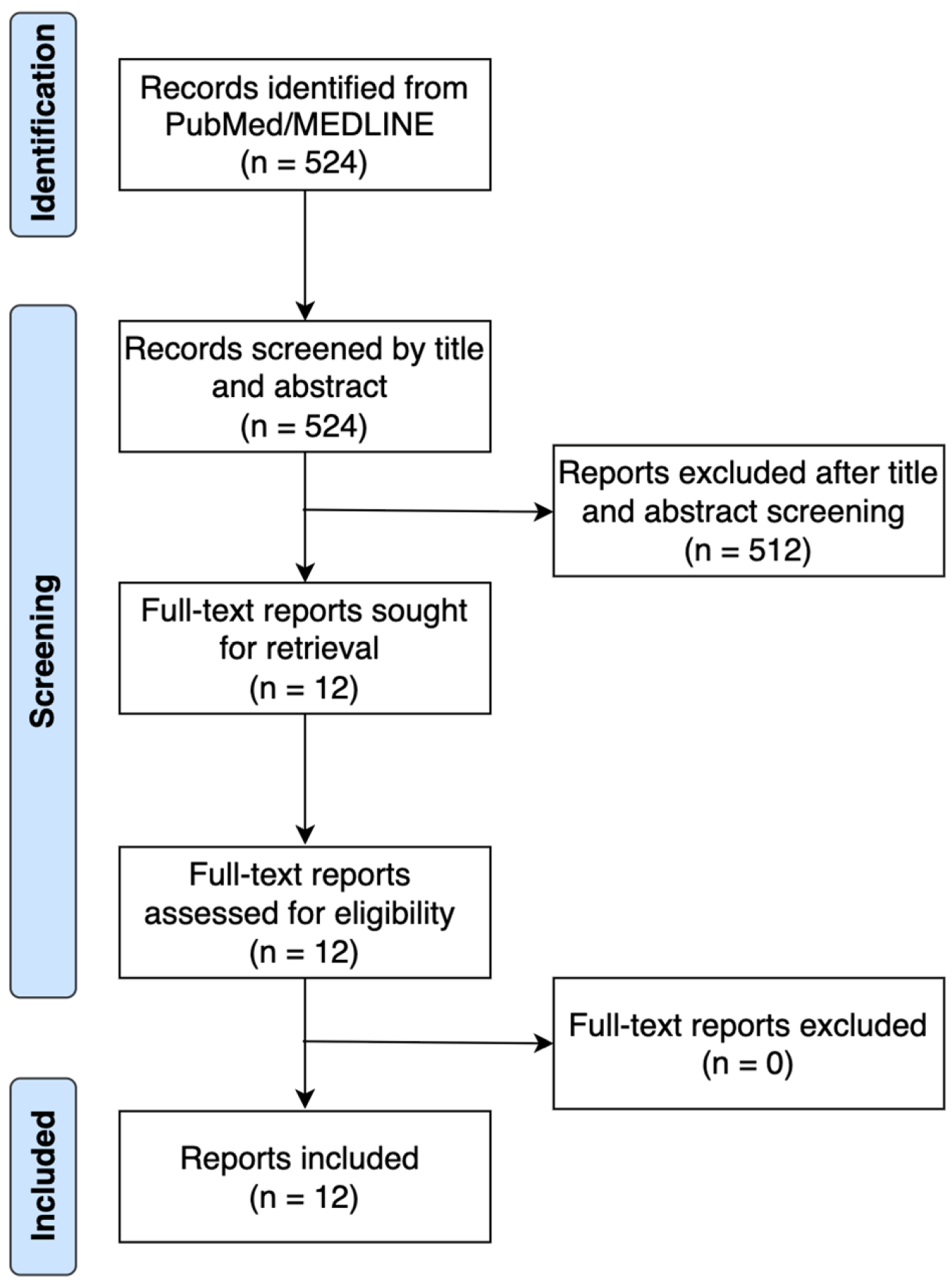
3.1. Study Selection and Characteristics
3.2. Secondary Cancer Incidence and Deaths from Other Cancers
3.3. Bladder Cancer
3.4. Rectal and Colorectal Cancers
3.5. Randomized Trial Evidence
4. Discussion
5. Conclusions
Author Contributions
Funding
Institutional Review Board Statement
Informed Consent Statement
Data Availability Statement
Conflicts of Interest
Abbreviations
| AI | Artificial intelligence |
| AM | Active monitoring |
| AS | Active surveillance |
| CI | Confidence interval |
| EORTC | European Organisation for Research and Treatment of Cancer |
| GP | General population |
| HR | Hazard ratio |
| HT | Hormone therapy |
| OR | Odds ratio |
| PC | Prostate cancer |
| PICOS | Population, Intervention, Comparator, Outcomes, and Study Design |
| PRISMA | Preferred Reporting Items for Systematic Reviews and Meta-Analyses |
| RP | Radical prostatectomy |
| RR | Relative risk |
| RT | Radiotherapy |
| SC | Secondary cancer |
| SIR | Standardized incidence ratio |
| SMR | Standardized mortality ratio |
| SNP | Single nucleotide polymorphism |
| SPCG-7 | Scandinavian Prostate Cancer Group-7 |
| WW | Watchful waiting |
References
- Bhojani, N.; Capitanio, U.; Suardi, N.; Jeldres, C.; Isbarn, H.; Shariat, S.F.; Graefen, M.; Arjane, P.; Duclos, A.; Lattouf, J.B.; et al. The rate of secondary malignancies after radical prostatectomy versus external beam radiation therapy for localized prostate cancer: A population-based study on 17,845 patients. Int. J. Radiat. Oncol. Biol. Phys. 2010, 76, 342–348. [Google Scholar] [CrossRef]
- Bagshaw, H.P.; Arnow, K.D.; Trickey, A.W.; Leppert, J.T.; Wren, S.M.; Morris, A.M. Assessment of Second Primary Cancer Risk Among Men Receiving Primary Radiotherapy vs. Surgery for the Treatment of Prostate Cancer. JAMA Netw. Open 2022, 5, e2223025. [Google Scholar] [CrossRef] [PubMed]
- Liu, E.K.; Daniels, T.B.; Lischalk, J.W.; Oh, C.; Haas, J.A.; Evans, A.J.; Byun, D.J. Risk and Prognostics of Second Primary Cancer After Prostate Radiation Therapy. Urol. Pract. 2024, 11, 146–152. [Google Scholar] [CrossRef] [PubMed]
- Mason, M.D.; Parulekar, W.R.; Sydes, M.R.; Brundage, M.; Kirkbride, P.; Gospodarowicz, M.; Cowan, R.; Kostashuk, E.C.; Anderson, J.; Swanson, G.; et al. Final Report of the Intergroup Randomized Study of Combined Androgen-Deprivation Therapy Plus Radiotherapy Versus Androgen-Deprivation Therapy Alone in Locally Advanced Prostate Cancer. J. Clin. Oncol. 2015, 33, 2143–2150. [Google Scholar] [CrossRef] [PubMed]
- Eifler, J.B.; Humphreys, E.B.; Agro, M.; Partin, A.W.; Trock, B.J.; Han, M. Causes of death after radical prostatectomy at a large tertiary center. J. Urol. 2012, 188, 798–801. [Google Scholar] [CrossRef] [PubMed]
- Zhang, J.; Yu, K.F. What’s the relative risk? A method of correcting the odds ratio in cohort studies of common outcomes. Jama 1998, 280, 1690–1691. [Google Scholar] [CrossRef] [PubMed]
- Stare, J.; Boulch, D. Odds Ratio, Hazard Ratio and Relative Risk. Adv. Methodol. Stat. 2016, 13, 59–67. [Google Scholar] [CrossRef]
- National Cancer Institute, Surveillance, Epidemiology, and End Results Program. Cancer Stat Facts: Colorectal Cancer. Available online: https://seer.cancer.gov/statfacts/html/colorect.html (accessed on 9 August 2025).
- National Cancer Institute, Surveillance, Epidemiology, and End Results Program. SEER Cancer Stat Facts: Bladder Cancer. Available online: https://seer.cancer.gov/statfacts/html/urinb.html (accessed on 9 August 2025).
- Murray, L.; Henry, A.; Hoskin, P.; Siebert, F.A.; Venselaar, J. Second primary cancers after radiation for prostate cancer: A systematic review of the clinical data and impact of treatment technique. Radiother. Oncol. 2014, 110, 213–228. [Google Scholar] [CrossRef] [PubMed]
- Jin, T.; Song, T.; Deng, S.; Wang, K. Radiation-induced secondary malignancy in prostate cancer: A systematic review and meta-analysis. Urol. Int. 2014, 93, 279–288. [Google Scholar] [CrossRef] [PubMed]
- Wallis, C.J.; Mahar, A.L.; Choo, R.; Herschorn, S.; Kodama, R.T.; Shah, P.S.; Danjoux, C.; Narod, S.A.; Nam, R.K. Second malignancies after radiotherapy for prostate cancer: Systematic review and meta-analysis. BMJ 2016, 352, i851. [Google Scholar] [CrossRef] [PubMed]
- Lee, Y.C.; Hsieh, C.C.; Li, C.Y.; Chuang, J.P.; Lee, J.C. Secondary Cancers After Radiation Therapy for Primary Prostate or Rectal Cancer. World J. Surg. 2016, 40, 895–905. [Google Scholar] [CrossRef] [PubMed]
- Zhu, Z.; Zhao, S.; Liu, Y.; Wang, J.; Luo, L.; Li, E.; Zhang, C.; Luo, J.; Zhao, Z. Risk of secondary rectal cancer and colon cancer after radiotherapy for prostate cancer: A meta-analysis. Int. J. Colorectal Dis. 2018, 33, 1149–1158. [Google Scholar] [CrossRef] [PubMed]
- Rombouts, A.J.M.; Hugen, N.; van Beek, J.J.P.; Poortmans, P.M.P.; de Wilt, J.H.W.; Nagtegaal, I.D. Does pelvic radiation increase rectal cancer incidence?—A systematic review and meta-analysis. Cancer Treat. Rev. 2018, 68, 136–144. [Google Scholar] [CrossRef] [PubMed]
- Nugent, T.S.; Low, E.Z.; Fahy, M.R.; Donlon, N.E.; McCormick, P.H.; Mehigan, B.J.; Cunningham, M.; Gillham, C.; Kavanagh, D.O.; Kelly, M.E.; et al. Prostate radiotherapy and the risk of secondary rectal cancer—A meta-analysis. Int. J. Colorectal Dis. 2022, 37, 437–447. [Google Scholar] [CrossRef] [PubMed]
- Matsukawa, A.; Yanagisawa, T.; Miszczyk, M.; Parizi, M.K.; Fazekas, T.; Tsuboi, I.; Mancon, S.; Schulz, R.J.; Litterio, G.; Laukhtina, E.; et al. Incidence and Outcomes of Secondary Bladder Cancer Following Radiation Therapy for Prostate Cancer: A Systematic Review and Meta-analysis. Eur. Urol. Focus. 2025, 11, 471–481. [Google Scholar] [CrossRef] [PubMed]
- Aksnessæther, B.Y.; Myklebust, T.; Solberg, A.; Klepp, O.H.; Skovlund, E.; Hoff, S.R.; Fosså, S.D.; Widmark, A.; Lund, J. Second Cancers in Patients with Locally Advanced Prostate Cancer Randomized to Lifelong Endocrine Treatment with or Without Radical Radiation Therapy: Long-Term Follow-up of the Scandinavian Prostate Cancer Group-7 Trial. Int. J. Radiat. Oncol. Biol. Phys. 2020, 106, 706–714. [Google Scholar] [CrossRef] [PubMed]
- Bolla, M.; van Poppel, H.; Tombal, B.; Vekemans, K.; Da Pozzo, L.; de Reijke, T.M.; Verbaeys, A.; Bosset, J.-F.; van Velthoven, R.; Colombel, M.; et al. Postoperative radiotherapy after radical prostatectomy for high-risk prostate cancer: Long-term results of a randomised controlled trial (EORTC trial 22911). Lancet 2012, 380, 2018–2027. [Google Scholar] [CrossRef] [PubMed]
- Warde, P.; Mason, M.; Ding, K.; Kirkbride, P.; Brundage, M.; Cowan, R.; Gospodarowicz, M.; Sanders, K.; Kostashuk, E.; Swanson, G.; et al. Combined androgen deprivation therapy and radiation therapy for locally advanced prostate cancer: A randomised, phase 3 trial. Lancet 2011, 378, 2104–2111. [Google Scholar] [CrossRef] [PubMed]
- Hamdy, F.C.; Donovan, J.L.; Lane, J.A.; Metcalfe, C.; Davis, M.; Turner, E.L.; Martin, R.M.; Young, G.J.; Walsh, E.I.; Bryant, R.J.; et al. Fifteen-Year Outcomes after Monitoring, Surgery, or Radiotherapy for Prostate Cancer. N. Engl. J. Med. 2023, 388, 1547–1558. [Google Scholar] [CrossRef] [PubMed]
- Alibhai, S.M.; Leach, M.; Tomlinson, G.; Krahn, M.D.; Fleshner, N.; Holowaty, E.; Naglie, G. 30-day mortality and major complications after radical prostatectomy: Influence of age and comorbidity. J. Natl. Cancer Inst. 2005, 97, 1525–1532. [Google Scholar] [CrossRef] [PubMed]
- Hansen, J.; Gandaglia, G.; Bianchi, M.; Sun, M.; Rink, M.; Tian, Z.; Meskawi, M.; Trinh, Q.D.; Shariat, S.F.; Perrotte, P.; et al. Re-assessment of 30-, 60- and 90-day mortality rates in non-metastatic prostate cancer patients treated either with radical prostatectomy or radiation therapy. Can. Urol. Assoc. J. 2014, 8, E75–E80. [Google Scholar] [CrossRef] [PubMed]
- Pereira, J.F.; Golijanin, D.; Pareek, G.; Guo, R.; Zhang, Z.; Renzulli, J., II; Gershman, M.D.B. The association of age with perioperative morbidity and mortality among men undergoing radical prostatectomy. Urol. Oncol. Semin. Orig. Investig. 2018, 36, 157.e7–157.e13. [Google Scholar] [CrossRef] [PubMed]
- Brito, J., III; Pereira, J.; Moreira, D.M.; Pareek, G.; Tucci, C.; Guo, R.; Zhang, Z.; Amin, A.; Mega, A.; Renzulli, J., II; et al. The association of lymph node dissection with 30-day perioperative morbidity among men undergoing minimally invasive radical prostatectomy: Analysis of the National Surgical Quality Improvement Program (NSQIP). Prostate Cancer Prostatic Dis. 2018, 21, 245–251. [Google Scholar] [CrossRef] [PubMed]
- Björklund, J.; Folkvaljon, Y.; Cole, A.; Carlsson, S.; Robinson, D.; Loeb, S.; Stattin, P.; Akre, O. Postoperative mortality 90 days after robot-assisted laparoscopic prostatectomy and retropubic radical prostatectomy: A nationwide population-based study. BJU Int. 2016, 118, 302–306. [Google Scholar] [CrossRef] [PubMed]
- Walz, J.; Montorsi, F.; Jeldres, C.; Suardi, N.; Shariat, S.F.; Perrotte, P.; Arjane, P.; Graefen, M.; Pharand, D.; Karakiewicz, P.I. The effect of surgical volume, age and comorbidities on 30-day mortality after radical prostatectomy: A population-based analysis of 9208 consecutive cases. BJU Int. 2008, 101, 826–832. [Google Scholar] [CrossRef] [PubMed]
- Bianco, F.J., Jr.; Riedel, E.R.; Begg, C.B.; Kattan, M.W.; Scardino, P.T. Variations among high volume surgeons in the rate of complications after radical prostatectomy: Further evidence that technique matters. J. Urol. 2005, 173, 2099–2103. [Google Scholar] [CrossRef] [PubMed]
- Madersbacher, S.; Lackner, J.; Brössner, C.; Röhlich, M.; Stancik, I.; Willinger, M.; Schatzl, G.; Prostate Study Group of the Austrian Society of Urology. Reoperation, Myocardial Infarction and Mortality after Transurethral and Open Prostatectomy: A Nation-Wide, Long-Term Analysis of 23,123 Cases. Eur. Urol. 2005, 47, 499–504. [Google Scholar] [CrossRef] [PubMed]
- Salmivalli, A.; Ettala, O.; Boström, P.J.; Kytö, V. Mortality after surgery for benign prostate hyperplasia: A nationwide cohort study. World J. Urol. 2022, 40, 1785–1791. [Google Scholar] [CrossRef] [PubMed]
- Jubber, I.; Ong, S.; Bukavina, L.; Black, P.C.; Compérat, E.; Kamat, A.M.; Kiemeney, L.; Lawrentschuk, N.; Lerner, S.P.; Meeks, J.J.; et al. Epidemiology of Bladder Cancer in 2023: A Systematic Review of Risk Factors. Eur. Urol. 2023, 84, 176–190. [Google Scholar] [CrossRef] [PubMed]
- Al-Zalabani, A.H.; Stewart, K.F.; Wesselius, A.; Schols, A.M.; Zeegers, M.P. Modifiable risk factors for the prevention of bladder cancer: A systematic review of meta-analyses. Eur. J. Epidemiol. 2016, 31, 811–851. [Google Scholar] [CrossRef] [PubMed]
- Le Marchand, L.; Wilkens, L.R.; Kolonel, L.N.; Hankin, J.H.; Lyu, L.C. Associations of sedentary lifestyle, obesity, smoking, alcohol use, and diabetes with the risk of colorectal cancer. Cancer Res. 1997, 57, 4787–4794. [Google Scholar] [PubMed]
- Huxley, R.R.; Ansary-Moghaddam, A.; Clifton, P.; Czernichow, S.; Parr, C.L.; Woodward, M. The impact of dietary and lifestyle risk factors on risk of colorectal cancer: A quantitative overview of the epidemiological evidence. Int. J. Cancer 2009, 125, 171–180. [Google Scholar] [CrossRef] [PubMed]
- Spratt, D.E.; Zhang, J.; Santiago-Jiménez, M.; Dess, R.T.; Davis, J.W.; Den, R.B.; Dicker, A.P.; Kane, C.J.; Pollack, A.; Stoyanova, R.; et al. Development and Validation of a Novel Integrated Clinical-Genomic Risk Group Classification for Localized Prostate Cancer. J. Clin. Oncol. 2018, 36, 581–590. [Google Scholar] [CrossRef] [PubMed]
- Nguyen, P.L.; Huang, H.R.; Spratt, D.E.; Davicioni, E.; Sandler, H.M.; Shipley, W.U.; Efstathiou, J.A.; Simko, J.P.; Pollack, A.; Dicker, A.P.; et al. Analysis of a Biopsy-Based Genomic Classifier in High-Risk Prostate Cancer: Meta-Analysis of the NRG Oncology/Radiation Therapy Oncology Group 9202, 9413, and 9902 Phase 3 Randomized Trials. Int. J. Radiat. Oncol. Biol. Phys. 2023, 116, 521–529. [Google Scholar] [CrossRef] [PubMed]
- Zaorsky, N.G.; Proudfoot, J.A.; Jia, A.Y.; Zuhour, R.; Vince, R., Jr.; Liu, Y.; Zhao, X.; Hu, J.; Schussler, N.C.; Stevens, J.L.; et al. Use of the Decipher genomic classifier among men with prostate cancer in the United States. JNCI Cancer Spectr. 2023, 7, pkad052. [Google Scholar] [CrossRef] [PubMed]
- Esteva, A.; Feng, J.; van der Wal, D.; Huang, S.C.; Simko, J.P.; DeVries, S.; Chen, E.; Schaeffer, E.M.; Morgan, T.M.; Sun, Y.; et al. Author Correction: Prostate cancer therapy personalization via multi-modal deep learning on randomized phase III clinical trials. npj Digit. Med. 2023, 6, 27. [Google Scholar] [CrossRef] [PubMed]
- Spratt, D.E.; Tang, S.; Sun, Y.; Huang, H.C.; Chen, E.; Mohamad, O.; Armstrong, A.J.; Tward, J.D.; Nguyen, P.L.; Lang, J.M.; et al. Artificial Intelligence Predictive Model for Hormone Therapy Use in Prostate Cancer. NEJM Evid. 2023, 2, EVIDoa2300023. [Google Scholar] [CrossRef] [PubMed]
- Damaraju, S.; Murray, D.; Dufour, J.; Carandang, D.; Myrehaug, S.; Fallone, G.; Field, C.; Greiner, R.; Hanson, J.; Cass, C.E.; et al. Association of DNA Repair and Steroid Metabolism Gene Polymorphisms with Clinical Late Toxicity in Patients Treated with Conformal Radiotherapy for Prostate Cancer. Clin. Cancer Res. 2006, 12, 2545–2554. [Google Scholar] [CrossRef] [PubMed]
- Kerns, S.L.; Kundu, S.; Oh, J.H.; Singhal, S.K.; Janelsins, M.; Travis, L.B.; Deasy, J.O.; Janssens, A.C.; Ostrer, H.; Parliament, M.; et al. The Prediction of Radiotherapy Toxicity Using Single Nucleotide Polymorphism-Based Models: A Step Toward Prevention. Semin. Radiat. Oncol. 2015, 25, 281–291. [Google Scholar] [CrossRef] [PubMed]
- Kamran, S.C.; Yeap, B.Y.; Soetan, Z.; Pompa, I.; Muise, S.; Cowan, J.; Moteabbed, M.; Silvia, B.L.; Olsen, C.C.; Zietman, A.L.; et al. Prospective Validation of Single Nucleotide Polymorphisms as Predictors of Gastrointestinal, Genitourinary, and Sexual Patient-Reported Outcomes Following Radiotherapy for Prostate Cancer. Int. J. Radiat. Oncol. Biol. Phys. 2023, 117, e398–e399. [Google Scholar] [CrossRef]


| PICOS Component | Inclusion Criterion |
|---|---|
| Population | Patients with localized prostate cancer |
| Intervention | External beam radiotherapy for prostate cancer |
| Comparator | Radical prostatectomy, general population, hormone therapy, active surveillance, not specified |
| Outcomes | Incidence of second pelvic malignancies (bladder, rectal, colorectal cancers) |
| Study Design | Systematic reviews, meta-analyses, and randomized trials |
| Author (Year) | No. of Studies | No. of Patients | Control Group * | Outcome and Reported Effect Estimate (95% CI) ** | Converted RR | Conclusion |
|---|---|---|---|---|---|---|
| Murray (2014) [10] | 47 | 1,047,492 | RP (37.9%) GP (28.6%) NS (33.5%) | Rectal cancer: OR 1.60 (1.29–1.99) Bladder cancer: OR 1.63 (1.44–1.84) | 1.60 (rectal cancer) 1.63 (bladder cancer) | The available evidence suggested a small increase in secondary bladder and rectal cancers after prostate RT, particularly with longer follow-up. |
| Jin (2014) [11] | 4 | 647,857 | RP (1.7%) NS (98.3%) | Colon cancer: SIR 1.47 (0.77–2.78) Rectal cancer: SIR 1.25 (0.85–1.84) Bladder cancer: SIR 1.69 (1.02–2.81) | 1.47 (colon cancer) 1.25 (rectal cancer) 1.69 (bladder cancer) | RT was associated with a modest increase in secondary malignancy risk, which became apparent after more than 10 years of follow-up. |
| Lee (2016) [13] | 16 | 33,231 | RP (26.0%) GP (10.2%) NS (63.8%) | Rectal cancer: SIR 1.08 (0.68–1.72) | 1.08 (rectal cancer) | Overall prostate RT was not associated with a statistically clear increase in secondary rectal cancer, although an increased risk was observed in the external beam RT subgroup. |
| Wallis (2016) [12] | 21 | 930,843 | RP (31.7%) NS (68.3%) | Bladder cancer: HR 1.67 (1.55–1.80) Rectal cancer: HR 1.79 (1.34–2.38) Colon cancer: HR 1.79 (1.34–2.38) | 1.67 (bladder cancer) 1.79 (rectal cancer) 1.79 (colorectal cancer) | RT was associated with increased risks of secondary bladder, rectal, and colorectal cancers, although the reported absolute risks were low. |
| Rombouts (2018) [15] | 23 | 719,823 | RP (11.8%) NS (88.2%) | Rectal cancer: RR 1.36 (1.10–1.67) | 1.36 (rectal cancer) | Prostate RT was associated with a modest increase in secondary rectal cancer risk, although the findings did not support changes to rectal cancer surveillance guidelines. |
| Zhu (2018) [14] | 16 | 1,216,687 | RP (11.6%) NS (88.4%) | Rectal cancer: OR 1.64 (1.39–1.94) Colon cancer: OR 1.33 (1.02–1.76) | 1.63 (rectal cancer) 1.32 (colon cancer) | RT was associated with an increased risk of secondary rectal cancer; the association with colon cancer was less consistent across effect measures. |
| Nugent (2022) [16] | 8 | 796,386 | RP (9.2%) NS (90.8%) | Rectal cancer: OR 1.45 (1.07–1.97) | 1.44 (rectal cancer) | Prostate RT was associated with increased odds of subsequent rectal cancer, although the absolute risk remained small. |
| Matsukawa (2025) [17] | 31 | 576,341 | RP (100%) | Bladder cancer: OR 2.23 (1.92–2.58) at 5 yrs OR 2.18 (1.98–2.41) at 10 yrs OR 1.91 (1.76–2.07) at 15 yrs OR 1.77 (1.65–1.90) at 20 yrs | 2.22 at 5 yrs 2.17 at 10 yrs 1.90 at 15 yrs 1.76 at 20 yrs | RT was associated with an increased risk of secondary bladder cancer compared with RP at all evaluated follow-up intervals. |
| Trial | Randomized Comparison | No. of Patients | Follow-Up | Outcome | Events in Group 1 | Events in Group 2 | Effect Estimate (95% CI) | Interpretation |
|---|---|---|---|---|---|---|---|---|
| SPCG-7 [18] | ADT + RT vs. ADT alone | 860 | 12.2 yrs | Any second cancer | 168/429 (39.2%) | 125/431 (29.0%) | RR: 1.19 (0.92–1.54) | Overall second-cancer incidence was higher in the RT group, and bladder cancer risk was also increased. |
| EORTC 22911 [19] | Immediate post-RP RT vs. observation | 1005 | 10.6 yrs | Any second cancer | 68/502 (13.5%) | 69/503 (13.7%) | RR: 0.99 (0.72–1.35) | No statistically clear difference in second-cancer incidence. |
| Trial | Randomized Comparison | No. of Patients | Follow-Up | Outcome | Events in Group 1 | Events in Group 2 | Effect Estimate (95% CI) | Interpretation |
|---|---|---|---|---|---|---|---|---|
| NCIC CTG PR3/MRC PR07 [20] | ADT + RT vs. ADT alone | 1205 | 8.0 yrs | Death from other cancers | 44/603 (7.3%) | 31/602 (5.1%) | RR: 1.42 (0.91–2.21) | No statistically clear difference. |
| ProtecT [21] | RT vs. RP | 1643 | 15 yrs | Death from other cancers | 54/545 (9.9%) | 52/553 (9.4%) | RR: 1.05 (0.73–1.51) | No statistically clear difference. |
| RT vs. AM | 54/545 (9.9%) | 58/545 (10.6%) | RR: 0.93 (0.66–1.32) | No statistically clear difference. | ||||
| RP vs. AM | 52/553 (9.4%) | 58/545 (10.6%) | RR: 0.88 (0.62–1.26) | No statistically clear difference. |
Disclaimer/Publisher’s Note: The statements, opinions and data contained in all publications are solely those of the individual author(s) and contributor(s) and not of MDPI and/or the editor(s). MDPI and/or the editor(s) disclaim responsibility for any injury to people or property resulting from any ideas, methods, instructions or products referred to in the content. |
© 2026 by the authors. Licensee MDPI, Basel, Switzerland. This article is an open access article distributed under the terms and conditions of the Creative Commons Attribution (CC BY) license.
Share and Cite
Sayan, M.; Tuac, Y.; Hernandez, C.; Li, Y.R.; Coleman, P.W.; Roach, M., III. Risk of Secondary Pelvic Cancers Following Radiotherapy for Prostate Cancer. Cancers 2026, 18, 2382. https://doi.org/10.3390/cancers18152382
Sayan M, Tuac Y, Hernandez C, Li YR, Coleman PW, Roach M III. Risk of Secondary Pelvic Cancers Following Radiotherapy for Prostate Cancer. Cancers. 2026; 18(15):2382. https://doi.org/10.3390/cancers18152382
Chicago/Turabian StyleSayan, Mutlay, Yetkin Tuac, Crystal Hernandez, Yun Rose Li, Pamela W. Coleman, and Mack Roach, III. 2026. "Risk of Secondary Pelvic Cancers Following Radiotherapy for Prostate Cancer" Cancers 18, no. 15: 2382. https://doi.org/10.3390/cancers18152382
APA StyleSayan, M., Tuac, Y., Hernandez, C., Li, Y. R., Coleman, P. W., & Roach, M., III. (2026). Risk of Secondary Pelvic Cancers Following Radiotherapy for Prostate Cancer. Cancers, 18(15), 2382. https://doi.org/10.3390/cancers18152382