Article

DLG2DLG4 Expression Is Associated with Improved Survival and a Synaptic Gene Signature in Lower-Grade Glioma


by
Felipe Gaia
1,
Henrique Ritter Dal-Pizzol
2,3,4,
Osvaldo Malafaia
1,
Rafael Roesler
2,3,4,5,* and
Gustavo R. Isolan
1,4,6,*
1
Graduate Program in Principles of Surgery, Mackenzie Evangelical University, Curitiba 80730-000, Brazil
2
Department of Pharmacology, Institute for Basic Health Sciences, Federal University of Rio Grande do Sul, Porto Alegre 90035-003, Brazil
3
Cancer and Neurobiology Laboratory, Experimental Research Center, Clinical Hospital (CPE-HCPA), Federal University of Rio Grande do Sul, Porto Alegre 90035-903, Brazil
4
National Science and Technology Institute for Children’s Cancer Biology and Pediatric Oncology—INCT BioOncoPed, Porto Alegre 90035-003, Brazil
5
Center for Biotechnology, Federal University of Rio Grande do Sul, Porto Alegre 91501-970, Brazil
6
The Center for Advanced Neurology and Neurosurgery (CEANNE), Porto Alegre 90560-010, Brazil
*
Authors to whom correspondence should be addressed.
Cancers 2026, 18(10), 1646; https://doi.org/10.3390/cancers18101646
Submission received: 16 April 2026 / Revised: 14 May 2026 / Accepted: 17 May 2026 / Published: 20 May 2026
(This article belongs to the Special Issue Cancer Neuroscience)

Simple Summary

Lower-grade gliomas are brain tumors with highly variable outcomes, and better markers are needed to predict how patients will fare. Recent research suggests that these tumors may use mechanisms normally involved in communication between brain cells, but this is not well understood in these cancer types. In this study, we analyzed large patient datasets to examine genes related to synaptic function. We found that higher expression of three genes involved in synaptic membrane organization, DLG2, DLG3, and DLG4 was consistently associated with longer patient survival. These genes were also linked to a broader pattern of gene expression suggestive of neural transmission and plasticity. Our findings suggest that some lower-grade gliomas may adopt characteristics of normal brain cells that are associated with less aggressive behavior. This work may help guide future research on prognostic markers and improve understanding of brain tumor biology.

Abstract

Background/Objectives: Increasing evidence indicates that gliomas co-opt mechanisms of excitatory synaptic transmission and plasticity to support tumor progression, yet these processes remain poorly characterized in lower-grade gliomas (LGGs). Here, we investigated whether genes associated with excitatory synaptic function are linked to patient prognosis in LGG. Methods: A curated panel of 36 synaptic genes was analyzed in LGG using RNA-sequencing and clinical data from The Cancer Genome Atlas (TCGA) and Chinese Glioma Genome Atlas (CGGA) datasets. Results: Among the genes investigated, DLG2, DLG3, and DLG4, which encode the postsynaptic scaffolding proteins PSD-93, SAP-102, and PSD-95, respectively, showed strong associations with patient overall survival (OS). Higher expression of each gene was consistently associated with longer OS across both datasets. Expression of DLG2DLG4 was higher in oligodendroglioma and IDH-mutant, 1p/19q co-deleted tumors, and lower in astrocytoma and IDH-wild-type tumors. Furthermore, expression of all three genes positively correlated with a broad gene signature associated with a synaptic gene program, including multiple components of glutamatergic signaling and postsynaptic organization. Conclusions: These findings suggest that elevated expression of DLG2DLG4 is associated with a transcriptional program resembling differentiated neuron-like features and favorable clinical outcome in LGG.

1. Introduction

Increasing evidence supports the view that tumor progression hijacks fundamental cellular mechanisms underlying neural transmission and synaptic plasticity. In particular, malignant gliomas exploit signaling pathways normally involved in excitatory synaptic communication, establishing functional interactions with surrounding neural circuits. In glioblastoma (GBM), the most aggressive primary brain tumor in adults, tumorigenesis, growth, and invasion are influenced by the formation of functional neuron–glioma synapses mediated by glutamate receptor-initiated signaling. Pioneering studies demonstrated that glioma cells receive direct synaptic input from neurons through α-amino-3-hydroxy-5-methyl-4-isoxazolepropionic acid (AMPA) glutamate receptors, leading to membrane depolarization and activity-dependent tumor proliferation. These neuron-to-glioma synapses enable electrical and synaptic integration of tumor cells into neural circuits, thereby coupling neuronal activity to tumor growth dynamics [1,2].
In addition to simple synaptic coupling, glioma cells appear to recruit mechanisms of activity-dependent plasticity. Glioma synapses recruit canonical pathways of adaptive synaptic potentiation, supporting tumor progression through activity-driven processes [3]. These observations support a model in which glioma cells adopt and repurpose core components of synaptic transmission and plasticity to sustain tumor growth. This conceptual framework raises the possibility that genes classically associated with postsynaptic organization and excitatory synapse function may define biologically and clinically relevant programs in glioma.
Most studies showing parallels between gliomas and normal synapses focus on GBM, whereas synaptic mechanisms in lower grade glioma (LGG) types remain poorly understood. LGGs are generally less aggressive than primary GBM and occur in adults at an earlier age, with the highest incidence observed between the third and fourth decades of life. These neoplasms are characterized by relatively slow growth and infiltrative behavior, most commonly involving the cerebral hemispheres. Despite their initially indolent clinical course, LGGs frequently undergo progressive malignant transformation over time, contributing to significant neurological morbidity and mortality [4,5,6].
In the present study, we selected a panel of genes involved in excitatory synaptic transmission based on the available literature. We then analyzed whether these genes are associated with patient prognosis, assessed by survival, using datasets comprising GBM and LGG. Among the genes analyzed, DLG2, DLG3, and DLG4 were among the ones showing particularly strong associations with survival specifically in LGG tumors, which were then chosen as the focus of our analyses. Interestingly, higher expression of each of these three DLG genes was associated with better, rather than worse, survival. DLG2, DLG3, and DLG4 encode PSD-93 (SAP-93), SAP-102, and PSD-95, respectively, which are members of the membrane-associated guanylate kinase (MAGUK) family of synaptic scaffolding proteins. These proteins help organize the postsynaptic density through interactions with other scaffolding proteins and regulate the clustering of glutamate receptors [7]. PSD-93 is a key postsynaptic protein that links N-methyl-D-aspartate (NMDA) receptor activity to downstream signaling complexes and can form heterodimers with PSD-95, enhancing neural plasticity [8,9]. PSD-95 also plays a central role in AMPA receptor trafficking during the induction of long-term potentiation (LTP) of excitatory synaptic transmission [10,11,12]. During early neurodevelopment, initial synapse formation is strongly influenced by SAP-102, whose role is later largely replaced by PSD-95 [7]. Following the initial screening, we then examined whether expression of DLG2DLG4 positively correlates with that of the other genes in our panel which are associated with synaptic transmission and plasticity.

2. Materials and Methods

2.1. Gene Panel for Excitatory Synaptic Transmission and Plasticity

Based on a curation of the available literature, we assembled a panel of 36 genes with key roles in excitatory synaptic transmission and synaptic plasticity (Supplementary Table S1) [13,14,15,16,17,18,19,20,21,22,23,24,25,26,27,28,29,30,31,32,33,34,35,36,37,38,39,40,41,42,43,44,45,46,47,48,49,50,51,52,53,54,55,56,57,58,59,60,61,62,63,64,65,66,67,68,69,70,71,72,73,74].

2.2. Datasets and Gene Expression Analyses

RNA-sequencing and corresponding clinical data for patients with LGG were obtained from two independent cohorts that include World Health Organization (WHO) grade 2 and grade 3 gliomas, The Cancer Genome Atlas (TCGA-LGG, https://www.cancer.gov/tcga) [75] and the Chinese Glioma Genome Atlas (CGGA, http://www.cgga.org.cn) [76]. For the TCGA cohort, gene-level expected counts were retrieved from the TOIL hub using the UCSCXenaTools package (version 1.7.0; developed by the rOpenSci project, Auckland, New Zealand), and clinical annotations were obtained from the TCGA Pan-Cancer Atlas dataset via cBioPortalData. For the CGGA cohort, both RNA-sequencing and corresponding clinical data from two datasets (CGGA-325 and CGGA-693) were downloaded and merged by retaining genes shared across both datasets and merged by retaining common genes. Batch (CGGA-325 vs. CGGA-693) was incorporated as a covariate in the DESeq2 design formula to account for technical variability during differential expression analysis. Samples with missing survival data or incomplete clinical annotations were excluded.
TCGA data were back-transformed from expected counts to ensure compatibility with count-based statistical modeling using DESeq2. The raw count matrices from the two CGGA datasets were merged after matching common genes. Duplicate gene symbols were resolved by retaining the entry with the highest mean expression across samples. Variance-stabilizing transformation was applied to normalized count data using DESeq2, and z-score scaling was subsequently performed on a gene-wise basis across all samples within each cohort.
Differences in the expression of DLG2, DLG3, and DLG4 were evaluated across TCGA histological types [75,77,78], namely astrocytoma (TCGA, n = 188; CGGA, n = 239), oligodendroglioma (TCGA, n = 179; CGGA, n = 145), and oligoastrocytoma (TCGA, n = 123; CGGA, n = 23), and the updated classification incorporating molecular features (molecular subtypes) [79], namely LGG with a mutation in the isocitrate dehydrogenase (IDH) gene and co-deletion of chromosomal arms 1p and 19q (LGG-IDH-mut-codel; TCGA, n = 164; CGGA, n = 113), LGG with a mutation in the IDH gene without co-deletion of chromosomal arms 1p and 19q (LGG-IDH-mut-non-codel; TCGA, n = 235, CGGA, n = 142), and LGG wild-type for IDH (LGG-IDH-wt; TCGA, n = 91; CGGA, n = 88). Pairwise comparisons between groups were conducted using the non-parametric Wilcoxon rank-sum test, with p-values being adjusted for multiple testing via the Benjamini–Hochberg method.
For visualization of DLG2DLG4 expression in glioma compared to non-tumor brain tissue, the Rembrandt dataset [80] was analyzed using the GlioVis—Data Visualization Tools for Brain Tumor Datasets (https://gliovis.bioinfo.cnio.es/; The University of Texas MD Anderson Cancer Center, Houston, TX, USA) platform [81].

2.3. Principal Component Analysis

Principal Component Analysis (PCA) was performed using the Evergene platform (https://bshihlab.shinyapps.io/evergene/) [82] to allow the visualization of DLG2DLG4 expression across the different histological types and molecular subtypes of LGG in relation to the first principal component (PC1), which captures the largest proportion of variance in the LGG transcriptomic data. Classification of TCGA LGG tumors within the Evergene platform is: histological types, astrocytoma, oligodendroglioma, oligoastrocytoma, or not available (NA); molecular subtypes, pilocytic astrocytoma (PA)–like, mesenchymal-like, glioma CpG island methylator phenotype (G-CIMP)-high, G-CIMP-low, glioma with 1p/19q co-deletion (codel), classic-like, or not available (NA).

2.4. Survival Analysis

Associations between overall survival (OS) of patients with LGG and expression analyses of the selected genes were assessed using Kaplan–Meier survival curves. Patients were dichotomized into “high” and “low” expression groups based on an optimal cutpoint determined by using the surv_cutpoint function in the survminer package (Supplementary Table S2) [12]. Survival distributions were compared using the log-rank test, with p-values adjusted for multiple testing across all genes and cohorts using the Benjamini–Hochberg method.
All analyses were performed in the R statistical environment (version 4.5.1). Variance-stabilizing transformation and batch adjustment were conducted using DESeq2 (version 1.48.1). OS analyses were performed using the survival (version 3.8.3), with optimal expression cutpoints determined using maximally selected rank statistics implemented in survminer (version 0.5.2). Kaplan–Meier curves were generated using survminer. Graphical visualizations were produced using ggplot2 (version 4.0.2). Data acquisition was performed using UCSCXenaTools (version 1.7.0), cBioPortalData (version 2.20.0).

2.5. Multivariate Cox Regression Analysis

Survival associations were evaluated using multivariable Cox proportional hazards regression models. Gene expression status for DLG2, DLG3, and DLG4 was dichotomized into high- and low-expression groups as described. For each gene, Cox regression models were constructed including the following clinicomolecular covariates: IDH mutation status (mutant vs. wild-type), 1p/19q codeletion status (codel vs. non-codel), age included as a continuous covariate, WHO tumor grade (grade 2 or grade 3). Hazard ratios (HRs) and 95% confidence intervals (95% CIs) were estimated for each variable. Results were visualized using forest plots to illustrate the independent prognostic contribution of each covariate within the multivariable model.

2.6. Gene Expression Correlations

Correlations between expression of each of the three selected DLG genes and each of the genes in the synaptic gene panel, or between each DLG gene and all genes in the panel pooled together to represent a synaptic signature, were analyzed with the Evergene platform using default settings [82]. Pearson correlation coefficient (r) values equal or higher than 0.5 along with p-values of less than 0.05 were considered to indicate moderate to high correlation.
For each gene in the synaptic signature, expression values were standardized across samples using z-score transformation. Pairwise gene–gene correlations were computed using Spearman’s rank correlation coefficient to capture monotonic relationships independent of distributional assumptions. A symmetric gene–gene correlation matrix was generated representing co-expression relationships among synaptic genes. For hierarchical clustering and visualization, the correlation matrix was hierarchically clustered using Ward’s minimum variance method. A heatmap was generated using the pheatmap package in R. Color scaling represented correlation strength ranging from negative (blue) to positive (red) values. No imputation was performed and missing values were handled by pairwise deletion.

3. Results

3.1. DLG2–DLG4 Expression Across Different LGG Types

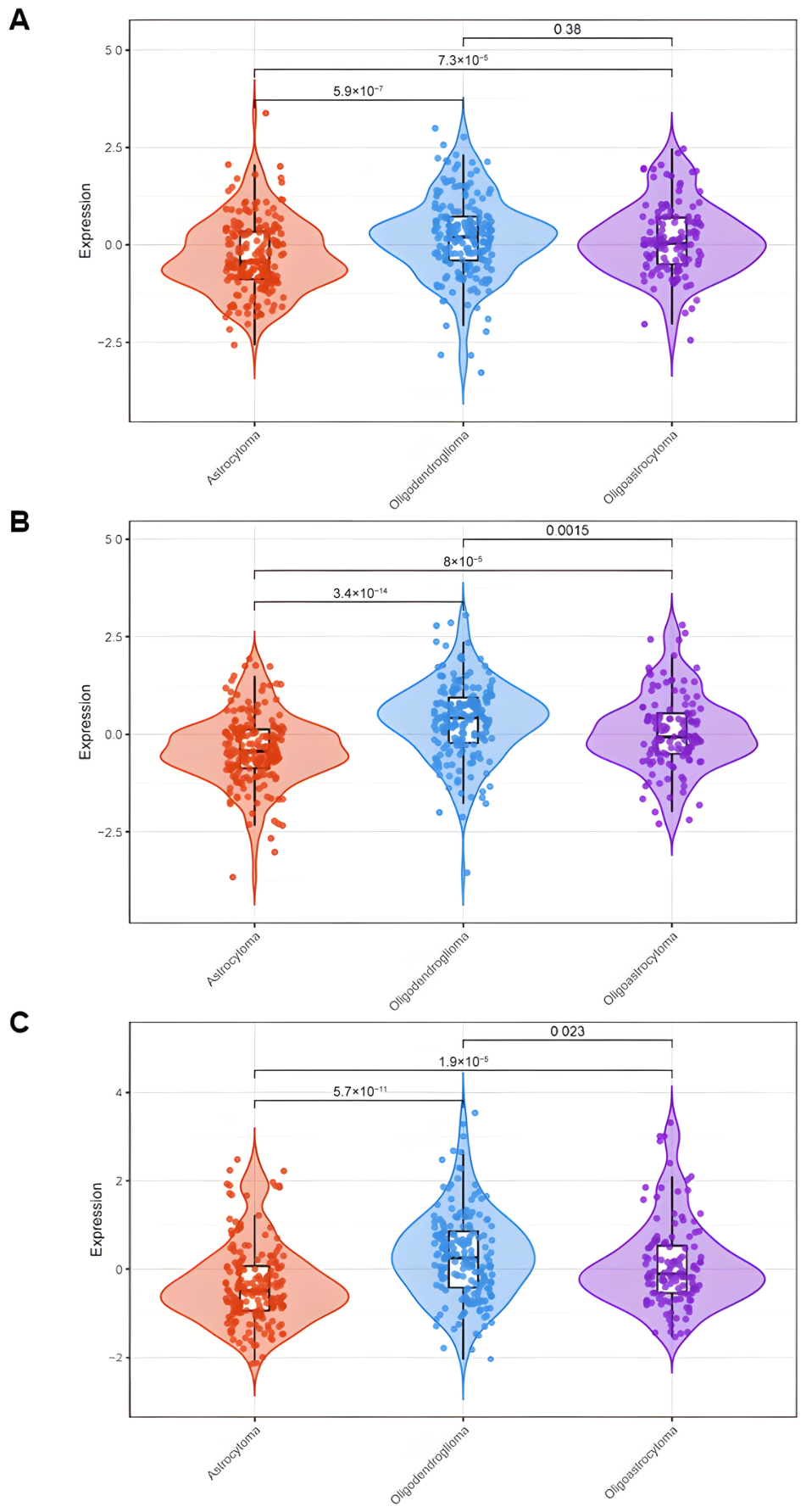
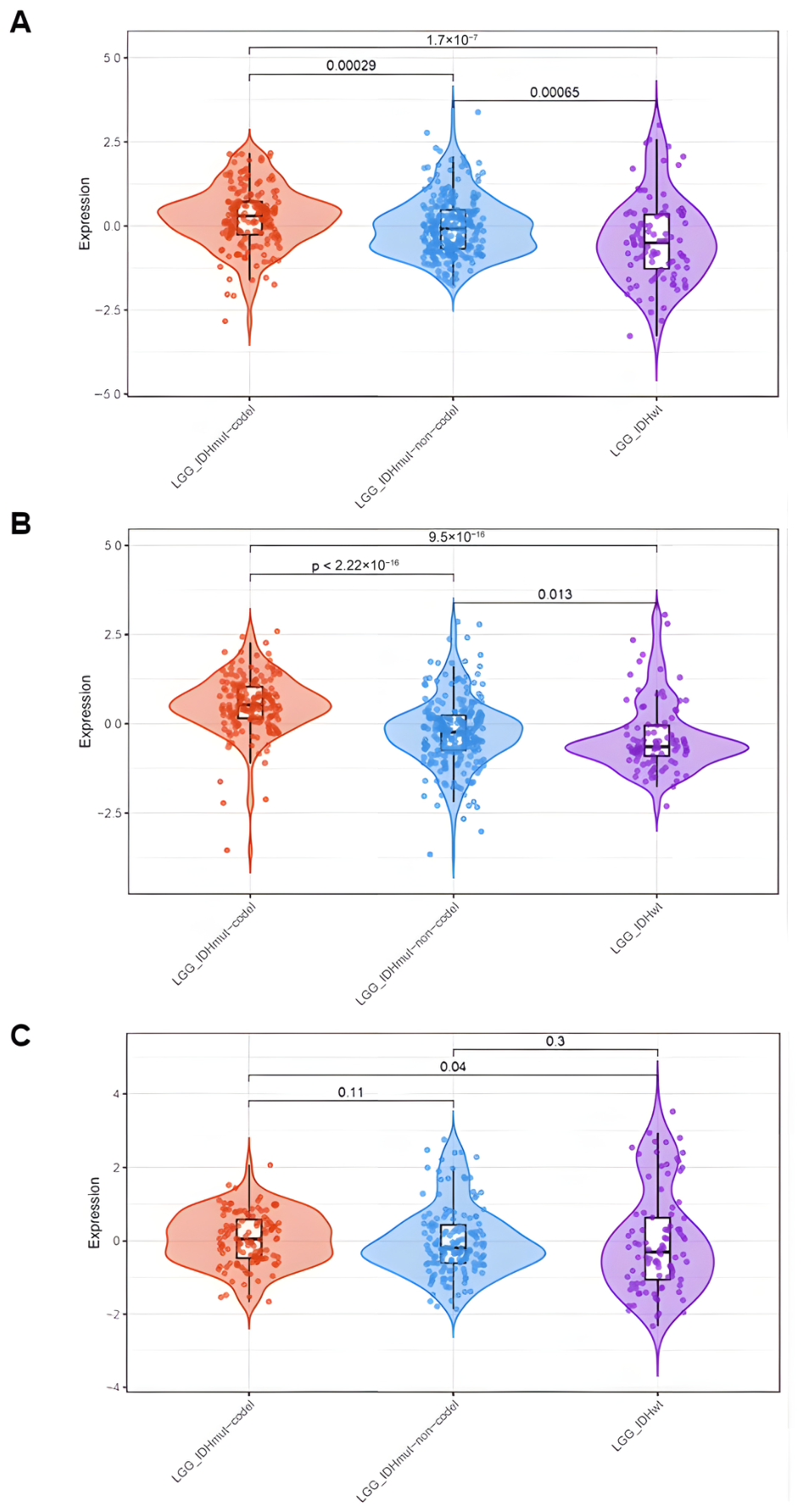
An early analysis of associations of the genes in the synaptic panel with LGG patient survival revealed DLG2, DLG3, and DLG4 among the genes with the most significant association. Their expression was then analyzed in LGG tumors classified into histological types or molecular subtypes. There was an apparent lower expression of DLG2DLG4 in glioma tumors compared to non-tumor brain tissue (Supplementary Figure S1). Within histological types, expression of DLG2 in TCGA tumors was lower in astrocytoma compared to oligodendroglioma and oligoastrocytoma. DLG3 and DLG4 were more highly expressed in oligodendroglioma and less expressed in astrocytoma (Figure 1). Within the molecular classification, all three DLG genes showed the same pattern of higher expression in LGG-IDH-mut-codel and lower expression in LGG-IDH-wt, with intermediate levels in LGG-IDH-mut-non-codel (Figure 2).
Analysis of the CGGA dataset largely validated the overall pattern of lower DLG2DLG4 expression in astrocytoma compared to the other histological groups, and DLG3 was more highly expressed in oligoastrocytoma than in oligodendroglioma (Supplementary Figure S2). In CGGA tumors classified according to molecular subtype, DLG3 and DLG4 were more expressed in LGG-IDH-mut-codel, but there were no statistically significant differences among tumor types in DLG2 expression, although there was a trend towards higher expression in LGG-IDH-mut-codel compared to LGG-IDH-mut-non-codel (Supplementary Figure S3). The relationship between DLG2DLG4 expression and PC1 in TCGA tumors was illustrated by PCA, showing an overall pattern of greater alignment with PC1 in tumors with lower DLG expression levels (Supplementary Figure S4). In TCGA LGG tumors, the PC1 gene set (BCL2L12, S100A11, TMSB4X, CLIC1, RAB32, RNF135, CASP1, SP100, AGTRAP, SQOR, CARD16, VIM, RHOC, KDELR1, AK2, CD58, ZDHHC12, RER1, SERTAD3, APOBEC3G) is predominantly associated with a mesenchymal, inflammatory, and stress-response axis, related to inflammation, immune evasion, reactive glial phenotype, cell motility, cytoskeleton remodeling, resistance to apoptosis, and tumor–microenvironment interactions [75].

3.2. High DLG2–DLG4 Expression Is Associated with Longer OS in Patients with LGG

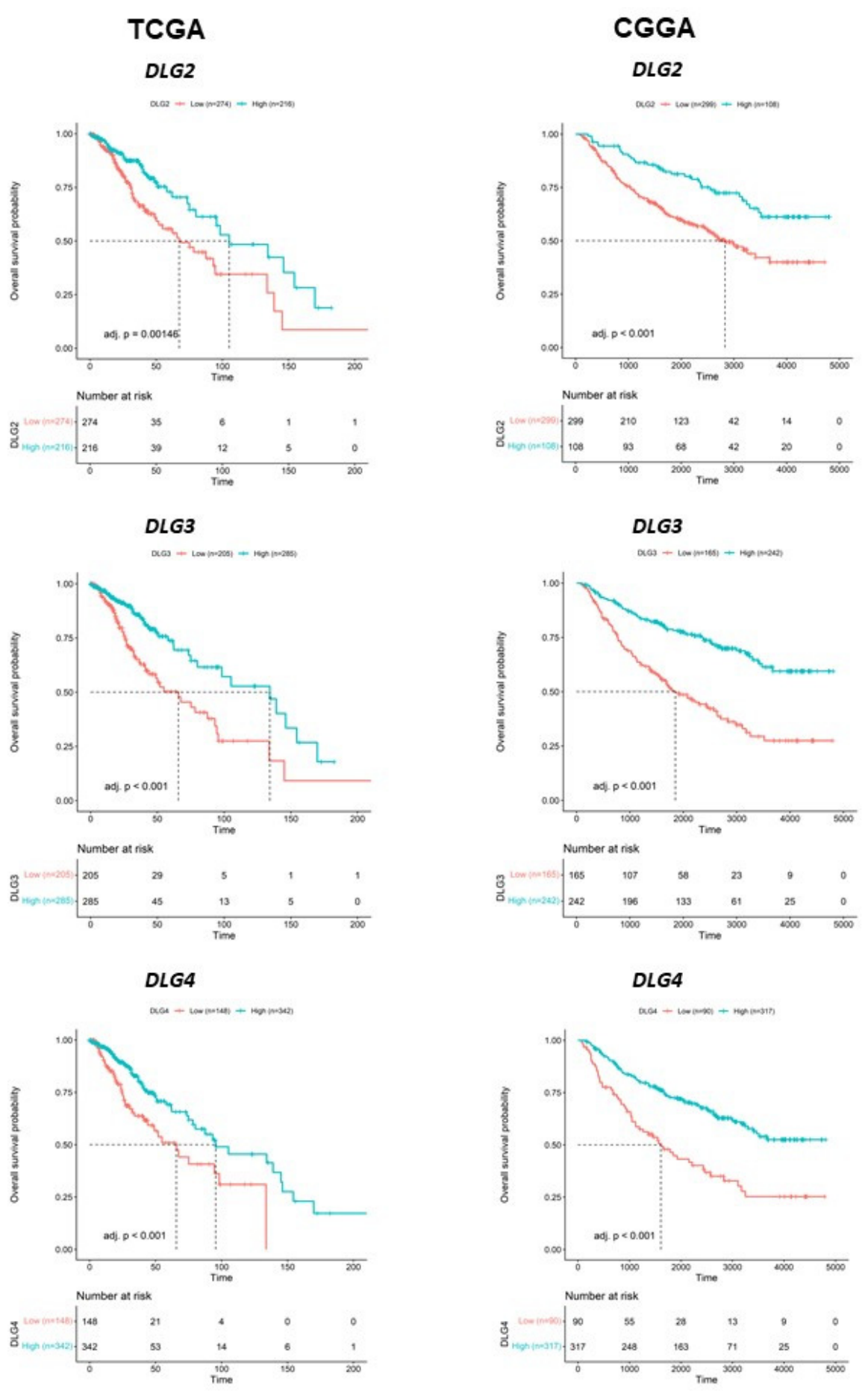
High expression of DLG2, DLG3, and DLG4 was significantly associated with longer OS in patients with LGG in both the TCGA and CGGA datasets (Figure 3). Multivariable Cox proportional hazards analyses demonstrated that expression levels of DLG2DLG4 genes retained significant prognostic associations in the CGGA dataset, but not in the TCGA dataset, after adjustment for established clinicomolecular variables, including IDH mutation status, 1p/19q codeletion status, age, and tumor grade. Forest plot visualization showed the relative contribution of each covariate to overall survival risk. As expected, IDH mutation and 1p/19q codeletion were associated with more favorable outcomes, whereas increasing age and higher tumor grade were associated with poorer survival. High expression of DLG2, DLG3, and DLG4 was associated with reduced hazard of death in CGGA tumors, supporting an independent favorable prognostic role for synaptic-associated DLG gene expression in LGG. However, although the DLG genes in TCGA tumors showed a similar trend, confidence intervals crossing the null hazard ratio, indicating lack of statistical significance within the multivariable model. Thus, DLG2DLG4 expression in TCGA tumors was associated with favorable survival in univariate analyses, but this association was attenuated after adjustment for established clinicomolecular variables (Supplementary Figures S5 and S6).

3.3. Expression of DLG2–DLG4 Is Positively Correlated with Expression of Genes Associated with Excitatory Synaptic Transmission and Synaptic Plasticity

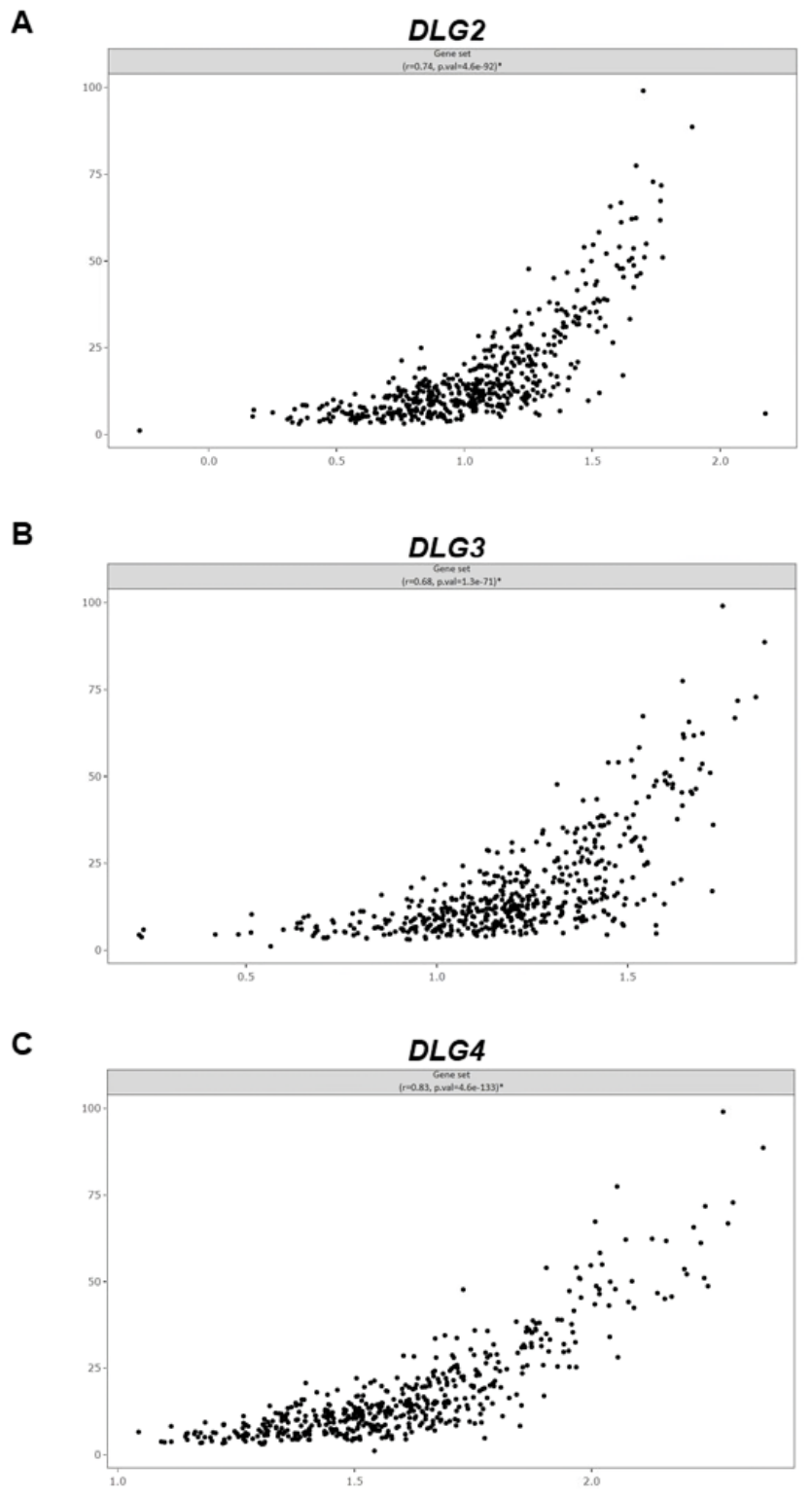
Among the genes included in our synaptic panel, moderate to strong positive correlations were found between 21 non-DLG genes and DLG2 and between 24 non-DLG genes and either DLG3 or DLG4. Genes showing correlations with all three DLG genes were CAMK2A, CAMK2B, DLGAP1, GRIN1, GRIN2B, HOMER1, NEFL, NEFM, PPP3CA, PRKCG, RBFOX3, SHANK1, SHANK2, SHANK3, SLC17A6, SLC17A7, SYNGAP1, and TBR1. There were also positive correlations in expression among the DLG genes themselves (Supplementary Figure S7 and Table 1). Moreover, each individual DLG gene showed a positive correlation with the overall synaptic gene program derived from the full gene set (Figure 4).
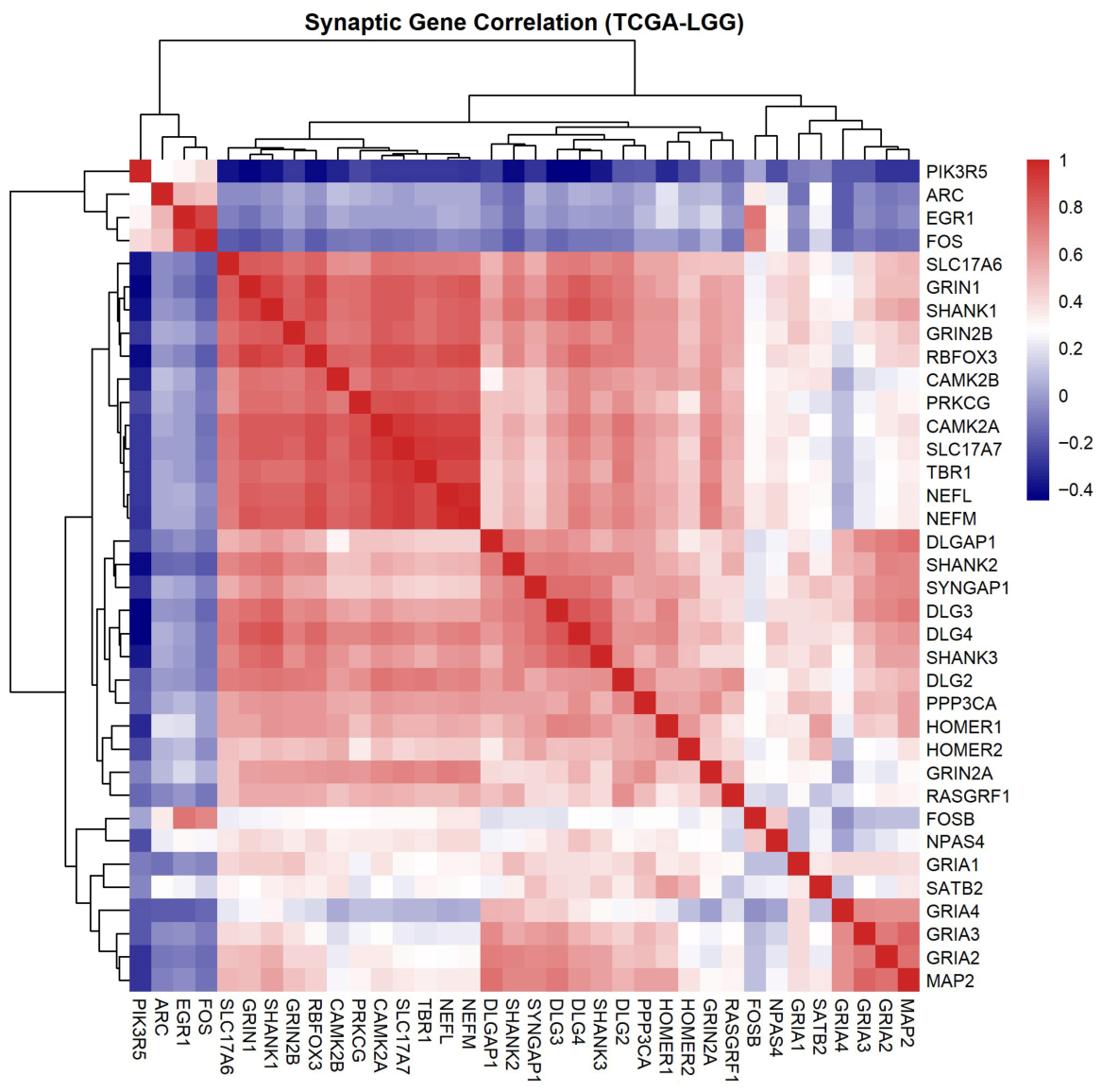
A heatmap showing expression correlations of a synaptic gene set in TCGA LGG tumors indicated a non-random co-expression structure across samples. Hierarchical clustering of Spearman correlation coefficients revealed a modular organization of gene expression. Distinct clusters corresponded to key functional synaptic components, including postsynaptic scaffolding proteins, which include DLG2DLG4 and SHANK family genes, glutamatergic receptor subunits such as GRIA and GRIN genes, and activity-dependent transcriptional regulators such as ARC, EGR1, and FOS. These patterns indicate coordinated regulation of synaptic gene programs within glioma transcriptomes (Figure 5).

4. Discussion

LGGs, especially IDH-mutant astrocytomas, can eventually progress to aggressive, malignant tumors with GBM-like features [4,75,83]. Increasing attention has been given to neural transmission and plasticity pathways co-opted by GBM tumors to stimulate brain growth [1,2,3]. In contrast, synaptic components in LGG remain to be characterized. We provide early evidence, based on mRNA transcription as a measure of gene expression, suggesting that excitatory neurotransmission and post-synaptic plasticity features may be present in LGG tumors and associate with patient prognosis.
DLG2, DLG3, and DLG4 encode the MAGUK scaffold proteins PSD-93, SAP-102, and PSD-95. These are core proteins of the PSD at excitatory synapses, where they serve as organizational hubs that assemble and stabilize signaling complexes. All three proteins share a modular structure (PDZ, SH3, and GK domains) that allows them to bind multiple partners simultaneously. Through these interactions, they anchor and cluster NMDA and AMPA receptors at the synaptic membrane and link them to intracellular signaling pathways. They also connect receptors to other scaffold proteins such as Shank1-3, helping maintain synapse structure and efficiency. In excitatory synaptic transmission, MAGUK proteins ensure proper receptor localization and density at the postsynaptic membrane, which directly influences synaptic strength and responsiveness to glutamate release. In synaptic plasticity, especially LTP, these proteins play a central role by regulating activity-dependent changes in receptor trafficking and signaling. PSD-95 (DLG4) is particularly important for stabilizing AMPA receptors at synapses and promoting their insertion during LTP, whereas PSD-93 (DLG2) participates in organizing NMDA receptor-associated signaling complexes and can modulate synaptic strength, partly through interactions with PSD-95. SAP-102 (DLG3) is more prominent during development, supporting early synapse formation and plasticity by regulating NMDA receptor trafficking [7,8,9,10,11,12,19,84]. The role of MAGUK proteins in synaptic function leads to implications in memory formation and neurodegenerative diseases [85,86].
We found consistent associations of all three DLG genes with better prognosis, as assessed by longer OS in patients with LGG, which is somewhat counterintuitive given the proposed contributing role of synaptic mechanisms in glioma progression indicated by studies in GBM. If there is any causal relationship between high DLG2DLG4 expression and survival, which cannot be concluded based on our current results, it is possible that DLG genes and MAGUK proteins, together with their associated network of synaptic components, confer a more differentiated, neuron-like transcription profile to LGG tumors, thus reducing their aggressiveness and likelihood of progressing towards GBM. In neuroblastoma, it has been shown that low DLG2 expression induces forced cell cycle progression and predicts poor patient survival [87]. Differentiation of cells representative of different glioma types, including grade 3 astrocytoma and oligodendroglioma, into neuron-like cells, can be induced by a combination of small molecules or overexpression of neural transcription factors. This promotion of neuronal differentiation reduces cell proliferation and expression of tumor-associated proteins, while upregulating tumor suppression genes [88]. Other evidence supports the view that enrichment of neuronal differentiation-related genes may be a therapeutic strategy to suppress the malignant phenotype and improve prognosis in glioma [89]. In addition, our correlation analyses indicate a modular and non-random co-expression architecture between DLG2DLG4 and other synaptic genes, with coordinated clusters in the gene set corresponding to synaptic scaffolding, glutamatergic signaling, and activity-dependent transcriptional programs. It is noteworthy that, despite tumors with higher expression of DLG2DLG4 have better prognosis, the gene expression levels still do not seem to reach those of non-tumor brain tissue.
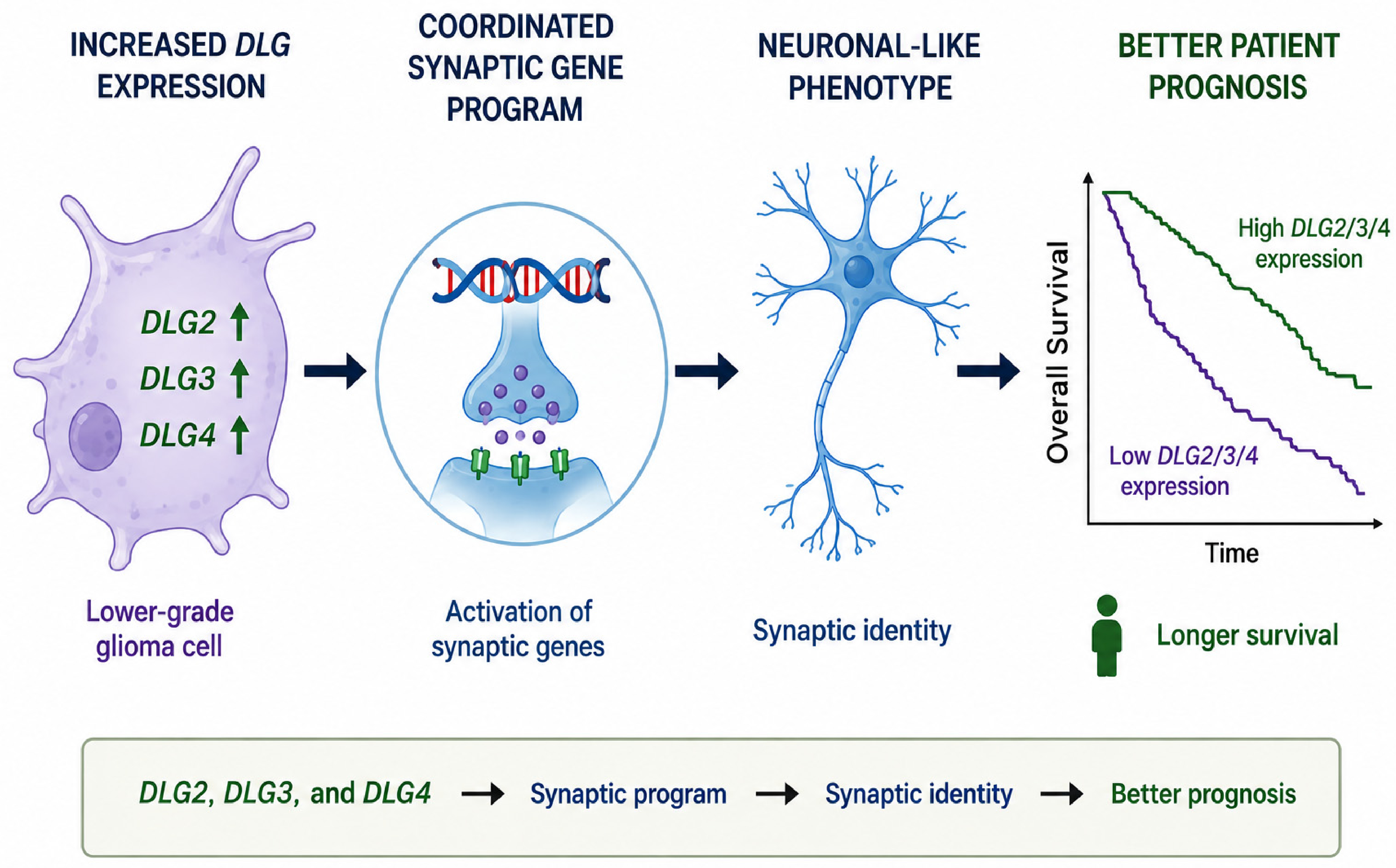
LGGs and GBM tumors are biologically related neoplasms that share core features of diffuse infiltration, genetic instability, and adaptation within the brain microenvironment. GBM has been conceptualized as the terminal stage of malignant progression from LGGs, particularly in tumors harboring mutations in IDH1 or TP53. Integrated molecular profiling has demonstrated that GBMs can arise as primary tumors biologically distinct from IDH-mutant LGGs. IDH-mutant LGGs generally display slower growth kinetics, a hypermethylated epigenetic landscape, and more prolonged evolutionary trajectories. Thus, LGGs and glioblastomas may exist along partially overlapping but biologically divergent evolutionary pathways. These distinctions may help explain why differentiation toward a neuronal-like phenotype might be associated with reduced aggressiveness in LGGs (Figure 6), whereas similar transcriptional programs have been linked to increased malignancy and cellular plasticity in GBM [3,75,79].
Our study has several limitations. First, for some of the analyses we used the glioma histological classification, which is now outdated. The definitions for LGG entities were updated in the WHO 2021 classification to integrate molecular signatures with histological features [79,90]. The histological classification of gliomas in the TCGA LGG dataset is based on WHO 2007/2016 criteria and therefore does not fully reflect the integrated molecular classification introduced in the WHO 2021 guidelines. This limitation is inherent to TCGA and other datasets, which were generated prior to the adoption of the 2021 classification. However, retaining the original histological annotations ensures reproducibility and consistency with prior TCGA-based studies, and these annotations remain relevant as they represent well-characterized morphological entities that form the basis of much of the existing glioma literature. The WHO 2021 classification recognizes that legacy datasets generated before its implementation may not be fully compatible with the updated integrated framework and explicitly supports the continued use of prior WHO histological classifications in such contexts [79]. In addition, we have also included analyses using updated classifications that incorporate molecular features. Specific mutations can influence LGG prognosis [91,92,93,94]. For example, IDH status separates LGG tumors into biologically and clinically distinct diseases, with IDH-mutated tumors having more favorable prognosis [75]. We found that, at least in the CGGA cohort, DLG2DLG4 genes retained associations with favorable prognosis after adjustment for IDH mutation status, 1p/19q codeletion status, age, and tumor grade. Molecular subtype analyses were performed independently according to IDH mutation and 1p/19q co-deletion status, consistent with the WHO 2021 integrated classification framework. LGG-IDH-mut-codel tumors correspond to oligodendrogliomas, whereas LGG-IDH-mut-non-codel tumors correspond to astrocytomas. Tumors classified as LGG-IDH-wt were retained as a separate category because TCGA and CGGA legacy datasets include lower-grade diffuse gliomas lacking IDH mutations, although many of these tumors would currently be considered biologically closer to GBM under contemporary molecular criteria [90].
Another limitation is that associations between gene expression and patient prognosis, or correlations with expression of other genes, do not imply mechanistic roles and causative effects. These associations should be interpreted primarily as a basis for generating mechanistic hypotheses and identifying candidate prognostic factors. Experiments examining the effects of silencing DLG2DLG4 in cultured LGG cells are required to demonstrate a role for these genes in reducing LGG aggressiveness. Also, it is well established that higher gene expression at the mRNA level does not necessarily represent increased protein content. Some studies specifically addressing this issue in different model systems have reported broad agreement between mRNA and protein levels, whereas others have found a weak positive correlation [95,96,97]. Further research is required to examine the expression and possible role of DLG2DLG4-encoded proteins in LGG.

5. Conclusions

High expression of DLG2DLG4 shows a consistent association with better OS in patients with LGG, suggesting the possibility of a prognostic role. In addition, DLG2DLG4 gene expression is correlated with a signature of components of neural transmission and synaptic plasticity, raising the possibility that LGG tumors may replicate cellular mechanisms involved in normal neuronal function, and features of neuronal differentiation may be related to better prognosis.

Supplementary Materials

The following supporting information can be downloaded at: https://www.mdpi.com/article/10.3390/cancers18101646/s1, Supplementary Table S1: Panel of genes chosen as representative of an excitatory synapse and synaptic plasticity signature; Supplementary Table S2: Cut-off values for high and low gene expression levels used for survival analyses. Supplementary Figure S1: Gene expression levels of (A) DLG2, (B) DLG3, and (C) DLG4G in glioma types and non-tumor brain tissue. Data were obtained from the Rembrandt dataset [15] was analyzed using the GlioVis-Data Visualization Tools for Brain Tumor Datasets (https://gliovis.bioinfo.cnio.es/) platform [81]; Supplementary Figure S2: Gene expression levels of (A) DLG2, (B) DLG3, and (C) DLG4 in CGGA LGG tumors classified into histological types. Astrocytoma, n = 239; oligodendroglioma, n = 145; oligoastrocytoma, n = 23; p values are indicated in the panels; Supplementary Figure S3: Gene expression levels of (A) DLG2, (B) DLG3, and (C) DLG4 in TCGA LGG tumors classified into molecular subtypes. LGG-IDH-mut-codel, n = 113; LGG-IDH- mut-non-codel, n = 142; LGG-IDH-wt, n = 88; p values are indicated in the panels; Supplementary Figure S4: Expression levels of DLG2, DLG3, and DLG4 in relation to PC1 in TCGA LGG tumors. (A) DLG2, histological type; (B) DLG3, histological type; (C) DLG4, histological type; (D) DLG2, molecular subtype; (E) DLG3, molecular subtype; (F) DLG4, molecular subtype. For this analysis, molecular subtypes were classified as PA-like, mesenchymal-like, G-CIMP-high, G-CIMP-low, codel, classic-like, or NA [79,82]; Supplementary Figure S5: Forest plots showing multivariable Cox proportional hazards analyses for OS in TCGA LLG tumors. Models included DLG gene expression status together with established clinicomolecular prognostic variables, namely IDH mutation status, 1p/19q codeletion status, age, and tumor grade. Hazard ratios (HRs) and 95% confidence intervals are shown. HR < 1 indicates favorable prognostic association, whereas HR > 1 indicates increased risk of death; Supplementary Figure S6: Forest plots showing multivariable Cox proportional hazards analyses for OS in CGGA LLG tumors. Models included DLG gene expression status together with established clinicomolecular prognostic variables, namely IDH mutation status, 1p/19q codeletion status, age, and tumor grade. Hazard ratios (HRs) and 95% confidence intervals are shown. HR < 1 indicates favorable prognostic association, whereas HR > 1 indicates increased risk of death; Supplementary Figure S7: Correlations found between expression of (A) DLG2, (B) DLG3, and (C) DLG4 and individual genes from the synaptic dataset in TCGA LGG tumors; Pearson’s r and p values are indicated in the panels.

Author Contributions

Conceptualization, F.G., R.R. and G.R.I.; methodology, F.G., H.R.D.-P., R.R. and G.R.I.; formal analysis, F.G., H.R.D.-P. and R.R.; investigation, F.G., H.R.D.-P., R.R. and G.R.I.; resources, F.G., O.M., R.R. and G.R.I.; data curation, F.G., H.R.D.-P. and R.R.; writing—original draft preparation, H.R.D.-P. and R.R.; writing—review and editing, F.G., H.R.D.-P., O.M., R.R. and G.R.I.; supervision, R.R. and G.R.I.; project administration, R.R. and G.R.I.; funding acquisition, F.G., O.M., R.R. and G.R.I. All authors have read and agreed to the published version of the manuscript.

Funding

This work was supported by the National Council for Scientific and Technological Development (CNPq, MCTI, Brazil) grant numbers 304623/2025-3 and 406484/2022–8 (INCT BioOncoPed) to R.R., the Children’s Cancer Institute (ICI), Brazilian Federal Agency for Support and Evaluation of Graduate Education (CAPES), The Center for Advanced Neurology and Neurosurgery (CEANNE), and the Mackenzie Evangelical University.

Institutional Review Board Statement

Not applicable.

Informed Consent Statement

Not applicable.

Data Availability Statement

This research used data generated by The Cancer Genome Atlas (TCGA) Research Network (https://www.cancer.gov/tcga) and the Chinese Glioma Genome Atlas (CGGA, http://www.cgga.org.cn), including TCGA data accessed through the Evergene platform (https://bshihlab.shinyapps.io/evergene/). Data from the Rembrandt dataset were also used through the GlioVis platform (https://gliovis.bioinfo.cnio.es/).

Conflicts of Interest

The authors declare no conflicts of interest related to the contents of this study. The funders had no role in the design of the study; in the collection, analyses, or interpretation of data; in the writing of the manuscript; or in the decision to publish the results.

Abbreviations

The following abbreviations are used in this manuscript:
AMPAα-amino-3-hydroxy-5-methyl-4-isoxazolepropionic acid
CGGAChinese Glioma Genome Atlas
CodelCo-deletion
GBMGlioblastoma
G-CIMPGlioma CpG island methylator phenotype
GDCGenomic Data Commons
HRHazard Ratio
LGGLower-grade glioma
LGG-IDH-mut-codelLower-grade glioma with a mutation in the isocitrate dehydrogenase (IDH) gene and co-deletion of chromosomal arms 1p and 19q
LGG-IDH-mut-non-codelLower-grade glioma with a mutation in the IDH gene without co-deletion of chromosomal arms 1p and 19q
LGG-IDH-wtLower-grade glioma wild-type for IDH
LTPLong-term potentiation
MAGUKMembrane-associated guanylate kinase
NANot available
NCNo correlation
NMDAN-methyl-D-aspartate
OSOverall survival
PAPilocytic astrocytoma
PC1First principal component
PCAPrincipal Component Analysis
TCGAThe Cancer Genome Atlas
WHOWorld Health Organization

References

  1. Venkataramani, V.; Tanev, D.I.; Strahle, C.; Studier-Fischer, A.; Fankhauser, L.; Kessler, T.; Körber, C.; Kardorff, M.; Ratliff, M.; Xie, R.; et al. Glutamatergic synaptic input to glioma cells drives brain tumour progression. Nature 2019, 573, 532–538. [Google Scholar] [CrossRef]
  2. Venkatesh, H.S.; Morishita, W.; Geraghty, A.C.; Silverbush, D.; Gillespie, S.M.; Arzt, M.; Tam, L.T.; Espenel, C.; Ponnuswami, A.; Ni, L.; et al. Electrical and synaptic integration of glioma into neural circuits. Nature 2019, 573, 539–545. [Google Scholar] [CrossRef]
  3. Taylor, K.R.; Barron, T.; Hui, A.; Spitzer, A.; Yalçin, B.; Ivec, A.E.; Geraghty, A.C.; Hartmann, G.G.; Arzt, M.; Gillespie, S.M.; et al. Glioma synapses recruit mechanisms of adaptive plasticity. Nature 2023, 623, 366–374. [Google Scholar] [CrossRef]
  4. Bready, D.; Placantonakis, D.G. Molecular pathogenesis of low-grade glioma. Neurosurg. Clin. N. Am. 2019, 30, 17–25. [Google Scholar] [CrossRef]
  5. Chang, S.M.; Cahill, D.P.; Aldape, K.D.; Mehta, M.P. Treatment of adult lower-grade glioma in the era of genomic medicine. Am. Soc. Clin. Oncol. Educ. Book 2016, 35, 75–81. [Google Scholar] [CrossRef]
  6. Kihlstedt, C.J.; Dénes, A.; Mansouri, A.; Mikolajewicz, N.; Skoglund, T.; Köster, L.; Corell, A.; Carén, H.; Ferreyra Vega, S.; Olsson Bontell, T.; et al. Proteomics in IDH-mutated diffuse lower-grade glioma: A scoping review. Neurooncol. Adv. 2025, 8, vdaf258. [Google Scholar] [CrossRef]
  7. Zheng, C.Y.; Seabold, G.K.; Horak, M.; Petralia, R.S. MAGUKs, synaptic development, and synaptic plasticity. Neuroscientist 2011, 17, 493–512. [Google Scholar] [CrossRef]
  8. Hossen, E.; Funahashi, Y.; Faruk, M.O.; Ahammad, R.U.; Amano, M.; Yamada, K.; Kaibuchi, K. Rho-kinase/ROCK phosphorylates PSD-93 downstream of NMDARs to orchestrate synaptic plasticity. Int. J. Mol. Sci. 2022, 24, 404. [Google Scholar] [CrossRef] [PubMed]
  9. Kim, E.; Cho, K.O.; Rothschild, A.; Sheng, M. Heteromultimerization and NMDA receptor-clustering activity of Chapsyn-110, a member of the PSD-95 family of proteins. Neuron 1996, 17, 103–113. [Google Scholar] [CrossRef] [PubMed]
  10. Ravi, A.S.; Zeng, M.; Chen, X.; Sandoval, G.; Diaz-Alonso, J.; Zhang, M.; Nicoll, R.A. Long-term potentiation reconstituted with an artificial TARP/PSD-95 complex. Cell Rep. 2022, 41, 111483. [Google Scholar] [CrossRef] [PubMed]
  11. Sheng, N.; Bemben, M.A.; Díaz-Alonso, J.; Tao, W.; Shi, Y.S.; Nicoll, R.A. LTP requires postsynaptic PDZ-domain interactions with glutamate receptor/auxiliary protein complexes. Proc. Natl. Acad. Sci. USA 2018, 115, 3948–3953. [Google Scholar] [CrossRef]
  12. Zeng, M.; Díaz-Alonso, J.; Ye, F.; Chen, X.; Xu, J.; Ji, Z.; Nicoll, R.A.; Zhang, M. Phase separation-mediated TARP/MAGUK complex condensation and AMPA receptor synaptic transmission. Neuron 2019, 104, 529–543.e6. [Google Scholar] [CrossRef]
  13. Guzowski, J.F.; McNaughton, B.L.; Barnes, C.A.; Worley, P.F. Environment-specific expression of the immediate-early gene Arc in hippocampal neuronal ensembles. Nat. Neurosci. 1999, 2, 1120–1124. [Google Scholar] [CrossRef]
  14. Lyford, G.L.; Yamagata, K.; Kaufmann, W.E.; Barnes, C.A.; Sanders, L.K.; Copeland, N.G.; Gilbert, D.J.; Jenkins, N.A.; Lanahan, A.A.; Worley, P.F. Arc, a growth factor and activity-regulated gene, encodes a novel cytoskeleton-associated protein that is enriched in neuronal dendrites. Neuron 1995, 14, 433–445. [Google Scholar] [CrossRef]
  15. Lin, C.R.; Kapiloff, M.S.; Durgerian, S.; Tatemoto, K.; Russo, A.F.; Hanson, P.; Schulman, H.; Rosenfeld, M.G. Molecular cloning of a brain-specific calcium/calmodulin-dependent protein kinase. Proc. Natl. Acad. Sci. USA 1987, 84, 5962–5966. [Google Scholar] [CrossRef]
  16. Silva, A.J.; Stevens, C.F.; Tonegawa, S.; Wang, Y. Deficient hippocampal long-term potentiation in α-calcium-calmodulin kinase II mutant mice. Science 1992, 257, 201–206. [Google Scholar] [CrossRef]
  17. Bennett, M.K.; Kennedy, M.B. Deduced primary structure of the beta subunit of brain type II Ca2+/calmodulin-dependent protein kinase determined by molecular cloning. Proc. Natl. Acad. Sci. USA 1987, 84, 1794–1798. [Google Scholar] [CrossRef]
  18. Borgesius, N.Z.; van Woerden, G.M.; Buitendijk, G.H.S.; Keijzer, N.; Jaarsma, D.; Hoogenraad, C.C.; Elgersma, Y. CaMKII plays a nonenzymatic role in hippocampal synaptic plasticity and learning by targeting CaMKII to synapses. J. Neurosci. 2011, 31, 10141–10148. [Google Scholar] [CrossRef]
  19. Griesius, S.; O’Donnell, C.; Waldron, S.; Thomas, K.L.; Dwyer, D.M.; Wilkinson, L.S.; Hall, J.; Robinson, E.S.J.; Mellor, J.R. Reduced expression of the psychiatric risk gene DLG2 (PSD93) impairs hippocampal synaptic integration and plasticity. Neuropsychopharmacology 2022, 47, 1367–1378. [Google Scholar] [CrossRef]
  20. Nithianantharajah, J.; Komiyama, N.H.; McKechanie, A.; Johnstone, M.; Blackwood, D.H.; St Clair, D.; Emes, R.D.; Van De Lagemaat, L.N.; Saksida, L.M.; Bussey, T.J.; et al. Synaptic scaffold evolution generated components of vertebrate cognitive complexity. Nat. Neurosci. 2013, 16, 16–24. [Google Scholar] [CrossRef]
  21. Tarpey, P.; Parnau, J.; Blow, M.; Woffendin, H.; Bignell, G.; Cox, C.; Cox, J.; Davies, H.; Edkins, S.; Holden, S.; et al. Mutations in the DLG3 gene cause nonsyndromic X-linked mental retardation. Am. J. Hum. Genet. 2004, 75, 318–324. [Google Scholar] [CrossRef]
  22. Li, J.; Wilkinson, B.; Clementel, V.A.; Hou, J.; O’dEll, T.J.; Coba, M.P. Long-term potentiation modulates synaptic phosphorylation networks and reshapes the structure of the postsynaptic interactome. Sci. Signal. 2016, 9, rs8. [Google Scholar] [CrossRef]
  23. Kim, E.; Naisbitt, S.; Hsueh, Y.-P.; Rao, A.; Rothschild, A.; Craig, A.M.; Sheng, M. GKAP, a novel synaptic protein that interacts with the guanylate kinase-like domain of the PSD-95/SAP90 family of channel clustering molecules. J. Cell Biol. 1997, 136, 669–678. [Google Scholar] [CrossRef]
  24. Yao, I.; Hata, Y.; Hirao, K.; Deguchi, M.; Ide, N.; Takeuchi, M.; Takai, Y. Synamon, a novel neuronal protein interacting with synapse-associated protein 90/postsynaptic density-95-associated protein. J. Biol. Chem. 1999, 274, 27463–27466. [Google Scholar] [CrossRef]
  25. Jones, M.W.; Errington, M.L.; French, P.J.; Fine, A.; Bliss, T.V.P.; Garel, S.; Charnay, P.; Bozon, B.; Laroche, S.; Davis, S. A requirement for the immediate early gene Zif268 in the expression of late LTP and long-term memories. Nat. Neurosci. 2001, 4, 289–296. [Google Scholar] [CrossRef]
  26. Sukhatme, V.P.; Cao, X.; Chang, L.C.; Tsai-Morris, C.-H.; Stamenkovich, D.; Ferreira, P.C.; Cohen, D.R.; Edwards, S.A.; Shows, T.B.; Curran, T.; et al. A zinc finger-encoding gene coregulated with c-fos during growth and differentiation, and after cellular depolarization. Cell 1988, 53, 37–43. [Google Scholar] [CrossRef]
  27. Sheng, M.; Greenberg, M.E. The regulation and function of c-fos and other immediate early genes in the nervous system. Neuron 1990, 4, 477–485. [Google Scholar] [CrossRef]
  28. Nakabeppu, Y.; Nathans, D. A naturally occurring truncated form of FosB that inhibits Fos/Jun transcriptional activity. Cell 1991, 64, 751–759. [Google Scholar] [CrossRef]
  29. Nestler, E.J.; Kelz, M.B.; Chen, J. ΔFosB: A molecular mediator of long-term neural and behavioral plasticity. Brain Res. 1999, 835, 10–17. [Google Scholar] [CrossRef]
  30. Bannerman, D.M.; Borchardt, T.; Jensen, V.; Rozov, A.; Haj-Yasein, N.N.; Burnashev, N.; Zamanillo, D.; Bus, T.; Grube, I.; Adelmann, G.; et al. Somatic accumulation of GluA1-AMPA receptors leads to selective cognitive impairments in mice. Front. Mol. Neurosci. 2018, 11, 199. [Google Scholar] [CrossRef]
  31. Hollmann, M.; O’SHea-Greenfield, A.; Rogers, S.W.; Heinemann, S. Cloning by functional expression of a member of the glutamate receptor family. Nature 1989, 342, 643–648. [Google Scholar] [CrossRef]
  32. Boulter, J.; Hollmann, M.; O’Shea-Greenfield, A.; Hartley, M.; Deneris, E.; Maron, C.; Heinemann, S. Molecular cloning and functional expression of glutamate receptor subunit genes. Science 1990, 249, 1033–1037. [Google Scholar] [CrossRef] [PubMed]
  33. Lüthi, A.; Chittajallu, R.; Duprat, F.; Palmer, M.J.; Benke, T.A.; Kidd, F.L.; Henley, J.M.; Isaac, J.T.; Collingridge, G.L. Hippocampal LTD expression involves a pool of AMPARs regulated by the NSF–GluR2 interaction. Neuron 1999, 24, 389–399. [Google Scholar] [CrossRef] [PubMed]
  34. Keinänen, K.; Wisden, W.; Sommer, B.; Werner, P.; Herb, A.; Verdoorn, T.A.; Sakmann, B.; Seeburg, P.H. A family of AMPA-selective glutamate receptors. Science 1990, 249, 556–560. [Google Scholar] [CrossRef] [PubMed]
  35. Meng, Y.; Zhang, Y.; Jia, Z. Synaptic transmission and plasticity in the absence of AMPA glutamate receptor GluR2 and GluR3. Neuron 2003, 39, 163–176. [Google Scholar] [CrossRef]
  36. Zhu, J.J.; Esteban, J.A.; Hayashi, Y.; Malinow, R. Postnatal synaptic potentiation: Delivery of GluR4-containing AMPA receptors by spontaneous activity. Nat. Neurosci. 2000, 3, 1098–1106. [Google Scholar] [CrossRef]
  37. McHugh, T.J.; Blum, K.I.; Tsien, J.Z.; Tonegawa, S.; Wilson, M.A. Impaired hippocampal representation of space in CA1-specific NMDAR1 knockout mice. Cell 1996, 87, 1339–1349. [Google Scholar] [CrossRef]
  38. Moriyoshi, K.; Masu, M.; Ishii, T.; Shigemoto, R.; Mizuno, N.; Nakanishi, S. Molecular cloning and characterization of the rat NMDA receptor. Nature 1991, 354, 31–37. [Google Scholar] [CrossRef]
  39. Monyer, H.; Sprengel, R.; Schoepfer, R.; Herb, A.; Higuchi, M.; Lomeli, H.; Burnashev, N.; Sakmann, B.; Seeburg, P.H. Heteromeric NMDA receptors: Molecular and functional distinction of subtypes. Science 1992, 256, 1217–1221. [Google Scholar] [CrossRef]
  40. Shipton, O.A.; Paulsen, O. GluN2A and GluN2B subunit-containing NMDA receptors in hippocampal plasticity. Philos. Trans. R. Soc. B Biol. Sci. 2014, 369, 20130163. [Google Scholar] [CrossRef]
  41. Brakeman, P.R.; Lanahan, A.A.; O’Brien, R.; Roche, K.; Barnes, C.A.; Huganir, R.L.; Worley, P.F. Homer: A protein that selectively binds metabotropic glutamate receptors. Nature 1997, 386, 284–288. [Google Scholar] [CrossRef]
  42. Sala, C.; Piëch, V.; Wilson, N.R.; Passafaro, M.; Liu, G.; Sheng, M. Regulation of dendritic spine morphology and synaptic function by Shank and Homer. Neuron 2001, 31, 115–130. [Google Scholar] [CrossRef]
  43. Furuichi, T.; Muto, Y.; Sadakata, T.; Sato, Y.; Hayashi, K.; Shiraishi-Yamaguchi, Y.; Shinoda, Y. The physiological role of Homer2a and its novel short isoform, Homer2e, in NMDA receptor-mediated apoptosis in cerebellar granule cells. Mol. Brain 2021, 14, 90. [Google Scholar] [CrossRef]
  44. Xiao, B.; Tu, J.C.; Worley, P.F. Homer: A link between neural activity and glutamate receptor function. Curr. Opin. Neurobiol. 2000, 10, 370–374. [Google Scholar] [CrossRef] [PubMed]
  45. Caceres, A.; Banker, G.; Steward, O.; Binder, L.; Payne, M. MAP2 is localized to the dendrites of hippocampal neurons which develop in culture. Dev. Brain Res. 1984, 13, 314–318. [Google Scholar] [CrossRef] [PubMed]
  46. Lewis, S.A.; Wang, D.H.; Cowan, N.J. Microtubule-associated protein MAP2 shares a microtubule binding motif with Tau protein. Science 1988, 242, 936–939. [Google Scholar] [CrossRef] [PubMed]
  47. Geisler, N.; Fischer, S.; Vandekerckhove, J.; Van Damme, J.; Plessmann, U.; Weber, K. Protein-chemical characterization of NF-H, the largest mammalian neurofilament component; intermediate filament-type sequences followed by a unique carboxy-terminal extension. EMBO J. 1985, 4, 57–63. [Google Scholar] [CrossRef]
  48. Yuan, A.; Veeranna; Sershen, H.; Basavarajappa, B.S.; Smiley, J.F.; Hashim, A.; Bleiwas, C.; Berg, M.; Guifoyle, D.N.; Subbanna, S.; et al. Neurofilament light interaction with GluN1 modulates neurotransmission and schizophrenia-associated behaviors. Transl. Psychiatry 2018, 8, 167. [Google Scholar] [CrossRef]
  49. Myers, M.W.; Lazzarini, R.A.; Lee, V.M.; Schlaepfer, W.W.; Nelson, D.L. The human mid-size neurofilament subunit: A repeated protein sequence and the relationship of its gene to the intermediate filament gene family. EMBO J. 1987, 6, 1617–1626. [Google Scholar] [CrossRef]
  50. Lin, Y.; Bloodgood, B.L.; Hauser, J.L.; Lapan, A.D.; Koon, A.C.; Kim, T.-K.; Hu, L.S.; Malik, A.N.; Greenberg, M.E. Activity-dependent regulation of inhibitory synapse development by Npas4. Nature 2008, 455, 1198–1204. [Google Scholar] [CrossRef]
  51. Sun, X.; Lin, Y. Npas4: Linking neuronal activity to memory. Trends Neurosci. 2016, 39, 264–275. [Google Scholar] [CrossRef]
  52. Lin, C.-H.; Yeh, S.-H.; Lin, C.-H.; Lu, K.-T.; Leu, T.-H.; Chang, W.-C.; Gean, P.-W. A Role for the PI-3 kinase signaling pathway in fear conditioning and synaptic plasticity in the amygdala. Neuron 2001, 31, 841–851. [Google Scholar] [CrossRef]
  53. Suire, S.; Hawkins, P.; Stephens, L. Activation of phosphoinositide 3-kinase γ by Ras. Curr. Biol. 2002, 12, 1068–1075. [Google Scholar] [CrossRef]
  54. Hubbard, M.J.; Klee, C.B. Calmodulin binding by calcineurin. Ligand-induced renaturation of protein immobilized on nitrocellulose. J. Biol. Chem. 1987, 262, 15062–15070. [Google Scholar] [CrossRef]
  55. Mulkey, R.M.; Endo, S.; Shenolikar, S.; Malenka, R.C. Involvement of a calcineurin/ inhibitor-1 phosphatase cascade in hippocampal long-term depression. Nature 1994, 369, 486–488. [Google Scholar] [CrossRef]
  56. Abeliovich, A.; Chen, C.; Goda, Y.; Silva, A.J.; Stevens, C.F.; Tonegawa, S. Modified hippocampal long-term potentiation in PKCγ-mutant mice. Cell 1993, 75, 1253–1262. [Google Scholar] [CrossRef] [PubMed]
  57. Ono, Y.; Kurokawa, T.; Kawahara, K.; Nishimura, O.; Marumoto, R.; Igarashi, K.; Sugino, Y.; Kikkawa, U.; Ogita, K.; Nishizuka, Y. Cloning of rat brain protein kinase C complementary DNA. FEBS Lett. 1986, 203, 111–115. [Google Scholar] [CrossRef] [PubMed]
  58. Brambilla, R.; Gnesutta, N.; Minichiello, L.; White, G.; Roylance, A.J.; Herron, C.E.; Ramsey, M.; Wolfer, D.P.; Cestari, V.; Rossi-Arnaud, C.; et al. A role for the Ras signalling pathway in synaptic transmission and long-term memory. Nature 1997, 390, 281–286. [Google Scholar] [CrossRef]
  59. Shou, C.; Farnsworth, C.L.; Neel, B.G.; Feig, L.A. Molecular cloning of cDNAs encoding a guanine-nucleotide-releasing factor for Ras p21. Nature 1992, 358, 351–354. [Google Scholar] [CrossRef] [PubMed]
  60. Gehman, L.T.; Stoilov, P.; Maguire, J.; Damianov, A.; Lin, C.-H.; Shiue, L.; Ares, M.; Mody, I.; Black, D.L. The splicing regulator Rbfox1 (A2BP1) controls neuronal excitation in the mammalian brain. Nat. Genet. 2011, 43, 706–711. [Google Scholar] [CrossRef]
  61. Kim, K.K.; Adelstein, R.S.; Kawamoto, S. Identification of neuronal nuclei (NeuN) as Fox-3, a new member of the Fox-1 gene family of splicing factors. J. Biol. Chem. 2009, 284, 31052–31061. [Google Scholar] [CrossRef]
  62. Alcamo, E.A.; Chirivella, L.; Dautzenberg, M.; Dobreva, G.; Fariñas, I.; Grosschedl, R.; McConnell, S.K. Satb2 regulates callosal projection neuron identity in the developing cerebral cortex. Neuron 2008, 57, 364–377. [Google Scholar] [CrossRef]
  63. Britanova, O.; de Juan Romero, C.; Cheung, A.; Kwan, K.Y.; Schwark, M.; Gyorgy, A.; Vogel, T.; Akopov, S.; Mitkovski, M.; Agoston, D.; et al. Satb2 is a postmitotic determinant for upper-layer neuron specification in the neocortex. Neuron 2008, 57, 378–392. [Google Scholar] [CrossRef]
  64. Hung, A.Y.; Futai, K.; Sala, C.; Valtschanoff, J.G.; Ryu, J.; Woodworth, M.A.; Kidd, F.L.; Sung, C.C.; Miyakawa, T.; Bear, M.F.; et al. Smaller dendritic spines, weaker synaptic transmission, but enhanced spatial learning in mice lacking Shank1. J. Neurosci. 2008, 28, 1697–1708. [Google Scholar] [CrossRef]
  65. Naisbitt, S.; Kim, E.; Tu, J.C.; Xiao, B.; Sala, C.; Valtschanoff, J.; Weinberg, R.J.; Worley, P.F.; Sheng, M. Shank, a Novel Family of Postsynaptic Density Proteins that Binds to the NMDA Receptor/PSD-95/GKAP Complex and Cortactin. Neuron 1999, 23, 569–582. [Google Scholar] [CrossRef]
  66. Won, H.; Lee, H.-R.; Gee, H.Y.; Mah, W.; Kim, J.-I.; Lee, J.; Ha, S.; Chung, C.; Jung, E.S.; Cho, Y.S.; et al. Autistic-like social behaviour in Shank2-mutant mice improved by restoring NMDA receptor function. Nature 2012, 486, 261–265. [Google Scholar] [CrossRef]
  67. Yang, M.; Bozdagi, O.; Scattoni, M.L.; Wöhr, M.; Roullet, F.I.; Katz, A.M.; Abrams, D.N.; Kalikhman, D.; Simon, H.; Woldeyohannes, L.; et al. Reduced excitatory neurotransmission and mild autism-relevant phenotypes in adolescent Shank3 null mutant mice. J. Neurosci. 2012, 32, 6525–6541. [Google Scholar] [CrossRef] [PubMed]
  68. Bai, L.; Xu, H.; Collins, J.F.; Ghishan, F.K. Molecular and functional analysis of a novel neuronal vesicular glutamate transporter. J. Biol. Chem. 2001, 276, 36764–36769. [Google Scholar] [CrossRef]
  69. Wallén-Mackenzie, Å.; Gezelius, H.; Thoby-Brisson, M.; Nygård, A.; Enjin, A.; Fujiyama, F.; Fortin, G.; Kullander, K. Vesicular glutamate transporter 2 is required for central respiratory rhythm generation but not for locomotor central pattern generation. J. Neurosci. 2006, 26, 12294–12307. [Google Scholar] [CrossRef] [PubMed]
  70. Morimoto, R.; Hayashi, M.; Yatsushiro, S.; Otsuka, M.; Yamamoto, A.; Moriyama, Y. Co-expression of vesicular glutamate transporters (VGLUT1 and VGLUT2) and their association with synaptic-like microvesicles in rat pinealocytes. J. Neurochem. 2003, 84, 382–391. [Google Scholar] [CrossRef] [PubMed]
  71. Wojcik, S.M.; Rhee, J.S.; Herzog, E.; Sigler, A.; Jahn, R.; Takamori, S.; Brose, N.; Rosenmund, C. An essential role for vesicular glutamate transporter 1 (VGLUT1) in postnatal development and control of quantal size. Proc. Natl. Acad. Sci. USA 2004, 101, 7158–7163. [Google Scholar] [CrossRef]
  72. Chen, H.-J.; Rojas-Soto, M.; Oguni, A.; Kennedy, M.B. A synaptic Ras-GTPase Activating Protein (p135 SynGAP) inhibited by CaM kinase II. Neuron 1998, 20, 895–904. [Google Scholar] [CrossRef]
  73. Kim, J.H.; Lee, H.-K.; Takamiya, K.; Huganir, R.L. The role of synaptic GTPase-Activating Protein in neuronal development and synaptic plasticity. J. Neurosci. 2003, 23, 1119–1124. [Google Scholar] [CrossRef]
  74. Hevner, R.F.; Shi, L.; Justice, N.; Hsueh, Y.-P.; Sheng, M.; Smiga, S.; Bulfone, A.; Goffinet, A.M.; Campagnoni, A.T.; Rubenstein, J.L. Tbr1 regulates differentiation of the preplate and layer 6. Neuron 2001, 29, 353–366. [Google Scholar] [CrossRef] [PubMed]
  75. Cancer Genome Atlas Research Network; Brat, D.J.; Verhaak, R.G.; Aldape, K.D.; Yung, W.K.; Salama, S.R.; Cooper, L.A.; Rheinbay, E.; Miller, C.R.; Vitucci, M.; et al. Comprehensive, integrative genomic analysis of diffuse lower-grade gliomas. N. Engl. J. Med. 2015, 372, 2481–2498. [Google Scholar] [CrossRef]
  76. Zhao, Z.; Zhang, K.N.; Wang, Q.; Li, G.; Zeng, F.; Zhang, Y.; Wu, F.; Chai, R.; Wang, Z.; Zhang, C.; et al. Chinese Glioma Genome Atlas (CGGA): A comprehensive resource with functional genomic data from Chinese glioma patients. Genom. Proteom. Bioinform. 2021, 19, 1–12. [Google Scholar] [CrossRef] [PubMed]
  77. Badalotti, R.; Dalmolin, M.; Malafaia, O.; Ribas Filho, J.M.; Roesler, R.; Fernandes, M.A.C.; Isolan, G.R. Gene expression of GABAA receptor subunits and association with patient survival in glioma. Brain Sci. 2024, 14, 275. [Google Scholar] [CrossRef]
  78. Louis, D.N.; Perry, A.; Reifenberger, G.; von Deimling, A.; Figarella-Branger, D.; Cavenee, W.K.; Ohgaki, H.; Wiestler, O.D.; Kleihues, P.; Ellison, D.W. The 2016 World Health Organization Classification of Tumors of the Central Nervous System: A summary. Acta Neuropathol. 2016, 131, 803–820. [Google Scholar] [CrossRef] [PubMed]
  79. Louis, D.N.; Perry, A.; Wesseling, P.; Brat, D.J.; Cree, I.A.; Figarella-Branger, D.; Hawkins, C.; Ng, H.K.; Pfister, S.M.; Reifenberger, G.; et al. The 2021 WHO Classification of Tumors of the Central Nervous System: A summary. Neuro Oncol. 2021, 23, 1231–1251. [Google Scholar] [CrossRef]
  80. Gusev, Y.; Bhuvaneshwar, K.; Song, L.; Zenklusen, J.C.; Fine, H.; Madhavan, S. The REMBRANDT study, a large collection of genomic data from brain cancer patients. Sci. Data 2018, 5, 180158. [Google Scholar] [CrossRef]
  81. Bowman, R.L.; Wang, Q.; Carro, A.; Verhaak, R.G.; Squatrito, M. GlioVis data portal for visualization and analysis of brain tumor expression datasets. Neuro Oncol. 2017, 19, 139–141. [Google Scholar] [CrossRef]
  82. Kennedy, A.; Richardson, E.; Higham, J.; Kotsantis, P.; Mort, R.; Shih, B.B. Evergene: An interactive webtool for large-scale gene-centric analysis of primary tumours. Bioinform. Adv. 2024, 4, vbae092. [Google Scholar] [CrossRef]
  83. Vallentgoed, W.R.; Hoogstrate, Y.; van Garderen, K.A.; van Hijfte, L.; van Dijk, E.; Kouwenhoven, M.C.M.; Niers, J.M.; Draaisma, K.; Martin, I.; de Leng, W.W.J.; et al. Evolutionary trajectories of IDH-mutant astrocytoma identify molecular grading markers related to cell cycling. Nat. Cancer 2025, 6, 1693–1713. [Google Scholar] [CrossRef]
  84. Carlisle, H.J.; Fink, A.E.; Grant, S.G.; O’Dell, T.J. Opposing effects of PSD-93 and PSD-95 on long-term potentiation and spike timing-dependent plasticity. J. Physiol. 2008, 586, 5885–5900. [Google Scholar] [CrossRef]
  85. Gidado, K.I.; Adeshakin, F.O.; Rabiu, L.; Zhang, Z.; Zhang, G.; Wan, X. Multifaceted roles of DLG3/SAP102 in neurophysiology, neurological disorders and tumorigenesis. Neuroscience 2025, 565, 192–201. [Google Scholar] [CrossRef]
  86. Yu, L.; Liu, Y.I.; Yang, H.; Zhu, X.; Cao, X.; Gao, J.; Zhao, H.; Xu, Y. PSD-93 attenuates amyloid-β-mediated cognitive dysfunction by promoting the catabolism of amyloid-β. J. Alzheimer’s Dis. 2017, 59, 913–927. [Google Scholar] [CrossRef]
  87. Keane, S.; Améen, S.; Lindlöf, A.; Ejeskär, K. Low DLG2 gene expression, a link between 11q-deleted and MYCN-amplified neuroblastoma, causes forced cell cycle progression, and predicts poor patient survival. Cell Commun. Signal. 2022, 18, 65. [Google Scholar] [CrossRef]
  88. Yi, Y.; Che, W.; Xu, P.; Mao, C.; Li, Z.; Wang, Q.; Lyu, J.; Wang, X. Conversion of glioma cells into neuron-like cells by small molecules. iScience 2024, 27, 111091. [Google Scholar] [CrossRef]
  89. Liao, C.; Chen, Y.; Peng, D.; Li, S.; Liu, L.; Li, Q.; Huang, R.; Huang, L.; Jiang, T.; Hu, H.; et al. Neuron-like lineage differentiation induced by exogenous Neurexin-1 as a potential therapeutic strategy for glioma. Cancer Lett. 2024, 611, 217387. [Google Scholar] [CrossRef]
  90. Antonelli, M.; Poliani, P.L. Adult type diffuse gliomas in the new 2021 WHO Classification. Pathologica 2022, 114, 397–409. [Google Scholar] [CrossRef]
  91. Diez Valle, R. Long-term outcomes in resected IDH-mutant subtypes of diffuse low-grade glioma. J. Clin. Oncol. 2023, 41, 1979–1981. [Google Scholar] [CrossRef] [PubMed]
  92. Leu, S.; von Felten, S.; Frank, S.; Vassella, E.; Vajtai, I.; Taylor, E.; Schulz, M.; Hutter, G.; Hench, J.; Schucht, P.; et al. IDH/MGMT-driven molecular classification of low-grade glioma is a strong predictor for long-term survival. Neuro Oncol. 2013, 15, 469–479. [Google Scholar] [CrossRef]
  93. Lo Greco, M.C.; Marano, G.; La Rocca, M.; Acquaviva, G.; Milazzotto, R.; Liardo, R.L.E.; Basile, A.; Foti, P.V.; Palmucci, S.; David, E.; et al. Latest advancements in the management of H3K27M-mutant diffuse intrinsic pontine glioma: A narrative review. Cancers 2025, 17, 420. [Google Scholar] [CrossRef]
  94. Lo Greco, M.C.; Milazzotto, R.; Liardo, R.L.E.; Acquaviva, G.; La Rocca, M.; Altieri, R.; Certo, F.; Barbagallo, G.M.; Basile, A.; Foti, P.V.; et al. Relapsing high-grade glioma from peritumoral zone: Critical review of radiotherapy treatment options. Brain Sci. 2022, 12, 416. [Google Scholar] [CrossRef]
  95. Greenbaum, D.; Jansen, R.; Gerstein, M. Analysis of mRNA expression and protein abundance data: An approach for the comparison of the enrichment of features in the cellular population of proteins and transcripts. Bioinformatics 2002, 18, 585–596. [Google Scholar] [CrossRef]
  96. Pevsner, J. Bioinformatics and Functional Genomics, 3rd ed.; Wiley-Blackwell: Chichester, UK, 2015. [Google Scholar]
  97. Waters, K.M.; Pounds, J.G.; Thrall, B.D. Data merging for integrated microarray and proteomic analysis. Brief. Funct. Genom. Proteomic. 2006, 5, 261–272. [Google Scholar] [CrossRef][Green Version]
Figure 1. Gene expression levels of (A) DLG2, (B) DLG3, and (C) DLG4 in TCGA LGG tumors classified into histological types. Astrocytoma, n = 188; oligodendroglioma, n = 179; oligoastrocytoma, n = 123; p-values are indicated in the panels.
Cancers 18 01646 g001
Figure 2. Gene expression levels of (A) DLG2, (B) DLG3, and (C) DLG4 in TCGA LGG tumors classified into molecular subtypes. LGG-IDH-mut-codel, n = 164; LGG-IDH-mut-non-codel, n = 235; LGG-IDH-wt, n = 91; p-values are indicated in the panels.
Cancers 18 01646 g002
Figure 3. Kaplan–Meier analysis of OS in patients bearing TCGA (left) or CGGA (right) LGG tumors with higher or lower expression of DLG2, DLG3, and DLG4. The number of samples and adjusted p-values are indicated in the panels.
Cancers 18 01646 g003
Figure 4. Expression of (A) DLG2, (B) DLG3, and (C) DLG4 correlates with a postsynaptic excitatory transmission and synaptic plasticity gene signature, represented by a composite gene set score obtained from all genes in the panel, in TCGA LGG tumors. The horizontal axis represents DLG gene expression and the vertical axis represents the gene set score. Pearson’s r and p-values are shown in the panels.
Cancers 18 01646 g004
Figure 5. Co-expression structure of DLG2DLG4 and other synaptic genes in glioma. Pairwise correlations of the curated synaptic gene set were computed in TCGA LGG using RNA-seq data processed via Genomic Data Commons (GDC)/TCGAbiolinks. Expression values were log2-transformed and z-scored across samples. Spearman correlation coefficients were calculated for all gene pairs to generate a gene–gene correlation matrix. Genes were hierarchically clustered using Ward’s method and visualized as a heatmap (pheatmap, R). Color scale reflects correlation strength (blue, negative; red, positive).
Cancers 18 01646 g005
Figure 6. Proposed hypothetical model linking increased expression of DLG2, DLG3, and DLG4 with synaptic-associated transcriptional programs and favorable prognosis in LGG.
Cancers 18 01646 g006
Table 1. Correlations between expression of DLG2DLG4 and genes involved in excitatory synaptic transmission and synaptic plasticity.
GENEDLG2DLG3DLG4
ARCNCNCNC
CAMK2A+++
CAMK2B+++
DLG21++
DLG3+1+
DLG4++1
DLGAP1+++
EGR1NCNCNC
FOSNCNCNC
FOSBNCNCNC
GRIA1NCNCNC
GRIA2NC++
GRIA3NC+NC
GRIA4NCNCNC
GRIN1+++
GRIN2A+NC+
GRIN2B+++
HOMER1+++
HOMER2NCNCNC
MAP2NC++
NEFL+++
NEFM+++
NPAS4NCNCNC
PIK3R5NC++
PPP3CA+++
PRKCG+++
RASGRF1NCNCNC
RBFOX3+++
SATB2NCNCNC
SHANK1+++
SHANK2+++
SHANK3+++
SLC17A6+++
SLC17A7+++
SYNGAP1+++
TBR1+++
Positive correlations (+) were defined as Pearson’s r ≥ 0.5 with a statistically significant p value; NC, no correlation defined by r < 0.5.
Disclaimer/Publisher’s Note: The statements, opinions and data contained in all publications are solely those of the individual author(s) and contributor(s) and not of MDPI and/or the editor(s). MDPI and/or the editor(s) disclaim responsibility for any injury to people or property resulting from any ideas, methods, instructions or products referred to in the content.