DLG2–DLG4 Expression Is Associated with Improved Survival and a Synaptic Gene Signature in Lower-Grade Glioma

 ,
,  and
and
Simple Summary
Abstract
1. Introduction
2. Materials and Methods
2.1. Gene Panel for Excitatory Synaptic Transmission and Plasticity
2.2. Datasets and Gene Expression Analyses
2.3. Principal Component Analysis
2.4. Survival Analysis
2.5. Multivariate Cox Regression Analysis
2.6. Gene Expression Correlations
3. Results
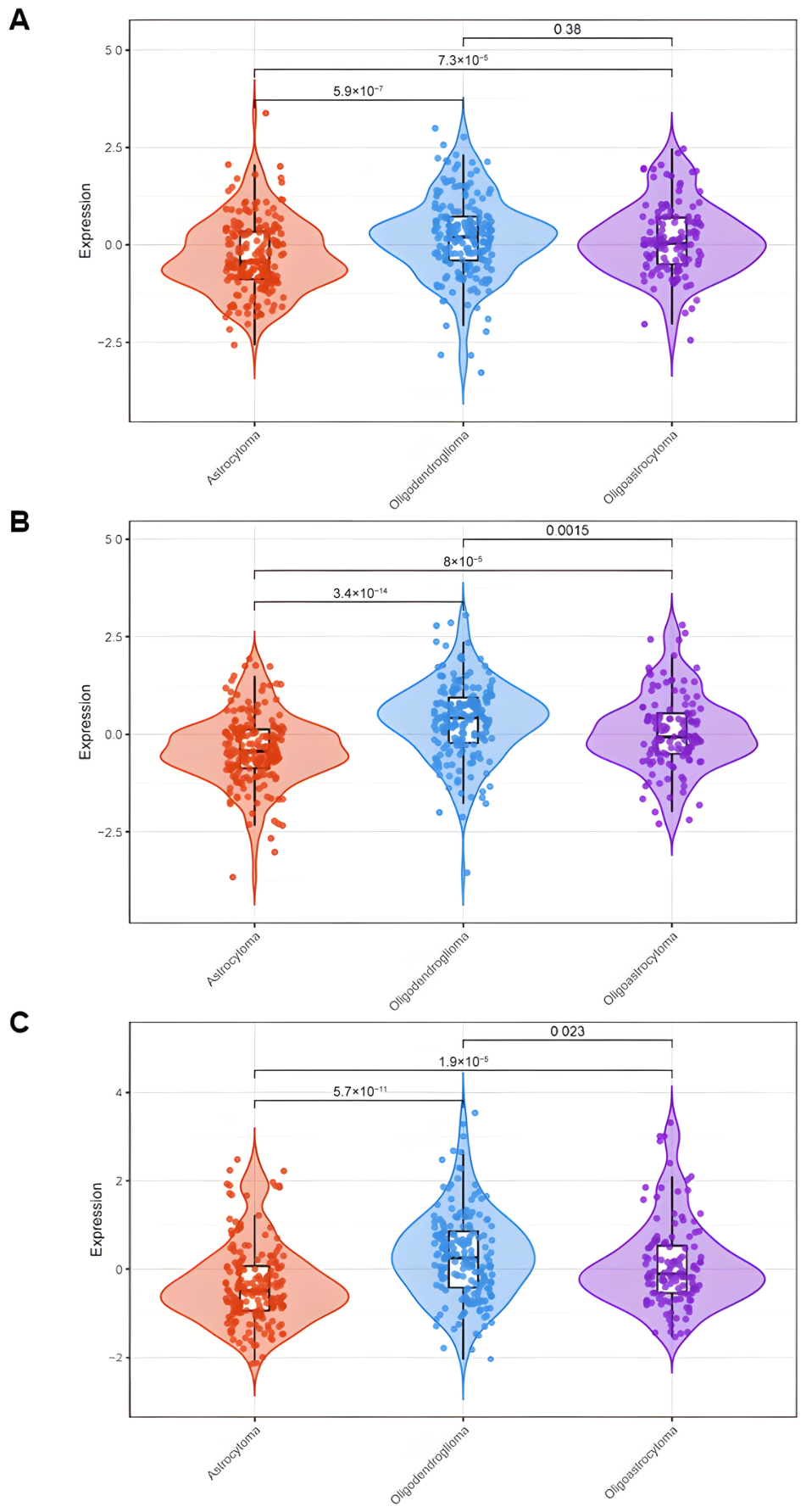
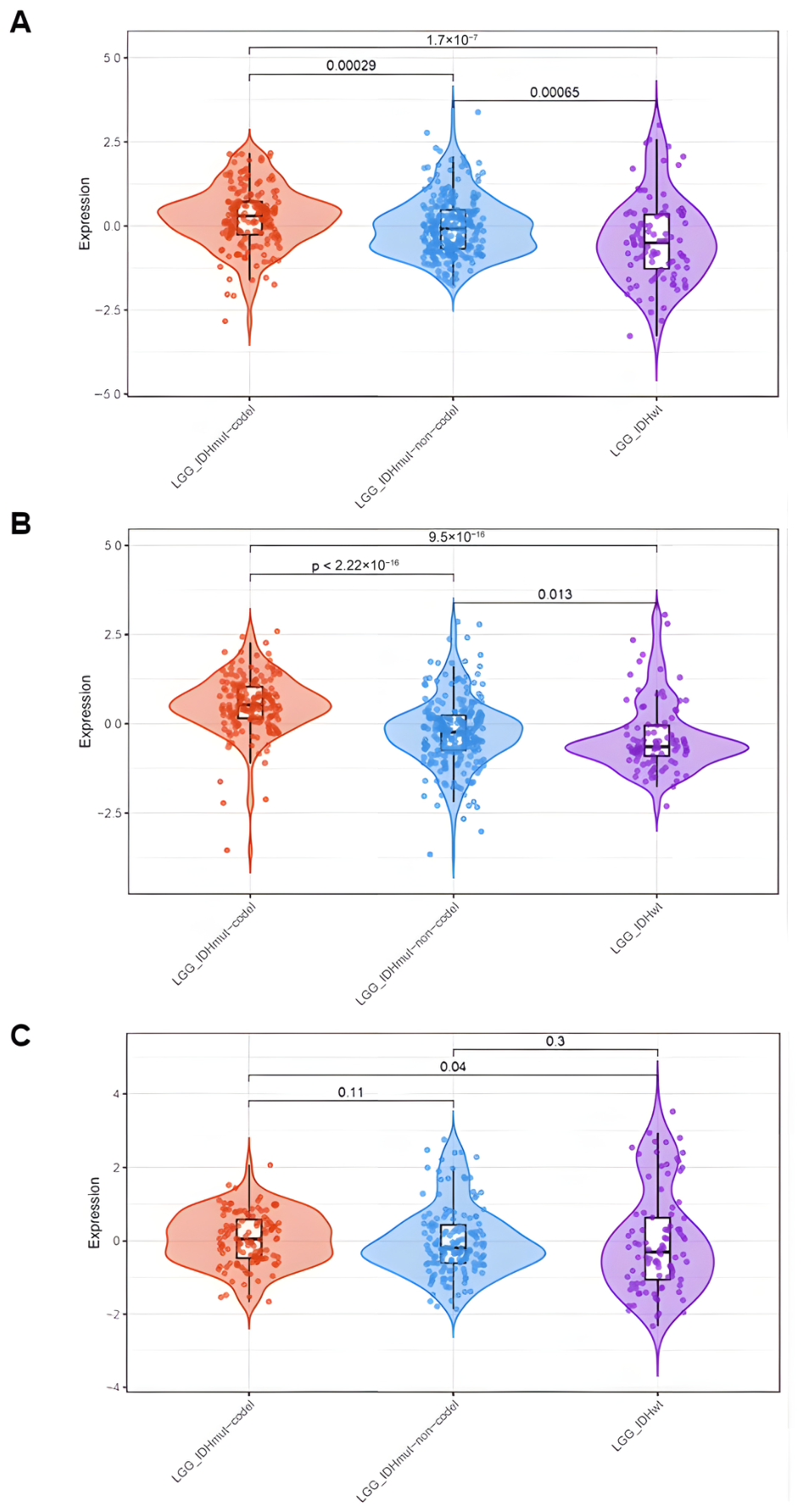
3.1. DLG2–DLG4 Expression Across Different LGG Types
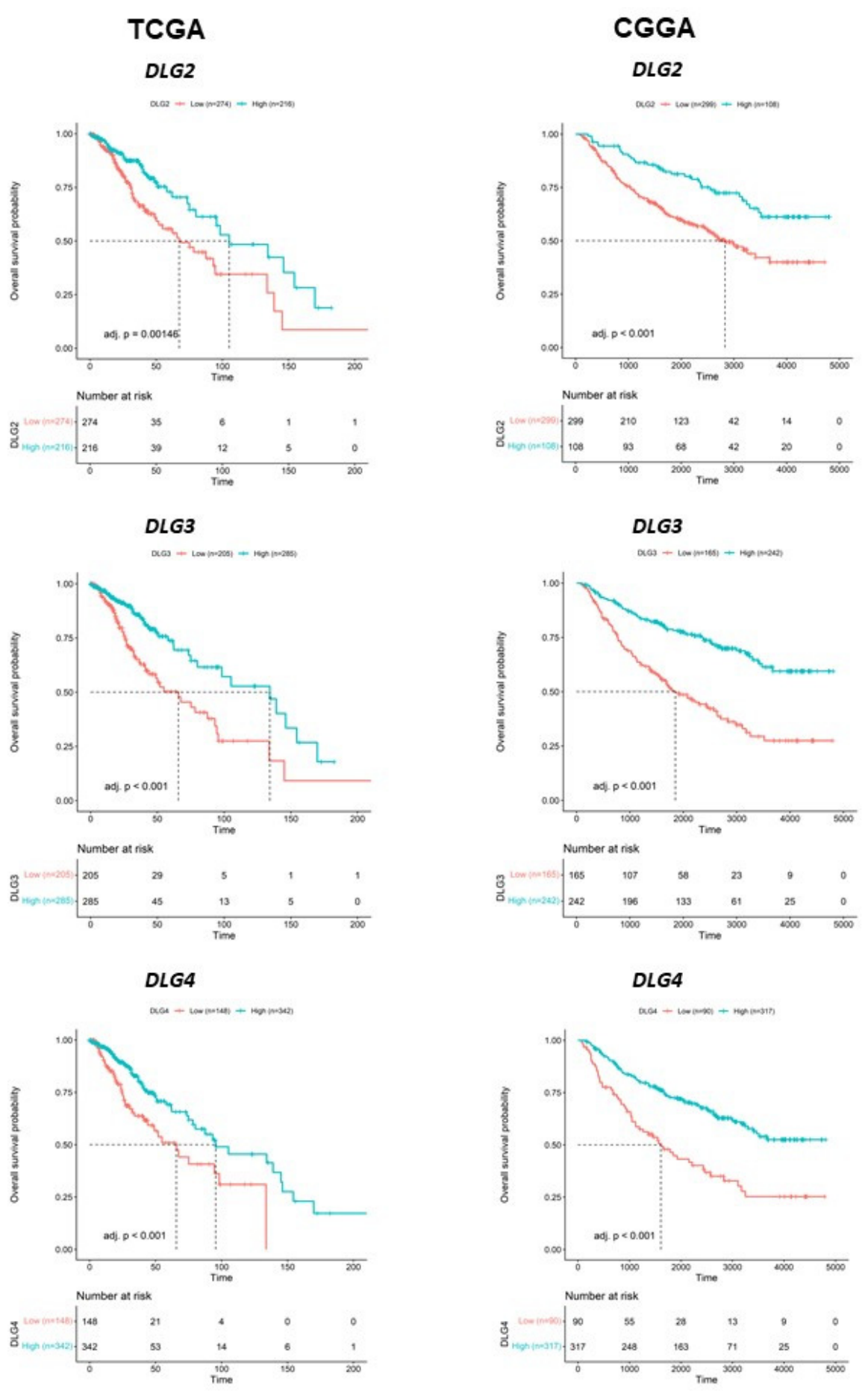
3.2. High DLG2–DLG4 Expression Is Associated with Longer OS in Patients with LGG
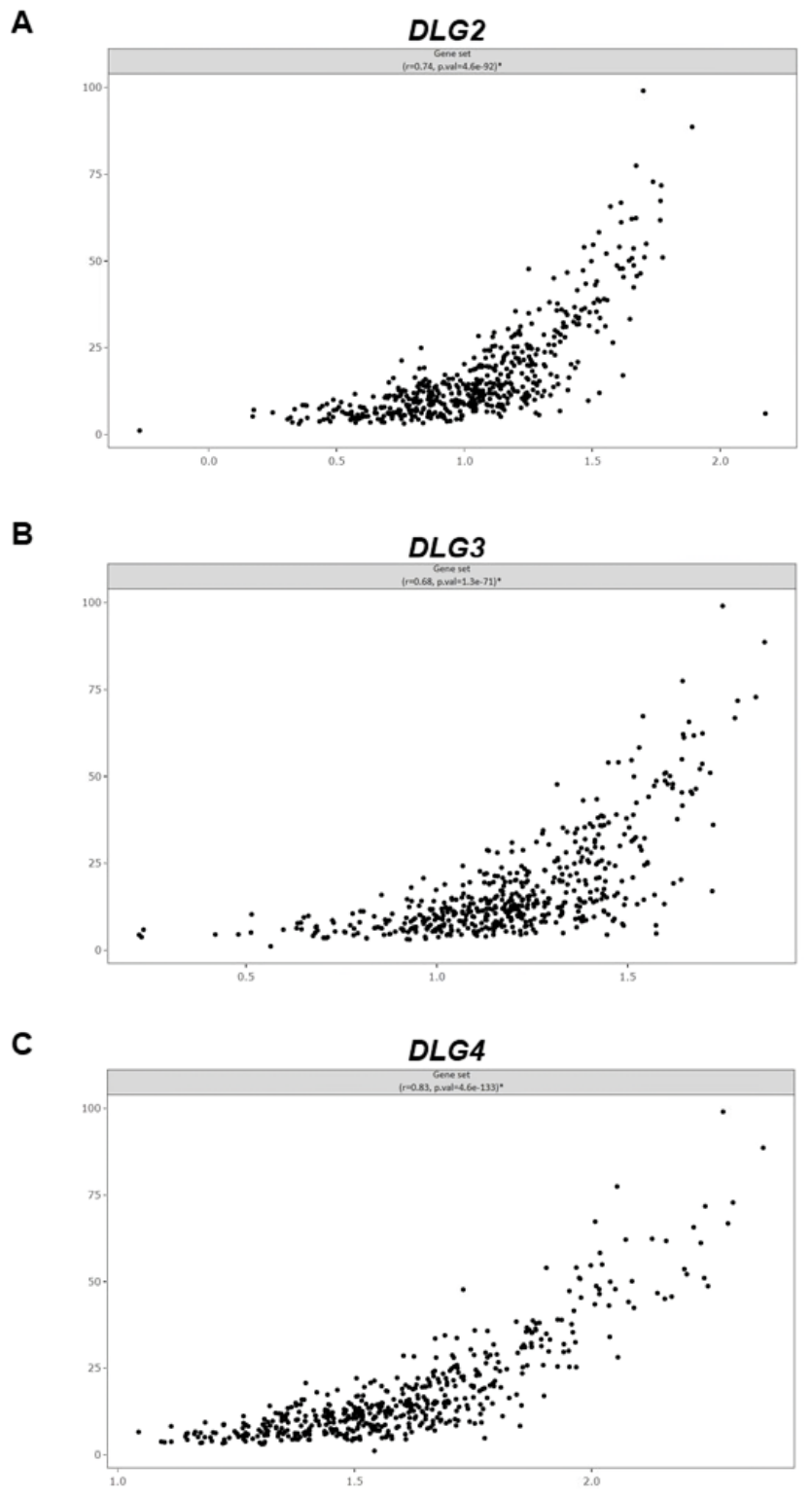
3.3. Expression of DLG2–DLG4 Is Positively Correlated with Expression of Genes Associated with Excitatory Synaptic Transmission and Synaptic Plasticity
4. Discussion
5. Conclusions
Supplementary Materials
Author Contributions
Funding
Institutional Review Board Statement
Informed Consent Statement
Data Availability Statement
Conflicts of Interest
Abbreviations
| AMPA | α-amino-3-hydroxy-5-methyl-4-isoxazolepropionic acid |
| CGGA | Chinese Glioma Genome Atlas |
| Codel | Co-deletion |
| GBM | Glioblastoma |
| G-CIMP | Glioma CpG island methylator phenotype |
| GDC | Genomic Data Commons |
| HR | Hazard Ratio |
| LGG | Lower-grade glioma |
| LGG-IDH-mut-codel | Lower-grade glioma with a mutation in the isocitrate dehydrogenase (IDH) gene and co-deletion of chromosomal arms 1p and 19q |
| LGG-IDH-mut-non-codel | Lower-grade glioma with a mutation in the IDH gene without co-deletion of chromosomal arms 1p and 19q |
| LGG-IDH-wt | Lower-grade glioma wild-type for IDH |
| LTP | Long-term potentiation |
| MAGUK | Membrane-associated guanylate kinase |
| NA | Not available |
| NC | No correlation |
| NMDA | N-methyl-D-aspartate |
| OS | Overall survival |
| PA | Pilocytic astrocytoma |
| PC1 | First principal component |
| PCA | Principal Component Analysis |
| TCGA | The Cancer Genome Atlas |
| WHO | World Health Organization |
References
- Venkataramani, V.; Tanev, D.I.; Strahle, C.; Studier-Fischer, A.; Fankhauser, L.; Kessler, T.; Körber, C.; Kardorff, M.; Ratliff, M.; Xie, R.; et al. Glutamatergic synaptic input to glioma cells drives brain tumour progression. Nature 2019, 573, 532–538. [Google Scholar] [CrossRef]
- Venkatesh, H.S.; Morishita, W.; Geraghty, A.C.; Silverbush, D.; Gillespie, S.M.; Arzt, M.; Tam, L.T.; Espenel, C.; Ponnuswami, A.; Ni, L.; et al. Electrical and synaptic integration of glioma into neural circuits. Nature 2019, 573, 539–545. [Google Scholar] [CrossRef]
- Taylor, K.R.; Barron, T.; Hui, A.; Spitzer, A.; Yalçin, B.; Ivec, A.E.; Geraghty, A.C.; Hartmann, G.G.; Arzt, M.; Gillespie, S.M.; et al. Glioma synapses recruit mechanisms of adaptive plasticity. Nature 2023, 623, 366–374. [Google Scholar] [CrossRef]
- Bready, D.; Placantonakis, D.G. Molecular pathogenesis of low-grade glioma. Neurosurg. Clin. N. Am. 2019, 30, 17–25. [Google Scholar] [CrossRef]
- Chang, S.M.; Cahill, D.P.; Aldape, K.D.; Mehta, M.P. Treatment of adult lower-grade glioma in the era of genomic medicine. Am. Soc. Clin. Oncol. Educ. Book 2016, 35, 75–81. [Google Scholar] [CrossRef]
- Kihlstedt, C.J.; Dénes, A.; Mansouri, A.; Mikolajewicz, N.; Skoglund, T.; Köster, L.; Corell, A.; Carén, H.; Ferreyra Vega, S.; Olsson Bontell, T.; et al. Proteomics in IDH-mutated diffuse lower-grade glioma: A scoping review. Neurooncol. Adv. 2025, 8, vdaf258. [Google Scholar] [CrossRef]
- Zheng, C.Y.; Seabold, G.K.; Horak, M.; Petralia, R.S. MAGUKs, synaptic development, and synaptic plasticity. Neuroscientist 2011, 17, 493–512. [Google Scholar] [CrossRef]
- Hossen, E.; Funahashi, Y.; Faruk, M.O.; Ahammad, R.U.; Amano, M.; Yamada, K.; Kaibuchi, K. Rho-kinase/ROCK phosphorylates PSD-93 downstream of NMDARs to orchestrate synaptic plasticity. Int. J. Mol. Sci. 2022, 24, 404. [Google Scholar] [CrossRef] [PubMed]
- Kim, E.; Cho, K.O.; Rothschild, A.; Sheng, M. Heteromultimerization and NMDA receptor-clustering activity of Chapsyn-110, a member of the PSD-95 family of proteins. Neuron 1996, 17, 103–113. [Google Scholar] [CrossRef] [PubMed]
- Ravi, A.S.; Zeng, M.; Chen, X.; Sandoval, G.; Diaz-Alonso, J.; Zhang, M.; Nicoll, R.A. Long-term potentiation reconstituted with an artificial TARP/PSD-95 complex. Cell Rep. 2022, 41, 111483. [Google Scholar] [CrossRef] [PubMed]
- Sheng, N.; Bemben, M.A.; Díaz-Alonso, J.; Tao, W.; Shi, Y.S.; Nicoll, R.A. LTP requires postsynaptic PDZ-domain interactions with glutamate receptor/auxiliary protein complexes. Proc. Natl. Acad. Sci. USA 2018, 115, 3948–3953. [Google Scholar] [CrossRef]
- Zeng, M.; Díaz-Alonso, J.; Ye, F.; Chen, X.; Xu, J.; Ji, Z.; Nicoll, R.A.; Zhang, M. Phase separation-mediated TARP/MAGUK complex condensation and AMPA receptor synaptic transmission. Neuron 2019, 104, 529–543.e6. [Google Scholar] [CrossRef]
- Guzowski, J.F.; McNaughton, B.L.; Barnes, C.A.; Worley, P.F. Environment-specific expression of the immediate-early gene Arc in hippocampal neuronal ensembles. Nat. Neurosci. 1999, 2, 1120–1124. [Google Scholar] [CrossRef]
- Lyford, G.L.; Yamagata, K.; Kaufmann, W.E.; Barnes, C.A.; Sanders, L.K.; Copeland, N.G.; Gilbert, D.J.; Jenkins, N.A.; Lanahan, A.A.; Worley, P.F. Arc, a growth factor and activity-regulated gene, encodes a novel cytoskeleton-associated protein that is enriched in neuronal dendrites. Neuron 1995, 14, 433–445. [Google Scholar] [CrossRef]
- Lin, C.R.; Kapiloff, M.S.; Durgerian, S.; Tatemoto, K.; Russo, A.F.; Hanson, P.; Schulman, H.; Rosenfeld, M.G. Molecular cloning of a brain-specific calcium/calmodulin-dependent protein kinase. Proc. Natl. Acad. Sci. USA 1987, 84, 5962–5966. [Google Scholar] [CrossRef]
- Silva, A.J.; Stevens, C.F.; Tonegawa, S.; Wang, Y. Deficient hippocampal long-term potentiation in α-calcium-calmodulin kinase II mutant mice. Science 1992, 257, 201–206. [Google Scholar] [CrossRef]
- Bennett, M.K.; Kennedy, M.B. Deduced primary structure of the beta subunit of brain type II Ca2+/calmodulin-dependent protein kinase determined by molecular cloning. Proc. Natl. Acad. Sci. USA 1987, 84, 1794–1798. [Google Scholar] [CrossRef]
- Borgesius, N.Z.; van Woerden, G.M.; Buitendijk, G.H.S.; Keijzer, N.; Jaarsma, D.; Hoogenraad, C.C.; Elgersma, Y. CaMKII plays a nonenzymatic role in hippocampal synaptic plasticity and learning by targeting CaMKII to synapses. J. Neurosci. 2011, 31, 10141–10148. [Google Scholar] [CrossRef]
- Griesius, S.; O’Donnell, C.; Waldron, S.; Thomas, K.L.; Dwyer, D.M.; Wilkinson, L.S.; Hall, J.; Robinson, E.S.J.; Mellor, J.R. Reduced expression of the psychiatric risk gene DLG2 (PSD93) impairs hippocampal synaptic integration and plasticity. Neuropsychopharmacology 2022, 47, 1367–1378. [Google Scholar] [CrossRef]
- Nithianantharajah, J.; Komiyama, N.H.; McKechanie, A.; Johnstone, M.; Blackwood, D.H.; St Clair, D.; Emes, R.D.; Van De Lagemaat, L.N.; Saksida, L.M.; Bussey, T.J.; et al. Synaptic scaffold evolution generated components of vertebrate cognitive complexity. Nat. Neurosci. 2013, 16, 16–24. [Google Scholar] [CrossRef]
- Tarpey, P.; Parnau, J.; Blow, M.; Woffendin, H.; Bignell, G.; Cox, C.; Cox, J.; Davies, H.; Edkins, S.; Holden, S.; et al. Mutations in the DLG3 gene cause nonsyndromic X-linked mental retardation. Am. J. Hum. Genet. 2004, 75, 318–324. [Google Scholar] [CrossRef]
- Li, J.; Wilkinson, B.; Clementel, V.A.; Hou, J.; O’dEll, T.J.; Coba, M.P. Long-term potentiation modulates synaptic phosphorylation networks and reshapes the structure of the postsynaptic interactome. Sci. Signal. 2016, 9, rs8. [Google Scholar] [CrossRef]
- Kim, E.; Naisbitt, S.; Hsueh, Y.-P.; Rao, A.; Rothschild, A.; Craig, A.M.; Sheng, M. GKAP, a novel synaptic protein that interacts with the guanylate kinase-like domain of the PSD-95/SAP90 family of channel clustering molecules. J. Cell Biol. 1997, 136, 669–678. [Google Scholar] [CrossRef]
- Yao, I.; Hata, Y.; Hirao, K.; Deguchi, M.; Ide, N.; Takeuchi, M.; Takai, Y. Synamon, a novel neuronal protein interacting with synapse-associated protein 90/postsynaptic density-95-associated protein. J. Biol. Chem. 1999, 274, 27463–27466. [Google Scholar] [CrossRef]
- Jones, M.W.; Errington, M.L.; French, P.J.; Fine, A.; Bliss, T.V.P.; Garel, S.; Charnay, P.; Bozon, B.; Laroche, S.; Davis, S. A requirement for the immediate early gene Zif268 in the expression of late LTP and long-term memories. Nat. Neurosci. 2001, 4, 289–296. [Google Scholar] [CrossRef]
- Sukhatme, V.P.; Cao, X.; Chang, L.C.; Tsai-Morris, C.-H.; Stamenkovich, D.; Ferreira, P.C.; Cohen, D.R.; Edwards, S.A.; Shows, T.B.; Curran, T.; et al. A zinc finger-encoding gene coregulated with c-fos during growth and differentiation, and after cellular depolarization. Cell 1988, 53, 37–43. [Google Scholar] [CrossRef]
- Sheng, M.; Greenberg, M.E. The regulation and function of c-fos and other immediate early genes in the nervous system. Neuron 1990, 4, 477–485. [Google Scholar] [CrossRef]
- Nakabeppu, Y.; Nathans, D. A naturally occurring truncated form of FosB that inhibits Fos/Jun transcriptional activity. Cell 1991, 64, 751–759. [Google Scholar] [CrossRef]
- Nestler, E.J.; Kelz, M.B.; Chen, J. ΔFosB: A molecular mediator of long-term neural and behavioral plasticity. Brain Res. 1999, 835, 10–17. [Google Scholar] [CrossRef]
- Bannerman, D.M.; Borchardt, T.; Jensen, V.; Rozov, A.; Haj-Yasein, N.N.; Burnashev, N.; Zamanillo, D.; Bus, T.; Grube, I.; Adelmann, G.; et al. Somatic accumulation of GluA1-AMPA receptors leads to selective cognitive impairments in mice. Front. Mol. Neurosci. 2018, 11, 199. [Google Scholar] [CrossRef]
- Hollmann, M.; O’SHea-Greenfield, A.; Rogers, S.W.; Heinemann, S. Cloning by functional expression of a member of the glutamate receptor family. Nature 1989, 342, 643–648. [Google Scholar] [CrossRef]
- Boulter, J.; Hollmann, M.; O’Shea-Greenfield, A.; Hartley, M.; Deneris, E.; Maron, C.; Heinemann, S. Molecular cloning and functional expression of glutamate receptor subunit genes. Science 1990, 249, 1033–1037. [Google Scholar] [CrossRef] [PubMed]
- Lüthi, A.; Chittajallu, R.; Duprat, F.; Palmer, M.J.; Benke, T.A.; Kidd, F.L.; Henley, J.M.; Isaac, J.T.; Collingridge, G.L. Hippocampal LTD expression involves a pool of AMPARs regulated by the NSF–GluR2 interaction. Neuron 1999, 24, 389–399. [Google Scholar] [CrossRef] [PubMed]
- Keinänen, K.; Wisden, W.; Sommer, B.; Werner, P.; Herb, A.; Verdoorn, T.A.; Sakmann, B.; Seeburg, P.H. A family of AMPA-selective glutamate receptors. Science 1990, 249, 556–560. [Google Scholar] [CrossRef] [PubMed]
- Meng, Y.; Zhang, Y.; Jia, Z. Synaptic transmission and plasticity in the absence of AMPA glutamate receptor GluR2 and GluR3. Neuron 2003, 39, 163–176. [Google Scholar] [CrossRef]
- Zhu, J.J.; Esteban, J.A.; Hayashi, Y.; Malinow, R. Postnatal synaptic potentiation: Delivery of GluR4-containing AMPA receptors by spontaneous activity. Nat. Neurosci. 2000, 3, 1098–1106. [Google Scholar] [CrossRef]
- McHugh, T.J.; Blum, K.I.; Tsien, J.Z.; Tonegawa, S.; Wilson, M.A. Impaired hippocampal representation of space in CA1-specific NMDAR1 knockout mice. Cell 1996, 87, 1339–1349. [Google Scholar] [CrossRef]
- Moriyoshi, K.; Masu, M.; Ishii, T.; Shigemoto, R.; Mizuno, N.; Nakanishi, S. Molecular cloning and characterization of the rat NMDA receptor. Nature 1991, 354, 31–37. [Google Scholar] [CrossRef]
- Monyer, H.; Sprengel, R.; Schoepfer, R.; Herb, A.; Higuchi, M.; Lomeli, H.; Burnashev, N.; Sakmann, B.; Seeburg, P.H. Heteromeric NMDA receptors: Molecular and functional distinction of subtypes. Science 1992, 256, 1217–1221. [Google Scholar] [CrossRef]
- Shipton, O.A.; Paulsen, O. GluN2A and GluN2B subunit-containing NMDA receptors in hippocampal plasticity. Philos. Trans. R. Soc. B Biol. Sci. 2014, 369, 20130163. [Google Scholar] [CrossRef]
- Brakeman, P.R.; Lanahan, A.A.; O’Brien, R.; Roche, K.; Barnes, C.A.; Huganir, R.L.; Worley, P.F. Homer: A protein that selectively binds metabotropic glutamate receptors. Nature 1997, 386, 284–288. [Google Scholar] [CrossRef]
- Sala, C.; Piëch, V.; Wilson, N.R.; Passafaro, M.; Liu, G.; Sheng, M. Regulation of dendritic spine morphology and synaptic function by Shank and Homer. Neuron 2001, 31, 115–130. [Google Scholar] [CrossRef]
- Furuichi, T.; Muto, Y.; Sadakata, T.; Sato, Y.; Hayashi, K.; Shiraishi-Yamaguchi, Y.; Shinoda, Y. The physiological role of Homer2a and its novel short isoform, Homer2e, in NMDA receptor-mediated apoptosis in cerebellar granule cells. Mol. Brain 2021, 14, 90. [Google Scholar] [CrossRef]
- Xiao, B.; Tu, J.C.; Worley, P.F. Homer: A link between neural activity and glutamate receptor function. Curr. Opin. Neurobiol. 2000, 10, 370–374. [Google Scholar] [CrossRef] [PubMed]
- Caceres, A.; Banker, G.; Steward, O.; Binder, L.; Payne, M. MAP2 is localized to the dendrites of hippocampal neurons which develop in culture. Dev. Brain Res. 1984, 13, 314–318. [Google Scholar] [CrossRef] [PubMed]
- Lewis, S.A.; Wang, D.H.; Cowan, N.J. Microtubule-associated protein MAP2 shares a microtubule binding motif with Tau protein. Science 1988, 242, 936–939. [Google Scholar] [CrossRef] [PubMed]
- Geisler, N.; Fischer, S.; Vandekerckhove, J.; Van Damme, J.; Plessmann, U.; Weber, K. Protein-chemical characterization of NF-H, the largest mammalian neurofilament component; intermediate filament-type sequences followed by a unique carboxy-terminal extension. EMBO J. 1985, 4, 57–63. [Google Scholar] [CrossRef]
- Yuan, A.; Veeranna; Sershen, H.; Basavarajappa, B.S.; Smiley, J.F.; Hashim, A.; Bleiwas, C.; Berg, M.; Guifoyle, D.N.; Subbanna, S.; et al. Neurofilament light interaction with GluN1 modulates neurotransmission and schizophrenia-associated behaviors. Transl. Psychiatry 2018, 8, 167. [Google Scholar] [CrossRef]
- Myers, M.W.; Lazzarini, R.A.; Lee, V.M.; Schlaepfer, W.W.; Nelson, D.L. The human mid-size neurofilament subunit: A repeated protein sequence and the relationship of its gene to the intermediate filament gene family. EMBO J. 1987, 6, 1617–1626. [Google Scholar] [CrossRef]
- Lin, Y.; Bloodgood, B.L.; Hauser, J.L.; Lapan, A.D.; Koon, A.C.; Kim, T.-K.; Hu, L.S.; Malik, A.N.; Greenberg, M.E. Activity-dependent regulation of inhibitory synapse development by Npas4. Nature 2008, 455, 1198–1204. [Google Scholar] [CrossRef]
- Sun, X.; Lin, Y. Npas4: Linking neuronal activity to memory. Trends Neurosci. 2016, 39, 264–275. [Google Scholar] [CrossRef]
- Lin, C.-H.; Yeh, S.-H.; Lin, C.-H.; Lu, K.-T.; Leu, T.-H.; Chang, W.-C.; Gean, P.-W. A Role for the PI-3 kinase signaling pathway in fear conditioning and synaptic plasticity in the amygdala. Neuron 2001, 31, 841–851. [Google Scholar] [CrossRef]
- Suire, S.; Hawkins, P.; Stephens, L. Activation of phosphoinositide 3-kinase γ by Ras. Curr. Biol. 2002, 12, 1068–1075. [Google Scholar] [CrossRef]
- Hubbard, M.J.; Klee, C.B. Calmodulin binding by calcineurin. Ligand-induced renaturation of protein immobilized on nitrocellulose. J. Biol. Chem. 1987, 262, 15062–15070. [Google Scholar] [CrossRef]
- Mulkey, R.M.; Endo, S.; Shenolikar, S.; Malenka, R.C. Involvement of a calcineurin/ inhibitor-1 phosphatase cascade in hippocampal long-term depression. Nature 1994, 369, 486–488. [Google Scholar] [CrossRef]
- Abeliovich, A.; Chen, C.; Goda, Y.; Silva, A.J.; Stevens, C.F.; Tonegawa, S. Modified hippocampal long-term potentiation in PKCγ-mutant mice. Cell 1993, 75, 1253–1262. [Google Scholar] [CrossRef] [PubMed]
- Ono, Y.; Kurokawa, T.; Kawahara, K.; Nishimura, O.; Marumoto, R.; Igarashi, K.; Sugino, Y.; Kikkawa, U.; Ogita, K.; Nishizuka, Y. Cloning of rat brain protein kinase C complementary DNA. FEBS Lett. 1986, 203, 111–115. [Google Scholar] [CrossRef] [PubMed]
- Brambilla, R.; Gnesutta, N.; Minichiello, L.; White, G.; Roylance, A.J.; Herron, C.E.; Ramsey, M.; Wolfer, D.P.; Cestari, V.; Rossi-Arnaud, C.; et al. A role for the Ras signalling pathway in synaptic transmission and long-term memory. Nature 1997, 390, 281–286. [Google Scholar] [CrossRef]
- Shou, C.; Farnsworth, C.L.; Neel, B.G.; Feig, L.A. Molecular cloning of cDNAs encoding a guanine-nucleotide-releasing factor for Ras p21. Nature 1992, 358, 351–354. [Google Scholar] [CrossRef] [PubMed]
- Gehman, L.T.; Stoilov, P.; Maguire, J.; Damianov, A.; Lin, C.-H.; Shiue, L.; Ares, M.; Mody, I.; Black, D.L. The splicing regulator Rbfox1 (A2BP1) controls neuronal excitation in the mammalian brain. Nat. Genet. 2011, 43, 706–711. [Google Scholar] [CrossRef]
- Kim, K.K.; Adelstein, R.S.; Kawamoto, S. Identification of neuronal nuclei (NeuN) as Fox-3, a new member of the Fox-1 gene family of splicing factors. J. Biol. Chem. 2009, 284, 31052–31061. [Google Scholar] [CrossRef]
- Alcamo, E.A.; Chirivella, L.; Dautzenberg, M.; Dobreva, G.; Fariñas, I.; Grosschedl, R.; McConnell, S.K. Satb2 regulates callosal projection neuron identity in the developing cerebral cortex. Neuron 2008, 57, 364–377. [Google Scholar] [CrossRef]
- Britanova, O.; de Juan Romero, C.; Cheung, A.; Kwan, K.Y.; Schwark, M.; Gyorgy, A.; Vogel, T.; Akopov, S.; Mitkovski, M.; Agoston, D.; et al. Satb2 is a postmitotic determinant for upper-layer neuron specification in the neocortex. Neuron 2008, 57, 378–392. [Google Scholar] [CrossRef]
- Hung, A.Y.; Futai, K.; Sala, C.; Valtschanoff, J.G.; Ryu, J.; Woodworth, M.A.; Kidd, F.L.; Sung, C.C.; Miyakawa, T.; Bear, M.F.; et al. Smaller dendritic spines, weaker synaptic transmission, but enhanced spatial learning in mice lacking Shank1. J. Neurosci. 2008, 28, 1697–1708. [Google Scholar] [CrossRef]
- Naisbitt, S.; Kim, E.; Tu, J.C.; Xiao, B.; Sala, C.; Valtschanoff, J.; Weinberg, R.J.; Worley, P.F.; Sheng, M. Shank, a Novel Family of Postsynaptic Density Proteins that Binds to the NMDA Receptor/PSD-95/GKAP Complex and Cortactin. Neuron 1999, 23, 569–582. [Google Scholar] [CrossRef]
- Won, H.; Lee, H.-R.; Gee, H.Y.; Mah, W.; Kim, J.-I.; Lee, J.; Ha, S.; Chung, C.; Jung, E.S.; Cho, Y.S.; et al. Autistic-like social behaviour in Shank2-mutant mice improved by restoring NMDA receptor function. Nature 2012, 486, 261–265. [Google Scholar] [CrossRef]
- Yang, M.; Bozdagi, O.; Scattoni, M.L.; Wöhr, M.; Roullet, F.I.; Katz, A.M.; Abrams, D.N.; Kalikhman, D.; Simon, H.; Woldeyohannes, L.; et al. Reduced excitatory neurotransmission and mild autism-relevant phenotypes in adolescent Shank3 null mutant mice. J. Neurosci. 2012, 32, 6525–6541. [Google Scholar] [CrossRef] [PubMed]
- Bai, L.; Xu, H.; Collins, J.F.; Ghishan, F.K. Molecular and functional analysis of a novel neuronal vesicular glutamate transporter. J. Biol. Chem. 2001, 276, 36764–36769. [Google Scholar] [CrossRef]
- Wallén-Mackenzie, Å.; Gezelius, H.; Thoby-Brisson, M.; Nygård, A.; Enjin, A.; Fujiyama, F.; Fortin, G.; Kullander, K. Vesicular glutamate transporter 2 is required for central respiratory rhythm generation but not for locomotor central pattern generation. J. Neurosci. 2006, 26, 12294–12307. [Google Scholar] [CrossRef] [PubMed]
- Morimoto, R.; Hayashi, M.; Yatsushiro, S.; Otsuka, M.; Yamamoto, A.; Moriyama, Y. Co-expression of vesicular glutamate transporters (VGLUT1 and VGLUT2) and their association with synaptic-like microvesicles in rat pinealocytes. J. Neurochem. 2003, 84, 382–391. [Google Scholar] [CrossRef] [PubMed]
- Wojcik, S.M.; Rhee, J.S.; Herzog, E.; Sigler, A.; Jahn, R.; Takamori, S.; Brose, N.; Rosenmund, C. An essential role for vesicular glutamate transporter 1 (VGLUT1) in postnatal development and control of quantal size. Proc. Natl. Acad. Sci. USA 2004, 101, 7158–7163. [Google Scholar] [CrossRef]
- Chen, H.-J.; Rojas-Soto, M.; Oguni, A.; Kennedy, M.B. A synaptic Ras-GTPase Activating Protein (p135 SynGAP) inhibited by CaM kinase II. Neuron 1998, 20, 895–904. [Google Scholar] [CrossRef]
- Kim, J.H.; Lee, H.-K.; Takamiya, K.; Huganir, R.L. The role of synaptic GTPase-Activating Protein in neuronal development and synaptic plasticity. J. Neurosci. 2003, 23, 1119–1124. [Google Scholar] [CrossRef]
- Hevner, R.F.; Shi, L.; Justice, N.; Hsueh, Y.-P.; Sheng, M.; Smiga, S.; Bulfone, A.; Goffinet, A.M.; Campagnoni, A.T.; Rubenstein, J.L. Tbr1 regulates differentiation of the preplate and layer 6. Neuron 2001, 29, 353–366. [Google Scholar] [CrossRef] [PubMed]
- Cancer Genome Atlas Research Network; Brat, D.J.; Verhaak, R.G.; Aldape, K.D.; Yung, W.K.; Salama, S.R.; Cooper, L.A.; Rheinbay, E.; Miller, C.R.; Vitucci, M.; et al. Comprehensive, integrative genomic analysis of diffuse lower-grade gliomas. N. Engl. J. Med. 2015, 372, 2481–2498. [Google Scholar] [CrossRef]
- Zhao, Z.; Zhang, K.N.; Wang, Q.; Li, G.; Zeng, F.; Zhang, Y.; Wu, F.; Chai, R.; Wang, Z.; Zhang, C.; et al. Chinese Glioma Genome Atlas (CGGA): A comprehensive resource with functional genomic data from Chinese glioma patients. Genom. Proteom. Bioinform. 2021, 19, 1–12. [Google Scholar] [CrossRef] [PubMed]
- Badalotti, R.; Dalmolin, M.; Malafaia, O.; Ribas Filho, J.M.; Roesler, R.; Fernandes, M.A.C.; Isolan, G.R. Gene expression of GABAA receptor subunits and association with patient survival in glioma. Brain Sci. 2024, 14, 275. [Google Scholar] [CrossRef]
- Louis, D.N.; Perry, A.; Reifenberger, G.; von Deimling, A.; Figarella-Branger, D.; Cavenee, W.K.; Ohgaki, H.; Wiestler, O.D.; Kleihues, P.; Ellison, D.W. The 2016 World Health Organization Classification of Tumors of the Central Nervous System: A summary. Acta Neuropathol. 2016, 131, 803–820. [Google Scholar] [CrossRef] [PubMed]
- Louis, D.N.; Perry, A.; Wesseling, P.; Brat, D.J.; Cree, I.A.; Figarella-Branger, D.; Hawkins, C.; Ng, H.K.; Pfister, S.M.; Reifenberger, G.; et al. The 2021 WHO Classification of Tumors of the Central Nervous System: A summary. Neuro Oncol. 2021, 23, 1231–1251. [Google Scholar] [CrossRef]
- Gusev, Y.; Bhuvaneshwar, K.; Song, L.; Zenklusen, J.C.; Fine, H.; Madhavan, S. The REMBRANDT study, a large collection of genomic data from brain cancer patients. Sci. Data 2018, 5, 180158. [Google Scholar] [CrossRef]
- Bowman, R.L.; Wang, Q.; Carro, A.; Verhaak, R.G.; Squatrito, M. GlioVis data portal for visualization and analysis of brain tumor expression datasets. Neuro Oncol. 2017, 19, 139–141. [Google Scholar] [CrossRef]
- Kennedy, A.; Richardson, E.; Higham, J.; Kotsantis, P.; Mort, R.; Shih, B.B. Evergene: An interactive webtool for large-scale gene-centric analysis of primary tumours. Bioinform. Adv. 2024, 4, vbae092. [Google Scholar] [CrossRef]
- Vallentgoed, W.R.; Hoogstrate, Y.; van Garderen, K.A.; van Hijfte, L.; van Dijk, E.; Kouwenhoven, M.C.M.; Niers, J.M.; Draaisma, K.; Martin, I.; de Leng, W.W.J.; et al. Evolutionary trajectories of IDH-mutant astrocytoma identify molecular grading markers related to cell cycling. Nat. Cancer 2025, 6, 1693–1713. [Google Scholar] [CrossRef]
- Carlisle, H.J.; Fink, A.E.; Grant, S.G.; O’Dell, T.J. Opposing effects of PSD-93 and PSD-95 on long-term potentiation and spike timing-dependent plasticity. J. Physiol. 2008, 586, 5885–5900. [Google Scholar] [CrossRef]
- Gidado, K.I.; Adeshakin, F.O.; Rabiu, L.; Zhang, Z.; Zhang, G.; Wan, X. Multifaceted roles of DLG3/SAP102 in neurophysiology, neurological disorders and tumorigenesis. Neuroscience 2025, 565, 192–201. [Google Scholar] [CrossRef]
- Yu, L.; Liu, Y.I.; Yang, H.; Zhu, X.; Cao, X.; Gao, J.; Zhao, H.; Xu, Y. PSD-93 attenuates amyloid-β-mediated cognitive dysfunction by promoting the catabolism of amyloid-β. J. Alzheimer’s Dis. 2017, 59, 913–927. [Google Scholar] [CrossRef]
- Keane, S.; Améen, S.; Lindlöf, A.; Ejeskär, K. Low DLG2 gene expression, a link between 11q-deleted and MYCN-amplified neuroblastoma, causes forced cell cycle progression, and predicts poor patient survival. Cell Commun. Signal. 2022, 18, 65. [Google Scholar] [CrossRef]
- Yi, Y.; Che, W.; Xu, P.; Mao, C.; Li, Z.; Wang, Q.; Lyu, J.; Wang, X. Conversion of glioma cells into neuron-like cells by small molecules. iScience 2024, 27, 111091. [Google Scholar] [CrossRef]
- Liao, C.; Chen, Y.; Peng, D.; Li, S.; Liu, L.; Li, Q.; Huang, R.; Huang, L.; Jiang, T.; Hu, H.; et al. Neuron-like lineage differentiation induced by exogenous Neurexin-1 as a potential therapeutic strategy for glioma. Cancer Lett. 2024, 611, 217387. [Google Scholar] [CrossRef]
- Antonelli, M.; Poliani, P.L. Adult type diffuse gliomas in the new 2021 WHO Classification. Pathologica 2022, 114, 397–409. [Google Scholar] [CrossRef]
- Diez Valle, R. Long-term outcomes in resected IDH-mutant subtypes of diffuse low-grade glioma. J. Clin. Oncol. 2023, 41, 1979–1981. [Google Scholar] [CrossRef] [PubMed]
- Leu, S.; von Felten, S.; Frank, S.; Vassella, E.; Vajtai, I.; Taylor, E.; Schulz, M.; Hutter, G.; Hench, J.; Schucht, P.; et al. IDH/MGMT-driven molecular classification of low-grade glioma is a strong predictor for long-term survival. Neuro Oncol. 2013, 15, 469–479. [Google Scholar] [CrossRef]
- Lo Greco, M.C.; Marano, G.; La Rocca, M.; Acquaviva, G.; Milazzotto, R.; Liardo, R.L.E.; Basile, A.; Foti, P.V.; Palmucci, S.; David, E.; et al. Latest advancements in the management of H3K27M-mutant diffuse intrinsic pontine glioma: A narrative review. Cancers 2025, 17, 420. [Google Scholar] [CrossRef]
- Lo Greco, M.C.; Milazzotto, R.; Liardo, R.L.E.; Acquaviva, G.; La Rocca, M.; Altieri, R.; Certo, F.; Barbagallo, G.M.; Basile, A.; Foti, P.V.; et al. Relapsing high-grade glioma from peritumoral zone: Critical review of radiotherapy treatment options. Brain Sci. 2022, 12, 416. [Google Scholar] [CrossRef]
- Greenbaum, D.; Jansen, R.; Gerstein, M. Analysis of mRNA expression and protein abundance data: An approach for the comparison of the enrichment of features in the cellular population of proteins and transcripts. Bioinformatics 2002, 18, 585–596. [Google Scholar] [CrossRef]
- Pevsner, J. Bioinformatics and Functional Genomics, 3rd ed.; Wiley-Blackwell: Chichester, UK, 2015. [Google Scholar]
- Waters, K.M.; Pounds, J.G.; Thrall, B.D. Data merging for integrated microarray and proteomic analysis. Brief. Funct. Genom. Proteomic. 2006, 5, 261–272. [Google Scholar] [CrossRef][Green Version]


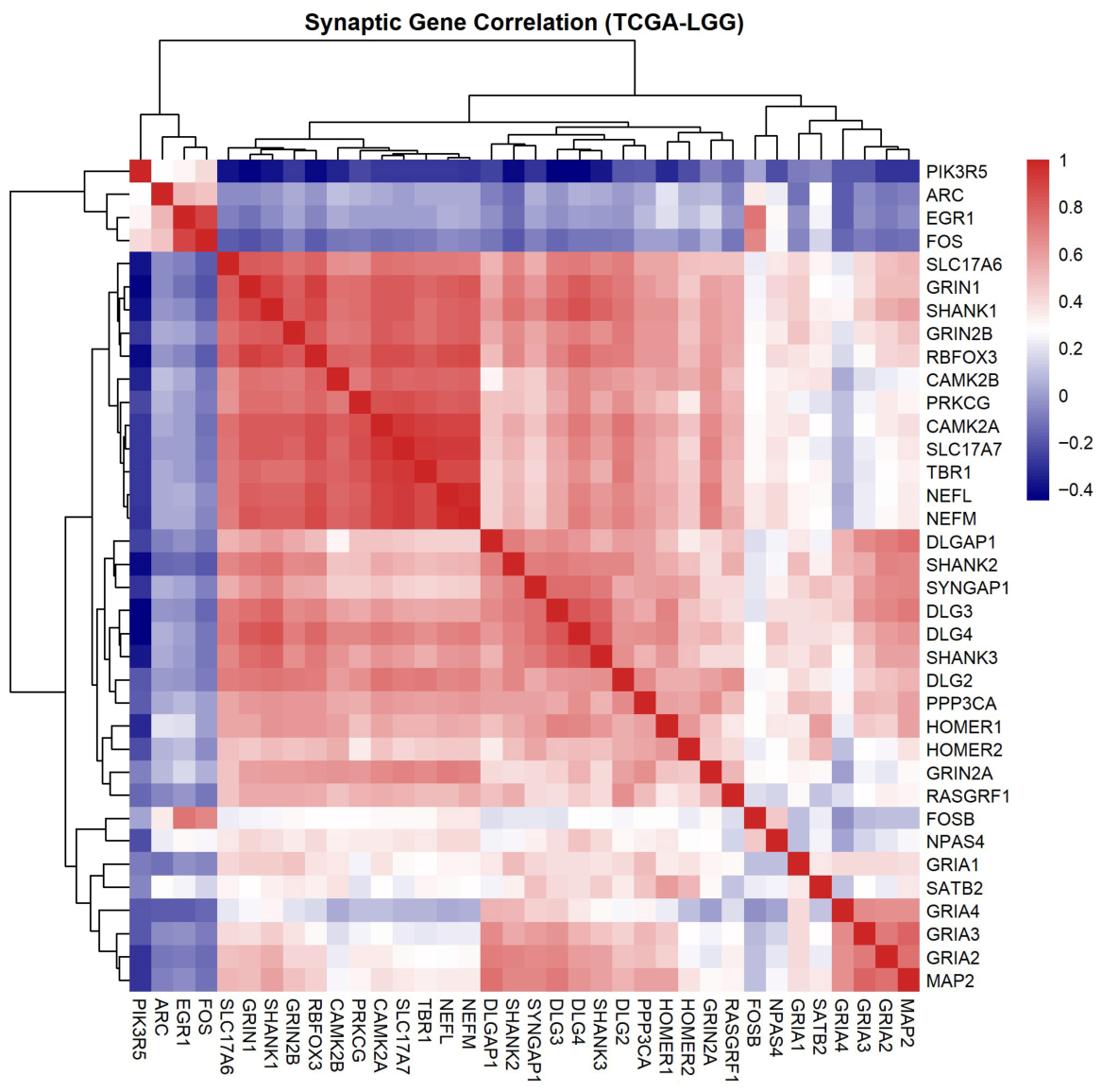
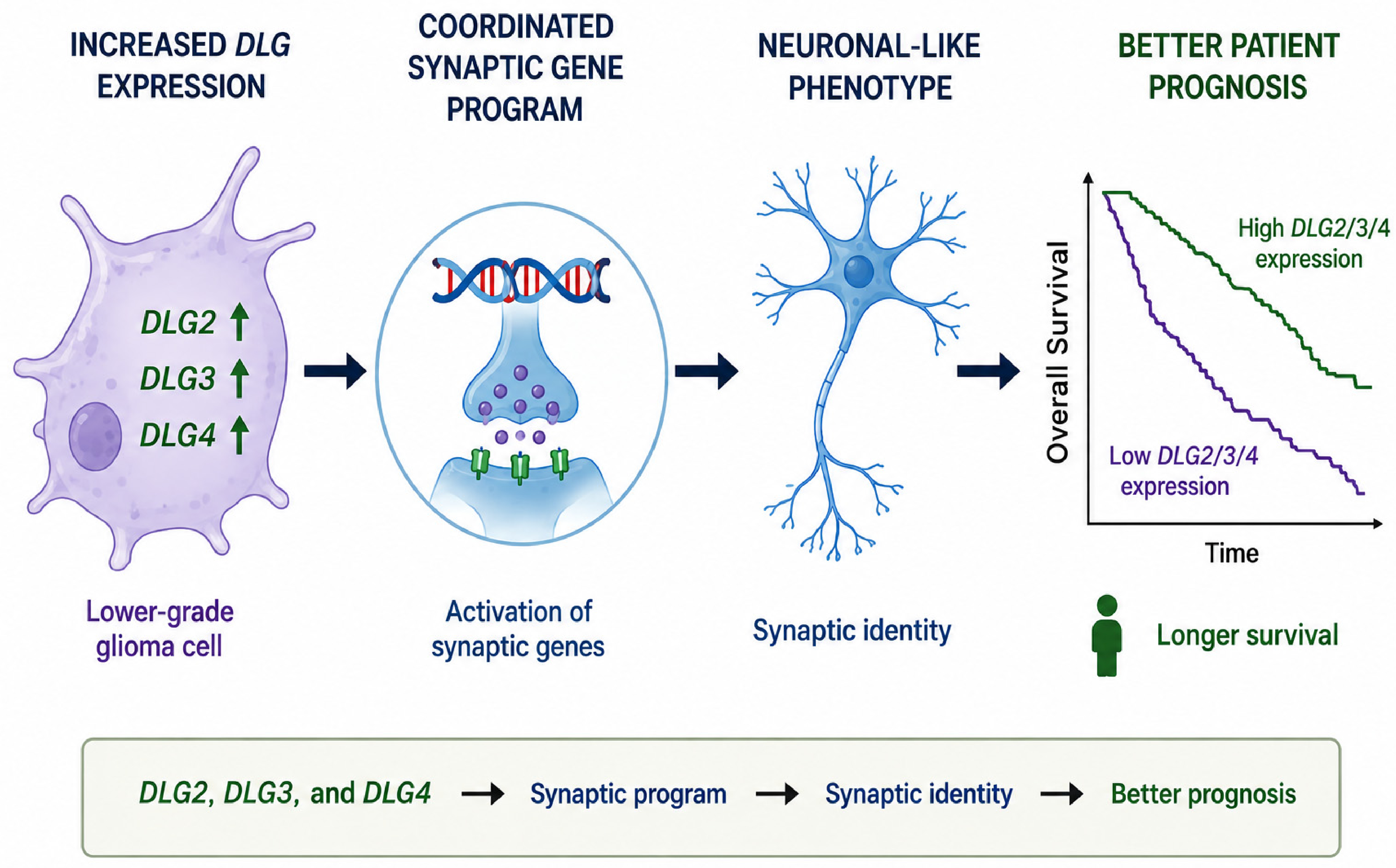

| GENE | DLG2 | DLG3 | DLG4 |
|---|---|---|---|
| ARC | NC | NC | NC |
| CAMK2A | + | + | + |
| CAMK2B | + | + | + |
| DLG2 | 1 | + | + |
| DLG3 | + | 1 | + |
| DLG4 | + | + | 1 |
| DLGAP1 | + | + | + |
| EGR1 | NC | NC | NC |
| FOS | NC | NC | NC |
| FOSB | NC | NC | NC |
| GRIA1 | NC | NC | NC |
| GRIA2 | NC | + | + |
| GRIA3 | NC | + | NC |
| GRIA4 | NC | NC | NC |
| GRIN1 | + | + | + |
| GRIN2A | + | NC | + |
| GRIN2B | + | + | + |
| HOMER1 | + | + | + |
| HOMER2 | NC | NC | NC |
| MAP2 | NC | + | + |
| NEFL | + | + | + |
| NEFM | + | + | + |
| NPAS4 | NC | NC | NC |
| PIK3R5 | NC | + | + |
| PPP3CA | + | + | + |
| PRKCG | + | + | + |
| RASGRF1 | NC | NC | NC |
| RBFOX3 | + | + | + |
| SATB2 | NC | NC | NC |
| SHANK1 | + | + | + |
| SHANK2 | + | + | + |
| SHANK3 | + | + | + |
| SLC17A6 | + | + | + |
| SLC17A7 | + | + | + |
| SYNGAP1 | + | + | + |
| TBR1 | + | + | + |
Disclaimer/Publisher’s Note: The statements, opinions and data contained in all publications are solely those of the individual author(s) and contributor(s) and not of MDPI and/or the editor(s). MDPI and/or the editor(s) disclaim responsibility for any injury to people or property resulting from any ideas, methods, instructions or products referred to in the content. |
© 2026 by the authors. Licensee MDPI, Basel, Switzerland. This article is an open access article distributed under the terms and conditions of the Creative Commons Attribution (CC BY) license.
Share and Cite
Gaia, F.; Dal-Pizzol, H.R.; Malafaia, O.; Roesler, R.; Isolan, G.R. DLG2–DLG4 Expression Is Associated with Improved Survival and a Synaptic Gene Signature in Lower-Grade Glioma. Cancers 2026, 18, 1646. https://doi.org/10.3390/cancers18101646
Gaia F, Dal-Pizzol HR, Malafaia O, Roesler R, Isolan GR. DLG2–DLG4 Expression Is Associated with Improved Survival and a Synaptic Gene Signature in Lower-Grade Glioma. Cancers. 2026; 18(10):1646. https://doi.org/10.3390/cancers18101646
Chicago/Turabian StyleGaia, Felipe, Henrique Ritter Dal-Pizzol, Osvaldo Malafaia, Rafael Roesler, and Gustavo R. Isolan. 2026. "DLG2–DLG4 Expression Is Associated with Improved Survival and a Synaptic Gene Signature in Lower-Grade Glioma" Cancers 18, no. 10: 1646. https://doi.org/10.3390/cancers18101646
APA StyleGaia, F., Dal-Pizzol, H. R., Malafaia, O., Roesler, R., & Isolan, G. R. (2026). DLG2–DLG4 Expression Is Associated with Improved Survival and a Synaptic Gene Signature in Lower-Grade Glioma. Cancers, 18(10), 1646. https://doi.org/10.3390/cancers18101646