Bradyarrhythmias Associated with Oncologic Treatment—An Updated Review
 , , ,
, , ,
Simple Summary
Abstract
1. Introduction
2. Materials and Methods
3. Results
3.1. Immune Checkpoint Inhibitors (ICI)
3.2. Anaplastic Lymphoma Kinase Inhibitors (ALK-TKI)
3.3. Proteasome Inhibitors
3.4. Immunomodulatory Imide Drugs
3.5. VEGF Inhibitors (VEGFR-TKI Vascular Endothelial Growth Factor Receptor Tyrosine Kinase Inhibitor)
3.6. RAF/MEK Inhibitors
3.7. HER2-Targeted Therapies
3.8. Bruton Tyrosine Kinase Inhibitors (BTK-I)
3.9. Anthracyclines
3.10. Antimetabolites
3.11. BCR-ABL TKI
3.12. Endocrine Therapies
3.13. CDK4/6 Inhibitors
3.14. EGFR Inhibitors
3.15. Plant Alkaloids
3.16. Platinum Compounds
3.17. Alkylating Agents
3.18. mTOR Inhibitors
3.19. Corticosteroids
3.20. Radiotherapy (RT)
3.21. Combination Therapies
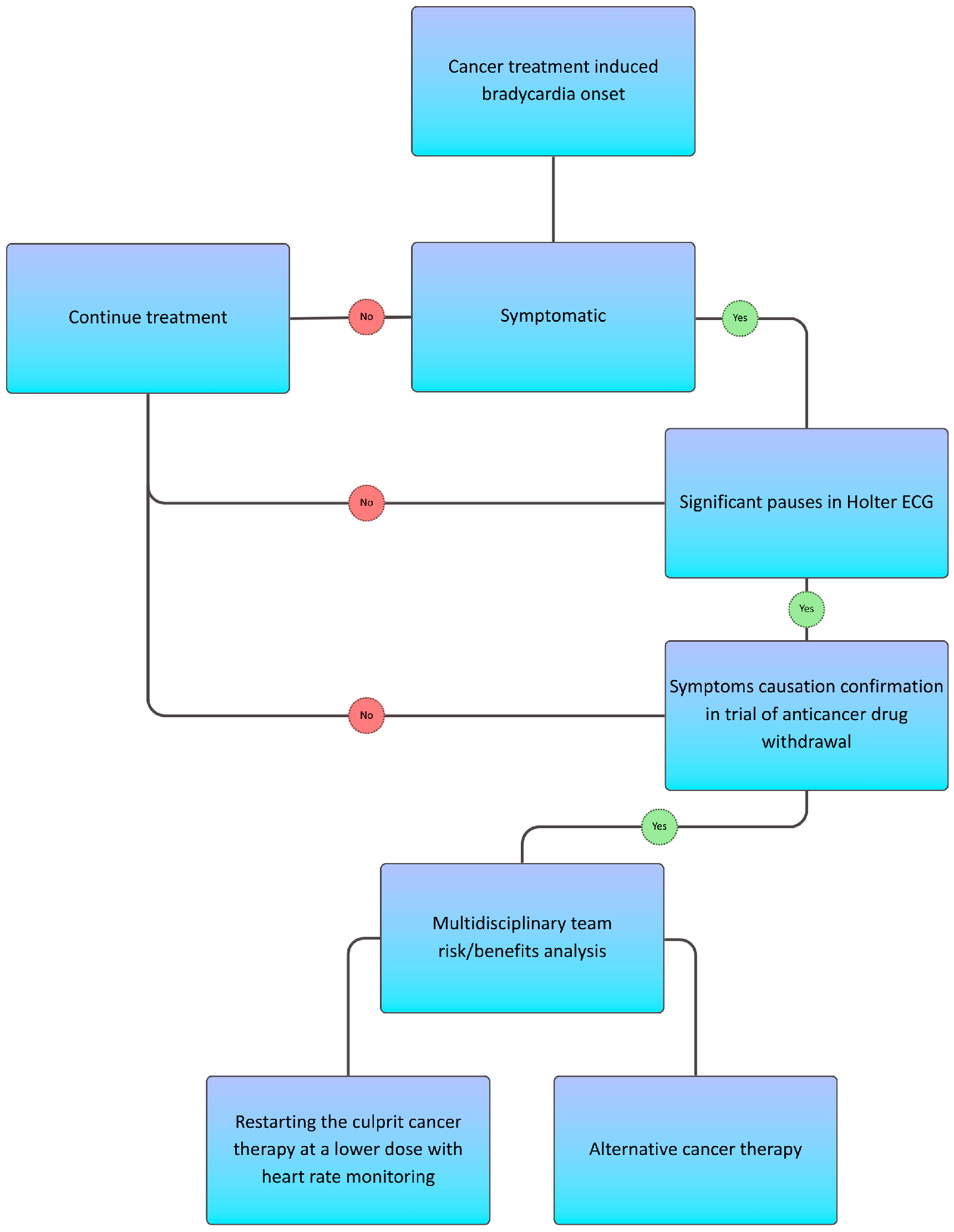
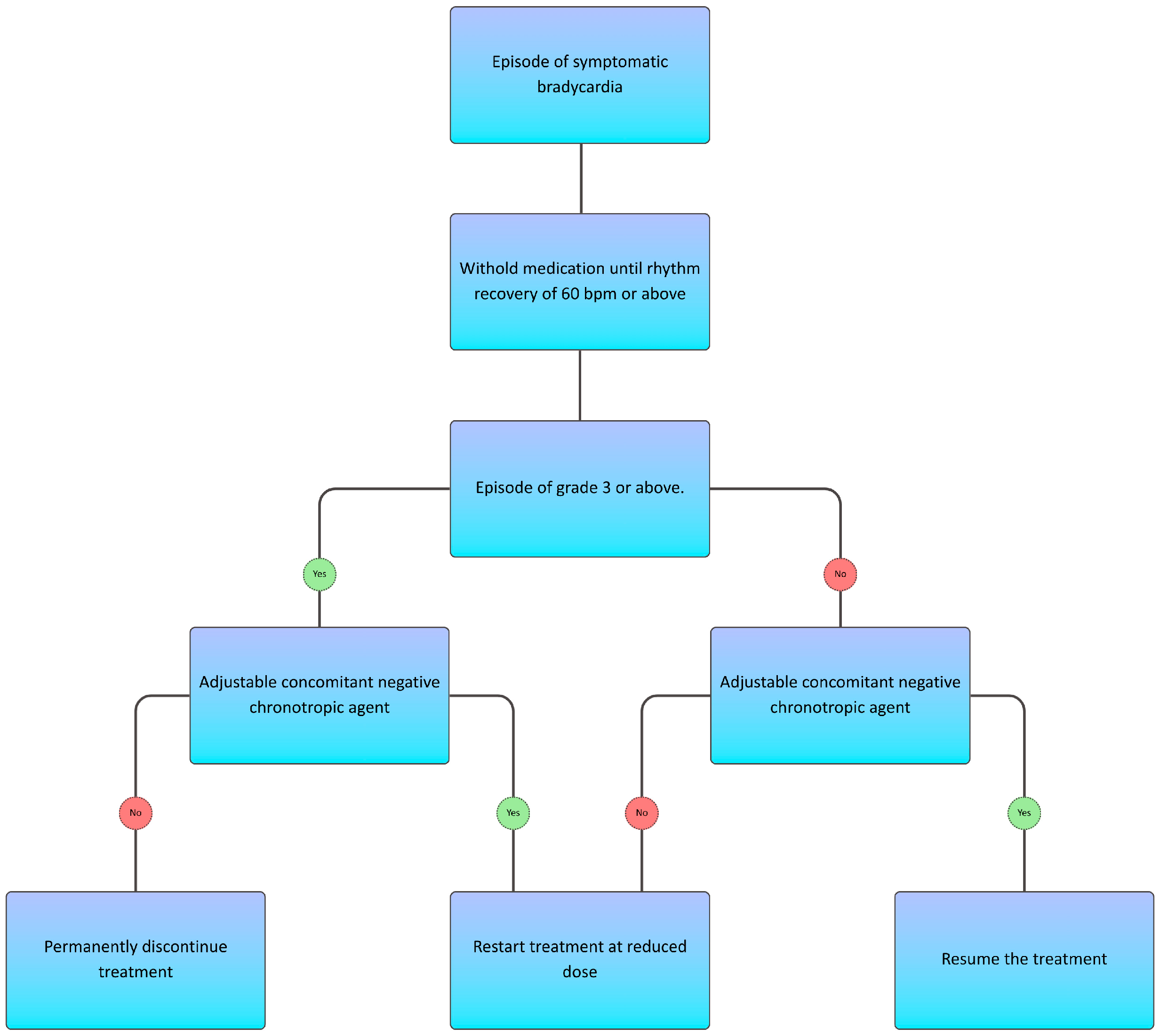
4. Monitoring
5. Discussion
6. Conclusions
Author Contributions
Funding
Data Availability Statement
Conflicts of Interest
Abbreviations
| 5-FU | 5-fluorouracil |
| 5-HT3 | 5-hydroxytryptamine type 3 |
| ADT | androgen deprivation therapy |
| AKT | protein kinase B |
| ALK | anaplastic lymphoma kinase |
| ALK-TKI/ALK-TKIs | anaplastic lymphoma kinase tyrosine kinase inhibitor(s) |
| ALL | acute lymphoblastic leukemia |
| ATP | adenosine triphosphate |
| AV | atrioventricular |
| BCR-ABL/BCR-ABL1 | breakpoint cluster region–Abelson/BCR-ABL1 oncoprotein |
| BRAF | B-Raf proto-oncogene serine/threonine kinase |
| BTK | Bruton tyrosine kinase |
| BTK-i/BTKi | Bruton tyrosine kinase inhibitor(s) |
| CDK4/6 | cyclin-dependent kinases 4 and 6 |
| CI | confidence interval |
| CML | chronic myeloid leukemia |
| CNS | central nervous system |
| CTCAE | Common Terminology Criteria for Adverse Events |
| CTLA-4 | cytotoxic T-lymphocyte-associated protein 4 |
| EGFR | epidermal growth factor receptor |
| EGFR-TKI/EGFR-TKIs | epidermal growth factor receptor tyrosine kinase inhibitor(s) |
| ERK | extracellular signal-regulated kinase |
| ESC | European Society of Cardiology |
| FAERS | FDA Adverse Event Reporting System |
| FDA | U.S. Food and Drug Administration |
| GnRH | gonadotropin-releasing hormone |
| Gy | gray |
| HER2/HER-2 | human epidermal growth factor receptor 2 |
| HGFR | hepatocyte growth factor receptor |
| ICI/ICIs | immune checkpoint inhibitor(s) |
| If | funny current |
| IgG1 | immunoglobulin G1 |
| IgG4 | immunoglobulin G4 |
| IMiDs | immunomodulatory imide drugs, |
| IMT | inflammatory myofibroblastic tumor |
| LGE | late gadolinium enhancement |
| LH | luteinizing hormone |
| LH/FSH | luteinizing hormone/follicle-stimulating hormone |
| LV | left ventricular |
| LVEF | left ventricular ejection fraction |
| MACE | major adverse cardiovascular events, |
| MAPK | mitogen-activated protein kinase |
| MedDRA | Medical Dictionary for Regulatory Activities |
| MEK | mitogen-activated extracellular signal-regulated kinase |
| MET | MET proto-oncogene/MET receptor tyrosine kinase |
| MET/HGFR | MET/hepatocyte growth factor receptor |
| MRI | magnetic resonance imaging |
| mTOR | mechanistic target of rapamycin |
| mTORC1 | mechanistic target of rapamycin complex 1 |
| NK | natural killer |
| NSCLC | non-small-cell lung cancer |
| OPTIC | Optimizing Ponatinib Treatment in CML |
| PACE | Ponatinib Ph+ ALL and CML Evaluation |
| PD-1 | programmed cell death protein 1 |
| PD-L1 | programmed death-ligand 1 |
| Ph+/Ph-positive | Philadelphia chromosome-positive |
| PI3K | phosphoinositide 3-kinase |
| QT | QT interval |
| QTc | corrected QT interval |
| RAF | rapidly accelerated fibrosarcoma |
| RAS | rat sarcoma viral oncogene homolog |
| RCC | renal-cell carcinoma |
| RCA | right coronary artery |
| ROS1 | ROS proto-oncogene 1 receptor tyrosine kinase |
| RT | radiotherapy, |
| STS | soft-tissue sarcoma |
| TKI/TKIs | tyrosine kinase inhibitor(s) |
| TNF-α/TNF-alpha | tumor necrosis factor alpha |
| VEGF | vascular endothelial growth factor |
| VEGFR | vascular endothelial growth factor receptor |
| VEGFR-TKI/VEGFR-TKIs | vascular endothelial growth factor receptor tyrosine kinase inhibitor(s) |
References
- Scapin, G.; Yang, X.; Prosise, W.W.; McCoy, M.; Reichert, P.; Johnston, J.M.; Kashi, R.S.; Strickland, C. Structure of Full-Length Human Anti-PD1 Therapeutic IgG4 Antibody Pembrolizumab. Nat. Struct. Mol. Biol. 2015, 22, 953–958. [Google Scholar] [CrossRef] [PubMed]
- Na, Z.; Yeo, S.P.; Bharath, S.R.; Bowler, M.W.; Balıkçı, E.; Wang, C.-I.; Song, H. Structural Basis for Blocking PD-1-Mediated Immune Suppression by Therapeutic Antibody Pembrolizumab. Cell Res. 2017, 27, 147–150. [Google Scholar] [CrossRef] [PubMed]
- Gandhi, L.; Rodríguez-Abreu, D.; Gadgeel, S.; Esteban, E.; Felip, E.; De Angelis, F.; Domine, M.; Clingan, P.; Hochmair, M.J.; Powell, S.F.; et al. Pembrolizumab plus Chemotherapy in Metastatic Non-Small-Cell Lung Cancer. N. Engl. J. Med. 2018, 378, 2078–2092. [Google Scholar] [CrossRef]
- Schachter, J.; Ribas, A.; Long, G.V.; Arance, A.; Grob, J.-J.; Mortier, L.; Daud, A.; Carlino, M.S.; McNeil, C.; Lotem, M.; et al. Pembrolizumab versus Ipilimumab for Advanced Melanoma: Final Overall Survival Results of a Multicentre, Randomised, Open-Label Phase 3 Study (KEYNOTE-006). Lancet 2017, 390, 1853–1862. [Google Scholar] [CrossRef] [PubMed]
- Nan, X.; Gold, K.A.; Cohen, E. Immunotherapeutic Approaches to the Management of Head and Neck Cancer. Oncology 2018, 32, 617–619, 625–626. [Google Scholar]
- Burtness, B.; Harrington, K.J.; Greil, R.; Soulières, D.; Tahara, M.; de Castro, G., Jr.; Psyrri, A.; Basté, N.; Neupane, P.; Bratland, Å.; et al. Pembrolizumab Alone or with Chemotherapy versus Cetuximab with Chemotherapy for Recurrent or Metastatic Squamous Cell Carcinoma of the Head and Neck (KEYNOTE-048): A Randomised, Open-Label, Phase 3 Study. Lancet 2019, 394, 1915–1928. [Google Scholar] [CrossRef]
- Rini, B.I.; Plimack, E.R.; Stus, V.; Gafanov, R.; Hawkins, R.; Nosov, D.; Pouliot, F.; Alekseev, B.; Soulières, D.; Melichar, B.; et al. Pembrolizumab plus Axitinib versus Sunitinib for Advanced Renal-Cell Carcinoma. N. Engl. J. Med. 2019, 380, 1116–1127. [Google Scholar] [CrossRef]
- Fradet, Y.; Bellmunt, J.; Vaughn, D.J.; Lee, J.L.; Fong, L.; Vogelzang, N.J.; Climent, M.A.; Petrylak, D.P.; Choueiri, T.K.; Necchi, A.; et al. Randomized Phase III KEYNOTE-045 Trial of Pembrolizumab versus Paclitaxel, Docetaxel, or Vinflunine in Recurrent Advanced Urothelial Cancer: Results of >2 Years of Follow-Up. Ann. Oncol. 2019, 30, 970–976. [Google Scholar] [CrossRef] [PubMed]
- Lyon, A.R.; López-Fernández, T.; Couch, L.S.; Asteggiano, R.; Aznar, M.C.; Bergler-Klein, J.; Boriani, G.; Cardinale, D.; Cordoba, R.; Cosyns, B.; et al. 2022 ESC Guidelines on Cardio-Oncology Developed in Collaboration with the European Hematology Association (EHA), the European Society for Therapeutic Radiology and Oncology (ESTRO) and the International Cardio-Oncology Society (IC-OS). Eur. Heart J. 2022, 43, 4229–4361. [Google Scholar] [CrossRef]
- Rubio-Infante, N.; Ramírez-Flores, Y.A.; Castillo, E.C.; Lozano, O.; García-Rivas, G.; Torre-Amione, G. Cardiotoxicity Associated with Immune Checkpoint Inhibitor Therapy: A Meta-Analysis. Eur. J. Heart Fail. 2021, 23, 1739–1747. [Google Scholar] [CrossRef] [PubMed]
- Salem, J.-E.; Manouchehri, A.; Moey, M.; Lebrun-Vignes, B.; Bastarache, L.; Pariente, A.; Gobert, A.; Spano, J.-P.; Balko, J.M.; Bonaca, M.P.; et al. Cardiovascular Toxicities Associated with Immune Checkpoint Inhibitors: An Observational, Retrospective, Pharmacovigilance Study. Lancet Oncol. 2018, 19, 1579–1589. [Google Scholar] [CrossRef]
- Glikson, M.; Nielsen, J.C.; Kronborg, M.B.; Michowitz, Y.; Auricchio, A.; Barbash, I.M.; Barrabés, J.A.; Boriani, G.; Braunschweig, F.; Brignole, M.; et al. 2021 ESC Guidelines on Cardiac Pacing and Cardiac Resynchronization Therapy. Eur. Heart J. 2021, 42, 3427–3520. [Google Scholar] [CrossRef]
- O’Shea, M.P.; Karikalan, S.A.; Yusuf, A.; Barry, T.; Habib, E.; O’Shea, J.; Killian, M.; Baqal, E.; Nayak, S.; Masson, R.; et al. Complete Heart Block Is a Significant Predictor of Mortality in Immune Checkpoint Inhibitor Myocarditis. CardioOncology 2023, 9, 34. [Google Scholar] [CrossRef]
- Zotova, L. Immune Checkpoint Inhibitors-Related Myocarditis: A Review of Reported Clinical Cases. Diagnostics 2023, 13, 1243. [Google Scholar] [CrossRef] [PubMed]
- Thakker, R.A.; Lee, M.A.; Albaeni, A.; Elbadawi, A.; Suthar, K.H.; Perez, C.; Sonstein, L.K.; Farr, N.M.; Venkatesan, R.; Khalife, W.; et al. Clinical Characteristics and Outcomes in Immune Checkpoint Inhibitor Therapy-Associated Myocarditis. Cardiol. Res. 2021, 12, 270–278. [Google Scholar] [CrossRef] [PubMed]
- Ou, S.-H.I.; Tang, Y.; Polli, A.; Wilner, K.D.; Schnell, P. Factors Associated with Sinus Bradycardia during Crizotinib Treatment: A Retrospective Analysis of Two Large-Scale Multinational Trials (PROFILE 1005 and 1007). Cancer Med. 2016, 5, 617–622. [Google Scholar] [CrossRef] [PubMed]
- Timm, A.; Kolesar, J.M. Crizotinib for the Treatment of Non-Small-Cell Lung Cancer. Am. J. Health Syst. Pharm. 2013, 70, 943–947. [Google Scholar] [CrossRef]
- Brugières, L.; Cozic, N.; Houot, R.; Rigaud, C.; Sibon, D.; Arfi-Rouche, J.; Bories, P.; Cottereau, A.S.; Delmer, A.; Ducassou, S.; et al. Efficacy and Safety of Crizotinib in ALK-Positive Systemic Anaplastic Large-Cell Lymphoma in Children, Adolescents, and Adult Patients: Results of the French AcSé-Crizotinib Trial. Eur. J. Cancer 2023, 191, 112984. [Google Scholar] [CrossRef]
- Lowe, E.J.; Reilly, A.F.; Lim, M.S.; Gross, T.G.; Saguilig, L.; Barkauskas, D.A.; Wu, R.; Alexander, S.; Bollard, C.M. Crizotinib in Combination with Chemotherapy for Pediatric Patients with ALK+ Anaplastic Large-Cell Lymphoma: The Results of Children’s Oncology Group Trial ANHL12P1. J. Clin. Oncol. 2023, 41, 2043–2053. [Google Scholar] [CrossRef]
- Choi, J.H. Inflammatory Myofibroblastic Tumor: An Updated Review. Cancers 2025, 17, 1327. [Google Scholar] [CrossRef]
- Theilen, T.-M.; Soerensen, J.; Bochennek, K.; Becker, M.; Schwabe, D.; Rolle, U.; Klingebiel, T.; Lehrnbecher, T. Crizotinib in ALK+ Inflammatory Myofibroblastic Tumors-Current Experience and Future Perspectives. Pediatr. Blood Cancer 2018, 65, e26920. [Google Scholar] [CrossRef] [PubMed]
- Butrynski, J.E.; D’Adamo, D.R.; Hornick, J.L.; Dal Cin, P.; Antonescu, C.R.; Jhanwar, S.C.; Ladanyi, M.; Capelletti, M.; Rodig, S.J.; Ramaiya, N.; et al. Crizotinib in ALK-Rearranged Inflammatory Myofibroblastic Tumor. N. Engl. J. Med. 2010, 363, 1727–1733. [Google Scholar] [CrossRef]
- U.S. Food and Drug Administration. XALKORI (Crizotinib) Prescribing Information. Available online: https://www.accessdata.fda.gov/drugsatfda_docs/label/2022/202570s033lbl.pdf (accessed on 20 September 2025).
- Ou, S.-H.I.; Tong, W.P.; Azada, M.; Siwak-Tapp, C.; Dy, J.; Stiber, J.A. Heart Rate Decrease during Crizotinib Treatment and Potential Correlation to Clinical Response. Cancer 2013, 119, 1969–1975. [Google Scholar] [CrossRef] [PubMed]
- Zhang, Z.; Huang, T.-Q.; Nepliouev, I.; Zhang, H.; Barnett, A.S.; Rosenberg, P.B.; Ou, S.-H.I.; Stiber, J.A. Crizotinib Inhibits Hyperpolarization-Activated Cyclic Nucleotide-Gated Channel 4 Activity. CardioOncology 2017, 3, 1. [Google Scholar] [CrossRef] [PubMed]
- Sakamoto, H.; Tsukaguchi, T.; Hiroshima, S.; Kodama, T.; Kobayashi, T.; Fukami, T.A.; Oikawa, N.; Tsukuda, T.; Ishii, N.; Aoki, Y. CH5424802, a Selective ALK Inhibitor Capable of Blocking the Resistant Gatekeeper Mutant. Cancer Cell 2011, 19, 679–690. [Google Scholar] [CrossRef] [PubMed]
- Wu, Y.-L.; Dziadziuszko, R.; Ahn, J.S.; Barlesi, F.; Nishio, M.; Lee, D.H.; Lee, J.-S.; Zhong, W.; Horinouchi, H.; Mao, W.; et al. Alectinib in Resected ALK-Positive Non-Small-Cell Lung Cancer. N. Engl. J. Med. 2024, 390, 1265–1276. [Google Scholar] [CrossRef]
- Pruis, M.A.; Veerman, G.D.M.; Hassing, H.C.; Lanser, D.A.C.; Paats, M.S.; van Schaik, R.H.N.; Mathijssen, R.H.J.; Manintveld, O.; Dingemans, A.-M.C. Cardiac Toxicity of Alectinib in Patients with ALK+ Lung Cancer: Outcomes of Cardio-Oncology Follow-Up. JACC CardioOncol. 2023, 5, 102–113. [Google Scholar] [CrossRef]
- Genentech USA, Inc.; U.S. Food and Drug Administration. ALECENSA® (Alectinib) Capsules, Full Prescribing Information 2024; U.S. Food and Drug Administration: Silver Spring, MD, USA, 2024.
- Kim, D.-W.; Mehra, R.; Tan, D.S.W.; Felip, E.; Chow, L.Q.M.; Camidge, D.R.; Vansteenkiste, J.; Sharma, S.; De Pas, T.; Riely, G.J.; et al. Activity and Safety of Ceritinib in Patients with ALK-Rearranged Non-Small-Cell Lung Cancer (ASCEND-1): Updated Results from the Multicentre, Open-Label, Phase 1 Trial. Lancet Oncol. 2016, 17, 452–463. [Google Scholar] [CrossRef]
- Khozin, S.; Blumenthal, G.M.; Zhang, L.; Tang, S.; Brower, M.; Fox, E.; Helms, W.; Leong, R.; Song, P.; Pan, Y.; et al. FDA Approval: Ceritinib for the Treatment of Metastatic Anaplastic Lymphoma Kinase-Positive Non-Small Cell Lung Cancer. Clin. Cancer Res. 2015, 21, 2436–2439. [Google Scholar] [CrossRef]
- U.S. Food and Drug Administration. Zykadia (Ceritinib) Prescribing Information. Available online: https://www.accessdata.fda.gov/drugsatfda_docs/label/2019/205755s016lbl.pdf (accessed on 27 September 2025).
- Hideshima, T.; Richardson, P.G.; Anderson, K.C. Mechanism of Action of Proteasome Inhibitors and Deacetylase Inhibitors and the Biological Basis of Synergy in Multiple Myeloma. Mol. Cancer Ther. 2011, 10, 2034–2042. [Google Scholar] [CrossRef]
- Richardson, P.G.; Barlogie, B.; Berenson, J.; Singhal, S.; Jagannath, S.; Irwin, D.; Rajkumar, S.V.; Srkalovic, G.; Alsina, M.; Alexanian, R.; et al. A Phase 2 Study of Bortezomib in Relapsed, Refractory Myeloma. N. Engl. J. Med. 2003, 348, 2609–2617. [Google Scholar] [CrossRef] [PubMed]
- Robak, T.; Huang, H.; Jin, J.; Zhu, J.; Liu, T.; Samoilova, O.; Pylypenko, H.; Verhoef, G.; Siritanaratkul, N.; Osmanov, E.; et al. Bortezomib-Based Therapy for Newly Diagnosed Mantle-Cell Lymphoma. N. Engl. J. Med. 2015, 372, 944–953. [Google Scholar] [CrossRef]
- Jang, B.; Jeong, J.; Heo, K.-N.; Koh, Y.; Lee, J.-Y. Real-World Incidence and Risk Factors of Bortezomib-Related Cardiovascular Adverse Events in Patients with Multiple Myeloma. Blood Res. 2024, 59, 3. [Google Scholar] [CrossRef]
- Laubach, J.P.; Moslehi, J.J.; Francis, S.A.; San Miguel, J.F.; Sonneveld, P.; Orlowski, R.Z.; Moreau, P.; Rosiñol, L.; Faber, E.A., Jr.; Voorhees, P.; et al. A Retrospective Analysis of 3954 Patients in Phase 2/3 Trials of Bortezomib for the Treatment of Multiple Myeloma: Towards Providing a Benchmark for the Cardiac Safety Profile of Proteasome Inhibition in Multiple Myeloma. Br. J. Haematol. 2017, 178, 547–560. [Google Scholar] [CrossRef]
- Lee, W.-S.; Kim, D.-H.; Shin, S.-H.; Woo, S.-I.; Kwan, J.; Park, K.-S.; Park, S.-D.; Yi, H.-G.; Jeon, S.-H. Complete Atrioventricular Block Secondary to Bortezomib Use in Multiple Myeloma. Yonsei Med. J. 2011, 52, 196–198. [Google Scholar] [CrossRef][Green Version]
- Dasanu, C.A. Complete Heart Block Secondary to Bortezomib Use in Multiple Myeloma. J. Oncol. Pharm. Pract. 2011, 17, 282–284. [Google Scholar] [CrossRef] [PubMed]
- Diwadkar, S.; Patel, A.A.; Fradley, M.G. Bortezomib-Induced Complete Heart Block and Myocardial Scar: The Potential Role of Cardiac Biomarkers in Monitoring Cardiotoxicity. Case Rep. Cardiol. 2016, 2016, 3456287. [Google Scholar] [CrossRef]
- Bagley, P.; Dew, A. Lightning Strikes Twice? Alveolar Hemorrhage and Sinus Node Dysfunction Requiring Pacemaker after Initiating Bortezomib for Multiple Myeloma. Chest 2018, 154, 956A. [Google Scholar] [CrossRef]
- Jillella, A.P.; Shishkina, I.; Giddens, G.; Corley, C.; Green, K.; Ashley, R.; Johnson, M.; Walker, L.; Jimenez, S.; Bryan, L.J.; et al. Bortezomib Induced Peripheral and Severe Autonomic Neuropathy Characterized by Dizziness, Orthostatic Hypotension, and Weight Loss. Blood 2022, 140, 12547–12548. [Google Scholar] [CrossRef]
- Singhal, S.; Mehta, J.; Desikan, R.; Ayers, D.; Roberson, P.; Eddlemon, P.; Munshi, N.; Anaissie, E.; Wilson, C.; Dhodapkar, M.; et al. Antitumor Activity of Thalidomide in Refractory Multiple Myeloma. N. Engl. J. Med. 1999, 341, 1565–1571. [Google Scholar] [CrossRef]
- Stępień, A.; Jamroziak, K. Cereblon: Molekularny cel leków immunomodulujących. Acta Haematol. Pol. 2013, 44, 200–207. [Google Scholar] [CrossRef]
- Ito, T.; Handa, H. Cereblon and Its Downstream Substrates as Molecular Targets of Immunomodulatory Drugs. Int. J. Hematol. 2016, 104, 293–299. [Google Scholar] [CrossRef]
- Charliński, G.; Vesole, D.H.; Jurczyszyn, A. Principles of Prevention and Management of Adverse Events of Immunomodulatory Drugs in the Treatment of Multiple Myeloma. Nowotwory 2022, 72, 231–241. [Google Scholar] [CrossRef]
- Fahdi, I.E.; Gaddam, V.; Saucedo, J.F.; Kishan, C.V.; Vyas, K.; Deneke, M.G.; Razek, H.; Thorn, B.; Bissett, J.K.; Anaissie, E.J.; et al. Bradycardia during Therapy for Multiple Myeloma with Thalidomide. Am. J. Cardiol. 2004, 93, 1052–1055. [Google Scholar] [CrossRef]
- Kaya, H. Symptomatic Second-Degree Atrioventricular Block due to Thalidomide. Ann. Clin. Anal. Med. 2016, 7, 573–574. [Google Scholar] [CrossRef][Green Version]
- Hinterseer, M.; Becker, A.; Kääb, S.; Lang, N.; Näbauer, M.; Steinbeck, G. Thalidomide-Induced Symptomatic Third-Degree Atrioventricular Block. Clin. Res. Cardiol. 2006, 95, 474–476. [Google Scholar] [CrossRef]
- Lichtman, E.I.; Seldin, D.C.; Shelton, A.; Sanchorawala, V. Single Agent Lenalidomide Three Times a Week Induces Hematologic Responses in AL Amyloidosis Patients on Dialysis. Am. J. Hematol. 2014, 89, 706–708. [Google Scholar] [CrossRef] [PubMed]
- Dispenzieri, A.; Buadi, F.; Laumann, K.; LaPlant, B.; Hayman, S.R.; Kumar, S.K.; Dingli, D.; Zeldenrust, S.R.; Mikhael, J.R.; Hall, R.; et al. Activity of Pomalidomide in Patients with Immunoglobulin Light-Chain Amyloidosis. Blood 2012, 119, 5397–5404. [Google Scholar] [CrossRef]
- Hamberg, P.; Verweij, J.; Sleijfer, S. (Pre-)clinical Pharmacology and Activity of Pazopanib, a Novel Multikinase Angiogenesis Inhibitor. Oncologist 2010, 15, 539–547. [Google Scholar] [CrossRef] [PubMed]
- Zhao, H.-L.; Yang, F.; Huang, X.; Zhou, Q.-H. Overview of Fundamental Study of Pazopanib in Cancer. Thorac. Cancer 2014, 5, 487–493. [Google Scholar] [CrossRef][Green Version]
- Sternberg, C.N.; Davis, I.D.; Mardiak, J.; Szczylik, C.; Lee, E.; Wagstaff, J.; Barrios, C.H.; Salman, P.; Gladkov, O.A.; Kavina, A.; et al. Pazopanib in Locally Advanced or Metastatic Renal Cell Carcinoma: Results of a Randomized Phase III Trial. J. Clin. Oncol. 2010, 28, 1061–1068. [Google Scholar] [CrossRef]
- van der Graaf, W.T.A.; Blay, J.-Y.; Chawla, S.P.; Kim, D.-W.; Bui-Nguyen, B.; Casali, P.G.; Schöffski, P.; Aglietta, M.; Staddon, A.P.; Beppu, Y.; et al. Pazopanib for Metastatic Soft-Tissue Sarcoma (PALETTE): A Randomised, Double-Blind, Placebo-Controlled Phase 3 Trial. Lancet 2012, 379, 1879–1886. [Google Scholar] [CrossRef]
- Motzer, R.J.; Hutson, T.E.; Cella, D.; Reeves, J.; Hawkins, R.; Guo, J.; Nathan, P.; Staehler, M.; de Souza, P.; Merchan, J.R.; et al. Pazopanib versus Sunitinib in Metastatic Renal-Cell Carcinoma. N. Engl. J. Med. 2013, 369, 722–731. [Google Scholar] [CrossRef] [PubMed]
- Justice, C.N.; Derbala, M.H.; Baich, T.M.; Kempton, A.N.; Guo, A.S.; Ho, T.H.; Smith, S.A. The Impact of Pazopanib on the Cardiovascular System. J. Cardiovasc. Pharmacol. Ther. 2018, 23, 387–398. [Google Scholar] [CrossRef]
- U.S. Food and Drug Administration. VOTRIENT (Pazopanib) Tablets, for Oral Use—Full Prescribing Information. Available online: https://www.accessdata.fda.gov/drugsatfda_docs/label/2024/022465s036lbl.pdf (accessed on 2 December 2025).
- Long, G.V.; Stroyakovskiy, D.; Gogas, H.; Levchenko, E.; de Braud, F.; Larkin, J.; Garbe, C.; Jouary, T.; Hauschild, A.; Grob, J.J.; et al. Combined BRAF and MEK Inhibition versus BRAF Inhibition Alone in Melanoma. N. Engl. J. Med. 2014, 371, 1877–1888. [Google Scholar] [CrossRef] [PubMed]
- Yamamura, K.; Matsushita, S.; Aoki, M.; Kusumoto, K. Acute Intraventricular Conduction Disorder due to Combination Therapy with Dabrafenib and Trametinib for Metastatic Melanoma: Case Report. J. Dermatol. 2018, 45, e120–e121. [Google Scholar] [CrossRef] [PubMed]
- Alhazmi, L.; Karim, M.M.; Al-Sarie, M.; Skeel, R.; Karim, S. Trametinib-Associated Bradycardia. Am. J. Ther. 2019, 26, e657–e659. [Google Scholar] [CrossRef] [PubMed]
- Patnaik, A.; Tolcher, A.; Papadopoulos, K.P.; Beeram, M.; Rasco, D.; Werner, T.L.; Bauman, J.W.; Scheuber, A.; Cox, D.S.; Patel, B.R.; et al. Phase 1 Study to Evaluate the Effect of the MEK Inhibitor Trametinib on Cardiac Repolarization in Patients with Solid Tumours. Cancer Chemother. Pharmacol. 2016, 78, 491–500. [Google Scholar] [CrossRef] [PubMed]
- Mohammed, K.A.K.; Madeddu, P.; Avolio, E. MEK Inhibitors: A Promising Targeted Therapy for Cardiovascular Disease. Front. Cardiovasc. Med. 2024, 11, 1404253. [Google Scholar] [CrossRef]
- European Medicines Agency. Mekinist (Trametinib): EPAR—Product Information. Annex I: Summary of Product Characteristics. Available online: https://www.ema.europa.eu/en/documents/product-information/mekinist-epar-product-information_en.pdf (accessed on 5 November 2025).
- Piccart-Gebhart, M.J.; Procter, M.; Leyland-Jones, B.; Goldhirsch, A.; Untch, M.; Smith, I.; Gianni, L.; Baselga, J.; Bell, R.; Jackisch, C.; et al. Trastuzumab after Adjuvant Chemotherapy in HER2-Positive Breast Cancer. N. Engl. J. Med. 2005, 353, 1659–1672. [Google Scholar] [CrossRef]
- Bang, Y.-J.; Van Cutsem, E.; Feyereislova, A.; Chung, H.C.; Shen, L.; Sawaki, A.; Lordick, F.; Ohtsu, A.; Omuro, Y.; Satoh, T.; et al. Trastuzumab in Combination with Chemotherapy versus Chemotherapy Alone for Treatment of HER2-Positive Advanced Gastric or Gastro-Oesophageal Junction Cancer (ToGA): A Phase 3, Open-Label, Randomised Controlled Trial. Lancet 2010, 376, 687–697. [Google Scholar] [CrossRef] [PubMed]
- Piotrowski, G.; Gawor, R.; Stasiak, A.; Gawor, Z.; Potemski, P.; Banach, M. Cardiac Complications Associated with Trastuzumab in the Setting of Adjuvant Chemotherapy for Breast Cancer Overexpressing Human Epidermal Growth Factor Receptor Type 2—A Prospective Study. Arch. Med. Sci. 2012, 8, 227–235. [Google Scholar] [CrossRef] [PubMed]
- Seidman, A.; Hudis, C.; Pierri, M.K.; Shak, S.; Paton, V.; Ashby, M.; Murphy, M.; Stewart, S.J.; Keefe, D. Cardiac Dysfunction in the Trastuzumab Clinical Trials Experience. J. Clin. Oncol. 2002, 20, 1215–1221. [Google Scholar] [CrossRef]
- Olin, R.L.; Desai, S.S.; Fox, K.; Davidson, R. Non-Myopathic Cardiac Events in Two Patients Treated with Trastuzumab. Breast J. 2007, 13, 211–212. [Google Scholar] [CrossRef]
- Wang, M.L.; Rule, S.; Martin, P.; Goy, A.; Auer, R.; Kahl, B.S.; Jurczak, W.; Advani, R.H.; Romaguera, J.E.; Williams, M.E.; et al. Targeting BTK with Ibrutinib in Relapsed or Refractory Mantle-Cell Lymphoma. N. Engl. J. Med. 2013, 369, 507–516. [Google Scholar] [CrossRef]
- Byrd, J.C.; Brown, J.R.; O’Brien, S.; Barrientos, J.C.; Kay, N.E.; Reddy, N.M.; Coutre, S.; Tam, C.S.; Mulligan, S.P.; Jaeger, U.; et al. Ibrutinib versus Ofatumumab in Previously Treated Chronic Lymphoid Leukemia. N. Engl. J. Med. 2014, 371, 213–223. [Google Scholar] [CrossRef]
- Treon, S.P.; Tripsas, C.K.; Meid, K.; Warren, D.; Varma, G.; Green, R.; Argyropoulos, K.V.; Yang, G.; Cao, Y.; Xu, L.; et al. Ibrutinib in Previously Treated Waldenström’s Macroglobulinemia. N. Engl. J. Med. 2015, 372, 1430–1440. [Google Scholar] [CrossRef]
- Brown, J.R.; Moslehi, J.; O’Brien, S.; Ghia, P.; Hillmen, P.; Cymbalista, F.; Shanafelt, T.D.; Fraser, G.; Rule, S.; Kipps, T.J.; et al. Characterization of Atrial Fibrillation Adverse Events Reported in Ibrutinib Randomized Controlled Registration Trials. Haematologica 2017, 102, 1796–1805. [Google Scholar] [CrossRef]
- Salem, J.-E.; Manouchehri, A.; Bretagne, M.; Lebrun-Vignes, B.; Groarke, J.D.; Johnson, D.B.; Yang, T.; Reddy, N.M.; Funck-Brentano, C.; Brown, J.R.; et al. Cardiovascular Toxicities Associated with Ibrutinib. J. Am. Coll. Cardiol. 2019, 74, 1667–1678. [Google Scholar] [CrossRef]
- Zheng, Y.; Guo, X.; Chen, C.; Chi, L.; Guo, Z.; Liang, J.; Wei, L.; Chen, X.; Ye, X.; He, J. Cardiovascular Toxicities of Ibrutinib: A Pharmacovigilance Study Based on the United States Food and Drug Administration Adverse Event Reporting System Database. Pharmaceuticals 2023, 16, 98. [Google Scholar] [CrossRef] [PubMed]
- Mathur, K.; Saini, A.; Ellenbogen, K.A.; Shepard, R.K. Profound Sinoatrial Arrest Associated with Ibrutinib. Case Rep. Oncol. Med. 2017, 2017, 7304021. [Google Scholar] [CrossRef] [PubMed]
- Xu, L.; Dong, Q.; Zhang, N.; Lu, K.; Tang, X. Severe Sinus Bradycardia Associated with Ibrutinib: One Rare Case from China. Am. J. Med. Sci. 2021, 361, 803–805. [Google Scholar] [CrossRef] [PubMed]
- Vartanov, A.R.; Lampson, B.L.; Jacobsen, E.D.; Alyea, E.P.; Moslehi, J.J.; Brown, J.R. High-Grade Heart Block Associated with Ibrutinib Therapy. HeartRhythm Case Rep. 2021, 7, 391–394. [Google Scholar] [CrossRef] [PubMed]
- Shafaattalab, S.; Lin, E.; Christidi, E.; Huang, H.; Nartiss, Y.; Garcia, A.; Lee, J.; Protze, S.; Keller, G.; Brunham, L.; et al. Ibrutinib Displays Atrial-Specific Toxicity in Human Stem Cell-Derived Cardiomyocytes. Stem Cell Rep. 2019, 12, 996–1006. [Google Scholar] [CrossRef]
- Thorn, C.F.; Oshiro, C.; Marsh, S.; Hernandez-Boussard, T.; McLeod, H.; Klein, T.E.; Altman, R.B. Doxorubicin Pathways: Pharmacodynamics and Adverse Effects. Pharmacogenet. Genom. 2011, 21, 440–446. [Google Scholar] [CrossRef]
- Yang, F.; Teves, S.S.; Kemp, C.J.; Henikoff, S. Doxorubicin, DNA Torsion, and Chromatin Dynamics. Biochim. Biophys. Acta 2014, 1845, 84–89. [Google Scholar] [CrossRef]
- Rivankar, S. An Overview of Doxorubicin Formulations in Cancer Therapy. J. Cancer Res. Ther. 2014, 10, 853–858. [Google Scholar] [CrossRef]
- Buza, V.; Rajagopalan, B.; Curtis, A.B. Cancer Treatment-Induced Arrhythmias: Focus on Chemotherapy and Targeted Therapies. Circ. Arrhythm. Electrophysiol. 2017, 10, e005443. [Google Scholar] [CrossRef]
- Kilickap, S.; Barista, I.; Akgul, E.; Aytemir, K.; Aksoy, S.; Tekuzman, G. Early and Late Arrhythmogenic Effects of Doxorubicin. South. Med. J. 2007, 100, 262–265. [Google Scholar] [CrossRef]
- Femia, G.; Yuan, Q.; Fetahovic, T.; Yeung, A.; Shetty, P.; Lee, A. Doxorubicin Induced Complete Heart Block in a Patient without Cardiac Lymphoma. Heart Lung Circ. 2016, 25, S126–S127. [Google Scholar] [CrossRef][Green Version]
- Kilickap, S.; Akgul, E.; Aksoy, S.; Aytemir, K.; Barista, I. Doxorubicin-Induced Second Degree and Complete Atrioventricular Block. Europace 2005, 7, 227–230. [Google Scholar] [CrossRef]
- Mahadevappa, M.; Pura Krishnamurthy, K.; Attri, L.K.; Chandrappa, Y.; Kulkarni, P. Rare Complication of Doxorubicin-Induced Complete Heart Block in a Patient with Hodgkin’s Lymphoma: A Case Report. Eur. J. Hosp. Pharm. Sci. Pract. 2023, 30, e26. [Google Scholar] [CrossRef] [PubMed]
- Longley, D.B.; Harkin, D.P.; Johnston, P.G. 5-Fluorouracil: Mechanisms of Action and Clinical Strategies. Nat. Rev. Cancer 2003, 3, 330–338. [Google Scholar] [CrossRef]
- Talapatra, K.; Rajesh, I.; Rajesh, B.; Selvamani, B.; Subhashini, J. Transient Asymptomatic Bradycardia in Patients on Infusional 5-Fluorouracil. J. Cancer Res. Ther. 2007, 3, 169–171. [Google Scholar] [CrossRef]
- Rajendra, A.; Noronha, V.; Patil, V.M.; Joshi, A.; Menon, N.S.; Prabhash, K. Incidence of 5-Fluorouracil Related in Cardiotoxicity in Patients with Head and Neck Cancer. J. Clin. Oncol. 2020, 38, e24123. [Google Scholar] [CrossRef]
- Khan, M.A.; Masood, N.; Husain, N.; Ahmad, B.; Aziz, T.; Naeem, A. A Retrospective Study of Cardiotoxicities Induced by 5-Fluouracil (5-FU) and 5-FU Based Chemotherapy Regimens in Pakistani Adult Cancer Patients at Shaukat Khanum Memorial Cancer Hospital & Research Center. J. Pak. Med. Assoc. 2012, 62, 430–434. [Google Scholar] [PubMed]
- Zafar, A.; Drobni, Z.D.; Mosarla, R.; Alvi, R.M.; Lei, M.; Lou, U.Y.; Raghu, V.K.; Murphy, S.P.; Jones-O’Connor, M.; Hartmann, S.; et al. The Incidence, Risk Factors, and Outcomes With 5-Fluorouracil-Associated Coronary Vasospasm. JACC CardioOncol. 2021, 3, 101–109. [Google Scholar] [CrossRef] [PubMed]
- Hafeez, I.; Lone, A.; Beig, J.R.; Alai, M.S.; Dar, I.; Tramboo, N. Effect of 5-Fluorouracil on Sinoatrial Node and Conduction System of Heart. Int. J. Adv. Med. 2017, 4, 184. [Google Scholar] [CrossRef][Green Version]
- Hermans, C.; Straetmans, N.; Michaux, J.L.; Ferrant, A. Pericarditis Induced by High-Dose Cytosine Arabinoside Chemotherapy. Ann. Hematol. 1997, 75, 55–57. [Google Scholar] [CrossRef]
- Reykdal, S.; Sham, R.; Kouides, P. Cytarabine-Induced Pericarditis: A Case Report and Review of the Literature of the Cardio-Pulmonary Complications of Cytarabine Therapy. Leuk. Res. 1995, 19, 141–144. [Google Scholar] [CrossRef]
- Dong, T.; Chami, T.; Chami, B.; Al-Kindi, S.; Hoit, B.D. Cytarabine-Induced Pericarditis Confirmed Using Cardiac MRI: A Case Report. Echocardiography 2021, 38, 1446–1449. [Google Scholar] [CrossRef]
- Romani, C.; Pettinau, M.; Murru, R.; Angelucci, E. Sinusal Bradycardia after Receiving Intermediate or High Dose Cytarabine: Four Cases from a Single Institution. Eur. J. Cancer Care 2009, 18, 320–321. [Google Scholar] [CrossRef] [PubMed]
- Hochhaus, A.; Larson, R.A.; Guilhot, F.; Radich, J.P.; Branford, S.; Hughes, T.P.; Baccarani, M.; Deininger, M.W.; Cervantes, F.; Fujihara, S.; et al. Long-Term Outcomes of Imatinib Treatment for Chronic Myeloid Leukemia. N. Engl. J. Med. 2017, 376, 917–927. [Google Scholar] [CrossRef]
- Komorowski, L.; Fidyt, K.; Patkowska, E.; Firczuk, M. Philadelphia Chromosome-Positive Leukemia in the Lymphoid Lineage-Similarities and Differences with the Myeloid Lineage and Specific Vulnerabilities. Int. J. Mol. Sci. 2020, 21, 5776. [Google Scholar] [CrossRef]
- Sayegh, N.; Yirerong, J.; Agarwal, N.; Addison, D.; Fradley, M.; Cortes, J.; Weintraub, N.L.; Sayed, N.; Raval, G.; Guha, A. Cardiovascular Toxicities Associated with Tyrosine Kinase Inhibitors. Curr. Cardiol. Rep. 2023, 25, 269–280. [Google Scholar] [CrossRef] [PubMed]
- Pulte, E.D.; Chen, H.; Price, L.S.L.; Gudi, R.; Li, H.; Okusanya, O.O.; Ma, L.; Rodriguez, L.; Vallejo, J.; Norsworthy, K.J.; et al. FDA Approval Summary: Revised Indication and Dosing Regimen for Ponatinib Based on the Results of the OPTIC Trial. Oncologist 2022, 27, 149–157. [Google Scholar] [CrossRef]
- Cortes, J.E.; Kim, D.-W.; Pinilla-Ibarz, J.; le Coutre, P.D.; Paquette, R.; Chuah, C.; Nicolini, F.E.; Apperley, J.F.; Khoury, H.J.; Talpaz, M.; et al. Ponatinib Efficacy and Safety in Philadelphia Chromosome-Positive Leukemia: Final 5-Year Results of the Phase 2 PACE Trial. Blood 2018, 132, 393–404. [Google Scholar] [CrossRef] [PubMed]
- Jin, Y.; Xu, Z.; Yan, H.; He, Q.; Yang, X.; Luo, P. A Comprehensive Review of Clinical Cardiotoxicity Incidence of FDA-Approved Small-Molecule Kinase Inhibitors. Front. Pharmacol. 2020, 11, 891. [Google Scholar] [CrossRef]
- Mulas, O.; Caocci, G.; Mola, B.; La Nasa, G. Arterial Hypertension and Tyrosine Kinase Inhibitors in Chronic Myeloid Leukemia: A Systematic Review and Meta-Analysis. Front. Pharmacol. 2021, 12, 674748. [Google Scholar] [CrossRef]
- U.S. Food and Drug Administration. ICLUSIG (Ponatinib) Prescribing Information. Available online: https://www.accessdata.fda.gov/drugsatfda_docs/label/2024/203469s037lbl.pdf (accessed on 18 November 2025).
- Cortes, J.E.; Kim, D.-W.; Pinilla-Ibarz, J.; le Coutre, P.; Paquette, R.; Chuah, C.; Nicolini, F.E.; Apperley, J.F.; Khoury, H.J.; Talpaz, M.; et al. A Phase 2 Trial of Ponatinib in Philadelphia Chromosome-Positive Leukemias. N. Engl. J. Med. 2013, 369, 1783–1796. [Google Scholar] [CrossRef]
- Essarani, M.; Paul, A.; Mody, M.; Bernal, E.C.; Bassie, M.; Sohail, R. My Heart Skips a Beat Every Time I Am with You. J. Am. Coll. Cardiol. 2025, 85, 3998. [Google Scholar] [CrossRef]
- Ailawadhi, S.; Akard, L.P.; Miller, C.B.; Jillella, A.; DeAngelo, D.J.; Ericson, S.G.; Lin, F.; Warsi, G.; Radich, J. Exploratory Study on the Impact of Switching to Nilotinib in 18 Patients with Chronic Myeloid Leukemia in Chronic Phase with Suboptimal Response to Imatinib. Ther. Adv. Hematol. 2017, 8, 3–12. [Google Scholar] [CrossRef]
- Grela-Wojewoda, A.; Pacholczak-Madej, R.; Adamczyk, A.; Korman, M.; Püsküllüoğlu, M. Cardiotoxicity Induced by Protein Kinase Inhibitors in Patients with Cancer. Int. J. Mol. Sci. 2022, 23, 2815. [Google Scholar] [CrossRef] [PubMed]
- Singh, A.P.; Umbarkar, P.; Tousif, S.; Lal, H. Cardiotoxicity of the BCR-ABL1 Tyrosine Kinase Inhibitors: Emphasis on Ponatinib. Int. J. Cardiol. 2020, 316, 214–221. [Google Scholar] [CrossRef]
- Jia, W.; Wang, T. Triptorelin Associated Adverse Events Evaluated Using FAERS Pharmacovigilance Data. Sci. Rep. 2025, 15, 32042. [Google Scholar] [CrossRef]
- Frey, C. Cardiovascular Adverse Events Associated with Prostate Cancer Treatment: A Disproportionality Analysis from the Food and Drug Administration Adverse Event Reporting System Database. Pharmacoepidemiology 2024, 3, 373–382. [Google Scholar] [CrossRef]
- Shirley, M. Relugolix: A Review in Advanced Prostate Cancer. Target. Oncol. 2023, 18, 295–302. [Google Scholar] [CrossRef]
- Shore, N.D.; Saad, F.; Cookson, M.S.; George, D.J.; Saltzstein, D.R.; Tutrone, R.; Akaza, H.; Bossi, A.; van Veenhuyzen, D.F.; Selby, B.; et al. Oral Relugolix for Androgen-Deprivation Therapy in Advanced Prostate Cancer. N. Engl. J. Med. 2020, 382, 2187–2196. [Google Scholar] [CrossRef]
- MacLean, D.B.; Shi, H.; Faessel, H.M.; Saad, F. Medical Castration Using the Investigational Oral GnRH Antagonist TAK-385 (relugolix): Phase 1 Study in Healthy Males. J. Clin. Endocrinol. Metab. 2015, 100, 4579–4587. [Google Scholar] [CrossRef] [PubMed]
- Slovacek, L.; Priester, P.; Petera, J.; Kopecky, J. Tamoxifen and Arrhythmia. Med. Oncol. 2010, 27, 1431–1432. [Google Scholar] [CrossRef]
- Slovacek, L.; Ansorgova, V.; Macingova, Z.; Haman, L.; Petera, J. Tamoxifen-Induced QT Interval Prolongation. J. Clin. Pharm. Ther. 2008, 33, 453–455. [Google Scholar] [CrossRef]
- Watt, A.C.; Goel, S. Cellular Mechanisms Underlying Response and Resistance to CDK4/6 Inhibitors in the Treatment of Hormone Receptor-Positive Breast Cancer. Breast Cancer Res. 2022, 24, 17. [Google Scholar] [CrossRef] [PubMed]
- Sledge, G.W., Jr.; Toi, M.; Neven, P.; Sohn, J.; Inoue, K.; Pivot, X.; Burdaeva, O.; Okera, M.; Masuda, N.; Kaufman, P.A.; et al. MONARCH 2: Abemaciclib in Combination with Fulvestrant in Women with HR+/HER2− Advanced Breast Cancer Who Had Progressed While Receiving Endocrine Therapy. J. Clin. Oncol. 2017, 35, 2875–2884. [Google Scholar] [CrossRef]
- Hortobagyi, G.N.; Stemmer, S.M.; Burris, H.A.; Yap, Y.-S.; Sonke, G.S.; Paluch-Shimon, S.; Campone, M.; Blackwell, K.L.; André, F.; Winer, E.P.; et al. Ribociclib as First-Line Therapy for HR-Positive, Advanced Breast Cancer. N. Engl. J. Med. 2016, 375, 1738–1748. [Google Scholar] [CrossRef]
- Cicini, M.P.; Ferretti, G.; Morace, N.; Nisticò, C.; Cognetti, F.; Rulli, F. Second-Degree Type 2 Atrioventricular Block Requiring Permanent Cardiac Pacing in Patients on CDK4/6 Inhibitors: Report of Two Cases. Breast Care 2022, 17, 330–335. [Google Scholar] [CrossRef]
- Yasin, A.I.; Uluganyan, M.; Isleyen, Z.S.; Topcu, A.; Shbair, A.T.; Simsek, M.; Besiroglu, M.; Ersoy, Y.E.; Türk, H.M.; Seker, M. Cardiac Safety of Ribociclib Evaluated with 24-Hour Rhythm Holter Electrocardiogram. Support. Care Cancer 2024, 32, 492. [Google Scholar]
- Shaban, N.; Kamashev, D.; Emelianova, A.; Buzdin, A. Targeted Inhibitors of EGFR: Structure, Biology, Biomarkers, and Clinical Applications. Cells 2023, 13, 47. [Google Scholar] [CrossRef] [PubMed]
- Fu, K.; Xie, F.; Wang, F.; Fu, L. Therapeutic Strategies for EGFR-Mutated Non-Small Cell Lung Cancer Patients with Osimertinib Resistance. J. Hematol. Oncol. 2022, 15, 173. [Google Scholar] [CrossRef] [PubMed]
- Emery, I.F.; Battelli, C.; Auclair, P.L.; Carrier, K.; Hayes, D.M. Response to Gefitinib and Erlotinib in Non-Small Cell Lung Cancer: A Restrospective Study. BMC Cancer 2009, 9, 333. [Google Scholar] [CrossRef]
- Soria, J.-C.; Ohe, Y.; Vansteenkiste, J.; Reungwetwattana, T.; Chewaskulyong, B.; Lee, K.H.; Dechaphunkul, A.; Imamura, F.; Nogami, N.; Kurata, T.; et al. Osimertinib in Untreated EGFR-Mutated Advanced Non-Small-Cell Lung Cancer. N. Engl. J. Med. 2018, 378, 113–125. [Google Scholar] [CrossRef]
- Wang, Y.; Qiu, Q.; Deng, X.; Wan, M. EGFR-TKIs—Induced Cardiotoxicity in NSCLC: Incidence, Evaluation, and Monitoring. Front. Oncol. 2024, 14, 1426796. [Google Scholar] [CrossRef]
- Sabri, M.S.; Javaid, A.; Al Hennawi, H.; Muhammadzai, H.; Mallavarapu, V. Unmasking the Heart of Osimertinib: A Closer Look at Drug-Induced Cardiotoxicity. JACC Case Rep. 2025, 30, 104401. [Google Scholar] [CrossRef] [PubMed]
- Goldman, J.W.; Laux, I.; Chai, F.; Savage, R.E.; Ferrari, D.; Garmey, E.G.; Just, R.G.; Rosen, L.S. Phase 1 Dose-Escalation Trial Evaluating the Combination of the Selective MET (mesenchymal-Epithelial Transition Factor) Inhibitor Tivantinib (ARQ 197) plus Erlotinib. Cancer 2012, 118, 5903–5911. [Google Scholar] [CrossRef]
- Maimaitituersun, G.; Abulimiti, B.; Jin, M.; Dong, X.; Fu, Z. Gefitinib Increases the Incidence of QT Prolongation in Patients with Non-Small Cell Lung Cancer. Int. Heart J. 2023, 64, 365–373. [Google Scholar] [CrossRef] [PubMed]
- Pommier, Y. Topoisomerase I Inhibitors: Camptothecins and beyond. Nat. Rev. Cancer 2006, 6, 789–802. [Google Scholar] [CrossRef]
- Cervantes, A.; Adam, R.; Roselló, S.; Arnold, D.; Normanno, N.; Taïeb, J.; Seligmann, J.; De Baere, T.; Osterlund, P.; Yoshino, T.; et al. Metastatic Colorectal Cancer: ESMO Clinical Practice Guideline for Diagnosis, Treatment and Follow-Up. Ann. Oncol. 2023, 34, 10–32. [Google Scholar] [CrossRef]
- Lordick, F.; Carneiro, F.; Cascinu, S.; Fleitas, T.; Haustermans, K.; Piessen, G.; Vogel, A.; Smyth, E.C.; ESMO Guidelines Committee. Gastric Cancer: ESMO Clinical Practice Guideline for Diagnosis, Treatment and Follow-Up. Ann. Oncol. 2022, 33, 1005–1020. [Google Scholar] [CrossRef]
- Knox, J.J.; Wong, R.; Visbal, A.L.; Horgan, A.M.; Guindi, M.; Hornby, J.; Xu, W.; Ringash, J.; Keshavjee, S.; Chen, E.; et al. Phase 2 Trial of Preoperative Irinotecan plus Cisplatin and Conformal Radiotherapy, Followed by Surgery for Esophageal Cancer. Cancer 2010, 116, 4023–4032. [Google Scholar] [CrossRef]
- Conroy, T.; Desseigne, F.; Ychou, M.; Bouché, O.; Guimbaud, R.; Bécouarn, Y.; Adenis, A.; Raoul, J.-L.; Gourgou-Bourgade, S.; de la Fouchardière, C.; et al. FOLFIRINOX versus Gemcitabine for Metastatic Pancreatic Cancer. N. Engl. J. Med. 2011, 364, 1817–1825. [Google Scholar] [CrossRef]
- Noda, K.; Nishiwaki, Y.; Kawahara, M.; Negoro, S.; Sugiura, T.; Yokoyama, A.; Fukuoka, M.; Mori, K.; Watanabe, K.; Tamura, T.; et al. Irinotecan plus Cisplatin Compared with Etoposide plus Cisplatin for Extensive Small-Cell Lung Cancer. N. Engl. J. Med. 2002, 346, 85–91. [Google Scholar] [CrossRef] [PubMed]
- Crotty, E.E.; Leary, S.E.S.; Geyer, J.R.; Olson, J.M.; Millard, N.E.; Sato, A.A.; Ermoian, R.P.; Cole, B.L.; Lockwood, C.M.; Paulson, V.A.; et al. Children with DIPG and High-Grade Glioma Treated with Temozolomide, Irinotecan, and Bevacizumab: The Seattle Children’s Hospital Experience. J. Neurooncol. 2020, 148, 607–617. [Google Scholar] [CrossRef]
- Levy, A.S.; Krailo, M.; Chi, S.; Villaluna, D.; Springer, L.; Williams-Hughes, C.; Fouladi, M.; Gajjar, A. Temozolomide with Irinotecan versus Temozolomide, Irinotecan plus Bevacizumab for Recurrent Medulloblastoma of Childhood: Report of a COG Randomized Phase II Screening Trial. Pediatr. Blood Cancer 2021, 68, e29031. [Google Scholar] [CrossRef] [PubMed]
- Mir, T.A.; Yassin, A.S.; Denha, E.J.; Shaikhli, R.A.; Rahim, A.; Ambreen, S.; Lohia, P. Irinotecan Inducing Sinus Pause Bradycardia in a Patient with Small Round Cell Cancer. BMJ Case Rep. 2020, 13, e232053. [Google Scholar] [CrossRef] [PubMed]
- Miya, T.; Fujikawa, R.; Fukushima, J.; Nogami, H.; Koshiishi, Y.; Goya, T. Bradycardia Induced by Irinotecan: A Case Report. Jpn. J. Clin. Oncol. 1998, 28, 709–711. [Google Scholar] [CrossRef]
- Rougier, P.; Bugat, R.; Douillard, J.Y.; Culine, S.; Suc, E.; Brunet, P.; Becouarn, Y.; Ychou, M.; Marty, M.; Extra, J.M.; et al. Phase II Study of Irinotecan in the Treatment of Advanced Colorectal Cancer in Chemotherapy-Naive Patients and Patients Pretreated with Fluorouracil-Based Chemotherapy. J. Clin. Oncol. 1997, 15, 251–260. [Google Scholar] [CrossRef]
- Dodds, H.M.; Rivory, L.P. The Mechanism for the Inhibition of Acetylcholinesterases by Irinotecan (CPT-11). Mol. Pharmacol. 1999, 56, 1346–1353. [Google Scholar] [CrossRef] [PubMed]
- Blandizzi, C.; De Paolis, B.; Colucci, R.; Di Paolo, A.; Danesi, R.; Del Tacca, M. Acetylcholinesterase Blockade Does Not Account for the Adverse Cardiovascular Effects of the Antitumor Drug Irinotecan: A Preclinical Study. Toxicol. Appl. Pharmacol. 2001, 177, 149–156. [Google Scholar] [CrossRef]
- Blandizzi, C.; De Paolis, B.; Colucci, R.; Lazzeri, G.; Baschiera, F.; Del Tacca, M. Characterization of a Novel Mechanism Accounting for the Adverse Cholinergic Effects of the Anticancer Drug Irinotecan. Br. J. Pharmacol. 2001, 132, 73–84. [Google Scholar] [CrossRef]
- Banyal, A.; Tiwari, S.; Sharma, A.; Chanana, I.; Patel, S.K.S.; Kulshrestha, S.; Kumar, P. Vinca Alkaloids as a Potential Cancer Therapeutics: Recent Update and Future Challenges. 3 Biotech 2023, 13, 211. [Google Scholar] [CrossRef]
- Inaba, H.; Greaves, M.; Mullighan, C.G. Acute Lymphoblastic Leukaemia. Lancet 2013, 381, 1943–1955. [Google Scholar] [CrossRef]
- Coiffier, B.; Lepage, E.; Briere, J.; Herbrecht, R.; Tilly, H.; Bouabdallah, R.; Morel, P.; Van Den Neste, E.; Salles, G.; Gaulard, P.; et al. CHOP Chemotherapy plus Rituximab Compared with CHOP Alone in Elderly Patients with Diffuse Large-B-Cell Lymphoma. N. Engl. J. Med. 2002, 346, 235–242. [Google Scholar] [CrossRef]
- Israels, T.; Moreira, C.; Scanlan, T.; Molyneux, L.; Kampondeni, S.; Hesseling, P.; Heij, H.; Borgstein, E.; Vujanic, G.; Pritchard-Jones, K.; et al. SIOP PODC: Clinical Guidelines for the Management of Children with Wilms Tumour in a Low Income Setting. Pediatr. Blood Cancer 2013, 60, 5–11. [Google Scholar] [CrossRef] [PubMed]
- Walterhouse, D.O.; Pappo, A.S.; Meza, J.L.; Breneman, J.C.; Hayes-Jordan, A.A.; Parham, D.M.; Cripe, T.P.; Anderson, J.R.; Meyer, W.H.; Hawkins, D.S. Shorter-Duration Therapy Using Vincristine, Dactinomycin, and Lower-Dose Cyclophosphamide with or without Radiotherapy for Patients with Newly Diagnosed Low-Risk Rhabdomyosarcoma: A Report from the Soft Tissue Sarcoma Committee of the Children’s Oncology Group. J. Clin. Oncol. 2014, 32, 3547–3552. [Google Scholar]
- Nazir, H.F.; AlFutaisi, A.; Zacharia, M.; Elshinawy, M.; Mevada, S.T.; Alrawas, A.; Khater, D.; Jaju, D.; Wali, Y. Vincristine-Induced Neuropathy in Pediatric Patients with Acute Lymphoblastic Leukemia in Oman: Frequent Autonomic and More Severe Cranial Nerve Involvement. Pediatr. Blood Cancer 2017, 64, e26677. [Google Scholar] [CrossRef]
- Loprinzi, C.L.; Lacchetti, C.; Bleeker, J.; Cavaletti, G.; Chauhan, C.; Hertz, D.L.; Kelley, M.R.; Lavino, A.; Lustberg, M.B.; Paice, J.A.; et al. Prevention and Management of Chemotherapy-Induced Peripheral Neuropathy in Survivors of Adult Cancers: ASCO Guideline Update. J. Clin. Oncol. 2020, 38, 3325–3348. [Google Scholar] [CrossRef]
- Van Ingen, G.; Visser, R.; Peltenburg, H.; Van Der Ark, A.M.; Voortman, M. Sudden Unexpected Death due to Taxus Poisoning. A Report of Five Cases, with Review of the Literature. Forensic Sci. Int. 1992, 56, 81–87. [Google Scholar] [CrossRef]
- Weaver, B.A. How Taxol/paclitaxel Kills Cancer Cells. Mol. Biol. Cell 2014, 25, 2677–2681. [Google Scholar] [CrossRef] [PubMed]
- McGuire, W.P.; Rowinsky, E.K.; Rosenshein, N.B.; Grumbine, F.C.; Ettinger, D.S.; Armstrong, D.K.; Donehower, R.C. Taxol: A Unique Antineoplastic Agent with Significant Activity in Advanced Ovarian Epithelial Neoplasms. Ann. Intern. Med. 1989, 111, 273–279. [Google Scholar] [CrossRef] [PubMed]
- United States Food and Drug Administration. Paclitaxel Injection, USP. Available online: https://www.accessdata.fda.gov/drugsatfda_docs/label/2015/020262s051lbl.pdf (accessed on 10 September 2025).
- Arbuck, S.G.; Strauss, H.; Rowinsky, E.; Christian, M.; Suffness, M.; Adams, J.; Oakes, M.; McGuire, W.; Reed, E.; Gibbs, H.; et al. A Reassessment of Cardiac Toxicity Associated with Taxol. J. Natl. Cancer Inst. Monogr. 1993, 117–130. [Google Scholar]
- Dasari, S.; Tchounwou, P.B. Cisplatin in Cancer Therapy: Molecular Mechanisms of Action. Eur. J. Pharmacol. 2014, 740, 364–378. [Google Scholar] [CrossRef]
- Cabuk, D.; Demir, M.V.; Yaylaci, S.; Vatan, M.B.; Tamer, A. Recurrent Bradycardia Episodes Induced by Cisplatin Infusion. Sak. Med. J. 2013, 3, 218–220. [Google Scholar] [CrossRef]
- Darling, H.S. Cisplatin Induced Bradycardia. Int. J. Cardiol. 2015, 182, 304–306. [Google Scholar] [CrossRef]
- Kucharz, J.; Michalowska-Kaczmarczyk, A.; Zygulska, A.L.; Wojtak, J.; Pawlik, W.; Herman, R.M.; Krzemieniecki, K. Bradycardia as a Rare Symptom of Cisplatin Cardiotoxicity: A Case Report. Oncol. Lett. 2016, 11, 2297–2299. [Google Scholar] [CrossRef][Green Version]
- Ozcan, T.; Cirit, A.; Kiykim, A. Recurrent Complete Atrioventricular Block during Cisplatin Infusion: A Case Report. J. Clin. Exp. Cardiol. 2011, 2, 1000151. [Google Scholar] [CrossRef]
- Oun, R.; Rowan, E. Cisplatin Induced Arrhythmia; Electrolyte Imbalance or Disturbance of the SA Node? Eur. J. Pharmacol. 2017, 811, 125–128. [Google Scholar] [CrossRef]
- Oun, R.; Floriano, R.S.; Isaacs, L.; Rowan, E.G.; Wheate, N.J. The Ex Vivo Neurotoxic, Myotoxic and Cardiotoxic Activity of Cucurbituril-Based Macrocyclic Drug Delivery Vehicles. Toxicol. Res. 2014, 3, 447–455. [Google Scholar] [CrossRef] [PubMed]
- Workeneh, B.T.; Uppal, N.N.; Jhaveri, K.D.; Rondon-Berrios, H. Hypomagnesemia in the Cancer Patient. Kidney360 2021, 2, 154–166. [Google Scholar] [CrossRef]
- Tilly, H.; Gomes da Silva, M.; Vitolo, U.; Jack, A.; Meignan, M.; Lopez-Guillermo, A.; Walewski, J.; André, M.; Johnson, P.W.; Pfreundschuh, M.; et al. Diffuse Large B-Cell Lymphoma (DLBCL): ESMO Clinical Practice Guidelines for Diagnosis, Treatment and Follow-Up. Ann. Oncol. 2015, 26, v116–v125. [Google Scholar] [CrossRef] [PubMed]
- Loibl, S.; André, F.; Bachelot, T.; Barrios, C.H.; Bergh, J.; Burstein, H.J.; Cardoso, M.J.; Carey, L.A.; Dawood, S.; Del Mastro, L.; et al. Early Breast Cancer: ESMO Clinical Practice Guideline for Diagnosis, Treatment and Follow-Up. Ann. Oncol. 2024, 35, 159–182. [Google Scholar] [CrossRef]
- Dimopoulos, M.A.; Moreau, P.; Terpos, E.; Mateos, M.-V.; Zweegman, S.; Cook, G.; Delforge, M.; Hájek, R.; Schjesvold, F.; Cavo, M.; et al. Multiple Myeloma: EHA-ESMO Clinical Practice Guidelines for Diagnosis, Treatment and Follow-Up. HemaSphere 2021, 5, e528. [Google Scholar]
- Agarwal, N.; Burkart, T.A. Transient, High-Grade Atrioventricular Block from High-Dose Cyclophosphamide. Tex. Heart Inst. J. 2013, 40, 626–627. [Google Scholar]
- Ramireddy, K.; Kane, K.M.; Adhar, G.C. Acquired Episodic Complete Heart Block after High-Dose Chemotherapy with Cyclophosphamide and Thiotepa. Am. Heart J. 1994, 127, 701–704. [Google Scholar] [CrossRef] [PubMed]
- Sculier, J.P.; Coune, A.; Klastersky, J. Transient Heart Block. An Unreported Toxicity of High Dose Chemotherapy with Cyclophosphamide and Etoposide. Acta Clin. Belg. 1985, 40, 112–114. [Google Scholar] [CrossRef]
- Ando, M.; Yokozawa, T.; Sawada, J.; Takaue, Y.; Togitani, K.; Kawahigashi, N.; Narabayashi, M.; Takeyama, K.; Tanosaki, R.; Mineishi, S.; et al. Cardiac Conduction Abnormalities in Patients with Breast Cancer Undergoing High-Dose Chemotherapy and Stem Cell Transplantation. Bone Marrow Transplant. 2000, 25, 185–189. [Google Scholar] [CrossRef] [PubMed]
- Teles, K.A.; Medeiros-Souza, P.; Lima, F.A.C.; Araújo, B.G.d.; Lima, R.A.C. Cyclophosphamide Administration Routine in Autoimmune Rheumatic Diseases: A Review. Rev. Bras. Reumatol. Engl. Ed. 2017, 57, 596–604. [Google Scholar] [CrossRef]
- Saran, U.; Foti, M.; Dufour, J.-F. Cellular and Molecular Effects of the mTOR Inhibitor Everolimus. Clin. Sci. 2015, 129, 895–914. [Google Scholar] [CrossRef]
- Yao, J.C.; Shah, M.H.; Ito, T.; Bohas, C.L.; Wolin, E.M.; Van Cutsem, E.; Hobday, T.J.; Okusaka, T.; Capdevila, J.; de Vries, E.G.E.; et al. Everolimus for Advanced Pancreatic Neuroendocrine Tumors. N. Engl. J. Med. 2011, 364, 514–523. [Google Scholar] [CrossRef]
- Baselga, J.; Campone, M.; Piccart, M.; Burris, H.A., 3rd; Rugo, H.S.; Sahmoud, T.; Noguchi, S.; Gnant, M.; Pritchard, K.I.; Lebrun, F.; et al. Everolimus in Postmenopausal Hormone-Receptor-Positive Advanced Breast Cancer. N. Engl. J. Med. 2012, 366, 520–529. [Google Scholar] [CrossRef]
- Calvo, E.; Escudier, B.; Motzer, R.J.; Oudard, S.; Hutson, T.E.; Porta, C.; Bracarda, S.; Grünwald, V.; Thompson, J.A.; Ravaud, A.; et al. Everolimus in Metastatic Renal Cell Carcinoma: Subgroup Analysis of Patients with 1 or 2 Previous Vascular Endothelial Growth Factor Receptor-Tyrosine Kinase Inhibitor Therapies Enrolled in the Phase III RECORD-1 Study. Eur. J. Cancer 2012, 48, 333–339. [Google Scholar] [CrossRef]
- Karvelas, G.; Roumpi, A.; Komporozos, C.; Syrigos, K. Everolimus as Cancer Therapy: Cardiotoxic or an Unexpected Antiatherogenic Agent? A Narrative Review. Hell. J. Cardiol. 2018, 59, 196–200. [Google Scholar] [CrossRef] [PubMed]
- Navarro-Navajas, A.; Cruz-Cuevas, J.; Bolívar Mejía, A.; Isaza, D. Trasplante cardiaco y bloqueo auriculoventricular tardío. Reporte de un caso. Arch. Cardiol. Mex. 2021, 91, 522–524. [Google Scholar] [CrossRef] [PubMed]
- Faggiano, A.; Mazzilli, R.; Natalicchio, A.; Adinolfi, V.; Argentiero, A.; Danesi, R.; D’Oronzo, S.; Fogli, S.; Gallo, M.; Giuffrida, D.; et al. Corticosteroids in Oncology: Use, Overuse, Indications, Contraindications. An Italian Association of Medical Oncology (AIOM)/ Italian Association of Medical Diabetologists (AMD)/Italian Society of Endocrinology (SIE)/ Italian Society of Pharmacology (SIF) Multidisciplinary Consensus Position Paper. Crit. Rev. Oncol. Hematol. 2022, 180, 103826. [Google Scholar]
- Herrstedt, J.; Clark-Snow, R.; Ruhlmann, C.H.; Molassiotis, A.; Olver, I.; Rapoport, B.L.; Aapro, M.; Dennis, K.; Hesketh, P.J.; Navari, R.M.; et al. 2023 MASCC and ESMO Guideline Update for the Prevention of Chemotherapy- and Radiotherapy-Induced Nausea and Vomiting. ESMO Open 2024, 9, 102195. [Google Scholar] [CrossRef] [PubMed]
- Vasheghani-Farahani, A.; Sahraian, M.A.; Darabi, L.; Aghsaie, A.; Minagar, A. Incidence of Various Cardiac Arrhythmias and Conduction Disturbances due to High Dose Intravenous Methylprednisolone in Patients with Multiple Sclerosis. J. Neurol. Sci. 2011, 309, 75–78. [Google Scholar] [CrossRef]
- Jain, R.; Bali, H.; Sharma, V.K.; Kumar, B. Cardiovascular Effects of Corticosteroid Pulse Therapy: A Prospective Controlled Study on Pemphigus Patients. Int. J. Dermatol. 2005, 44, 285–288. [Google Scholar] [CrossRef]
- Duffy, C.; Hall, L.; Godown, J.; Koyama, T.; Borinstein, S.C. Steroid-Induced Bradycardia During Induction Chemotherapy in Children and Young Adults Diagnosed With Acute Lymphoblastic Leukemia and Lymphoblastic Lymphoma. J. Pediatr. Hematol. Oncol. 2019, 41, 537–541. [Google Scholar] [CrossRef]
- Marinko, T. Pericardial Disease after Breast Cancer Radiotherapy. Radiol. Oncol. 2018, 53, 1–5. [Google Scholar] [CrossRef]
- Sharifkazemi, M.; Elahi, M.; Sayad, M. Case Report: Early Acute Myocarditis after Radiation Therapy for Breast Cancer: A Case Presentation and Review of Literature. Front. Cardiovasc. Med. 2023, 10, 1020082. [Google Scholar] [CrossRef]
- Gonçalves, F.; Magalhães, M. Radiotherapy-Induced Acute Myopericarditis. J. Case Rep. Images Oncol. 2020. [Google Scholar] [CrossRef]
- Desai, M.Y.; Windecker, S.; Lancellotti, P.; Bax, J.J.; Griffin, B.P.; Cahlon, O.; Johnston, D.R. Prevention, Diagnosis, and Management of Radiation-Associated Cardiac Disease: JACC Scientific Expert Panel. J. Am. Coll. Cardiol. 2019, 74, 905–927. [Google Scholar] [CrossRef]
- Taunk, N.K.; Haffty, B.G.; Kostis, J.B.; Goyal, S. Radiation-Induced Heart Disease: Pathologic Abnormalities and Putative Mechanisms. Front. Oncol. 2015, 5, 39. [Google Scholar] [CrossRef]
- Cohen, S.I. Radiotherapy as a Cause of Complete Atrioventricular Block in Hodgkin’s Disease. Arch. Intern. Med. 1981, 141, 676. [Google Scholar] [CrossRef]
- Umezawa, R.; Ota, H.; Takanami, K.; Ichinose, A.; Matsushita, H.; Saito, H.; Takase, K.; Jingu, K. MRI Findings of Radiation-Induced Myocardial Damage in Patients with Oesophageal Cancer. Clin. Radiol. 2014, 69, 1273–1279. [Google Scholar] [CrossRef]
- Atkins, K.M.; Zhang, S.C.; Kehayias, C.; Guthier, C.; He, J.; Gasho, J.O.; Bakhtiar, M.; Silos, K.D.; Kozono, D.E.; Zei, P.C.; et al. Cardiac Substructure Radiation Dose and Associations With Tachyarrhythmia and Bradyarrhythmia After Lung Cancer Radiotherapy. JACC CardioOncol. 2024, 6, 544–556. [Google Scholar] [CrossRef]
- Adams, M.J.; Lipsitz, S.R.; Colan, S.D.; Tarbell, N.J.; Treves, S.T.; Diller, L.; Greenbaum, N.; Mauch, P.; Lipshultz, S.E. Cardiovascular Status in Long-Term Survivors of Hodgkin’s Disease Treated with Chest Radiotherapy. J. Clin. Oncol. 2004, 22, 3139–3148. [Google Scholar] [CrossRef]
- Errahmani, M.Y.; Thariat, J.; Ferrières, J.; Panh, L.; Locquet, M.; Lapeyre-Mestre, M.; Guernec, G.; Bernier, M.O.; Boveda, S.; Jacob, S. Risk of Pacemaker Implantation after Radiotherapy for Breast Cancer: A Study Based on French Nationwide Health Care Database Sample. Int. J. Cardiol. Heart Vasc. 2022, 38, 100936. [Google Scholar] [CrossRef]
- Rehammar, J.C.; Johansen, J.B.; Jensen, M.-B.; Videbæk, L.; Jørgensen, O.D.; Lorenzen, E.; Ewertz, M. Risk of Pacemaker or Implantable Cardioverter Defibrillator after Radiotherapy for Early-Stage Breast Cancer in Denmark, 1982–2005. Radiother. Oncol. 2017, 122, 60–65. [Google Scholar] [CrossRef]
- Loap, P.; Mirandola, A.; De Marzi, L.; Vitolo, V.; Barcellini, A.; Iannalfi, A.; Dendale, R.; Kirova, Y.; Orlandi, E. Cardiac Conduction System Exposure with Modern Radiotherapy Techniques for Mediastinal Hodgkin Lymphoma Irradiation. Acta Oncol. 2022, 61, 496–499. [Google Scholar] [CrossRef] [PubMed]
- Rajkumar, S.V.; Blood, E.; Vesole, D.; Fonseca, R.; Greipp, P.R. Eastern Cooperative Oncology Group Phase III Clinical Trial of Thalidomide plus Dexamethasone Compared with Dexamethasone Alone in Newly Diagnosed Multiple Myeloma: A Clinical Trial Coordinated by the Eastern Cooperative Oncology Group. J. Clin. Oncol. 2006, 24, 431–436. [Google Scholar] [CrossRef] [PubMed]
- Palladini, G.; Perfetti, V.; Perlini, S.; Obici, L.; Lavatelli, F.; Caccialanza, R.; Invernizzi, R.; Comotti, B.; Merlini, G. The Combination of Thalidomide and Intermediate-Dose Dexamethasone Is an Effective but Toxic Treatment for Patients with Primary Amyloidosis (AL). Blood 2005, 105, 2949–2951. [Google Scholar] [CrossRef] [PubMed]
- Rathkopf, D.E.; Chi, K.N.; Vaishampayan, U.; Hotte, S.; Vogelzang, N.; Alumkal, J.; Agrawal, M.; Nydam, T.M.; Fandi, A.; Scher, H.I. Phase Ib Dose Finding Trial of Intravenous Panobinostat with Docetaxel in Patients with Castration-Resistant Prostate Cancer (CRPC). J. Clin. Oncol. 2009, 27, 5064. [Google Scholar] [CrossRef]
- Jhaveri, K.L.; Bellet, M.; Turner, N.C.; Loi, S.; Bardia, A.; Boni, V.; Sohn, J.; Neilan, T.G.; Villanueva-Vázquez, R.; Kabos, P.; et al. Phase Ia/b Study of Giredestrant ± Palbociclib and ± Luteinizing Hormone-Releasing Hormone Agonists in Estrogen Receptor-Positive, HER2-Negative, Locally Advanced/Metastatic Breast Cancer. Clin. Cancer Res. 2024, 30, 754–766. [Google Scholar] [CrossRef]
- Barrett, P.M.; Komatireddy, R.; Haaser, S.; Topol, S.; Sheard, J.; Encinas, J.; Fought, A.J.; Topol, E.J. Comparison of 24-Hour Holter Monitoring with 14-Day Novel Adhesive Patch Electrocardiographic Monitoring. Am. J. Med. 2014, 127, 95.e11–95.e17. [Google Scholar] [CrossRef]
- Chua, S.-K.; Chen, L.-C.; Lien, L.-M.; Lo, H.-M.; Liao, Z.-Y.; Chao, S.-P.; Chuang, C.-Y.; Chiu, C.-Z. Comparison of Arrhythmia Detection by 24-Hour Holter and 14-Day Continuous Electrocardiography Patch Monitoring. Acta Cardiol. Sin. 2020, 36, 251–259. [Google Scholar] [PubMed]
- Perez, M.V.; Mahaffey, K.W.; Hedlin, H.; Rumsfeld, J.S.; Garcia, A.; Ferris, T.; Balasubramanian, V.; Russo, A.M.; Rajmane, A.; Cheung, L.; et al. Large-Scale Assessment of a Smartwatch to Identify Atrial Fibrillation. N. Engl. J. Med. 2019, 381, 1909–1917. [Google Scholar] [CrossRef]
- Cirne, F.; Zhou, S.; Kappel, C.; El-Kadi, A.; Barron, C.C.; Ellis, P.M.; Sanger, S.; Leong, D.P. ALK Inhibitor-Induced Bradycardia: A Systematic-Review and Meta-Analysis. Lung Cancer 2021, 161, 9–17. [Google Scholar] [CrossRef]
- Palaskas, N.; Lopez-Mattei, J.; Durand, J.B.; Iliescu, C.; Deswal, A. Immune Checkpoint Inhibitor Myocarditis: Pathophysiological Characteristics, Diagnosis, and Treatment. J. Am. Heart Assoc. 2020, 9, e013757. [Google Scholar] [CrossRef] [PubMed]



| Bradyarrhythmia Type | Definition | Grade 1 | Grade 2 | Grade 3 | Grade 4 |
|---|---|---|---|---|---|
| Sinus bradycardia | A disorder characterized by a dysrhythmia with a heart rate less than 60 beats per minute that originates in the sinus node. | Asymptomatic, intervention not indicated | Symptomatic, intervention not indicated; change in medication initiated | Symptomatic, intervention indicated | Life-threatening consequences; urgent intervention indicated |
| Mobitz II grade AV block (type 1 and 2) | A disorder characterized by a dysrhythmia with relatively constant PR interval prior to the block of an atrial impulse. This is the result of intermittent failure of atrial electrical impulse conduction through the atrioventricular (AV) node to the ventricles. | Asymptomatic, intervention not indicated | Symptomatic; medical intervention indicated | Symptomatic and incompletely controlled medically, or require a device (e.g., pacemaker) | Life-threatening consequences; urgent intervention indicated |
| Complete AV block | A disorder characterized by a dysrhythmia with complete failure of atrial electrical impulse conduction through the AV node to the ventricles. | - | Non-urgent intervention indicated | Symptomatic and incompletely controlled medically, or controlled with device (e.g., pacemaker); new onset | Life-threatening consequences; urgent intervention indicated |
| Drug | Reported Frequency | Bradyarrhythmia Type | Specific Management | Strength of Evidence |
|---|---|---|---|---|
| Immune checkpoint inhibitors | ||||
| Pembrolizumab | c/+++ * | Complete AV block | Intensive treatment of myocarditis if present- | Low-to-moderate; mainly case reports/case-based reviews and retrospective ICI-myocarditis cohorts, with strongest support for complete AV block occurring in ICI-myocarditis. |
| Anaplastic lymphoma kinase inhibitors | ||||
| Crizotinib | +++ | Sinus bradycardia | Specific dose reduction protocol | High; FDA label + large clinical-trial safety dataset |
| Alectinib | +++ | Sinus bradycardia | Specific dose reduction protocol | High; FDA label + large clinical-trial safety dataset |
| Ceritinib | ++ | Sinus bradycardia | Specific dose reduction protocol | Moderate; FDA label + pooled clinical-trial safety data, but low event frequency |
| Proteasome inhibitors | ||||
| Bortezomib | c | Sinus node dysfunction Atrioventricular block | - | - |
| Immunomodulatory Imide Drugs | ||||
| Thalidomide | ++ | Sinus bradycardia Complete atrioventricular block (cases) | - | - |
| Lenalidomide | c | Sinus bradycardia | - | - |
| Pomalidomide | c | Sinus bradycardia | - | - |
| VEGF inhibitors (VEGFR-TKI) | ||||
| Pazopanib | ++ | Sinus bradycardia | - | - |
| RAF/MEK inhibitors | ||||
| Trametinib | ++ | Sinus bradycardia | - | - |
| HER2-targeted therapies | ||||
| Trastuzumab | c | Sinus bradycardia | - | - |
| Bruton tyrosine kinase inhibitors (BTK-i) | ||||
| Ibrutinib | c | Sinus node dysfunction High grade AV block | - | - |
| Anthracyclines | ||||
| Doxorubicin | ++ | Sinus bradycardia Complete atrioventricular block (cases) | - | - |
| BCR-ABL TKI | ||||
| Ponatinib | + | Sinus bradycardia | - | - |
| Dasatinib | c | Complete AV block | - | - |
| Nilotinib | c | Sinus bradycardia | - | - |
| Endocrine therapies | ||||
| Triptorelin | c | Complete AV block | - | - |
| Relugolix | + | Sinus bradycardia (up to grade 2) | - | - |
| Tamoxifen | c | Sinus bradycardia | - | - |
| Alkylating agents | ||||
| Cyclophosphamide | c/+ ** | 2nd degree, 3rd degree and high-grade atrioventricular block | - | - |
| CDK4/6 inhibitors | ||||
| Ribociclib | c | Atrioventricular block 2nd degree | - | - |
| Abemaciclib | c | Atrioventricular block 2nd degree | - | - |
| EGFR inhibitors | ||||
| Gefitinib | ++ | Sinus bradycardia | - | - |
| Erlotinib | c | Sinus bradycardia | - | - |
| Osimertinib | c | Sinus bradycardia | - | - |
| Plant alkaloids | ||||
| Irinotecan | ++ | Sinus bradycardia | Atropin 0.25–1 mg i.v. for acute cholinergic symptomes; prophylaxis may be considered after prior cholinergic symptoms | Low-to-moderate; label/formulary-supported for cholinergic syndrome, but bradycardia evidence mainly case reports and infrequent trial signal |
| Vincristine | c | Sinus bradycardia | - | - |
| Paclitaxel | ++/+++ *** | Sinus bradycardia Complete AV block (cases) | - | - |
| Platinum compounds | ||||
| Cisplatin | c | Sinus bradycardia | Management of magnesium serum concentration | Low; case-report evidence with mechanistic support for magnesium-related contribution. |
| Antimetabolites | ||||
| 5-fluorouracil | ++/+++ **** | Sinus bradycardia | - | - |
| Cytarabine | ++ | Sinus bradycardia | - | - |
| mTOR inhibitors | ||||
| Everolimus | c | Sinus bradycardia | - | - |
| Glucocortycosteroids | ||||
| High-dose/pulse treatment | +++ | Sinus bradycardia Sino-atrial conduction disturbances | - | - |
Disclaimer/Publisher’s Note: The statements, opinions and data contained in all publications are solely those of the individual author(s) and contributor(s) and not of MDPI and/or the editor(s). MDPI and/or the editor(s) disclaim responsibility for any injury to people or property resulting from any ideas, methods, instructions or products referred to in the content. |
© 2026 by the authors. Licensee MDPI, Basel, Switzerland. This article is an open access article distributed under the terms and conditions of the Creative Commons Attribution (CC BY) license.
Share and Cite
Stępień, J.; Stępniak-Bielecka, J.; Ciołek, A.; Piotrowski, J.; Kryca, A.; Piotrowski, G. Bradyarrhythmias Associated with Oncologic Treatment—An Updated Review. Cancers 2026, 18, 1556. https://doi.org/10.3390/cancers18101556
Stępień J, Stępniak-Bielecka J, Ciołek A, Piotrowski J, Kryca A, Piotrowski G. Bradyarrhythmias Associated with Oncologic Treatment—An Updated Review. Cancers. 2026; 18(10):1556. https://doi.org/10.3390/cancers18101556
Chicago/Turabian StyleStępień, Jakub, Julita Stępniak-Bielecka, Anna Ciołek, Jędrzej Piotrowski, Aleksandra Kryca, and Grzegorz Piotrowski. 2026. "Bradyarrhythmias Associated with Oncologic Treatment—An Updated Review" Cancers 18, no. 10: 1556. https://doi.org/10.3390/cancers18101556
APA StyleStępień, J., Stępniak-Bielecka, J., Ciołek, A., Piotrowski, J., Kryca, A., & Piotrowski, G. (2026). Bradyarrhythmias Associated with Oncologic Treatment—An Updated Review. Cancers, 18(10), 1556. https://doi.org/10.3390/cancers18101556