


Simple Summary
The gut microbiome, which consists of trillions of microorganisms living in the human digestive tract, plays an important role in regulating immunity, metabolism, and inflammation. Growing evidence suggests that disruptions in this microbial community may influence how cancers develop and how patients respond to cancer treatments. In this review, we summarize current research linking the gut microbiome to thirteen common cancers, including cancers of the gastrointestinal tract and cancers affecting other organs such as the breast, lung, brain, and skin. We highlight how certain microbes may promote cancer-related inflammation or DNA damage, while others appear to support immune responses that improve the effectiveness of cancer therapies, particularly immunotherapy. We also discuss emerging strategies aimed at modifying the microbiome, such as diet, probiotics, and fecal microbiota transplantation, and their potential role in future cancer care. Overall, this review provides an accessible overview of how the gut microbiome may influence cancer development and treatment.
Abstract
The gut microbiome has emerged as a key regulator of human health, influencing not only metabolism and immunity but also the development and treatment of cancer. Mounting evidence suggests that microbial dysbiosis contributes to oncogenesis by driving chronic inflammation, producing genotoxic metabolites, altering bile acid metabolism, and disrupting epithelial barrier integrity. At the same time, the gut microbiome significantly modulates the host response to oncotherapies including chemotherapy, radiotherapy, and especially immunotherapy, where microbial diversity and specific taxa determine treatment efficacy and toxicity. This review synthesizes current evidence on the role of the gut microbiome in both oncogenesis and oncotherapies, focusing on thirteen cancers with the strongest and most clinically relevant microbiome associations, colorectal cancer, gastric cancer, hepatocellular carcinoma, gallbladder cancer, esophageal cancer, pancreatic cancer, oral squamous cell carcinoma, cervical cancer, prostate cancer, breast cancer, lung cancer, brain cancer, and melanoma. These cancers were selected based on robust mechanistic data linking microbial alterations to tumor initiation, progression, and therapy modulation, as well as their global health burden and translational potential. In addition, we have provided mechanistic insights or clinical correlations between the microbiome and cancer outcomes. Across cancers, common microbial mechanisms included pro-inflammatory signaling (e.g., NF-κB and STAT3 pathways), DNA damage from bacterial toxins (e.g., colibactin, nitrosating species), and metabolite-driven tumor promotion (e.g., secondary bile acids, trimethylamine N-oxide). Conversely, beneficial commensals such as Faecalibacterium prausnitzii and Akkermansia muciniphila supported antitumor immunity and improved responses to immune checkpoint inhibitors. In conclusion, the gut microbiome functions as both a driver of malignancy and a modifiable determinant of therapeutic success. Integrating microbiome profiling and modulation strategies such as dietary interventions, probiotics, and fecal microbiota transplantation into oncology practice may pave the way for personalized and more effective cancer care.
1. Introduction
The human gut microbiome, comprising trillions of microorganisms including bacteria, viruses, fungi, and archaea, functions as a “virtual organ” that interacts dynamically with host metabolism, immunity, and overall health (Figure 1) [1]. These microbial communities inhabit the gastrointestinal (GI) tract in a finely balanced state, contributing to nutrient metabolism, epithelial barrier integrity, immune regulation, and protection against pathogens [2]. A balanced microbiome is thus essential for homeostasis, while disruption of this balance is referred to as dysbiosis and is increasingly associated with diverse pathological processes including cancer [3,4].
Figure 1.
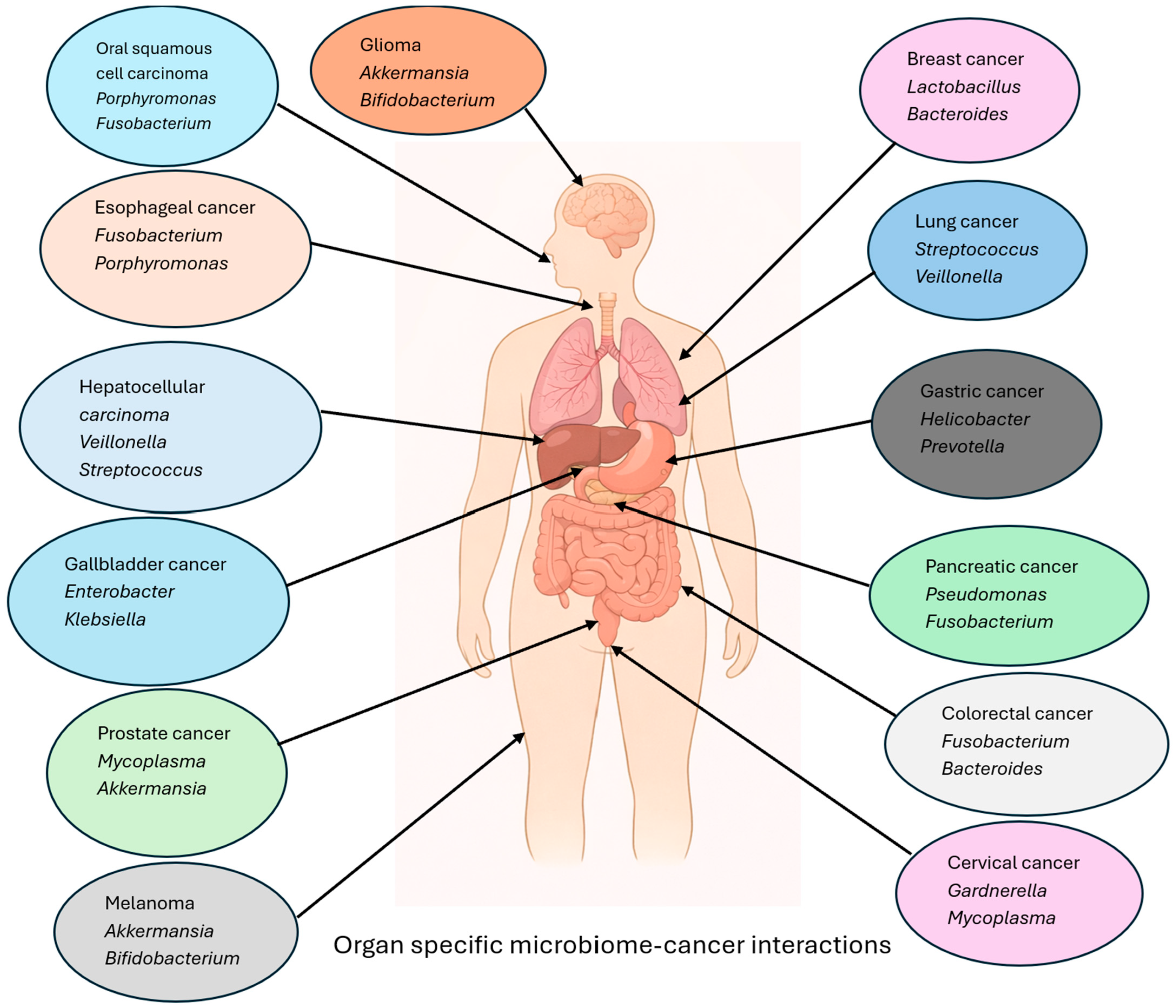
Organ-specific associations between the microbiome and cancer types. Schematic illustration summarizing representative microbial taxa reported to be associated with thirteen cancer types across gastrointestinal and extra-gastrointestinal organs.
Protective microbes such as Akkermansia, Ruminococcus, and Faecalibacterium are linked to favorable immune modulation, while pro-tumor taxa such as Fusobacterium, Porphyromonas, Helicobacter pylori, and Streptococcus are associated with oncogenic inflammation, immune suppression, and tumor progression across multiple organ systems [5].
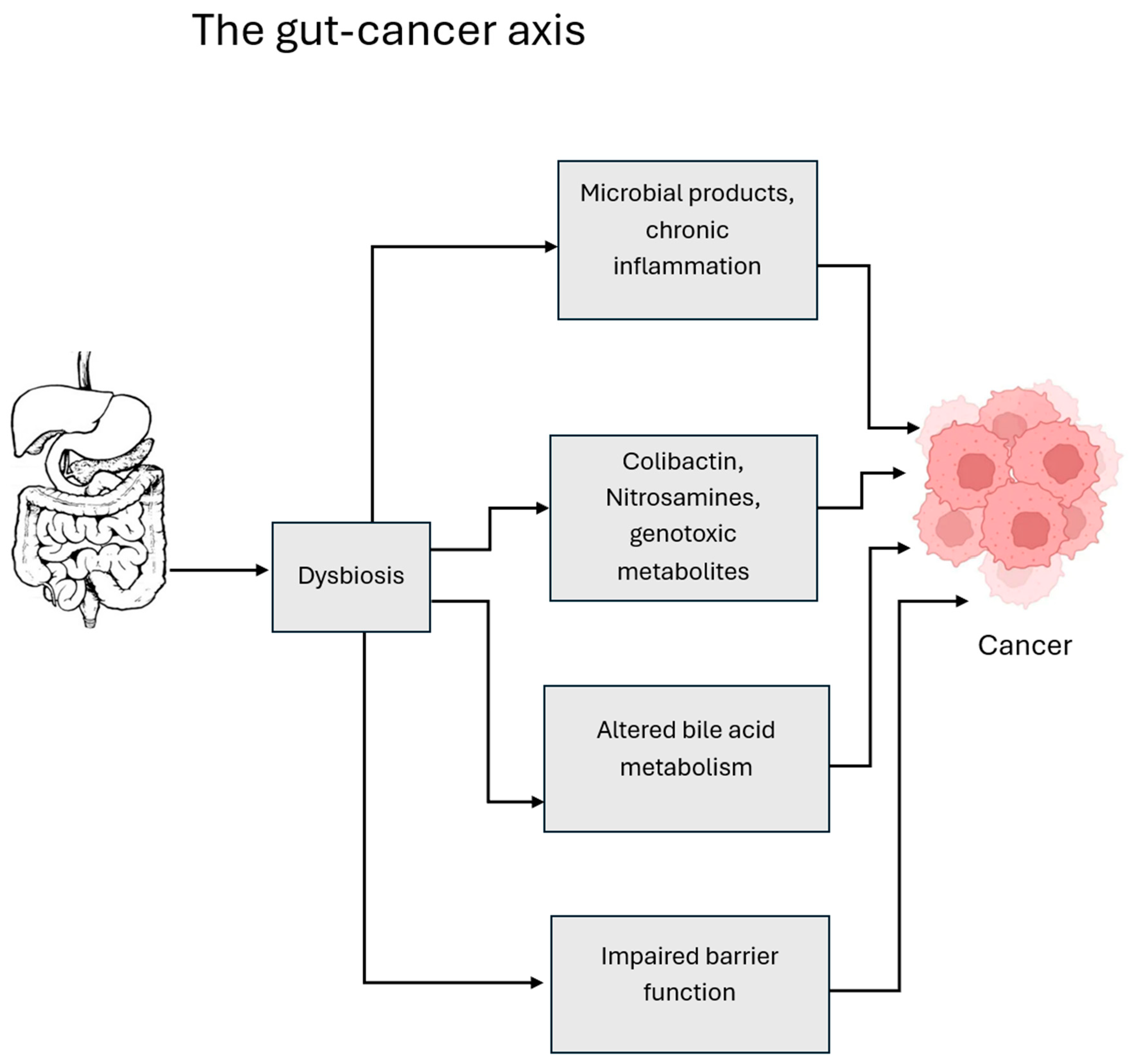
Dysbiosis typically involves loss of beneficial commensals, overgrowth of pathogenic species, or reduced microbial diversity [6]. Its systemic effects are mediated through multiple pathways: (i) chronic low-grade inflammation caused by microbial products such as lipopolysaccharides (LPSs) and flagellins that activate host Toll-like receptors (TLRs); (ii) direct genotoxicity from bacterial metabolites such as colibactin or nitrosating agents; (iii) disruption of bile acid metabolism leading to accumulation of carcinogenic secondary bile acids; and (iv) impairment of the gut barrier, which allows translocation of microbes and inflammatory mediators into systemic circulation [7]. These processes collectively foster a microenvironment conducive to carcinogenesis by promoting DNA damage, aberrant cell proliferation, and immune evasion.
The significance of the gut microbiome in oncology is twofold; first, as a contributor to oncogenesis, and second, as a determinant of oncotherapy outcomes. Oncogenesis is influenced by microbial communities that either directly induce DNA mutations or create chronic inflammatory states. For example, Fusobacterium nucleatum has been implicated in colorectal cancer (CRC) progression by binding to epithelial cells via its adhesin FadA, activating Wnt/β-catenin signaling, and dampening natural killer (NK) cell activity [8]. Similarly, Helicobacter pylori infection is a well-established cause of gastric adenocarcinoma through chronic gastritis, inflammatory cytokine release, and DNA damage mediated by virulence factors CagA and VacA [9]. In hepatocellular carcinoma, alterations in bile acid metabolism mediated by gut dysbiosis disrupt the FXR–TGR5 signaling axis, contributing to tumor growth [10]. Across these and other cancers, dysbiosis not only initiates tumorigenesis but also shapes progression and prognosis.
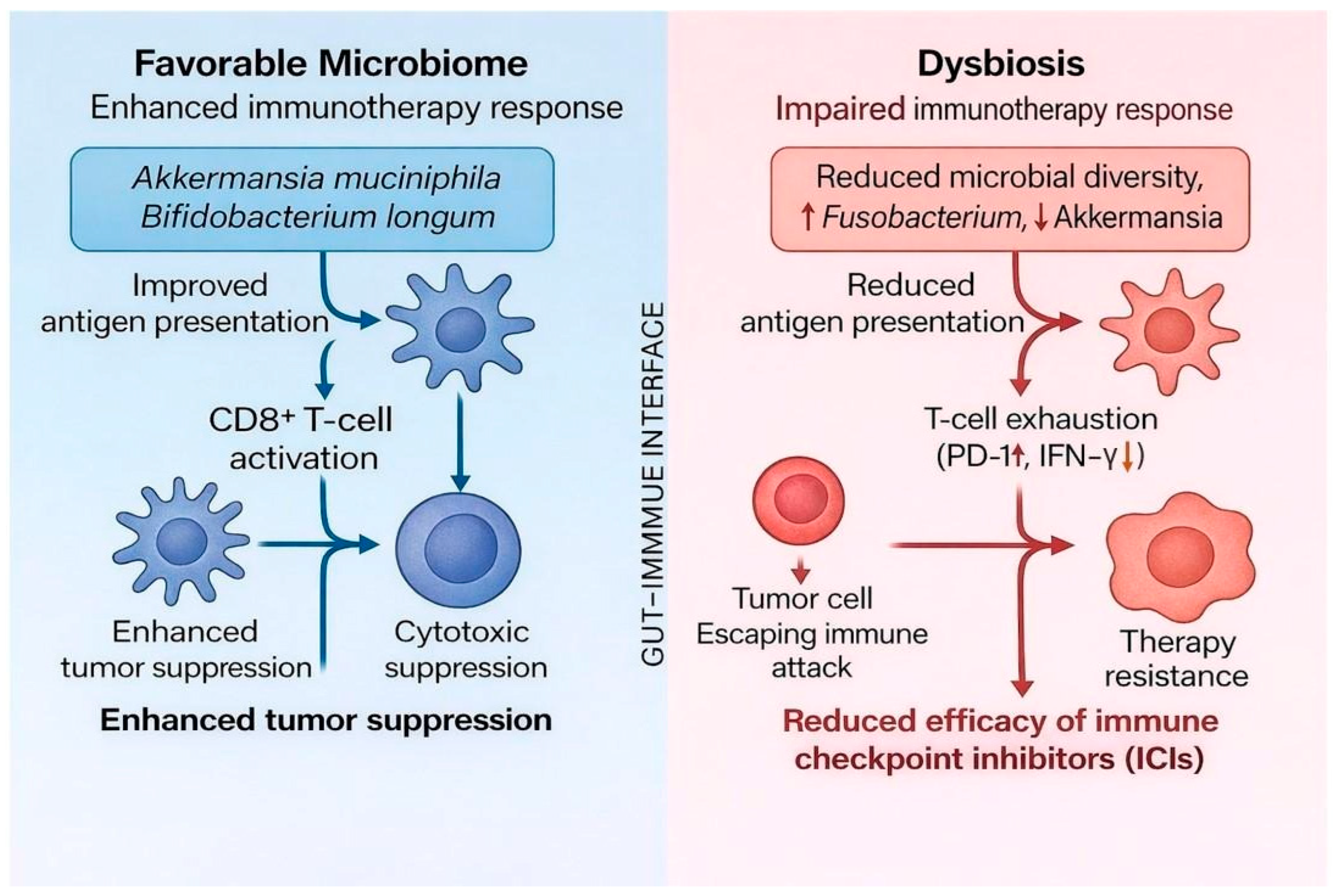
Equally important is the role of the microbiome in modulating oncotherapy. Clinical and preclinical studies increasingly demonstrate that gut microbes influence the efficacy and toxicity of chemotherapy, radiotherapy, and particularly immunotherapy. For instance, response to immune checkpoint inhibitors (ICIs) such as anti-Programmed cell death protein 1 (PD-1) and anti-Cytotoxic T-lymphocyte-associated protein 4 (CTLA-4) therapies (Figure 2) are strongly linked to gut microbial diversity and the presence of taxa such as Akkermansia muciniphila and Bifidobacterium longum [11,12]. Fecal microbiota transplantation (FMT) from ICI responders into non-responders has been shown to restore sensitivity to treatment, underlining the therapeutic potential of microbiome modulation [13]. Furthermore, dietary fiber intake and probiotic supplementation have been associated with enhanced antitumor immunity and reduced treatment-related toxicities [14]. These findings highlight the microbiome as a risk factor and a therapeutic ally in cancer management.
Figure 2.
Microbiome influence on immunotherapy response. A schematic summarizing how gut microbial composition modulates the efficacy of ICIs. A favorable microbiome enriched with Akkermansia muciniphila and Bifidobacterium longum enhances antigen presentation and CD8+ T-cell activation, promoting cytotoxic tumor suppression [15]. Conversely, dysbiosis characterized by reduced diversity and overgrowth of Fusobacterium or loss of Akkermansia leads to impaired antigen presentation, T-cell exhaustion (↑ PD-1, ↓ IFN-γ), and diminished ICI efficacy [16].
Despite rapidly growing evidence, most prior reviews have focused on individual cancers such as CRC or gastric cancer, where the microbiome cancer connection is strongest. However, the gut microbiome exerts systemic effects that transcend organ boundaries, influencing malignancies within and outside the GI tract. For example, dysbiosis has been linked not only to GI cancers but also to oral squamous cell carcinoma, cervical cancer, prostate cancer, and even melanoma, where microbiome composition predicts response to immunotherapy. Thus, a broad-spectrum review integrating evidence across multiple cancers (Figure 1) is timely and necessary. Such an approach allows recognition of common mechanisms (inflammation, genotoxicity, barrier dysfunction, metabolic alterations) while highlighting cancer-specific microbial drivers and therapeutic implications.
This review aims to synthesize current evidence on the role of the gut microbiome in both oncogenesis and oncotherapies, with a focus on thirteen cancers in which microbiome–cancer associations are most consistently reported and clinically relevant: colorectal cancer (CRC), gastric cancer, hepatocellular carcinoma, gallbladder cancer (GBC), esophageal cancer, pancreatic cancer, oral squamous cell carcinoma, cervical cancer, prostate cancer, brain cancer, breast cancer, lung cancer (LC), and melanoma [17]. By integrating mechanistic insights and therapeutic perspectives across these malignancies, we seek to provide a broad conceptual framework for understanding the microbiome–cancer axis and to highlight potential avenues for translating microbiome-related findings into clinical oncology.
1.1. Literature Selection and Narrative Synthesis
This article is designed as a narrative review synthesizing current mechanistic and translational evidence on the role of the gut microbiome in oncogenesis and oncotherapies. Relevant literature was identified through targeted searches of PubMed and Web of Science, focusing primarily on studies published between 2004 and 2025. Search terms included combinations of gut microbiome, dysbiosis, cancer, oncogenesis, immunotherapy, chemotherapy, and fecal microbiota transplantation.
Priority was given to peer-reviewed studies providing mechanistic insights, clinical associations, or interventional evidence linking microbiome alterations to cancer initiation, progression, or therapeutic response. Given the heterogeneity of study designs and outcomes across cancer types, evidence was synthesized qualitatively rather than through formal meta-analysis. No formal risk-of-bias assessment was performed, consistent with the narrative nature of this review.
1.2. Review of Oncogenesis and Oncotherapies
The gut microbiome influences cancer through chronic inflammation, immune modulation, metabolite production, and direct genotoxic effects [18]. However, its impact is not uniform across all malignancies. For this review, thirteen cancers were selected where microbiome cancer associations are best supported by mechanistic and clinical evidence. These include six GI cancers with direct gut–tumor interactions and seven extra-GI cancers with systemic or local microbiome–immune influences.
2. Gastrointestinal Cancers
2.1. Colorectal Cancer
CRC is the most extensively studied malignancy in relation to the microbiome. Fusobacterium nucleatum, enterotoxigenic Bacteroides fragilis, and colibactin-producing Escherichia coli are enriched in tumors, where they promote DNA damage, activate Wnt/β-catenin signaling, and suppress immune surveillance [19]. Dysbiosis also predicts resistance to chemotherapy (e.g., 5-Fluorouracil (5-FU)) and ICIs [20]. CRC was chosen as the most extensively studied cancer with well-characterized microbiome associations and strong mechanistic and therapeutic evidence [21,22,23,24,25].
2.1.1. Microbiome in Oncogenesis
CRC is the most well-established cancer linked to microbiome dysbiosis. Fusobacterium nucleatum promotes carcinogenesis by binding E-cadherin through its FadA adhesin, activating β-catenin signaling, and recruiting tumor-associated myeloid cells that suppress antitumor immunity [21,22]. Enterotoxigenic Bacteroides fragilis secretes fragilysin, a metalloproteinase that cleaves E-cadherin, increasing permeability and inflammation [23]. Colibactin-producing Escherichia coli directly induces DNA double-strand breaks, fueling genomic instability [24,25]. Reduced abundance of butyrate-producing taxa such as Faecalibacterium prausnitzii diminishes anti-inflammatory metabolites, exacerbating tumor-promoting inflammation [26].
2.1.2. Microbiome in Therapy Response
Gut microbiota have an effect on therapy outcomes in CRC. F. nucleatum confers resistance to 5-FU and oxaliplatin by activating autophagy and ferroptosis-related pathways [27,28]. Conversely, butyrate-producing bacteria enhance epithelial apoptosis and improve chemotherapy efficacy [26]. Immunotherapy response is linked to higher microbial diversity and enrichment of Akkermansia muciniphila and Bifidobacterium longum [29]. FMT from immunotherapy responders has been shown in murine models to restore anti-PD-1 efficacy in non-responders [30]. These findings underscore microbiome-targeted approaches as adjuncts in CRC therapy.
2.2. Gastric Cancer
H. pylori infection remains one of the clearest examples of microbe-induced carcinogenesis with Cytotoxin-associated gene A (CagA) and Vacuolating cytotoxin A (VacA) virulence factors driving chronic gastritis, epithelial transformation, and DNA damage [31]. Beyond H. pylori, dysbiosis with increased Prevotella and nitrosating bacteria exacerbates inflammation and mucosal injury [32]. These features make gastric cancer central to understanding how gut microbial communities initiate and sustain tumorigenesis [33].
2.2.1. Microbiome in Oncogenesis
H. pylori is the archetypal microbial carcinogen, recognized by World Health Organization (WHO) as a class I carcinogen [34]. Its virulence factors CagA and VacA induce DNA damage, activate Mitogen-activated protein kinase (MAPK) and NF-κB signaling, and create a pro-inflammatory gastric environment [31]. Beyond H. pylori, gastric dysbiosis involves overrepresentation of nitrosating bacteria (Neisseria, Haemophilus) that generate carcinogenic N-nitroso compounds [32]. Loss of Lactobacillus and Bifidobacterium further impairs mucosal defense [35]. The combined effect is chronic gastritis progressing to atrophy, metaplasia, and adenocarcinoma [36].
2.2.2. Microbiome in Therapy Response
The gastric microbiome also modulates therapy. H. pylori infection decreases efficacy of standard chemotherapy by altering p53 signaling [37]. Dysbiosis affects immune checkpoint blockade (ICB) response, with Clostridiales enrichment associated with better outcomes [38]. Probiotics (Lactobacillus rhamnosus GG) can reduce side effects of chemotherapy and may enhance mucosal healing post-eradication therapy [39]. Thus, microbiome modulation could both prevent and improve therapeutic outcomes in gastric cancer.
2.3. Hepatocellular Carcinoma
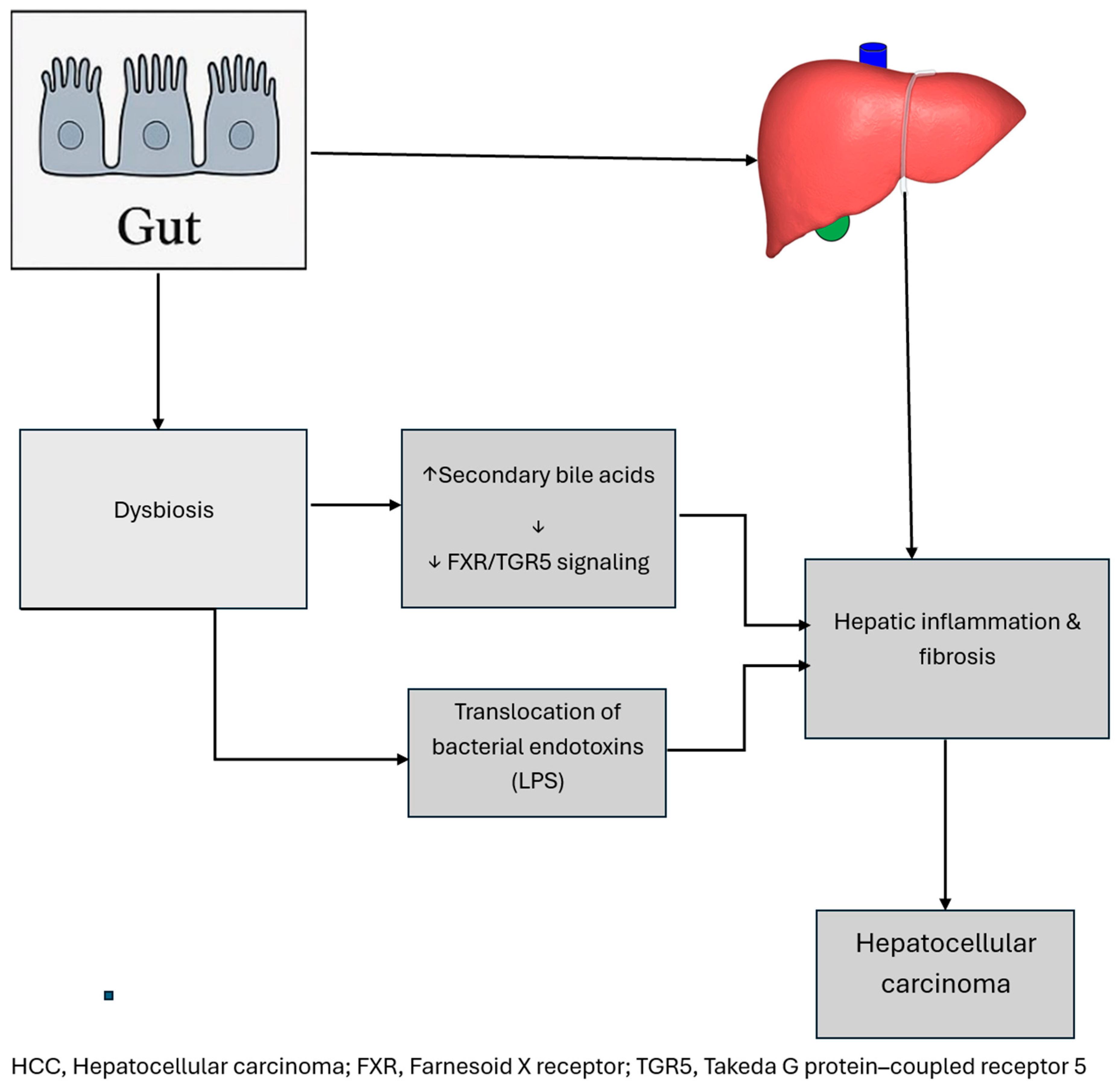
The gut–liver axis highlights how microbial products and metabolites affect hepatic oncogenesis. Dysbiosis alters bile acid metabolism, impairing Farnesoid X receptor/Takeda G protein-coupled receptor 5 (FXR/TGR5) signaling and promoting carcinogenesis (Figure 3) [40]. Translocation of oral-origin bacteria (Veillonella, Streptococcus) into cirrhotic guts further aggravates inflammation [41]. Importantly, microbiome composition predicts response to immunotherapy, with Akkermansia muciniphila and Ruminococcaceae associated with favorable outcomes [42]. Thus, HCC exemplifies metabolic and immune interactions mediated by gut microbes.
Figure 3.
Gut–liver axis in hepatocellular carcinoma. Gut dysbiosis increases secondary bile acids that suppress hepatic Farnesoid X Receptor (FXR) and (Takeda G protein-coupled receptor (TGR5) signaling, resulting in inflammation, fibrosis, and hepatocellular carcinoma (HCC) [43]. The figure highlights the bidirectional gut–liver axis mediated by portal circulation and bile-acid feedback loops. HCC, Hepatocellular; FXR, Farnesoid X receptor; TGR5, Takeda G protein-coupled receptor 5.
2.3.1. Microbiome in Oncogenesis
The gut–liver axis explains the critical role of the microbiome in HCC. Dysbiosis reduces bile salt hydrolase-producing taxa, resulting in an accumulation of carcinogenic secondary bile acids [40]. Translocation of bacterial endotoxins (LPS) across a compromised gut barrier activates TLR4 on hepatocytes and Kupffer cells, inducing chronic inflammation and fibrosis [44]. Overgrowth of oral-origin bacteria (Veillonella, Streptococcus) in cirrhotic livers further aggravates hepatocarcinogenesis [41,45].
2.3.2. Microbiome in Therapy Response
Microbiome also predicts response to systemic therapies. Enrichment of Akkermansia muciniphila and Ruminococcaceae correlates with improved survival in patients receiving ICIs [42]. Conversely, broad-spectrum antibiotics before immunotherapy reduce treatment efficacy [46]. Preclinical studies suggest that FMT or supplementation with Akkermansia can restore ICI responsiveness [29]. Thus, microbiome modulation may emerge as a predictive biomarker and therapeutic tool in HCC management.
2.4. Gallbladder Cancer
GBC is aggressive and often associated with gallstone disease. Dysbiosis contributes by altering bile acid metabolism and cholesterol homeostasis, facilitating stone formation [47]. Bacterial taxa such as Streptococcus and Actinomyces are enriched in GBC tissues [48]. This cancer was selected for its illustration of how microbial shifts in bile and gut ecosystems drive a carcinogenic milieu [49,50].
2.4.1. Microbiome in Oncogenesis
GBC, though less studied, shows strong links to microbial alterations associated with gallstone disease. Dysbiosis increases bile-resistant pathogens (Enterobacter, Klebsiella) while reducing commensals, resulting in chronic cholecystitis and carcinogenesis [49,50]. Microbes in bile alter cholesterol metabolism, promote lithogenesis, and generate secondary bile acids with DNA-damaging potential [51]. Bacterial biofilms on gallstones facilitate persistent inflammation, providing a carcinogenic niche [52].
2.4.2. Microbiome in Therapy Response
Direct evidence on microbiome and therapy response in GBC is limited. However, microbiome-driven bile acid dysregulation may influence drug metabolism and chemoresistance [53]. Emerging preclinical data suggest that bile microbiome modulation via probiotics could reduce inflammation and improve biliary tract cancer management [54]. Hence, GBC exemplifies bile acid–microbiome–cancer interactions.
2.5. Esophageal Cancer
Esophageal adenocarcinoma frequently arises from Barrett’s esophagus, where microbiome shifts occur [55]. Type II microbiota, dominated by Gram-negative anaerobes (Bacteroides, Fusobacteria), replaces the protective type I community enriched with Streptococcus [56]. These changes heighten inflammation and metaplasia, driving progression [57]. Esophageal cancer demonstrates how microbiome alterations in non-colonic regions contribute to carcinogenesis [58].
2.5.1. Microbiome in Oncogenesis
The esophageal microbiome shifts from type I (Gram-positive Streptococcus) to type II (Gram-negative anaerobes such as Prevotella, Fusobacterium) in Barrett’s esophagus [59]. This shift increases LPS-mediated inflammation, nitric oxide generation, and epithelial metaplasia, predisposing to adenocarcinoma [58,59]. In squamous cell carcinoma, enrichment of Porphyromonas gingivalis promotes epithelial invasion and immune suppression [60]. Thus, dysbiosis plays a role in both major histological subtypes.
2.5.2. Microbiome in Therapy Response
Esophageal cancer therapy responses are influenced by microbiome composition. Patients with higher microbial diversity respond better to ICI therapy [61]. Dysbiosis may worsen radiation-induced esophagitis, and probiotics have been tested for toxicity reduction [62,63]. These findings highlight esophageal cancer as a site where microbiome alterations influence both pathogenesis and therapeutic tolerance.
2.6. Pancreatic Cancer
Pancreatic ductal adenocarcinoma (PDAC) patients display gut dysbiosis with reduced SCFA-producing taxa (Faecalibacterium, Eubacterium) and increased Proteobacteria [64,65]. Metabolites such as trimethylamine N-oxide (TMAO) and 3-indoleacetic acid (3-IAA) influence tumor growth and chemotherapy efficacy [66]. As PDAC is notoriously therapy-resistant, microbiome signatures may guide biomarker discovery and novel therapeutic approaches [67,68].
2.6.1. Microbiome in Oncogenesis
PDAC harbors unique microbial signatures, with enrichment of Pseudomonas and Fusobacterium and depletion of short-chain fatty acid (SCFA) producers (Faecalibacterium) [64,65]. Microbial metabolites such as TMAO and 3-IAA promote tumor growth and alter the tumor immune microenvironment [66]. The pancreatic tumor microbiome also suppresses antitumor immunity via myeloid-derived suppressor cell (MDSC) recruitment and TLR activation [69].
2.6.2. Microbiome in Therapy Response
Microbiome contributes to chemoresistance in PDAC. Intra-tumoral Gammaproteobacteria can metabolize gemcitabine into inactive derivatives, reducing its efficacy [70]. FMT from long-term survivors into murine models slowed tumor progression and enhanced anti-PD-1 efficacy [71]. Probiotic and dietary interventions to restore SCFA-producing bacteria are under investigation for improving chemotherapy and immunotherapy outcomes [72].
3. Extra-Gastrointestinal Cancers
3.1. Oral Squamous Cell Carcinoma
Periodontal pathogens including Porphyromonas gingivalis and Fusobacterium nucleatum promote epithelial proliferation, inflammation, and immune evasion in OSCC [73]. Additionally, Candida albicans facilitates tumor invasion and metastasis [74]. This cancer underscores the role of local microbiota beyond the gut, illustrating shared pathogenic mechanisms like chronic inflammation and microbial toxins [75].
3.1.1. Microbiome in Oncogenesis
OSCC pathogenesis is closely linked to oral microbiota. Porphyromonas gingivalis inhibits apoptosis, induces epithelial–mesenchymal transition (EMT), and promotes interleukin-6/signal transducer and activator of transcription 3 (IL-6/STAT3) signaling [75]. Fusobacterium nucleatum enhances invasion and immune suppression [76]. Additionally, Candida albicans contributes to carcinogenesis through nitrosamine production and epithelial disruption [77]. Chronic periodontitis-driven inflammation thus creates a tumor-permissive microenvironment.
3.1.2. Microbiome in Therapy Response
Oral microbiome composition influences radiotherapy- and chemotherapy-induced mucositis severity [78]. Probiotic lozenges with Lactobacillus species have shown benefits in reducing mucositis and maintaining oral microbial balance [79]. Studies suggest gut–oral microbial crosstalk may also shape systemic ICI responses, though evidence remains preliminary [80].
3.2. Cervical Cancer
Cervical cancer, largely linked to human papillomavirus (HPV), is influenced by vaginal and gut microbiome alterations [81]. Loss of protective Lactobacillus and enrichment of anaerobes (e.g., Gardnerella, Mycoplasma) disrupt mucosal defense and enhance HPV persistence [82]. Evidence suggests that Mycoplasma infections further impair p53-mediated tumor suppression [83]. This cancer was included to demonstrate the interplay of microbial dysbiosis with viral oncogenesis [84].
3.2.1. Microbiome in Oncogenesis
Although HPV is the primary driver, microbiome shifts play a cofactor role in cervical cancer. Loss of Lactobacillus crispatus and dominance of anaerobes (Gardnerella, Atopobium, Mycoplasma) impair mucosal defense and maintain chronic inflammation [84]. Mycoplasma infections exacerbate genomic instability and hinder p53-mediated DNA repair, facilitating HPV-driven transformation [85]. Dysbiosis thus determines persistence and progression of precancerous lesions.
3.2.2. Microbiome in Therapy Response
Emerging data suggest that vaginal and gut microbiomes influence treatment responses. Lactobacillus dominance correlates with better radiotherapy outcomes, while dysbiosis predicts higher recurrence risk [86]. Probiotic supplementation may improve treatment tolerance, though clinical trials remain limited [87].
3.3. Prostate Cancer
Gut dysbiosis is associated with systemic inflammation and metabolic changes that influence prostate carcinogenesis [88]. Mycoplasma species have been implicated in genomic instability and chronic inflammation within the prostate [89]. Emerging studies suggest microbiota may also modulate androgen metabolism and immunotherapy response, justifying its inclusion as a microbiome-associated malignancy outside the GI tract [88].
3.3.1. Microbiome in Oncogenesis
Gut dysbiosis affects systemic inflammation, hormone metabolism, and carcinogenesis in the prostate. Enrichment of Akkermansia and depletion of SCFA-producers alter androgen signaling and local immune tone [90]. Mycoplasma hominis and other urogenital pathogens have been associated with DNA damage and tumor-promoting inflammation [90]. The prostate thus illustrates potential links between systemic dysbiosis and extra-GI cancer risk, supported primarily by associative and preclinical data.
3.3.2. Microbiome in Therapy Response
Microbiome also influences androgen deprivation therapy (ADT) outcomes [91]. Certain gut taxa can metabolize androgen precursors, potentially contributing to castration resistance [92]. Additionally, gut microbial signatures have been linked to immunotherapy responsiveness in advanced prostate cancer, raising potential for FMT or probiotics as adjuncts [93].
3.4. Melanoma
Though not anatomically linked to the gut, melanoma has provided some of the strongest evidence for the role of the microbiome in therapy. Response to PD-1 blockade is significantly associated with gut microbial diversity and enrichment of taxa such as Akkermansia muciniphila, Collinsella aerofaciens, and Bifidobacterium longum [94]. FMT from responders to non-responders restores treatment sensitivity [95]. Melanoma was selected as the most extensively studied model for systemic immune–microbiome interactions in oncotherapy [96].
3.4.1. Microbiome in Oncogenesis
While not directly gut-associated, melanoma progression is influenced by systemic immune regulation shaped by the microbiome. Enrichment of Bifidobacterium and Akkermansia enhances antigen presentation and CD8+ T-cell responses, whereas dysbiosis impairs immune surveillance [97]. The gut microbiome thus indirectly influences melanoma biology through immune modulation.
3.4.2. Microbiome in Therapy Response
Melanoma provides the strongest evidence for microbiome–oncotherapy interaction. Responders to PD-1 blockade consistently show higher gut microbial diversity and abundance of Akkermansia muciniphila and Faecalibacterium [98]. FMT from ICI responders into non-responders restores treatment sensitivity [12]. Diet and probiotics further modulate therapeutic efficacy, highlighting melanoma as the benchmark cancer for microbiome-immunotherapy research [99].
3.5. Brain Tumor
3.5.1. Microbiome in Oncogenesis
Recent evidence suggests that the gut microbiome exerts a significant influence on brain tumor biology through the gut–brain axis, a bidirectional network involving neural, immune, and metabolic signaling [100]. Dysbiosis alters systemic immunity, neuroinflammation, and blood–brain barrier (BBB) integrity—factors increasingly implicated in the progression of gliomas and glioblastoma multiforme (GBM) [101].
Gut microbes produce SCFAs such as butyrate and propionate, which modulate microglial activation and T-cell trafficking within the central nervous system (CNS) [102]. Loss of SCFA-producing taxa (Faecalibacterium, Roseburia) promotes a pro-inflammatory milieu that facilitates tumor immune evasion [103]. Conversely, pathogenic bacteria and endotoxins can upregulate cytokines such as IL-6 and tumor necrosis factor alpha (TNF-α), enhancing glioma invasiveness [104].
3.5.2. Microbiome in Therapy Response
Preclinical studies show that antibiotic-induced dysbiosis impairs ICI efficacy in glioma models, whereas reconstitution with Akkermansia muciniphila or Bifidobacterium restores antitumor immunity [105]. Moreover, gut microbial metabolites affect the pharmacokinetics of temozolomide and the local immune tone within the tumor microenvironment [105].
Collectively, these findings support the gut–brain axis as a critical modulator of neuro-oncology, suggesting that microbiome-targeted interventions—diet, probiotics, or fecal microbiota transplantation—may enhance therapeutic efficacy in brain tumors.
3.6. Breast Cancer
3.6.1. Microbiome in Oncogenesis
The breast tissue and gut microbiome play crucial roles in breast carcinogenesis through estrogen metabolism, immune modulation, and local inflammation [106]. Dysbiosis in the gut—particularly depletion of Lactobacillus and enrichment of Clostridium and Bacteroides—disrupts the estrobolome, the collection of bacterial genes involved in estrogen metabolism [94]. Increased β-glucuronidase activity leads to reabsorption of active estrogens, promoting hormone-dependent tumor proliferation [107]. In breast tissue, Methylobacterium radiotolerans and Escherichia coli have been detected more frequently in tumors than in normal tissue, and both can induce DNA double-strand breaks and oxidative stress [107]. Chronic inflammation and immune dysregulation arising from dysbiosis further enhance tumor progression [108].
3.6.2. Microbiome in Therapy Response
Gut microbiota composition affects both chemotherapy tolerance and immunotherapy efficacy [109]. Beneficial taxa such as Bifidobacterium and Akkermansia muciniphila enhance immune activation and improve responses to ICIs. [94]. Conversely, antibiotic exposure before chemotherapy or immunotherapy reduces progression-free survival in breast cancer patients [110]. Probiotic supplementation and dietary fiber intake have shown promise in improving gut barrier function, mitigating treatment-related mucositis, and potentially enhancing therapeutic outcomes [111].
3.7. Lung Cancer
3.7.1. Microbiome in Oncogenesis
The lung and gut microbiomes both play integral roles in LC oncogenesis through inflammatory, metabolic, and immune-mediated pathways [112]. Dysbiosis—characterized by increased Streptococcus, Veillonella, Prevotella, Enterobacteriaceae, and Bacteroides plebeius—promotes chronic airway inflammation and IL-17/IL-6–driven epithelial proliferation [112]. Reduced abundance of Faecalibacterium and Roseburia—key butyrate producers—leads to diminished anti-inflammatory signaling, creating a tumor-permissive microenvironment [113].
Recent Mendelian randomization studies have identified causal microbial taxa influencing LC risk. Coprococcus, Holdemanella, Peptococcus, and Bacteroides clarus were positively associated with LC susceptibility, while Collinsella, Bifidobacteriaceae, Eubacteriaceae, Lachnospiraceae UCG-010, and Oscillibacter showed protective associations [114]. Mechanistically, Collinsella reduces LC risk by lowering T-cell surface glycoprotein CD5, a regulator of T-cell activation, accounting for approximately 16.7% mediation effect via immune protein modulation. Inflammatory proteins such as IL-20 and IL-8 correlate with increased LC risk, whereas CD5, IL-18, and fibroblast growth factor 21 (FGF21) confer protection, emphasizing the immune-mediated nature of the microbiome–lung axis [115].
3.7.2. Microbiome in Oncotherapy Response
Gut dysbiosis also influences LC oncotherapy outcomes. Enrichment of Akkermansia muciniphila and Ruminococcaceae is linked to better responses to PD-1/PD-L1 (Programmed death-ligand 1) inhibitors, while antibiotic-induced depletion of beneficial taxa leads to reduced immunotherapy efficacy and shorter progression-free survival [116,117]. Microbiota modulation through diet, probiotics, or FMT represents a promising adjunctive strategy to enhance immunotherapy responsiveness and mitigate treatment-related inflammation [20,118].
The chosen cancers reflect two categories, GI malignancies where gut microbes directly interact with the tumor microenvironment, and extra-GI malignancies where microbiome-driven systemic inflammation or immune modulation plays a pivotal role. Together, they provide a balanced framework to explore both oncogenesis mechanisms and oncotherapy implications across cancer types, fulfilling the rationale for a broad-spectrum narrative review.
4. Discussion
The interplay between the gut microbiome and cancer has emerged as a central theme in oncology, spanning carcinogenesis, tumor progression, and therapeutic modulation. This review of thirteen cancers highlights both common pathways of microbiome involvement and unique axes of interaction, while also underscoring the translational opportunities for diagnostics and therapeutics.
4.1. Common Mechanistic Themes Across Cancers
Across GI and extra-GI cancers, several shared mechanisms define the microbiome–oncogenesis link.
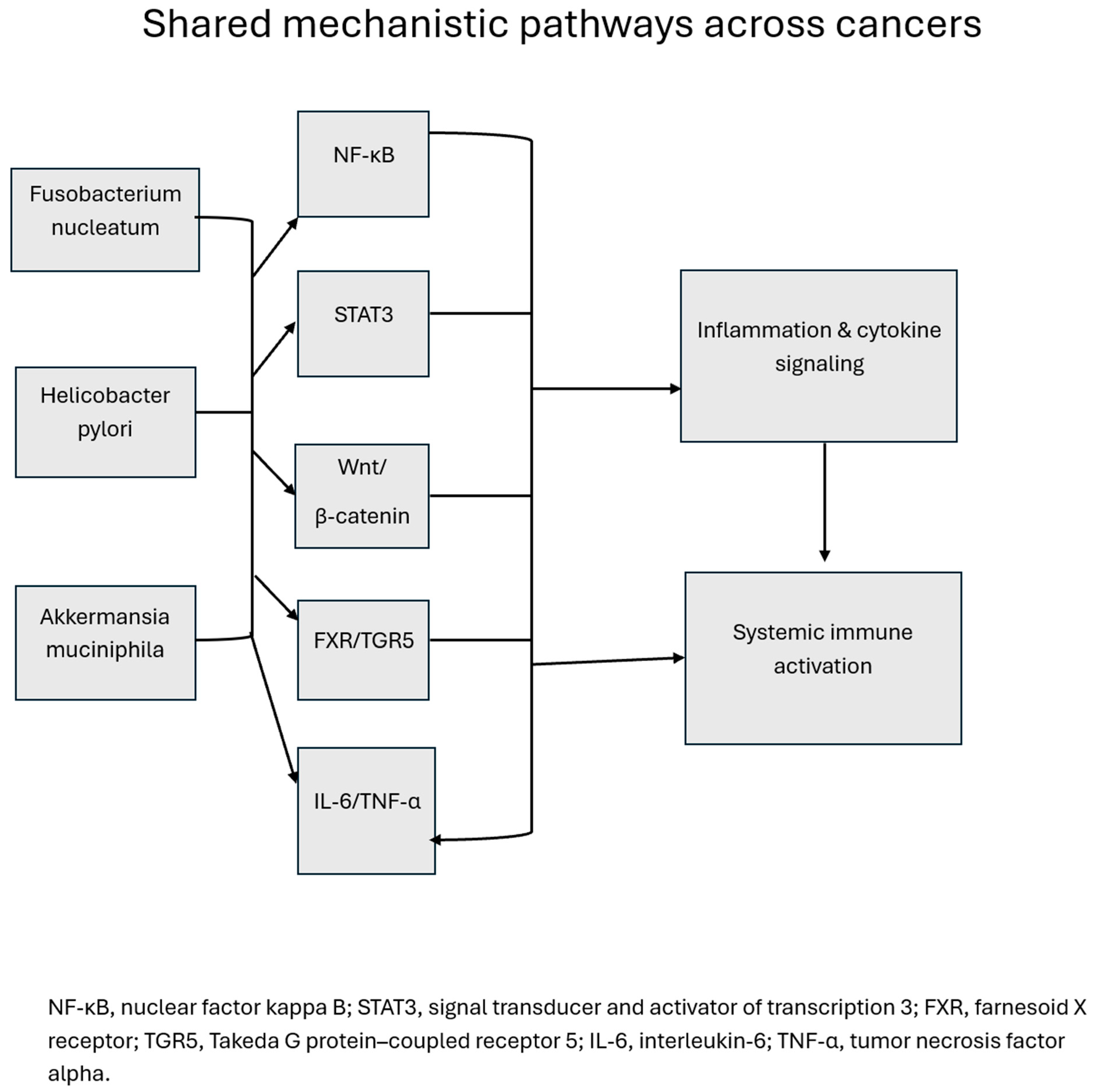
Chronic inflammation is perhaps the most consistent of all events. Microbial products such as LPS and flagellin engage TLRs, activating NF-κB and STAT3 signaling pathways, which promote cytokine release, epithelial proliferation, and immune evasion [119]. This is evident in CRC, esophageal, and oral cancers, where Fusobacterium nucleatum and Porphyromonas gingivalis drive pro-inflammatory signaling that fosters tumorigenesis (Figure 4) [120]. Genotoxic metabolites represent another recurrent mechanism. Colibactin-producing Escherichia coli induces double-strand DNA breaks in CRC, while nitrosating bacteria in gastric cancer generate N-nitroso compounds, potent mutagens that damage epithelial DNA (Figure 5) [121]. In cervical cancer, microbial dysbiosis impairs antiviral immunity, allowing HPV persistence and increased genomic instability [122]. Barrier dysfunction is also a cross-cutting theme. Dysbiosis reduces butyrate-producing commensals such as Faecalibacterium prausnitzii, weakening epithelial tight junctions and allowing microbial translocation [123]. This is especially relevant in HCC, where increased gut permeability delivers bacterial endotoxins directly to the liver via the portal vein, perpetuating inflammation and carcinogenesis [124]. Finally, immune modulation serves as a unifying principle in cancer–microbiome crosstalk. Beneficial taxa such as Akkermansia muciniphila and Bifidobacterium longum enhance antigen presentation and CD8+ T-cell activation, whereas pathogenic species such as Fusobacterium suppress NK cell activity and recruit myeloid-derived suppressor cells (MDSCs) that blunt antitumor immunity [111].
4.2. Unique Microbiome–Cancer Axes
While these broad mechanisms are shared, certain cancers illustrate unique axes of the microbiome influence. In HCC, the gut–liver axis is central. Dysbiosis alters bile acid metabolism, disrupting FXR/TGR5 signaling and increasing carcinogenic secondary bile acids [125]. Endotoxin leakage further drives hepatic inflammation and fibrosis, distinguishing HCC from other cancers [126]. In OSCC, the oral microbiome is the primary driver. Periodontal pathogens such as P. gingivalis not only induce local inflammation but also manipulate host cell signaling by activating the phosphoinositide 3-kinase (PI3K)/Akt pathway and inhibiting apoptosis [127]. Candida albicans further contributes by generating carcinogenic nitrosamines, demonstrating the unique role of fungal dysbiosis [128]. In melanoma, the microbiome’s role is systemic rather than local. Here, gut microbial diversity and the presence of immunostimulatory taxa predict response to ICIs [129]. This represents the clearest example of the microbiome influencing extra-GI cancers through systemic immune priming [38].
Figure 4.
Shared mechanistic pathways across cancers. Representative microbial taxa (Fusobacterium nucleatum, Helicobacter pylori, Akkermansia muciniphila) activate conserved oncogenic and inflammatory signaling cascades including nuclear factor kappa b (NF-κB), signal transducer and activator of transcription 3 (STAT3), Wnt/β-catenin, farnesoid X receptor; Takeda G-protein-coupled-receptor 5 (FXR/TGR5), and Interleukin 6/tumor necrosis factor alpha (IL-6/TNF-α) [130]. These overlapping networks drive inflammation, cytokine release, and systemic immune activation across multiple malignancies.
4.3. Clinical Translation and Therapeutic Implications
The translational potential of microbiome research is substantial, spanning biomarkers, preventive strategies, and therapeutic adjuncts. From a clinical standpoint, current microbiome-related applications in oncology should be interpreted with caution. At present, the strongest evidence supports avoidance of unnecessary broad-spectrum antibiotic exposure around immune checkpoint inhibitor therapy, given its consistent association with impaired treatment response [131]. In contrast, interventions such as fecal microbiota transplantation, engineered probiotics, or targeted dietary modulation remain investigational and should be limited to clinical trial settings. Routine microbiome profiling is not yet recommended for clinical decision-making outside research protocols [132].
Figure 5.
This schematic summarizes key mechanisms linking gut dysbiosis to oncogenesis. Microbial imbalance promotes chronic inflammation, production of genotoxic metabolites such as colibactin and nitrosamines, bile-acid dysregulation with impaired FXR/TGR5 signaling, and disruption of the intestinal barrier [121]. These convergent pathways foster genomic instability and tumor initiation [133].
4.4. Microbiome as a Biomarker
Microbial signatures are increasingly proposed as predictive biomarkers for cancer risk and therapy response. For instance, Fusobacterium nucleatum abundance in CRC tissue correlates with poor prognosis and chemoresistance, while the presence of Akkermansia predicts better outcomes with ICI therapy in HCC and melanoma [134,135]. Incorporating microbiome profiling into oncology practice could aid in risk stratification and personalized therapy planning.
Diet profoundly shapes the microbiome. High fiber intake increases SCFA production, which enhances epithelial barrier function and supports antitumor immunity [72]. Observational studies link dietary fiber with improved immunotherapy outcomes in melanoma [136]. Probiotics such as Lactobacillus rhamnosus and Bifidobacterium have been tested in gastric and oral cancers to reduce treatment toxicity and improve mucosal health, though evidence remains preliminary [137].
Fecal microbiota transplantation (FMT) is a promising but still experimental therapeutic approach, with early studies demonstrating the restoration of immunotherapy responsiveness in previously resistant melanoma patients [138]. Pilot studies suggest similar potential in CRC and HCC, though standardization of donor selection, delivery methods, and long-term safety remains a challenge. The future lies in precision approaches using targeted prebiotics, engineered probiotics, or small-molecule modulators to selectively enhance beneficial taxa while suppressing pathogenic species. Integration of microbiome sequencing with host genomic and immunologic profiling could allow personalized oncotherapy regimens tailored to individual microbial ecosystems.
5. Conclusions
The gut microbiome has emerged as a critical determinant in both oncogenesis and response to cancer therapies. Accumulating evidence demonstrates that microbial communities influence tumor initiation, progression, and metastasis through multiple mechanisms, including modulation of inflammation, immune surveillance, genotoxic metabolite production, and epithelial barrier integrity. In addition, the gut microbiota significantly impacts the efficacy and toxicity of oncotherapies, including chemotherapy, immunotherapy, and targeted treatments, highlighting its role as a potential predictive biomarker and therapeutic target. For instance, specific microbial signatures are associated with (CRC) development, while modulation of the gut microbiome enhances checkpoint inhibitor response in melanoma and LC (Table 1). Beyond direct tumor effects, the microbiome also influences systemic metabolism and immune tone, further affecting therapy outcomes.
Table 1.
Comparative summary of gut microbiome in oncogenesis and oncotherapies across thirteen cancer types.
Looking forward, precision manipulation of the microbiome holds considerable promise in oncology. Strategies such as dietary interventions, probiotics, prebiotics, FMT, and microbial metabolite modulation may complement existing treatments, improving efficacy while reducing adverse effects. However, translating these insights into clinical practice requires rigorous longitudinal studies, mechanistic validation, and standardized protocols. Integrating microbiome profiling into personalized cancer care could pave the way for next-generation, microbiome-informed oncotherapy, offering the potential for improved patient outcomes and novel preventive strategies. Overall, the microbiome represents a transformative frontier in understanding and managing cancer.
Author Contributions
Conceptualization, R.S.S.P.; methodology, R.S.S.P. and S.K.K.; software, not applicable; validation, not applicable; formal analysis, not applicable; investigation, R.S.S.P., S.K.K., R.K., S.K., S.M., A.K. and H.G.; resources, not applicable; data curation, not applicable; writing—original draft preparation, S.K.K., R.K., R.S.S.P., A.K., S.K., S.M. and H.G.; writing—review and editing, R.S.S.P., S.K.K. and S.K.A.; visualization, R.S.S.P. and S.K.K.; supervision, S.K.A., R.S.S.P. and S.K.K.; project administration, R.S.S.P. and S.K.K.; funding acquisition, not applicable. All authors have read and agreed to the published version of the manuscript.
Funding
This research received no external funding.
Data Availability Statement
No new data were created or analyzed in this study.
Acknowledgments
Suresh K. Alahari acknowledges the support from LSUHSC School of Medicine and Fred G. Brazda Foundation.
Conflicts of Interest
The authors declare no conflicts of interest.
References
- Pires, L.; González-Paramás, A.M.; Heleno, S.A.; Calhelha, R.C. The Role of Gut Microbiota in the Etiopathogenesis of Multiple Chronic Diseases. Antibiotics 2024, 13, 392. [Google Scholar] [CrossRef] [Scilit] [PubMed]
- Takiishi, T.; Fenero, C.I.M.; Câmara, N.O.S. Intestinal barrier and gut microbiota: Shaping our immune responses throughout life. Tissue Barriers 2017, 5, e1373208. [Google Scholar] [CrossRef] [Scilit]
- Lynch, S.V.; Pedersen, O. The Human Intestinal Microbiome in Health and Disease. N. Engl. J. Med. 2016, 375, 2369–2379. [Google Scholar] [CrossRef] [Scilit]
- Helmink, B.A.; Khan, M.A.W.; Hermann, A.; Gopalakrishnan, V.; Wargo, J.A. The microbiome, cancer, and cancer therapy. Nat. Med. 2019, 25, 377–388. [Google Scholar] [CrossRef] [Scilit]
- Effendi, R.M.R.A.; Anshory, M.; Kalim, H.; Dwiyana, R.F.; Suwarsa, O.; Pardo, L.M.; Nijsten, T.E.C.; Thio, H.B. Akkermansia muciniphila and Faecalibacterium prausnitzii in Immune-Related Diseases. Microorganisms 2022, 10, 2382. [Google Scholar] [CrossRef] [Scilit]
- DeGruttola, A.K.; Low, D.; Mizoguchi, A.; Mizoguchi, E. Current Understanding of Dysbiosis in Disease in Human and Anima Models. Inflamm. Bowel Dis. 2016, 22, 1137–1150. [Google Scholar] [CrossRef] [Scilit]
- Zhang, W.; An, Y.; Qin, X.; Wu, X.; Wang, X.; Hou, H.; Song, X.; Liu, T.; Wang, B.; Huang, X.; et al. Gut Microbiota-Derived Metabolites in Colorectal Cancer: The Bad and the Challenges. Front. Oncol. 2021, 11, 739648. [Google Scholar] [CrossRef] [Scilit]
- Shang, F.M.; Liu, H.L. Fusobacterium nucleatum and colorectal cancer: A review. World J. Gastrointest. Oncol. 2018, 10, 71–81. [Google Scholar] [CrossRef] [Scilit] [PubMed]
- Correa, P.; Piazuelo, M.B. Helicobacter pylori Infection and Gastric Adenocarcinoma. US Gastroenterol. Hepatol. Rev. 2011, 7, 59–64. [Google Scholar]
- Luo, W.; Guo, S.; Zhou, Y.; Zhao, J.; Wang, M.; Sang, L.; Chang, B.; Wang, B. Hepatocellular Carcinoma: How the Gut Microbiota Contributes to Pathogenesis, Diagnosis, and Therapy. Front. Microbiol. 2022, 13, 873160. [Google Scholar] [CrossRef] [Scilit] [PubMed]
- Jiang, H.; Zhang, Q. Gut microbiota influences the efficiency of immune checkpoint inhibitors by modulating the immune system (Review). Oncol. Lett. 2024, 27, 87. [Google Scholar] [CrossRef] [Scilit]
- Yousefi, Y.; Baines, K.J.; Vareki, S.M. Microbiome bacterial influencers of host immunity and response to immunotherapy. Cell Rep. Med. 2024, 5, 101487. [Google Scholar] [CrossRef] [Scilit]
- Zhang, J.; Wu, K.; Shi, C.; Li, G. Cancer Immunotherapy: Fecal Microbiota Transplantation Brings Light. Curr. Treat. Options Oncol. 2022, 23, 1777–1792. [Google Scholar] [CrossRef] [Scilit] [PubMed]
- Liu, Y.; Baba, Y.; Ishimoto, T.; Gu, X.; Zhang, J.; Nomoto, D.; Okadome, K.; Baba, H.; Qiu, P. Gut microbiome in gastrointestinal cancer: A friend or foe? Int. J. Biol. Sci. 2022, 18, 4101–4117. [Google Scholar] [CrossRef] [Scilit] [PubMed]
- Xie, M.; Li, X.; Lau, H.C.-H.; Yu, J. The gut microbiota in cancer immunity and immunotherapy. Cell. Mol. Immunol. 2025, 22, 1012–1031. [Google Scholar] [CrossRef] [Scilit] [PubMed]
- Zhu, Q.; Zhang, R.; Zhao, Z.; Xie, T.; Sui, X. Harnessing phytochemicals: Innovative strategies to enhance cancer immunotherapy. Drug Resist. Updates 2025, 79, 101206. [Google Scholar] [CrossRef] [Scilit]
- Anderson, S.M.; Sears, C.L. The Role of the Gut Microbiome in Cancer: A Review, with Special Focus on Colorectal Neoplasia and Clostridioides difficile. Clin. Infect. Dis. 2023, 77, S471–S478. [Google Scholar] [CrossRef] [Scilit]
- Lim, W. Linking microbiome to cancer: A mini-review on contemporary advances. Microbe 2025, 6, 1000279. [Google Scholar] [CrossRef] [Scilit]
- Xu, W.; Zhang, Y.; Chen, D.; Huang, D.; Zhao, Y.; Hu, W.; Lin, L.; Liu, Y.; Wang, S.; Zeng, J.; et al. Elucidating the genotoxicity of Fusobacterium nucleatum-secreted mutagens in colorectal cancer carcinogenesis. Gut Pathog. 2024, 16, 50. [Google Scholar] [CrossRef] [Scilit]
- Eiman, L.; Moazzam, K.; Anjum, S.; Kausar, H.; Sharif, E.A.M.; Ibrahim, W.N. Gut dysbiosis in cancer immunotherapy: Microbiota-mediated resistance and emerging treatments. Front. Immunol. 2025, 16, 1575452. [Google Scholar] [CrossRef] [Scilit]
- Rubinstein, M.R.; Wang, X.; Liu, W.; Hao, Y.; Cai, G.; Han, Y.W. Fusobacterium nucleatum Promotes Colorectal Carcinogenesis by Modulating E-Cadherin/β-Catenin Signaling via its FadA Adhesin. Cell Host Microbe 2013, 14, 195–206. [Google Scholar] [CrossRef] [Scilit]
- Ma, C.; Luo, H.; Gao, F.; Tang, Q.; Chen, W. Fusobacterium nucleatum promotes the progression of colorectal cancer by interacting with E-cadherin. Oncol. Lett. 2018, 16, 2606–2612. [Google Scholar] [CrossRef] [Scilit]
- Cheng, W.T.; Kantilal, H.K.; Davamani, F. The Mechanism of Bacteroides fragilis Toxin Contributes to Colon Cancer Formation. Malays. J. Med. Sci. 2020, 27, 9–21. [Google Scholar] [CrossRef] [Scilit] [PubMed]
- Salesse, L.; Lucas, C.; Hoang, M.H.T.; Sauvanet, P.; Rezard, A.; Rosenstiel, P.; Damon-Soubeyrand, C.; Barnich, N.; Godfraind, C.; Dalmasso, G.; et al. Colibactin-Producing Escherichia coli Induce the Formation of Invasive Carcinomas in a Chronic Inflammation-Associated Mouse Model. Cancers 2021, 13, 2060. [Google Scholar] [CrossRef] [Scilit] [PubMed]
- Pleguezuelos-Manzano, C.; Puschhof, J.; Rosendahl Huber, A.; Van Hoeck, A.; Wood, H.M.; Nomburg, J.; Gurjao, C.; Manders, F.; Dalmasso, G.; Stege, P.B.; et al. Mutational signature in colorectal cancer caused by genotoxic pks+ E. coli. Nature 2020, 580, 269–273. [Google Scholar] [CrossRef] [Scilit]
- Louis, P.; Hold, G.L.; Flint, H.J. The gut microbiota, bacterial metabolites and colorectal cancer. Nat. Rev. Microbiol. 2014, 12, 661–672. [Google Scholar] [CrossRef] [Scilit] [PubMed]
- Li, B.; Wei, Z.; Wang, Z.; Xu, F.; Yang, J.; Lin, B.; Chen, Y.; Wenren, H.; Wu, L.; Guo, X.; et al. Fusobacterium nucleatum induces oxaliplatin resistance by inhibiting ferroptosis through E-cadherin/β-catenin/GPX4 axis in colorectal cancer. Free Radic. Biol. Med. 2024, 220, 125–138. [Google Scholar] [CrossRef] [Scilit]
- Zhang, S.; Yang, Y.; Weng, W.; Guo, B.; Cai, G.; Ma, Y.; Cai, S. Fusobacterium nucleatum promotes chemoresistance to 5-fluorouracil by upregulation of BIRC3 expression in colorectal cancer. J. Exp. Clin. Cancer Res. 2019, 38, 14. [Google Scholar] [CrossRef] [Scilit]
- Routy, B.; le Chatelier, E.; DeRosa, L.; Duong, C.P.M.; Alou, M.T.; Daillère, R.; Fluckiger, A.; Messaoudene, M.; Rauber, C.; Roberti, M.P.; et al. Gut microbiome influences efficacy of PD-1–based immunotherapy against epithelial tumors. Science 2018, 359, 91–97. [Google Scholar] [CrossRef] [Scilit]
- Baruch, E.N.; Youngster, I.; Ben-Betzalel, G.; Ortenberg, R.; Lahat, A.; Katz, L.; Adler, K.; Dick-Necula, D.; Raskin, S.; Bloch, N.; et al. Fecal microbiota transplant promotes response in immunotherapy-refractory melanoma patients. Science 2020, 371, 602–609. [Google Scholar] [CrossRef] [Scilit]
- Palframan, S.L.; Kwok, T.; Gabriel, K. Vacuolating cytotoxin A (VacA), a key toxin for Helicobacter pylori pathogenesis. Front. Cell. Infect. Microbiol. 2012, 2, 92. [Google Scholar] [CrossRef] [Scilit]
- Coker, O.O.; Dai, Z.; Nie, Y.; Zhao, G.; Cao, L.; Nakatsu, G.; Wu, W.K.; Wong, S.H.; Chen, Z.; Sung, J.J.Y.; et al. Mucosal microbiome dysbiosis in gastric carcinogenesis. Gut 2017, 67, 1024–1032. [Google Scholar] [CrossRef] [Scilit]
- Wen, J.; Lau, H.C.-H.; Peppelenbosch, M.; Yu, J. Gastric Microbiota beyond H. pylori: An Emerging Critical Character in Gastric Carcinogenesis. Biomedicines 2021, 9, 1680. [Google Scholar] [CrossRef] [Scilit] [PubMed]
- Vogiatzi, P.; Cassone, M.; Luzzi, I.; Lucchetti, C.; Otvos, L.; Giordano, A. Helicobacter pylori as a class I carcinogen: Physiopathology and management strategies. J. Cell. Biochem. 2007, 102, 264–273. [Google Scholar] [CrossRef] [Scilit] [PubMed]
- Eun, C.S.; Kim, B.K.; Han, D.S.; Kim, S.Y.; Kim, K.M.; Choi, B.Y.; Song, K.S.; Kim, Y.S.; Kim, J.F. Differences in Gastric Mucosal Microbiota Profiling in Patients with Chronic Gastritis, Intestinal Metaplasia, and Gastric Cancer Using Pyrosequencing Methods. Helicobacter 2014, 19, 407–416. [Google Scholar] [CrossRef] [Scilit]
- Polk, D.B.; Peek, R.M., Jr. Helicobacter pylori: Gastric cancer and beyond. Nat. Rev. Cancer 2010, 10, 403–414. [Google Scholar] [CrossRef] [Scilit] [PubMed]
- Manothiya, P.; Dash, D.; Koiri, R.K. Gut microbiota dysbiosis and the gut–liver–brain axis: Mechanistic insights into hepatic encephalopathy. Med. Microecol. 2025, 26, 100157. [Google Scholar] [CrossRef] [Scilit]
- Gazzaniga, F.S.; Kasper, D.L. The gut microbiome and cancer response to immune checkpoint inhibitors. J. Clin. Investig. 2024, 135, e184321. [Google Scholar] [CrossRef] [Scilit]
- Ciorba, M.A.; Hallemeier, C.L.; Stenson, W.F.; Parikh, P.J. Probiotics to prevent gastrointestinal toxicity from cancer therapy: An interpretive review and call to action. Curr. Opin. Support. Palliat. Care 2015, 9, 157–162. [Google Scholar] [CrossRef] [Scilit]
- Ma, C.; Han, M.; Heinrich, B.; Fu, Q.; Zhang, Q.; Sandhu, M.; Agdashian, D.; Terabe, M.; Berzofsky, J.A.; Fako, V.; et al. Gut microbiome–mediated bile acid metabolism regulates liver cancer via NKT cells. Science 2018, 360, eaan5931. [Google Scholar] [CrossRef] [Scilit]
- Qin, N.; Yang, F.; Li, A.; Prifti, E.; Chen, Y.; Shao, L.; Guo, J.; Le Chatelier, E.; Yao, J.; Wu, L.; et al. Alterations of the human gut microbiome in liver cirrhosis. Nature 2014, 513, 59–64. [Google Scholar] [CrossRef] [Scilit]
- Zheng, Y.; Wang, T.; Tu, X.; Huang, Y.; Zhang, H.; Tan, D.; Jiang, W.; Cai, S.; Zhao, P.; Song, R.; et al. Gut microbiome affects the response to anti-PD-1 immunotherapy in patients with hepatocellular carcinoma. J. Immunother. Cancer 2019, 7, 193. [Google Scholar] [CrossRef] [Scilit]
- Said, I.; Ahad, H.; Said, A. Gut microbiome in non-alcoholic fatty liver disease associated hepatocellular carcinoma: Current knowledge and potential for therapeutics. World J. Gastrointest. Oncol. 2022, 14, 947–958. [Google Scholar] [CrossRef] [Scilit]
- Dapito, D.H.; Mencin, A.; Gwak, G.-Y.; Pradere, J.-P.; Jang, M.-K.; Mederacke, I.; Caviglia, J.M.; Khiabanian, H.; Adeyemi, A.; Bataller, R.; et al. Promotion of Hepatocellular Carcinoma by the Intestinal Microbiota and TLR4. Cancer Cell 2012, 21, 504–516. [Google Scholar] [CrossRef] [Scilit]
- Shen, F.; Zheng, R.-D.; Sun, X.-Q.; Ding, W.-J.; Wang, X.-Y.; Fan, J.-G. Gut microbiota dysbiosis in patients with non-alcoholic fatty liver disease. Hepatobiliary Pancreat. Dis. Int. 2017, 16, 375–381. [Google Scholar] [CrossRef] [Scilit]
- Pinato, D.J.; Gramenitskaya, D.; Altmann, D.M.; Boyton, R.J.; Mullish, B.H.; Marchesi, J.R.; Bower, M. Antibiotic therapy and outcome from immune-checkpoint inhibitors. J. Immunother. Cancer 2019, 7, 287. [Google Scholar] [CrossRef] [Scilit]
- Staley, C.; Weingarden, A.R.; Khoruts, A.; Sadowsky, M.J. Interaction of gut microbiota with bile acid metabolism and its influence on disease states. Appl. Microbiol. Biotechnol. 2017, 101, 47–64. [Google Scholar] [CrossRef] [Scilit]
- Zhang, Y.; Zhang, S. Oral microbiota and biliary tract cancers: Unveiling hidden mechanistic links. Front. Oncol. 2025, 15, 1585923. [Google Scholar] [CrossRef] [Scilit]
- Ye, C.; Dong, C.; Lin, Y.; Shi, H.; Zhou, W. Interplay between the Human Microbiome and Biliary Tract Cancer: Implications for Pathogenesis and Therapy. Microorganisms 2023, 11, 2598. [Google Scholar] [CrossRef] [Scilit]
- Saab, M.; Mestivier, D.; Sohrabi, M.; Rodriguez, C.; Khonsari, M.R.; Faraji, A.; Sobhani, I. Characterization of biliary microbiota dysbiosis in extrahepatic cholangiocarcinoma. PLoS ONE 2021, 16, e0247798. [Google Scholar] [CrossRef] [Scilit]
- Molinero, N.; Ruiz, L.; Milani, C.; Gutiérrez-Díaz, I.; Sánchez, B.; Mangifesta, M.; Segura, J.; Cambero, I.; Campelo, A.B.; García-Bernardo, C.M.; et al. The human gallbladder microbiome is related to the physiological state and the biliary metabolic profile. Microbiome 2019, 7, 100. [Google Scholar] [CrossRef] [Scilit]
- Vestby, L.K.; Grønseth, T.; Simm, R.; Nesse, L.L. Bacterial Biofilm and its Role in the Pathogenesis of Disease. Antibiotics 2020, 9, 59. [Google Scholar] [CrossRef] [Scilit]
- Mafe, A.N.; Büsselberg, D. Microbiome Integrity Enhances the Efficacy and Safety of Anticancer Drug. Biomedicines 2025, 13, 422. [Google Scholar] [CrossRef] [Scilit]
- Javanmard, A.; Ashtari, S.; Sabet, B.; Davoodi, S.H.; Rostami-Nejad, M.; Akbari, M.E.; Niaz, A.; Mortazavian, A.M. Probiotics and their role in gastrointestinal cancers prevention and treatment; an overview. Gastroenterol. Hepatol. Bed Bench 2018, 11, 284–295. [Google Scholar]
- Snider, E.J.; Freedberg, D.E.; Abrams, J.A. Potential Role of the Microbiome in Barrett’s Esophagus and Esophageal Adenocarcinoma. Dig. Dis. Sci. 2016, 61, 2217–2225. [Google Scholar] [CrossRef] [Scilit]
- Wang, N.; Fang, J.-Y. Fusobacterium nucleatum, a key pathogenic factor and microbial biomarker for colorectal cancer. Trends Microbiol. 2022, 31, 159–172. [Google Scholar] [CrossRef] [Scilit]
- Meyer, A.R.; Goldenring, J.R. Injury, repair, inflammation and metaplasia in the stomach. J. Physiol. 2018, 596, 3861–3867. [Google Scholar] [CrossRef] [Scilit]
- Li, Y.; Wei, B.; Xue, X.; Li, H.; Li, J. Microbiome changes in esophageal cancer: Implications for pathogenesis and prognosis. Cancer Biol. Med. 2023, 21, 163–174. [Google Scholar] [CrossRef] [Scilit]
- Lv, J.; Guo, L.; Liu, J.-J.; Zhao, H.-P.; Zhang, J.; Wang, J.-H. Alteration of the esophageal microbiota in Barrett’s esophagus and esophageal adenocarcinoma. World J. Gastroenterol. 2019, 25, 2149–2161. [Google Scholar] [CrossRef] [Scilit]
- Lamont, R.J.; Fitzsimonds, Z.R.; Wang, H.; Gao, S. Role of Porphyromonas gingivalis in oral and orodigestive squamous cell carcinoma. Periodontol. 2000 2022, 89, 154–165. [Google Scholar] [CrossRef] [Scilit]
- Dadgar, N.; Keshava, V.E.; Raj, M.S.; Wagner, P.L. The Influence of the Microbiome on Immunotherapy for Gastroesophageal Cancer. Cancers 2023, 15, 4426. [Google Scholar] [CrossRef] [Scilit]
- Tonneau, M.; Elkrief, A.; Pasquier, D.; Del Socorro, T.P.; Chamaillard, M.; Bahig, H.; Routy, B. The role of the gut microbiome on radiation therapy efficacy and gastrointestinal complications: A systematic review. Radiother. Oncol. 2021, 156, 1–9. [Google Scholar] [CrossRef] [Scilit]
- Lu, L.; Li, F.; Gao, Y.; Kang, S.; Li, J.; Guo, J. Microbiome in radiotherapy: An emerging approach to enhance treatment efficacy and reduce tissue injury. Mol. Med. 2024, 30, 105. [Google Scholar] [CrossRef] [Scilit]
- Zhou, W.; Zhang, D.; Li, Z.; Jiang, H.; Li, J.; Ren, R.; Gao, X.; Li, J.; Wang, X.; Wang, W.; et al. The fecal microbiota of patients with pancreatic ductal adenocarcinoma and autoimmune pancreatitis characterized by metagenomic sequencing. J. Transl. Med. 2021, 19, 215. [Google Scholar] [CrossRef] [Scilit]
- Daniel, N.; Farinella, R.; Belluomini, F.; Fajkic, A.; Rizzato, C.; Souček, P.; Campa, D.; Hughes, D.J. The relationship of the microbiome, associated metabolites and the gut barrier with pancreatic cancer. Semin. Cancer Biol. 2025, 112, 43–57. [Google Scholar] [CrossRef] [Scilit] [PubMed]
- Kiss, B.; Mikó, E.; Sebő, É.; Toth, J.; Ujlaki, G.; Szabó, J.; Uray, K.; Bai, P.; Árkosy, P. Oncobiosis and Microbial Metabolite Signaling in Pancreatic Adenocarcinoma. Cancers 2020, 12, 1068. [Google Scholar] [CrossRef] [Scilit]
- Mirji, G.; Worth, A.; Bhat, S.A.; El Sayed, M.; Kannan, T.; Goldman, A.R.; Tang, H.-Y.; Liu, Q.; Auslander, N.; Dang, C.V.; et al. The microbiome-derived metabolite TMAO drives immune activation and boosts responses to immune checkpoint blockade in pancreatic cancer. Sci. Immunol. 2022, 7, eabn0704. [Google Scholar] [CrossRef] [Scilit]
- Tintelnot, J.; Xu, Y.; Lesker, T.R.; Schönlein, M.; Konczalla, L.; Giannou, A.D.; Pelczar, P.; Kylies, D.; Puelles, V.G.; Bielecka, A.A.; et al. Microbiota-derived 3-IAA influences chemotherapy efficacy in pancreatic cancer. Nature 2023, 615, 168–174. [Google Scholar] [CrossRef] [Scilit]
- Pushalkar, S.; Hundeyin, M.; Daley, D.; Zambirinis, C.P.; Kurz, E.; Mishra, A.; Mohan, N.; Aykut, B.; Usyk, M.; Torres, L.E.; et al. The Pancreatic Cancer Microbiome Promotes Oncogenesis by Induction of Innate and Adaptive Immune Suppression. Cancer Discov. 2018, 8, 403–416. [Google Scholar] [CrossRef] [Scilit]
- de Castilhos, J.; Tillmanns, K.; Blessing, J.; Laraño, A.; Borisov, V.; Stein-Thoeringer, C.K. Microbiome and pancreatic cancer: Time to think about chemotherapy. Gut Microbes 2024, 16, 2374596. [Google Scholar] [CrossRef] [Scilit]
- Kim, Y.; Kim, G.; Kim, S.; Cho, B.; Kim, S.Y.; Do, E.J.; Bae, D.J.; Kim, S.; Kweon, M.N.; Song, J.S.; et al. Fecal microbiota transplantation improves anti-PD-1 inhibitor efficacy in unresectable or metastatic solid cancers refractory to anti-PD-1 inhibitor. Cell Host Microbe 2024, 32, 1380–1393.e9. [Google Scholar] [CrossRef] [Scilit]
- Al-Qadami, G.H.; Secombe, K.R.; Subramaniam, C.B.; Wardill, H.R.; Bowen, J.M. Gut Microbiota-Derived Short-Chain Fatty Acids: Impact on Cancer Treatment Response and Toxicities. Microorganisms 2022, 10, 2048. [Google Scholar] [CrossRef] [Scilit] [PubMed]
- Gallimidi, A.B.; Fischman, S.; Revach, B.; Bulvik, R.; Maliutina, A.; Rubinstein, A.M.; Nussbaum, G.; Elkin, M. Periodontal pathogens Porphyromonas gingivalis and Fusobacterium nucleatum promote tumor progression in an oral-specific chemical carcinogenesis model. Oncotarget 2015, 6, 22613–22623. [Google Scholar] [CrossRef] [Scilit]
- Talapko, J.; Meštrović, T.; Dmitrović, B.; Juzbašić, M.; Matijević, T.; Bekić, S.; Erić, S.; Flam, J.; Belić, D.; Erić, A.P.; et al. A Putative Role of Candida albicans in Promoting Cancer Development: A Current State of Evidence and Proposed Mechanisms. Microorganisms 2023, 11, 1476. [Google Scholar] [CrossRef] [Scilit]
- Chen, M.-F.; Lu, M.-S.; Hsieh, C.-C.; Chen, W.-C. Porphyromonas gingivalis promotes tumor progression in esophageal squamous cell carcinoma. Cell. Oncol. 2020, 44, 373–384. [Google Scholar] [CrossRef] [Scilit]
- Duizer, C.; Salomons, M.; van Gogh, M.; Gräve, S.; Schaafsma, F.A.; Stok, M.J.; Sijbranda, M.; Sivasamy, R.K.; Willems, R.J.L.; de Zoete, M.R. Fusobacterium nucleatum upregulates the immune inhibitory receptor PD-L1 in colorectal cancer cells via the activation of ALPK1. Gut Microbes 2025, 17, 2458203. [Google Scholar] [CrossRef] [Scilit]
- Su, L.; Yang, R.; Sheng, Y.; Ullah, S.; Zhao, Y.; Shunjiayi, H.; Zhao, Z.; Wang, Q. Insights into the oral microbiota in human systemic cancers. Front. Microbiol. 2024, 15, 1369834. [Google Scholar] [CrossRef] [Scilit]
- Forné, Á.F.; Anaya, M.J.G.; Guillot, S.J.S.; Andrade, I.P.; Fernández, L.d.l.P.; Ocón, M.J.L.; Pérez, Y.L.; Queipo-Ortuño, M.I.; Gómez-Millán, J. Influence of the microbiome on radiotherapy-inudced oral mucositis and its management: A comprehensive review. Oral Oncol. 2023, 144, 106488. [Google Scholar] [CrossRef] [Scilit]
- Minervini, G.; Franco, R.; Marrapodi, M.M.; Fiorillo, L.; Badnjević, A.; Cervino, G.; Cicciù, M. Probiotics in the Treatment of Radiotherapy-Induced Oral Mucositis: Systematic Review with Meta-Analysis. Pharmaceuticals 2023, 16, 654. [Google Scholar] [CrossRef] [Scilit]
- Ciernikova, S.; Sevcikova, A.; Novisedlakova, M.; Mego, M. Insights into the Relationship Between the Gut Microbiome and Immune Checkpoint Inhibitors in Solid Tumors. Cancers 2024, 16, 4271. [Google Scholar] [CrossRef] [Scilit] [PubMed]
- Pai, H.D.; Baid, R.; Palshetkar, N.P.; Pai, R.; Pai, A.; Palshetkar, R. Role of Vaginal and Gut Microbiota in Human Papillomavirus (HPV) Progression and Cervical Cancer: A Systematic Review of Microbial Diversity and Probiotic Interventions. Cureus 2025, 17, e85880. [Google Scholar] [CrossRef] [Scilit]
- Kazlauskaitė, J.; Žukienė, G.; Rudaitis, V.; Bartkevičienė, D. The Vaginal Microbiota, Human Papillomavirus, and Cervical Dysplasia—A Review. Medicina 2025, 61, 847. [Google Scholar] [CrossRef] [Scilit] [PubMed]
- Logunov, D.Y.; Scheblyakov, D.V.; Zubkova, O.V.; Shmarov, M.M.; Rakovskaya, I.V.; Gurova, K.V.; Tararova, N.D.; Burdelya, L.G.; Naroditsky, B.S.; Ginzburg, A.L.; et al. Mycoplasma infection suppresses p53, activates NF-κB and cooperates with oncogenic Ras in rodent fibroblast transformation. Oncogene 2008, 27, 4521–4531. [Google Scholar] [CrossRef] [Scilit]
- Huang, X.; Lin, R.; Mao, B.; Tang, X.; Zhao, J.; Zhang, Q.; Cui, S. Lactobacillus crispatus CCFM1339 Inhibits Vaginal Epithelial Barrier Injury Induced by Gardnerella vaginalis in Mice. Biomolecules 2024, 14, 240. [Google Scholar] [CrossRef] [Scilit]
- Zidi, S.; Almawi, W.Y.; Abassi, S.; Khadraoui, N.; Chniba, I.; Chibani, S.; Sahraoui, G.; Mardassi, B.B.A. Genital mycoplasma infections: A hidden factor in cervical cancer progression? A systematic review and meta-analysis. BMC Infect. Dis. 2025, 25, 1120. [Google Scholar] [CrossRef] [Scilit]
- Wen, Q.; Wang, S.; Min, Y.; Liu, X.; Fang, J.; Lang, J.; Chen, M. Associations of the gut, cervical, and vaginal microbiota with cervical cancer: A systematic review and meta-analysis. BMC Women’s Health 2025, 25, 65. [Google Scholar] [CrossRef] [Scilit]
- Zhang, M.; Liu, J.; Xia, Q. Role of gut microbiome in cancer immunotherapy: From predictive biomarker to therapeutic target. Exp. Hematol. Oncol. 2023, 12, 84. [Google Scholar] [CrossRef] [Scilit] [PubMed]
- Shyanti, R.K.; Greggs, J.; Malik, S.; Mishra, M. Gut dysbiosis impacts the immune system and promotes prostate cancer. Immunol. Lett. 2024, 268, 106883. [Google Scholar] [CrossRef] [Scilit]
- Barykova, Y.A.; Logunov, D.Y.; Shmarov, M.M.; Vinarov, A.Z.; Fiev, D.N.; Vinarova, N.A.; Rakovskaya, I.V.; Baker, P.S.; Shyshynova, I.; Stephenson, A.J.; et al. Association of Mycoplasma hominis infection with prostate cancer. Oncotarget 2011, 2, 289–297. [Google Scholar] [CrossRef] [Scilit]
- Amorim, A.T.; Lino, V.d.S.; Marques, L.M.; Martins, D.J.; Junior, A.C.R.B.; Campos, G.B.; Oliveira, C.N.T.; Boccardo, E.; Timenetsky, J. Mycoplasma hominis Causes DNA Damage and Cell Death in Primary Human Keratinocytes. Microorganisms 2022, 10, 1962. [Google Scholar] [CrossRef] [Scilit]
- Terrisse, S.; Zitvogel, L.; Kroemer, G. Effects of the intestinal microbiota on prostate cancer treatment by androgen deprivation therapy. Microb. Cell 2022, 9, 190–194. [Google Scholar] [CrossRef] [Scilit]
- Wang, C.; Dong, T.; Rong, X.; Yang, Y.; Mou, J.; Li, J.; Ge, J.; Mu, X.; Jiang, J. Microbiome in prostate cancer: Pathogenic mechanisms, multi-omics diagnostics, and synergistic therapies. J. Cancer Res. Clin. Oncol. 2025, 151, 178. [Google Scholar] [CrossRef] [Scilit]
- Ebrahimi, R.; Nejad, S.S.; Fekri, M.; Nejadghaderi, S.A. Advancing prostate cancer treatment: The role of fecal microbiota transplantation as an adjuvant therapy. Curr. Res. Microb. Sci. 2025, 9, 100420. [Google Scholar] [CrossRef] [Scilit]
- Lei, W.; Zhou, K.; Lei, Y.; Li, Q.; Zhu, H. Gut microbiota shapes cancer immunotherapy responses. npj Biofilms Microbiomes 2025, 11, 143. [Google Scholar] [CrossRef] [Scilit]
- Hadi, D.K.; Baines, K.J.; Jabbarizadeh, B.; Miller, W.H.; Jamal, R.; Ernst, S.; Logan, D.; Belanger, K.; Esfahani, K.; Elkrief, A.; et al. Improved survival in advanced melanoma patients treated with fecal microbiota transplantation using healthy donor stool in combination with anti-PD1: Final results of the MIMic phase 1 trial. J. Immunother. Cancer 2025, 13, e012659. [Google Scholar] [CrossRef] [Scilit]
- Bautista, J.; Villegas-Chávez, J.A.; Bunces-Larco, D.; Martín-Aguilera, R.; López-Cortés, A. The microbiome as a therapeutic co-driver in melanoma immuno-oncology. Front. Med. 2025, 12, 1673880. [Google Scholar] [CrossRef] [Scilit]
- Jayaprakash, M.; Kumar, D.V.; Chakraborty, G.; Chakraborty, A.; Kumar, V. Bacteria-mediated cancer therapy (BMCT): Therapeutic applications, clinical insights, and the microbiome as an emerging hallmark of cancer. Biomed. Pharmacother. 2025, 192, 118559. [Google Scholar] [CrossRef] [Scilit]
- Routy, B.; Jackson, T.; Mählmann, L.; Baumgartner, C.K.; Blaser, M.; Byrd, A.; Corvaia, N.; Couts, K.; Davar, D.; Derosa, L.; et al. Melanoma and microbiota: Current understanding and future directions. Cancer Cell 2023, 42, 16–34. [Google Scholar] [CrossRef] [Scilit]
- Spencer, C.N.; McQuade, J.L.; Gopalakrishnan, V.; McCulloch, J.A.; Vetizou, M.; Cogdill, A.P.; Khan, A.W.; Zhang, X.; White, M.G.; Peterson, C.B.; et al. Dietary fiber and probiotics influence the gut microbiome and melanoma immunotherapy response. Science 2021, 374, 1632–1640. [Google Scholar] [CrossRef] [Scilit]
- Lin, B.; Ye, Z.; Ye, Z.; Wang, M.; Cao, Z.; Gao, R.; Zhang, Y. Gut microbiota in brain tumors: An emerging crucial player. CNS Neurosci. Ther. 2023, 29, 84–97. [Google Scholar] [CrossRef] [Scilit]
- Nandita, G.S.A.; Roja, B.; Suresh, P.K. Gut brain axis and gut microbiome in glioblastoma associations, treatment and outcomes. Med. Microecol. 2025, 25, 100131. [Google Scholar] [CrossRef] [Scilit]
- Shiadeh, S.M.J.; Chan, W.K.; Rasmusson, S.; Hassan, N.; Joca, S.; Westberg, L.; Elfvin, A.; Mallard, C.; Ardalan, M. Bidirectional crosstalk between the gut microbiota and cellular compartments of brain: Implications for neurodevelopmental and neuropsychiatric disorders. Transl. Psychiatry 2025, 15, 278. [Google Scholar] [CrossRef] [Scilit]
- Mahboob, A.; Shin, C.; Almughanni, S.; Hornakova, L.; Kubatka, P.; Büsselberg, D. The Gut Nexus: Unraveling Microbiota-Mediated Links Between Type 2 Diabetes and Colorectal Cancer. Nutrients 2025, 17, 3803. [Google Scholar] [CrossRef] [Scilit]
- Krawczyk, A.; Sladowska, G.E.; Strzalka-Mrozik, B. The Role of the Gut Microbiota in Modulating Signaling Pathways and Oxidative Stress in Glioma Therapies. Cancers 2025, 17, 719. [Google Scholar] [CrossRef] [Scilit]
- Li, X.-C.; Wu, B.-S.; Jiang, Y.; Li, J.; Wang, Z.-F.; Ma, C.; Li, Y.-R.; Yao, J.; Jin, X.-Q.; Li, Z.-Q. Temozolomide-Induced Changes in Gut Microbial Composition in a Mouse Model of Brain Glioma. Drug Des. Dev. Ther. 2021, 15, 1641–1652. [Google Scholar] [CrossRef] [Scilit] [PubMed]
- Mir, R.; Albarqi, S.A.; Albalawi, W.; Alatwi, H.E.; Alatawy, M.; Bedaiwi, R.I.; Almotairi, R.; Husain, E.; Zubair, M.; Alanazi, G.; et al. Emerging Role of Gut Microbiota in Breast Cancer Development and Its Implications in Treatment. Metabolites 2024, 14, 683. [Google Scholar] [CrossRef] [Scilit]
- Urbaniak, C.; Gloor, G.B.; Brackstone, M.; Scott, L.; Tangney, M.; Reid, G. The Microbiota of Breast Tissue and Its Association with Breast Cancer. Appl. Environ. Microbiol. 2016, 82, 5039–5048. [Google Scholar] [CrossRef] [Scilit]
- Ge, Y.; Wang, X.; Guo, Y.; Yan, J.; Abuduwaili, A.; Aximujiang, K.; Yan, J.; Wu, M. Gut microbiota influence tumor development and Alter interactions with the human immune system. Correction to: Gut microbiota influence tumor development and Alter interactions with the human immune system. J. Exp. Clin. Cancer Res. 2021, 40, 334. [Google Scholar] [CrossRef] [Scilit]
- Xie, J.; Liu, M.; Deng, X.; Tang, Y.; Zheng, S.; Ou, X.; Tang, H.; Xie, X.; Wu, M.; Zou, Y. Gut microbiota reshapes cancer immunotherapy efficacy: Mechanisms and therapeutic strategies. iMeta 2024, 3, e156. [Google Scholar] [CrossRef] [Scilit]
- Ransohoff, J.D.; Ritter, V.; Purington, N.; Andrade, K.; Han, S.; Liu, M.; Liang, S.-Y.; John, E.M.; Gomez, S.L.; Telli, M.L.; et al. Antimicrobial exposure is associated with decreased survival in triple-negative breast cancer. Nat. Commun. 2023, 14, 2053. [Google Scholar] [CrossRef] [Scilit]
- Zhu, J.; Qin, S.; Gu, R.; Ji, S.; Wu, G.; Gu, K. Amuc_1434 from Akkermansia muciniphila Enhances CD8+ T Cell-Mediated Anti-Tumor Immunity by Suppressing PD-L1 in Colorectal Cancer. FASEB J. 2025, 39, e70540. [Google Scholar] [CrossRef] [Scilit]
- Zhao, Y.; Liu, Y.; Li, S.; Peng, Z.; Liu, X.; Chen, J.; Zheng, X. Role of lung and gut microbiota on lung cancer pathogenesis. J. Cancer Res. Clin. Oncol. 2021, 147, 2177–2186. [Google Scholar] [CrossRef] [Scilit]
- Jiang, S.; Xie, S.; Lv, D.; Zhang, Y.; Deng, J.; Zeng, L.; Chen, Y. A reduction in the butyrate producing species Roseburia spp. and Faecalibacterium prausnitzii is associated with chronic kidney disease progression. Antonie Van Leeuwenhoek 2016, 109, 1389–1396. [Google Scholar] [CrossRef] [Scilit]
- Safarchi, A.; Al-Qadami, G.; Tran, C.D.; Conlon, M. Understanding dysbiosis and resilience in the human gut microbiome: Biomarkers, interventions, and challenges. Front. Microbiol. 2025, 16, 1559521. [Google Scholar] [CrossRef] [Scilit] [PubMed]
- Yan, F.; Yuan, L.; Yang, F.; Wu, G.; Jiang, X. Emerging roles of fibroblast growth factor 21 in critical disease. Front. Cardiovasc. Med. 2022, 9, 1053997. [Google Scholar] [CrossRef] [Scilit]
- Ma, Y.; Chen, H.; Li, H.; Zheng, M.; Zuo, X.; Wang, W.; Wang, S.; Lu, Y.; Wang, J.; Li, Y.; et al. Intratumor microbiome-derived butyrate promotes lung cancer metastasis. Cell Rep. Med. 2024, 5, 101488. [Google Scholar] [CrossRef] [Scilit] [PubMed]
- Yu, H.; Pan, C.; Jiang, Y.; Lin, Y.; Chen, F.; Zhao, Y.; Liang, H.; Wang, W.; He, J.; Xu, X.; et al. Causality of genetically determined gut microbiota on lung cancer: Mendelian randomization study. J. Thorac. Dis. 2025, 17, 4062–4078. [Google Scholar] [CrossRef] [Scilit]
- Shi, M.; Wang, L.-F.; Hu, W.-T.; Liang, Z.-G. The gut microbiome in lung cancer: From pathogenesis to precision therapy. Front. Microbiol. 2025, 16, 1606684. [Google Scholar] [CrossRef] [Scilit]
- Guijarro-Muñoz, I.; Compte, M.; Álvarez-Cienfuegos, A.; Álvarez-Vallina, L.; Sanz, L. Lipopolysaccharide Activates Toll-like Receptor 4 (TLR4)-mediated NF-κB Signaling Pathway and Proinflammatory Response in Human Pericytes. J. Biol. Chem. 2014, 289, 2457–2468. [Google Scholar] [CrossRef] [Scilit]
- Song, X.; Wang, J.; Gu, Z.; Qiu, X.; Yuan, M.; Ke, H.; Deng, R. Porphyromonas gingivalis and Fusobacterium nucleatum synergistically strengthen the effect of promoting oral squamous cell carcinoma progression. Infect. Agents Cancer 2025, 20, 60. [Google Scholar] [CrossRef] [Scilit] [PubMed]
- Li, Z.-R.; Li, J.; Cai, W.; Lai, J.Y.H.; McKinnie, S.M.K.; Zhang, W.-P.; Moore, B.S.; Zhang, W.; Qian, P.-Y. Macrocyclic colibactin induces DNA double-strand breaks via copper-mediated oxidative cleavage. Nat. Chem. 2019, 11, 880–889. [Google Scholar] [CrossRef] [Scilit]
- Bautista, J.; Altamirano-Colina, A.; Lopez-Cortes, A. The vaginal microbiome in HPV persistence and cervical cancer progression. Front. Cell. Infect. Microbiol. 2025, 15, 1634251. [Google Scholar] [CrossRef] [Scilit]
- Shen, Y.; Fan, N.; Ma, S.; Cheng, X.; Yang, X.; Wang, G. Gut Microbiota Dysbiosis: Pathogenesis, Diseases, Prevention, and Therapy. MedComm 2025, 6, e70168. [Google Scholar] [CrossRef] [Scilit]
- He, R.; Qi, P.; Shu, L.; Ding, Y.; Zeng, P.; Wen, G.; Xiong, Y.; Deng, H. Dysbiosis and extraintestinal cancers. J. Exp. Clin. Cancer Res. 2025, 44, 44. [Google Scholar] [CrossRef] [Scilit]
- Liu, L.; Yang, M.; Dong, W.; Liu, T.; Song, X.; Gu, Y.; Wang, S.; Liu, Y.; Abla, Z.; Qiao, X.; et al. Gut Dysbiosis and Abnormal Bile Acid Metabolism in Colitis-Associated Cancer. Gastroenterol. Res. Pract. 2021, 2021, 6645970. [Google Scholar] [CrossRef] [Scilit]
- Chiang, J.Y.L.; Ferrell, J.M. Bile acid receptors FXR and TGR5 signaling in fatty liver diseases and therapy. Am. J. Physiol. Liver Physiol. 2020, 318, G554–G573. [Google Scholar] [CrossRef] [Scilit] [PubMed]
- Yilmaz, O.; Jungas, T.; Verbeke, P.; Ojcius, D.M. Activation of the Phosphatidylinositol 3-Kinase/Akt Pathway Contributes to Survival of Primary Epithelial Cells Infected with the Periodontal Pathogen Porphyromonas gingivalis. Infect. Immun. 2004, 72, 3743–3751. [Google Scholar] [CrossRef] [Scilit] [PubMed]
- Ayuningtyas, N.F.; Mahdani, F.Y.; Pasaribu, T.A.S.; Chalim, M.; Ayna, V.K.P.; Santosh, A.B.R.; Santacroce, L.; Surboyo, M.D.C. Role of Candida albicans in Oral Carcinogenesis. Pathophysiology 2022, 29, 650–662. [Google Scholar] [CrossRef] [Scilit] [PubMed]
- Araji, G.; Maamari, J.; Ahmad, F.A.; Zareef, R.; Chaftari, P.; Yeung, S.-C.J. The Emerging Role of the Gut Microbiome in the Cancer Response to Immune Checkpoint Inhibitors: A Narrative Review. J. Immunother. Precis. Oncol. 2021, 5, 13–25. [Google Scholar] [CrossRef] [Scilit]
- Gusmaulemova, A.; Kurentay, B.; Bayanbek, D.; Kulmambetova, G. Comparative insights into Fusobacterium nucleatum and Helicobacter pylori in human cancers. Front. Microbiol. 2025, 16, 1677795. [Google Scholar] [CrossRef] [Scilit]
- Khan, U.; Ho, K.; Hwang, E.K.B.; Peña, C.B.; Brouwer, J.; Hoffman, K.; Betel, D.; Sonnenberg, G.F.; Faltas, B.; Saxena, A.; et al. Impact of Use of Antibiotics on Response to Immune Checkpoint Inhibitors and Tumor Microenvironment. Am. J. Clin. Oncol. 2021, 44, 247–253. [Google Scholar] [CrossRef] [Scilit] [PubMed]
- Nigam, M.; Panwar, A.S.; Singh, R.K. Orchestrating the fecal microbiota transplantation: Current technological advancements and potential biomedical application. Front. Med. Technol. 2022, 4, 961569. [Google Scholar] [CrossRef] [Scilit] [PubMed]
- Sędzikowska, A.; Szablewski, L. Human Gut Microbiota in Health and Selected Cancers. Int. J. Mol. Sci. 2021, 22, 13440. [Google Scholar] [CrossRef] [Scilit]
- Wang, N.; Zhang, L.; Leng, X.X.; Xie, Y.L.; Kang, Z.R.; Zhao, L.C.; Song, L.H.; Zhou, C.B.; Fang, J.Y. Fusobacterium nucleatum induces chemoresistance in colorectal cancer by inhibiting pyroptosis via the Hippo pathway. Gut Microbes 2024, 16, 2333790. [Google Scholar] [CrossRef] [Scilit] [PubMed]
- Sun, J.; Song, S.; Liu, J.; Chen, F.; Li, X.; Wu, G. Gut microbiota as a new target for anticancer therapy: From mechanism to means of regulation. npj Biofilms Microbiomes 2025, 11, 43. [Google Scholar] [CrossRef] [Scilit]
- Somodi, C.; Dora, D.; Horváth, M.; Szegvari, G.; Lohinai, Z. Gut microbiome changes and cancer immunotherapy outcomes associated with dietary interventions: A systematic review of preclinical and clinical evidence. J. Transl. Med. 2025, 23, 756. [Google Scholar] [CrossRef] [Scilit]
- Davoodvandi, A.; Fallahi, F.; Tamtaji, O.R.; Tajiknia, V.; Banikazemi, Z.; Fathizadeh, H.; Abbasi-Kolli, M.; Aschner, M.; Ghandali, M.; Sahebkar, A.; et al. An Update on the Effects of Probiotics on Gastrointestinal Cancers. Front. Pharmacol. 2021, 12, 680400. [Google Scholar] [CrossRef] [Scilit]
- Yang, Y.; An, Y.; Dong, Y.; Chu, Q.; Wei, J.; Wang, B.; Cao, H. Fecal microbiota transplantation: No longer cinderella in tumour immunotherapy. EBioMedicine 2024, 100, 104967. [Google Scholar] [CrossRef] [Scilit]

Disclaimer/Publisher’s Note: The statements, opinions and data contained in all publications are solely those of the individual author(s) and contributor(s) and not of MDPI and/or the editor(s). MDPI and/or the editor(s) disclaim responsibility for any injury to people or property resulting from any ideas, methods, instructions or products referred to in the content. |
© 2025 by the authors. Licensee MDPI, Basel, Switzerland. This article is an open access article distributed under the terms and conditions of the Creative Commons Attribution (CC BY) license.