
Expression and Clinical Significance of CD47 in Colorectal Cancer: A Review

 , ,
, ,  , , and
Simple Summary
Abstract
1. Introduction
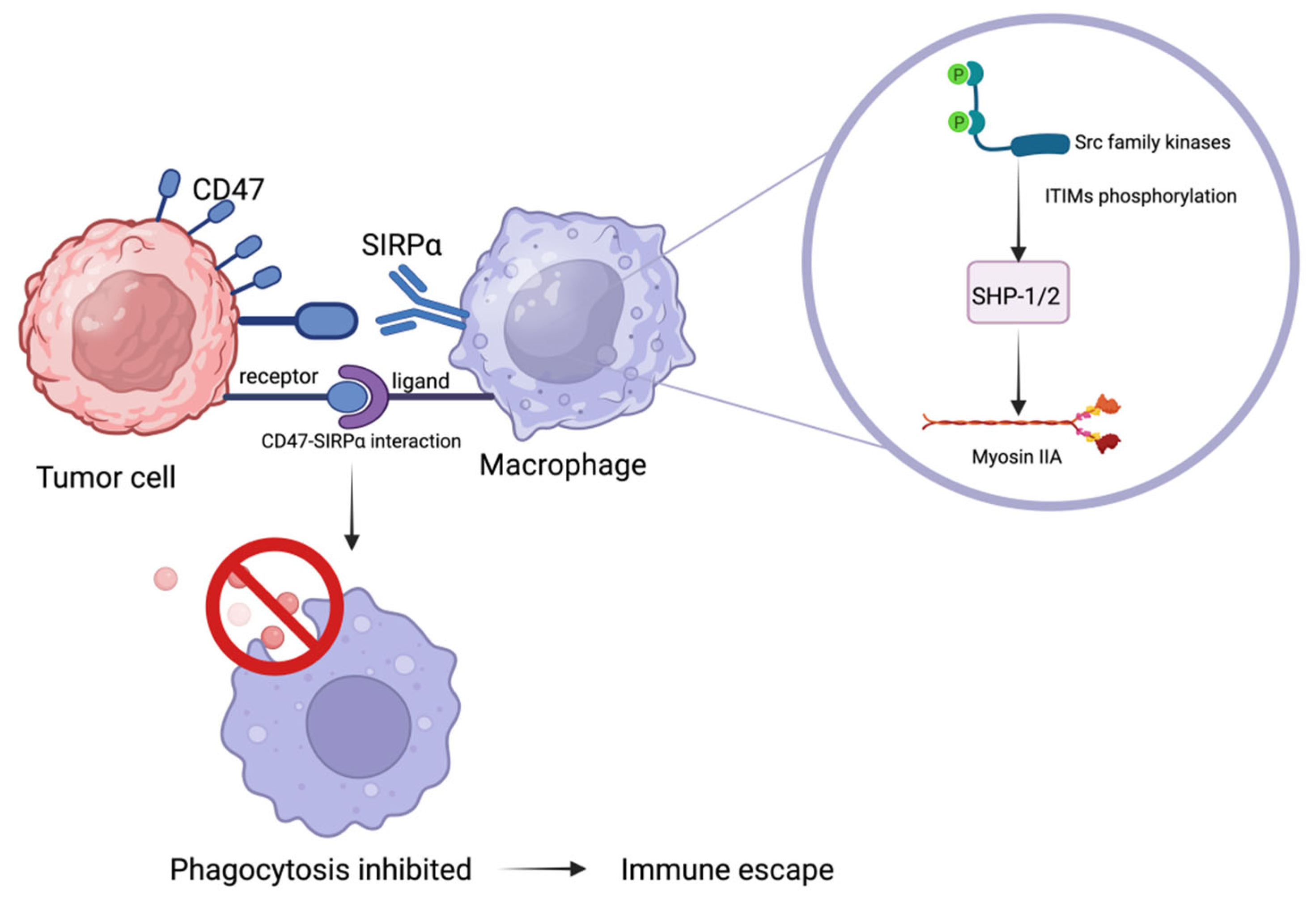
2. Mechanism of CD47-Mediated Immune Escape
3. Expression of CD47 in CRC
3.1. CD47 Expression in Immunohistochemistry Studies
3.2. CD47 Expression in Transcriptomic Analyses
4. Clinical and Prognostic Correlations of CD47 Expression in CRC
4.1. Correlation Between CD47 and TNM Staging
4.2. Correlation Between CD47 and Tumor Differentiation
4.3. Correlation Between CD47 and Lymphatic/Distant Metastasis
4.4. Prognostic Impact of CD47 Expression on Survival and Recurrence
4.5. Correlation Between CD47 Expression and Consensus Molecular Subtypes
4.6. The Relationship Between CD47 and the Tumor Immune Microenvironment
5. Discussion
6. Conclusions
Author Contributions
Funding
Data Availability Statement
Acknowledgments
Conflicts of Interest
Abbreviations
| AJCC | American Joint Committee on Cancer |
| BRAF | v-Raf murine sarcoma viral oncogene homolog B1 |
| CD47 | Cluster of Differentiation 47 |
| CIMP | CpG island methylator phenotype |
| CMS | Consensus Molecular Subtypes (CMS1–4) |
| COAD | Colon adenocarcinoma |
| CRA | Colorectal adenocarcinoma |
| CRC | Colorectal cancer |
| CSS | Cancer-specific survival |
| CTLA-4 | Cytotoxic T-lymphocyte-associated protein 4 |
| DCs | Dendritic cells |
| DFS | Disease-free survival |
| dMMR | Deficient DNA mismatch repair |
| DSS | Disease-specific survival |
| EGFR | Epidermal growth factor receptor |
| EMT | Epithelial–mesenchymal transition |
| GEO | Gene Expression Omnibus |
| GEPIA | Gene Expression Profiling Interactive Analysis |
| IHC | Immunohistochemistry |
| ITIMs | Immunoreceptor tyrosine-based inhibitory motifs |
| KRAS | Kirsten rat sarcoma viral oncogene homolog |
| LAG3 | Lymphocyte-activation gene 3 |
| MDSCs | Myeloid-derived suppressor cells |
| MSI | Microsatellite instability |
| MYC | Myelocytomatosis oncogene |
| NK | Natural killer cells |
| OS | Overall survival |
| PD-1 | Programmed cell death protein 1 |
| PD-L1 | Programmed death-ligand 1 |
| PFI | Progression-free interval |
| RFS | Recurrence-free survival |
| RT-PCR | Reverse Transcription Polymerase Chain Reaction |
| SHP-1/2 | Src homology region 2 domain-containing phosphatase-1/2 |
| SIRPα | Signal regulatory protein alpha |
| TAMs | Tumor-associated macrophages |
| TCGA | The Cancer Genome Atlas |
| TGF-β | Transforming growth factor-β |
| TIMER | Tumor Immune Estimation Resource |
| TME | Tumor immune microenvironment |
| TNM | Tumor–Node–Metastasis staging system |
| Tregs | Regulatory T cells |
| WNT | Wingless-related integration site |
References
- Sung, H.; Ferlay, J.; Siegel, R.L.; Laversanne, M.; Soerjomataram, I.; Jemal, A.; Bray, F. Global Cancer Statistics 2020: GLOBOCAN Estimates of Incidence and Mortality Worldwide for 36 Cancers in 185 Countries. CA Cancer J. Clin. 2021, 71, 209–249. [Google Scholar] [CrossRef]
- Bray, F.; Ferlay, J.; Soerjomataram, I.; Siegel, R.L.; Torre, L.A.; Jemal, A. Global cancer statistics 2018: GLOBOCAN estimates of incidence and mortality worldwide for 36 cancers in 185 countries. CA Cancer J. Clin. 2018, 68, 394–424. [Google Scholar] [CrossRef]
- Mathew, B.G.; Aliyuda, F.; Taiwo, D.; Adekeye, K.; Agada, G.; Sanchez, E.; Ghose, A.; Rassy, E.; Boussios, S. From Biology to Diagnosis and Treatment: The Ariadne’s Thread in Cancer of Unknown Primary. Int. J. Mol. Sci. 2023, 24, 5588. [Google Scholar] [CrossRef] [PubMed]
- Taieb, J.; Svrcek, M.; Cohen, R.; Basile, D.; Tougeron, D.; Phelip, J.M. Deficient mismatch repair/microsatellite unstable colorectal cancer: Diagnosis, prognosis and treatment. Eur. J. Cancer 2022, 175, 136–157. [Google Scholar] [CrossRef]
- Vilar, E.; Tabernero, J. Molecular dissection of microsatellite instable colorectal cancer. Cancer Discov. 2013, 3, 502–511. [Google Scholar] [CrossRef]
- Adeleke, S.; Haslam, A.; Choy, A.; Diaz-Cano, S.; Galante, J.R.; Mikropoulos, C.; Boussios, S. Microsatellite instability testing in colorectal patients with Lynch syndrome: Lessons learned from a case report and how to avoid such pitfalls. Pers. Med. 2022, 19, 277–286. [Google Scholar] [CrossRef] [PubMed]
- Oshi, M.; Asaoka, M.; Tokumaru, Y.; Yan, L.; Matsuyama, R.; Ishikawa, T.; Endo, I.; Takabe, K. CD8 T Cell Score as a Prognostic Biomarker for Triple Negative Breast Cancer. Int. J. Mol. Sci. 2020, 21, 6968. [Google Scholar] [CrossRef]
- Binnewies, M.; Roberts, E.W.; Kersten, K.; Chan, V.; Fearon, D.F.; Merad, M.; Coussens, L.M.; Gabrilovich, D.I.; Ostrand-Rosenberg, S.; Hedrick, C.C.; et al. Understanding the tumor immune microenvironment (TIME) for effective therapy. Nat. Med. 2018, 24, 541–550. [Google Scholar] [CrossRef] [PubMed]
- Inaguma, S.; Lasota, J.; Wang, Z.; Felisiak-Golabek, A.; Ikeda, H.; Miettinen, M. Clinicopathologic profile, immunophenotype, and genotype of CD274 (PD-L1)-positive colorectal carcinomas. Mod. Pathol. 2017, 30, 278–285. [Google Scholar] [CrossRef]
- Kim, J.H.; Park, H.E.; Cho, N.Y.; Lee, H.S.; Kang, G.H. Characterisation of PD-L1-positive subsets of microsatellite-unstable colorectal cancers. Br. J. Cancer 2016, 115, 490–496. [Google Scholar] [CrossRef]
- Lee, L.H.; Cavalcanti, M.S.; Segal, N.H.; Hechtman, J.F.; Weiser, M.R.; Smith, J.J.; Garcia-Aguilar, J.; Sadot, E.; Ntiamoah, P.; Markowitz, A.J.; et al. Patterns and prognostic relevance of PD-1 and PD-L1 expression in colorectal carcinoma. Mod. Pathol. 2016, 29, 1433–1442. [Google Scholar] [CrossRef]
- Rosenbaum, M.W.; Bledsoe, J.R.; Morales-Oyarvide, V.; Huynh, T.G.; Mino-Kenudson, M. PD-L1 expression in colorectal cancer is associated with microsatellite instability, BRAF mutation, medullary morphology and cytotoxic tumor-infiltrating lymphocytes. Mod. Pathol. 2016, 29, 1104–1112. [Google Scholar] [CrossRef] [PubMed]
- Lei, X.; Lei, Y.; Li, J.K.; Du, W.X.; Li, R.G.; Yang, J.; Li, J.; Li, F.; Tan, H.B. Immune cells within the tumor microenvironment: Biological functions and roles in cancer immunotherapy. Cancer Lett. 2020, 470, 126–133. [Google Scholar] [CrossRef]
- Cavallo, F.; De Giovanni, C.; Nanni, P.; Forni, G.; Lollini, P.L. 2011: The immune hallmarks of cancer. Cancer Immunol. Immunother. 2011, 60, 319–326. [Google Scholar] [CrossRef]
- McGranahan, N.; Favero, F.; de Bruin, E.C.; Birkbak, N.J.; Szallasi, Z.; Swanton, C. Clonal status of actionable driver events and the timing of mutational processes in cancer evolution. Sci. Transl. Med. 2015, 7, 283ra254. [Google Scholar] [CrossRef] [PubMed]
- Wu, Q.; Tsai, H.I.; Zhu, H.; Wang, D. The Entanglement between Mitochondrial DNA and Tumor Metastasis. Cancers 2022, 14, 1862. [Google Scholar] [CrossRef]
- Kerr, S.C.; Morgan, M.M.; Gillette, A.A.; Livingston, M.K.; Lugo-Cintron, K.M.; Favreau, P.F.; Florek, L.; Johnson, B.P.; Lang, J.M.; Skala, M.C.; et al. A bioengineered organotypic prostate model for the study of tumor microenvironment-induced immune cell activation. Integr. Biol. 2020, 12, 250–262. [Google Scholar] [CrossRef]
- Cortellino, S.; Longo, V.D. Metabolites and Immune Response in Tumor Microenvironments. Cancers 2023, 15, 3898. [Google Scholar] [CrossRef] [PubMed]
- Veillette, A.; Chen, J. SIRPα-CD47 Immune Checkpoint Blockade in Anticancer Therapy. Trends Immunol. 2018, 39, 173–184. [Google Scholar] [CrossRef]
- Chao, M.P.; Weissman, I.L.; Majeti, R. The CD47-SIRPα pathway in cancer immune evasion and potential therapeutic implications. Curr. Opin. Immunol. 2012, 24, 225–232. [Google Scholar] [CrossRef]
- Feng, M.; Jiang, W.; Kim, B.Y.S.; Zhang, C.C.; Fu, Y.X.; Weissman, I.L. Phagocytosis checkpoints as new targets for cancer immunotherapy. Nat. Rev. Cancer 2019, 19, 568–586. [Google Scholar] [CrossRef]
- Fujiwara-Tani, R.; Sasaki, T.; Ohmori, H.; Luo, Y.; Goto, K.; Nishiguchi, Y.; Mori, S.; Nakashima, C.; Mori, T.; Miyagawa, Y.; et al. Concurrent Expression of CD47 and CD44 in Colorectal Cancer Promotes Malignancy. Pathobiology 2019, 86, 182–189. [Google Scholar] [CrossRef] [PubMed]
- Oh, H.H.; Park, Y.L.; Park, S.Y.; Myung, E.; Im, C.M.; Yu, H.J.; Han, B.; Seo, Y.J.; Kim, K.H.; Myung, D.S.; et al. CD47 mediates the progression of colorectal cancer by inducing tumor cell apoptosis and angiogenesis. Pathol. Res. Pract. 2022, 240, 154220. [Google Scholar] [CrossRef]
- Feng, R.; Zhao, H.; Xu, J.; Shen, C. CD47: The next checkpoint target for cancer immunotherapy. Crit. Rev. Oncol. Hematol. 2020, 152, 103014. [Google Scholar] [CrossRef] [PubMed]
- Li, Z.; Li, Y.; Gao, J.; Fu, Y.; Hua, P.; Jing, Y.; Cai, M.; Wang, H.; Tong, T. The role of CD47-SIRPα immune checkpoint in tumor immune evasion and innate immunotherapy. Life Sci. 2021, 273, 119150. [Google Scholar] [CrossRef] [PubMed]
- Bai, Z.; Zhou, Y.; Ye, Z.; Xiong, J.; Lan, H.; Wang, F. Tumor-Infiltrating Lymphocytes in Colorectal Cancer: The Fundamental Indication and Application on Immunotherapy. Front. Immunol. 2021, 12, 808964. [Google Scholar] [CrossRef]
- Zhang, L.; Pan, K.; Huang, S.; Zhang, X.; Zhu, X.; He, Y.; Chen, X.; Tang, Y.; Yuan, L.; Yu, D. Graphdiyne Oxide-Mediated Photodynamic Therapy Boosts Enhancive T-Cell Immune Responses by Increasing Cellular Stiffness. Int. J. Nanomed. 2023, 18, 797–812. [Google Scholar] [CrossRef]
- Waibl Polania, J.; Lerner, E.C.; Wilkinson, D.S.; Hoyt-Miggelbrink, A.; Fecci, P.E. Pushing Past the Blockade: Advancements in T Cell-Based Cancer Immunotherapies. Front. Immunol. 2021, 12, 777073. [Google Scholar] [CrossRef]
- Huang, K.K.; Han, S.S.; He, L.Y.; Yang, L.L.; Liang, B.Y.; Zhen, Q.Y.; Zhu, Z.B.; Zhang, C.Y.; Li, H.Y.; Lin, Y. Combination therapy (toripalimab and lenvatinib)-associated toxic epidermal necrolysis in a patient with metastatic liver cancer: A case report. World J. Clin. Cases 2022, 10, 3478–3484. [Google Scholar] [CrossRef]
- Tseng, J.C.; Chang, Y.C.; Huang, C.M.; Hsu, L.C.; Chuang, T.H. Therapeutic Development Based on the Immunopathogenic Mechanisms of Psoriasis. Pharmaceutics 2021, 13, 1064. [Google Scholar] [CrossRef]
- Sas, Z.; Cendrowicz, E.; Weinhäuser, I.; Rygiel, T.P. Tumor Microenvironment of Hepatocellular Carcinoma: Challenges and Opportunities for New Treatment Options. Int. J. Mol. Sci. 2022, 23, 3778. [Google Scholar] [CrossRef]
- He, Q.; Gao, H.; Tan, D.; Zhang, H.; Wang, J.Z. mRNA cancer vaccines: Advances, trends and challenges. Acta Pharm. Sin. B 2022, 12, 2969–2989. [Google Scholar] [CrossRef]
- Lin, K.X.; Istl, A.C.; Quan, D.; Skaro, A.; Tang, E.; Zheng, X. PD-1 and PD-L1 inhibitors in cold colorectal cancer: Challenges and strategies. Cancer Immunol. Immunother. 2023, 72, 3875–3893. [Google Scholar] [CrossRef]
- Imani, S.; Farghadani, R.; Roozitalab, G.; Maghsoudloo, M.; Emadi, M.; Moradi, A.; Abedi, B.; Jabbarzadeh Kaboli, P. Reprogramming the breast tumor immune microenvironment: Cold-to-hot transition for enhanced immunotherapy. J. Exp. Clin. Cancer Res. 2025, 44, 131. [Google Scholar] [CrossRef]
- Natsuki, S.; Yoshii, M.; Tanaka, H.; Mori, T.; Deguchi, S.; Miki, Y.; Tamura, T.; Toyokawa, T.; Lee, S.; Maeda, K. Involvement of CX3CR1+ cells appearing in the abdominal cavity in the immunosuppressive environment immediately after gastric cancer surgery. World J. Surg. Oncol. 2024, 22, 74. [Google Scholar] [CrossRef]
- Zhu, Z.; Jin, Y.; Zhou, J.; Chen, F.; Chen, M.; Gao, Z.; Hu, L.; Xuan, J.; Li, X.; Song, Z.; et al. PD1/PD-L1 blockade in clear cell renal cell carcinoma: Mechanistic insights, clinical efficacy, and future perspectives. Mol. Cancer 2024, 23, 146. [Google Scholar] [CrossRef] [PubMed]
- Lubitz, G.S.; Brody, J.D. Not just neighbours: Positive feedback between tumour-associated macrophages and exhausted T cells. Nat. Rev. Immunol. 2022, 22, 3. [Google Scholar] [CrossRef] [PubMed]
- Zha, H.; Xu, Z.; Xu, X.; Lu, X.; Shi, P.; Xiao, Y.; Tsai, H.I.; Su, D.; Cheng, F.; Cheng, X.; et al. PD-1 Cellular Nanovesicles Carrying Gemcitabine to Inhibit the Proliferation of Triple Negative Breast Cancer Cell. Pharmaceutics 2022, 14, 1263. [Google Scholar] [CrossRef] [PubMed]
- Tang, S.; Che, X.; Wang, J.; Li, C.; He, X.; Hou, K.; Zhang, X.; Guo, J.; Yang, B.; Li, D.; et al. T-bet+CD8+ T cells govern anti-PD-1 responses in microsatellite-stable gastric cancers. Nat. Commun. 2025, 16, 3905. [Google Scholar] [CrossRef]
- Cheng, M.; Zain, J.; Rosen, S.T.; Querfeld, C. Emerging drugs for the treatment of cutaneous T-cell lymphoma. Expert Opin. Emerg. Drugs 2022, 27, 45–54. [Google Scholar] [CrossRef]
- Nixon, B.G.; Kuo, F.; Ji, L.; Liu, M.; Capistrano, K.; Do, M.; Franklin, R.A.; Wu, X.; Kansler, E.R.; Srivastava, R.M.; et al. Tumor-associated macrophages expressing the transcription factor IRF8 promote T cell exhaustion in cancer. Immunity 2022, 55, 2044–2058.e2045. [Google Scholar] [CrossRef]
- Dalmau Gasull, A.; Glavan, M.; Samawar, S.K.R.; Kapupara, K.; Kelk, J.; Rubio, M.; Fumagalli, S.; Sorokin, L.; Vivien, D.; Prinz, M. The niche matters: Origin, function and fate of CNS-associated macrophages during health and disease. Acta Neuropathol. 2024, 147, 37. [Google Scholar] [CrossRef]
- Gao, J.; Tan, W.; Yuan, L.; Wang, H.; Wen, J.; Sun, K.; Chen, X.; Wang, S.; Deng, W. Antitumour mechanisms of traditional Chinese medicine elicited by regulating tumour-associated macrophages in solid tumour microenvironments. Heliyon 2024, 10, e27220. [Google Scholar] [CrossRef] [PubMed]
- Gao, H.; Ma, L.; Zou, Q.; Hu, B.; Cai, K.; Sun, Y.; Lu, L.; Ren, D. Unraveling dynamic interactions between tumor-associated macrophages and consensus molecular subtypes in colorectal cancer: An integrative analysis of single-cell and bulk RNA transcriptome. Heliyon 2023, 9, e19224. [Google Scholar] [CrossRef]
- Li, J.; Ding, Z.; Liu, J.; Li, G.; Li, Y.; Wang, W.; Nundlall, K.; Deng, Y.; Miao, J.; Hu, M.; et al. Reshaping tumor immune microenvironment and modulating T cell function based on hierarchical nanotherapeutics for synergistically inhibiting osteosarcoma. Mater. Today Bio 2025, 34, 102095. [Google Scholar] [CrossRef]
- Li, W.; Xu, M.; Cheng, M.; Wei, J.; Zhu, L.; Deng, Y.; Guo, F.; Bi, F.; Liu, M. Current Advances and Future Directions for Sensitizing Gastric Cancer to Immune Checkpoint Inhibitors. Cancer Med. 2025, 14, e71065. [Google Scholar] [CrossRef] [PubMed]
- Zhang, C.; Zhou, Y.; Gao, Y.; Zhu, Z.; Zeng, X.; Liang, W.; Sun, S.; Chen, X.; Wang, H. Radiated glioblastoma cell-derived exosomal circ_0012381 induce M2 polarization of microglia to promote the growth of glioblastoma by CCL2/CCR2 axis. J. Transl. Med. 2022, 20, 388. [Google Scholar] [CrossRef] [PubMed]
- Shin, S.; Baek, D.S.; Mellors, J.W.; Dimitrov, D.S.; Li, W. Development of Fully Human Antibodies Targeting SIRPα and PLA2G7 for Cancer Therapy. Antibodies 2025, 14, 21. [Google Scholar] [CrossRef]
- Chan, C.; Stip, M.; Nederend, M.; Jansen, M.; Passchier, E.; van den Ham, F.; Wienke, J.; van Tetering, G.; Leusen, J. Enhancing IgA-mediated neutrophil cytotoxicity against neuroblastoma by CD47 blockade. J. Immunother. Cancer 2024, 12, e008478. [Google Scholar] [CrossRef]
- Brown, E.J.; Frazier, W.A. Integrin-associated protein (CD47) and its ligands. Trends Cell Biol. 2001, 11, 130–135. [Google Scholar] [CrossRef]
- Folkes, A.S.; Feng, M.; Zain, J.M.; Abdulla, F.; Rosen, S.T.; Querfeld, C. Targeting CD47 as a cancer therapeutic strategy: The cutaneous T-cell lymphoma experience. Curr. Opin. Oncol. 2018, 30, 332–337. [Google Scholar] [CrossRef]
- Wu, F.; Pang, H.; Li, F.; Hua, M.; Song, C.; Tang, J. Progress in cancer research on the regulator of phagocytosis CD47, which determines the fate of tumor cells (Review). Oncol. Lett. 2024, 27, 256. [Google Scholar] [CrossRef]
- Jalil, A.R.; Andrechak, J.C.; Discher, D.E. Macrophage checkpoint blockade: Results from initial clinical trials, binding analyses, and CD47-SIRPα structure-function. Antib. Ther. 2020, 3, 80–94. [Google Scholar] [CrossRef]
- Oldenborg, P.A. CD47: A Cell Surface Glycoprotein Which Regulates Multiple Functions of Hematopoietic Cells in Health and Disease. ISRN Hematol. 2013, 2013, 614619. [Google Scholar] [CrossRef] [PubMed]
- Xie, Z.; Liao, J.; Chen, J. Targeting macrophages to reprogram the tumor immune microenvironment. Blood Sci. 2024, 6, e00203. [Google Scholar] [CrossRef] [PubMed]
- Qin, L.; Li, Y.; Zeng, R.; He, Y.; Chen, X.; Xiao, L.; Zhou, H. A novel anti-CD47 antibody with therapeutic potential for NK/T-cell lymphoma. Hum. Vaccin. Immunother. 2024, 20, 2408088. [Google Scholar] [CrossRef]
- Eladl, E.; Tremblay-LeMay, R.; Rastgoo, N.; Musani, R.; Chen, W.; Liu, A.; Chang, H. Role of CD47 in Hematological Malignancies. J. Hematol. Oncol. 2020, 13, 96. [Google Scholar] [CrossRef]
- Tal, M.C.; Hansen, P.S.; Ogasawara, H.A.; Feng, Q.; Volk, R.F.; Lee, B.; Casebeer, S.E.; Blacker, G.S.; Shoham, M.; Galloway, S.D.; et al. P66 is a bacterial mimic of CD47 that binds the anti-phagocytic receptor SIRPα and facilitates macrophage evasion by Borrelia burgdorferi. bioRxiv 2024. [Google Scholar] [CrossRef]
- Saini, P.; Mirji, G.; Islam, S.M.S.; Simons, L.M.; Bhat, S.A.; Bonfanti, A.P.; Muthumani, K.; Agrawal, P.; Cassel, J.; Tang, H.Y.; et al. Targeting Siglec-10/α3β1 Integrin Interactions Enhances Macrophage-Mediated Phagocytosis of Pancreatic Cancer. bioRxiv 2025. [Google Scholar] [CrossRef] [PubMed]
- Matlung, H.L.; Szilagyi, K.; Barclay, N.A.; van den Berg, T.K. The CD47-SIRPα signaling axis as an innate immune checkpoint in cancer. Immunol. Rev. 2017, 276, 145–164. [Google Scholar] [CrossRef]
- Chao, M.P.; Jaiswal, S.; Weissman-Tsukamoto, R.; Alizadeh, A.A.; Gentles, A.J.; Volkmer, J.; Weiskopf, K.; Willingham, S.B.; Raveh, T.; Park, C.Y.; et al. Calreticulin is the dominant pro-phagocytic signal on multiple human cancers and is counterbalanced by CD47. Sci. Transl. Med. 2010, 2, 63ra94. [Google Scholar] [CrossRef]
- Pai, S.; Bamodu, O.A.; Lin, Y.K.; Lin, C.S.; Chu, P.Y.; Chien, M.H.; Wang, L.S.; Hsiao, M.; Yeh, C.T.; Tsai, J.T. CD47-SIRPα Signaling Induces Epithelial-Mesenchymal Transition and Cancer Stemness and Links to a Poor Prognosis in Patients with Oral Squamous Cell Carcinoma. Cells 2019, 8, 1658. [Google Scholar] [CrossRef]
- Zhang, H.; Lu, H.; Xiang, L.; Bullen, J.W.; Zhang, C.; Samanta, D.; Gilkes, D.M.; He, J.; Semenza, G.L. HIF-1 regulates CD47 expression in breast cancer cells to promote evasion of phagocytosis and maintenance of cancer stem cells. Proc. Natl. Acad. Sci. USA 2015, 112, E6215–E6223. [Google Scholar] [CrossRef]
- Marcucci, F.; Rumio, C.; Corti, A. Tumor cell-associated immune checkpoint molecules—Drivers of malignancy and stemness. Biochim. Biophys. Acta Rev. Cancer 2017, 1868, 571–583. [Google Scholar] [CrossRef] [PubMed]
- Schwartz, A.L.; Nath, P.R.; Allgauer, M.; Lessey-Morillon, E.C.; Sipes, J.M.; Ridnour, L.A.; Morillon Ii, Y.M.; Yu, Z.; Restifo, N.P.; Roberts, D.D. Antisense targeting of CD47 enhances human cytotoxic T-cell activity and increases survival of mice bearing B16 melanoma when combined with anti-CTLA4 and tumor irradiation. Cancer Immunol. Immunother. 2019, 68, 1805–1817. [Google Scholar] [CrossRef]
- Betancur, P.A.; Abraham, B.J.; Yiu, Y.Y.; Willingham, S.B.; Khameneh, F.; Zarnegar, M.; Kuo, A.H.; McKenna, K.; Kojima, Y.; Leeper, N.J.; et al. A CD47-associated super-enhancer links pro-inflammatory signalling to CD47 upregulation in breast cancer. Nat. Commun. 2017, 8, 14802. [Google Scholar] [CrossRef] [PubMed]
- Satoh, J.; Kawana, N.; Yamamoto, Y. Pathway Analysis of ChIP-Seq-Based NRF1 Target Genes Suggests a Logical Hypothesis of their Involvement in the Pathogenesis of Neurodegenerative Diseases. Gene Regul. Syst. Bio 2013, 7, 139–152. [Google Scholar] [CrossRef] [PubMed]
- Liu, F.; Jiang, C.C.; Yan, X.G.; Tseng, H.Y.; Wang, C.Y.; Zhang, Y.Y.; Yari, H.; La, T.; Farrelly, M.; Guo, S.T.; et al. BRAF/MEK inhibitors promote CD47 expression that is reversible by ERK inhibition in melanoma. Oncotarget 2017, 8, 69477–69492. [Google Scholar] [CrossRef]
- Gowda, P.; Patrick, S.; Singh, A.; Sheikh, T.; Sen, E. Mutant Isocitrate Dehydrogenase 1 Disrupts PKM2-β-Catenin-BRG1 Transcriptional Network-Driven CD47 Expression. Mol. Cell. Biol. 2018, 38, e00001-18. [Google Scholar] [CrossRef]
- Deng, H.; Wang, G.; Zhao, S.; Tao, Y.; Zhang, Z.; Yang, J.; Lei, Y. New hope for tumor immunotherapy: The macrophage-related “do not eat me” signaling pathway. Front. Pharmacol. 2023, 14, 1228962. [Google Scholar] [CrossRef]
- Dizman, N.; Buchbinder, E.I. Cancer Therapy Targeting CD47/SIRPα. Cancers 2021, 13, 6229. [Google Scholar] [CrossRef]
- Willingham, S.B.; Volkmer, J.P.; Gentles, A.J.; Sahoo, D.; Dalerba, P.; Mitra, S.S.; Wang, J.; Contreras-Trujillo, H.; Martin, R.; Cohen, J.D.; et al. The CD47-signal regulatory protein alpha (SIRPa) interaction is a therapeutic target for human solid tumors. Proc. Natl. Acad. Sci. USA 2012, 109, 6662–6667. [Google Scholar] [CrossRef]
- Majeti, R.; Chao, M.P.; Alizadeh, A.A.; Pang, W.W.; Jaiswal, S.; Gibbs, K.D., Jr.; van Rooijen, N.; Weissman, I.L. CD47 is an adverse prognostic factor and therapeutic antibody target on human acute myeloid leukemia stem cells. Cell 2009, 138, 286–299. [Google Scholar] [CrossRef] [PubMed]
- Chao, M.P.; Alizadeh, A.A.; Tang, C.; Jan, M.; Weissman-Tsukamoto, R.; Zhao, F.; Park, C.Y.; Weissman, I.L.; Majeti, R. Therapeutic antibody targeting of CD47 eliminates human acute lymphoblastic leukemia. Cancer Res. 2011, 71, 1374–1384. [Google Scholar] [CrossRef]
- Ho, C.C.; Guo, N.; Sockolosky, J.T.; Ring, A.M.; Weiskopf, K.; Özkan, E.; Mori, Y.; Weissman, I.L.; Garcia, K.C. “Velcro” engineering of high affinity CD47 ectodomain as signal regulatory protein α (SIRPα) antagonists that enhance antibody-dependent cellular phagocytosis. J. Biol. Chem. 2015, 290, 12650–12663. [Google Scholar] [CrossRef]
- Weiskopf, K.; Ring, A.M.; Ho, C.C.; Volkmer, J.P.; Levin, A.M.; Volkmer, A.K.; Ozkan, E.; Fernhoff, N.B.; van de Rijn, M.; Weissman, I.L.; et al. Engineered SIRPα variants as immunotherapeutic adjuvants to anticancer antibodies. Science 2013, 341, 88–91. [Google Scholar] [CrossRef]
- Ingram, J.R.; Blomberg, O.S.; Sockolosky, J.T.; Ali, L.; Schmidt, F.I.; Pishesha, N.; Espinosa, C.; Dougan, S.K.; Garcia, K.C.; Ploegh, H.L.; et al. Localized CD47 blockade enhances immunotherapy for murine melanoma. Proc. Natl. Acad. Sci. USA 2017, 114, 10184–10189. [Google Scholar] [CrossRef]
- Liu, X.; Pu, Y.; Cron, K.; Deng, L.; Kline, J.; Frazier, W.A.; Xu, H.; Peng, H.; Fu, Y.X.; Xu, M.M. CD47 blockade triggers T cell-mediated destruction of immunogenic tumors. Nat. Med. 2015, 21, 1209–1215. [Google Scholar] [CrossRef] [PubMed]
- Zhao, H.; Song, S.; Ma, J.; Yan, Z.; Xie, H.; Feng, Y.; Che, S. CD47 as a promising therapeutic target in oncology. Front. Immunol. 2022, 13, 757480. [Google Scholar] [CrossRef]
- Soto-Pantoja, D.R.; Terabe, M.; Ghosh, A.; Ridnour, L.A.; DeGraff, W.G.; Wink, D.A.; Berzofsky, J.A.; Roberts, D.D. CD47 in the tumor microenvironment limits cooperation between antitumor T-cell immunity and radiotherapy. Cancer Res. 2014, 74, 6771–6783. [Google Scholar] [CrossRef] [PubMed]
- Bond, N.G.; Fahlberg, M.D.; Yu, S.; Rout, N.; Tran, D.; Fitzpatrick-Schmidt, T.; Sprehe, L.M.; Scheef, E.A.; Mudd, J.C.; Schaub, R.; et al. Immunomodulatory potential of in vivo natural killer T (NKT) activation by NKTT320 in Mauritian-origin cynomolgus macaques. iScience 2022, 25, 103889. [Google Scholar] [CrossRef]
- Nath, P.R.; Gangaplara, A.; Pal-Nath, D.; Mandal, A.; Maric, D.; Sipes, J.M.; Cam, M.; Shevach, E.M.; Roberts, D.D. CD47 Expression in Natural Killer Cells Regulates Homeostasis and Modulates Immune Response to Lymphocytic Choriomeningitis Virus. Front. Immunol. 2018, 9, 2985. [Google Scholar] [CrossRef]
- Matthews, A.H.; Pratz, K.W.; Carroll, M.P. Targeting Menin and CD47 to Address Unmet Needs in Acute Myeloid Leukemia. Cancers 2022, 14, 5906. [Google Scholar] [CrossRef]
- Chen, S.H.; Dominik, P.K.; Stanfield, J.; Ding, S.; Yang, W.; Kurd, N.; Llewellyn, R.; Heyen, J.; Wang, C.; Melton, Z.; et al. Dual checkpoint blockade of CD47 and PD-L1 using an affinity-tuned bispecific antibody maximizes antitumor immunity. J. Immunother. Cancer 2021, 9, e003464. [Google Scholar] [CrossRef] [PubMed]
- Reissfelder, C.; Stamova, S.; Gossmann, C.; Braun, M.; Bonertz, A.; Walliczek, U.; Grimm, M.; Rahbari, N.N.; Koch, M.; Saadati, M.; et al. Tumor-specific cytotoxic T lymphocyte activity determines colorectal cancer patient prognosis. J. Clin. Investig. 2015, 125, 739–751. [Google Scholar] [CrossRef] [PubMed]
- Broekgaarden, M.; Kos, M.; Jurg, F.A.; van Beek, A.A.; van Gulik, T.M.; Heger, M. Inhibition of NF-κB in Tumor Cells Exacerbates Immune Cell Activation Following Photodynamic Therapy. Int. J. Mol. Sci. 2015, 16, 19960–19977. [Google Scholar] [CrossRef] [PubMed]
- Liu, Z.; Lei, M.; Bai, Y. Chronic Stress Mediates Inflammatory Cytokines Alterations and Its Role in Tumorigenesis. J. Inflamm. Res. 2025, 18, 1067–1090. [Google Scholar] [CrossRef]
- Tian, Q.S.; Zhang, C.; Bao, Z.J.; Pei, Z. The role of CD47 in immune escape of colon cancer and its correlation with heterogeneity of tumor immune microenvironment. PeerJ 2024, 12, e18579. [Google Scholar] [CrossRef]
- Kim, H.; Jee, S.; Kim, Y.; Sim, J.; Bang, S.; Son, H.K.; Park, H.; Myung, J.; Ko, Y.H.; Paik, S.S. Correlation of CD47 Expression with Adverse Clinicopathologic Features and an Unfavorable Prognosis in Colorectal Adenocarcinoma. Diagnostics 2021, 11, 668. [Google Scholar] [CrossRef]
- Sugimura-Nagata, A.; Koshino, A.; Inoue, S.; Matsuo-Nagano, A.; Komura, M.; Riku, M.; Ito, H.; Inoko, A.; Murakami, H.; Ebi, M.; et al. Expression and Prognostic Significance of CD47-SIRPA Macrophage Checkpoint Molecules in Colorectal Cancer. Int. J. Mol. Sci. 2021, 22, 2690. [Google Scholar] [CrossRef]
- Hu, T.; Liu, H.; Liang, Z.; Wang, F.; Zhou, C.; Zheng, X.; Zhang, Y.; Song, Y.; Hu, J.; He, X.; et al. Tumor-intrinsic CD47 signal regulates glycolysis and promotes colorectal cancer cell growth and metastasis. Theranostics 2020, 10, 4056–4072. [Google Scholar] [CrossRef]
- Aktepe, O.H.; Kurtulan, O.; Dama, P.E.; Yildirim, E.C.; Terzi, A.; Kalyoncu, S.A.; Atag, E.; Yavuzsen, T.; Uner, M.; Karaoglu, A.; et al. Prognostic importance of CD47 expression on survival of colorectal cancer. BMC Gastroenterol. 2025, 25, 757. [Google Scholar] [CrossRef]
- Arai, H.; Gandhi, N.; Battaglin, F.; Wang, J.; Algaze, S.; Jayachandran, P.; Soni, S.; Zhang, W.; Yang, Y.; Millstein, J.; et al. Role of CD47 gene expression in colorectal cancer: A comprehensive molecular profiling study. J. Immunother. Cancer 2024, 12, e010326. [Google Scholar] [CrossRef]
- Hu, Z.; Li, W.; Chen, S.; Chen, D.; Xu, R.; Zheng, D.; Yang, X.; Li, S.; Zhou, X.; Niu, X.; et al. Design of a novel chimeric peptide via dual blockade of CD47/SIRPα and PD-1/PD-L1 for cancer immunotherapy. Sci. China Life Sci. 2023, 66, 2310–2328. [Google Scholar] [CrossRef] [PubMed]
- Valenzuela, G.; Canepa, J.; Simonetti, C.; Solo de Zaldívar, L.; Marcelain, K.; González-Montero, J. Consensus molecular subtypes of colorectal cancer in clinical practice: A translational approach. World J. Clin. Oncol. 2021, 12, 1000–1008. [Google Scholar] [CrossRef] [PubMed]
- Larionova, I.; Tuguzbaeva, G.; Ponomaryova, A.; Stakheyeva, M.; Cherdyntseva, N.; Pavlov, V.; Choinzonov, E.; Kzhyshkowska, J. Tumor-Associated Macrophages in Human Breast, Colorectal, Lung, Ovarian and Prostate Cancers. Front. Oncol. 2020, 10, 566511. [Google Scholar] [CrossRef]
- Zhang, J.; Zhu, H.; Liu, W.; Miao, J.; Mao, Y.; Li, Q. Prognostic and predictive molecular biomarkers in colorectal cancer. Front. Oncol. 2025, 15, 1532924. [Google Scholar] [CrossRef]
- Leonard, N.A.; Corry, S.M.; Reidy, E.; Egan, H.; O’Malley, G.; Thompson, K.; McDermott, E.; O’Neill, A.; Zakaria, N.; Egan, L.J.; et al. Tumor-associated mesenchymal stromal cells modulate macrophage phagocytosis in stromal-rich colorectal cancer via PD-1 signaling. iScience 2024, 27, 110701. [Google Scholar] [CrossRef]
- Plundrich, D.; Chikhladze, S.; Fichtner-Feigl, S.; Feuerstein, R.; Briquez, P.S. Molecular Mechanisms of Tumor Immunomodulation in the Microenvironment of Colorectal Cancer. Int. J. Mol. Sci. 2022, 23, 2782. [Google Scholar] [CrossRef] [PubMed]
- Loomans-Kropp, H.A. The utility of liquid biopsy-based methylation biomarkers for colorectal cancer detection. Front. Oncol. 2024, 14, 1351514. [Google Scholar] [CrossRef]
- Kyrochristou, I.; Lianos, G.D.; Kyrochristou, G.D.; Anagnostopoulos, G.; Bali, C.; Boussios, S.; Mitsis, M.; Schizas, D.; Vlachos, K. Agnostic Biomarkers and Molecular Signatures in Colorectal Cancer-Guiding Chemotherapy and Predicting Response. Biomedicines 2025, 13, 2038. [Google Scholar] [CrossRef]
- Hasbullah, H.H.; Sulong, S.; Che Jalil, N.A.; Abdul Aziz, A.A.; Musa, N.; Musa, M. KRAS Mutational Profiles among Colorectal Cancer Patients in the East Coast of Peninsular Malaysia. Diagnostics 2023, 13, 822. [Google Scholar] [CrossRef]
- Burnett-Hartman, A.N.; Lee, J.K.; Demb, J.; Gupta, S. An Update on the Epidemiology, Molecular Characterization, Diagnosis, and Screening Strategies for Early-Onset Colorectal Cancer. Gastroenterology 2021, 160, 1041–1049. [Google Scholar] [CrossRef]
- Marzouk, O.; Schofield, J. Review of histopathological and molecular prognostic features in colorectal cancer. Cancers 2011, 3, 2767–2810. [Google Scholar] [CrossRef]
- Li, E.; Qiao, H.; Sun, J.; Ma, Q.; Lin, L.; He, Y.; Li, S.; Mao, X.; Zhang, X.; Liao, B. Cuproptosis-related gene expression is associated with immune infiltration and CD47/CD24 expression in glioblastoma, and a risk score based on these genes can predict the survival and prognosis of patients. Front. Oncol. 2023, 13, 1011476. [Google Scholar] [CrossRef]
- Elomaa, H.; Tarkiainen, V.; Äijälä, V.K.; Sirniö, P.; Ahtiainen, M.; Sirkiä, O.; Karjalainen, H.; Kastinen, M.; Tapiainen, V.V.; Rintala, J.; et al. Associations of mucinous differentiation and mucin expression with immune cell infiltration and prognosis in colorectal adenocarcinoma. Br. J. Cancer 2025, 132, 660–669. [Google Scholar] [CrossRef] [PubMed]
- Chen, C.; Lu, F.; Huang, H.; Pan, Y. Translating CD47-targeted therapy in gastrointestinal cancers: Insights from preclinical to clinical studies. iScience 2024, 27, 111478. [Google Scholar] [CrossRef]
- Zhao, Z.; Mak, T.K.; Shi, Y.; Li, K.; Huo, M.; Zhang, C. Integrative analysis of cancer-associated fibroblast signature in gastric cancer. Heliyon 2023, 9, e19217. [Google Scholar] [CrossRef] [PubMed]
- Kang, Y.; Zhang, H.; Guan, J. scINRB: Single-cell gene expression imputation with network regularization and bulk RNA-seq data. Brief. Bioinform. 2024, 25, bbae148. [Google Scholar] [CrossRef] [PubMed]
- Pirrotta, S.; Masatti, L.; Bortolato, A.; Corrà, A.; Pedrini, F.; Aere, M.; Esposito, G.; Martini, P.; Risso, D.; Romualdi, C.; et al. Exploring public cancer gene expression signatures across bulk, single-cell and spatial transcriptomics data with signifinder Bioconductor package. NAR Genom. Bioinform. 2024, 6, lqae138. [Google Scholar] [CrossRef]
- Parcesepe, P.; Giordano, G.; Laudanna, C.; Febbraro, A.; Pancione, M. Cancer-Associated Immune Resistance and Evasion of Immune Surveillance in Colorectal Cancer. Gastroenterol. Res. Pract. 2016, 2016, 6261721. [Google Scholar] [CrossRef]
- Celepli, P.; Karabulut, S.; Bigat, İ.; Celepli, S.; Hücümenoğlu, S. CD47 expression and tumor-associated immune cells in breast cancer and their correlation with molecular subtypes and prognostic factors. Pathol. Res. Pract. 2022, 238, 154107. [Google Scholar] [CrossRef]
- Roelands, J.; van der Ploeg, M.; Ijsselsteijn, M.E.; Dang, H.; Boonstra, J.J.; Hardwick, J.C.H.; Hawinkels, L.; Morreau, H.; de Miranda, N. Transcriptomic and immunophenotypic profiling reveals molecular and immunological hallmarks of colorectal cancer tumourigenesis. Gut 2023, 72, 1326–1339. [Google Scholar] [CrossRef]
- Zhan, P.; Wang, Y.; Zhao, S.; Liu, C.; Wang, Y.; Wen, M.; Mao, J.H.; Wei, G.; Zhang, P. FBXW7 negatively regulates ENO1 expression and function in colorectal cancer. Lab. Investig. 2015, 95, 995–1004. [Google Scholar] [CrossRef] [PubMed]
- Polara, R.; Ganesan, R.; Pitson, S.M.; Robinson, N. Cell autonomous functions of CD47 in regulating cellular plasticity and metabolic plasticity. Cell Death Differ. 2024, 31, 1255–1266. [Google Scholar] [CrossRef] [PubMed]
- Wang, R.; Zhang, C.; Cao, Y.; Wang, J.; Jiao, S.; Zhang, J.; Wang, M.; Tang, P.; Ouyang, Z.; Liang, W.; et al. Blockade of dual immune checkpoint inhibitory signals with a CD47/PD-L1 bispecific antibody for cancer treatment. Theranostics 2023, 13, 148–160. [Google Scholar] [CrossRef]
- Jin, S.; Wang, H.; Li, Y.; Yang, J.; Li, B.; Shi, P.; Zhang, X.; Zhou, X.; Zhou, X.; Niu, X.; et al. Discovery of a novel small molecule as CD47/SIRPα and PD-1/PD-L1 dual inhibitor for cancer immunotherapy. Cell Commun. Signal. 2024, 22, 173. [Google Scholar] [CrossRef]
- Eng, C.; Lakhani, N.J.; Philip, P.A.; Schneider, C.; Johnson, B.; Kardosh, A.; Chao, M.P.; Patnaik, A.; Shihadeh, F.; Lee, Y.; et al. A Phase 1b/2 Study of the Anti-CD47 Antibody Magrolimab with Cetuximab in Patients with Colorectal Cancer and Other Solid Tumors. Target. Oncol. 2025, 20, 519–530. [Google Scholar] [CrossRef]
- Lentz, R.W.; Lang, J.; Pitts, T.M.; Blatchford, P.; Hu, J.; Jordan, K.R.; Van Bokhoven, A.; Bagby, S.M.; Dominguez, A.T.A.; Binns, C.A.; et al. Phase II Clinical Trial and Preclinical Evaluation of a Novel CD47 Blockade Combination in Refractory Microsatellite-Stable Metastatic Colorectal Cancer. Cancer Res. Commun. 2025, 5, 2039–2052. [Google Scholar] [CrossRef] [PubMed]
- Fan, Y.N.; Zhao, G.; Zhang, Y.; Ye, Q.N.; Sun, Y.Q.; Shen, S.; Liu, Y.; Xu, C.F.; Wang, J. Progress in nanoparticle-based regulation of immune cells. Med. Rev. 2023, 3, 152–179. [Google Scholar] [CrossRef]


| Study | Cohort | Method | Sample Size | CD47 Assessment | Staining Localization | Scoring Method | Antibody Used | Main Finding (Standardized) |
|---|---|---|---|---|---|---|---|---|
| Oh et al. [23] | CRC (South Korea) | IHC | 468 | 53.4% (250/468) | Cell membrane | Intensity (0–3) × Density (1–4); Mean IHC score ≥ 5 = positive | Clone not specified, Abcam, Cambridge, UK; | OS ↓ (poorer OS in univariate; not significant in multivariate) |
| Fujiwara-Tani et al. [22] | CRC (Japan) | IHC | 95 | 86.3% (82/95) | Cell membrane | Staining index = intensity (0–3) × area (%); intensity 1 = normal tissue baseline | Clone not specified, Abcam, Cambridge, UK; | OS – |
| Tian et al. [88] | COAD (China) | IHC | 90 | 91.11% (80/90) | Cell membrane and cytoplasm | A scale of 0 to 3: 0 points for no staining, 1 point for 1–25% positive staining, 2 points for 26–50%, and 3 points for 51–100%. High CD47 expression was defined by an IHC score of 3 or higher. | 1:200, CST, 63000S | OS –; DSS –; PFI ↑ |
| Kim et al. [89] | CRA (South Korea) | IHC | 328 | 16.2% (53/328) | Membrane | H-score = 1 × (% of 1 + cells) + 2 × (% of 2 + cells) + 3 × (% of 3 + cells). Positive expression groups (H-score ≥ 50) | Abcam, Cambridge, UK, EPR21794 (1:200) | CSS ↓; RFS ↓ (high CD47 expression associated with poorer CSS and shorter RFS) |
| Sugimura-Nagata et al. [90] | CRC (Japan) | IHC | 269 | 35% (95/269) | Cytomembrane | Not specified | SP279, Abcam (Cambridge, UK) | 5-year survival ↓ in CD47-positive tumors; high CD47 was an independent risk factor |
| Arai et al. [93] | CRC (USA) | Whole-transcriptome RNA sequencing analysis | 14,287 | NA | NA | NA | NA | OS—(CD47 mRNA not correlated with OS; enriched in CMS1/4) |
| Hu et al. [91] | CRC (China) | IHC (TMA) | 293 | High vs. Low (IHC score cut-off: <4 vs. ≥4) | NA | IHC score (cut-off: <4 vs. ≥4) | NA | OS ↓; DFS ↓ (CD47-high associated with poorer OS and DFS; independent prognostic factor in multivariate analysis) |
| Aktepe et al. [92] | CRC (Turkey) | IHC (TMA) | 98 | 56.1% (55/98) | Membranous staining | Area score (1–4 by % cells: 1% = 1–25%, 2 = 26–50%, 3 = 51–75%, 4 > 75%) × Intensity (0–3+); staining index = intensity × area; median IHC score = 4; negative < median, positive ≥ median | Anti-CD47, Abcam (Cambridge, UK) | OS ↓ (CD47-positive had shorter OS; independent prognostic factor in multivariate Cox: HR 2.142, p = 0.006) |
| CMS Subtype | Predominance | CD47 Association | Key Features |
|---|---|---|---|
| CMS1 (Immune) | Proximal colon | Enriched in CD47-high tumors (17.9% vs. 14.5%) | MSI-high, high CIMP/BRAF mutations, low prevalence of SNCA, immune infiltration |
| CMS2 (Canonical) | Distal colon and rectum | Reduced in CD47-high tumors (31.1% vs. 35.4%) | Epithelial phenotype, WNT/MYC activation, chromosomal instability |
| CMS3 (Metabolic) | Without predominance | Reduced in CD47-high tumors (10.9% vs. 23.3%) | KRAS mutations, metabolic reprogramming, intermediate MSI/CIMP |
| CMS4 (Mesenchymal) | Distal colon and rectum | Enriched in CD47-high tumors (40.1% vs. 26.8%) | Stromal infiltration, EMT/TGF-β activation, angiogenesis, poor prognosis |
Disclaimer/Publisher’s Note: The statements, opinions and data contained in all publications are solely those of the individual author(s) and contributor(s) and not of MDPI and/or the editor(s). MDPI and/or the editor(s) disclaim responsibility for any injury to people or property resulting from any ideas, methods, instructions or products referred to in the content. |
© 2025 by the authors. Licensee MDPI, Basel, Switzerland. This article is an open access article distributed under the terms and conditions of the Creative Commons Attribution (CC BY) license.
Share and Cite
Li, Q.; Vignali, P.; Tang, D.; Martinelli, G.; Fuochi, B.; Sparavelli, R.; Poma, A.M.; Bruno, R.; Macerola, E.; Ugolini, C. Expression and Clinical Significance of CD47 in Colorectal Cancer: A Review. Cancers 2026, 18, 54. https://doi.org/10.3390/cancers18010054
Li Q, Vignali P, Tang D, Martinelli G, Fuochi B, Sparavelli R, Poma AM, Bruno R, Macerola E, Ugolini C. Expression and Clinical Significance of CD47 in Colorectal Cancer: A Review. Cancers. 2026; 18(1):54. https://doi.org/10.3390/cancers18010054
Chicago/Turabian StyleLi, Qijie, Paola Vignali, Donghao Tang, Giulia Martinelli, Beatrice Fuochi, Rebecca Sparavelli, Anello Marcello Poma, Rossella Bruno, Elisabetta Macerola, and Clara Ugolini. 2026. "Expression and Clinical Significance of CD47 in Colorectal Cancer: A Review" Cancers 18, no. 1: 54. https://doi.org/10.3390/cancers18010054
APA StyleLi, Q., Vignali, P., Tang, D., Martinelli, G., Fuochi, B., Sparavelli, R., Poma, A. M., Bruno, R., Macerola, E., & Ugolini, C. (2026). Expression and Clinical Significance of CD47 in Colorectal Cancer: A Review. Cancers, 18(1), 54. https://doi.org/10.3390/cancers18010054