A Tissue Renewal-Based Mechanism Drives Colon Tumorigenesis
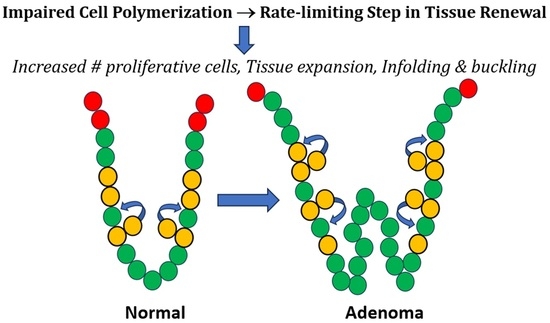
Simple Summary
Abstract
1. Introduction
2. Methods
2.1. Microscopic Analysis of Ki67 Expression in FAP Colon Tissue Sections
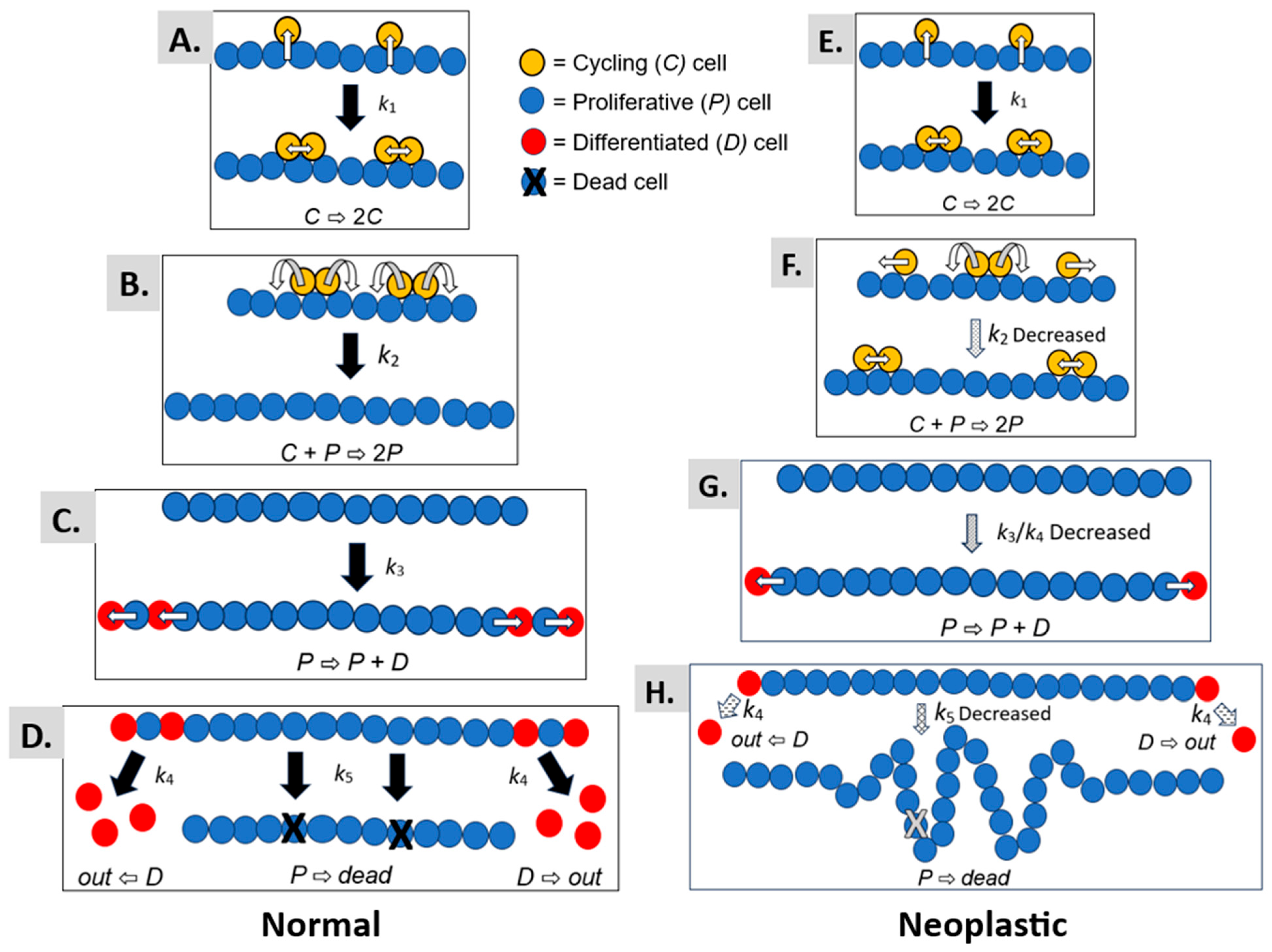
2.2. Model Design for the Human Colonic Crypt
3. Results
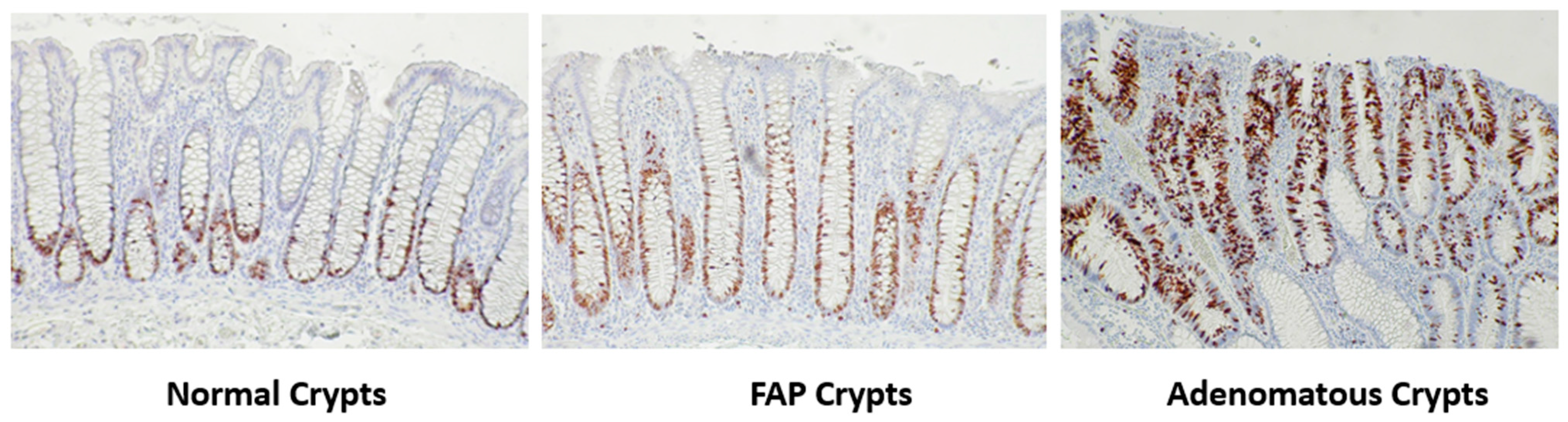
3.1. Staining for the Distribution of Cycling Cells in Normal and Neoplastic Colonic Crypts
3.2. Quantitative Data on Labeling Indices
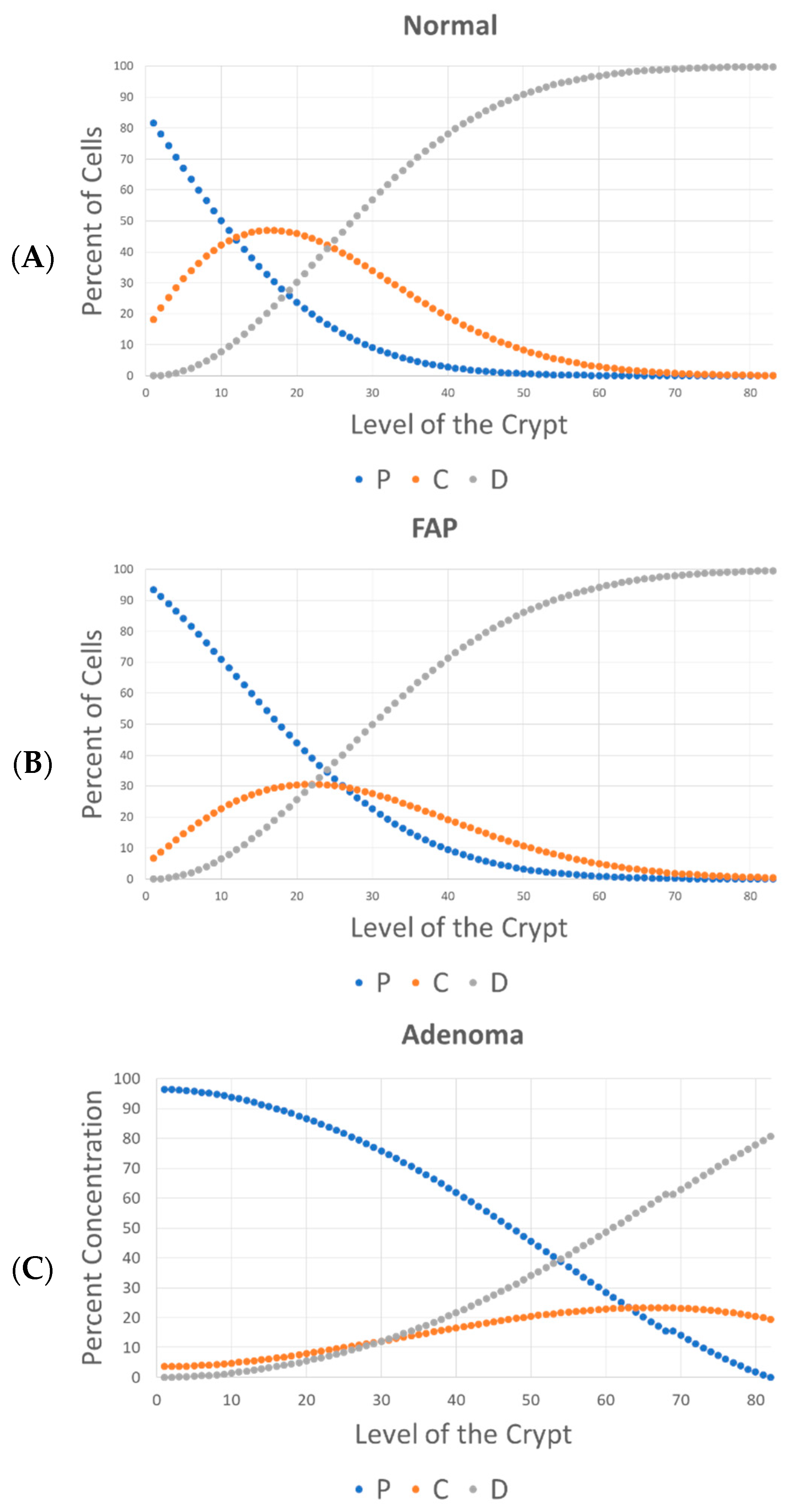
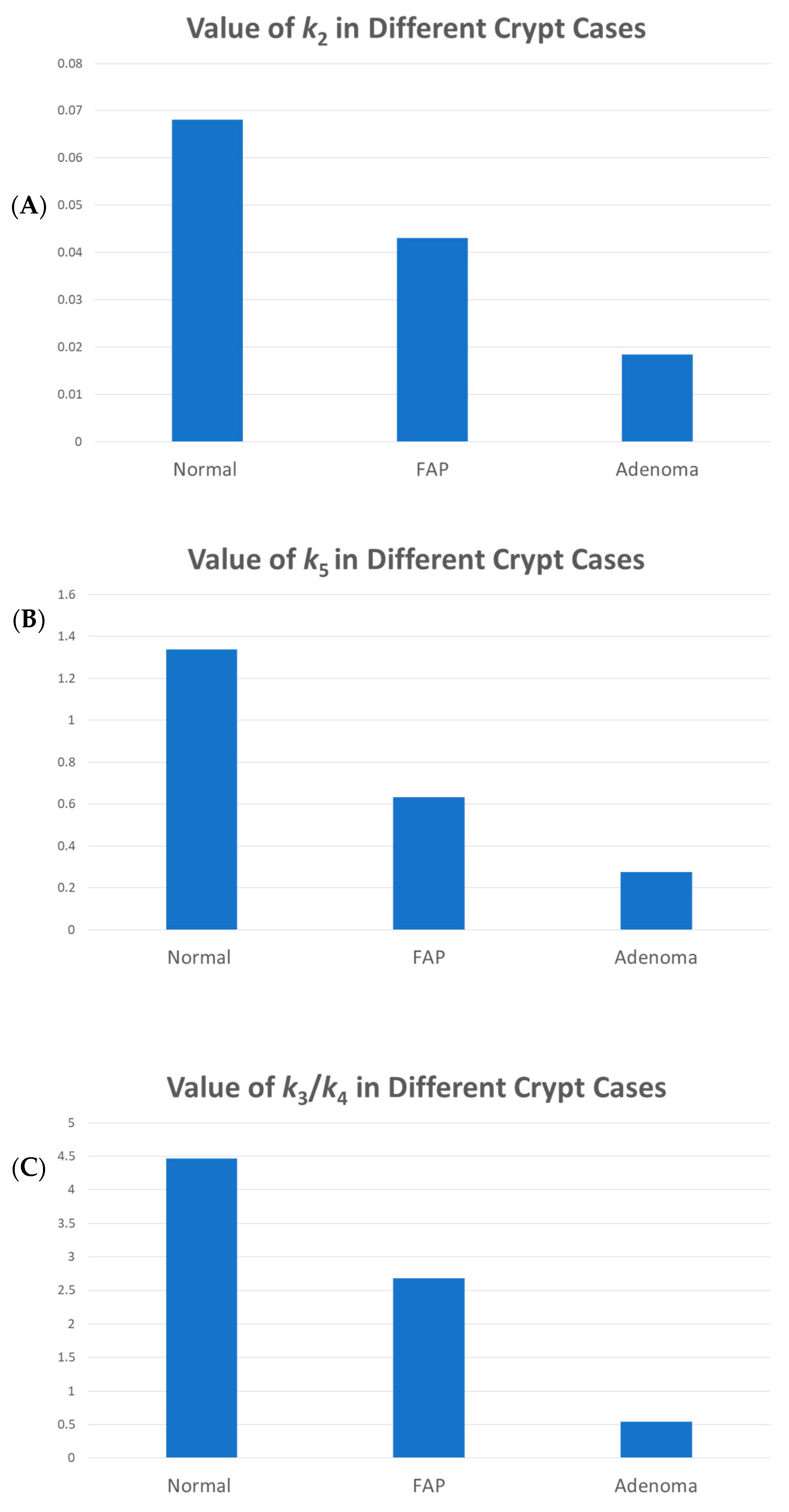
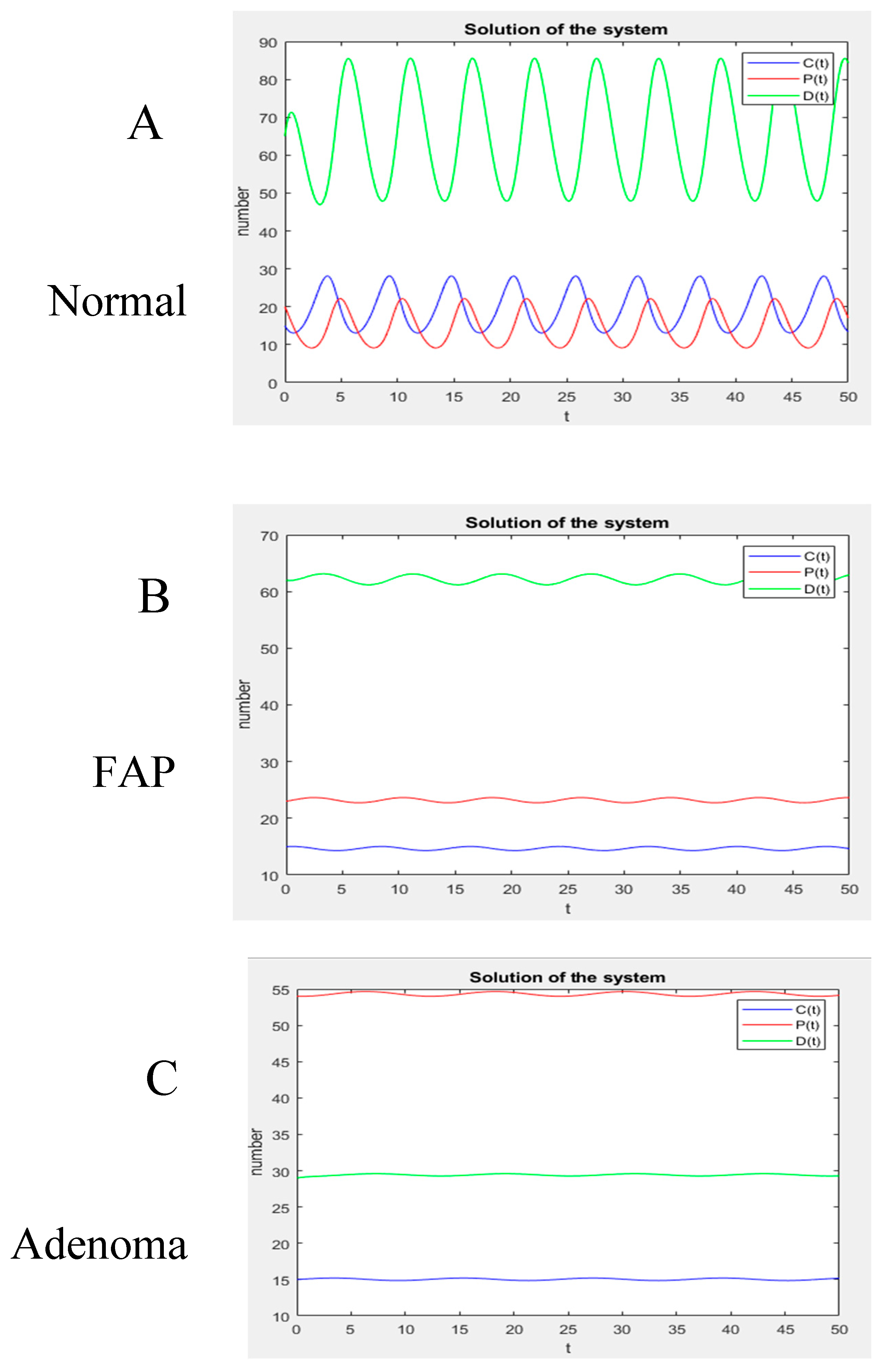
3.3. Model Output
4. Discussion
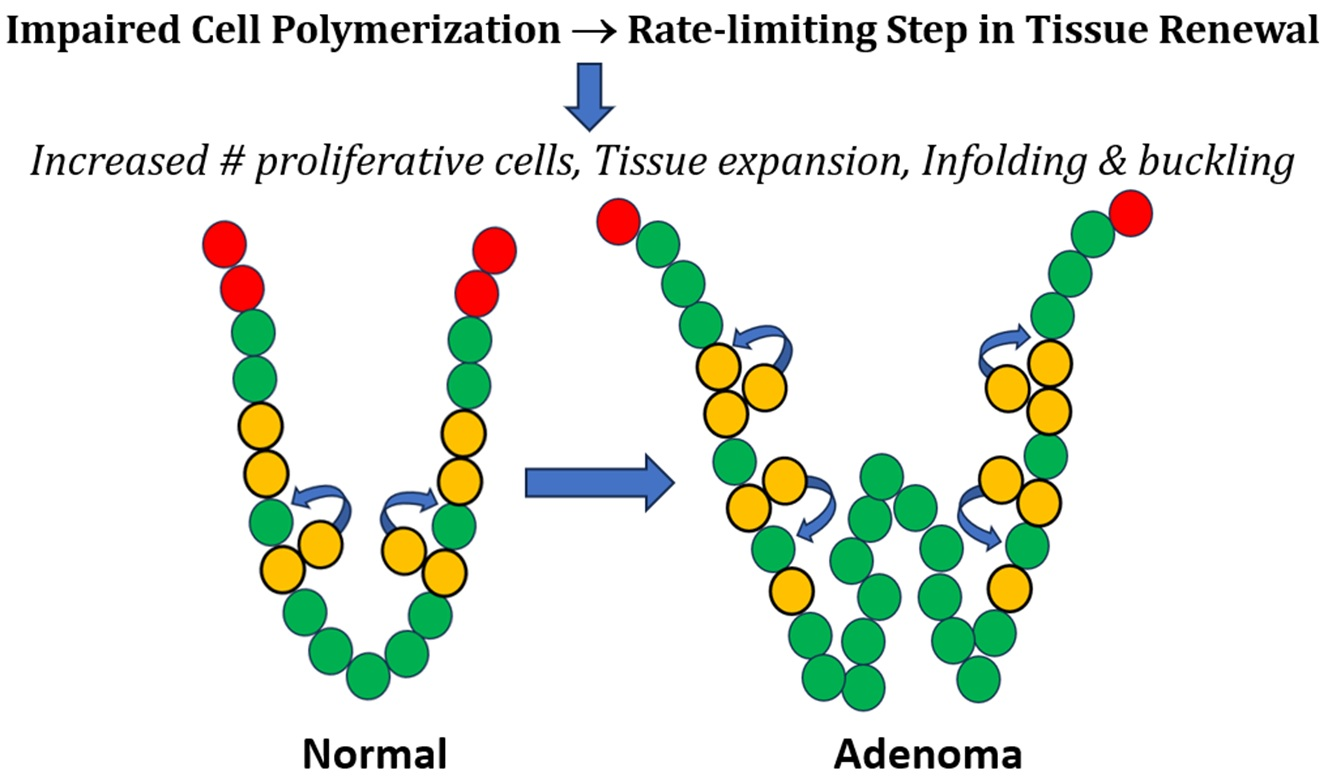
4.1. Autocatalytic Polymerization Kinetics
4.2. Cellular Differentiation Kinetics
4.3. Cellular Apoptosis Kinetics
5. Conclusions
Supplementary Materials
Author Contributions
Funding
Institutional Review Board Statement
Informed Consent Statement
Data Availability Statement
Acknowledgments
Conflicts of Interest
References
- Boman, B.M.; Dinh, T.N.; Decker, K.; Emerick, B.; Modarai, S.R.; Opdenaker, L.M.; Fields, J.Z.; Raymond, C.; Schleiniger, G. Dynamic Organization of Cells in Colonic Epithelium is Encoded by Five Biological Rules. Biol. Cell 2025, 117, e70017. [Google Scholar] [CrossRef]
- Boman, B.M.; Guetter, A.; Boman, R.M.; Runquist, O.A. Autocatalytic Tissue Polymerization Reaction Mechanism in Colorectal Cancer Development and Growth. Cancers 2020, 12, 460. [Google Scholar] [CrossRef]
- Zhao, Y.; Li, B.; Fu, X.; Zhao, P.; Zhao, Y.; Zhou, W.; Lu, Y.; Zheng, Y. Autocatalytic Reaction Networks: A Pathway to Spatial Temporal Mastery in Dynamic Materials. Angew. Chem. Int. Ed. Engl. 2024, 64, e202415582. [Google Scholar] [CrossRef]
- Plasson, R.; Brandenburg, A.; Jullien, L.; Bersini, H. Autocatalysis: At the root of self-replication. Artif. Life 2011, 17, 219–236. [Google Scholar] [CrossRef] [PubMed]
- Moore, J.W.; Pearson, R.G. Kinetics and Mechanism; John Wiley & Sons Inc.: New York, NY, USA, 1981; p. 26. [Google Scholar]
- Decker, F.; Oriola, D.; Dalton, B.; Brugués, J. Autocatalytic microtubule nucleation determines the size and mass of Xenopus laevis egg extract spindles. Elife 2018, 7, e31149. [Google Scholar] [CrossRef] [PubMed]
- Deschner, E.E.; Lewis, C.M.; Lipkin, M. In vitro study of human epithelial cells: I. Atypical zone of H3-thymidine incorporation in mucosa of multiple polyposis. J. Clin. Invest. 1963, 42, 1922–1928. [Google Scholar] [CrossRef] [PubMed]
- Bleiberg, H.; Mainguet, P.; Galand, P. Cell renewal in familial polyposis. Comparison between polyps and adjacent healthy mucosa. Gastroenterology 1972, 63, 240–245. [Google Scholar] [CrossRef]
- Iwana, T.; Utsunomiya, J.; Sasaki, J. Epithelial cell kinetics in the crypts of familial polyposis of the colon. Jpn. J. Surg. 1977, 7, 230–234. [Google Scholar] [CrossRef]
- Lipkin, M.; Blattner, W.E.; Fraumeni, J.F.; Lynch, H.T.; Deschner, E.; Winawer, S. Tritiated thymidine labeling distribution as a marker for hereditary predisposition to colon cancer. Cancer Res. 1983, 43, 1899–1904. [Google Scholar] [PubMed]
- Potten, C.S.; Kellett, M.; Roberts, S.A.; Rew, D.A.; Wilson, G.D. Measurement of in vivo proliferation in human colorectal mucosa using bromodeoxyuridine. Gut 1992, 33, 71–78. [Google Scholar] [CrossRef]
- Potten, C.S.; Kellett, M.; Rew, D.A.; Roberts, S.A. Proliferation in human gastrointestinal epithelium using bromodeoxyuridine in vivo: Data for different sites, proximity to a tumour, and polyposis coli. Gut 1992, 33, 524–529. [Google Scholar] [CrossRef]
- Lightdale, C.; Lipkin, M.; Deschner, E. In vivo measurements in familial polyposis: Kinetics and location of proliferating cells in colonic adenomas. Cancer Res. 1982, 42, 4280–4283. [Google Scholar] [PubMed]
- Boman, B.M.; Fields, J.Z.; Bonham-Carter, O.; Runquist, O.A. Computer modeling implicates stem cell overproduction in colon cancer initiation. Cancer Res. 2001, 61, 8408–8411. [Google Scholar] [PubMed]
- Boman, B.M.; Fields, J.Z.; Cavanaugh, K.L.; Guetter, A.; Runquist, O.A. How dysregulated colonic crypt dynamics cause stem cell overpopulation and initiate colon cancer. Cancer Res. 2008, 68, 3304–3313. [Google Scholar] [CrossRef]
- Runquist, O.A.; Mazac, R.; Roerig, J.; Boman, B.M. Latent time (quiescence) properties of human colonic crypt cells: Mechanistic relationships to colon cancer development. Biomed. J. Sci. Tech. Res. 2017, 1, 1156–1164. [Google Scholar] [CrossRef]
- Huang, E.H.; Hynes, M.J.; Zhang, T.; Ginestier, C.; Dontu, G.; Appelman, H.; Fields, J.Z.; Wicha, M.S.; Boman, B.M. Aldehyde dehydrogenase 1 is a marker for normal and malignant human colonic stem cells (SC) and tracks SC overpopulation during colon tumorigenesis. Cancer Res. 2009, 69, 3382–3389. [Google Scholar] [CrossRef]
- Morson, B. President’s address. The polyp-cancer sequence in the large bowel. Proc. R. Soc. Med. 1974, 67, 451–457. [Google Scholar] [PubMed] [PubMed Central]
- Leslie, A.; Carey, F.A.; Pratt, N.R.; Steele, R.J. The colorectal adenoma-carcinoma sequence. Br. J. Surg. 2002, 89, 845–860. [Google Scholar] [CrossRef] [PubMed]
- The Cancer Genome Atlas Network. Comprehensive molecular characterization of human colon and rectal cancer. Nature 2012, 487, 330–337. [Google Scholar] [CrossRef]
- Levy, D.B.; Smith, K.J.; Beazer-Barclay, Y.; Hamilton, S.R.; Vogelstein, B.; Kinzler, K.W. Inactivation of both APC alleles in human and mouse tumors. Cancer Res. 1994, 54, 5953–5958. [Google Scholar] [PubMed]
- Ichii, S.; Horii, A.; Nakatsuru, S.; Furuyama, J.; Utsunomiya, J.; Nakamura, Y. Inactivation of both APC alleles in an early stage of colon adenomas in a patient with familial adenomatous polyposis (FAP). Hum. Mol. Genet. 1992, 1, 387–390. [Google Scholar] [CrossRef]
- Powell, S.M.; Zilz, N.; Beazer-Barclay, Y.; Bryan, T.M.; Hamilton, S.R.; Thibodeau, S.N.; Vogelstein, B.; Kinzler, K.W. APC mutations occur early during colorectal tumorigenesis. Nature 1992, 359, 235–237. [Google Scholar] [CrossRef]
- Fearon, E.R.; Vogelstein, B. A genetic model for colorectal tumorigenesis. Cell 1990, 61, 759–767. [Google Scholar] [CrossRef]
- Boman, B.M.; Walters, R.; Fields, J.Z.; Kovatich, A.J.; Zhang, T.; Isenberg, G.A.; Goldstein, S.D.; Palazzo, J.P. Colonic crypt changes during adenoma development in familial adenomatous polyposis: Immunohistochemical evidence for expansion of the crypt base cell population. Am. J. Pathol. 2004, 165, 1489–1498. [Google Scholar] [CrossRef] [PubMed]
- Uxa, S.; Castillo-Binder, P.; Kohler, R.; Stangner, K.; Müller, G.A.; Engeland, K. Ki-67 gene expression. Cell Death Differ. 2021, 28, 3357–3370. [Google Scholar] [CrossRef] [PubMed]
- Wong, W.M.; Mandir, N.; Goodlad, R.A.; Wong, B.C.; Garcia, S.B.; Lam, S.K.; Wright, N.A. Histogenesis of human colorectal adenomas and hyperplastic polyps: The role of cell proliferation and crypt fission. Gut 2002, 50, 212–217. [Google Scholar] [CrossRef] [PubMed]
- Maskens, A.P. Histogenesis of adenomatous polyps in the human large intestine. Gastroenterology 1979, 77, 1245–1251. [Google Scholar] [CrossRef] [PubMed]
- Fujita, S. The discovery of the matrix cell, the identification of the multipotent neural stem cell and the development of the central nervous system. Cell Struct. Funct. 2003, 28, 205–228. [Google Scholar] [CrossRef]
- Woods, D.F.; Bryant, P.J. Apical junctions and cell signalling in epithelia. J. Cell Sci. Suppl. 1993, 17, 171–181. [Google Scholar] [CrossRef] [PubMed]
- Potten, C.S.; Roberts, S.A.; Chwalinski, S.; Loeffler, M.; Paulus, U. Scoring mitotic activity in longitudinal sections of crypts of the small intestine. Cell Tissue Kinet. 1988, 21, 231–246. [Google Scholar] [CrossRef]
- Jinguji, Y.; Ishikawa, H. Electron microscopic observations on the maintenance of the tight junction during cell division in the epithelium of the mouse small intestine. Cell Struct. Funct. 1992, 17, 27–37. [Google Scholar] [CrossRef]
- Saito, K.; Kawaguchi, A.; Kashiwagi, S.; Yasugi, S.; Ogawa, M.; Miyata, T. Morphological asymmetry in dividing retinal progenitor cells. Dev. Growth Differ. 2003, 45, 219–229. [Google Scholar] [CrossRef] [PubMed]
- Fujita, S. 50 years of research on the phenomena and epigenetic mechanism of neurogenesis. Neurosci. Res. 2014, 86, 3–13. [Google Scholar] [CrossRef]
- Reya, T.; Morrison, S.J.; Clarke, M.F.; Weissman, I.L. Stem cells, cancer, and cancer stem cells. Nature 2001, 414, 105–111. [Google Scholar] [CrossRef]
- Spradling, A.; Drummond-Barbosa, D.; Kai, T. Stem cells find their niche. Nature 2001, 414, 98–104. [Google Scholar] [CrossRef]
- Milo, R.; Phillips, R. Cell Biology by the Numbers; Garland Science: New York, NY, USA, 2015; pp. 278–282. [Google Scholar]
- Sender, R.; Milo, R. The distribution of cellular turnover in the human body. Nat. Med. 2021, 27, 45–48. [Google Scholar] [CrossRef] [PubMed]
- Boman, B.M. How Does Multicellular Life Happen? Modeling Fibonacci Patterns in Biological Tissues Unveils Underlying Mechanisms. Fibonacci Q. 2025, 63, 1–25. [Google Scholar] [CrossRef]
- Frank, S.A. Stem cells: Tissue renewal. In Dynamics of Cancer: Incidence, Inheritance, and Evolution; Princeton University Press: Princeton, NJ, USA, 2007; pp. 251–270. Available online: https://www.ncbi.nlm.nih.gov/books/NBK1568/ (accessed on 18 December 2025).



| C Cells | P Cells | D Cells | |
|---|---|---|---|
| Normal | 22% | 17% | 66% |
| FAP | 14% | 24% | 62% |
| Adenoma | 16% | 54% | 29% |
| FAP/normal | 0.82 | 1.4 | 0.94 (1.1X-fold decrease) |
| Adenoma/normal | 0.94 | 3.2 | 0.44 (2.3X-fold decrease) |
Disclaimer/Publisher’s Note: The statements, opinions and data contained in all publications are solely those of the individual author(s) and contributor(s) and not of MDPI and/or the editor(s). MDPI and/or the editor(s) disclaim responsibility for any injury to people or property resulting from any ideas, methods, instructions or products referred to in the content. |
© 2025 by the authors. Licensee MDPI, Basel, Switzerland. This article is an open access article distributed under the terms and conditions of the Creative Commons Attribution (CC BY) license.
Share and Cite
Boman, R.M.; Schleiniger, G.; Raymond, C.; Palazzo, J.; Shehab, A.; Boman, B.M. A Tissue Renewal-Based Mechanism Drives Colon Tumorigenesis. Cancers 2026, 18, 44. https://doi.org/10.3390/cancers18010044
Boman RM, Schleiniger G, Raymond C, Palazzo J, Shehab A, Boman BM. A Tissue Renewal-Based Mechanism Drives Colon Tumorigenesis. Cancers. 2026; 18(1):44. https://doi.org/10.3390/cancers18010044
Chicago/Turabian StyleBoman, Ryan M., Gilberto Schleiniger, Christopher Raymond, Juan Palazzo, Anne Shehab, and Bruce M. Boman. 2026. "A Tissue Renewal-Based Mechanism Drives Colon Tumorigenesis" Cancers 18, no. 1: 44. https://doi.org/10.3390/cancers18010044
APA StyleBoman, R. M., Schleiniger, G., Raymond, C., Palazzo, J., Shehab, A., & Boman, B. M. (2026). A Tissue Renewal-Based Mechanism Drives Colon Tumorigenesis. Cancers, 18(1), 44. https://doi.org/10.3390/cancers18010044