Mechanisms of Immune Checkpoint Inhibitor Resistance in Hepatocellular Carcinoma and Strategies for Reversal


Simple Summary
Abstract
1. Introduction
2. Mechanisms of ICI Resistance
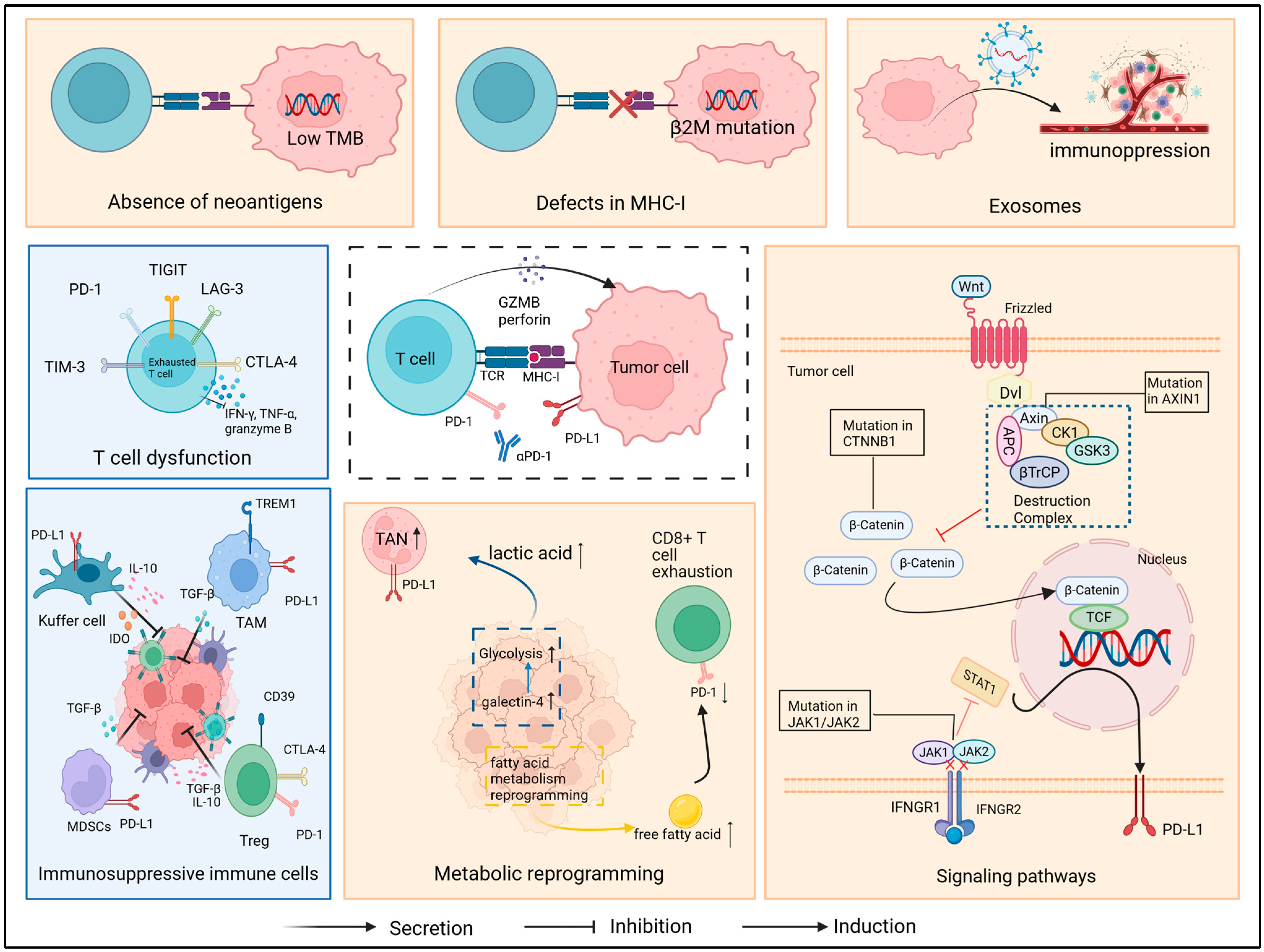
2.1. Primary Resistance
2.1.1. Absence of Neoantigens
2.1.2. Defects in MHC-I
2.1.3. Signal Pathway
2.1.4. T Cells Dysfunction
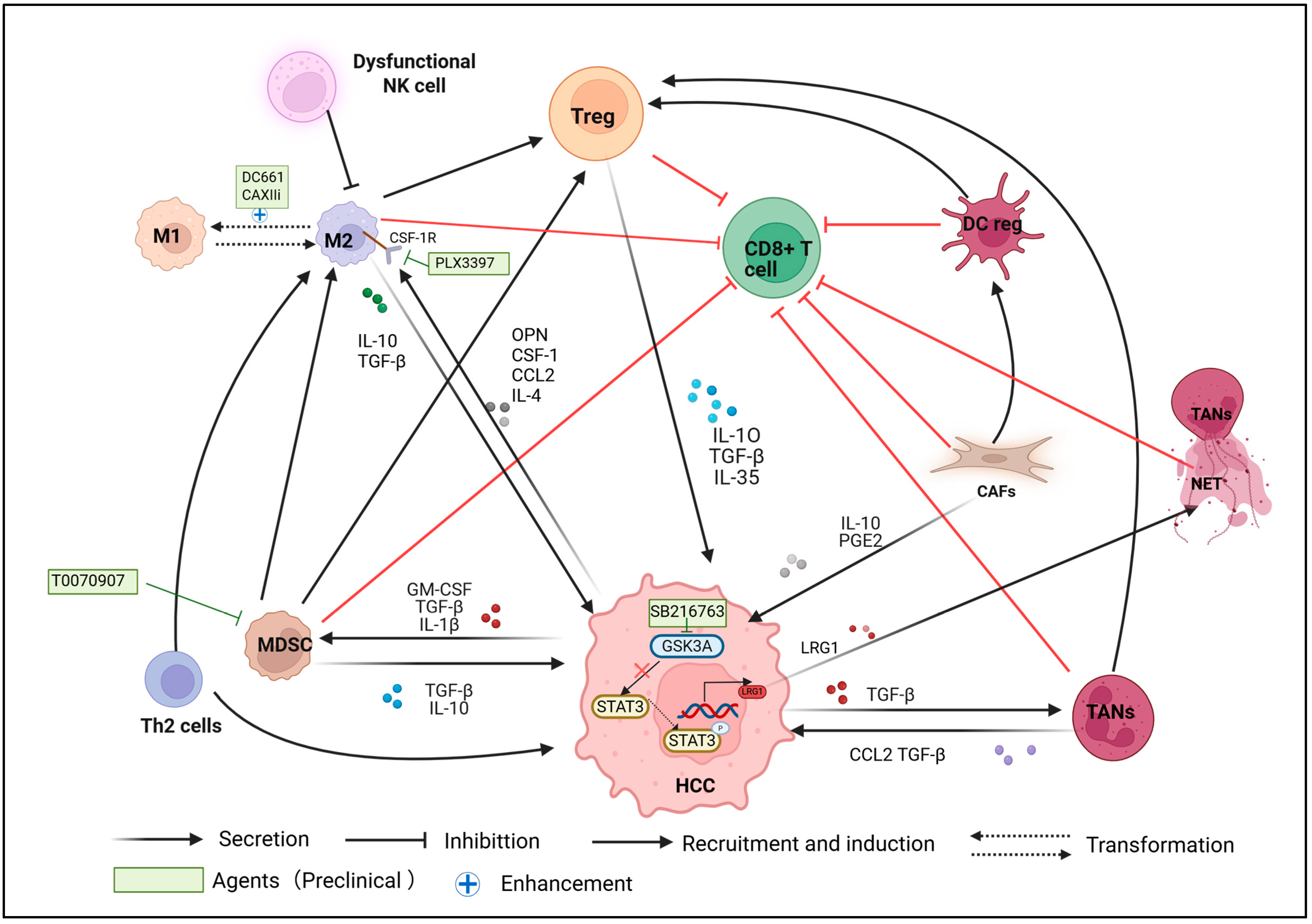
2.1.5. Immunosuppressive Cells in Microenvironment
2.1.6. Cytokines
2.1.7. Exosomes
2.1.8. Metabolic Reprogramming
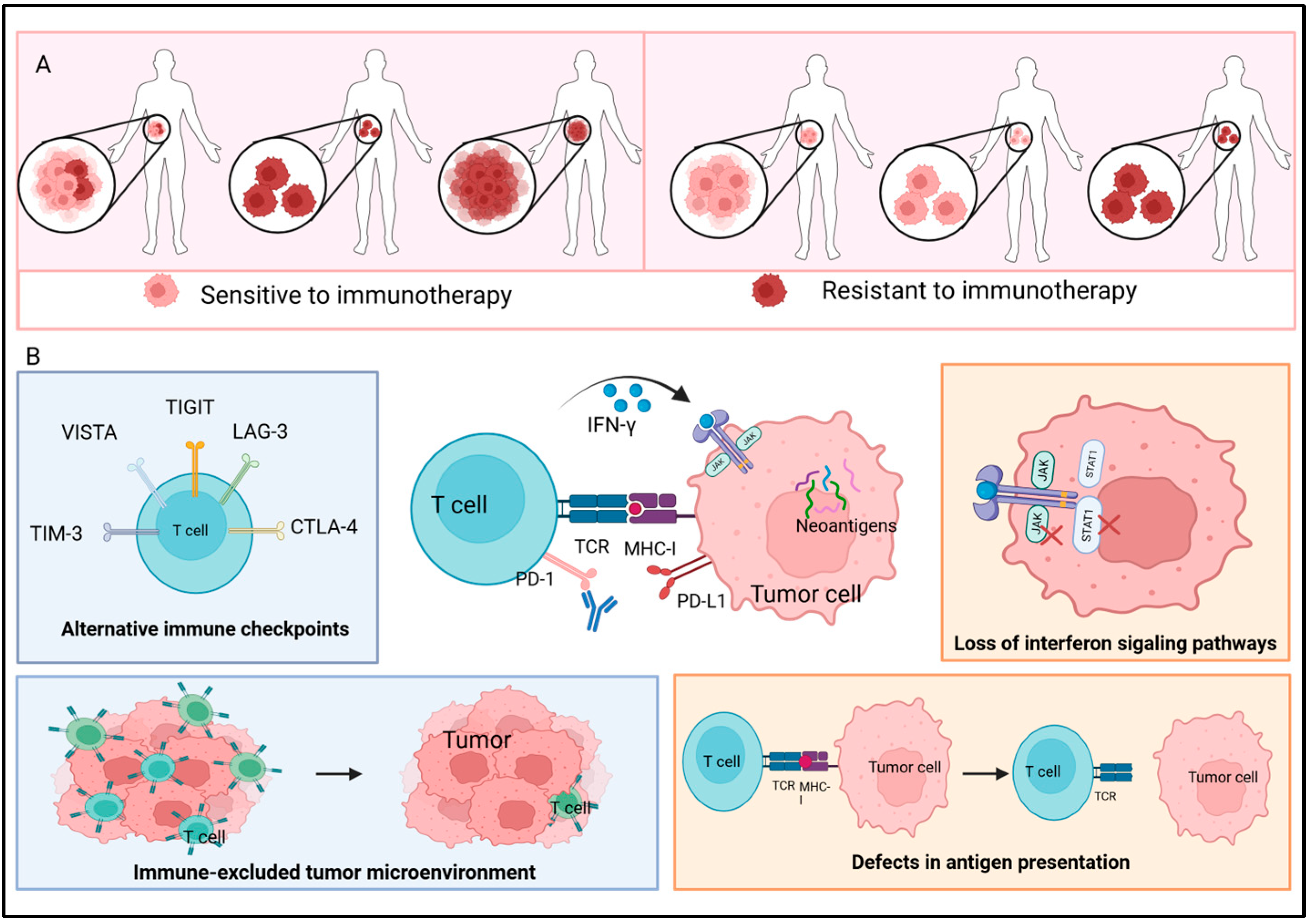
2.2. Acquired Resistance
2.2.1. Decreased Antigen Presentation
2.2.2. Tumor Heterogeneity
2.2.3. Alternative Immune Checkpoints
2.2.4. Defects in IFN-γ Signaling
2.2.5. Immune-Excluded Tumor Microenvironment

| Resistance Mechanism | Type of Resistance | Data Source | Clinical Development Status | Ref. |
|---|---|---|---|---|
| EGFR Signaling Upregulation | Primary | HCC-Preclinical | Ongoing clinical trials of EGFR inhibitors | [21] |
| CRKL expression | Primary | HCC-Preclinical | Absence | [37] |
| Increased VEGF expression | Primary | HCC-Preclinical | Drugs available in HCC therapy | [114] |
| PVRL1 Upregulation | Primary | HCC-Preclinical | Absence | [38] |
| Increased VEGF expression | Primary | HCC-Strong clinical evidence (basis for atezo + bev) | Drugs Available: VEGF inhibitors already combined with ICI | [79] |
| Wnt/β-catenin Pathway Activation | Primary | HCC-Clinical (HCC genomic data); Preclinical (HCC) | Ongoing clinical trials in advanced solid tumors (NCT05919264) | [25,26,27] |
| JAK-STAT3 pathway activation | Primary | HCC-Preclinical | Ongoing clinical trials in ICI resistance NSCLC (NCT06925048) | [79] |
| Immunosuppressive Cell Infiltration (MDSCs, M2-TAMs, Tregs) | Primary | HCC-Strong clinical and preclinical evidence (high infiltration correlates with poor prognosis/resistance) | Ongoing trials: Targeting TAMs (e.g., CSF-1R inhibitors), MDSCs, or CAFs in combination with ICI is an active area of early-phase trials. | [51,53,59] |
| Exosomes(circRNAs) | Primary | HCC-Preclinical | Absence | [81] |
| Metabolic reprogramming (Warburg effect, fatty acid metabolism) | Primary | HCC-Preclinical | Absence | [89,90,94] |
| B2M gene mutation | Acquired | Lung cancer and melanoma-Clinical | Absence | [100] |
| IFN-γ Signaling defect | Acquired | Melanoma-Clinical | Absence | [97] |
| Alternative Immune Checkpoints (e.g., TIM-3, LAG-3, PD-1 isoform) | Acquired | HCC-Clinical (HCC tissue post-immunotherapy) | Ongoing Clinical trials: Next-generation ICI combinations (e.g., anti-PD-1 + anti-TIM-3/LAG-3 mAbs) are in early-phase HCC trials. | [107] |
| Immune-rejective tumor microenvironment | Primary/Acquired | HCC-Clinical (case report) | Absence | [113] |
| Tumor cell dedifferentiation | Acquired | HCC-Clinical (case report) | Absence | [113] |
3. Biochemical Predictors of Response to ICIs in HCC
3.1. PD-L1
3.2. Tumor Mutational Burden and Microsatellite Instability
3.3. Gut Microbiota
3.4. Other Emerging Biomarkers
4. Combined Therapy to Overcome ICI Resistance
4.1. Combined with Molecular Targeted Therapy
4.2. Combined with Local Treatment
4.3. PD-1/PD-L1 Inhibitors Combined with CTLA-4 Inhibitors
| Category | Agents | Target | Combinational Therapies | Therapy Line/Setting | Trial Number | Status | Ref. |
|---|---|---|---|---|---|---|---|
| Combined with molecular targeted therapy | Nimotuzumab | Anti-EGFR antibody | Anti-PD-1 or anti-PD-L1 | Second-line | Phase II NCT06413017 | Recruiting | NA |
| Rivoceranib/apatinib | VEGFR2-targeted TKI | Camrelizumab | Post-ICIs | Phase III NCT04985136 | Terminated | NA | |
| Rivoceranib/apatinib | VEGFR2-targeted TKI | Camrelizumab | First-line | Phase III NCT03764293 | Completed | [163] | |
| Lenvatinib | TKI | Atezolizumab | Second-line (post- atezo + bev) | Phase III NCT04770896 | Active, not recruiting | NA | |
| Bevacizumab | VEGF-targeting | Atezolizumab | First-line | Phase II NCT04829383 | Active, not recruiting | NA | |
| Rivoceranib/apatinib | VEGFR2-targeted TKI | Camrelizumab | Post-ICIs | Phase II NCT04826406 | Recruiting | NA | |
| Combined with local treatment | TACE | NA | ICIs | ICI before/within 2 months after TACE | NCT04975932 | Completed | [164] |
| TACE | NA | PD-1/PD-L1 inhibitors + VEGF-TKI | First-line | A target trial emulation study NCT05332821 | Unknown status | [165] | |
| HAIC | NA | PD-1 inhibitors + lenvatinib | Fiest-line | NCT06632106 | Active, not recruiting | NA | |
| Incomplete thermal ablation | NA | Anti-PD-1 | Second-line (post- sorafenib) | NCT03939975 | Completed | [147] | |
| Radiation therapy | NA | First-line PD-1 therapy | Second-line (post-anti-PD-1) | Phase II NCT06870942 | Recruiting | NA | |
| Particle beam radiation therapy | NA | ICIs | First-line | Phase II NCT06828380 | Recruiting | NA | |
| Photon radiotherapy | NA | Tremelimumab + Durvalumab | First-line | Phase II NCT06999707 | Recruiting | NA | |
| Radiofrequency ablation | NA | * Carrizumab | First-line | NCT04150744 | Recruiting | NA | |
| Y90 radioembolization | NA | Nivolumab | Post-ICIs | Phase II NCT03033446 | Active, not recruiting | [158] | |
| Y-90 SIRT | NA | Durvalumab and tremelimumab | First-line | Phase II NCT04522544 | Recruiting | NA | |
| Y-90 TARE | NA | Atezolizumab and bevacizumab | First-line | Phase II NCT04541173 | Terminated | NA | |
| Multiple ICIs | Ipilimumab | CTLA-4 antibody | Nivolumab | First-line | Phase III NCT04039607 | Active, not recruiting | [166] |
| Ipilimumab | CTLA-4 antibody | Nivolumab | Second-line (post- atezo + bev) | Phase II NCT05199285 | Terminated | NA | |
| Tremelimumab | CTLA-4 antibody | Durvalumab | First-line | Phase I/II NCT02519348 | Active, not recruiting | [161] | |
| Tremelimumab | CTLA-4 antibody | Durvalumab | First-line | Phase III NCT03298451 | Active, not recruiting | [167,168] | |
| IBI310 | CTLA-4 antibody | Sintilimab | First-line | Phase III NCT04720716 | Unknown status | NA |
5. Potential Therapeutic Strategies
5.1. Enhancing T Cell-Mediated Immunity
5.2. Targeting Signaling Pathway
5.3. Targeting Alternative Immune Checkpoints
5.4. Targeting Suppressive Tumor Microenvironment
5.5. Targeting Metabolic Reprogramming
6. Discussion
7. Conclusions
Author Contributions
Funding
Data Availability Statement
Conflicts of Interest
Abbreviations
| ACSL4 | Acyl-CoA synthetase long-chain family member 4 |
| ADCC | Antibody-dependent cell-mediated cytotoxicity |
| AFP | Alpha-fetoprotein |
| ALBI | Albumin-bilirubin |
| ALPL | Alkaline phosphatase |
| APC | Antigen-presenting cell |
| ATP | Adenosine triphosphate |
| AXIN1 | Axis inhibition protein1 |
| B2M | β2-microglobulin |
| BTLA | B And T lymphocyte associated |
| CAFs | Cancer-associated fibroblasts |
| CAXII | Carbonic anhydrases XII |
| circCCAR1 | Circular RNA cell division cycle and apoptosis regulator 1 |
| CPS | Combined positive score |
| CRKL | CT10 regulator of kinase-like gene |
| CRP | C-reactive protein |
| CSF1 | Colony-stimulating factor 1 |
| CSFR | Colony-stimulating factor receptor |
| CTLA-4 | cytotoxic T lymphocyte-associated antigen-4 |
| CTLs | Cytotoxic T lymphocytes |
| CTNNB1 | Catenin Beta 1 |
| CXCL1 | C-X-C motif chemokine ligand 1 |
| CXCL6 | C-X-C motif chemokine ligand 6 |
| CXCR2 | C-X-C motif chemokine receptor 2 |
| DCR | Disease control rate |
| DCs | Dendritic cells |
| DHA | Docosahexaenoic acid |
| dMMR | Mismatch repair deficiency |
| EGFR | Epidermal growth factor receptor |
| FASN | Fatty acid synthase |
| FDA | The US Food and Drug Administration |
| FFAs | Free fatty acids |
| GPC3 | Glypican 3 |
| Gsk3a | Glycogen synthase kinase 3 alpha |
| HIF-1a | hypoxia inducible factor 1 subunit alpha |
| HVEM | Herpes virus entry mediator |
| IC score | Immune cell score |
| ICIs | Immune checkpoint inhibitors |
| IDO | Indoleamine 2,3-dioxygenase |
| IFN | Interferon |
| IFN-I | Type I interferon |
| IFNGR | Interferon-gamma receptor |
| IL-1β | Interleukin-1β |
| IL-17 | Interleukin 17 |
| JAK | Janus kinase |
| LAG3 | Lymphocyte activation gene-3 |
| LARP1 | La-related protein 1 |
| LDHA | Lactate dehydrogenase A |
| LSD1 | Lysine-specific demethylase 1 |
| MAPK | Mitogen-activated protein kinase |
| MDSCs | Myeloid-derived suppressor cells |
| MHC | Major histocompatibility complex |
| MSI | Microsatellite instability |
| MSI-H | High microsatellite instability |
| MWA | Microwave ablation |
| MYC | Myelocytomatosis oncogene |
| NCCN | National Comprehensive Cancer Network |
| NETs | Neutrophil extracellular traps |
| NF-κB | Nuclear factor kappa-B |
| NGS | Next-generation sequencing |
| NK cell | Natural killer cell |
| NLR | Neutrophil-to-lymphocyte ratio |
| OPN | Osteopontin |
| ORR | Objective response rate |
| OS | Overall survival |
| PABPC1 | poly(A)-binding protein cytoplasmic 1 |
| PFS | Progression-free survival |
| PIM2 | Pim2 proto-oncogene serine/threonine protein kinase |
| PIVKA-II | Abnormal prothrombin |
| PKCα | Protein kinase Cα |
| PLR | Platelet-to-lymphocyte ratio |
| PPAR-γ | Peroxisome proliferator-activated receptor-gamma |
| PPT1 | Palmitoyl-protein thioesterase 1 |
| PVR | Poliovirus receptor |
| PVRL1 | Poliovirus receptor-related protein 1 |
| RFA | Radiofrequency ablation |
| RFS | Recurrence-free survival |
| SPP1 | Secreted phosphoprotein 1 |
| STAT3 | Signal transducer and activator of transcription 3 |
| TACC3 | Transforming acidic coiled-coil containing protein 3 |
| TACE | Transcatheter arterial chemoembolization |
| TAMs | Tumor-associated macrophages |
| TANs | Tumor-associated neutrophils |
| TAP1 | Transporter associated with antigen processing 1 |
| TC/IC | Tumor-cell/immune-cell |
| TGF-β | Transforming growth factor-β |
| TIB | Tumor immune barrier |
| TIGIT | T cell immune receptor with Ig and ITIM domains |
| TIM3 | T cell immunoglobulin and mucin domain-containing protein3 |
| TIME | Tumor immune microenvironment |
| TKIs | Tyrosine kinase inhibitors |
| TMB | Tumor mutational burden |
| TMB-H | High tumor mutation burden |
| TME | Tumor microenvironment |
| TNF-α | Tumor necrosis factor-α |
| TPS | Tumor proportion score |
| Treg | Regulatory T cell |
| UHRF1 | Ubiquitin-like PHD and RING finger domain 1 |
| VEGF | Vascular endothelial growth factor |
| VEGF-A | Vascular endothelial growth factor A |
| Y-90 | Yttrium-90 |
| ZFP64 | Zinc finger protein 64 |
References
- Bray, F.; Laversanne, M.; Sung, H.; Ferlay, J.; Siegel, R.L.; Soerjomataram, I.; Jemal, A. Global cancer statistics 2022: GLOBOCAN estimates of incidence and mortality worldwide for 36 cancers in 185 countries. CA Cancer J. Clin. 2024, 74, 229–263. [Google Scholar] [CrossRef] [Scilit]
- NCCN. NCCN Guidelines Version 1.2025 Hepatocellular Carcinoma. Available online: https://www.nccn.org/patients/guidelines/content/PDF/liver-hp-patient.pdf (accessed on 1 November 2025).
- Llovet, J.M.; Kelley, R.K.; Villanueva, A.; Singal, A.G.; Pikarsky, E.; Roayaie, S.; Lencioni, R.; Koike, K.; Zucman-Rossi, J.; Finn, R.S. Hepatocellular carcinoma. Nat. Rev. Dis. Primers 2021, 7, 6. [Google Scholar] [CrossRef] [Scilit]
- Llovet, J.M.; Montal, R.; Sia, D.; Finn, R.S. Molecular therapies and precision medicine for hepatocellular carcinoma. Nat. Rev. Clin. Oncol. 2018, 15, 599–616. [Google Scholar] [CrossRef] [Scilit]
- Cheng, A.L.; Qin, S.; Ikeda, M.; Galle, P.R.; Ducreux, M.; Kim, T.Y.; Lim, H.Y.; Kudo, M.; Breder, V.; Merle, P.; et al. Updated efficacy and safety data from IMbrave150: Atezolizumab plus bevacizumab vs. sorafenib for unresectable hepatocellular carcinoma. J. Hepatol. 2022, 76, 862–873. [Google Scholar] [CrossRef] [Scilit]
- Abou-Alfa, G.K.; Lau, G.; Kudo, M.; Chan, S.L.; Kelley, R.K.; Furuse, J.; Sukeepaisarnjaroen, W.; Kang, Y.K.; Van Dao, T.; De Toni, E.N.; et al. Tremelimumab plus Durvalumab in Unresectable Hepatocellular Carcinoma. NEJM Evid. 2022, 1, EVIDoa2100070. [Google Scholar] [CrossRef] [Scilit]
- Pinter, M.; Jain, R.K.; Duda, D.G. The Current Landscape of Immune Checkpoint Blockade in Hepatocellular Carcinoma: A Review. JAMA Oncol. 2021, 7, 113–123. [Google Scholar] [CrossRef] [Scilit]
- Finn, R.S.; Ryoo, B.Y.; Merle, P.; Kudo, M.; Bouattour, M.; Lim, H.Y.; Breder, V.; Edeline, J.; Chao, Y.; Ogasawara, S.; et al. Pembrolizumab As Second-Line Therapy in Patients with Advanced Hepatocellular Carcinoma in KEYNOTE-240: A Randomized, Double-Blind, Phase III Trial. J. Clin. Oncol. 2020, 38, 193–202. [Google Scholar] [CrossRef] [Scilit]
- Yau, T.; Park, J.W.; Finn, R.S.; Cheng, A.L.; Mathurin, P.; Edeline, J.; Kudo, M.; Harding, J.J.; Merle, P.; Rosmorduc, O.; et al. Nivolumab versus sorafenib in advanced hepatocellular carcinoma (CheckMate 459): A randomised, multicentre, open-label, phase 3 trial. Lancet Oncol. 2022, 23, 77–90. [Google Scholar] [CrossRef] [Scilit] [PubMed]
- Verset, G.; Borbath, I.; Karwal, M.; Verslype, C.; Van Vlierberghe, H.; Kardosh, A.; Zagonel, V.; Stal, P.; Sarker, D.; Palmer, D.H.; et al. Pembrolizumab Monotherapy for Previously Untreated Advanced Hepatocellular Carcinoma: Data from the Open-Label, Phase II KEYNOTE-224 Trial. Clin. Cancer Res. 2022, 28, 2547–2554. [Google Scholar] [CrossRef] [Scilit] [PubMed]
- Schoenfeld, A.J.; Hellmann, M.D. Acquired Resistance to Immune Checkpoint Inhibitors. Cancer Cell 2020, 37, 443–455. [Google Scholar] [CrossRef] [Scilit] [PubMed]
- Sharma, P.; Hu-Lieskovan, S.; Wargo, J.A.; Ribas, A. Primary, Adaptive, and Acquired Resistance to Cancer Immunotherapy. Cell 2017, 168, 707–723. [Google Scholar] [CrossRef] [Scilit]
- Zhang, P.F.; Gao, C.; Huang, X.Y.; Lu, J.C.; Guo, X.J.; Shi, G.M.; Cai, J.B.; Ke, A.W. Cancer cell-derived exosomal circUHRF1 induces natural killer cell exhaustion and may cause resistance to anti-PD1 therapy in hepatocellular carcinoma. Mol. Cancer 2020, 19, 110. [Google Scholar] [CrossRef] [Scilit] [PubMed]
- Rizvi, N.A.; Hellmann, M.D.; Snyder, A.; Kvistborg, P.; Makarov, V.; Havel, J.J.; Lee, W.; Yuan, J.; Wong, P.; Ho, T.S.; et al. Cancer immunology. Mutational landscape determines sensitivity to PD-1 blockade in non-small cell lung cancer. Science 2015, 348, 124–128. [Google Scholar] [CrossRef] [Scilit]
- Fujimoto, A.; Furuta, M.; Totoki, Y.; Tsunoda, T.; Kato, M.; Shiraishi, Y.; Tanaka, H.; Taniguchi, H.; Kawakami, Y.; Ueno, M.; et al. Whole-genome mutational landscape and characterization of noncoding and structural mutations in liver cancer. Nat. Genet. 2016, 48, 500–509. [Google Scholar] [CrossRef] [Scilit]
- Pishesha, N.; Harmand, T.J.; Ploegh, H.L. A guide to antigen processing and presentation. Nat. Rev. Immunol. 2022, 22, 751–764. [Google Scholar] [CrossRef] [Scilit]
- Zhao, F.; Sucker, A.; Horn, S.; Heeke, C.; Bielefeld, N.; Schrörs, B.; Bicker, A.; Lindemann, M.; Roesch, A.; Gaudernack, G.; et al. Melanoma Lesions Independently Acquire T-cell Resistance during Metastatic Latency. Cancer Res. 2016, 76, 4347–4358. [Google Scholar] [CrossRef] [Scilit] [PubMed]
- Rooney, M.S.; Shukla, S.A.; Wu, C.J.; Getz, G.; Hacohen, N. Molecular and genetic properties of tumors associated with local immune cytolytic activity. Cell 2015, 160, 48–61. [Google Scholar] [CrossRef] [Scilit]
- Umemoto, Y.; Okano, S.; Matsumoto, Y.; Nakagawara, H.; Matono, R.; Yoshiya, S.; Yamashita, Y.; Yoshizumi, T.; Ikegami, T.; Soejima, Y.; et al. Prognostic impact of programmed cell death 1 ligand 1 expression in human leukocyte antigen class I-positive hepatocellular carcinoma after curative hepatectomy. J. Gastroenterol. 2015, 50, 65–75. [Google Scholar] [CrossRef] [Scilit] [PubMed]
- Matsui, M.; Machida, S.; Itani-Yohda, T.; Akatsuka, T. Downregulation of the proteasome subunits, transporter, and antigen presentation in hepatocellular carcinoma, and their restoration by interferon-gamma. J. Gastroenterol. Hepatol. 2002, 17, 897–907. [Google Scholar] [CrossRef] [Scilit]
- Liu, Z.; Ning, F.; Cai, Y.; Sheng, H.; Zheng, R.; Yin, X.; Lu, Z.; Su, L.; Chen, X.; Zeng, C.; et al. The EGFR-P38 MAPK axis up-regulates PD-L1 through miR-675-5p and down-regulates HLA-ABC via hexokinase-2 in hepatocellular carcinoma cells. Cancer Commun. 2021, 41, 62–78. [Google Scholar] [CrossRef] [Scilit]
- Harding, J.J.; Nandakumar, S.; Armenia, J.; Khalil, D.N.; Albano, M.; Ly, M.; Shia, J.; Hechtman, J.F.; Kundra, R.; El Dika, I.; et al. Prospective Genotyping of Hepatocellular Carcinoma: Clinical Implications of Next-Generation Sequencing for Matching Patients to Targeted and Immune Therapies. Clin. Cancer Res. 2019, 25, 2116–2126. [Google Scholar] [CrossRef] [Scilit]
- Ruiz de Galarreta, M.; Bresnahan, E.; Molina-Sánchez, P.; Lindblad, K.E.; Maier, B.; Sia, D.; Puigvehi, M.; Miguela, V.; Casanova-Acebes, M.; Dhainaut, M.; et al. β-Catenin Activation Promotes Immune Escape and Resistance to Anti-PD-1 Therapy in Hepatocellular Carcinoma. Cancer Discov. 2019, 9, 1124–1141. [Google Scholar] [CrossRef] [Scilit]
- Spranger, S.; Bao, R.; Gajewski, T.F. Melanoma-intrinsic β-catenin signalling prevents anti-tumour immunity. Nature 2015, 523, 231–235. [Google Scholar] [CrossRef] [Scilit]
- de La Coste, A.; Romagnolo, B.; Billuart, P.; Renard, C.A.; Buendia, M.A.; Soubrane, O.; Fabre, M.; Chelly, J.; Beldjord, C.; Kahn, A.; et al. Somatic mutations of the beta-catenin gene are frequent in mouse and human hepatocellular carcinomas. Proc. Natl. Acad. Sci. USA 1998, 95, 8847–8851. [Google Scholar] [CrossRef] [Scilit]
- Xu, C.; Xu, Z.; Zhang, Y.; Evert, M.; Calvisi, D.F.; Chen, X. β-Catenin signaling in hepatocellular carcinoma. J. Clin. Investig. 2022, 132, e154515. [Google Scholar] [CrossRef] [Scilit] [PubMed]
- Khalaf, A.M.; Fuentes, D.; Morshid, A.I.; Burke, M.R.; Kaseb, A.O.; Hassan, M.; Hazle, J.D.; Elsayes, K.M. Role of Wnt/β-catenin signaling in hepatocellular carcinoma, pathogenesis, and clinical significance. J. Hepatocell. Carcinoma 2018, 5, 61–73. [Google Scholar] [CrossRef] [Scilit] [PubMed]
- Fan, Z.; Duan, J.; Wang, L.; Xiao, S.; Li, L.; Yan, X.; Yao, W.; Wu, L.; Zhang, S.; Zhang, Y.; et al. PTK2 promotes cancer stem cell traits in hepatocellular carcinoma by activating Wnt/β-catenin signaling. Cancer Lett. 2019, 450, 132–143. [Google Scholar] [CrossRef] [Scilit]
- Shin, D.S.; Zaretsky, J.M.; Escuin-Ordinas, H.; Garcia-Diaz, A.; Hu-Lieskovan, S.; Kalbasi, A.; Grasso, C.S.; Hugo, W.; Sandoval, S.; Torrejon, D.Y.; et al. Primary Resistance to PD-1 Blockade Mediated by JAK1/2 Mutations. Cancer Discov. 2017, 7, 188–201. [Google Scholar] [CrossRef] [Scilit]
- Sun, X.; Zhang, J.; Hou, Z.; Han, Q.; Zhang, C.; Tian, Z. miR-146a is directly regulated by STAT3 in human hepatocellular carcinoma cells and involved in anti-tumor immune suppression. Cell Cycle 2015, 14, 243–252. [Google Scholar] [CrossRef] [Scilit]
- Jin, H.; Qin, S.; He, J.; Xiao, J.; Li, Q.; Mao, Y.; Zhao, L. New insights into checkpoint inhibitor immunotherapy and its combined therapies in hepatocellular carcinoma: From mechanisms to clinical trials. Int. J. Biol. Sci. 2022, 18, 2775–2794. [Google Scholar] [CrossRef] [Scilit] [PubMed]
- Wherry, E.J.; Kurachi, M. Molecular and cellular insights into T cell exhaustion. Nat. Rev. Immunol. 2015, 15, 486–499. [Google Scholar] [CrossRef] [Scilit]
- Chen, J.; Ji, T.; Zhao, J.; Li, G.; Zhang, J.; Jin, R.; Liu, J.; Liu, X.; Liang, X.; Huang, D.; et al. Sorafenib-resistant hepatocellular carcinoma stratified by phosphorylated ERK activates PD-1 immune checkpoint. Oncotarget 2016, 7, 41274–41284. [Google Scholar] [CrossRef] [Scilit] [PubMed]
- Luo, L.Y.; Hahn, W.C. Oncogenic Signaling Adaptor Proteins. J. Genet. Genom. 2015, 42, 521–529. [Google Scholar] [CrossRef] [Scilit]
- Weiss, J.M.; Hunter, M.V.; Cruz, N.M.; Baggiolini, A.; Tagore, M.; Ma, Y.; Misale, S.; Marasco, M.; Simon-Vermot, T.; Campbell, N.R.; et al. Anatomic position determines oncogenic specificity in melanoma. Nature 2022, 604, 354–361. [Google Scholar] [CrossRef] [Scilit]
- Cheung, H.W.; Du, J.; Boehm, J.S.; He, F.; Weir, B.A.; Wang, X.; Butaney, M.; Sequist, L.V.; Luo, B.; Engelman, J.A.; et al. Amplification of CRKL induces transformation and epidermal growth factor receptor inhibitor resistance in human non-small cell lung cancers. Cancer Discov. 2011, 1, 608–625. [Google Scholar] [CrossRef] [Scilit] [PubMed]
- Xie, P.; Yu, M.; Zhang, B.; Yu, Q.; Zhao, Y.; Wu, M.; Jin, L.; Yan, J.; Zhou, B.; Liu, S.; et al. CRKL dictates anti-PD-1 resistance by mediating tumor-associated neutrophil infiltration in hepatocellular carcinoma. J. Hepatol. 2024, 81, 93–107. [Google Scholar] [CrossRef] [Scilit] [PubMed]
- Chiu, D.K.; Yuen, V.W.; Cheu, J.W.; Wei, L.L.; Ting, V.; Fehlings, M.; Sumatoh, H.; Nardin, A.; Newell, E.W.; Ng, I.O.; et al. Hepatocellular Carcinoma Cells Up-regulate PVRL1, Stabilizing PVR and Inhibiting the Cytotoxic T-Cell Response via TIGIT to Mediate Tumor Resistance to PD1 Inhibitors in Mice. Gastroenterology 2020, 159, 609–623. [Google Scholar] [CrossRef] [Scilit]
- Banta, K.L.; Xu, X.; Chitre, A.S.; Au-Yeung, A.; Takahashi, C.; O’Gorman, W.E.; Wu, T.D.; Mittman, S.; Cubas, R.; Comps-Agrar, L.; et al. Mechanistic convergence of the TIGIT and PD-1 inhibitory pathways necessitates co-blockade to optimize anti-tumor CD8(+) T cell responses. Immunity 2022, 55, 512–526.e519. [Google Scholar] [CrossRef] [Scilit]
- Li, H.; Wu, K.; Tao, K.; Chen, L.; Zheng, Q.; Lu, X.; Liu, J.; Shi, L.; Liu, C.; Wang, G.; et al. Tim-3/galectin-9 signaling pathway mediates T-cell dysfunction and predicts poor prognosis in patients with hepatitis B virus-associated hepatocellular carcinoma. Hepatology 2012, 56, 1342–1351. [Google Scholar] [CrossRef] [Scilit]
- Jin, H.T.; Anderson, A.C.; Tan, W.G.; West, E.E.; Ha, S.J.; Araki, K.; Freeman, G.J.; Kuchroo, V.K.; Ahmed, R. Cooperation of Tim-3 and PD-1 in CD8 T-cell exhaustion during chronic viral infection. Proc. Natl. Acad. Sci. USA 2010, 107, 14733–14738. [Google Scholar] [CrossRef] [Scilit]
- Ma, L.; Hernandez, M.O.; Zhao, Y.; Mehta, M.; Tran, B.; Kelly, M.; Rae, Z.; Hernandez, J.M.; Davis, J.L.; Martin, S.P.; et al. Tumor Cell Biodiversity Drives Microenvironmental Reprogramming in Liver Cancer. Cancer Cell 2019, 36, 418–430.e416. [Google Scholar] [CrossRef] [Scilit] [PubMed]
- Ringelhan, M.; Pfister, D.; O’Connor, T.; Pikarsky, E.; Heikenwalder, M. The immunology of hepatocellular carcinoma. Nat. Immunol. 2018, 19, 222–232. [Google Scholar] [CrossRef] [Scilit]
- Heymann, F.; Peusquens, J.; Ludwig-Portugall, I.; Kohlhepp, M.; Ergen, C.; Niemietz, P.; Martin, C.; van Rooijen, N.; Ochando, J.C.; Randolph, G.J.; et al. Liver inflammation abrogates immunological tolerance induced by Kupffer cells. Hepatology 2015, 62, 279–291. [Google Scholar] [CrossRef] [Scilit]
- Donne, R.; Lujambio, A. The liver cancer immune microenvironment: Therapeutic implications for hepatocellular carcinoma. Hepatology 2023, 77, 1773–1796. [Google Scholar] [CrossRef] [Scilit]
- Harkus, U.; Wankell, M.; Palamuthusingam, P.; McFarlane, C.; Hebbard, L. Immune checkpoint inhibitors in HCC: Cellular, molecular and systemic data. Semin. Cancer Biol. 2022, 86, 799–815. [Google Scholar] [CrossRef] [Scilit]
- Helm, O.; Held-Feindt, J.; Grage-Griebenow, E.; Reiling, N.; Ungefroren, H.; Vogel, I.; Krüger, U.; Becker, T.; Ebsen, M.; Röcken, C.; et al. Tumor-associated macrophages exhibit pro- and anti-inflammatory properties by which they impact on pancreatic tumorigenesis. Int. J. Cancer 2014, 135, 843–861. [Google Scholar] [CrossRef] [Scilit]
- Murray, P.J.; Allen, J.E.; Biswas, S.K.; Fisher, E.A.; Gilroy, D.W.; Goerdt, S.; Gordon, S.; Hamilton, J.A.; Ivashkiv, L.B.; Lawrence, T.; et al. Macrophage activation and polarization: Nomenclature and experimental guidelines. Immunity 2014, 41, 14–20. [Google Scholar] [CrossRef] [Scilit]
- Gordon, S.; Plüddemann, A.; Martinez Estrada, F. Macrophage heterogeneity in tissues: Phenotypic diversity and functions. Immunol. Rev. 2014, 262, 36–55. [Google Scholar] [CrossRef] [Scilit]
- Cheng, K.; Cai, N.; Zhu, J.; Yang, X.; Liang, H.; Zhang, W. Tumor-associated macrophages in liver cancer: From mechanisms to therapy. Cancer Commun. 2022, 42, 1112–1140. [Google Scholar] [CrossRef] [Scilit] [PubMed]
- Xiang, X.; Wang, J.; Lu, D.; Xu, X. Targeting tumor-associated macrophages to synergize tumor immunotherapy. Signal Transduct. Target. Ther. 2021, 6, 75. [Google Scholar] [CrossRef] [Scilit] [PubMed]
- Zabransky, D.J.; Danilova, L.; Leatherman, J.M.; Lopez-Vidal, T.Y.; Sanchez, J.; Charmsaz, S.; Gross, N.E.; Shin, S.; Yuan, X.; Hernandez, A.; et al. Profiling of syngeneic mouse HCC tumor models as a framework to understand anti-PD-1 sensitive tumor microenvironments. Hepatology 2023, 77, 1566–1579. [Google Scholar] [CrossRef] [Scilit] [PubMed]
- Wei, C.Y.; Zhu, M.X.; Zhang, P.F.; Huang, X.Y.; Wan, J.K.; Yao, X.Z.; Hu, Z.T.; Chai, X.Q.; Peng, R.; Yang, X.; et al. PKCα/ZFP64/CSF1 axis resets the tumor microenvironment and fuels anti-PD1 resistance in hepatocellular carcinoma. J. Hepatol. 2022, 77, 163–176. [Google Scholar] [CrossRef] [Scilit]
- Zhu, Y.; Yang, J.; Xu, D.; Gao, X.M.; Zhang, Z.; Hsu, J.L.; Li, C.W.; Lim, S.O.; Sheng, Y.Y.; Zhang, Y.; et al. Disruption of tumour-associated macrophage trafficking by the osteopontin-induced colony-stimulating factor-1 signalling sensitises hepatocellular carcinoma to anti-PD-L1 blockade. Gut 2019, 68, 1653–1666. [Google Scholar] [CrossRef] [Scilit] [PubMed]
- Weng, J.; Liu, S.; Zhou, Q.; Xu, W.; Xu, M.; Gao, D.; Shen, Y.; Yi, Y.; Shi, Y.; Dong, Q.; et al. Intratumoral PPT1-positive macrophages determine immunosuppressive contexture and immunotherapy response in hepatocellular carcinoma. J. Immunother. Cancer 2023, 11, e006655. [Google Scholar] [CrossRef] [Scilit]
- Wang, J.C.; Chen, D.P.; Lu, S.X.; Chen, J.B.; Wei, Y.; Liu, X.C.; Tang, Y.H.; Zhang, R.; Chen, J.C.; Kan, A.; et al. PIM2 Expression Induced by Proinflammatory Macrophages Suppresses Immunotherapy Efficacy in Hepatocellular Carcinoma. Cancer Res. 2022, 82, 3307–3320. [Google Scholar] [CrossRef] [Scilit] [PubMed]
- Xiong, Z.; Chan, S.L.; Zhou, J.; Vong, J.S.L.; Kwong, T.T.; Zeng, X.; Wu, H.; Cao, J.; Tu, Y.; Feng, Y.; et al. Targeting PPAR-gamma counteracts tumour adaptation to immune-checkpoint blockade in hepatocellular carcinoma. Gut 2023, 72, 1758–1773. [Google Scholar] [CrossRef] [Scilit]
- Cheng, Y.; Li, H.; Deng, Y.; Tai, Y.; Zeng, K.; Zhang, Y.; Liu, W.; Zhang, Q.; Yang, Y. Cancer-associated fibroblasts induce PDL1+ neutrophils through the IL6-STAT3 pathway that foster immune suppression in hepatocellular carcinoma. Cell Death Dis. 2018, 9, 422. [Google Scholar] [CrossRef] [Scilit]
- Langhans, B.; Nischalke, H.D.; Krämer, B.; Dold, L.; Lutz, P.; Mohr, R.; Vogt, A.; Toma, M.; Eis-Hübinger, A.M.; Nattermann, J.; et al. Role of regulatory T cells and checkpoint inhibition in hepatocellular carcinoma. Cancer Immunol. Immunother. CII 2019, 68, 2055–2066. [Google Scholar] [CrossRef] [Scilit]
- Ngiow, S.F.; Young, A.; Jacquelot, N.; Yamazaki, T.; Enot, D.; Zitvogel, L.; Smyth, M.J. A Threshold Level of Intratumor CD8+ T-cell PD1 Expression Dictates Therapeutic Response to Anti-PD1. Cancer Res. 2015, 75, 3800–3811. [Google Scholar] [CrossRef] [Scilit]
- Guo, X.; Nie, H.; Zhang, W.; Li, J.; Ge, J.; Xie, B.; Hu, W.; Zhu, Y.; Zhong, N.; Zhang, X.; et al. Contrasting cytotoxic and regulatory T cell responses underlying distinct clinical outcomes to anti-PD-1 plus lenvatinib therapy in cancer. Cancer Cell 2025, 43, 248–268.e249. [Google Scholar] [CrossRef] [Scilit]
- Qu, S.; Zhang, X.; Wu, Y.; Meng, Y.; Pan, H.; Fang, Q.; Hu, L.; Zhang, J.; Wang, R.; Wei, L.; et al. Efficacy and Safety of TACE Combined with Lenvatinib Plus PD-1 Inhibitors Compared with TACE Alone for Unresectable Hepatocellular Carcinoma Patients: A Prospective Cohort Study. Front. Oncol. 2022, 12, 874473. [Google Scholar] [CrossRef] [Scilit]
- Meng, Y.; Ye, F.; Nie, P.; Zhao, Q.; An, L.; Wang, W.; Qu, S.; Shen, Z.; Cao, Z.; Zhang, X.; et al. Immunosuppressive CD10(+)ALPL(+) neutrophils promote resistance to anti-PD-1 therapy in HCC by mediating irreversible exhaustion of T cells. J. Hepatol. 2023, 79, 1435–1449. [Google Scholar] [CrossRef] [Scilit]
- Yu, Y.; Zhang, C.; Dong, B.; Zhang, Z.; Li, X.; Huang, S.; Tang, D.; Jing, X.; Yu, S.; Zheng, T.; et al. Neutrophil extracellular traps promote immune escape in hepatocellular carcinoma by up-regulating CD73 through Notch2. Cancer Lett. 2024, 598, 217098. [Google Scholar] [CrossRef] [Scilit]
- Rong, Y.; Yuan, C.H.; Qu, Z.; Zhou, H.; Guan, Q.; Yang, N.; Leng, X.H.; Bu, L.; Wu, K.; Wang, F.B. Doxorubicin resistant cancer cells activate myeloid-derived suppressor cells by releasing PGE2. Sci. Rep. 2016, 6, 23824. [Google Scholar] [CrossRef] [Scilit]
- Tesi, R.J. MDSC; the Most Important Cell You Have Never Heard of. Trends Pharmacol. Sci. 2019, 40, 4–7. [Google Scholar] [CrossRef] [Scilit]
- Tomiyama, T.; Itoh, S.; Iseda, N.; Toshida, K.; Morinaga, A.; Yugawa, K.; Fujimoto, Y.K.; Tomino, T.; Kurihara, T.; Nagao, Y.; et al. Myeloid-derived suppressor cell infiltration is associated with a poor prognosis in patients with hepatocellular carcinoma. Oncol. Lett. 2022, 23, 93. [Google Scholar] [CrossRef] [Scilit] [PubMed]
- Zhang, F.; Wang, H.; Wang, X.; Jiang, G.; Liu, H.; Zhang, G.; Wang, H.; Fang, R.; Bu, X.; Cai, S.; et al. TGF-β induces M2-like macrophage polarization via SNAIL-mediated suppression of a pro-inflammatory phenotype. Oncotarget 2016, 7, 52294–52306. [Google Scholar] [CrossRef] [Scilit]
- Yamagiwa, S.; Gray, J.D.; Hashimoto, S.; Horwitz, D.A. A role for TGF-beta in the generation and expansion of CD4+CD25+ regulatory T cells from human peripheral blood. J. Immunol. 2001, 166, 7282–7289. [Google Scholar] [CrossRef] [Scilit] [PubMed]
- Okumoto, K.; Hattori, E.; Tamura, K.; Kiso, S.; Watanabe, H.; Saito, K.; Saito, T.; Togashi, H.; Kawata, S. Possible contribution of circulating transforming growth factor-beta1 to immunity and prognosis in unresectable hepatocellular carcinoma. Liver Int. 2004, 24, 21–28. [Google Scholar] [CrossRef] [Scilit] [PubMed]
- Ahmadzadeh, M.; Rosenberg, S.A. TGF-beta 1 attenuates the acquisition and expression of effector function by tumor antigen-specific human memory CD8 T cells. J. Immunol. 2005, 174, 5215–5223. [Google Scholar] [CrossRef] [Scilit]
- Feun, L.G.; Li, Y.Y.; Wu, C.; Wangpaichitr, M.; Jones, P.D.; Richman, S.P.; Madrazo, B.; Kwon, D.; Garcia-Buitrago, M.; Martin, P.; et al. Phase 2 study of pembrolizumab and circulating biomarkers to predict anticancer response in advanced, unresectable hepatocellular carcinoma. Cancer 2019, 125, 3603–3614. [Google Scholar] [CrossRef] [Scilit]
- Stewart, C.A.; Metheny, H.; Iida, N.; Smith, L.; Hanson, M.; Steinhagen, F.; Leighty, R.M.; Roers, A.; Karp, C.L.; Müller, W.; et al. Interferon-dependent IL-10 production by Tregs limits tumor Th17 inflammation. J. Clin. Investig. 2013, 123, 4859–4874. [Google Scholar] [CrossRef] [Scilit]
- Yi, Y.; He, H.W.; Wang, J.X.; Cai, X.Y.; Li, Y.W.; Zhou, J.; Cheng, Y.F.; Jin, J.J.; Fan, J.; Qiu, S.J. The functional impairment of HCC-infiltrating γδ T cells, partially mediated by regulatory T cells in a TGFβ- and IL-10-dependent manner. J. Hepatol. 2013, 58, 977–983. [Google Scholar] [CrossRef] [Scilit] [PubMed]
- Shi, Y.; Song, Q.; Hu, D.; Zhuang, X.; Yu, S. Tumor-infiltrating lymphocyte activity is enhanced in tumors with low IL-10 production in HBV-induced hepatocellular carcinoma. Biochem. Biophys. Res. Commun. 2015, 461, 109–114. [Google Scholar] [CrossRef] [Scilit] [PubMed]
- Kuang, D.M.; Zhao, Q.; Peng, C.; Xu, J.; Zhang, J.P.; Wu, C.; Zheng, L. Activated monocytes in peritumoral stroma of hepatocellular carcinoma foster immune privilege and disease progression through PD-L1. J. Exp. Med. 2009, 206, 1327–1337. [Google Scholar] [CrossRef] [Scilit]
- Arihara, F.; Mizukoshi, E.; Kitahara, M.; Takata, Y.; Arai, K.; Yamashita, T.; Nakamoto, Y.; Kaneko, S. Increase in CD14+HLA-DR -/low myeloid-derived suppressor cells in hepatocellular carcinoma patients and its impact on prognosis. Cancer Immunol. Immunother. CII 2013, 62, 1421–1430. [Google Scholar] [CrossRef] [Scilit]
- Apte, R.S.; Chen, D.S.; Ferrara, N. VEGF in Signaling and Disease: Beyond Discovery and Development. Cell 2019, 176, 1248–1264. [Google Scholar] [CrossRef] [Scilit] [PubMed]
- Courau, T.; Nehar-Belaid, D.; Florez, L.; Levacher, B.; Vazquez, T.; Brimaud, F.; Bellier, B.; Klatzmann, D. TGF-β and VEGF cooperatively control the immunotolerant tumor environment and the efficacy of cancer immunotherapies. JCI Insight 2016, 1, e85974. [Google Scholar] [CrossRef] [Scilit]
- Lu, J.C.; Zhang, P.F.; Huang, X.Y.; Guo, X.J.; Gao, C.; Zeng, H.Y.; Zheng, Y.M.; Wang, S.W.; Cai, J.B.; Sun, Q.M.; et al. Amplification of spatially isolated adenosine pathway by tumor-macrophage interaction induces anti-PD1 resistance in hepatocellular carcinoma. J. Hematol. Oncol. 2021, 14, 200. [Google Scholar] [CrossRef] [Scilit]
- Hu, Z.; Chen, G.; Zhao, Y.; Gao, H.; Li, L.; Yin, Y.; Jiang, J.; Wang, L.; Mang, Y.; Gao, Y.; et al. Exosome-derived circCCAR1 promotes CD8 + T-cell dysfunction and anti-PD1 resistance in hepatocellular carcinoma. Mol. Cancer 2023, 22, 55. [Google Scholar] [CrossRef] [Scilit]
- Zhang, J.; Zhang, H.; Ding, X.; Hu, J.; Li, Y.; Zhang, J.; Wang, H.; Qi, S.; Xie, A.; Shi, J.; et al. Crosstalk between macrophage-derived PGE(2) and tumor UHRF1 drives hepatocellular carcinoma progression. Theranostics 2022, 12, 3776–3793. [Google Scholar] [CrossRef] [Scilit]
- Faubert, B.; Solmonson, A.; DeBerardinis, R.J. Metabolic reprogramming and cancer progression. Science 2020, 368, eaaw5473. [Google Scholar] [CrossRef] [Scilit]
- Gingold, J.A.; Zhu, D.; Lee, D.F.; Kaseb, A.; Chen, J. Genomic Profiling and Metabolic Homeostasis in Primary Liver Cancers. Trends Mol. Med. 2018, 24, 395–411. [Google Scholar] [CrossRef] [Scilit]
- Bao, M.H.; Wong, C.C. Hypoxia, Metabolic Reprogramming, and Drug Resistance in Liver Cancer. Cells 2021, 10, 1715. [Google Scholar] [CrossRef] [Scilit]
- Paul, S.; Ghosh, S.; Kumar, S. Tumor glycolysis, an essential sweet tooth of tumor cells. Semin. Cancer Biol. 2022, 86, 1216–1230. [Google Scholar] [CrossRef] [Scilit] [PubMed]
- Ning, W.R.; Jiang, D.; Liu, X.C.; Huang, Y.F.; Peng, Z.P.; Jiang, Z.Z.; Kang, T.; Zhuang, S.M.; Wu, Y.; Zheng, L. Carbonic anhydrase XII mediates the survival and prometastatic functions of macrophages in human hepatocellular carcinoma. J. Clin. Investig. 2022, 132, e153110. [Google Scholar] [CrossRef] [Scilit]
- Guo, D.; Tong, Y.; Jiang, X.; Meng, Y.; Jiang, H.; Du, L.; Wu, Q.; Li, S.; Luo, S.; Li, M.; et al. Aerobic glycolysis promotes tumor immune evasion by hexokinase2-mediated phosphorylation of IκBα. Cell Metab. 2022, 34, 1312–1324.e1316. [Google Scholar] [CrossRef] [Scilit] [PubMed]
- Lan, T.; Gao, F.; Cai, Y.; Lv, Y.; Zhu, J.; Liu, H.; Xie, S.; Wan, H.; He, H.; Xie, K.; et al. The protein circPETH-147aa regulates metabolic reprogramming in hepatocellular carcinoma cells to remodel immunosuppressive microenvironment. Nat. Commun. 2025, 16, 333. [Google Scholar] [CrossRef] [Scilit]
- Xu, W.; Zhao, Y.; Weng, J.; Yu, M.; Yu, Q.; Xie, P.; Liu, S.; Guo, L.; Zhang, B.; Xu, Y.; et al. Galectin-4 drives anti-PD-L1/BVZ resistance by regulating metabolic adaptation and tumour-associated neutrophils in hepatocellular carcinoma. Gut 2025. [Google Scholar] [CrossRef] [Scilit] [PubMed]
- Snaebjornsson, M.T.; Janaki-Raman, S.; Schulze, A. Greasing the Wheels of the Cancer Machine: The Role of Lipid Metabolism in Cancer. Cell Metab. 2020, 31, 62–76. [Google Scholar] [CrossRef] [Scilit]
- Hoy, A.J.; Nagarajan, S.R.; Butler, L.M. Tumour fatty acid metabolism in the context of therapy resistance and obesity. Nat. Rev. Cancer 2021, 21, 753–766. [Google Scholar] [CrossRef] [Scilit]
- Liang, C.; Ye, M.; Yu, L.; Zhang, P.F.; Guo, X.J.; Meng, X.L.; Zeng, H.Y.; Hu, S.Y.; Zhang, D.H.; Sun, Q.M.; et al. Lysine-specific demethylase 1 deletion reshapes tumour microenvironment to overcome acquired resistance to anti-programmed death 1 therapy in liver cancer. Clin. Transl. Med. 2025, 15, e70335. [Google Scholar] [CrossRef] [Scilit]
- Liang, J.; Liao, J.; Chang, R.; Jia, W.; Li, G.; Chen, Z.; Wu, H.; Zhu, C.; Wen, J.; Huang, Q.; et al. Riplet promotes lipid metabolism changes associated with CD8 T cell exhaustion and anti-PD-1 resistance in hepatocellular carcinoma. Sci. Immunol. 2025, 10, eado3485. [Google Scholar] [CrossRef] [Scilit] [PubMed]
- Zhuo, N.; Liu, C.; Zhang, Q.; Li, J.; Zhang, X.; Gong, J.; Lu, M.; Peng, Z.; Zhou, J.; Wang, X.; et al. Characteristics and Prognosis of Acquired Resistance to Immune Checkpoint Inhibitors in Gastrointestinal Cancer. JAMA Netw. Open 2022, 5, e224637. [Google Scholar] [CrossRef] [Scilit] [PubMed]
- Chen, X.; Piao, M.; Zhou, Z.; Wang, S.; Li, S.; Zhang, N.; Sun, B.; Liu, K.; Yang, X.; Yang, X.; et al. Local therapy overcomes primary resistance to target-immunotherapy combination in unresectable hepatocellular carcinoma. Cancer Immunol. Immunother. CII 2025, 74, 331. [Google Scholar] [CrossRef] [Scilit]
- Zaretsky, J.M.; Garcia-Diaz, A.; Shin, D.S.; Escuin-Ordinas, H.; Hugo, W.; Hu-Lieskovan, S.; Torrejon, D.Y.; Abril-Rodriguez, G.; Sandoval, S.; Barthly, L.; et al. Mutations Associated with Acquired Resistance to PD-1 Blockade in Melanoma. N. Engl. J. Med. 2016, 375, 819–829. [Google Scholar] [CrossRef] [Scilit]
- Gettinger, S.; Choi, J.; Hastings, K.; Truini, A.; Datar, I.; Sowell, R.; Wurtz, A.; Dong, W.; Cai, G.; Melnick, M.A.; et al. Impaired HLA Class I Antigen Processing and Presentation as a Mechanism of Acquired Resistance to Immune Checkpoint Inhibitors in Lung Cancer. Cancer Discov. 2017, 7, 1420–1435. [Google Scholar] [CrossRef] [Scilit]
- Hulpke, S.; Tampé, R. The MHC I loading complex: A multitasking machinery in adaptive immunity. Trends Biochem. Sci. 2013, 38, 412–420. [Google Scholar] [CrossRef] [Scilit] [PubMed]
- Le, D.T.; Durham, J.N.; Smith, K.N.; Wang, H.; Bartlett, B.R.; Aulakh, L.K.; Lu, S.; Kemberling, H.; Wilt, C.; Luber, B.S.; et al. Mismatch repair deficiency predicts response of solid tumors to PD-1 blockade. Science 2017, 357, 409–413. [Google Scholar] [CrossRef] [Scilit]
- Fares, C.M.; Van Allen, E.M.; Drake, C.G.; Allison, J.P.; Hu-Lieskovan, S. Mechanisms of Resistance to Immune Checkpoint Blockade: Why Does Checkpoint Inhibitor Immunotherapy Not Work for All Patients? Am. Soc. Clin. Oncol. Educ. Book Am. Soc. Clin. Oncol. Annu. Meet. 2019, 39, 147–164. [Google Scholar] [CrossRef] [Scilit]
- Brown, Z.J.; Yu, S.J.; Heinrich, B.; Ma, C.; Fu, Q.; Sandhu, M.; Agdashian, D.; Zhang, Q.; Korangy, F.; Greten, T.F. Indoleamine 2,3-dioxygenase provides adaptive resistance to immune checkpoint inhibitors in hepatocellular carcinoma. Cancer Immunol. Immunother. CII 2018, 67, 1305–1315. [Google Scholar] [CrossRef] [Scilit]
- Shayan, G.; Srivastava, R.; Li, J.; Schmitt, N.; Kane, L.P.; Ferris, R.L. Adaptive resistance to anti-PD1 therapy by Tim-3 upregulation is mediated by the PI3K-Akt pathway in head and neck cancer. Oncoimmunology 2017, 6, e1261779. [Google Scholar] [CrossRef] [Scilit]
- Huang, R.Y.; Francois, A.; McGray, A.R.; Miliotto, A.; Odunsi, K. Compensatory upregulation of PD-1, LAG-3, and CTLA-4 limits the efficacy of single-agent checkpoint blockade in metastatic ovarian cancer. Oncoimmunology 2017, 6, e1249561. [Google Scholar] [CrossRef] [Scilit]
- Koyama, S.; Akbay, E.A.; Li, Y.Y.; Herter-Sprie, G.S.; Buczkowski, K.A.; Richards, W.G.; Gandhi, L.; Redig, A.J.; Rodig, S.J.; Asahina, H.; et al. Adaptive resistance to therapeutic PD-1 blockade is associated with upregulation of alternative immune checkpoints. Nat. Commun. 2016, 7, 10501. [Google Scholar] [CrossRef] [Scilit] [PubMed]
- Thommen, D.S.; Schreiner, J.; Müller, P.; Herzig, P.; Roller, A.; Belousov, A.; Umana, P.; Pisa, P.; Klein, C.; Bacac, M.; et al. Progression of Lung Cancer Is Associated with Increased Dysfunction of T Cells Defined by Coexpression of Multiple Inhibitory Receptors. Cancer Immunol. Res. 2015, 3, 1344–1355. [Google Scholar] [CrossRef] [Scilit] [PubMed]
- Tan, Z.; Chiu, M.S.; Yang, X.; Yue, M.; Cheung, T.T.; Zhou, D.; Wang, Y.; Chan, A.W.; Yan, C.W.; Kwan, K.Y.; et al. Isoformic PD-1-mediated immunosuppression underlies resistance to PD-1 blockade in hepatocellular carcinoma patients. Gut 2023, 72, 1568–1580. [Google Scholar] [CrossRef] [Scilit] [PubMed]
- Liu, G.; Zhou, W.; Li, X.; Guo, L.; He, T.; Zhao, J.; Gong, L. Case Report: Complete Response of Primary Massive Hepatocellular Carcinoma to Anti-Programmed Death Ligand-1 Antibody Following Progression on Anti-Programmed Death-1 Antibody. Front. Immunol. 2021, 12, 712351. [Google Scholar] [CrossRef] [Scilit]
- Bach, E.A.; Aguet, M.; Schreiber, R.D. The IFN gamma receptor: A paradigm for cytokine receptor signaling. Annu. Rev. Immunol. 1997, 15, 563–591. [Google Scholar] [CrossRef] [Scilit]
- Sucker, A.; Zhao, F.; Pieper, N.; Heeke, C.; Maltaner, R.; Stadtler, N.; Real, B.; Bielefeld, N.; Howe, S.; Weide, B.; et al. Acquired IFNγ resistance impairs anti-tumor immunity and gives rise to T-cell-resistant melanoma lesions. Nat. Commun. 2017, 8, 15440. [Google Scholar] [CrossRef] [Scilit]
- Wang, Z.; Wang, Y.; Gao, P.; Ding, J. Immune checkpoint inhibitor resistance in hepatocellular carcinoma. Cancer Lett. 2023, 555, 216038. [Google Scholar] [CrossRef] [Scilit]
- Garcia-Diaz, A.; Shin, D.S.; Moreno, B.H.; Saco, J.; Escuin-Ordinas, H.; Rodriguez, G.A.; Zaretsky, J.M.; Sun, L.; Hugo, W.; Wang, X.; et al. Interferon Receptor Signaling Pathways Regulating PD-L1 and PD-L2 Expression. Cell Rep. 2017, 19, 1189–1201. [Google Scholar] [CrossRef] [Scilit]
- Wang, Y.; Lu, L.C.; Guan, Y.; Ho, M.C.; Lu, S.; Spahn, J.; Hsu, C.H. Atezolizumab plus bevacizumab combination enables an unresectable hepatocellular carcinoma resectable and links immune exclusion and tumor dedifferentiation to acquired resistance. Exp. Hematol. Oncol. 2021, 10, 45. [Google Scholar] [CrossRef] [Scilit]
- Sangro, B.; Galle, P.R.; Kelley, R.K.; Charoentum, C.; De Toni, E.N.; Ostapenko, Y.; Heo, J.; Cheng, A.L.; Wilson Woods, A.; Gupta, C.; et al. Patient-Reported Outcomes from the Phase III HIMALAYA Study of Tremelimumab Plus Durvalumab in Unresectable Hepatocellular Carcinoma. J. Clin. Oncol. 2024, 42, 2790–2799. [Google Scholar] [CrossRef] [Scilit]
- Zhu, A.X.; Finn, R.S.; Edeline, J.; Cattan, S.; Ogasawara, S.; Palmer, D.; Verslype, C.; Zagonel, V.; Fartoux, L.; Vogel, A.; et al. Pembrolizumab in patients with advanced hepatocellular carcinoma previously treated with sorafenib (KEYNOTE-224): A non-randomised, open-label phase 2 trial. Lancet Oncol. 2018, 19, 940–952. [Google Scholar] [CrossRef] [Scilit]
- El-Khoueiry, A.B.; Sangro, B.; Yau, T.; Crocenzi, T.S.; Kudo, M.; Hsu, C.; Kim, T.Y.; Choo, S.P.; Trojan, J.; Welling, T.H.R.; et al. Nivolumab in patients with advanced hepatocellular carcinoma (CheckMate 040): An open-label, non-comparative, phase 1/2 dose escalation and expansion trial. Lancet 2017, 389, 2492–2502. [Google Scholar] [CrossRef] [Scilit] [PubMed]
- Yau, T.; Kang, Y.K.; Kim, T.Y.; El-Khoueiry, A.B.; Santoro, A.; Sangro, B.; Melero, I.; Kudo, M.; Hou, M.M.; Matilla, A.; et al. Efficacy and Safety of Nivolumab Plus Ipilimumab in Patients with Advanced Hepatocellular Carcinoma Previously Treated with Sorafenib: The CheckMate 040 Randomized Clinical Trial. JAMA Oncol. 2020, 6, e204564. [Google Scholar] [CrossRef] [Scilit]
- Lee, M.S.; Ryoo, B.Y.; Hsu, C.H.; Numata, K.; Stein, S.; Verret, W.; Hack, S.P.; Spahn, J.; Liu, B.; Abdullah, H.; et al. Atezolizumab with or without bevacizumab in unresectable hepatocellular carcinoma (GO30140): An open-label, multicentre, phase 1b study. Lancet Oncol. 2020, 21, 808–820. [Google Scholar] [CrossRef] [Scilit]
- GenomOncology. PD-L1 Companion Diagnostics and Scoring Systems. Available online: https://genomoncology.com/blog/pd-l1-companion-diagnostics-and-scoring-systems/ (accessed on 11 December 2025).
- Shi, L.; Zhang, S.J.; Chen, J.; Lu, S.X.; Fan, X.J.; Tong, J.H.; Chow, C.; Tin, E.K.; Chan, S.L.; Chong, C.C.; et al. A comparability study of immunohistochemical assays for PD-L1 expression in hepatocellular carcinoma. Mod. Pathol. 2019, 32, 1646–1656. [Google Scholar] [CrossRef] [Scilit] [PubMed]
- Du, M.; Cai, Y.; Pang, Y.; Ji, Y. A retrospective study of PD-L1 immunohistochemistry for hepatocellular carcinoma. iLIVER 2022, 1, 187–193. [Google Scholar] [CrossRef] [Scilit]
- Ang, C.; Klempner, S.J.; Ali, S.M.; Madison, R.; Ross, J.S.; Severson, E.A.; Fabrizio, D.; Goodman, A.; Kurzrock, R.; Suh, J.; et al. Prevalence of established and emerging biomarkers of immune checkpoint inhibitor response in advanced hepatocellular carcinoma. Oncotarget 2019, 10, 4018–4025. [Google Scholar] [CrossRef] [Scilit] [PubMed]
- Kawaoka, T.; Ando, Y.; Yamauchi, M.; Suehiro, Y.; Yamaoka, K.; Kosaka, Y.; Fuji, Y.; Uchikawa, S.; Morio, K.; Fujino, H.; et al. Incidence of microsatellite instability-high hepatocellular carcinoma among Japanese patients and response to pembrolizumab. Hepatol. Res. 2020, 50, 885–888. [Google Scholar] [CrossRef] [Scilit]
- Hause, R.J.; Pritchard, C.C.; Shendure, J.; Salipante, S.J. Classification and characterization of microsatellite instability across 18 cancer types. Nat. Med. 2016, 22, 1342–1350. [Google Scholar] [CrossRef] [Scilit] [PubMed]
- Matson, V.; Fessler, J.; Bao, R.; Chongsuwat, T.; Zha, Y.; Alegre, M.L.; Luke, J.J.; Gajewski, T.F. The commensal microbiome is associated with anti-PD-1 efficacy in metastatic melanoma patients. Science 2018, 359, 104–108. [Google Scholar] [CrossRef] [Scilit]
- Gopalakrishnan, V.; Spencer, C.N.; Nezi, L.; Reuben, A.; Andrews, M.C.; Karpinets, T.V.; Prieto, P.A.; Vicente, D.; Hoffman, K.; Wei, S.C.; et al. Gut microbiome modulates response to anti-PD-1 immunotherapy in melanoma patients. Science 2018, 359, 97–103. [Google Scholar] [CrossRef] [Scilit] [PubMed]
- Elkrief, A.; Derosa, L.; Zitvogel, L.; Kroemer, G.; Routy, B. The intimate relationship between gut microbiota and cancer immunotherapy. Gut Microbes 2019, 10, 424–428. [Google Scholar] [CrossRef] [Scilit] [PubMed]
- Rooks, M.G.; Garrett, W.S. Gut microbiota, metabolites and host immunity. Nat. Rev. Immunol. 2016, 16, 341–352. [Google Scholar] [CrossRef] [Scilit]
- Yu, L.X.; Schwabe, R.F. The gut microbiome and liver cancer: Mechanisms and clinical translation. Nat. Rev. Gastroenterol. Hepatol. 2017, 14, 527–539. [Google Scholar] [CrossRef] [Scilit]
- Chung, M.W.; Kim, M.J.; Won, E.J.; Lee, Y.J.; Yun, Y.W.; Cho, S.B.; Joo, Y.E.; Hwang, J.E.; Bae, W.K.; Chung, I.J.; et al. Gut microbiome composition can predict the response to nivolumab in advanced hepatocellular carcinoma patients. World J. Gastroenterol. 2021, 27, 7340–7349. [Google Scholar] [CrossRef] [Scilit]
- Zheng, Y.; Wang, T.; Tu, X.; Huang, Y.; Zhang, H.; Tan, D.; Jiang, W.; Cai, S.; Zhao, P.; Song, R.; et al. Gut microbiome affects the response to anti-PD-1 immunotherapy in patients with hepatocellular carcinoma. J. Immunother. Cancer 2019, 7, 193. [Google Scholar] [CrossRef] [Scilit]
- Sun, X.; Mei, J.; Lin, W.; Yang, Z.; Peng, W.; Chen, J.; Zhang, Y.; Xu, L.; Chen, M. Reductions in AFP and PIVKA-II can predict the efficiency of anti-PD-1 immunotherapy in HCC patients. BMC Cancer 2021, 21, 775. [Google Scholar] [CrossRef] [Scilit]
- Sangro, B.; Melero, I.; Wadhawan, S.; Finn, R.S.; Abou-Alfa, G.K.; Cheng, A.L.; Yau, T.; Furuse, J.; Park, J.W.; Boyd, Z.; et al. Association of inflammatory biomarkers with clinical outcomes in nivolumab-treated patients with advanced hepatocellular carcinoma. J. Hepatol. 2020, 73, 1460–1469. [Google Scholar] [CrossRef] [Scilit]
- Dharmapuri, S.; Özbek, U.; Lin, J.Y.; Sung, M.; Schwartz, M.; Branch, A.D.; Ang, C. Predictive value of neutrophil to lymphocyte ratio and platelet to lymphocyte ratio in advanced hepatocellular carcinoma patients treated with anti-PD-1 therapy. Cancer Med. 2020, 9, 4962–4970. [Google Scholar] [CrossRef] [Scilit] [PubMed]
- Kim, C.G.; Kim, C.; Yoon, S.E.; Kim, K.H.; Choi, S.J.; Kang, B.; Kim, H.R.; Park, S.H.; Shin, E.C.; Kim, Y.Y.; et al. Hyperprogressive disease during PD-1 blockade in patients with advanced hepatocellular carcinoma. J. Hepatol. 2021, 74, 350–359. [Google Scholar] [CrossRef] [Scilit]
- Scheiner, B.; Pomej, K.; Kirstein, M.M.; Hucke, F.; Finkelmeier, F.; Waidmann, O.; Himmelsbach, V.; Schulze, K.; von Felden, J.; Fründt, T.W.; et al. Prognosis of patients with hepatocellular carcinoma treated with immunotherapy—Development and validation of the CRAFITY score. J. Hepatol. 2022, 76, 353–363. [Google Scholar] [CrossRef] [Scilit]
- Wong, J.S.L.; Kwok, G.G.W.; Tang, V.; Li, B.C.W.; Leung, R.; Chiu, J.; Ma, K.W.; She, W.H.; Tsang, J.; Lo, C.M.; et al. Ipilimumab and nivolumab/pembrolizumab in advanced hepatocellular carcinoma refractory to prior immune checkpoint inhibitors. J. Immunother. Cancer 2021, 9, e001945. [Google Scholar] [CrossRef] [Scilit]
- Gordan, J.D.; Kennedy, E.B.; Abou-Alfa, G.K.; Beal, E.; Finn, R.S.; Gade, T.P.; Goff, L.; Gupta, S.; Guy, J.; Hoang, H.T.; et al. Systemic Therapy for Advanced Hepatocellular Carcinoma: ASCO Guideline Update. J. Clin. Oncol. 2024, 42, 1830–1850. [Google Scholar] [CrossRef] [Scilit]
- Cui, X.; Ruan, M.; Li, Y.; Yang, C.; Zhang, J.; Jin, R.; Wu, D.; Sun, W.; Wang, R. Characteristics and outcomes of primary and secondary resistance to immune checkpoint inhibitors in hepatocellular carcinoma. Cancer Immunol. Immunother. CII 2025, 74, 239. [Google Scholar] [CrossRef] [Scilit] [PubMed]
- Zhang, W.; Tong, S.; Hu, B.; Wan, T.; Tang, H.; Zhao, F.; Jiao, T.; Li, J.; Zhang, Z.; Cai, J.; et al. Lenvatinib plus anti-PD-1 antibodies as conversion therapy for patients with unresectable intermediate-advanced hepatocellular carcinoma: A single-arm, phase II trial. J. Immunother. Cancer 2023, 11, e007366. [Google Scholar] [CrossRef] [Scilit] [PubMed]
- Finn, R.S.; Ikeda, M.; Zhu, A.X.; Sung, M.W.; Baron, A.D.; Kudo, M.; Okusaka, T.; Kobayashi, M.; Kumada, H.; Kaneko, S.; et al. Phase Ib Study of Lenvatinib Plus Pembrolizumab in Patients with Unresectable Hepatocellular Carcinoma. J. Clin. Oncol. 2020, 38, 2960–2970. [Google Scholar] [CrossRef] [Scilit]
- Kim, T.K.; Vandsemb, E.N.; Herbst, R.S.; Chen, L. Adaptive immune resistance at the tumour site: Mechanisms and therapeutic opportunities. Nat. Rev. Drug Discov. 2022, 21, 529–540. [Google Scholar] [CrossRef] [Scilit]
- Shigeta, K.; Datta, M.; Hato, T.; Kitahara, S.; Chen, I.X.; Matsui, A.; Kikuchi, H.; Mamessier, E.; Aoki, S.; Ramjiawan, R.R.; et al. Dual Programmed Death Receptor-1 and Vascular Endothelial Growth Factor Receptor-2 Blockade Promotes Vascular Normalization and Enhances Antitumor Immune Responses in Hepatocellular Carcinoma. Hepatology 2020, 71, 1247–1261. [Google Scholar] [CrossRef] [Scilit]
- Finn, R.S.; Qin, S.; Ikeda, M.; Galle, P.R.; Ducreux, M.; Kim, T.Y.; Kudo, M.; Breder, V.; Merle, P.; Kaseb, A.O.; et al. Atezolizumab plus Bevacizumab in Unresectable Hepatocellular Carcinoma. N. Engl. J. Med. 2020, 382, 1894–1905. [Google Scholar] [CrossRef] [Scilit] [PubMed]
- Kaya, N.A.; Tai, D.; Lim, X.; Lim, J.Q.; Lau, M.C.; Goh, D.; Phua, C.Z.J.; Wee, F.Y.T.; Joseph, C.R.; Lim, J.C.T.; et al. Multimodal molecular landscape of response to Y90-resin microsphere radioembolization followed by nivolumab for advanced hepatocellular carcinoma. J. Immunother. Cancer 2023, 11, e007106. [Google Scholar] [CrossRef] [Scilit] [PubMed]
- Hsu, S.; Chao, Y.; Hu, Y.; Zhang, Y.; Hong, W.; Chen, Y.; Chen, R.; Zeng, Z.; Du, S. Radiotherapy enhances efficacy of PD-1 inhibitors in advanced hepatocellular carcinoma: A propensity-matched real-world study. Chin. Med. J. 2024, 137, 1332–1342. [Google Scholar] [CrossRef] [Scilit]
- Lyu, N.; Kong, Y.; Li, X.; Mu, L.; Deng, H.; Chen, H.; He, M.; Lai, J.; Li, J.; Tang, H.; et al. Ablation Reboots the Response in Advanced Hepatocellular Carcinoma with Stable or Atypical Response During PD-1 Therapy: A Proof-of-Concept Study. Front. Oncol. 2020, 10, 580241. [Google Scholar] [CrossRef] [Scilit]
- Wen, Z.; Wang, J.; Tu, B.; Liu, Y.; Yang, Y.; Hou, L.; Yang, X.; Liu, X.; Xie, H. Radiofrequency ablation combined with toripalimab for recurrent hepatocellular carcinoma: A prospective controlled trial. Cancer Med. 2023, 12, 20311–20320. [Google Scholar] [CrossRef] [Scilit]
- Montasser, A.; Beaufrère, A.; Cauchy, F.; Bouattour, M.; Soubrane, O.; Albuquerque, M.; Paradis, V. Transarterial chemoembolisation enhances programmed death-1 and programmed death-ligand 1 expression in hepatocellular carcinoma. Histopathology 2021, 79, 36–46. [Google Scholar] [CrossRef] [Scilit] [PubMed]
- Ma, X.L.; Qu, X.D.; Yang, W.J.; Wang, B.L.; Shen, M.N.; Zhou, Y.; Zhang, C.Y.; Sun, Y.F.; Chen, J.W.; Hu, B.; et al. Elevated soluble programmed death-ligand 1 levels indicate immunosuppression and poor prognosis in hepatocellular carcinoma patients undergoing transcatheter arterial chemoembolization. Clin. Chim. Acta 2020, 511, 67–74. [Google Scholar] [CrossRef] [Scilit]
- Liao, J.; Xiao, J.; Zhou, Y.; Liu, Z.; Wang, C. Effect of transcatheter arterial chemoembolization on cellular immune function and regulatory T cells in patients with hepatocellular carcinoma. Mol. Med. Rep. 2015, 12, 6065–6071. [Google Scholar] [CrossRef] [Scilit]
- Liao, Y.; Wang, B.; Huang, Z.L.; Shi, M.; Yu, X.J.; Zheng, L.; Li, S.; Li, L. Increased circulating Th17 cells after transarterial chemoembolization correlate with improved survival in stage III hepatocellular carcinoma: A prospective study. PLoS ONE 2013, 8, e60444. [Google Scholar] [CrossRef] [Scilit]
- Marinelli, B.; Kim, E.; D’Alessio, A.; Cedillo, M.; Sinha, I.; Debnath, N.; Kudo, M.; Nishida, N.; Saeed, A.; Hildebrand, H.; et al. Integrated use of PD-1 inhibition and transarterial chemoembolization for hepatocellular carcinoma: Evaluation of safety and efficacy in a retrospective, propensity score-matched study. J. Immunother. Cancer 2022, 10, e004205. [Google Scholar] [CrossRef] [Scilit] [PubMed]
- Liu, Q.Q.; Wang, X.X.; Ji, H.; Dou, Q.Y.; Zhang, H.M. The efficacy and safety of PD-1 inhibitor combined with TACE in the first-line treatment of unresectable hepatocellular carcinoma. Med. Oncol. 2024, 41, 91. [Google Scholar] [CrossRef] [Scilit]
- Reits, E.A.; Hodge, J.W.; Herberts, C.A.; Groothuis, T.A.; Chakraborty, M.; Wansley, E.K.; Camphausen, K.; Luiten, R.M.; de Ru, A.H.; Neijssen, J.; et al. Radiation modulates the peptide repertoire, enhances MHC class I expression, and induces successful antitumor immunotherapy. J. Exp. Med. 2006, 203, 1259–1271. [Google Scholar] [CrossRef] [Scilit]
- Deng, L.; Liang, H.; Burnette, B.; Beckett, M.; Darga, T.; Weichselbaum, R.R.; Fu, Y.X. Irradiation and anti-PD-L1 treatment synergistically promote antitumor immunity in mice. J. Clin. Investig. 2014, 124, 687–695. [Google Scholar] [CrossRef] [Scilit] [PubMed]
- Wehrenberg-Klee, E.; Goyal, L.; Dugan, M.; Zhu, A.X.; Ganguli, S. Y-90 Radioembolization Combined with a PD-1 Inhibitor for Advanced Hepatocellular Carcinoma. Cardiovasc. Interv. Radiol. 2018, 41, 1799–1802. [Google Scholar] [CrossRef] [Scilit] [PubMed]
- Tai, D.; Loke, K.; Gogna, A.; Kaya, N.A.; Tan, S.H.; Hennedige, T.; Ng, D.; Irani, F.; Lee, J.; Lim, J.Q.; et al. Radioembolisation with Y90-resin microspheres followed by nivolumab for advanced hepatocellular carcinoma (CA 209-678): A single arm, single centre, phase 2 trial. Lancet Gastroenterol. Hepatol. 2021, 6, 1025–1035. [Google Scholar] [CrossRef] [Scilit]
- Romano, E.; Kusio-Kobialka, M.; Foukas, P.G.; Baumgaertner, P.; Meyer, C.; Ballabeni, P.; Michielin, O.; Weide, B.; Romero, P.; Speiser, D.E. Ipilimumab-dependent cell-mediated cytotoxicity of regulatory T cells ex vivo by nonclassical monocytes in melanoma patients. Proc. Natl. Acad. Sci. USA 2015, 112, 6140–6145. [Google Scholar] [CrossRef] [Scilit]
- Saung, M.T.; Pelosof, L.; Casak, S.; Donoghue, M.; Lemery, S.; Yuan, M.; Rodriguez, L.; Schotland, P.; Chuk, M.; Davis, G.; et al. FDA Approval Summary: Nivolumab Plus Ipilimumab for the Treatment of Patients with Hepatocellular Carcinoma Previously Treated with Sorafenib. Oncologist 2021, 26, 797–806. [Google Scholar] [CrossRef] [Scilit]
- Kelley, R.K.; Sangro, B.; Harris, W.; Ikeda, M.; Okusaka, T.; Kang, Y.K.; Qin, S.; Tai, D.W.M.; Lim, H.Y.; Yau, T.; et al. Safety, Efficacy, and Pharmacodynamics of Tremelimumab Plus Durvalumab for Patients with Unresectable Hepatocellular Carcinoma: Randomized Expansion of a Phase I/II Study. J. Clin. Oncol. 2021, 39, 2991–3001. [Google Scholar] [CrossRef] [Scilit]
- Abou-Alfa, G.K.; Chan, S.L.; Furuse, J.; Galle, P.R.; Kelley, R.K.; Qin, S.; Armstrong, J.; Darilay, A.; Vlahovic, G.; Negro, A.; et al. A randomized, multicenter phase 3 study of durvalumab (D) and tremelimumab (T) as first-line treatment in patients with unresectable hepatocellular carcinoma (HCC): HIMALAYA study. J. Clin. Oncol. 2018, 36, TPS4144. [Google Scholar] [CrossRef] [Scilit]
- Qin, S.; Chan, S.L.; Gu, S.; Bai, Y.; Ren, Z.; Lin, X.; Chen, Z.; Jia, W.; Jin, Y.; Guo, Y.; et al. Camrelizumab plus rivoceranib versus sorafenib as first-line therapy for unresectable hepatocellular carcinoma (CARES-310): A randomised, open-label, international phase 3 study. Lancet 2023, 402, 1133–1146. [Google Scholar] [CrossRef] [Scilit] [PubMed]
- Jin, Z.C.; Zhong, B.Y.; Chen, J.J.; Zhu, H.D.; Sun, J.H.; Yin, G.W.; Ge, N.J.; Luo, B.; Ding, W.B.; Li, W.H.; et al. Real-world efficacy and safety of TACE plus camrelizumab and apatinib in patients with HCC (CHANCE2211): A propensity score matching study. Eur. Radiol. 2023, 33, 8669–8681. [Google Scholar] [CrossRef] [Scilit]
- Jin, Z.C.; Chen, J.J.; Zhu, X.L.; Duan, X.H.; Xin, Y.J.; Zhong, B.Y.; Chen, J.Z.; Tie, J.; Zhu, K.S.; Zhang, L.; et al. Immune checkpoint inhibitors and anti-vascular endothelial growth factor antibody/tyrosine kinase inhibitors with or without transarterial chemoembolization as first-line treatment for advanced hepatocellular carcinoma (CHANCE2201): A target trial emulation study. EClinicalMedicine 2024, 72, 102622. [Google Scholar] [CrossRef] [Scilit]
- Yau, T.; Galle, P.R.; Decaens, T.; Sangro, B.; Qin, S.; da Fonseca, L.G.; Karachiwala, H.; Blanc, J.F.; Park, J.W.; Gane, E.; et al. Nivolumab plus ipilimumab versus lenvatinib or sorafenib as first-line treatment for unresectable hepatocellular carcinoma (CheckMate 9DW): An open-label, randomised, phase 3 trial. Lancet 2025, 405, 1851–1864. [Google Scholar] [CrossRef] [Scilit]
- Lau, G.; Abou-Alfa, G.K.; Cheng, A.L.; Sukeepaisarnjaroen, W.; Van Dao, T.; Kang, Y.K.; Thungappa, S.C.; Kudo, M.; Sangro, B.; Kelley, R.K.; et al. Outcomes in the Asian subgroup of the phase III randomised HIMALAYA study of tremelimumab plus durvalumab in unresectable hepatocellular carcinoma. J. Hepatol. 2025, 82, 258–267. [Google Scholar] [CrossRef] [Scilit]
- Rimassa, L.; Chan, S.L.; Sangro, B.; Lau, G.; Kudo, M.; Reig, M.; Breder, V.; Ryu, M.H.; Ostapenko, Y.; Sukeepaisarnjaroen, W.; et al. Five-year overall survival update from the HIMALAYA study of tremelimumab plus durvalumab in unresectable HCC. J. Hepatol. 2025, 83, 899–908. [Google Scholar] [CrossRef] [Scilit]
- Fu, Y.; Guo, X.; Sun, L.; Cui, T.; Wu, C.; Wang, J.; Liu, Y.; Liu, L. Exploring the role of the immune microenvironment in hepatocellular carcinoma: Implications for immunotherapy and drug resistance. eLife 2024, 13, e95009. [Google Scholar] [CrossRef] [Scilit] [PubMed]
- Lu, X.; Deng, S.; Xu, J.; Green, B.L.; Zhang, H.; Cui, G.; Zhou, Y.; Zhang, Y.; Xu, H.; Zhang, F.; et al. Combination of AFP vaccine and immune checkpoint inhibitors slows hepatocellular carcinoma progression in preclinical models. J. Clin. Investig. 2023, 133, e163291. [Google Scholar] [CrossRef] [Scilit] [PubMed]
- Yarchoan, M.; Gane, E.J.; Marron, T.U.; Perales-Linares, R.; Yan, J.; Cooch, N.; Shu, D.H.; Fertig, E.J.; Kagohara, L.T.; Bartha, G.; et al. Personalized neoantigen vaccine and pembrolizumab in advanced hepatocellular carcinoma: A phase 1/2 trial. Nat. Med. 2024, 30, 1044–1053. [Google Scholar] [CrossRef] [Scilit]
- Chen, H.; Li, Z.; Qiu, L.; Dong, X.; Chen, G.; Shi, Y.; Cai, L.; Liu, W.; Ye, H.; Zhou, Y.; et al. Personalized neoantigen vaccine combined with PD-1 blockade increases CD8(+) tissue-resident memory T-cell infiltration in preclinical hepatocellular carcinoma models. J. Immunother. Cancer 2022, 10, e004389. [Google Scholar] [CrossRef] [Scilit]
- Huang, J.; Tsang, W.Y.; Fang, X.N.; Zhang, Y.; Luo, J.; Gong, L.Q.; Zhang, B.F.; Wong, C.N.; Li, Z.H.; Liu, B.L.; et al. FASN Inhibition Decreases MHC-I Degradation and Synergizes with PD-L1 Checkpoint Blockade in Hepatocellular Carcinoma. Cancer Res. 2024, 84, 855–871. [Google Scholar] [CrossRef] [Scilit] [PubMed]
- Li, T.; Li, B.; Lin, L.; Chen, G.; Wang, X.; Chen, Y.; Huang, W.; Cai, M.; Shuai, X.; Zhu, K. Anti-CTLA-4 antibody self-presented dendritic cell nanovesicles boost the immunotherapy of hepatocellular carcinoma after microwave ablation. J. Control. Release 2024, 376, 913–929. [Google Scholar] [CrossRef] [Scilit] [PubMed]
- Rizell, M.; Sternby Eilard, M.; Andersson, M.; Andersson, B.; Karlsson-Parra, A.; Suenaert, P. Phase 1 Trial With the Cell-Based Immune Primer Ilixadencel, Alone, and Combined With Sorafenib, in Advanced Hepatocellular Carcinoma. Front. Oncol. 2019, 9, 19. [Google Scholar] [CrossRef] [Scilit] [PubMed]
- Matsuda, A.; Ishiguro, K.; Yan, I.K.; Patel, T. Extracellular Vesicle-Based Therapeutic Targeting of β-Catenin to Modulate Anticancer Immune Responses in Hepatocellular Cancer. Hepatol. Commun. 2019, 3, 525–541. [Google Scholar] [CrossRef] [Scilit]
- Zheng, X.; Yang, L.; Shen, X.; Pan, J.; Chen, Y.; Chen, J.; Wang, H.; Meng, J.; Chen, Z.; Xie, S.; et al. Targeting Gsk3a reverses immune evasion to enhance immunotherapy in hepatocellular carcinoma. J. Immunother. Cancer 2024, 12, e009642. [Google Scholar] [CrossRef] [Scilit]
- Highfill, S.L.; Cui, Y.; Giles, A.J.; Smith, J.P.; Zhang, H.; Morse, E.; Kaplan, R.N.; Mackall, C.L. Disruption of CXCR2-mediated MDSC tumor trafficking enhances anti-PD1 efficacy. Sci. Transl. Med. 2014, 6, 237–267. [Google Scholar] [CrossRef] [Scilit]
- Kwong, T.T.; Xiong, Z.; Zhang, Y.; Wu, H.; Cao, J.; Pak-Chun Wong, P.; Liu, X.; Wang, J.; Wong, C.H.; Man-Kit Tse, G.; et al. Overcoming immunotherapy resistance in hepatocellular carcinoma by targeting myeloid IL-8/CXCR2 signaling. Mol. Ther. J. Am. Soc. Gene Ther. 2025, 33, 1659–1673. [Google Scholar] [CrossRef] [Scilit]
- Raines, L.N.; Zhao, H.; Wang, Y.; Chen, H.Y.; Gallart-Ayala, H.; Hsueh, P.C.; Cao, W.; Koh, Y.; Alamonte-Loya, A.; Liu, P.S.; et al. PERK is a critical metabolic hub for immunosuppressive function in macrophages. Nat. Immunol. 2022, 23, 431–445. [Google Scholar] [CrossRef] [Scilit]
- DeNardo, D.G.; Ruffell, B. Macrophages as regulators of tumour immunity and immunotherapy. Nat. Rev. Immunol. 2019, 19, 369–382. [Google Scholar] [CrossRef] [Scilit]
- Agarwala, Y.; Brauns, T.A.; Sluder, A.E.; Poznansky, M.C.; Gemechu, Y. Targeting metabolic pathways to counter cancer immunotherapy resistance. Trends Immunol. 2024, 45, 486–494. [Google Scholar] [CrossRef] [Scilit]
- Ren, Z.; Xu, J.; Bai, Y.; Xu, A.; Cang, S.; Du, C.; Li, Q.; Lu, Y.; Chen, Y.; Guo, Y.; et al. Sintilimab plus a bevacizumab biosimilar (IBI305) versus sorafenib in unresectable hepatocellular carcinoma (ORIENT-32): A randomised, open-label, phase 2-3 study. Lancet Oncol. 2021, 22, 977–990. [Google Scholar] [CrossRef] [Scilit]
- Lu, Y.; Yang, A.; Quan, C.; Pan, Y.; Zhang, H.; Li, Y.; Gao, C.; Lu, H.; Wang, X.; Cao, P.; et al. A single-cell atlas of the multicellular ecosystem of primary and metastatic hepatocellular carcinoma. Nat. Commun. 2022, 13, 4594. [Google Scholar] [CrossRef] [Scilit] [PubMed]
- Chen, C.; Wang, Z.; Ding, Y.; Qin, Y. Tumor microenvironment-mediated immune evasion in hepatocellular carcinoma. Front. Immunol. 2023, 14, 1133308. [Google Scholar] [CrossRef] [Scilit]
- Salié, H.; Wischer, L.; D’Alessio, A.; Godbole, I.; Suo, Y.; Otto-Mora, P.; Beck, J.; Neumann, O.; Stenzinger, A.; Schirmacher, P.; et al. Spatial single-cell profiling and neighbourhood analysis reveal the determinants of immune architecture connected to checkpoint inhibitor therapy outcome in hepatocellular carcinoma. Gut 2025, 74, 451–466. [Google Scholar] [CrossRef] [Scilit]
- Chen, Y.; Deng, X.; Li, Y.; Han, Y.; Peng, Y.; Wu, W.; Wang, X.; Ma, J.; Hu, E.; Zhou, X.; et al. Comprehensive molecular classification predicted microenvironment profiles and therapy response for HCC. Hepatology 2024, 80, 536–551. [Google Scholar] [CrossRef] [Scilit] [PubMed]
- Elahi, R.; Alami Idrissi, Y.; Saeed, A. CAR-T cell therapy in hepatocellular carcinoma: From mechanistic insights to clinical translation. Cancer Treat. Rev. 2025, 141, 103046. [Google Scholar] [CrossRef] [Scilit]
- Zhou, Y.; Wei, S.; Xu, M.; Wu, X.; Dou, W.; Li, H.; Zhang, Z.; Zhang, S. CAR-T cell therapy for hepatocellular carcinoma: Current trends and challenges. Front. Immunol. 2024, 15, 1489649. [Google Scholar] [CrossRef] [Scilit]
- Ribas, A.; Dummer, R.; Puzanov, I.; VanderWalde, A.; Andtbacka, R.H.I.; Michielin, O.; Olszanski, A.J.; Malvehy, J.; Cebon, J.; Fernandez, E.; et al. Oncolytic Virotherapy Promotes Intratumoral T Cell Infiltration and Improves Anti-PD-1 Immunotherapy. Cell 2017, 170, 1109–1119.e1110. [Google Scholar] [CrossRef] [Scilit] [PubMed]
- Sahin, U.; Derhovanessian, E.; Miller, M.; Kloke, B.P.; Simon, P.; Löwer, M.; Bukur, V.; Tadmor, A.D.; Luxemburger, U.; Schrörs, B.; et al. Personalized RNA mutanome vaccines mobilize poly-specific therapeutic immunity against cancer. Nature 2017, 547, 222–226. [Google Scholar] [CrossRef] [Scilit]
- Ott, P.A.; Hu, Z.; Keskin, D.B.; Shukla, S.A.; Sun, J.; Bozym, D.J.; Zhang, W.; Luoma, A.; Giobbie-Hurder, A.; Peter, L.; et al. An immunogenic personal neoantigen vaccine for patients with melanoma. Nature 2017, 547, 217–221. [Google Scholar] [CrossRef] [Scilit]


| Category | Agent | Target | Combination Therapies | Evidence Type | Trial Number | Ref. |
|---|---|---|---|---|---|---|
| Enhancing T cell-mediated immunity | GNOS-PV02 | Personalized neoantigen-based vaccine | Pembrolizumab | Early clinical | NCT04251117 | [171] |
| NeoVAC | Personalized neoantigen vaccine | Anti-PD-1 | Preclinical | NA | [172] | |
| AFP vaccine | Tumor antigen vaccine | Anti-PD-L1 | Preclinical | NA | [170] | |
| Targeting defects in antigen processing and presentation | Orlistat | FASN inhibitors | Anti-PD-L1 | Preclinical | NA | [173] |
| mDV-aCTLA-4 nano-system | Small nanovesicle derived from mature DCs | Anti-CTLA-4 | Preclinical | NA | [174] | |
| Ilixadencel | Mature DC vaccine | Sorafenib | Early clinical | NCT01974661 | [175] | |
| HCC tumor neoantigen-pulsed mature DC vaccine | Mature DC vaccine | Nivolumab | Early clinical | NCT04912765 | NA | |
| Targeting Wnt/β-catenin signaling pathway | siRNA | β-catenin | Anti-PD-1 | Preclinical | Preclinical | [176] |
| BC2059 | β-catenin inhibitor | Cabozantinib | Early clinical | NCT05797805 | NA | |
| Targeting alternative ICIs | Cobolimab | Anti-TIM-3 | Anti-PD-1 | Early clinical | NCT03680508 | NA |
| BC3402 | Anti-TIM-3 | Tremelimumab + durvalumab | Early clinical | NCT06608940 | NA | |
| Relatlimab | Anti-LAG-3 | Nivolumab | Early clinical | NCT04658147 | NA | |
| HLX53 | Anti-TIGIT | Serplulimab + HLX04 (biosimilar to bevacizumab) | Early clinical | NCT06349980 | NA | |
| Targeting suppressive tumor microenvironment | CD39 knockout | Blocking CD39 | Anti-PD-1 | Preclinical | NA | [80] |
| DC661 | PPT1 inhibitor | Anti-PD-1 | Preclinical | NA | [55] | |
| T0070907 | MDSC | Anti-PD-L1 | Preclinical | NA | [57] | |
| CAXII inhibitors | TAMs | Anti-PD-1 | Preclinical | NA | [87] | |
| PLX3397 | CSF1R inhibitor | Anti-PD-L1 | Preclinical | NA | [54] | |
| Cabiralizumab | Anti-CSF1R | Anti-PD-1 | Early clinical | NCT04050462 | NA | |
| BMS-986253 | Anti-IL-8 | Anti-PD-1 | Early clinical | NCT04050462 | NA | |
| GT90001 | Blocks TGF-β receptors | Nivolumab | Early clinical | NCT05178043 | NA | |
| BMS-986205 | IDO1 inhibitor | Nivolumab | Early clinical | NCT03695250 | NA | |
| SAR439459 | TGF-β inhibitor | Cemiplimab | Early clinical | NCT04729725 | NA | |
| LY2157299 | TGFβ receptor 1 inhibitor | Sorafenib | Early clinical | NCT02178358 | NA |
Disclaimer/Publisher’s Note: The statements, opinions and data contained in all publications are solely those of the individual author(s) and contributor(s) and not of MDPI and/or the editor(s). MDPI and/or the editor(s) disclaim responsibility for any injury to people or property resulting from any ideas, methods, instructions or products referred to in the content. |
© 2025 by the authors. Licensee MDPI, Basel, Switzerland. This article is an open access article distributed under the terms and conditions of the Creative Commons Attribution (CC BY) license.
Share and Cite
Dai, X.-Y.; Yang, X.-J.; Wu, H.; Lv, Y.-H.; Lan, T. Mechanisms of Immune Checkpoint Inhibitor Resistance in Hepatocellular Carcinoma and Strategies for Reversal. Cancers 2026, 18, 39. https://doi.org/10.3390/cancers18010039
Dai X-Y, Yang X-J, Wu H, Lv Y-H, Lan T. Mechanisms of Immune Checkpoint Inhibitor Resistance in Hepatocellular Carcinoma and Strategies for Reversal. Cancers. 2026; 18(1):39. https://doi.org/10.3390/cancers18010039
Chicago/Turabian StyleDai, Xin-Ye, Xiao-Juan Yang, Hong Wu, Ying-Hao Lv, and Tian Lan. 2026. "Mechanisms of Immune Checkpoint Inhibitor Resistance in Hepatocellular Carcinoma and Strategies for Reversal" Cancers 18, no. 1: 39. https://doi.org/10.3390/cancers18010039
APA StyleDai, X.-Y., Yang, X.-J., Wu, H., Lv, Y.-H., & Lan, T. (2026). Mechanisms of Immune Checkpoint Inhibitor Resistance in Hepatocellular Carcinoma and Strategies for Reversal. Cancers, 18(1), 39. https://doi.org/10.3390/cancers18010039