Temporal Trends of Hyponatremia in Patients with Respiratory and Intrathoracic Cancers Treated with Chemotherapy and Immune Checkpoint Inhibitors
by
 , ,
, ,
Kuo-Cheng Lu
1, 
Ching-Liang Ho
2,
Joshua Wang
3,4,
Cai-Mei Zheng
5,6,
Kuo-Wang Tsai
7,
Yi-Chou Hou
8 and
Chien-Lin Lu
8,9,* 1
Division of Nephrology, Department of Medicine, Taipei Tzu Chi Hospital, Buddhist Tzu Chi Medical Foundation, New Taipei City 23142, Taiwan
2
Division of Hematology and Oncology, Taipei Tzu Chi Hospital, Buddhist Tzu Chi Medical Foundation, New Taipei City 23142, Taiwan
3
Department of Research, Taipei Tzu Chi Hospital, Buddhist Tzu Chi Medical Foundation, New Taipei City 23142, Taiwan
4
School of Biomedical Sciences, Queensland University of Technology, Brisbane, QLD 4001, Australia
5
Division of Nephrology, Department of Internal Medicine, Shuang Ho Hospital, School of Medicine, College of Medicine, Taipei Medical University, New Taipei City 11031, Taiwan
6
TMU Research Center of Urology and Kidney, Taipei Medical University, New Taipei City 11031, Taiwan
7
Division of Nephrology, Department of Internal Medicine, Cardinal-Tien Hospital, School of Medicine, College of Medicine, Fu Jen Catholic University, New Taipei City 24205, Taiwan
8
School of Medicine, College of Medicine, Fu Jen Catholic University, New Taipei City 24205, Taiwan
9
Division of Nephrology, Department of Internal Medicine, Fu Jen Catholic University Hospital, Fu Jen Catholic University, New Taipei City 24352, Taiwan
*
Author to whom correspondence should be addressed.
Cancers 2025, 17(9), 1459; https://doi.org/10.3390/cancers17091459
Submission received: 20 March 2025
/
Revised: 21 April 2025
/
Accepted: 24 April 2025
/
Published: 26 April 2025
(This article belongs to the Special Issue Clinical Research on Thoracic Cancer)
Simple Summary
Cancer therapies combining immune checkpoint inhibitors (ICIs) with chemotherapy drugs such as cisplatin significantly improve patient outcomes. However, this combination therapy increases the risk of developing low sodium levels in the blood (hyponatremia), especially within the first month of treatment. Hyponatremia may cause symptoms ranging from mild confusion and fatigue to severe complications such as seizures or coma if not promptly managed. By analyzing data from patients with respiratory and intrathoracic cancers, we found that those treated with both ICIs and cisplatin were more likely to develop hyponatremia early during therapy. The regular monitoring of sodium levels and early identification of at-risk patients are crucial to enhance safety, prevent severe complications, and optimize treatment outcomes.
Abstract
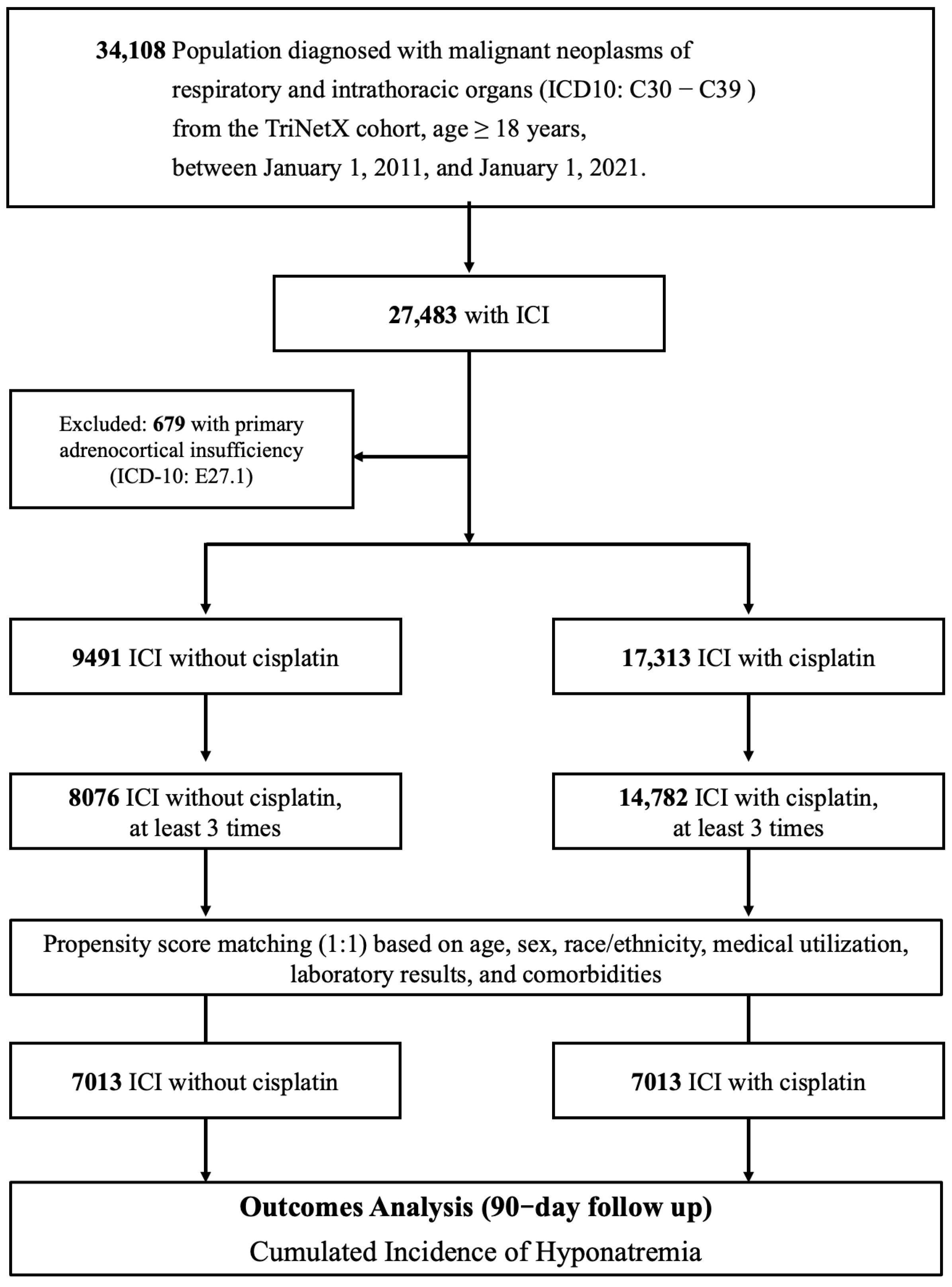
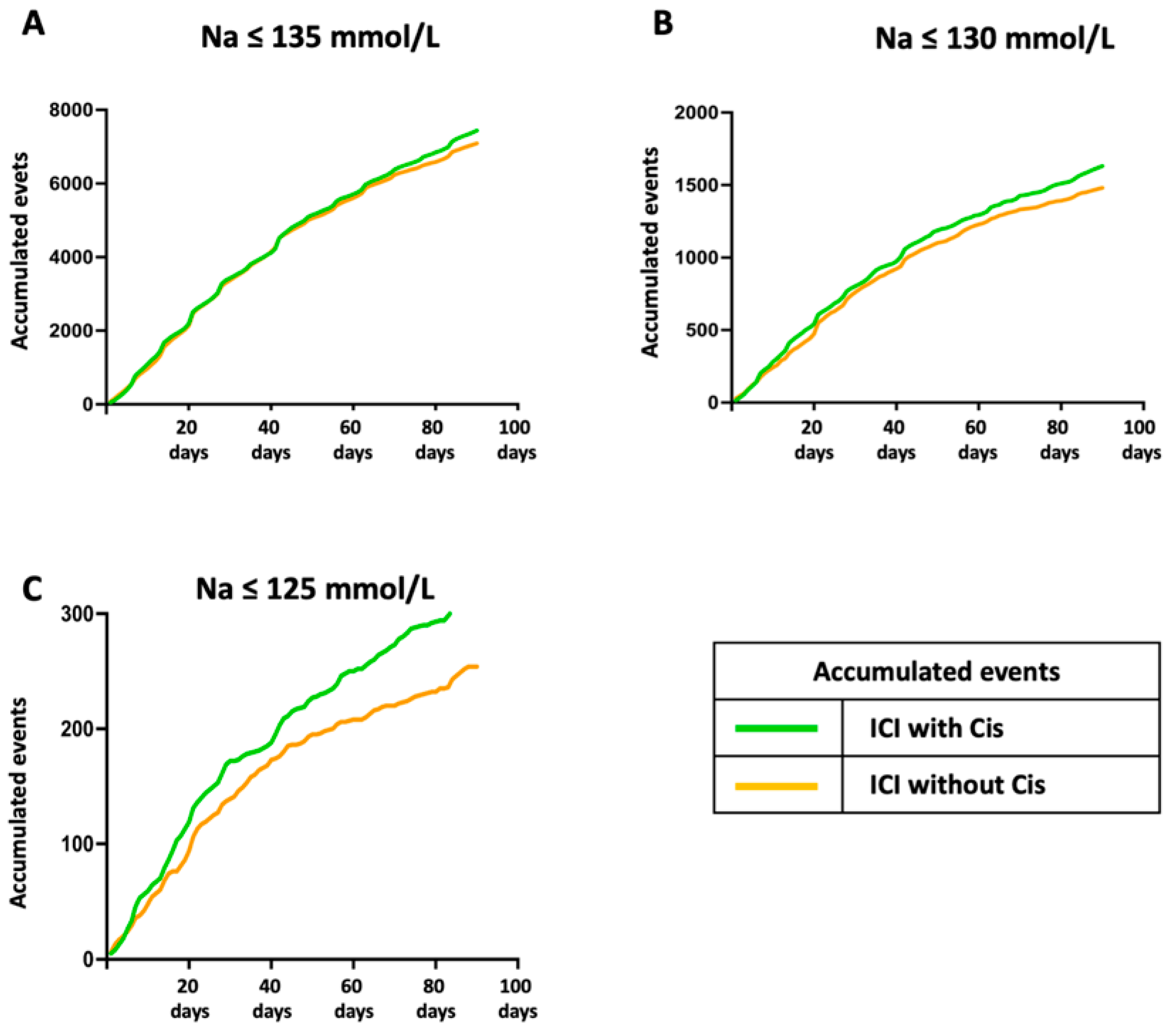
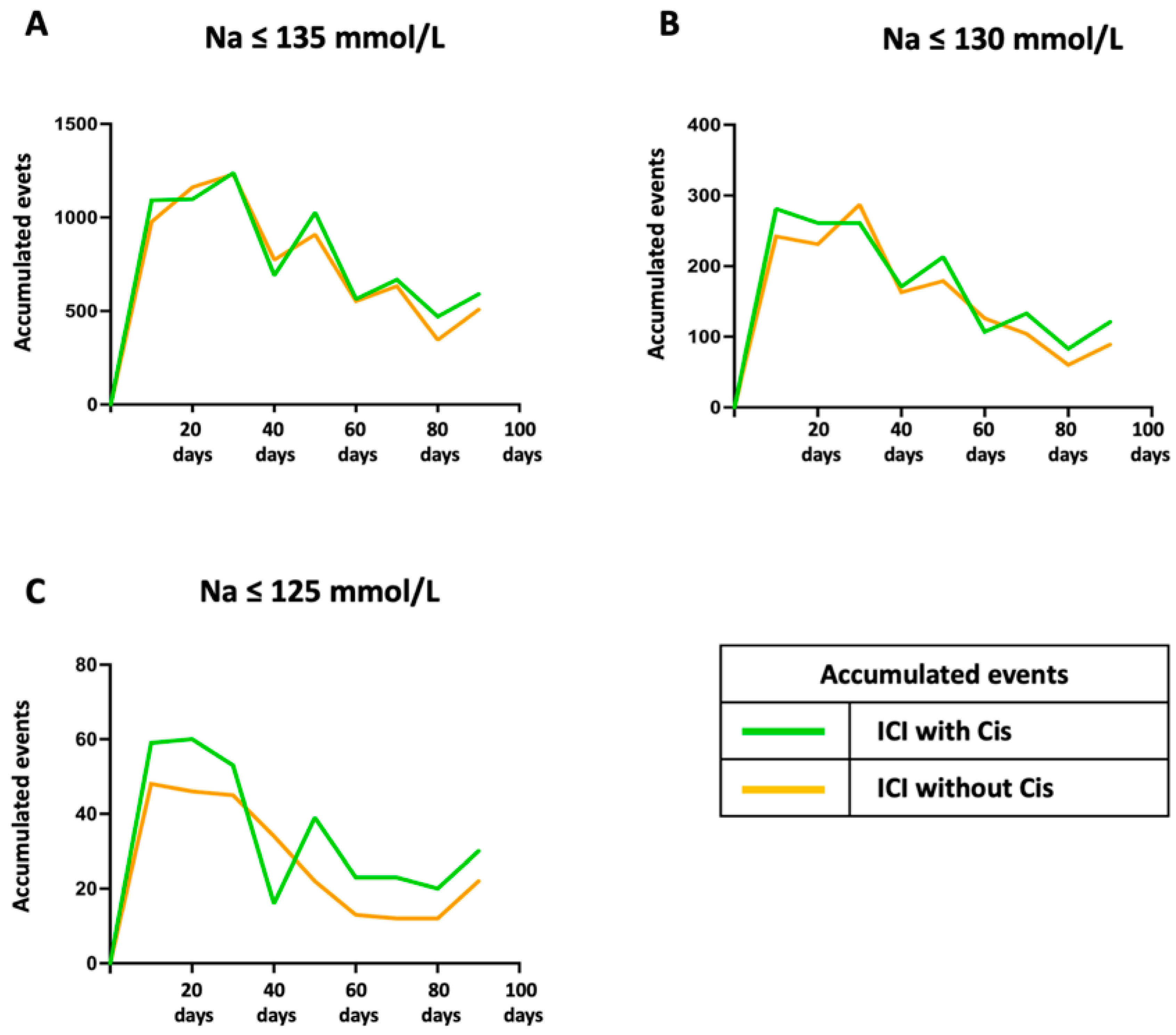
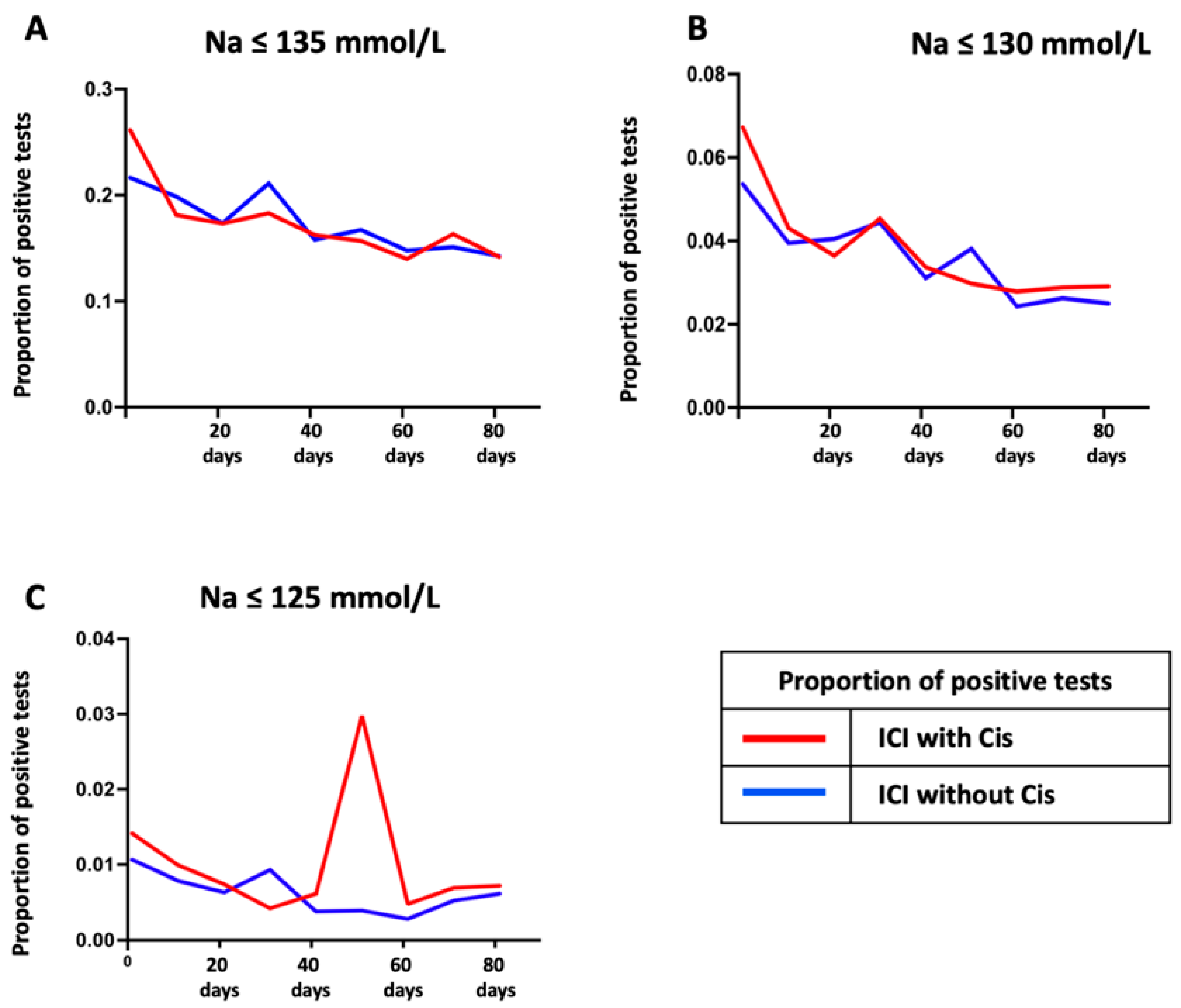
Background: Immune checkpoint inhibitors (ICIs) offer a novel approach to cancer treatment by enhancing immune responses against malignant cells. However, ICIs are associated with immune-related adverse events (irAEs), including hyponatremia, a potentially severe electrolyte disturbance. The risk of hyponatremia increases further when ICIs are combined with cisplatin, a nephrotoxic chemotherapy agent widely used in treating respiratory and intrathoracic cancers. This study investigated the incidence, severity, and temporal dynamics of hyponatremia in patients treated with ICIs alone or in combination with cisplatin. Methods: A retrospective cohort study was conducted using data from the TriNetX global health research network. Patients with respiratory or intrathoracic malignancies (n = 14,026) were divided into two groups: ICI-only (n = 7013) and ICI with cisplatin combination (n = 7013), matched using propensity scores. Hyponatremia was categorized into mild (130–134 mmol/L), moderate (125–129 mmol/L), and severe (<125 mmol/L). Temporal trends and cumulative incidence over 90 days were analyzed using Poisson regression. Results: The combination group exhibited a higher cumulative incidence of hyponatremia across all severity levels, with early-phase risk peaking within 20 days of treatment. Rate ratios for mild, moderate, and severe hyponatremia were significantly elevated in the combination group (p < 0.01). Conclusions: Hyponatremia is a significant complication in patients receiving ICIs, particularly when combined with cisplatin. Early monitoring and tailored management are essential to mitigate risks and optimize treatment outcomes.
Keywords:
cisplatin; hyponatremia; immune checkpoint inhibitor; temporal trends