Article

Secondary Genetic Events and Their Relationship to TP53 Mutation in Mantle Cell Lymphoma: A Sub-Study from the FIL_MANTLE-FIRST BIO on Behalf of Fondazione Italiana Linfomi (FIL)


by
Maria Elena Carazzolo
1,2,*,
Francesca Maria Quaglia
3,
Antonino Aparo
2,
Alessia Moioli
3,
Alice Parisi
4,
Riccardo Moia
5,
Francesco Piazza
6,
Alessandro Re
7,
Maria Chiara Tisi
8,
Luca Nassi
9,
Pietro Bulian
10,
Alessia Castellino
11,
Vittorio Ruggero Zilioli
12,
Piero Maria Stefani
13,
Alberto Fabbri
14,
Elisa Lucchini
15,
Annalisa Arcari
16,
Luisa Lorenzi
17,
Barbara Famengo
18,
Maurilio Ponzoni
19,
Angela Ferrari
20,
Simone Ragaini
21,
Jacopo Olivieri
22,
Vittoria Salaorni
23,
Simona Gambino
3,24,
Marilisa Galasso
3,24,
Maria Teresa Scupoli
2,24 and
Carlo Visco
3,24,*
add Show full author list remove Hide full author list
1
Department of Medicine, University of Verona, 37134 Verona, Italy
2
Research Center LURM (Interdepartmental Laboratory of Medical Research), University of Verona, 37134 Verona, Italy
3
UOC di Ematologia, DAI Medico Generale, AOUI Verona, 37134 Verona, Italy
4
Department of Pathology and Diagnostics, University Hospital of Verona, 37126 Verona, Italy
5
Division of Hematology, Department of Translational Medicine, Università del Piemonte Orientale and AOU Maggiore della Carità di Novara, 28100 Novara, Italy
6
Department of Medicine, University of Padova and Unit of Hematology, Azienda Ospedale Università Padova, 35128 Padova, Italy
7
UOC Ematologia, Spedali Civili di Brescia, 25123 Brescia, Italy
8
Hematology Unit, San Bortolo Hospital, 36100 Vicenza, Italy
9
Department of Hematology, Careggi Hospital and University of Florence, 50134 Florence, Italy
10
Clinical and Experimental Onco-Hematology Unit, Centro di Riferimento Oncologico di Aviano, Istituto di Ricovero e Cura a Carattere Scientifico, 33081 Aviano, Italy
11
Hematology Unit, AO Santa Croce e Carle, 12100 Cuneo, Italy
12
Division of Hematology, ASST Grande Ospedale Metropolitano Niguarda, 20162 Milan, Italy
13
Struttura Complessa di Ematologia, Dipartimento Strutturale di Medicina Interna, Presidio Ospedaliero di Treviso, 31100 Treviso, Italy
14
UOC Ematologia, Azienda Ospedaliero-Universitaria Senese, 53100 Siena, Italy
15
UCO Ematologia, Azienda Sanitaria Universitaria Giuliano Isontina, 34148 Trieste, Italy
16
Unità Operativa Complessa di Ematologia, Azienda USL di Piacenza, Ospedale Guglielmo da Saliceto, 29121 Piacenza, Italy
17
Department of Histopathology, University of Brescia, ASST Spedali Civili di Brescia, 25123 Brescia, Italy
18
Pathology Department, San Bortolo Hospital, 36100 Vicenza, Italy
19
Faculty of Medicine and Surgery, Vita-Salute San Raffaele University and Pathology Unit, San Raffaele Hospital Scientific Institute, 20132 Milan, Italy
20
Hematology, Azienda USL-IRCCS di Reggio Emilia, 42123 Reggio Emilia, Italy
21
Division of Hematology, Department of Molecular Biotechnology and Health Sciences, University of Torino, 10126 Turin, Italy
22
Hematology Clinic, ASUFC Udine, 33100 Udine, Italy
23
Department of Diagnostic and Public Health, University of Verona, 37134 Verona, Italy
24
Department of Engineering for Innovation Medicine, Section of Biomedicine, University of Verona, 37134 Verona, Italy
*
Authors to whom correspondence should be addressed.
Cancers 2025, 17(24), 4027; https://doi.org/10.3390/cancers17244027
Submission received: 20 November 2025 / Revised: 13 December 2025 / Accepted: 15 December 2025 / Published: 17 December 2025
(This article belongs to the Section Molecular Cancer Biology)

Simple Summary

Mantle Cell Lymphoma (MCL) is an aggressive non-Hodgkin lymphoma characterized by a highly variable clinical course and marked molecular heterogeneity. The analysis of targeted sequencing revealed the presence of secondary genomic events, such as copy number variations (CNVs), that may stratify patients according to their risk. CNV-based clustering may therefore represent a novel approach for identifying high-risk subgroups. Furthermore, the prognostic and biological relevance of TP53 in disease progression is confirmed, and its integration with the CNV-defined clusters provides additional stratification of the cohort.

Abstract

Background: Mantle Cell Lymphoma (MCL) is an aggressive malignancy with variable clinical behavior, largely reflecting the underlying molecular heterogeneity. The genomic landscape of MCL encompasses gene mutations with strong prognostic implications and secondary genetic events, which are also implicated in the pathogenesis and prognosis of the disease. Methods: We evaluated the diagnostic samples of 73 patients with relapsed/refractory MCL that were enrolled in the Fondazione Italiana Linfomi Mantle First-BIO study. All patients had available data for correlating CNVs with the presence of TP53 mutation. Time to first relapse or progression of disease (POD) was used as the primary outcome measure. Results: We identified CNVs associated with MCL, with Del 9p21.3 (CDKN2A) being the strongest predictor of shorter time to POD (p = 0.01), independently of TP53 mutation in multivariable analysis. Unsupervised clustering identified molecularly defined clusters that were associated with significantly different times to POD (p = 0.01). Pairwise log-rank tests confirmed TP53 mutated vs. wild-type (WT) as the strongest prognostic factor, with cluster assessment improving the prognostic predictivity among patients: clusters TP53-mut vs. TP53-WT, p = 0.001, HR = 3.92; and p = 0.014, HR = 2.23, respectively. In conclusion, CNV-based molecular clusters might represent a novel approach to identify patients at higher risk of treatment failure, further contributing to the prognostic predictivity of TP53 mutation.

1. Introduction

Mantle Cell Lymphoma (MCL) is a rare and aggressive B-cell lymphoma, accounting for 4–7% of non-Hodgkin lymphomas (NHL). It is characterized by a continuous pattern of relapse and presents a highly heterogeneous clinical course [1,2]. Together with risk factors such as blastoid or pleomorphic morphology [3,4], the Mantle Cell Lymphoma International Prognostic Index (MIPI) [5], the nuclear proliferation index Ki-67 [6], and TP53 aberrations [7,8,9,10], the time to first relapse or progression (POD) within two years of diagnosis has been independently associated with a higher risk of death [11].
Although these indices provide valuable prognostic information, they have not yet enabled the implementation of personalized therapeutic approaches in MCL. The integration of multi-omics approaches into diagnostic procedures may facilitate the detection of secondary events related to both treatment resistance and progression of the disease [12,13]. In particular, a group of broadly recognized genes with strong prognostic implications has been described, such as ATM, TP53, NOTCH1/2, KMT2D, CCND1, and HNRNPH1 [7,14,15,16]. Specifically, TP53 mutation, which occurs in 5–20% of cases [1,17,18], is the most impactful negative prognostic marker in patients with MCL, regardless of age, MIPI, delivered therapy, or morphology [17,19]. Nevertheless, MCL is also characterized by secondary genomic events such as copy number variations (CNVs), for instance, deletions (Del) at 17p, 13q33-q34, 1p22, 11q22-q23, 6q, 13q14 (RB1), 9p21 (CDKN2A/B), 9q22q31, and 10p15-p13, and amplifications (Amp) at 3q25-q29, 18q21-q22 (BCL2), and 12q13 (CDK4) [20].
CNVs have been less described in MCL than gene mutations. Among them, Del 9p21 (CDKN2A) has already been described as being associated with an adverse prognosis, independently of TP53 mutation [10,21,22,23]. To evaluate the prognostic impact of CNVs in relation to TP53, we uniformly characterized, by targeted sequencing, a substantial cohort of patients with newly diagnosed MCL.

2. Materials and Methods

2.1. Study Design and Inclusion Criteria

The MANTLE-FIRST BIO (NCT04882475) is a study involving 16 major Italian institutions affiliated with the Fondazione Italiana Linfomi (FIL). To be included, patients had to satisfy the following criteria: (i) have available tissue for pathology revision and molecular studies; (ii) be diagnosed with MCL between 1 January 2008 and 30 June 2020; (iii) have been treated with disease management intent for symptomatic disease (excluding indolent or watch-and-wait approaches) using upfront therapy including rituximab; (iv) be relapsed or refractory (R/R) to induction therapy; and (v) 18–80 years old.
Patients were classified into early or late POD, considering a threshold of 24 months between the date of diagnosis and first relapse or progression [24]. Specifically, patients with early POD experienced relapse within 24 months, whereas those with late POD relapsed beyond 24 months. All tumor samples, preserved by means of Formalin-Fixed Paraffin-Embedded (FFPE) (Figure 1), were centralized at the Interdepartmental Laboratory of Medical Research (LURM) and the Department of Pathology of the University of Verona. The patient’s recruitment and the study were approved by an Independent Scientific Committee (IEC) in accordance with the Declaration of Helsinki, and all patients signed an informed consent form to be included in this research study, which represented a pre-specified sub-study of the MANTLE-FIRST BIO.

2.2. Extraction and Quality Control of Genomic DNA (gDNA)

Sections of 4 µm in size of formalin-fixed paraffin-embedded (FFPE) lymph nodes or extra-nodal sites of MCL naïve diagnostic patients were used for genomic DNA (gDNA) extraction through QIAamp DNA FFPE Advanced UNG Kit (Qiagen, Milan, Italy) [25]. Quality control was performed using Nanodrop (Life Real Biotechnology, Hangzhou, China), Qubit 4 Fluorometer (Thermo Fisher, Milan, Italy), and a fragment analyzer (Agilent Technologies, Milan, Italy). The minimal quantity of gDNA required was 0.5 μg with a concentration of at least 20 μg/uL.

2.3. Targeted Next Generation Sequencing (tNGS)

Targeted Next Generation Sequencing (tNGS) was performed on the Illumina platform 150 PE, adopting a customized panel comprising 37 genes: ATM, BAX, BCL2, BCL6, BIRC3, BTK, CARD11, CCND1, CD36, CDKN2A, CREBBP, CXCR4, EP300, EWSR1, EZH2, HIST1H1E (H1-4), HNRNPH1, KMT2D, MEF2B, MTOR, MYC, MYD88, NFKBIE, NOTCH1, NOTCH2, PLCG2, PTEN, RB1, RELA, SAMDH1, SETD2, SMARCA4, STAT3, TP53, TRAF3, UBR5, and NSD2. The library preparation, sequencing, and variant calling were performed by an external service: Personal Genomics (Verona, Italy) [26]. The read lengths were 2 × 150 bp, obtaining 500 Mb as a median value for each sample. Copy number variations (CNVs) were annotated using CNVkit v.0.9.9 [27]. The CNVs were reported based on the coverage of the target region and their frequency in our cohort. In particular, the CNVs considered uncertain or with a frequency < 6 in the cohort were excluded from the statistical analysis. Instead, the TP53 mutation was first automatically annotated with MuTec2 v4.1, referring to the genome Hg38, and secondly checked manually through the Integrative Genomics Viewer (IGV) software (Version IGV_2.17.1) [28]. In total, 11 patients (8 early POD and 3 late POD) presented TP53 mutation with a variant allele frequency (VAF) > 10%, while 10 mutations were assessed as subclonal, considering the VAF between 2 and 6; the TP53 mutation was distributed across exons 4 to 11. The two exons prevalently hit are exons 5 and 8, with a recurrence of 5 mutations each.

2.4. Statistical Analysis

The statistical analyses, performed in R v4.1.2, adopted the endpoint of time to first relapse or progression of disease (POD), defined as the interval between diagnosis and the first occurrence of relapse or refractoriness after frontline therapy. CNVs and clinical features were visualized by oncoprints. Group comparisons of categorical variables were performed using Fisher’s exact test. Pairwise association analyses were performed: among CNVs using the Phi coefficient with p-values from Fisher’s exact test; and between CNVs (encoded as present = 1/absent = 0) and clinical variables using: Phi for binary–binary (TP53 status, sex, age group <65/≥65, Ki-67 <30/≥30, POD, and SOX11), Cramer’s V for binary–multicategory (MIPI and morphology), and point-biserial correlation for binary–continuous where available. Only associations with p < 0.05 are shown. Unless otherwise specified, a two-sided p-value ≤ 0.05 or FDR-adjusted p ≤ 0.05 was considered statistically significant. Survival curves were estimated using the Kaplan–Meier method and compared using the log-rank test. Univariate and multivariate Cox proportional hazards models [29,30] were applied to identify prognostic factors, and results were reported as hazard ratios (HRs) with 95% confidence intervals (CIs). Variables significant (p ≤ 0.05) in univariate analyses were included in the multivariate model [3,31], which was built using a backward stepwise selection [32] procedure. For unsupervised clustering of CNV profiles, we applied non-negative matrix factorization (NMF) using binary data (presence/absence). Clusters showing similar Kaplan–Meier curves were further collapsed, resulting in two molecular groups. These clusters were subsequently correlated with clinical and molecular variables, and survival analyses (Kaplan–Meier, log-rank, and Cox regression) were performed. Prognostic effects of CNV clusters were also visualized using forest plots.

3. Results

3.1. Clinical Features of the Analyzed Cohort

The 73 MCL patients had a median age of 65 years (range, 40–80), calculated at the time of initial diagnosis, and 75% were male. Clinical and pathological characteristics of the 73 included patients, divided according to time to POD, are listed in Table 1. The median time to POD of the entire cohort was 35 months (range, 3–150 months). When comparing clinical and pathological variables between patients with early POD (n = 27, 37%) or late POD (n = 46, 63%), we found that MIPI (low-intermediate vs. high, p = 0.03), tumor morphology (p = 0.003), and TP53 mutation (p = 0.001) were significantly differentially represented between the two groups (Table 1).

3.2. Copy Number Variations (CNVs) Identification and Description

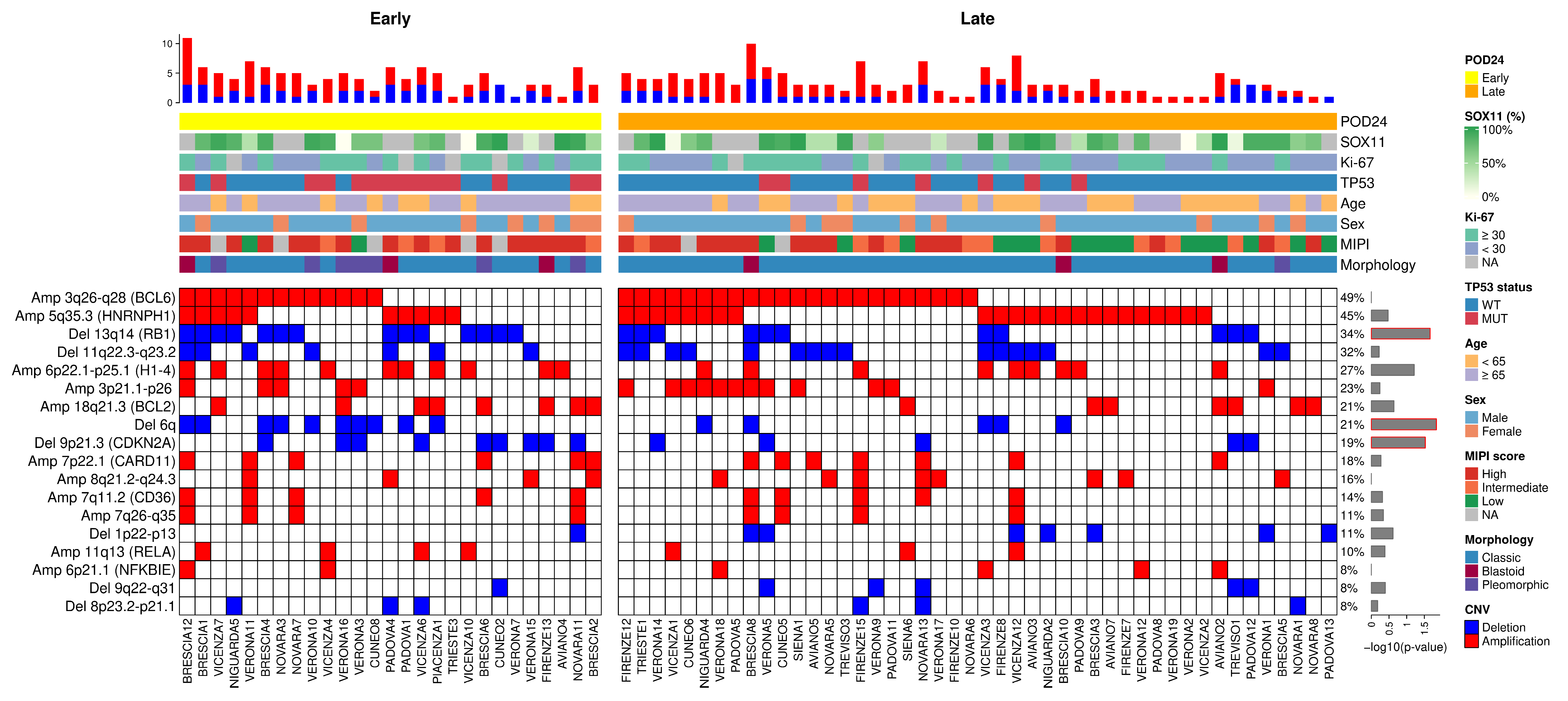
A total of 273 CNV signatures were identified, which were subdivided into 18 types of alterations (11 amplifications and 7 deletions; Figure S1). The most recurrent CNVs were Amp 3q26-q28 (BCL6, 49%), followed by Amp 5q35.3 (HNRNPH1, 45%), Del13q14 (RB1, 34%), and Del 11q22.3-q23.2 (32%). Despite being usually more frequently described, 17p deletion (Del17p) [7,20] was found in only 3 of our patients, thus preventing statistical considerations for this cohort. Interestingly, Del 13q14 (RB1, p = 0.02, 52% early vs. 24% late), Del 6q (p = 0.01, 37% early vs. 11% late), and Del 9p21.3 (CDKN2A, p = 0.02, 33% early vs. 11% late) were significantly more prevalent in early POD patients as compared with late POD (Figure 2).
We next analyzed possible correlations between CNVs themselves and the relationship between their occurrence and clinical features (Figure S2A,B). It emerged that Amp 7q11.2 (CD36), Amp 7p22.1 (CARD11), and Amp 7q26-q35; Del 9p21.3 (CDKN2A) and Del 9q22-q31; and Amp 3q26-q28 (BCL6) and Amp 3p21.1-p26 positively correlated with each other. Contrarily, Amp 3q26-q28 (BCL6) and Amp 18q21.3 (BCL2); Amp 5q35.3 (HNRNPH1) and Del 9p21.3 (CDKN2A) were negatively correlated.

3.3. Prognostic Factors in Terms of Time to POD: Clinical and Molecular Features

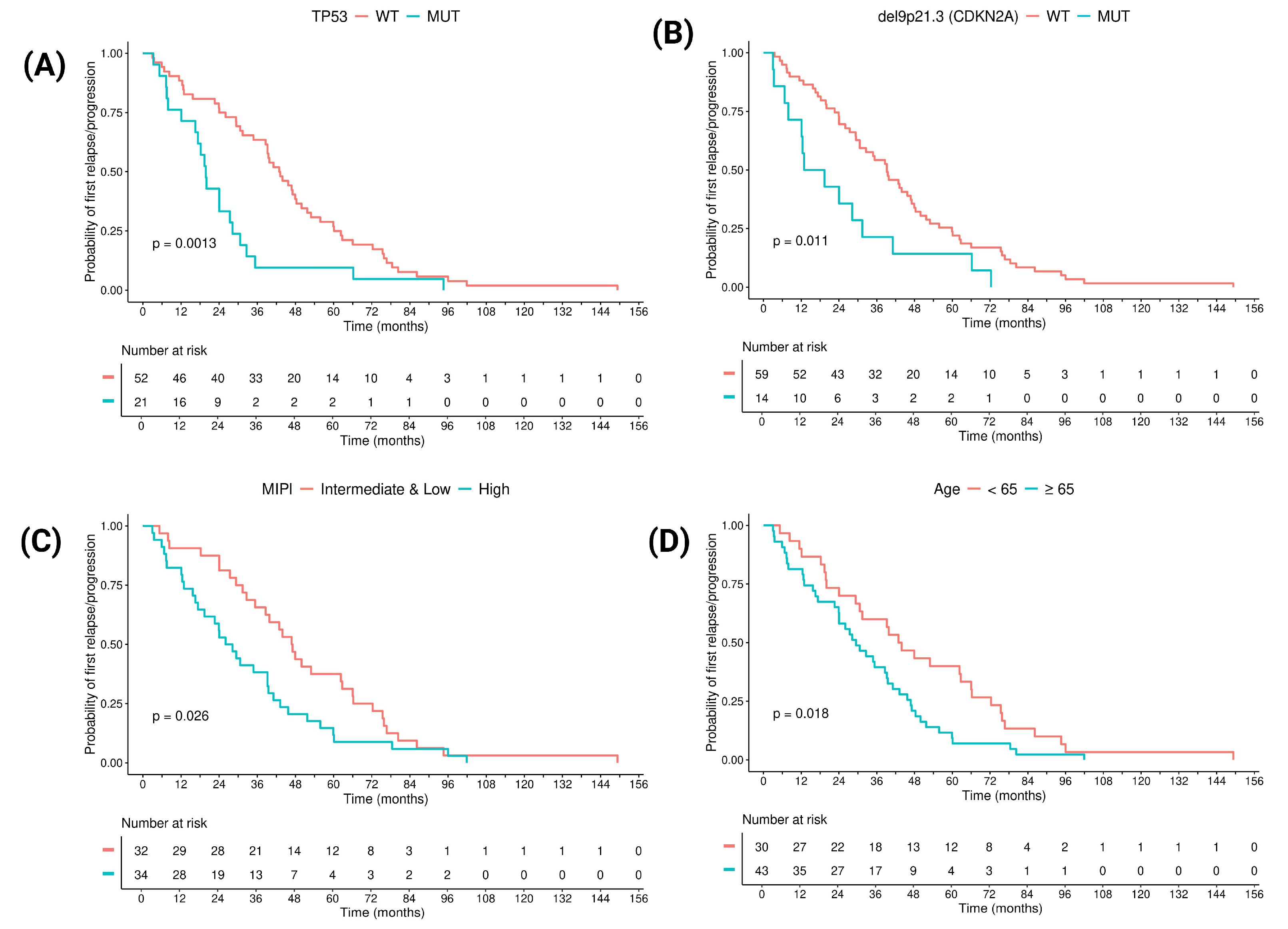
In univariate analysis, the variables significantly associated with a shorter time to POD were TP53 mutation (p = 0.0013, HR = 2.3, Figure 3A), Del 9p21.3 (CDKN2A, p = 0.011, HR = 2.1, Figure 3B), high MIPI (vs. intermediate and low, p = 0.026, HR = 1.4; Figure 3C), and age ≥ 65 (p = 0.018, HR = 1.8; Figure 3D).
The Cox model showed that a high MIPI score (p = 0.009, HR = 2.43) and TP53 mutation (p = 0.016, HR = 2.26) were independently associated with a shorter time to POD, indicating that the combined presence of these variables could effectively identify patients with a tendency toward a shorter time to POD.

3.4. Identification of Molecular Clusters That Provide Risk Stratification

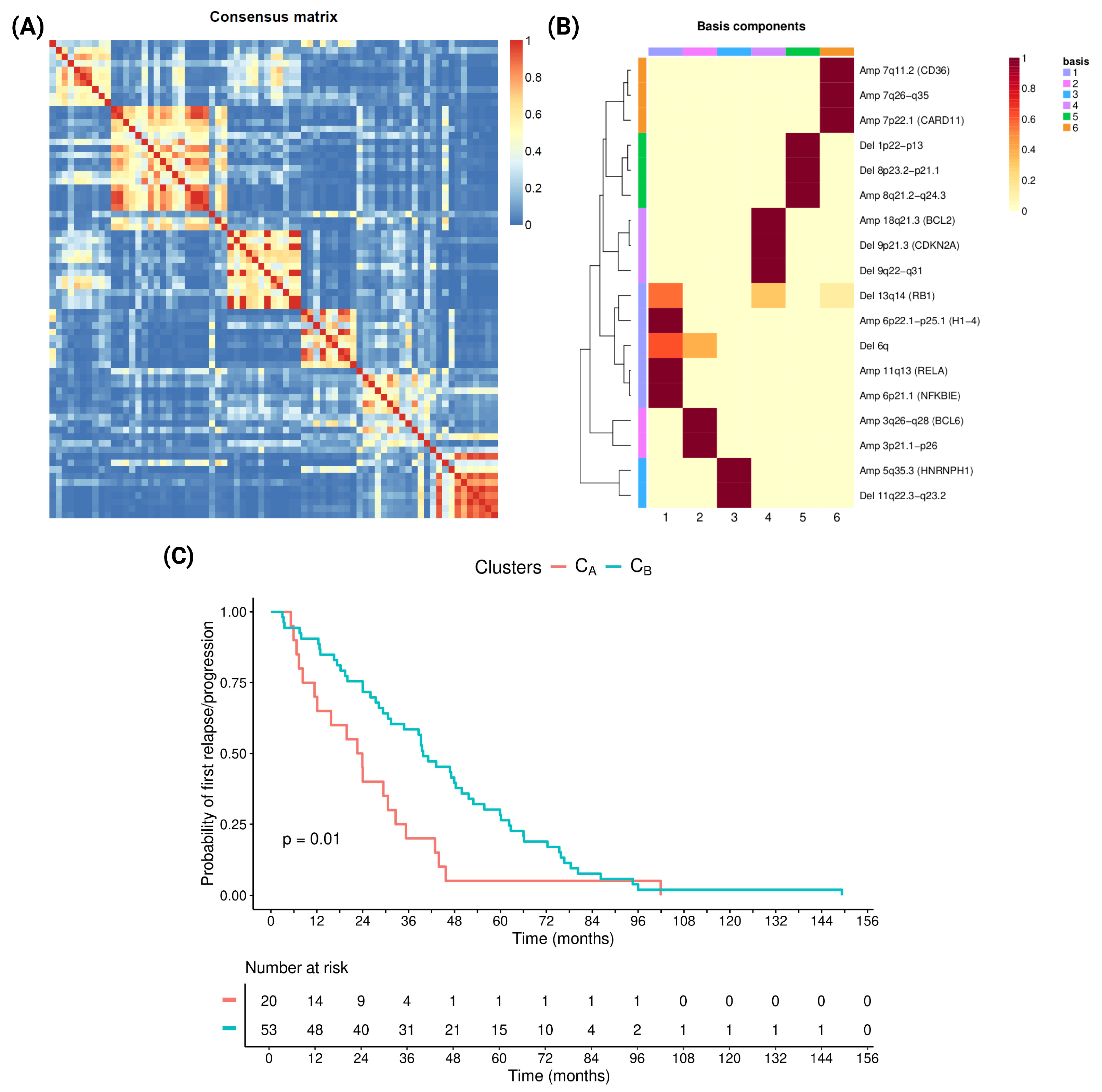
In the attempt to improve risk stratification of CNVs, we used the NMF, which initially identified six different molecular clusters (Figure 4A). Post hoc survival analysis based on time to POD showed comparable Kaplan–Meier curves with similar patterns among certain groups. Thus, we merged the clusters with overlapping survival profiles, obtaining two distinct CNV-defined clusters. Cluster A (CA) combined original groups 1 and 6, whereas Cluster B (CB) encompassed groups 2–3–4–5 (Figure 4B).
CA (12 early POD and 8 late POD) was associated with a significantly shorter time to POD than CB (15 early POD and 38 late POD; HR = 0.50; p = 0.012; Figure 4C). Furthermore, the 20 patients who were identified as CA were characterized by adverse clinicopathological features, with 4 (20%) patients having blastoid morphology, 13 (65%) having Ki67 ≥ 30, 10 (50%) having a high MIPI score, and 8 (40%) harboring TP53 mutations. Instead, the cluster CB was composed of 53 patients, of whom 2 (4%) presented with blastoid morphology, 21 (40%) with Ki-67 ≥ 30, 24 (45%) with a high-MIPI score, and 13 (25%) with TP53 mutation. Surprisingly, and despite their more favorable clinical behavior, the CB was enriched for Del 9p21.3 (CDKN2A), including 5 cases with co-occurring TP53 mutation.
Then, we fitted a further multivariable Cox model, including the previously reported risk factors together with cluster assignment (Figure S3), which showed that CA was significantly associated with a shorter time to POD compared with CB (p = 0.007, HR = 0.37).

3.5. TP53 Mutation and Its Interaction with the Clustering Analysis

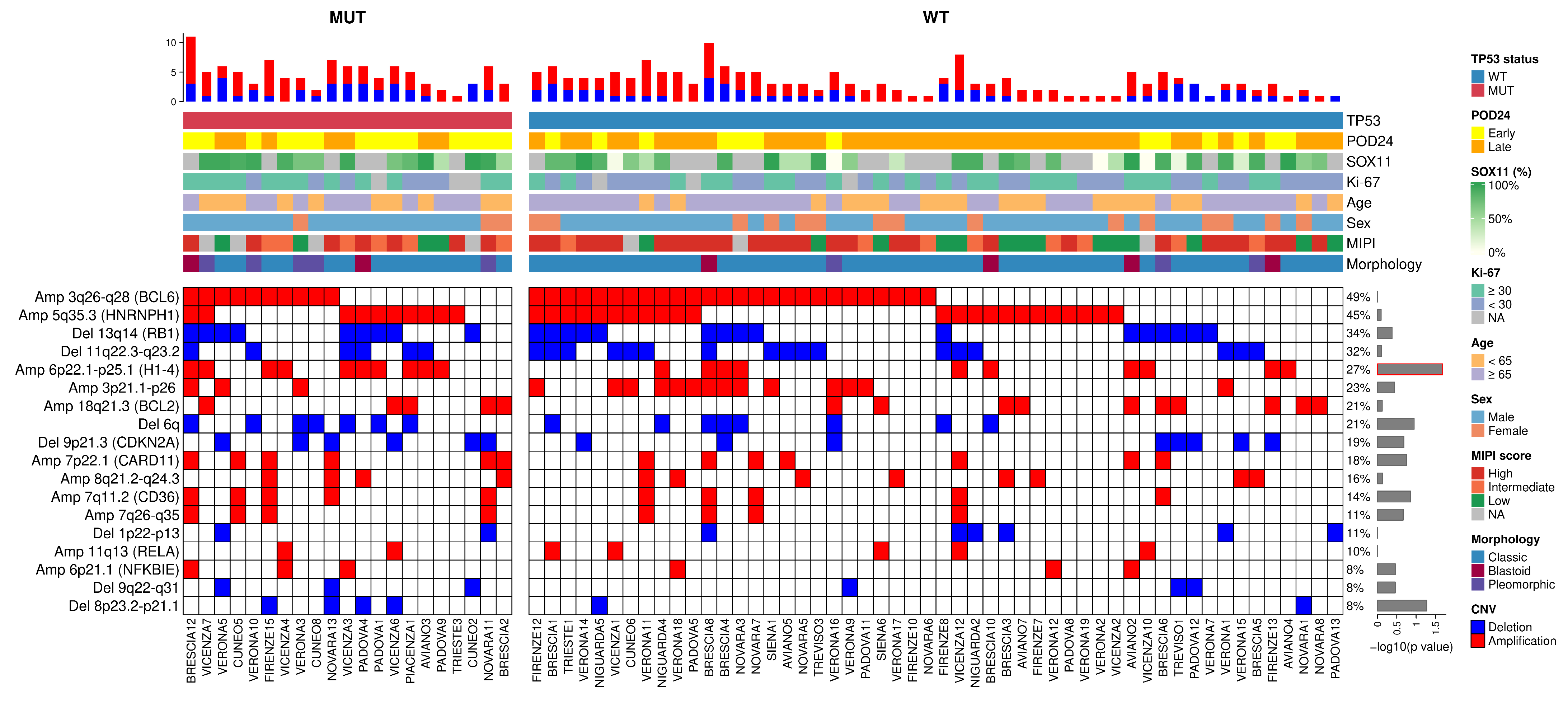
TP53 mutation was detected in 28% of the patients (21 out of 73; Figure 3A) and was significantly associated with a shorter time to POD, regardless of VAF (2% to >10%). Stratification by TP53 status highlighted differences in CNV distributions (Figure 5). Amp 6p22.1-p25.1 (H1-4, p = 0.02) was found to be significantly more prevalent in patients with TP53 mutation compared to the wild type (WT).
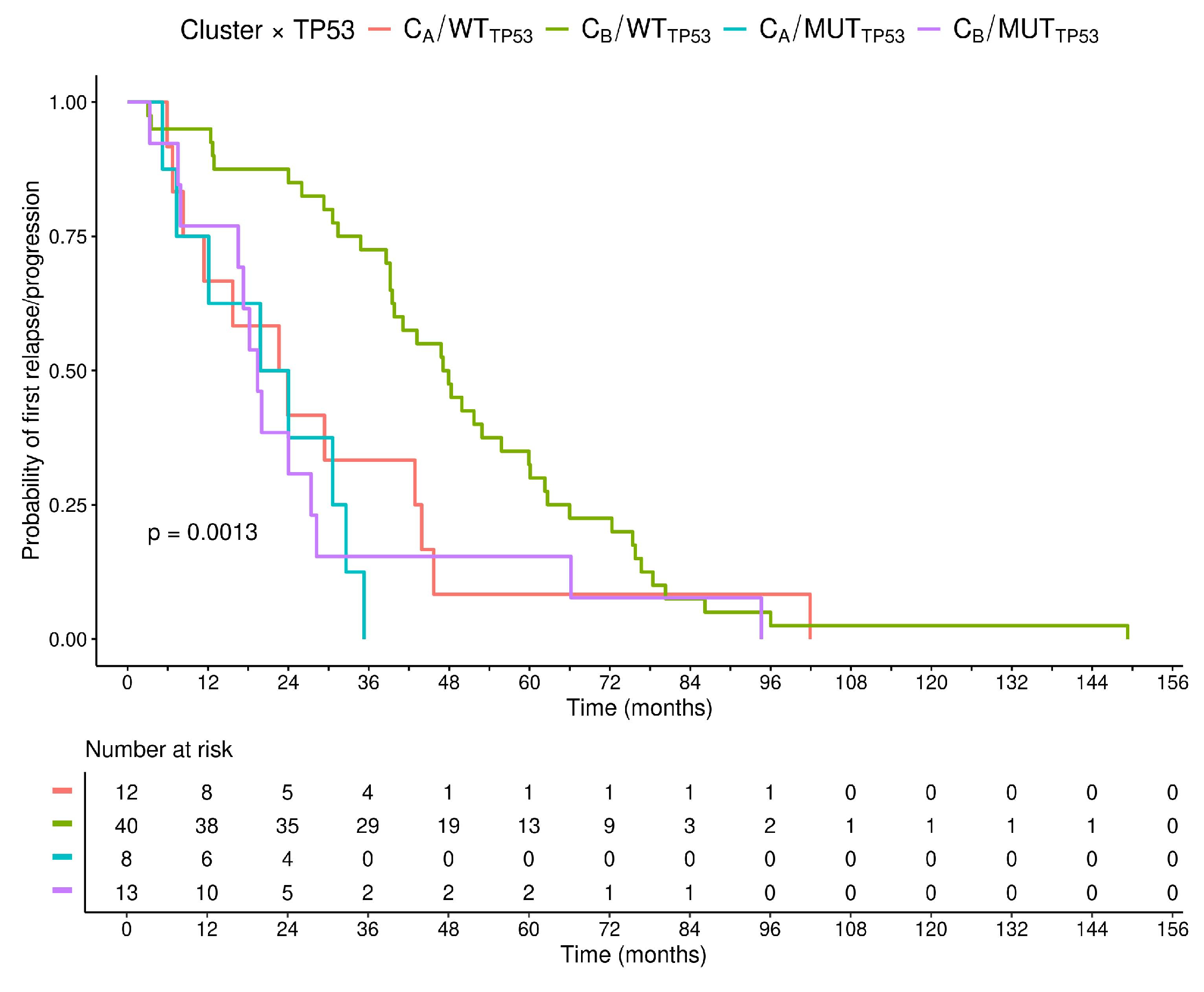
We performed stratification of the clusters according to the presence of TP53 mutation. Patients were divided into four groups with different clinical behavior according to cluster and TP53 mutation (CA/TP53-WT, CA/TP53-mut, CB/TP53-WT, CB/TP53-mut; Figure 6). Interestingly, while patients with TP53 mutation had a significantly inferior time to POD, regardless of the cluster they belonged to, patients with WT TP53 could be divided into CA/TP53-mut vs. CB/TP53-WT p = 0.001, HR = 3.92; and CB/TP53-mut vs. CB/TP53-WT p = 0.014, HR = 2.23, two different groups showing a trend toward shorter time to POD (CA/TP53-WT vs. CB/TP53-WT p = 0.048; HR = 1.87), as shown in Figure 6. The CB/TP53-WT group exhibited the longest time to POD among all groups.

4. Discussion

In the present study, we described the interactions between CNVs and TP53 mutations in 73 unselected patients with MCL who had experienced treatment failure, namely relapse or progression after standard induction immunochemotherapy. We confirmed that a high MIPI score, TP53 mutations, and Del 9p21.3 (CDKN2A) were the strongest independent predictors of shorter time to POD. Furthermore, we identified two CNV-based clusters that could refine the prognostic predictivity of the TP53 mutation itself, effectively increasing our ability to discriminate prognosis in patients with wild-type TP53.
Our results, while confirming the fundamental role of TP53 annotations in MCL [8,33], which are well known to affect survival endpoints [33,34] and responses to treatments in MCL patients [35,36], shift attention to the need to reconsider the important role of CNVs in this disease. Overall, as widely described in the literature, MCL presents great genomic heterogeneity [7,34,37,38], as further highlighted by the extensive use of high-throughput technologies. Even though the relevance of secondary genomic signatures [12,20] has been less investigated, we pointed out how genomic instability could further explain both the MCL genomic heterogeneity and its impact on the progression of the disease.
Among single genetic alterations, the univariate analysis reported TP53 mut (p = 0.001, HR = 2.3) and Del 9p21.3 (CDKN2A, p = 0.01, HR = 2.1) as the two molecular factors leading to significantly worse times to POD. Interestingly, 42% of patients presented a co-occurrence of these alterations, confirming previous literature [4,21,22,23,39,40]. To gain a deeper insight into the relevance of CNVs in our cohort, we applied an unbiased analysis to identify different molecular groups. We identified two different clusters, CA and CB, which showed a diverse distribution of CNVs and were associated with significantly different time to POD (p = 0.012, HR = 0.50), with CA effectively recognizing high-risk patients. CB comprised patients harboring Del 9p21 (CDKN2A), who were prevalently associated with early POD. Moreover, the TP53 hotspots identified in co-occurrence with the Del 9p21 (CDKN2A) were associated with a better prognosis compared to those identified in the CA. This aspect may account for the observed advantage of CB with respect to disease progression.
To further confirm the significance of our unbiased analysis, we integrated the TP53 mutation into the clustering model. The clusters enriched for TP53 mutation predictivity, being associated with inferior time to POD (CA and CB/TP53-mut vs. TP53-WT p = 0.001, HR = 3.92; and p = 0.014, HR = 2.23, respectively) as compared with the WT ones (Figure 6). Among TP53-WT clusters, we identified patients with significantly shorter time to POD (CA-TP53-WT), underlining that biological markers research can add to the recognition of TP53 status. In addition, some preliminary data indicate that there might be variability in the prognostic impact of the TP53 mutation itself, according to the affected hotspot, and the actual impact that the mutation may confer on gene function [9,41].
CDKN2A is a gene located in the p21 arm of chromosome 9, which is directly involved in the regulation of the cell cycle, acting as a tumor suppressor. Its deletion affects different pathways, including Rb1 and p53, leading to a dysregulation of the normal cell cycle [23]. The Del 9p21 (CDKN2A) is also linked to a multitude of pathways, such as the metabolic pathways that could further explain the possible involvement in the progression of the disease and drug resistance [42,43,44]. In our cohort, we identified co-occurrence of TP53 mutation and Del 9p21 (CDKN2A) with a prevalence in cluster B (CB). Preliminary stratification analysis and correlations with clinical data (such as histopathological and first-line treatments) should associate the co-occurrence of these alterations with a poor prognosis and a tendency towards treatment resistance To this end, we aim to strengthen our results by conducting additional analyses, including in vitro experiments.
We acknowledge that our series, due to its retrospective nature, may have suffered from selection bias based on material availability in single centers. We must also consider that, due to the inclusion criteria of the study, which required patients who had already experienced relapse or progression, our series has likely been enriched in adverse genetic events, as compared with unselected series taken at the time of diagnosis. Finally, our analysis did not encompass comprehensive clinical and pathological evaluations, as well as somatic mutations in genes other than TP53, which may have contributed to the clinical behavior of the included patients. All these analyses will be the subject of the MANTLE-FIRST BIO study itself.

5. Conclusions

In conclusion, we confirmed the prognostic relevance of TP53 mutation and Del 9p21 (CDKN2A) alterations in MCL patients. Both genetic signatures were enriched in patients with shorter time to first POD. Finally, the molecular clustering based on CNVs could discriminate patients with TP53-WT at a higher risk of early disease progression.

Supplementary Materials

The following supporting information can be downloaded at: https://www.mdpi.com/article/10.3390/cancers17244027/s1, Figure S1: Amplification (red) and deletions (blue) identified in 73 MCL samples (column), Figure S2: (A) Correlation between CNVs. Pairwise associations between CNVs are shown using the Phi coefficient (color scale, −1 to +1). Only significant correlations (Fisher’s exact test, p < 0.05) are displayed, while non-significant pairs are left blank. The order on the axes indicates hierarchical clustering of CNVs based on their association profiles. (B) Associations between CNVs and clinical features. Heatmap showing effect sizes for each CNV (rows) versus clinical feature (columns); Figure S3: Multivariable Cox regression including CNV-defined cluster assignment. Forest plot reporting HR with 95% confidence intervals and two-sided p-values for time to first POD.

Author Contributions

Contribution: M.E.C., F.M.Q., and C.V. designed and conducted the research and supervised the entire process. A.A. (Antonino Aparo) performed the statistical analysis. M.E.C. analyzed the data and performed laboratory experiments and research. F.M.Q. coordinated clinical and pathological data collection. A.M., A.P., R.M., F.P., A.R., M.C.T., L.N., P.B., A.C., V.R.Z., P.M.S., A.F. (Alberto Fabbri), E.L., A.A. (Annalisa Arcari), L.L., B.F., M.P., A.F. (Angela Ferrari), S.R., and J.O. contributed to the collection of clinical data and material transfer agreement. V.S., S.G., M.G., and M.T.S. contributed key strategies, participated in discussions, and provided scientific input. Finally, F.M.Q. and C.V. approved the final version and constantly supported the design of the study. All authors have read and agreed to the published version of the manuscript.

Funding

Funding support: Premio Giovani Ricercatori, Edition 2019 to F.M.Q. (PGR Ed. 2019, MANTLE-FIRST BIO study, https://clinicaltrials.gov/ct2/show/NCT04882475) (accessed on 15 November 2025), Fondazione Italiana Linfomi (FIL), Fondazione Giulia Maramotti, Fondazione GRADE, and the Leukemia and Lymphoma Society.

Institutional Review Board Statement

Not applicable.

Informed Consent Statement

The patients of each center were enrolled after providing signed consent to be involved in the MANTLE-FIRST BIO study.

Data Availability Statement

Data is contained within the article or Supplementary Materials. Further, data that support the findings of this study are available from the corresponding author upon reasonable request.

Acknowledgments

First and foremost, the authors gratefully thank the Fondazione Italiana Linfomi (FIL), Fondazione Giulia Maramotti, and Fondazione GRADE for their funding support through the Premio Giovani Ricercatori, Edition 2019, to F.M.Q. (MANTLE-FIRST BIO study, https://clinicaltrials.gov/ct2/show/NCT04882475) (accessed on 15 November 2025), and the Leukemia and Lymphoma Society. The study was also supported by the grant No. MCL 7005-24 from LLS. We also extend our sincere gratitude to all FIL centers that actively contributed by providing available samples, as well as to the clinicians, pathologists, and patients who participated in this ambitious project. The authors also thank the European Union—Next Generation EU—and Ministero della Salute—PNRR-TR1-2023-12378287—Rafforzamento e potenziamento della ricerca biomedica del SSN (CUP: E13C24000610007) for supporting our work. We are grateful to Luca Marcolungo and Elisa Zago, as well as Personal Genomics, for their contribution to the sequencing process and their ongoing support in both the genomic panel development and data interpretation phases.

Conflicts of Interest

The authors declare no competing financial interests.

References

  1. Kumar, A.; Eyre, T.A.; Lewis, K.L.; Thompson, M.C.; Cheah, C.Y. New Directions for Mantle Cell Lymphoma in 2022. Am. Soc. Clin. Oncol. Educ. Book 2022, 42, 614–628. [Google Scholar] [CrossRef]
  2. Bomben, R.; Ferrero, S.; D’Agaro, T.; Dal Bo, M.; Re, A.; Evangelista, A.; Carella, A.M.; Zamò, A.; Vitolo, U.; Omedè, P.; et al. A B-cell receptor-related gene signature predicts survival in mantle cell lymphoma: Results from the Fondazione Italiana Linfomi MCL-0208 trial. Haematologica 2018, 103, 849–856. [Google Scholar] [CrossRef] [PubMed]
  3. Dreyling, M.; Klapper, W.; Rule, S. Blastoid and pleomorphic mantle cell lymphoma: Still a diagnostic and therapeutic challenge! Blood 2018, 132, 2722–2729. [Google Scholar] [CrossRef] [PubMed]
  4. Streich, L.; Sukhanova, M.; Lu, X.; Chen, Y.; Venkataraman, G.; Mathews, S.; Zhang, S.; Kelemen, K.; Segal, J.; Gao, J.; et al. Aggressive morphologic variants of mantle cell lymphoma characterized with high genomic instability showing frequent chromothripsis, CDKN2A/B loss, and TP53 mutations: A multi-institutional study. Genes Chromosomes Cancer 2020, 59, 484–494. [Google Scholar] [CrossRef] [PubMed]
  5. Hoster, E.; Dreyling, M.; Klapper, W.; Gisselbrecht, C.; van Hoof, A.; Kluin-Nelemans, H.C.; Pfreundschuh, M.; Reiser, M.; Metzner, B.; Einsele, H.; et al. A new prognostic index (MIPI) for patients with advanced-stage mantle cell lymphoma. Blood 2008, 111, 558–565. [Google Scholar] [CrossRef]
  6. Hoster, E.; Rosenwald, A.; Berger, F.; Bernd, H.-W.; Hartmann, S.; Loddenkemper, C.; Barth, T.F.; Brousse, N.; Pileri, S.; Rymkiewicz, G.; et al. Prognostic Value of Ki-67 Index, Cytology, and Growth Pattern in Mantle-Cell Lymphoma: Results From Randomized Trials of the European Mantle Cell Lymphoma Network. J. Clin. Oncol. 2016, 34, 1386–1394. [Google Scholar] [CrossRef]
  7. Guo, W.; Wang, X.; Li, Y.; Bai, O. Function and regulation of lipid signaling in lymphomagenesis: A novel target in cancer research and therapy. Crit. Rev. Oncol. Hematol. 2020, 154, 103071. [Google Scholar] [CrossRef]
  8. Sakhdari, A.; Ok, C.Y.; Patel, K.P.; Kanagal-Shamanna, R.; Yin, C.C.; Zuo, Z.; Hu, S.; Routbort, M.J.; Luthra, R.; Medeiros, L.J.; et al. TP53 mutations are common in mantle cell lymphoma, including the indolent leukemic non-nodal variant. Ann. Diagn. Pathol. 2019, 41, 38–42. [Google Scholar] [CrossRef]
  9. Lazarian, G.; Chemali, L.; Bensalah, M.; Zindel, C.; Lefebvre, V.; Thieblemont, C.; Martin, A.; Tueur, G.; Letestu, R.; Fleury, C.; et al. TP53 Mutations Detected by NGS Are a Major Clinical Risk Factor for Stratifying Mantle Cell Lymphoma. Am. J. Hematol. 2025, 100, 933–936. [Google Scholar] [CrossRef]
  10. Ferrero, S.; Ragaini, S. Advancing Mantle Cell Lymphoma Risk Assessment: Navigating a Moving Target. Hematol. Oncol. 2025, 43, e70072. [Google Scholar] [CrossRef]
  11. Visco, C.; Di Rocco, A.; Evangelista, A.; Quaglia, F.M.; Tisi, M.C.; Morello, L.; Zilioli, V.R.; Rusconi, C.; Hohaus, S.; Sciarra, R.; et al. Outcomes in first relapsed-refractory younger patients with mantle cell lymphoma: Results from the MANTLE-FIRST study. Leukemia 2021, 35, 787–795. [Google Scholar] [CrossRef] [PubMed]
  12. Karolová, J.; Kazantsev, D.; Svatoň, M.; Tušková, L.; Forsterová, K.; Maláriková, D.; Benešová, K.; Heizer, T.; Dolníková, A.; Klánová, M.; et al. Sequencing-based analysis of clonal evolution of 25 mantle cell lymphoma patients at diagnosis and after failure of standard immunochemotherapy. Am. J. Hematol. 2023, 98, 1627–1636. [Google Scholar] [CrossRef] [PubMed]
  13. Khouja, M.; Jiang, L.; Pal, K.; Stewart, P.J.; Regmi, B.; Schwarz, M.; Klapper, W.; Alig, S.K.; Darzentas, N.; Kluin-Nelemans, H.C.; et al. Comprehensive genetic analysis by targeted sequencing identifies risk factors and predicts patient outcome in Mantle Cell Lymphoma: Results from the EU-MCL network trials. Leukemia 2024, 38, 2675–2684. [Google Scholar] [CrossRef] [PubMed]
  14. Sönmez, E.E.; Hatipoğlu, T.; Kurşun, D.; Hu, X.; Akman, B.; Yuan, H.; Danyeli, A.E.; Alacacıoğlu, İ.; Özkal, S.; Olgun, A.; et al. Whole Transcriptome Sequencing Reveals Cancer-Related, Prognostically Significant Transcripts and Tumor-Infiltrating Immunocytes in Mantle Cell Lymphoma. Cells 2022, 11, 3394. [Google Scholar] [CrossRef]
  15. Mareckova, A.; Malcikova, J.; Tom, N.; Pal, K.; Radova, L.; Salek, D.; Janikova, A.; Moulis, M.; Smardova, J.; Kren, L.; et al. ATM and TP53 mutations show mutual exclusivity but distinct clinical impact in mantle cell lymphoma patients. Leuk. Lymphoma 2019, 60, 1420–1428. [Google Scholar] [CrossRef]
  16. Nadeu, F.; Martin-Garcia, D.; Clot, G.; Díaz-Navarro, A.; Duran-Ferrer, M.; Navarro, A.; Vilarrasa-Blasi, R.; Kulis, M.; Royo, R.; Gutiérrez-Abril, J.; et al. Genomic and epigenomic insights into the origin, pathogenesis, and clinical behavior of mantle cell lymphoma subtypes. Blood 2020, 136, 1419–1432. [Google Scholar] [CrossRef]
  17. Jain, A.G.; Chang, C.-C.; Ahmad, S.; Mori, S. Leukemic Non-nodal Mantle Cell Lymphoma: Diagnosis and Treatment. Curr. Treat. Options Oncol. 2019, 20, 85. [Google Scholar] [CrossRef]
  18. Isaac, K.M.; Portell, C.A.; Williams, M.E. Leukemic Variant of Mantle Cell Lymphoma: Clinical Presentation and Management. Curr. Oncol. Rep. 2021, 23, 102. [Google Scholar] [CrossRef]
  19. Zelenetz, A.D.; Gordon, L.I.; Abramson, J.S.; Advani, R.H.; Andreadis, B.; Bartlett, N.L.; Budde, L.E.; Caimi, P.F.; Chang, J.E.; Christian, B.; et al. NCCN Guidelines® Insights: B-Cell Lymphomas, Version 6.2023. J. Natl. Compr. Cancer Netw. 2023, 21, 1118–1131. [Google Scholar] [CrossRef]
  20. López, C.; Silkenstedt, E.; Dreyling, M.; Beà, S. Biological and clinical determinants shaping heterogeneity in mantle cell lymphoma. Blood Adv. 2024, 8, 3652–3664. [Google Scholar] [CrossRef]
  21. Delfau-Larue, M.-H.; Klapper, W.; Berger, F.; Jardin, F.; Briere, J.; Salles, G.; Casasnovas, O.; Feugier, P.; Haioun, C.; Ribrag, V.; et al. High-dose cytarabine does not overcome the adverse prognostic value of CDKN2A and TP53 deletions in mantle cell lymphoma. Blood 2015, 126, 604–611. [Google Scholar] [CrossRef] [PubMed]
  22. Malarikova, D.; Berkova, A.; Obr, A.; Blahovcova, P.; Svaton, M.; Forsterova, K.; Kriegova, E.; Prihodova, E.; Pavlistova, L.; Petrackova, A.; et al. Concurrent TP53 and CDKN2A Gene Aberrations in Newly Diagnosed Mantle Cell Lymphoma Correlate with Chemoresistance and Call for Innovative Upfront Therapy. Cancers 2020, 12, 2120. [Google Scholar] [CrossRef] [PubMed]
  23. Gaudio, F.; Dicataldo, M.; Di Giovanni, F.; Cazzato, G.; D’AMati, A.; Perrone, T.; Masciopinto, P.; Laddaga, F.E.; Musto, P.; Maiorano, E.; et al. Prognostic Role of CDKN2A Deletion and p53 Expression and Association with MIPIb in Mantle Cell Lymphoma. Clin. Lymphoma Myeloma Leuk. 2023, 23, 599–605. [Google Scholar] [CrossRef] [PubMed]
  24. Visco, C.; Tisi, M.C.; Evangelista, A.; Di Rocco, A.; Zoellner, A.; Zilioli, V.R.; Hohaus, S.; Sciarra, R.; Re, A.; Tecchio, C.; et al. Time to progression of mantle cell lymphoma after high-dose cytarabine-based regimens defines patients risk for death. Br. J. Haematol. 2019, 185, 940–944. [Google Scholar] [CrossRef]
  25. QIAamp® DNA FFPE Advanced Handbook. May 2020. Available online: https://www.qiagen.com/pe/resources/download.aspx?id=1fae2a93-1ea1-4f85-8256-4b54c4b76f22&lang=en (accessed on 9 September 2025).
  26. Personal Genomics—Your Solution Provider in the World of Genomics. Available online: https://www.personalgenomics.it/ (accessed on 9 September 2025).
  27. CNVkit: Genome-Wide Copy Number from High-Throughput Sequencing—CNVkit 0.9.8 Documentation. Available online: https://cnvkit.readthedocs.io/en/stable/ (accessed on 9 September 2025).
  28. IGV: Integrative Genomics Viewer. Available online: https://igv.org/ (accessed on 9 September 2025).
  29. Cox, D.R. Regression Models and Life-Tables. J. R. Stat. Soc. Ser. B Stat. Methodol. 1972, 34, 187–202. [Google Scholar] [CrossRef]
  30. Therneau, T.M.; Grambsch, P.M. Modeling Survival Data: Extending the Cox Model; Springer: New York, NY, USA, 2000. [Google Scholar] [CrossRef]
  31. Jain, P.; Wang, M. High-risk MCL: Recognition and treatment. Blood 2025, 145, 683–695. [Google Scholar] [CrossRef]
  32. Venables, W.N.; Ripley, B.D. Modern Applied Statistics with S, 4th ed.; Statistics and Computing; Springer: New York, NY, USA, 2002. [Google Scholar] [CrossRef]
  33. Rodrigues, J.M.; Hassan, M.; Freiburghaus, C.; Eskelund, C.W.; Geisler, C.; Räty, R.; Kolstad, A.; Sundström, C.; Glimelius, I.; Grønbæk, K.; et al. p53 is associated with high-risk and pinpoints TP53 missense mutations in mantle cell lymphoma. Br. J. Haematol. 2020, 191, 796–805. [Google Scholar] [CrossRef]
  34. Jain, P.; Dreyling, M.; Seymour, J.F.; Wang, M. High-Risk Mantle Cell Lymphoma: Definition, Current Challenges, and Management. J. Clin. Oncol. 2020, 38, 4302–4316. [Google Scholar] [CrossRef]
  35. Dreyling, M.; Doorduijn, J.; Giné, E.; Jerkeman, M.; Walewski, J.; Hutchings, M.; Mey, U.; Riise, J.; Trneny, M.; Vergote, V.; et al. Ibrutinib combined with immunochemotherapy with or without autologous stem-cell transplantation versus immunochemotherapy and autologous stem-cell transplantation in previously untreated patients with mantle cell lymphoma (TRIANGLE): A three-arm, randomised, open-label, phase 3 superiority trial of the European Mantle Cell Lymphoma Network. Lancet 2024, 403, 2293–2306. [Google Scholar] [CrossRef]
  36. Yi, J.H.; Kim, S.J.; Lee, J.-O.; Lee, G.-W.; Kwak, J.-Y.; Eom, H.-S.; Jo, J.-C.; Choi, Y.S.; Oh, S.Y.; Kim, W.S. Bendamustine Plus Rituximab for Mantle Cell Lymphoma: A Korean, Multicenter Retrospective Analysis. Anticancer. Res. 2022, 42, 6083–6089. [Google Scholar] [CrossRef]
  37. Yi, S.; Yan, Y.; Jin, M.; Bhattacharya, S.; Wang, Y.; Wu, Y.; Yang, L.; Gine, E.; Clot, G.; Chen, L.; et al. Genomic and transcriptomic profiling reveals distinct molecular subsets associated with outcomes in mantle cell lymphoma. J. Clin. Investig. 2022, 132, e153283. [Google Scholar] [CrossRef]
  38. Le Bris, Y.; Magrangeas, F.; Moreau, A.; Chiron, D.; Guérin-Charbonnel, C.; Theisen, O.; Pichon, O.; Canioni, D.; Burroni, B.; Maisonneuve, H.; et al. Whole genome copy number analysis in search of new prognostic biomarkers in first line treatment of mantle cell lymphoma. A study by the LYSA group. Hematol. Oncol. 2020, 38, 446–455. [Google Scholar] [CrossRef]
  39. Moia, R.; Carazzolo, M.E.; Cosentino, C.; Almasri, M.; Talotta, D.; Tabanelli, V.; Motta, G.; Melle, F.; Sacchi, M.V.; Evangelista, A.; et al. TP53, CD36 Mutations and CDKN2A Loss Predict Poor Outcome in Mantle Cell Lymphoma: Molecular Analysis of the FIL V-Rbac Phase 2 Trial. Blood 2024, 144, 1577. [Google Scholar] [CrossRef]
  40. Moia, R.; Ragaini, S.; Cascione, L.; Rinaldi, A.; Alessandria, B.; Talotta, D.; Zaccaria, G.M.; Evangelista, A.; Genuardi, E.; Luppi, M.; et al. TP53 and CDKN2A Disruptions are Independent Prognostic Drivers in Mantle Cell Lymphoma: Long Term Outcome of the Fondazione Italiana Linfomi (FIL) MCL0208 Trial. 2024, Volume 419212, p. 1125. Available online: https://library.ehaweb.org/eha/2024/eha2024-congress/419212/riccardo.moia.tp53andcdkn2adisruptions.are.independent.prognostic.drivers.in.html (accessed on 9 September 2025).
  41. Xu-Monette, Z.Y.; Wu, L.; Visco, C.; Tai, Y.C.; Tzankov, A.; Liu, W.-M.; Montes-Moreno, S.; Dybkær, K.; Chiu, A.; Orazi, A.; et al. Mutational Profile and Prognostic Significance of TP53 in Diffuse Large B-Cell Lymphoma Patients Treated with R-CHOP: Report from an International DLBCL Rituximab-CHOP Consortium Program Study. Blood 2012, 120, 3986–3996. [Google Scholar] [CrossRef]
  42. Kreuger, I.Z.M.; Slieker, R.C.; van Groningen, T.; van Doorn, R. Therapeutic Strategies for Targeting CDKN2A Loss in Melanoma. J. Investig. Dermatol. 2023, 143, 18–25.E1. [Google Scholar] [CrossRef]
  43. Minami, J.K.; Morrow, D.; Bayley, N.A.; Fernandez, E.G.; Salinas, J.J.; Tse, C.; Zhu, H.; Su, B.; Plawat, R.; Jones, A.; et al. CDKN2A deletion remodels lipid metabolism to prime glioblastoma for ferroptosis. Cancer Cell 2023, 41, 1048–1060.e9. [Google Scholar] [CrossRef]
  44. Tangudu, N.K.; Buj, R.; Wang, H.; Wang, J.; Cole, A.R.; Uboveja, A.; Fang, R.; Amalric, A.; Yang, B.; Chatoff, A.; et al. De Novo Purine Metabolism is a Metabolic Vulnerability of Cancers with Low p16 Expression. Cancer Res. Commun. 2024, 4, 1174–1188. [Google Scholar] [CrossRef]
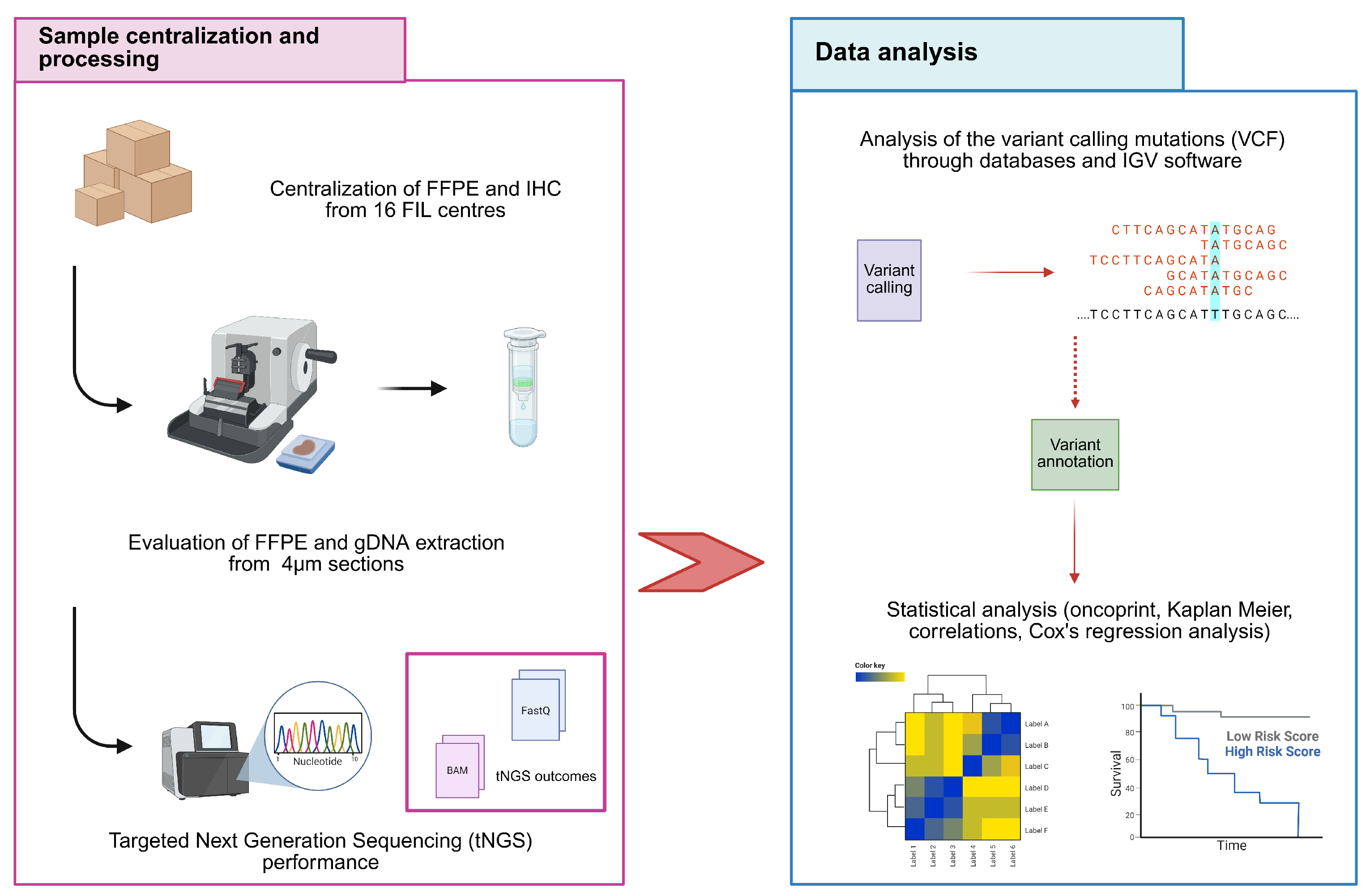
Figure 1. Graphical workflow: on the (right), the wet-lab steps (dissection of FFPE, gDNA extraction, and library preparation). On the (left), the bioinformatic tools adopted to perform data analysis (CNVkit, TP53 annotation, and data analysis).
Cancers 17 04027 g001
Figure 2. Recurrent CNVs were divided based on the classification of early POD (on the left) and late POD (on the right). The blue boxes are the deletions, while the red ones are the amplifications. On the top were reported: SOX11 (continuous value), Ki67 (≥30%, <30% and NA), TP53 status, age (≥65 and <65), sex, MIPI score (high, intermediate, and low), and morphology (classic, blastoid, and pleomorphic). Each row reports the percentage and the p-value (at log10(p-value) scale, on the right) for each CNV reported. Del 13q14 (RB1), Del6q, and Del 9p21.3 (CDKN2A) showed a significant p-value (red box) when comparing early vs. late POD.
Cancers 17 04027 g002
Figure 3. Kaplan–Meier plots of TP53 mutation vs. the WT (A), Del9p21.3 (CDKN2A) mut vs. Del9p21.3 (CDKN2A) WT (B), MIPI high vs. MIPI intermediate and low (C), and age > 65 vs. <65 (D), regardless of the classification in early or late POD.
Cancers 17 04027 g003
Figure 4. (A) Consensus matrix heatmap from NMF applied to binary CNV calls (presence/absence). (B) The cluster A (CA) is characterized by the deletions of 13q14 (RB1), 6q, and amplification of 6p22.1-p25.1 (H1-4), 11q13 (RELA), 6p21.1 (NFKBIE), 7p22.1 (CARD11), 7q11.2 (CD36), and 7q26-q35. Cluster B (CB) was characterized by the deletion of 11q22.3-q23.2, 9p21.3 (CDKN2A), 9q22-q31, 1p22-p13, 8p23.2-p21.1, and the amplifications of 3q26-q28 (BCL6), 3p21.1-p26, 5q35.3 (HNRNPH1), 18q21.3 (BCL2), and 8q21.2-q24.3. (C) Kaplan–Meier plot (with log rank p-value) of POD of CA vs. CB, curve comparison: p = 0.01, HR = 0.50.
Cancers 17 04027 g004
Figure 5. Recurrent CNVs stratified by TP53 status (mut-red, WT-blue). Each row reports the frequency (percentage) and the p-value (Fisher’s exact test) for each CNV reported. Amp 6p22.1-p25.1 (H1-4) showed a significant p-value (red box) comparing TP53 mut vs. WT.
Cancers 17 04027 g005
Figure 6. Kaplan–Meier plots associated with CA/TP53-WT (red) vs. CA/TP53-mut (blue) vs. CB/TP53-WT (green) vs. CB/TP53-mut (purple).
Cancers 17 04027 g006
Table 1. Clinical characteristics of 73 newly diagnosed MCL patients. Patients were classified according to time to progression/relapse (POD) into early POD (≤24 months, n = 27) and late POD (>24 months, n = 46). For each variable, the distribution is reported for the whole cohort and for the early POD vs. late POD subgroups. Comparisons between early and late POD were performed using Fisher’s exact test, while for the median time to POD *, it was performed using the Wilcoxon test (p = 1.34 × 10⁻¹²).
Total (n = 73)Early POD
Tot (n = 27)
Late POD
Tot (n = 46)
p-Value
Gender
Male55 (75%)19 (70%)36 (78%)p = 0.57
Female18 (25%)8 (30%)10 (22%)
Age
<6530 (41%)9 (33%)21 (46%)p = 0.33
≥6543 (59%)18 (67%)25 (54%)
Alive18 (25%)3 (11%)15 (33%)p = 0.05
Dead55 (75%)24 (89%)31 (67%)
MIPI
Low17 (23%)2 (7%)15 (33%)
Intermediate14 (19)4 (15%)10 (22%)p = 0.03 *
High34 (45%)16 (59%)18 (39%)
NA8 (11%)5 (19%)3 (6%)
Morphology
Blastoid6 (8%)3 (11%)3 (7%)p = 0.003 *
Classic59 (81%)17 (63%)42 (91%)
Pleomorphic8 (11%)7 (26%)1 (2%)
Ki-67%
<3033 (45%)9 (33%)24 (52%)
≥3034 (47%)14 (52%)20 (44%)p = 0.30
NA6 (8%)4 (15%)2 (4%)
Median time to POD 2434.8 months12.7 months47.5 monthsNA
TP53 mut21 (29%)14 (52%)7 (15%)p = 0.001 *
Disclaimer/Publisher’s Note: The statements, opinions and data contained in all publications are solely those of the individual author(s) and contributor(s) and not of MDPI and/or the editor(s). MDPI and/or the editor(s) disclaim responsibility for any injury to people or property resulting from any ideas, methods, instructions or products referred to in the content.