
DNMT3B Knockdown Enhances PARP Inhibitor Sensitivity in Biliary Tract Cancer Cells via Opioid Growth Factor Receptor-Mediated Homologous Recombination Impairment
 , ,
, ,  , , and
Simple Summary
Abstract
1. Introduction
2. Materials and Methods
2.1. Cell Lines and Cell Culture
2.2. Reagents
2.3. In Vitro AZA Treatment for TFK-1 and RBE
2.3.1. Homologous Recombination Assay with AZA Treatment via qPCR
2.3.2. Quantitative Analysis of Cell-Cycle Distribution After AZA Treatment via Flow Cytometry
2.3.3. Quantitative Analysis of Cell Death After AZA and NIR Treatments via Flow Cytometry
2.3.4. Quantitative Evaluation of Cell Proliferation After AZA and NIR Treatments via Spectrophotometry
2.3.5. Quantitative Evaluation of Cell Survival After AZA and NIR Treatments via Spectrophotometry
2.4. Knockdown of DNMT Genes
2.4.1. Homologous Recombination Assay After DNMT Knockdown via qPCR
2.4.2. Quantitative Analysis of Cell-Cycle Distribution After DNMT Knockdown
2.4.3. Quantitative Analysis of Cell Death After DNMT Knockdown and NIR Treatment
2.4.4. Quantitative Evaluation of Cell Proliferation After DNMT Knockdown and NIR Treatment via Spectrophotometry
2.4.5. Quantitative Evaluation of Cell Survival After DNMT Knockdown and NIR Treatment via Spectrophotometry
2.5. RNA Sequencing After AZA Treatment or DNMT3B Knockdown
2.6. Forced Expression and Knockdown of OGFR
2.6.1. Homologous Recombination Assay Using OGFR-Overexpressing/Knockdown TFK-1 Cells via qPCR
2.6.2. Quantitative Analysis of Cell-Cycle Distribution in OGFR-Overexpressing/Knockdown TFK-1 Cells via Flow Cytometry
2.6.3. Quantitative Analysis of Cell Death in OGFR-Overexpressing/Knockdown TFK-1 Cells with NIR Treatment via Flow Cytometry
2.6.4. Quantitative Evaluation of Cell Proliferation in OGFR-Overexpressing/Knockdown TFK-1 Cells with NIR Treatment via Spectrophotometry
2.6.5. Quantitative Evaluation of Cell Survival in OGFR-Overexpressing/Knockdown TFK-1 Cells with NIR Treatment via Spectrophotometry
2.7. Whole-Genome Bisulfite Sequencing After DNMT3B Knockdown
2.8. Statistical Analysis
3. Results
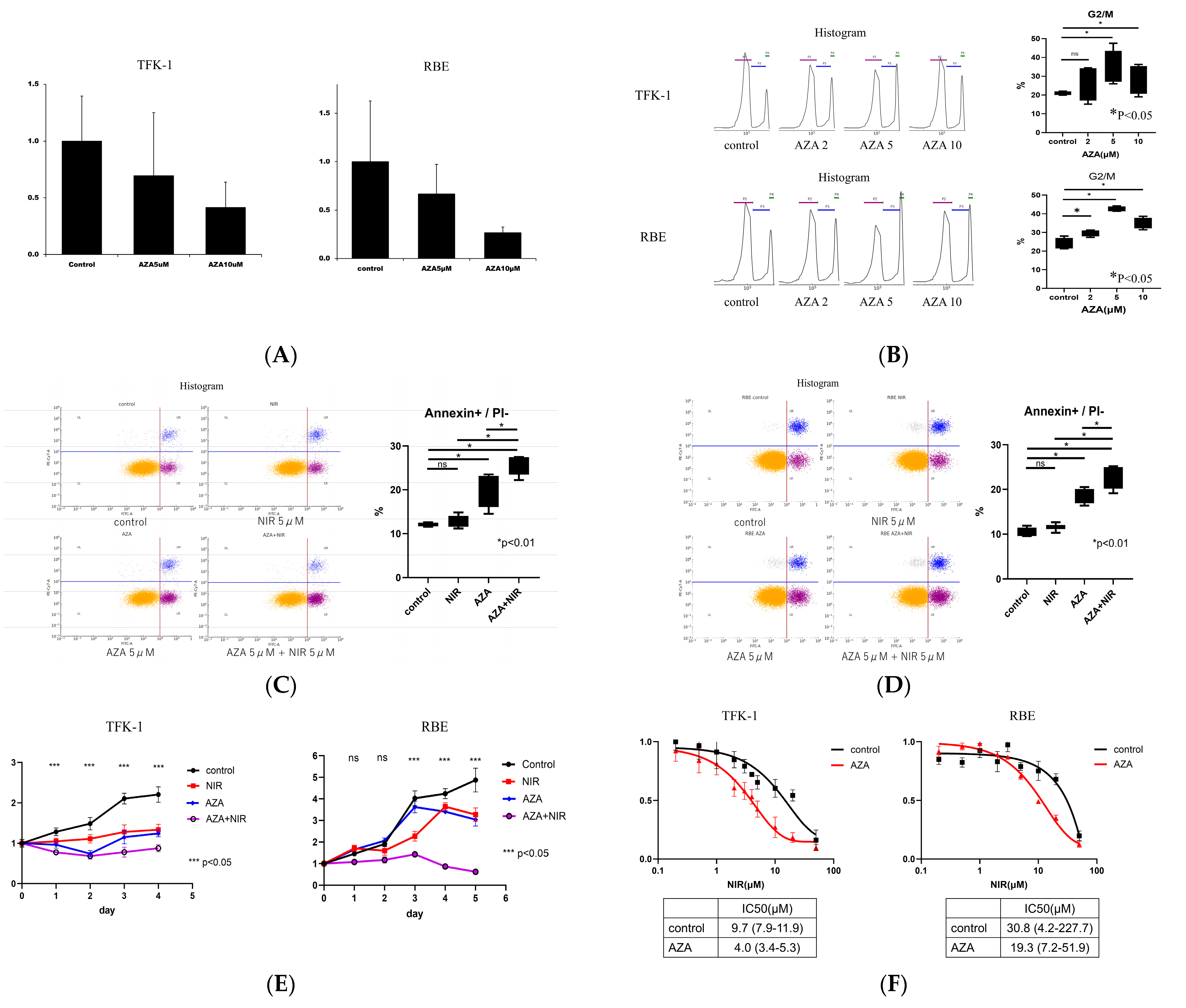
3.1. In Vitro AZA Treatment for TFK-1 and RBE
3.1.1. Homologous Recombination (HR) Assay with AZA Treatment via qPCR
3.1.2. Quantitative Analysis of Cell-Cycle Distribution After AZA Treatment via Flow Cytometry
3.1.3. Quantitative Analysis of Cell Death After AZA and NIR Treatment via Flow Cytometry
3.1.4. Quantitative Evaluation of Cell Proliferation After AZA and NIR Treatments via Spectrophotometry
3.1.5. Quantitative Evaluation of Cell Survival After AZA and NIR Treatments via Spectrophotometry
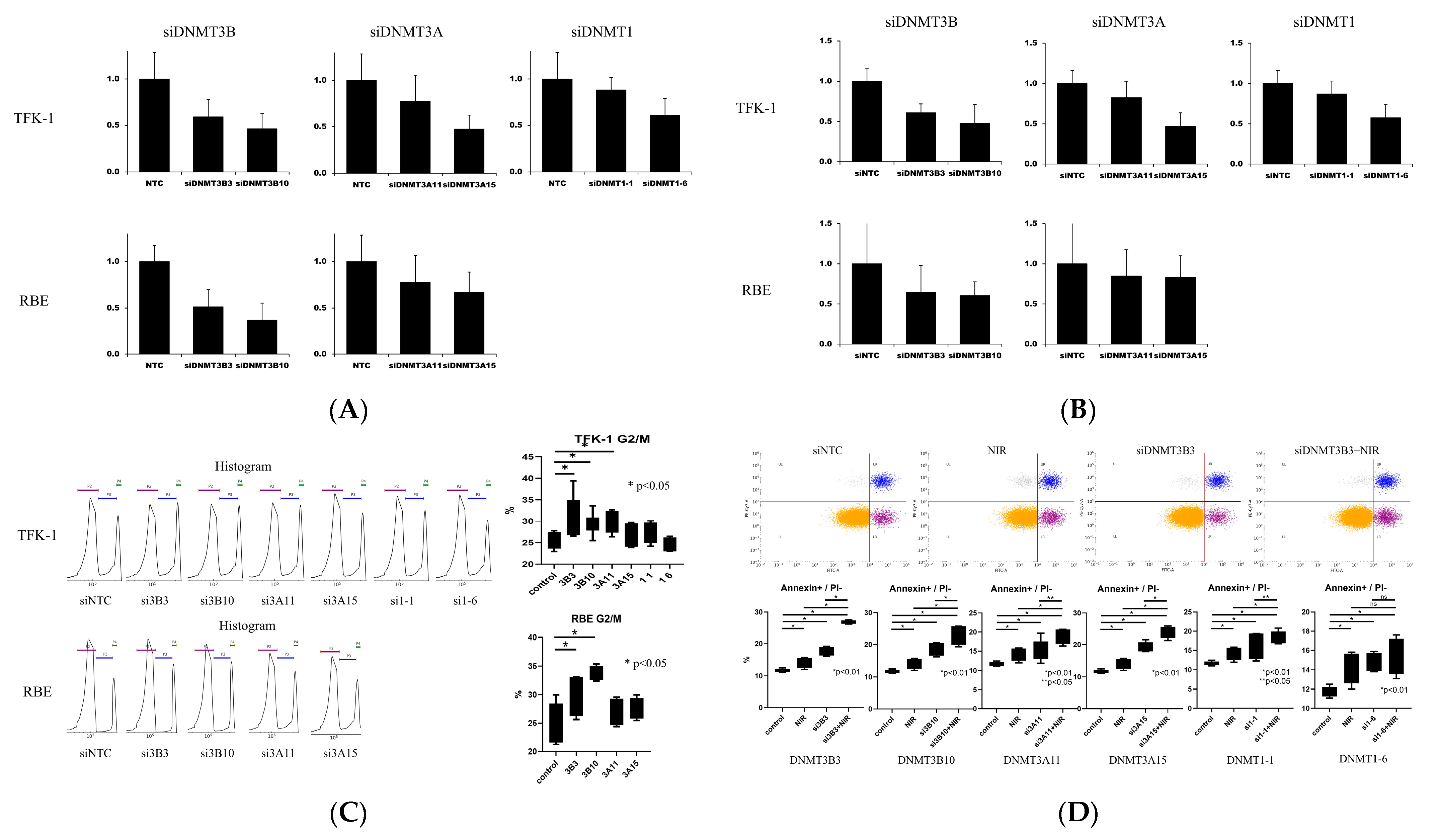
3.2. Knockdown of DNMT Genes
3.2.1. Homologous Recombination Assay After DNMT Knockdown via qPCR
3.2.2. Quantitative Analysis of Cell-Cycle Distribution After DNMT Knockdown
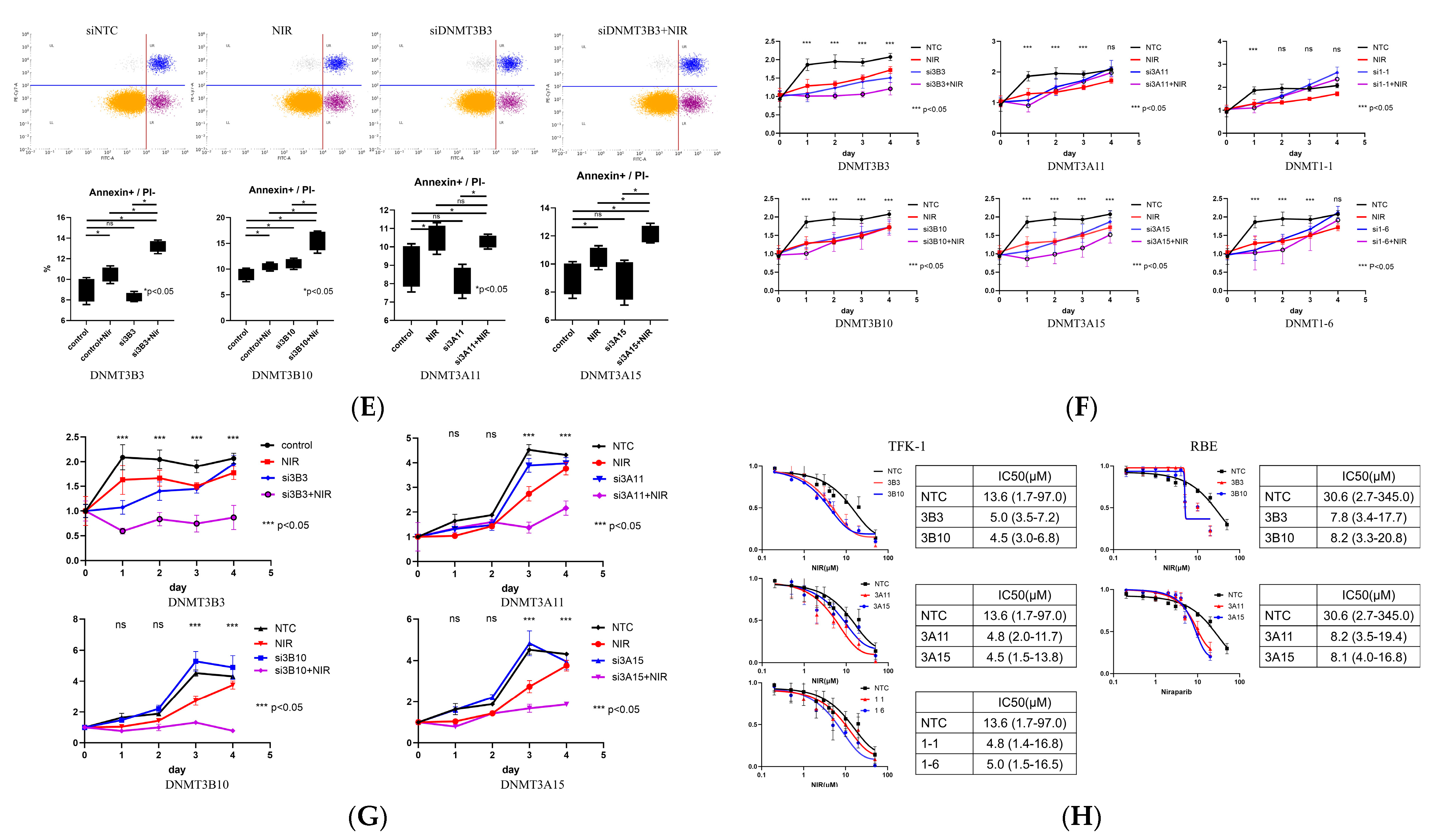
3.2.3. Quantitative Analysis of Cell Death After DNMT Knockdown and NIR Treatment
3.2.4. Quantitative Evaluation of Cell Proliferation After DNMT Knockdown and NIR Treatment via Spectrophotometry
3.2.5. Quantitative Evaluation of Cell Survival After DNMT Knockdown and NIR Treatment via Spectrophotometry
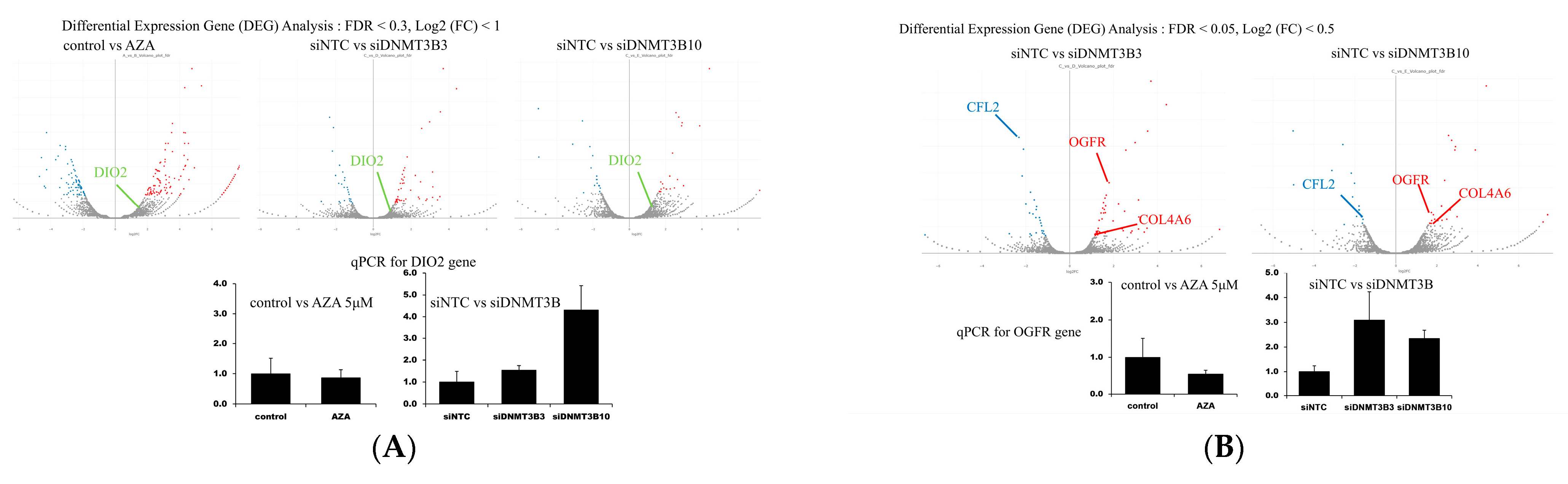
3.3. RNA Sequencing After AZA Treatment or DNMT3B Knockdown
3.4. Forced Expression and Knockdown of OGFR
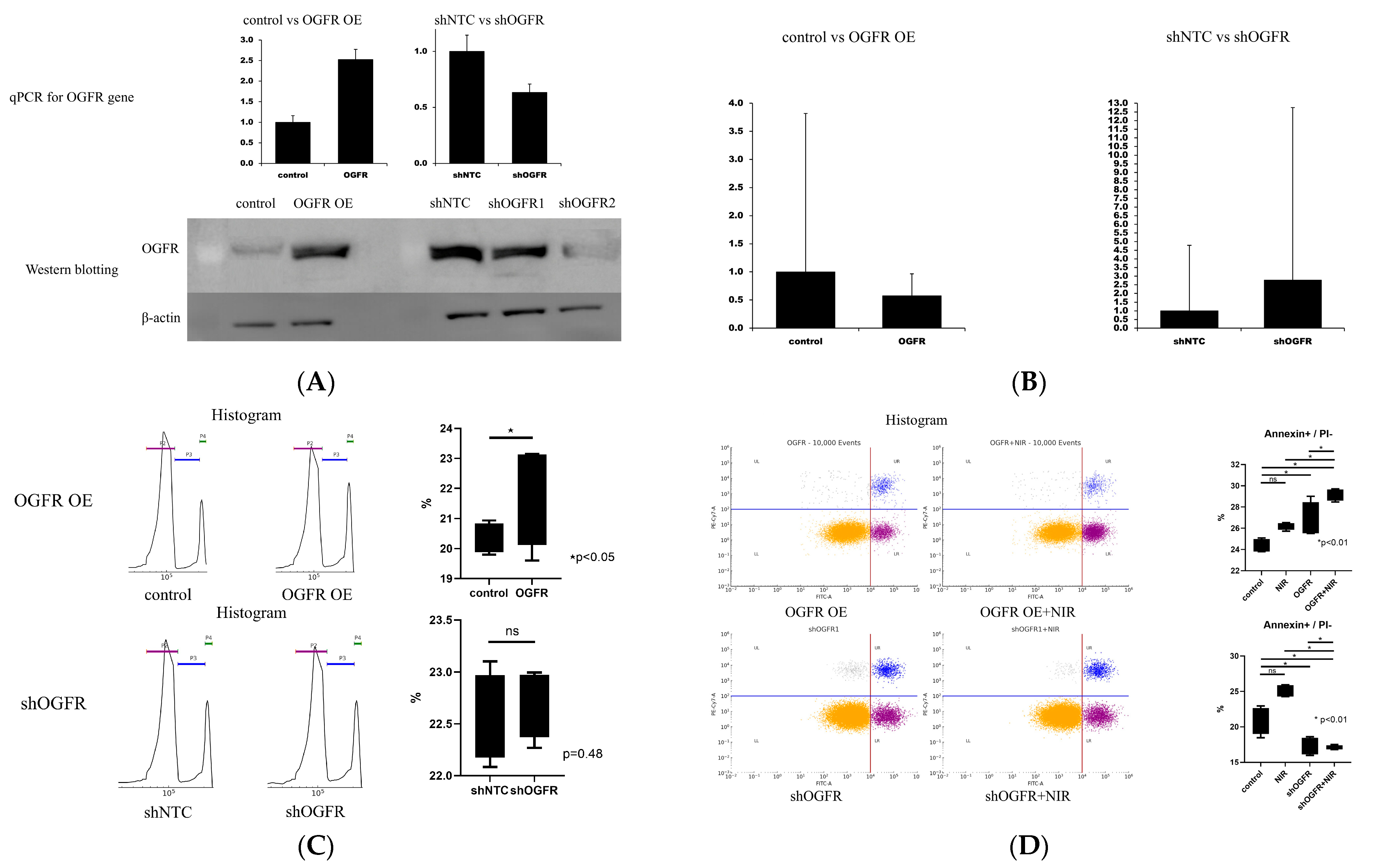
3.4.1. Homologous Recombination Assay with OGFR-Overexpressing/Knockdown TFK-1 Cells via qPCR
3.4.2. Quantitative Analysis of Cell-Cycle Distribution in OGFR-Overexpressing/Knockdown TFK-1 Cells via Flow Cytometry
3.4.3. Quantitative Analysis of Cell Death in OGFR-Overexpressing/Knockdown TFK-1 Cells with NIR Treatment via Flow Cytometry
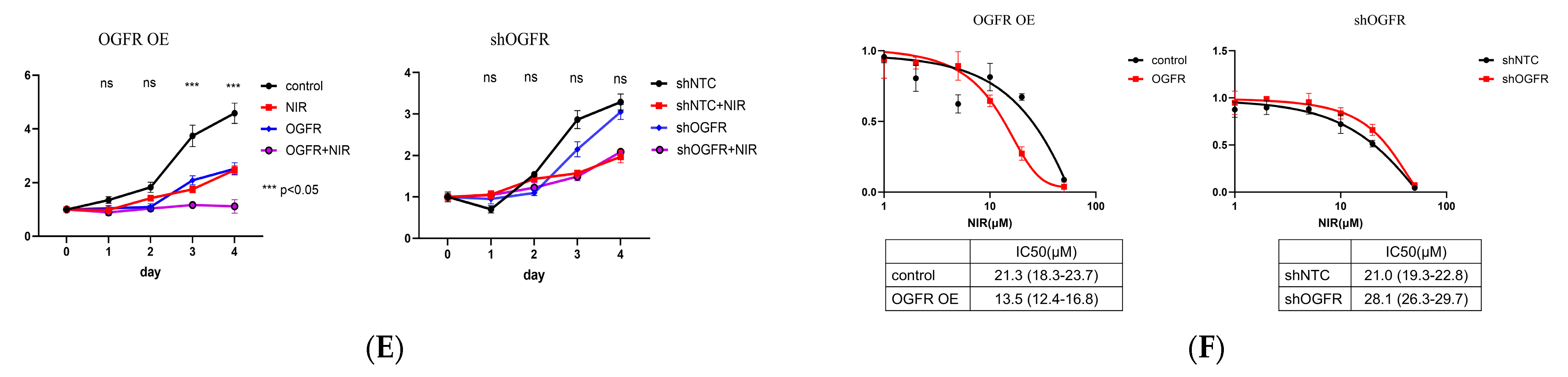
3.4.4. Quantitative Evaluation of Cell Proliferation in OGFR-Overexpressing/Knockdown TFK-1 Cells with NIR Treatment via Spectrophotometry
3.4.5. Quantitative Evaluation of Cell Survival in OGFR-Overexpressing/Knockdown TFK-1 Cells with NIR Treatment via Spectrophotometry
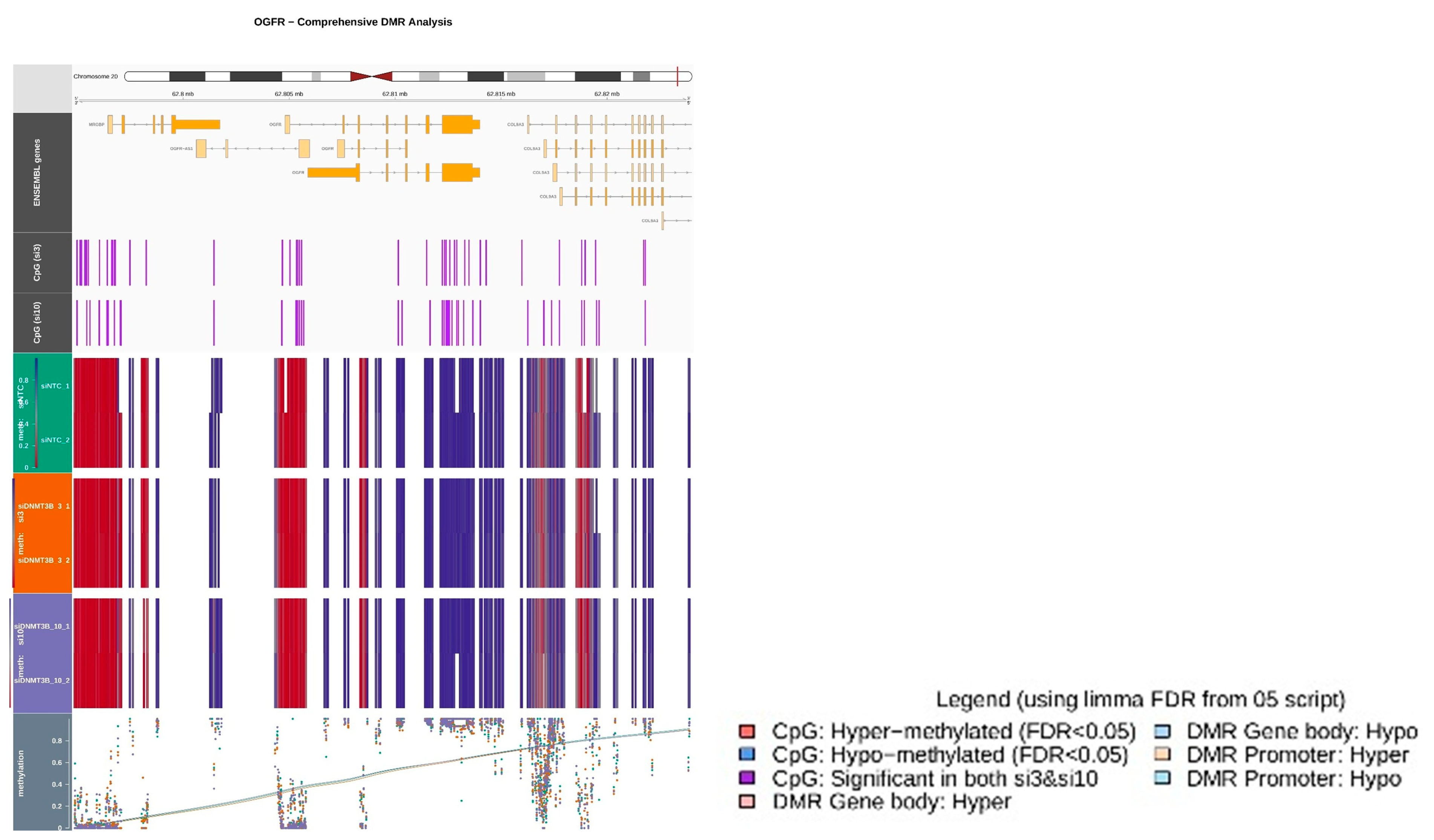
3.5. Whole-Genome Bisulfite Sequencing After DNMT3B Knockdown
4. Discussion
5. Conclusions
Author Contributions
Funding
Institutional Review Board Statement
Informed Consent Statement
Data Availability Statement
Acknowledgments
Conflicts of Interest
Abbreviations
| AZA | 5-Azacitidine |
| BTC | Biliary tract cancer |
| CCK-8 | Cell Counting Kit-8 |
| DEG | Differentially expressed gene |
| DNMT | DNA methyltransferase |
| DMR | Differentially methylated region |
| FDR | False discovery rate |
| FGFR | Fibroblast growth factor receptor |
| HR | Homologous recombination |
| HRR | Homologous recombination repair |
| IC50 | Half maximal inhibitory concentration |
| NIR | Niraparib |
| OGFR | Opioid growth factor receptor |
| PARP | Poly(ADP-ribose) polymerase |
| PI | Propidium iodide |
| qPCR | Quantitative polymerase chain reaction |
| SEM | Standard error of the mean |
| siRNA | Small interfering RNA |
| shRNA | Short hairpin RNA |
Appendix A. Dose–Response Curves for Niraparib (NIR) in BTC Cell Lines

Appendix B. Western Blot for OGFR Gene

References
- Florio, A.A.; Ferlay, J.; Znaor, A.; Ruggieri, D.; Alvarez, C.S.; Laversanne, M.; Bray, F.; McGlynn, K.A.; Petrick, J.L. Global trends in intrahepatic and extrahepatic cholangiocarcinoma incidence from 1993 to 2012. Cancer 2020, 126, 2666–2678. [Google Scholar] [CrossRef]
- Banales, J.M.; Marin, J.J.G.; Lamarca, A.; Rodrigues, P.M.; Khan, S.A.; Roberts, L.R.; Cardinale, V.; Carpino, G.; Andersen, J.B.; Braconi, C.; et al. Cholangiocarcinoma 2020: The next horizon in mechanisms and management. Nat. Rev. Gastroenterol. Hepatol. 2020, 17, 557–588. [Google Scholar] [CrossRef]
- Sun, X.; Liu, J.; Zhang, W.; Wang, Y.; Jiang, Y.; Wang, L.; Zou, Y.; Xiao, Y.; Xiang, Y.; Li, M.; et al. Disease burden of biliary tract cancer in 204 countries and territories, 1990–2021: A comprehensive demographic analysis of the Global Burden of Disease Study 2021. Chin. Med. J. 2024, 137, 3117–3125. [Google Scholar] [CrossRef]
- Kubo, S.; Shinkawa, H.; Asaoka, Y.; Ioka, T.; Igaki, H.; Izumi, N.; Itoi, T.; Unno, M.; Ohtsuka, M.; Okusaka, T.; et al. Liver Cancer Study Group of Japan Clinical Practice Guidelines for Intrahepatic Cholangiocarcinoma. Liver Cancer 2022, 11, 290–314. [Google Scholar] [CrossRef]
- Elvevi, A.; Laffusa, A.; Scaravaglio, M.; Rossi, R.E.; Longarini, R.; Stagno, A.M.; Cristoferi, L.; Ciaccio, A.; Cortinovis, D.L.; Invernizzi, P.; et al. Clinical treatment of cholangiocarcinoma: An updated comprehensive review. Ann. Hepatol. 2022, 27, 100737. [Google Scholar] [CrossRef]
- Koay, E.J.; Odisio, B.C.; Javle, M.; Vauthey, J.-N.; Crane, C.H. Management of unresectable intrahepatic cholangiocarcinoma: How do we decide among the various liver-directed treatments? HepatoBiliary Surg. Nutr. 2017, 6, 105–116. [Google Scholar] [CrossRef]
- Renteria Ramirez, D.E.; Knøfler, L.A.; Kirkegård, J.; Fristrup, C.W.; Stender, M.T.; Nielsen, S.D.; Markussen, A.; Larsen, P.N.; Akdag, D.; Al-Saffar, H.A.; et al. Prognosis related to treatment plan in patients with biliary tract cancer: A nationwide database study. Cancer Epidemiol. 2024, 93, 102688. [Google Scholar] [CrossRef]
- Vogel, A.; Sahai, V.; Hollebecque, A.; Vaccaro, G.M.; Melisi, D.; Al Rajabi, R.M.; Paulson, A.S.; Borad, M.J.; Gallinson, D.; Murphy, A.G.; et al. An open-label study of pemigatinib in cholangiocarcinoma: Final results from FIGHT-202. ESMO Open 2024, 9, 103488. [Google Scholar] [CrossRef]
- Oh, D.-Y.; Lee, K.-H.; Lee, D.-W.; Yoon, J.; Kim, T.-Y.; Bang, J.-H.; Nam, A.-R.; Oh, K.-S.; Kim, J.-M.; Lee, Y.; et al. Gemcitabine and cisplatin plus durvalumab with or without tremelimumab in chemotherapy-naive patients with advanced biliary tract cancer: An open-label, single-centre, phase 2 study. Lancet Gastroenterol. Hepatol. 2022, 7, 522–532. [Google Scholar] [CrossRef]
- Brown, T.J.; Reiss, K.A. PARP inhibitors in pancreatic cancer. Cancer J. 2021, 27, 465–475. [Google Scholar] [CrossRef]
- Shao, F.; Duan, Y.; Zhao, Y.; Li, Y.; Liu, J.; Zhang, C.; He, S. PARP inhibitors in breast and ovarian cancer with BRCA mutations: A meta-analysis of survival. Aging 2021, 13, 8975–8988. [Google Scholar] [CrossRef]
- Iannantuono, G.M.; Chandran, E.; Floudas, C.S.; Choo-Wosoba, H.; Butera, G.; Roselli, M.; Gulley, J.L.; Karzai, F. Efficacy and safety of PARP inhibitors in metastatic castration-resistant prostate cancer: A systematic review and meta-analysis of clinical trials. Cancer Treat. Rev. 2023, 120, 102623. [Google Scholar] [CrossRef]
- Lord, C.J.; Ashworth, A. BRCAness revisited. Nat. Rev. Cancer 2016, 16, 110–120. [Google Scholar] [CrossRef]
- Wardell, C.P.; Fujita, M.; Yamada, T.; Simbolo, M.; Fassan, M.; Karlic, R.; Polak, P.; Kim, J.; Hatanaka, Y.; Maejima, K.; et al. Genomic characterization of biliary tract cancers identifies driver genes and predisposing mutations. J. Hepatol. 2018, 68, 959–969. [Google Scholar] [CrossRef]
- Ricci, A.D.; Rizzo, A.; Bonucci, C.; Tober, N.; Palloni, A.; Mollica, V.; Maggio, I.; Deserti, M.; Tavolari, S.; Brandi, G. PARP Inhibitors in Biliary Tract Cancer: A New Kid on the Block? Medicines 2020, 7, 54. [Google Scholar] [CrossRef]
- Lord, C.J.; Ashworth, A. PARP inhibitors: Synthetic lethality in the clinic. Science 2017, 355, 1152–1158. [Google Scholar] [CrossRef]
- Muvarak, N.E.; Chowdhury, K.; Xia, L.; Robert, C.; Choi, E.Y.; Cai, Y.; Bellani, M.; Zou, Y.; Singh, Z.N.; Duong, V.H.; et al. Enhancing the Cytotoxic Effects of PARP Inhibitors with DNA Demethylating Agents—A Potential Therapy for Cancer. Cancer Cell 2016, 30, 637–650. [Google Scholar] [CrossRef]
- Abbotts, R.; Topper, M.J.; Biondi, C.; Fontaine, D.; Goswami, R.; Stojanovic, L.; Choi, E.Y.; McLaughlin, L.; Kogan, A.A.; Xia, L.; et al. DNA methyltransferase inhibitors induce a BRCAness phenotype that sensitizes NSCLC to PARP inhibitor and ionizing radiation. Proc. Natl. Acad. Sci. USA 2019, 116, 22609–22618. [Google Scholar] [CrossRef]
- Wagner, G.P.; Kin, K.; Lynch, V.J. Measurement of mRNA abundance using RNA-seq data: RPKM measure is inconsistent among samples. Theory Biosci. 2012, 131, 281–285. [Google Scholar] [CrossRef]
- Robinson, M.D.; McCarthy, D.J.; Smyth, G.K. EdgeR: A Bioconductor package for differential expression analysis of digital gene expression data. Bioinformatics 2010, 26, 139–140. [Google Scholar] [CrossRef]
- McCarthy, D.J.; Chen, Y.; Smyth, G.K. Differential expression analysis of multifactor RNA-Seq experiments with respect to biological variation. Nucleic Acids Res. 2012, 40, 4288–4297. [Google Scholar] [CrossRef]
- Akalin, A.; Kormaksson, M.; Li, S.; Garrett-Bakelman, F.E.; Figueroa, M.E.; Melnick, A.; Mason, C.E. methylKit: A comprehensive R package for the analysis of genome-wide DNA methylation profiles. Genome Biol. 2012, 13, R87. [Google Scholar] [CrossRef]
- Benjamini, Y.; Hochberg, Y. Controlling the False Discovery Rate: A Practical and Powerful Approach to Multiple Testing. J. R. Stat. Soc. Ser. B Methodol. 1995, 57, 289–300. [Google Scholar] [CrossRef]
- Tonon, F.; Cemazar, M.; Kamensek, U.; Zennaro, C.; Pozzato, G.; Caserta, S.; Ascione, F.; Grassi, M.; Guido, S.; Ferrari, C.; et al. 5-Azacytidine Downregulates the Proliferation and Migration of Hepatocellular Carcinoma Cells In Vitro and In Vivo by Targeting miR-139-5p/ROCK2 Pathway. Cancers 2022, 14, 1630. [Google Scholar] [CrossRef]
- Hollenbach, P.W.; Nguyen, A.N.; Brady, H.; Williams, M.; Ning, Y.; Richard, N.; Krushel, L.; Aukerman, S.L.; Heise, C.; MacBeth, K.J. A Comparison of Azacitidine and Decitabine Activities in Acute Myeloid Leukemia Cell Lines. PLoS ONE 2010, 5, e9001. [Google Scholar] [CrossRef]
- Leone, G.; D’Alò, F.; Zardo, G.; Voso, M.T.; Nervi, C. Epigenetic Treatment of Myelodysplastic Syndromes and Acute Myeloid Leukemias. Curr. Med. Chem. 2008, 15, 1274–1287. [Google Scholar] [CrossRef]
- Okano, M.; Bell, D.W.; Haber, D.A.; Li, E. DNA methyltransferases Dnmt3a and Dnmt3b are essential for de novo methylation and mammalian development. Cell 1999, 99, 247–257. [Google Scholar] [CrossRef]
- Baubec, T.; Colombo, D.F.; Wirbelauer, C.; Schmidt, J.; Burger, L.; Krebs, A.R.; Akalin, A.; Schübeler, D. Genomic profiling of DNA methyltransferases reveals a role for DNMT3B in genic methylation. Nature 2015, 520, 243–247. [Google Scholar] [CrossRef]
- Hervouet, E.; Vallette, F.M.; Cartron, P.-F. Dnmt3/transcription factor interactions as crucial players in targeted DNA methylation. Epigenetics 2009, 4, 487–499. [Google Scholar] [CrossRef]
- Zagon, I.S.; Donahue, R.N.; McLaughlin, P.J. Opioid growth factor-opioid growth factor receptor axis is a physiological determinant of cell proliferation in diverse human cancers. Am. J. Physiol. Integr. Comp. Physiol. 2009, 297, R1154–R1161. [Google Scholar] [CrossRef]
- Zagon, I.S.; Roesener, C.D.; Verderame, M.F.; Ohlsson-Wilhelm, B.M.; Levin, R.J.; McLaughlin, P.J. Opioid growth factor regulates the cell cycle of human neoplasias. Int. J. Oncol. 2000, 17, 1053–1061. [Google Scholar] [CrossRef]
- Kren, N.P.; Zagon, I.S.; McLaughlin, P.J. Mutations in the opioid growth factor receptor in human cancers alter receptor function. Int. J. Mol. Med. 2015, 36, 289–293. [Google Scholar] [CrossRef]
- Bhoir, S.; Uhelski, M.; Guerra-Londono, J.J.; Cata, J.P. The role of opioid receptors in cancer. Adv. Biol. 2023, 7, e2300102. [Google Scholar] [CrossRef]
- Scroope, C.A.; Singleton, Z.; Hollmann, M.W.; Parat, M.-O. Opioid Receptor-Mediated and Non-Opioid Receptor-Mediated Roles of Opioids in Tumour Growth and Metastasis. Front. Oncol. 2021, 11, 792290. [Google Scholar] [CrossRef]
- Qurashi, M.; Vithayathil, M.; Khan, S.A. Epidemiology of cholangiocarcinoma. Eur. J. Surg. Oncol. 2025, 51, 107064. [Google Scholar] [CrossRef]
- Bowler, E.H.; Bell, J.; Divecha, N.; Skipp, P.; Ewing, R.M. Proteomic Analysis of Azacitidine-Induced Degradation Profiles Identifies Multiple Chromatin and Epigenetic Regulators Including Uhrf1 and Dnmt1 as Sensitive to Azacitidine. J. Proteome Res. 2019, 18, 1032–1042. [Google Scholar] [CrossRef]
- Diesch, J.; Zwick, A.; Garz, A.-K.; Palau, A.; Buschbeck, M.; Götze, K.S. A clinical-molecular update on azanucleoside-based therapy for the treatment of hematologic cancers. Clin. Epigenet. 2016, 8, 7. [Google Scholar] [CrossRef]


Disclaimer/Publisher’s Note: The statements, opinions and data contained in all publications are solely those of the individual author(s) and contributor(s) and not of MDPI and/or the editor(s). MDPI and/or the editor(s) disclaim responsibility for any injury to people or property resulting from any ideas, methods, instructions or products referred to in the content. |
© 2025 by the authors. Licensee MDPI, Basel, Switzerland. This article is an open access article distributed under the terms and conditions of the Creative Commons Attribution (CC BY) license (https://creativecommons.org/licenses/by/4.0/).
Share and Cite
Oda, S.; Kawakubo, K.; Kuwatani, M.; Tanaka, S.; Nakajima, K.; Shiratori, S.; Yonemura, H.; Nozawa, S.; Hirata, K.; Sugiura, R.; et al. DNMT3B Knockdown Enhances PARP Inhibitor Sensitivity in Biliary Tract Cancer Cells via Opioid Growth Factor Receptor-Mediated Homologous Recombination Impairment. Cancers 2025, 17, 3936. https://doi.org/10.3390/cancers17243936
Oda S, Kawakubo K, Kuwatani M, Tanaka S, Nakajima K, Shiratori S, Yonemura H, Nozawa S, Hirata K, Sugiura R, et al. DNMT3B Knockdown Enhances PARP Inhibitor Sensitivity in Biliary Tract Cancer Cells via Opioid Growth Factor Receptor-Mediated Homologous Recombination Impairment. Cancers. 2025; 17(24):3936. https://doi.org/10.3390/cancers17243936
Chicago/Turabian StyleOda, Soichiro, Kazumichi Kawakubo, Masaki Kuwatani, Shugo Tanaka, Katsuma Nakajima, Shoya Shiratori, Hiroki Yonemura, Shunichiro Nozawa, Koji Hirata, Ryo Sugiura, and et al. 2025. "DNMT3B Knockdown Enhances PARP Inhibitor Sensitivity in Biliary Tract Cancer Cells via Opioid Growth Factor Receptor-Mediated Homologous Recombination Impairment" Cancers 17, no. 24: 3936. https://doi.org/10.3390/cancers17243936
APA StyleOda, S., Kawakubo, K., Kuwatani, M., Tanaka, S., Nakajima, K., Shiratori, S., Yonemura, H., Nozawa, S., Hirata, K., Sugiura, R., & Sakamoto, N. (2025). DNMT3B Knockdown Enhances PARP Inhibitor Sensitivity in Biliary Tract Cancer Cells via Opioid Growth Factor Receptor-Mediated Homologous Recombination Impairment. Cancers, 17(24), 3936. https://doi.org/10.3390/cancers17243936