Identification of Novel Susceptibility Genes for Early-Onset Colorectal Cancer Through Germline Rare Variant Burden Testing

 , , , , , , , , ,
Simple Summary
Abstract
1. Introduction
2. Materials and Methods
2.1. The South Australian Young Onset Colorectal Polyp and Cancer Study (SAYO) Case–Cohort
2.2. The Simons Foundation Powering Autism Research for Knowledge (SPARK) Control Cohort
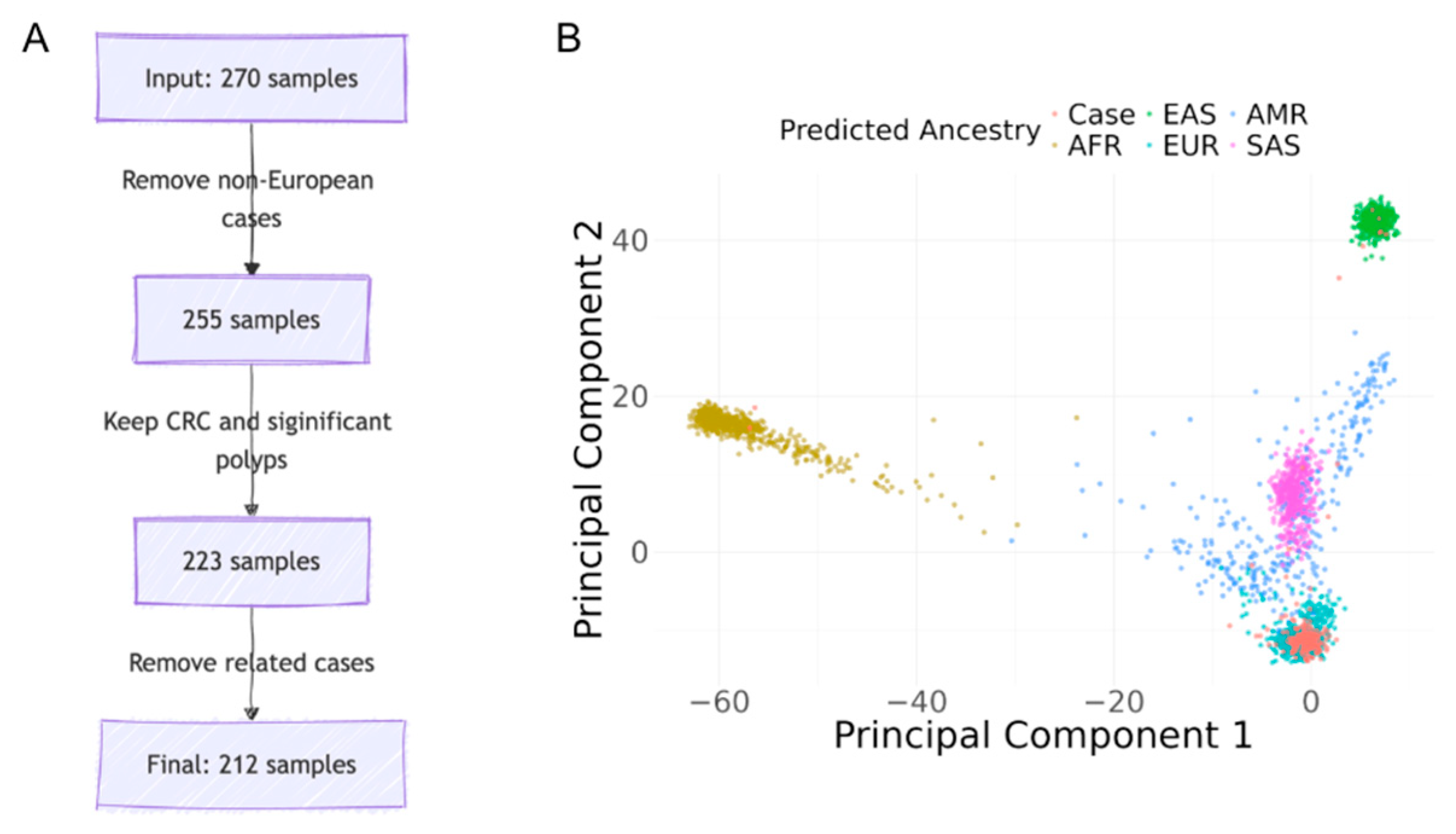
2.3. Individual Quality Control—Ancestry and Relatedness Predictions
2.4. Variant Calling and Annotation
2.5. Variant Quality Control
2.6. Known Risk Gene-Set Test
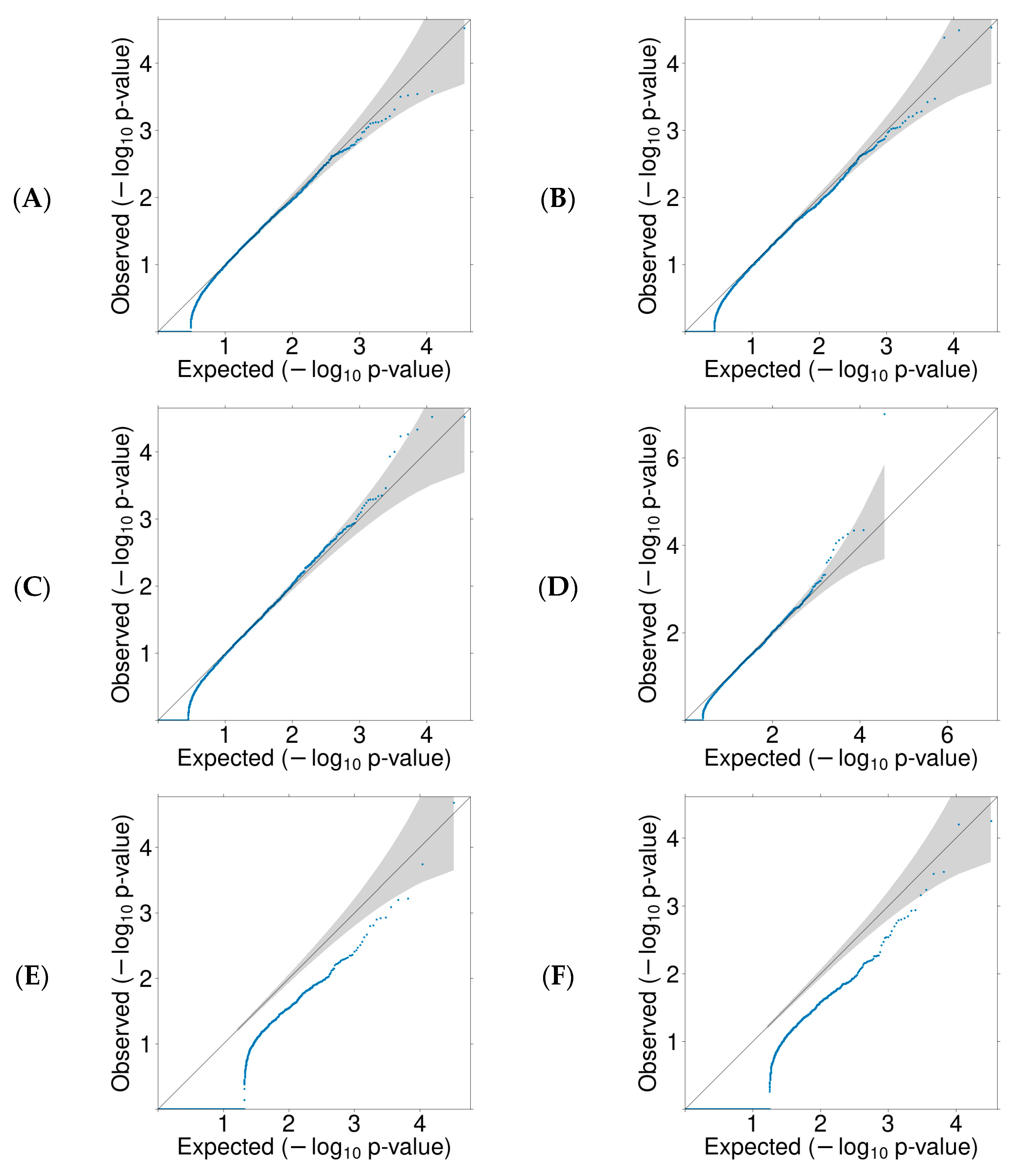
2.7. Individual Risk Gene Test
2.8. Validation in an Independent Whole-Genome Sequencing (WGS) Dataset
3. Results
3.1. Cohort Characteristics
3.2. Cleaned Datasets
3.3. Association of Rare Variants in Known CRC Risk Genes
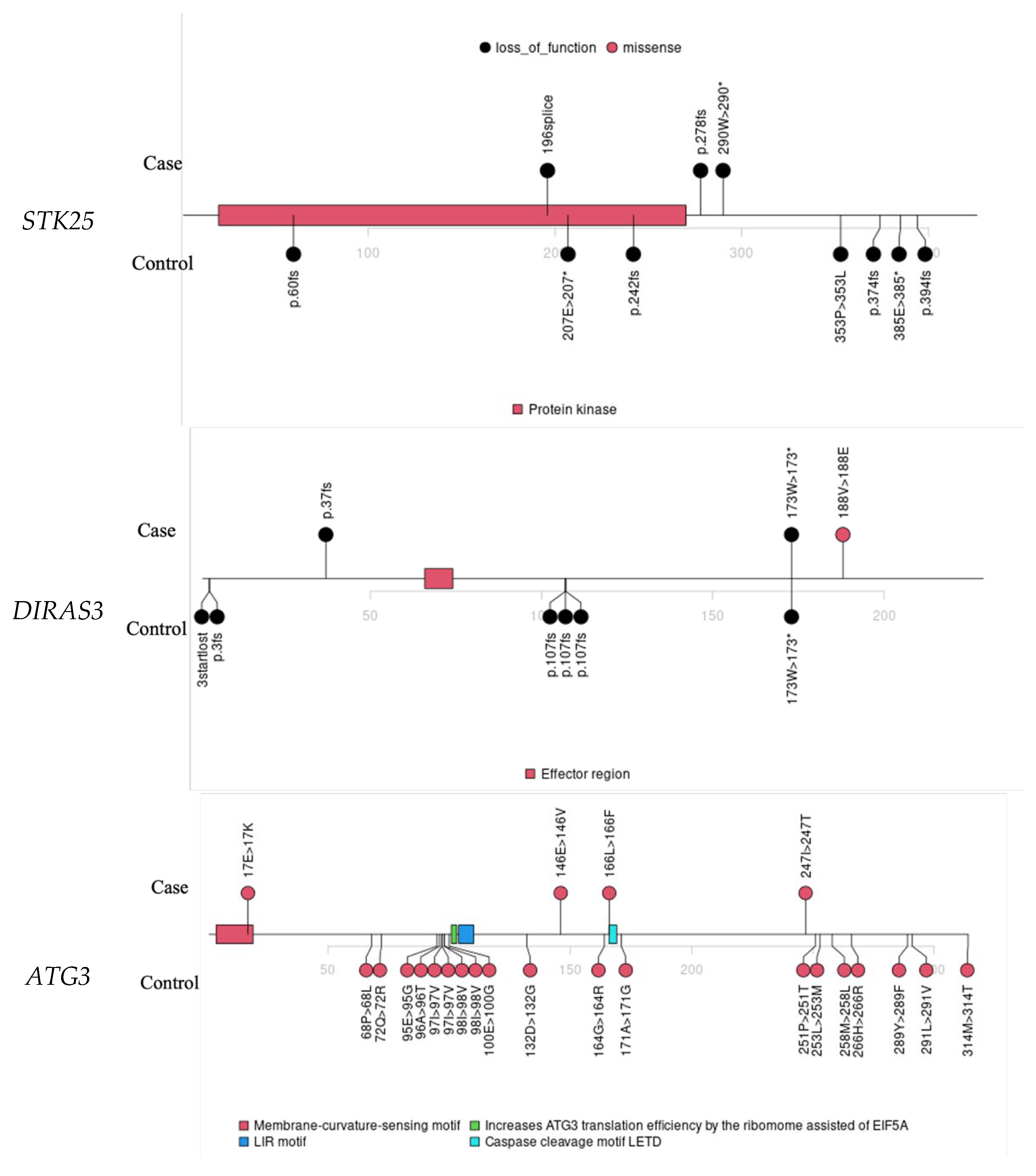
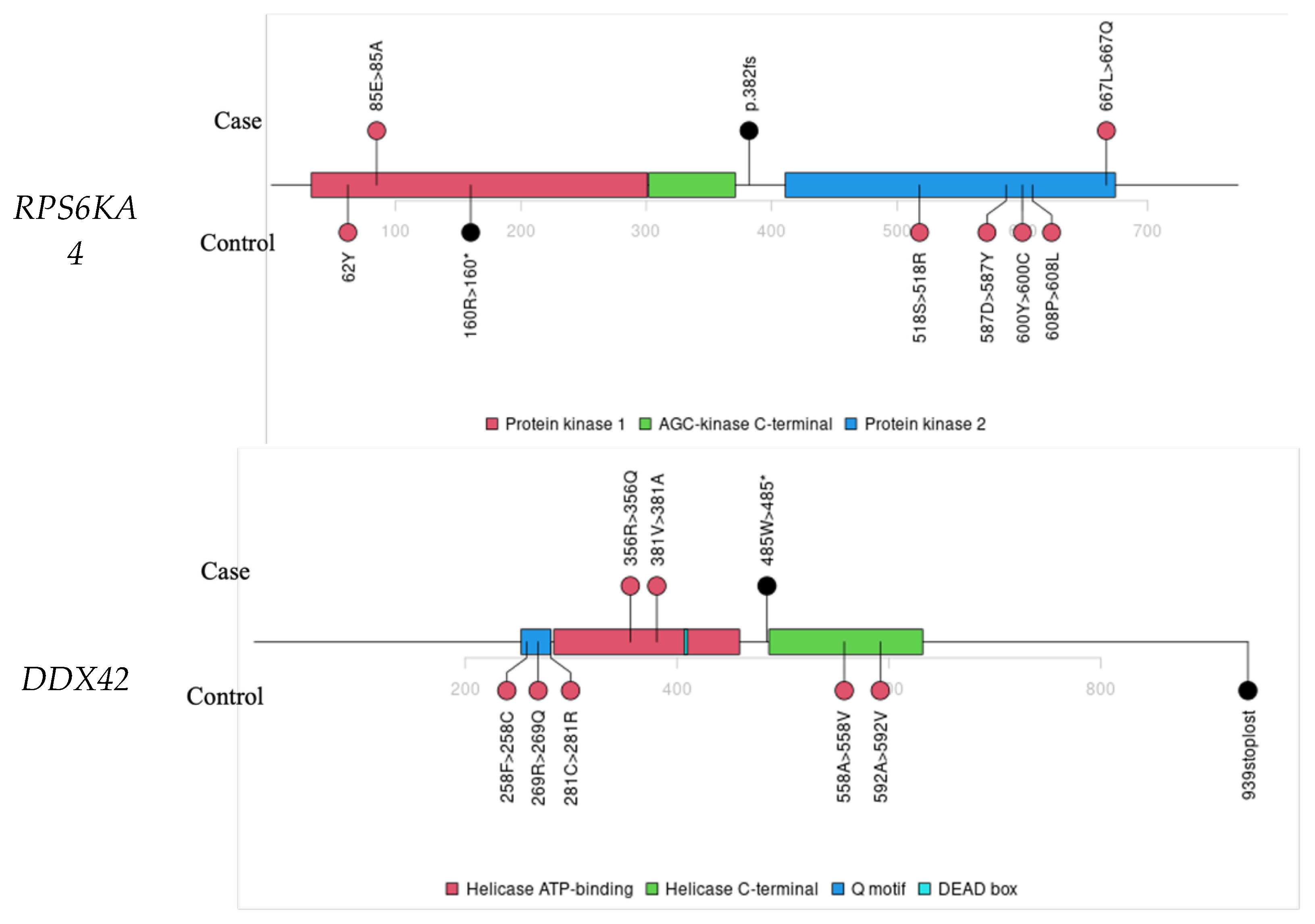
3.4. Novel Individual CRC-Risk Gene Discovery
3.5. Validation of MEIKIN in the UKBB WGS Cohort
4. Discussion
5. Conclusions
Supplementary Materials
Author Contributions
Funding
Institutional Review Board Statement
Informed Consent Statement
Data Availability Statement
Acknowledgments
Conflicts of Interest
References
- Bray, F.; Laversanne, M.; Sung, H.; Ferlay, J.; Siegel, R.L.; Soerjomataram, I.; Jemal, A. Global cancer statistics 2022: GLOBOCAN estimates of incidence and mortality worldwide for 36 cancers in 185 countries. CA A Cancer J. Clin. 2024, 74, 229–263. [Google Scholar] [CrossRef] [PubMed]
- Siegel, R.L.; Miller, K.D.; Fedewa, S.A.; Ahnen, D.J.; Meester, R.G.S.; Barzi, A.; Jemal, A. Colorectal cancer statistics, 2017. CA A Cancer J. Clin. 2017, 67, 177–193. [Google Scholar]
- Mikaeel, R.R.; Price, T.J.; Smith, E.; Drew, P.A.; Uylaki, W.; Horsnell, M.; Young, J.P. Colorectal cancer in Australian young adults. Mathews J. Cancer Sci. 2019, 4, 18. [Google Scholar] [CrossRef]
- Alvarez, M.D.; Quintana, I.; Terradas, M.; Mur, P.; Balaguer, F.; Valle, L. The inherited and familial component of early-onset colorectal cancer. Cells 2021, 10, 710. [Google Scholar] [CrossRef]
- Ivarsdottir, E.V.; Gudmundsson, J.; Tragante, V.; Sveinbjornsson, G.; Kristmundsdottir, S.; Stacey, S.N.; Halldorsson, G.H.; Magnusson, M.I.; Oddsson, A.; Walters, G.B.; et al. Gene-based burden tests of rare germline variants identify six cancer susceptibility genes. Nat. Genet. 2024, 56, 2422–2433. [Google Scholar] [CrossRef]
- Mikaeel, R.R.; Symonds, E.L.; Kimber, J.; Smith, E.; Horsnell, M.; Uylaki, W.; Rico, G.T.; Hewett, P.J.; Yong, J.; Tonkin, D.; et al. Young-onset colorectal cancer is associated with a personal history of type 2 diabetes. Asia-Pac. J. Clin. Oncol. 2021, 17, 131–138. [Google Scholar]
- Kimber, J.; Symonds, E.; Uylaki, W.; Horsnell, M.; Drew, P.; Smith, E.; Mikaeel, R.; Hardingham, J.; Tomita, Y.; Jesudason, D.; et al. Exploring the associations between colorectal polyps and type 2 diabetes mellitus in a colonoscopy clinic population. ESMO Gastrointest. Oncol. 2024, 4, 100053. [Google Scholar] [CrossRef]
- Leggett, B.; Whitehall, V. Role of the serrated pathway in colorectal cancer pathogenesis. Gastroenterology 2010, 13, 2088–2100. [Google Scholar] [CrossRef]
- Win, A.K.; Jenkins, M.A.; Dowty, J.G.; Antoniou, A.C.; Lee, A.; Giles, G.G.; Buchanan, D.D.; Clendenning, M.; Rosty, C.; Ahnen, D.J.; et al. Prevalence and penetrance of major genes and polygenes for colorectal cancer. Cancer Epidemiol. Biomark. Prev. 2017, 26, 404–412. [Google Scholar]
- Molmenti, C.L.; Kolb, J.M.; Karlitz, J.J. Advanced colorectal polyps on colonoscopy: A trigger for earlier screening of family members. Am. J. Gastroenterol. 2020, 115, 311–314. [Google Scholar] [CrossRef]
- Mikaeel, R.R.; Young, J.P.; Li, Y.; Smith, E.; Horsnell, M.; Uylaki, W.; Rico, G.T.; Poplawski, N.K.; Hardingham, J.E.; Tomita, Y.; et al. Survey of germline variants in cancer-associated genes in young adults with colorectal cancer. Genes Chromosomes Cancer 2022, 61, 105–113. [Google Scholar] [CrossRef] [PubMed]
- Feliciano, P.; Daniels, A.M.; Snyder, L.G.; Beaumont, A.; Camba, A.; Esler, A.; Gulsrud, A.G.; Mason, A.; Gutierrez, A.; Nicholson, A.; et al. SPARK: A US cohort of 50,000 families to accelerate autism research. Neuron 2018, 97, 488–493. [Google Scholar] [CrossRef] [PubMed]
- Manichaikul, A.; Mychaleckyj, J.C.; Rich, S.S.; Daly, K.; Sale, M.; Chen, W.-M. Robust relationship inference in genome-wide association studies. Bioinformatics 2010, 26, 2867–2873. [Google Scholar] [CrossRef] [PubMed]
- Pedersen, B.S.; Quinlan, A.R. Who’s who? Detecting and resolving sample anomalies in human DNA sequencing studies with peddy. Am. J. Hum. Genet. 2017, 100, 406–413. [Google Scholar] [CrossRef]
- Van Kets, V.; Kitzman, J.; Snyder, M.; Shendure, J.; Gray, P. Kapa Hyper Prep: A next-generation kit for fast and efficient library construction from challenging DNA samples. In Proceedings of the Advances in Genome Biology and Technology (AGBT) Meeting, Marco Island, FL, USA, 12–15 February 2014. [Google Scholar]
- Paijmans, J.L.A.; Baleka, S.; Henneberger, K.; Taron, U.H.; Trinks, A.; Westbury, M.V.; Barlow, A. Sequencing single-stranded libraries on the Illumina NextSeq 500 platform. arXiv 2017, arXiv:1711.11004. [Google Scholar]
- Li, H.; Durbin, R. Fast and accurate short read alignment with Burrows—Wheeler transform. Bioinformatics 2009, 25, 1754–1760. [Google Scholar] [CrossRef]
- Van der Auwera, G.A.; Carneiro, M.O.; Hartl, C.; Poplin, R.; del Angel, G.; Levy-Moonshine, A.; Jordan, T.; Shakir, K.; Roazen, D.; Thibault, J.; et al. From FastQ data to high-confidence variant calls: The genome analysis toolkit best practices pipeline. Curr. Protoc. Bioinform. 2013, 43, 11.10.1–11.10.33. [Google Scholar]
- DePristo, M.A.; Banks, E.; Poplin, R.; Garimella, K.V.; Maguire, J.R.; Hartl, C.; Philippakis, A.A.; Del Angel, G.; Rivas, M.A.; Hanna, M.; et al. A framework for variation discovery and genotyping using next-generation DNA sequencing data. Nat. Genet. 2011, 43, 491–498. [Google Scholar] [CrossRef]
- McLaren, W.; Gil, L.; Hunt, S.E.; Riat, H.S.; Ritchie, G.R.S.; Thormann, A.; Flicek, P.; Cunningham, F. The ensembl variant effect predictor. Genome Biol. 2016, 17, 122. [Google Scholar] [CrossRef]
- Flicek, P.; Amode, M.R.; Barrell, D.; Beal, K.; Billis, K.; Brent, S.; Carvalho-Silva, D.; Clapham, P.; Coates, G.; Fitzgerald, S.; et al. Ensembl 2014. Nucleic Acids Res. 2014, 42, D749–D755. [Google Scholar]
- Hunt, S.E.; McLaren, W.; Gil, L.; Thormann, A.; Schuilenburg, H.; Sheppard, D.; Parton, A.; Armean, I.M.; Trevanion, S.J.; Flicek, P.; et al. Ensembl variation resources. Database 2018, 2018, bay119. [Google Scholar] [CrossRef]
- Yates, A.D.; Achuthan, P.; Akanni, W.; Allen, J.; Allen, J.; Alvarez-Jarreta, J.; Amode, M.R.; Armean, I.M.; Azov, A.G.; Bennett, R.; et al. Ensembl 2020. Nucleic Acids Res. 2020, 48, D682–D688. [Google Scholar] [CrossRef]
- Karczewski, K.J.; Francioli, L.C.; Tiao, G.; Cummings, B.B.; Alfoldi, J.; Wang, Q.; Collins, R.L.; Laricchia, K.M.; Ganna, A.; Birnbaum, D.P.; et al. The mutational constraint spectrum quantified from variation in 141,456 humans. Nature 2020, 581, 434–443. [Google Scholar] [CrossRef] [PubMed]
- Sudlow, C.; Gallacher, J.; Allen, N.; Beral, V.; Burton, P.; Danesh, J.; Downey, P.; Elliott, P.; Green, J.; Landray, M.; et al. UK biobank: An open access resource for identifying the causes of a wide range of complex diseases of middle and old age. PLoS Med. 2015, 12, e1001779. [Google Scholar] [CrossRef] [PubMed]
- MacArthur, D.G.; Balasubramanian, S.; Frankish, A.; Huang, N.; Morris, J.; Walter, K.; Jostins, L.; Habegger, L.; Pickrell, J.K.; Montgomery, S.B.; et al. A Systematic Survey of Loss-of-Function Variants in Human Protein-Coding Genes. Science 2012, 335, 823–828. [Google Scholar] [PubMed]
- Carter, H.; Douville, C.; Stenson, P.D.; Cooper, D.N.; Karchin, R. Identifying Mendelian disease genes with the variant effect scoring tool. BMC Genom. 2013, 14, S3. [Google Scholar] [CrossRef]
- Sofer, T.; Zheng, X.; Laurie, C.A.; Gogarten, S.M.; Brody, J.A.; Conomos, M.P.; Bis, J.C.; Thornton, T.A.; Szpiro, A.; O’connell, J.R.; et al. Variant-specific inflation factors for assessing population stratification at the phenotypic variance level. Nat. Commun. 2021, 12, 3506. [Google Scholar] [CrossRef]
- Wang, G.T.; Peng, B.; Leal, S.M. Variant association tools for quality control and analysis of large-scale sequence and genotyping array data. Am. J. Hum. Genet. 2014, 94, 770–783. [Google Scholar] [CrossRef]
- Douville, C.; Masica, D.L.; Stenson, P.D.; Cooper, D.N.; Gygax, D.M.; Kim, R.; Ryan, M.; Karchin, R. Assessing the pathogenicity of insertion and deletion variants with the variant effect scoring tool (VEST-Indel). Hum. Mutat. 2016, 37, 28–35. [Google Scholar]
- Baeissa, H.M.; Benstead-Hume, G.; Richardson, C.J.; Pearl, F.M. Mutational patterns in oncogenes and tumour suppressors. Biochem. Soc. Trans. 2016, 44, 925–931. [Google Scholar] [CrossRef]
- Tung, N.; Ricker, C.; Messersmith, H.; Balmaña, J.; Domchek, S.; Stoffel, E.M.; Almhanna, K.; Arun, B.; Chavarri-Guerra, Y.; Cohen, S.A.; et al. Selection of germline genetic testing panels in patients with cancer: ASCO guideline. J. Clin. Oncol. 2024, 42, 2599–2615. [Google Scholar] [CrossRef]
- Hamosh, A.; Scott, A.F.; Amberger, J.S.; Bocchini, C.A.; Valle, D.; McKusick, V.A. Online Mendelian Inheritance in Man (OMIM), a knowledgebase of human genes and genetic disorders. Nucleic Acids Res. 2005, 33 (Suppl. 1), D514–D517. [Google Scholar] [PubMed]
- Lee, S.; Abecasis, G.R.; Boehnke, M.; Lin, X. Rare-variant association analysis: Study designs and statistical tests. Am. J. Hum. Genet. 2014, 95, 5–23. [Google Scholar] [CrossRef] [PubMed]
- Zhu, N.; Swietlik, E.M.; Welch, C.L.; Pauciulo, M.W.; Hagen, J.J.; Zhou, X.; Guo, Y.; Karten, J.; Pandya, D.; Tilly, T.; et al. Rare variant analysis of 4241 pulmonary arterial hypertension cases from an international consortium implicates FBLN2, PDGFD, and rare de novo variants in PAH. Genome Med. 2021, 13, 80. [Google Scholar] [PubMed]
- Zhu, N.; LeDuc, C.A.; Fennoy, I.; Laferrère, B.; Doege, C.A.; Shen, Y.; Chung, W.K.; Leibel, R.L. Rare predicted loss of function alleles in Bassoon (BSN) are associated with obesity. npj Genom. Med. 2023, 8, 33. [Google Scholar] [CrossRef]
- The UniProt Consortium. UniProt: The universal protein knowledgebase. Nucleic Acids Res. 2018, 46, 2699. [Google Scholar] [CrossRef]
- The UK Biobank Whole-Genome Sequencing Consortium. Whole-genome sequencing of 490,640 UK Biobank participants. Nature 2025, 645, 692. [Google Scholar] [CrossRef]
- World Health Organization. International Statistical Classification of Diseases and Related Health Problems: 10th Revision (ICD-10). 1992. Available online: https://icd.who.int/browse10/2019/en (accessed on 5 December 2025).
- Gudmundsson, S.; Singer-Berk, M.; Watts, N.A.; Phu, W.; Goodrich, J.K.; Solomonson, M.; Genome Aggregation Database Consortium; Rehm, H.L.; MacArthur, D.G.; O’Donnell-Luria, A. Variant interpretation using population databases: Lessons from gnomAD. Hum. Mutat. 2022, 43, 1012–1030. [Google Scholar]
- Bildik, G.; Liang, X.; Sutton, M.N.; Bast, R.C., Jr.; Lu, Z. DIRAS3: An imprinted tumor suppressor gene that regulates RAS and PI3K-driven cancer growth, motility, autophagy, and tumor dormancy. Mol. Cancer Ther. 2022, 21, 25–37. [Google Scholar] [CrossRef]
- Lu, Z.; Yang, H.; Sutton, M.N.; Yang, M.; Clarke, C.H.; Liao, W.S.-L.; Bast, R.C. ARHI (DIRAS3) induces autophagy in ovarian cancer cells by downregulating the epidermal growth factor receptor, inhibiting PI3K and Ras/MAP signaling and activating the FOXo3a-mediated induction of Rab7. Cell Death Differ. 2014, 21, 1275–1289. [Google Scholar]
- Ma, X.; Dong, L.; Liu, X.; Ou, K.; Yang, L. POLE/POLD1 mutation and tumor immunotherapy. J. Exp. Clin. Cancer Res. 2022, 41, 216. [Google Scholar] [CrossRef] [PubMed]
- Weisenberger, D.J.; Siegmund, K.D.; Campan, M.; Young, J.; Long, T.I.; Faasse, M.A.; Kang, G.H.; Widschwendter, M.; Weener, D.; Buchanan, D.; et al. CpG island methylator phenotype underlies sporadic microsatellite instability and is tightly associated with BRAF mutation in colorectal cancer. Nat. Genet. 2006, 38, 787–793. [Google Scholar] [CrossRef] [PubMed]
- Kim, J.; Ishiguro, K.-I.; Nambu, A.; Akiyoshi, B.; Yokobayashi, S.; Kagami, A.; Ishiguro, T.; Pendas, A.M.; Takeda, N.; Sakakibara, Y.; et al. Meikin is a conserved regulator of meiosis-I-specific kinetochore function. Nature 2015, 517, 466–471. [Google Scholar] [CrossRef] [PubMed]
- Maier, N.K.; Ma, J.; Lampson, M.A.; Cheeseman, I.M. Separase cleaves the kinetochore protein Meikin at the meiosis I/II transition. Dev. Cell 2021, 56, 2192–2206.e8. [Google Scholar] [CrossRef]
- Ishiguro, K.I.; Matsuura, K.; Tani, N.; Takeda, N.; Usuki, S.; Yamane, M.; Sugimoto, M.; Fujimura, S.; Hosokawa, M.; Chuma, S.; et al. MEIOSIN directs the switch from mitosis to meiosis in mammalian germ cells. Dev. Cell 2020, 52, 429–445.e10. [Google Scholar] [CrossRef]
- Sou, I.F.; Hamer, G.; Tee, W.W.; Vader, G.; McClurg, U.L. Cancer and meiotic gene expression: Two sides of the same coin? Curr. Top. Dev. Biol. 2023, 151, 43–68. [Google Scholar]
- Lingg, L.; Rottenberg, S.; Francica, P. Meiotic genes and DNA double strand break repair in cancer. Front. Genet. 2022, 13, 831620. [Google Scholar] [CrossRef]
- Bruggeman, J.W.; Koster, J.; van Pelt, A.M.M.; Speijer, D.; Hamer, G. How germline genes promote malignancy in cancer cells. Bioessays 2023, 45, 2200112. [Google Scholar]
- Hanahan, D.; Weinberg, R.A. Hallmarks of cancer: The next generation. Cell 2011, 144, 646–674. [Google Scholar] [CrossRef]
- McFarlane, R.J.; Wakeman, J.A. Meiosis-like functions in oncogenesis: A new view of cancer. Cancer Res. 2017, 77, 5712–5716. [Google Scholar] [CrossRef]
- Szklarczyk, D.; Gable, A.L.; Lyon, D.; Junge, A.; Wyder, S.; Huerta-Cepas, J.; Simonovic, M.; Doncheva, N.T.; Morris, J.H.; Bork, P.; et al. STRING v11: Protein–protein association networks with increased coverage, supporting functional discovery in genome-wide experimental datasets. Nucleic Acids Res. 2019, 47, D607–D613. [Google Scholar] [PubMed]
- Jallepalli, P.V.; Lengauer, C. Chromosome segregation and cancer: Cutting through the mystery. Nat. Rev. Cancer 2001, 1, 109–117. [Google Scholar] [CrossRef] [PubMed]
- Strebhardt, K.; Ullrich, A. Targeting polo-like kinase 1 for cancer therapy. Nat. Rev. Cancer 2006, 6, 321–330. [Google Scholar] [CrossRef] [PubMed]
- Finetti, P.; Guille, A.; Adelaide, J.; Birnbaum, D.; Chaffanet, M.; Bertucci, F. ESPL1 is a candidate oncogene of luminal B breast cancers. Breast Cancer Res. Treat. 2014, 147, 51–59. [Google Scholar] [CrossRef]
- Matejcic, M.; Shaban, H.A.; Quintana, M.W.; Schumacher, F.R.; Edlund, C.K.; Naghi, L.; Pai, R.K.; Haile, R.W.; Levine, A.J.; Buchanan, D.D.; et al. Rare variants in the DNA repair pathway and the risk of colorectal cancer. Cancer Epidemiol. Biomark. Prev. 2021, 30, 895–903. [Google Scholar]
- Terradas, M.; Capellá, G.; Valle, L. Dominantly inherited hereditary nonpolyposis colorectal cancer not caused by MMR genes. J. Clin. Med. 2020, 9, 1954. [Google Scholar] [CrossRef]
- Chen, J.; Gao, P.; Peng, L.; Liu, T.; Wu, F.; Xu, K.; Chen, L.; Tan, F.; Xing, P.; Wang, Z.; et al. Downregulation of STK25 promotes autophagy via the Janus kinase 2/signal transducer and activator of transcription 3 pathway in colorectal cancer. Mol. Carcinog. 2022, 61, 572–586. [Google Scholar] [CrossRef]
- Wu, F.; Gao, P.; Wu, W.; Wang, Z.; Yang, J.; Di, J.; Jiang, B.; Su, X. STK25-induced inhibition of aerobic glycolysis via GOLPH3-mTOR pathway suppresses cell proliferation in colorectal cancer. J. Exp. Clin. Cancer Res. 2018, 37, 144. [Google Scholar]
- Sun, X.; Li, S.; Lin, H. LIMK1 interacts with STK25 to regulate EMT and promote the proliferation and metastasis of colorectal cancer. J. Oncol. 2022, 2022, 3963883. [Google Scholar] [CrossRef]
- Henssen, A.G.; Koche, R.; Zhuang, J.; Jiang, E.; Reed, C.; Eisenberg, A.; Still, E.; MacArthur, I.C.; Rodríguez-Fos, E.; Gonzalez, S.; et al. PGBD5 promotes site-specific oncogenic mutations in human tumors. Nat. Genet. 2017, 49, 1005–1014. [Google Scholar]
- Huang, W.; Zeng, C.; Hu, S.; Wang, L.; Liu, J. ATG3, a target of miR-431-5p, promotes proliferation and invasion of colon cancer via promoting autophagy. Cancer Manag. Res. 2019, 11, 10275–10285. [Google Scholar] [CrossRef] [PubMed]
- Radoshevich, L.; Murrow, L.; Chen, N.; Fernandez, E.; Roy, S.; Fung, C.; Debnath, J. ATG12 conjugation to ATG3 regulates mitochondrial homeostasis and cell death. Cell 2010, 142, 590–600. [Google Scholar] [CrossRef] [PubMed]
- Metlagel, Z.; Otomo, C.; Takaesu, G.; Otomo, T. Structural basis of ATG3 recognition by the autophagic ubiquitin-like protein ATG12. Proc. Natl. Acad. Sci. USA 2013, 110, 18844–18849. [Google Scholar] [CrossRef] [PubMed]
- Uhlmann-Schiffler, H.; Jalal, C.; Stahl, H. Ddx42p—A human DEAD box protein with RNA chaperone activities. Nucleic Acids Res. 2006, 34, 10–22. [Google Scholar] [CrossRef][Green Version]
- Uhlmann-Schiffler, H.; Kiermayer, S.; Stahl, H. The DEAD box protein Ddx42p modulates the function of ASPP2, a stimulator of apoptosis. Oncogene 2009, 28, 2065–2073. [Google Scholar] [CrossRef]
- Bonaventure, B.; Rebendenne, A.; Valadão, A.L.C.; Arnaud-Arnould, M.; Gracias, S.; de Gracia, F.G.; McKellar, J.; Labaronne, E.; Tauziet, M.; Vivet-Boudou, V.; et al. The DEAD box RNA helicase DDX42 is an intrinsic inhibitor of positive-strand RNA viruses. EMBO Rep. 2022, 23, e54061. [Google Scholar] [CrossRef]
- Liu, Z.; Yuan, J.; Liu, F.; Zeng, Q.; Wu, Z.; Yang, J. DDX42 Enhances Hepatocellular Carcinoma Cell Proliferation, Radiation and Sorafenib Resistance via Regulating GRB2 RNA Maturation and Activating PI3K/AKT Pathway. J. Cell. Mol. Med. 2025, 29, e70793. [Google Scholar] [CrossRef]
- Savage, S.R.; Yi, X.; Lei, J.T.; Wen, B.; Zhao, H.; Liao, Y.; Jaehnig, E.J.; Somes, L.K.; Shafer, P.W.; Lee, T.D.; et al. Pan-cancer proteogenomics expands the landscape of therapeutic targets. Cell 2024, 187, 4389–4407.e15. [Google Scholar] [CrossRef]
- Llanos, S.; Efeyan, A.; Monsech, J.; Dominguez, O.; Serrano, M. A high-throughput loss-of-function screening identifies novel p53 regulators. Cell Cycle 2006, 5, 1880–1885. [Google Scholar]
- Law, P.J.; Timofeeva, M.; Fernandez-Rozadilla, C.; Broderick, P.; Studd, J.; Fernandez-Tajes, J.; Farrington, S.; Svinti, V.; Palles, C.; Orlando, G.; et al. Association analyses identify 31 new risk loci for colorectal cancer susceptibility. Nat. Commun. 2019, 10, 2154. [Google Scholar] [CrossRef]
- Thomas, M.; Su, Y.-R.; Rosenthal, E.A.; Sakoda, L.C.; Schmit, S.L.; Timofeeva, M.N.; Chen, Z.; Fernandez-Rozadilla, C.; Law, P.J.; Murphy, N.; et al. Combining Asian and European genome-wide association studies of colorectal cancer improves risk prediction across racial and ethnic populations. Nat. Commun. 2023, 14, 6147. [Google Scholar] [CrossRef]
- Laskar, R.; Qu, C.; Huyghe, J.; Harrison, T.; Hayes, R.; Cao, Y.; Campbell, P.; Steinfelder, R.; Talukdar, F.; Brenner, H.; et al. Genome-wide association studies and Mendelian randomization analyses provide insights into the causes of early-onset colorectal cancer. Ann. Oncol. 2024, 35, 523–536. [Google Scholar] [CrossRef]



| Phenotype | Age (Years) a | Gender (%) b | Self Reported Race (%) c |
|---|---|---|---|
| CRC (193) | 42.6 ± 9.3 | M: 93 (48.2) F: 96 (49.7) | Caucasian: 180 (93.3) |
| Polys (44) | 31.4 ± 14.1 | M: 17 (38.6) F: 26 (59.1) | Caucasian: 43 (97.7) |
| All (270) | 41.9 ± 10.7 | M: 121 (44.8) F: 143 (53.0) | Caucasian: 255 (94.4) |
| Gene Set | Variant Type | # of Variants per Individual in SAYO | # of Variants per Individual in SPARK | Relative Risk | p Value |
|---|---|---|---|---|---|
| ASCO | LoF | 0.04 | 0.01 | 7.21 | 5.8 × 10⁻⁶ |
| Missense with VEST4 ≥ 0.5 | 0.06 | 0.05 | 1.05 | 0.77 | |
| Missense with VEST4 ≥ 0.5 + LoF | 0.10 | 0.06 | 1.66 | 0.03 | |
| OMIM | LoF | 0.03 | 0.01 | 3.16 | 0.01 |
| Missense with VEST4 ≥ 0.5 | 0.09 | 0.09 | 1.00 | 1.00 | |
| Missense with VEST4 ≥ 0.5 + LoF | 0.11 | 0.10 | 1.20 | 0.38 |
| Gene | # of Variants per Individual in Cases | # of Variants per Individual in Controls | Relative Risk | VEST4 Threshold | p Value | Most Significant Analysis |
|---|---|---|---|---|---|---|
| MEIKIN | 0.019 | 0 | 150.5 | 0.11 | 1.0 × 10⁻⁷ | LoF and missense in CRC and polyps |
| STK25 | 0.017 | 2.2 × 10⁻⁴ | 55.0 | 1.00 | 2.1 × 10⁻⁵ | LoF in CRC |
| PGBD4 | 0.019 | 5.4 × 10⁻⁴ | 28.7 | 0.23 | 2.9 × 10⁻⁵ | missense in CRC and polyps |
| DIRAS3 | 0.017 | 1.9 × 10⁻⁴ | 61.1 | 0.94 | 3.0 × 10⁻⁵ | LoF and missense in CRC |
| ATG3 | 0.019 | 6.0 × 10⁻⁴ | 26.2 | 0.51 | 3.2 × 10⁻⁵ | missense in CRC and polyps |
| RPS6KA4 | 0.017 | 1.9 × 10⁻⁴ | 61.1 | 0.86 | 4.7 × 10⁻⁵ | LoF and missense in CRC |
| DDX42 | 0.017 | 1.9 × 10⁻⁴ | 61.1 | 0.88 | 5.4 × 10⁻⁵ | LoF and missense in CRC |
Disclaimer/Publisher’s Note: The statements, opinions and data contained in all publications are solely those of the individual author(s) and contributor(s) and not of MDPI and/or the editor(s). MDPI and/or the editor(s) disclaim responsibility for any injury to people or property resulting from any ideas, methods, instructions or products referred to in the content. |
© 2025 by the authors. Licensee MDPI, Basel, Switzerland. This article is an open access article distributed under the terms and conditions of the Creative Commons Attribution (CC BY) license (https://creativecommons.org/licenses/by/4.0/).
Share and Cite
Song, R.; Mikaeel, R.R.; He, Z.; Horsnell, M.; Uylaki, W.; Meng, W.; Poplawski, N.K.; Wollnik, B.; Li, Y.; Feng, J.; et al. Identification of Novel Susceptibility Genes for Early-Onset Colorectal Cancer Through Germline Rare Variant Burden Testing. Cancers 2025, 17, 3931. https://doi.org/10.3390/cancers17243931
Song R, Mikaeel RR, He Z, Horsnell M, Uylaki W, Meng W, Poplawski NK, Wollnik B, Li Y, Feng J, et al. Identification of Novel Susceptibility Genes for Early-Onset Colorectal Cancer Through Germline Rare Variant Burden Testing. Cancers. 2025; 17(24):3931. https://doi.org/10.3390/cancers17243931
Chicago/Turabian StyleSong, Ruocen, Reger R. Mikaeel, Zhongping He, Mehgan Horsnell, Wendy Uylaki, Weimin Meng, Nicola K. Poplawski, Bernd Wollnik, Yun Li, Jinghua Feng, and et al. 2025. "Identification of Novel Susceptibility Genes for Early-Onset Colorectal Cancer Through Germline Rare Variant Burden Testing" Cancers 17, no. 24: 3931. https://doi.org/10.3390/cancers17243931
APA StyleSong, R., Mikaeel, R. R., He, Z., Horsnell, M., Uylaki, W., Meng, W., Poplawski, N. K., Wollnik, B., Li, Y., Feng, J., Scott, H. S., Shen, Y., Wang, C., Yin, R., Ding, Y., Llor, X., Chung, W. K., Smith, E., Price, T. J., ... Fan, X. (2025). Identification of Novel Susceptibility Genes for Early-Onset Colorectal Cancer Through Germline Rare Variant Burden Testing. Cancers, 17(24), 3931. https://doi.org/10.3390/cancers17243931