Article

Examining Health-Related Quality of Life in Cancer Survivors: Cross-Sectional Associations with Comorbidities, Navigation Services Use, and Perceived Social Support


by
Daniela López-Vallejo
1,
Cynthia M. Pérez
1,
Lorena González-Sepúlveda
2 and
Marievelisse Soto-Salgado
2,*
1
Department of Biostatistics and Epidemiology, Graduate School of Public Health, University of Puerto Rico, Medical Sciences Campus, PO Box 365067, San Juan 00936-5067, Puerto Rico
2
Division of Cancer Control and Population Sciences, University of Puerto Rico, Comprehensive Cancer Center, PO Box 363027, San Juan 00936-3027, Puerto Rico
*
Author to whom correspondence should be addressed.
Cancers 2025, 17(23), 3784; https://doi.org/10.3390/cancers17233784
Submission received: 29 October 2025 / Revised: 21 November 2025 / Accepted: 24 November 2025 / Published: 26 November 2025

Simple Summary

While cancer survivors are living longer, many also face ongoing chronic health conditions that reduce their quality of life. These chronic conditions are common but remain understudied in cancer survivors, particularly in Puerto Rico. This study examined the association between comorbidity burden and health-related quality of life (HRQoL), and whether support services, such as patient navigation or perceived social support, modify this association. Findings showed that cancer survivors with at least one comorbidity were more likely to report poor HRQoL, and that support services did not significantly modify this association. These results highlight the need for survivorship cancer care planning that not only supports cancer recovery but also addresses the management of coexisting chronic illnesses, including mental health conditions. Such research could inform better models of follow-up care that meet the full spectrum of health needs among cancer survivors.

Abstract

Background/Objectives: Cancer is the second leading cause of death in Puerto Rico, its impact worsened by an aging population. Many survivors experience long-term effects that reduce health-related quality of life (HRQoL). Chronic comorbidities are common in Puerto Rico, yet cancer survivors remain underrepresented in HRQoL research, raising concern about their impact on survivorship. This study examined whether comorbidity burden was associated with HRQoL and if patient navigation services or perceived social support moderated this association. Methods: This cross-sectional analysis included 643 cancer survivors from the START-PR study (November 2023–August 2025). HRQoL was measured using the Functional Assessment of Cancer Therapy—General (FACT-G) and dichotomized at the sample median (≤71 = poor; >71 = non-poor). Comorbidity burden was grouped as 0, 1, or ≥2 conditions. Patient navigation was assessed by self-reported service use in the past year. Perceived social support was measured using an adapted Multidimensional Scale of Perceived Social Support and dichotomized at the sample median (≤40 = low; >40 = high). Logistic regression estimated odds ratios (OR; 95% CI), adjusting for covariates. Interaction terms tested effect modification. Results: Participants with one (OR = 1.85; 95% CI: 1.15–2.97) or ≥2 comorbidities (OR = 2.95; 95% CI: 1.88–4.61) had significantly higher odds of poor HRQoL than those without comorbidities. Hypertension, depression, diabetes, arthritis, and asthma were more common among participants with poor HRQoL. Neither patient navigation nor perceived social support significantly moderated the comorbidity burden-HRQoL association. Conclusions: Greater comorbidity burden was associated with poor HRQoL. These findings underscore the need for survivorship care models that integrate chronic disease management, including mental health, to improve outcomes in underserved populations.

1. Introduction

The most recent data from the Puerto Rico Central Cancer Registry indicate that 16,512 new cancer cases were reported in 2022. Moreover, based on data from the 2018–2022 period, an estimated 40% of people in Puerto Rico will be diagnosed with cancer at some point in their lives [1]. Because cancer incidence and mortality rise with age [2], and Puerto Rico is experiencing a rapid demographic shift toward an older population [3], the public health burden of cancer is expected to intensify in the coming decades. While advances in cancer treatment have improved survival, the long-term consequences of cancer and its management take their toll far beyond longevity. Health-related quality of life (HRQoL) has emerged as a critical measure of survivorship [4]; poor HRQoL not only reflects unmet patient needs but is also associated with increased mortality risk [5]. In Puerto Rico, cancer survivors face many persistent psychological, social, and financial stressors that can impact HRQoL; this may hinder recovery and adaptation [6,7]. Despite these challenges, Hispanic/Latino populations, particularly Puerto Ricans living on the island, remain severely underrepresented in HRQoL research [4,5,6,7,8], limiting the evidence base needed to address health inequities.
Comorbid conditions add an additional layer of vulnerability. Between 50% and 80% of cancer patients live with at least one comorbidity, and each additional condition is associated with lower HRQoL [9,10,11,12,13,14,15,16,17]. However, much of the existing research has been conducted in White or Asian cohorts and often centers on a single cancer type, providing limited insight into the lived experiences of Hispanic/Latino survivors. This evidence gap is particularly pressing in Puerto Rico, where comorbidity patterns are shaped by longstanding disparities in chronic disease prevalence [18], and where ongoing fiscal and healthcare system crises further compromise continuity of care and long-term survivorship support. Without population-specific evidence, existing models of survivorship care may fail to capture the full extent of challenges faced by Puerto Rican cancer patients.
Interventions to reduce cancer disparities are urgently needed. Patient navigation has shown promise in narrowing equity gaps by addressing barriers to care, improving treatment adherence, and supporting patients’ psychosocial needs [19,20]. However, evidence regarding its impact on HRQoL, particularly in populations burdened by comorbidities, remains inconclusive [19,20,21]. Similarly, social determinants of health, such as social support, may buffer the negative effects of comorbidities on HRQoL [22]. Supportive networks can mitigate stress, promote healthy behaviors, and strengthen engagement with healthcare systems [22,23], with higher social support linked to better HRQoL [24] and improved adaptation to chronic illness [25]. Nonetheless, the moderating role of perceived social support in cancer survivorship has been scarcely examined among Hispanic/Latino populations.
Given these gaps, this study aimed to assess the association between comorbidity patterns and HRQoL among cancer survivors in Puerto Rico and evaluate whether patient navigation services and perceived social support moderate this association. We found that the presence of comorbidities is associated with poor HRQoL, but neither patient navigation nor perceivedsocial support significantly moderated this association. By focusing on a historically underrepresented and medically vulnerable population, this work seeks to generate urgently needed evidence to inform culturally relevant survivorship strategies, strengthen health system responses, and reduce inequities in cancer outcomes.

2. Materials and Methods

2.1. Study Design and Sample

We conducted a cross-sectional analysis using data from the START-PR study, the University of Puerto Rico Comprehensive Cancer Center’s first initiative to examine how social determinants of health influence access to the cancer care continuum among cancer patients in Puerto Rico, specifically diagnosis, treatment, and survivorship. Data were collected between November 2023 and August 2025. Eligible participants were ≥21 years old, resided in Puerto Rico, and had received active cancer treatment at any time within the prior 12 months. Of 871 respondents, 228 (26.2%) were excluded due to missing covariate data, yielding a final analytic sample of 643 cancer survivors.
Multiple recruitment strategies were used, including both active methods (e.g., study promotion by trained research assistants in the waiting rooms of three clinics in the San Juan Metropolitan area, outreach by trained research assistants, participation in community events and health fairs, and referrals from family, friends, or healthcare providers) and passive methods (e.g., social media platforms and flyers placed in clinic waiting rooms). Using multiple strategies allowed individuals from across the island to learn about the study and participate if they met the inclusion criteria. Participants completed a confidential 65-question online survey using REDCap, a secure, web-based platform hosted at the University of Puerto Rico Medical Sciences Campus. REDCap supports validated data capture, audit trails, automated export to statistical packages, and integration with external sources [26].

2.2. Measures

2.2.1. Health-Related Quality of Life

HRQoL was measured with the Functional Assessment of Cancer Therapy—General (FACT-G) questionnaire, which assesses four domains of well-being: physical, social, emotional, and functional [27]. Total possible scores range from 0 to 108, with higher scores indicating better HRQoL. Because no universally established cut-off value exists for FACT-G scores [28], and the distribution in our sample was skewed, we dichotomized the total FACT-G score at the sample median. Scores ≤ 71 were classified as poor quality of life, and scores > 71 were classified as non-poor, consistent with approaches used in previous studies [29,30]. Internal consistency was excellent (Cronbach’s α = 0.92).

2.2.2. Comorbidity Burden

Comorbidity burden was assessed using a study-specific checklist of commonly self-reported conditions, including diabetes, hypertension, heart disease, lung disease, kidney disease, depression, asthma, lupus, arthritis, chronic obstructive pulmonary disease, anxiety, autoimmune hepatitis, sleep apnea, human immunodeficiency virus, rheumatoid arthritis, hypercholesterolemia, and hypertriglyceridemia [31]. Participants were grouped into three categories, namely zero, one, or two or more comorbidities, balancing clinical interpretability with statistical power.

2.2.3. Patient Navigation Utilization

Patient navigation utilization was assessed with a self-reported yes/no item from the START-PR questionnaire, which asks whether participants had received such services or assistance in the past 12 months. While this single-item measure does not capture all dimensions of patient navigation, it reflects whether survivors accessed assistance during cancer care [32].

2.2.4. Perceived Social Support

Perceived social support was assessed using an adapted version of the Multidimensional Scale of Perceived Social Support (MSPSS), previously adapted and validated by Pérez-Villalobos et al. [33]. This version employs a Spanish translation and a reduced-frequency scale with fewer options, yielding total scores ranging from 12 to 48 [33]. For analysis, scores were dichotomized at the sample median: scores of ≤40 were classified as low perceived social support, and scores of >40 were classified as high perceived social support, given the skewed score distribution. The adapted scale version demonstrated excellent internal consistency (Cronbach’s α = 0.94).

2.2.5. Covariates

Covariates included age at cancer diagnosis, sex, education, cancer stage at diagnosis, physical activity in the past 30 days, residential area, lifetime smoking status, alcohol use in the past 30 days, marital status, time since cancer diagnosis, current cancer treatment status, and history of multiple cancer diagnoses. These variables were selected based on prior research as potential confounders of the relationship between comorbidities and HRQoL [34].

2.3. Statistical Analysis

Baseline characteristics were compared by HRQoL status using Student’s t-tests or Kruskal–Wallis test for continuous variables and Chi-square tests for categorical variables. Multivariable logistic regression models were employed to estimate odds ratios (ORs) and 95% confidence intervals (CIs) for the association between comorbidity burden and HRQoL, adjusting for all covariates. Interaction terms were introduced to assess whether patient navigation utilization or perceived social support modified the relationship between comorbidity burden and HRQoL.
Sensitivity analyses were conducted to compare participants included in the final analytic sample with those excluded due to missing data, to assess potential bias. Additional analyses assessed whether multivariable model results were consistent when including or excluding patients with multiple cancers. To assess the robustness of study findings, all multivariable models were also re-estimated using HRQoL as a continuous outcome instead of the binary outcome. Model fit was assessed using the Hosmer–Lemeshow test. Variance inflation factors (VIFs) were calculated to evaluate multicollinearity. Analyses were conducted in Stata Software: Release 18.5 (StataCorp LLC, College Station, TX, USA), with a two-sided p-value < 0.05 considered statistically significant.

3. Results

Participants were primarily women (71.7%), aged 40–64 years at cancer diagnosis (55.4%), with education beyond high school (73.6%), living in urban areas (56.3%), and diagnosed at a localized stage (63.4%) (Table 1). The majority of participants (84.1%) learned about the study through active recruitment methods, most often through a research assistant. Significant differences in sociodemographic, lifestyle, and clinical characteristics by HRQoL status were observed. Poor HRQoL was more frequent among participants with a distant cancer stage, no reported physical activity, multiple cancer diagnoses, and those who did not use patient navigation services. Participants with poor HRQoL also reported lower levels of perceived social support.
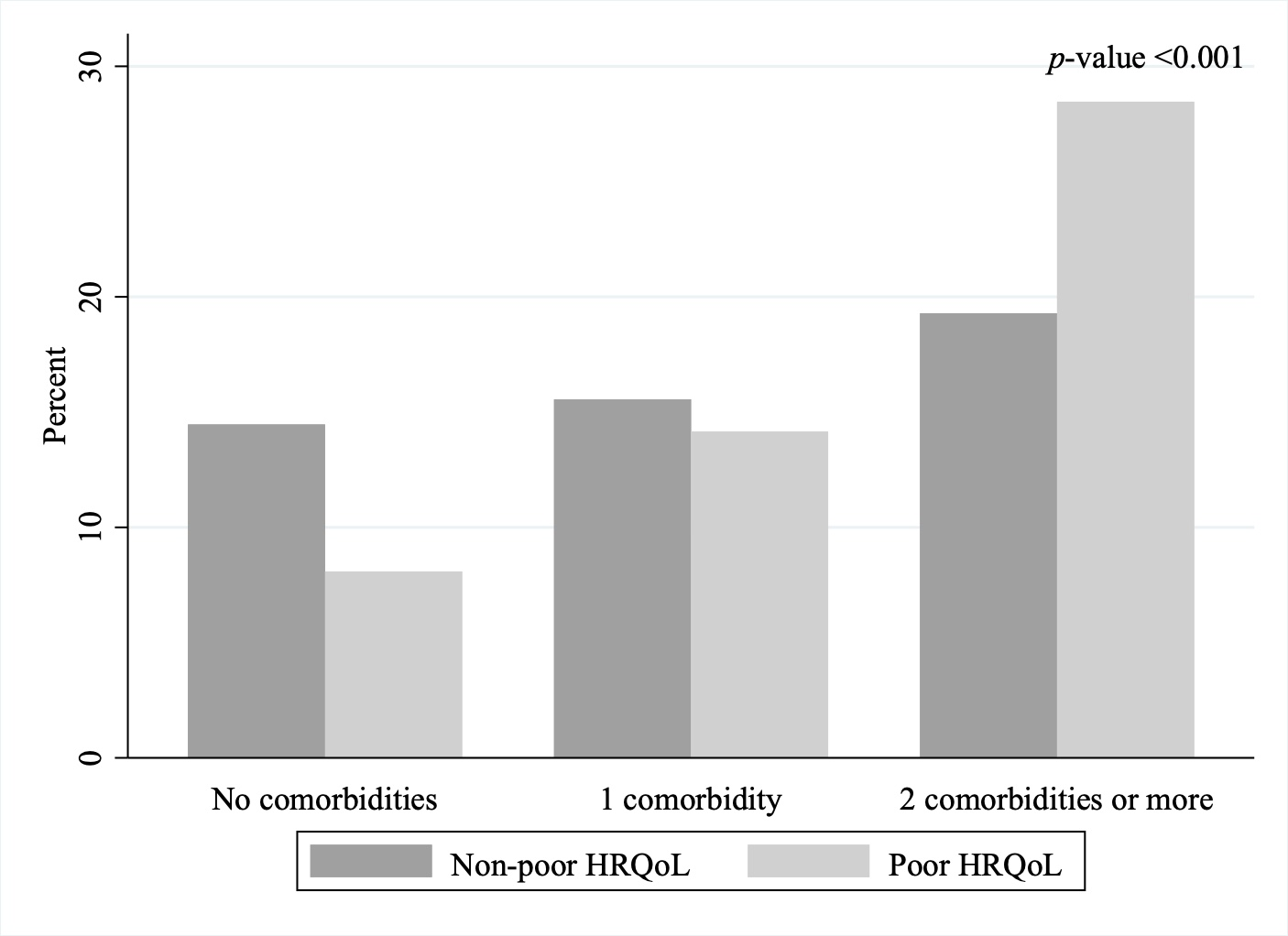
The most frequently reported comorbidities were hypertension, diabetes, depression, arthritis, and asthma (Table 2), all of which were significantly more prevalent among participants with poor HRQoL. Notably, depression ranked third among those with poor HRQoL but fifth among those with non-poor HRQoL. Median FACT-G scores declined with greater comorbidity burden, with significantly lower scores among those with two or more comorbidities (p < 0.001; Figure 1). Similarly, participants reporting ≥ 2 comorbidities were more likely to have poor HRQoL (p < 0.001; Figure 2).
In unadjusted logistic regression models, participants with one comorbidity (OR = 1.63, 95% CI: 1.05–2.53) and those with ≥2 comorbidities (OR = 2.64, 95% CI: 1.75–3.97) had significantly higher odds of poor HRQoL compared with those without comorbidities (Table 3). After adjustment for relevant covariates, the association remained significant for one comorbidity (OR = 1.85; 95% CI: 1.15–2.97) and for ≥2 comorbidities (OR = 2.95; 95% CI: 1.88–4.61).
Table 4 presents subgroup analyses of comorbidity burden and poor HRQoL stratified by patient navigation use and perceived social support. Among participants who did not use patient navigation services, both one (OR = 1.92; 95% CI: 1.09–3.38) and ≥2 comorbidities (OR = 3.33; 95% CI: 1.94–5.70) were significantly associated with poor HRQoL. Among those who used patient navigation services, the association was weaker and only significant for those with ≥2 comorbidities (OR = 2.65; 95% CI: 1.05–6.69). A similar pattern was observed by perceived social support: ≥2 comorbidities were significantly associated with poor HRQoL in both low (OR = 3.38, 95% CI: 1.60–7.15) and high support groups (OR = 2.24, 95% CI: 1.18–4.24), with stronger effects in the low support group. Neither patient navigation (p = 0.866) nor perceived social support (p = 0.535) moderated the comorbidity-HRQoL association.
Comparisons between excluded and included participants revealed differences only in alcohol use during the past 30 days, perceived social support, and poor HRQoL. Sensitivity analyses excluding participants with multiple cancer diagnoses yielded results consistent with the main findings. Additional models adjusting only for covariates significant in the bivariate analyses produced similar results to those adjusting for all covariates identified in the literature. Likewise, linear regression treating HRQoL as a continuous variable showed findings consistent with those from the logistic regression, indicating that a higher comorbidity burden was associated with lower FACT-G scores (mean VIF = 1.41). The Hosmer–Lemeshow test indicated adequate model fit (p = 0.327).

4. Discussion

This study broadens the literature on the association between comorbidity burden and HRQoL among cancer survivors. Although the association between the two has been determined in other populations, it has not been thoroughly examined in Puerto Rico. Our findings show that greater comorbidity burden is associated with higher odds of poor HRQoL in a population of cancer survivors in Puerto Rico, highlighting the need for integrative survivorship care models that address chronic conditions, particularly in underserved Hispanic/Latino populations.
Consistent with previous studies, participants in our sample exhibited a high comorbidity burden, with 77.4% reporting at least one chronic condition other than cancer. This aligns with prevalence estimates ranging from 70% to 82% among breast and prostate cancer survivors in other studies [9,11,16,35]. The most frequently reported comorbidities were hypertension, diabetes, arthritis, asthma, and depression. Hypertension, diabetes, and arthritis have also been identified as common conditions in prior studies [9,11,36,37]. Unlike prior studies, our results showed a high prevalence of asthma and depression, particularly among those with poor HRQoL, highlighting the need to integrate mental health services into cancer survivorship care planning. Although most prior studies employed linear regression models or correlation analyses, their conclusions are consistent with ours: a higher number of comorbidities is associated with lower HRQoL [9,11,15,16]. These findings emphasize the importance of incorporating comorbidity management into survivorship care in ways that address the specific needs of Puerto Rican cancer survivors.
This study addresses another existing knowledge gap by assessing whether patient navigation use modifies the association between comorbidity burden and HRQoL among cancer survivors in Puerto Rico. Although patient navigation did not significantly moderate this association, the stratum-specific odds ratios were slightly smaller among survivors who used navigation services, suggesting a modest but non-significant trend. Previous studies on patient navigation in other regions have yielded mixed results. For example, a navigation program in the United States significantly improved HRQoL in Latina breast cancer survivors [20], whereas Ramirez et al. [21] found no significant effects among breast and prostate cancer survivors. Our inclusion of multiple cancer types may help explain the differences from previous findings, as differences in supportive care needs across cancer populations have been documented. For example, Latina breast cancer patients have been shown to report higher levels of unmet supportive care needs compared to other groups [38]. In addition, variability in results may be explained by differences in the intensity of patient navigation programs, as some studies have implemented enhanced versions [20,21]. Future studies should evaluate potential moderating effects of patient navigation within specific cancer populations and examine how different program models influence HRQoL.
Although our interaction models did not detect significant moderation, we observed lower odds ratios among participants with higher perceived social support, suggesting a possible buffering effect that warrants further study. Perceived social support nonetheless showed a clear direct association with HRQoL. In bivariate analyses, participants with non-poor HRQoL reported higher perceived social support, consistent with prior research linking greater social support to better HRQoL [24]. Previous studies of Latina breast cancer survivors have shown that percieved social support accounts for roughly 15% of the variance in HRQoL, underscoring its importance [39]. A comparative study of Latina and Caucasian cancer survivors also found racial and ethnic differences in perceived social support, with Caucasian survivors reporting higher percieved social support; psychiatric comorbidities and educational attainment contributed to these disparities [40]. Additional research is needed to clarify how social support may buffer the impact of comorbidity burden on HRQoL among Latino cancer survivors.
This study has several limitations that should be considered. First, the cross-sectional design precludes causal inference. Second, recruitment through clinics, social media, and community events may have favored survivors who are more engaged in healthcare or who have greater digital access, introducing potential selection bias. About one-quarter of participants were excluded due to missing data. Although sensitivity analyses showed consistent results, this exclusion may limit generalizability. Third, patient navigation was measured with a single yes/no item, which may not capture its multidimensional nature. Additionally, although the survey included a description of patient navigation, some participants may not have accurately identified whether they received these services. Fourth, stratified analysis by cancer type produced unstable model estimates with excessively large standard errors due to small sample sizes across several cancer categories, preventing reliable cancer-type-specific modeling. Finally, comorbidity burden was self-reported and categorized broadly, which may introduce misclassification; moreover, the study design does not allow assessment of the temporal sequence between cancer diagnosis and comorbidity onset or the potential reversibility of some reported conditions.
Despite these limitations, our study has notable strengths. We used validated instruments to assess HRQoL (FACT-G) and perceived social support (MSPSS), both of which demonstrated excellent internal reliability. Our models adjusted for a comprehensive set of covariates aligned with prior survivorship research [33]. By examining the combined role of comorbidities, patient navigation, and perceived social support, this study contributes important evidence on how factors beyond cancer itself shape survivorship outcomes, even though we found no evidence that patient navigation or perceived support services moderated these associations. Additionally, this study updates existing knowledge on HRQoL among cancer patients undergoing active treatment in Puerto Rico, yielding results that are consistent with previous findings [30,41].

5. Conclusions

Having at least one comorbidity was significantly associated with poor HRQoL among cancer survivors in Puerto Rico, even after adjusting for relevant covariates. Hypertension, diabetes, depression, arthritis, and asthma were more common among participants with poor HRQoL, with hypertension being the most common frequently reported condition in both groups.
These findings underscore the importance of integrating chronic disease management—such as screening for hypertension, depression, and diabetes—into survivorship care as part of the cancer control continuum, to better identify cancer survivors at risk for poor HRQoL in Puerto Rico. In this context, patient navigation services may serve as a critical tool for managing the complex social and clinical needs of cancer survivors with multiple chronic conditions. While the connection between patient navigation and HRQoL in cancer patients with comorbidities is still unclear, these services can help individuals navigate fragmented healthcare systems, facilitate timely referrals, support adherence to both cancer and chronic disease care, and enhance care conditions and overall satisfaction. Future research should explore the individual contributions of common comorbidities to HRQoL and examine the temporal association between comorbidity burden and HRQoL, as well as how patient navigation can be optimized to more effectively address multimorbidity and HRQoL in cancer survivorship care.

Author Contributions

Conceptualization, C.M.P., M.S.-S. and L.G.-S.; Methodology, C.M.P., M.S.-S. and L.G.-S.; Software, D.L.-V.; Validation, D.L.-V.; Formal Analysis, D.L.-V.; Investigation, M.S.-S. and L.G.-S.; Data Curation, L.G.-S.; Writing—Original Draft Preparation, D.L.-V.; Writing—Review and Editing, C.M.P., L.G.-S. and M.S.-S.; Visualization, D.L.-V.; Supervision, C.M.P. and M.S.-S.; Project Administration, M.S.-S.; Funding Acquisition, M.S.-S. and L.G.-S. All authors have read and agreed to the published version of the manuscript.

Funding

This project was partially supported by the Office of Cancer Research Training and Education Coordination (CRTEC) of the University of Puerto Rico Comprehensive Cancer Center, the Alliance for Clinical and Translational Research (NIGMS award # U54GM133807), Bristol Myers Squibb (grant ID# 93918763), and the Cancer Prevention and Control (CAPAC) Research Training Program (NCI award # R25CA240120). The FACT-G is a copyrighted instrument owned by David Cella, and administered by FACIT.org. Permission to use the instrument was obtained prior to the study. The content is solely the responsibility of the authors and does not necessarily represent the official view of the National Institutes of Health.

Institutional Review Board Statement

The study was conducted in accordance with the Declaration of Helsinki and approved by the Institutional Review Board of the University of Puerto Rico Comprehensive Cancer Center (protocol # 2411004025, approved on 9 November 2023).

Informed Consent Statement

The Institutional Review Board of the University of Puerto Rico Comprehensive Cancer Center approved the use of an informative sheet instead of an informed consent form because our study involves minimal risk to participants; the patients who participated in this study were informed of this study in the informative sheet.

Data Availability Statement

The data presented in this study are available upon request from the corresponding author.

Acknowledgments

We gratefully acknowledge Sofía Contreras-Fernández, Mayerli M. Dávila, Ana Cristina del Pino, Karina Torres-Mojica, Rocío del Mar Avilés-Mercado, Juan Paulo González-Mayoral, Alejandra Díaz, María Vázquez, Karina Rivera, Yadielis Arce, Natalia Domínguez, Noedly Ayala, Liamarys Ortiz, Natalia I. Negrón-Morales, Gabriela M. Vera-Santiago, and Alexander De Jesús-Blest for their valuable support in study promotion and recruitment. We also thank Stephanie Cameron-Maldonado for her contributions to data management and data quality; Mariela Bournigal-Feliciano for her work on the development of data collection instruments, database design, and study implementation; and Nancy Cardona-Cordero for her revision of the data collection instruments. We further thank the Scientific Editing and Communications Core at the University of Puerto Rico Comprehensive Cancer Center for their assistance in reviewing and editing the manuscript. Finally, we thank the University of Puerto Rico Comprehensive Cancer Center, the San Juan City Hospital and the Dr. Issac González Martínez Oncology Hospital for allowing in-site recruitment in their clinics.

Conflicts of Interest

The authors declare no conflicts of interest. The funders had no role in the design of the study; in the collection, analyses, or interpretation of data; in the writing of the manuscript; or in the decision to publish the results.

Abbreviations

The following abbreviations are used in this manuscript:
HRQoLHealth-related quality of life
FACT-GFunctional Assessment of Cancer Therapy—General
MSPSSMultidimensional Scale of Perceived Social Support

References

  1. Puerto Torres-Cintrón, C.R.; Suárez Ramos, T.; Pagán Santana, Y.; Román Ruiz, Y.; Gierbolini Bermúdez, A.; Ortiz Ortiz, K.J. Cáncer en Puerto Rico, 2018–2022; Registro Central de Cáncer de Puerto Rico: San Juan, Puerto Rico, 2025. [Google Scholar]
  2. Schwartz, S.M. Epidemiology of Cancer. Clin. Chem. 2024, 70, 140–149. [Google Scholar] [CrossRef]
  3. Matos-Moreno, A.; Verdery, A.M.; Mendes de Leon, C.F.; De Jesús-Monge, V.M.; Santos-Lozada, A.R. Aging and the Left Behind: Puerto Rico and Its Unconventional Rapid Aging. Gerontologist 2022, 62, 964–973. [Google Scholar] [CrossRef]
  4. Firkins, J.; Hansen, L.; Driessnack, M.; Dieckmann, N. Quality of life in “chronic” cancer survivors: A meta-analysis. J. Cancer Surviv. Res. Pract. 2020, 14, 504–517. [Google Scholar] [CrossRef]
  5. Fukushima, T.; Suzuki, K.; Tanaka, T.; Okayama, T.; Inoue, J.; Morishita, S.; Nakano, J. Global quality of life and mortality risk in patients with cancer: A systematic review and meta-analysis. Qual. Life Res. 2024, 33, 2631–2643. [Google Scholar] [CrossRef]
  6. Neris, R.R.; Nascimento, L.C.; Leite, A.C.A.B.; de Andrade Alvarenga, W.; Polita, N.B.; Zago, M.M.F. The experience of health-related quality of life in extended and permanent cancer survivors: A qualitative systematic review. Psycho-Oncology 2020, 29, 1474–1485. [Google Scholar] [CrossRef] [PubMed]
  7. Ahn, S.H.; Park, B.W.; Noh, D.Y.; Nam, S.J.; Lee, E.S.; Lee, M.K.; Kim, S.H.; Lee, K.M.; Park, S.M.; Yun, Y.H. Health-related quality of life in disease-free survivors of breast cancer with the general population. Ann. Oncol. 2007, 18, 173–182. [Google Scholar] [CrossRef] [PubMed]
  8. Bottomley, A. The cancer patient and quality of life. Oncologist 2002, 7, 120–125. [Google Scholar] [CrossRef] [PubMed]
  9. Benzo, R.M.; Moreno, P.I.; Fox, R.S.; Silvera, C.A.; Walsh, E.A.; Yanez, B.; Balise, R.R.; Oswald, L.B.; Penedo, F.J. Comorbidity burden and health-related quality of life in men with advanced prostate cancer. Support. Care Cancer 2023, 31, 496. [Google Scholar] [CrossRef]
  10. Smith, A.W.; Reeve, B.B.; Bellizzi, K.M.; Harlan, L.C.; Klabunde, C.N.; Amsellem, M.; Bierman, A.S.; Hays, R.D. Cancer, comorbidities, and health-related quality of life of older adults. Health Care Financ. Rev. 2008, 29, 41–56. [Google Scholar]
  11. Fu, M.R.; Axelrod, D.; Guth, A.A.; Cleland, C.M.; Ryan, C.E.; Weaver, K.R.; Qiu, J.M.; Kleinman, R.; Scagliola, J.; Palamar, J.J.; et al. Comorbidities and Quality of Life among Breast Cancer Survivors: A Prospective Study. J. Pers. Med. 2015, 5, 229–242. [Google Scholar] [CrossRef]
  12. Park, J.; Rodriguez, J.L.; O’Brien, K.M.; Nichols, H.B.; Hodgson, M.E.; Weinberg, C.R.; Sandler, D.P. Health-related quality of life outcomes among breast cancer survivors. Cancer 2021, 127, 1114–1125. [Google Scholar] [CrossRef]
  13. Malhotra, A.; Fransen, H.P.; Quaresma, M.; Raijmakers, N.; Versluis, M.A.J.; Rachet, B.; van Maaren, M.C.; Leyrat, C. Associations between treatments, comorbidities and multidimensional aspects of quality of life among patients with advanced cancer in the Netherlands—A 2017–2020 multicentre cross-sectional study. Qual. Life Res. 2023, 32, 3123–3133. [Google Scholar] [CrossRef] [PubMed]
  14. Ekels, A.; van de Poll-Franse, L.V.; Issa, D.E.; Hoogendoorn, M.; Nijziel, M.R.; Koster, A.; de Jong, C.N.; Achouiti, A.; Thielen, N.; Tick, L.W.; et al. Impact of comorbidity on health-related quality of life in newly diagnosed patients with lymphoma or multiple myeloma: Results from the PROFILES-registry. Ann. Hematol. 2024, 103, 5511–5525. [Google Scholar] [CrossRef] [PubMed]
  15. Ren, X.Q.; Sun, S.J.; Wei, S.A.; Fang, S.W.; Xu, L.F.; Xiao, J.; Lu, M.M. Socioeconomic Status Plays a Moderating Role in the Association Between Multimorbidity and Health-Related Quality of Life Among Cancer Patients. Inq. A. J. Med. Care Organ. Provis. Financ. 2024, 61, 469580241264187. [Google Scholar] [CrossRef]
  16. Lee, E.; Hines, R.B.; Zhu, J.; Nam, E.; Rovito, M.J. Racial and Ethnic Variations in Pre-Diagnosis Comorbidity Burden and Health-Related Quality of Life Among Older Women with Breast Cancer. J. Racial Ethn. Health Disparities 2024, 11, 1587–1599. [Google Scholar] [CrossRef]
  17. Harrison, C.; Fortin, M.; van den Akker, M.; Mair, F.; Calderon-Larranaga, A.; Boland, F.; Wallace, E.; Jani, B.; Smith, S. Comorbidity versus multimorbidity: Why it matters. J. Multimorb. Comorbidity 2021, 11, 2633556521993993. [Google Scholar] [CrossRef]
  18. Daw, J. Contribution of Four Comorbid Conditions to Racial/Ethnic Disparities in Mortality Risk. Am. J. Prev. Med. 2017, 52, S95–S102. [Google Scholar] [CrossRef]
  19. Mertz, B.G.; Dunn-Henriksen, A.K.; Kroman, N.; Johansen, C.; Andersen, K.G.; Andersson, M.; Mathiesen, U.B.; Vibe-Petersen, J.; Dalton, S.O.; Envold Bidstrup, P. The effects of individually tailored nurse navigation for patients with newly diagnosed breast cancer: A randomized pilot study. Acta Oncol. 2017, 56, 1682–1689. [Google Scholar] [CrossRef]
  20. Ramirez, A.G.; Muñoz, E.; Long Parma, D.; Perez, A.; Santillan, A. Quality of life outcomes from a randomized controlled trial of patient navigation in Latina breast cancer survivors. Cancer Med. 2020, 9, 7837–7848. [Google Scholar] [CrossRef]
  21. Ramirez, A.G.; Choi, B.Y.; Munoz, E.; Perez, A.; Gallion, K.J.; Moreno, P.I.; Penedo, F.J. Assessing the effect of patient navigator assistance for psychosocial support services on health-related quality of life in a randomized clinical trial in Latino breast, prostate, and colorectal cancer survivors. Cancer 2020, 126, 1112–1123. [Google Scholar] [CrossRef]
  22. Bellizzi, K.M.; Fritzson, E.; Ligus, K.; Park, C.L. Social Support Buffers the Effect of Social Deprivation on Comorbidity Burden in Adults with Cancer. Ann. Behav. Med. A. Publ. Soc. Behav. Med. 2024, 58, 701–706. [Google Scholar] [CrossRef]
  23. Liu, L.; Li, J.; Tang, Y.; Chen, C.; Yu, C.; Li, X.; Peng, L.; Zheng, D. The impact of life events on health-related quality of life in rural older adults: The moderating role of social support. Front. Public Health 2025, 13, 1587104. [Google Scholar] [CrossRef] [PubMed]
  24. Xin, L.; Viroj, J.; Glangkarn, S. The Influencing Factors of Family Function, Social Support and Impact on Quality of Life in Patients with Gastrointestinal Cancer. Asian Pac. J. Cancer Prev. APJCP 2025, 26, 2137–2144. [Google Scholar] [CrossRef] [PubMed]
  25. Vespa, A.; Spatuzzi, R.; Fabbietti, P.; Di Rosa, M.; Bonfigli, A.R.; Corsonello, A.; Gattafoni, P.; Giulietti, M.V. Association between Sense of Loneliness and Quality of Life in Older Adults with Multimorbidity. Int. J. Environ. Res. Public Health 2023, 20, 2615. [Google Scholar] [CrossRef] [PubMed]
  26. Harris, P.A.; Taylor, R.; Thielke, R.; Payne, J.; Gonzalez, N.; Conde, J.G. Research electronic data capture (REDCap)—A metadata-driven methodology and workflow process for providing translational research informatics support. J. Biomed. Inform. 2009, 42, 377–381. [Google Scholar] [CrossRef]
  27. Cella, D.F.; Tulsky, D.S.; Gray, G.; Sarafian, B.; Linn, E.; Bonomi, A.; Silberman, M.; Yellen, S.B.; Winicour, P.; Brannon, J. The Functional Assessment of Cancer Therapy scale: Development and validation of the general measure. J. Clin. Oncol. 1993, 11, 570–579. [Google Scholar] [CrossRef]
  28. Pearman, T.; Yanez, B.; Peipert, J.; Wortman, K.; Beaumont, J.; Cella, D. Ambulatory cancer and US general population reference values and cutoff scores for the functional assessment of cancer therapy. Cancer 2014, 120, 2902–2909. [Google Scholar] [CrossRef]
  29. Spigel, D.R.; Patel, J.D.; Reynolds, C.H.; Garon, E.B.; Hermann, R.C.; Govindan, R.; Olsen, M.R.; Winfree, K.B.; Chen, J.; Liu, J.; et al. Quality of life analyses from the randomized, open-label, phase III PointBreak study of pemetrexed-carboplatin-bevacizumab followed by maintenance pemetrexed-bevacizumab versus paclitaxel-carboplatin-bevacizumab followed by maintenance bevacizumab in patients with stage IIIB or IV nonsquamous non-small-cell lung cancer. J. Thorac. Oncol. 2015, 10, 353–359. [Google Scholar] [CrossRef]
  30. Gonzalez, V.J.; McMillan, S.; Pedro, E.; Tirado-Gomez, M.; Saligan, L.N. The Health related Quality of Life of Puerto Ricans during Cancer Treatments; A Pilot Study. Puerto Rico Health Sci. J. 2018, 37, 46–51. [Google Scholar]
  31. Jiang, C.; Deng, L.; Karr, M.A.; Wen, Y.; Wang, Q.; Perimbeti, S.; Shapiro, C.L.; Han, X. Chronic comorbid conditions among adult cancer survivors in the United States: Results from the National Health Interview Survey, 2002–2018. Cancer 2022, 128, 828–838. [Google Scholar] [CrossRef]
  32. Mizuno, Y.; Fagan, J.; Tie, Y.; Padilla, M. Is Patient Navigation Used by People with HIV Who Need It? An Assessment from the Medical Monitoring Project, 2015–2017. AIDS Patient Care STDs 2020, 34, 452–459. [Google Scholar] [CrossRef] [PubMed]
  33. Pérez-Villalobos, C.; Briede-Westermeyer, J.C.; Schilling-Norman, M.J.; Contreras-Espinoza, S. Multidimensional scale of perceived social support: Evidence of validity and reliability in a Chilean adaptation for older adults. BMC Geriatr. 2021, 21, 461. [Google Scholar] [CrossRef] [PubMed]
  34. Levinsen, A.K.G.; Kjaer, T.K.; Thygesen, L.C.; Maltesen, T.; Jakobsen, E.; Gögenur, I.; Borre, M.; Christiansen, P.; Zachariae, R.; Christensen, P.; et al. Social inequality in cancer survivorship: Educational differences in health-related quality of life among 27,857 cancer survivors in Denmark. Cancer Med. 2023, 12, 20150–20162. [Google Scholar] [CrossRef]
  35. Wu, H.S.; Davis, J.E.; Chen, L. Impact of Comorbidity on Symptoms and Quality of Life Among Patients Being Treated for Breast Cancer. Cancer Nurs. 2019, 42, 381–387. [Google Scholar] [CrossRef]
  36. Forjaz, M.J.; Rodriguez-Blazquez, C.; Ayala, A.; Rodriguez-Rodriguez, V.; de Pedro-Cuesta, J.; Garcia-Gutierrez, S.; Prados-Torres, A. Chronic conditions, disability, and quality of life in older adults with multimorbidity in Spain. Eur. J. Intern. Med. 2015, 26, 176–181. [Google Scholar] [CrossRef]
  37. Crouch, A.; Champion, V.L.; Von Ah, D. Comorbidity, cognitive dysfunction, physical functioning, and quality of life in older breast cancer survivors. Support. Care Cancer 2022, 30, 359–366. [Google Scholar] [CrossRef]
  38. Moreno, P.I.; Ramirez, A.G.; San Miguel-Majors, S.L.; Castillo, L.; Fox, R.S.; Gallion, K.J.; Munoz, E.; Estabrook, R.; Perez, A.; Lad, T.; et al. Unmet supportive care needs in Hispanic/Latino cancer survivors: Prevalence and associations with patient-provider communication, satisfaction with cancer care, and symptom burden. Support. Care Cancer 2019, 27, 1383–1394. [Google Scholar] [CrossRef]
  39. Sammarco, A.; Konecny, L.M. Quality of life, social support, and uncertainty among Latina breast cancer survivors. Oncol. Nurs. Forum 2008, 35, 844–849. [Google Scholar] [CrossRef]
  40. Sammarco, A.; Konecny, L.M. Quality of life, social support, and uncertainty among Latina and Caucasian breast cancer survivors: A comparative study. Oncol. Nurs. Forum 2010, 37, 93–99. [Google Scholar] [CrossRef]
  41. Castro-Figueroa, E.M.; Torres-Blasco, N.; Rosal, M.C.; Jiménez, J.C.; Castro-Rodríguez, W.P.; González-Lorenzo, M.; Vélez-Cortés, H.; Toro-Bahamonde, A.; Costas-Muñiz, R.; Armaiz-Peña, G.N.; et al. Brief Report: Hispanic Patients’ Trajectory of Cancer Symptom Burden, Depression, Anxiety, and Quality of Life. Nurs. Rep. 2021, 11, 475–483. [Google Scholar] [CrossRef]
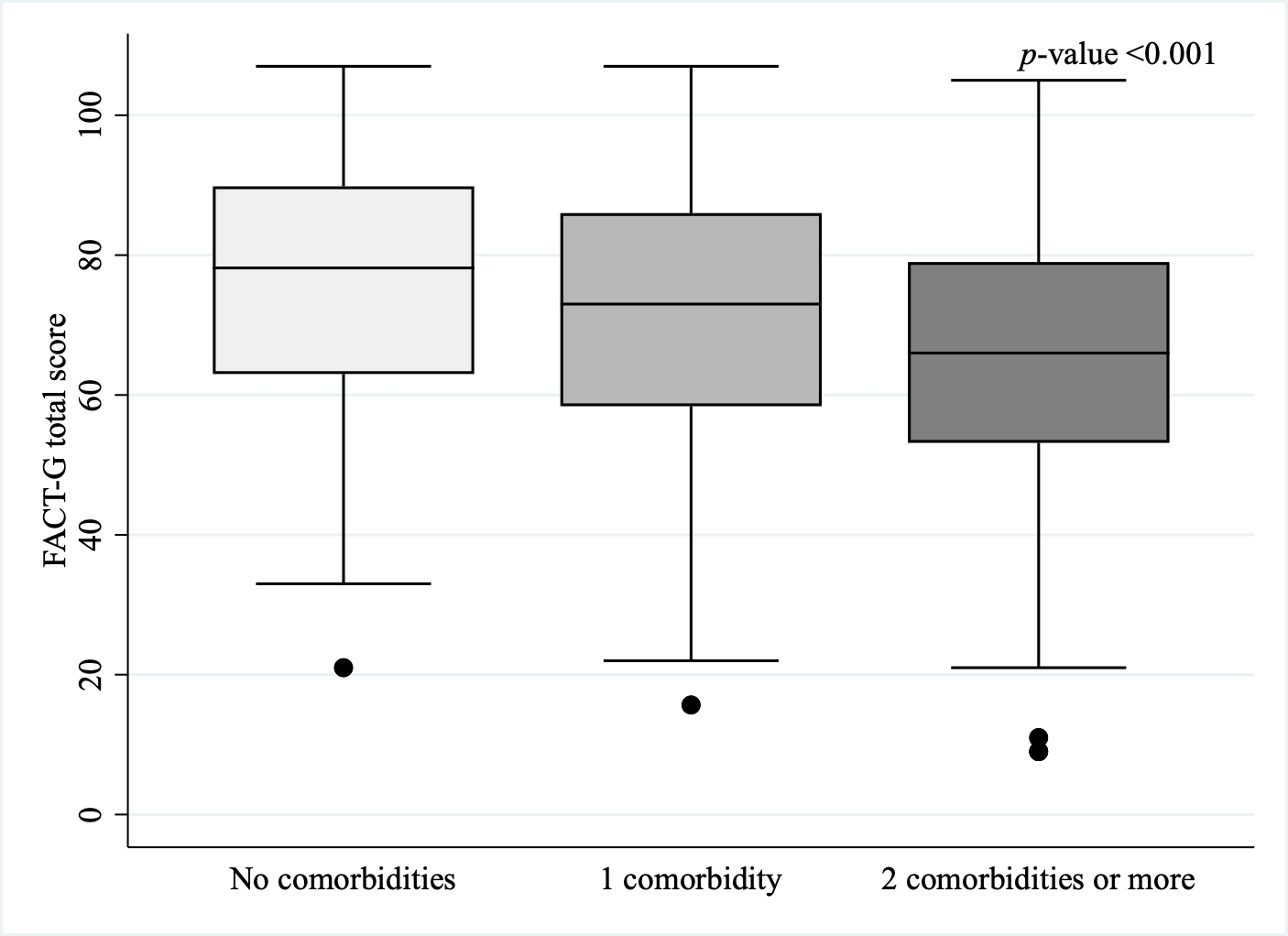
Figure 1. FACT-G total scores by comorbidity burden among cancer survivors receiving care in Puerto Rico, START-PR (n = 643).
Cancers 17 03784 g001
Figure 2. HRQoL by comorbidity burden among cancer survivors receiving care in Puerto Rico, START-PR (n = 643).
Cancers 17 03784 g002
Table 1. Baseline sociodemographic, lifestyle, and clinical characteristics of cancer survivors receiving care in Puerto Rico, START-PR (n = 643).
VariablesTotal
(n = 643)
Not Poor HRQoL
(n = 317)
Poor HRQoL
(n = 326)
p-Value
Age at diagnosis   0.304
    <40 years63 (9.8%)32 (50.8%)31 (49.2%) 
    40–64 years356 (55.4%)166 (46.6%)190 (53.4%) 
    ≥65 years224 (34.8%)119 (53.1%)105 (46.9%) 
Sex at birth   0.514
    Female461 (71.7%)231 (50.1%)230 (49.9%) 
    Male182 (28.3%)86 (47.3%)96 (52.7%) 
Residence area   0.367
    Urban362 (56.3%)187 (51.7%)175 (48.3%) 
    Suburban81 (12.6%)39 (48.2%)42 (51.8%) 
    Rural200 (31.1%)91 (45.5%)109 (54.5%) 
Education   0.053
    High school or less170 (26.4%)73 (42.9%)97 (57.1%) 
    More than high school473 (73.6%)244 (51.6%)229 (48.4%) 
Marital status   0.584
    Married/lives with partner347 (54.0%)171 (49.3%)176 (50.7%) 
    Separated/widowed/divorced205 (31.9%)97 (47.3%)108 (52.7%) 
    Single/never married91 (14.1%)49 (53.8%)42 (46.2%) 
Cancer stage   0.006
    Localized408 (63.4%)220 (53.9%)188 (46.1%) 
    Regional136 (21.2%)62 (45.6%)74 (54.4%) 
    Distant77 (12.0%)26 (33.8%)51 (66.2%) 
    Unknown22 (3.4%)9 (40.9%)13 (59.1%) 
Comorbidities   <0.001
    0145 (22.6%)93 (64.1%)52 (35.9%) 
    1191 (29.7%)100 (52.4%)91 (47.6%) 
    ≥2307 (47.7%)124 (40.4%)183 (59.6%) 
Physical activity (last 30 days)   <0.001
    No429 (66.7%)178 (41.5%)251 (58.5%) 
    Yes214 (33.3%)139 (64.9%)75 (35.1%) 
Smoking status   0.509
    Non-smoker504 (78.4%)254 (50.4%)250 (49.6%) 
    Past smoker110 (17.1%)51 (46.4%)59 (53.6%) 
    Current smoker29 (4.5%)12 (41.4%)17 (58.6%) 
Alcohol (last 30 days)   0.213
    No 496 (77.1%)236 (47.6%)260 (52.4%) 
    Moderate drinking56 (8.7%)33 (58.9%)23 (41.1%) 
    Exceeded moderate drinking91 (14.2%)48 (52.7%)43 (47.3%) 
Current cancer treatment   0.349
    No91 (14.2%)49 (53.8%)42 (46.2%) 
    Yes552 (85.8%)268 (48.5%)284 (51.5%) 
Time since diagnosis   0.264
    ≤5 years584 (90.8%)292 (50.0%)292 (50.0%) 
    >5 years59 (9.2%)25 (42.4%)34 (57.6%) 
Multiple cancer diagnoses   0.009
    No 433 (67.3%)229 (52.9%)204 (47.1%) 
    Yes210 (32.7%)88 (41.9%)122 (58.1%) 
Perceived social support mean score 38.8 (8.9)42.5 (6.9)35.3 (9.3)<0.001
Patient Navigation   0.006
    No464 (72.2%)213 (45.9%)251 (54.1%) 
    Yes179 (27.8%)104 (58.1%)75 (41.9%) 
Note: Values are shown as n with row percentages [n (row %)] or as mean (SD).
Table 2. Top five comorbid conditions by HRQoL status and their relative rankings among cancer survivors receiving care in Puerto Rico, START-PR (n = 643).
ConditionNon-Poor HRQoLPoor HRQoLp Value
Rankingn (%) *Rankingn (%) *
Hypertension1134 (44.2)1169 (55.8)0.013
Diabetes261 (40.1)291 (59.9)0.009
Depression532 (26.2)390 (73.8)<0.001
Arthritis356 (41.8)478 (58.2)0.048
Asthma447 (37.9)577 (62.1)0.004
* Percentages are calculated within rows, and conditions are ranked according to the frequency of participants reporting each condition. Comorbid conditions are not mutually exclusive.
Table 3. Association between comorbidity burden and poor HRQoL among cancer survivors receiving care in Puerto Rico, START-PR (n = 643).
Comorbidity BurdenUnadjusted OR
(95% CI)
Adjusted OR *
(95% CI)
01.001.00
11.63 (1.05–2.53)1.85 (1.15–2.97)
22.64 (1.75–3.97)2.95 (1.88–4.61)
* Model adjusted by age at cancer diagnosis, sex, education, cancer stage, physical activity, residential area, lifetime smoking status, alcohol use, marital status, time since cancer diagnosis, and current cancer treatment status.
Table 4. Subgroup analysis for the association between comorbidity burden and poor HRQoL among cancer survivors receiving care in Puerto Rico, START-PR (n = 643).
VariableNo Comorbidities1
Comorbidity
Adjusted OR (95% CI) *
≥2
Comorbidities
Adjusted OR (95% CI) *
p-Value for
Interaction
Patient navigation use 
No1.001.92 (1.09–3.38)3.33 (1.94–5.70)0.866
Yes1.001.76 (0.64–4.83)2.65 (1.05–6.69) 
Perceived social support 
Low1.001.86 (0.88–3.97)3.38 (1.60–7.15)0.535
High1.001.12 (0.54–2.33)2.24 (1.18–4.24) 
* Models adjusted by age at cancer diagnosis, sex, education, cancer stage, physical activity, residential area, lifetime smoking status, alcohol use, marital status, time since cancer diagnosis, and current cancer treatment status.
Disclaimer/Publisher’s Note: The statements, opinions and data contained in all publications are solely those of the individual author(s) and contributor(s) and not of MDPI and/or the editor(s). MDPI and/or the editor(s) disclaim responsibility for any injury to people or property resulting from any ideas, methods, instructions or products referred to in the content.