When and for Whom Does Intensive Care Unit Admission Change the Prognosis in Oncology?—A Scoping Review



Simple Summary
Abstract
1. Introduction
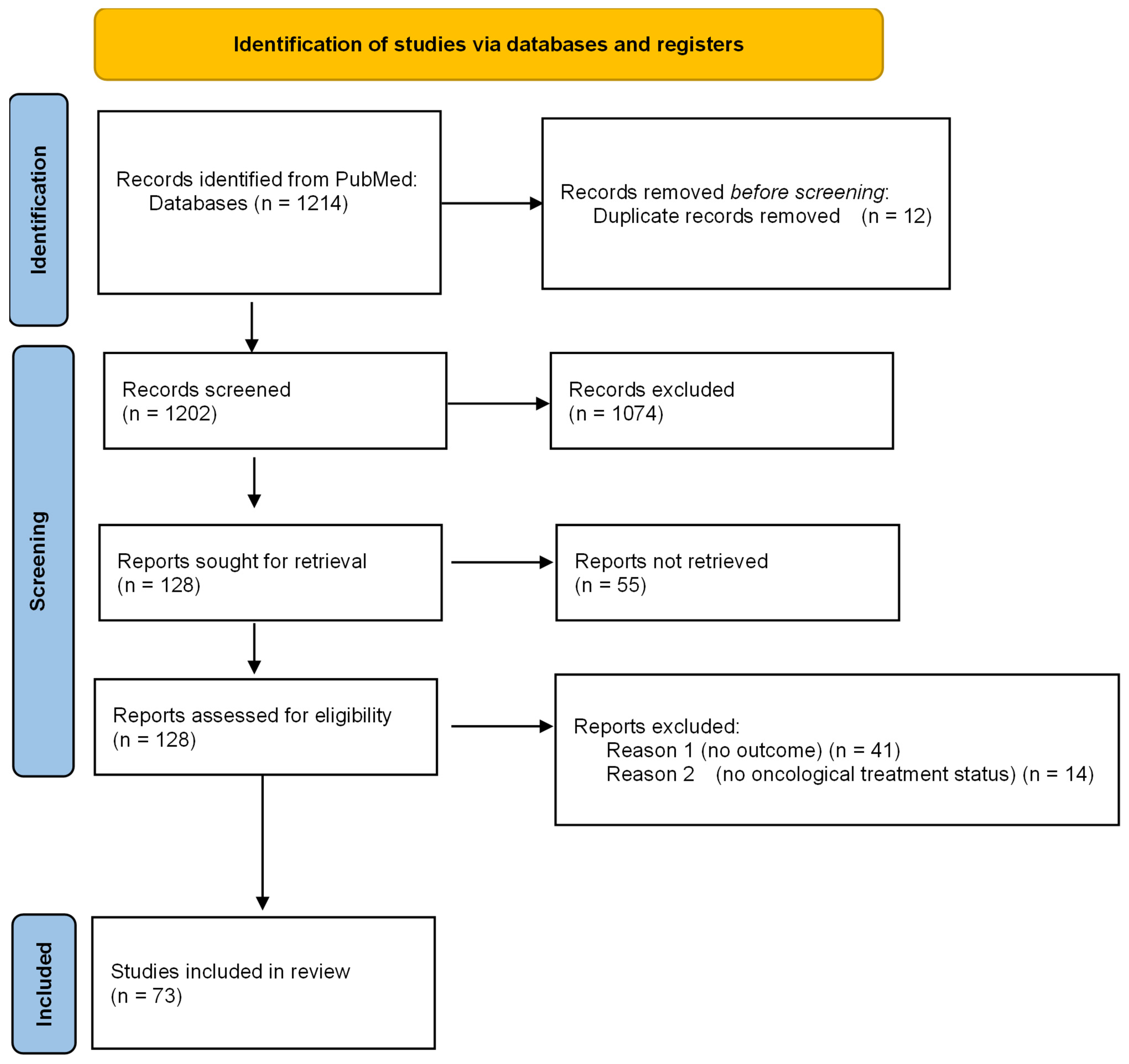
2. Materials and Methods
3. Results
3.1. Study Characteristics
3.1.1. Geographic and Clinical Scope
3.1.2. Cancer Types
3.1.3. Reasons for ICU Admission
3.1.4. Oncologic Treatment Status
3.1.5. Outcome Reporting
3.2. Themes and Patterns
3.2.1. Hematologic Malignancies (Table 1)

| Indicator | Supporting S2019. | Evidence Strength |
|---|---|---|
| Early ICU admission before multiorgan failure | de Vries 2019; Boldingh 2024; Otten 2025; Munshi 2021 | ★★★★★ |
| Single-organ failure (especially isolated respiratory or renal dysfunction) | de Vries 2019; Munshi 2021; Nazer 2022; Chiang 2019 | ★★★★☆ |
| Controlled or remission-phase hematologic disease | Otten 2025; Boldingh 2024; Tanguy 2019; Storck 2025 | ★★★★☆ |
| Refractory or relapsed disease during ICU stay | de Vries 2019; Tanguy 2019; Chiang 2019; Nazer 2022 | ★★★★★ |
| ≥3 organ supports (mechanical ventilation + vasopressors + RRT) | de Vries 2019; Otten 2025; Haider 2023; Storck 2025 | ★★★★★ |
| Prolonged renal replacement therapy (>7 days) | de Vries 2019; Otten 2025; Boldingh 2024 | ★★★★★ |
| Delayed or unplanned ICU admission after deterioration | Boldingh 2024; de Vries 2019; Munshi 2021 | ★★★★☆ |
| Active sepsis or invasive fungal infection without disease control | Nazer 2022; Haider 2023; Chiang 2019 | ★★★★☆ |
3.2.2. Solid Tumors (Table 2)
| Indicator | Supporting Studies | Evidence Strength |
|---|---|---|
| Advanced metastatic or refractory disease | Manz 2023, Praça 2024, Provencio 2021, Guarneri 2021, Saillard 2020, Puxty 2020 | ★★★★★ |
| Poor functional status (ECOG ≥ 3) | Praça 2024, Provencio 2021, Manz 2023, Kruser 2017, Ersek 2017 | ★★★★☆ |
| Unplanned ICU admission after deterioration | Praça 2024, Puxty 2018, Lara 2022, Boldingh 2024, de Vries 2019 | ★★★★☆ |
3.2.3. Sepsis and Non-COVID-19 Infections (Table 3)
| Indicator | Supporting Studies | Evidence Strength |
|---|---|---|
| Early sepsis recognition and rapid ICU admission (<24 h from onset) | Hajjar 2019; Yang 2020; Fang 2017; Dale 2016 | ★★★★★ |
| Single-organ dysfunction (e.g., isolated respiratory or renal failure) | Hajjar 2019; Fang 2017; Nazer 2022 | ★★★★☆ |
| Adequate source control and early antimicrobial therapy | Hajjar 2019; Fang 2017 | ★★★★☆ |
| Refractory septic shock requiring ≥3 organ supports (IMV + vasopressors + RRT) | Nazer 2022; Fang 2017; Dale 2016; Storck 2025 | ★★★★★ |
| Multidrug-resistant or fungal infection | Nazer 2022; Fang 2017; Chiang 2019 | ★★★★☆ |
| High SOFA or lactate (>10 or >4 mmol/L) | Fang 2017; Chiang 2019; Yang 2020 | ★★★★☆ |
| Controlled primary malignancy (solid tumor in remission) | Hajjar 2019; Yang 2020; Dale 2016 | ★★★★☆ |
| Active hematologic disease with neutropenia or chemotherapy within 2 weeks | Nazer 2022; Fang 2017; Bozdağ 2022 | ★★★★☆ |
3.2.4. COVID-19 and Other Viral Pneumonias (Table 4)
| Indicator | Supporting Studies | Evidence Strength |
|---|---|---|
| Invasive mechanical ventilation (severe ARDS) → very high mortality (≈70–100%) | Lara 2022; Aboueshia 2021; Scarfò 2020; Šimkovič 2023; Zaki 2022; Xie 2021 | ★★★★★ |
| Active hematologic disease/neutropenia at infection onset → poor outcomes | Bozdağ 2022; Gupta 2022; Scarfò 2020; Šimkovič 2023 | ★★★★★ |
| Recent cytotoxic therapy (<14 days) increases severity/mortality | Zhang 2020; Scarfò 2020; Bozdağ 2022 | ★★★★☆ |
| Poor performance status (ECOG ≥ 2) and high comorbidity burden (e.g., obesity, diabetes) worsen outcomes | Lara 2022; Aboueshia 2021 | ★★★★☆ |
| Inflammatory/immune markers predict severity (CRP ≥ 100 mg/L, ferritin ≥ 1000 ng/mL, lymphopenia) | Smith 2020 | ★★★★☆ |
| Remission/controlled disease and solid tumors off chemotherapy fare better | Lara 2022; Aboueshia 2021; Belsky 2021; Giannakoulis 2020 | ★★★★☆ |
| Immune checkpoint inhibitors (ICI) per se do not increase COVID-19 mortality; outcomes driven by PS/comorbidity | Belsky 2021 | ★★★★☆ |
| Targeted therapy continuation (e.g., BTKi/venetoclax) may be safe/beneficial in select CLL | Scarfò 2020; Šimkovič 2023 | ★★★☆☆ |
| LMIC settings show higher ICU mortality (systems/resource effect) | Zaki 2022; Gupta 2022 | ★★★★☆ |
| Temporal improvement across waves (vaccines/experience) but ICU mortality remains high in HM | Šimkovič 2023; Belsky 2021 | ★★★☆☆ |
3.2.5. Novel and Targeted Therapies (Table 5)
| Indicator | Supporting Studies | Evidence Strength |
|---|---|---|
| Protocolized management of CAR-T toxicities (CRS/ICANS) in ICU → high short-term survival and return to therapy | Azoulay 2021 (CARTTAS; 90-day survival ≈ 78% despite frequent life-saving interventions) | ★★★★★ |
| Immunotherapy-related toxicities (e.g., pneumonitis) are often reversible; immunotherapy/curative intent associated with better outcomes | Carini 2024 (ICONIC–Lung: immunotherapy and curative intent protective; ~48% of ICU survivors resumed cancer therapy) | ★★★★☆ |
| ICU as a bridge to targeted therapy when an actionable mutation exists (biopsy under support, incl. ECMO) → benefit likely | Luo 2025 (VV-ECMO enabling biopsy/genotyping; ROS1/EGFR cases weaned from ECMO and continued targeted therapy) | ★★★★☆ |
| Administering targeted therapy in ICU is feasible; outcomes hinge on disease status (progressive vs. controlled) | Storck 2025 (iCHOP registry: TT during ICU had survival comparable/slightly better than non-TT; progressive disease strongest predictor of death) | ★★★★☆ |
| Organ-failure burden remains decisive even with novel therapy (IMV, vasopressors, especially AKI) | Shen 2025 (lung cancer ICU: AKI grade II–III = strongest predictor of 90-day mortality); Azoulay 2021 (frailty, bacterial infection, early life-saving therapy increases death) | ★★★★☆ |
| Frailty and bacterial co-infection during CAR-T toxicity → worse outcomes (consider time-limited ICU trial) | Azoulay 2021 (frailty HR ~2.5; bacterial infection HR ~2.1 for 90-day mortality) | ★★★★☆ |
| Absence of targetable options or refractory/progressive disease despite ICU → futility likely | Storck 2025 (progressive disease increases mortality); Luo 2025 (non-actionable mutation + uncontrolled infection → death) | ★★★★☆ |
3.2.6. End-of-Life Care and Aggressive ICU Use (Table 6)
| Indicator (EOL/Aggressive Care → Futility Likely) | Supporting Studies | Evidence Strength |
|---|---|---|
| ICU admission in the last 30 days of life correlates with poorer family-perceived quality of EOL care | Ersek 2017 (stage IV NSCLC; ICU/chemo/ ≥ 2 hospitalizations in last 30 days lowers bereaved family ratings) | ★★★★★ |
| Multiple acute hospitalizations or chemotherapy within 14 days of death = aggressive, low-value care | Ersek 2017; Margolis 2017 (uterine cancer; 6.6% chemo ≤14 d, 42.5% high-intensity care) | ★★★★☆ |
| Younger age, advanced stage, comorbidity, and certain sociodemographic factors predict higher aggressive EOL care | Margolis 2017 (younger age, Black race, stage IV ↑ intensive care) | ★★★★☆ |
| High hospital/ICU use near death is common at national scale (signals triage gaps) | Tanguy-Melac 2019 (France, CRC decedents: 17% ICU in last month; 83% hospitalized) | ★★★★☆ |
| Absence or late integration of palliative care increases ICU/chemo use near EOL | Tanguy-Melac 2019 (hospital palliative care associated with ↓ ICU and ↓ chemo in last month) | ★★★★☆ |
| Transfusion-dependent hematologic pts receive more intensive EOL care and less hospice (structural barrier) | Fletcher 2016 (MDS; transfusion-dependence ↑ ICU admission, ↓ hospice use) | ★★★★☆ |
| Advance directives/goals-of-care interventions reduce non-beneficial intensity | Manz 2023 (mortality-nudges ↑ serious-illness conversations; ↓ chemo ≤ 14 d of death without ↑ ICU deaths) | ★★★☆☆ |
| Dialysis/complex multimorbidity cohorts with cancer still show high ICU/hospital death rates at EOL | Chiang 2019 (dialysis decedents: 51% ICU in last month; cancer associated with different intensity mix, more palliative use) | ★★★☆☆ |
| Time-limited ICU trials define futility thresholds (short for poor-prognosis solid tumors; longer for heme) | Shrime 2016 (decision-analytic model: optimal trial ≤ 4 days for poor-prognosis solid tumors; up to 8–12 days for HM) | ★★★★★ |
| Elective/postoperative ICU at EOL rarely changes prognosis compared with unplanned medical ICU | Puxty 2015 (solid tumors: lowest mortality in elective surgical ICU vs. highest in emergency medical ICU near diagnosis/EOL) | ★★★★☆ |
3.3. Quantitative Overview
3.3.1. Overall Survival Metrics (Table 7)
| Outcome Measure | Pooled Range/Weighted Mean | Interpretation |
|---|---|---|
| ICU mortality | 8–72% (weighted mean ≈ 41%) | Wide variability driven by disease type and timing of admission. |
| Hospital mortality | 25–60% (mean ≈ 38%) | Hospital discharge remains achievable for >60% of solid tumor patients with early ICU transfer. |
| 90-day mortality | 35–58% (mean ≈ 46%) | Reflects late post-ICU attrition due to disease progression. |
| 1-year mortality | 50–70% (mean ≈ 62%) | Long-term survival is possible in one-third of ICU-treated oncology patients. |
| Return to oncologic therapy after ICU | 28–45% of survivors | Indicates that one in three ICU survivors resumes active treatment, especially those with reversible complications. |
3.3.2. Mortality by Cancer Type (Table 8)
| Cancer 1. | Median ICU Mortality | Median 1-Year Mortality | Notes |
|---|---|---|---|
| Hematologic malignancies | 45–55% | 60–65% | Highest early mortality; survival plateaus after day 7 if multiorgan failure avoided (de Vries 2019; Otten 2025). |
| Solid tumors | 25–35% | 50–55% | Better short-term outcomes; prognosis depends on metastatic status and performance score (Manz 2023; Praça 2024). |
| Mixed oncology cohorts | 35–45% | 55–60% | Intermediate outcomes; heterogeneity limits interpretation. |
| Postoperative or elective ICU | 8–15% | 25–30% | Clearly favorable subgroup. |
| Sepsis/infection-driven admissions | 40–55% | 60–65% | Similarly to non-cancer sepsis once adjusted for comorbidity. |
| COVID-19/viral pneumonia | 60–80% | N/A | Mortality peaked 2020–2021; improved slightly post-vaccination (Bozdağ 2022; Šimkovič 2023). |
3.3.3. Impact of Organ Support (Table 9)
| Organ | Associated Mortality/Prognostic Trend | Key References |
|---|---|---|
| Mechanical ventilation (IMV) | 65–85% mortality; only 20–30% resume therapy | Otten 2025; Boldingh 2024; Saillard 2020 |
| Renal replacement therapy (RRT) | Mortality > 80% if > 7 days; threshold for futility | de Vries 2019; Otten 2025 |
| Vasopressors > 48 h | ICU mortality ≈ 70% | Nazer 2022; Fang 2017 |
| Multiorgan failure (≥3 organs) | > 85% mortality | Storck 2025; Munshi 2021 |
| Isolated single-organ dysfunction | 15–30% mortality | de Vries 2019; Yang 2020 |
| ECMO as bridge to therapy (e.g., CAR-T, targeted therapy) | Survival 50–70% in select cases | Luo 2025; Azoulay 2021 |
3.3.4. Trends over Time (2015 → 2025)
3.3.5. Quantitative Definition of “Benefit Likely” vs. “Futility Likely” (Table 10)
| Criterion | Typical Mortality Thresholds (Pooled Data) | Interpretation |
|---|---|---|
| Single-organ failure, controlled cancer | ICU mortality ≤ 30% | Benefit likely |
| Two-organ failure (IMV + vasopressors) | ICU mortality 50–60% | Context-dependent |
| ≥ 3 organ supports or RRT > 7 days | ICU mortality ≥ 80% | Futility likely |
| Advanced/refractory malignancy + ECOG ≥ 3 | 1-year survival ≤ 15% | Futility likely |
| Postoperative/reversible toxicity (CAR-T, irAE) | ICU mortality ≤ 20% | Benefit likely |
4. Discussion
4.1. Key Determinants of Benefit
4.2. The Role of Time-Limited Trials (TLT)
4.3. Lessons from the COVID-19 Era
4.4. Practical Implications for Triage and Co-Management Data
4.5. Practical Synthesis
4.6. Limitations and Research Directions
5. Conclusions
Supplementary Materials
Author Contributions
Funding
Conflicts of Interest
Abbreviations
| ACL F | Acute-on-chronic liver failure |
| AKI | Acute Kidney Injury |
| ALL | Acute Lymphoblastic Leukemia |
| AML | Acute Myeloid Leukemia |
| ANC | Absolute Neutrophil Count |
| APACHE II | Acute Physiology and Chronic Health Evaluation II |
| ARDS | Acute Respiratory Distress Syndrome |
| ARF | Acute Respiratory Failure |
| ART | Antiretroviral Therapy |
| aOR | Adjusted Odds Ratio |
| BCLC | Barcelona Clinic Liver Cancer classification |
| BFS | Bereaved Family Survey |
| BiTE | Bispecific T-cell Engager |
| CAR-T | Chimeric Antigen Receptor T-cell therapy |
| CCI | Charlson Comorbidity Index |
| CF S | Clinical Frailty Scale |
| CI | Confidence Interval |
| CLL | Chronic Lymphocytic Leukemia |
| COPD | Chronic Obstructive Pulmonary Disease |
| COVID-19 | Coronavirus Disease 2019 |
| CRC | Colorectal Cancer |
| CRP | C-reactive Protein |
| CRS | Cytokine Release Syndrome |
| CT | Chemotherapy |
| DLBCL | Diffuse Large B-cell Lymphoma |
| DNR | Do Not Resuscitate |
| ECOG | Eastern Cooperative Oncology Group |
| EFRAIM | European Federation of Critical Care Immunocompromised Patients |
| EOL | End of Life |
| FiO2 | Fraction of Inspired Oxygen |
| G-CSF | Granulocyte Colony-Stimulating Factor |
| GI | Gastrointestinal |
| GU | Genitourinary |
| GCS | Glasgow Coma Scale |
| HCT | Hematopoietic Cell Transplant |
| HFNO | High-Flow Nasal Oxygen |
| HIV | Human Immunodeficiency Virus |
| HM | Hematologic Malignancy |
| HCC | Hepatocellular Carcinoma |
| HSCT | Hematopoietic Stem Cell Transplantation |
| HR | Hazard Ratio |
| ICANS | Immune Effector Cell-Associated Neurotoxicity Syndrome |
| ICI | Immune Checkpoint Inhibitor |
| ICU | Intensive Care Unit |
| IF I | Invasive Fungal Infection |
| IL-6 | Interleukin-6 |
| IMV | Invasive Mechanical Ventilation |
| IPC | Integrated Palliative Care |
| irAE | Immune-related Adverse Event |
| LOS | Length of Stay |
| MASCC | Multinational Association of Supportive Care in Cancer |
| MDS | Myelodysplastic Syndrome |
| MM | Multiple Myeloma |
| MOF | Multiple Organ Failure |
| MRD | Multidrug-Resistant |
| MV | Mechanical Ventilation |
| NHIRD | National Health Insurance Research Database (Taiwan) |
| NIPPV | Non-Invasive Positive Pressure Ventilation |
| NIV | Non-Invasive Ventilation |
| NSCLC | Non-Small-Cell Lung Cancer |
| OR | Odds Ratio |
| OS | Overall Survival |
| PCC | Population–Concept–Context |
| PEG | Percutaneous Endoscopic Gastrostomy |
| PS | Performance Status |
| PRISMA | Preferred Reporting Items for Systematic Reviews and Meta-Analyses |
| PRISMA-ScR | Preferred Reporting Items for Systematic Reviews and Meta-Analyses extension for Scoping Reviews |
| QoL | Quality of Life |
| qSOFA | Quick Sequential (Sepsis-related) Organ Failure Assessment |
| RCT | Randomized Controlled Trial |
| RRT | Renal Replacement Therapy |
| SAPS 3 | Simplified Acute Physiology Score 3 |
| ScR | Scoping Review |
| SCT | Stem Cell Transplantation |
| SIC | Serious Illness Conversation |
| SIRS | Systemic Inflammatory Response Syndrome |
| SOT | Solid Organ Transplant |
| SOFA | Sequential Organ Failure Assessment |
| SCLC | Small-Cell Lung Cancer |
| TLS | Tumor Lysis Syndrome |
| TPN | Total Parenteral Nutrition |
| VA | Veterans Affairs |
| WHO | World Health Organization |
References
- Azoulay, E.; Mokart, D.; Kouatchet, A.; Demoule, A.; Lemiale, V. Acute respiratory failure in immunocompromised adults. Lancet Respir. Med. 2019, 7, 173–186. [Google Scholar] [CrossRef]
- Munshi, L.; Darmon, M.; Soares, M.; Pickkers, P.; Bauer, P.; Meert, A.-P.; Martin-Loeches, I.; Staudinger, T.; Pene, F.; Antonelli, M.; et al. Acute Respiratory Failure Outcomes in Patients with Hematologic Malignancies and Hematopoietic Cell Transplant: A Secondary Analysis of the EFRAIM Study. Biol. Blood Marrow Transplant. 2021, 27, 78.e1–78.e6. [Google Scholar] [CrossRef]
- Kochanek, M.; Schalk, E.; von Bergwelt-Baildon, M.; Beutel, G.; Buchheidt, D.; Hentrich, M.; Henze, L.; Kiehl, M.; Liebregts, T.; von Lilienfeld-Toal, M.; et al. Management of sepsis in neutropenic cancer patients: 2018 guidelines from the Infectious Diseases Working Party (AGIHO) and Intensive Care Working Party (iCHOP) of the German Society of Hematology and Medical Oncology (DGHO). Ann. Hematol. 2019, 98, 1051–1069. [Google Scholar] [CrossRef] [PubMed]
- Shrime, M.G.; Ferket, B.S.; Scott, D.J.; Lee, J.; Barragan-Bradford, D.; Pollard, T.; Arabi, Y.M.; Al-Dorzi, H.M.; Baron, R.M.; Hunink, M.G.M.; et al. Time-Limited Trials of Intensive Care for Critically Ill Patients With Cancer. JAMA Oncol. 2016, 2, 76–83. [Google Scholar] [CrossRef] [PubMed]
- Michels, G.; Schallenburger, M.; Neukirchen, M. Recommendations on palliative care aspects in intensive care medicine. Crit. Care 2023, 27, 1–8. [Google Scholar] [CrossRef]
- Puxty, K.; McLoone, P.; Quasim, T.; Sloan, B.; Kinsella, J.; Morrison, D.S. Risk of Critical Illness Among Patients With Solid Cancers. JAMA Oncol. 2015, 1, 1078–1085. [Google Scholar] [CrossRef]
- Tanguy-Melac, A.; Aguade, A.; Fagot-Campagna, A.; Gastaldi-Ménager, C.; Sabaté, J.; Tuppin, P. Management and intensity of medical end-of-life care in people with colorectal cancer during the year before their death in 2015: A French national observational study. Cancer Med. 2019, 8, 6671–6683. [Google Scholar] [CrossRef]
- Margolis, B.; Chen, L.; Accordino, M.K.; Hillyer, G.C.; Hou, J.Y.; Tergas, A.I.; Burke, W.M.; Neugut, A.I.; Ananth, C.V.; Hershman, D.L.; et al. Trends in end-of-life care and health care spending in women with uterine cancer. Am. J. Obstet. Gynecol. 2017, 217, 434.e1–434.e10. [Google Scholar] [CrossRef]
- Giannakoulis, V.G.; Papoutsi, E.; Siempos, I.I. Effect of Cancer on Clinical Outcomes of Patients With COVID-19: A Meta-Analysis of Patient Data. JCO Glob. Oncol. 2020, 6, 799–808. [Google Scholar] [CrossRef]
- Hajjar, L.A.; Zambolim, C.; Belletti, A.; de Almeida, J.P.; Gordon, A.C.; Oliveira, G.; Park, C.H.L.; Fukushima, J.T.; Rizk, S.I.; Szeles, T.F.; et al. Vasopressin Versus Norepinephrine for the Management of Septic Shock in Cancer Patients: The VANCS II Randomized Clinical Trial. Crit. Care Med. 2019, 47, 1743–1750. [Google Scholar] [CrossRef]
- Van Matre, E.T.; Reynolds, P.M.; MacLaren, R.; Mueller, S.W.; Wright, G.C.; Moss, M.; Burnham, E.L.; Ho, P.M.; Vandivier, R.W.; Kiser, T.H. Evaluation of unfractionated heparin versus low-molecular-weight heparin and fondaparinux for pharmacologic venous thromboembolic prophylaxis in critically ill patients with cancer. J. Thromb. Haemost. 2018, 16, 2492–2500. [Google Scholar] [CrossRef] [PubMed]
- Haider, S.F.; Sloss, R.; Jhanji, S.; Nicholson, E.; Creagh-Brown, B. Management of adult patients with haematological malignancies in critical care. Anaesthesia 2023, 78, 874–883. [Google Scholar] [CrossRef] [PubMed]
- Xie, Z.; Saliba, A.N.; Abeykoon, J.; Majeed, U.; Almquist, D.R.; Wiedmeier-Nutor, J.E.; Bezerra, E.; Andrade-Gonzalez, X.; Hickman, A.; Sorenson, K.; et al. Outcomes of COVID-19 in Patients With Cancer: A Closer Look at Pre-Emptive Routine Screening Strategies. JCO Oncol. Pr. 2021, 17, e1382–e1393. [Google Scholar] [CrossRef] [PubMed]
- Bouteloup, M.; Perinel, S.; Bourmaud, A.; Azoulay, E.; Mokart, D.; Darmon, M. Outcomes in adult critically Ill cancer patients with and without neutropenia: A systematic review and meta-analysis of the Groupe de Recherche en Réanimation Respiratoire du patient d’Onco-Hématologie (GRRR-OH). Oncotarget 2016, 8, 1860–1870. [Google Scholar] [CrossRef]
- Marzorati, C.; Mokart, D.; Pène, F.; Lemiale, V.; Kouatchet, A.; Mayaux, J.; Vincent, F.; Nyunga, M.; Bruneel, F.; Rabbat, A.; et al. Neurological failure in ICU patients with hematological malignancies: A prospective cohort study. PLoS ONE 2017, 12, e0178824. [Google Scholar] [CrossRef]
- de Freitas, I.C.L.; de Assis, D.M.; Amendola, C.P.; Russo, D.d.S.; de Moraes, A.P.P.; Caruso, P.; Júnior, A.P.N. Characteristics and short-term outcomes of patients with esophageal cancer with unplanned intensive care unit admissions: A retrospective cohort study. Rev. Bras. de Ter. Intensiv. 2020, 32, 229–234. [Google Scholar] [CrossRef]
- Junior, A.P.N.; Del Missier, G.M.; Praça, A.P.A.; e Silva, I.L.A.F.; Caruso, P. In-hospital mortality and one-year survival of critically ill patients with cancer colonized or not with carbapenem-resistant gram-negative bacteria or vancomycin-resistant enterococci: An observational study. Antimicrob. Resist. Infect. Control. 2023, 12, 8. [Google Scholar] [CrossRef]
- Praça, A.P.A.; Junior, A.P.N.; Ferreira, A.M.; Caruso, P. Decreased Long-Term Survival of Patients With Newly Diagnosed Cancer Discharged Home After Unplanned ICU Admission: A Prospective Observational Study. Crit. Care Explor. 2024, 6, e1136. [Google Scholar] [CrossRef]
- Loh, K.P.; Abdallah, M.; Shieh, M.-S.; Stefan, M.S.; Pekow, P.S.; Lindenauer, P.K.; Mohile, S.G.; Babu, D.; Lagu, T. Use of Inpatient Palliative Care Services in Patients With Advanced Cancer Receiving Critical Care Therapies. J. Natl. Compr. Cancer Netw. 2018, 16, 1055–1064. [Google Scholar] [CrossRef]
- Ñamendys-Silva, S.A.; Barragán-Dessavre, M.; Bautista-Ocampo, A.R.; García-Guillén, F.J.; Córdova-Sánchez, B.M.; Constantino-Hérnandez, E.; Correa-García, P.; González-Chon, O.; Herrera-Gómez, A. Outcome of Critically Ill Patients with Testicular Cancer. BioMed Res. Int. 2017, 2017, 3702605. [Google Scholar] [CrossRef]
- Zhang, H.; Zhang, H.; Wang, W.; Ye, Y. Effect of preoperative frailty on postoperative infectious complications and prognosis in patients with colorectal cancer: A propensity score matching study. World J. Surg. Oncol. 2024, 22, 154. [Google Scholar] [CrossRef] [PubMed]
- Manz, C.R.; Zhang, Y.; Chen, K.; Long, Q.; Small, D.S.; Evans, C.N.; Chivers, C.; Regli, S.H.; Hanson, C.W.; Bekelman, J.E.; et al. Long-term Effect of Machine Learning–Triggered Behavioral Nudges on Serious Illness Conversations and End-of-Life Outcomes Among Patients With Cancer. JAMA Oncol. 2023, 9, 414–418. [Google Scholar] [CrossRef] [PubMed]
- Otten, M.; van Kempen, B.J.; van der Woude, B.; Dam, T.A.; Gigengack, R.K.; Müller, M.C.; Girbes, A.R.; Biemond, B.J.; de Grooth, H.-J.; Elbers, P.W. Long-term mortality in ICU patients with hematological malignancies: Impact of organ support duration and ICU length of stay. J. Crit. Care 2025, 89, 155122. [Google Scholar] [CrossRef]
- Boldingh, J.-W.H.; Arbous, M.S.; Biemond, B.J.; Blijlevens, N.M.; van Bommel, J.; Hilkens, M.G.; Kusadasi, N.; Muller, M.C.; de Vries, V.A.; Steyerberg, E.W.; et al. Development and Validation of a Prediction Model for 1-Year Mortality in Patients With a Hematologic Malignancy Admitted to the ICU. Crit. Care Explor. 2024, 6, e1093. [Google Scholar] [CrossRef]
- de Vries, V.A.; Müller, M.C.A.; Arbous, M.S.; Biemond, B.J.; Blijlevens, N.M.A.; Kusadasi, N.; Span, L.R.F.; Vlaar, A.P.J.; van Westerloo, D.J.; Kluin-Nelemans, H.C.; et al. Long-Term Outcome of Patients With a Hematologic Malignancy and Multiple Organ Failure Admitted at the Intensive Care. Crit. Care Med. 2019, 47, e120–e128. [Google Scholar] [CrossRef]
- Guarneri, V.; Bassan, F.; Zagonel, V.; Milella, M.; Zaninelli, M.; Cattelan, A.M.; Vianello, A.; Gori, S.; Aprile, G.; Azzarello, G.; et al. Epidemiology and clinical course of severe acute respiratory syndrome coronavirus 2 infection in cancer patients in the Veneto Oncology Network: The Rete Oncologica Veneta covID19 study. Eur. J. Cancer 2021, 147, 120–127. [Google Scholar] [CrossRef]
- Lara, O.D.; Smith, M.; Wang, Y.; O’CEarbhaill, R.E.; Blank, S.V.; Kolev, V.; Carr, C.; Knisely, A.; McEachron, J.; Gabor, L.; et al. COVID-19 outcomes of patients with gynecologic cancer in New York City: An updated analysis from the initial surge of the pandemic. Gynecol. Oncol. 2022, 164, 304–310. [Google Scholar] [CrossRef]
- Junior, A.P.N.; Trevisani, M.d.S.; Bettim, B.B.; Zampieri, F.G.; Carvalho, J.A.; Silva, A.; de Freitas, F.G.R.; Pinto, J.E.d.S.S.; Romano, E.; Ramos, S.R.; et al. Elderly patients with cancer admitted to intensive care unit: A multicenter study in a middle-income country. PLoS ONE 2020, 15, e0238124. [Google Scholar] [CrossRef]
- Pohlen, M.; Thoennissen, N.H.; Braess, J.; Thudium, J.; Schmid, C.; Kochanek, M.; Kreuzer, K.-A.; Lebiedz, P.; Görlich, D.; Gerth, H.U.; et al. Patients with Acute Myeloid Leukemia Admitted to Intensive Care Units: Outcome Analysis and Risk Prediction. PLoS ONE 2016, 11, e0160871. [Google Scholar] [CrossRef]
- Provencio, M.; Gallego, J.M.M.; Calles, A.; Antoñanzas, M.; Pangua, C.; Rubio, X.M.; Nadal, E.; Castro, R.L.; López-Martín, A.; del Barco, E.; et al. Lung cancer patients with COVID-19 in Spain: GRAVID study. Lung Cancer 2021, 157, 109–115. [Google Scholar] [CrossRef]
- Chen, W.-C.; Su, V.Y.-F.; Yu, W.-K.; Chen, Y.-W.; Yang, K.-Y. Prognostic factors of noninvasive mechanical ventilation in lung cancer patients with acute respiratory failure. PLoS ONE 2018, 13, e0191204. [Google Scholar] [CrossRef]
- Alkan, A.; Buyukasik, Y.; Uzun, O.; Demir, A.U.; Coplu, L. Invasive fungal infections in patients with acute leukemia: A retrospective cohort study at a tertiary-care hospital. Medicine 2024, 103, e39959. [Google Scholar] [CrossRef]
- Ravetti, C.G.; Ataide, T.B.L.S.; Barreto, L.M.; Bastos, F.D.L.; Gomes, A.G.d.R.; Detoffol, R.B.; Marinho, C.C.; Nobre, V. Lung ultrasound is useful in oncohematologic patients with respiratory dysfunction admitted to an Intensive Care Unit (ICU): A pilot study. Med Ultrason. 2020, 22, 1780182. [Google Scholar] [CrossRef]
- Chiang, J.-K.; Chen, J.-S.; Kao, Y.-H. Comparison of medical outcomes and health care costs at the end of life between dialysis patients with and without cancer: A national population-based study. BMC Nephrol. 2019, 20, 265. [Google Scholar] [CrossRef] [PubMed]
- Nazer, L.; Lopez-Olivo, M.A.; Cuenca, J.A.; Awad, W.; Brown, A.R.; Abusara, A.; Sirimaturos, M.; Hicklen, R.S.; Nates, J.L. All-cause mortality in cancer patients treated for sepsis in intensive care units: A systematic review and meta-analysis. Support. Care Cancer 2022, 30, 10099–10109. [Google Scholar] [CrossRef] [PubMed]
- Storck, A.; Beutel, G.; Kochanek, M.; Schellongowski, P.; Staudinger, T.; Buchtele, N.; Cserna, J.; Brueder, N.; Lueck, C.; Liebregts, T.; et al. Targeted antineoplastic therapy in critically ill cancer patients: A multicenter analysis of the iCHOP registry. Ann. Hematol. 2025, 104, 2937–2946. [Google Scholar] [CrossRef] [PubMed]
- Singh, I.; Chou, J.F.; Capanu, M.; Park, J.; Yu, K.H.; Varghese, A.M.; Park, W.; Zervoudakis, A.; Keane, F.; Rolston, V.S.; et al. Morbidity and mortality in patients with stage IV pancreatic adenocarcinoma and acute cholangitis: Outcomes and risk prognostication. Pancreatology 2024, 24, 608–615. [Google Scholar] [CrossRef]
- Ersek, M.; Miller, S.C.; Wagner, T.H.; Thorpe, J.M.; Smith, D.; Levy, C.R.; Gidwani, R.; Faricy-Anderson, K.; Lorenz, K.A.; Kinosian, B.; et al. Association between aggressive care and bereaved families’ evaluation of end-of-life care for veterans with non-small cell lung cancer who died in Veterans Affairs facilities. Cancer 2017, 123, 3186–3194. [Google Scholar] [CrossRef]
- Kruser, J.M.; Rakhra, S.S.; Sacotte, R.M.; Wehbe, F.H.; Rademaker, A.W.; Wunderink, R.G.; Kruser, T.J. Intensive Care Unit Outcomes Among Patients With Cancer After Palliative Radiation Therapy. Int. J. Radiat. Oncol. 2017, 99, 854–858. [Google Scholar] [CrossRef]
- Puxty, K.; Grant, C.H.; McLoone, P.; Sloan, B.; Quasim, T.; Hulse, K.; Morrison, D.S. Factors associated with intensive care admission in patients with lung cancer: A population-based observational study of 26, 731 patients. BMC Pulm. Med. 2020, 20, 36. [Google Scholar] [CrossRef]
- Puxty, K.; McLoone, P.; Quasim, T.; Sloan, B.; Kinsella, J.; Morrison, D.S. Characteristics and Outcomes of Surgical Patients With Solid Cancers Admitted to the Intensive Care Unit. JAMA Surg. 2018, 153, 834–840. [Google Scholar] [CrossRef]
- Saillard, C.; Mallet, D.; Chow-Chine, L.; Bisbal, M.; Faucher, M.; Sannini, A.; Mokart, D. Non-invasive ventilation indication for critically ill cancer patients admitted to the intensive care unit for acute respiratory failure (ARF) with associated cardiac dysfunction: Results from an observational study. PLoS ONE 2020, 15, e0234495. [Google Scholar] [CrossRef]
- Dale, C.D.; McLoone, P.; Sloan, B.; Kinsella, J.; Morrison, D.; Puxty, K.; Quasim, T. Critical care provision after colorectal cancer surgery. BMC Anesthesiol. 2016, 16, 1–9. [Google Scholar] [CrossRef]
- Fang, W.-F.; Chen, Y.-M.; Lin, C.-Y.; Huang, K.-T.; Kao, H.-C.; Fang, Y.-T.; Huang, C.-H.; Chang, Y.-T.; Wang, Y.-H.; Wang, C.-C.; et al. Immune profiles and clinical outcomes between sepsis patients with or without active cancer requiring admission to intensive care units. PLoS ONE 2017, 12, e0179749. [Google Scholar] [CrossRef]
- Yang, K.; Sheng, Y.; Huang, C.; Jin, Y.; Xiong, N.; Jiang, K.; Lu, H.; Liu, J.; Yang, J.; Dong, Y.; et al. Clinical characteristics, outcomes, and risk factors for mortality in patients with cancer and COVID-19 in Hubei, China: A multicentre, retrospective, cohort study. Lancet Oncol. 2020, 21, 904–913. [Google Scholar] [CrossRef]
- DOS Reis, A.M.; Fruchtenicht, A.V.; DE Athaydes, L.C.; Loss, S.; Moreira, L.F. Biomarkers as predictors of mortality in critically ill patients with solid tumors. An. da Acad. Bras. de Cienc. 2017, 89, 2921–2929. [Google Scholar] [CrossRef] [PubMed]
- EdibOğlu, Ö.; Kirakli, S.C.; Moçin, Ö.Y.; Güngör, G.; Anar, C.; ÇimEn, P.; Adigüzel, N.; Saltürk, C.; Balci, M.K.; Karakurt, Z.; et al. Predictors of mortality in cancer patients who need intensive care unit support: A two center cohort study. Turk. J. Med Sci. 2018, 48, 744–749. [Google Scholar] [CrossRef] [PubMed]
- Wei, M.; Huang, M.; Duan, Y.; Wang, D.; Xing, X.; Quan, R.; Zhang, G.; Liu, K.; Zhu, B.; Ye, Y.; et al. Prognostic and risk factor analysis of cancer patients after unplanned ICU admission: A real-world multicenter study. Sci. Rep. 2023, 13, 22340. [Google Scholar] [CrossRef]
- Xia, R.; Wang, D. Intensive care unit prognostic factors in critically ill patients with advanced solid tumors: A 3-year retrospective study. BMC Cancer 2016, 16, 188. [Google Scholar] [CrossRef]
- Xia, R.; Wang, D. Risk factors of invasive candidiasis in critical cancer patients after various gastrointestinal surgeries. Medicine 2019, 98, e17704. [Google Scholar] [CrossRef]
- Epstein, A.S.; Yang, A.; Colbert, L.E.; Voigt, L.P.; Meadows, J.; Goldberg, J.I.; Saltz, L.B. Outcomes of ICU Admission of Patients With Progressive Metastatic Gastrointestinal Cancer. J. Intensiv. Care Med. 2020, 35, 297–302. [Google Scholar] [CrossRef] [PubMed]
- Fortuny, M.; da Fonseca, L.G.; Allaire, M.; Sánchez, R.; Nault, J.; Iavarone, M.; Ridolfo, S.; Pascual, S.; Jimeno, R.; Calvo, M.; et al. Breaking Barriers for Intensive Care Admission in Patients With Advanced HCC on Immunotherapy. Liver Int. 2025, 45, e70264. [Google Scholar] [CrossRef] [PubMed]
- Shaker, E.H.; Soliman, A.M.; Bedewy, A.A.E.; Elrawas, M.M. Comparative study between high and low dose methylene blue infusion in septic cancer patients: A randomized, blinded, controlled study. BMC Anesthesiol. 2025, 25, 15. [Google Scholar] [CrossRef] [PubMed]
- Bozdağ, S.C.; Seval, G.C.; Hindilerden, I.Y.; Hindilerden, F.; Andıç, N.; Baydar, M.; Kaynar, L.A.; Toprak, S.K.; Göksoy, H.S.; Aydın, B.B.; et al. Clinical Characteristics and Outcomes of COVID-19 in Turkish Patients with Hematological Malignancies. Turk. J. Hematol. 2022, 39, 43–54. [Google Scholar] [CrossRef]
- El-Hibri, F.; Al-Hindawi, A.; Singh, S.; Bower, M.; Singh, S. Outcomes of Lymphoma Patients Admitted to the ICU Are Not Influenced by HIV Status: A Retrospective, Observational Cohort Study. Am. J. Ther. 2024, 97, 489–496. [Google Scholar] [CrossRef]
- Zhang, L.; Zhu, F.; Xie, L.; Wang, C.; Wang, J.; Chen, R.; Jia, P.; Guan, H.Q.; Peng, L.; Chen, Y.; et al. Clinical characteristics of COVID-19-infected cancer patients: A retrospective case study in three hospitals within Wuhan, China. Ann. Oncol. 2020, 31, 894–901. [Google Scholar] [CrossRef]
- Elkrief, A.; Desilets, A.; Papneja, N.; Cvetkovic, L.; Groleau, C.; Lakehal, Y.A.; Shbat, L.; Richard, C.; Malo, J.; Belkaid, W.; et al. High mortality among hospital-acquired COVID-19 infection in patients with cancer: A multicentre observational cohort study. Eur. J. Cancer 2020, 139, 181–187. [Google Scholar] [CrossRef]
- Lara, O.D.; O’cEarbhaill, R.E.; Smith, M.J.; Sutter, M.E.; Knisely, A.; McEachron, J.; Gabor, L.R.; Jee, J.; Fehniger, J.E.; Lee, Y.; et al. COVID-19 outcomes of patients with gynecologic cancer in New York City. Cancer 2020, 126, 4294–4303. [Google Scholar] [CrossRef]
- Nadkarni, A.R.; Vijayakumaran, S.C.; Gupta, S.; Divatia, J.V. Mortality in Cancer Patients With COVID-19 Who Are Admitted to an ICU or Who Have Severe COVID-19: A Systematic Review and Meta-Analysis. JCO Glob. Oncol. 2021, 7, 1286–1305. [Google Scholar] [CrossRef]
- Aboueshia, M.; Hussein, M.H.; Attia, A.S.; Swinford, A.; Miller, P.; Omar, M.; Toraih, E.A.; Saba, N.; Safah, H.; Duchesne, J.; et al. Cancer and COVID-19: Analysis of Patient Outcomes. Futur. Oncol. 2021, 17, 3499–3510. [Google Scholar] [CrossRef]
- Belsky, J.A.; Tullius, B.P.; Lamb, M.G.; Sayegh, R.; Stanek, J.R.; Auletta, J.J. COVID-19 in immunocompromised patients: A systematic review of cancer, hematopoietic cell and solid organ transplant patients. J. Infect. 2021, 82, 329–338. [Google Scholar] [CrossRef] [PubMed]
- Gupta, A.; Desai, N.; Sanjeev; Chauhan, P.; Nityanand, S.; Hashim, Z.; Gupta, M. Clinical profile and outcome of COVID-19 in haematological malignancies: Experience from tertiary care centre in India. Ann. Hematol. 2022, 101, 69–79. [Google Scholar] [CrossRef] [PubMed]
- Scarfò, L.; Chatzikonstantinou, T.; Rigolin, G.M.; Quaresmini, G.; Motta, M.; Vitale, C.; Garcia-Marco, J.A.; Hernández-Rivas, J.Á.; Mirás, F.; Baile, M.; et al. COVID-19 severity and mortality in patients with chronic lymphocytic leukemia: A joint study by ERIC, the European Research Initiative on CLL, and CLL Campus. Leukemia 2020, 34, 2354–2363. [Google Scholar] [CrossRef] [PubMed]
- Šimkovič, M.; Turcsányi, P.; Špaček, M.; Mihályová, J.; Ryznerová, P.; Maco, M.; Vodárek, P.; Écsiová, D.; Poul, H.; Móciková, H.; et al. COVID-19 in patients with chronic lymphocytic leukemia: A multicenter analysis by the Czech CLL study group. Ann. Hematol. 2023, 102, 811–817. [Google Scholar] [CrossRef]
- Smith, M.; Lara, O.D.; O’CEarbhaill, R.; Knisely, A.; McEachron, J.; Gabor, L.; Carr, C.; Blank, S.; Prasad-Hayes, M.; Frey, M.; et al. Inflammatory markers in gynecologic oncology patients hospitalized with COVID-19 infection. Gynecol. Oncol. 2020, 159, 618–622. [Google Scholar] [CrossRef]
- Zaki, A.; Soomar, S.M.; Khan, D.H.; Sheikh, H.S.; Iftikhar, R.; Mir, A.; Aziz, Z.; Bano, K.; Naseer, H.; Chaudhry, Q.U.; et al. “Outcomes of COVID-19 infection in patients with hematological malignancies- A multicenter analysis from Pakistan”. PLoS ONE 2022, 17, e0267139. [Google Scholar] [CrossRef]
- Carini, F.C.; Munshi, L.; Novitzky-Basso, I.; Dozois, G.; Heredia, C.; Damouras, S.; Ferreyro, B.L.; Mehta, S. Incidence of venous thromboembolic disease and risk of bleeding in critically ill patients with hematologic malignancies: A retrospective study. Med. Intensiv. 2024, 48, e1–e9. [Google Scholar] [CrossRef]
- Luo, X.; Zhang, J.; Pan, J.; Nong, L.; Xi, Y.; Xie, X.; Wang, Y.; He, W.; Chen, X.; Zhong, C.; et al. Advancements in diagnosis and treatment of lung adenocarcinoma patients under ECMO support: A case series and comprehensive literature review. J. Cardiothorac. Surg. 2025, 20, 1–9. [Google Scholar] [CrossRef]
- Shen, J.; Wang, C.; Ma, G.; Wang, H.-Z.; Xing, X.; Zhu, B.; Zhao, J.; Wang, D.; Cui, M. Survival predictors of lung cancer patients in ICU: The importance of acute kidney injury prediction and prevention. PeerJ 2025, 13, e19885. [Google Scholar] [CrossRef]
- Azoulay, É.; Castro, P.; Maamar, A.; Metaxa, V.; de Moraes, A.G.; Voigt, L.; Wallet, F.; Klouche, K.; Picard, M.; Moreau, A.-S.; et al. Outcomes in patients treated with chimeric antigen receptor T-cell therapy who were admitted to intensive care (CARTTAS): An international, multicentre, observational cohort study. Lancet Haematol. 2021, 8, e355–e364. [Google Scholar] [CrossRef]
- Brown, C.E.; Engelberg, R.A.; Nielsen, E.L.; Curtis, J.R. Palliative Care for Patients Dying in the Intensive Care Unit with Chronic Lung Disease Compared with Metastatic Cancer. Ann. Am. Thorac. Soc. 2016, 13, 684–689. [Google Scholar] [CrossRef]
- Fletcher, S.A.; Cronin, A.M.; Zeidan, A.M.; Odejide, O.O.; Gore, S.D.; Davidoff, A.J.; Steensma, D.P.; Abel, G.A. Intensity of end-of-life care for patients with myelodysplastic syndromes: Findings from a large national database. Cancer 2016, 122, 1209–1215. [Google Scholar] [CrossRef]
- Teng, X.; Wu, J.; Liao, J.; Xu, S. Advances in the use of ECMO in oncology patient. Cancer Med. 2023, 12, 16243–16253. [Google Scholar] [CrossRef]

Disclaimer/Publisher’s Note: The statements, opinions and data contained in all publications are solely those of the individual author(s) and contributor(s) and not of MDPI and/or the editor(s). MDPI and/or the editor(s) disclaim responsibility for any injury to people or property resulting from any ideas, methods, instructions or products referred to in the content. |
© 2025 by the authors. Licensee MDPI, Basel, Switzerland. This article is an open access article distributed under the terms and conditions of the Creative Commons Attribution (CC BY) license (https://creativecommons.org/licenses/by/4.0/).
Share and Cite
Codru, I.R.; Vecerzan, L. When and for Whom Does Intensive Care Unit Admission Change the Prognosis in Oncology?—A Scoping Review. Cancers 2025, 17, 3636. https://doi.org/10.3390/cancers17223636
Codru IR, Vecerzan L. When and for Whom Does Intensive Care Unit Admission Change the Prognosis in Oncology?—A Scoping Review. Cancers. 2025; 17(22):3636. https://doi.org/10.3390/cancers17223636
Chicago/Turabian StyleCodru, Ioana Roxana, and Liliana Vecerzan. 2025. "When and for Whom Does Intensive Care Unit Admission Change the Prognosis in Oncology?—A Scoping Review" Cancers 17, no. 22: 3636. https://doi.org/10.3390/cancers17223636
APA StyleCodru, I. R., & Vecerzan, L. (2025). When and for Whom Does Intensive Care Unit Admission Change the Prognosis in Oncology?—A Scoping Review. Cancers, 17(22), 3636. https://doi.org/10.3390/cancers17223636