Treatment and Outcomes in Advanced Gastroesophageal Adenocarcinoma in the Pre-Immunotherapy Era Based on the Spanish AGAMENON-SEOM Registry
by
 , , , , , , , , , and
Paula Jimenez-Fonseca
1,*,
Alberto Carmona-Bayonas
2,
Jaime Álvarez-Cañada
3,
Amy Storfer-Isser
4,
Marta Martin-Richard
5,
Tamara Sauri
6,
Juana María Cano
7,
Elia Martínez Moreno
8,
Pablo Pérez-Wert
9,
Javier López
2,
Francisco Garcia Navalon
10,
Lucía Gómez-González
11,
Maribel Ruiz Martín
12,
Ana Belén Rupérez Blanco
13,
Flora López-López
14,
Emilse Roncancio-Díaz
15,
Belén Corbacho
3,
Marta Mateo
3,
Paloma Anguita-Alonso
3 and
Javier Gallego Plazas
16 1
Medical Oncology Department, Hospital Universitario Central de Asturias, Instituto de Investigación Sanitaria del Principado de Asturias (ISPA), 33011 Oviedo, Spain
2
Medical Oncology Department, Hospital Universitario Morales Meseguer, Instituto Murciano de Investigación Biosanitaria (IMIB), University of Murcia, 30008 Murcia, Spain
3
Astellas Pharma Spain, 28046 Madrid, Spain
4
Astellas Pharma, Inc., Northbrook, IL 60062, USA
5
Medical Oncology Department, Catalan Institute of Oncology, 08908 L’Hospitalet, Spain
6
Medical Oncology Department, Hospital Clinic and Translational Genomics and Targeted Therapies in Solid Tumors IDIBAPS, 08036 Barcelona, Spain
7
Medical Oncology Department, Hospital General Universitario de Ciudad Real, 13005 Ciudad Real, Spain
8
Medical Oncology Department, Hospital Universitario de Fuenlabrada, 28942 Madrid, Spain
9
Medical Oncology Department, Hospital Universitario La Paz, 28046 Madrid, Spain
10
Medical Oncology Department, Hospital Universitario Son Llatzer, 07198 Mallorca, Spain
11
Medical Oncology Department, Hospital General Universitario de Alicante, 03010 Alicante, Spain
12
Medical Oncology Department, Hospital Universitario Rio Carrión, 34005 Palencia, Spain
13
Medical Oncology Department, Hospital Universitario de Toledo, 45007 Toledo, Spain
14
Medical Oncology Department, Hospital Universitario del Sureste, Arganda del Rey, 28500 Madrid, Spain
15
Astellas Pharma Europe Ltd., Addlestone KT15 2NX, UK
16
Medical Oncology Department, Hospital General Universitario de Elche, 03203 Alicante, Spain
*
Author to whom correspondence should be addressed.
Cancers 2025, 17(13), 2164; https://doi.org/10.3390/cancers17132164
Submission received: 30 April 2025
/
Revised: 9 June 2025
/
Accepted: 11 June 2025
/
Published: 27 June 2025
(This article belongs to the Special Issue Symptom Burden in Cancer: Assessment and Management)
Simple Summary
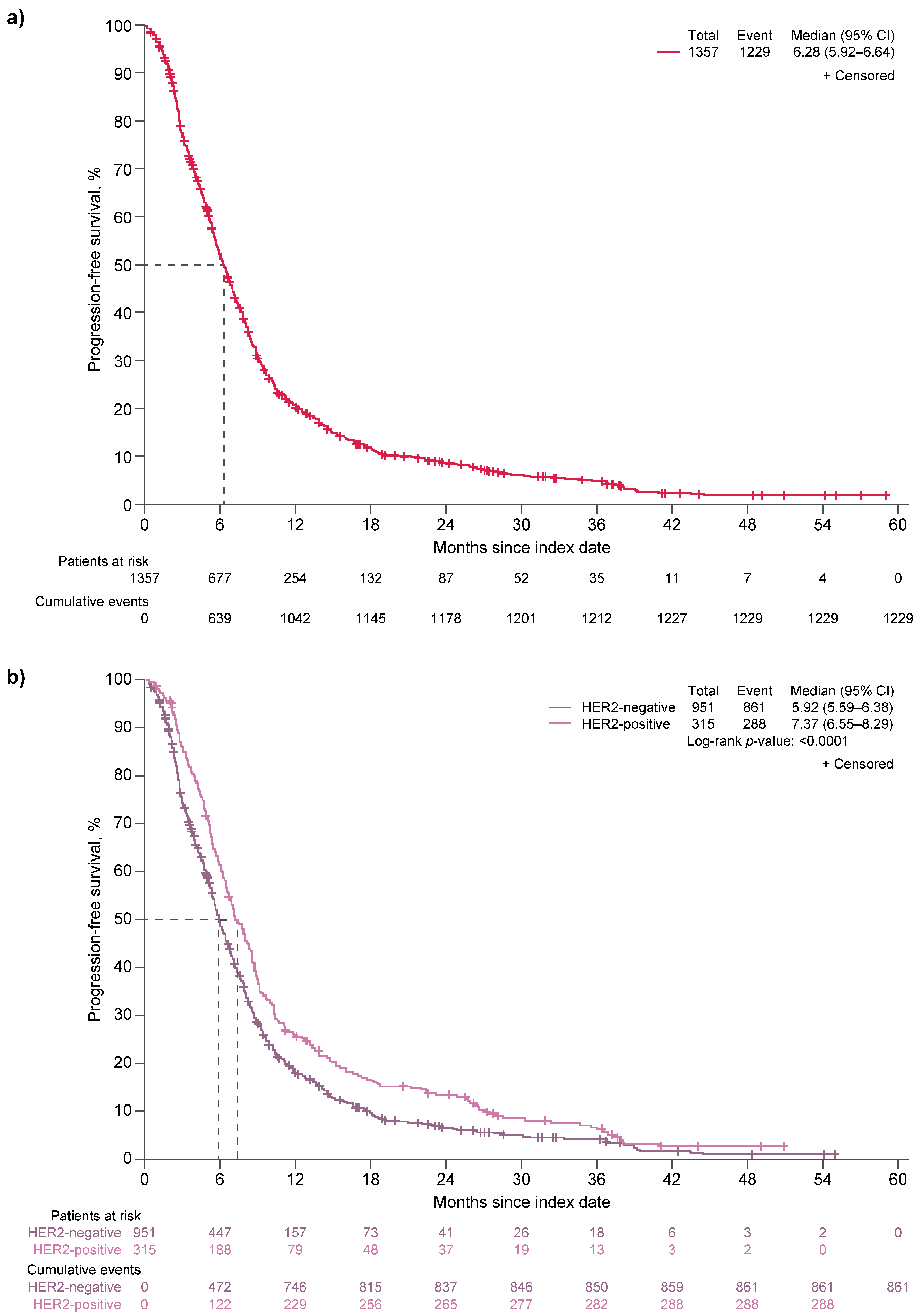
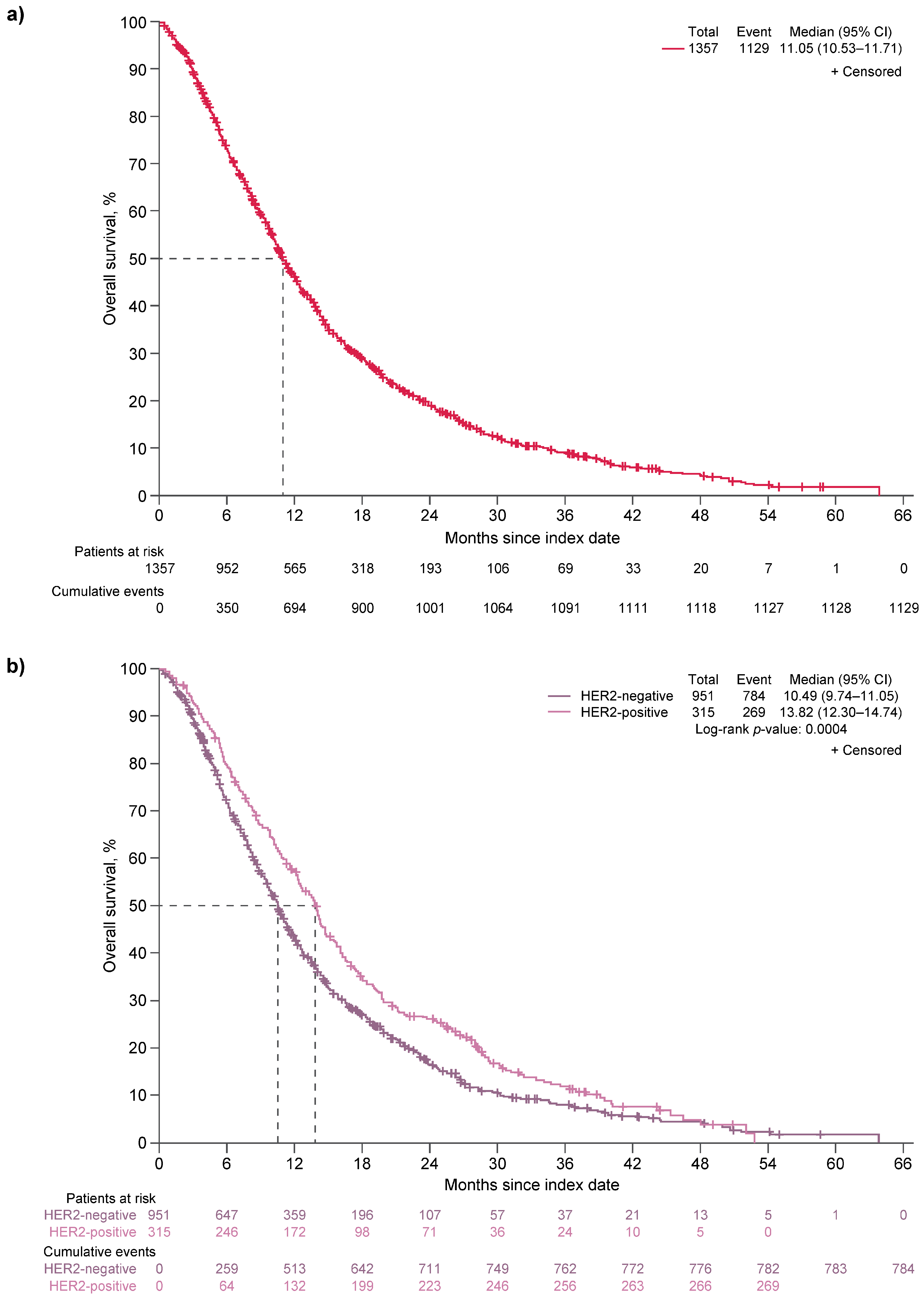
There is an unmet need for targeted therapy for human epidermal growth factor receptor 2–negative (HER2-negative), locally advanced or metastatic gastric/gastroesophageal junction adenocarcinoma (advanced G/GEJa), which is associated with poor survival outcomes. This study aimed to describe the characteristics, treatment, and survival of HER2-negative and HER2-positive patients with advanced G/GEJa in Spain. Among 1357 patients from the Spanish AGAMENON-SEOM registry who initiated first-line polychemotherapy for advanced G/GEJa between 2015 and 2019 (inclusive), 70.1% had HER2-negative disease. Overall, 56.3% of patients with advanced G/GEJa received only one line of therapy, and most (92.7%) HER2-positive patients received targeted therapy (trastuzumab) as part of first-line treatment. HER2-negative patients had significantly shorter progression-free survival (median of 5.92 months vs. 7.37 months) and overall survival (median of 10.49 months vs. 13.82 months) compared with HER2-positive patients. The survival difference underscores the critical need for targeted first-line therapies for HER2-negative patients.
Abstract
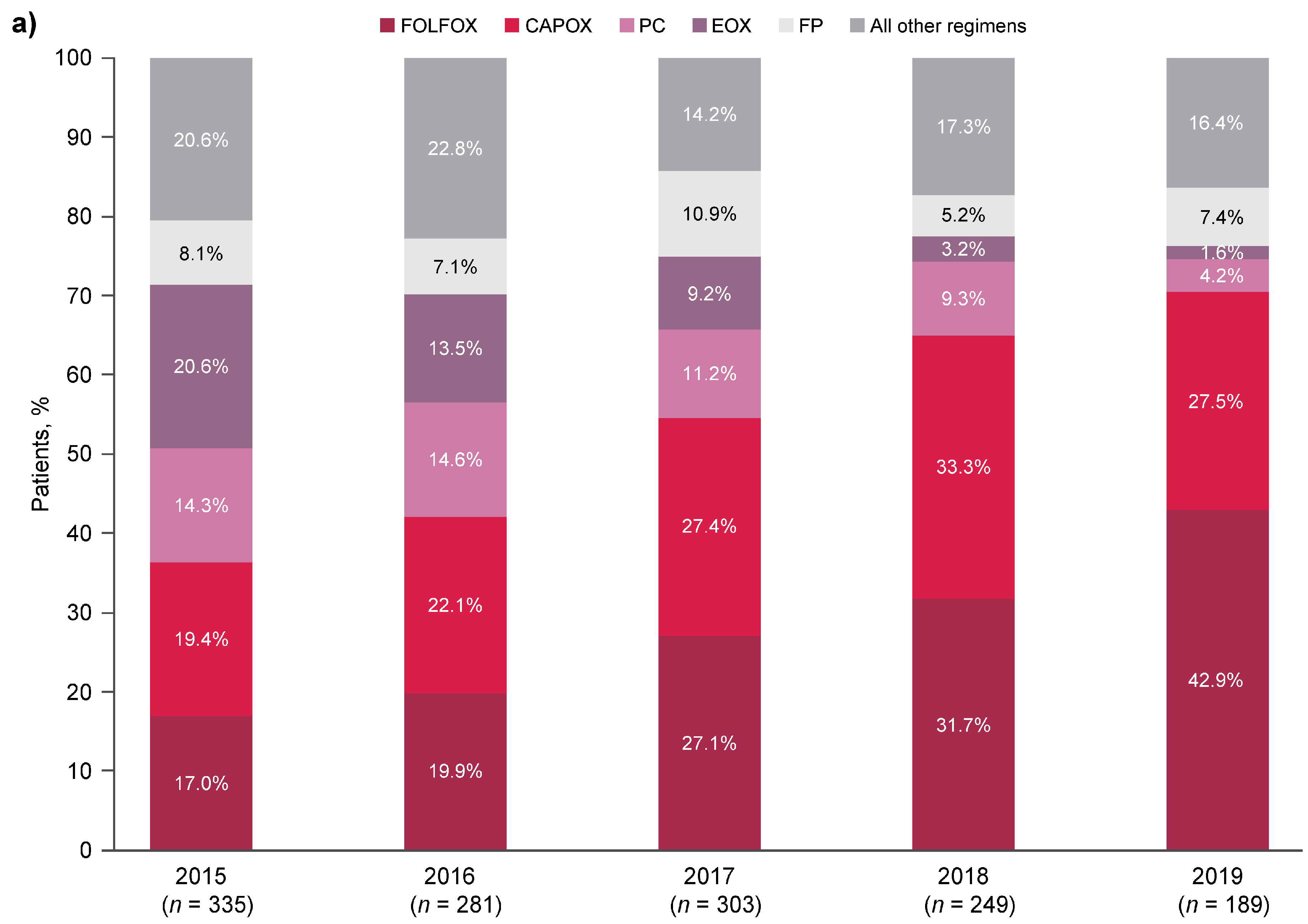
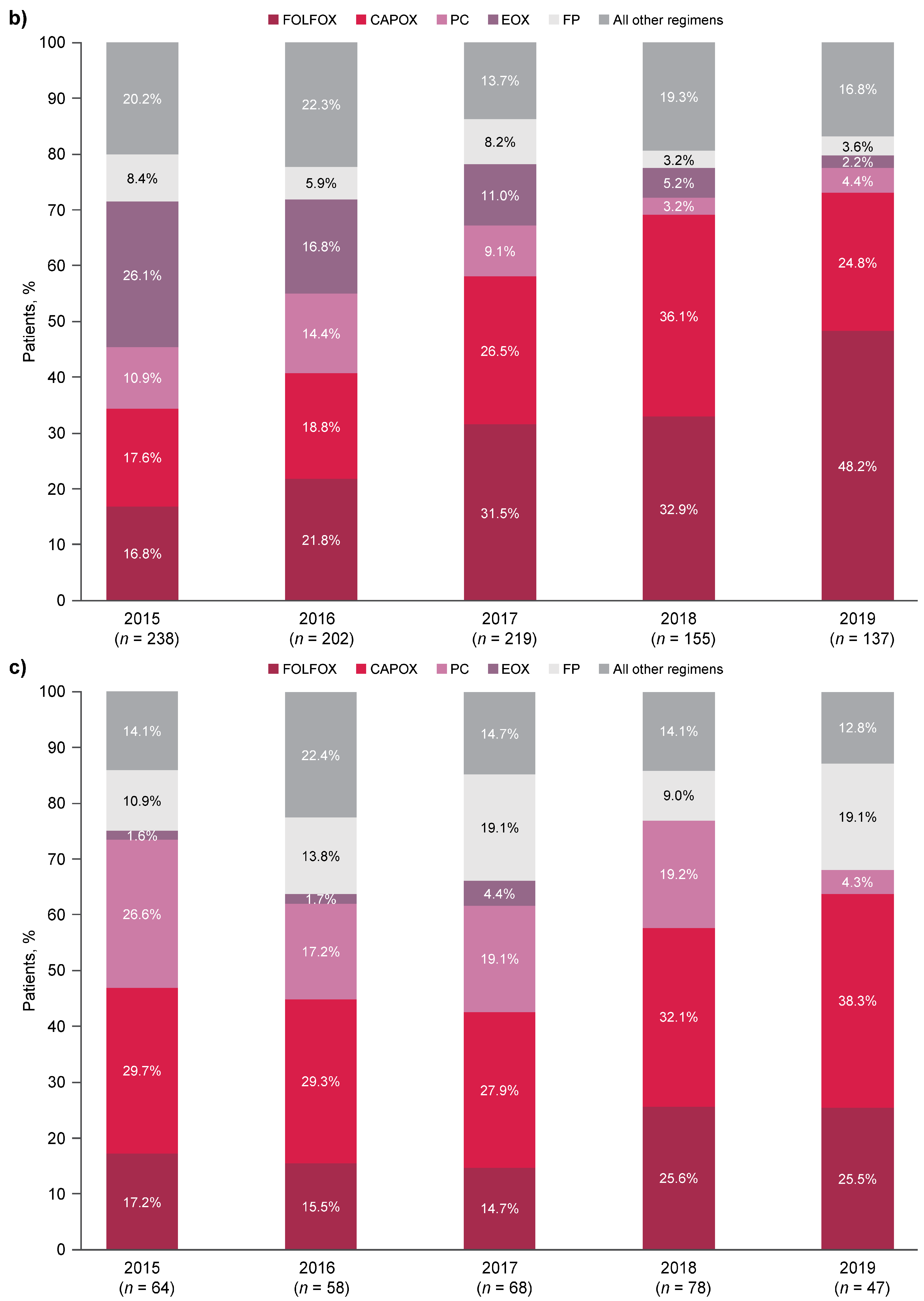
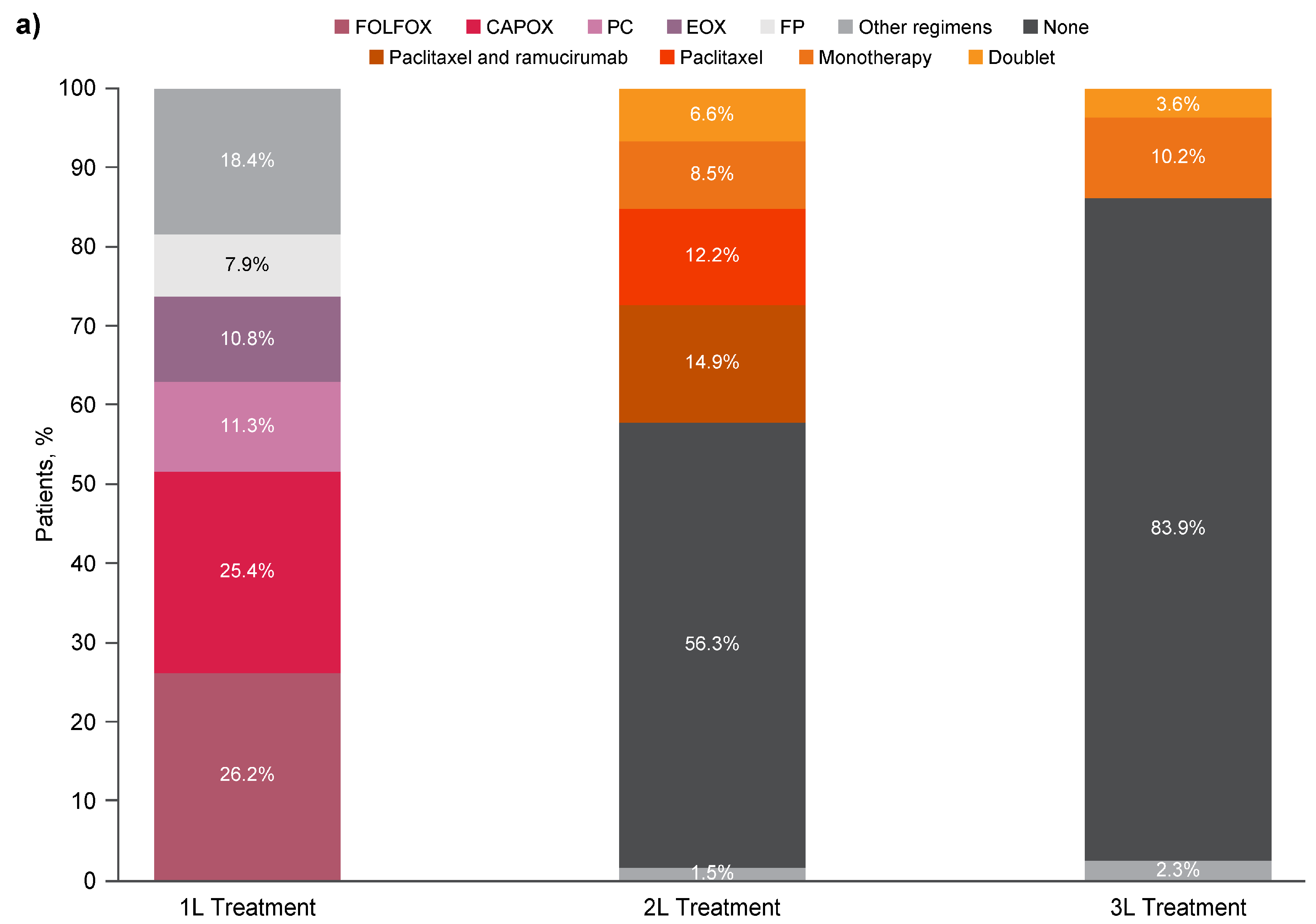
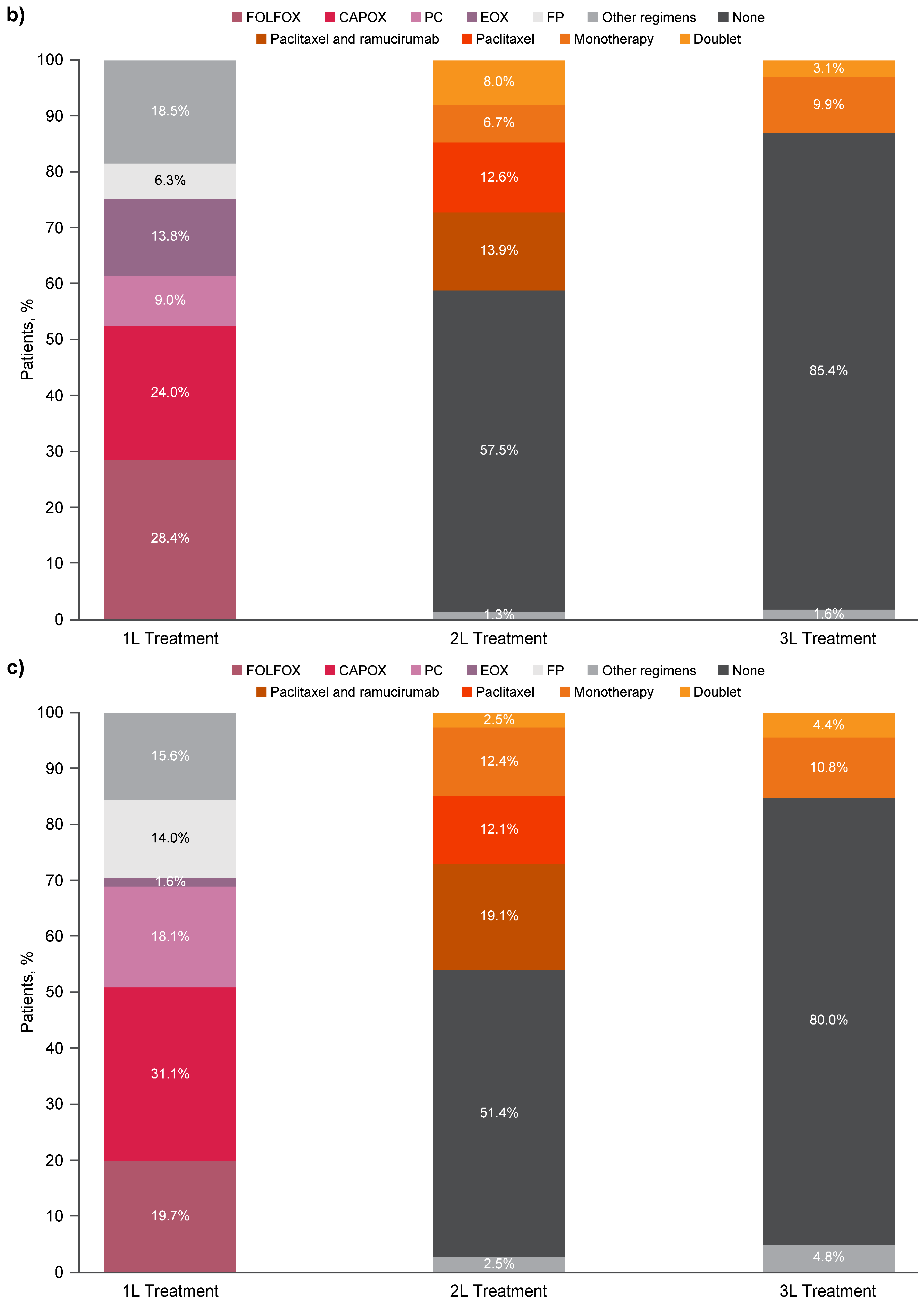
Background/Objectives: Human epidermal growth factor receptor 2–negative (HER2-negative), locally advanced or metastatic gastric/gastroesophageal junction adenocarcinoma (advanced G/GEJa) is associated with poor survival outcomes, and there is an unmet need for targeted therapy. This study, conducted in the pre-immunotherapy era, aimed to describe the characteristics and management, and compare the survival, of HER2-negative and HER2-positive patients initiating first-line (1L) treatment for advanced G/GEJa in Spain and estimate the number of HER2-negative patients eligible for 1L polychemotherapy. Methods: Patients from the AGAMENON-SEOM registry who initiated 1L polychemotherapy for advanced G/GEJa (2015–2019) in Spain were included. Results: In total, 1357 patients were included (951 [70.1%] HER2-negative; 315 [23.2%] HER2-positive; 91 [6.7%] unknown HER2 status). Most patients (56.3%) received one line of therapy; 27.6% received two lines; and 16.1% received three lines. Among HER2-positive patients, 92.7% received trastuzumab as part of 1L treatment. The use of FOLFOX and CAPOX increased over the study period (2015–2019). HER2-negative patients had significantly shorter progression-free survival (median, 5.92 months [95% CI, 5.59–6.38] vs. 7.37 months [95% CI, 6.55–8.29]; log-rank p < 0.0001) and overall survival (median, 10.49 months [95% CI, 9.74–11.05] vs. 13.82 months [95% CI, 12.30–14.74]; adjusted time ratio, 0.812 [95% CI, 0.722–0.913]; p = 0.0005) than HER2-positive patients. Per probabilistic sensitivity analyses, an estimated 2856 (95% CI, 1619–4134) Spanish patients with HER2-negative advanced G/GEJa were eligible for 1L polychemotherapy in 2024. Conclusions: The survival difference between HER2-positive and HER2-negative patients underscores the critical need for targeted therapies for HER2-negative patients in the 1L setting.
Keywords:
adenocarcinoma; gastric neoplasms; gastroesophageal junction; HER2; neoplasms; survival