


AI-Driven Models for Diagnosing and Predicting Outcomes in Lung Cancer: A Systematic Review and Meta-Analysis
by
 , , , , and
Mohammed Kanan
1,* ,
,
Hajar Alharbi
2,
Nawaf Alotaibi
3,
Lubna Almasuood
4,
Shahad Aljoaid
5,
Tuqa Alharbi
6,
Leen Albraik
7,
Wojod Alothman
8,
Hadeel Aljohani
9,
Aghnar Alzahrani
10,
Sadeem Alqahtani
11,
Razan Kalantan
9,
Raghad Althomali
12,
Maram Alameen
12 and
Ahdab Mufti
13 1
Department of Clinical Pharmacy, King Fahad Medical City, Riyadh 12211, Saudi Arabia
2
Department of Medicine, Gdansk Medical University, 80210 Gdansk, Poland
3
Department of Clinical Pharmacy, Northern Border University, Rafha 73213, Saudi Arabia
4
Department of Pharmacy, Qassim University, Buraydah 52571, Saudi Arabia
5
Department of Medicine, University of Tabuk, Tabuk 47911, Saudi Arabia
6
Department of Medicine, Qassim University, Buraydah 52571, Saudi Arabia
7
Department of Medicine, Al-Faisal University, Riyadh 12385, Saudi Arabia
8
Department of Medicine, Imam Abdulrahman Bin Faisal University, Dammam 31411, Saudi Arabia
9
Department of Medicine and Surgery, King Abdulaziz University, Jeddah 22230, Saudi Arabia
10
Department of Medicine, Al-Baha University, Al Bahah 65964, Saudi Arabia
11
Department of Pharmacy, King Khalid University, Abha 62217, Saudi Arabia
12
Department of Medicine, Taif University, Taif 26311, Saudi Arabia
13
Department of Medicine, Ibn Sina National College, Jeddah 22230, Saudi Arabia
*
Author to whom correspondence should be addressed.
Cancers 2024, 16(3), 674; https://doi.org/10.3390/cancers16030674
Submission received: 19 November 2023
/
Revised: 20 January 2024
/
Accepted: 25 January 2024
/
Published: 5 February 2024
(This article belongs to the Special Issue Recent Advances in Trachea, Bronchus and Lung Cancer Management)
Simple Summary
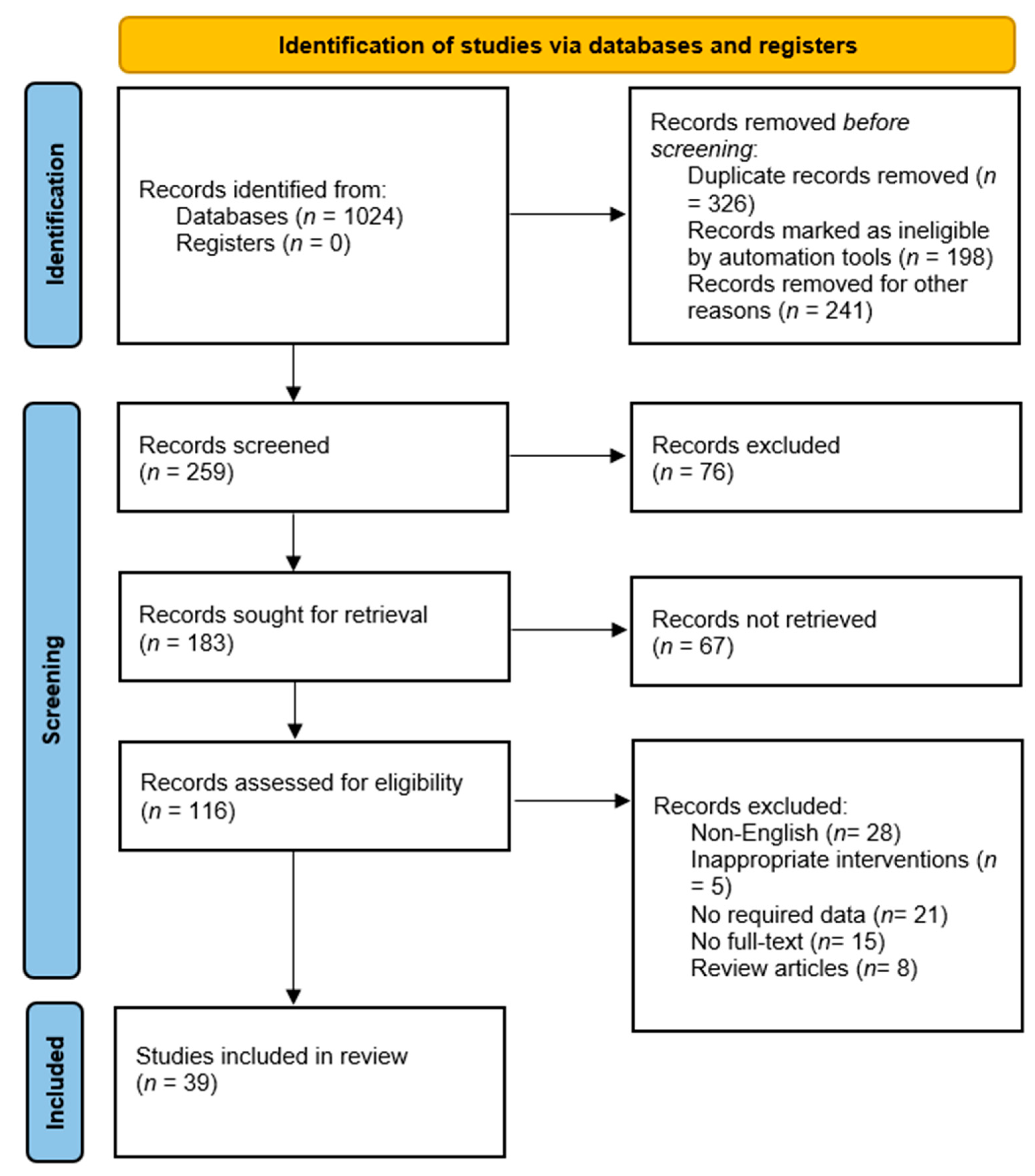
This research explores the transformative potential of artificial intelligence (AI) in the early detection of lung cancer. Through a comprehensive systematic review and meta-analysis, this study evaluates the effectiveness of AI models, emphasizing a promising avenue for improving diagnostic accuracy. Among 1024 identified records, 39 studies were meticulously selected and analyzed following the PRISMA guidelines. The findings highlight significant strides in AI’s role, emphasizing the need for standardized protocols. Despite the observed heterogeneity, this study underscores AI’s promising impact on lung cancer screening, laying the groundwork for future advancements in clinical practice. This research contributes crucial insights for healthcare professionals and researchers alike, aiming to enhance the early diagnosis and management of lung cancer.
Abstract
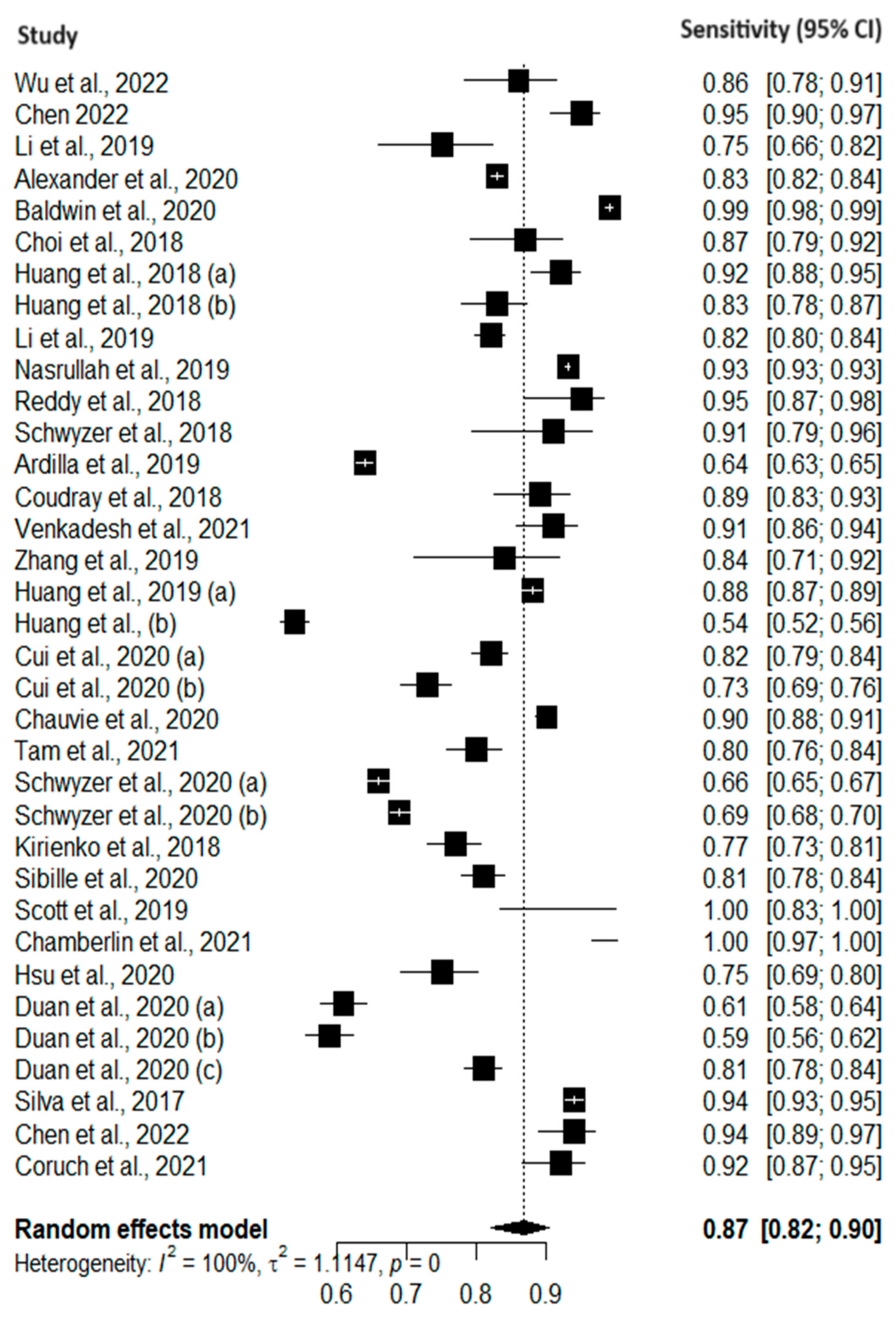
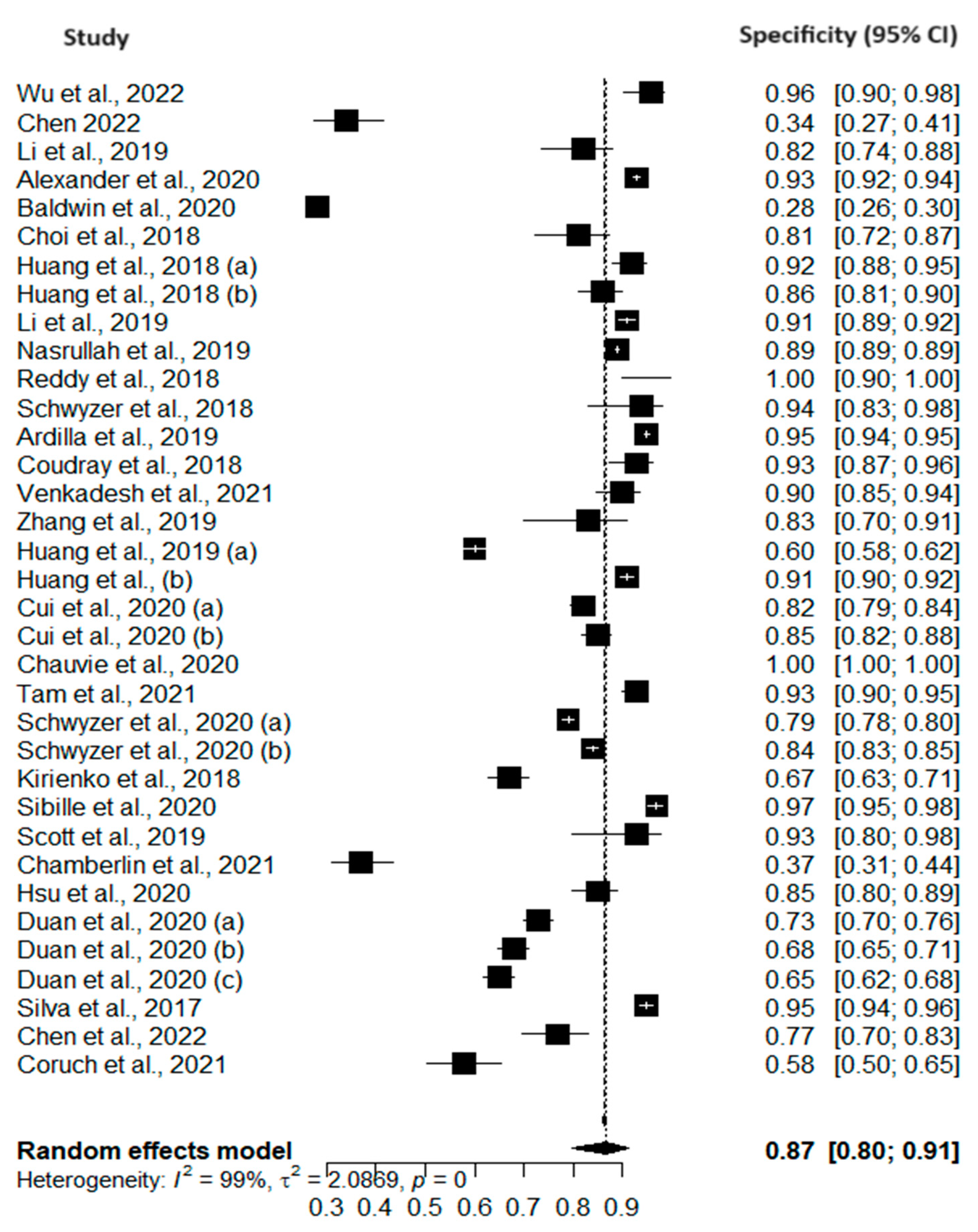
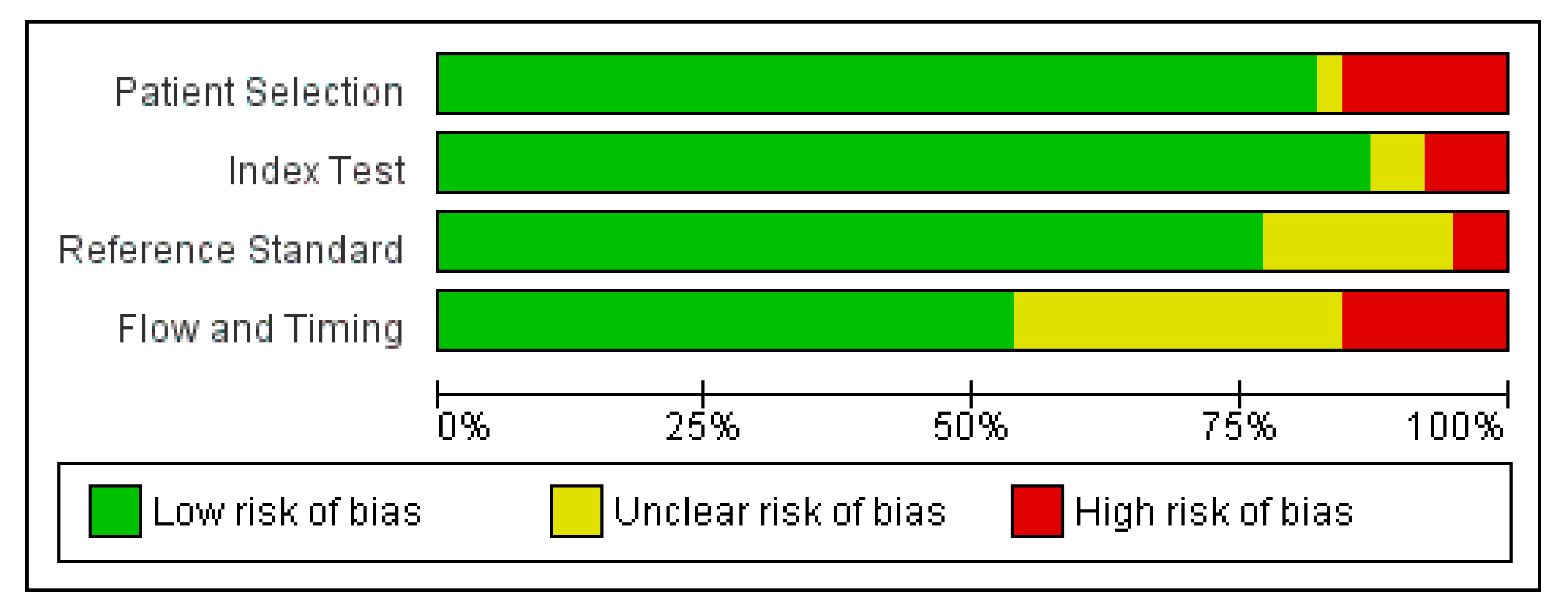
(1) Background: Lung cancer’s high mortality due to late diagnosis highlights a need for early detection strategies. Artificial intelligence (AI) in healthcare, particularly for lung cancer, offers promise by analyzing medical data for early identification and personalized treatment. This systematic review evaluates AI’s performance in early lung cancer detection, analyzing its techniques, strengths, limitations, and comparative edge over traditional methods. (2) Methods: This systematic review and meta-analysis followed the PRISMA guidelines rigorously, outlining a comprehensive protocol and employing tailored search strategies across diverse databases. Two reviewers independently screened studies based on predefined criteria, ensuring the selection of high-quality data relevant to AI’s role in lung cancer detection. The extraction of key study details and performance metrics, followed by quality assessment, facilitated a robust analysis using R software (Version 4.3.0). The process, depicted via a PRISMA flow diagram, allowed for the meticulous evaluation and synthesis of the findings in this review. (3) Results: From 1024 records, 39 studies met the inclusion criteria, showcasing diverse AI model applications for lung cancer detection, emphasizing varying strengths among the studies. These findings underscore AI’s potential for early lung cancer diagnosis but highlight the need for standardization amidst study variations. The results demonstrate promising pooled sensitivity and specificity of 0.87, signifying AI’s accuracy in identifying true positives and negatives, despite the observed heterogeneity attributed to diverse study parameters. (4) Conclusions: AI demonstrates promise in early lung cancer detection, showing high accuracy levels in this systematic review. However, study variations underline the need for standardized protocols to fully leverage AI’s potential in revolutionizing early diagnosis, ultimately benefiting patients and healthcare professionals. As the field progresses, validated AI models from large-scale perspective studies will greatly benefit clinical practice and patient care in the future.
Keywords:
AI-driven models; diagnosing; predicting; outcomes; lung cancer; systematic review; meta-analysis