The Synergy of Thermal and Non-Thermal Effects in Hyperthermic Oncology



1
Department of Radiation Sciences, University of the Witwatersrand, Johannesburg 2000, South Africa
2
John von Neumann Faculty of Informatics, Óbuda University, 1034 Budapest, Hungary
3
MedTech Innovation and Education Center, University Research and Innovation Center, Óbuda University, 1034 Budapest, Hungary
4
Department of Biotechnics, Hungarian University of Agriculture and Life Sciences, 2100 Gödöllő, Hungary
*
Author to whom correspondence should be addressed.
Cancers 2024, 16(23), 3908; https://doi.org/10.3390/cancers16233908
Submission received: 25 October 2024
/
Revised: 15 November 2024
/
Accepted: 18 November 2024
/
Published: 21 November 2024
(This article belongs to the Section Methods and Technologies Development)
Simple Summary
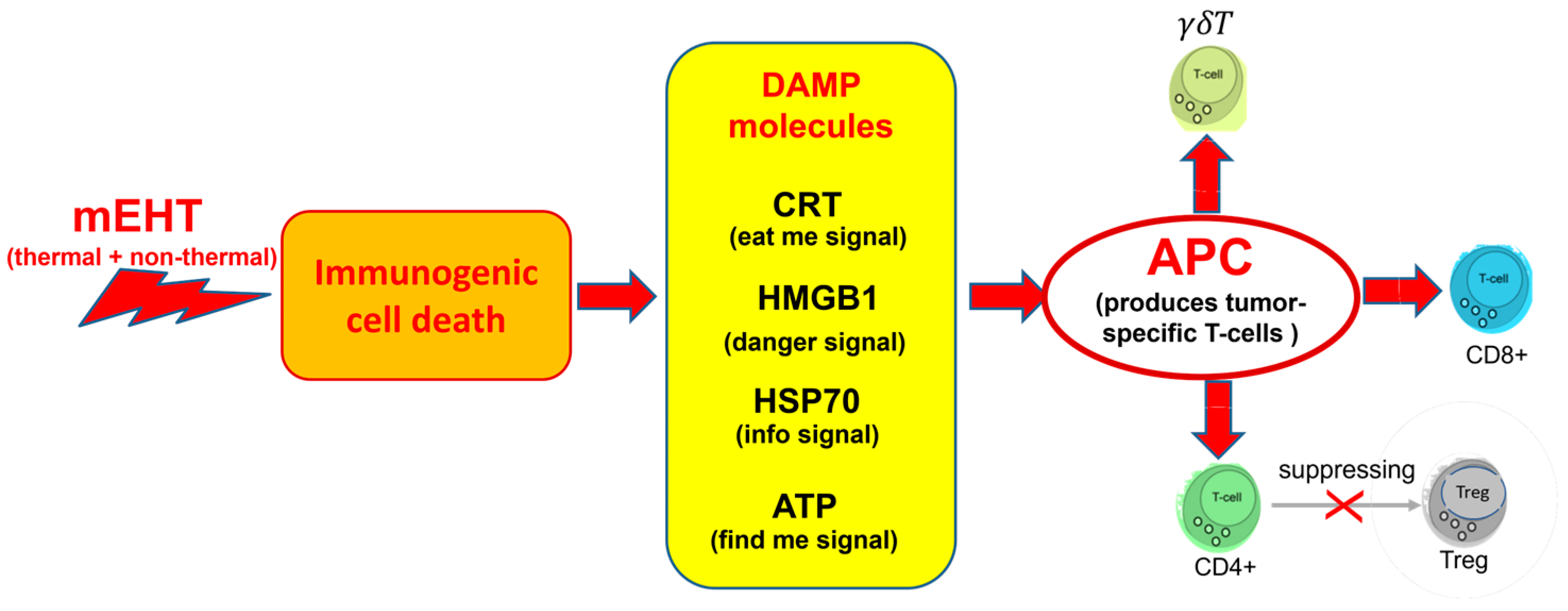
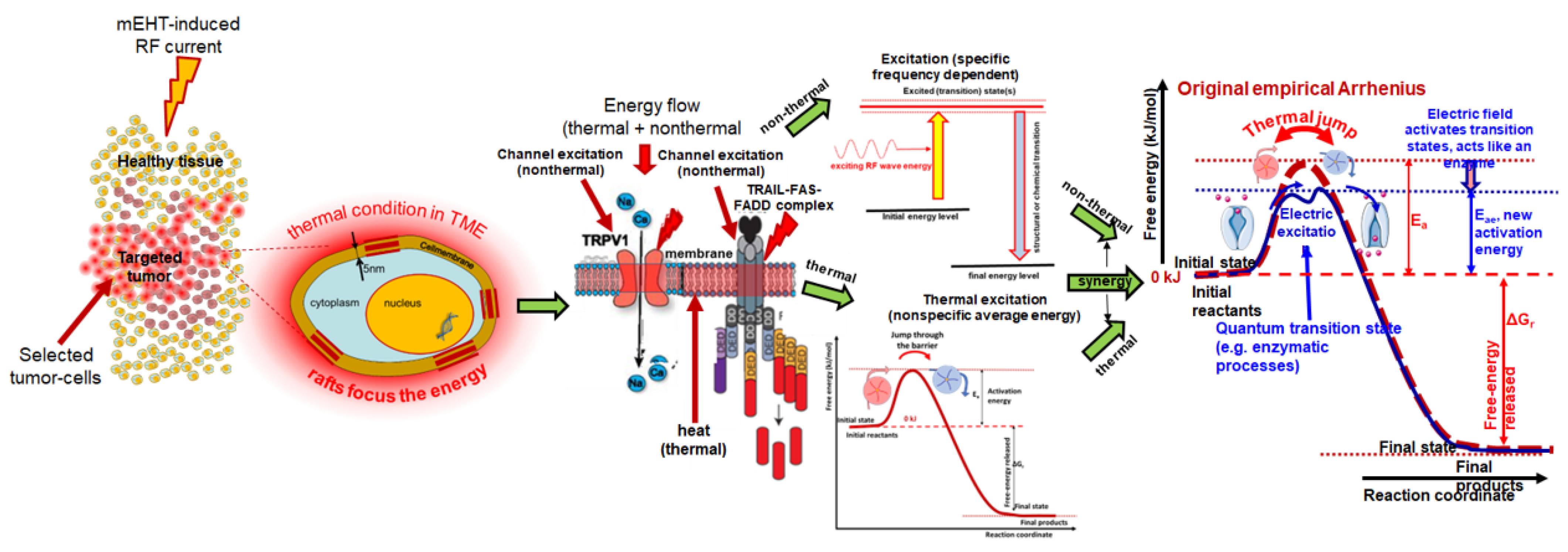
Modulated electro-hyperthermia combines the thermal and non-thermal effects of an applied electromagnetic field. This synergy allows for the selection of malignant cells with a minimal load on healthy cells. The modulated radiofrequency induces immunogenic effects, which promote the targeting of malignant cells in the system by activating the circulating tumour-specific killer cells, thereby acting as a vaccination against the tumour.
Abstract
Background: Modulated electro-hyperthermia (mEHT) is unique due to its combination of thermal and non-thermal effects. Method: This report summarizes the literature on the effects of mEHT observed in vitro and in vivo. Results: The thermal and electrical heterogeneity of tissues allows the radiofrequency signal to selectively target malignant tissue. The applied modulation appears to activate various apoptotic pathways, predominantly leading to immunogenic cell death (ICD). ICD promotes the release of damage-associated molecular patterns, potentially producing tumour-specific antigen-presenting cells. This abscopal-type effect may target distant metastases while treating the primary tumour locally. This immune memory effect is like vaccination mechanisms. Conclusions: The application of mEHT has the potential to expand from local to systemic disease, enabling the simultaneous treatment of micro- and macro-metastases.