Impact of T Cell Ratios on Survival in Pleural Mesothelioma: Insights from Tumor Microenvironment Analysis
by
 , , , , ,
Laura V. Klotz
1,2,*, 
Andreas Weigert
3 ,
,
Florian Eichhorn
1,2,
Michael Allgäuer
2,4,
Thomas Muley
2,5,
Rajiv Shah
2,6,
Rajkumar Savai
2,7 ,
,
Martin E. Eichhorn
1,2 and
Hauke Winter
1,2 1
Department of Thoracic Surgery, Thoraxklinik, University Hospital Heidelberg, Röntgenstraße 1, 69126 Heidelberg, Germany
2
Translational Lung Research Center Heidelberg (TLRC), German Center for Lung Research (DZL), Im Neuenheimer Feld 156, 69120 Heidelberg, Germany
3
Institute of Biochemistry I, Faculty of Medicine, Goethe-University Frankfurt, Theodor-Stern-Kai 7, 60590 Frankfurt, Germany
4
Institute of Pathology, University Hospital Heidelberg, Im Neuenheimer Feld 224, 69120 Heidelberg, Germany
5
Translational Research Unit, Thoraxklinik, University Hospital Heidelberg, Röntgenstraße 1, 69126 Heidelberg, Germany
6
Department of Thoracic Oncology, Thoraxklinik, Heidelberg University Hospital, Röntgenstraße 1, 69126 Heidelberg, Germany
7
Lung Microenvironmental Niche in Cancerogenesis, Institute for Lung Health, Justus Liebig University, 35392 Giessen, Germany
*
Author to whom correspondence should be addressed.
Cancers 2024, 16(19), 3418; https://doi.org/10.3390/cancers16193418
Submission received: 16 September 2024
/
Revised: 2 October 2024
/
Accepted: 6 October 2024
/
Published: 8 October 2024
(This article belongs to the Special Issue Research on Clinical Treatment of Mesothelioma)
Simple Summary
Although immunotherapy is well established for treating pleural mesothelioma, it has not shown a breakthrough in improving the overall survival of these patients. A detailed study of the tumor microenvironment could lead to a better understanding of the factors that influence tumor growth to optimize treatment. In our cohort, T cell infiltrate differences were strongly associated with overall survival.
Abstract
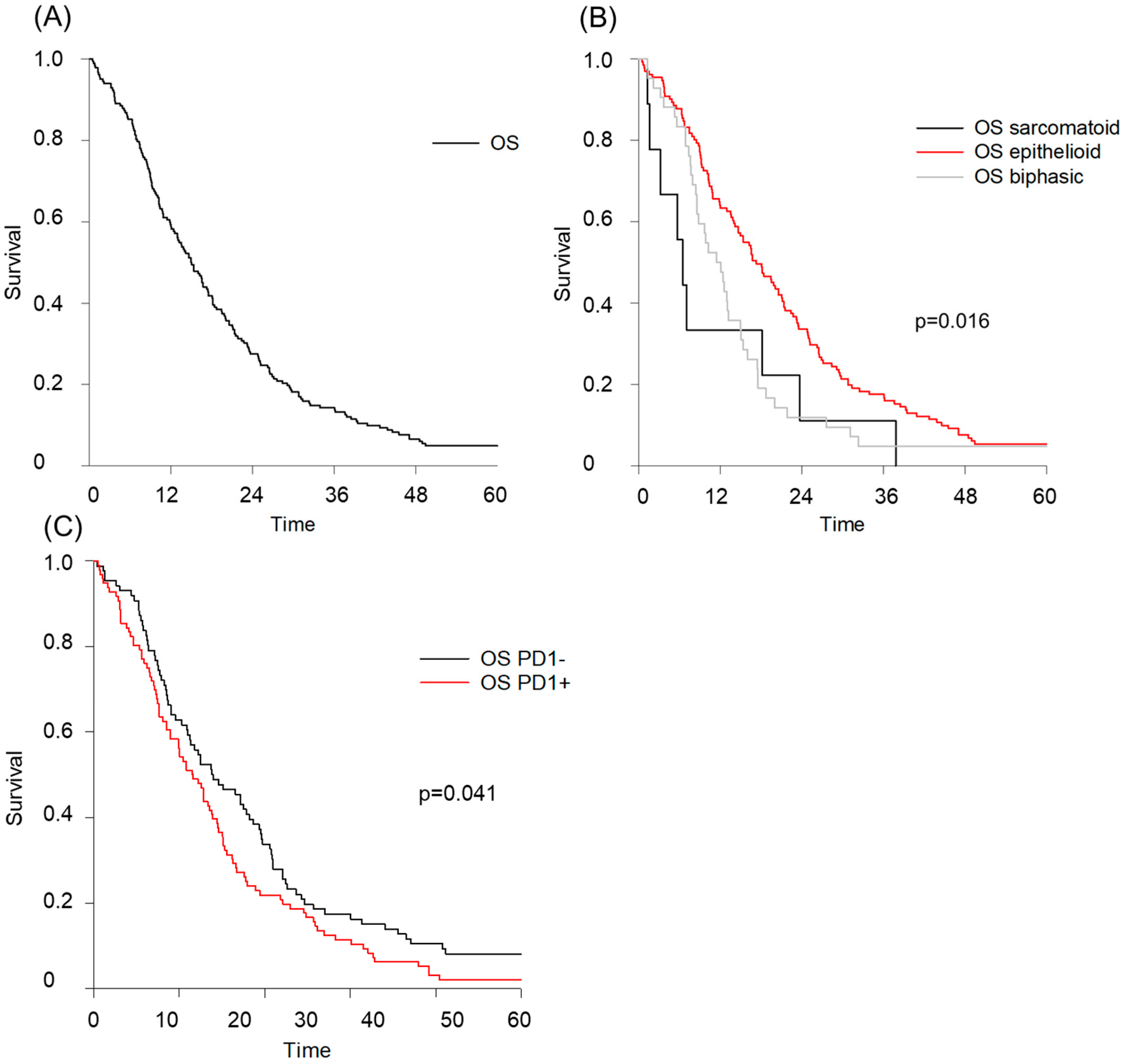
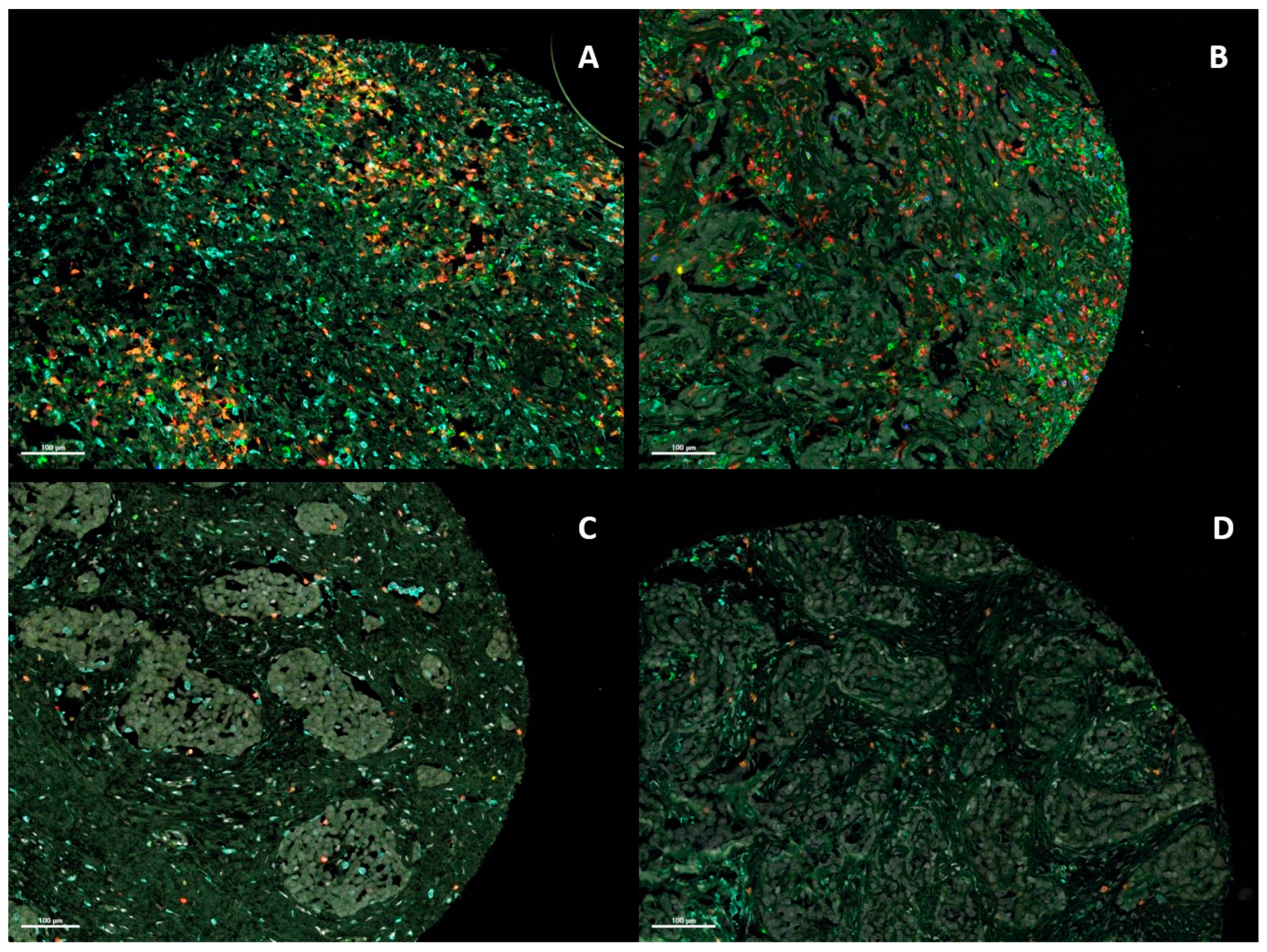
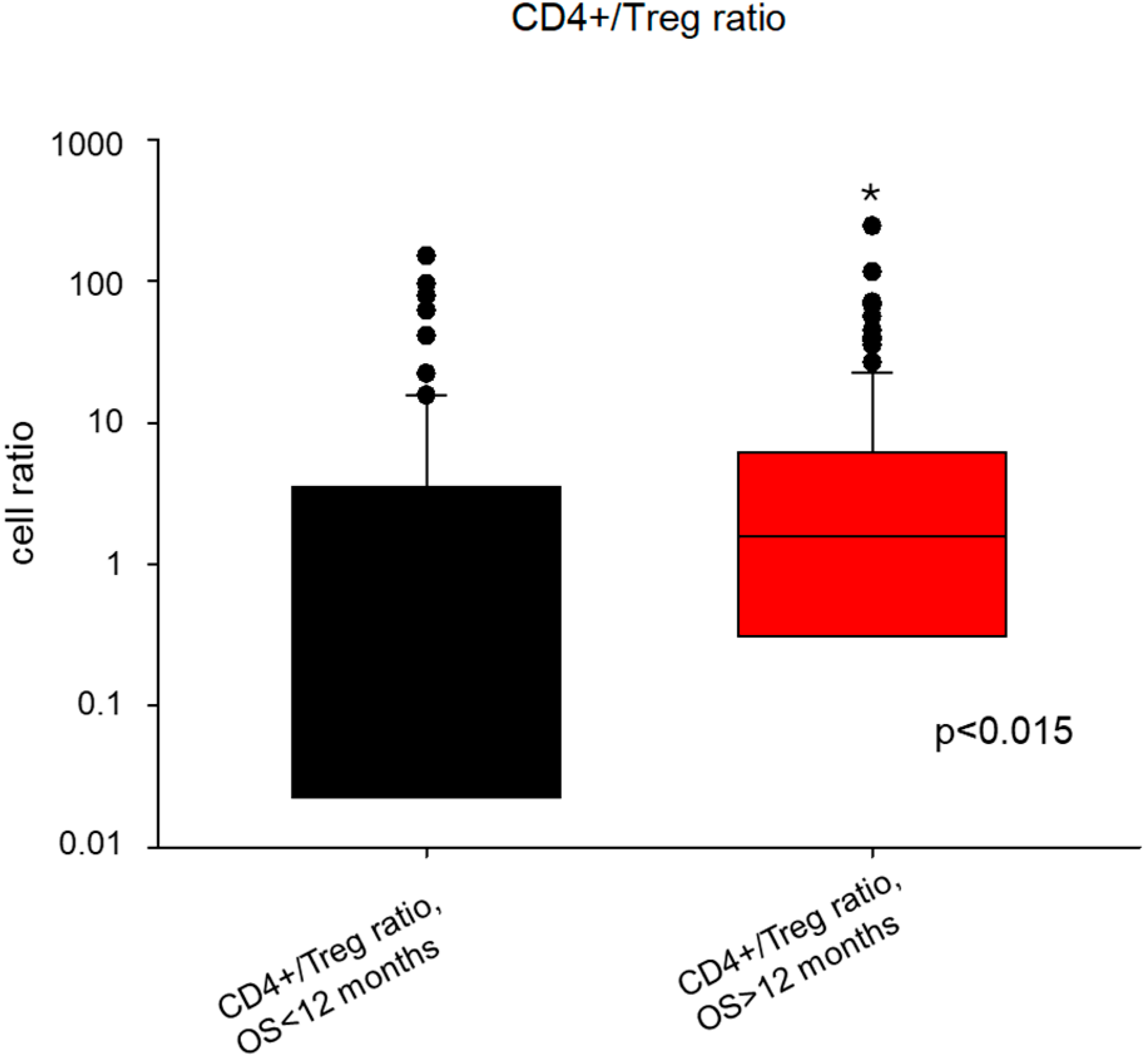
Background: Immunotherapy has significantly improved overall survival in patients with pleural mesothelioma, yet this benefit does not extend to those with the epithelioid subtype. Tumor growth is believed to be influenced by the immune response. This study aimed to analyze the tumor microenvironment to gain a better understanding of its influence on tumor growth. Methods: The tumor immune cell infiltration of 188 patients with pleural mesothelioma was characterized by multiplex immunofluorescence staining for CD3+ cells (CD3+), CD4+ cells (CD3+/CD4+), CD8+ cells (CD3+/CD8+), Treg (CD3+/CD4+/CD8-/CD163-/Foxp3+), PD1 cells (PD1+), and T helper cells (CD3+/CD4+/CD8-/CD163-/FoxP3-). The distribution of specific immune cells was correlated with clinical parameters. Results: A total of 188 patients with pleural mesothelioma (135 epithelioid, 9 sarcomatoid, 44 biphasic subtypes) were analyzed. The median age was 64.8 years. Overall survival was significantly longer in the epithelioid subtype than in the non-epithelioid subtype (p = 0.016). The presence of PD-L1 expression had a negative effect on overall survival (p = 0.041). A high ratio of CD4+ cells to regulatory T cells was associated with a significantly longer overall survival of more than 12 months (p = 0.015). The ratio of CD4+ cells to regulatory T cells retained its significant effect on overall survival in the multivariate analysis. Conclusions: Distinct differences in the T cell immune infiltrates in mesothelioma are strongly associated with overall survival. The tumor microenvironment could therefore serve as a source of prognostic biomarkers.