MTAP and p16 IHC as Markers for CDKN2A/B Loss in Meningiomas
by
 , , , , and
Hanim I. Ozkizilkaya
1, 
Anjali Vinocha
1,
Antonio Dono
2,
Oluwaseun Basit Ogunbona
1,
Gokce A. Toruner
1 ,
,
Phyu P. Aung
1 ,
,
Carlos Kamiya Matsuoka
3,
Yoshua Esquenazi
2,4,5,
Franco DeMonte
6 and
Leomar Y. Ballester
1,* 1
Division of Pathology and Laboratory Medicine, The University of Texas MD Anderson Cancer Center, Houston, TX 77030, USA
2
Vivian L. Smith Department of Neurosurgery, The University of Texas, Health Science Center at Houston, Houston, TX 77030, USA
3
Department of Neuro-Oncology, The University of Texas MD Anderson Cancer Center, Houston, TX 77030, USA
4
Center for Precision Health, School of Biomedical Informatics, The University of Texas Health Science Center at Houston, Houston, TX 77030, USA
5
Memorial Hermann Hospital-TMC, Houston, TX 77030, USA
6
Department of Neurosurgery, The University of Texas MD Anderson Cancer Center, Houston, TX 77030, USA
*
Author to whom correspondence should be addressed.
Cancers 2024, 16(19), 3299; https://doi.org/10.3390/cancers16193299
Submission received: 23 August 2024
/
Revised: 19 September 2024
/
Accepted: 22 September 2024
/
Published: 27 September 2024
(This article belongs to the Special Issue Cancer Biomarkers: Recent Progress, Innovations and Future Clinical Implications)
Simple Summary
Cyclin-dependent kinase inhibitor 2A/B (CDKN2A/B) loss is a key factor in diagnosing meningiomas as Central Nervous System (CNS) WHO grade 3 tumors. Typically, detecting this gene loss involves costly and complex techniques like sequencing or FISH. However, the MTAP gene, which is located near CDKN2A/B on the same chromosome, may provide a more accessible way to detect these losses through a simpler, more affordable test called immunohistochemistry (IHC). This study explored different concentrations and antibodies for MTAP and p16 across two institutions to evaluate their potential as surrogate markers for CDKN2A/B loss. The results showed that p16 expression varied and did not align with either MTAP expression or CDKN2A FISH results. This study suggests that IHC for MTAP is a promising, cost-effective method for identifying high-grade meningiomas, offering a quicker and less expensive alternative to existing techniques.
Abstract
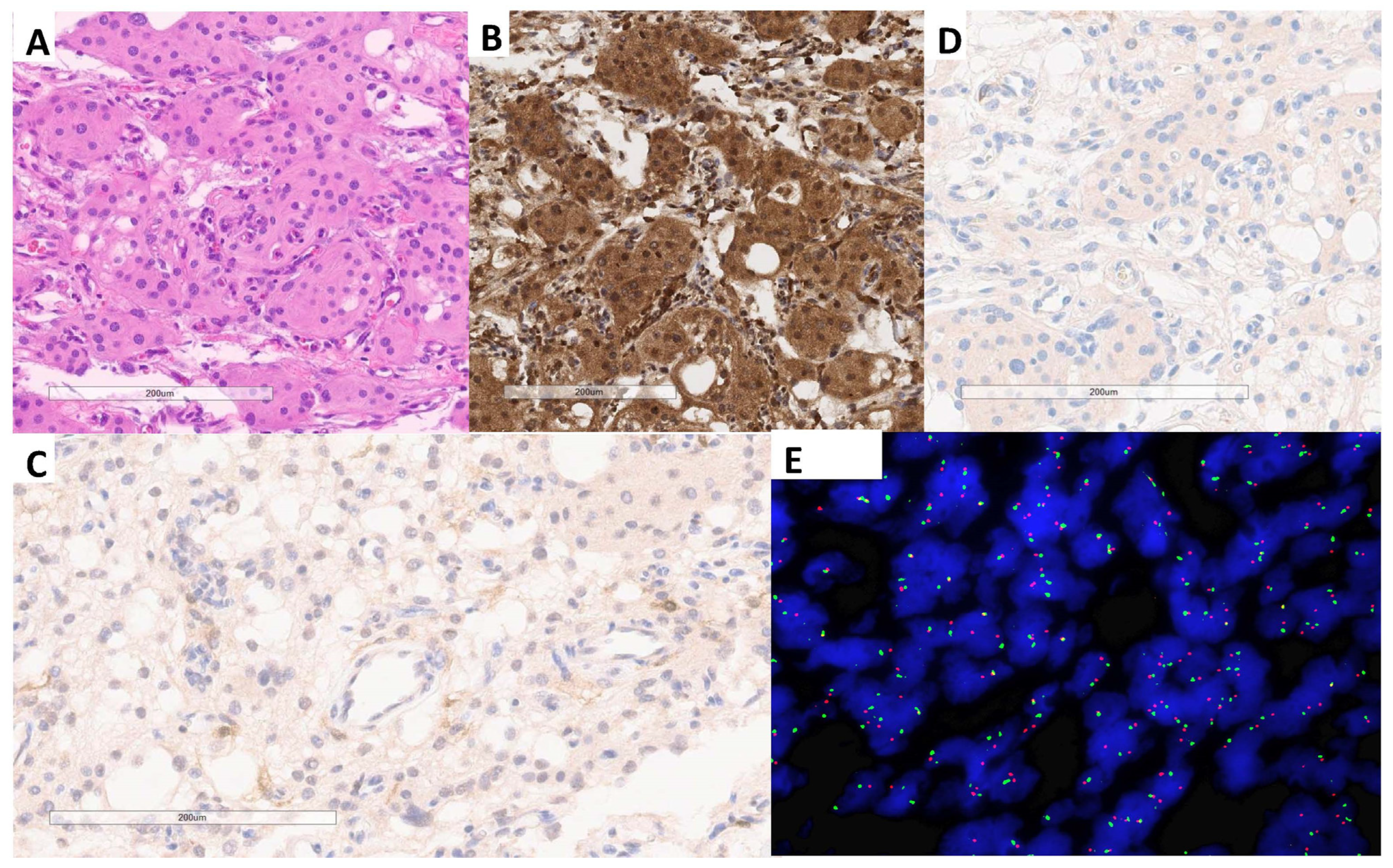
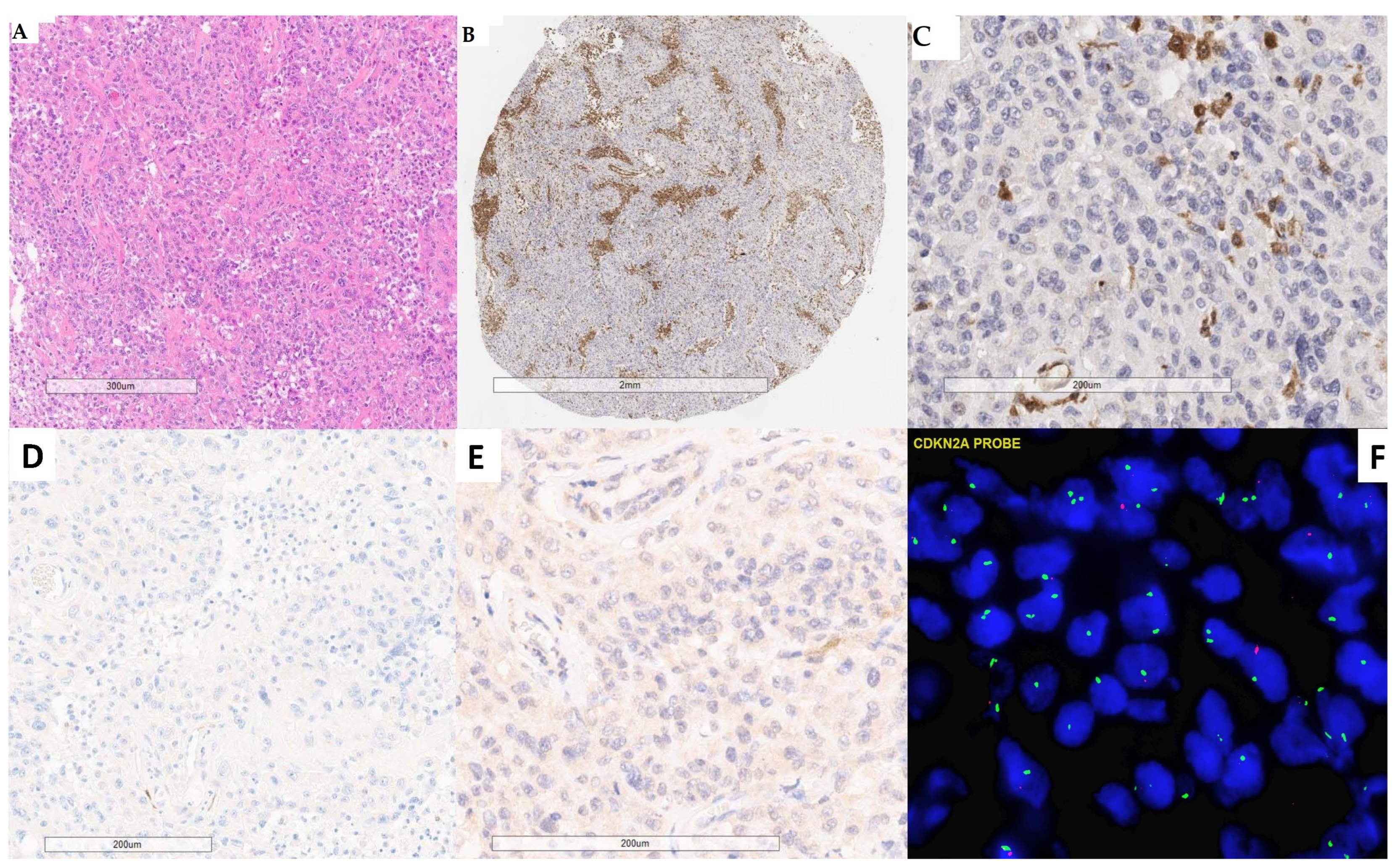
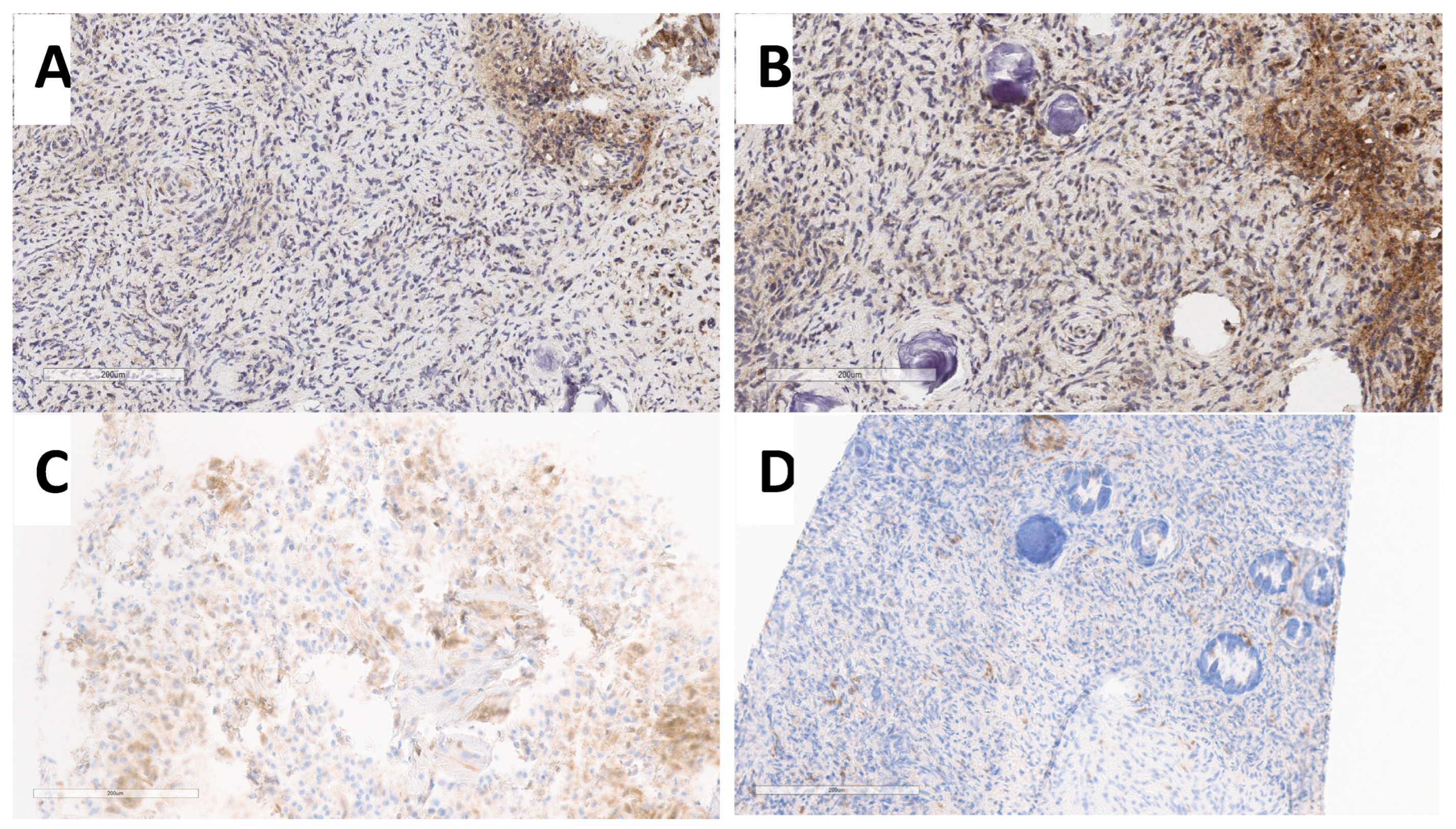
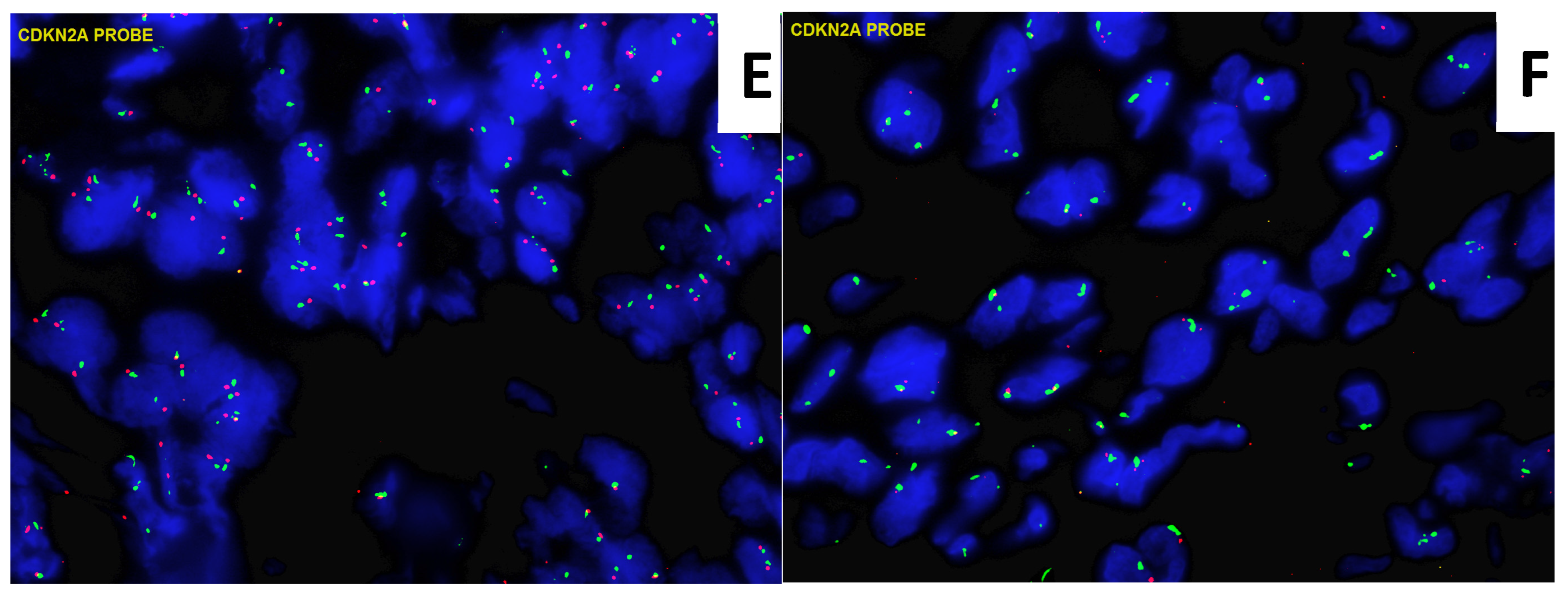
Background: Homozygous cyclin-dependent kinase inhibitor 2A/B (CDKN2A/B) loss is one of the parameters that support the designation of meningiomas as Central Nervous System (CNS) WHO grade 3 tumors. Evaluation of CDKN2A/B by sequencing or Fluorescence in situ hybridization (FISH) is costly and not always readily accessible. An immunohistochemistry (IHC)-based marker for the evaluation of CDKN2A/B loss would provide faster results at a lower cost. Methods: This retrospective study included patients diagnosed with meningioma at our institution between 2016 and 2019. Archival tumor tissue was used for analysis. MTAP immunohistochemistry (IHC) was performed at various dilutions (1:1200, 1:400, 1:200, 1:100) using two different antibodies, and p16 IHC was conducted simultaneously. These analyses were carried out at two different institutions. To determine the sensitivity and specificity of MTAP and p16 as surrogate markers for CDKN2A/B loss, CDKN2A FISH was utilized as the gold standard. Results: Overall, 46/49 tumors showed strong MTAP staining (94%) at institution 1, and 44/49 (90%) showed either faint positive or positive results at institution 2. One grade 3 meningioma that demonstrated homozygous CDKN2A loss by FISH also showed loss of MTAP expression by IHC. One grade 2 meningioma showed regional CDKN2A loss by FISH and variable MTAP expression under different IHC conditions. MTAP expression evaluation was superior at a dilution of 1:100 with the Abnova Anti-MTAP Monoclonal antibody. Conclusions: P16 expression was variable and did not correlate with either MTAP expression or CDKN2A FISH results. MTAP IHC is a promising surrogate marker for the evaluation of CDKN2A status in meningiomas.