

The Engineered Drug 3′UTRMYC1-18 Degrades the c-MYC-STAT5A/B-PD-L1 Complex In Vivo to Inhibit Metastatic Triple-Negative Breast Cancer
by
 , , and
Chidiebere U. Awah
1,2,*,
Joo Sun Mun
3,
Aloka Paragodaarachchi
3,4,
Baris Boylu
1,
Chika Ochu
1,
Hiroshi Matsui
3,5,6 and
Olorunseun O. Ogunwobi
1,2,7
1
Department of Biological Sciences, Hunter College, City University of New York, New York, NY 10065, USA
2
Joan and Sanford I. Weill Department of Medicine, Weill Cornell Medicine, Cornell University, New York, NY 14850, USA
3
Department of Chemistry, Hunter College, City University of New York, New York, NY 10065, USA
4
Ph.D. Program in Chemistry, The Graduate Center, City University of New York, New York, NY 10016, USA
5
Ph.D. Program in Biochemistry, The Graduate Center, City University of New York, New York, NY 10016, USA
6
Department of Biochemistry, Weill Cornell Medicine, Cornell University, New York, NY 14850, USA
7
Hunter College for Cancer Health Disparities Research, Hunter College, City University of New York, New York, NY 10065, USA
*
Author to whom correspondence should be addressed.
Cancers 2024, 16(15), 2663; https://doi.org/10.3390/cancers16152663
Submission received: 14 June 2024
/
Revised: 21 July 2024
/
Accepted: 23 July 2024
/
Published: 26 July 2024
(This article belongs to the Special Issue Triple Negative Breast Cancer Therapy Resistance and Metastasis)
Simple Summary
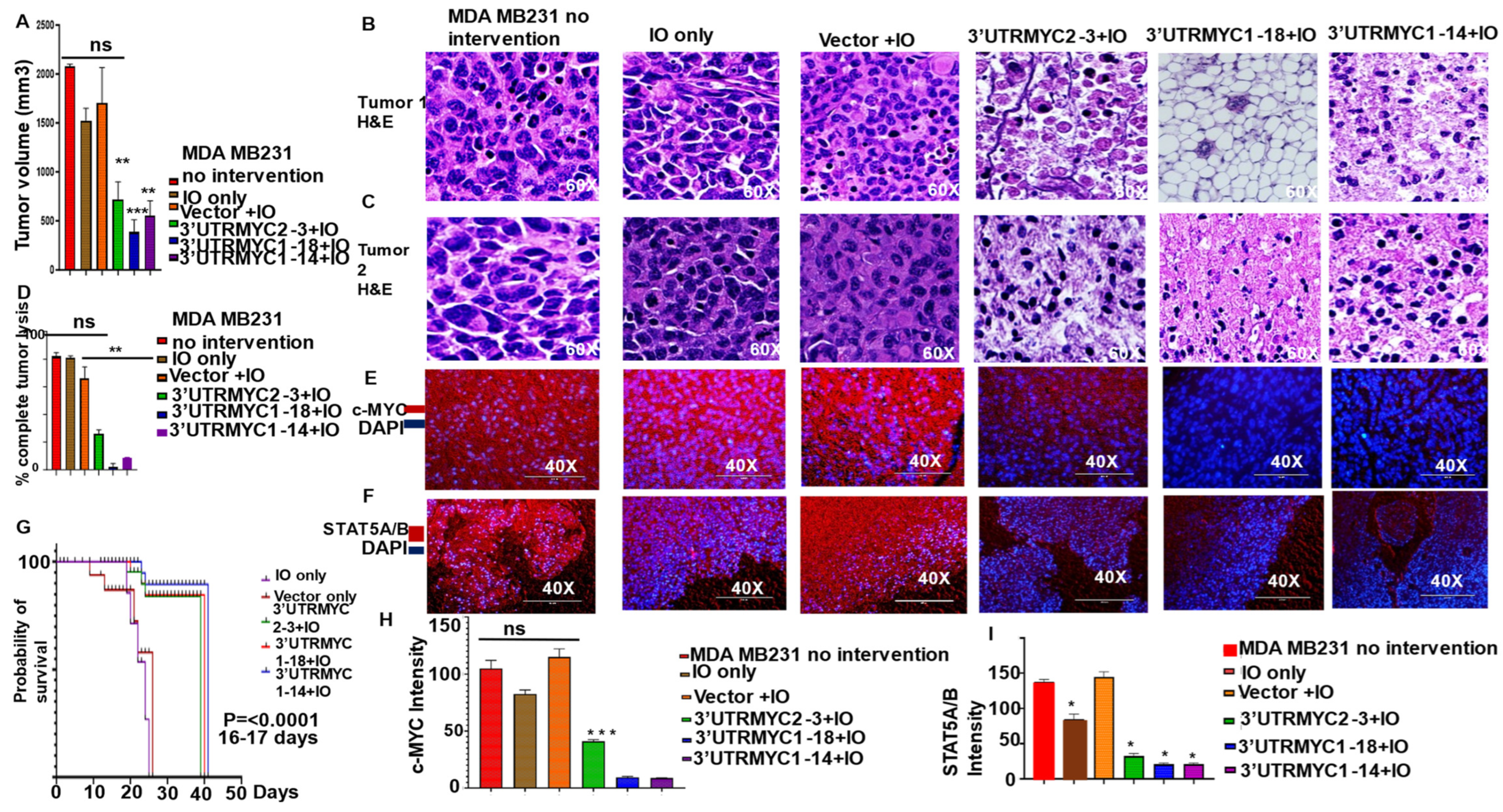
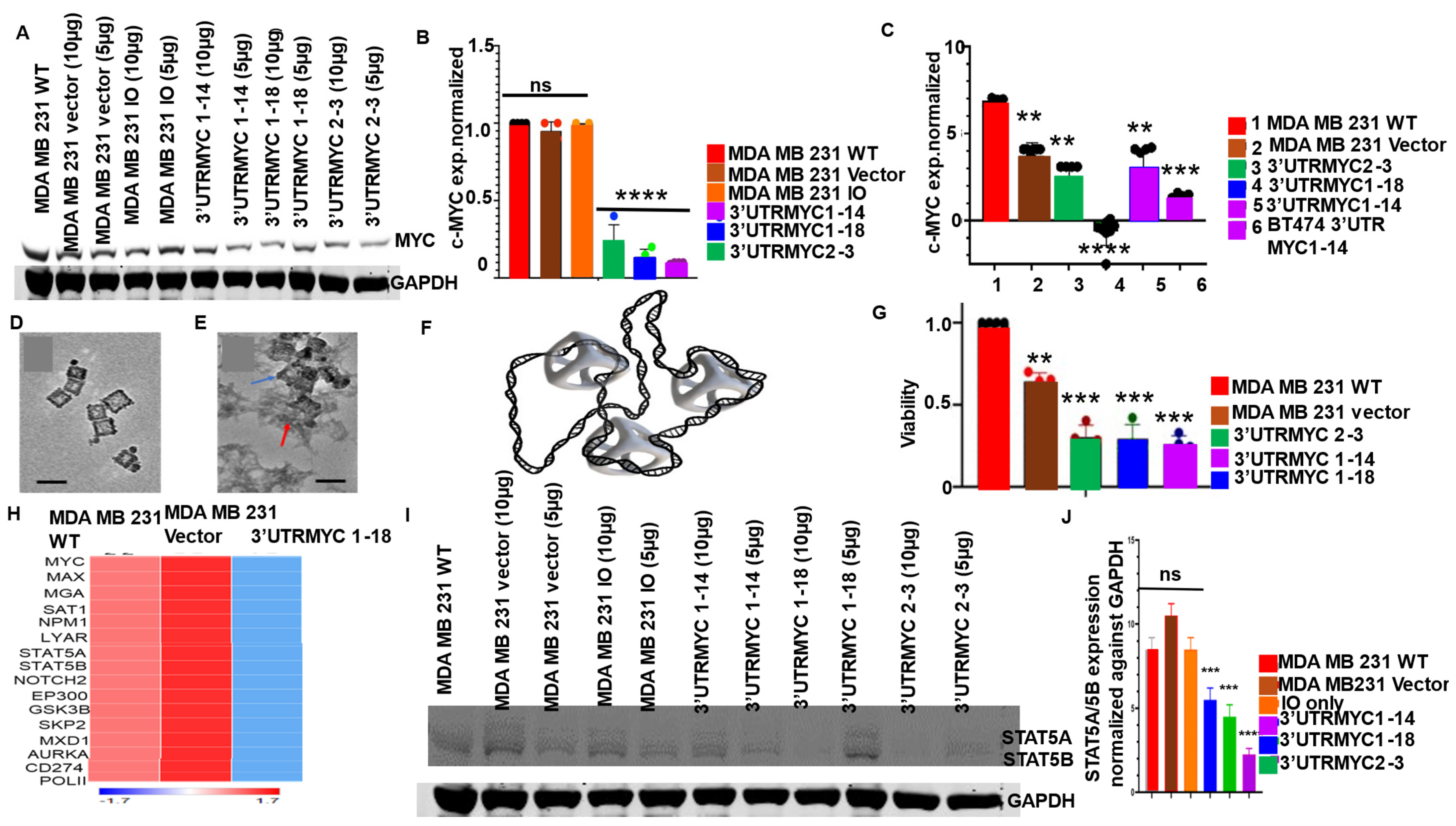
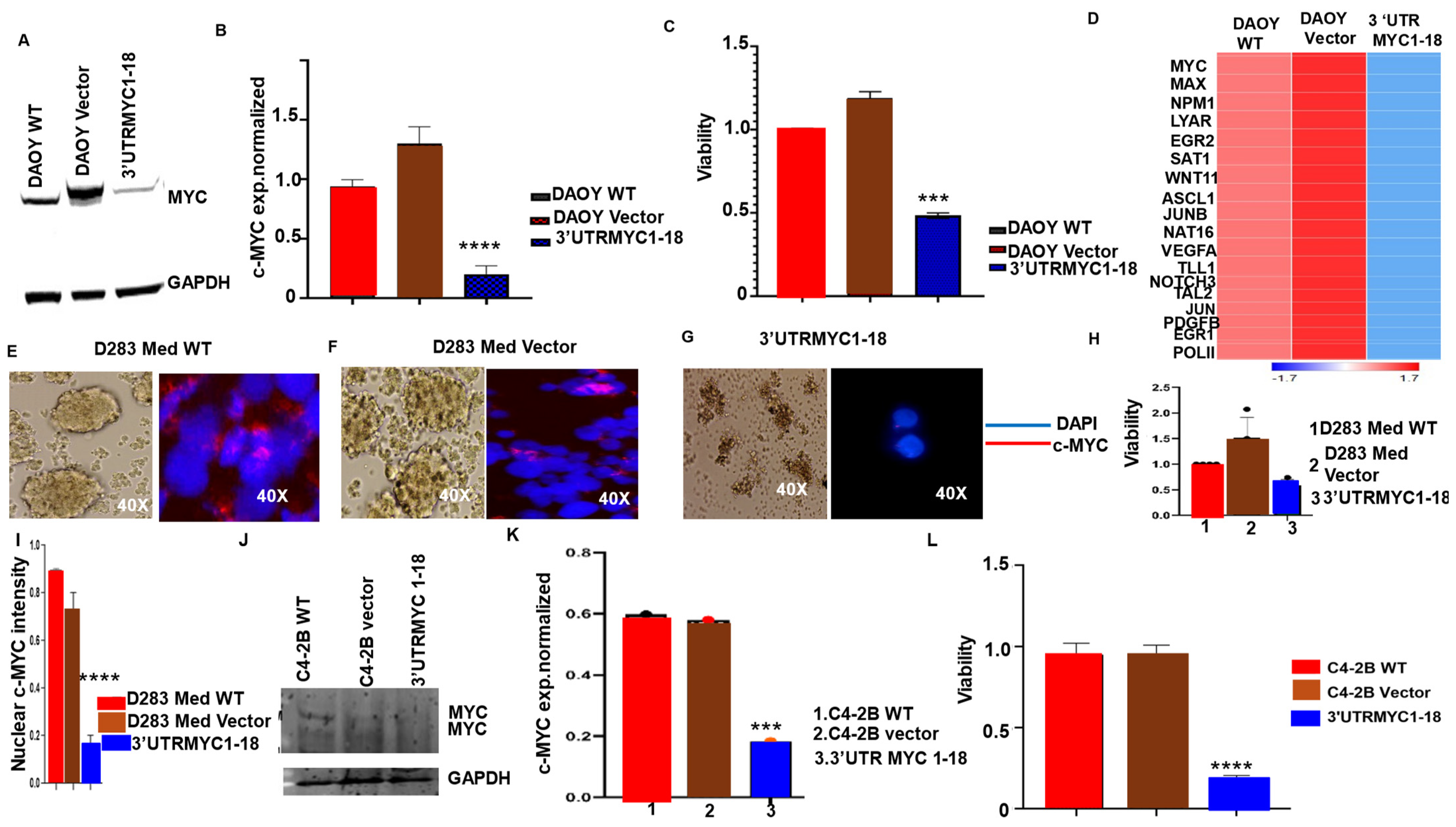
The overexpression of c-MYC is implicated in many cancers, and it drives the tumors’ aggressiveness and metastatic progression, but there is no clinically approved drug that targets MYC. We discovered that the MYC mRNA is stabilized by the poly U sequences on its 3′UTR. We engineered these stable elements into unstable forms in a way such that they degraded the target MYC mRNA through a process called nonsense-mediated decay. We developed the drug 3′UTRMYC1-18 and evaluated its therapeutic efficacy in a metastatic model of c-MYC-driven TNBC in vivo by delivering it with iron oxide nanocages. The constructs inhibited primary and metastatic lung and liver cancers by degrading the c-MYC-STAT5A/5B-PD-L1 complex and achieved significant survival outcomes. The in vivo data strongly suggests that this new drug is therapeutically effective in inhibiting c-MYC-driven triple-negative breast cancer and metastatic tumors. The drug was well tolerated and represents a new arsenal to target the deadly TNBC and will offer hope to patients who need it.
Abstract
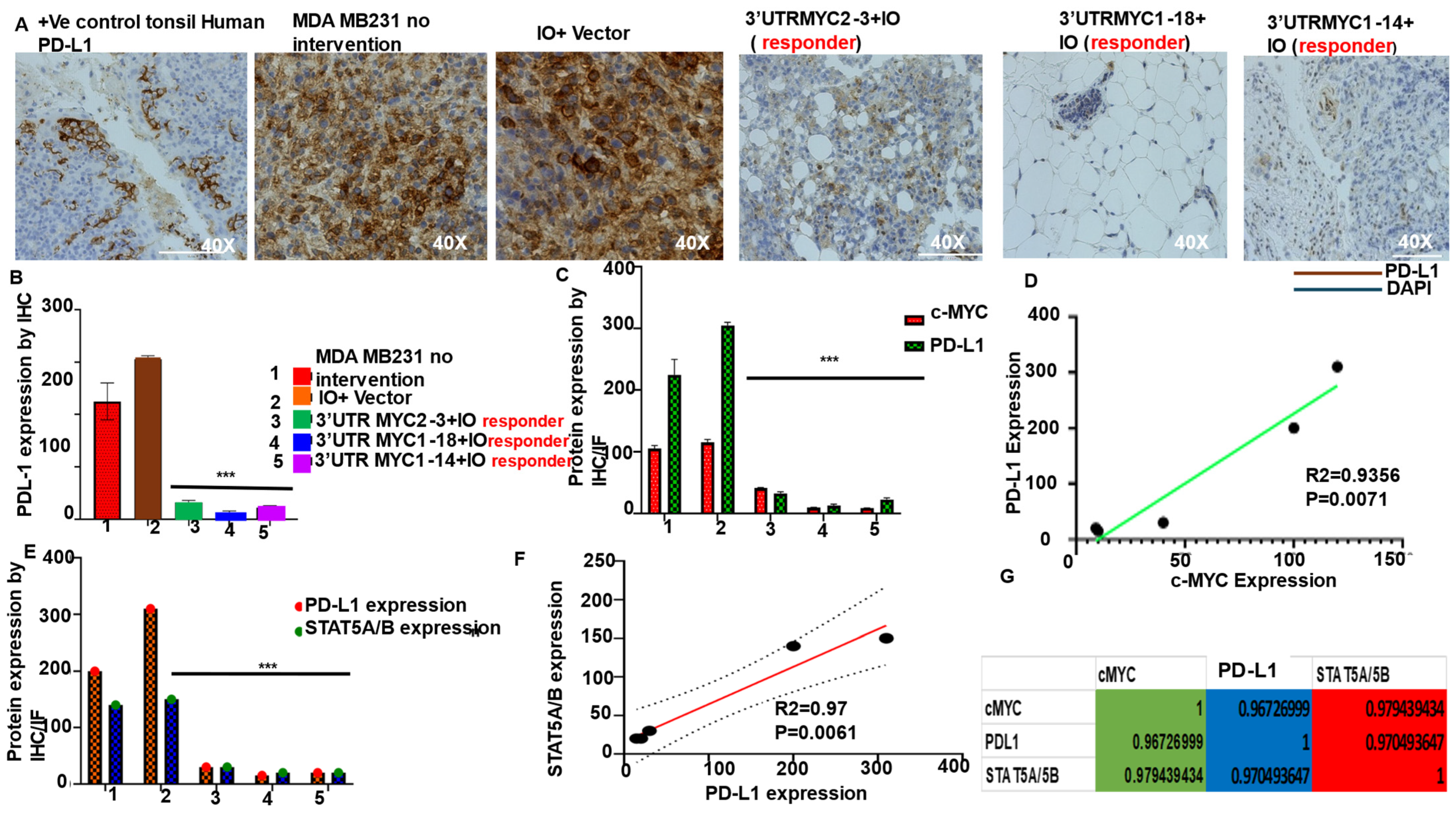
c-MYC is overexpressed in 70% of human cancers, including triple-negative breast cancer (TNBC), yet there is no clinically approved drug that directly targets it. Here, we engineered the mRNA-stabilizing poly U sequences within the 3′UTR of c-MYC to specifically destabilize and promote the degradation of c-MYC transcripts. Interestingly, the engineered derivative outcompetes the endogenous overexpressed c-MYC mRNA, leading to reduced c-MYC mRNA and protein levels. The iron oxide nanocages (IO-nanocages) complexed with MYC-destabilizing constructs inhibited primary and metastatic tumors in mice bearing TNBC and significantly prolonged survival by degrading the c-MYC-STAT5A/B-PD-L1 complexes that drive c-MYC-positive TNBC. Taken together, we have described a novel therapy for c-MYC-driven TNBC and uncovered c-MYC-STAT5A/B-PD-L1 interaction as the target.