Real-World Therapy with Pembrolizumab: Outcomes and Surrogate Endpoints for Predicting Survival in Advanced Melanoma Patients in Germany
by
 , , , , , , , , , , , , , and add
Show full author list
, , , , , , , , , , , , , and add
Show full author list
Peter Mohr
1, 
Emilie Scherrer
2,
Chalid Assaf
3,4 ,
,
Marc Bender
1,
Carola Berking
5,
Sheenu Chandwani
2,
Thomas Eigentler
3,6,
Imke Grimmelmann
7,
Ralf Gutzmer
8 ,
,
Sebastian Haferkamp
9,
Jessica C. Hassel
10 ,
,
Axel Hauschild
11,
Rudolf Herbst
12,
Ruixuan Jiang
2,
Katharina C. Kähler
11,
Clemens Krepler
2,
Alexander Kreuter
13 ,
,
Ulrike Leiter
6,
Carmen Loquai
14,
Friedegund Meier
15,16,
Claudia Pföhler
17,
Anja Rudolph
18,
Dirk Schadendorf
19,20,
Maximo Schiavone
18,
Gaston Schley
21,
Patrick Terheyden
22,
Selma Ugurel
19,
Jens Ulrich
23,
Jochen Utikal
24,25 ,
,
Carsten Weishaupt
26,
Julia Welzel
27 and
Michael Weichenthal
11,*add
Show full author list
1
Department of Dermatology, Elbe Kliniken Buxtehude, 21614 Buxtehude, Germany
2
Merck & Co., Inc., Kenilworth, NJ 07033, USA
3
Department of Dermatology and Allergy, Skin Cancer Center Charité, Charité—Universitätsmedizin Berlin, 10117 Berlin, Germany
4
Department of Dermatology and Venerolgy, HELIOS Klinikum Krefeld, 47805 Krefeld, Germany
5
Department of Dermatology, Universitätsklinikum Erlangen, Comprehensive Cancer Center Erlangen EMN, Deutsches Zentrum Immuntherapie, Friedrich-Alexander University Erlangen-Nuremberg, 91054 Erlangen, Germany
6
Department of Dermatology, University Hospital Tuebingen, 72076 Tuebingen, Germany
7
Department of Dermatology, Skin Cancer Center Hannover, Hannover Medical School, 30625 Hannover, Germany
8
Department of Dermatology, Johannes Wesling Medical Center, Ruhr University Bochum, Campus Minden, 32429 Minden, Germany
9
Department of Dermatology, University of Regensburg, 93040 Regensburg, Germany
10
Department of Dermatology and National Center for Tumor Diseases, University Hospital Heidelberg, 69120 Heidelberg, Germany
11
Department of Dermatology, Skin Cancer Center, University Hospital Schleswig-Holstein, Campus Kiel, 24105 Kiel, Germany
12
Department of Dermatology, Helios Klinikum Erfurt, 99089 Erfurt, Germany
13
Department of Dermatology, Venereology and Allergology, HELIOS St. Elisabeth Hospital Oberhausen, University Witten/Herdecke, 46045 Oberhausen, Germany
14
Department of Dermatology, University Medical Center Mainz, 55131 Mainz, Germany
15
Skin Cancer Center at the University Cancer Centre Dresden and National Center for Tumor Diseases, 01307 Dresden, Germany
16
Department of Dermatology, University Hospital Carl Gustav Carus, 01307 Dresden, Germany
17
Department of Dermatology, Saarland University Medical School, 66123 Homburg, Germany
18
IQVIA, 60549 Frankfurt, Germany
19
Clinic for Dermatology, Venereology and Allergy, University of Essen, 45147 Essen, Germany
20
Comprehensive Cancer Center (Westdeutsches Tumorzentrum), University Hospital Essen, Essen & German Cancer Consortium, 45147 Essen, Germany
21
Department of Dermatology, HELIOS Hospital Schwerin, 19055 Schwerin, Germany
22
Department of Dermatology, University of Lübeck, 23562 Lübeck, Germany
23
Department of Dermatology and Allergy, Skin Cancer Center, 06484 Quedlinburg, Germany
24
Department of Dermatology, Venereology and Allergology, University Medical Center Mannheim, Heidelberg University, 68167 Mannheim, Germany
25
Skin Cancer Unit, German Cancer Research Center (DKFZ), 69120 Heidelberg, Germany
26
Department of Dermatology, University Hospital Münster, 48149 Münster, Germany
27
Department of Dermatology and Allergology, University Hospital Augsburg, 86156 Augsburg, Germany
*
Author to whom correspondence should be addressed.
Cancers 2022, 14(7), 1804; https://doi.org/10.3390/cancers14071804
Submission received: 2 March 2022
/
Revised: 29 March 2022
/
Accepted: 30 March 2022
/
Published: 1 April 2022
Simple Summary
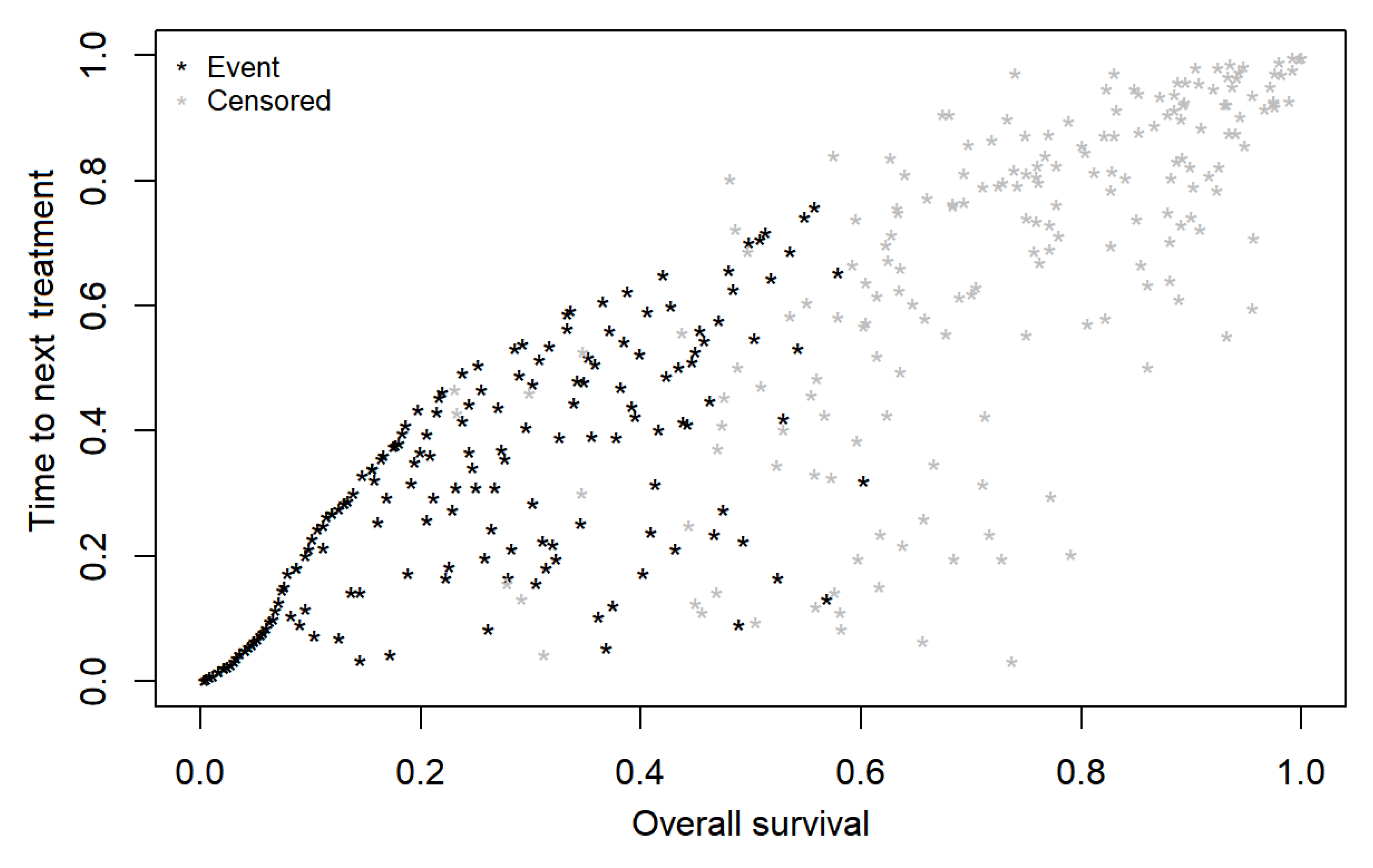
Knowledge on the real-world outcomes of patients with advanced melanoma and the value of different endpoints for evaluating survival benefits is limited. We investigated the outcomes and different surrogate endpoints for overall survival (OS) in 664 pembrolizumab-treated patients with advanced melanoma in Germany. Our findings support the effectiveness of pembrolizumab in real-world clinical practice. The real-world time to next treatment was most strongly correlated with OS, suggesting it as a valuable surrogate endpoint to assess treatment effectiveness. Real-world studies assessing time to next treatment could support clinical and payer decision making.
Abstract
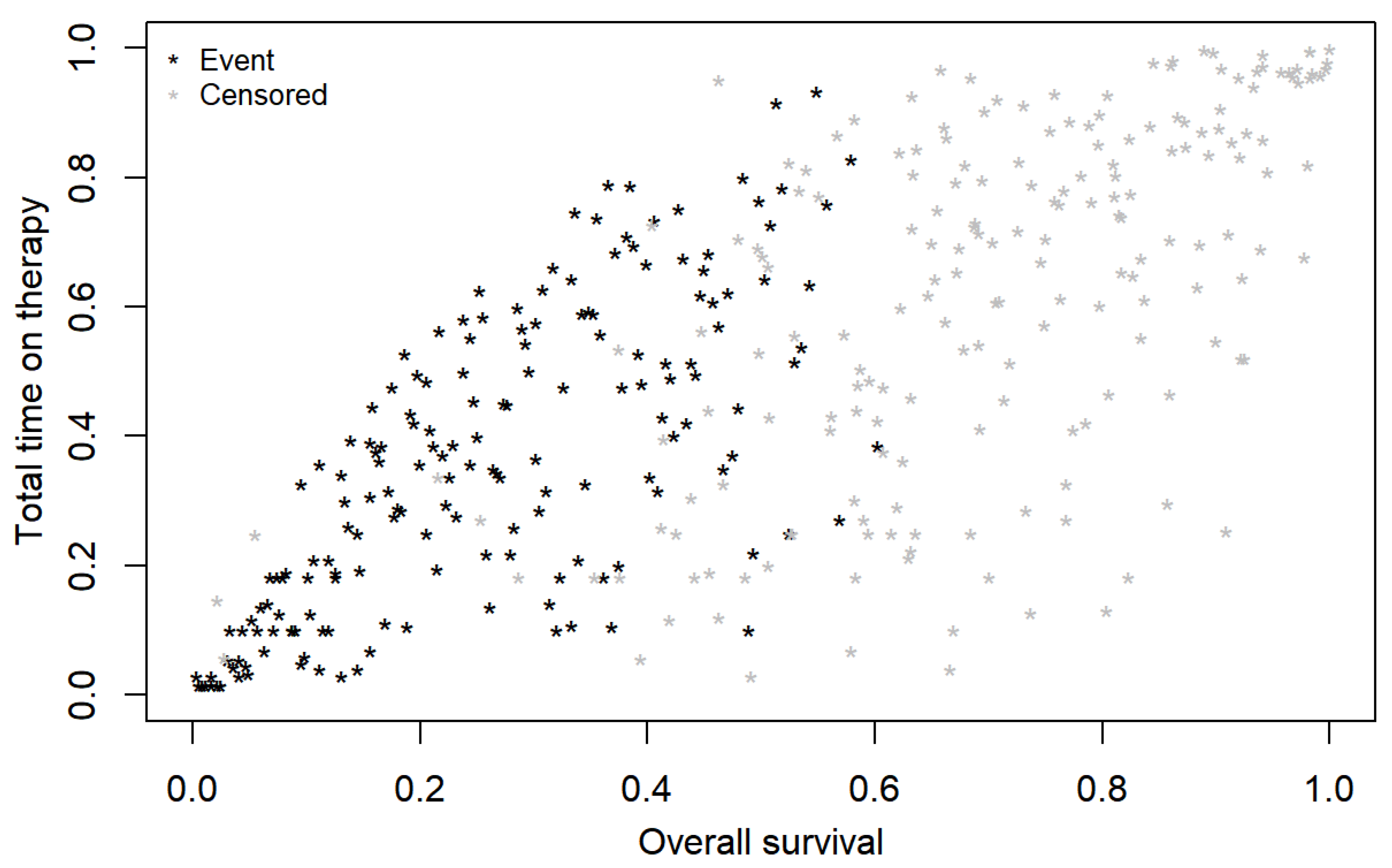
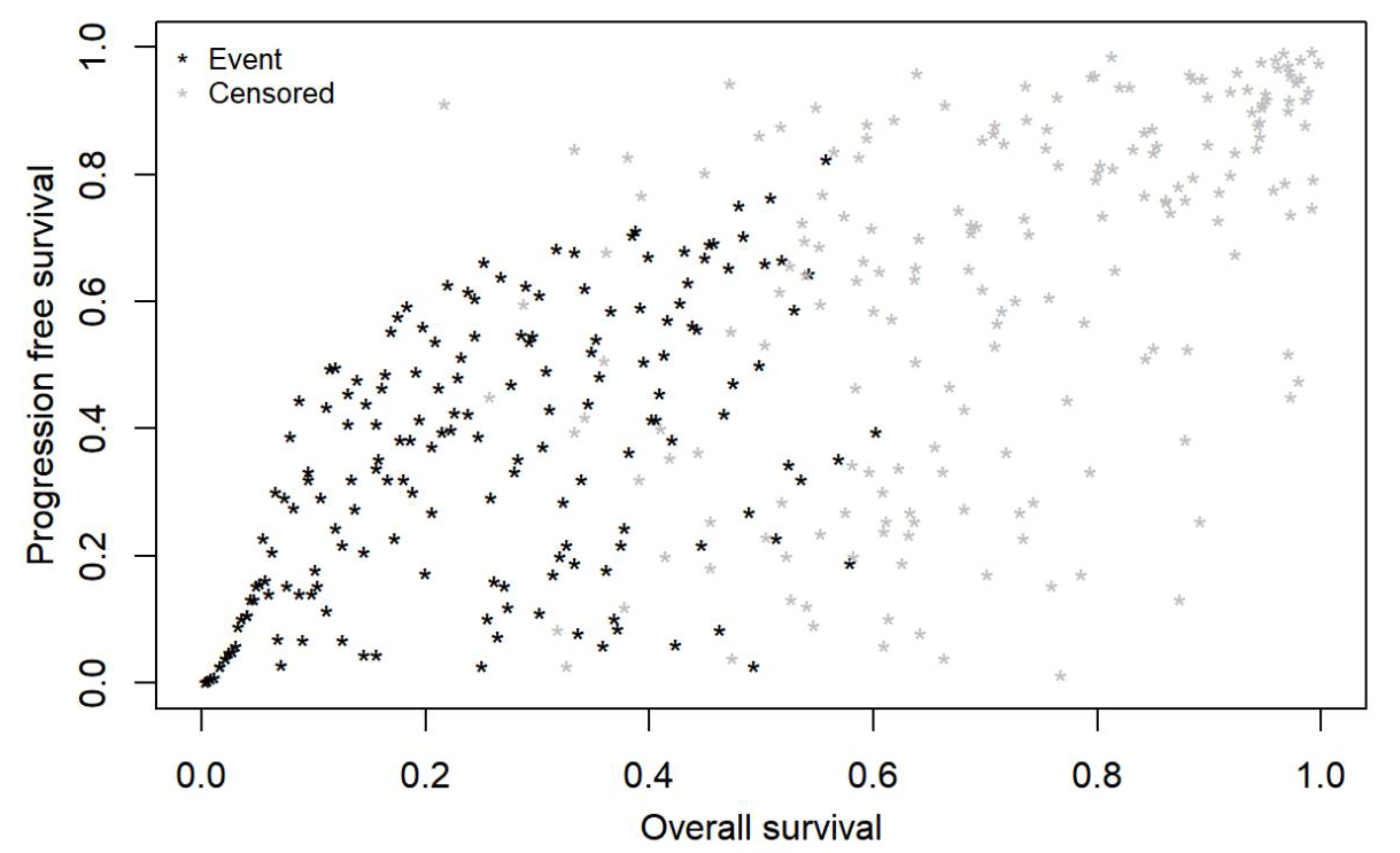
Knowledge on the real-world characteristics and outcomes of pembrolizumab-treated advanced melanoma patients in Germany and on the value of different real-world endpoints as surrogates for overall survival (OS) is limited. A sample of 664 pembrolizumab-treated patients with advanced melanoma from the German registry ADOReg was used. We examined OS, real-world progression-free survival (rwPFS), real-world time to next treatment (rwTtNT), and real-world time on treatment (rwToT). Spearman’s rank and iterative multiple imputation (IMI)-based correlation coefficients were computed between the OS and the rwPFS, rwTtNT, and rwToT and reported for the first line of therapy and the overall sample. The median OS was 30.5 (95%CI 25.0–35.4) months, the rwPFS was 3.9 months (95%CI 3.5–4.9), the rwTtNT was 10.7 months (95%CI 9.0–12.9), and the rwToT was 6.2 months (95%CI 5.1–6.8). The rwTtNT showed the highest correlation with the OS based on the IMI (rIMI = 0.83), Spearman rank correlations (rs = 0.74), followed by the rwToT (rIMI = 0.74 and rs = 0.65) and rwPFS (rIMI = 0.69 and rs = 0.56). The estimates for the outcomes and correlations were similar for the overall sample and those in first-line therapy. The median OS was higher compared to recent real-world studies, supporting the effectiveness of pembrolizumab in regular clinical practice. The rwTtNT may be a valuable OS surrogate, considering the highest correlation was observed with the OS among the investigated real-world endpoints.