


Outcomes of Patients with Metastatic Melanoma—A Single-Institution Retrospective Analysis
 ,
, 
Simple Summary
Abstract
1. Introduction
2. Materials and Methods
3. Results
4. Discussion
5. Conclusions
Author Contributions
Funding
Institutional Review Board Statement
Informed Consent Statement
Conflicts of Interest
References
- Didkowska, J.; Wojciechowska, U.; Olasek, P. Cancers in Poland in 2015. Available online: http://onkologia.org.pl/wp-content/uploads/Nowotwory_2015.pdf (accessed on 20 December 2021).
- Rutkowski, P.; Wysocki, P.J.; Nasierowska-Guttmejer, A.; Jeziorski, A.; Wysocki, W.M.; Kalinka-Warzocha, E.; Świtaj, T.; Kozak, K.; Kamińska-Winciorek, G.; Wixniewski, P.; et al. Cutaneous melanomas. Oncol. Clin. Pract. 2020, 16, 163–182. [Google Scholar] [CrossRef]
- Didkowska, J.U.; Wojciechowska, U.; Zatoński, W. Cancer in Poland in 2009. Available online: http://onkologia.org.pl/wp-content/uploads/Nowotwory_2009.pdf (accessed on 20 December 2021).
- United States Cancer Statistics. Available online: https://gis.cdc.gov/Cancer/USCS/#/AtAGlance/ (accessed on 23 December 2021).
- Ward, W.H.; Farma, J.M. Cutaneous Melanoma: Etiology and Therapy, 1st ed.; Codon Publications: Brisbane, Australia, 2017; pp. 3–23. [Google Scholar] [CrossRef]
- Rutkowski, P.; Wysocki, P.J.; Nasierowska-Guttmejer, A.; Jeziorski, A.; Wysocki, W.M.; Kalinka-Warzocha, E.; Świtaj, T.; Kozak, K.; Kamińska-Winciorek, G.; Czarnecka, A.M.; et al. Cutaneous melanomas. Oncol. Clin. Pract. 2019, 15, 1–19. [Google Scholar] [CrossRef]
- Eggermont, A.M.M.; Chiarion-Sileni, V.; Grob, J.-J.; Dummer, R.; Wolchok, J.D.; Schmidt, H.; Hamid, O.; Robert, C.; A Ascierto, P.; Richards, J.M.; et al. Adjuvant ipilimumab versus placebo after complete resection of high-risk stage III melanoma (EORTC 18071): A randomised, double-blind, phase 3 trial. Lancet Oncol. 2015, 16, 522–530. [Google Scholar] [CrossRef]
- Kirkwood, J.M.; Strawderman, M.H.; Ernstoff, M.S.; Smith, T.J.; Borden, E.C.; Blum, R.H. Interferon alfa-2b adjuvant therapy of high-risk resected cutaneous melanoma: The Eastern Cooperative Oncology Group Trial EST 1684. J. Clin. Oncol. 1996, 14, 7–17. [Google Scholar] [CrossRef]
- Stachyra-Strawa, P.; Ciesielka, M.; Janiszewski, M.; Grzybowska-Szatkowska, L. The role of immunotherapy and molecular-targeted therapy in the treatment of melanoma (Review). Oncol. Rep. 2021, 46, 158. [Google Scholar] [CrossRef]
- Herndon, T.M.; Demko, S.G.; Jiang, X.; He, K.; Gootenberg, J.E.; Cohen, M.H.; Keegan, P.; Pazdur, R.U.S. Food and Drug Administration Approval: Peginterferon-alfa-2b for the Adjuvant Treatment of Patients with Melanoma. Oncologist 2012, 17, 1323–1328. [Google Scholar] [CrossRef]
- Atkins, M.B.; Lotze, M.T.; Dutcher, J.P.; Fisher, R.I.; Weiss, G.; Margolin, K.; Abrams, J.; Sznol, M.; Parkinson, D.; Hawkins, M.; et al. High-Dose Recombinant Interleukin 2 Therapy for Patients With Metastatic Melanoma: Analysis of 270 Patients Treated Between 1985 and 1993. J. Clin. Oncol. 1999, 17, 2105–2116. [Google Scholar] [CrossRef]
- Sileni, V.C.; Nortilli, R.; Aversa, S.M.L.; Paccagnella, A.; Medici, M.; Corti, L.; Favaretto, A.; Cetto, G.L.; Monfardini, S. Phase II randomized study of dacarbazine, carmustine, cisplatin and tamoxifen versus dacarbazine alone in advanced melanoma patients. Melanoma Res. 2001, 11, 189–196. [Google Scholar] [CrossRef]
- Su, P.J.; Chen, J.S.; Liaw, C.C.; Chang, H.K.; Wang, H.M.; Yang, T.S.; Lin, Y.C.; Liau, C.T.; Yang, H.Y.; Yeh, K.Y.; et al. Biochemotherapy with carmustine, cisplatin, dacarbazine, tamoxifen and low dose interleukin-2 for patients with metastatic malignant melanoma. Chang Gung Med. J. 2011, 34, 478–486. [Google Scholar]
- Velho, T.R. Metastatic melanoma—A review of current and future drugs. Drugs Context 2012, 2012, 212242. [Google Scholar] [CrossRef]
- Gołąb, J.; Jakóbisiak, M.; Lasek, W.; Stokłosa, T. Immunologia, 6th ed.; PWN: Warszawa, Poland, 2014; pp. 163–165. [Google Scholar]
- Malesa, A.; Nowak, J.; Skórka, K.; Karp, M.; Giannopoulos, K. Immunoterapia z użyciem przeciwciał monoklonalnych ukierunkowanych na szlak PD-1/PD-L1 w chorobach nowotworowych. Acta Haematol. Pol. 2018, 49, 207–227. [Google Scholar] [CrossRef]
- Wilczyński, J.R.; Nowak, M.; Wilczyński, M. Targeted therapy with monoclonal antibodies: Do we observe progress in the management of female genital tract cancers? Postepy Higieny I Medycyny Doswiadczalnej 2018, 72, 192–204. [Google Scholar] [CrossRef]
- Hodi, F.S.; O’Day, S.J.; McDermott, D.F.; Weber, R.W.; Sosman, J.A.; Haanen, J.B.; Gonzalez, R.; Robert, C.; Schadendorf, D.; Hassel, J.C.; et al. Improved Survival with Ipilimumab in Patients with Metastatic Melanoma. N. Engl. J. Med. 2010, 363, 711–723. [Google Scholar] [CrossRef]
- Muenst, S.; Soysal, S.; Gao, F.; Obermann, E.C.; Oertli, D.; E Gillanders, W. The presence of programmed death 1 (PD-1)-positive tumor-infiltrating lymphocytes is associated with poor prognosis in human breast cancer. Breast Cancer Res. Treat. 2013, 139, 667–676. [Google Scholar] [CrossRef]
- Wan, P.T.; Garnett, M.J.; Roe, S.M.; Lee, S.; Niculescu-Duvaz, D.; Good, V.M.; Cancer Genome Project; Jones, C.M.; Marshall, C.J.; Springer, C.J.; et al. Mechanism of activation of the RAF-ERK signaling pathway by oncogenic mutations of B-RAF. Cell 2004, 116, 855–867. [Google Scholar] [CrossRef]
- Zaleśna, I.; Hartman, M.L.; Czyż, M. BRAF mutation in progression and therapy of melanoma, papillary thyroid carcinoma and colorectal adenocarcinoma. Postepy Hig. Med. Dosw. 2016, 70, 471–488. [Google Scholar] [CrossRef]
- Viros, A.; Fridlyand, J.; Bauer, J.; Lasithiotakis, K.; Garbe, C.; Pinkel, D.; Bastian, B.C. Improving Melanoma Classification by Integrating Genetic and Morphologic Features. PLoS Med. 2008, 5, e120. [Google Scholar] [CrossRef]
- Dummer, R.; Hauschild, A.; Santinami, M.; Atkinson, V.; Mandalà, M.; Kirkwood, J.M.; Sileni, V.C.; Larkin, J.; Nyakas, M.; Dutriaux, C.; et al. Five-Year Analysis of Adjuvant Dabrafenib plus Trametinib in Stage III Melanoma. N. Engl. J. Med. 2020, 383, 1139–1148. [Google Scholar] [CrossRef]
- Robert, C.; Thomas, L.; Bondarenko, I.; O’Day, S.; Weber, J.; Garbe, C.; Lebbe, C.; Baurain, J.-F.; Testori, A.; Grob, J.-J.; et al. Ipilimumab plus Dacarbazine for Previously Untreated Metastatic Melanoma. N. Engl. J. Med. 2011, 364, 2517–2526. [Google Scholar] [CrossRef]
- Geering, B.; Fussenegger, M. Synthetic immunology: Modulating the human immune system. Trends Biotechnol. 2015, 33, 65–79. [Google Scholar] [CrossRef]
- Shuptrine, C.W.; Surana, R.; Weiner, L.M. Monoclonal antibodies for the treatment of cancer. Semin. Cancer Biol. 2012, 22, 3–13. [Google Scholar] [CrossRef]
- Fellner, C. Ipilimumab (yervoy) prolongs survival in advanced melanoma: Serious side effects and a hefty price tag may limit its use. Pharm. Ther. 2012, 37, 503–530. [Google Scholar]
- Weber, J.; Mandalà, M.; Del Vecchio, M.; Gogas, H.J.; Arance, A.M.; Cowey, C.L.; Dalle, S.; Schenker, M.; Chiarion-Sileni, V.; Marquez-Rodas, I.; et al. Adjuvant Nivolumab versus Ipilimumab in Resected Stage III or IV Melanoma. N. Engl. J. Med. 2017, 377, 1824–1835. [Google Scholar] [CrossRef]
- Wolchok, J.D.; Chiarion-Sileni, V.; Gonzalez, R.; Grob, J.-J.; Rutkowski, P.; Lao, C.D.; Cowey, C.L.; Schadendorf, D.; Wagstaff, J.; Dummer, R.; et al. CheckMate 067: 6.5-year outcomes in patients (pts) with advanced melanoma. J. Clin. Oncol. 2021, 39, 9506. [Google Scholar] [CrossRef]
- Robert, C.; Ribas, A.; Schachter, J.; Arance, A.; Grob, J.-J.; Mortier, L.; Daud, A.; Carlino, M.S.; McNeil, C.M.; Lotem, M.; et al. Pembrolizumab versus ipilimumab in advanced melanoma (KEYNOTE-006): Post-hoc 5-year results from an open-label, multicentre, randomised, controlled, phase 3 study. Lancet Oncol. 2019, 20, 1239–1251. [Google Scholar] [CrossRef]
- Hamid, O.; Robert, C.; Daud, A.; Hodi, F.S.; Hwu, W.J.; Kefford, R.; Wolchok, J.D.; Hersey, P.; Joseph, R.; Weber, J.S.; et al. Five-year survival outcomes for patients with advanced melanoma treated with pembrolizumab in KEYNOTE-001. Ann. Oncol. 2019, 30, 582–588. [Google Scholar] [CrossRef]
- Proietti, I.; Skroza, N.; Michelini, S.; Mambrin, A.; Balduzzi, V.; Bernardini, N.; Marchesiello, A.; Tolino, E.; Volpe, S.; Maddalena, P.; et al. BRAF Inhibitors: Molecular Targeting and Immunomodulatory Actions. Cancers 2020, 12, 1823. [Google Scholar] [CrossRef]
- Unsworth, A.; Bye, A.P.; Kriek, N.; Sage, T.; Osborne, A.; Donaghy, D.; Gibbins, J.M. Cobimetinib and trametinib inhibit platelet MEK but do not cause platelet dysfunction. Platelets 2018, 30, 762–772. [Google Scholar] [CrossRef]
- Hauschild, A.; Grobb, J.; Demidov, L.; Jouary, T.; Gutzmer, R.; Millward, M.; Rutkowski, P.; Blank, C.; Miller, W.; Martin-Algarra, S.; et al. An Update on Overall Survival (Os) and Follow-On Therapies in Break-3, a Phase Iii, Randomized Trial: Dabrafenib (D) Vs. Dacarbazine (Dtic) in Patients (Pts) with Braf V600E Mutation-Positive Metastatic Melanoma (Mm). Ann. Oncol. 2014, 25, iv378. [Google Scholar] [CrossRef]
- Chapman, P.B.; Hauschild, A.; Robert, C.; Haanen, J.B.; Ascierto, P.; Larkin, J.; Dummer, R.; Garbe, C.; Testori, A.; Maio, M.; et al. Improved survival with vemurafenib in melanoma with BRAF V600E mutation. N. Engl. J. Med. 2011, 364, 2507–2516. [Google Scholar] [CrossRef]
- Robert, C.; Grob, J.J.; Stroyakovskiy, D.; Karaszewska, B.; Hauschild, A.; Levchenko, E.; Chiarion Sileni, V.; Schachter, J.; Garbe, C.; Bondarenko, I.; et al. Five-Year Outcomes with Dabrafenib plus Trametinib in Metastatic Melanoma. N. Engl. J. Med. 2019, 381, 626–636. [Google Scholar] [CrossRef]
- Larkin, J.; Ascierto, P.A.; Dréno, B.; Atkinson, V.; Liszkay, G.; Maio, M.; Mandalà, M.; Demidov, L.; Stroyakovskiy, D.; Thomas, L.; et al. Combined Vemurafenib and Cobimetinib in BRAF-Mutated Melanoma. N. Engl. J. Med. 2014, 371, 1867–1876. [Google Scholar] [CrossRef]
- Gutzmer, R.; Stroyakovskiy, D.; Gogas, H.; Robert, C.; Lewis, K.; Protsenko, S.; Pereira, R.P.; Eigentler, T.; Rutkowski, P.; Demidov, L.; et al. Atezolizumab, vemurafenib, and cobimetinib as first-line treatment for unresectable advanced BRAFV600 mutation-positive melanoma (IMspire150): Primary analysis of the randomised, double-blind, placebo-controlled, phase 3 trial. Lancet 2020, 395, 1835–1844. [Google Scholar] [CrossRef]
- Picard, M.; Dang, N.P.; D’Incan, M.; Mansard, S.; Déchelotte, P.; Pereira, B.; Mondié, J.; Barthélémy, I. Is BRAF a prognostic factor in stage III skin melanoma? A retrospective study of 72 patients after positive sentinel lymph node dissection. Br. J. Dermatol. 2014, 171, 108–114. [Google Scholar] [CrossRef]
- Mann, G.; Pupo, G.M.; Campain, A.E.; Carter, C.D.; Schramm, S.-J.; Pianova, S.; Gerega, S.K.; De Silva, C.; Lai, K.; Wilmott, J.; et al. BRAF Mutation, NRAS Mutation, and the Absence of an Immune-Related Expressed Gene Profile Predict Poor Outcome in Patients with Stage III Melanoma. J. Investig. Dermatol. 2013, 133, 509–517. [Google Scholar] [CrossRef]
- Ellerhorst, J.A.; Greene, V.R.; Ekmekcioglu, S.; Warneke, C.L.; Johnson, M.M.; Cooke, C.P.; Wang, L.-E.; Prieto, V.G.; Gershenwald, J.E.; Wei, Q.; et al. Clinical Correlates ofNRASandBRAFMutations in Primary Human Melanoma. Clin. Cancer Res. 2010, 17, 229–235. [Google Scholar] [CrossRef]
- Meckbach, D.; Bauer, J.; Pflugfelder, A.; Meier, F.; Busch, C.; Eigentler, T.; Capper, D.; von Deimling, A.; Mittelbronn, M.; Perner, S.; et al. Survival According to BRAF-V600 Tumor Mutations—An Analysis of 437 Patients with Primary Melanoma. PLoS ONE 2014, 9, e86194. [Google Scholar] [CrossRef]
- Ardekani, G.S.; Jafarnejad, S.M.; Tan, L.; Saeedi, A.; Li, G. The Prognostic Value of BRAF Mutation in Colorectal Cancer and Melanoma: A Systematic Review and Meta-Analysis. PLoS ONE 2012, 7, e47054. [Google Scholar] [CrossRef]
- Rutkowski, P.; Gos, A.; Jurkowska, M.; Świtaj, T.; Dziewirski, W.; Zdzienicki, M.; Ptaszyński, K.; Michej, W.; Tysarowski, A.; Siedlecki, J. Molecular alterations in clinical stage III cutaneous melanoma: Correlation with clinicopathological features and patient outcome. Oncol. Lett. 2014, 8, 47–54. [Google Scholar] [CrossRef][Green Version]
- Long, G.V.; Menzies, A.M.; Nagrial, A.M.; Haydu, L.E.; Hamilton, A.L.; Mann, G.J.; Hughes, T.; Thompson, J.F.; Scolyer, R.A.; Kefford, R.F. Prognostic and Clinicopathologic Associations of Oncogenic BRAF in Metastatic Melanoma. J. Clin. Oncol. 2011, 29, 1239–1246. [Google Scholar] [CrossRef]
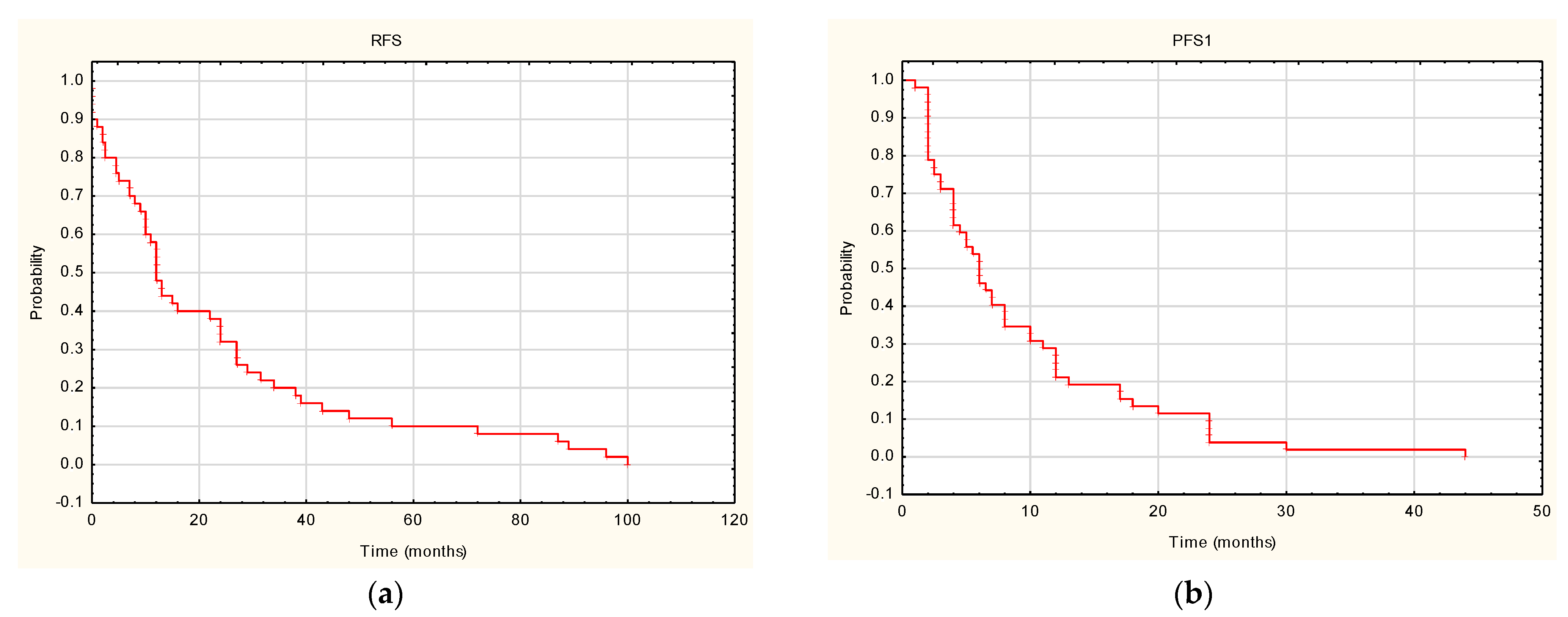
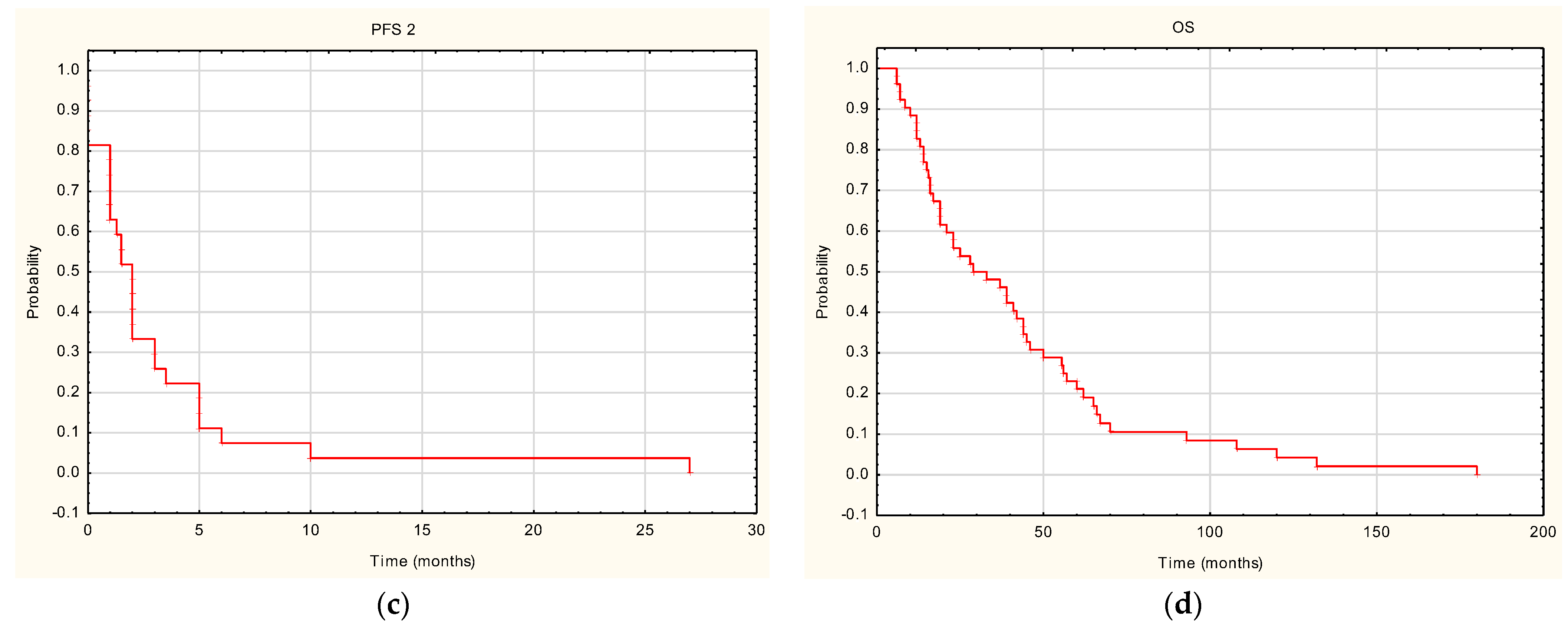
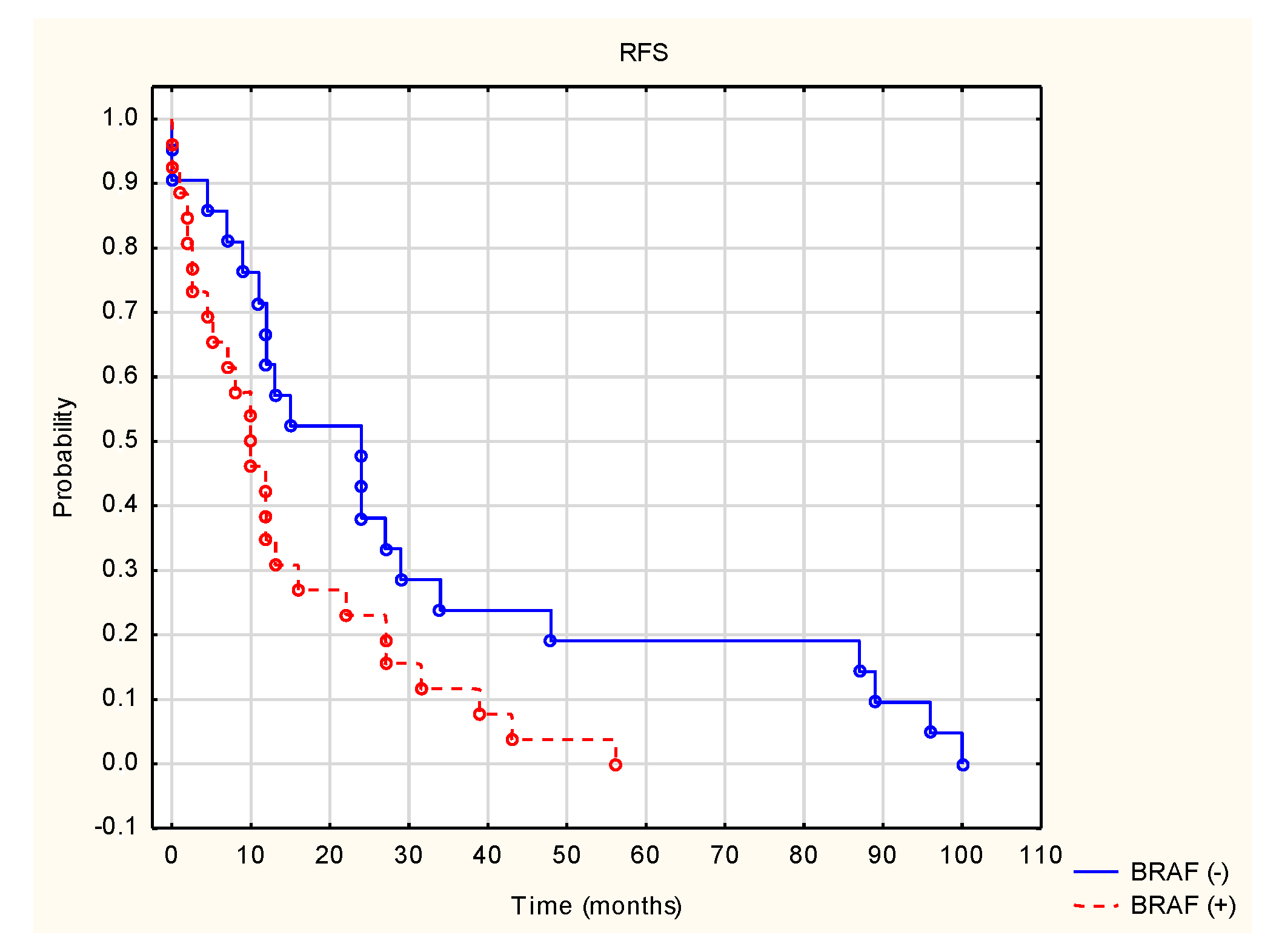
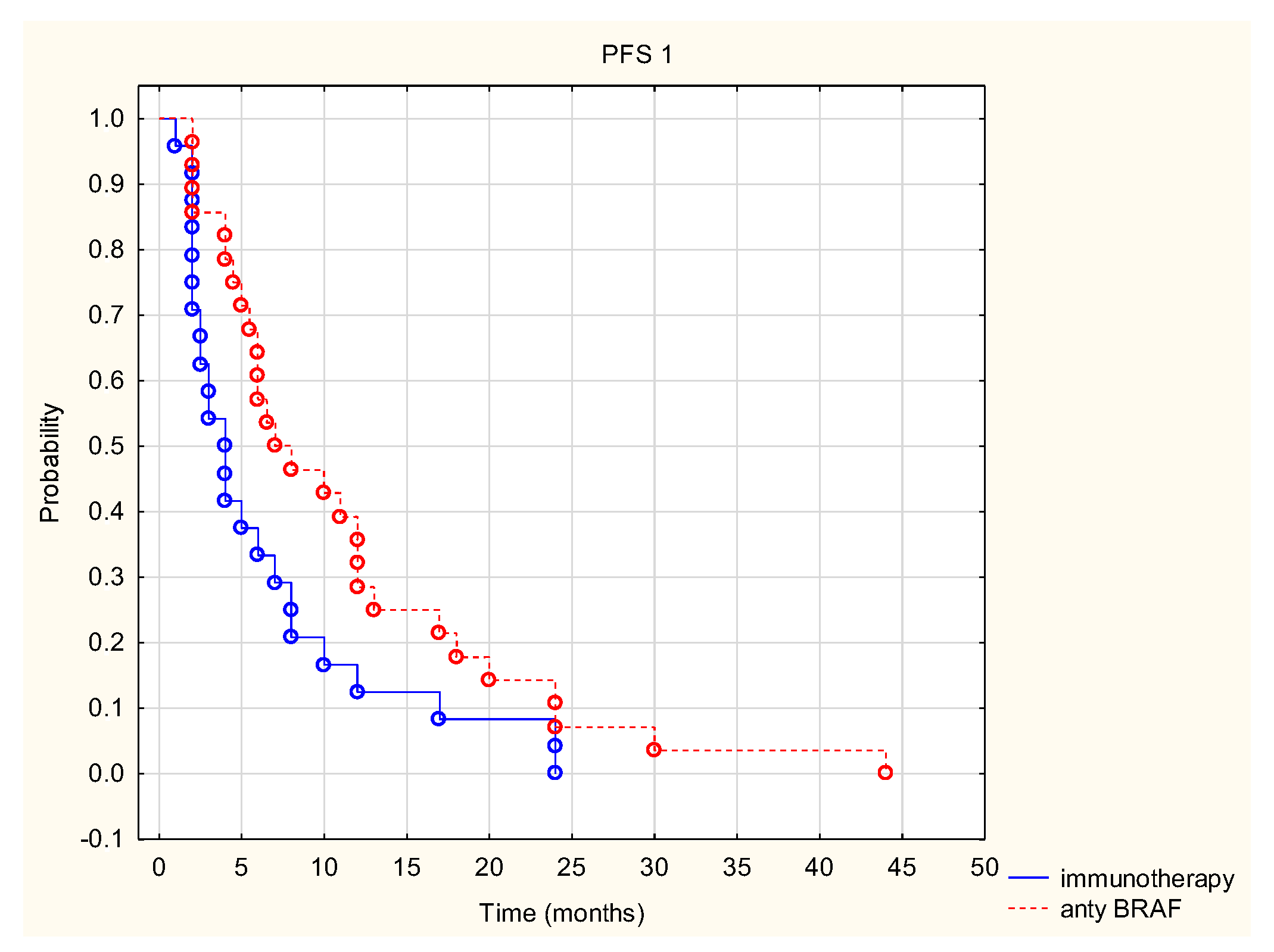

| Patient Parameters | Patient Data |
|---|---|
| Number of patients | 52 |
| Sex | |
| Women | 15 |
| Men | 37 |
| Median age (range) | 59.9 (29–65) |
| Type of recurrence | |
| Distant | 33 |
| Local | 2 |
| Distant and local | 16 |
| Location of primary lesion | |
| Peripheral (extremities) | 25 |
| Central (head and torso) | 8 |
| Unknown primary | 19 |
| BRAF status | |
| BRAF V600 | 28 |
| BRAF-wildtype | 21 |
| Unknown | 3 |
| Blood parameters | |
| HGB ≥12.5 g/dL | 35 |
| HGB <12.5 g/dL | 17 |
| MCV 80–95 fl | 39 |
| MCV >95 fl | 5 |
| MCV <80 fl | 8 |
| MCH 27–32 pg | 41 |
| MCH >32 pg | 3 |
| MCH <27 pg | 8 |
| MCHC 27–32 g/dL | 48 |
| MCHC >32 g/dL | 3 |
| MCHC <27 g/dL | 0 |
| PLT 150.000–450.000 | 48 |
| PLT >450.000 | 4 |
| PLT <150.000 | 0 |
| LDH ≤240 U/L | 27 |
| LDH 241–480 U/L | 16 |
| LDH >481 U/L | 3 |
| Unknown LDH | 6 |
| ALT ≤40 U/L | 49 |
| ALT 41–200 U/L | 3 |
| AST ≤40 U/L | 48 |
| AST 41–200 U/L | 4 |
| Level of invasion (Clark classification) | |
| I | 1 |
| II | 1 |
| III | 4 |
| IV | 24 |
| V | 14 |
| Metastases | |
| Lymph nodes | 38 |
| Lung | 30 |
| Brain | 18 |
| Skin and subcutaneous tissue | 18 |
| Liver | 16 |
| Bones | 10 |
| Other | 15 |
| Primary surgical treatment | 47 |
| First-line treatment | 52 |
| Anti-BRAF/MEK | 28 |
| Vemurafenib | 24 |
| Dabrafenib | 3 |
| Vemurafenib + cobimetinib | 1 |
| Anti-PD-1/anti-CTLA4 | 24 |
| Pembrolizumab | 10 |
| Ipilimumab | 10 |
| Nivolumab | 4 |
| Second-line treatment | 27 |
| Ipilimumab | 16 |
| Nivolumab | 6 |
| Pembrolizumab | 5 |
| Other treatment | |
| Palliative radiotherapy | 23 |
| Surgical treatment of metastases | 14 |
| Surgical treatment of local recurrence | 11 |
| Analyzed Parameter | RFS | PFS 1 | PFS 2 | OS | ||||
|---|---|---|---|---|---|---|---|---|
| Test Value | p | Test Value | p | Test Value | p | Test Value | p | |
| Sex | 1.058 | 0.289 | 1.815 | 0.069 | 1.726 | 0.084 | 0.720 | 0.471 |
| Age | 0.076 | 0.782 | 0.187 | 0.664 | 0.506 | 0.476 | 0.708 | 0.400 |
| Type of recurrence | 0.837 | 0.402 | −0.409 | 0.682 | 0.055 | 0.955 | 1.740 | 0.081 |
| Location of primary lesion | −0.208 | 0.835 | 0.274 | 0.7831 | −0.382 | 0.701 | 0.134 | 0.892 |
| BRAF status | −2.211 | 0.027 | 1.266 | 0.205 | 0.546 | 0.584 | −0.530 | 0.595 |
| HGB (<12.5 vs. ≥12.5 g/dL) | −0.265 | 0.790 | −1.312 | 0.189 | −1.553 | 0.120 | −1.415 | 0.157 |
| MCV (norm vs. beyond the norm) | 1.224 | 0.542 | 0.624 | 0.731 | 1.280 | 0.527 | 0.534 | 0.765 |
| MCH (norm vs. beyond the norm) | 0.245 | 0.884 | 1.566 | 0.457 | 5.065 | 0.079 | 0.587 | 0.745 |
| MCHC (norm vs. beyond the norm) | −0.456 | 0.648 | −1.132 | 0.257 | −0.701 | 0.482 | −0.804 | 0.421 |
| PLT (norm vs. beyond the norm) | 0.771 | 0.440 | −0.833 | 0.404 | −0.354 | 0.722 | −0.283 | 0.776 |
| LDH (continuous value) | 0.128 | 0.719 | 1.582 | 0.208 | 2.051 | 0.152 | 1.946 | 0.162 |
| Primary surgical treatment | −1.630 | 0.103 | 0.182 | 0.856 | −0.741 | 0.458 | −0.748 | 0.454 |
| Level of invasion (Clark classification) | 4.977 | 0.418 | 2.447 | 0.784 | NA | NA | 3.322 | 0.650 |
| Type of treatment (anti-BRAF vs. immunotherapy) | NA * | NA | 1.998 | 0.046 | NA | NA | 0.238 | 0.812 |
| Lung metastases | NA | NA | NA | NA | NA | NA | 0.521 | 0.602 |
| Liver metastases | NA | NA | NA | NA | NA | NA | 0.176 | 0.860 |
| Brain metastases | NA | NA | NA | NA | NA | NA | 0.344 | 0.730 |
| Lymph node metastases | NA | NA | NA | NA | NA | NA | −0.389 | 0.697 |
| Skin and subcutaneous tissue metastases | NA | NA | NA | NA | NA | NA | −0.003 | 0.997 |
| Bone metastases | NA | NA | NA | NA | NA | NA | 0.224 | 0.823 |
| Other | NA | NA | NA | NA | NA | NA | −0.024 | 0.980 |
Publisher’s Note: MDPI stays neutral with regard to jurisdictional claims in published maps and institutional affiliations. |
© 2022 by the authors. Licensee MDPI, Basel, Switzerland. This article is an open access article distributed under the terms and conditions of the Creative Commons Attribution (CC BY) license (https://creativecommons.org/licenses/by/4.0/).
Share and Cite
Szatkowska, L.; Sieczek, J.; Tekiela, K.; Ziętek, M.; Stachyra-Strawa, P.; Cisek, P.; Matkowski, R. Outcomes of Patients with Metastatic Melanoma—A Single-Institution Retrospective Analysis. Cancers 2022, 14, 1672. https://doi.org/10.3390/cancers14071672
Szatkowska L, Sieczek J, Tekiela K, Ziętek M, Stachyra-Strawa P, Cisek P, Matkowski R. Outcomes of Patients with Metastatic Melanoma—A Single-Institution Retrospective Analysis. Cancers. 2022; 14(7):1672. https://doi.org/10.3390/cancers14071672
Chicago/Turabian StyleSzatkowska, Lidia, Jan Sieczek, Katarzyna Tekiela, Marcin Ziętek, Paulina Stachyra-Strawa, Paweł Cisek, and Rafał Matkowski. 2022. "Outcomes of Patients with Metastatic Melanoma—A Single-Institution Retrospective Analysis" Cancers 14, no. 7: 1672. https://doi.org/10.3390/cancers14071672
APA StyleSzatkowska, L., Sieczek, J., Tekiela, K., Ziętek, M., Stachyra-Strawa, P., Cisek, P., & Matkowski, R. (2022). Outcomes of Patients with Metastatic Melanoma—A Single-Institution Retrospective Analysis. Cancers, 14(7), 1672. https://doi.org/10.3390/cancers14071672

