


Hidden in Plants—A Review of the Anticancer Potential of the Solanaceae Family in In Vitro and In Vivo Studies

 ,
,  ,
,  ,
,  ,
,  , , ,
, , , 
Simple Summary
Abstract
1. Introduction
2. Inclusion and Exclusion Criteria
3. Medicinal Plants in Cancer Treatment
4. Nanotechnology and Plant Compounds in the Fight against Cancer
5. Synergy between Chemotherapeutic Agents and Plant Compounds in Cancer Therapy
6. Solanaceae Family—General Characteristics and Application
7. Anticancer Effect and Potential Mechanisms of Action of Plant Extracts from the Solanaceae Family
8. Anticancer Effect and Potential Mechanisms of Action of Pure Compounds Isolated from the Solanaceae Family
9. Anticancer Effect and Potential Mechanisms of Action of Nanoparticles in Combination with Plant Extracts from the Solanaceae Family
10. Synergistic Effect of Chemotherapeutic Drugs and Plant Extracts from the Solanaceae Family
11. Anticancer Effect in In Vivo Studies of Compounds of the Solanaceae Family
12. Conclusions and Future Perspectives
Author Contributions
Funding
Institutional Review Board Statement
Informed Consent Statement
Data Availability Statement
Conflicts of Interest
References
- Sung, H.; Ferlay, J.; Siegel, R.L.; Laversanne, M.; Soerjomataram, I.; Jemal, A.; Bray, F. Global Cancer Statistics 2020: GLOBOCAN Estimates of Incidence and Mortality Worldwide for 36 Cancers in 185 Countries. CA Cancer J. Clin. 2021, 71, 209–249. [Google Scholar] [CrossRef] [PubMed]
- Golemis, E.A.; Scheet, P.; Beck, T.N.; Scolnick, E.M.; Hunter, D.J.; Hawk, E.; Hopkins, N. Molecular mechanisms of the preventable causes of cancer in the United States. Genes Dev. 2018, 32, 868–902. [Google Scholar] [CrossRef] [PubMed]
- Parsa, N. Environmental factors inducing human cancers. Iran. J. Public Health 2012, 41, 1–9. [Google Scholar] [PubMed]
- Wu, S.; Zhu, W.; Thompson, P.; Hannun, Y.A. Evaluating intrinsic and non-intrinsic cancer risk factors. Nat. Commun. 2018, 9, 3490. [Google Scholar] [CrossRef] [PubMed]
- Anand, P.; Kunnumakara, A.B.; Sundaram, C.; Harikumar, K.B.; Tharakan, S.T.; Lai, O.S.; Sung, B.; Aggarwal, B.B. Cancer is a preventable disease that requires major lifestyle changes. Pharm. Res. 2008, 25, 2097–2116. [Google Scholar] [CrossRef] [PubMed]
- Hanahan, D.; Weinberg, R.A. Hallmarks of cancer: The next generation. Cell 2011, 144, 646–674. [Google Scholar] [CrossRef]
- Feitelson, M.A.; Arzumanyan, A.; Kulathinal, R.J.; Blain, S.W.; Holcombe, R.F.; Mahajna, J.; Marino, M.; Martinez-Chantar, M.L.; Nawroth, R.; Sanchez-Garcia, I.; et al. Sustained proliferation in cancer: Mechanisms and novel therapeutic targets. Semin. Cancer Biol. 2015, 35, S25–S54. [Google Scholar] [CrossRef]
- World Health Organization. Cancer. 2022. Available online: https://www.who.int/news-room/fact-sheets/detail/cancer (accessed on 5 January 2022).
- Lichota, A.; Gwozdzinski, K. Anticancer activity of natural compounds from plant and marine environment. Int. J. Mol. Sci. 2018, 19, 3533. [Google Scholar] [CrossRef]
- Senapati, S.; Mahanta, A.K.; Kumar, S.; Maiti, P. Controlled drug delivery vehicles for cancer treatment and their performance. Signal Transduct. Target. Ther. 2018, 3, 7. [Google Scholar] [CrossRef]
- Wang, X.; Zhang, H.; Chen, X. Drug resistance and combating drug resistance in cancer. Cancer Drug Resist. 2019, 2, 141–160. [Google Scholar] [CrossRef]
- Newman, D.J.; Cragg, G.M. Natural products as sources of new drugs over the 30 years from 1981 to 2010. J. Nat. Prod. 2012, 75, 311–335. [Google Scholar] [CrossRef] [PubMed]
- Dehelean, C.A.; Marcovici, I.; Soica, C.; Mioc, M.; Coricovac, D.; Iurciuc, S.; Cretu, O.M.; Pinzaru, I. Plant-derived anticancer compounds as new perspectives in drug discovery and alternative therapy. Molecules 2021, 26, 1109. [Google Scholar] [CrossRef] [PubMed]
- Koparde, A.A.; Doijad, R.C.; Magdum, C.S. Natural Products in Drug Discovery. In Pharmacognosy—Medicinal Plants; IntechOpen Limited: London, UK, 2019. [Google Scholar]
- Veeresham, C. Natural products derived from plants as a source of drugs. J. Adv. Pharm. Technol. Res. 2012, 3, 200–201. [Google Scholar] [CrossRef] [PubMed]
- Pan, S.Y.; Litscher, G.; Gao, S.H.; Zhou, S.F.; Yu, Z.L.; Chen, H.Q.; Zhang, S.F.; Tang, M.K.; Sun, J.N.; Ko, K.M. Historical perspective of traditional indigenous medical practices: The current renaissance and conservation of herbal resources. Evid. Based Complement. Altern. Med. 2014, 2014, 525340. [Google Scholar] [CrossRef]
- Gordaliza, M. Natural products as leads to anticancer drugs. Clin. Transl. Oncol. 2007, 9, 767–776. [Google Scholar] [CrossRef]
- Alamgir, A.N.M. Biotechnology, in vitro production of natural bioactive compounds, herbal preparation, and disease management (treatment and prevention). In Progress in Drug Research; Springer: Berlin/Heidelberg, Germany, 2018; Volume 74, pp. 585–664. [Google Scholar]
- Kowalczyk, T.; Sitarek, P.; Merecz-Sadowska, A.; Szyposzyńska, M.; Spławska, A.; Gorniak, L.; Bijak, M.; Śliwiński, T. Methyl jasmonate effect on betulinic acid content and biological properties of extract from Senna obtusifolia transgenic hairy roots. Molecules 2021, 26, 6208. [Google Scholar] [CrossRef]
- Kowalczyk, T.; Sitarek, P.; Toma, M.; Rijo, P.; Domínguez-Martín, E.; Falcó, I.; Sánchez, G.; Śliwiński, T. Enhanced Accumulation of Betulinic Acid in Transgenic Hairy Roots of Senna obtusifolia Growing in the Sprinkle Bioreactor and Evaluation of Their Biological Properties in Various Biological Models. Chem. Biodivers. 2021, 18, e2100455. [Google Scholar] [CrossRef]
- Kowalczyk, T.; Merecz-Sadowska, A.; Rijo, P.; Isca, V.M.S.; Picot, L.; Wielanek, M.; Śliwiński, T.; Sitarek, P. Preliminary phytochemical analysis and evaluation of the biological activity of Leonotis nepetifolia (L.) r. br transformed roots extracts obtained through rhizobium rhizogenes-mediated transformation. Cells 2021, 10, 1242. [Google Scholar] [CrossRef]
- Sitarek, P.; Merecz-Sadowska, A.; Śliwiński, T.; Zajdel, R.; Kowalczyk, T. An in vitro evaluation of the molecular mechanisms of action of medical plants from the Lamiaceae family as effective sources of active compounds against human cancer cell lines. Cancers 2020, 12, 2957. [Google Scholar] [CrossRef]
- Śliwiński, T.; Sitarek, P.; Skała, E.; Isca, V.M.S.; Synowiec, E.; Kowalczyk, T.; Bijak, M.; Rijo, P. Diterpenoids from Plectranthus spp. As potential chemotherapeutic agents via apoptosis. Pharmaceuticals 2020, 13, 123. [Google Scholar] [CrossRef]
- Sitarek, P.; Synowiec, E.; Kowalczyk, T.; Śliwiński, T.; Skała, E. An in vitro estimation of the cytotoxicity and genotoxicity of root extract from Leonurus sibiricus L. overexpressing AtPAP1 against different cancer cell lines. Molecules 2018, 23, 2049. [Google Scholar] [CrossRef]
- Zhao, C.Y.; Cheng, R.; Yang, Z.; Tian, Z.M. Nanotechnology for cancer therapy based on chemotherapy. Molecules 2018, 23, 826. [Google Scholar] [CrossRef] [PubMed]
- Cheng, Z.; Li, M.; Dey, R.; Chen, Y. Nanomaterials for cancer therapy: Current progress and perspectives. J. Hematol. Oncol. 2021, 14, 85. [Google Scholar] [CrossRef]
- Sanna, V.; Pala, N.; Sechi, M. Targeted therapy using nanotechnology: Focus on cancer. Int. J. Nanomed. 2014, 9, 467–483. [Google Scholar] [CrossRef]
- Samuels, J. Biodiversity of food species of the Solanaceae family: A preliminary taxonomic inventory of subfamily Solanoideae. Resources 2015, 4, 277–322. [Google Scholar] [CrossRef]
- Gebhardt, C. The historical role of species from the Solanaceae plant family in genetic research. Theor. Appl. Genet. 2016, 129, 2281–2294. [Google Scholar] [CrossRef] [PubMed]
- Guzmán Ceferino, J.; Contreras Ezquivel, J.C.; Aguilar González, C.N.; López López, L.I.; Solís Salas, L.M.; Sierra Rivera, C.A.; Durán Mendoza, T.; Silva Belmares, S.Y. Bioactive compounds derived from metabolism of Solanaceae with medicinal effects. Acad. J. Med. Plants. 2016, 4. [Google Scholar] [CrossRef]
- Nkwe, D.O.; Lotshwao, B.; Rantong, G.; Matshwele, J.; Kwape, T.E.; Masisi, K.; Gaobotse, G.; Hefferon, K.; Makhzoum, A. Anticancer mechanisms of bioactive compounds from Solanaceae: An update. Cancers 2021, 13, 4989. [Google Scholar] [CrossRef]
- Page, M.J.; McKenzie, J.E.; Bossuyt, P.M.; Boutron, I.; Hoffmann, T.C.; Mulrow, C.D.; Shamseer, L.; Tetzlaff, J.M.; Akl, E.A.; Brennan, S.E.; et al. The PRISMA 2020 statement: An updated guideline for reporting systematic reviews. BMJ 2021, 372, n71. [Google Scholar] [CrossRef]
- Petrovska, B.B. Historical review of medicinal plants’ usage. Pharmacogn. Rev. 2012, 6, 1–5. [Google Scholar] [CrossRef]
- Magowska, A. Historia farmacji według Zbigniewa Beli. Stud. Hist. Sci. 2018, 17, 583–599. [Google Scholar] [CrossRef]
- Yin, M.; Zhang, Y.; Li, H. Advances in research on immunoregulation of macrophages by plant polysaccharides. Front. Immunol. 2019, 10, 145. [Google Scholar] [CrossRef] [PubMed]
- Phillipson, J.D. Phytochemistry and medicinal plants. Phytochemistry 2001, 56, 237–243. [Google Scholar] [CrossRef]
- Jaradat, N.; Qneibi, M.; Hawash, M.; Al-Maharik, N.; Qadi, M.; Abualhasan, M.N.; Ayesh, O.; Bsharat, J.; Khadir, M.; Morshed, R.; et al. Assessing Artemisia arborescens essential oil compositions, antimicrobial, cytotoxic, anti-inflammatory, and neuroprotective effects gathered from two geographic locations in Palestine. Ind. Crop. Prod. 2022, 176, 114360. [Google Scholar] [CrossRef]
- Hawash, M.; Kahraman, D.C.; Olgac, A.; Ergun, S.G.; Hamel, E.; Cetin-Atalay, R.; Baytas, S.N. Design and synthesis of novel substituted indole-acrylamide derivatives and evaluation of their anti-cancer activity as potential tubulin-targeting agents. J. Mol. Struct. 2022, 1254, 132345. [Google Scholar] [CrossRef]
- Street, R.A.; Prinsloo, G. Commercially important medicinal plants of South Africa: A review. J. Chem. 2013, 2013, 1–16. [Google Scholar] [CrossRef]
- Anand, U.; Jacobo-Herrera, N.; Altemimi, A.; Lakhssassi, N. A comprehensive review on medicinal plants as antimicrobial therapeutics: Potential avenues of biocompatible drug discovery. Metabolites 2019, 9, 258. [Google Scholar] [CrossRef] [PubMed]
- Hui, C.; Bin, Y.; Xiaoping, Y.; Long, Y.; Chunye, C.; Mantian, M.; Wenhua, L. Anticancer activities of an anthocyanin-rich extract from black rice against breast cancer cells in vitro and in vivo. Nutr. Cancer 2010, 62, 1128–1136. [Google Scholar] [CrossRef]
- Awad, A.B.; Chan, K.C.; Downie, A.C.; Fink, C.S. Peanuts as a source of β-sitosterol, a sterol with anticancer properties. Nutr. Cancer 2000, 36, 238–241. [Google Scholar] [CrossRef]
- Kowalczyk, T.; Sitarek, P.; Toma, M.; Picot, L.; Wielanek, M.; Skała, E.; Śliwiński, T. An extract of transgenic Senna obtusifolia L. Hairy roots with overexpression of PgSS1 gene in combination with chemotherapeutic agent induces apoptosis in the leukemia cell line. Biomolecules 2020, 10, 510. [Google Scholar] [CrossRef]
- Zaini, R.; Clench, M.R.; Le Maitre, C.L. Bioactive chemicals from carrot (Daucus carota) juice extracts for the treatment of leukemia. J. Med. Food 2011, 14, 1303–1312. [Google Scholar] [CrossRef] [PubMed]
- Sitarek, P.; Kowalczyk, T.; Santangelo, S.; Białas, A.J.; Toma, M.; Wieczfinska, J.; Śliwiński, T.; Skała, E. The Extract of Leonurus sibiricus Transgenic Roots with AtPAP1 Transcriptional Factor Induces Apoptosis via DNA Damage and Down Regulation of Selected Epigenetic Factors in Human Cancer Cells. Neurochem. Res. 2018, 43, 1363–1370. [Google Scholar] [CrossRef] [PubMed]
- Alumkal, J.J.; Slottke, R.; Schwartzman, J.; Cherala, G.; Munar, M.; Graff, J.N.; Beer, T.M.; Ryan, C.W.; Koop, D.R.; Gibbs, A.; et al. A phase II study of sulforaphane-rich broccoli sprout extracts in men with recurrent prostate cancer. Investig. New Drugs 2015, 33, 480–489. [Google Scholar] [CrossRef] [PubMed]
- Güler, D.A.; Aydın, A.; Koyuncu, M.; Parmaksız, İ.; Tekin, Ş. Anticancer Activity of Papaver somniferum. J. Turk. Chem. Soc. Sect. A Chem. 2016, 3, 349–366. [Google Scholar] [CrossRef][Green Version]
- Alsaraf, K.M.; Mohammad, M.H.; Al-Shammari, A.M.; Abbas, I.S. Selective cytotoxic effect of Plantago lanceolata L. against breast cancer cells. J. Egypt. Natl. Cancer Inst. 2019, 31, 10. [Google Scholar] [CrossRef] [PubMed]
- Lambertini, L.; Di Maida, F.; Tellini, R.; Bisegna, C.; Valastro, F.; Grosso, A.A.; Scelzi, S.; Del Giudice, F.; Ferro, M.; Pirola, G.M.; et al. Impact of the Treatment of Serenoa repens, Solanum lycopersicum, Lycopene and Bromelain in Combination with Alfuzosin for Benign Prostatic Hyperplasia. Results from a Match-Paired Comparison Analysis. Uro 2021, 1, 228–237. [Google Scholar] [CrossRef]
- Ricci, M.S.; Zong, W.-X. Chemotherapeutic Approaches for Targeting Cell Death Pathways. Oncologist 2006, 11, 342–357. [Google Scholar] [CrossRef] [PubMed]
- Pan, S.T.; Li, Z.L.; He, Z.X.; Qiu, J.X.; Zhou, S.F. Molecular mechanisms for tumour resistance to chemotherapy. Clin. Exp. Pharmacol. Physiol. 2016, 43, 723–737. [Google Scholar] [CrossRef]
- Mansoori, B.; Mohammadi, A.; Davudian, S.; Shirjang, S.; Baradaran, B. The different mechanisms of cancer drug resistance: A brief review. Adv. Pharm. Bull. 2017, 7, 339–348. [Google Scholar] [CrossRef]
- Reuvers, T.G.A.; Kanaar, R.; Nonnekens, J. DNA damage-inducing anticancer therapies: From global to precision damage. Cancers 2020, 12, 2098. [Google Scholar] [CrossRef] [PubMed]
- Wang, H.; Oo Khor, T.; Shu, L.; Su, Z.-Y.; Fuentes, F.; Lee, J.-H.; Tony Kong, A.-N. Plants vs. Cancer: A Review on Natural Phytochemicals in Preventing and Treating Cancers and Their Druggability. Anticancer Agents Med. Chem. 2012, 12, 1281–1305. [Google Scholar] [CrossRef] [PubMed]
- Demain, A.L.; Vaishnav, P. Natural products for cancer chemotherapy. Microb. Biotechnol. 2011, 4, 687–699. [Google Scholar] [CrossRef] [PubMed]
- Michalkova, R.; Mirossay, L.; Gazdova, M.; Kello, M.; Mojzis, J. Molecular mechanisms of antiproliferative effects of natural chalcones. Cancers 2021, 13, 2730. [Google Scholar] [CrossRef] [PubMed]
- Kubczak, M.; Szustka, A.; Rogalińska, M. Molecular Targets of Natural Compounds with Anti-Cancer Properties. Int. J. Mol. Sci. 2021, 22, 13659. [Google Scholar] [CrossRef]
- Singh, D.; Kumar, A.; Bhatia, A.; Singh, H.; Kukreja, S.; Singh, B.; Arora, S.; Arora, R. Role of Phytochemicals in Modulating Signaling Cascades in Cancer Cells. In Pharmacotherapeutic Botanicals for Cancer Chemoprevention; Springer: Singapore, 2020. [Google Scholar]
- Bhagwat, A.S.; Vakoc, C.R. Targeting Transcription Factors in Cancer. Trends Cancer 2015, 1, 53–65. [Google Scholar] [CrossRef] [PubMed]
- Li, W.W.; Li, V.W.; Hutnik, M.; Chiou, A.S. Tumor angiogenesis as a target for dietary cancer prevention. J. Oncol. 2012, 2012, 879623. [Google Scholar] [CrossRef] [PubMed]
- DeVita, V.T.; Chu, E. A history of cancer chemotherapy. Cancer Res. 2008, 68, 8643–8653. [Google Scholar] [CrossRef]
- Pan, L.; Chai, H.B.; Kinghorn, A.D. Discovery of new anticancer agents from higher plants. Front. Biosci. Sch. 2012, 4, 142–156. [Google Scholar] [CrossRef]
- Cragg, G.M.; Pezzuto, J.M. Natural Products as a Vital Source for the Discovery of Cancer Chemotherapeutic and Chemopreventive Agents. Med. Princ. Pract. 2016, 25, 41–59. [Google Scholar] [CrossRef]
- Lee, C.-T.; Huang, Y.-W.; Yang, C.-H.; Huang, K.-S. Drug Delivery Systems and Combination Therapy by Using Vinca Alkaloids. Curr. Top. Med. Chem. 2015, 15, 1491–1500. [Google Scholar] [CrossRef]
- Denis, J.N.; Greene, A.E.; Guénard, D.; Guéritte-Voegelein, F.; Mangatal, L.; Potier, P. A highly efficient, practical approach to natural taxol. J. Am. Chem. Soc. 1988, 110, 5917–5919. [Google Scholar] [CrossRef]
- Volkmann, R.; Danishefsky, S.; Eggler, J.; Solomon, D.M. A Total Synthesis of dl-Camptothecin. J. Am. Chem. Soc. 1971, 93, 5576–5577. [Google Scholar] [CrossRef]
- Ardalani, H.; Avan, A.; Ghayour-Mobarhan, M. Podophyllotoxin: A novel potential natural anticancer agent. Avicenna J. Phytomed. 2021, 7, 285–294. [Google Scholar]
- FDA Approved Drugs. Available online: https://www.centerwatch.com/directories/1067-fda-approved-drugs (accessed on 8 February 2022).
- Madariaga-Mazón, A.; Hernández-Alvarado, R.B.; Noriega-Colima, K.O.; Osnaya-Hernández, A.; Martinez-Mayorga, K. Toxicity of secondary metabolites. Phys. Sci. Rev. 2019, 4, 20180116. [Google Scholar] [CrossRef]
- Seca, A.M.L.; Pinto, D.C.G.A. Plant secondary metabolites as anticancer agents: Successes in clinical trials and therapeutic application. Int. J. Mol. Sci. 2018, 19, 263. [Google Scholar] [CrossRef] [PubMed]
- Atanasov, A.G.; Waltenberger, B.; Pferschy-Wenzig, E.M.; Linder, T.; Wawrosch, C.; Uhrin, P.; Temml, V.; Wang, L.; Schwaiger, S.; Heiss, E.H.; et al. Discovery and resupply of pharmacologically active plant-derived natural products: A review. Biotechnol. Adv. 2015, 33, 1582–1614. [Google Scholar] [CrossRef]
- Blanco, E.; Shen, H.; Ferrari, M. Principles of nanoparticle design for overcoming biological barriers to drug delivery. Nat. Biotechnol. 2015, 33, 941–951. [Google Scholar] [CrossRef]
- Patra, J.K.; Das, G.; Fraceto, L.F.; Campos, E.V.R.; del Rodriguez-Torres, M.P.; Acosta-Torres, L.S.; Diaz-Torres, L.A.; Grillo, R.; Swamy, M.K.; Sharma, S.; et al. Nano based drug delivery systems: Recent developments and future prospects. J. Nanobiotechnol. 2018, 16, 71. [Google Scholar] [CrossRef]
- Jeevanandam, J.; Barhoum, A.; Chan, Y.S.; Dufresne, A.; Danquah, M.K. Review on nanoparticles and nanostructured materials: History, sources, toxicity and regulations. Beilstein J. Nanotechnol. 2018, 9, 1050–1074. [Google Scholar] [CrossRef]
- Muhamad, N.; Plengsuriyakarn, T.; Na-Bangchang, K. Application of active targeting nanoparticle delivery system for chemotherapeutic drugs and traditional/herbal medicines in cancer therapy: A systematic review. Int. J. Nanomed. 2018, 13, 3921–3935. [Google Scholar] [CrossRef]
- Mohajerani, A.; Burnett, L.; Smith, J.V.; Kurmus, H.; Milas, J.; Arulrajah, A.; Horpibulsuk, S.; Kadir, A.A. Nanoparticles in construction materials and other applications, and implications of nanoparticle use. Materials 2019, 12, 3052. [Google Scholar] [CrossRef] [PubMed]
- Gurley, B.J. Pharmacokinetic herb-drug interactions (part 1): Origins, mechanisms, and the impact of botanical dietary supplements. Planta Med. 2012, 78, 1478–1489. [Google Scholar] [CrossRef]
- Yingchoncharoen, P.; Kalinowski, D.S.; Richardson, D.R. Lipid-based drug delivery systems in cancer therapy: What is available and what is yet to come. Pharmacol. Rev. 2016, 68, 701–787. [Google Scholar] [CrossRef]
- Iqbal, J.; Abbasi, B.A.; Mahmood, T.; Kanwal, S.; Ali, B.; Shah, S.A.; Khalil, A.T. Plant-derived anticancer agents: A green anticancer approach. Asian Pac. J. Trop. Biomed. 2017, 7, 1129–1150. [Google Scholar] [CrossRef]
- Seely, D.; Oneschuk, D. Interactions of natural health products with biomedical cancer treatments. Curr. Oncol. 2008, 15 (Suppl. S2), s109.es81–s109.es86. [Google Scholar]
- Hussain, A.; Sharma, C.; Khan, S.; Shah, K.; Haque, S. Aloe vera inhibits proliferation of human breast and cervical cancer cells and acts synergistically with cisplatin. Asian Pac. J. Cancer Prev. 2015, 16, 2939–2946. [Google Scholar] [CrossRef]
- Hutchison, J.E. The road to sustainable nanotechnology: Challenges, progress and opportunities. ACS Sustain. Chem. Eng. 2016, 4, 5907–5914. [Google Scholar] [CrossRef]
- Fytianos, G.; Rahdar, A.; Kyzas, G.Z. Nanomaterials in cosmetics: Recent updates. Nanomaterials 2020, 10, 979. [Google Scholar] [CrossRef]
- Manikanika; Kumar, J.; Jaswal, S. Role of nanotechnology in the world of cosmetology: A review. Proc. Mater. Today 2021, 45, 3302–3306. [Google Scholar] [CrossRef]
- Riche, M.; Amelot, A.; Peyre, M.; Capelle, L.; Carpentier, A.; Mathon, B. Complications after frame-based stereotactic brain biopsy: A systematic review. Neurosurg. Rev. 2021, 44, 301–307. [Google Scholar] [CrossRef]
- Ding, X.F.; Luan, Y.; Lu, S.M.; Zhou, G.C.; Huang, T.B.; Zhu, L.Y.; Guo, C.H. Risk factors for infection complications after transrectal ultrasound-guided transperineal prostate biopsy. World J. Urol. 2021, 39, 2463–2467. [Google Scholar] [CrossRef] [PubMed]
- Zhang, Y.; Li, M.; Gao, X.; Chen, Y.; Liu, T. Nanotechnology in cancer diagnosis: Progress, challenges and opportunities. J. Hematol. Oncol. 2019, 12, 137. [Google Scholar] [CrossRef]
- Mu, W.; Chu, Q.; Liu, Y.; Zhang, N. A Review on Nano-Based Drug Delivery System for Cancer Chemoimmunotherapy. Nano-Micro Lett. 2020, 12, 142. [Google Scholar] [CrossRef] [PubMed]
- Xu, L.; Lee, J.R.; Hao, S.; Ling, X.B.; Brooks, J.D.; Wang, S.X.; Gambhir, S.S. Improved detection of prostate cancer using a magneto-nanosensor assay for serum circulating autoantibodies. PLoS ONE 2019, 14, e0221051. [Google Scholar] [CrossRef]
- Zhou, Y.; Chen, S.; Luo, X.; Chai, Y.; Yuan, R. Ternary Electrochemiluminescence Nanostructure of Au Nanoclusters as a Highly Efficient Signal Label for Ultrasensitive Detection of Cancer Biomarkers. Anal. Chem. 2018, 90, 10024–10030. [Google Scholar] [CrossRef]
- Omer, W.E.; Abdelbar, M.F.; El-Kemary, N.M.; Fukata, N.; El-Kemary, M.A. Cancer antigen 125 assessment using carbon quantum dots for optical biosensing for the early diagnosis of ovarian cancer. RSC Adv. 2021, 11, 31047–31057. [Google Scholar] [CrossRef]
- Li, J.; Guan, X.; Fan, Z.; Ching, L.M.; Li, Y.; Wang, X.; Cao, W.M.; Liu, D.X. Non-invasive biomarkers for early detection of breast cancer. Cancers 2020, 12, 2767. [Google Scholar] [CrossRef] [PubMed]
- Kim, D.H.; Oh, H.G.; Park, W.H.; Jeon, D.C.; Lim, K.M.; Kim, H.J.; Jang, B.K.; Song, K.S. Detection of alpha-fetoprotein in hepatocellular carcinoma patient plasma with graphene field-effect transistor. Sensors 2018, 18, 4032. [Google Scholar] [CrossRef] [PubMed]
- Chang, C.W.; Chen, P.H.; Wang, S.H.; Hsu, S.Y.; Hsu, W.T.; Tsai, C.C.; Wadekar, P.V.; Puttaswamy, S.; Cheng, K.H.; Hsieh, S.; et al. Fast detection of tumor marker CA 19-9 using AlGaN/GaN high electron mobility transistors. Sens. Actuators B Chem. 2018, 267, 191–197. [Google Scholar] [CrossRef]
- Chaturvedi, V.K.; Singh, A.; Singh, V.K.; Singh, M.P. Cancer Nanotechnology: A New Revolution for Cancer Diagnosis and Therapy. Curr. Drug Metab. 2018, 20, 416–429. [Google Scholar] [CrossRef]
- Lombardo, D.; Kiselev, M.A.; Caccamo, M.T. Smart Nanoparticles for Drug Delivery Application: Development of Versatile Nanocarrier Platforms in Biotechnology and Nanomedicine. J. Nanomater. 2019, 2019, 3702518. [Google Scholar] [CrossRef]
- Bukowski, K.; Kciuk, M.; Kontek, R. Mechanisms of multidrug resistance in cancer chemotherapy. Int. J. Mol. Sci. 2020, 21, 3233. [Google Scholar] [CrossRef]
- Pearce, A.; Haas, M.; Viney, R.; Pearson, S.A.; Haywood, P.; Brown, C.; Ward, R. Incidence and severity of self-reported chemotherapy side effects in routine care: A prospective cohort study. PLoS ONE 2017, 12, e0184360. [Google Scholar] [CrossRef] [PubMed]
- Aghebati-Maleki, A.; Dolati, S.; Ahmadi, M.; Baghbanzhadeh, A.; Asadi, M.; Fotouhi, A.; Yousefi, M.; Aghebati-Maleki, L. Nanoparticles and cancer therapy: Perspectives for application of nanoparticles in the treatment of cancers. J. Cell. Physiol. 2020, 235, 1962–1972. [Google Scholar] [CrossRef] [PubMed]
- Sharma, A.; Goyal, A.K.; Rath, G. Recent advances in metal nanoparticles in cancer therapy. J. Drug Target. 2018, 26, 617–632. [Google Scholar] [CrossRef] [PubMed]
- Beik, J.; Khateri, M.; Khosravi, Z.; Kamrava, S.K.; Kooranifar, S.; Ghaznavi, H.; Shakeri-Zadeh, A. Gold nanoparticles in combinatorial cancer therapy strategies. Coord. Chem. Rev. 2019, 387, 299–324. [Google Scholar] [CrossRef]
- Dinparvar, S.; Bagirova, M.; Allahverdiyev, A.M.; Abamor, E.S.; Safarov, T.; Aydogdu, M.; Aktas, D. A nanotechnology-based new approach in the treatment of breast cancer: Biosynthesized silver nanoparticles using Cuminum cyminum L. seed extract. J. Photochem. Photobiol. B Biol. 2020, 208, 111902. [Google Scholar] [CrossRef]
- Eid, A.M.; Hawash, M. Biological evaluation of Safrole oil and Safrole oil Nanoemulgel as antioxidant, antidiabetic, antibacterial, antifungal and anticancer. BMC Complement. Med. Ther. 2021, 21, 159. [Google Scholar] [CrossRef]
- Feng, T.; Wei, Y.; Lee, R.J.; Zhao, L. Liposomal curcumin and its application in cancer. Int. J. Nanomed. 2017, 12, 6027–6044. [Google Scholar] [CrossRef]
- Santos, A.C.; Pereira, I.; Magalhães, M.; Pereira-Silva, M.; Caldas, M.; Ferreira, L.; Figueiras, A.; Ribeiro, A.J.; Veiga, F. Targeting Cancer Via Resveratrol-Loaded Nanoparticles Administration: Focusing on In Vivo Evidence. AAPS J. 2019, 21, 57. [Google Scholar] [CrossRef]
- Herdiana, Y.; Wathoni, N.; Shamsuddin, S.; Muchtaridi, M. α-Mangostin Nanoparticles Cytotoxicity and Cell Death Modalities in Breast Cancer Cell Lines. Molecules 2021, 26, 5119. [Google Scholar] [CrossRef] [PubMed]
- Jamkhande, P.G.; Ghule, N.W.; Bamer, A.H.; Kalaskar, M.G. Metal nanoparticles synthesis: An overview on methods of preparation, advantages and disadvantages, and applications. J. Drug Deliv. Sci. Technol. 2019, 53, 101174. [Google Scholar] [CrossRef]
- Barkat, M.A.; Harshita; Beg, S.; Naim, M.J.; Pottoo, F.H.; Singh, S.P.; Ahmad, F.J. Current Progress in Synthesis, Characterization and Applications of Silver Nanoparticles: Precepts and Prospects. Recent Pat. Antiinfect. Drug Discov. 2017, 13, 53–69. [Google Scholar] [CrossRef]
- Pal, G.; Rai, P.; Pandey, A. Green synthesis of nanoparticles: A greener approach for a cleaner future. In Green Synthesis, Characterization and Applications of Nanoparticles; Elsevier: Amsterdam, The Netherlands, 2019; pp. 1–26. [Google Scholar] [CrossRef]
- Salem, S.S.; Fouda, A. Green Synthesis of Metallic Nanoparticles and Their Prospective Biotechnological Applications: An Overview. Biol. Trace Elem. Res. 2021, 199, 344–370. [Google Scholar] [CrossRef]
- Das, R.K.; Pachapur, V.L.; Lonappan, L.; Naghdi, M.; Pulicharla, R.; Maiti, S.; Cledon, M.; Dalila, L.M.A.; Sarma, S.J.; Brar, S.K. Biological synthesis of metallic nanoparticles: Plants, animals and microbial aspects. Nanotechnol. Environ. Eng. 2017, 2, 18. [Google Scholar] [CrossRef]
- Garg, D.; Sarkar, A.; Chand, P.; Bansal, P.; Gola, D.; Sharma, S.; Khantwal, S.; Surabhi; Mehrotra, R.; Chauhan, N.; et al. Synthesis of silver nanoparticles utilizing various biological systems: Mechanisms and applications—A review. Prog. Biomater. 2020, 9, 81–95. [Google Scholar] [CrossRef] [PubMed]
- Al-Sheddi, E.S.; Farshori, N.N.; Al-Oqail, M.M.; Al-Massarani, S.M.; Saquib, Q.; Wahab, R.; Musarrat, J.; Al-Khedhairy, A.A.; Siddiqui, M.A. Anticancer potential of green synthesized silver nanoparticles using extract of Nepeta deflersiana against human cervical cancer cells (HeLA). Bioinorg. Chem. Appl. 2018, 2018, 9390784. [Google Scholar] [CrossRef]
- Gomathi, A.C.; Xavier Rajarathinam, S.R.; Mohammed Sadiq, A.; Rajeshkumar, S. Anticancer activity of silver nanoparticles synthesized using aqueous fruit shell extract of Tamarindus indica on MCF-7 human breast cancer cell line. J. Drug Deliv. Sci. Technol. 2020, 55, 101376. [Google Scholar] [CrossRef]
- Greenwell, M.; Rahman, P.K.S.M. Medicinal Plants: Their Use in Anticancer Treatment. Int. J. Pharm. Sci. Res. 2015, 6, 4103–4112. [Google Scholar] [CrossRef]
- Wei, Q.Y.; He, K.M.; Chen, J.L.; Xu, Y.M.; Lau, A.T.Y. Phytofabrication of nanoparticles as novel drugs for anticancer applications. Molecules 2019, 24, 4246. [Google Scholar] [CrossRef]
- Vimala, K.; Kannan, S. Phyto-drug conjugated nanomaterials enhance apoptotic activity in cancer. Adv. Protein Chem. Struct. Biol. 2021, 125, 275–305. [Google Scholar] [CrossRef]
- Schirrmacher, V. From chemotherapy to biological therapy: A review of novel concepts to reduce the side effects of systemic cancer treatment (Review). Int. J. Oncol. 2019, 54, 407–419. [Google Scholar] [CrossRef]
- Lewandowska, U.; Gorlach, S.; Owczarek, K.; Hrabec, E.; Szewczyk, K. Synergistic interactions between anticancer chemotherapeutics and phenolic compounds and anticancer synergy between polyphenols. Postepy Hig. Med. Dosw. 2014, 68, 528–540. [Google Scholar] [CrossRef] [PubMed]
- Garcia-Oliveira, P.; Otero, P.; Pereira, A.G.; Chamorro, F.; Carpena, M.; Echave, J.; Fraga-Corral, M.; Simal-Gandara, J.; Prieto, M.A. Status and challenges of plant-anticancer compounds in cancer treatment. Pharmaceuticals 2021, 14, 157. [Google Scholar] [CrossRef] [PubMed]
- Choudhari, A.S.; Mandave, P.C.; Deshpande, M.; Ranjekar, P.; Prakash, O. Phytochemicals in cancer treatment: From preclinical studies to clinical practice. Front. Pharmacol. 2020, 10, 1614. [Google Scholar] [CrossRef] [PubMed]
- Hawash, M.; Jaradat, N.; Bawwab, N.; Salem, K.; Arafat, H.; Hajyousef, Y.; Shtayeh, T.; Sobuh, S. Design, synthesis, and biological evaluation of phenyl-isoxazole-carboxamide derivatives as anticancer agents. Heterocycl. Commun. 2020, 27, 133–141. [Google Scholar] [CrossRef]
- Segen, J. Concise Dictionary of Modern Medicine; University of Michigan: Ann Arbor, MI, USA, 2006. [Google Scholar]
- Pezzani, R.; Salehi, B.; Vitalini, S.; Iriti, M.; Zuñiga, F.A.; Sharifi--Rad, J.; Martorell, M.; Martins, N. Synergistic effects of plant derivatives and conventional chemotherapeutic agents: An update on the cancer perspective. Medicina 2019, 55, 110. [Google Scholar] [CrossRef]
- Imming, P.; Sinning, C.; Meyer, A. Drugs, their targets and the nature and number of drug targets. Nat. Rev. Drug Discov. 2006, 5, 821–834. [Google Scholar] [CrossRef]
- Butterweck, V.; Jürgenliemk, G.; Nahrstedt, A.; Winterhoff, H. Flavonoids from Hypericum perforatum show antidepressant activity in the forced swimming test. Planta Med. 2000, 66, 3–6. [Google Scholar] [CrossRef]
- Hemaiswarya, S.; Kruthiventi, A.K.; Doble, M. Synergism between natural products and antibiotics against infectious diseases. Phytomedicine 2008, 15, 639–652. [Google Scholar] [CrossRef]
- Rasool, M.; Iqbal, J.; Malik, A.; Ramzan, H.S.; Qureshi, M.S.; Asif, M.; Qazi, M.H.; Kamal, M.A.; Chaudhary, A.G.A.; Al-Qahtani, M.H.; et al. Hepatoprotective effects of Silybum marianum (silymarin) and Glycyrrhiza glabra (glycyrrhizin) in combination: A possible synergy. Evid. Based Complement. Altern. Med. 2014, 2014, 641597. [Google Scholar] [CrossRef]
- Gautam, N.; Mantha, A.K.; Mittal, S. Essential oils and their constituents as anticancer agents: A mechanistic view. Biomed. Res. Int. 2014, 2014, 154106. [Google Scholar] [CrossRef]
- Mileo, A.M.; Miccadei, S. Polyphenols as Modulator of Oxidative Stress in Cancer Disease: New Therapeutic Strategies. Oxid. Med. Cell. Longev. 2016, 2016, 6475624. [Google Scholar] [CrossRef]
- Ramos-Esquivel, A.; Víquez-Jaikel, A.; Fernández, C. Potential drug-drug and herb-drug interactions in patients with cancer: A prospective study of medication surveillance. J. Oncol. Pract. 2017, 13, e613–e620. [Google Scholar] [CrossRef]
- Knapp, S.; Bohs, L.; Nee, M.; Spooner, D.M. Solanaceae—A model for linking genomics with biodiversity. Comp. Funct. Genomics 2004, 5, 285–291. [Google Scholar] [CrossRef] [PubMed]
- Echeverría-Londoño, S.; Särkinen, T.; Fenton, I.S.; Purvis, A.; Knapp, S. Dynamism and context-dependency in diversification of the megadiverse plant genus Solanum (Solanaceae). J. Syst. Evol. 2020, 58, 767–782. [Google Scholar] [CrossRef]
- Tetenyi, P. A Chemotaxonomic Classification of the Solanaceae. Ann. Mo. Bot. Gard. 1987, 74, 600. [Google Scholar] [CrossRef]
- Knapp, S.; Nee, M.; Symon, D.E.; Lester, R.N.; Jessop, J.P. In Solanaceae IV. Advances in Biology and Utilization. R. Bot. Gard. Kew 2000, 55, 763. [Google Scholar] [CrossRef]
- Sucha, L.; Tomsik, P. The Steroidal Glycoalkaloids from Solanaceae: Toxic Effect, Antitumour Activity and Mechanism of Action. Planta Med. 2016, 82, 379–387. [Google Scholar] [CrossRef] [PubMed]
- Ashfaq, S.; Ahmad, M.; Zafar, M.; Sultana, S.; Bahadur, S.; Ahmed, S.N.; Gul, S.; Nazish, M. Pollen morphology of family solanaceae and its taxonomic significance. An. Acad. Bras. Cienc. 2020, 92, e20181221. [Google Scholar] [CrossRef] [PubMed]
- Ghatak, A.; Chaturvedi, P.; Paul, P.; Agrawal, G.K.; Rakwal, R.; Kim, S.T.; Weckwerth, W.; Gupta, R. Proteomics survey of Solanaceae family: Current status and challenges ahead. J. Proteomics 2017, 169, 41–57. [Google Scholar] [CrossRef] [PubMed]
- Motti, R. The Solanaceae Family: Botanical Features and Diversity. In The Wild Solanums Genomes; Springer: Cham, Switzerland, 2021; pp. 1–9. [Google Scholar]
- Shah, V.V.; Shah, N.D.; Patrekar, P.V. Medicinal plants from solanaceae family. Res. J. Pharm. Technol. 2013, 6, 143–151. [Google Scholar]
- Kaunda, J.S.; Zhang, Y.-J. The Genus Solanum: An Ethnopharmacological, Phytochemical and Biological Properties Review. Nat. Prod. Bioprospect. 2019, 9, 77–137. [Google Scholar] [CrossRef] [PubMed]
- Kumara, M. Solanum Alkaloids and their Pharmaceutical Roles: A Review. J. Anal. Pharm. Res. 2015, 3, 00075. [Google Scholar] [CrossRef]
- Mesas, C.; Fuel, M.; Martínez, R.; Prados, J.; Melguizo, C.; Porres, J.M. In vitro evidence of the antitumor capacity of Solanaceae and Cucurbitaceae in colon cancer: A systematic review. Crit. Rev. Food Sci. Nutr. 2021, 19, 1–22. [Google Scholar] [CrossRef]
- Food and Agriculture Data. Available online: https://www.fao.org/faostat/en/#home (accessed on 5 January 2022).
- Gutiérrez-Grijalva, E.P.; López-Martínez, L.X.; Contreras-Angulo, L.A.; Elizalde-Romero, C.A.; Heredia, J.B. Plant alkaloids: Structures and bioactive properties. In Plant-Derived Bioactives: Chemistry and Mode of Action; Springer: Singapore, 2020. [Google Scholar]
- Jerzykiewicz, J. Alkaloids of Solanaceae (nightshade plants). Postepy Biochem. 2007, 53, 280–286. [Google Scholar]
- Chowański, S.; Adamski, Z.; Marciniak, P.; Rosiński, G.; Büyükgüzel, E.; Büyükgüzel, K.; Falabella, P.; Scrano, L.; Ventrella, E.; Lelario, F.; et al. A review of bioinsecticidal activity of Solanaceae alkaloids. Toxins 2016, 8, 60. [Google Scholar] [CrossRef]
- Kohnen-Johannsen, K.L.; Kayser, O. Tropane alkaloids: Chemistry, pharmacology, biosynthesis and production. Molecules 2019, 24, 796. [Google Scholar] [CrossRef]
- Huang, J.P.; Wang, Y.J.; Tian, T.; Wang, L.; Yan, Y.; Huang, S.X. Tropane alkaloid biosynthesis: A centennial review. Nat. Prod. Rep. 2021, 38, 1634–1658. [Google Scholar] [CrossRef]
- Roddick, J.G. Steroidal glycoalkaloids: Nature and consequences of bioactivity. Adv. Exp. Med. Biol. 1996, 404, 277–297. [Google Scholar] [CrossRef]
- Friedman, M. Potato glycoalkaloids and metabolites: Roles in the plant and in the diet. J. Agric. Food Chem. 2006, 54, 8655–8681. [Google Scholar] [CrossRef] [PubMed]
- Solowey, E.; Lichtenstein, M.; Sallon, S.; Paavilainen, H.; Solowey, E.; Lorberboum-Galski, H. Evaluating medicinal plants for anticancer activity. Sci. World J. 2014, 2014, 721402. [Google Scholar] [CrossRef] [PubMed]
- Amid, A.; Chik, W.D.W.; Jamal, P.; Hashim, Y.Z.H.Y. Microarray and quantitative PCR analysis of gene expression profiles in response to treatment with tomato leaf extract in MCF-7 breast cancer cells. Asian Pac. J. Cancer Prev. 2012, 13, 6319–6325. [Google Scholar] [CrossRef] [PubMed][Green Version]
- Lin, Y.T.; Huang, A.C.; Kuo, C.L.; Yang, J.S.; Lan, Y.H.; Yu, C.C.; Huang, W.W.; Chung, J.G. Induction of cell cycle arrest and apoptosis in human osteosarcoma U-2 OS cells by Solanum lyratum extracts. Nutr. Cancer 2013, 65, 469–479. [Google Scholar] [CrossRef]
- Akbar, N.; Thakur, V.S.; Yunus, M.; Mahdi, A.A.; Gupta, S. Selective cell cycle arrest and induction of apoptosis in human prostate cancer cells by a polyphenol-rich extract of Solanum nigrum. Int. J. Mol. Med. 2012, 29, 277–284. [Google Scholar] [CrossRef]
- Nieto-Sampedro, M.; Valle-Argos, B.; Gómez-Nicola, D.; Fernández-Mayoralas, A.; Nieto-Díaz, M. Inhibitors of glioma growth that reveal the tumour to the immune system. Clin. Med. Insights Oncol. 2011, 5, 265–314. [Google Scholar] [CrossRef]
- Wadhwa, R.; Singh, R.; Gao, R.; Shah, N.; Widodo, N.; Nakamoto, T.; Ishida, Y.; Terao, K.; Kaul, S.C. Water Extract of Ashwagandha Leaves Has Anticancer Activity: Identification of an Active Component and Its Mechanism of Action. PLoS ONE 2013, 8, e77189. [Google Scholar] [CrossRef]
- Haq, I.U.; Mirza, B.; Kondratyuk, T.P.; Park, E.J.; Burns, B.E.; Marler, L.E.; Pezzuto, J.M. Preliminary evaluation for cancer chemopreventive and cytotoxic potential of naturally growing ethnobotanically selected plants of Pakistan. Pharm. Biol. 2013, 51, 316–328. [Google Scholar] [CrossRef]
- Kim, H.A.; Kim, M.S.; Kim, S.H.; Kim, Y.K. Pepper seed extract suppresses invasion and migration of human breast cancer cells. Nutr. Cancer 2014, 66, 159–165. [Google Scholar] [CrossRef]
- Hassan, L.E.A.; Khadeer Ahamed, M.B.; Abdul Majid, A.S.; Baharetha, H.M.; Muslim, N.S.; Nassar, Z.D.; Abdul Majid, A.M.S. Correlation of antiangiogenic, antioxidant and cytotoxic activities of some Sudanese medicinal plants with phenolic and flavonoid contents. BMC Complement. Altern. Med. 2014, 14, 406. [Google Scholar] [CrossRef]
- Almeida, A.A.; Lima, G.D.A.; Simão, M.V.R.C.; Moreira, G.A.; Siqueira, R.P.; Zanatta, A.C.; Vilegas, W.; Machado-Neves, M.; Bressan, G.C.; Leite, J.P.V. Screening of plants from the Brazilian Atlantic Forest led to the identification of Athenaea velutina (Solanaceae) as a novel source of antimetastatic agents. Int. J. Exp. Pathol. 2020, 101, 106–121. [Google Scholar] [CrossRef]
- Chilczuk, B.; Marciniak, B.; Stochmal, A.; Pecio, Ł.; Kontek, R.; Jackowska, I.; Materska, M. Anticancer Potential and Capsianosides Identification in Lipophilic Fraction of Sweet Pepper (Capsicum annuum L.). Molecules 2020, 25, 3097. [Google Scholar] [CrossRef] [PubMed]
- Kim, H.G.; Bae, J.H.; Jastrzebski, Z.; Cherkas, A.; Heo, B.G.; Gorinstein, S.; Ku, Y.G. Binding, Antioxidant and Anti-proliferative Properties of Bioactive Compounds of Sweet Paprika (Capsicum annuum L.). Plant Foods Hum. Nutr. 2016, 71, 129–136. [Google Scholar] [CrossRef] [PubMed]
- Mutalib, M.A.; Ali, F.; Othman, F.; Ramasamy, R.; Rahmat, A. Phenolics profile and anti-proliferative activity of Cyphomandra Betacea fruit in breast and liver cancer cells. Springerplus 2016, 5, 2105. [Google Scholar] [CrossRef]
- Chamani, E.; Ebrahimi, R.; Khorsandi, K.; Meshkini, A.; Zarban, A.; Sharifzadeh, G. In vitro cytotoxicity of polyphenols from Datura innoxia aqueous leaf-extract on human leukemia K562 cells: DNA and nuclear proteins as targets. Drug Chem. Toxicol. 2020, 43, 138–148. [Google Scholar] [CrossRef]
- Nasir, B.; Baig, M.W.; Majid, M.; Ali, S.M.; Khan, M.Z.I.; Kazmi, S.T.B.; Haq, I.U. Preclinical anticancer studies on the ethyl acetate leaf extracts of Datura stramonium and Datura inoxia. BMC Complement. Med. Ther. 2020, 20, 188. [Google Scholar] [CrossRef]
- Mirzaei, H.H.; Firuzi, O.; Baldwin, I.T.; Jassbi, A.R. Cytotoxic activities of different Iranian Solanaceae and Lamiaceae plants and bioassay-guided study of an active extract from Salvia lachnocalyx. Nat. Prod. Commun. 2017, 12, 1563–1566. [Google Scholar] [CrossRef]
- Vishnu, V.R.; Renjith, R.S.; Mukherjee, A.; Anil, S.R.; Sreekumar, J.; Jyothi, A.N. Comparative Study on the Chemical Structure and In Vitro Antiproliferative Activity of Anthocyanins in Purple Root Tubers and Leaves of Sweet Potato (Ipomoea batatas). J. Agric. Food Chem. 2019, 67, 2467–2475. [Google Scholar] [CrossRef]
- Wawruszak, A.; Czerwonka, A.; Okła, K.; Rzeski, W. Anticancer effect of ethanol Lycium barbarum (Goji berry) extract on human breast cancer T47D cell line. Nat. Prod. Res. 2016, 30, 1993–1996. [Google Scholar] [CrossRef]
- Ceccarini, M.R.; Vannini, S.; Cataldi, S.; Moretti, M.; Villarini, M.; Fioretti, B.; Albi, E.; Beccari, T.; Codini, M. In Vitro Protective Effects of Lycium barbarum Berries Cultivated in Umbria (Italy) on Human Hepatocellular Carcinoma Cells. Biomed. Res. Int. 2016, 2016, 7529521. [Google Scholar] [CrossRef]
- Cenariu, D.; Fischer-Fodor, E.; Țigu, A.B.; Bunea, A.; Virág, P.; Perde-Schrepler, M.; Toma, V.A.; Mocan, A.; Berindan-Neagoe, I.; Pintea, A.; et al. Zeaxanthin-Rich Extract from Superfood Lycium barbarum Selectively Modulates the Cellular Adhesion and MAPK Signaling in Melanoma versus Normal Skin Cells In Vitro. Molecules 2021, 26, 333. [Google Scholar] [CrossRef]
- Georgiev, K.D.; Slavov, I.J.; Iliev, I.A. Antioxidant Activity and Antiproliferative Effects of Lycium barbarum’s (Goji berry) Fractions on Breast Cancer Cell Lines. Folia Med. 2019, 61, 104–112. [Google Scholar] [CrossRef] [PubMed]
- Juan-García, A.; Montesano, D.; Mañes, J.; Juan, C. Cytoprotective effects of carotenoids-rich extract from Lycium barbarum L. on the beauvericin-induced cytotoxicity on Caco-2 cells. Food Chem. Toxicol. 2019, 133, 110798. [Google Scholar] [CrossRef] [PubMed]
- Xiong, L.; Deng, N.; Zheng, B.; Lic, T.; Liu, R.H. Goji berry (Lycium spp.) extracts exhibit antiproliferative activity via modulating cell cycle arrest, cell apoptosis, and the p53 signaling pathway. Food Funct. 2021, 12, 6513–6525. [Google Scholar] [CrossRef]
- Kwaśnik, P.; Lemieszek, M.K.; Rzeski, W. Impact of phytochemicals and plant extracts on viability and proliferation of NK cell line NK-92—A closer look at immunomodulatory properties of goji berries extract in human colon cancer cells. Ann. Agric. Environ. Med. 2021, 28, 291–299. [Google Scholar] [CrossRef]
- Ghali, W.; Vaudry, D.; Jouenne, T.; Marzouki, M.N. Lycium europaeum fruit extract: Antiproliferative activity on A549 human lung carcinoma cells and PC12 rat adrenal medulla cancer cells and assessment of its cytotoxicity on cerebellum granule cells. Nutr. Cancer 2015, 67, 637–646. [Google Scholar] [CrossRef]
- Figueiredo-González, M.; Valentão, P.; Pereira, D.M.; Andrade, P.B. Further insights on tomato plant: Cytotoxic and antioxidant activity of leaf extracts in human gastric cells. Food Chem. Toxicol. 2017, 109, 386–392. [Google Scholar] [CrossRef] [PubMed]
- Musso, F.; Pronsato, L.; Milanesi, L.; Vasconsuelo, A.; Faraoni, M.B. Pharmacognosy non-polar extracts of Nicotiana glauca (Solanaceae) induce apoptosis in human rhabdomyosarcoma cells. Rodriguesia 2020, 7, 8363690. [Google Scholar] [CrossRef]
- Tabana, Y.M.; Dahham, S.S.; Ahmed Hassan, L.E. In Vitro Anti-Metastatic and Antioxidant Activity of Nicotiana glauca Fraction Against Breast Cancer Cells. Adv. Biol. Res. 2015, 9, 95–102. [Google Scholar] [CrossRef]
- Laczkó-Zöld, E.; Forgó, P.; Zupkó, I.; Sigrid, E.; Hohmann, J. Isolation and quantitative analysis of physalin d in the fruit and calyx of Physalis alkekengi L. Acta Biol. Hung. 2017, 68, 300–309. [Google Scholar] [CrossRef]
- Hidayat, T.; Priyandoko, D.; Perdana, F.S.; Insan, A.M. Hernawati Cytotoxicity effects of leaf extracts of Ciplukan (Physalis angulata; Solanaceae) on human blood and ovary cancer cell lines. J. Phys. Conf. Ser. 2019, 1280, 022009. [Google Scholar] [CrossRef]
- Mier-Giraldo, H.; Díaz-Barrera, L.E.; Delgado-Murcia, L.G.; Valero-Valdivieso, M.F.; Cáez-Ramírez, G. Cytotoxic and Immunomodulatory Potential Activity of Physalis peruviana Fruit Extracts on Cervical Cancer (HeLa) and Fibroblast (L929) Cells. J. Evid. Based Complement. Altern. Med. 2017, 22, 777–787. [Google Scholar] [CrossRef] [PubMed]
- Burger, T.; Mokoka, T.; Fouché, G.; Steenkamp, P.; Steenkamp, V.; Cordier, W. Solamargine, a bioactive steroidal alkaloid isolated from Solanum aculeastrum induces non-selective cytotoxicity and P-glycoprotein inhibition. BMC Complement Altern. Med. 2018, 18, 137. [Google Scholar] [CrossRef]
- Petreanu, M.; Guimarães, Á.A.A.; Broering, M.F.; Ferreira, E.K.; Machado, I.D.; Gois, A.L.T.; de Carvalho, J.E.; Monache, F.D.; Niero, R.; Santin, J.R. Antiproliferative and toxicological properties of methanolic extract obtained from Solanum capsicoides All. seeds and carpesterol. Naunyn. Schmiedebergs. Arch. Pharmacol. 2016, 389, 1123–1131. [Google Scholar] [CrossRef] [PubMed]
- Cruceriu, D.; Diaconeasa, Z.; Socaci, S.; Socaciu, C.; Balacescu, O.; Rakosy-Tican, E. Extracts of the Wild Potato Species Solanum chacoense on Breast Cancer Cells: Biochemical Characterization, In Vitro Selective Cytotoxicity and Molecular Effects. Nutr. Cancer 2021, 73, 630–641. [Google Scholar] [CrossRef] [PubMed]
- Yu, S.; Sheu, H.M.; Lee, C.H. Solanum incanum extract (SR-T100) induces melanoma cell apoptosis and inhibits established lung metastasis. Oncotarget 2017, 8, 103509–103517. [Google Scholar] [CrossRef] [PubMed]
- Al-Emam, A.; Al-Shraim, M.; Eid, R.; Alfaifi, M.; Al-Shehri, M.; Moustafa, M.F.; Radad, K. Ultrastructural changes induced by Solanum incanum aqueous extract on HCT 116 colon cancer cells. Ultrastruct. Pathol. 2018, 42, 255–261. [Google Scholar] [CrossRef] [PubMed]
- Fadl Almoulah, N.; Voynikov, Y.; Gevrenova, R.; Schohn, H.; Tzanova, T.; Yagi, S.; Thomas, J.; Mignard, B.; Ahmed, A.A.A.; El Siddig, M.A.; et al. Antibacterial, antiproliferative and antioxidant activity of leaf extracts of selected Solanaceae species. S. Afr. J. Bot. 2017, 112, 368–374. [Google Scholar] [CrossRef]
- Raiola, A.; Del Giudice, R.; Monti, D.M.; Tenore, G.C.; Barone, A.; Rigano, M.M. Bioactive compound content and cytotoxic effect on human cancer cells of fresh and processed yellow tomatoes. Molecules 2016, 21, 33. [Google Scholar] [CrossRef]
- Ramos-Bueno, R.P.; Romero-González, R.; González-Fernández, M.J.; Guil-Guerrero, J.L. Phytochemical composition and in vitro anti-tumour activities of selected tomato varieties. J. Sci. Food Agric. 2017, 97, 488–496. [Google Scholar] [CrossRef]
- Alper, M.; Güneş, H. Cytotoxic Potential of Solanum lycopersicum Leaves Extract on Different Human Cell Lines. BSEU J. Sci. 2020, 7, 544–552. [Google Scholar] [CrossRef]
- Chiu, C.H.; Chou, Y.C.; Lin, J.P.; Kuo, C.L.; Lu, H.F.; Huang, Y.P.; Yu, C.C.; Lin, M.L.; Chung, J.G. Chloroform Extract of Solanum lyratum Induced G0/G1 Arrest via p21/p16 and Induced Apoptosis via Reactive Oxygen Species, Caspases and Mitochondrial Pathways in Human Oral Cancer Cell Lines. Am. J. Chin. Med. 2015, 43, 1453–1469. [Google Scholar] [CrossRef] [PubMed]
- Ling, B.; Michel, D.; Sakharkar, M.K.; Yang, J. Evaluating the cytotoxic effects of the water extracts of four anticancer herbs against human malignant melanoma cells. Drug Des. Dev. Ther. 2016, 10, 3563–3572. [Google Scholar] [CrossRef]
- Lai, Y.J.; Tai, C.J.; Wang, C.W.; Choong, C.Y.; Lee, B.H.; Shi, Y.C.; Tai, C.J. Anti-cancer activity of Solanum nigrum (AESN) through suppression of mitochondrial function and epithelial-mesenchymal transition (EMT) in breast cancer cells. Molecules 2016, 21, 553. [Google Scholar] [CrossRef] [PubMed]
- Uen, W.C.; Lee, B.H.; Shi, Y.C.; Wu, S.C.; Tai, C.J.; Tai, C.J. Inhibition of aqueous extracts of Solanum nigrum (AESN) on oral cancer through regulation of mitochondrial fission. J. Tradit. Complement. Med. 2018, 8, 220–225. [Google Scholar] [CrossRef] [PubMed]
- Churiyah, C.; Ningsih, S.; Firdayani, F. The Cytotoxic, Apoptotic Induction, and Cell Cycle Arrest Activities of Solanum nigrum L. Ethanolic Extract on MCF-7 Human Breast Cancer Cell. Asian Pac. J. Cancer Prev. 2020, 21, 3735–3741. [Google Scholar] [CrossRef]
- Yang, M.Y.; Hung, C.H.; Chang, C.H.; Tseng, T.H.; Wang, C.J. Solanum nigrum Suppress Angiogenesis-Mediated Tumor Growth Through Inhibition of the AKT/mTOR Pathway. Am. J. Chin. Med. 2016, 44, 1273–1288. [Google Scholar] [CrossRef]
- Ferraz, A.P.C.R.; Sussulini, A.; Garcia, J.L.; Costa, M.R.; Francisqueti-Ferron, F.V.; Ferron, A.J.T.; Silva, C.C.V.D.A.; Corrente, J.E.; Manfio, V.M.; Namba, V.; et al. Hydroethanolic Extract of Solanum paniculatum L. Fruits Modulates ROS and Cytokine in Human Cell Lines. Oxid. Med. Cell. Longev. 2020, 2020, 7240216. [Google Scholar] [CrossRef]
- Alajmi, M.F.; Alam, P.; Rehman, M.T.; Husain, F.M.; Khan, A.A.; Siddiqui, N.A.; Hussain, A.; Kalam, M.A.; Parvez, M.K. Interspecies Anticancer and Antimicrobial Activities of Genus Solanum and Estimation of Rutin by Validated UPLC-PDA Method. Evid. Based Complement. Alternat. Med. 2018, 2018, 6040815. [Google Scholar] [CrossRef]
- Dos Santos Montagner, G.F.F.; Barbisan, F.; Ledur, P.C.; Bolignon, A.; De Rosso Motta, J.; Ribeiro, E.E.; De Souza Praia, R.; Azzolin, V.F.; Cadoná, F.C.; Machado, A.K.; et al. In Vitro Biological Properties of Solanum sessiliflorum (Dunal), an Amazonian Fruit. J. Med. Food 2020, 23, 978–987. [Google Scholar] [CrossRef]
- Zuber, T.; Holm, D.; Byrne, P.; Ducreux, L.; Taylor, M.; Kaiser, M.; Stushnoff, C. Optimization of in vitro inhibition of HT-29 colon cancer cell cultures by Solanum tuberosum L. extracts. Food Funct. 2015, 6, 72–83. [Google Scholar] [CrossRef] [PubMed]
- De Masi, L.; Bontempo, P.; Rigano, D.; Stiuso, P.; Carafa, V.; Nebbioso, A.; Piacente, S.; Montoro, P.; Aversano, R.; D’Amelia, V.; et al. Comparative Phytochemical Characterization, Genetic Profile, and Antiproliferative Activity of Polyphenol-Rich Extracts from Pigmented Tubers of Different Solanum tuberosum Varieties. Molecules 2020, 25, 233. [Google Scholar] [CrossRef]
- Sampaio, S.L.; Petropoulos, S.A.; Dias, M.I.; Pereira, C.; Calhelha, R.C.; Fernandes, Â.; Leme, C.M.M.; Alexopoulos, A.; Santos-Buelga, C.; Ferreira, I.C.F.R.; et al. Phenolic composition and cell-based biological activities of ten coloured potato peels (Solanum tuberosum L.). Food Chem. 2021, 363, 130360. [Google Scholar] [CrossRef] [PubMed]
- Maqsood, M.; Qureshi, R.; Ikram, M.; Ahmad, M.S.; Jabeen, B.; Asi, M.R.; Khan, J.A.; Ali, S.; Lilge, L. In vitro anticancer activities of Withania coagulans against HeLa, MCF-7, RD, RG2, and INS-1 cancer cells and phytochemical analysis. Integr. Med. Res. 2018, 7, 184–191. [Google Scholar] [CrossRef]
- Ahmad, R.; Fatima, A.; Srivastava, A.N.; Khan, M.A. Evaluation of apoptotic activity of Withania coagulans methanolic extract against human breast cancer and Vero cell lines. J. Ayurveda Integr. Med. 2017, 8, 177–183. [Google Scholar] [CrossRef]
- Halder, B.; Singh, S.; Thakur, S.S. Withania somnifera root extract has potent cytotoxic effect against human malignant melanoma cells. PLoS ONE 2015, 10, e0137498. [Google Scholar] [CrossRef]
- Ahmed, W.; Mofed, D.; Zekri, A.R.; El-Sayed, N.; Rahouma, M.; Sabet, S. Antioxidant activity and apoptotic induction as mechanisms of action of Withania somnifera (Ashwagandha) against a hepatocellular carcinoma cell line. J. Int. Med. Res. 2018, 46, 1358–1369. [Google Scholar] [CrossRef] [PubMed]
- Nile, S.H.; Nile, A.; Gansukh, E.; Baskar, V.; Kai, G. Subcritical water extraction of withanosides and withanolides from ashwagandha (Withania somnifera L) and their biological activities. Food Chem. Toxicol. 2019, 132, 110659. [Google Scholar] [CrossRef] [PubMed]
- Sajida; Prabhu, A. Anti-angiogenic, apoptotic and matrix metalloproteinase inhibitory activity of Withania somnifera (ashwagandha) on lung adenocarcinoma cells. Phytomedicine 2021, 90, 153639. [Google Scholar] [CrossRef] [PubMed]
- Turrini, E.; Calcabrini, C.; Sestili, P.; Catanzaro, E.; de Gianni, E.; Diaz, A.R.; Hrelia, P.; Tacchini, M.; Guerrini, A.; Canonico, B.; et al. Withania somnifera Induces Cytotoxic and Cytostatic Effects on Human T Leukemia Cells. Toxins 2016, 8, 147. [Google Scholar] [CrossRef] [PubMed]
- Kataria, H.; Kumar, S.; Chaudhary, H.; Kaur, G. Withania somnifera Suppresses Tumor Growth of Intracranial Allograft of Glioma Cells. Mol. Neurobiol. 2016, 53, 4143–4158. [Google Scholar] [CrossRef]
- Srivastava, A.N.; Ahmad, R.; Khan, M.A. Evaluation and Comparison of the In Vitro Cytotoxic Activity of Withania somnifera Methanolic and Ethanolic Extracts against MDA-MB-231 and Vero Cell Lines. Sci. Pharm. 2015, 84, 41–59. [Google Scholar] [CrossRef] [PubMed]
- Li, G.S.; Yao, F.; Zhang, L.; Yue, X.D.; Dai, S.J. New sesquiterpenoid derivatives from Solanum lyratum and their cytotoxicities. J. Asian Nat. Prod. Res. 2014, 16, 129–134. [Google Scholar] [CrossRef] [PubMed]
- Koduru, S.; Grierson, D.S.; Van De Venter, M.; Afolayan, A.J. Anticancer activity of steroid alkaloids isolated from Solanum aculeastrum. Pharm. Biol. 2007, 45, 613–618. [Google Scholar] [CrossRef]
- Shieh, J.M.; Cheng, T.H.; Shi, M.D.; Wu, P.F.; Chen, Y.; Ko, S.C.; Shih, Y.W. α-Tomatine Suppresses Invasion and Migration of Human Non-Small Cell Lung Cancer NCI-H460 Cells Through Inactivating FAK/PI3K/Akt Signaling Pathway and Reducing Binding Activity of NF-κB. Cell Biochem. Biophys. 2011, 60, 297–310. [Google Scholar] [CrossRef] [PubMed]
- Zha, X.M.; Zhang, F.R.; Shan, J.Q.; Chen, Y.K.; Zhang, Y.H.; Liu, J.; Sun, H. Bin Synthesis and in vitro antitumor activities of novel soladulcidine derivatives. J. China Pharm. Univ. 2010, 41, 493–498. [Google Scholar]
- Yang, Z.; Garcia, A.; Xu, S.; Powell, D.R.; Vertino, P.M.; Singh, S.; Marcus, A.I. Withania somnifera Root Extract Inhibits Mammary Cancer Metastasis and Epithelial to Mesenchymal Transition. PLoS ONE 2013, 8, e75069. [Google Scholar] [CrossRef]
- Zhang, H.; Samadi, A.K.; Cohen, M.S.; Timmermann, B.N. Antiproliferative withanolides from the solanaceae: A structure-activity study. Pure Appl. Chem. 2012, 84, 1353–1367. [Google Scholar] [CrossRef]
- Zhang, H.; Bazzill, J.; Gallagher, R.J.; Subramanian, C.; Grogan, P.T.; Day, V.W.; Kindscher, K.; Cohen, M.S.; Timmermann, B.N. Antiproliferative withanolides from Datura wrightii. J. Nat. Prod. 2013, 76, 445–449. [Google Scholar] [CrossRef][Green Version]
- Çakir, Ö.; Pekmez, M.; Çepni, E.; Candar, B.; Fidan, K. Evaluation of biological activities of Physalis peruviana ethanol extracts and expression of Bcl-2 genes in HeLa cells. Food Sci. Technol. 2014, 34, 422–430. [Google Scholar] [CrossRef]
- Rocha, D.D.; Balgi, A.; Maia, A.I.V.; Pessoa, O.D.; Silveira, E.R.; Costa-Lotufo, L.V.; Roberge, M.; Pessoa, C. Cell cycle arrest through inhibition of tubulin polymerization by withaphysalin F, a bioactive compound isolated from Acnistus arborescens. Investig. New Drugs. 2012, 30, 959–966. [Google Scholar] [CrossRef] [PubMed]
- Ding, X.; Zhu, F.; Yang, Y.; Li, M. Purification, antitumor activity in vitro of steroidal glycoalkaloids from black nightshade (Solanum nigrum L.). Food Chem. 2013, 141, 1181–1186. [Google Scholar] [CrossRef] [PubMed]
- Takeshima, M.; Ono, M.; Higuchi, T.; Chen, C.; Hara, T.; Nakano, S. Anti-proliferative and apoptosis-inducing activity of lycopene against three subtypes of human breast cancer cell lines. Cancer Sci. 2014, 105, 252–257. [Google Scholar] [CrossRef] [PubMed]
- Ooi, K.L.; Tengku Muhammad, T.S.; Sulaiman, S.F. Physalin F from Physalis minima L. triggers apoptosis-based cytotoxic mechanism in T-47D cells through the activation caspase-3- and c-myc-dependent pathways. J. Ethnopharmacol. 2013, 150, 382–388. [Google Scholar] [CrossRef] [PubMed]
- Chen, Y.Q.; Tang, Q.; Wu, J.J.; Zheng, F.; Yang, L.J.; Hann, S.S. Inactivation of PI3-K/Akt and reduction of SP1 and p65 expression increase the effect of solamargine on suppressing EP4 expression in human lung cancer cells. J. Exp. Clin. Cancer Res. 2015, 34, 154. [Google Scholar] [CrossRef]
- Koduru, S.; Kumar, R.; Srinivasan, S.; Evers, M.B.; Damodaran, C. Notch-1 inhibition by withaferin-A: A therapeutic target against colon carcinogenesis. Mol. Cancer Ther. 2010, 9, 202–210. [Google Scholar] [CrossRef]
- Arslan, A.K.K.; Yerer, M.B. α-Chaconine and α-Solanine inhibit RL95-2 endometrium cancer cell proliferation by reducing expression of Akt (Ser473) and ERα (Ser167). Nutrients 2018, 10, 672. [Google Scholar] [CrossRef]
- Yi, Y.J.; Jia, X.H.; Wang, J.Y.; Chen, J.R.; Wang, H.; Li, Y.J. Solanine induced apoptosis and increased chemosensitivity to adriamycin in t-cell acute lymphoblastic leukemia cells. Oncol. Lett. 2018, 15, 7383–7388. [Google Scholar] [CrossRef]
- Kumar, S.; Gupta, A.; Saini, R.V.; Kumar, A.; Dhar, K.L.; Mahindroo, N. Immunomodulation-mediated anticancer activity of a novel compound from Brugmansia suaveolens leaves. Bioorg. Med. Chem. 2020, 28, 115552. [Google Scholar] [CrossRef]
- Mokhtar, M.; Soukup, J.; Donato, P.; Cacciola, F.; Dugo, P.; Riazi, A.; Jandera, P.; Mondello, L. Determination of the polyphenolic content of a Capsicum annuum L. extract by liquid chromatography coupled to photodiode array and mass spectrometry detection and evaluation of its biological activity. J. Sep. Sci. 2015, 38, 171–178. [Google Scholar] [CrossRef]
- Ayariga, J.A.; Abugri, D.A.; Griffin, G.D. Capsaicin and dihydrocapsaicin extracted from Capsicum chinenses de- crease cell viability of neuroblastoma SH-SY5Y cells in vitro. Preprints 2021, 2021100438. [Google Scholar] [CrossRef]
- Maldonado, E.; Ramírez-Apan, T.; Martínez, M. Cytotoxic withanolides from Datura innoxia. Z. Naturforsch. C J. Biosci. 2020, 76, 251–255. [Google Scholar] [CrossRef] [PubMed]
- Gajendran, B.; Durai, P.; Varier, K.M.; Chinnasamy, A. A novel phytosterol isolated from Datura inoxia, RinoxiaB is a potential cure colon cancer agent by targeting BAX/Bcl2 pathway. Bioorg. Med. Chem. 2019, 28, 115242. [Google Scholar] [CrossRef] [PubMed]
- Liu, Y.; Jiang, H.B.; Liu, Y.; Algradi, A.M.; Naseem, A.; Zhou, Y.Y.; She, X.; Li-Li; Yang, B.Y.; Kuang, H.X. New indole alkaloids from the seeds of Datura metel L. Fitoterapia 2020, 146, 104726. [Google Scholar] [CrossRef]
- Mai, N.T.; Cuc, N.T.; Anh, H.L.T.; Nhiem, N.X.; Tai, B.H.; Van Minh, C.; Quang, T.H.; Kim, K.W.; Kim, Y.-C.; Oh, H.; et al. Steroidal saponins from Datura metel. Steroids 2017, 121, 1–9. [Google Scholar] [CrossRef] [PubMed]
- Li, Z.L.; Mi, J.; Lu, L.; Luo, Q.; Liu, X.; Yan, Y.M.; Jin, B.; Cao, Y.L.; Zeng, X.X.; Ran, L.W. The main anthocyanin monomer of Lycium ruthenicum Murray induces apoptosis through the ROS/PTEN/PI3K/Akt/caspase 3 signaling pathway in prostate cancer DU-145 cells. Food Funct. 2021, 12, 1818–1828. [Google Scholar] [CrossRef] [PubMed]
- Ur Rehman, N.; Halim, S.A.; Khan, M.; Hussain, H.; Yar Khan, H.; Khan, A.; Abbas, G.; Rafiq, K.; Al-Harrasi, A. Antiproliferative and Carbonic Anhydrase II Inhibitory Potential of Chemical Constituents from Lycium shawii and Aloe vera: Evidence from In Silico Target Fishing and In Vitro Testing. Pharmaceuticals 2020, 13, 94. [Google Scholar] [CrossRef] [PubMed]
- Kang, N.; Jian, J.F.; Cao, S.J.; Zhang, Q.; Mao, Y.W.; Huang, Y.Y.; Peng, Y.F.; Qiu, F.; Gao, X.M. Physalin A induces G2/M phase cell cycle arrest in human non-small cell lung cancer cells: Involvement of the p38 MAPK/ROS pathway. Mol. Cell. Biochem. 2016, 415, 145–155. [Google Scholar] [CrossRef]
- Lin, H.; Zhang, C.; Zhang, H.; Xia, Y.Z.; Zhang, C.Y.; Luo, J.; Yang, L.; Kong, L.Y. Physakengose G induces apoptosis via EGFR/mTOR signaling and inhibits autophagic flux in human osteosarcoma cells. Phytomedicine 2018, 42, 190–198. [Google Scholar] [CrossRef] [PubMed]
- Sun, Y.; Guo, T.; Zhang, F.B.; Wang, Y.N.; Liu, Z.; Guo, S.; Li, L. Isolation and characterization of cytotoxic withanolides from the calyx of Physalis alkekengi L. var franchetii. Bioorg. Chem. 2020, 96, 103614. [Google Scholar] [CrossRef]
- Sun, C.P.; Qiu, C.Y.; Yuan, T.; Nie, X.F.; Sun, H.X.; Zhang, Q.; Li, H.X.; Ding, L.Q.; Zhao, F.; Chen, L.X.; et al. Antiproliferative and Anti-inflammatory Withanolides from Physalis angulata. J. Nat. Prod. 2016, 79, 1586–1597. [Google Scholar] [CrossRef]
- Sun, C.P.; Qiu, C.Y.; Zhao, F.; Kang, N.; Chen, L.X.; Qiu, F. Physalins V-IX, 16,24-cyclo-13,14-seco withanolides from Physalis angulata and their antiproliferative and anti-inflammatory activities. Sci. Rep. 2017, 7, 4057. [Google Scholar] [CrossRef]
- Boonsombat, J.; Chawengrum, P.; Mahidol, C.; Kittakoop, P.; Ruchirawat, S.; Thongnest, S. A new 22,26-seco physalin steroid from Physalis angulata. Nat. Prod. Res. 2020, 34, 1097–1104. [Google Scholar] [CrossRef] [PubMed]
- Gao, C.; Li, R.; Zhou, M.; Yang, Y.; Kong, L.; Luo, J. Cytotoxic withanolides from Physalis angulata. Nat. Prod. Res. 2018, 32, 676–681. [Google Scholar] [CrossRef] [PubMed]
- Meng, Q.; Fan, J.; Liu, Z.; Li, X.; Zhang, G.; Zhang, Y.; Sun, Y.; Li, L.; Hua, E. Cytotoxic Withanolides from the Whole Herb of Physalis angulata L. Molecules 2019, 24, 1608. [Google Scholar] [CrossRef] [PubMed]
- Xu, Y.; Bunting, D.P.; Liu, M.X.; Bandaranayake, H.A.; Gunatilaka, A.A.L. 17β-Hydroxy-18-acetoxywithanolides from Aeroponically Grown Physalis crassifolia and Their Potent and Selective Cytotoxicity for Prostate Cancer Cells. J. Nat. Prod. 2016, 79, 821–830. [Google Scholar] [CrossRef]
- Zheng, M.; Guo, J.; Xu, J.; Yang, K.; Tang, R.; Gu, X.; Li, H.; Chen, L. Ixocarpalactone A from dietary tomatillo inhibits pancreatic cancer growth by targeting PHGDH. Food Funct. 2019, 10, 3386–3395. [Google Scholar] [CrossRef]
- Wu, J.; Li, X.; Zhao, J.; Wang, R.; Xia, Z.; Li, X.; Liu, Y.; Xu, Q.; Khan, I.A.; Yang, S. Anti-inflammatory and cytotoxic withanolides from Physalis minima. Phytochemistry 2018, 155, 164–170. [Google Scholar] [CrossRef]
- Wu, J.; Zhang, T.; Si, J.; Xu, Q.; Gu, Y.; Yang, S.; Zou, Z. Five new 5,6-β-epoxywithanolides from Physalis minima. Fitoterapia 2020, 140, 104413. [Google Scholar] [CrossRef]
- Le Canh, V.C.; Le Ba, V.; Thi Hai Yen, P.; Le Thi, L.; Thi Thuy Hoai, P.; Huu Dat, T.T.; Thao, D.T.; Bach, L.G.; Kim, Y.H.; Tuan Anh, H.L. Identification Of Potential Cytotoxic Inhibitors From Physalis minima. Nat. Prod. Res. 2021, 35, 2082–2085. [Google Scholar] [CrossRef]
- Zhang, M.; Jiang, B.; He, X.; Cao, S.; Ding, L.; Kang, N.; Chen, L.; Qiu, F. New cytotoxic withanolides from Physalis minima. Fitoterapia 2020, 146, 104728. [Google Scholar] [CrossRef] [PubMed]
- Xu, Y.M.; Wijeratne, E.M.K.; Babyak, A.L.; Marks, H.R.; Brooks, A.D.; Tewary, P.; Xuan, L.J.; Wang, W.Q.; Sayers, T.J.; Gunatilaka, A.A.L. Withanolides from Aeroponically Grown Physalis peruviana and Their Selective Cytotoxicity to Prostate Cancer and Renal Carcinoma Cells. J. Nat. Prod. 2017, 80, 1981–1991. [Google Scholar] [CrossRef]
- Park, E.J.; Sang-Ngern, M.; Chang, L.C.; Pezzuto, J.M. Induction of cell cycle arrest and apoptosis with downregulation of Hsp90 client proteins and histone modification by 4β-hydroxywithanolide E isolated from Physalis peruviana. Mol. Nutr. Food Res. 2016, 60, 1482–1500. [Google Scholar] [CrossRef]
- Xu, Y.M.; Wijeratne, E.M.K.; Brooks, A.D.; Tewary, P.; Xuan, L.J.; Wang, W.Q.; Sayers, T.J.; Gunatilaka, A.A.L. Cytotoxic and other withanolides from aeroponically grown Physalis philadelphica. Phytochemistry 2018, 152, 174–181. [Google Scholar] [CrossRef] [PubMed]
- Ding, W.; Hu, Z.; Zhang, Z.; Ma, Q.; Tang, H.; Ma, Z. Physapubescin B Exhibits Potent Activity against Human Prostate Cancer In Vitro and In Vivo. J. Agric. Food Chem. 2015, 63, 9504–9512. [Google Scholar] [CrossRef] [PubMed]
- Xia, G.; Li, Y.; Sun, J.; Wang, L.; Tang, X.; Lin, B.; Kang, N.; Huang, J.; Chen, L.; Qiu, F. Withanolides from the stems and leaves of Physalis pubescens and their cytotoxic activity. Steroids 2016, 115, 136–146. [Google Scholar] [CrossRef]
- Zhao, X.; Huang, L.; Xu, W.; Chen, X.; Shen, Y.; Zeng, W.; Chen, X. Physapubescin B inhibits tumorgenesis and circumvents taxol resistance of ovarian cancer cells through STAT3 signaling. Oncotarget 2017, 8, 70130–70141. [Google Scholar] [CrossRef] [PubMed]
- Yang, K.Y.; Wu, C.R.; Zheng, M.Z.; Tang, R.T.; Li, X.Z.; Chen, L.X.; Li, H. Physapubescin I from husk tomato suppresses SW1990 cancer cell growth by targeting kidney-type glutaminase. Bioorg. Chem. 2019, 92, 103186. [Google Scholar] [CrossRef]
- Basso, A.V.; Leiva González, S.; Barboza, G.E.; Careaga, V.P.; Calvo, J.C.; Sacca, P.A.; Nicotra, V.E. Phytochemical Study of the Genus Salpichroa (Solanaceae), Chemotaxonomic Considerations, and Biological Evaluation in Prostate and Breast Cancer Cells. Chem. Biodivers. 2017, 14. [Google Scholar] [CrossRef]
- Kim, S.P.; Nam, S.H.; Friedman, M. The tomato glycoalkaloid α-tomatine induces caspase-independent cell death in mouse colon cancer CT-26 cells and transplanted tumors in mice. J. Agric. Food Chem. 2015, 63, 1142–1150. [Google Scholar] [CrossRef]
- Chen, M.; Wu, J.; Zhang, X.X.; Wang, Q.; Yan, S.H.; Wang, H.D.; Liu, S.L.; Zou, X. Anticancer activity of sesquiterpenoids extracted from Solanum lyratum via the induction of Mitochondria-Mediated apoptosis. Oncol. Lett. 2017, 13, 370–376. [Google Scholar] [CrossRef] [PubMed][Green Version]
- Yun-Ling, X.U.; Jia, L.V.; Wei-Fang, W.A.N.G.; Yue, L.I.U.; Ya-Juan, X.U.; Tun-Hai, X.U. New steroidal alkaloid and furostanol glycosides isolated from Solanum lyratum with cytotoxicity. Chin. J. Nat. Med. 2018, 16, 499–504. [Google Scholar] [CrossRef]
- Fekry, M.I.; Ezzat, S.M.; Salama, M.M.; Alshehri, O.Y.; Al-Abd, A.M. Bioactive glycoalkaloides isolated from Solanum melongena fruit peels with potential anticancer properties against hepatocellular carcinoma cells. Sci. Rep. 2019, 9, 1746. [Google Scholar] [CrossRef] [PubMed]
- Zhao, D.Y.; Liu, Y.; Yin, X.; Li, X.M.; Pan, J.; Guan, W.; Yang, B.Y.; Kuang, H.X. Two new alkaloids from the sepals of Solanum melongena L. Nat. Prod. Res. 2021, 35, 3569–3577. [Google Scholar] [CrossRef] [PubMed]
- Tuan Anh, H.L.; Tran, P.T.; Thao, D.T.; Trang, D.T.; Dang, N.H.; Van Cuong, P.; Kiem, P.V.; Minh, C.V.; Lee, J.H. Degalactotigonin, a Steroidal Glycoside from Solanum nigrum, Induces Apoptosis and Cell Cycle Arrest via Inhibiting the EGFR Signaling Pathways in Pancreatic Cancer Cells. BioMed Res. Int. 2018, 2018, 3120972. [Google Scholar] [CrossRef]
- Shi, F.; Wang, C.; Wang, L.; Song, X.; Yang, H.; Fu, Q.; Zhao, W. Preparative isolation and purification of steroidal glycoalkaloid from the ripe berries of Solanum nigrum L. by preparative HPLC-MS and UHPLC-TOF-MS/MS and its anti-non-small cell lung tumors effects in vitro and in vivo. J. Sep. Sci. 2019, 42, 2471–2481. [Google Scholar] [CrossRef]
- Xiang, L.; Wang, Y.; Yi, X.; He, X. Steroidal alkaloid glycosides and phenolics from the immature fruits of Solanum nigrum. Fitoterapia 2019, 137, 104268. [Google Scholar] [CrossRef]
- Nath, L.R.; Gorantla, J.N.; Thulasidasan, A.K.T.; Vijayakurup, V.; Shah, S.; Anwer, S.; Joseph, S.M.; Antony, J.; Veena, K.S.; Sundaram, S.; et al. Evaluation of uttroside B, a saponin from Solanum nigrum Linn, as a promising chemotherapeutic agent against hepatocellular carcinoma. Sci. Rep. 2016, 6, 36318. [Google Scholar] [CrossRef]
- Zhao, Z.; Jia, Q.; Wu, M.S.; Xie, X.; Wang, Y.; Song, G.; Zou, C.Y.; Tang, Q.; Lu, J.; Huang, G.; et al. Degalactotigonin, a natural compound from Solanum nigrum L., inhibits growth and metastasis of osteosarcoma through GSK3β inactivation-mediated repression of the Hedgehog/gli1 pathway. Clin. Cancer Res. 2018, 24, 130–144. [Google Scholar] [CrossRef]
- Gu, X.Y.; Shen, X.F.; Wang, L.; Wu, Z.W.; Li, F.; Chen, B.; Zhang, G.L.; Wang, M.K. Bioactive steroidal alkaloids from the fruits of Solanum nigrum. Phytochemistry 2018, 147, 125–131. [Google Scholar] [CrossRef]
- Zhang, L.; Lin, H.-Q.; Li, G.-S.; Yue, X.-D.; Dai, S.-J. New sesquiterpenoid derivatives from Solanum septemlobum with cytotoxicities. Nat. Prod. Res. 2015, 29, 1889–1893. [Google Scholar] [CrossRef]
- Balachandran, C.; Emi, N.; Arun, Y.; Yamamoto, Y.; Ahilan, B.; Sangeetha, B.; Duraipandiyan, V.; Inaguma, Y.; Okamoto, A.; Ignacimuthu, S.; et al. In vitro anticancer activity of methyl caffeate isolated from Solanum torvum Swartz. fruit. Chem. Biol. Interact. 2015, 242, 81–90. [Google Scholar] [CrossRef] [PubMed]
- Ben Bakrim, W.; El Bouzidi, L.; Nuzillard, J.M.; Cretton, S.; Saraux, N.; Monteillier, A.; Christen, P.; Cuendet, M.; Bekkouche, K. Bioactive metabolites from the leaves of Withania adpressa. Pharm. Biol. 2018, 56, 505–510. [Google Scholar] [CrossRef]
- Kim, S.; Yu, J.S.; Lee, J.Y.; Choi, S.U.; Lee, J.; Kim, K.H. Cytotoxic Withanolides from the Roots of Indian Ginseng (Withania somnifera). J. Nat. Prod. 2019, 82, 765–773. [Google Scholar] [CrossRef] [PubMed]
- Yoneyama, T.; Arai, M.A.; Sadhu, S.K.; Ahmed, F.; Ishibashi, M. Hedgehog inhibitors from Withania somnifera. Bioorg. Med. Chem. Lett. 2015, 25, 3541–3544. [Google Scholar] [CrossRef]
- Dar, P.A.; Mir, S.A.; Bhat, J.A.; Hamid, A.; Singh, L.R.; Malik, F.; Dar, T.A. An anti-cancerous protein fraction from Withania somnifera induces ROS-dependent mitochondria-mediated apoptosis in human MDA-MB-231 breast cancer cells. Int. J. Biol. Macromol. 2019, 135, 77–87. [Google Scholar] [CrossRef] [PubMed]
- Selvakesavan, R.K.; Franklin, G. Prospective application of nanoparticles green synthesized using medicinal plant extracts as novel nanomedicines. Nanotechnol. Sci. Appl. 2021, 14, 179–195. [Google Scholar] [CrossRef] [PubMed]
- Gajendran, B.; Chinnasamy, A.; Durai, P.; Raman, J.; Ramar, M. Biosynthesis and characterization of silver nanoparticles from Datura inoxia and its apoptotic effect on human breast cancer cell line MCF7. Mater. Lett. 2014, 122, 98–102. [Google Scholar] [CrossRef]
- Rajput, S.; Kumar, D.; Agrawal, V. Green synthesis of silver nanoparticles using Indian Belladonna extract and their potential antioxidant, anti-inflammatory, anticancer and larvicidal activities. Plant Cell Rep. 2020, 39, 921–939. [Google Scholar] [CrossRef]
- Chokkalingam, M.; Singh, P.; Huo, Y.; Soshnikova, V.; Ahn, S.; Kang, J.; Mathiyalagan, R.; Kim, Y.J.; Yang, D.C. Facile synthesis of Au and Ag nanoparticles using fruit extract of Lycium chinense and their anticancer activity. J. Drug Deliv. Sci. Technol. 2019, 49, 308–315. [Google Scholar] [CrossRef]
- Shejawal, K.P.; Randive, D.S.; Bhinge, S.D.; Bhutkar, M.A.; Todkar, S.S.; Mulla, A.S.; Jadhav, N.R. Green synthesis of silver, iron and gold nanoparticles of lycopene extracted from tomato: Their characterization and cytotoxicity against COLO320DM, HT29 and Hella cell. J. Mater. Sci. Mater. Med. 2021, 32, 19. [Google Scholar] [CrossRef] [PubMed]
- Barwant, M.; Ugale, Y.; Ghotekar, S.; Basnet, P.; Nguyes, V.-H.; Pansambal, S.; Murthy, A.; Pham, T.-H.; Bilal, M.; Oza, R.; et al. Plant-Mediated Biological Synthesis of Ag-Ago- Ag2O Nanocomposites Using Leaf Extracts of Solanum Elaeagnifolium for Antioxidant, Anticancer, and DNA Cleavage Activities. Available online: https://assets.researchsquare.com/files/rs-973781/v1/e3654371-3edd-4957-9399-1bb661d71fa3.pdf?c=1637245890 (accessed on 10 March 2022).
- Lashin, I.; Fouda, A.; Gobouri, A.A.; Azab, E.; Mohammedsaleh, Z.M.; Makharita, R.R. Antimicrobial and in vitro cytotoxic efficacy of biogenic silver nanoparticles (Ag--nps) fabricated by callus extract of Solanum incanum L. Biomolecules 2021, 11, 341. [Google Scholar] [CrossRef] [PubMed]
- Miranda, M.A.; Marcato, P.D.; Carvalho, I.P.S.; Silva, L.B.; Ribeiro, D.L.; Amaral, R.; Swiech, K.; Bastos, J.K.; Paschoal, J.A.R.; dos Reis, R.B.; et al. Assessing the cytotoxic potential of glycoalkaloidic extract in nanoparticles against bladder cancer cells. J. Pharm. Pharmacol. 2019, 71, 1520–1531. [Google Scholar] [CrossRef] [PubMed]
- Miranda, M.A.; Silva, L.B.; Carvalho, I.P.S.; Amaral, R.; de Paula, M.H.; Swiech, K.; Bastos, J.K.; Paschoal, J.A.R.; Emery, F.S.; dos Reis, R.B.; et al. Targeted uptake of folic acid-functionalized polymeric nanoparticles loading glycoalkaloidic extract in vitro and in vivo assays. Colloids Surf. B Biointerfaces 2020, 192, 111106. [Google Scholar] [CrossRef]
- Ahmed, H.A.; Salama, Z.A.; Salem, S.H.; Aly, H.F.; Nassrallah, A.; Abou-Elella, F.; Aboul-Enein, A.M. Lycopene Nanoparticles Ameliorate The Antioxidants, Antimicrobial And Anticancer Potencies Of Tomato Pomace. Egypt. J. Chem. 2021, 64, 3739–3749. [Google Scholar] [CrossRef]
- Gorbe, M.; Bhat, R.; Aznar, E.; Sancenón, F.; Marcos, M.D.; Herraiz, F.J.; Prohens, J.; Venkataraman, A.; Martínez-Máñez, R. Rapid Biosynthesis of Silver Nanoparticles Using Pepino (Solanum muricatum) Leaf Extract and Their Cytotoxicity on HeLa Cells. Materials 2016, 9, 325. [Google Scholar] [CrossRef]
- Ramar, M.; Manikandan, B.; Marimuthu, P.N.; Raman, T.; Mahalingam, A.; Subramanian, P.; Karthick, S.; Munusamy, A. Synthesis of silver nanoparticles using Solanum trilobatum fruits extract and its antibacterial, cytotoxic activity against human breast cancer cell line MCF 7. Spectrochim. Acta Part A Mol. Biomol. Spectrosc. 2015, 140, 223–228. [Google Scholar] [CrossRef]
- Vandhana, T.; Clement Lourduraj, A.J. Biogenic synthesis of Mn-Ag co-doped FeO (Fe1-2xMnxAgx) nanoparticles: As an effective disinfectant and anticancer agent. Inorg. Chem. Commun. 2020, 112, 107712. [Google Scholar] [CrossRef]
- Zhang, P.; Wang, P.; Yan, L.; Liu, L. Synthesis of gold nanoparticles with Solanum xanthocarpum extract and their in vitro anticancer potential on nasopharyngeal carcinoma cells. Int. J. Nanomed. 2018, 13, 7047–7059. [Google Scholar] [CrossRef]
- Alagesan, V.; Venugopal, S. Green Synthesis of Selenium Nanoparticle Using Leaves Extract of Withania somnifera and Its Biological Applications and Photocatalytic Activities. Bionanoscience 2019, 9, 105–116. [Google Scholar] [CrossRef]
- Dhabian, S.Z.; Jasim, R.S. Anticancer and Antioxidant activity of the Greenly synthesized Zinc nanoparticles composites using Aqueous extract of Withania somnifera plant. Egypt. J. Chem. 2021, 64, 5561–5574. [Google Scholar] [CrossRef]
- Mohan, L. Plant-Based Drugs as an Adjuvant to Cancer Chemotherapy. In Alternative Medicine—Update; IntechOpen Limited: London, UK, 2021. [Google Scholar]
- Tai, C.J.; Wang, C.K.; Tai, C.J.; Lin, Y.F.; Lin, C.S.; Jian, J.Y.; Chang, Y.J.; Chang, C.C. Aqueous extract of Solanum nigrum leaves induces autophagy and enhances cytotoxicity of cisplatin, doxorubicin, docetaxel, and 5-fluorouracil in human colorectal carcinoma cells. Evid. Based Complement. Altern. Med. 2013, 2013, 514719. [Google Scholar] [CrossRef]
- Sarmoko, S.; Putri, D.D.P.; Puspitasari, E.; Anindyajati, A.; Meiyanto, E. Combination of Leunca Herb Ethanolic Extract and Doxorubicin Suppresses HeLa Cells’ Growth. Indones. J. Cancer Chemoprev. 2011, 2, 281–285. [Google Scholar] [CrossRef]
- Anindyajati, A.; Sarmoko, S.; Putri, D.D.P.; Hermawan, A.; Meiyanto, E. Combination of Solanum nigrum L. Herb Ethanolic Extract and Doxorubicin Performs Synergism on T47D Breast Cancer Cells. Indones. J. Cancer Chemoprev. 2010, 1, 78. [Google Scholar] [CrossRef]
- Li, H.; Krstin, S.; Wang, S.; Wink, M. Capsaicin and piperine can overcome multidrug resistance in cancer cells to doxorubicin. Molecules 2018, 23, 557. [Google Scholar] [CrossRef] [PubMed]
- Georgiev, K.D.; Slavov, I.J.; Iliev, I.A. Synergistic Growth Inhibitory Effects of Lycium barbarum (Goji berry) Extract with Doxorubicin against Human Breast Cancer Cells. J. Pharm. Pharmacol. Res. 2019, 3, 51–58. [Google Scholar] [CrossRef]
- Miranda, M.A.; Mondal, A.; Sachdeva, M.; Cabral, H.; Neto, Y.A.A.H.; Khan, I.; Groppo, M.; McChesney, J.D.; Bastos, J.K. Chemosensitizing Effect of Cernumidine Extracted from Solanum cernuum on Bladder Cancer Cells in Vitro. Chem. Biodivers. 2019, 16, e1900334. [Google Scholar] [CrossRef]
- Wu, Y.H.; Chiu, W.T.; Young, M.J.; Chang, T.H.; Huang, Y.F.; Chou, C.Y. Solanum incanum extract downregulates aldehyde dehydrogenase 1-mediated stemness and inhibits tumor formation in ovarian cancer cells. J. Cancer 2015, 6, 1011–1019. [Google Scholar] [CrossRef]
- Wang, C.K.; Lin, Y.F.; Tai, C.J.; Wang, C.W.; Chang, Y.J.; Choong, C.Y.; Lin, C.S.; Tai, C.J.; Chang, C.C. Integrated Treatment of Aqueous Extract of Solanum nigrum -Potentiated Cisplatin- and Doxorubicin-Induced Cytotoxicity in Human Hepatocellular Carcinoma Cells. Evid. Based Complement. Altern. Med. 2015, 2015, 675270. [Google Scholar] [CrossRef]
- Tai, C.J.; Wang, C.W.; Chen, C.L.; Wang, C.K.; Chang, Y.J.; Jian, J.Y.; Lin, C.S.; Tai, C.J. Cisplatin-, Doxorubicin-, and Docetaxel-Induced Cell Death Promoted by the Aqueous Extract of Solanum nigrum in Human Ovarian Carcinoma Cells. Integr. Cancer Ther. 2015, 14, 546–555. [Google Scholar] [CrossRef]
- Jagadeeshan, S.; David, D.; Jisha, S.; Manjula, S.; Asha Nair, S. Solanum nigrum Unripe fruit fraction attenuates Adriamycin resistance by down-regulating multi-drug resistance protein (Mdr)-1 through Jak-STAT pathway. BMC Complement. Altern. Med. 2017, 17, 370. [Google Scholar] [CrossRef] [PubMed]
- Wu, C.H.; Liang, C.H.; Shiu, L.Y.; Chang, L.C.; Lin, T.S.; Lan, C.C.E.; Tsai, J.C.; Wong, T.W.; Wei, K.J.; Lin, T.K.; et al. Solanum incanum extract (SR-T100) induces human cutaneous squamous cell carcinoma apoptosis through modulating tumor necrosis factor receptor signaling pathway. J. Dermatol. Sci. 2011, 63, 83–92. [Google Scholar] [CrossRef] [PubMed]
- Liu, S.H.; Shen, X.H.; Wei, X.F.; Mao, X.H.; Huang, T. Immunomodulatory activity of butanol extract from Solanum lyratum in tumor-bearing mice. Immunopharmacol. Immunotoxicol. 2011, 33, 100–106. [Google Scholar] [CrossRef] [PubMed]
- Cham, B.E.; Chase, T.R. Solasodine rhamnosyl glycosides cause apoptosis in cancer cells. Do they also prime the immune system resulting in long-term protection against cancer? Planta Med. 2012, 78, 349–353. [Google Scholar] [CrossRef]
- Deng, X.; Luo, S.; Luo, X.; Hu, M.; Ma, F.; Wang, Y.; Zhou, L.; Huang, R. Fraction From Lycium barbarum Polysaccharides Reduces Immunotoxicity and Enhances Antitumor Activity of Doxorubicin in Mice. Integr. Cancer Ther. 2018, 17, 860–866. [Google Scholar] [CrossRef]
- Diwanay, S.; Chitre, D.; Patwardhan, B. Immunoprotection by botanical drugs in cancer chemotherapy. J. Ethnopharmacol. 2004, 90, 49–55. [Google Scholar] [CrossRef]
- Abdallah, N.M.; Noaman, E.; Eltahawy, N.A.; Badawi, A.M.; Kandil, E.; Mansour, N.A.; Mohamed, H.E. Anticancer and radiosensitization efficacy of nanocomposite Withania somnifera extract in mice bearing tumor cells. Asian Pac. J. Cancer Prev. 2016, 17, 4367–4375. [Google Scholar]
- Jasim, G.A.; Ghasemian, A. The therapeutic efficacy of Physalis alkekengi hydro alcoholic extract on estrogen receptor-positive breast cancer mice model in an autophagy manner. Syst. Rev. Pharm. 2020, 11, 118–122. [Google Scholar] [CrossRef]
- Li, J.H.; Li, S.Y.; Shen, M.X.; Qiu, R.Z.; Fan, H.W.; Li, Y. Bin Anti-tumor effects of Solanum nigrum L. extraction on C6 high-grade glioma. J. Ethnopharmacol. 2021, 274, 114034. [Google Scholar] [CrossRef]
- Razali, F.N.; Sinniah, S.K.; Hussin, H.; Zainal Abidin, N.; Shuib, A.S. Tumor suppression effect of Solanum nigrum polysaccharide fraction on Breast cancer via immunomodulation. Int. J. Biol. Macromol. 2016, 92, 185–193. [Google Scholar] [CrossRef]
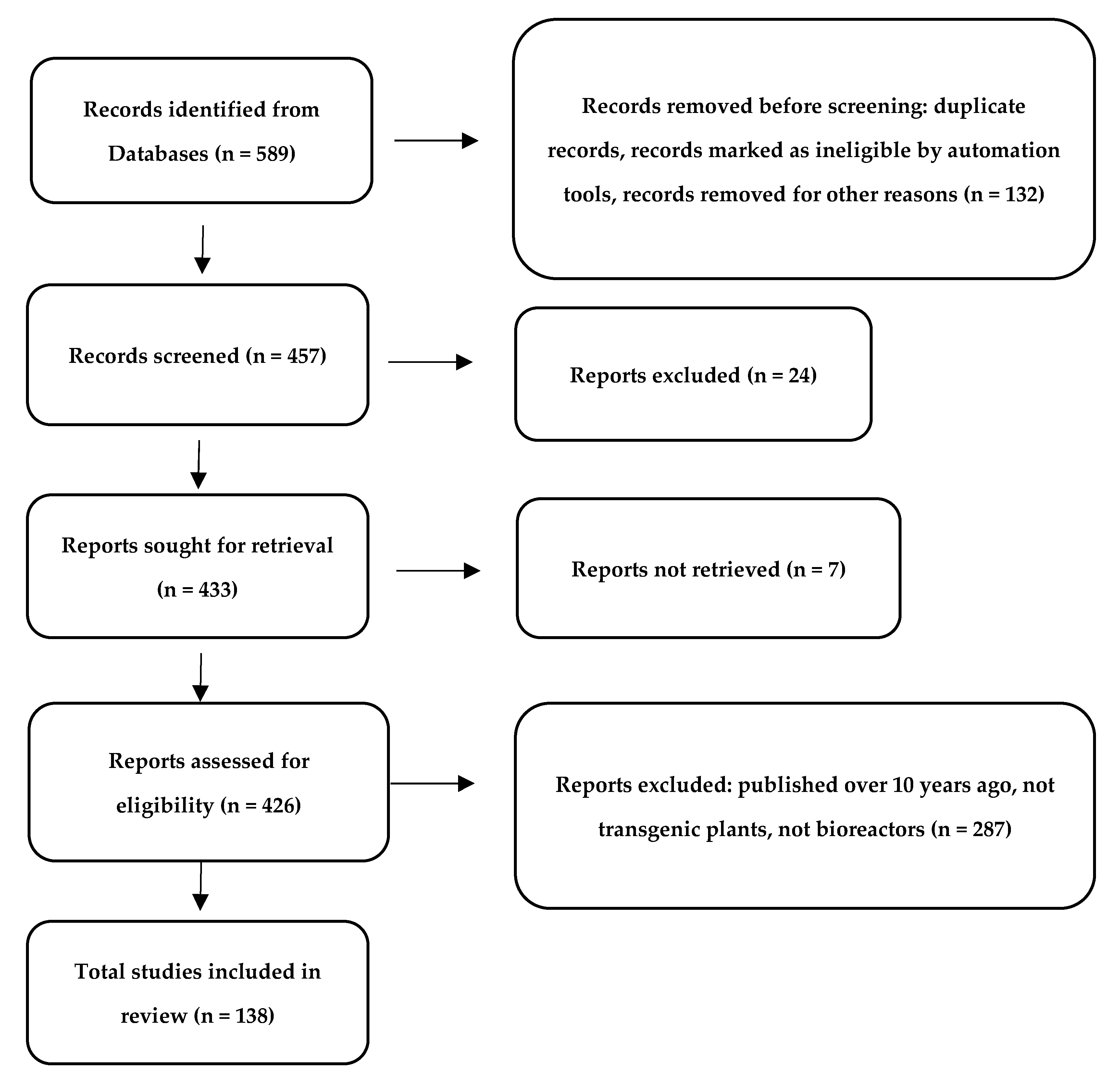
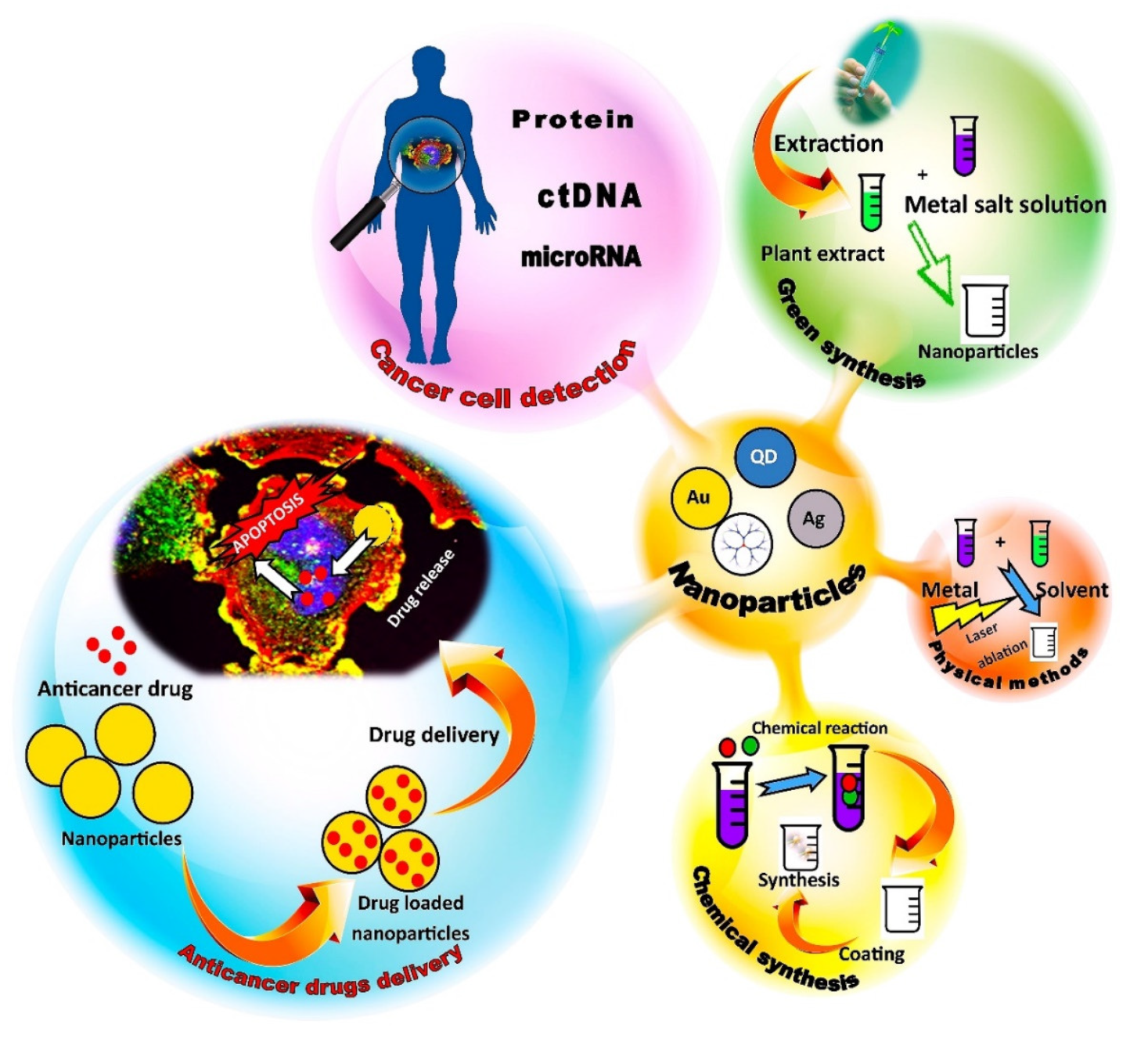
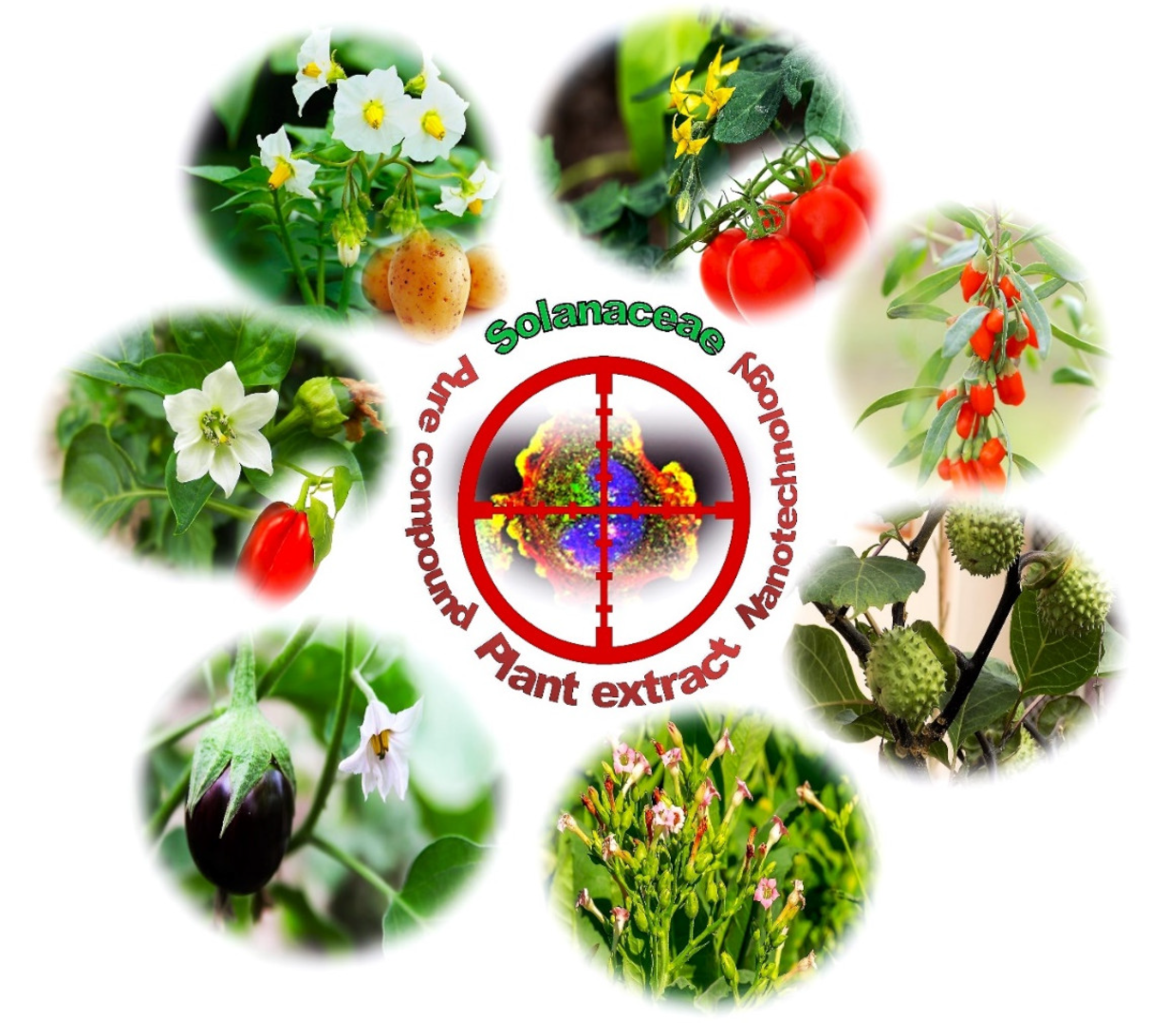
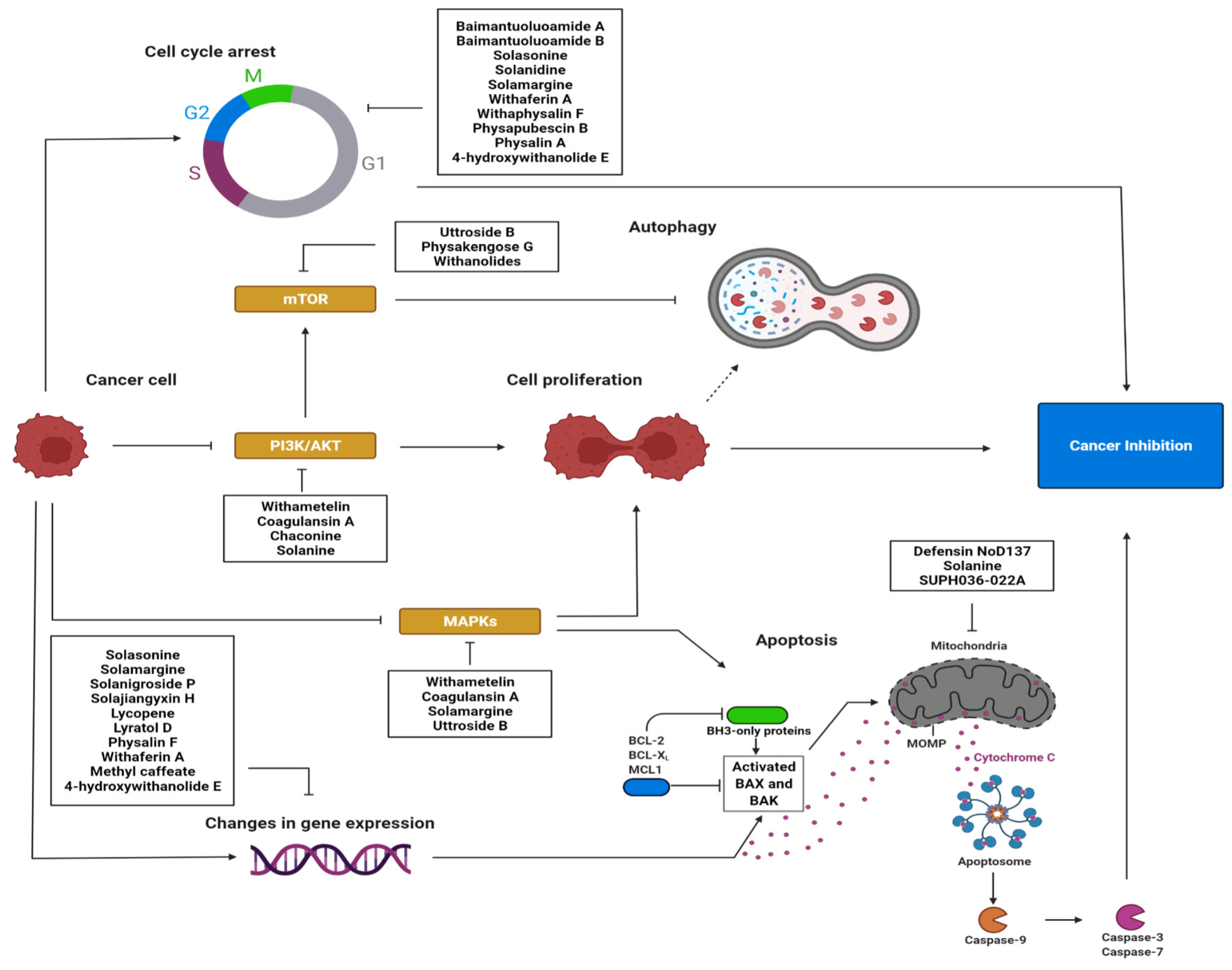

| Name of the Species | Part of the Plant | Type of Solvent | Class of Compounds/Compounds Identified in Extract/Fraction | Cancer Cell Lines | Activity/Mechanism/Effect | Ref. |
|---|---|---|---|---|---|---|
| Athenaea velutina Sendtn. | leaves | dichloromethane: methanol (1:1) | phenolic compounds and flavonoids | MCF-7, HepG2, B16-F10 | Cytotoxic (IC50 values in the range of 1.56–200 μg/mL) (MTT test); inhibition of migration, adhesion, invasion and cell colony formation. | [161] |
| Capsicum annuum L. | red pericarp | water/methanol | capsianoside derivatives | HCT116, PC-3 | Cytotoxic (IC50 = 51 μg/mL and 60 μg/mL) (MTT test) | [162] |
| Capsicum annuum L. | fruits | ethanol | carotenoids, chlorophyll, polyphenols, tannins, and flavonoids | Calu6 | Cytotoxic | [163] |
| Solanum betaceum Cav. | fruits | ethanol | phenolics | HepG2, MDA-MB-231 | Cytotoxic (IC50 values in the range of 30–80 μg/mL) (MTT test) | [164] |
| Datura innoxia Mill. | leaves | water | phenolic and flavonoid contents | K562 | Cytotoxic (IC50 = 0.6 mg/mL) (MTT test); antiproliferative activity by interaction with DNA and histones | [165] |
| Datura stramonium L., Datura inoxia Mill. | leaves | ethyl acetate | rutin, gallic acid, catechin, apigenin and caffeic acid | PC-3, MDA-MB 231, MCF-7 | Cytotoxic (IC50 < 3 μg/mL) (MTT assay); anti-tumour activity (evaluation of haematological, biochemical and histological) | [166] |
| Hyoscyamus reticulatus L., Hyoscyamus tenuicaulis Schönb.-Tem. Lycium shawii Roem. & Schult. and Solanum luteum L. | shoots, leaves, stems | dichloromethane | - | MOLT-4 | Cytotoxic (IC50 values in the range of 35.5–>50 μg/mL) (MTT test) | [167] |
| Ipomoea batatas (L.) Lam. | root tubers and leaves | methanol/trifluoroacetic acid (TFA), ethanol/TFA, methanol/TFA/water, and ethanol/TFA/water | anthocyanins | MCF-7, HCT-116, and HeLa | Antiproliferative properties | [168] |
| Lycium barbarum L. | fruits (Goji berries) | ethanol | - | T47D | Cytotoxic (IC50 = 0.75 mg/mL) (MTT test); induction of apoptosis by changes of the apoptotic protein expression (increase in pro-apoptotic proteins and a decrease in anti-apoptotic proteins) | [169] |
| Lycium barbarum L. | fruits | - | phenolics | HepG2 | Cytotoxic (18%, at 1600 μg/mL) (MTT test) | [170] |
| Lycium barbarum L. | fruits | methanol/ethyl acetate/petroleum ether | zeaxanthin-rich extract | BJ HEP, A375 | Cytotoxic (IC50 = 75.15 and 85.06 μM for BJ HEP, 62.36 and 92.59 μM for A375) | [171] |
| Lycium barbarum L. | water | pectin-free, polysaccharides fraction | MCF-10A, MCF-7, HER2, MDA-MB-231 | Cytotoxic 1000 μg/mL (MTT test) | [172] | |
| Lycium barbarum L. | fruits | - | carotenoids | Caco-2 cells | Effect (range from 6.5 to 92.8%) (MTT test) | [173] |
| Lycium barbarum L., Lycium ruthenicum Murr | fruits | ethyl acetate | phenolics flavonoids, carotenoids | MDA | Cytotoxic (EC50 = 4.08 mg/mL); apoptosis via modulating cell cycle arrest, cell apoptosis, and the p53 signalling pathway | [174] |
| Lycium chinense Mill. | fruit (Goji berries) | ethanol | - | LS180 | Cytotoxic (MTT test) | [175] |
| Lycium europaeum L. | fruit | methanol | phenolic, flavonoids, anthocyanins, carotenoids, lycopens, and condensed tannins content | A549, PC12 | Cytotoxic (MTT assay), morphological changes and induction of apoptosis by caspase 3/7 activation | [176] |
| Lycopersicon esculentum Mill. | leaves | hydromethanol, acetone and alkaloid extracts | phenolic compounds, pigments, and alkaloids | AGS | Cytotoxic (IC50 values in the range of 9–171 μg/ mL) | [177] |
| Nicotiana glauca Graham | leaves | ethanol | palmitic acid and scopoletin | CCL-136 | Anti-proliferative effect and induction of apoptosis by changes in mitochondrial and nuclear morphology | [178] |
| Nicotiana glauca Graham | stem | n-hexane | beta-sitosterol, stigmasterol, campesterol, D-alpha-tocopherol, scopoletin, 3,7,11,15-tetramethyl-2-hexadecen-1-ol, Bicyclo[3.1.1]heptanes | MCF-7 | Cytotoxic (IC50 = 17.98 μg/mL) (MTT test); induction of apoptosis by changes in mitochondrial membrane potential, chromatin condensation and cytoplasmic shrinkage | [179] |
| Physalisalkekengi L. | fruit | chloroform | physalin D | HeLa MCF-7, A431 | Growth inhibition | [180] |
| Physalis angulata L. | leaves | ethanol | - | SKOV3, HL-60 | Cytotoxic (IC50 in the range of 18–375 μg/mL) (MTS test) | [181] |
| Physalis peruviana L. | fruit | ethanol, isopropanol | ursolic acid, rosmarinic acid, gallic acid, quercetin, and epicatechin | HeLa | Cytotoxic (IC50 = 60.48 μg/mL) (Resazurin Reduction) | [182] |
| Solanum aculeastrum Dunal | whole plant | methanol | solamargine and solanine | SH-SY5Y | Cytotoxic (IC50 = 10.72 μg/mL) (sulforhodamine B (SRB) colorimetric assay) | [183] |
| Solanum capsicoides All. | seeds | methanol | carpesterol | K562 | Cytotoxic (U251 GI50 = 24.7 μg/mL, MCF-7 GI50 = 27.1 μg/mL, 786-0 GI50 = 25.8 μg/mL, OVCAR-03 GI50 = 24.0 μg/mL, and K562 GI50 = 32.0 μg/mL) (Toxicity Estimation Software Tool (TEST) software) | [184] |
| Solanum chacoense Bitter. | leaves, tubers | methanol | phenolic acids and volatile compounds | MCF-7 | Cytotoxic (IC50 values in the range of 132.9–390.7 μg/mL) (MTT test); induction of apoptosis by changes in expression of proliferation- and apoptosis-related genes (overexpression Bax¸ down-regulation Bcl-2) | [185] |
| Solanum incanum L. | whole plant | acid base precipitation followed by the different ratios of ethanol/H2 O extraction (according to the patents—US patent 7,078,063, EU patent 1,058,334, and Japan patent 3,940,928) | solamargine | B16 | Cytotoxic (IC50 in the range of 2.91–6.85 μg/mL) (MTT test); induction of apoptosis by DNA damage and activation of caspase 9; G0/G1 cell cycle arrest | [186] |
| Solanum incanum L. | fruit | water | - | HCT-116 | Cytotoxic (IC50 = 23.35 μg/mL) (Sulphorhodamine B test); ultrastructural changes (loss of the surface microvilli, mitochondrial damage, formation of autophagic vacuoles, nuclear shrinkage, chromatin condensation and nucleolar changes) | [187] |
| Solanum incanum L., Solanum schimperianum Hochst, Solanum nigrum L., Physalis lagascae Roem. & Schult. and Withania somnifera (L.) Dunal | leaves | methanol | hydroxycinnamic acid amides, steroid alkaloids, steroidal glycoalkaloid fractions | MCF-7, MDA-MB-231, HT-29, HTC-116 | Cytotoxic (IC50 values in the range of μg/mL and 1.29–19.83 μg/mL) (MTT test) | [188] |
| Solanum lycopersicum L. | fruit | methanol | phenolic, ascorbic acids and flavonoid content | HepG2, HeLa | Cytotoxic (IC50 values in the range of 156–212 μg/mL) (MTT test) | [189] |
| Solanum lycopersicum L. | fruit | ethanol/water | carotenoids, phenolics, sterol content, fatty acid | HT-29 | Cytotoxic (IC50 = 150 μg/mL) (MTT test) | [190] |
| Solanum lycopersicum L. | leaves | ethanol | - | A549, HeLa | Cytotoxic (IC50 < 31.25 μg/mL) (MTT); significant caspase-3 activity | [191] |
| Solanum lyratum Thunb. | whole plant | chloroform | - | HSC-3, SAS, CAL-27 | Cytotoxic (IC50 values in the range of 40–80 μg/mL); induction of apoptosis (in extrinsic- and intrinsic-dependent pathways) by changing levels of the proteins p21, p16, CDK2 and CDK6, and cyclins D1 and E. It also promotes proapoptotic proteins Bax and Bad and inhibits anti-apoptotic proteins Bcl-2 and Bcl-xl, promotes ROS and Ca2þ production, decreases mitochondrial membrane potential, increases NO production | [192] |
| Solanum nigrum L. | whole plant | water | alkaloids, glycosides, flavonoids, polyphenols terpenoids, and saponins | A-375 | Cytotoxic | [193] |
| Solanum nigrum L. | whole plant | water | - | MCF-7 | Cytotoxic (IC50 = 100 μg/mL) (crystal violet staining assay) induction of apoptosis by activation of caspase-3 and loss of mitochondrial integrity. It also inhibited EMT (cancer cell metastasis and migration) by downregulating ZEB1, N-cadherin, and vimentin | [194] |
| Solanum nigrum L. | leaves | water | - | SCC-4 | Cytotoxic (IC50 = 150 μg/mL) (crystal violet staining assay); induction of apoptosis by increasing ROS production, activating caspase-9 and caspase-3, alleviating the inhibition of glucose uptake and loss of mitochondrial integrity | [195] |
| Solanum nigrum L. | fruit | ethanol | phenolic and flavonoid compounds | MCF-7 | Cytotoxic (IC50 value = 40.77 μg/mL) (MTT assay); arrest the cell cycle in the S phase and continued to the G2/M phase | [196] |
| Solanum nigrum L. | whole plants | water | - | HepG2 | Cytotoxic (MTT test); inhibits the proliferation and AKT/mTOR pathway | [197] |
| Solanum paniculatum L. | fruit | ethanol | carotenoids, phenolic compounds | MCF-7 | Cytotoxic (IC50 value = 1.87–30 μg/mL) | [198] |
| Solanum schimperianum Hochst. ex A.Rich Solanum villosum Mill. Solanum coagulans Forssk. Solanum glabratum Dunal., Solanum incanum L., Solanum nigrum L. | aerial parts | ethanol | rutin | HepG2, HEK293, MCF-7 | Cytotoxic (IC50 values in the range of 20.4–30.1 μg/mL) (MTT assay) | [199] |
| Solanum sessiliflorum Dunal | pulp/seed | ethanol | caffeic and gallic acids, beta-carotene, catechin, quercetin, and rutin | MCF-7, HT-29 | Cytotoxic (IC50 values in the range of 3–>30 μg/mL) (MTT assay) | [200] |
| Solanum tuberosum L. | tuber, peels, flesh, flowers | water | - | HT-29 | Cytotoxic (IC50 values in the range of 7.2–14.4 mg/ mL) (MTS test); induction of apoptosis by upregulation of caspase-3 protease activity | [201] |
| Solanum tuberosum L. | tubers | water | polyphenol and anthocyanin-rich | U937 | Cytotoxic; expression of specific apoptotic agents, such as caspase 8, 9, 3, and poly (ADP-ribose) polymerase (PARP) | [202] |
| Solanum tuberosum L. | peels | ethanol/water | caffeic, caffeoylquinic acid, O-glycosylated flavonol derivatives and polyamine derivatives | NCI-H460, MCF-7, HepG2, and HeLa | Cytotoxic (GI50 values in the range of 51–365 μg/mL) | [203] |
| Withania coagulans (Stocks) Dunal | roots, leaves, leaf stalk, and fruit | methanol | flavonoid and phenolic content, myricetin, quercetin, gallic acid, hydroxybenzoic acid | HeLa, MCF-7, RD, RG2 | Cytotoxic (IC50 values in the range of 0.96 μg/mL–6.69 μg/mL (Presto Blue cell metabolic test) | [204] |
| Withania coagulans (Stocks) Dunal | fruits | methanol | withaferin A | MDA-MB-231 | Cytotoxic (IC50 = 40 mg/mL) (MTT assay) | [205] |
| Withania somnifera (L.) Dunal | root | water | - | A375 | Cytotoxic (IC50 = 350 μg/mL) (MTT test); induction of morphological changes (apoptotic body and nuclear blebbing) and DNA fragmentation | [206] |
| Withania somnifera (L.) Dunal | leaves | water | - | HepG2 | Cytotoxic (IC50 = 5.0 mg/mL)(MTT test); induction of apoptosis by caspase-3, -8 and -9 activation | [207] |
| Withania somnifera (L.) Dunal | roots and leaves | water, ethanol, metanol (various methods of extraction and maceration) | withanoside V, withanoside IV, 12-deoxywithastramonolide, withanolide A, and withaferin A | HeLa | Cytotoxic (IC50 = 10 mg/mL) (MTT test) | [208] |
| Withania somnifera (L.) Dunal | roots | ethanol/water | alkaloids, carbohydrates, phytosterols and phenolics | A549 | Cytotoxic (IC50 = 99.7 μg/mL) (MTT test); anticancer activity via antioxidant, apoptotic, autophagy and angiogenesis inhibition mechanisms | [209] |
| Withania somnifera (L.) Dunal | roots | - | withaferin A, whitanolide, withanolide B | Jurkat | Proapoptotic mechanism involves intracellular Ca2+ accumulation and the generation of reactive oxygen species | [210] |
| Withania somnifera (L.) Dunal | leaves | water | - | C6 glioma | Activation of multiple pro-apoptotic pathways, leading to suppression of cyclin D1, Bcl-xl, and p-Akt | [211] |
| Withania somnifera (L.) Dunal | stems | methanol, ethanol, water | withaferin A | MDA-MB-231 | Cytotoxic (IC50 values of 30 and 37 μg/mL) (MTT test) | [212] |
| Name of the Species | Part of the Plant | Compounds/Fraction | Cancer Cell Lines | Activity/Mechanism/Effect | Ref. |
|---|---|---|---|---|---|
| Brugmansia suaveolens (Humb. & Bonpl. ex Willd.) Bercht. & J.Presl | leaves | SUPH036-022A | MCF7, A549 | Cytotoxic (MTT test) and induction of apoptosis by loss of mitochondrial integrity and increase of ROS | [229] |
| Capsicum annuum L. | pericarp | polyphenolic content | U937 | Cytotoxic (Trypan blue assay) | [230] |
| Capsicum chinenses L. | fruits | capsaicin and dihydrocapsaicin | SH-SY5Y | Cytotoxic (IC50 = 69.75 μg/mL) (Trypan blue assay) | [231] |
| Datura innoxia Mill. | aerial parts | dinnoxolide A, 21,27-dihydroxy-1-oxowitha-2,5,24-trienolide, daturamalakin B, withametelin | U251 and SK-LU-1 | Cytotoxic (IC50 values in the range of 1.2–19.6 μM) (SRB assay) | [232] |
| Datura inoxia Mill. | leaves | phytosterol, rinoxiaB | HCT 15 | Cytotoxic (IC50 = 4 μM), apoptotic effects by targeting BAX/Bcl2 pathway | [233] |
| Datura metel L. | seeds | indole alkaloids, daturametelindoles A–D | SGC-7901, Hepg2, MCF-7 | Cytotoxic (IC50 values in the range of 6.73–47.63 μM/mL) (MTT test) | [234] |
| Datura metel L. | whole plants | steroidal saponins (metelosides A–E) | HepG2, MCF-7, and SK-Mel-2 | Cytotoxic (SRB assay) | [235] |
| Lycium ruthenicum Murray | fruits | petunidin 3-O-[6-O-(4-O-(trans-p-coumaroyl)-α-l-rhamnopyranosyl)-β-d-glucopyranoside]-5-O-[β-d-glucopyranoside] | DU-145 | Cytotoxic (IC50 = 361.58 μg/mL) (MTT test), apoptosis through the ROS/PTEN/PI3K/Akt/caspase 3 signalling pathway | [236] |
| Lycium shawii Roem. & Schult | whole plant | aloe emodin, dehydrocostus lactone costunolide, lyciumate, aloe emodine 11-O-rhamnoside, emodin-8-O-β-d-glucoside and lyciuma | MDA-MB-231 | Cytotoxic (IC50 values in the range of >72 μg/mL) (MTT test) | [237] |
| Physalis alkekengi var. franchetii Mast. | aerial parts | physalin A | A549 | Cytotoxic (IC50 = 28.4 μM/mL) (MTT test); cell cycle arrest in the G2/M phase and increase of ROS | [238] |
| Physalis alkekengi var. franchetii Mast. | - | physakengose G | U-2OS, HOS | Cytotoxic (MTT test), increase of lysosome dysfunction, induction of apoptosis (mitochondrial-dependent pathway) and inhibition of mTOR signalling | [239] |
| Physalis alkekengi var. franchetii Mast. | calyx | withanolides | A549, K562 | Cytotoxic (IC50 value in the range of 1.9–4.3 μM/mL) (MTT test); induction of apoptosis by suppressing the PI3K/Akt/mTOR signalling pathway | [240] |
| Physalis angulata L. | stems and leaves | physangulatins A−N; withaphysalin Y;withaphysalin Z | C4-2B, 22Rvl, 786-O, A-498, ACHN, A375-S2 | Cytotoxic (IC50 values in the range of 0.18–11.59 μM/mL) (MTT test) | [241] |
| Physalis angulata L. | stems and leaves | physalins and analogues (physalins V-IX, 16,24-cyclo-13, 14-seco withanolides) | C4-2B, 22Rv1, 786-O, A-498, ACHN, A375-S2 | Cytotoxic (IC50 values in the range of 0.24–3.17 μM/mL) (MTT test) | [242] |
| Physalis angulata L. | whole plant | physalin B, physalin F | HL60, A549, HeLa, HuCCA-1, HepG2, MDA-MB-231), T47-D), S102, H69AR, MRC-5 | Cytotoxic (IC50 values in the range of 0.76–11.92 μM/mL) (MTT, XTT test) | [243] |
| Physalis angulata L. | aerial parts | withanolide | MG-63, HepG-2, MDAMB-231 | Cytotoxic (IC50 values in the range of 3.50–15.74 μM/mL) | [244] |
| Physalis angulata L. | whole plant | withanolides | A549, HeLa and p388 | Cytotoxic (IC50 values in the range of 1.91–>30 μM/mL) (MTT test); apoptosis-inducing activity by flow cytometric analysis | [245] |
| Physalis crassifolia Benth. | fruits | 17β-Hydroxy-18-acetoxywithanolides | LNCaP, PC-3M, MCF-7, NCI-H460 and SF-268 | Cytotoxic (IC50 values in the range of 0.12–>5.0 μM/mL) (AlamarBlue) | [246] |
| Physalis ixocarpa Lam. | fruits | ixocarpalactone A | SW1990, MCF-7, HeLa | Cytotoxic (IC50 values in the range of 3.22–7.51 μM/mL) (CCK-8 assay); induction of apoptosis by inhibition of PHGDH | [247] |
| Physalis minima L. | whole plant | withanolides | A549, SMMC-7721, MCF-7 | Cytotoxic (IC50 value in the range of 40.01–82.17 μM/mL) (MTT test) | [248] |
| Physalis minima L. | whole plant | 5, 6-β-epoxywithanolides | A549, SMMC-7721, MCF-7 | Cytotoxic (IC50 values in the range of 31.25–80.14 μM/mL) (MTT test) | [249] |
| Physalis minima L. | aerial parts | withanolide E, withaperuvin C, 4b-hydroxywithanolide E, 28-hydroxywithaperuvin C, physaperuvin G, and 4-deoxywithaperuvin | HepG2, SK-LU-1, and MCF7 | Cytotoxic (IC50 in the range of 0.051–0.86 μg/mL) | [250] |
| Physalis minima L. | aerial parts | physaminilides HeK, withanolides | A375 | Cytotoxic (IC50 values in the range of 1.2–7.5 μM/mL) (MTT assay) | [251] |
| Physalis peruviana L. | seeds | perulactones I–L, 17-deoxy-23β-hydroxywithanolide E, 23βhydroxywithanolide E, 4-deoxyphyperunolide A, 7β-hydroxywithanolide F, 7βhydroxy-17-epi-withanolide K, 24,25-dihydro-23β,28-dihydroxywithanolide G, and 24,25-dihydrowithanolide E, withanolides | LNCaP, 22Rv1 ACHN, M14, SK-MEL-28 | Cytotoxic (IC50 values in the range of 0.11–> 2 μM/mL) (MTS assay) | [252] |
| Physalis peruviana L. | aerial parts | 4-hydroxywithanolide E | HT-29, HCT116, Caco-2 | Cytotoxic (IC50 = 0.84 μM/mL) (CCK-8); cell cycle arrest in the G0/G1 phase (at low concentrations) and induction of apoptosis (at higher concentrations) by changes in apoptosis-related proteins and genes and histone modification | [253] |
| Physalis philadelphica Lam. | aerial parts | 7-epi-philadelphicalactone A; withaphysacarpin philadelphicalactone C, ixocarpalactone A | LNCaP, ACHN, UO-31, M14,SK-MEL-28 | Cytotoxic (IC50 values in the range of 0.06–>10 uM/mL) (MTS assay) | [254] |
| Physalis pubescens L. | Fruits | physapubescin B | SKOV3, HepG2, MDA-MB-231, PC-3, Du145 | Cytotoxic (IC50 values in the range of 1.85–16.05 μM) (MTT test); cell cycle arrest in the G2/M phase (associated with reduced Cdc25C levels and increased levels of CyclinB1, p21 as well as p-Cdk1) | [255] |
| Physalis pubescens L. | stems and leaves | physapubescin E physapubside A physapubside B physapubescin F physapubside C physapubescin G physapubescin H physapubescin I and two withanolides | C4-2B, 22Rvl, 786-O, A-498, ACHN, Caki-2, A375-S2, A375 | Cytotoxic (IC50 values in the range of 0.17–5.30 μM/mL) (MTT test) | [256] |
| Physalis pubescens L. | fruits | physapubescin B | ES-2, A2780, A2780/TR | Induction of apoptosis and cell-cycle arrest | [257] |
| Physalis pubescens L. | fruits | physapubescin I | SW1990 | Cytotoxic (IC50 in the range of 2.06–5.04 μM/mL) | [258] |
| Salpichroa scandens Dammer | aerial parts | salpichrolides A, C, D, G, M, S, T, and 2,3-dihydrosalpichrolide B and derivatives | LNCaP, PC-3, MCF-7, T47D | Cytotoxicity (IC50 values in the range of 29.97–64.91 μM/mL) (MTS assay) | [259] |
| Solanum capsicoides All. | seeds | carpesterol | U251, MCF-7, 786-0, OVCAR 03, K562 | Cytotoxic (GI50 values in the range of 24.0–226.3 μg/mL) | [184] |
| Solanum incanum L., Solanum schimperianum Hochst, Solanum nigrum L., Physalis lagascae Roem. & Schult. and Withania somnifera (L) Dunal | leaves | steroidal glycoalkaloid fractions | MCF-7,MDA-MB-231, HT-29, HTC-116 | Cytotoxic (IC50 values in the range of 1.29–>50 μg/mL) (MTT test) | [188] |
| Solanum lycopersicum L. | different parts | α-tomatine | CT-26 | Inhibition of tumour growth and induction of apoptosis through caspase-independent signalling pathways | [260] |
| Solanum lyratum Thunb | whole plant | sesquiterpenoids including solajiangxin H and lyratol D | MCF-7, HCT-8, A549, SGC-7901, BEL-7402) | Cytotoxicity (IC50 value in the range of 4.8–5.9 μg/mL) (CCK-8); induction of apoptosis (mitochondrial-dependent pathway) by changes in apoptosis-related proteins | [261] |
| Solanum lyratum Thunb. | whole plant | steroidal compounds | SGC-7901, BEL-7402 | Cytotoxic (IC50 value in the range of 0.39–71.89 μmol/mL) (MTT test) | [262] |
| Solanum melongena L. | fruit peels | solasonine; solasodine; solamargine | Huh7, HepG2 | Cytotoxic (IC50 values in the range of 9.6–91.8 μM/mL) (SRB assay); cell cycle arrest in S-phase, induction of apoptosis, | [263] |
| Solanum melongena L. | sepals | melongenamides H-I | HeLa, Ishikawa and MGC-803 | Cytotoxic (IC50 values in the range of 15.3–32.1 μM/mL) (CCK8 assay) | [264] |
| Solanum nigrum L. | whole plant | degalactotigonin, solasodine, O-acetyl solasodine, and soladulcoside A | PANC1, MIA-PaCa2, A549, NCI-H1975, and NCI-H1299 | Cytotoxic (IC50 values in the range of 2.9–>30) (Cell Migration Assay),; induces apoptosis and cell cycle arrest via inhibiting the EGFR signalling pathways | [265] |
| Solanum nigrum L. | fruits | solaoiacid | A549 | Cytotoxic (IC50 = 2.3 μmol/mL (MTT assay) | [266] |
| Solanum nigrum L. | fruits | alkaloid glycosides | HL-60, U-937, Jurkat, K562, and HepG2 | Cytotoxic (IC50 values in the range of 2.72–39.19 μM/mL) (MTT assay) | [267] |
| Solanum nigrum L. | leaves | uttroside B | HepG2 | Cytotoxic (IC50 = 0.5 μM) (MTT test); induction of apoptosis by down-regulating the activation of MAPK and mTOR pathways | [268] |
| Solanum nigrum L. | - | degalactotigonin | different lines of osteosarcoma cells | Cytotoxic (IC50 values in the range of 12.91–31.46 μM/mL) (MTT test); induction of apoptosis, suppression of migration and invasion by repression of the Hedgehog/Gli1 pathway through GSK3b inactivation. | [269] |
| Solanum nigrum L. | fruits | solanine A; 7a-OH khasianine, 7a-OH solamargine; 7a-OH solasonine | MGC803, HepG2, SW480 | Cytotoxic (IC50 values in the range of 6.00–9.25 μM/mL) (SRB assay) | [270] |
| Solanum septemlobum Bunge | whole plant | septemlobin D and 11,12-O-isopropylidenesolajiangxin F | P-388, HONE-1 and HT-29 | Cytotoxic (IC50 values in the range of 3.0–7.3 μM/mL) (MTT test) | [271] |
| Solanum torvum Swartz. | Fruits | methyl caffeate | MCF-7 | Cytotoxic (IC50 = 0.62 μM/mL) (MTT test); induction of apoptosis by caspase activation via cytochrome c release from mitochondria. Further, increased DNA fragmentation, apoptotic body and changes in apoptosis-related proteins (Bcl-2, Bid and Bax) | [272] |
| Withania adpressa Coss. | leaves | glycowithanolide named wadpressine, withanolide F, withaferin A, coagulin L and nicotiflorin | MM-CSCs, RPMI 8226 | Cytotoxic (IC50 values in the range of 0.1–>20 μM/mL) (MTT test) | [273] |
| Withania somnifera (L.) Dunal | roots | withasilolides A−F, withanone | A549, SK-OV-3, SK-MEL-2, and HCT-15 | Cytotoxic (IC50 values in the range of <10.0 μM/mL) (SRB assay) | [274] |
| Withania somnifera (L.) Dunal | leaves | withaferin A and its derivatives | PANC-1, DU145, MCF7 | Cytotoxic (IC50 values in the range of 1.1–>25 μM/mL) | [275] |
| Withania somnifera (L.) Dunal | roots | protein fraction | MBA-MB-435, MDA-MB-231, T47D, MCF-7, HCT-116, A549 | Cytotoxic (IC50 = 92 μg/mL) (MTT test); induction of apoptosis by decrease of the mitochondrial membrane potential levels, promotion of the reactive oxygen species production, changes in apoptosis-related proteins regulation and caspases-3 activation. Further, cell cycle arrest in G2/M-phase. | [276] |
| Withania somnifera (L.) Dunal | roots and leaves | withanoside V, withanoside IV, 12-deoxywithastramonolide, withanolide A, and withaferin A | HeLa | Cytotoxic (IC50 value in the range of 3.2 to 7.7 μM/mL) (MTT test) | [208] |
| Name of the Species | Part of the Plant | Type of Solvent/Active Compounds | Type of Nanoparticles | Cancer Cell Lines | Activity/Mechanism/Effect | Ref. |
|---|---|---|---|---|---|---|
| Atropa acuminate Royle ex Lindl. | leaves | water/total phenolic, flavonoid and tannin | Ag | HeLa | Cytotoxic (IC50 = 5.418 μg/mL) (MTT test) | [279] |
| Lycium chinense Mill. | fruits | water | Au, Ag | MCF 7 | Cytotoxic (MTT test) | [280] |
| Lycopersicon esculentum L. | fruits | benzene/lycopene | Ag, Au, Fe | COLO320DM, HT29 and HeLa | Cytotoxic (MTT test) | [281] |
| Solanum elaeagnifolium Cav. | leaves | water | Ag-AgO-Ag2O | A-549 | Cytotoxic (IC50 = 67.09 μg/mL) (MTT test) | [282] |
| Solanum incanum L. | leaves | water | Ag-NPs | HepG2, MCF-7 | Cytotoxic (IC50 values in the range of 21.76–129.9 μg/mL) (MTT test) | [283] |
| Solanum lycocarpum A.St.-Hil. | fruits | glycoalkaloids | NP-AE | RT4 | Cytotoxic (2D model: IC50 = 4.18 μg/mL, 3D model: three-fold higher than in 2D cell culture) (2D—the neutral red assay, 3D—CellTiter-Glo®3D); induction of apoptosis by cell cycle arrest | [284] |
| Solanum lycocarpum L. | fruits | ethanol-soluble fraction glycoalkaloids, solamargine and solasonine | AE-loaded folate-targeted nanoparticles | MDA-MB-231, RT4 | Folate-conjugated polymeric nanoparticles are potential carriers for targeted glycoalkaloidic extract delivery to bladder cancer cells (2D model: IC50 = 3.78 μg/mL, 3D model: 7.7 μg/mL) (2D model—Neutral Red Uptake assay, 3D model: CellTiter-Glo®3D) | [285] |
| Solanum lycopersicum L. | tomato’s pomase | ethyl acetate/lycopene | lycopene-NPs | MCF-7, HCT-116, HepG2, | Cytotoxic (IC50 in the range of 72.40–92.54 μg/mL) (MTT test) | [286] |
| Solanum muricatum L. | leaves | water | Ag | HeLa | Cytotoxic (IC50 = 37.5 μg/mL) (MTT assay) | [287] |
| Solanum trilobatum L. | unripe fruits | water | Ag | MCF7 | Cytotoxic (MTT test); induction of apoptosis by changes in expression of proliferation- and apoptosis-related genes (overexpression Bax¸ down-regulation Bcl-2), and activation of caspases 3 and 9 | [288] |
| Solanum trilobatum L. | leaves | water | Mn-Ag co-doped FeO | MCF-7, HeLa | Cytotoxic (IC50 value in the range of 37.11–60.49 μg/mL) (MTT test) | [289] |
| Solanum xanthocarpum Schrad. & Wendl | leaves | water | Au | C666-1 | Cytotoxic (MTT test); triggering cell death by autophagy and apoptosis (mitochondrial-dependent pathway) | [290] |
| Withania somnifera L. | leaves | water/total flavonoid, phenolic and tannin | Se | A549 | Cytotoxic (IC50 = 25 μg/mL) (MTT test) | [291] |
| Withania somnifera L. | leaves | water/phenolic, flavonoid and tannin | Zn | HEP2, PC3, MCF-7, HCT-116, | Cytotoxic (IC50 value in the range of 19.17–88.3 7 μg/mL) (MTT test) | [292] |
| Name of the Species | Part of the Plant | Type of Slovent or Fraction or Compound | Chemotherapeutic Drugs | Cancer Cell Lines | Activity/Mechanism/Effect | Ref. |
|---|---|---|---|---|---|---|
| Capsicum frutescens L. | - | capsaicin | doxorubicin | Caco-2 and CEM/ADR 5000 | Enhancement of the doxorubicin cytotoxicity in cancer cells and chemosensitizing activity (inhibition of P-glycoprotein activity) | [297] |
| Lycium barbarum L. | fruits | water | doxorubicin | MCF-7, MDA-MB-231 | Enhancement of the doxorubicin cytotoxicity in cancer cells | [298] |
| Solanum cernuum Vell. | leaves | cernumidine | cisplatin | T24, RT4, 5637 | Enhancement of the cisplatin cytotoxicity in cancer cells. Inhibition of cell migration, down-regulation of MMP-2/9 and p-ERK1/2, increase EGFR activity. Furthermore, down-regulation of Bcl-2, up-regulation of Bax and reduction of the mitochondrial membrane potential | [299] |
| Solanum incanum L. | extract—according to the patent (US patent 7,078,063, EU patent 1,058,334, and Japan patent 3,940,928) SR-T100 | extract containing solamargine | cisplatin, paclitaxel | ES2, TOV-21G, IGROV1, A2780, A2780CP70, ov2008 and ov2008CP20 | Suppression of C/EBPβ and COL11A1 expression and its promoter activity | [300] |
| Solanum nigrum L. | leaves | water | cisplatin, doxorubicin | Hep3B, HepJ5 | Induction of caspase-7 and accumulation of microtubule associated protein-1 light chain-3 A/1B II | [301] |
| Solanum nigrum L. | leaves | water | cisplatin, doxorubicin, docetaxel | ES-2, SKOV-3, OVCAR-3 | Induction of caspase-3 and accumulation of microtubule associated protein-1 light chain-3 A/1B II | [302] |
| Solanum nigrum L. | unripe fruit | glycoside fraction (methanol) | doxorubicin | NCI/ADR-RES | Overcoming doxorubicin resistance by inhibiting the JAK-STAT3 signalling pathway by downregulation of JAK1, STAT3, pSTAT3, and Mdr1 expression. Furthermore, the cell growth suppression was proven to be apoptotic, based on results obtained from DNA fragmentation, annexin V apoptosis assay and PARP cleavage analysis.” | [303] |
| Name of The Species | Part of the Plant | Type of Solvent | Class of Compounds/Compounds Identified in Extract/Fraction | Potential Mechanism of Action | Ref. |
|---|---|---|---|---|---|
| Athenaea velutina Sendtn. | leaves | dichloromethane: methanol (1:1) | phenolic compounds and flavonoids | Suppression of the development of pulmonary melanomas following the intravenous injection of melanoma cells to C57BL/6 mice | [161] |
| Datura stramonium L., Datura inoxia Mill. | leaves | ethyl acetate | rutin, gallic acid, catechin, apigenin and caffeic acid | Alleviative effects in benzene induced leukaemia in Sprague Dawley rats | [166] |
| Physalis alkekengi L. | aerial parts | hydro alcoholic | - | Tumour progression on the 28 ER+ BC BALB/c mice animal model (the tumour size among the different doses of extract lose to 0.6 mm was in the greatest dimension with dosage of 10 mg/kg) | [310] |
| Physalis ixocarpa Lam. | fruits | - | ixocarpalactone A | Inhibition of the tumour growth in a SW1990 xenograft mouse model with low toxicities, suggesting its potential therapeutic application in pancreatic cancer treatment | [247] |
| Physalis pubescens L. | fruits | - | physapubescin B | Antitumour efficacy in human prostate cancer PC3 xenograft in nude mice | [255] |
| Solanum incanum L. | whole plant SR-T100 | acid base precipitation followed by the different ratios of ethanol/H2 O extraction (according to the patents—US patent 7,078,063, EU patent 1,058,334, and Japan patent 3,940,928) | solamargine | Extract SR-T100-treated C57BL/6 mice, the tumour burden of lung metastases was significantly reduced compared to that in control mice | [186] |
| Solanum incanum L. | whole plant SR-T100 | acid base precipitation followed by the different ratios of ethanol/H2 O extraction (according to the patents—US patent 7,078,063, EU patent 1,058,334, and Japan patent 3,940,928) | solamargine | Animal experiments showed that all papillomas (35/35) and 27 of 30 UVB-induced microinvasive SCCs in hairless SKH-hr1 female mouse mice disappeared within 10 weeks after once-daily application of topical SR-T100 extract | [304] |
| Solanum lycopersicum L. | different parts | - | α-tomatine | Intraperitoneally administered α-tomatine (5 mg/kg body weight) also markedly inhibited growth of the tumour using CT-26 cancer cells without causing body and organ weight changes. The reduced tumour growth in the BALB/c mice by 38% after 2 weeks was the result of increased caspase-independent apoptosis associated with increased nuclear translocation of AIF and decreased surviving expression in tumour tissues. | [260] |
| Solanum nigrum L. | fruits | methanol | rutin, solasonine, quercetin and solamargine | Reduction of the growth and infiltration of C6 glioma tissue and suppressed the proliferation of tumour cells in Wistar rats brain | [311] |
| Solanum nigrum L. | stems | - | polysaccharide fraction (SN-ppF3) | Tumour suppression mechanisms observed in SN-ppF3-treated mice were most probably due through enhancing the host immune response | [312] |
| Solanum nigrum L. | leaves | - | uttroside B | Drastic inhibition of tumour growth produced by uttroside B in NOD-SCID mice bearing human liver cancer xenografts demonstrates the chemotherapeutic efficacy of uttroside B | [268] |
| Solanum nigrum L. | - | - | degalactotigonin | Degalactotigonin injected intraperitoneally after tumour inoculation, significantly decreased the volume of osteosarcoma xenografts in athymic nude (nu/nu) mice model and dramatically diminished the occurrence of osteosarcoma xenograft metastasis to the lungs | [269] |
| Withania somnifera L. | leaves | water | ASH-WEX extract | Reduced the intracranial tumour volumes in vivo and suppressed the tumour-promoting proteins p-nuclear factor kappa B (NF-κB), p-Akt, vascular endothelial growth factor in the albino rat model of orthotopic glioma allograft | [211] |
Publisher’s Note: MDPI stays neutral with regard to jurisdictional claims in published maps and institutional affiliations. |
© 2022 by the authors. Licensee MDPI, Basel, Switzerland. This article is an open access article distributed under the terms and conditions of the Creative Commons Attribution (CC BY) license (https://creativecommons.org/licenses/by/4.0/).
Share and Cite
Kowalczyk, T.; Merecz-Sadowska, A.; Rijo, P.; Mori, M.; Hatziantoniou, S.; Górski, K.; Szemraj, J.; Piekarski, J.; Śliwiński, T.; Bijak, M.; et al. Hidden in Plants—A Review of the Anticancer Potential of the Solanaceae Family in In Vitro and In Vivo Studies. Cancers 2022, 14, 1455. https://doi.org/10.3390/cancers14061455
Kowalczyk T, Merecz-Sadowska A, Rijo P, Mori M, Hatziantoniou S, Górski K, Szemraj J, Piekarski J, Śliwiński T, Bijak M, et al. Hidden in Plants—A Review of the Anticancer Potential of the Solanaceae Family in In Vitro and In Vivo Studies. Cancers. 2022; 14(6):1455. https://doi.org/10.3390/cancers14061455
Chicago/Turabian StyleKowalczyk, Tomasz, Anna Merecz-Sadowska, Patricia Rijo, Mattia Mori, Sophia Hatziantoniou, Karol Górski, Janusz Szemraj, Janusz Piekarski, Tomasz Śliwiński, Michał Bijak, and et al. 2022. "Hidden in Plants—A Review of the Anticancer Potential of the Solanaceae Family in In Vitro and In Vivo Studies" Cancers 14, no. 6: 1455. https://doi.org/10.3390/cancers14061455
APA StyleKowalczyk, T., Merecz-Sadowska, A., Rijo, P., Mori, M., Hatziantoniou, S., Górski, K., Szemraj, J., Piekarski, J., Śliwiński, T., Bijak, M., & Sitarek, P. (2022). Hidden in Plants—A Review of the Anticancer Potential of the Solanaceae Family in In Vitro and In Vivo Studies. Cancers, 14(6), 1455. https://doi.org/10.3390/cancers14061455

