Immune Checkpoint Inhibitors as a Threat to the Hypothalamus–Pituitary Axis: A Completed Puzzle
by
 , , ,
, , ,
Agnese Barnabei
1 ,
,
Andrea Corsello
2,
Rosa Maria Paragliola
2, 
Giovanni Maria Iannantuono
3,
Luca Falzone
4 ,
,
Salvatore Maria Corsello
2,5 and 
Francesco Torino
3,* 1
Endocrinology Unit, P.O.—S. Spirito in Sassia, ASL Roma 1, Lungotevere in Sassia 1, I-00193 Rome, Italy
2
Unit of Endocrinology, Department of Translational Medicine and Surgery, Università Cattolica del Sacro Cuore-Fondazione Policlinico “Gemelli” IRCCS, Largo Gemelli 8, I-00168 Rome, Italy
3
Medical Oncology Unit, Department of Systems Medicine, University of Rome Tor Vergata, Via Montpellier 1, I-00133 Rome, Italy
4
Epidemiology Unit, IRCCS Istituto Nazionale Tumori ‘Fondazione G. Pascale’, I-80131 Naples, Italy
5
UniCamillus, Saint Camillus International University of Health Sciences, Via di Sant’Alessandro, 8, I-00131 Rome, Italy
*
Author to whom correspondence should be addressed.
Cancers 2022, 14(4), 1057; https://doi.org/10.3390/cancers14041057
Submission received: 31 December 2021
/
Revised: 11 February 2022
/
Accepted: 16 February 2022
/
Published: 18 February 2022
Simple Summary
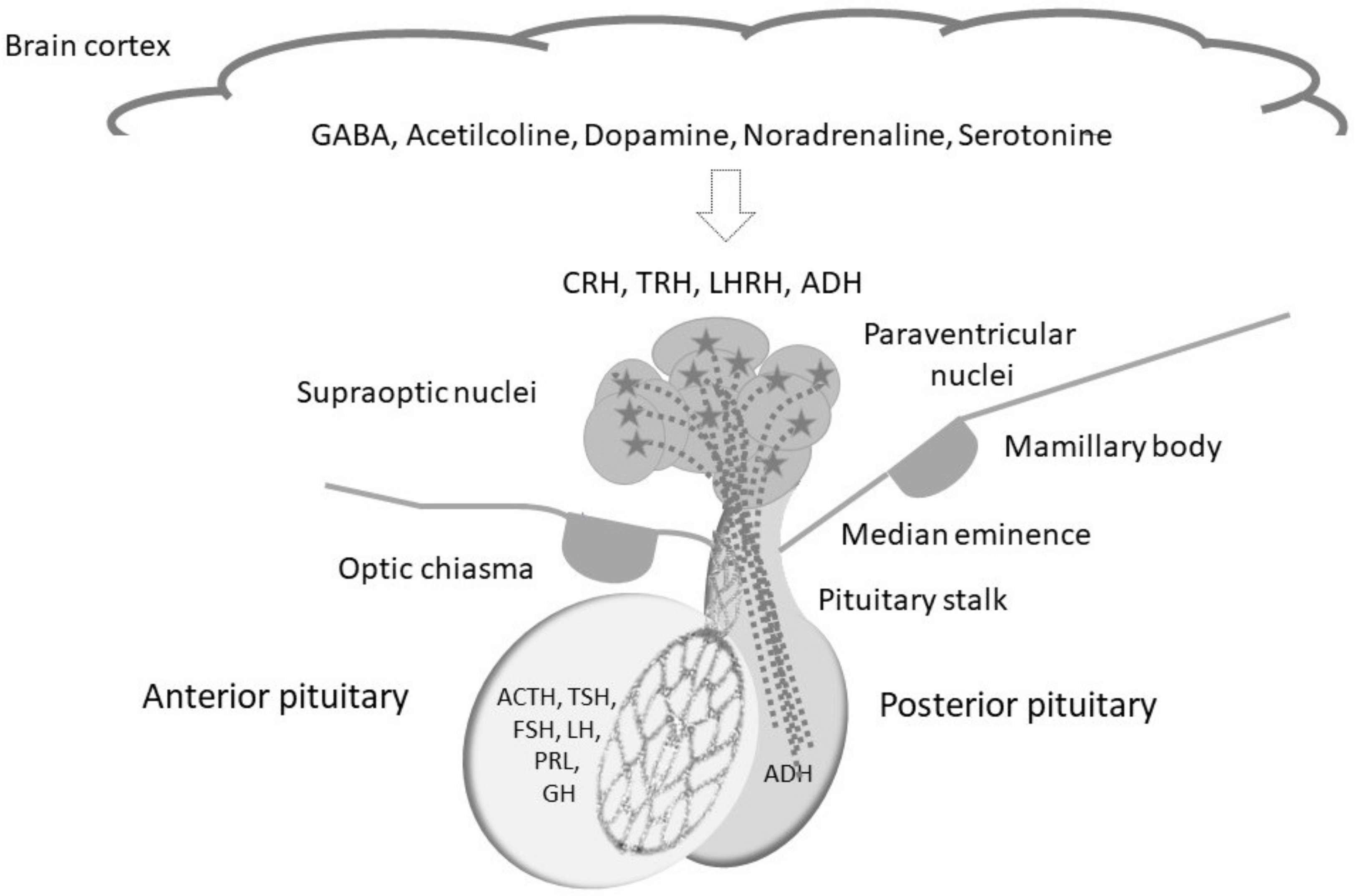
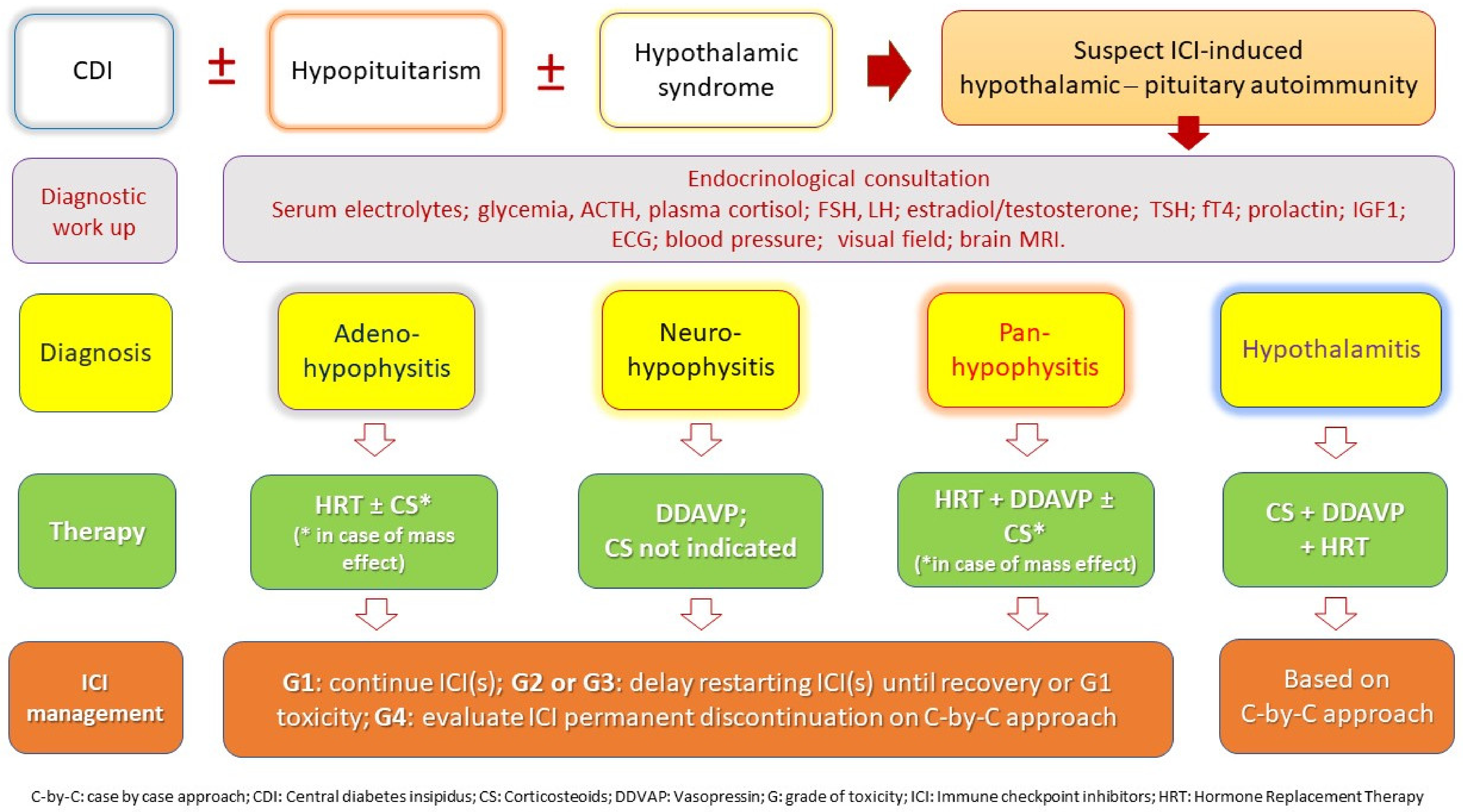
Endocrine dysfunctions are among the most frequent toxicities induced by immune checkpoint inhibitors (ICI). Recent evidence suggests that each tract of the hypothalamic–pituitary axis can be injured by ICI, though at different frequencies. According to the limited literature, ICI agents modulating the PD-1/PD-L1 axis rarely cause posterior pituitary/hypothalamic dysfunction. In comparison, anti-CTLA4 agents seemed to affect the function of the posterior pituitary only through the extension of inflammation/autoimmunity reactions primarily triggered in the anterior pituitary (panhypophysitis). Waiting for more extensive data, oncologists need to be aware of the rare possibility that patients on ICI may manifest signs and symptoms attributable to dysfunction of the hypothalamic–pituitary axis. This knowledge is essential in order to preserve cancer patients from complications due to late diagnosis or misdiagnosis. Indeed, if promptly suspected, the hypothalamic–pituitary dysfunction may be successfully treated once endocrinological consultation is rapidly requested and provided.
Abstract
Immune checkpoint inhibitors (ICI) prolong the survival in an increasing number of patients affected by several malignancies, but at the cost of new toxicities related to their mechanisms of action, autoimmunity. Endocrine toxicity frequently occurs in patients on ICI, but endocrine dysfunctions differ based on the ICI-subclass, as follows: agents targeting the CTLA4-receptor often induce hypophysitis and rarely thyroid dysfunction, which is the opposite for agents targeting the PD-1/PD-L1 axis. Recently, few cases of central diabetes insipidus have been reported as an adverse event induced by both ICI-subclasses, either in the context of anterior hypophysitis or as selective damage to the posterior pituitary or in the context of hypothalamitis. These new occurrences demonstrate, for the first time, that ICI-induced autoimmunity may involve any tract of the hypothalamic–pituitary axis. However, the related pathogenic mechanisms remain to be fully elucidated. Similarly, the data explaining the endocrine system susceptibility to primary and ICI-induced autoimmunity are still scarce. Since ICI clinical indications are expected to expand in the near future, ICI-induced autoimmunity to the hypothalamic–pituitary axis presents as a unique in vivo model that could help to clarify the pathogenic mechanisms underlying both the dysfunction induced by ICI to the hypothalamus–pituitary axis and primary autoimmune diseases affecting the same axis.