Added Value of Viscoelasticity for MRI-Based Prediction of Ki-67 Expression of Hepatocellular Carcinoma Using a Deep Learning Combined Radiomics (DLCR) Model
by
 , , ,
, , ,
Xumei Hu
1,†, 
Jiahao Zhou
2,†,
Yan Li
2,
Yikun Wang
2,
Jing Guo
3,
Ingolf Sack
3,
Weibo Chen
4,
Fuhua Yan
2,
Ruokun Li
2,* and
Chengyan Wang
1,* 1
Human Phenome Institute, Fudan University, Shanghai 201203, China
2
Department of Radiology, Ruijin Hospital, School of Medicine, Shanghai Jiao Tong University, Shanghai 200025, China
3
Department of Radiology, Charité–Universitätsmedizin Berlin, 10117 Berlin, Germany
4
Philips Healthcare, Shanghai 200070, China
*
Authors to whom correspondence should be addressed.
†
These authors contributed equally to this work.
Cancers 2022, 14(11), 2575; https://doi.org/10.3390/cancers14112575
Submission received: 3 April 2022
/
Revised: 14 May 2022
/
Accepted: 17 May 2022
/
Published: 24 May 2022
(This article belongs to the Topic MRI and PET/MRI in Hematology and Oncology)
Simple Summary
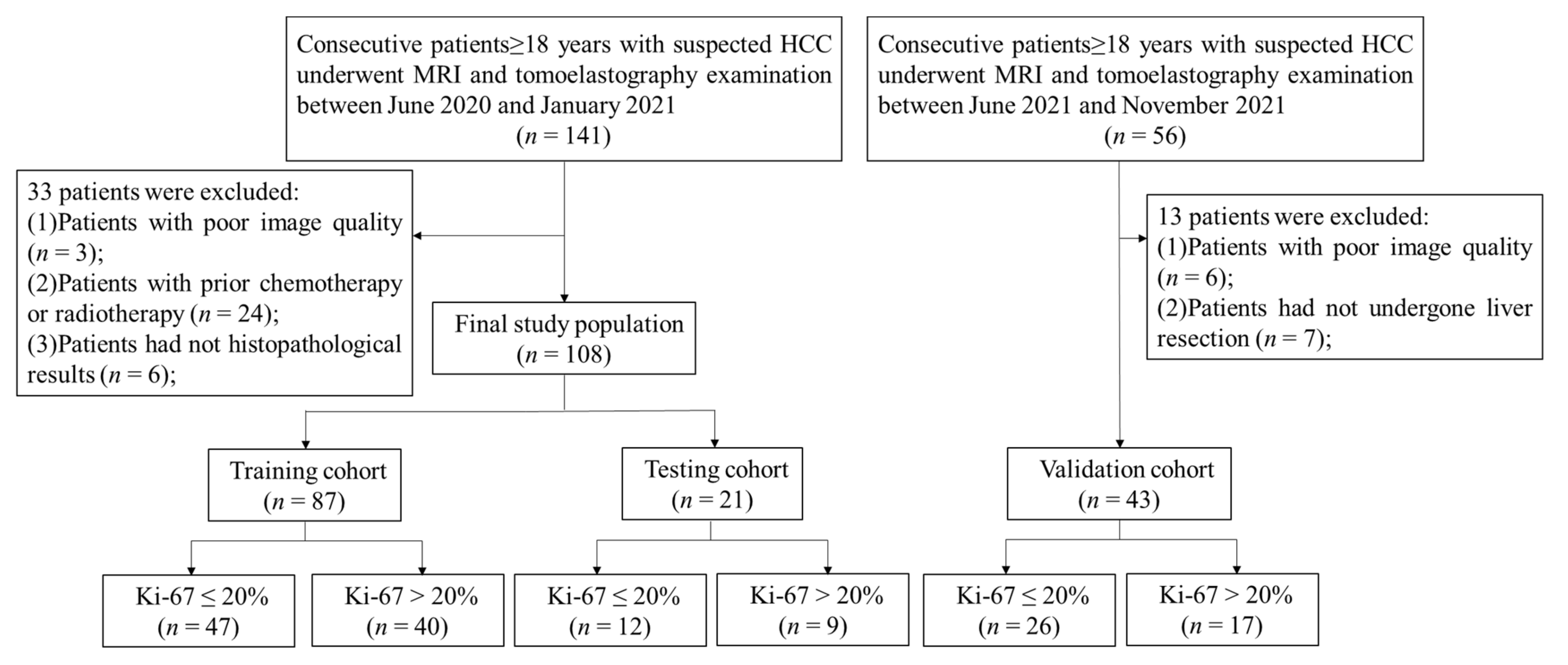
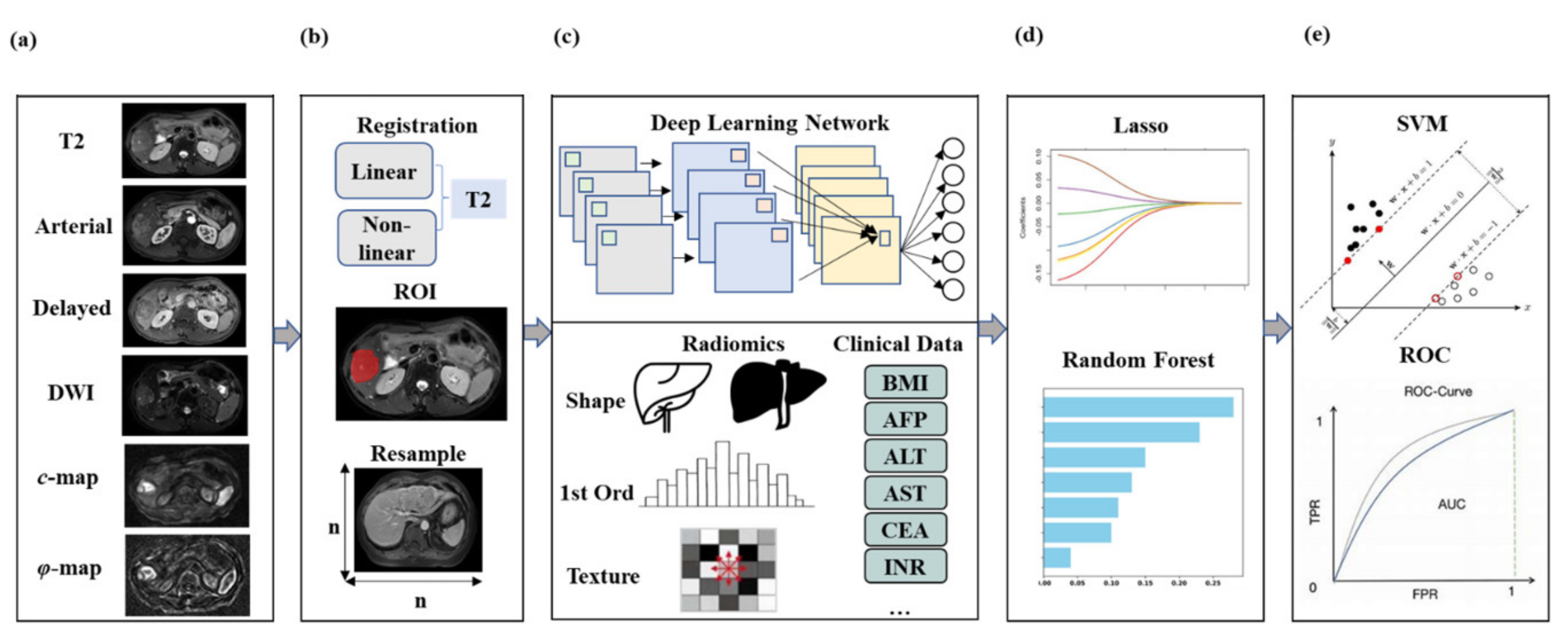
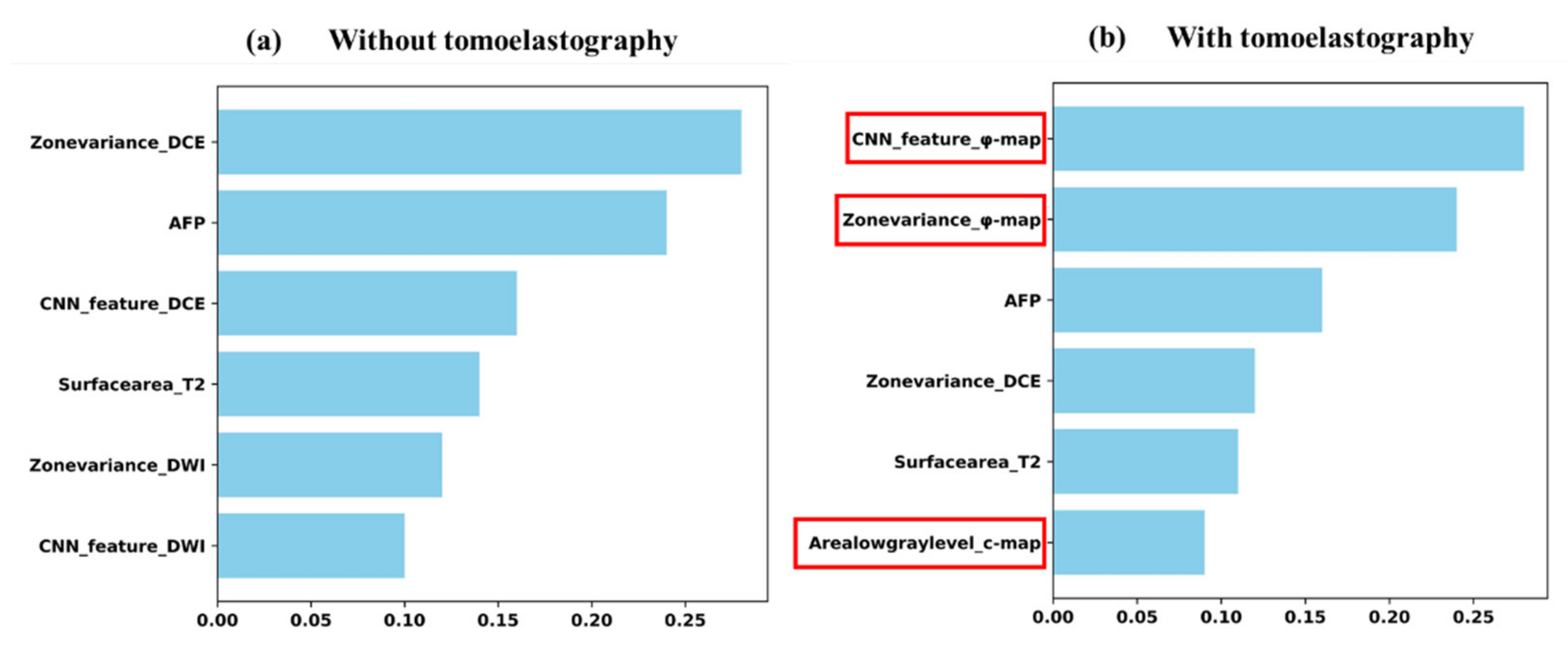
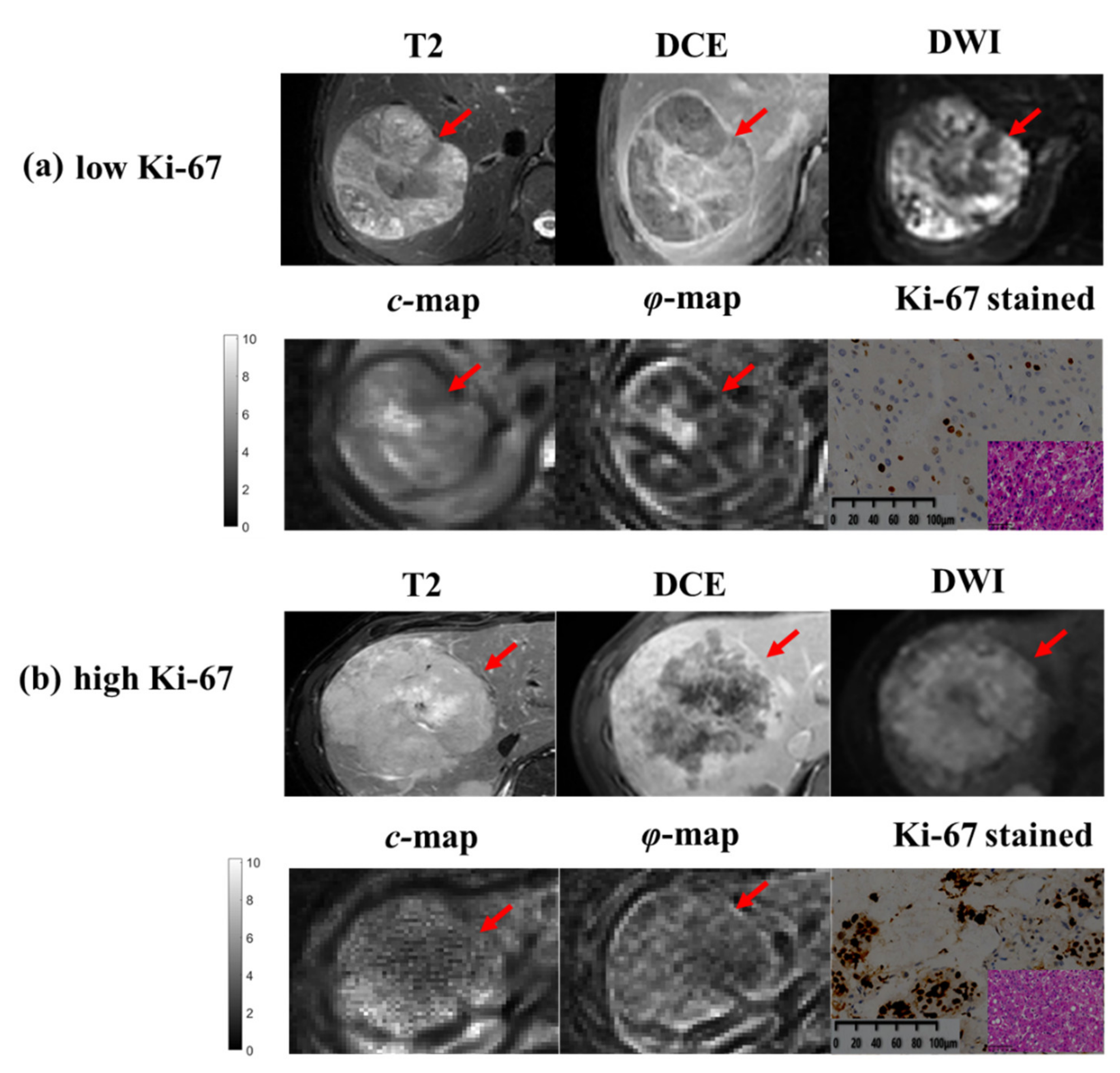
This study aimed to explore the added value of magnetic resonance elastography (MRE) in the prediction of Ki-67 expression in hepatocellular carcinoma (HCC) using a deep learning combined radiomics (DLCR) model. A total of 108 histopathology-proven HCC patients who underwent preoperative MRI and MR elastography were included. All the patients were divided into training and validation cohorts. An independent cohort including 43 patients was included for testing. A DLCR model was proposed to predict the expression of Ki-67 with conventional MRI (cMRI) as inputs. The images of shear wave speed (c-map) and phase angle (φ-map) derived from MRE were also fed into the DLCR model. Experimental results show that both c and φ values were ranked within the top six features for Ki-67 prediction with random forest selection, which revealed the value of MRE-based viscosity for the assessment of the tumor proliferation status in HCC. The model with all modalities (MRE, AFP, and cMRI) as inputs achieved the highest AUC of 0.90 ± 0.03 (CI: 0.89–0.91) in the validation cohort. The same finding was observed in the independent testing cohort with an AUC of 0.83 ± 0.03 (CI: 0.82–0.84). MRE-based c and φ-maps can serve as important parameters to assess the tumor proliferation status in HCC.
Abstract
This study aimed to explore the added value of viscoelasticity measured by magnetic resonance elastography (MRE) in the prediction of Ki-67 expression in hepatocellular carcinoma (HCC) using a deep learning combined radiomics (DLCR) model. This retrospective study included 108 histopathology-proven HCC patients (93 males; age, 59.6 ± 11.0 years) who underwent preoperative MRI and MR elastography. They were divided into training (n = 87; 61.0 ± 9.8 years) and testing (n = 21; 60.6 ± 10.1 years) cohorts. An independent validation cohort including 43 patients (60.1 ± 11.3 years) was included for testing. A DLCR model was proposed to predict the expression of Ki-67 with cMRI, including T2W, DW, and dynamic contrast enhancement (DCE) images as inputs. The images of the shear wave speed (c-map) and phase angle (φ-map) derived from MRE were also fed into the DLCR model. The Ki-67 expression was classified into low and high groups with a threshold of 20%. Both c and φ values were ranked within the top six features for Ki-67 prediction with random forest selection, which revealed the value of MRE-based viscosity for the assessment of tumor proliferation status in HCC. When comparing the six CNN models, Xception showed the best performance for classifying the Ki-67 expression, with an AUC of 0.80 ± 0.03 (CI: 0.79–0.81) and accuracy of 0.77 ± 0.04 (CI: 0.76–0.78) when cMRI were fed into the model. The model with all modalities (MRE, AFP, and cMRI) as inputs achieved the highest AUC of 0.90 ± 0.03 (CI: 0.89–0.91) in the validation cohort. The same finding was observed in the independent testing cohort, with an AUC of 0.83 ± 0.03 (CI: 0.82–0.84). The shear wave speed and phase angle improved the performance of the DLCR model significantly for Ki-67 prediction, suggesting that MRE-based c and φ-maps can serve as important parameters to assess the tumor proliferation status in HCC.