Pan-Cancer Characterization of Intratumoral Autonomic Innervation in 32 Cancer Types in the Cancer Genome Atlas
by
 , , , , , and
Jeff F. Zhang
1, 
Haiyang Sheng
2,3,
Jianhong Chen
2,
Hemn Mohammadpour
4,
Sung Jun Ma
5,
Mark K. Farrugia
5,
Shipra Gandhi
6,
Elizabeth G. Bouchard
2,
Anurag K. Singh
5,
Elizabeth A. Repasky
4,
Thaer Khoury
7 ,
,
Christine B. Ambrosone
2 and
Song Yao
1,2,* 1
Jacobs School of Medicine and Biomedical Sciences, University at Buffalo, Buffalo, NY 14263, USA
2
Department of Cancer Prevention and Control, Roswell Park Comprehensive Cancer Center, Buffalo, NY 14263, USA
3
Department of Biostatistics, University at Buffalo, Buffalo, NY 14263, USA
4
Department of Immunology, Roswell Park Comprehensive Cancer Center, Buffalo, NY 14263, USA
5
Department of Radiation Medicine, Roswell Park Comprehensive Cancer Center, Buffalo, NY 14263, USA
6
Department of Medicine, Roswell Park Comprehensive Cancer Center, Buffalo, NY 14263, USA
7
Department of Pathology, Roswell Park Comprehensive Cancer Center, Buffalo, NY 14263, USA
*
Author to whom correspondence should be addressed.
Cancers 2022, 14(10), 2541; https://doi.org/10.3390/cancers14102541
Submission received: 19 April 2022
/
Revised: 14 May 2022
/
Accepted: 19 May 2022
/
Published: 21 May 2022
Simple Summary
There have been growing interests in the roles of intratumoral innervation of the autonomic nervous system (ANS) as a mechanism linking psychosocial stress, β-adrenergic signaling pathways, and poor cancer outcomes, and a potential target for therapeutic purpose. Our current knowledge is being limited by the few cancer types where intratumoral ANS have been studied; it remains to be determined the extent of this mechanism existing in different cancer types. Our study provided the first pan-cancer characterization of intratumoral innervation across 32 cancer types, and further, their relationships with tumor histopathological and molecular characteristics and survival outcomes. We found wide variations in intratumoral ANS expression both within and across cancer types. The association of ANS signatures with tumor histopathological characteristics and survival outcomes also varied by cancer type. Our findings suggest that the potential benefits of cancer therapies targeting β-adrenergic receptor-mediated stress signaling pathways are likely dependent on cancer type.
Abstract
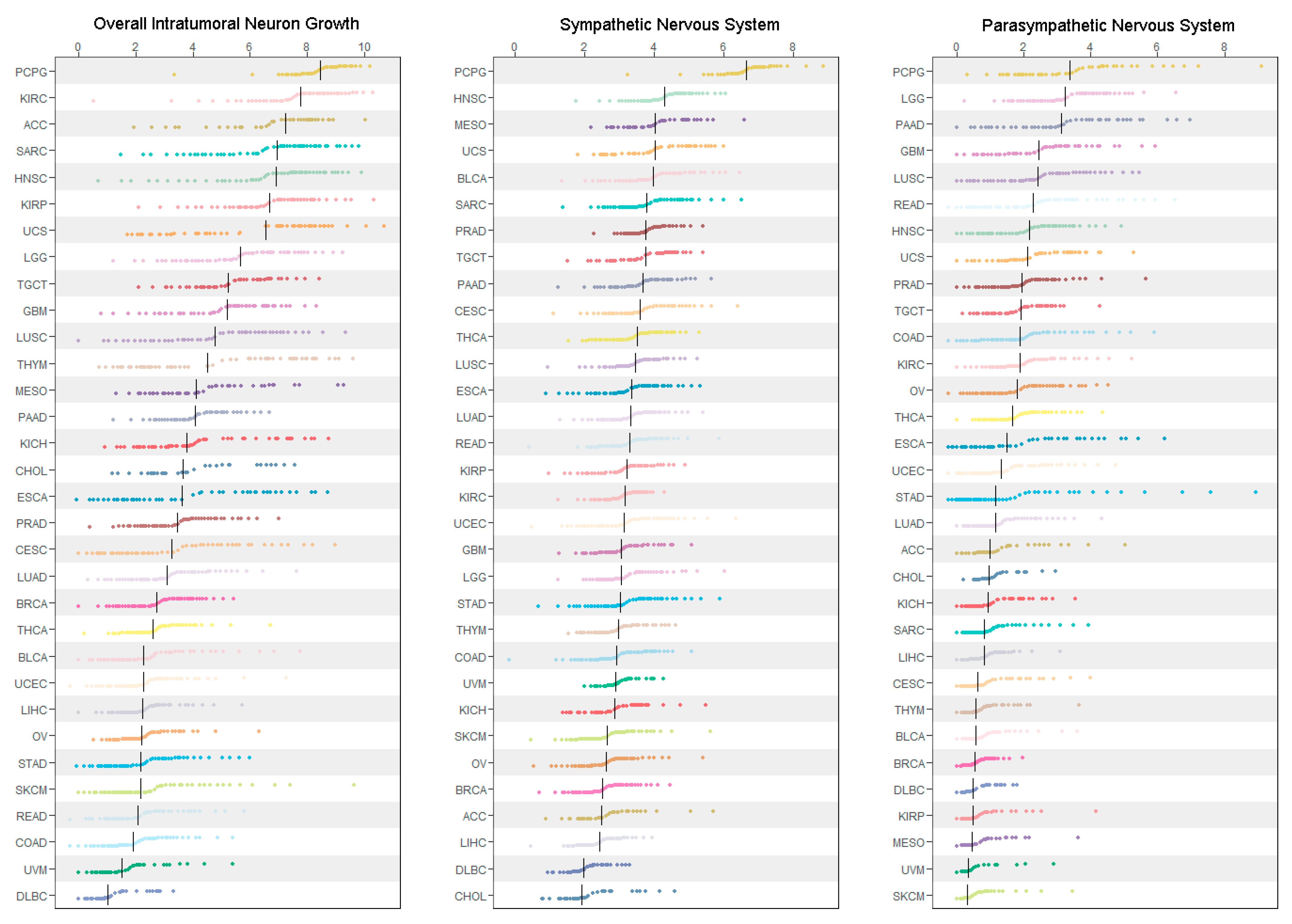
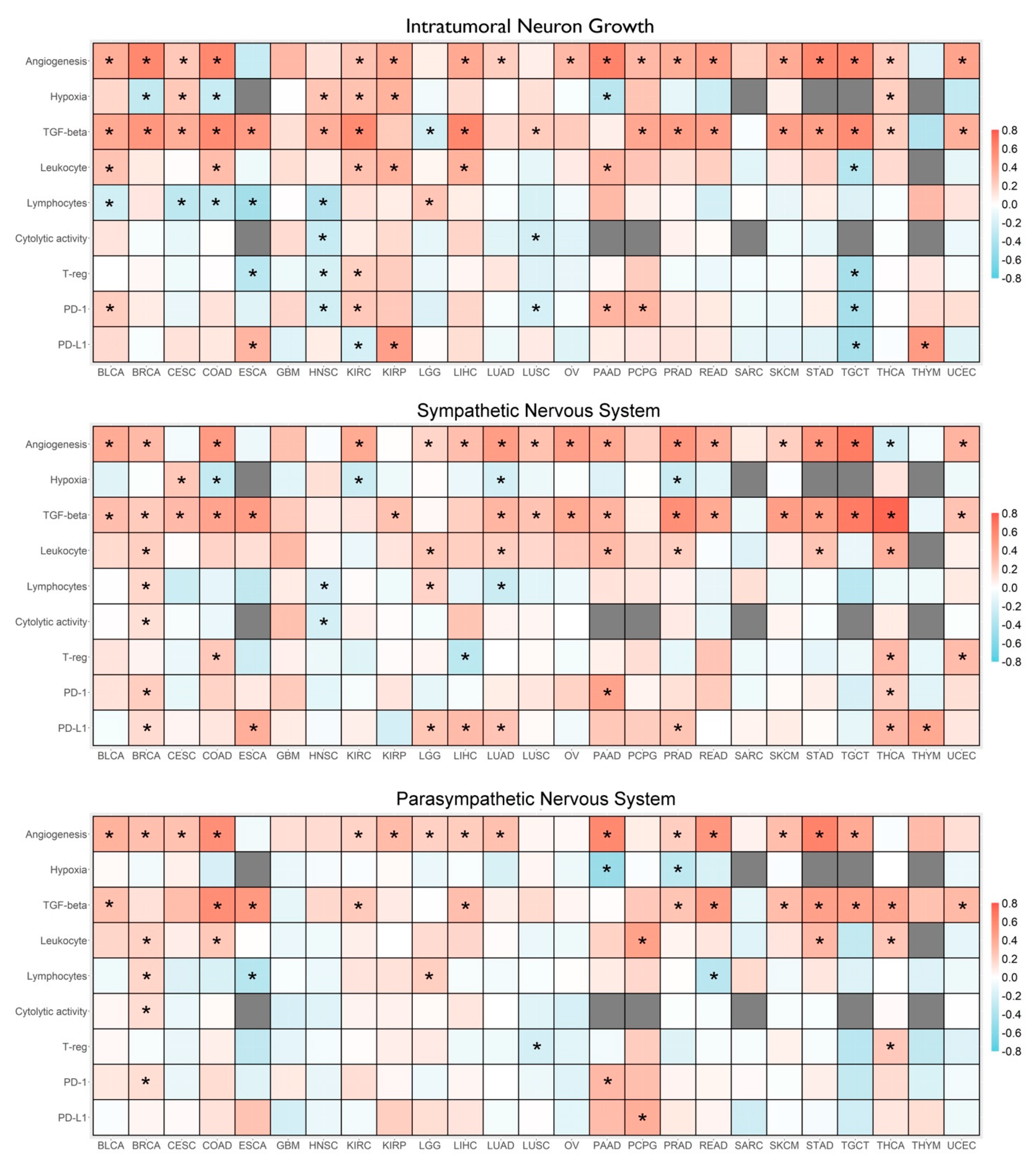
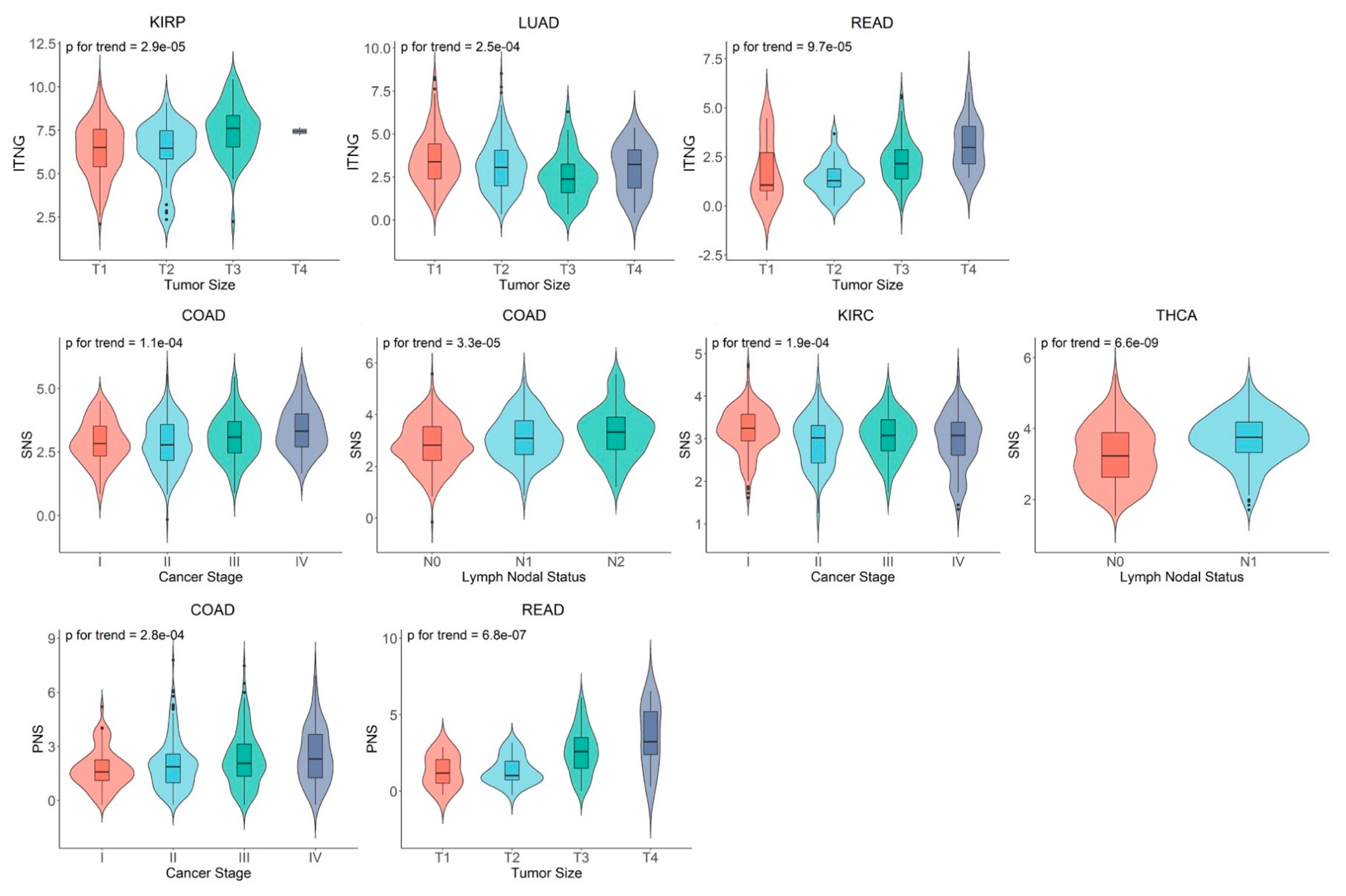
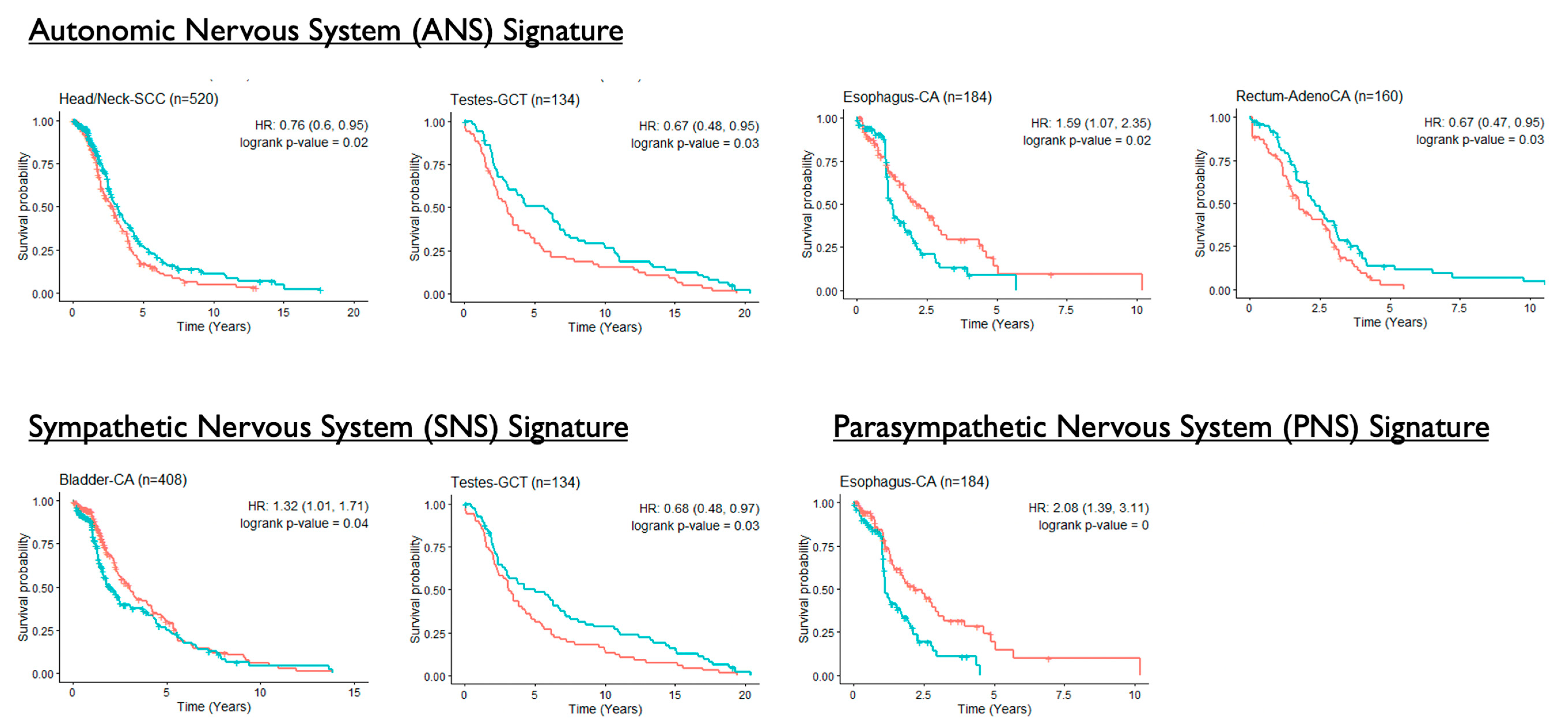
Over the past two decades, multiple studies have demonstrated the important role that the autonomic nervous system (ANS) plays in tumorigenesis and cancer progression. However, the mechanisms by which this process occurs have only recently begun to be elucidated. Further, the extent of autonomic innervation in various cancer types and its effects on tumor molecular, immunological, and histopathological features, as well as on patient outcomes, are not yet fully characterized. In this study, we analyzed intratumoral ANS gene expression signatures, including overall intratumoral neuron growth and sympathetic and parasympathetic markers, across 32 cancer types using tumor transcriptomic and clinical annotation data available from The Cancer Genome Atlas (TCGA). Our analysis revealed wide variations in intratumoral ANS expression both within and across cancer types. The association of ANS signatures with tumor histopathological characteristics and survival outcomes also varied by cancer type. We found intratumoral ANS expression to be commonly correlated with angiogenesis, TGF-β signaling, and immunosuppression in the tumor microenvironment of many cancer types, which provide mechanistic insights into the involvement of intratumoral innervation in cancer development and progression. Our findings suggest that the potential benefits of cancer therapies targeting β-adrenergic receptor-mediated stress signaling pathways are likely dependent on cancer type.
Keywords:
cancer; innervation; TCGA; autonomic nervous system