Epigenetic-Like Stimulation of Receptor Expression in SSTR2 Transfected HEK293 Cells as a New Therapeutic Strategy
by
 ,
,
Joerg Kotzerke
1,*, 
Dorothee Buesser
1,
Anne Naumann
1,
Roswitha Runge
1,
Lisa Huebinger
1,
Andrea Kliewer
2,
Robert Freudenberg
1 and
Claudia Brogsitter
1 1
Department of Nuclear Medicine, University Hospital Carl Gustav Carus, Technical University Dresden, Fetscherstrasse 74, D-01307 Dresden, Germany
2
Department of Pharmacology and Toxicology, Jena University Hospital, Friedrich Schiller University Jena, Drackendorfer Straße 1, D-07747 Jena, Germany
*
Author to whom correspondence should be addressed.
Cancers 2022, 14(10), 2513; https://doi.org/10.3390/cancers14102513
Submission received: 31 March 2022
/
Revised: 9 May 2022
/
Accepted: 18 May 2022
/
Published: 19 May 2022
(This article belongs to the Special Issue Metabolomics and Target Heterogeneity in Radioligand Therapy)
Simple Summary
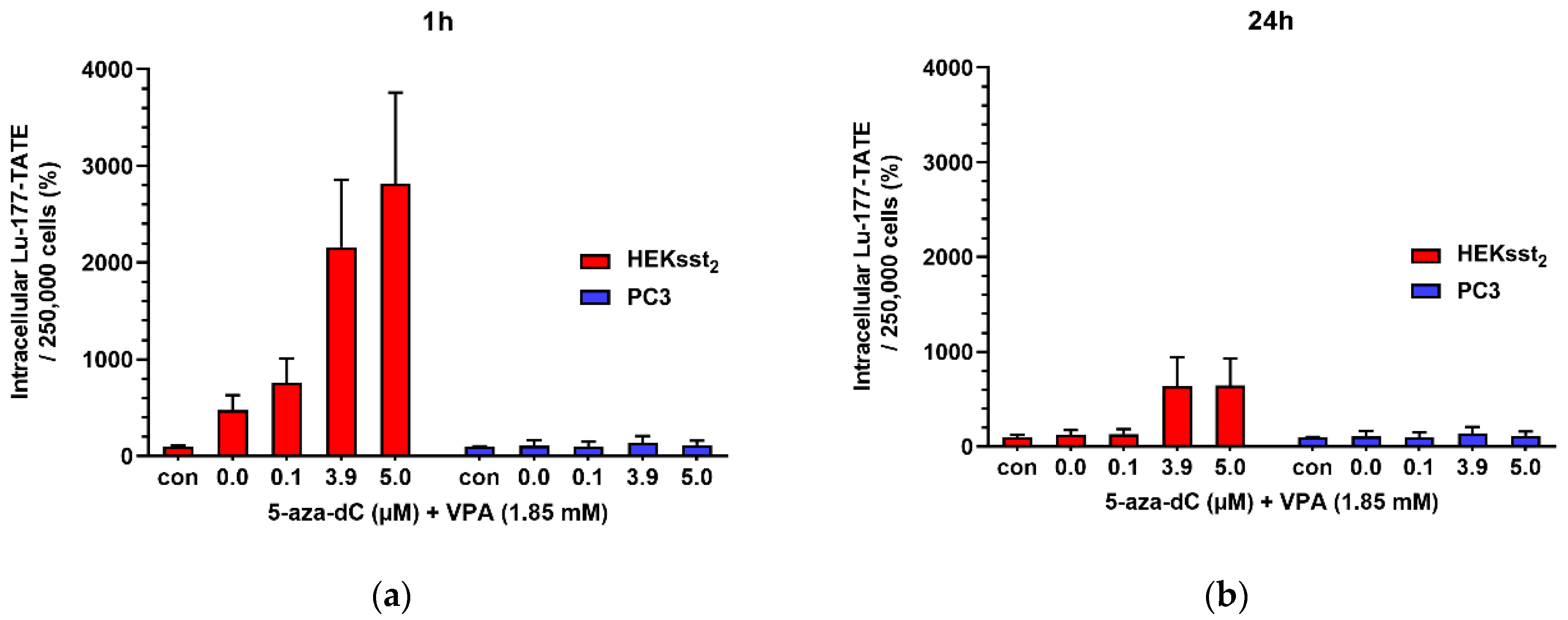
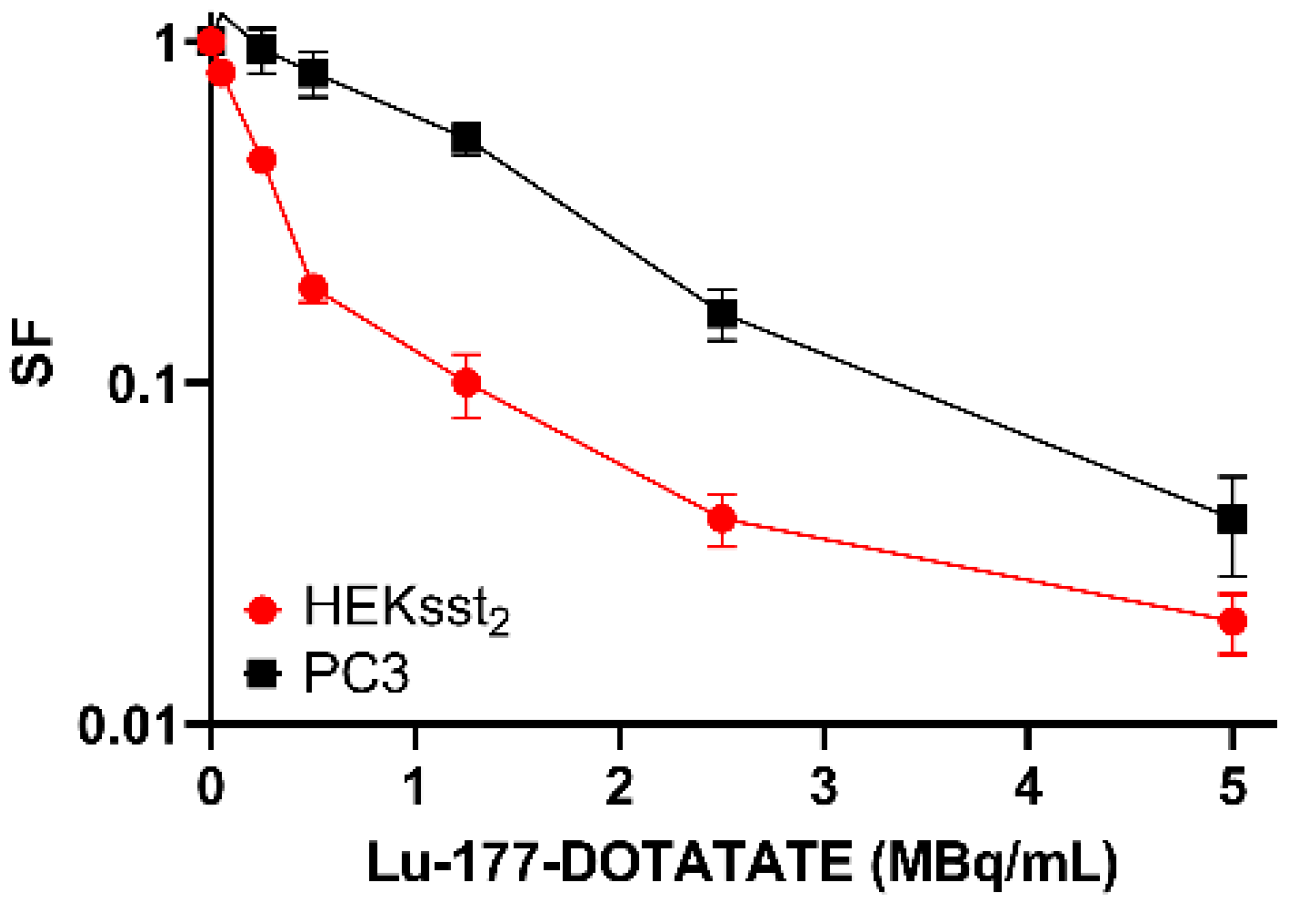
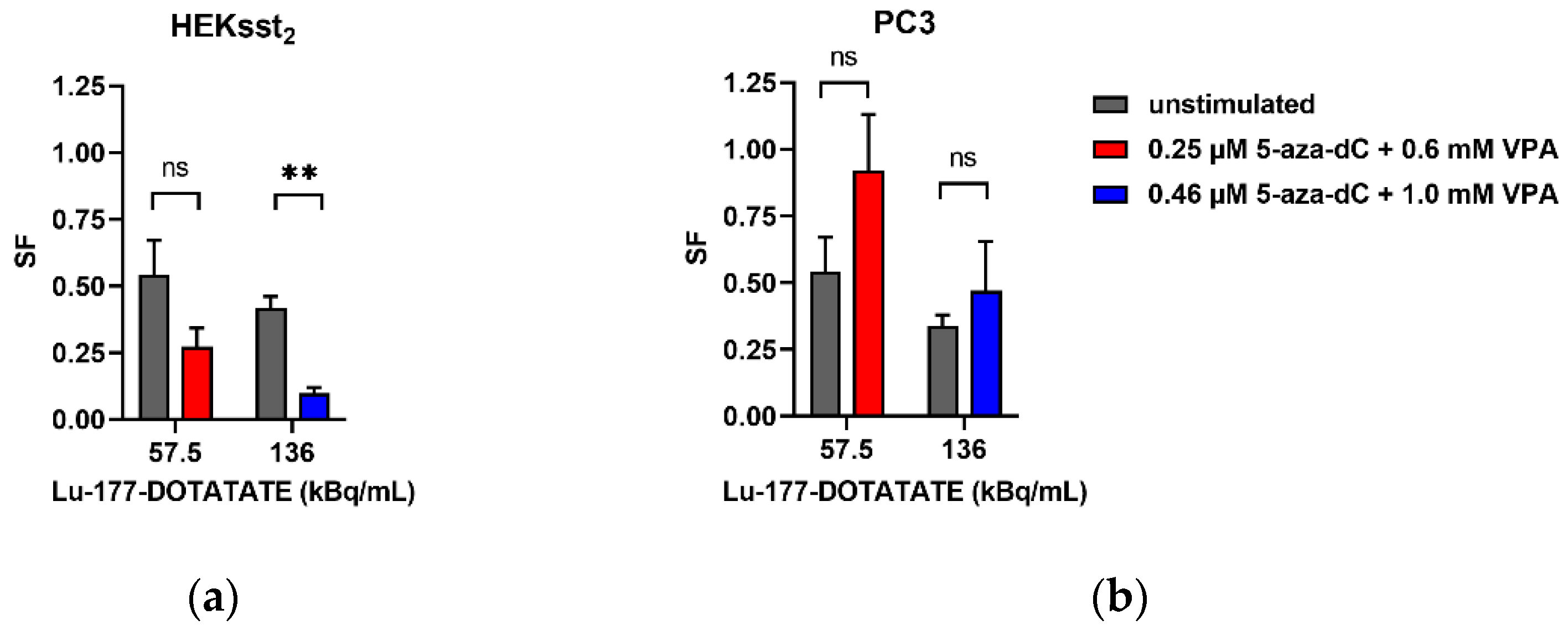
Neuroendocrine tumors (NETs) expressing the somatostatin receptor subtype 2 (SSTR2) are promising targets for peptide receptor radionuclide therapy (PRRT) using the somatostatin analogue Lu-177-DOTATATE. Patients expressing low levels of SSTR2 do not benefit from PRRT. Therefore, an approach to increase the efficacy of PRRT utilizing the effects of 5-aza-2′-deoxycytidine (5-aza-dC) and valproic acid (VPA) on the SSTR2 expression levels is investigated. The cell lines HEKsst2 and PC3 are incubated with 5-aza-dC and VPA in different combinations. The drug pretreatment of HEKsst2 cells leads to increased Lu-177-DOTATATE uptake values (factor 28) and lower cell survival (factor 4) in comparison to unstimulated cells; in PC3 cells, the effects are negligible. Further, for the stimulated cell types, the maintenance of the intrinsic radiosensitivity in each cell type is confirmed by X-ray irradiation. The increased SSTR2 expression induced by VPA and 5-aza-dC stimulation in HEKsst2 cells might improve treatment strategies for patients with NETs.
Abstract
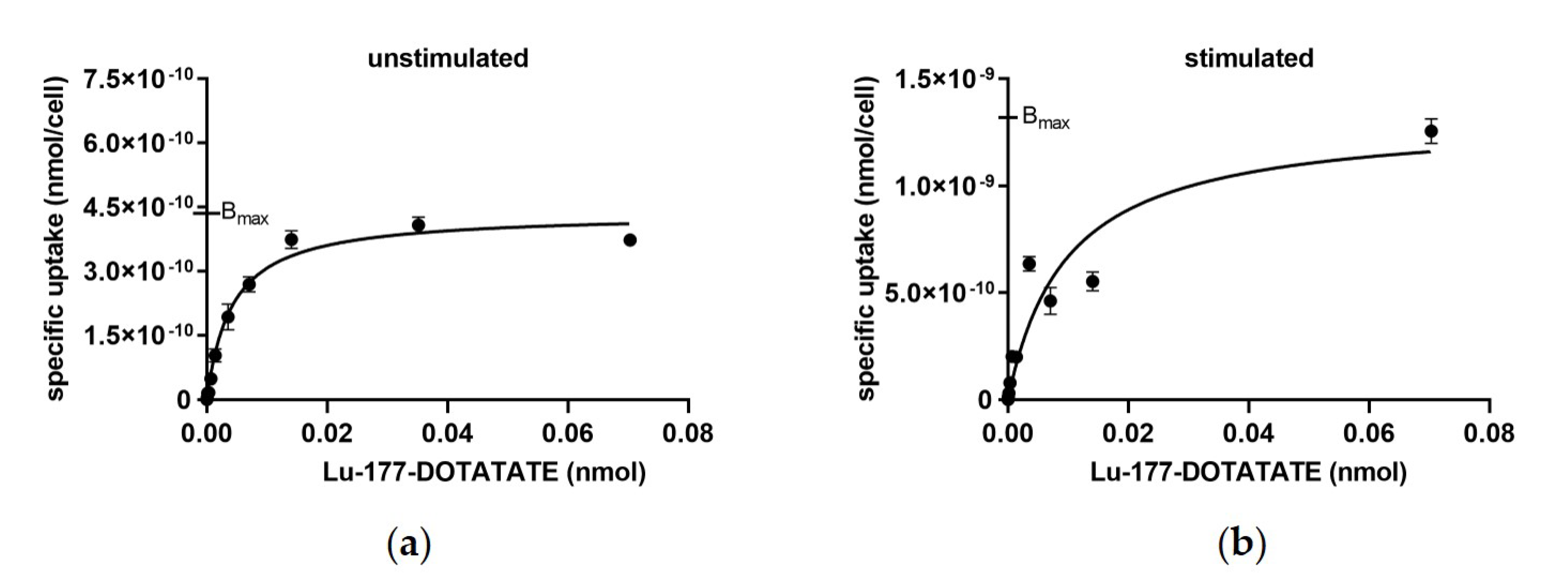
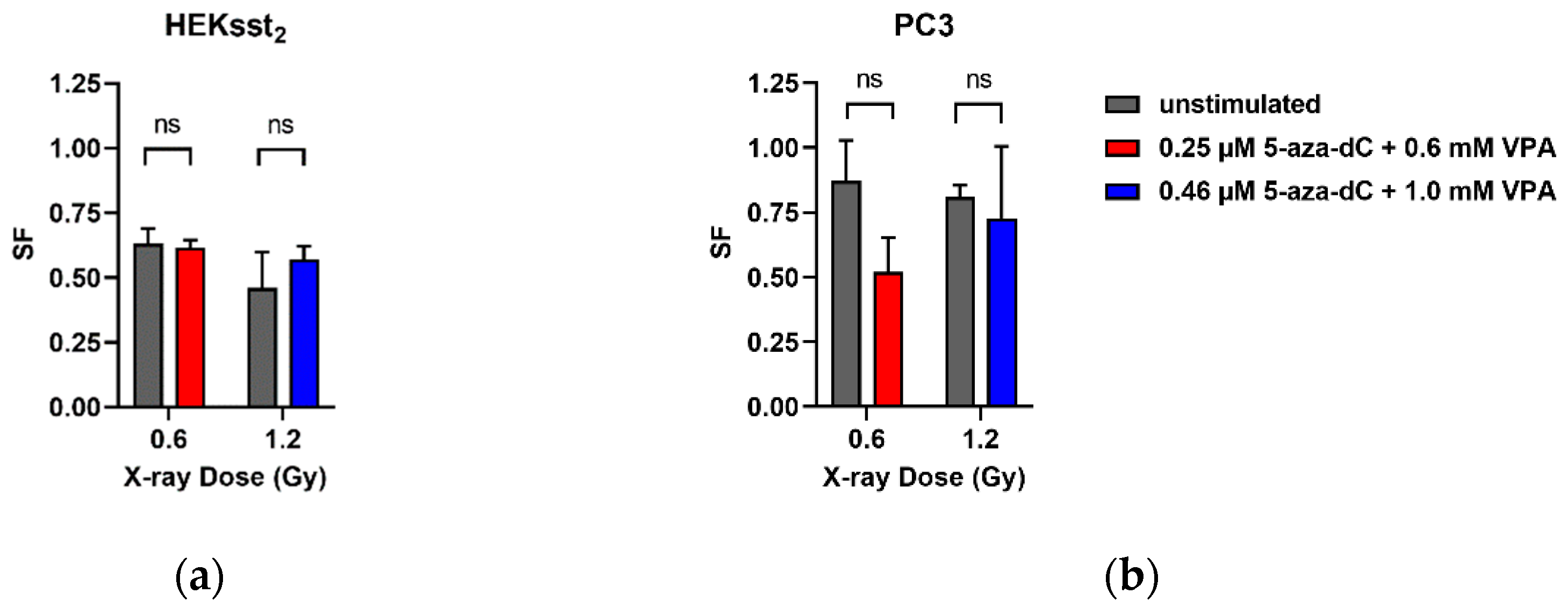
The aim of the study was to increase the uptake of the SSTR2-targeted radioligand Lu-177-DOTATATE using the DNA methyltransferase inhibitor (DNMTi) 5-aza-2′-deoxycytidine (5-aza-dC) and the histone deacetylase inhibitor (HDACi) valproic acid (VPA). The HEKsst2 and PC3 cells were incubated with variable concentrations of 5-aza-dC and VPA to investigate the uptake of Lu-177-DOTATATE. Cell survival, subsequent to external X-rays (0.6 or 1.2 Gy) and a 24 h incubation with 57.5 or 136 kBq/mL Lu-177-DOTATATE, was investigated via colony formation assay to examine the effect of the epidrugs. In the case of stimulated HEKsst2 cells, the uptake of Lu-177-DOTATATE increased by a factor of 28 in comparison to the unstimulated cells. Further, stimulated HEKsst2 cells demonstrated lower survival fractions (factor 4). The survival fractions of the PC3 cells remained almost unchanged. VPA and 5-aza-dC did not induce changes to the intrinsic radiosensitivity of the cells after X-ray irradiation. Clear stimulatory effects on HEKsst2 cells were demonstrated by increased cell uptake of the radioligand and enhanced SST2 receptor quantity. In conclusion, the investigated approach is suitable to stimulate the somatostatin receptor expression and thus the uptake of Lu-177-DOTATATE, enabling a more efficient treatment for patients with poor response to peptide radionuclide therapy (PRRT).