Anti-PD-1/PD-L1 Based Combination Immunotherapy to Boost Antigen-Specific CD8+ T Cell Response in Hepatocellular Carcinoma
by
 ,
,
Julia Peña-Asensio
1,2 ,
,
Henar Calvo
1,3,
Miguel Torralba
1,4,5,
Joaquín Miquel
1,3,
Eduardo Sanz-de-Villalobos
1,3 and
Juan-Ramón Larrubia
1,3,5,* 1
Translational Hepatology Unit, Guadalajara University Hospital, 19002 Gudalajara, Spain
2
Department of Biology of Systems, University of Alcalá, 28871 Alcalá de Henares, Spain
3
Section of Gastroenterology & Hepatology, Guadalajara University Hospital, 19002 Guadalajara, Spain
4
Service of Internal Medicine, Guadalajara University Hospital, 19002 Guadalajara, Spain
5
Department of Medicine & Medical Specialties, University of Alcalá, 28871 Alcalá de Henares, Spain
*
Author to whom correspondence should be addressed.
Cancers 2021, 13(8), 1922; https://doi.org/10.3390/cancers13081922
Submission received: 1 March 2021
/
Revised: 22 March 2021
/
Accepted: 14 April 2021
/
Published: 16 April 2021
(This article belongs to the Special Issue Combination Therapy Strategies for Cancer PD-1/PD-L1 Pathway Blockade Awareness)
Simple Summary
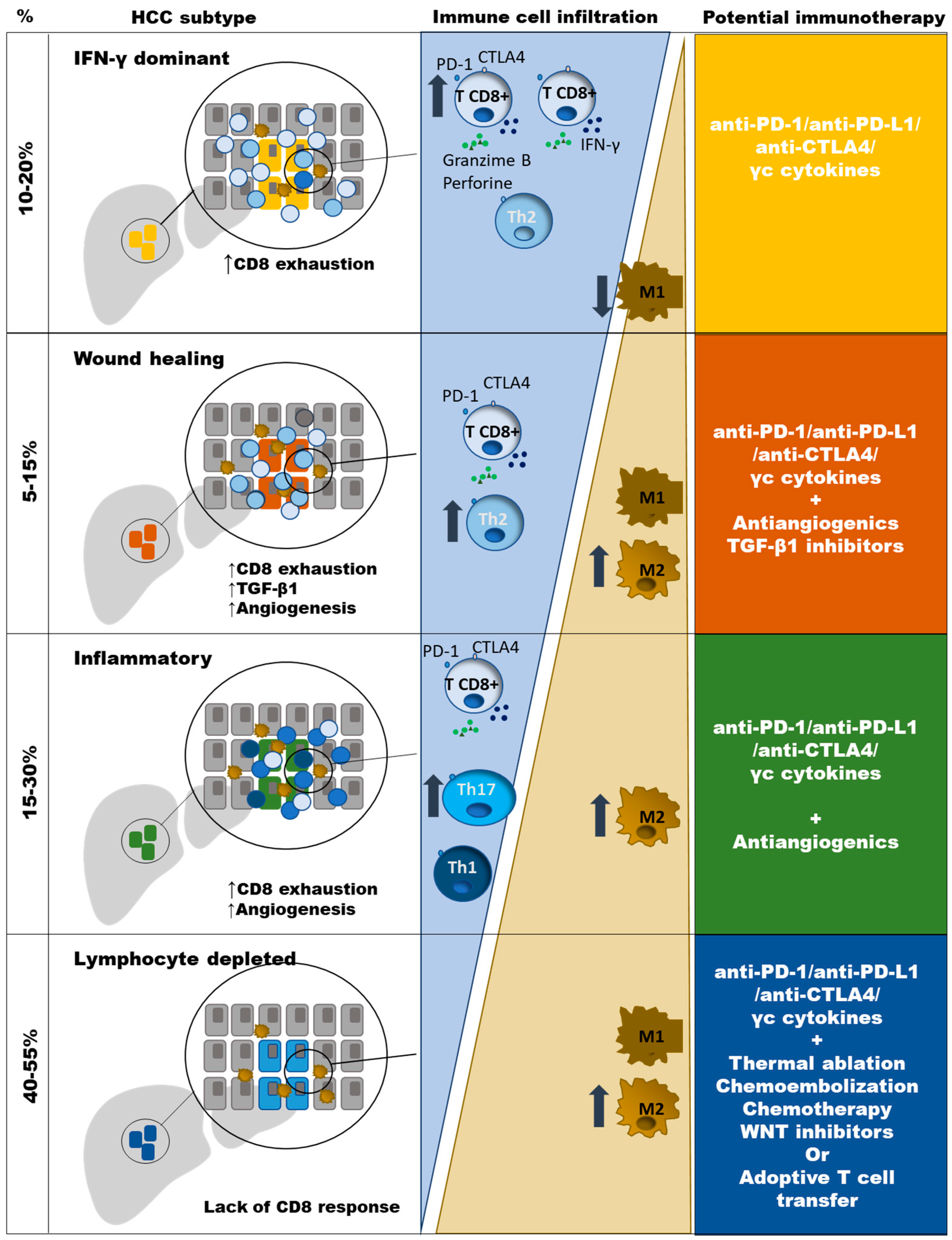
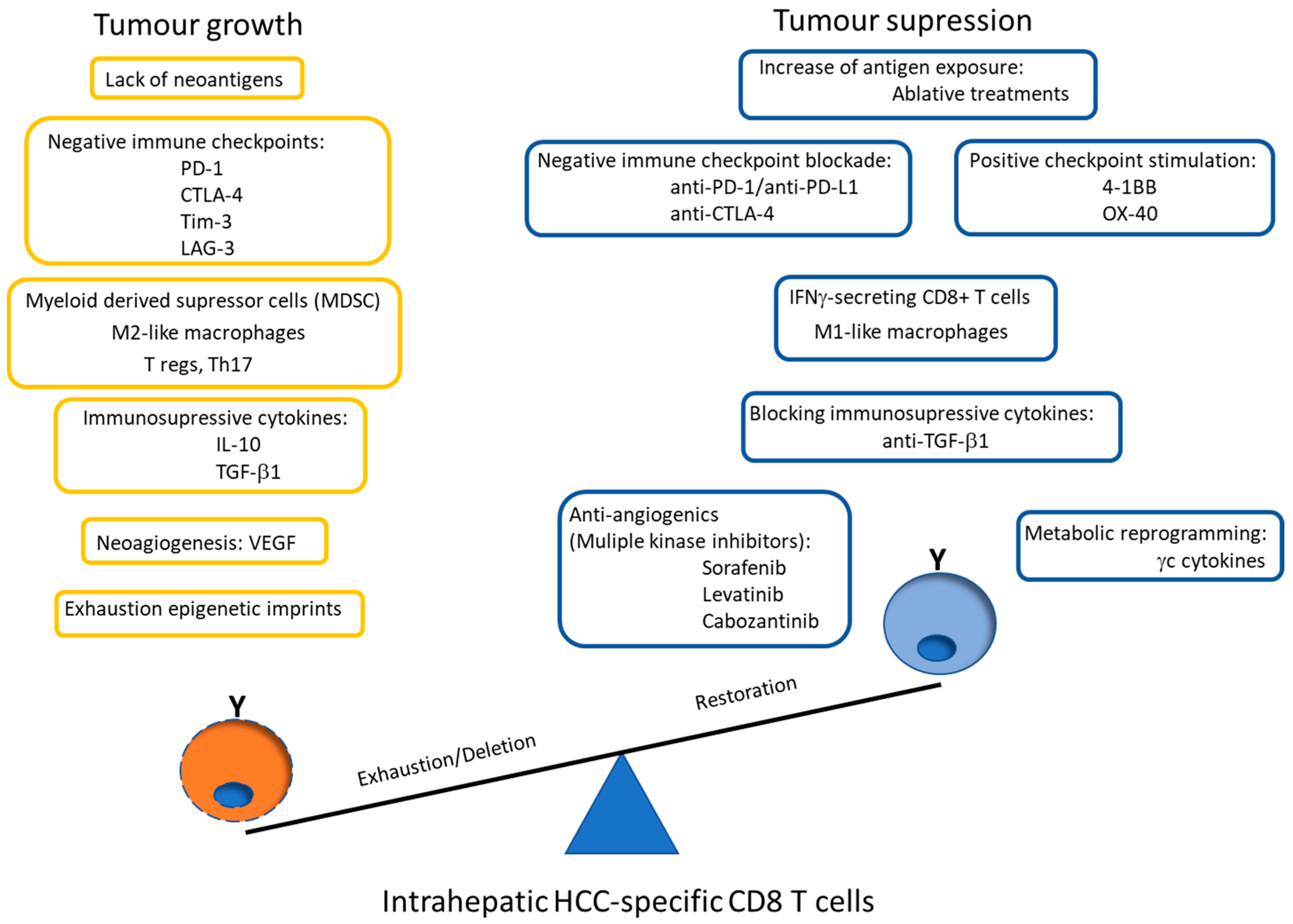
The cytotoxic T cell response against hepatocellular carcinoma antigens is exhausted and fails in its task of deleting tumoral cells. These cells are featured by the expression of negative immune checkpoints that can be modulated to restore T cell function. The blockade of the PD-1/PD-L1 pathway has shown promising results in rescuing hepatocellular carcinoma-specific CD8 T cells but only a reduced group of cases is sensitive to this treatment and the effect is usually temporary. Therefore, new anti-PD-1 based combinatory strategies are underway to increase the response by adding the effect of blocking neo-angiogenesis and other negative immune checkpoints, boosting positive immune checkpoints, blocking suppressive cytokines, or inducing the expression of tumoral neoantigens. The restoration of T cell responses with these anti-PD-1 based combinatory therapies will change the outcome of advanced hepatocellular carcinoma.
Abstract
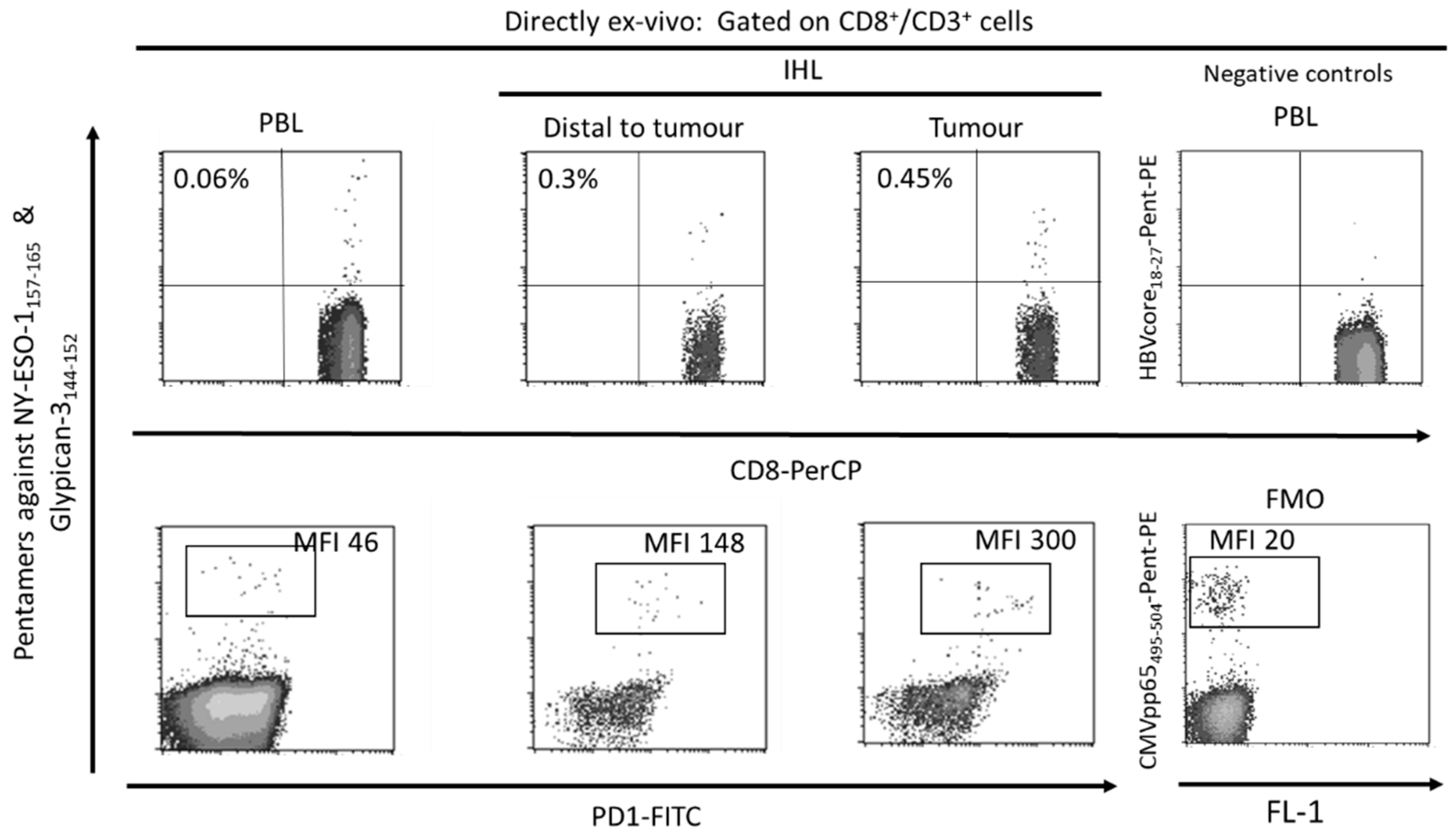
Thirty to fifty percent of hepatocellular carcinomas (HCC) display an immune class genetic signature. In this type of tumor, HCC-specific CD8 T cells carry out a key role in HCC control. Those potential reactive HCC-specific CD8 T cells recognize either HCC immunogenic neoantigens or aberrantly expressed host’s antigens, but they become progressively exhausted or deleted. These cells express the negative immunoregulatory checkpoint programmed cell death protein 1 (PD-1) which impairs T cell receptor signaling by blocking the CD28 positive co-stimulatory signal. The pool of CD8 cells sensitive to anti-PD-1/PD-L1 treatment is the PD-1dim memory-like precursor pool that gives rise to the effector subset involved in HCC control. Due to the epigenetic imprints that are transmitted to the next generation, the effect of PD-1 blockade is transient, and repeated treatments lead to tumor resistance. During long-lasting disease, besides the TCR signaling impairment, T cells develop other failures that should be also set-up to increase T cell reactivity. Therefore, several PD-1 blockade-based combinatory therapies are currently under investigation such as adding antiangiogenics, anti-TGFβ1, blockade of other negative immune checkpoints, or increasing HCC antigen presentation. The effect of these combinations on CD8+ T cells is discussed in this review.