Association between Immune-Related Adverse Events and Survival in 319 Stage IV Melanoma Patients Treated with PD-1-Based Immunotherapy: An Approach Based on Clinical Chemistry
by
 , , , , , and
Lina María Serna-Higuita
1,*,† ,
,
Teresa Amaral
2,† ,
,
Andrea Forschner
2,
Ulrike Leiter
2,
Lukas Flatz
2,
Olivia Seeber
2,
Ioannis Thomas
2,
Claus Garbe
2 ,
,
Thomas Kurt Eigentler
2,3 and
Peter Martus
1 1
Department of Clinical Epidemiology and Applied Biostatistics, Eberhard Karls University of Tuebingen, 72076 Tuebingen, Germany
2
Center for Dermatooncology, Department of Dermatology, Eberhard Karls University of Tuebingen, 72076 Tuebingen, Germany
3
Department of Dermatology, Venereology and Allergology, Charité—Universitätsmedizin Berlin, Corporate Member of Freie Universität Berlin and Humboldt-Universität zu Berlin, 10117 Berlin, Germany
*
Author to whom correspondence should be addressed.
†
The authors Lina Maria Serna-Higuita and Teresa Amaral contributed equally.
Cancers 2021, 13(23), 6141; https://doi.org/10.3390/cancers13236141
Submission received: 30 October 2021
/
Revised: 28 November 2021
/
Accepted: 1 December 2021
/
Published: 6 December 2021
(This article belongs to the Section Cancer Immunology and Immunotherapy)
Simple Summary
Nivolumab combined with ipilimumab has improved the prognosis of patients with advanced melanoma. However, this therapy is frequently associated with immune-related adverse events. Published data suggested that objective responses rates appear to be superior in patients who developed immune-related adverse events. The primary aim of this study was to evaluate the association between immune-related adverse events and disease control rate, progressive-free survival, and overall survival in patients with stage IV melanoma treated with first-line PD-1-based immunotherapy. In this manuscript, we show that the presence of immune related side effects is related to better overall response and longer survival in patients with advance stage melanoma treated immuno-therapy, suggesting that immune-related adverse events might be a predictive factor of response in those patients.
Abstract
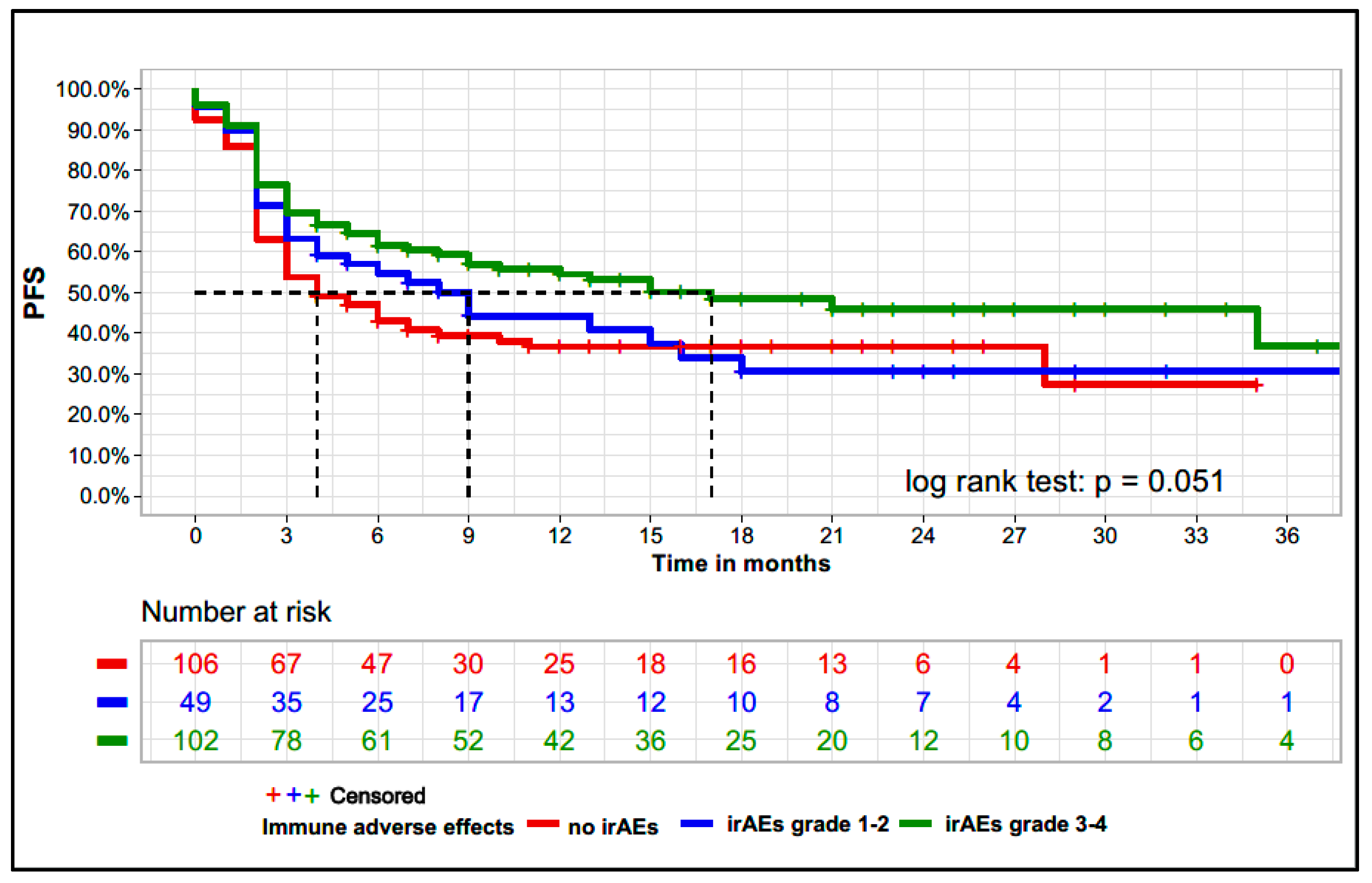
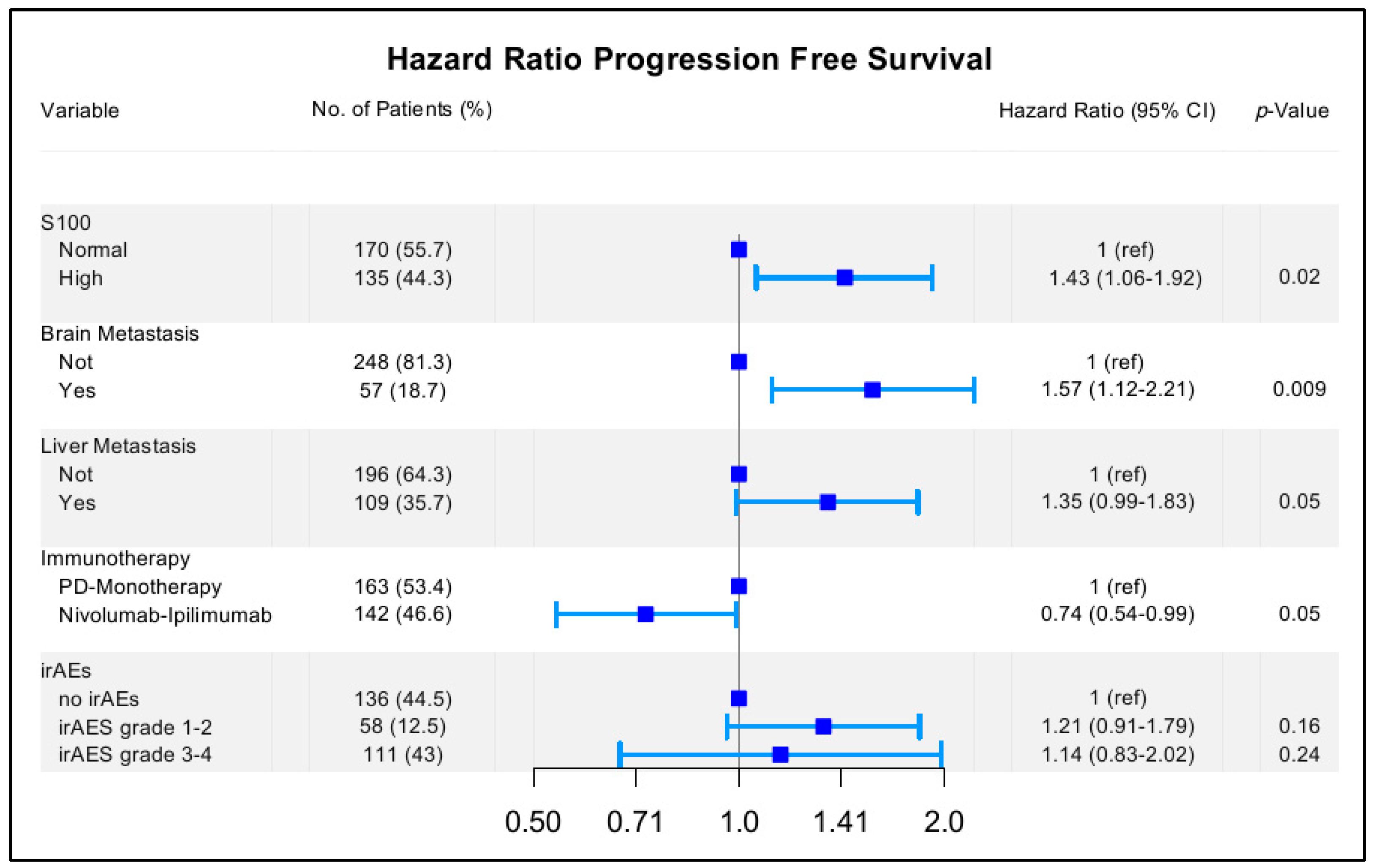
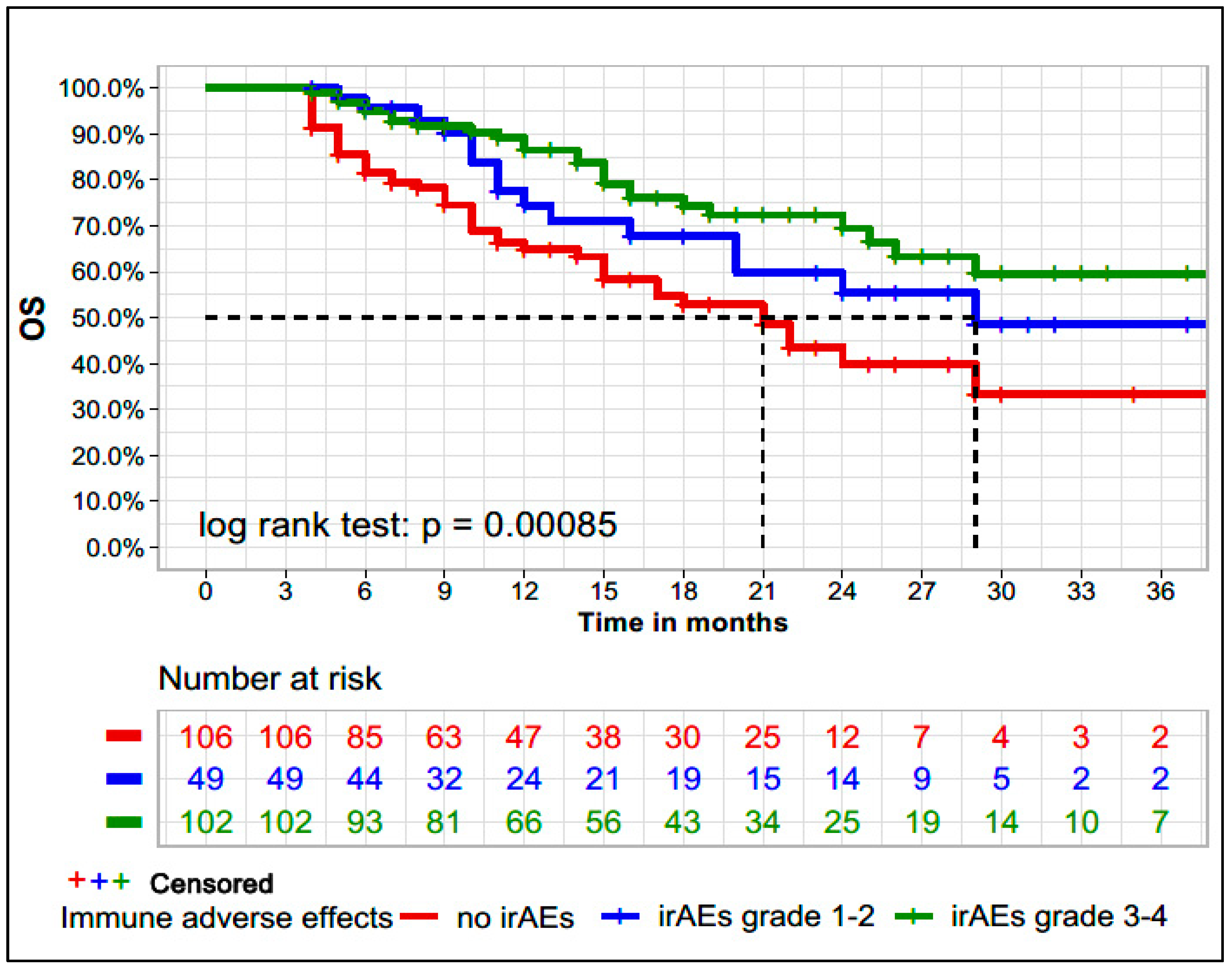
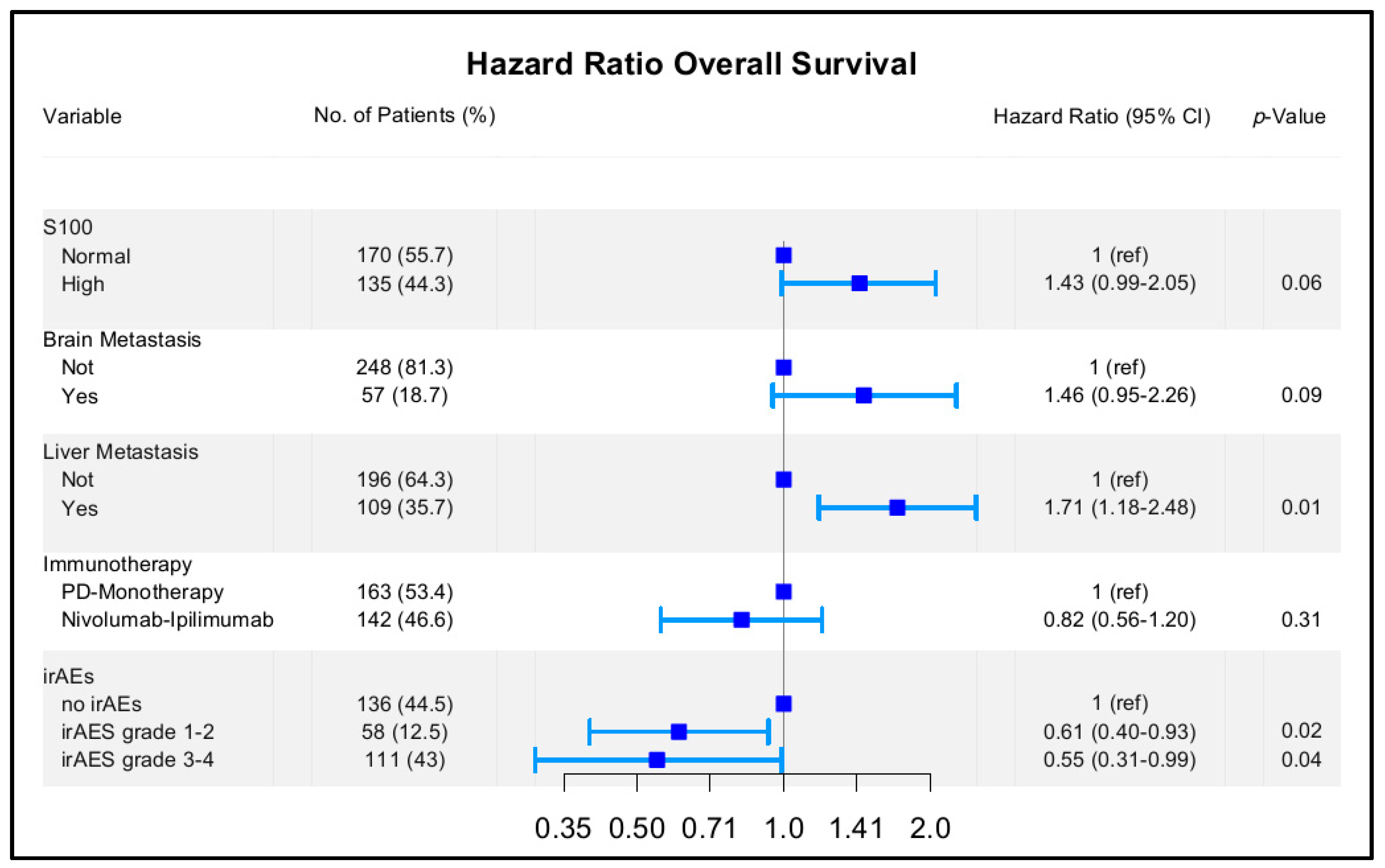
(1) Background: Immune checkpoint inhibitors have improved the prognosis of patients with advanced melanoma. Published data suggested that the objective response rates appear to be superior in patients who developed immune-related adverse events (irAEs). (2) The primary aim of this cohort study was to evaluate the association between irAEs and disease control rate in patients with stage IV melanoma treated with first-line PD-1-based immunotherapy. (3) Among 319 patients, 53% experienced at least one irAE. A higher percentage of patients with irAEs had disease control compared to those without irAEs (69.8% vs. 49.3%). In multivariate analysis, development of grade 3 and 4 irAEs was significantly associated with a protective effect for the outcome primary resistance (OR: 0.40 95% CI 0.23–0.70, p = 0.001). The presence of any grade irAEs was significantly associated with longer OS (irAEs grade 1–2 HRadj: 0.61 95% CI: 0.4–0.93, p = 0.02, irAEs grade 3–4 HRadj: 0.55 95% CI 0.31–0.99, p = 0.04), but not with PFS (irAEs grade 1–2 HRadj: 1.21 95% CI: 0.91–1.79, p = 0.16, irAEs grade 3–4 HRadj: 1.14 95% CI 0.83–2.02, p = 0.24). (4) The presence of irAEs with laboratorial expression is positively associated with response and OS, suggesting that irAEs might be a predictive factor in this setting.
Keywords:
melanoma; immune-related adverse events; response; survival; immunotherapy; anti-PD-1; anti-CTLA-4