CAR T Cell Therapy’s Potential for Pediatric Brain Tumors
by

Pauline Thomas
1, 
Natacha Galopin
1,
Emma Bonérandi
1,
Béatrice Clémenceau
2,
Sophie Fougeray
1 and
Stéphane Birklé
1,* 1
Université de Nantes, INSERM, CRCINA, F-44000 Nantes, France
2
Université de Nantes, CHU Nantes, CNRS, INSERM, CRCINA, F-44000 Nantes, France
*
Author to whom correspondence should be addressed.
Cancers 2021, 13(21), 5445; https://doi.org/10.3390/cancers13215445
Submission received: 10 June 2021
/
Revised: 11 October 2021
/
Accepted: 25 October 2021
/
Published: 29 October 2021
(This article belongs to the Special Issue Inflammation and Tumor)
Simple Summary
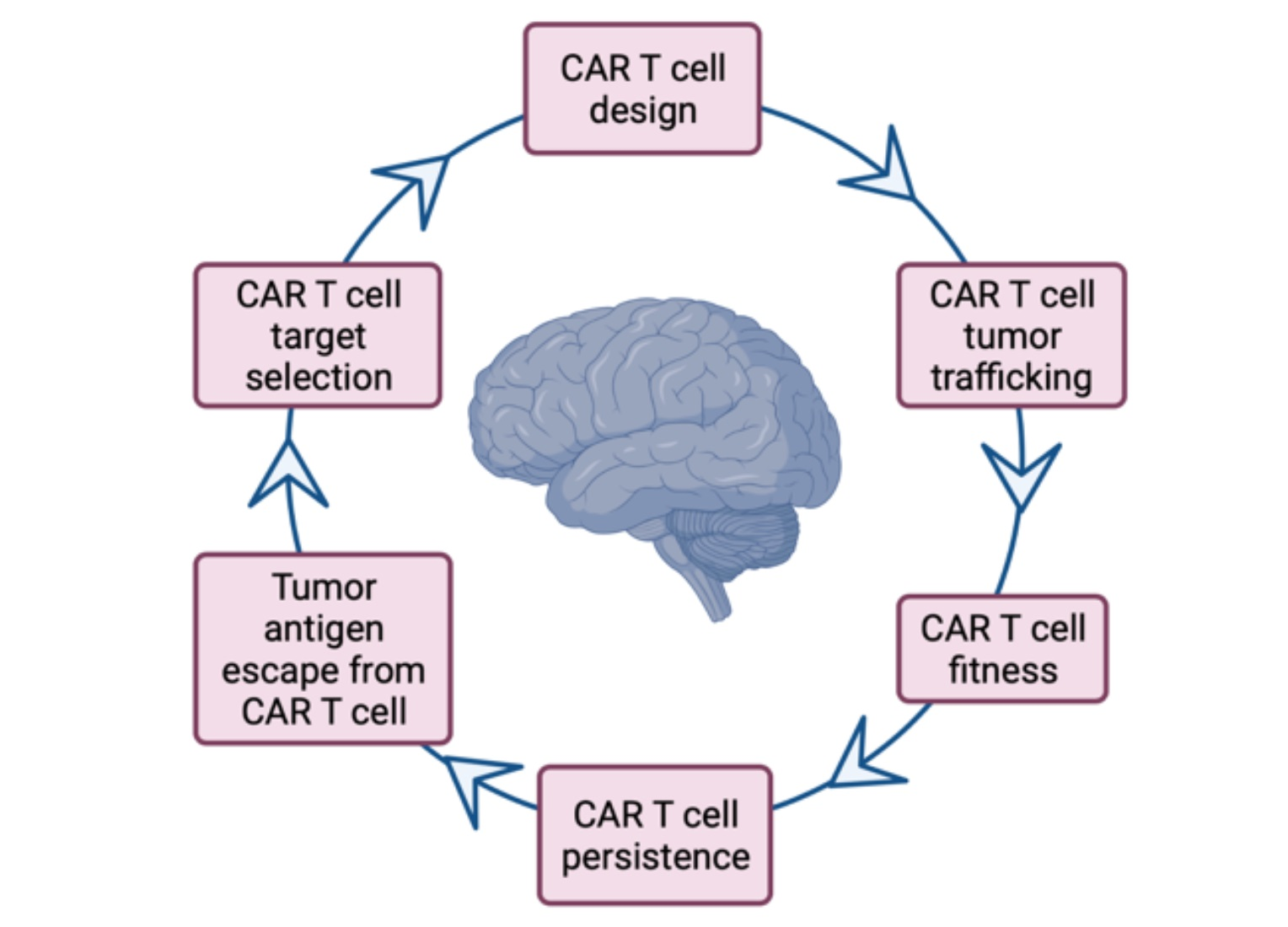
T cells that are genetically engineered to express chimeric antigen receptors constitute an effective new therapy with curative potential for patients with hematological tumors. The value of chimeric antigen receptor T cells in childhood brain tumors, the leading cause of cancer death in children, is less clear. In this context, the main obstacles for these engineered T cells remain how to find them, allow them to infiltrate, and induce them to remain active in the tumor site. Here, we discuss recent progress in the field and examine future directions for realizing the potential of this therapy.
Abstract
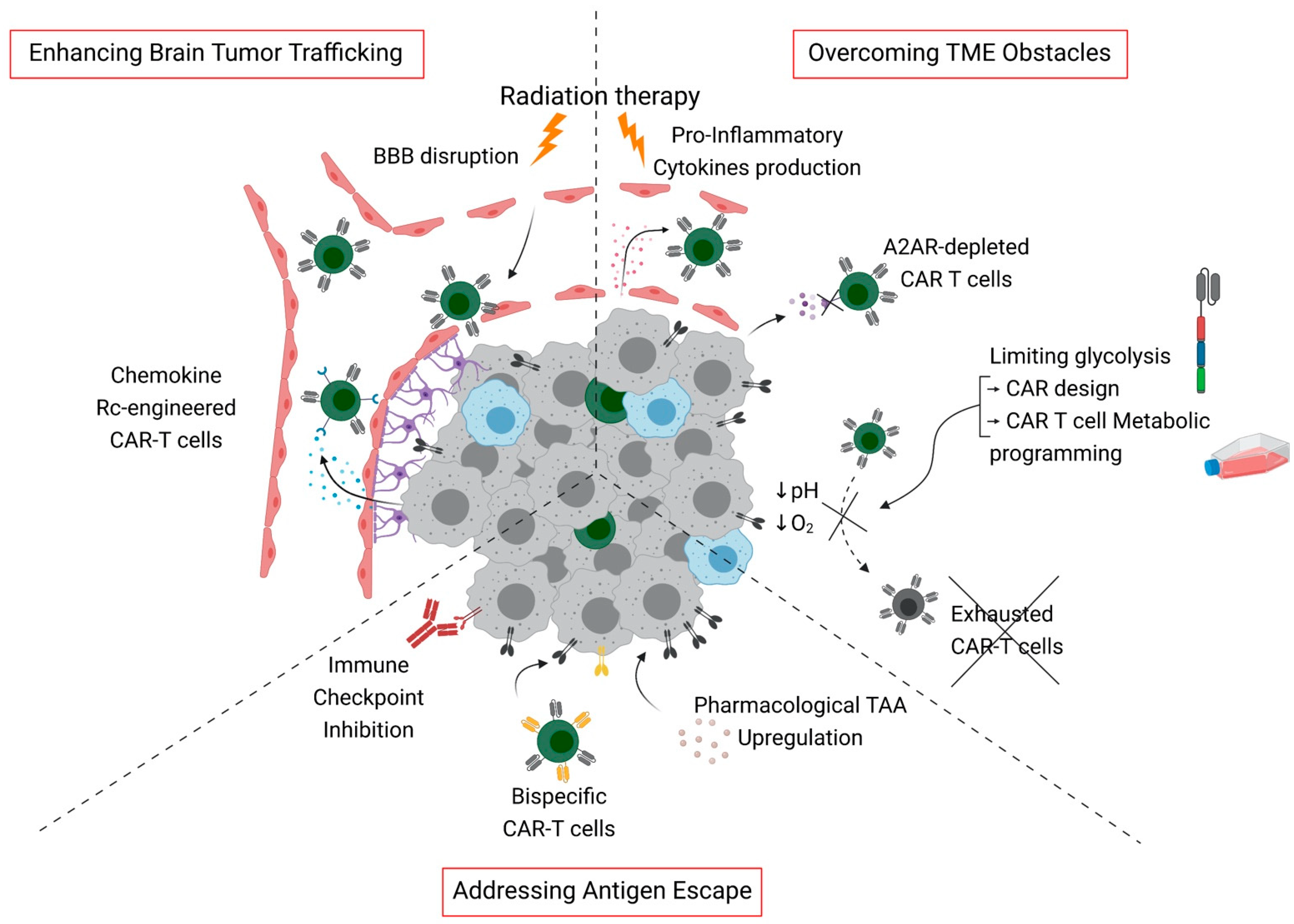
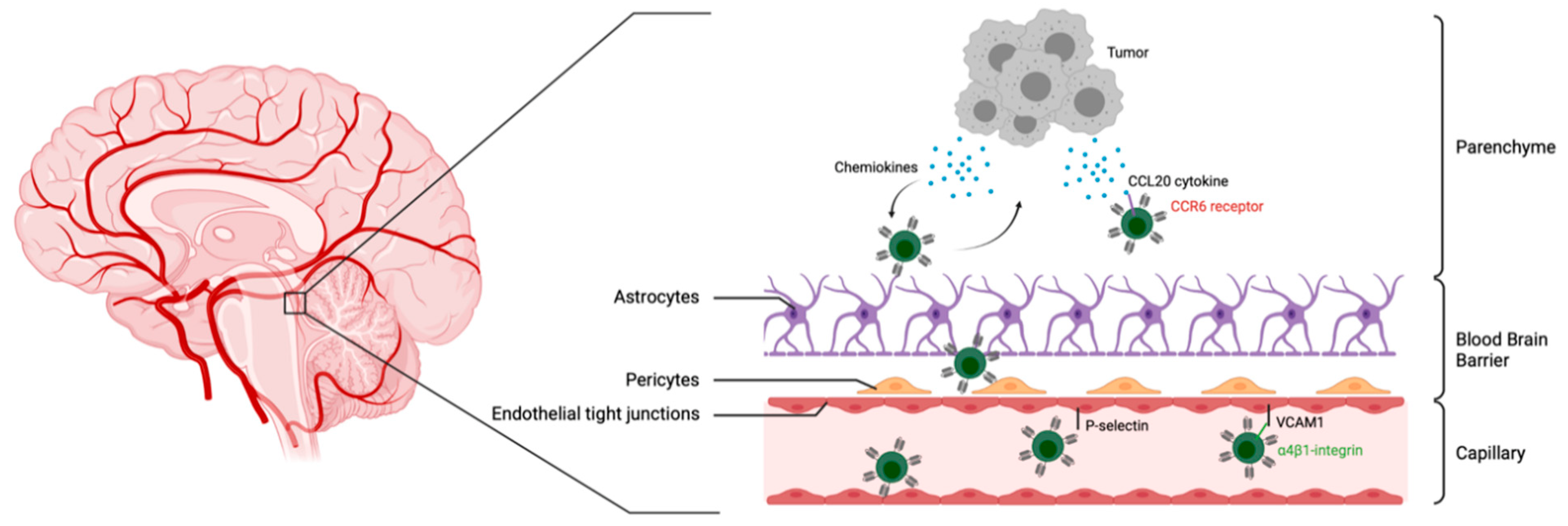
Malignant central nervous system tumors are the leading cause of cancer death in children. Progress in high-throughput molecular techniques has increased the molecular understanding of these tumors, but the outcomes are still poor. Even when efficacious, surgery, radiation, and chemotherapy cause neurologic and neurocognitive morbidity. Adoptive cell therapy with autologous CD19 chimeric antigen receptor T cells (CAR T) has demonstrated remarkable remission rates in patients with relapsed refractory B cell malignancies. Unfortunately, tumor heterogeneity, the identification of appropriate target antigens, and location in a growing brain behind the blood–brain barrier within a specific suppressive immune microenvironment restrict the efficacy of this strategy in pediatric neuro-oncology. In addition, the vulnerability of the brain to unrepairable tissue damage raises important safety concerns. Recent preclinical findings, however, have provided a strong rationale for clinical trials of this approach in patients. Here, we examine the most important challenges associated with the development of CAR T cell immunotherapy and further present the latest preclinical strategies intending to optimize genetically engineered T cells’ efficiency and safety in the field of pediatric neuro-oncology.