Molecular Changes in Retinoblastoma beyond RB1: Findings from Next-Generation Sequencing
by
 ,
,
Jasmine H. Francis
1,2,*, 
Allison L. Richards
3,
Diana L. Mandelker
4,
Michael F. Berger
4,
Michael F. Walsh
5,6,
Ira J. Dunkel
6,7,
Mark T. A. Donoghue
3,† and
David H. Abramson
1,2,† 1
Ophthalmic Oncology Service, Department of Surgery, Memorial Sloan Kettering Cancer Center, New York, NY 10065, USA
2
Department of Ophthalmology, Weill Cornell Medical Center, New York, NY 10065, USA
3
Marie-Josee and Henry R. Kravis Center for Molecular Oncology, Memorial Sloan Kettering Cancer Center, New York, NY 10065, USA
4
Department of Pathology, Memorial Sloan Kettering Cancer Center, New York, NY 10065, USA
5
Department of Medicine, Memorial Sloan Kettering Cancer Center, New York, NY 10065, USA
6
Department of Pediatrics, Memorial Sloan Kettering Cancer Center, New York, NY 10065, USA
7
Department of Pediatrics, Weill Cornell Medical Center, New York, NY 10065, USA
*
Author to whom correspondence should be addressed.
†
These authors contributed equally to this paper as senior authors.
Cancers 2021, 13(1), 149; https://doi.org/10.3390/cancers13010149
Submission received: 3 November 2020
/
Revised: 25 December 2020
/
Accepted: 30 December 2020
/
Published: 5 January 2021
(This article belongs to the Section Methods and Technologies Development)
Simple Summary
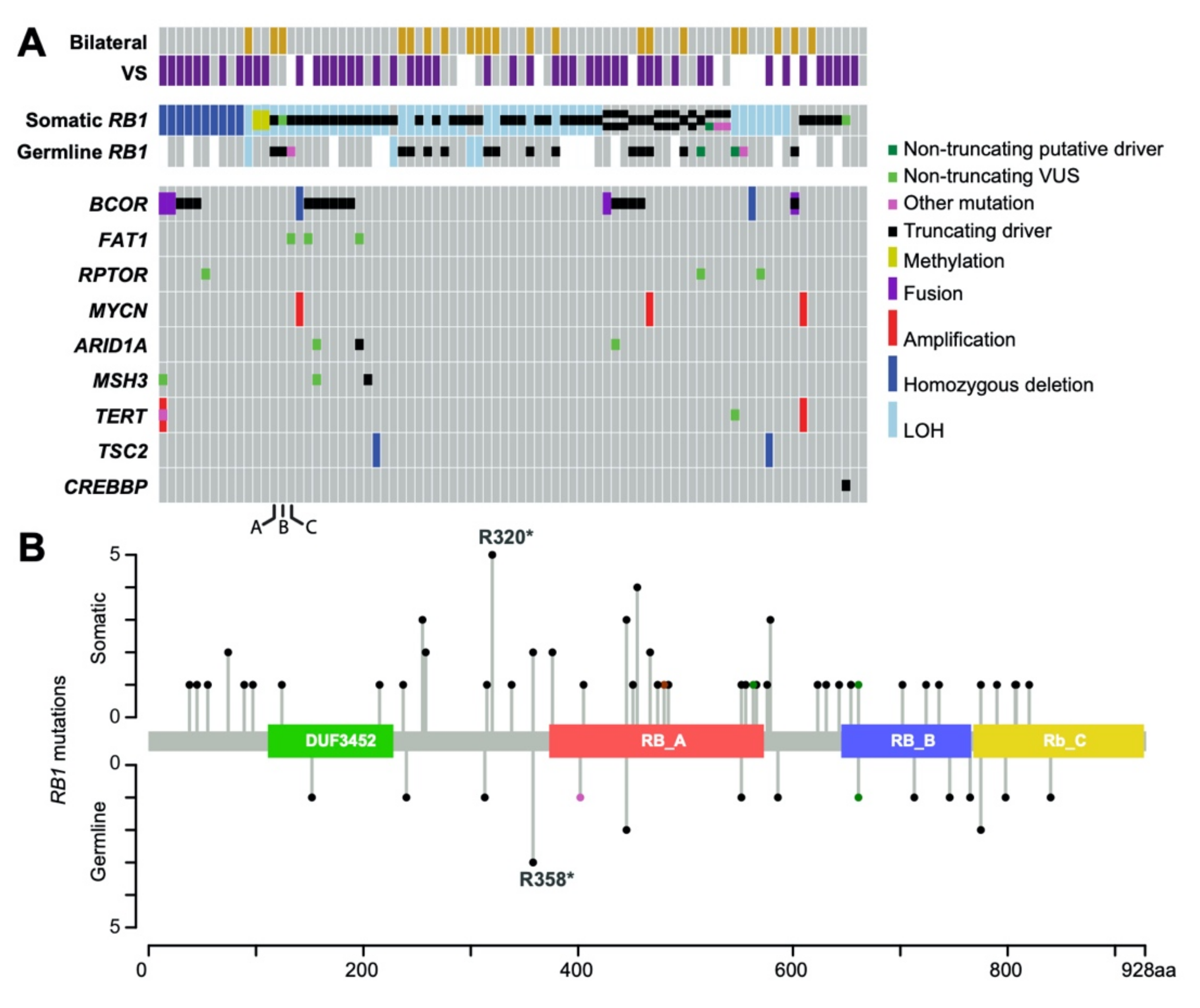
The gene causing retinoblastoma was the first tumor suppressor cloned (1986) and because retinoblastoma is the classic example of autosomal dominant inheritance, there has been little research on non-RB1 alterations in tumors and the impact these alterations have on growth patterns in the eye, metastases and predilection for non-ocular cancers. This study interrogated enucleated retinoblastoma specimens using a MSK-IMPACT clinical next-generation sequencing panel with the aim to correlate them with clinicopathologic characteristics. We found that vitreous seeding (the main reason for eye removal) correlates with copy number variations, specifically 1q gains and 16q loss. We also found that somatic BCOR mutations correlate with propensity for metastasis and this offers a molecular pathway for monitoring high risk tumors. In addition, the finding that 11% of these retinoblastoma patients have additional germline mutations (on other chromosomes) that predispose them to a different host of cancers throughout their lives enables more targeted and specific screening strategies.
Abstract
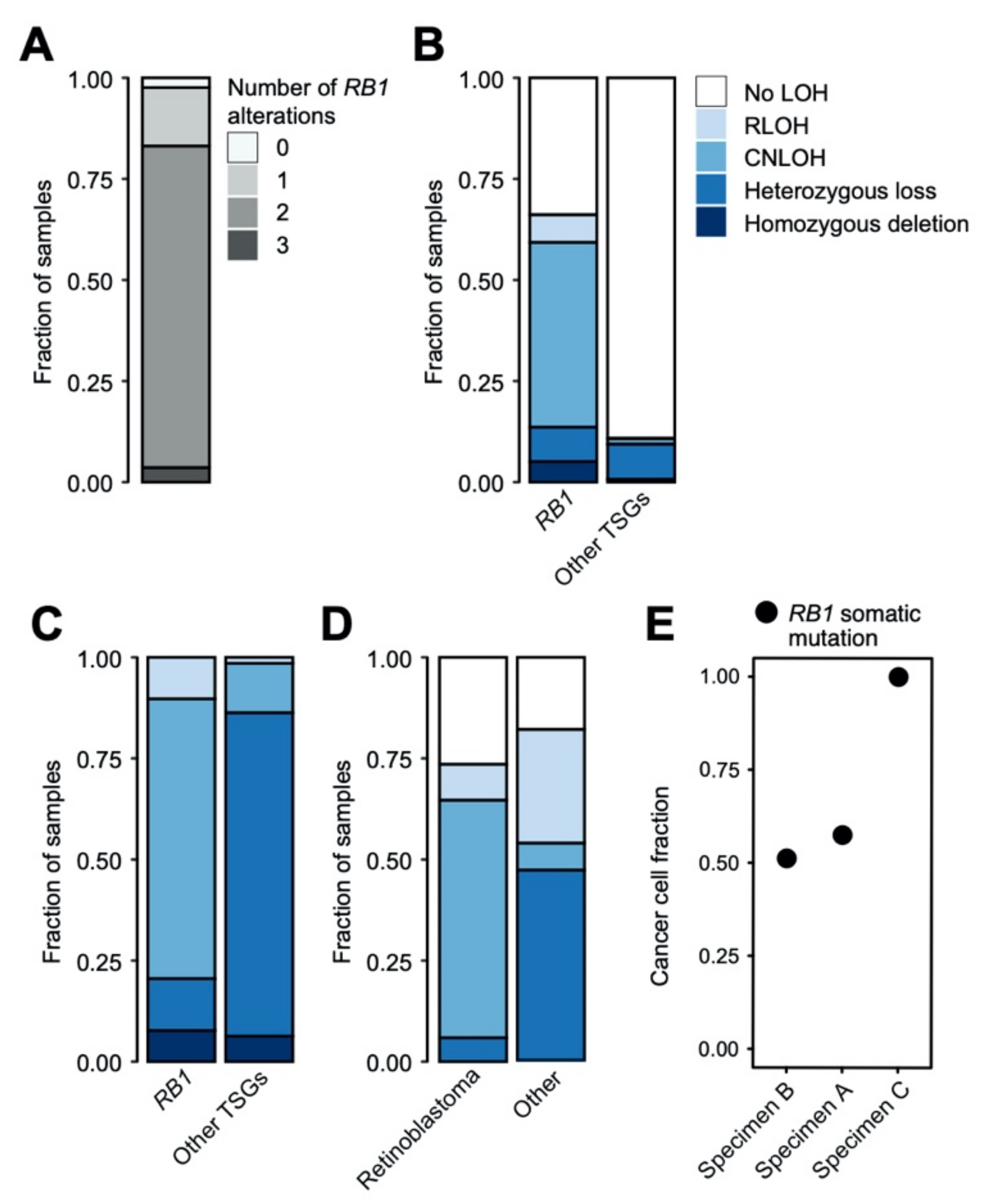
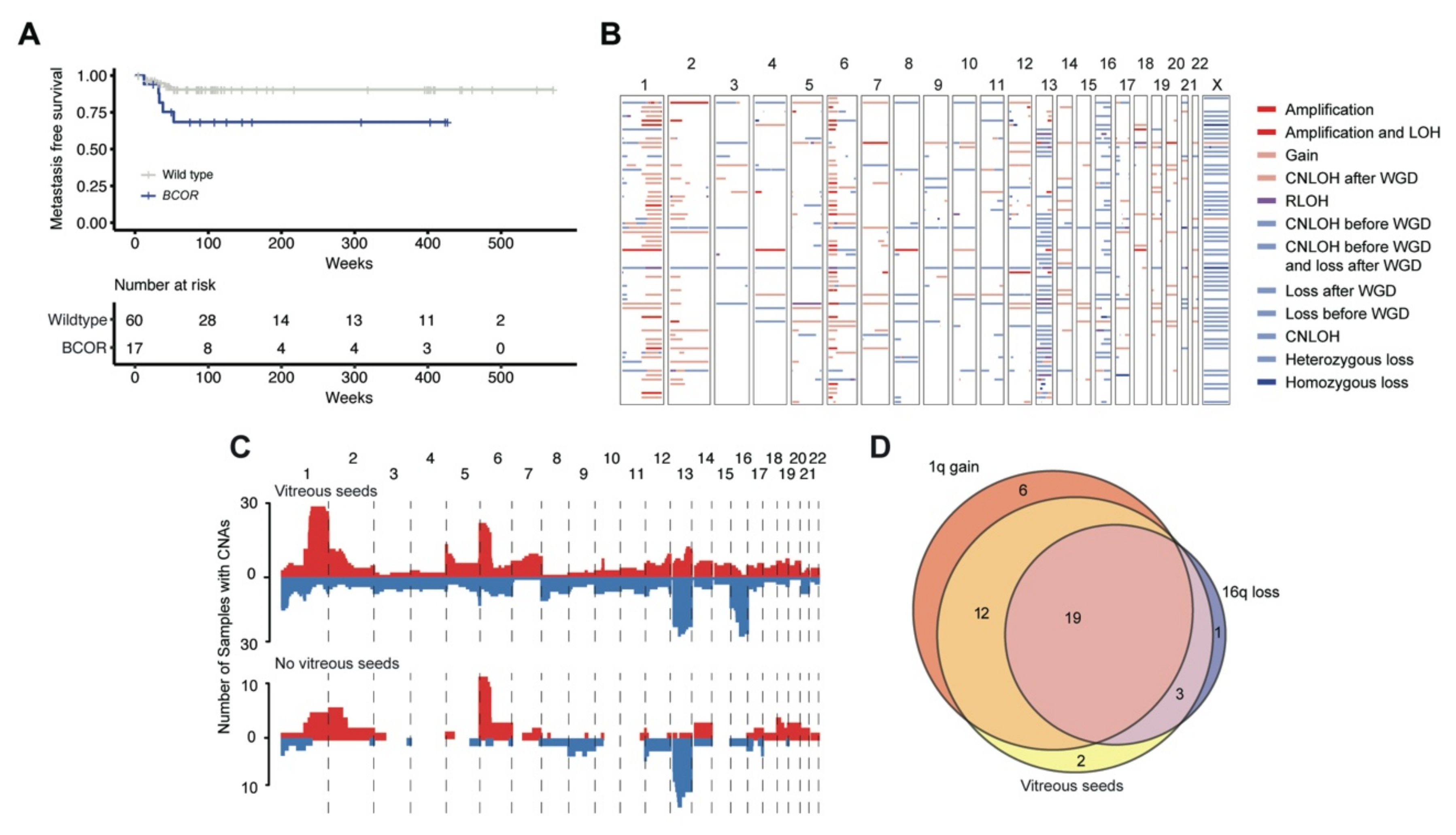
This investigation uses hybridization capture-based next-generation sequencing to deepen our understanding of genetics that underlie retinoblastoma. Eighty-three enucleated retinoblastoma specimens were evaluated using a MSK-IMPACT clinical next-generation sequencing panel to evaluate both somatic and germline alterations. Somatic copy number variations (CNVs) were also identified. Genetic profiles were correlated to clinicopathologic characteristics. RB1 inactivation was found in 79 (97.5%) patients. All specimens had additional molecular alterations. The most common non-RB1 gene alteration was BCOR in 19 (22.9%). Five (11.0%) had pathogenic germline mutations in other non-RB1 cancer predisposition genes. Significant clinicopathologic correlations included: vitreous seeds associated with 1q gains and 16q loss of heterozygosity (BH-corrected p-value = 0.008, 0.004; OR = 12.6, 26.7, respectively). BCOR mutations were associated with poor prognosis, specifically metastases-free survival (MFS) (nominal p-value 0.03). Furthermore, retinoblastoma patients can have non-RB1 germline mutations in other cancer-associated genes. No two specimens had the identical genetic profile, emphasizing the individuality of tumors with the same clinical diagnosis.