FUCCI Real-Time Cell-Cycle Imaging as a Guide for Designing Improved Cancer Therapy: A Review of Innovative Strategies to Target Quiescent Chemo-Resistant Cancer Cells
by
 , , and
Shuya Yano
1,2,*, 
Hiroshi Tazawa
1,3,
Shunsuke Kagawa
1,4,
Toshiyoshi Fujiwara
1 and
Robert M. Hoffman
5,6 1
Department of Gastroenterological Surgery, Okayama University Graduate School of Medicine, Dentistry and Pharmaceutical Sciences, Okayama 700-8558, Japan
2
Center for Graduate Medical Education, Okayama University Hospital, Okayama 700-8558, Japan
3
Center of Innovative Clinical Medicine, Okayama University Hospital, Okayama 700-8558, Japan
4
Minimally Invasive Therapy Center, Okayama University Hospital, Okayama 700-8558, Japan
5
AntiCancer, Inc., San Diego, CA 92111, USA
6
Department of Surgery, University of California, San Diego, CA 92093, USA
*
Author to whom correspondence should be addressed.
Cancers 2020, 12(9), 2655; https://doi.org/10.3390/cancers12092655
Submission received: 25 June 2020
/
Revised: 3 September 2020
/
Accepted: 9 September 2020
/
Published: 17 September 2020
(This article belongs to the Special Issue Cell Cycle and Cell Cycle Checkpoint Deregulations: From Oncogenic Drivers to Therapeutic Targets)
Simple Summary
Chemotherapy of solid tumors has made very slow progress over many decades. A major problem has been that solid tumors very often contain non-dividing cells due to lack of oxygen deep in the tumor and these non-dividing cells resist most currently-used chemotherapy which usually only targets dividing cells. The present review demonstrates how a unique imaging system, FUCCI, which color codes cells depending on whether they are in a dividing or non-dividing phase, is being used to design very novel therapy that targets non-dividing cancer cells which can greatly improve the efficacy of cancer chemotherapy.
Abstract
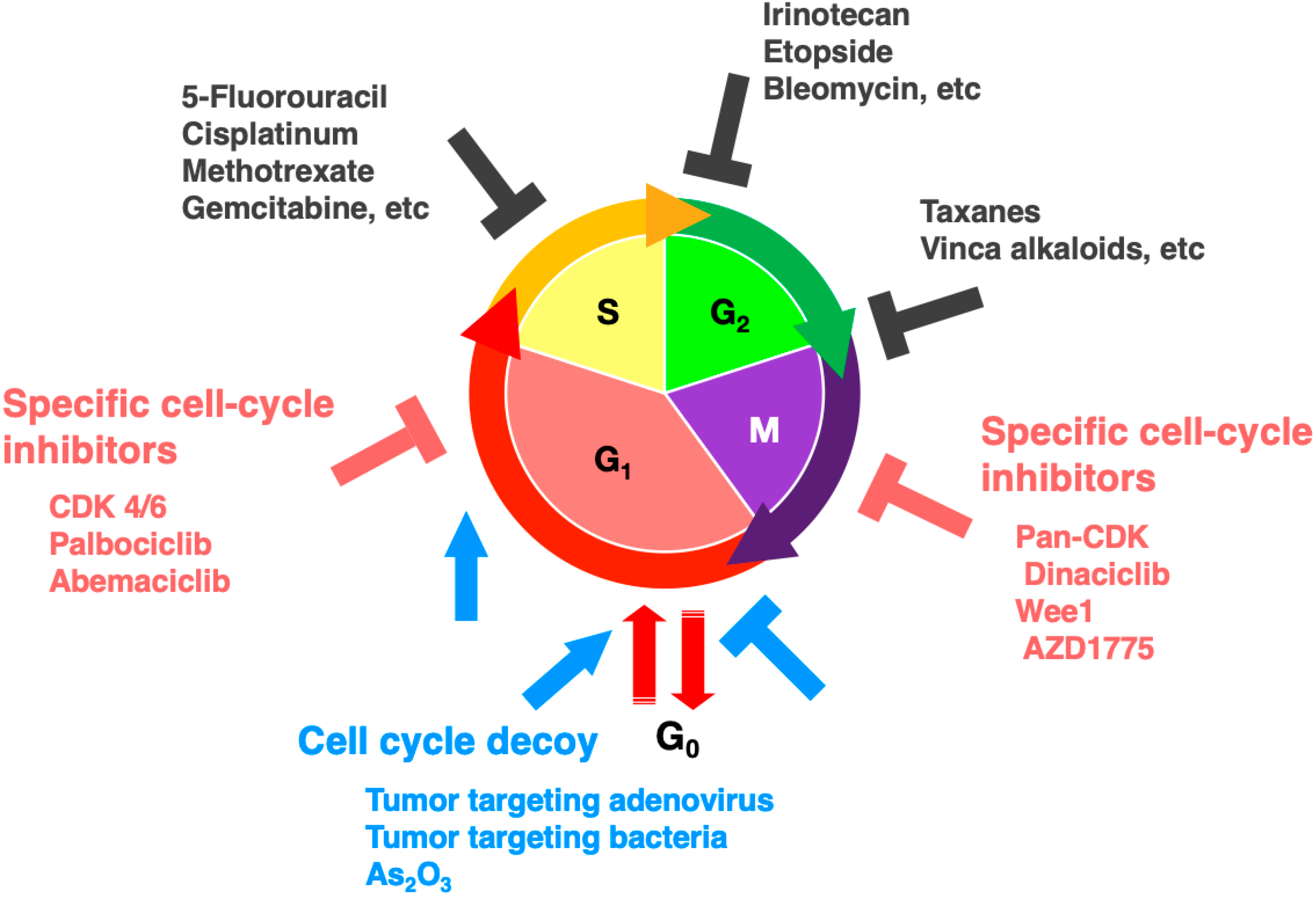
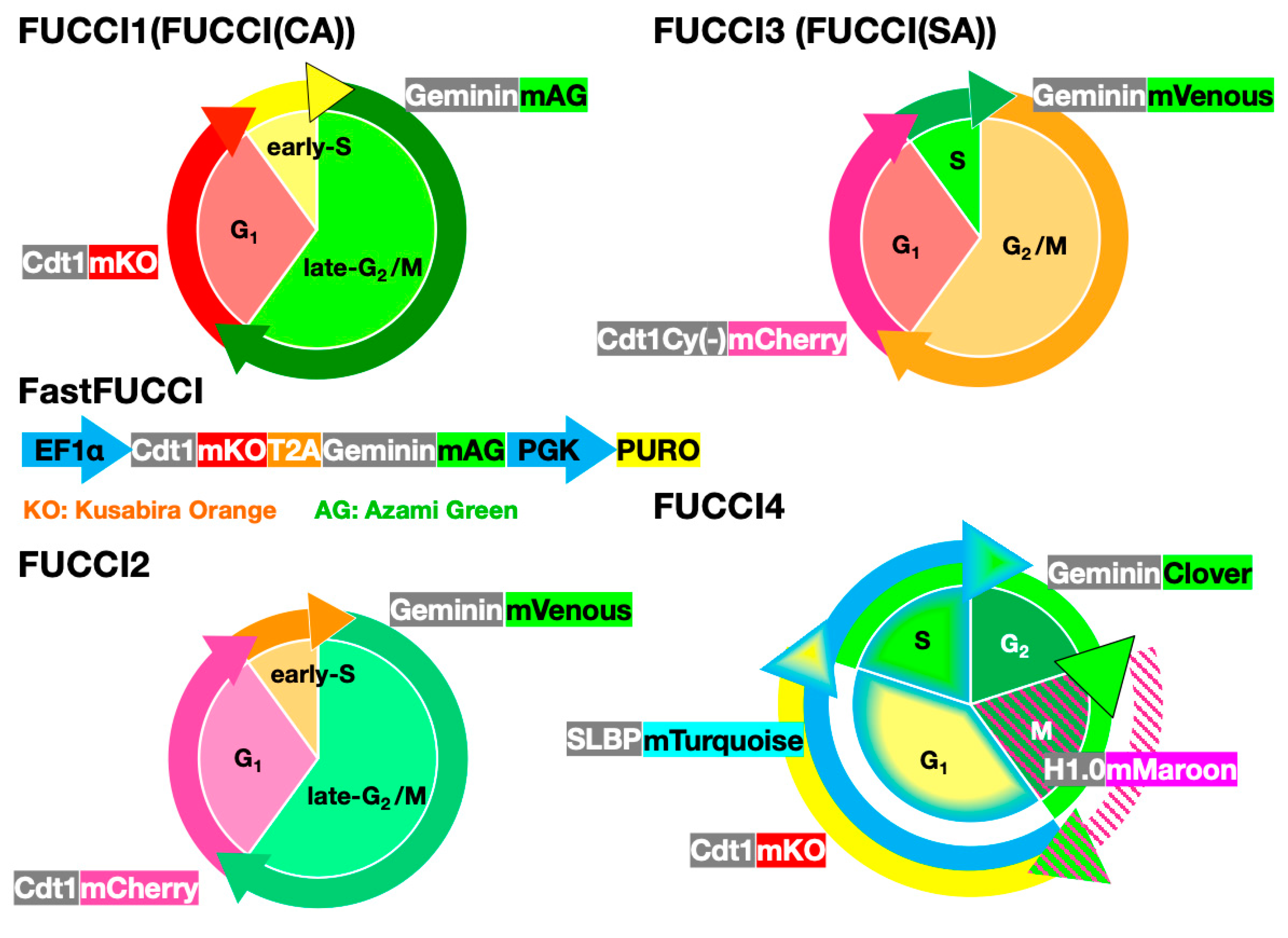
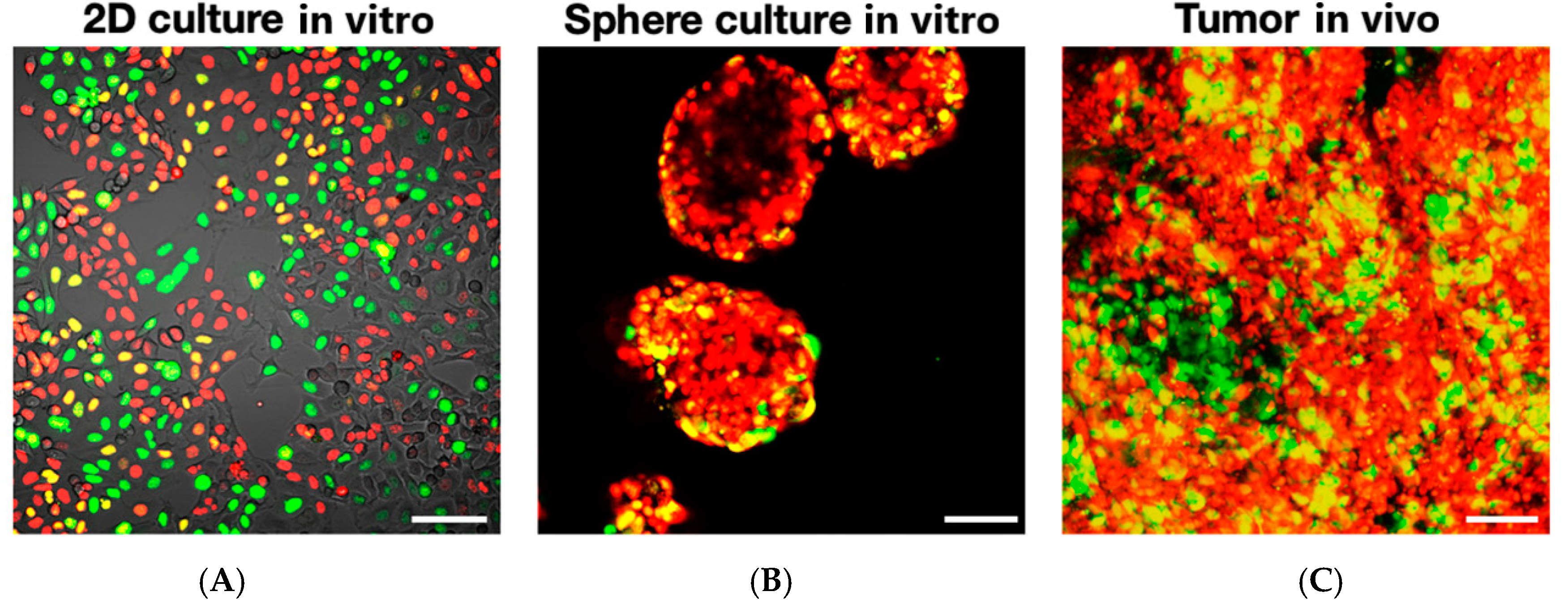
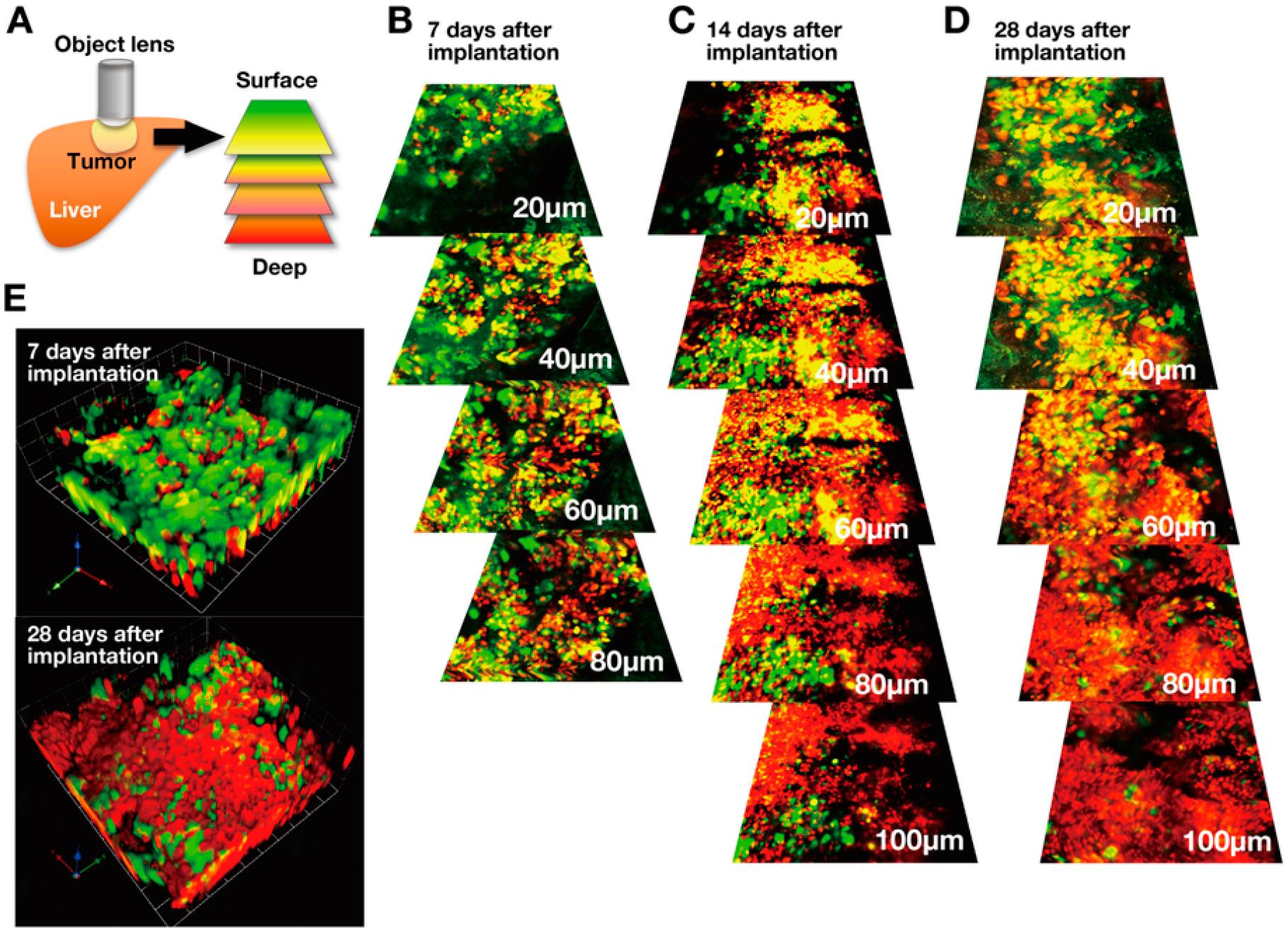
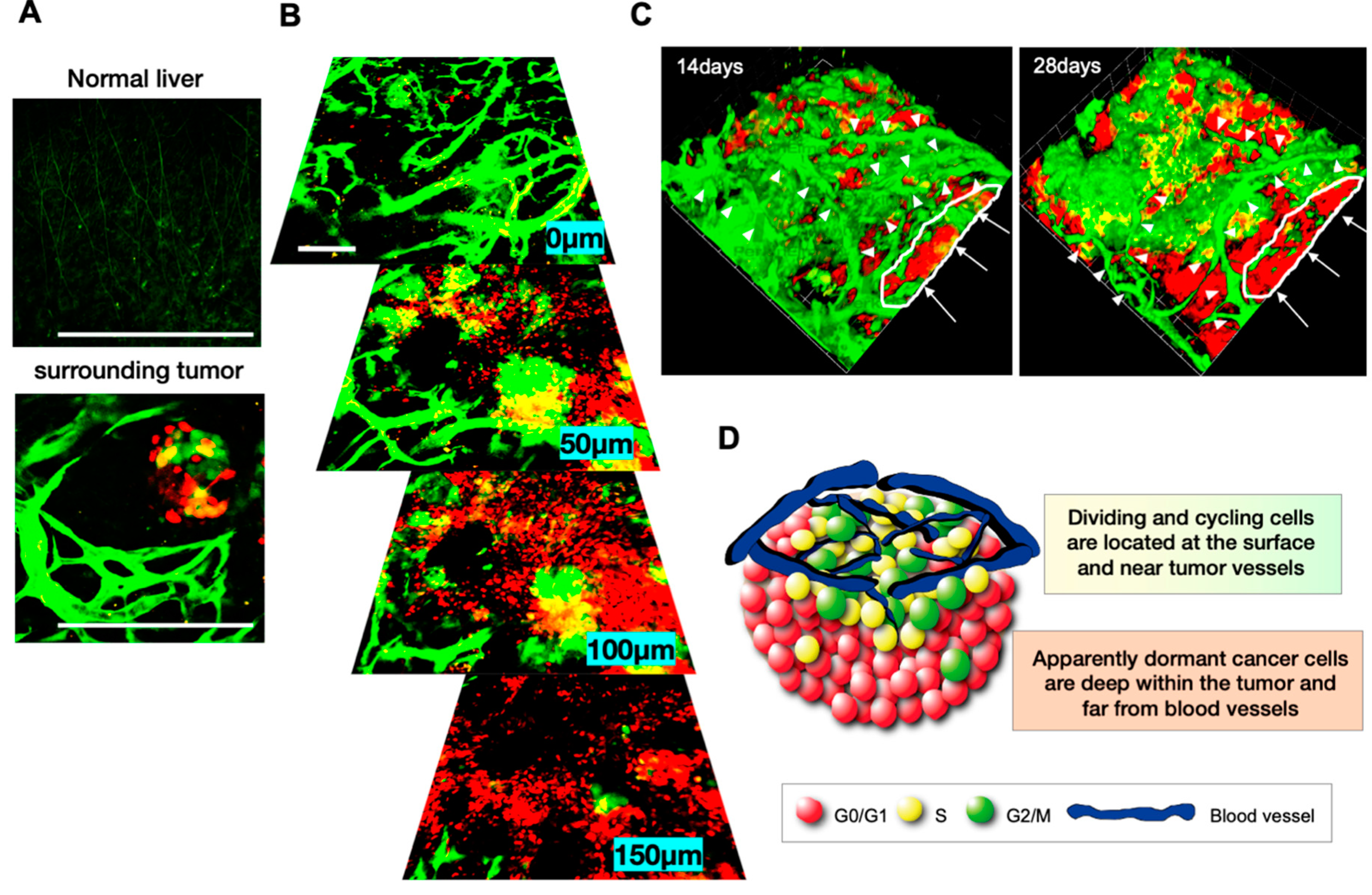
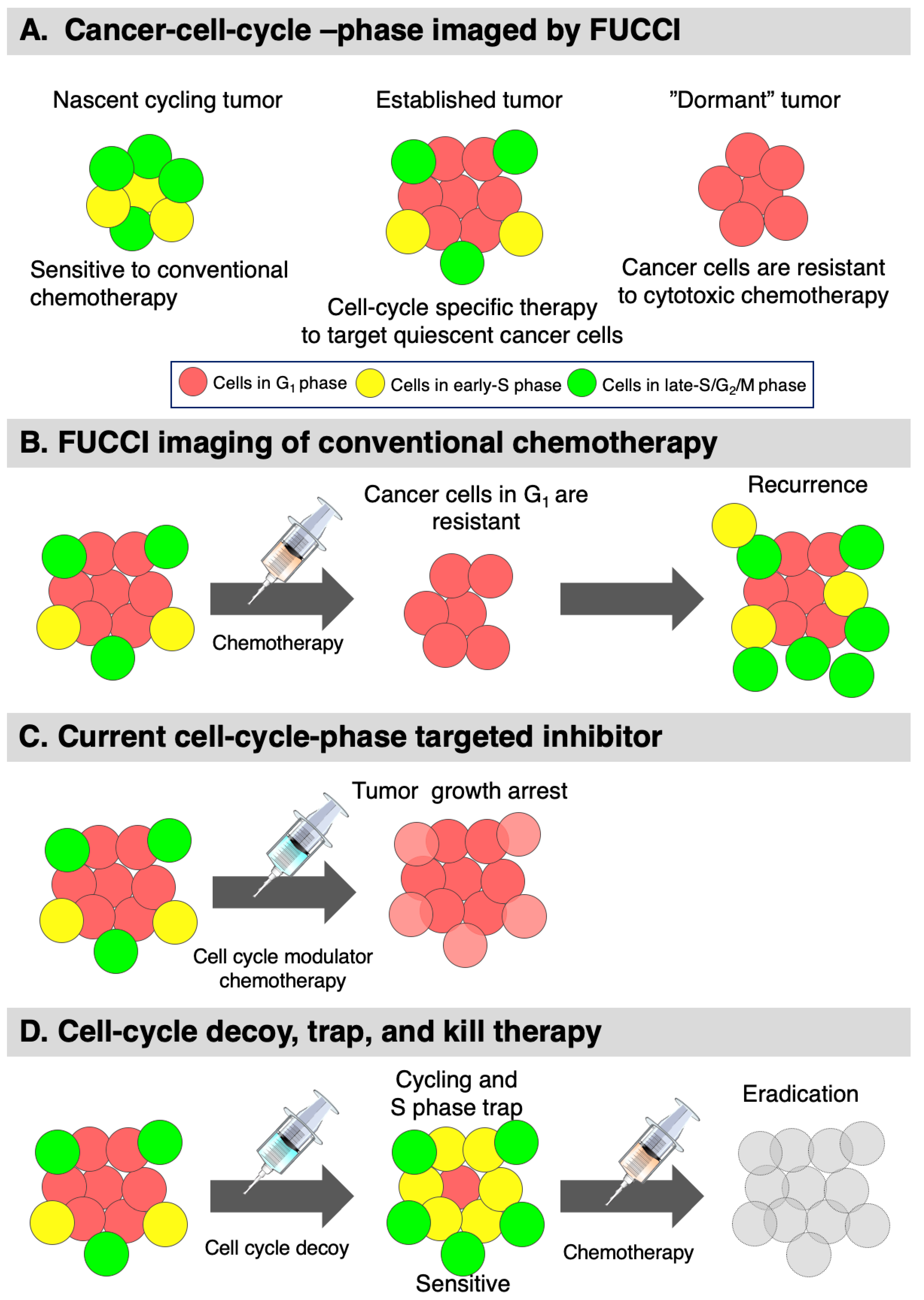
Progress in chemotherapy of solid cancer has been tragically slow due, in large part, to the chemoresistance of quiescent cancer cells in tumors. The fluorescence ubiquitination cell-cycle indicator (FUCCI) was developed in 2008 by Miyawaki et al., which color-codes the phases of the cell cycle in real-time. FUCCI utilizes genes linked to different color fluorescent reporters that are only expressed in specific phases of the cell cycle and can, thereby, image the phases of the cell cycle in real-time. Intravital real-time FUCCI imaging within tumors has demonstrated that an established tumor comprises a majority of quiescent cancer cells and a minor population of cycling cancer cells located at the tumor surface or in proximity to tumor blood vessels. In contrast to most cycling cancer cells, quiescent cancer cells are resistant to cytotoxic chemotherapy, most of which target cells in S/G2/M phases. The quiescent cancer cells can re-enter the cell cycle after surviving treatment, which suggests the reason why most cytotoxic chemotherapy is often ineffective for solid cancers. Thus, quiescent cancer cells are a major impediment to effective cancer therapy. FUCCI imaging can be used to effectively target quiescent cancer cells within tumors. For example, we review how FUCCI imaging can help to identify cell-cycle-specific therapeutics that comprise decoy of quiescent cancer cells from G1 phase to cycling phases, trapping the cancer cells in S/G2 phase where cancer cells are mostly sensitive to cytotoxic chemotherapy and eradicating the cancer cells with cytotoxic chemotherapy most active against S/G2 phase cells. FUCCI can readily image cell-cycle dynamics at the single cell level in real-time in vitro and in vivo. Therefore, visualizing cell cycle dynamics within tumors with FUCCI can provide a guide for many strategies to improve cell-cycle targeting therapy for solid cancers.