Efficacy and Toxicity of Different Chemotherapy Protocols for Concurrent Chemoradiation in Non-Small Cell Lung Cancer—A Secondary Analysis of the PET Plan Trial
by
 , , , , , , ,
Eleni Gkika
1,2,3,*, 
Stefan Lenz
4,
Tanja Schimek-Jasch
1,2,
Cornelius F. Waller
3,5,
Stephanie Kremp
6,
Andrea Schaefer-Schuler
7,
Michael Mix
3,8,
Andreas Küsters
9,
Marco Tosch
10,11,
Thomas Hehr
12,
Susanne Martina Eschmann
13,
Yves-Pierre Bultel
14,
Peter Hass
15,
Jochen Fleckenstein
6,
Alexander Henry Thieme
16,
Marcus Stockinger
17,
Karin Dieckmann
18,
Matthias Miederer
19,
Gabriele Holl
20,
Hans Christian Rischke
1,3,8,
Sonja Adebahr
1,2,
Jochem König
21,
Harald Binder
4,
Anca-Ligia Grosu
1,2,3 and
Ursula Nestle
1,2,3,9add
Show full author list
1
Department of Radiation Oncology, Medical Center—University of Freiburg, Robert-Koch-Str. 3, 79106 Freiburg, Germany
2
German Cancer Consortium (DKTK) Partner Site Freiburg, German Cancer Research Center (DKFZ), Neuenheimer Feld 280, 69120 Heidelberg, Germany
3
Faculty of Medicine, University of Freiburg, 79106 Freiburg, Germany
4
Institute of Medical Biometry and Statistics, Faculty of Medicine and Medical Center, University of Freiburg, 79106 Freiburg, Germany
5
Department of Medicine I, Hematology, Oncology and Stem Cell Transplantation, Medical Center-University of Freiburg, 79106 Freiburg, Germany
6
Department of Radiotherapy and Radiation Oncology, Saarland University Medical Center and Faculty of Medicine, 66421 Homburg/Saar, Germany
7
Department of Nuclear Medicine, Saarland University Medical Center and Faculty of Medicine, 66421 Homburg/Saar, Germany
8
Department of Nuclear Medicine, Medical Center—University of Freiburg, 79106 Freiburg, Germany
9
Department of Radiation Oncology, Kliniken Maria Hilf, 41063 Mönchengladbach, Germany
10
Department of Nuclear Medicine, Helios University Hospital Wuppertal, 42283 Wuppertal, Germany
11
Department of Medicine, Faculty of Health, University of Witten/Herdecke, 58448 Witten, Germany
12
Department of Radiation Oncology, Marienhospital, 70199 Stuttgart, Germany
13
Department of Nuclear Medicine, Marienhospital, 70199 Stuttgart, Germany
14
Department of Radiation Oncology, Klinikum Mutterhaus der Boromäerinnen, 54290 Trier, Germany
15
Department of Radiation Oncology, University Hospital Magdeburg, 39120 Magdeburg, Germany
16
Department of Radiation Oncology, Charité—Universitätsmedizin Berlin, 13353 Berlin, Germany
17
Department of Radiation Oncology, University Hospital Mainz, 55131 Mainz, Germany
18
Department of Radiotherapy, Vienna General Hospital, Medical University of Vienna, 1090 Vienna, Austria
19
Department of Nuclear Medicine, University Hospital Mainz, 55131 Mainz, Germany
20
Department of Nuclear Medicine, Kliniken Schwerin, 19055 Schwerin, Germany
21
Institute of Medical Biostatistics, Epidemiology and Informatics (IMBEI), University Hospital of Mainz, 55131 Mainz, Germany
*
Author to whom correspondence should be addressed.
Cancers 2020, 12(11), 3359; https://doi.org/10.3390/cancers12113359
Submission received: 3 October 2020
/
Revised: 1 November 2020
/
Accepted: 5 November 2020
/
Published: 13 November 2020
(This article belongs to the Section Cancer Therapy)
Simple Summary
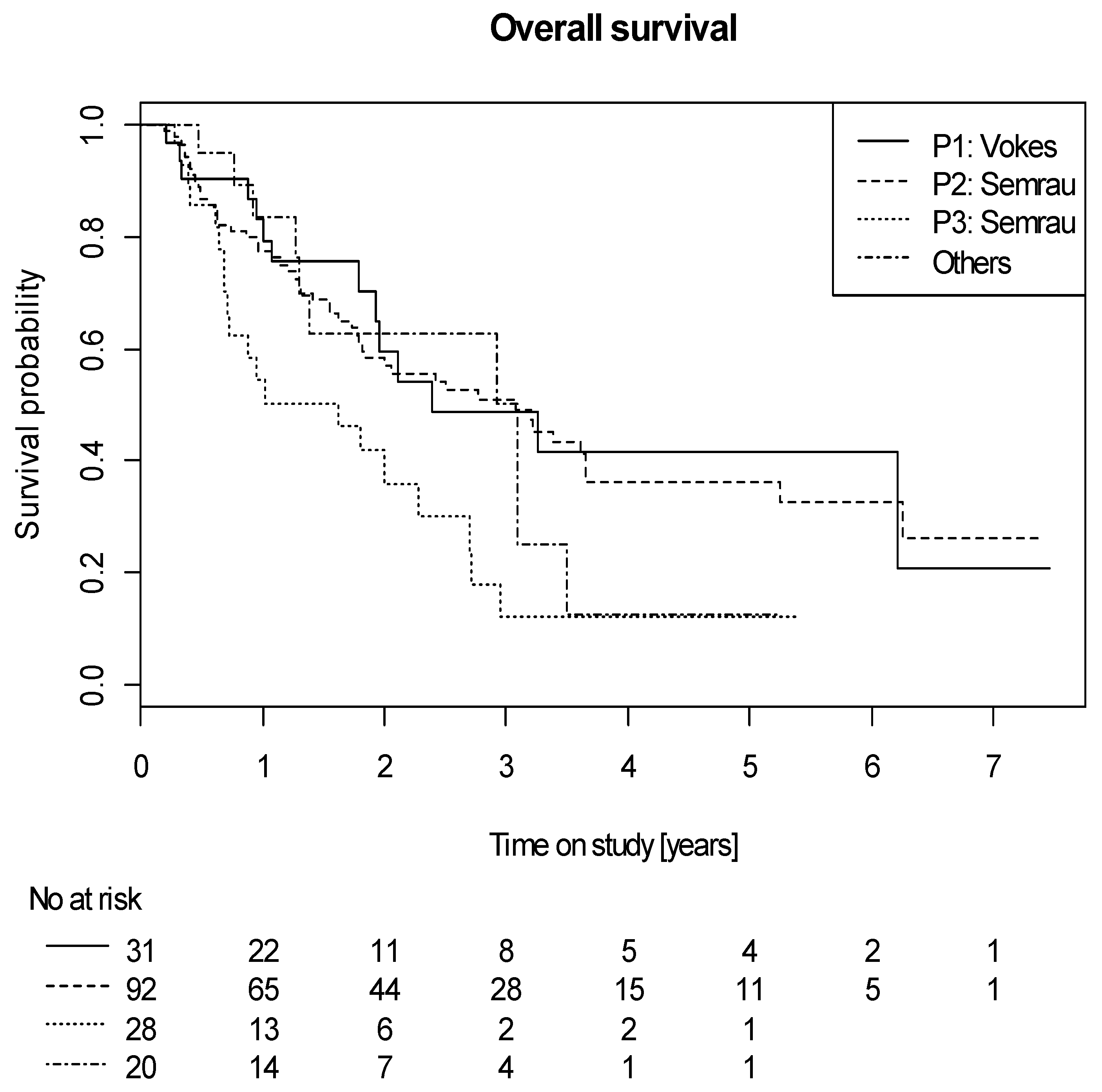
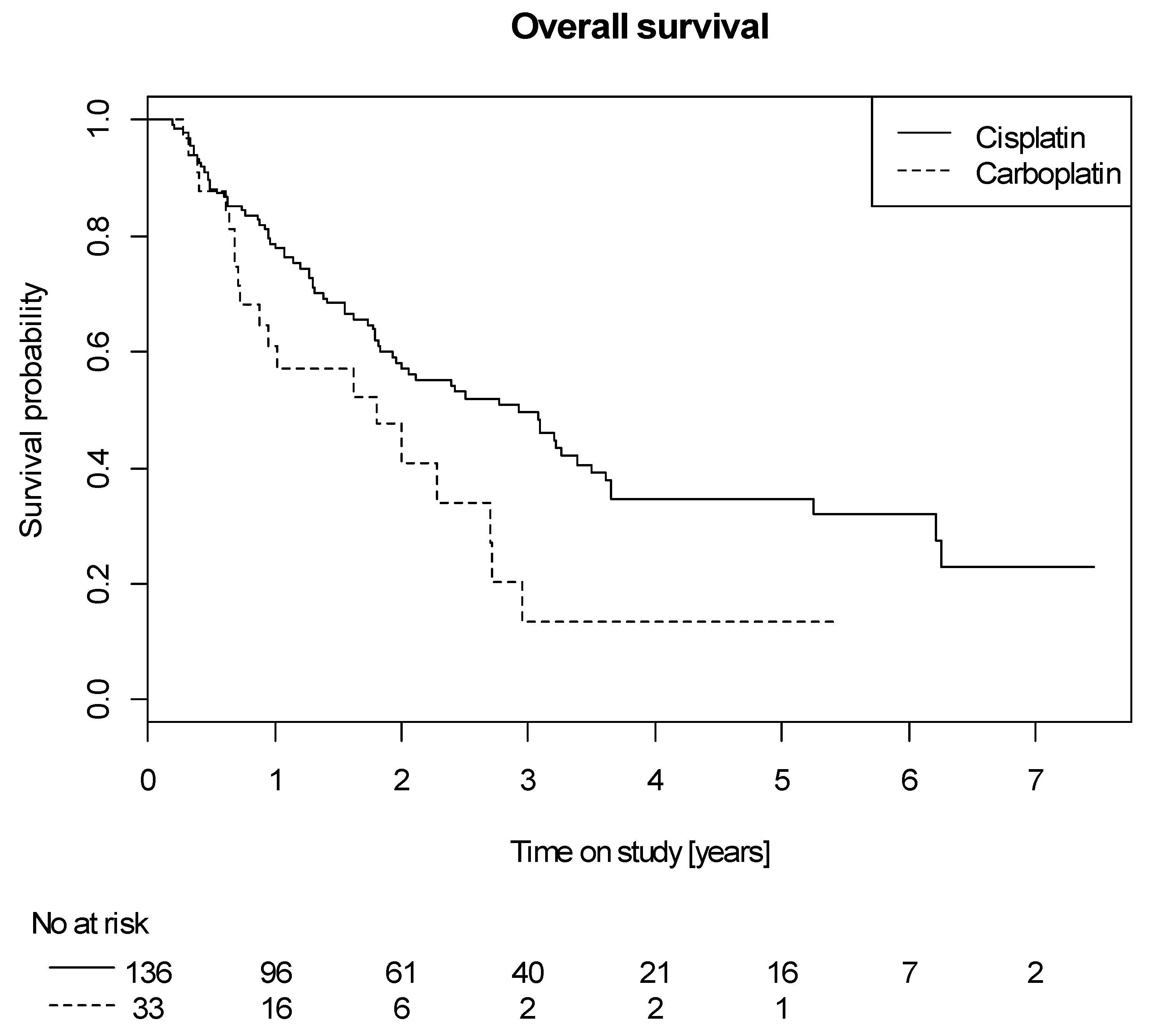
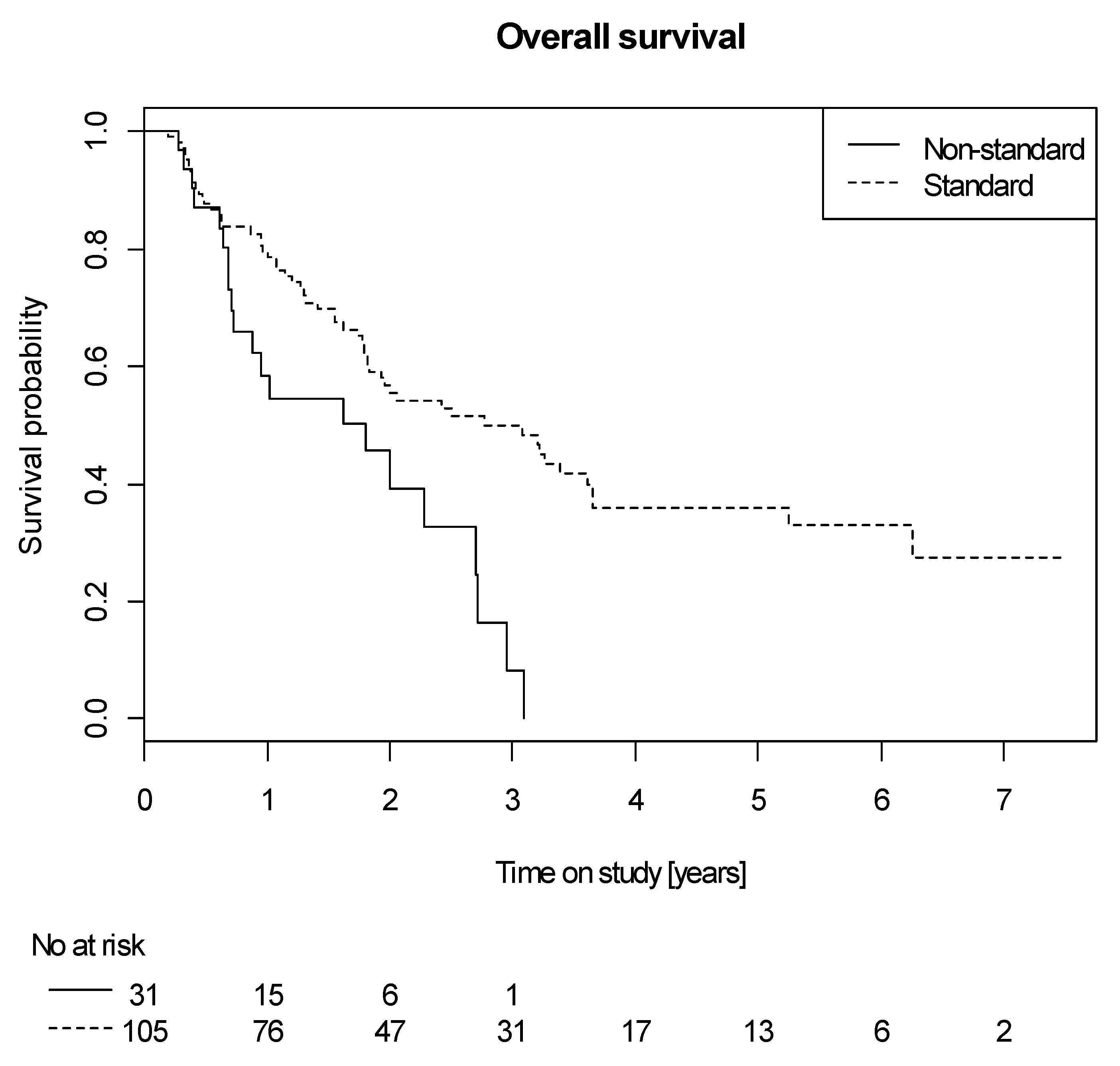
Concurrent chemoradiation (cCRT) with a platinum-based doublet, followed by immunotherapy, is the treatment of choice in locally advanced non-small cell lung cancer. A remaining open question is the difference between cisplatin and carboplatin in combination with second and third generation agents for concurrent chemoradiation, as they have a substantially different toxicity profile and data are scarce and inconclusive concerning cCRT. We here present a secondary analysis of the international PET Plan trial in order to assess the efficacy and toxicity of different chemotherapy regimens as well as the difference between the commonly used platinum based agents, cisplatin and carboplatin. All regimens were well tolerated and cisplatin in combination with vinorelbin either as a single dose or daily doses per cycle showed comparable efficacy. Patients treated with carboplatin doublets had a worse survival, but after adjusting for possibly relevant factors, this difference became non-significant, probably due to existing selection bias.
Abstract
(1) Background: The optimal chemotherapy (CHT) regimen for concurrent chemoradiation (cCRT) is not well defined. In this secondary analysis of the international randomized PET-Plan trial, we evaluate the efficacy of different CHT. (2) Methods: Patients with inoperable NSCLC were randomized at a 1:1 ratio regarding the target volume definition and received isotoxically dose-escalated cCRT using cisplatin 80 mg/m2 (day 1, 22) and vinorelbin 15 mg/m2 (day 1, 8, 22, 29) (P1) or cisplatin 20 mg/m2 (day 1–5, 29–33) and vinorelbin 12.5 mg/m2 (day 1, 8, 15, 29, 36, 43) (P2) or carboplatin AUC1 (day 1–5, 29–33) and vinorelbin 12.5 mg/m2 (day 1, 8, 15, 29, 36, 43) (P3) or other CHT at the treating physician’s discretion. (3) Results: Between 05/2009 and 11/2016, 205 patients were randomized and 172 included in the per-protocol analysis. Patients treated in P1 or P2 had a better overall survival (OS) compared to P3 (p = 0.015, p = 0.01, respectively). Patients treated with carboplatin had a worse OS compared to cisplatin (HR 1.78, p = 0.03), but the difference did not remain significant after adjusting for age, ECOG, cardiac function creatinine and completeness of CHT. (4) Conclusions: Carboplatin doublets show no significant difference compared to cisplatin, after adjusting for possibly relevant factors, probably due to existing selection bias.