Article

Thermovibrationally Driven Ring-Shaped Particle Accumulations in Corner-Heated Cavities with the D2h Symmetry

by
Balagopal Manayil Santhosh
and
Marcello Lappa
*
Department of Mechanical and Aerospace Engineering, University of Strathclyde, James Weir Building, 75 Montrose Street, Glasgow G1 1XJ, UK
*
Author to whom correspondence should be addressed.
Micromachines 2026, 17(1), 39; https://doi.org/10.3390/mi17010039
Submission received: 27 November 2025 / Revised: 20 December 2025 / Accepted: 22 December 2025 / Published: 29 December 2025
(This article belongs to the Special Issue Microfluidic Systems for Sustainable Energy)

Abstract

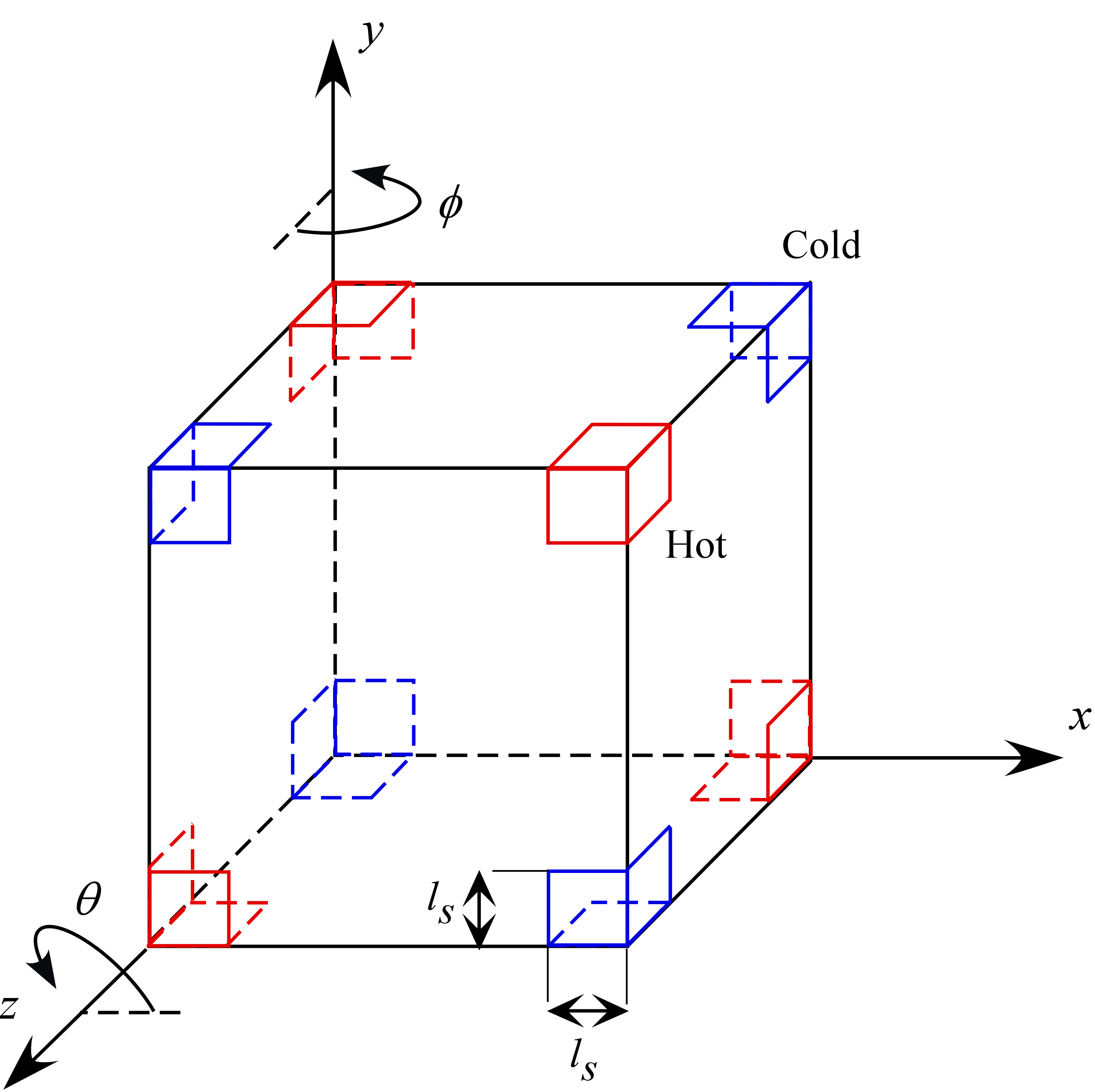
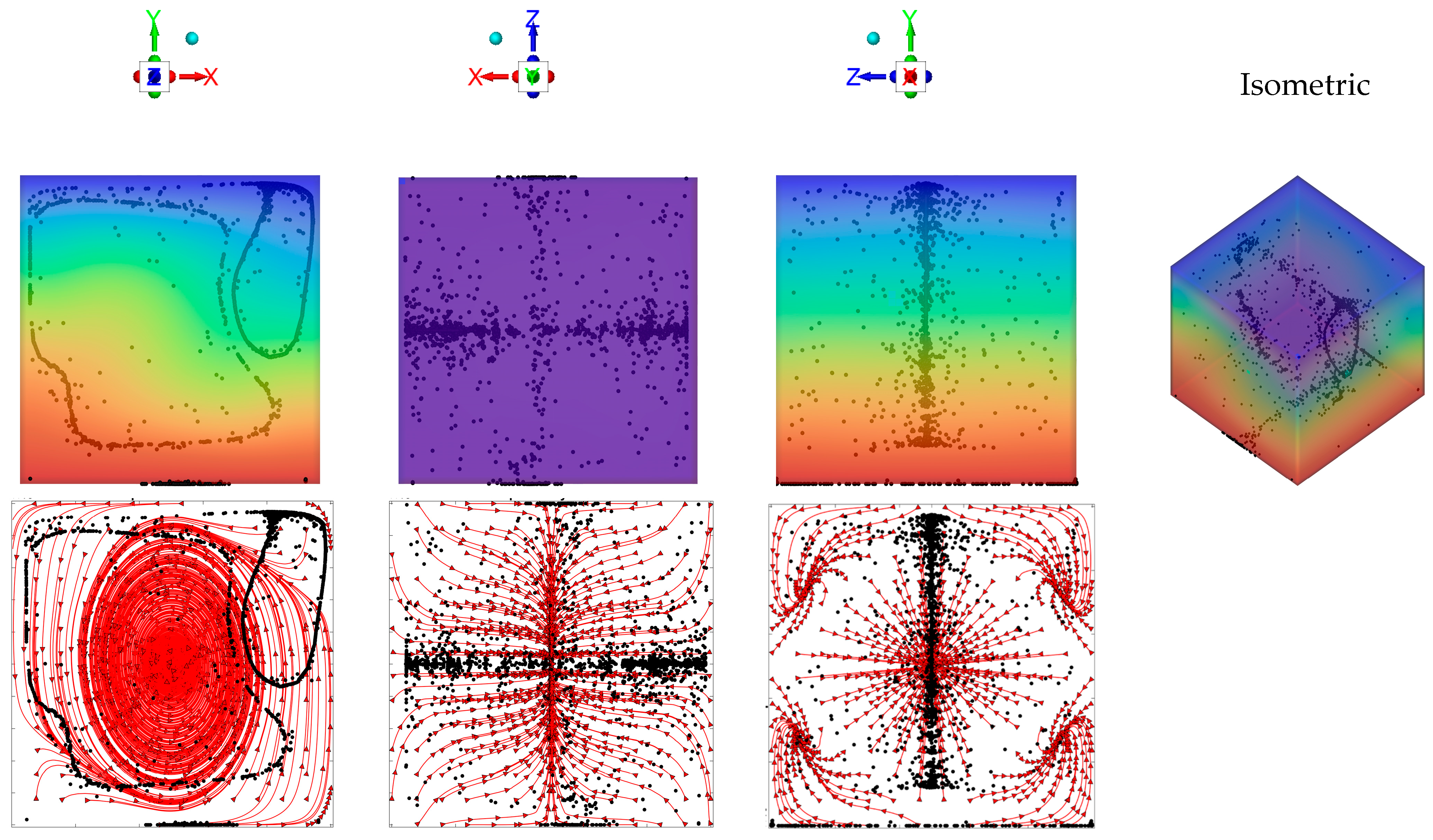
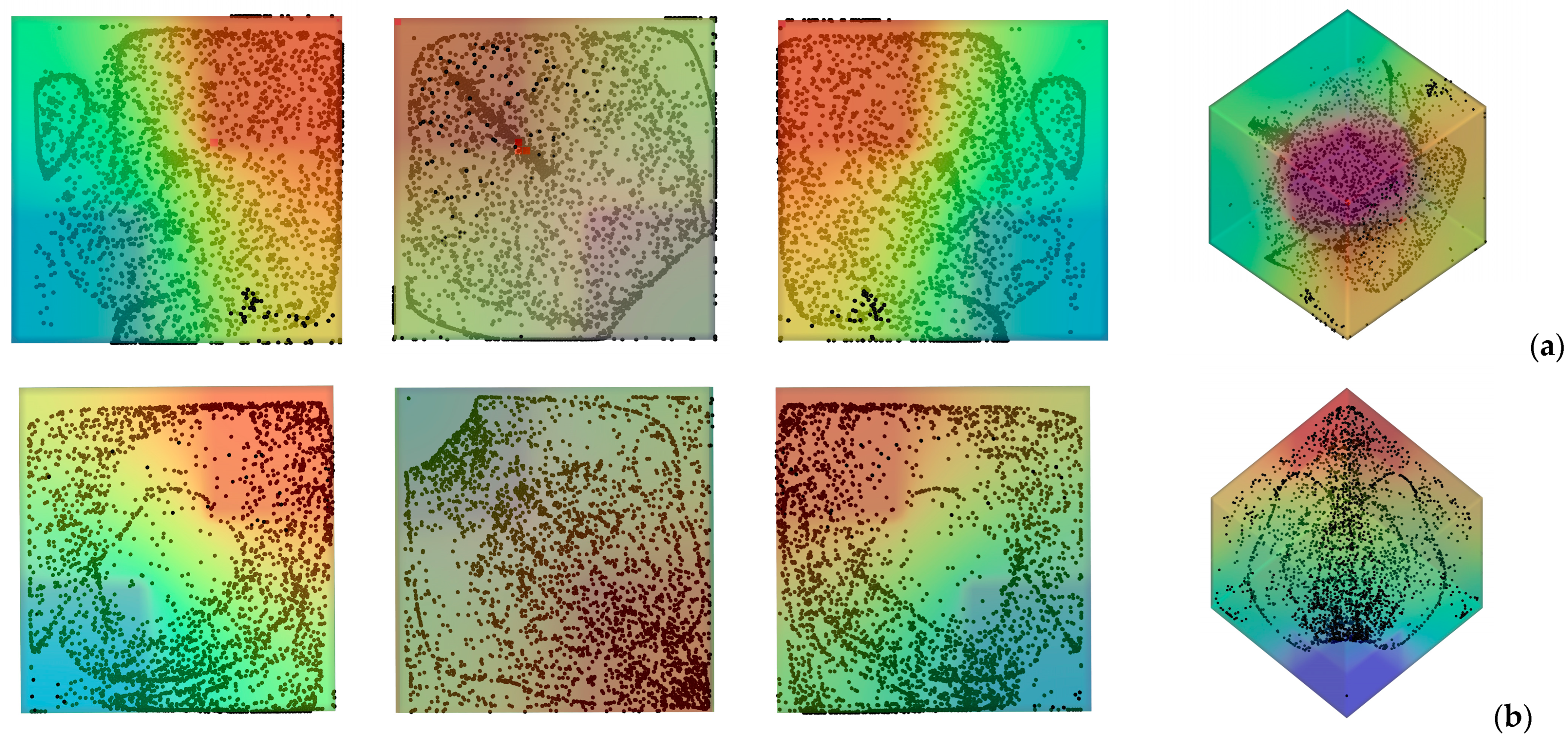
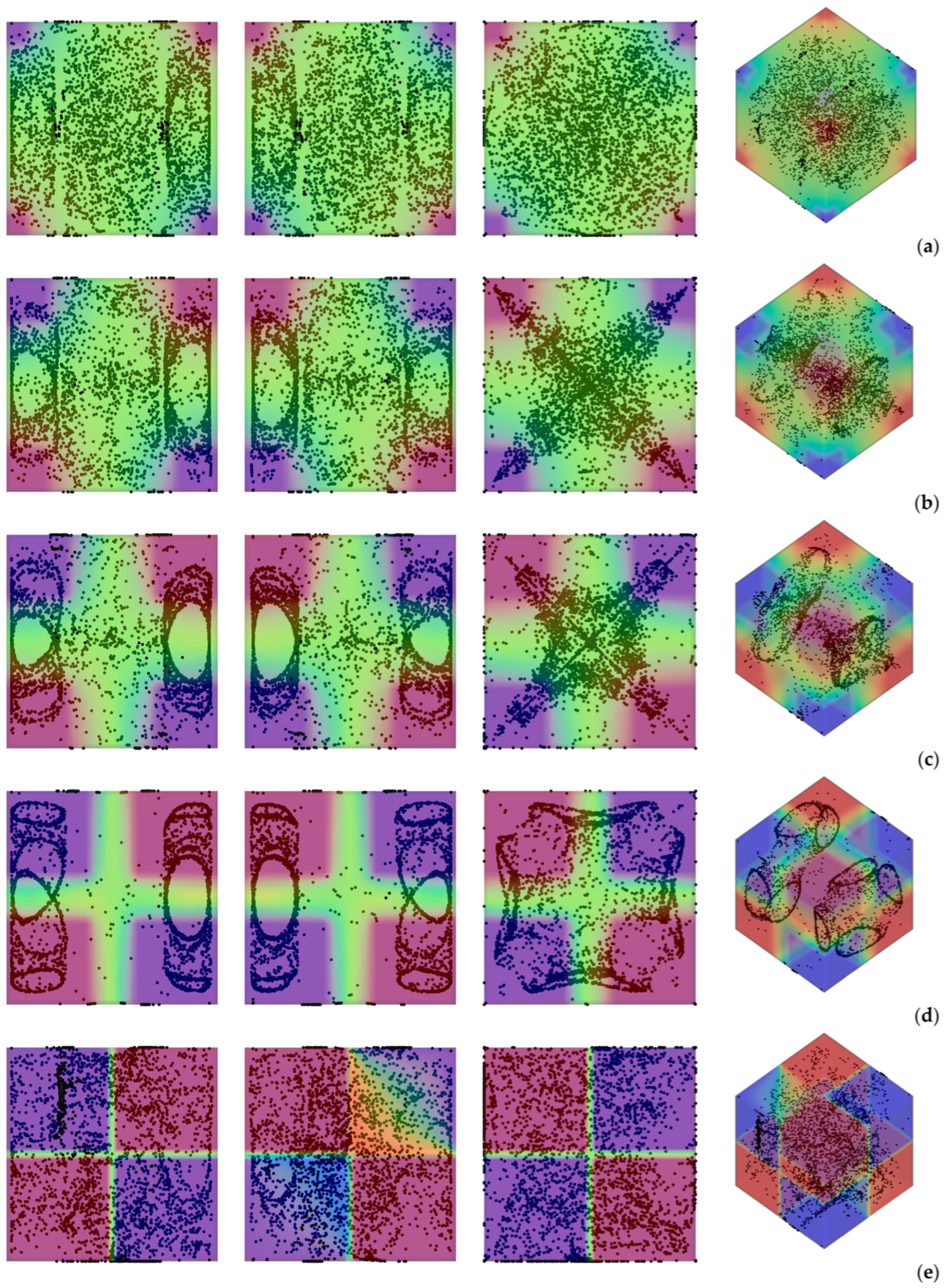
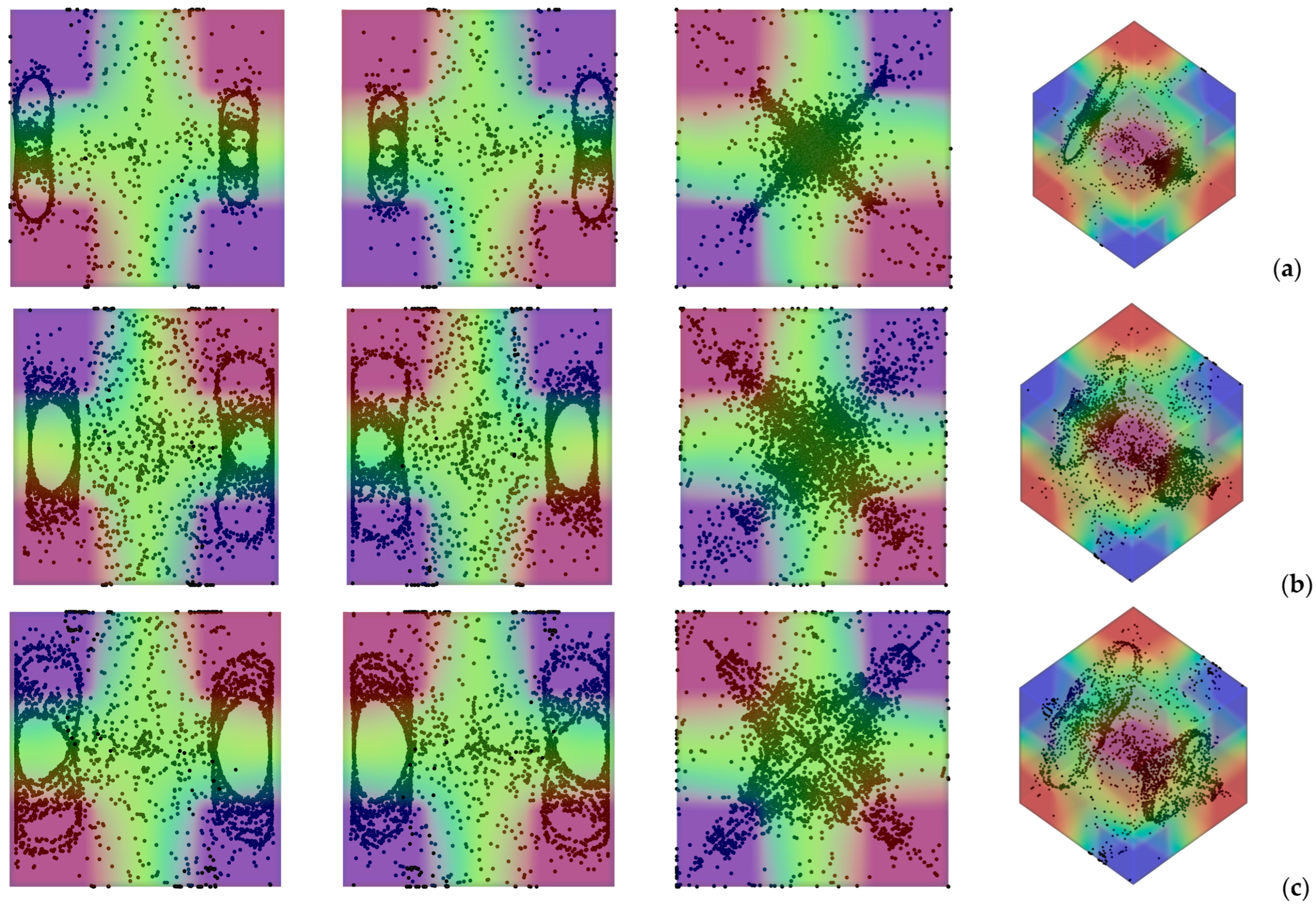
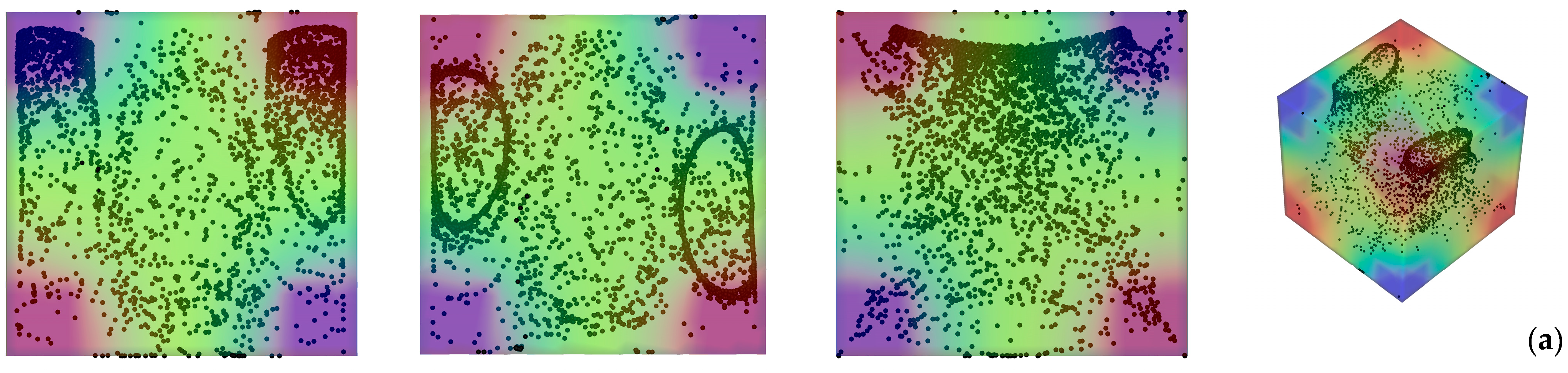
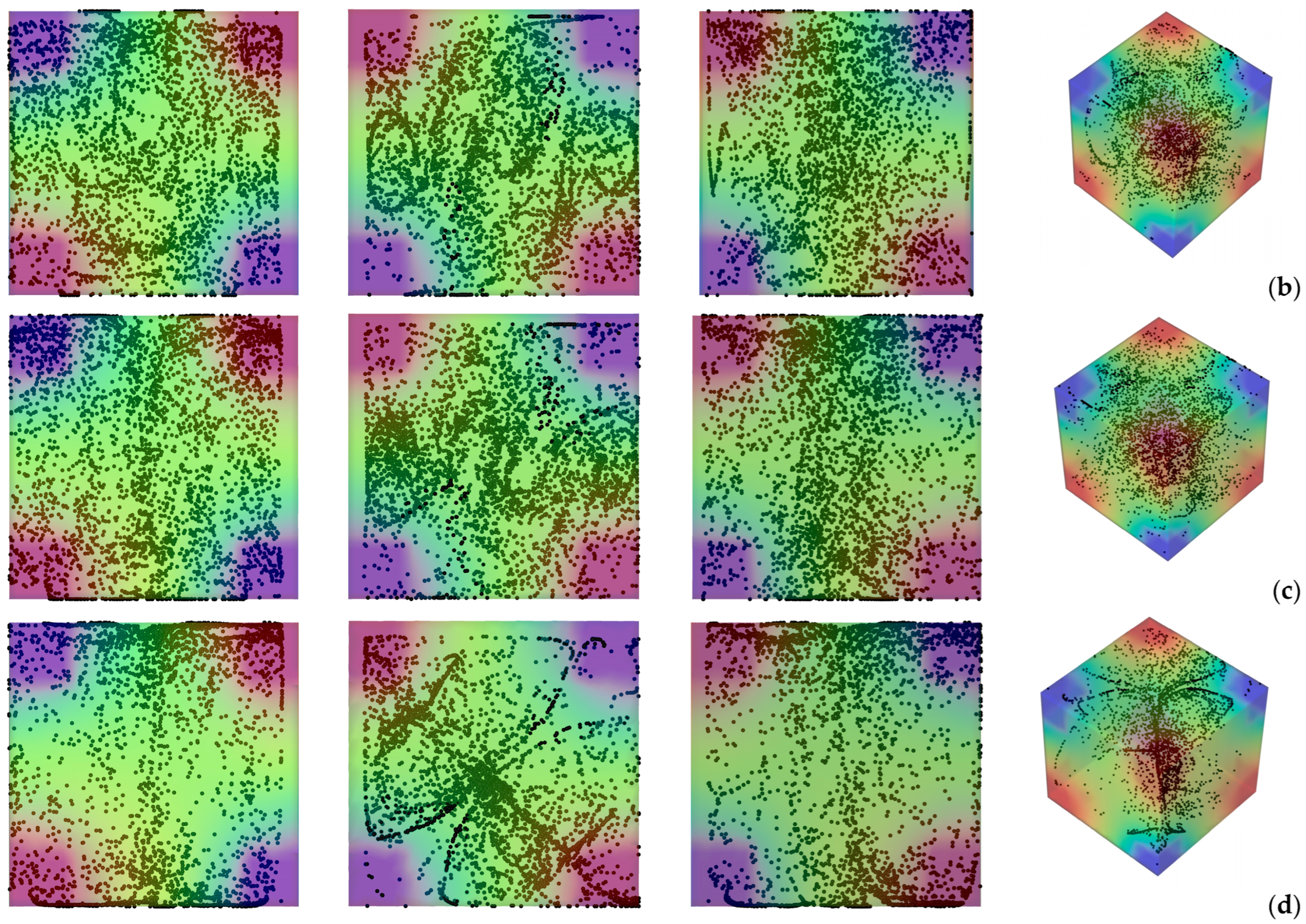
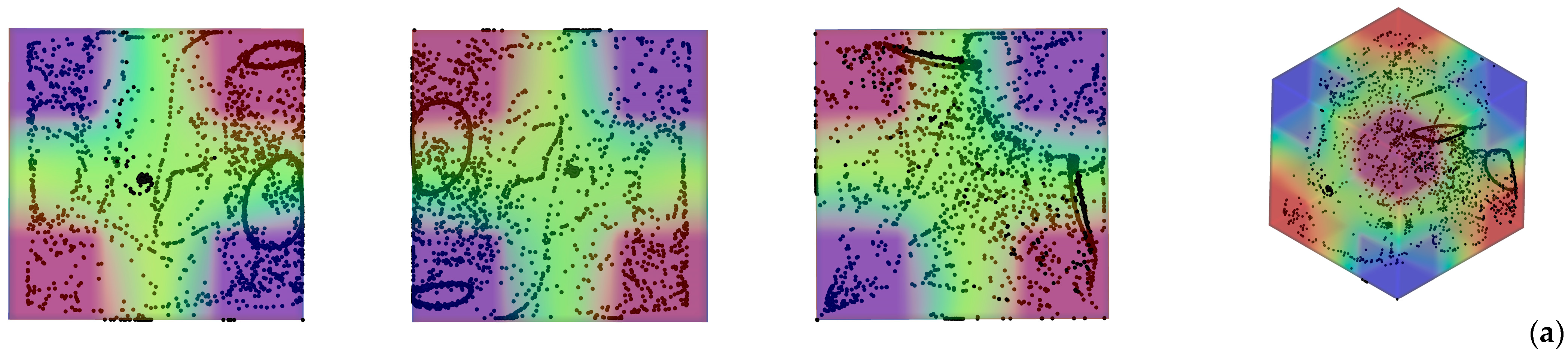
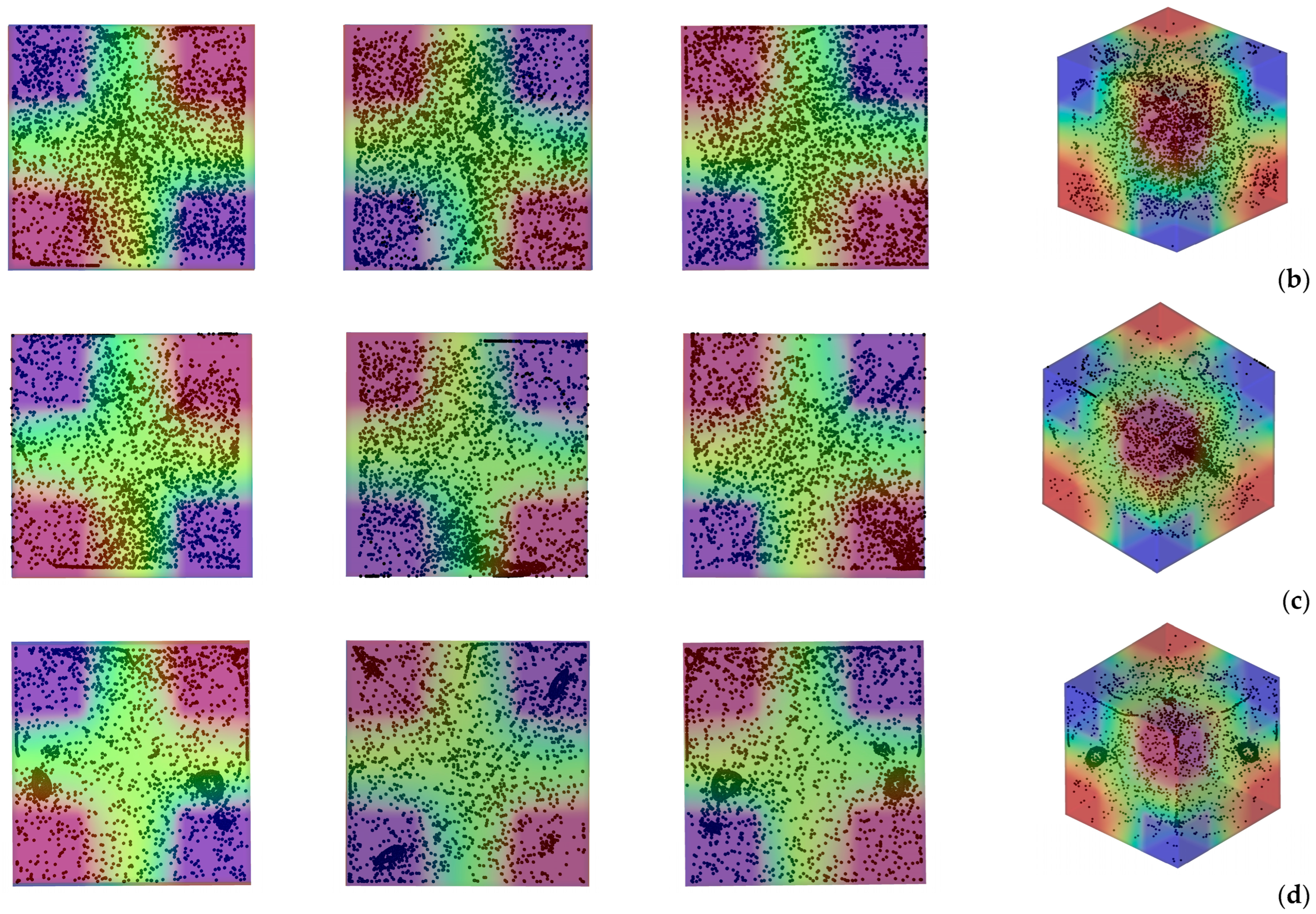
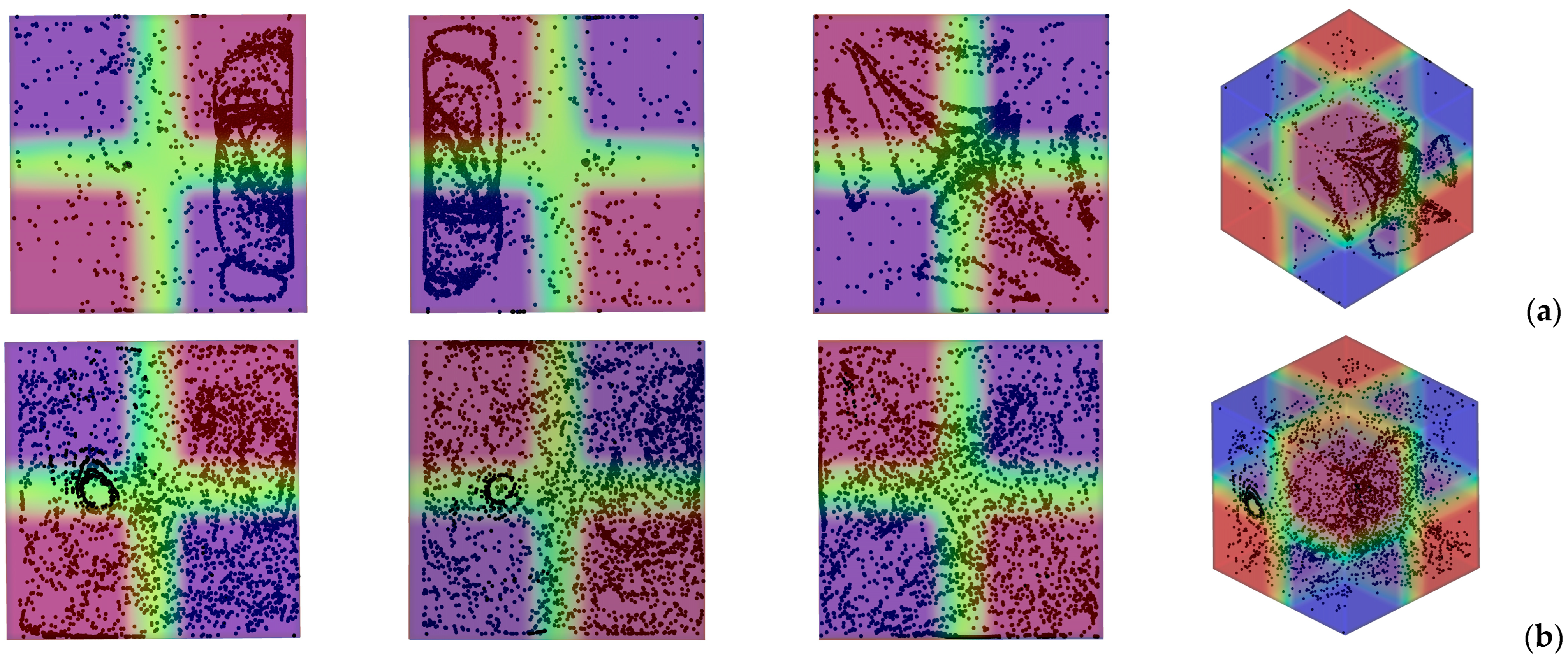
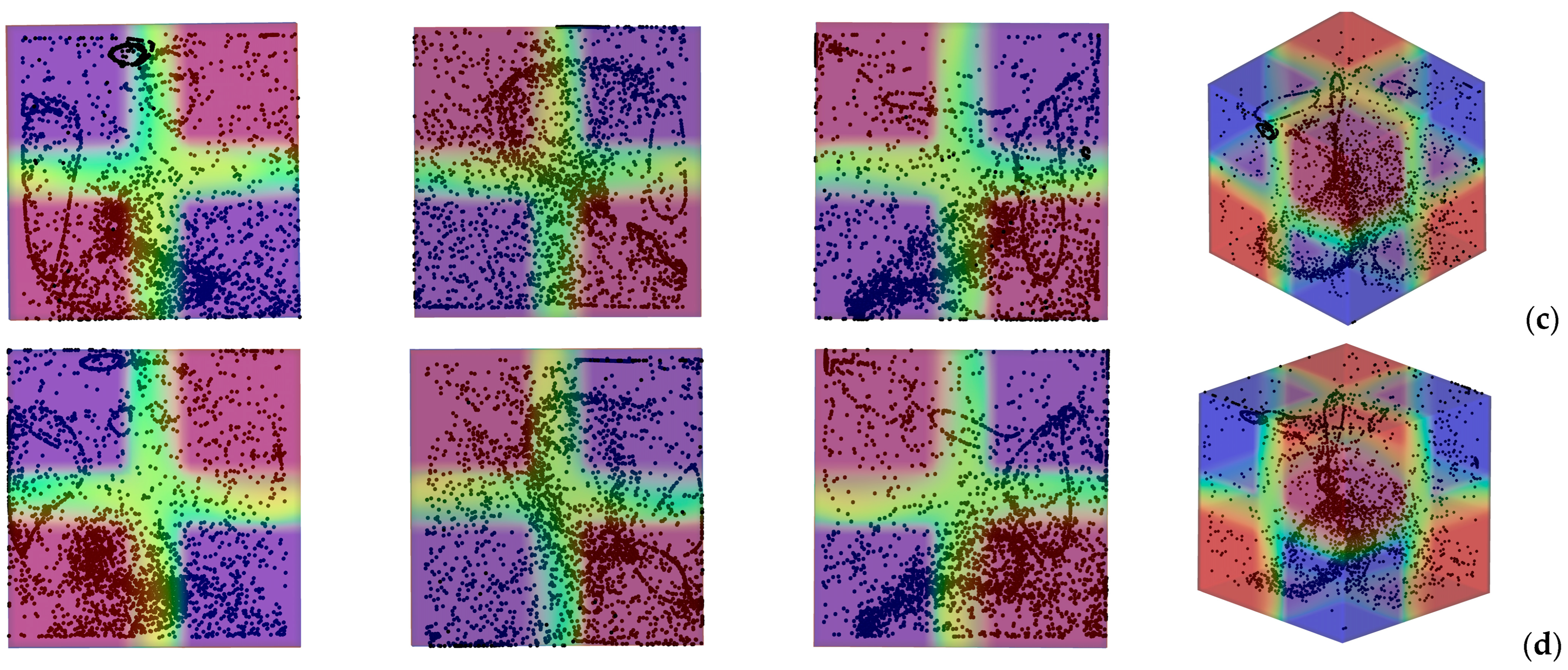
Over the last decade, numerical simulations and experiments have confirmed the existence of a novel class of vibrationally excited solid-particle attractors in cubic cavities containing a fluid in non-isothermal conditions. The diversity of emerging particle structures, in both morphology and multiplicity, depends strongly on the uni- or multi-directional nature of the imposed temperature gradients. The present study seeks to broaden this theoretical framework by further increasing the complexity of the thermal “information” coded along the external boundary of the fluid container. In particular, in place of the thermal inhomogeneities located in the center of otherwise uniformly cooled or heated walls, here, a cubic cavity with temperature boundary conditions satisfying the D2h (in Schoenflies notation) or “mmm” (in Hermann–Mauguin notation) symmetry is considered. This configuration, equivalent to a bipartite vertex coloring of a cube leading to a total of 24 thermally controlled planar surfaces, possesses three mutually perpendicular twofold rotation axes and inversion symmetry through the cube’s center. To reduce the problem complexity by suppressing potential asymmetries due to fluid-dynamic instabilities of inertial nature, the numerical analysis is carried out under the assumption of dilute particle suspension and one-way solid–liquid phase coupling. The results show that a kaleidoscope of new particle structures is enabled, whose main distinguishing mark is the essentially one-dimensional (filamentary) nature. These show up as physically disjoint or intertwined particle circuits in striking contrast to the single-curvature or double-curvature spatially extended accumulation surfaces reported in earlier investigations.
Keywords: particle dynamics; vibrational flow; inertial effects; numerical simulation; Eulerian–Lagrangian approach particle dynamics; vibrational flow; inertial effects; numerical simulation; Eulerian–Lagrangian approach